
Feed aggregator
The Eta Aquarid meteor shower peaks tonight—here’s how to get the best view
This annual meteor shower occurs as Earth passes through the dusty debris left behind by Halley’s Comet as it journeys around the sun
Key U.S. science panels are being axed—and others are becoming less open
A new analysis shows that the Trump administration has terminated more than 100 advisory committees to science agencies—and reduced the transparency and independence of those that remain.
Why the FDA rejected a ‘breakthrough’ melanoma drug
The FDA rejected the promising skin cancer drug RP1 twice, leaving many puzzled and worried about what this means for other drug approvals
Do octopus brains work like humans’—or is there another way to be smart?
Just like vertebrates, cephalopods—such as octopuses and squid—have elaborate brains. Neuroscientists are flocking to them for insights into how intelligence evolved.
A SpaceX rocket booster may be on track to hit the moon in August
While there is no immediate danger, this crash highlights that space junk is increasingly expanding out of lower-Earth orbit
Watch NASA test its new X-59 jet designed to go faster than the speed of sound
This next-generation plane is made to go faster than sound without producing a full sonic boom
Radio Telescope Array Reveals the Masses of Hidden Young Stars
The Orion Nebula provides a master class in the study of newly born stars as the closest starbirth region to us. Yet, many of its youngest ones are still swaddled in their birth creches, hidden by clouds of gas and dust. The Very Large Baseline Array (VLBA) radio telescopes have managed to punch through the dusty obscuring veil to study a pair of young binary systems called Brun 656 and HD 294300 born in the Nebula.
2026 will be the hottest year on record, leading scientist predicts
2026 will be the hottest year on record, leading scientist predicts
NASA Kennedy Center Director Announces Plans to Retire
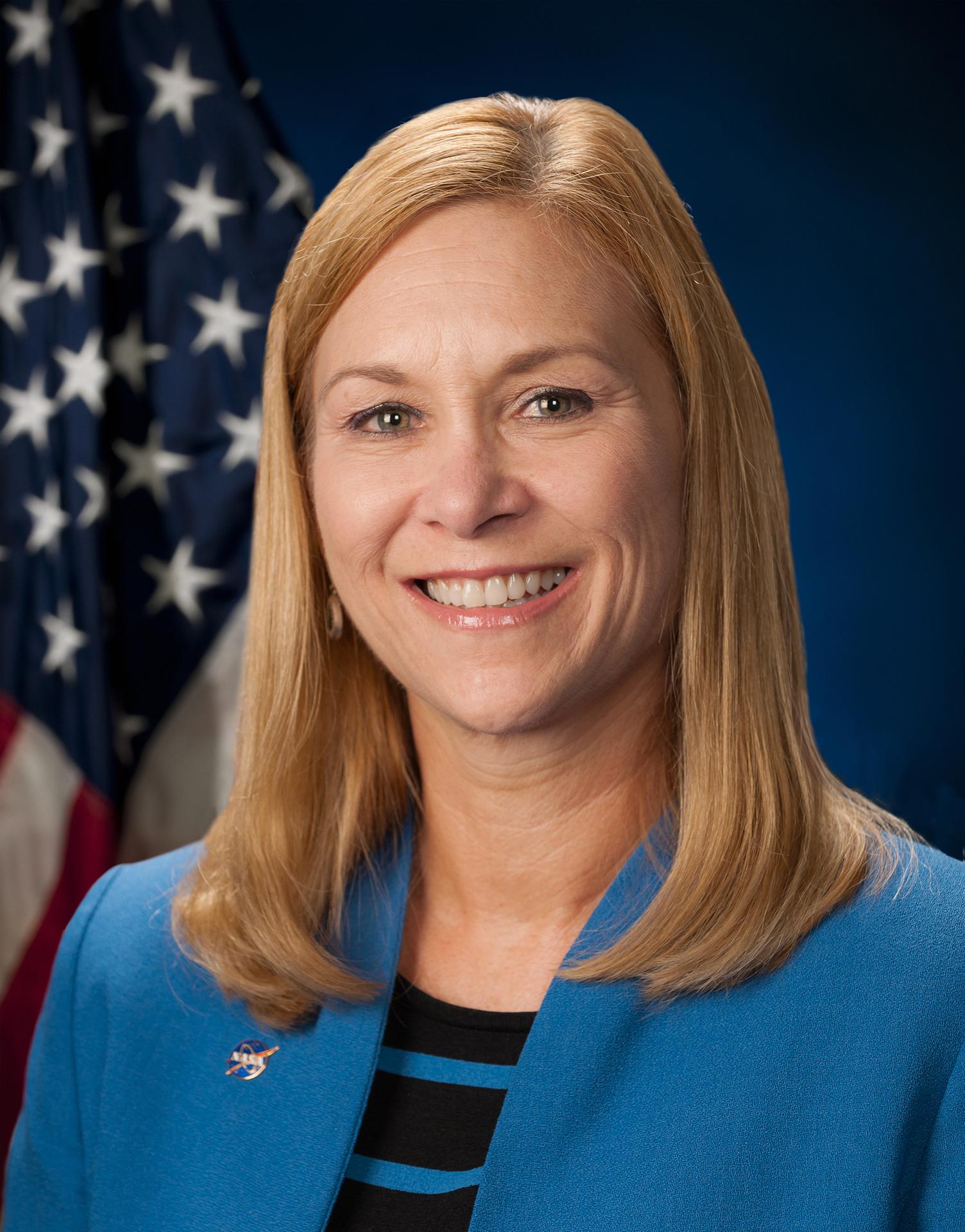
NASA announced Friday Janet Petro, center director for the agency’s Kennedy Space Center in Florida, is retiring.
Prior to joining NASA, Petro worked in a variety of military and industry positions, ultimately beginning her career at the agency in 2007 and working her way up to center director, as well as serving as acting administrator from January to July 2025.
“From the outset of her distinguished tenure at NASA, Janet has served as a profoundly influential leader, guiding both the agency and our Kennedy Space Center through some of the most significant transitions in our shared history, including playing a central role in reshaping NASA Kennedy into the nation’s premier multiuser spaceport,” said NASA Administrator Jared Isaacman. “As NASA has been charged, once again, with accomplishing the near impossible, I’m grateful for Janet for always embracing the challenge of discovering what could be and for pushing the boundaries to deliver the missions that enable NASA to lead the way into a new era of space.”
As NASA Kennedy’s 11th director, Petro manages a team of civil service and contractor employees, determining and implementing center policy and managing and executing the spaceport’s missions and agency program responsibilities. Previously, Petro served as acting director and NASA Kennedy’s deputy director. During her time as deputy director, she helped the center transition into a multi-user spaceport, leading cross-agency initiatives with the FAA (Federal Aviation Administration) and U.S. Air Force to streamline government processes and support commercial space operations to increase government efficiency and limit redundancy.
Petro also has served numerous roles at Kennedy and NASA Headquarters in Washington, including as the program executive on an agencywide initiative to restructure mission support functions, helping NASA become more efficient and effective in its work.
Outside of the agency, Petro has served in various management positions for Science Applications International Corporation, or SAIC, and McDonnell Douglas Aerospace Corporation, interfacing with NASA, U.S. military, and commercial entities on numerous aerospace and military programs.
Petro began her professional career as a commissioned officer in the U.S. Army after graduating in 1981 from the U.S. Military Academy at West Point, New York, with a bachelor of science degree in engineering. She was in the second class of West Point graduates to include women. Petro also holds a master of science degree in business administration from Boston University’s Metropolitan College.
Petro is the recipient of numerous service and performance awards, including a President’s Distinguished executive award, and has received the astronaut-selected Silver Snoopy award for outstanding performance, contributing to flight safety and mission success. In 2018, Petro was selected by Florida Governor Rick Scott for induction in the Florida Women’s Hall of Fame, and she helped lead the senior management team awarded the 2019 Samuel J. Heyman Service to America Sammies Management Excellence Medal. She received the 2022 Dr. Kurt H. Debus Award by the National Space Club Florida Committee for her contributions to America’s aerospace efforts within the state of Florida.
Effective Friday, Kelvin Manning now is stepping into the role of acting center director, bringing more than 32 years of leadership and technical expertise. He has previously served as deputy center director.
For more about NASA’s missions, visit:
-end-
Bethany Stevens / Cheryl Warner
Headquarters, Washington
202-358-1600
bethany.c.stevens@nasa.gov / cheryl.m.warner@nasa.gov
Amanda Griffin
Kennedy Space Center, Fla.
321-593-6244
amanda.griffin@nasa.gov
NASA Kennedy Center Director Announces Plans to Retire
NASA announced Friday Janet Petro, center director for the agency’s Kennedy Space Center in Florida, is retiring.
Prior to joining NASA, Petro worked in a variety of military and industry positions, ultimately beginning her career at the agency in 2007 and working her way up to center director, as well as serving as acting administrator from January to July 2025.
“From the outset of her distinguished tenure at NASA, Janet has served as a profoundly influential leader, guiding both the agency and our Kennedy Space Center through some of the most significant transitions in our shared history, including playing a central role in reshaping NASA Kennedy into the nation’s premier multiuser spaceport,” said NASA Administrator Jared Isaacman. “As NASA has been charged, once again, with accomplishing the near impossible, I’m grateful for Janet for always embracing the challenge of discovering what could be and for pushing the boundaries to deliver the missions that enable NASA to lead the way into a new era of space.”
As NASA Kennedy’s 11th director, Petro manages a team of civil service and contractor employees, determining and implementing center policy and managing and executing the spaceport’s missions and agency program responsibilities. Previously, Petro served as acting director and NASA Kennedy’s deputy director. During her time as deputy director, she helped the center transition into a multi-user spaceport, leading cross-agency initiatives with the FAA (Federal Aviation Administration) and U.S. Air Force to streamline government processes and support commercial space operations to increase government efficiency and limit redundancy.
Petro also has served numerous roles at Kennedy and NASA Headquarters in Washington, including as the program executive on an agencywide initiative to restructure mission support functions, helping NASA become more efficient and effective in its work.
Outside of the agency, Petro has served in various management positions for Science Applications International Corporation, or SAIC, and McDonnell Douglas Aerospace Corporation, interfacing with NASA, U.S. military, and commercial entities on numerous aerospace and military programs.
Petro began her professional career as a commissioned officer in the U.S. Army after graduating in 1981 from the U.S. Military Academy at West Point, New York, with a bachelor of science degree in engineering. She was in the second class of West Point graduates to include women. Petro also holds a master of science degree in business administration from Boston University’s Metropolitan College.
Petro is the recipient of numerous service and performance awards, including a President’s Distinguished executive award, and has received the astronaut-selected Silver Snoopy award for outstanding performance, contributing to flight safety and mission success. In 2018, Petro was selected by Florida Governor Rick Scott for induction in the Florida Women’s Hall of Fame, and she helped lead the senior management team awarded the 2019 Samuel J. Heyman Service to America Sammies Management Excellence Medal. She received the 2022 Dr. Kurt H. Debus Award by the National Space Club Florida Committee for her contributions to America’s aerospace efforts within the state of Florida.
Effective Friday, Kelvin Manning now is stepping into the role of acting center director, bringing more than 32 years of leadership and technical expertise. He has previously served as deputy center director.
For more about NASA’s missions, visit:
-end-
Bethany Stevens / Cheryl Warner
Headquarters, Washington
202-358-1600
bethany.c.stevens@nasa.gov / cheryl.m.warner@nasa.gov
Amanda Griffin
Kennedy Space Center, Fla.
321-593-6244
amanda.griffin@nasa.gov
A third of U.S. adults don’t get enough sleep, new CDC report warns
Nearly a third of all U.S. adults are sleeping fewer than the recommended seven hours per night on average
NASA Artemis II Crew Rings Nasdaq Closing Bell
NASA Artemis II Crew Rings Nasdaq Closing Bell
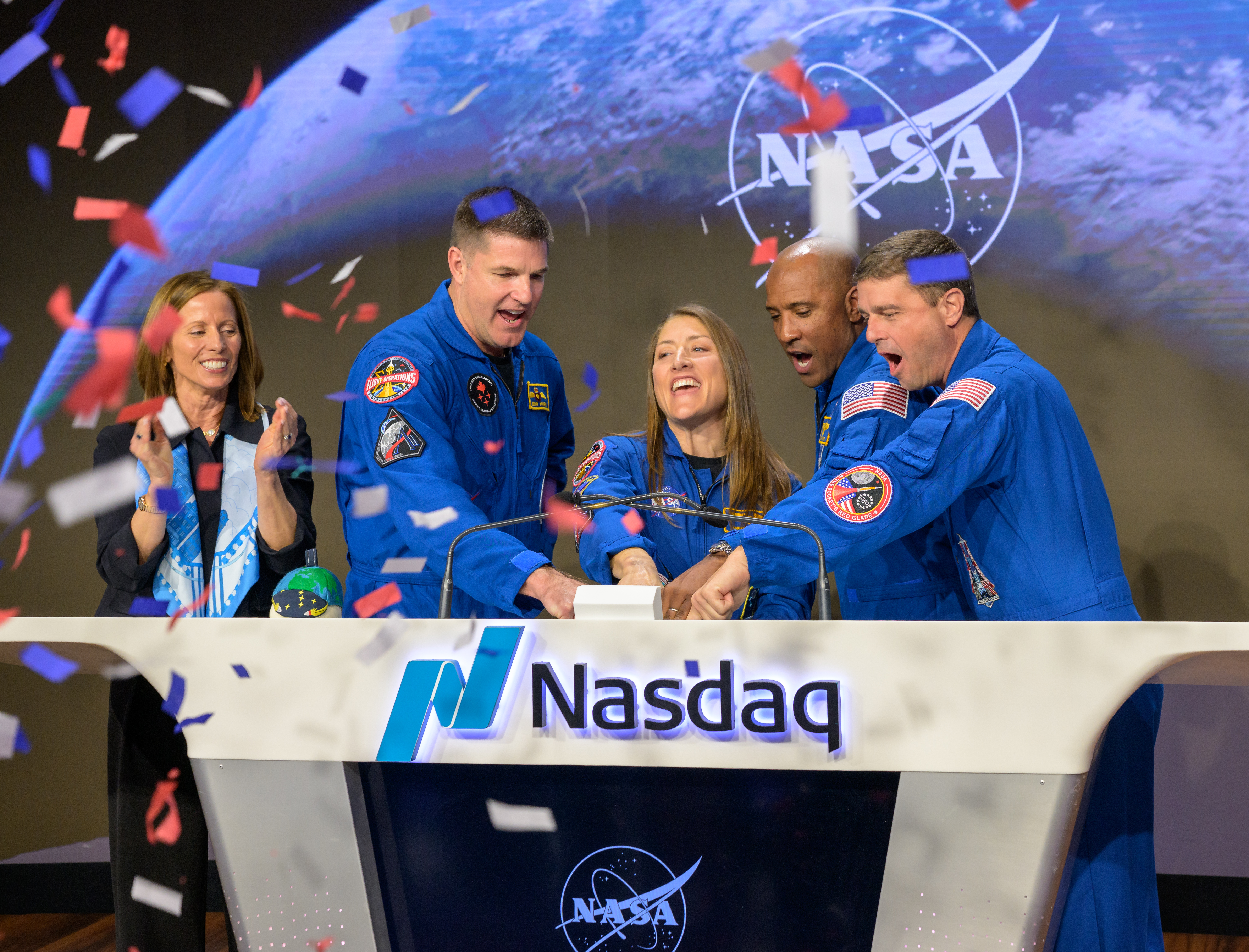
Nasdaq Chair and Chief Executive Officer Adena T. Friedman, left, and NASA’s Artemis II crewmembers CSA (Canadian Space Agency) astronaut Jeremy Hansen, and NASA astronauts Christina Koch, Victor Glover, and Reid Wiseman, right, ring the closing bell of the Nasdaq market session, Thursday, April 30, 2026.
NASA’s Artemis II mission took Wiseman, Glover, Koch, and Hansen on a nearly 10-day journey around the Moon and back to Earth earlier in April 2026.
Image credit: NASA/Bill Ingalls
NASA Artemis II Crew Rings Nasdaq Closing Bell
Nasdaq Chair and Chief Executive Officer Adena T. Friedman, left, and NASA’s Artemis II crewmembers CSA (Canadian Space Agency) astronaut Jeremy Hansen, and NASA astronauts Christina Koch, Victor Glover, and Reid Wiseman, right, ring the closing bell of the Nasdaq market session, Thursday, April 30, 2026.
NASA’s Artemis II mission took Wiseman, Glover, Koch, and Hansen on a nearly 10-day journey around the Moon and back to Earth earlier in April 2026.
Image credit: NASA/Bill Ingalls
US lawmakers vote to cut science spending—but reject Trump’s sweeping reductions
A draft bill would preserve NASA’s overall funding but downsize the National Science Foundation’s budget by 20 percent.
Key Support Equipment Arrives at Kennedy for Roman Space Telescope
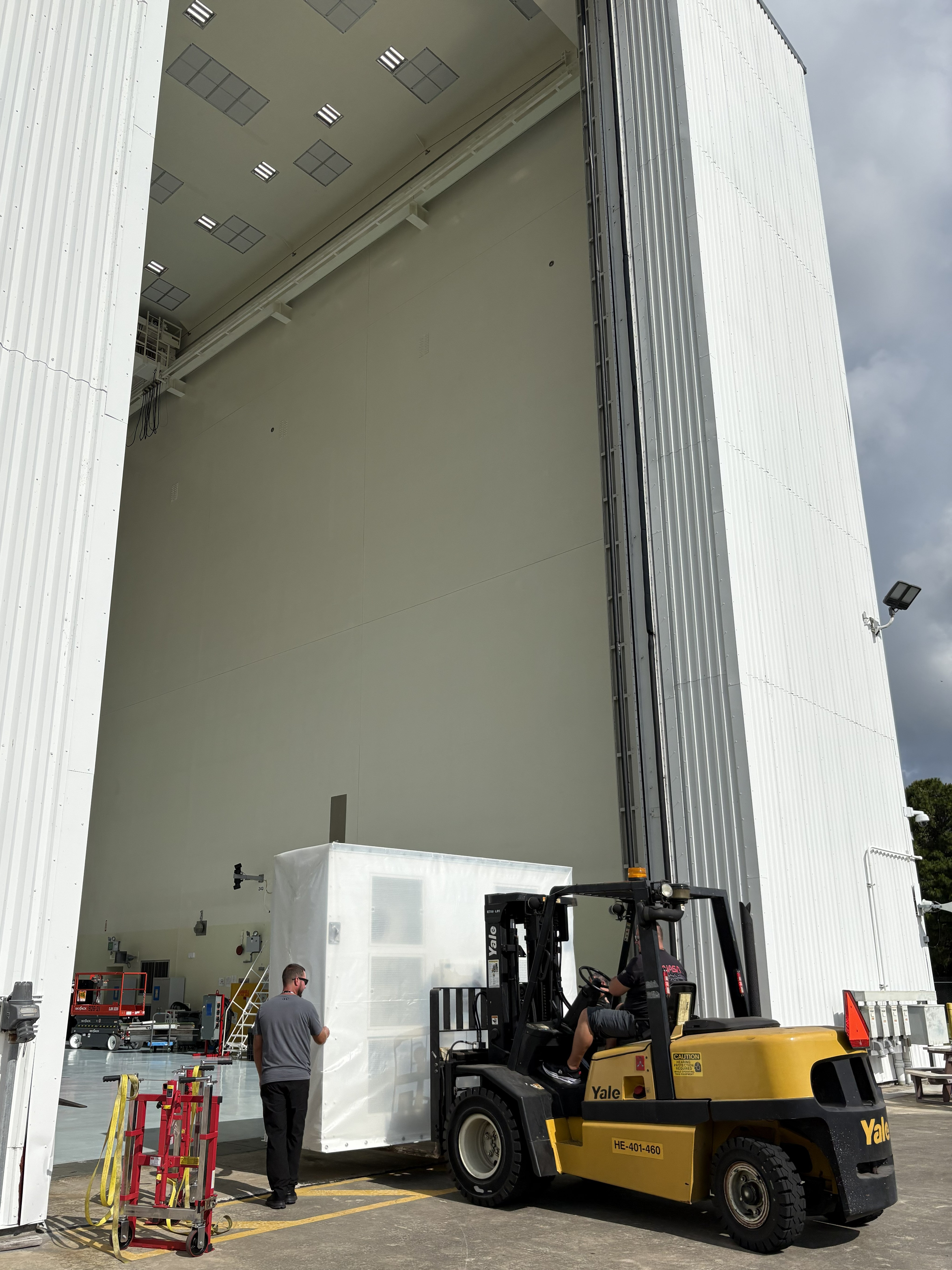
Technicians at NASA’s Payload Hazardous Servicing Facility (PHSF) at the agency’s Kennedy Space Center in Florida offloaded eight high-efficiency particulate air (HEPA) wall modules and other ground support equipment on April 27. The equipment will support launch processing of the agency’s Nancy Grace Roman Space Telescope.
Each 1,800-pound module enhances the PHSF’s clean room systems, helping meet the telescope’s stringent cleanliness requirements during its time in the facility, where the observatory will undergo key tasks such as spacecraft fueling prior to liftoff.
Roman will observe the universe in infrared light using its Wide Field Instrument and a Coronagraph Instrument technology demonstration. Its wide field of view will produce panoramic images that help astronomers investigate some of the greatest mysteries in the cosmos, including why the universe’s expansion appears to be accelerating.
By using multiple complementary techniques, Roman will chart how the universe has evolved over cosmic time and provide new insights into the nature of dark energy. Roman also will advance the study of exoplanets and map the structure and distribution of normal matter and dark matter across space and time.
Teams are targeting launch as soon as early September aboard a SpaceX Falcon Heavy rocket from Launch Complex 39A at NASA Kennedy.
Photo credit: NASA/Leejay Lockhart
Key Support Equipment Arrives at Kennedy for Roman Space Telescope
Technicians at NASA’s Payload Hazardous Servicing Facility (PHSF) at the agency’s Kennedy Space Center in Florida offloaded eight high-efficiency particulate air (HEPA) wall modules and other ground support equipment on April 27. The equipment will support launch processing of the agency’s Nancy Grace Roman Space Telescope.
Each 1,800-pound module enhances the PHSF’s clean room systems, helping meet the telescope’s stringent cleanliness requirements during its time in the facility, where the observatory will undergo key tasks such as spacecraft fueling prior to liftoff.
Roman will observe the universe in infrared light using its Wide Field Instrument and a Coronagraph Instrument technology demonstration. Its wide field of view will produce panoramic images that help astronomers investigate some of the greatest mysteries in the cosmos, including why the universe’s expansion appears to be accelerating.
By using multiple complementary techniques, Roman will chart how the universe has evolved over cosmic time and provide new insights into the nature of dark energy. Roman also will advance the study of exoplanets and map the structure and distribution of normal matter and dark matter across space and time.
Teams are targeting launch as soon as early September aboard a SpaceX Falcon Heavy rocket from Launch Complex 39A at NASA Kennedy.
Photo credit: NASA/Leejay Lockhart