
Feed aggregator
JWST Spies Once-hidden Treasures in the W51 Starbirth Crèche
Star formation is a dramatic and complex process that erupts throughout the Universe. Yet, a lot of the action gets hidden by clouds of gas and dust. That's where observatories such as the James Webb Telescope JWST and the Atacama Large Millimeter Array (ALMA) come in handy. They use infrared light and radio waves, respectively, to pierce the veil surrounding the process of starbirth.
Artemis II Mission Shares New Photo of Earth
NASA astronaut and Artemis II Commander Reid Wiseman took this picture of Earth from the Orion spacecraft's window after completing the translunar injection burn. There are two auroras (top right and bottom left) and zodiacal light (bottom right) is visible as the Earth eclipses the Sun.
Where is Artemis II? NASA astronauts near the moon for first time in more than 50 years
Day four of the Artemis II mission to the moon saw the crew start to prepare in earnest for their lunar flyby and experience yet more toilet troubles
Thinking of You, Earth
Thinking of You, Earth
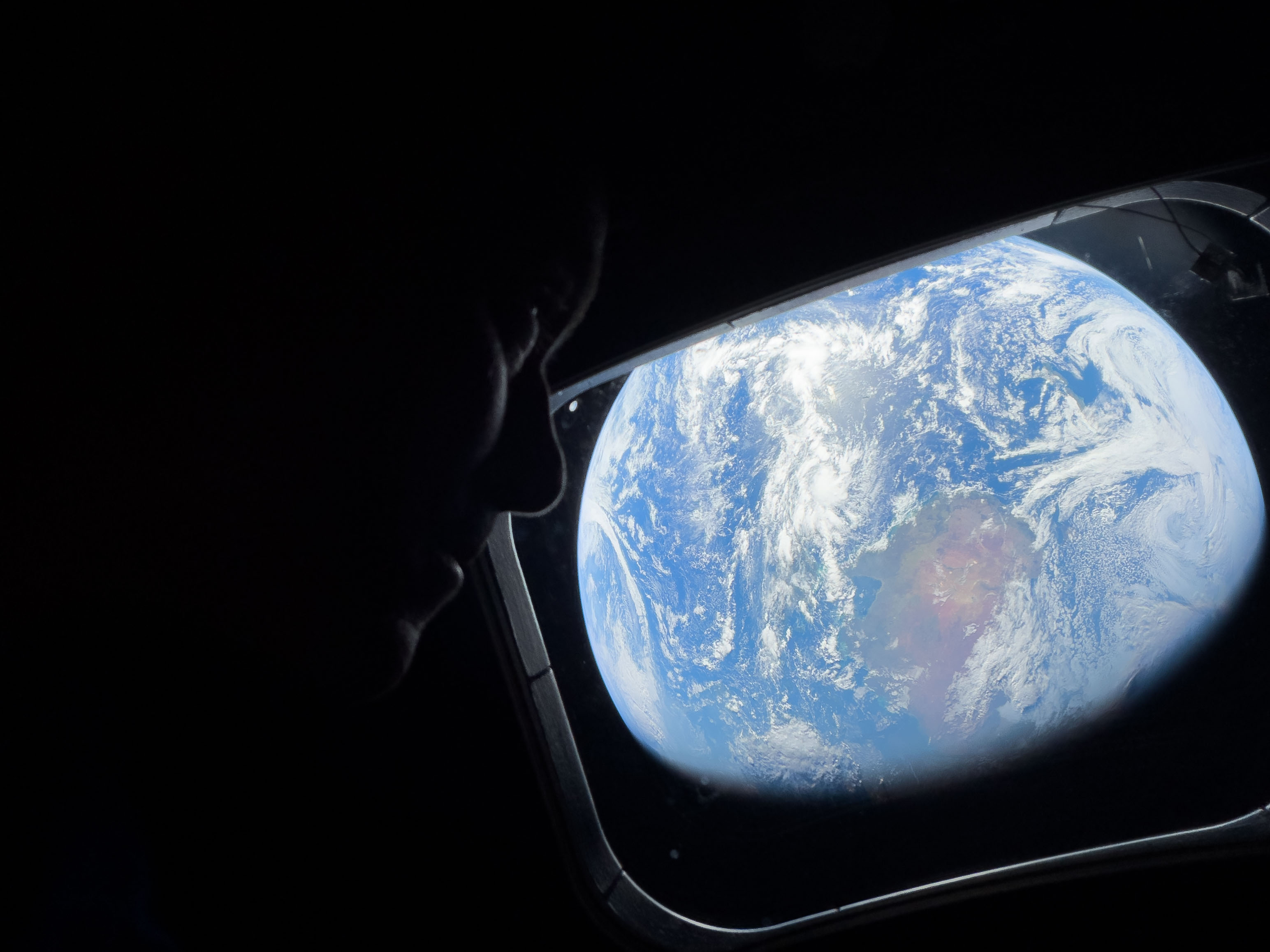
On April 4, 2026, NASA astronaut and Artemis II Commander Reid Wiseman peers out of one of the Orion spacecraft’s main cabin windows, looking back at Earth, as the crew travels towards the Moon.
The Artemis II astronauts – Wiseman and fellow NASA astronauts Christina Koch and Victor Glover, and CSA (Canadian Space Agency) astronaut Jeremy Hansen – are now more than two-thirds of the way to the Moon. Follow along on their journey with our photo gallery and 24/7 livestream.
Image credit: NASA
Thinking of You, Earth
On April 4, 2026, NASA astronaut and Artemis II Commander Reid Wiseman peers out of one of the Orion spacecraft’s main cabin windows, looking back at Earth, as the crew travels towards the Moon.
The Artemis II astronauts – Wiseman and fellow NASA astronauts Christina Koch and Victor Glover, and CSA (Canadian Space Agency) astronaut Jeremy Hansen – are now more than two-thirds of the way to the Moon. Follow along on their journey with our photo gallery and 24/7 livestream.
Image credit: NASA
NASA’s Artemis II laser communications system is beaming 4K video from the moon
A new laser system aboard NASA’s Orion spacecraft is sending sharper video and more data back to Earth
NASA’s Artemis II moon mission is gearing up for its lunar flyby
NASA officials and the Artemis II crew are starting to prepare in earnest for Monday’s lunar flyby—while also trying to fix the mission’s toilet
If Life Exists in Venus' Atmosphere, It Could Have Come From Earth
A new study presented at the 2026 LPSC suggests that if life does exist in Venus' clouds, there's a chance it came from Earth.
What will NASA’s Artemis II astronauts see on the moon?
The Artemis II crew will spend about six hours observing the moon on Monday. Here’s what they’ll be looking for
NASA Answers Your Most Pressing Artemis II Questions
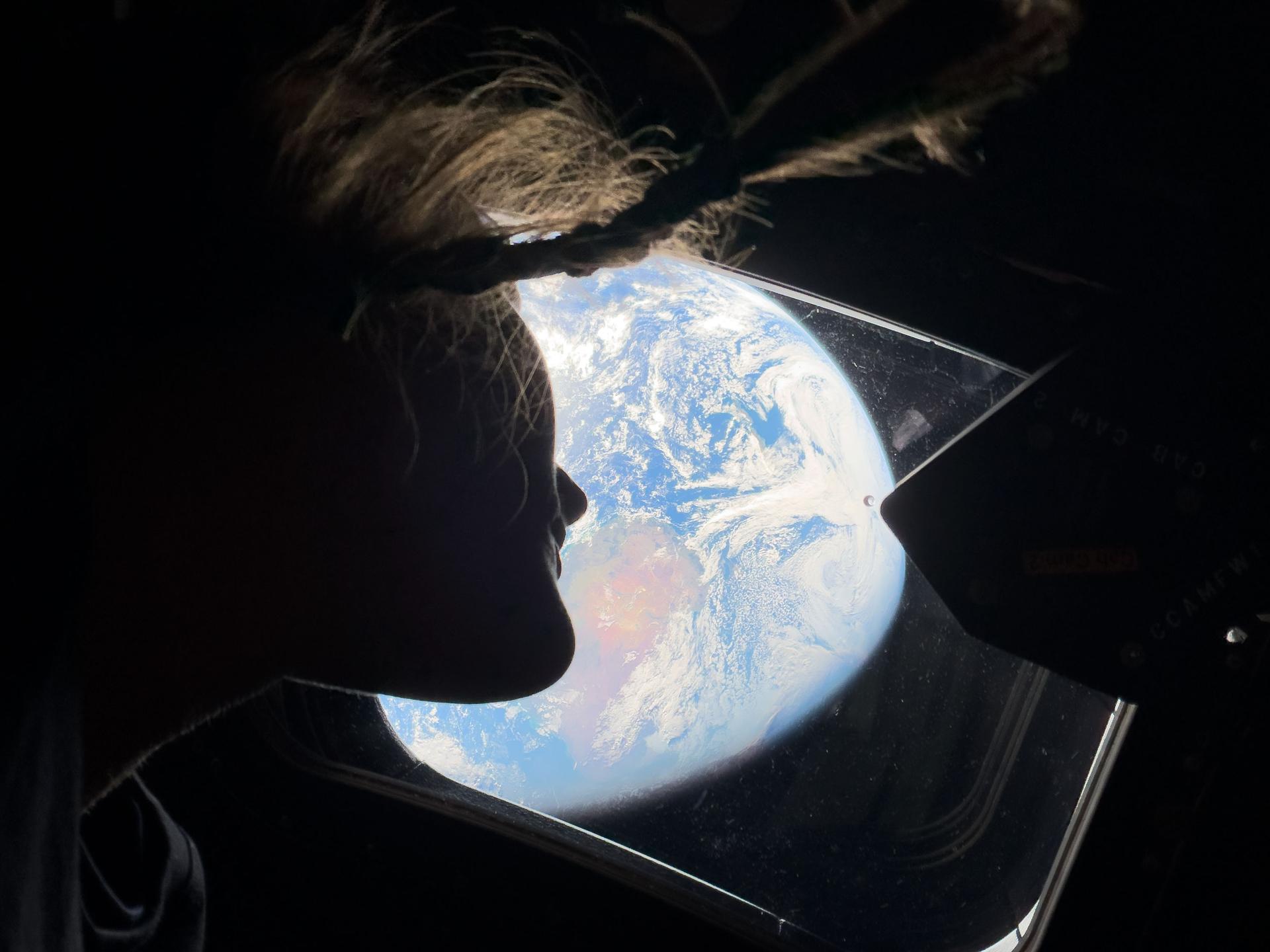
Editor’s Note: This article was updated at 1:40 p.m. EDT on Sunday, April 5, 2026, to correct the time for the distance record, and adjust other times for lunar flyby activities.
The first crewed test flight under NASA’s Artemis program is underway. Four Artemis II astronauts are flying aboard NASA’s Orion spacecraft around the Moon and back, as they test how the spacecraft’s systems operate in a deep space environment.
NASA astronauts Reid Wiseman, Victor Glover, and Christina Koch, and CSA (Canadian Space Agency) astronaut Jeremy Hansen lifted off at 6:35 p.m. EDT on April 1 from launch pad 39B at the agency’s Kennedy Space Center in Florida.
Real-time coverage continues throughout the mission on NASA’s YouTube channel. The agency also provides a separate live stream of views from the Orion spacecraft as bandwidth allows, as well as inside the capsule. In addition NASA is providing the latest mission imagery online.
Daily mission status briefings are held live from the agency’s Johnson Space Center in Houston through splashdown, except for Monday, April 6, due to lunar flyby activities. A list of activities is regularly updated online.
The crew are participating in live conversations throughout the mission, which were scheduled prior to their departure from Earth. NASA will provide the exact times of each of these downlink events, as well as the latest mission coverage, on the Artemis blog.
To track Orion in space, visit: nasa.gov/trackartemis
Frequently Asked Questions (all times Eastern):
How long is the Artemis II mission? NASA’s Artemis II mission is an approximately 10-day journey around the Moon including launch, a lunar flyby, and a safe splashdown off the coast of San Diego.
How far will Artemis II travel? Crew is expected to travel a total of 695,081 miles from launch to splashdown. The spacecraft will pass within 4,070 miles of the lunar surface during its closest approach and will reach a maximum distance of 252,760 miles from Earth, about 4,105 miles farther than Apollo 13.
When and where will the Artemis II crew and Orion spacecraft splashdown?
The location and time of our Artemis II splashdown will continue to shift as mission milestones are reached. In the days leading up to splashdown, updates will be available on NASA’s website and in our daily news conferences. Mission media events are available on the agency’s website.
NASA’s Artemis II mission is scheduled to splash down off the coast of San Diego at approximately 8:07 p.m. EDT (5:07 p.m. PDT) on Friday, April 10. Following splashdown, recovery teams will retrieve the crew using helicopters and deliver them to the USS John P. Murtha. Once aboard, the astronauts will undergo post-mission medical evaluations in the ship’s medical bay before traveling back to shore to meet with an aircraft bound for NASA’s Johnson Space Center in Houston.
What is the crew doing on this mission? Artemis II astronauts are putting the Orion spacecraft through a series of planned tests to evaluate systems, procedures, and performance in deep space. They will conduct manual spacecraft operations and monitor automated activities; evaluate Orion’s life-support, propulsion, power, thermal, and navigation systems; perform proximity operations activities; assess habitability and crew interfaces; and participate in science activities, including lunar surface observations and human health studies, that will inform science operations on future Moon missions. They also will practice mission-critical activities, including trajectory adjustments, communications at lunar distances, and piloting Orion during key phases of flight, culminating in a re-entry and splashdown to further validate the spacecraft’s performance with crew aboard.
What can we expect to see during lunar flyby? All times are subject to change. Here’s a rough schedule of activities:
- Live coverage begins at 1 p.m. on Monday, April 6, and continues through 9:45 p.m.
- 1:30 p.m.: NASA hosts a conversation between the crew and the science officer in NASA’s Mission Control Center at the agency’s Johnson Space Center in Houston, to go over the objectives and timeline for the flyby.
- Because the Sun’s angle on the Moon shifts by about one degree every two hours, the crew could not know the exact lighting conditions to expect on the lunar surface until after launch. This briefing provides one final opportunity to review details before the flyby begins.
- 1:56 p.m.: The Artemis II crew is expected surpass the record previously set by the Apollo 13 crew in 1970 for the farthest humans have ever traveled from Earth.
- The Apollo 13 crew traveled 248,655 miles from Earth; Artemis II will reach a maximum distance of 252,760 miles from Earth, surpassing the record by about 4,105 miles. The crew is expected to make remarks on the milestone around 2:10 p.m.
- 2:45 p.m.: The seven-hour lunar observation period begins. Crew will see both the near and far sides of the Moon as the observation period begins.
- Because room at Orion’s windows is limited, the crew will divide into pairs, with two crew members observing for 55 to 85 minutes, while the other pair exercises or works on other tasks.
- 6:44 p.m.: Mission control expects to temporarily lose communication with the crew as Orion passes behind the Moon.
- 7:02 p.m.: Astronauts will make their closest approach to the Moon (4,070 miles), the reach its farthest point from Earth at 7:07 p.m.
- At this distance, the Moon will appear to the astronauts about the size of a basketball held at arm’s length. They also may be the first humans to see some parts of the Moon’s far side with the unaided eye.
- 7:25 p.m.: NASA’s Mission Control Center should re-acquire communication with the astronauts.
- 8:35 p.m.: Orion enters period with Moon eclipsing the Sun and continues until 9:32 p.m.
- 9:20 p.m.: The flyby observation period wraps, and crew will begin transferring some of the imagery to the ground. NASA’s science team will review the images and observations overnight, and then discuss with crew the following day, while the experience is still fresh.
Why do we need astronauts to view the Moon when we have robotic observers? Human eyes and brains are highly sensitive to subtle changes in color, texture, and other surface characteristics. Having astronaut eyes observe the lunar surface directly, in combination with the context of all the advances that scientists have made about the Moon over the last several decades, may uncover new discoveries and a more nuanced appreciation for the features on the surface of the Moon.
Though the crew will not be able to downlink all their imagery before they return to Earth, as much as possible will be made available on the Artemis II Multimedia website. Additional imagery will also be added as it is processed following splashdown.
What do the astronauts eat during the mission? The Artemis II crew has access to 189 unique menu items during their mission, including 10 different beverages like coffee and smoothies. Common food items include tortillas, nuts, barbeque beef brisket, cauliflower, macaroni and cheese, butternut squash, cookies, and chocolate. Food flying aboard Artemis II is designed to support crew health and performance during the mission around the Moon. Menu selections are developed with space food experts and the crew to balance calorie needs, hydration, and nutrient intake while accommodating individual preferences. For more information about their menu, visit here.
What are the goals of the Artemis II Mission? The Artemis II test flight will confirm the systems necessary to support astronauts in deep space exploration and prepare to establish a sustained presence on the Moon. The primary goal of Artemis II is a crewed test flight in lunar space. There are five main additional priorities for Artemis II:
- Crew: Demonstrate the ability of systems and teams to sustain the flight crew in the flight environment, and through their return to Earth.
- Systems: Demonstrate systems and operations essential to a crewed lunar campaign. This ranges from ground systems to hardware in space, and operations spanning from development to launch, flight, and recovery.
- Hardware and Data: Retrieve flight hardware and data, assessing performance for future missions.
- Emergency Operations: Demonstrate emergency system capabilities and validate associated operations to the extent practical, such as abort operations and rescue procedures, as needed.
- Data and Subsystems: Complete additional objectives to verify subsystems and validate data.
Can I talk to the crew aboard Orion during their mission? During their mission, crew will participate in several live and taped downlinks with news outlets, administration officials, and more. These opportunities were allocated prior to their launch. A schedule of these events is available on the agency’s website.
What is the Artemis II zero-gravity indicator and how was it selected? NASA’s Artemis II crew selected Rise as their zero-gravity indicator for the mission. A zero-gravity indicator is a small plush item that flies along with a crew to visually indicate when they are in space. Rise was designed by Lucas Ye from Mountain View, California, as a tribute to the iconic Earthrise moment from the Apollo 8 mission, which deeply resonated with the crew. Rise was fabricated by NASA’s Thermal Blanket Lab at the Goddard Space Flight Center in Greenbelt, Maryland. NASA worked with the company Freelancer to hold a Moon Mascot Design Challenge to design the zero-gravity indicator for Artemis II, which drew more than 2,600 submissions from more than 50 countries, including from K-12 students.
How many cameras are installed on the Orion spacecraft? Orion is carrying 32 cameras and devices, including any instrument with a lens capable of capturing photos or video, inside or on the exterior of the vehicle. The systems support engineering, navigation, crew monitoring, and a range of lunar science and outreach activities. Fifteen cameras are mounted directly to the spacecraft, and 17 are handheld cameras operated by the crew.
Who are the capsule communicators, or capcoms, for the Artemis II mission inside NASA’s Mission Control Center in Florida?
DatePhaseCapcom(s)April 1AscentStanley Love, Jacki Mahaffey Orbit 1Amy Dill, Raja ChariApril 2Orbit 1Chris Birch, Jenni Gibbons Orbit 2Mike Sovinsky, Daniel Surber, Marc Reagan, Sandra Moore Orbit 3Stanley Love, Tracey Caldwell DysonApril 3Orbit 1Chris Birch, Jenni Gibbons Orbit 2Jacki Mahaffey, Tracy Caldwell Dyson Orbit 3Mike Sovinsky, Tess CaswellApril 4Orbit 1Matthew Dunne, Jenni Gibbons Orbit 2Sandra Moore, Jacki Mahaffey Orbit 3Mike SovinskyApril 5Orbit 1Tess Caswell, Jenni Gibbons Orbit 2Marc Reagan, Jacki Mahaffey Orbit 3Mike Sovinsky, Mark BowmanApril 6Orbit 1Stanley Love, Jenni Gibbons Orbit 2Tess Caswell, Andre Douglas Orbit 3Amy Dill, Daniel SurberApril 7Orbit 1Stanley Love Orbit 2Daniel Surber, Tess Caswell Orbit 3Sandra Moore, Amy DillApril 8Orbit 1Akihiko Hoshide, Stanley Love, Tracey Caldwell Dyson Orbit 2Jenni Gibbons, Raja Chari, Randolph Bresnik Orbit 3Marc Reagan, Andre DouglasApril 9Orbit 1Sandra Moore, Jacki Mahaffey, Stanley Love Orbit 2Amy Dill, Nichole Ayers Orbit 3Marc Reagan, Matthew DunneApril 10Orbit 1Stanley Love, Jacki Mahaffey Orbit 2N/A Orbit 3Daniel Surber, Tess CaswellArtemis Program FAQs
Artemis II will travel around the Moon but will not land on its surface. Why is this mission so important? The Artemis II test flight is NASA’s first crewed Artemis mission. Astronauts on their first flight aboard NASA’s Orion spacecraft will confirm the spacecraft’s systems operate as designed with crew aboard in the actual environment of deep space. The unique Artemis II mission profile builds on the uncrewed Artemis I flight test by demonstrating a broad range of SLS (Space Launch System) and Orion capabilities needed on deep space missions. This mission will verify Orion’s life support systems can sustain astronauts on longer-duration missions ahead and allow the crew to practice operations essential to Artemis III and beyond.
What is the next mission for NASA’s Artemis program and the agency? NASA is aligning agencywide initiatives to achieve President Donald J. Trump’s National Space Policy and advance American leadership in space. During an Ignition event on March 24 at the agency’s headquarters in Washington. Among the updates, NASA is prioritizing the Artemis program launch cadence, a robust U.S. presence in low Earth orbit, the creation of a Moon Base, breakthrough science, space nuclear power and propulsion, and investment in the NASA workforce to deliver on the agency’s mission with urgency. Learn more on the agency’s website: https://www.nasa.gov/ignition.
For more information about the Artemis mission, visit:
NASA Answers Your Most Pressing Artemis II Questions
Editor’s Note: This article was updated at 5:50 p.m. EDT on Monday, April 6, 2026, to update the times for lunar flyby activities.
Editor’s Note: This article was updated at 1:40 p.m. EDT on Sunday, April 5, 2026, to correct the time for the distance record, and adjust other times for lunar flyby activities.
The first crewed test flight under NASA’s Artemis program is underway. Four Artemis II astronauts are flying aboard NASA’s Orion spacecraft around the Moon and back, as they test how the spacecraft’s systems operate in a deep space environment.
NASA astronauts Reid Wiseman, Victor Glover, and Christina Koch, and CSA (Canadian Space Agency) astronaut Jeremy Hansen lifted off at 6:35 p.m. EDT on April 1 from launch pad 39B at the agency’s Kennedy Space Center in Florida.
Real-time coverage continues throughout the mission on NASA’s YouTube channel. The agency also provides a separate live stream of views from the Orion spacecraft as bandwidth allows, as well as inside the capsule. In addition NASA is providing the latest mission imagery online.
Daily mission status briefings are held live from the agency’s Johnson Space Center in Houston through splashdown, except for Monday, April 6, due to lunar flyby activities. A list of activities is regularly updated online.
The crew are participating in live conversations throughout the mission, which were scheduled prior to their departure from Earth. NASA will provide the exact times of each of these downlink events, as well as the latest mission coverage, on the Artemis blog.
To track Orion in space, visit: nasa.gov/trackartemis
Frequently Asked Questions (all times Eastern):
How long is the Artemis II mission? NASA’s Artemis II mission is an approximately 10-day journey around the Moon including launch, a lunar flyby, and a safe splashdown off the coast of San Diego.
How far will Artemis II travel? Crew is expected to travel a total of 695,081 miles from launch to splashdown. The spacecraft will pass within 4,070 miles of the lunar surface during its closest approach and will reach a maximum distance of 252,760 miles from Earth, about 4,105 miles farther than Apollo 13.
When and where will the Artemis II crew and Orion spacecraft splashdown?
The location and time of our Artemis II splashdown will continue to shift as mission milestones are reached. In the days leading up to splashdown, updates will be available on NASA’s website and in our daily news conferences. Mission media events are available on the agency’s website.
NASA’s Artemis II mission is scheduled to splash down off the coast of San Diego at approximately 8:07 p.m. EDT (5:07 p.m. PDT) on Friday, April 10. Following splashdown, recovery teams will retrieve the crew using helicopters and deliver them to the USS John P. Murtha. Once aboard, the astronauts will undergo post-mission medical evaluations in the ship’s medical bay before traveling back to shore to meet with an aircraft bound for NASA’s Johnson Space Center in Houston.
What is the crew doing on this mission? Artemis II astronauts are putting the Orion spacecraft through a series of planned tests to evaluate systems, procedures, and performance in deep space. They will conduct manual spacecraft operations and monitor automated activities; evaluate Orion’s life-support, propulsion, power, thermal, and navigation systems; perform proximity operations activities; assess habitability and crew interfaces; and participate in science activities, including lunar surface observations and human health studies, that will inform science operations on future Moon missions. They also will practice mission-critical activities, including trajectory adjustments, communications at lunar distances, and piloting Orion during key phases of flight, culminating in a re-entry and splashdown to further validate the spacecraft’s performance with crew aboard.
What can we expect to see during lunar flyby? All times are subject to change. Here’s a rough schedule of activities:
- Live coverage begins at 1 p.m. on Monday, April 6, and continues through 9:45 p.m.
- 1:30 p.m.: NASA hosts a conversation between the crew and the science officer in NASA’s Mission Control Center at the agency’s Johnson Space Center in Houston, to go over the objectives and timeline for the flyby.
- Because the Sun’s angle on the Moon shifts by about one degree every two hours, the crew could not know the exact lighting conditions to expect on the lunar surface until after launch. This briefing provides one final opportunity to review details before the flyby begins.
- 1:56 p.m.: The Artemis II crew is expected surpass the record previously set by the Apollo 13 crew in 1970 for the farthest humans have ever traveled from Earth.
- The Apollo 13 crew traveled 248,655 miles from Earth; Artemis II will reach a maximum distance of 252,760 miles from Earth, surpassing the record by about 4,105 miles. The crew is expected to make remarks on the milestone around 2:10 p.m.
- 2:45 p.m.: The seven-hour lunar observation period begins. Crew will see both the near and far sides of the Moon as the observation period begins.
- Because room at Orion’s windows is limited, the crew will divide into pairs, with two crew members observing for 55 to 85 minutes, while the other pair exercises or works on other tasks.
- 6:44 p.m.: Mission control expects to temporarily lose communication with the crew as Orion passes behind the Moon.
- 7:00 p.m.: Astronauts will make their closest approach to the Moon (4,067 miles), the reach its farthest point from Earth at 7:02 p.m.
- At this distance, the Moon will appear to the astronauts about the size of a basketball held at arm’s length. They also may be the first humans to see some parts of the Moon’s far side with the unaided eye.
- 7:25 p.m.: NASA’s Mission Control Center should re-acquire communication with the astronauts.
- 8:35 p.m.: Orion enters period with Moon eclipsing the Sun and continues until 9:32 p.m.
- 9:20 p.m.: The flyby observation period wraps, and crew will begin transferring some of the imagery to the ground. NASA’s science team will review the images and observations overnight, and then discuss with crew the following day, while the experience is still fresh.
Why do we need astronauts to view the Moon when we have robotic observers? Human eyes and brains are highly sensitive to subtle changes in color, texture, and other surface characteristics. Having astronaut eyes observe the lunar surface directly, in combination with the context of all the advances that scientists have made about the Moon over the last several decades, may uncover new discoveries and a more nuanced appreciation for the features on the surface of the Moon.
Though the crew will not be able to downlink all their imagery before they return to Earth, as much as possible will be made available on the Artemis II Multimedia website. Additional imagery will also be added as it is processed following splashdown.
What do the astronauts eat during the mission? The Artemis II crew has access to 189 unique menu items during their mission, including 10 different beverages like coffee and smoothies. Common food items include tortillas, nuts, barbeque beef brisket, cauliflower, macaroni and cheese, butternut squash, cookies, and chocolate. Food flying aboard Artemis II is designed to support crew health and performance during the mission around the Moon. Menu selections are developed with space food experts and the crew to balance calorie needs, hydration, and nutrient intake while accommodating individual preferences. For more information about their menu, visit here.
What are the goals of the Artemis II Mission? The Artemis II test flight will confirm the systems necessary to support astronauts in deep space exploration and prepare to establish a sustained presence on the Moon. The primary goal of Artemis II is a crewed test flight in lunar space. There are five main additional priorities for Artemis II:
- Crew: Demonstrate the ability of systems and teams to sustain the flight crew in the flight environment, and through their return to Earth.
- Systems: Demonstrate systems and operations essential to a crewed lunar campaign. This ranges from ground systems to hardware in space, and operations spanning from development to launch, flight, and recovery.
- Hardware and Data: Retrieve flight hardware and data, assessing performance for future missions.
- Emergency Operations: Demonstrate emergency system capabilities and validate associated operations to the extent practical, such as abort operations and rescue procedures, as needed.
- Data and Subsystems: Complete additional objectives to verify subsystems and validate data.
Can I talk to the crew aboard Orion during their mission? During their mission, crew will participate in several live and taped downlinks with news outlets, administration officials, and more. These opportunities were allocated prior to their launch. A schedule of these events is available on the agency’s website.
What is the Artemis II zero-gravity indicator and how was it selected? NASA’s Artemis II crew selected Rise as their zero-gravity indicator for the mission. A zero-gravity indicator is a small plush item that flies along with a crew to visually indicate when they are in space. Rise was designed by Lucas Ye from Mountain View, California, as a tribute to the iconic Earthrise moment from the Apollo 8 mission, which deeply resonated with the crew. Rise was fabricated by NASA’s Thermal Blanket Lab at the Goddard Space Flight Center in Greenbelt, Maryland. NASA worked with the company Freelancer to hold a Moon Mascot Design Challenge to design the zero-gravity indicator for Artemis II, which drew more than 2,600 submissions from more than 50 countries, including from K-12 students.
How many cameras are installed on the Orion spacecraft? Orion is carrying 32 cameras and devices, including any instrument with a lens capable of capturing photos or video, inside or on the exterior of the vehicle. The systems support engineering, navigation, crew monitoring, and a range of lunar science and outreach activities. Fifteen cameras are mounted directly to the spacecraft, and 17 are handheld cameras operated by the crew.
Who are the capsule communicators, or capcoms, for the Artemis II mission inside NASA’s Mission Control Center in Florida?
DatePhaseCapcom(s)April 1AscentStanley Love, Jacki Mahaffey Orbit 1Amy Dill, Raja ChariApril 2Orbit 1Chris Birch, Jenni Gibbons Orbit 2Mike Sovinsky, Daniel Surber, Marc Reagan, Sandra Moore Orbit 3Stanley Love, Tracey Caldwell DysonApril 3Orbit 1Chris Birch, Jenni Gibbons Orbit 2Jacki Mahaffey, Tracy Caldwell Dyson Orbit 3Mike Sovinsky, Tess CaswellApril 4Orbit 1Matthew Dunne, Jenni Gibbons Orbit 2Sandra Moore, Jacki Mahaffey Orbit 3Mike SovinskyApril 5Orbit 1Tess Caswell, Jenni Gibbons Orbit 2Marc Reagan, Jacki Mahaffey Orbit 3Mike Sovinsky, Mark BowmanApril 6Orbit 1Stanley Love, Jenni Gibbons Orbit 2Tess Caswell, Andre Douglas Orbit 3Amy Dill, Daniel SurberApril 7Orbit 1Stanley Love Orbit 2Daniel Surber, Tess Caswell Orbit 3Sandra Moore, Amy DillApril 8Orbit 1Akihiko Hoshide, Stanley Love, Tracey Caldwell Dyson Orbit 2Jenni Gibbons, Raja Chari, Randolph Bresnik Orbit 3Marc Reagan, Andre DouglasApril 9Orbit 1Sandra Moore, Jacki Mahaffey, Stanley Love Orbit 2Amy Dill, Nichole Ayers Orbit 3Marc Reagan, Matthew DunneApril 10Orbit 1Stanley Love, Jacki Mahaffey Orbit 2N/A Orbit 3Daniel Surber, Tess CaswellArtemis Program FAQs
Artemis II will travel around the Moon but will not land on its surface. Why is this mission so important? The Artemis II test flight is NASA’s first crewed Artemis mission. Astronauts on their first flight aboard NASA’s Orion spacecraft will confirm the spacecraft’s systems operate as designed with crew aboard in the actual environment of deep space. The unique Artemis II mission profile builds on the uncrewed Artemis I flight test by demonstrating a broad range of SLS (Space Launch System) and Orion capabilities needed on deep space missions. This mission will verify Orion’s life support systems can sustain astronauts on longer-duration missions ahead and allow the crew to practice operations essential to Artemis III and beyond.
What is the next mission for NASA’s Artemis program and the agency? NASA is aligning agencywide initiatives to achieve President Donald J. Trump’s National Space Policy and advance American leadership in space. During an Ignition event on March 24 at the agency’s headquarters in Washington. Among the updates, NASA is prioritizing the Artemis program launch cadence, a robust U.S. presence in low Earth orbit, the creation of a Moon Base, breakthrough science, space nuclear power and propulsion, and investment in the NASA workforce to deliver on the agency’s mission with urgency. Learn more on the agency’s website: https://www.nasa.gov/ignition.
For more information about the Artemis mission, visit:
Illuminated in Orion
Illuminated in Orion
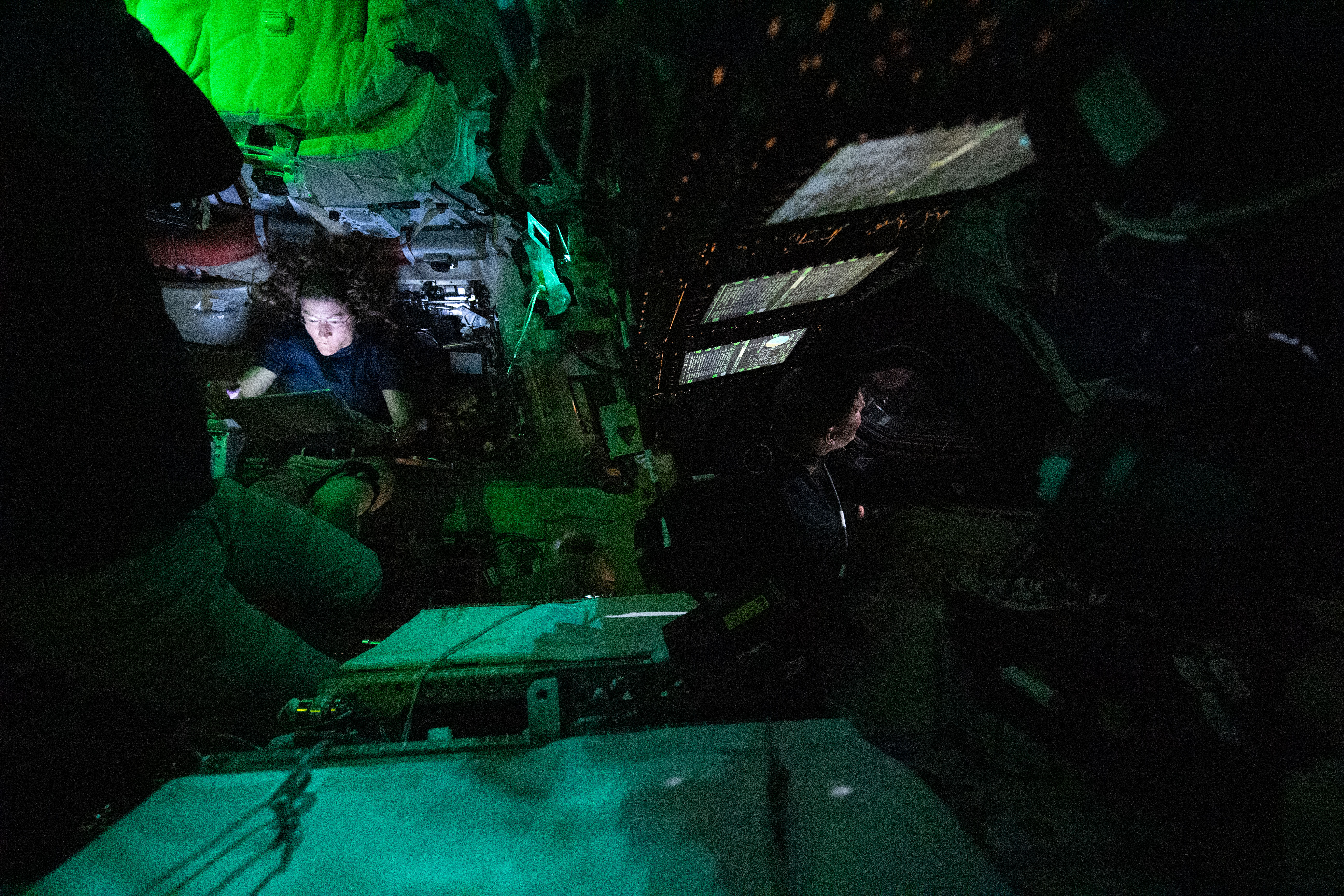
NASA astronaut Christina Koch reads on a tablet in the dimly lit Orion crew capsule in this April 3, 2026, photo. To the right of the image’s center, CSA (Canadian Space Agency) astronaut Jeremy Hansen is seen in profile peering out of one of Orion’s windows. Lights are turned off to avoid glare on the windows.
On the third day of the Artemis II mission, the astronauts began preparing Orion’s cabin for lunar flyby. They also exercised, practiced medical response procedures, and tested the spacecraft’s emergency communications system in deep space.
Keep up with the astronauts’ activities by reading the Artemis blog and watching NASA’s 24/7 live feed.
Image credit: NASA
Illuminated in Orion
NASA astronaut Christina Koch reads on a tablet in the dimly lit Orion crew capsule in this April 3, 2026, photo. To the right of the image’s center, CSA (Canadian Space Agency) astronaut Jeremy Hansen is seen in profile peering out of one of Orion’s windows. Lights are turned off to avoid glare on the windows.
On the third day of the Artemis II mission, the astronauts began preparing Orion’s cabin for lunar flyby. They also exercised, practiced medical response procedures, and tested the spacecraft’s emergency communications system in deep space.
Keep up with the astronauts’ activities by reading the Artemis blog and watching NASA’s 24/7 live feed.
Image credit: NASA
#788: Life’s Molecules Form in Space
Main sequence stars spend most of their time being… normal. Fusing hydrogen into helium in their cores. Producing radiation. But as their stockpiles of hydrogen run out they switch to other fuels, starting to climb the ladder of the periodic table of elements. And this is when things get weird. As we get more and more observations of the cosmos, our understanding gets more detailed. In this episode we look at all the ways a star can die and the updates that we've learned in the past 20 years of Astronomy Cast.
Show Notes- Origin of life theories: abiogenesis, warm ponds, ice chemistry, hydrothermal vents
- Astrobiology approach: studying extreme environments on Earth
- Discovery of organic molecules in space (amino acids, alcohols, PAHs)
- Spectroscopy: how astronomers identify molecules in space
- Cold molecular clouds as factories for complex chemistry
- Detection of amino acids in asteroids (Ryugu & Bennu)
- Role of comets & asteroids in delivering water and life’s ingredients
- Panspermia hypothesis: life’s building blocks may come from space
- Complexity of molecular formation beyond Earth
- Potential habitats: Europa & Enceladus
- Importance of sample return missions
- Key idea: ingredients for life are widespread in the universe
Fraser Cain:
Astronomy Cast, Episode 788 Life's Molecules in Space. Welcome to Astronomy Cast, our weekly facts-based journey through the Cosmos, where we help you understand not only what we know, but how we know what we know.
I'm Fraser Cain. I'm the publisher of Universe Today. With me, as always, is Dr. Pamela Gay, a Senior Scientist for the Planetary Science Institute and the Director of CosmoQuest. Hey, Pamela.
Dr. Pamela Gay:
Hey, Fraser.
Fraser Cain:
How you doing? I just keep mixing it up on you, and good, good. Just stay frosty.
These introductions, I may just start with other questions. Who knows what's going to happen, but clearly we have just fallen into a greetings rut. We need to clean this up.
Here we are. Is there any news that people can use, newsable news?
Dr. Pamela Gay:
They want to use?
Fraser Cain:
Have you seen Project Hail Mary? I have not, so we can't even talk about whether or not we liked it or not.
Dr. Pamela Gay:
I know.
Fraser Cain:
I guess you could say whether you liked it. Did you like it? I liked it.
I really, really liked it. Did you love it?
Dr. Pamela Gay:
I think so. Okay. I'm not sure I'm at the, I will buy the Lego of the Hail Mary spaceship stage love it, but I wouldn't buy the beer stein of it.
Fraser Cain:
That feels like it's a fairly low bar for you, though. You will Lego almost anything.
Dr. Pamela Gay:
I'm running out of shelf space, so the bar had to move.
Fraser Cain:
Oh, okay. All right. All right.
The theory of evolution explains how life takes on its wildly different forms, but how did life get started in the first place? It appears the universe has been making life's molecules in space for billions of years, setting up the conditions for life everywhere. All right, Pamela.
So the old school, the, the, the traditional idea, let's explain, explain this idea of a biogenesis. We'll start there as this, like, where did life come from and what did people used to think?
Dr. Pamela Gay:
Well, the, the older scientific way of looking at this was you, you have warm, gooey gunk getting struck by lightning and molecules forming. And somehow this combination of warm, gooey, carbonaceous goodness and electricity led to life in a very Frankenstein kind of way.
Fraser Cain:
And there were experiments that were able to prove that you could make things like amino acids. Yeah. The molecules in this kind of process.
Dr. Pamela Gay:
And they did a really good job of creating the molecules, but they couldn't get the molecules to suddenly become cells.
Fraser Cain:
No, of course not.
Dr. Pamela Gay:
Well, they tried. They did try.
Fraser Cain:
Yeah. Yeah. Like, come on.
Like, why isn't this turning into a bug or something? Yeah. Just keep zapping it.
Dr. Pamela Gay:
And what I love is, is they then turned around and they froze a bunch of the base atoms necessary to form these molecules and waited to see, would the molecules also form in ice? And this was a multi-generational experiment where everything went in decades and decades ago. Yeah.
Then got opened. And the answer was, yes, actually molecules will also form in ice. So then the answer started to broaden to, well, maybe in cold, safe places, the slow evolution of ammonia and carbon into more advanced molecules could lead to the formation of life.
And, and then astronomy hopped in and we're like, wait, wait, hold on. These molecules, we got them. We got them everywhere.
Fraser Cain:
But you, but you, but you did miss a step, which was that they also thought, well, maybe you're getting these molecules in the undersea environment.
Dr. Pamela Gay:
Yes.
Fraser Cain:
We talk about these, these volcanic vents at the bottoms of the ocean and that a lot of really interesting chemistry is happening around these things. You've got hot water. You've got a lot of, you know, those raw materials, they're being mixed and we've got completely separate ecosystems from what you have on the surface.
And so in fact, this became this entirely separate pathway to say, oh, maybe actually life on earth got started around these volcanic vents. You had enough of the raw material that, and enough chemistry going on, enough, clearly energy being dumped into this area that you just got this, this life. So, you know, there are plenty of, of weird ideas about how life could have gotten started.
And then I think you're exactly right that the, that the Senate, the astronomer said, wait a minute, we don't need any of that because it's all out there in space.
Dr. Pamela Gay:
Yeah. And then enter the astrobiologists and the astrobiologists have been diligently attempting to find places where there isn't life on the planet earth. They have looked under ice, they have looked in mines, they have looked in really nasty volcanic springs and pretty much anywhere you go, life literally does find a way.
There are currently microbes eating up radiation at Fukushima nuclear power plant. And it's, it's not like they were already hanging out there. They just decided I'm going to evolve to do the thing that needs done.
Fraser Cain:
Yeah. I wouldn't, I mean, are they consuming radiation? They are surviving despite radiation.
Dr. Pamela Gay:
They are consuming things that contain radiation and still surviving.
Fraser Cain:
Right. Yeah. Yeah.
Totally interesting side note. That's one of the most effective ways to clean industrial sites is with life, with bacteria, with plants that you can actually sort of reset. You can bring a contaminated environment, something that's been used, like has a lot of heavy metals and stuff in it back to normality just by, by growing plants, having life.
But that's a totally separate thing. So, so then, okay, so we've got like life finds a way, life can, life, wherever there's liquid water, you get life. That's cool.
And, and so let's talk about this discovery of, of just the raw materials of life and where astronomers have been finding it. All right. So let's talk about this.
Like, like I guess there's sort of like two main places and let's sort of build up the story of, and not just like say amino acids, like there's, I want to talk about all of the kinds of chemicals that play a role in life that have been found out there. Do you want to start with asteroids or just deep space?
Dr. Pamela Gay:
Um, let's, let's start with deep space cause I think that's where they found them first.
Fraser Cain:
Hmm. Okay.
Dr. Pamela Gay:
And, and this is where it comes down to, you, you have these molecules, um, but you don't know initially that they're there. What, what happens initially is you have all, all the astronomers out there with their spectrographs trying to figure out, we have these really pretty nebula, what are they made of? And when you take spectra of cool gas, you get this diversity of absorption lines that will make you want to cry if your job is to identify them.
Fraser Cain:
Yeah. Yeah. It's just a mess.
Dr. Pamela Gay:
And, and this is because molecules are capable of absorbing photons in two different ways. First of all, you have the molecules vibrating and then you also have spin going on. And, and all the different ways that, that they can absorb depends on how many connections there are, depends on the temperature, clearly that's just going to be the one I bring up over and over.
Um, and, and so when you start looking in the red part of the spectrum, the infrared part of the spectrum, you see this rich diversity of lines and then you curse at it. And part of the problem is we used to be able to just like reach for the, the spectral, uh, Atlas for everyday atoms. So hydrogen, helium, lithium, beryllium, boron, carbon, nitrogen, oxygen, yada, yada, yada.
And down in Los Alamos, they've done tremendous work, uh, defining all the different absorption lines of all the different, or emission lines of all the different ionization states for a lot of these atoms. But molecules aren't the kind of thing that places like Los Alamos are interested in. So initially there was a lot of, okay, so let's start, uh, going to the lab and hey, biologists help, um, hey, chemists help and heating up different molecules and looking to see what absorption lines occur in this, this kind of a thing.
And then you have to go through and use software to basically puzzle out, okay, this suite of absorption lines is because this cloud contains this amount of formaldehyde, this amount of tryptopane, and there's some polycyclic aromatic hydrocarbons in there for spice.
Fraser Cain:
Mm-hmm. Mm-hmm. Um, so I mean, what's, so I just did a quick check and it's formaldehyde was the first molecule that was detected in 1969.
So yeah, yeah. You know, water, formaldehyde, so, so, and that is, you know, a fairly complex molecule. Um, but it's kind of amazing that they're going and they're doing these practical experiments.
They are essentially burning these various molecules and then detecting the, you know, taking the spectra and then mapping that out onto the mess, the forest that they're seeing to be able to see the, I guess, the trees from the forest, right? But now this process, just like it's, again, it's kind of amazing how much of life's precursor molecules have been found now out there in space. Give us a sense of the, of the landscape of what's been discovered so far.
Dr. Pamela Gay:
Oh man. So, so it has gotten to the point that with some of these things, they're just like, uh, there's polycyclic aromatic hydrocarbons here because of the density of lines and they can't quite identify which one they need to blame.
Fraser Cain:
And the, and sorry, just to give people the, the translation of, of what you just said is soot.
Dr. Pamela Gay:
Yes.
Fraser Cain:
Like, like soot from a fire is, is a polycyclic aromatic hydrocarbon, a PAH.
Dr. Pamela Gay:
It's not just soot.
Fraser Cain:
Yes.
Dr. Pamela Gay:
A lot of high school chemistry classes will mix chemicals and heat them up so that you get various scents. So wintergreen, coconut, I'm violently allergic to that particular scent. All these artificial smells are actually polycyclic aromatic hydrocarbons.
PAHs, PAHs. Artificial scents are exactly what we're finding in space right now. I kind of love that.
Fraser Cain:
Yeah. There was a story like the universe smells like raspberries, but this, this, uh, nebula smells like raspberries. Yeah.
Cause it's like the same PAH that you would get in, in raspberries. I guess if you burn raspberries or whatever the smell, then you would, then you would get that.
Dr. Pamela Gay:
If you burn it, it actually like, this was one of the high school chemistry experiments I had to do and I was trying to make wintergreen and it was smelling like wintergreen. It was smelling like wintergreen. And then I got it too hot and it smelled like puke.
So keep your polycyclic aromatic hydrocarbons cool people or you will have regerts.
Fraser Cain:
Yup. Yup. But, and at this point like, uh, alcohol.
Dr. Pamela Gay:
Oh yeah. Alcohol is super common.
Fraser Cain:
Yeah. So I've got a, a kind of nerdy deep dive here, which was that you remember when we were the, the American astronomical society in Austin, like two years ago.
Dr. Pamela Gay:
Yeah.
Fraser Cain:
Okay. Yeah. Yeah.
Yeah. Yeah. Yeah.
And so we had to get into this bar and we had to provide a space fact.
Dr. Pamela Gay:
Yes.
Fraser Cain:
And I was in line behind Neil deGrasse Tyson. And, and so Tyson got hit with the question and he was like, they found alcohol in space.
Dr. Pamela Gay:
It's true.
Fraser Cain:
And then Bruce was like, come on in, sir. It was awesome.
Dr. Pamela Gay:
And we found multiple kinds of alcohol, both those that you should and those that you should not drink. Yup. We found solvents and, and here's, here's the thing.
Cold molecular clouds have all the raw atoms that have come off of stars. This is what we've been discussing the past few weeks. There's, there's the massive stars that are undergoing massive amounts of mass loss.
There's the small stars that are creating planetary nebulae. There's basically stars just can't hold on to their atmospheres. And the outer atmospheres of stars either already contain some of these heavier molecules in the case of smaller stars, like our sun, there's a certain amount of slow, uh, nuclear processes going on in atmospheres.
And then you have like the Wolf Ray stars that are just like convecting and throwing all sorts of stuff that forms dust outward.
Fraser Cain:
So you're talking about the sort of this process, how this stuff is coming together.
Dr. Pamela Gay:
Yeah. So, so all of this stuff is now in space, running rogue, gathering up in interstellar clouds. And in these cold, slow moving environments, atoms can, in the fullness of time, because again, it's cold, everything's moving super slow.
They can get close enough to bond, but everything is moving so slow that molecules aren't getting collisionally disrupted, which is what happens in warm clouds. So because they are cold, you have slower motion reactions. You have the ability for large molecules to form.
You have the ability for small molecules to come together and form bigger molecules. And it's just the slow motion clumping up of atoms into bigger and bigger things. And it's just a matter of time before you can get anything that is capable of bonding.
Fraser Cain:
Yeah. And I mean, you know, one of James Webb's, you know, we talk a lot about the red dots and the things that James Webb is doing out there at the edges of the universe. And we also talk about it's scanning the atmospheres of exoplanets, but it's not a lot of really interesting work in the solar system targeting this exact process that you're talking about.
Like one of the mysteries is that why are we finding these very complex organic chemicals in comets and things like that, places that have never been close to the sun. And now, as you said, it turns out there is this alternative way that these molecules are coming together. They're not coming together in heat, they're not coming together in water as a solvent.
They're coming together in places that are cold more slowly, but still are able to go through this process. And so there was this mystery, this paradox, like how do you get these chemicals when it was assumed that, okay, well, the comet had to be warm at some point and then it was out in the middle of nowhere and got cold and then things were kind of locked in place. But no, it turns out that you can get this process in this kind of grinding slow motion way that still gets you the same outcome, which is really good news for, because there's plenty of places that are cold out there, both in these molecular clouds in deep space as well as in the comets and asteroids.
And so now we, thanks to a couple of missions, right, we have samples of asteroids in our hands down here on earth.
Dr. Pamela Gay:
Not our hands. We would never put them in our hands. That is totally disrespectful.
Fraser Cain:
In our freezers and in our very careful calibrated lab equipment, but still in our hands, in our hot little hands. And so we've got samples of Ryugu from Hayabusa2 and we've got samples of Bennu from OSIRIS-REx. And so what have the scientists found?
Dr. Pamela Gay:
All the amino acids have now been discovered in space. And so the key thing, and this was like, I had already come up with the schedule for this show and last week they found the last of the amino acids.
Fraser Cain:
Yes. Yes. I mean, the ones used by life.
So just to be clear, there's 20 amino acids used by life. And then there's been about a hundred amino acids more that have been found in these various samples. But yeah, the last one that was used by life has been found.
Dr. Pamela Gay:
We have found all of them now. And it's really cool because amino acids, like once we know they're there, we know they can form, they can distribute themselves. They then create this really weird concept, but if you're into science fiction of the stuff of life on earth is common in the universe.
So does that set us up? And this is an astrobiology question, not an astrophysics question. So all I can do is pose the question.
This sets us up for life everywhere being built out of the same building blocks, or at least out of amino acids. And so the definition of amino acids is you have an amino group, which is N with two hydrogens attached to a carbon. Off the other side of the carbon, you have a carboxyl group, which is a carbon, a double bonded oxygen and an OH.
And then the other two bonds off of the carbon, because carbons are really bondy, is a hydrogen. And then whatever the heck wants to attach. And it's that whatever the heck wants to attach that leads to this diversity of amino acids.
So yeah, it's really cool.
Fraser Cain:
But not just amino acids. They've found peptides, which are the sort of the building blocks of proteins. So you've got all the building blocks of DNA.
You've got a bunch of the building blocks of RNA. You've got all of these additional molecules that are needed for various things by life. As you said, alcohols, poly...
Dr. Pamela Gay:
Polycyclic aromatic hydrocarbons.
Fraser Cain:
Polycyclic aromatic hydrocarbons, yeah. PAHs. It just goes on and on and on at this point.
And so now we have this issue. We have this question, which is how... If this stuff is all out there, it's being delivered as asteroids or comets are raining down on Earth early on in the history.
Dr. Pamela Gay:
And we think they're also the source of water. So the thing that we think delivered water...
Fraser Cain:
Yeah, yeah. They're delivering water. They're delivering the raw material for life.
How did they survive the impact? Because now you've got this thing that's going several tens of kilometers per second that's crashing into planet Earth. So this...
I actually did an interview with a researcher who was looking into this exact question. And he found... They did a whole pile of simulations and found under certain conditions, if the angle of the asteroid is right, that it's moving with the Earth, then the actual difference in velocity between the asteroid and the Earth is very low.
It's maybe a single kilometer per second range. And that these things will explode when they hit the atmosphere. And so they were able to simulate and find mechanisms where if the geometry was right, you got these things not being annihilated in the explosion.
And so it may very well be that, obviously, most of them are... They're going to hit the Earth and they're going to go... And then everything is going to be vaporized.
But there would be enough of this. It really looks now like life can handle the journey from Mars to Earth, this idea of panspermia. And so same thing, that while the exterior of the asteroid may ablate, you could have some of these molecules deeper inside that can survive and handle the crash, or smaller particles of dust and so on.
So this is still a bit of an unknown, yet it appears that there are mechanisms for this to be able to make that journey.
Dr. Pamela Gay:
And it's just really cool to think about how the outer solar system was cool enough that it didn't even just have to be the amino acids that were in our original molecular cloud. The outer parts of the dust and protoplanetary disk of our own solar system could have continued to form these proteins and amino acids and complex organic molecules. And then as cometary bodies and rocky bodies from the outer solar system were sent careening inwards through either interactions with stars or three-body interactions or torquing from being just Jupiter and Saturn or a thing, all these different processes that sent these objects inward allowed the baked, dry part of our solar system to become the diversity that it is today.
Nothing was the way it is today, and everything will change over time. Everything is constantly changing. But somewhere in the mix, the molecules formed somewhere, got here, or formed here.
And all these different processes can all be true at once. And you and I can be made of amino acids that formed in deep space, formed in the outer solar system, formed on Earth, formed in a plant somewhere not too far away.
Fraser Cain:
Right. I mean, most likely formed on Earth out of our bodies. The turkeys do that to us.
Our bodies, yeah. Our bodies, the chemistry and the things that we eat, but still. Yeah.
So just to show people the level of how complicated this is. So we reported on Universe Today earlier this year that they found something called pyrene which has 26 atoms. And that was the largest pH ever detected in the cold molecular cloud.
So this cold chemistry was able to create a molecule that has 26 atoms in it. And then there was something called thiopene, which is a 13-atom ring-shaped sulfur-bearing molecule. And that was detected, again, in a cold molecular cloud.
And you just wonder, if we're finding these things hundreds, if not thousands of light years away with our telescopes, if you actually ran a spacecraft through there and scooped up all of the molecules that you could find, how far would this go? How complicated would these molecules go? And so I think the takeaway that I've really been getting as a journalist in the last 10 years of doing this job is that the emphasis is now moving away from what weird conditions down here on Earth set forth the process of life on Earth, and instead, what inevitable processes have been happening, grinding away out there in the cosmos for billions of years, and then this stuff was delivered to the surface of planets to some amount. These things would be brought into the protoplanetary system and potentially kept cool and delivered by meteorites. It just gets weird.
And then it just takes this idea of the Fermi Paradox and goes, well, man, life should really be everywhere. And so why isn't it?
Dr. Pamela Gay:
I mean, just to give you an example of how weird the chemistry can get, take a world like Europa. It has convection. It has ice that is recycling and moving.
We know these amino acids can form in ices. It has liquid beneath. There's debate over whether or not there are hydrothermal vents.
I was talking to someone who's like, no, Paul Byrne's paper is wrong. And so I'm waiting to see that takedown in the journals occur.
Fraser Cain:
Yeah. See it in a journal, not over a beer or in YouTube comments.
Dr. Pamela Gay:
It was at least a researcher I was talking to. And so there is the potential for both the hot and the cold all being in process in this one world that has oceans. And I just love thinking about that.
Things that make me want to live long enough for us to have probes that go tell us what's under the ice.
Fraser Cain:
Yes.
Dr. Pamela Gay:
I hate that we're at that point now.
Fraser Cain:
Right. Yeah. But I mean, we're going to have, eventually, some mission go to Enceladus.
It's going to fly through the plumes and try to detect the presence of whatever is down there. And there's some really interesting ideas. I know Sarah Walker is working on this idea of assembly theory that you may not be able to detect the raw material of life directly, but that life seems to create more complex molecules than non-life.
Dr. Pamela Gay:
Yes.
Fraser Cain:
And so if you take samples and you detect a lot of just more complicated molecules in there, then there's a high likelihood that life is what's generating it. And life, did you know what life is? You don't know, it doesn't matter.
Complex molecules, the more complex the molecules are, the more life is probably responsible in some way. Yeah. Yeah.
And then you think about the places where you could get samples. I mean, it was just like, turns out bringing samples of asteroids home was incredibly scientifically useful. Now we want comets.
Now we want samples of comets from deep space, like the long period comets. What about an interstellar object?
Dr. Pamela Gay:
Yes.
Fraser Cain:
Imagine doing a sample return mission from an interstellar object. That would be, oh man, that would be perfection.
Dr. Pamela Gay:
And we have the technology to do all these things. Totally do. We just don't have the funding.
Fraser Cain:
Yes. The will and the funding.
Dr. Pamela Gay:
Yeah. I'm going to just insert the political rant on how money gets spent around the globe and we'll move on from there.
Fraser Cain:
More money on space science and more sample return missions from interstellar objects, please. Yes.
Dr. Pamela Gay:
I said that so aggressively, my camera shook.
Fraser Cain:
Yikes. Bold. All right.
So there you go. Life finds a way and it turns out the precursors of life is everywhere out there in space. Thanks, Pamela.
Dr. Pamela Gay:
Thank you, Fraser. And thank you so much to everyone who funds us through Patreon and puts up with me destroying your names on a regular basis. You allow us to do what we do.
Astronomy Cast is here thanks to the amazing support of all of our patrons at patreon.com slash astronomycast. This week we would like to thank by name a bulky 60, Adrian Bradley, Alex Cohen, Andrea Segel, Andy Moore, Antonio Reese, Arthur Button Brook, Astro Zatz, Beat Fares, Benjamin Mueller, Bob Blanswitz, Brad W. Nelson, Brian Breed, Brock, Bryce 80, Carolyn, Charles Peck, Chris, Christopher Cup, Claudia Mastroianni, Conrad Hailing, Craig Fisher, Dan Skelton, Daniel Otte, Dave Gallagher, David Bogarty, David Harvey, David Schlatt, Dean Case, Derek Buckley, Doc Knappers, Doug Pearson, Dwayne Clare, Eron Zegev, Eric Lee, Eva Joata, Flower Guy, Frodo Tanenbaugh, George Henry Schneider, Ghoul Bucket, Glenn Howell, Greg Gee, Gregory Singleton, Heather Lane, Hu Shen, J.R. Conlin, Jaco Danar, James Michael Nichols, Jan Benisse, Jason Rutherford, Jeanette Wink, Jennifer Bills, Jeroen, Jim of Everett, Joe McTeon, John Chenenbaugh, John Jers, John Thays, Jonathan Poe, Joshua Queen, Justin Bernow, Carl Daldin, Christian Van Der Heiden, Kelly, Kevin Beamer, Kimberly Reck, Cooper Belt Transport dot space, Laura Kettleson, Leslie, Lonnie Spencer, Lynn Raymond, Margaret Fester, Mark Reynolds, mark stephen rasnack matt vallas madam 19 whw 1961 supersymmetrical michael perchelle michael regan mike dog morgan gordon morgan jordan natalie metzger nicholas merit noah albertson olgar patrick coleman paul lucas pete hall in y phyllis foster rajiv archery rian van lerop riii robert glenka robert swain ronan french russell qualls sergio sansevero john and sarah scott briggs scott wallace sherry hackett soaker 117 steven steven coffee stewart rider taz tally the brain thomas vertigo tim mckee tim mcmacken tom rustland tricor verne mere wess william graf and znar bartz thank you all so much and i'm so sorry about my pronunciation you are amazing my pronunciation is not if you too would like to hear me struggle with your name please join our patreon at the five dollar and up level it's patreon.com slash astronomy cast
Fraser Cain:
all right thanks everyone and we will see you next week
Dr. Pamela Gay:
bye everyone
Live ShowTrump administration proposes massive budget cuts to science
The White House budget proposal would also curb federal payments for scientific publishing
Where is Artemis II now? NASA mission is now closer to moon than Earth
The third day of the Artemis II mission was relatively quiet, as four astronauts continued on their trek to fly around the moon
The mathematical formula that reveals when Easter is every year
You can track the start of spring and the phases of the moon—or you can turn to a formula by mathematician Carl Friedrich Gauss