
Feed aggregator
Our fancy salt obsession is harming our health
Our fancy salt obsession is harming our health
Iodised salt has become uncool but many of us need to eat more iodine
Iodised salt has become uncool but many of us need to eat more iodine
Bypass the Strait of Hormuz with nuclear explosives? The U.S. studied that option in the 1960s
Newt Gingrich raised eyebrows with a social media post about using nuclear bombs to cut a new channel in the Strait of Hormuz. There’s history there
We're solving the fundamental mystery of how reality is glued together
We're solving the fundamental mystery of how reality is glued together
Night Sky Network Celebrates Artemis II
1 min read
Night Sky Network Celebrates Artemis IIToday, the crew of Artemis II reaches a milestone, traveling farther than any humans in recorded history, as they orbit the far side of the Moon, roughly 4,000 miles above the lunar surface.
You can watch this historic broadcast on NASA’s YouTube channel today, April 6, 2026, at 10 AM Pacific (1 PM Eastern), or on NASA+.
Be sure to celebrate with your communities with the following NSN resources:
- Weird Ways to Observe the Moon
- Why Does the Moon Have Phases?
- Exploring Moon Phases
- Skywatcher’s Guide to the Moon
- Why Doesn’t the Moon Fall to Earth?
- Moon Myths from Around the World
- Apollo at 50 Moon Toolkit
- Can You See The Flag On the Moon?
- Earth Craters and Moon Map
From us here at Night Sky Network, Godspeed Integrity, and the crew of Artemis II!
–Vivian White and Kat Troche
The NASA Night Sky Network Team
Night Sky Network Celebrates Artemis II
1 min read
Night Sky Network Celebrates Artemis IIOn April 6, 2026, the crew of Artemis II reached a milestone, traveling farther than any humans in recorded history, as they orbited the far side of the Moon, roughly 4,000 miles above the lunar surface.
You can rewatch this historic broadcast on NASA’s YouTube channel or on NASA+.
Be sure to celebrate with your communities with the following NSN resources:
- Weird Ways to Observe the Moon
- Why Does the Moon Have Phases?
- Exploring Moon Phases
- Skywatcher’s Guide to the Moon
- Why Doesn’t the Moon Fall to Earth?
- Moon Myths from Around the World
- Apollo at 50 Moon Toolkit
- Can You See The Flag On the Moon?
- Earth Craters and Moon Map
From us here at Night Sky Network, Godspeed Integrity, and the crew of Artemis II!
–Vivian White and Kat Troche
The NASA Night Sky Network Team
Grants
To submit a request, visit NASA General Information Request Form and complete the form. You will receive an automated email with the most commonly requested grant status information.
Important Instructions:
- Ensure you enter a valid email address, as replies will only be sent via email.
- The confirmation email may take a few minutes to arrive in your inbox.
How to Fill Out the Form:
- Category: Select “Procurement including Grants & Cooperative Agreements.”
- Procurement Area: Choose “Grants/Agreements.”
- Grants/Agreements Activity: Select “Grant Status.”
- Required Information: Provide either a Grant Number, Purchase Requisition Number, or both.
Guidance Regarding OMB Memorandum M-25-14 and Recent Temporary Restraining Orders
Update on Diversity, Equity, Inclusion, and Accessibility (DEIA) Executive Orders – January 29, 2025
On January 23, 2025, NASA’s Office of Procurement (OP) released a memorandum for the NASA contractor and grant community regarding Executive Order “Initial Rescission of Harmful Executive Orders and Actions” and the Office of Personnel Management’s (OPM) memorandum “Initial Guidance Regarding DEIA Executive Orders.”
Per OP’s memo, NASA grant and cooperative agreement recipients shall immediately cease and desist all DEIA activities required for their grant. This work may include but is not limited to: DEIA plan requirements, training, workshops, reporting, considerations for staffing, or any other direct or indirect grant activity related to DEIA. All grant recipients shall notify their cognizant Grant Officer if they identify requirements within their grants that are in violation of this guidance. Your Grant Officer’s contact information can be found on your NF 1687, Notice of Award for Grant and Cooperative Agreement (NOA).
Thank you for your work and partnership with NASA.
In FY2025, NASA separated the Terms and Conditions from the GCAM to create a standalone document. This document outlines both the general and specific terms and conditions and applies to all awards issued under 2 CFR 1800 (NASA’s adoption of 2 CFR 200.)
NASA Grant and Cooperative Agreement Terms and Conditions – January 2026
Administrative Supplement Requests Templates :
No Cost Extension (NCE) Request Form
Other Administrative Supplement Request Form
Principal Investigator (PI) Change Request Form
Period of Performance (POP) Change Form
Submit via email to NSSC-ADMIN-SUPPLEMENT REQUEST
PI Transfer Requests:
Submit via email to NSSC-Grants-PI-Transfer
NASA Insignia GuidelinesGrantees are strongly encouraged to use the NASA Insignia Format identified in the guidelines at NASA Insignia Guidelines for NASA Grantees. These guidelines aim to increase awareness of NASA’s mission activities via Grantee partnerships for a broader and more diverse population.
Payment Management SystemNASA uses a service provider, currently the Department of Health and Human Services (HHS) Payment Management System (PMS), to provide Federal funds to recipients. PMS will provide instructions to the recipients for registering and requesting funds through the system.
NASA is responsible for routine post-award monitoring on all awards, regardless of the award’s risk determination. At a minimum, routine monitoring includes reviewing award recipients’ annual performance reports, semi-annual Federal Financial Report (FFR), and Transactions Testing Review.
All NASA award recipients must submit annual performance reports. Annual reports are due to NASA 60 days prior to the annual anniversary of the award’s POP start date (e.g., if the POP of an award is October 1 – September 30, the report would be due 60 days prior to October 1.)
- Final Performance Reports: Submit via email to NSSC-CloseOut@mail.nasa.gov
- Performance Reports: Submit via email to NSSC-Grant-Report@mail.nasa.gov
Recipients will submit their semi-annual FFRs in PMS:
Period 1 (October 1 – March 31): Due by April 30 each year.
Period 2 (April 1 – September 30): Due by October 30 of each year.
Final FFRs are due 120 days after the end of the POP
Additional information and training are available on the Payment Management System website at https://pms.psc.gov/. The PMS help desk number is 1-877-614-5533.
FormsPost-Award Certifications and Representations
Current and Pending Support (CPS) Form
NASA Pre-Award and Post-Award Disclosure Requirements
- Title 2: Grants and Agreements
- 14 CFR 1274: Cooperative Agreements with Commercial Firms (Rescinded January 2021)
- 14 CFR 1275: Research Misconduct
NASA Grant and Cooperative Agreement Manual (GCAM): NASA’s Grant Manual for Proposers and Recipients
The NASA Grant and Cooperative Agreement Manual (GCAM) provides pre and post award policy guidance to NASA proposers and award-managing personnel and award recipients to implement government-wide and NASA-specific regulations for applying for, awarding and administering grants and cooperative agreements with educational and non-profit organizations; State, local, and Indian tribal governments; and for-profit organizations.
NASA Grant and Cooperative Agreement Terms and ConditionsIn FY2025, NASA separated the Terms and Conditions from the GCAM to create a standalone document. This document outlines both the general and specific terms and conditions and applies to all awards issued under 2 CFR 1800 (NASA’s adoption of 2 CFR 200.)
NASA implemented the Federal-wide research terms and conditions for all research and research-related grant and cooperative agreement awards issued under 2 CFR 1800 (NASA’s adoption of 2 CFR 200). The Research Terms and Conditions implement the requirements of the Uniform Guidance and includes three companion documents:
RTC Appendix A: Prior Approval Matrix, RTC Appendix B: Subaward Requirements, and RTC Appendix C: National Policy Requirements).
The Research Terms and Conditions and companion documents are accessible on the NSF website.
NASA Office of Inspector GeneralTo file a complaint regarding denial of equal opportunity or discrimination based on race, color, national origin, sex, disability, or age; go to
https://oig.nasa.gov/hotline.html
1-800-424-9183
300 E Street, S.W. Suite 8V39
Washington, DC 20546-0001
NASA OIG Hotline
http://missionstem.nasa.gov/filing-a-complaint.html
Grants.gov
NSSC Grants Payment Package
NASA Research Opportunities Online (NSPIRES)
System for Award Management (SAM)
Grants
To submit a request, visit NASA General Information Request Form and complete the form. You will receive an automated email with the most commonly requested grant status information.
Important Instructions:
- Ensure you enter a valid email address, as replies will only be sent via email.
- The confirmation email may take a few minutes to arrive in your inbox.
How to Fill Out the Form:
- Category: Select “Procurement including Grants & Cooperative Agreements.”
- Procurement Area: Choose “Grants/Agreements.”
- Grants/Agreements Activity: Select “Grant Status.”
- Required Information: Provide either a Grant Number, Purchase Requisition Number, or both.
Guidance Regarding OMB Memorandum M-25-14 and Recent Temporary Restraining Orders
Update on Diversity, Equity, Inclusion, and Accessibility (DEIA) Executive Orders – January 29, 2025
On January 23, 2025, NASA’s Office of Procurement (OP) released a memorandum for the NASA contractor and grant community regarding Executive Order “Initial Rescission of Harmful Executive Orders and Actions” and the Office of Personnel Management’s (OPM) memorandum “Initial Guidance Regarding DEIA Executive Orders.”
Per OP’s memo, NASA grant and cooperative agreement recipients shall immediately cease and desist all DEIA activities required for their grant. This work may include but is not limited to: DEIA plan requirements, training, workshops, reporting, considerations for staffing, or any other direct or indirect grant activity related to DEIA. All grant recipients shall notify their cognizant Grant Officer if they identify requirements within their grants that are in violation of this guidance. Your Grant Officer’s contact information can be found on your NF 1687, Notice of Award for Grant and Cooperative Agreement (NOA).
Thank you for your work and partnership with NASA.
In FY2025, NASA separated the Terms and Conditions from the GCAM to create a standalone document. This document outlines both the general and specific terms and conditions and applies to all awards issued under 2 CFR 1800 (NASA’s adoption of 2 CFR 200.)
NASA Grant and Cooperative Agreement Terms and Conditions – January 2026
Administrative Supplement Requests Templates :
No Cost Extension (NCE) Request Form
Other Administrative Supplement Request Form
Principal Investigator (PI) Change Request Form
Period of Performance (POP) Change Form
Submit via email to NSSC-ADMIN-SUPPLEMENT REQUEST
PI Transfer Requests:
Submit via email to NSSC-Grants-PI-Transfer
NASA Insignia GuidelinesGrantees are strongly encouraged to use the NASA Insignia Format identified in the guidelines at NASA Insignia Guidelines for NASA Grantees. These guidelines aim to increase awareness of NASA’s mission activities via Grantee partnerships for a broader and more diverse population.
Payment Management SystemNASA uses a service provider, currently the Department of Health and Human Services (HHS) Payment Management System (PMS), to provide Federal funds to recipients. PMS will provide instructions to the recipients for registering and requesting funds through the system.
NASA is responsible for routine post-award monitoring on all awards, regardless of the award’s risk determination. At a minimum, routine monitoring includes reviewing award recipients’ annual performance reports, semi-annual Federal Financial Report (FFR), and Transactions Testing Review.
All NASA award recipients must submit annual performance reports. Annual reports are due to NASA 60 days prior to the annual anniversary of the award’s POP start date (e.g., if the POP of an award is October 1 – September 30, the report would be due 60 days prior to October 1.)
- Final Performance Reports: Submit via email to NSSC-CloseOut@mail.nasa.gov
- Performance Reports: Submit via email to NSSC-Grant-Report@mail.nasa.gov
Recipients will submit their semi-annual FFRs in PMS:
Period 1 (October 1 – March 31): Due by April 30 each year.
Period 2 (April 1 – September 30): Due by October 30 of each year.
Final FFRs are due 120 days after the end of the POP
Additional information and training are available on the Payment Management System website at https://pms.psc.gov/. The PMS help desk number is 1-877-614-5533.
FormsPost-Award Certifications and Representations
Current and Pending Support (CPS) Form
NASA Pre-Award and Post-Award Disclosure Requirements
- Title 2: Grants and Agreements
- 14 CFR 1274: Cooperative Agreements with Commercial Firms (Rescinded January 2021)
- 14 CFR 1275: Research Misconduct
NASA Grant and Cooperative Agreement Manual (GCAM): NASA’s Grant Manual for Proposers and Recipients
The NASA Grant and Cooperative Agreement Manual (GCAM) provides pre and post award policy guidance to NASA proposers and award-managing personnel and award recipients to implement government-wide and NASA-specific regulations for applying for, awarding and administering grants and cooperative agreements with educational and non-profit organizations; State, local, and Indian tribal governments; and for-profit organizations.
NASA Grant and Cooperative Agreement Terms and ConditionsIn FY2025, NASA separated the Terms and Conditions from the GCAM to create a standalone document. This document outlines both the general and specific terms and conditions and applies to all awards issued under 2 CFR 1800 (NASA’s adoption of 2 CFR 200.)
NASA implemented the Federal-wide research terms and conditions for all research and research-related grant and cooperative agreement awards issued under 2 CFR 1800 (NASA’s adoption of 2 CFR 200). The Research Terms and Conditions implement the requirements of the Uniform Guidance and includes three companion documents:
RTC Appendix A: Prior Approval Matrix, RTC Appendix B: Subaward Requirements, and RTC Appendix C: National Policy Requirements).
The Research Terms and Conditions and companion documents are accessible on the NSF website.
NASA Office of Inspector GeneralTo file a complaint regarding denial of equal opportunity or discrimination based on race, color, national origin, sex, disability, or age; go to
https://oig.nasa.gov/hotline.html
1-800-424-9183
300 E Street, S.W. Suite 8V39
Washington, DC 20546-0001
NASA OIG Hotline
http://missionstem.nasa.gov/filing-a-complaint.html
Grants.gov
NSSC Grants Payment Package
NASA Research Opportunities Online (NSPIRES)
System for Award Management (SAM)
The Near Side of the Moon
The Near Side of the Moon
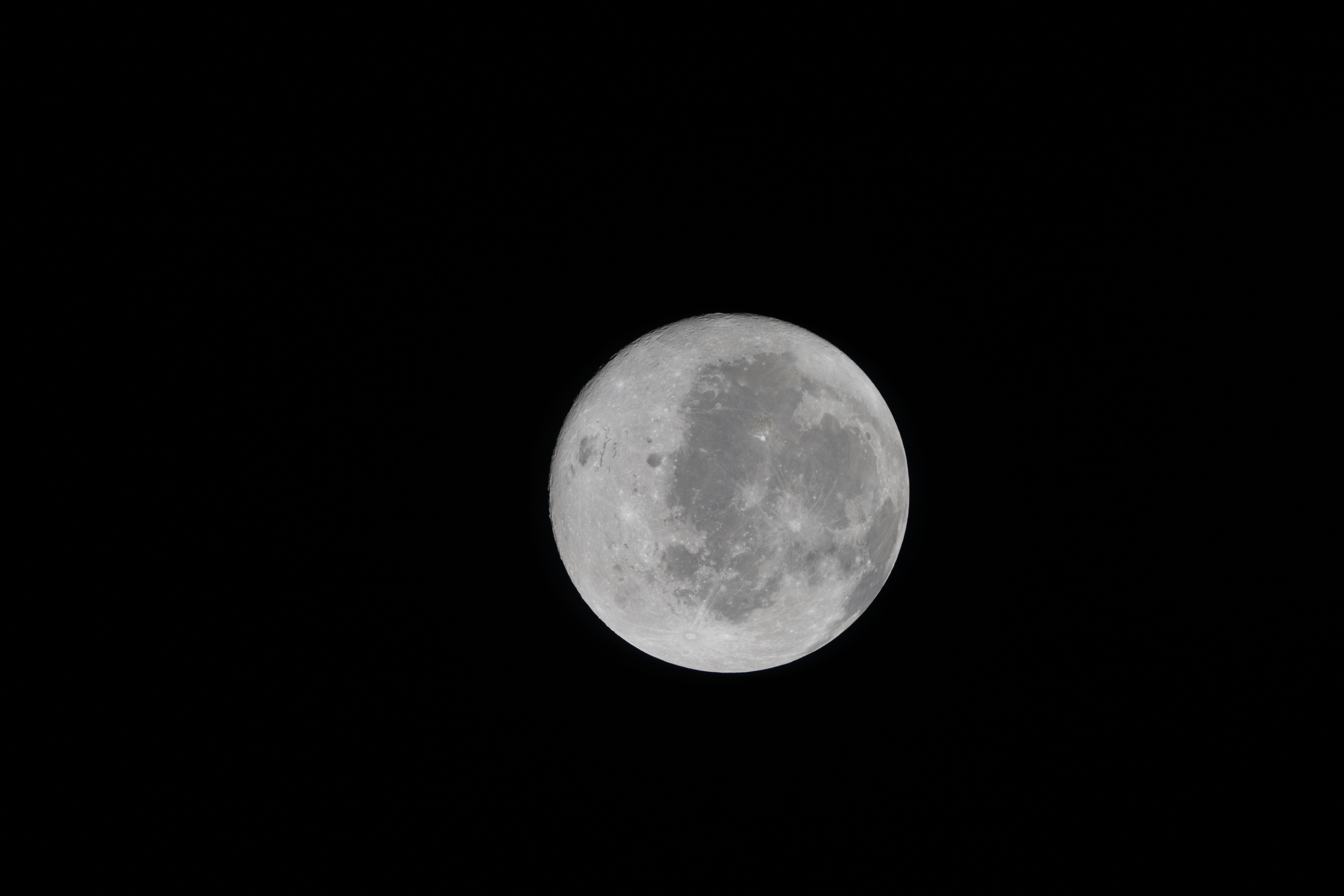
The astronauts aboard NASA’s Orion spacecraft captured this photo of the Moon’s near side on April 4, 2026. The image features dark patches at center and right; these are ancient lava flows, which are unique to this side of the Moon.
The Artemis II astronauts – astronauts Victor Glover, Reid Wiseman, and Christina Koch of NASA and CSA (Canadian Space Agency) astronaut Jeremy Hansen – are set to fly around the Moon on April 6, 2026. Join us for live coverage of the event, starting at 1 p.m. EDT.
Image credit: NASA
The Near Side of the Moon
The astronauts aboard NASA’s Orion spacecraft captured this photo of the Moon’s near side on April 4, 2026. The image features dark patches at center and right; these are ancient lava flows, which are unique to this side of the Moon.
The Artemis II astronauts – astronauts Victor Glover, Reid Wiseman, and Christina Koch of NASA and CSA (Canadian Space Agency) astronaut Jeremy Hansen – are set to fly around the Moon on April 6, 2026. Join us for live coverage of the event, starting at 1 p.m. EDT.
Image credit: NASA
NASA’s Artemis II mission is about to pass behind the moon
The fifth day in space for Artemis II saw space suit tests, an Easter egg hunt and final preparations for an imminent close encounter with the moon
Novel approach to clearing brain waste shows promise for Alzheimer's
Novel approach to clearing brain waste shows promise for Alzheimer's
NASA’s Artemis II, endangered species and oil, low western U.S. snowpack
An update on NASA’s historic moon mission, alarm over the low snowpack in the western U.S. and a move that could endanger wildlife in the Gulf of Mexico
JWST Spies Once-hidden Treasures in the W51 Starbirth Crèche
Star formation is a dramatic and complex process that erupts throughout the Universe. Yet, a lot of the action gets hidden by clouds of gas and dust. That's where observatories such as the James Webb Telescope JWST and the Atacama Large Millimeter Array (ALMA) come in handy. They use infrared light and radio waves, respectively, to pierce the veil surrounding the process of starbirth.