
Feed aggregator
NASA’s Experimental Fabrication Branch Fuels Aircraft Innovation
At NASA, innovation begins well before an aircraft takes flight. The Experimental Fabrication Branch at NASA’s Armstrong Flight Research Center in Edwards, California, transforms engineering concepts into mission‑ready hardware for research aircraft and technology development. This capability helps the agency deliver advancements that benefit the public by improving aviation safety, efficiency, and sustainability.
The branch serves as a full‑service manufacturing, modification, and repair center for NASA Armstrong’s fleet of research and science aircraft. The team specializes in precision machining, sheet‑metal forming, aircraft tubing, welding, additive manufacturing, composite fabrication, and structural repairs and modifications. Their broad expertise allows them to build custom hardware for both aerospace and ground‑based applications.
Ron Harris, an engineering technician, works in the Experimental Fabrication Branch at NASA’s Armstrong Flight Research Center in Edwards, California, on Thursday, March 14, 2023. The branch transforms engineering concepts into hardware for research aircraft and technology development, supporting advances in aviation safety, efficiency, and sustainability. NASA/Steve Freeman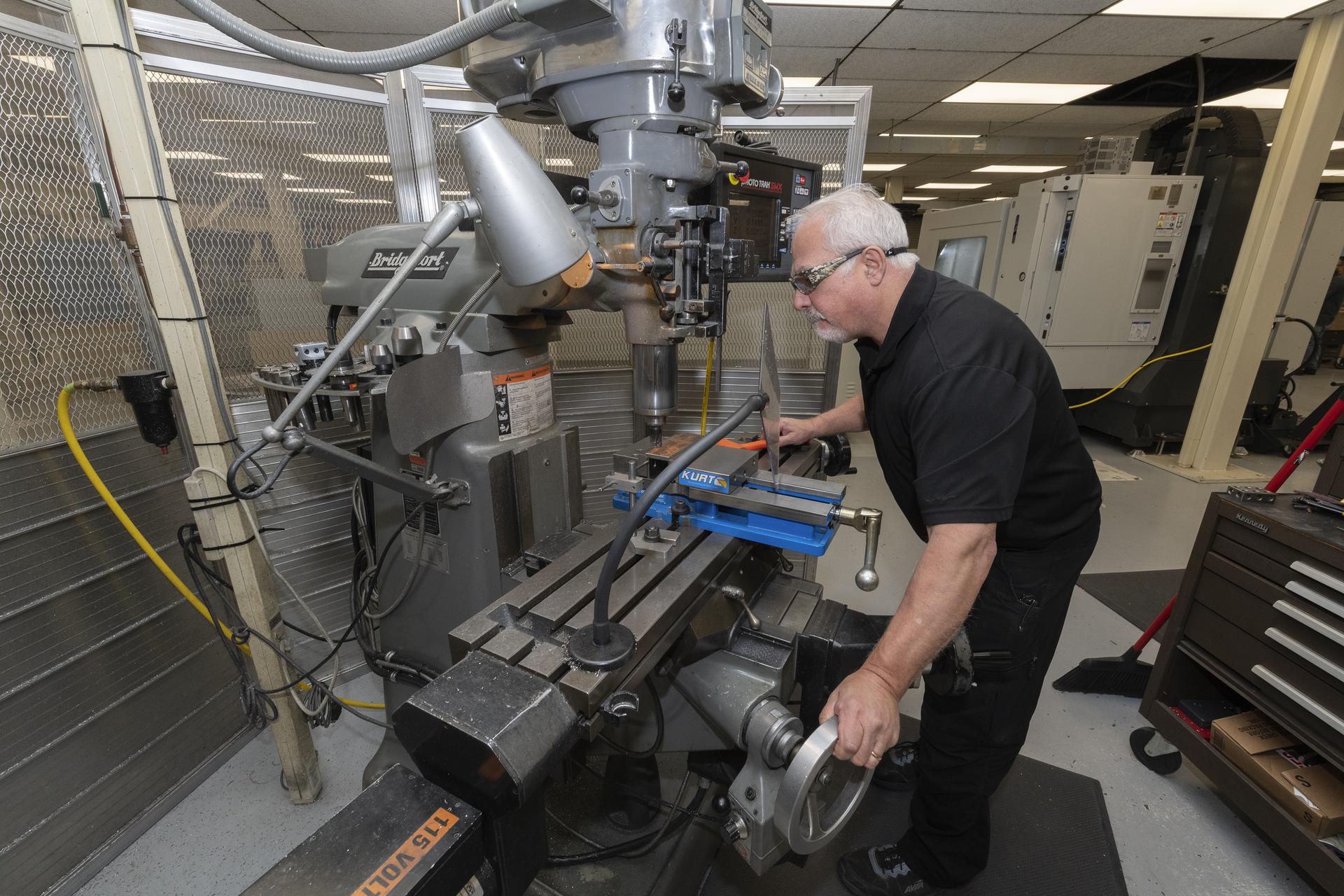
Engineering technicians in the branch bring decades of experience as master fabricators. They design and build unique components, rapid prototypes, and flight‑critical structures that meet NASA’s rigorous safety and performance standards. Whether shaping composite structures by hand or producing precision‑milled parts, the team builds every component with mission success in mind.
Experimental Fabrication supports a wide range of NASA research efforts. When teams at NASA Armstrong designed the AIRVUE (Airborne Instrumentation for Real‑world Video of Urban Environments) sensor pod to support autonomous‑flight research, the fabrication team converted digital designs into a fully functional structure. They ensured the pod met strict safety requirements before deploying it for test flights.
An engineering technician works in the Experimental Fabrication Branch at NASA’s Armstrong Flight Research Center in Edwards, California, on Thursday, March 14, 2023. The branch transforms engineering concepts into hardware for research aircraft and technology development, supporting advances in aviation safety, efficiency, and sustainability.NASA/Steve Freeman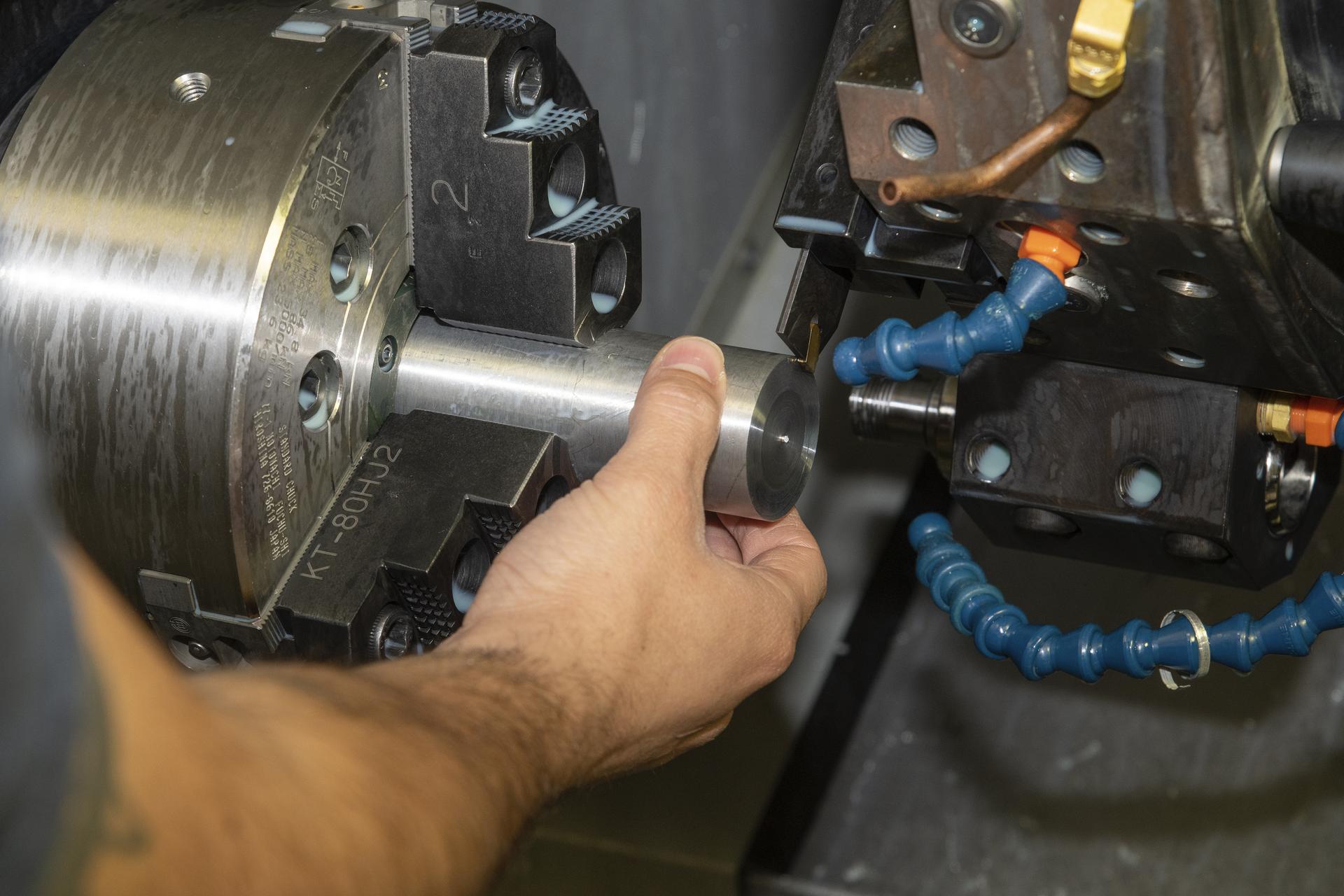
Beyond mission support, the Experimental Fabrication Branch contributes to NASA’s STEM engagement efforts. During local robotics competitions, technicians use mobile fabrication equipment to repair student‑built robots and demonstrate machining and welding techniques. These demonstrations introduce students to NASA’s technical career paths and show how advanced manufacturing supports aerospace research.
The branch uses modern computer-aided design and computer-aided manufacturing tools, including Pro E/Creo, MasterCam, and SolidWorks, to convert digital models into hardware. This early integration of engineering and fabrication helps shorten development timelines and reduce design‑to‑hardware mismatches. Unlike environments where work transitions between multiple contractors, NASA Armstrong includes the fabrication team from early design through final assembly and aircraft installation. This continuous involvement strengthens coordination with engineering teams and flight operations.
Alexis Moreno, an engineering technician, works with a fabrication machine in the Experimental Fabrication Branch at NASA’s Armstrong Flight Research Center in Edwards, California, on Monday, Nov. 6, 2023. The branch transforms engineering concepts into hardware for research aircraft and technology development, supporting advances in aviation safety, efficiency, and sustainability. NASA/Genaro Vavuris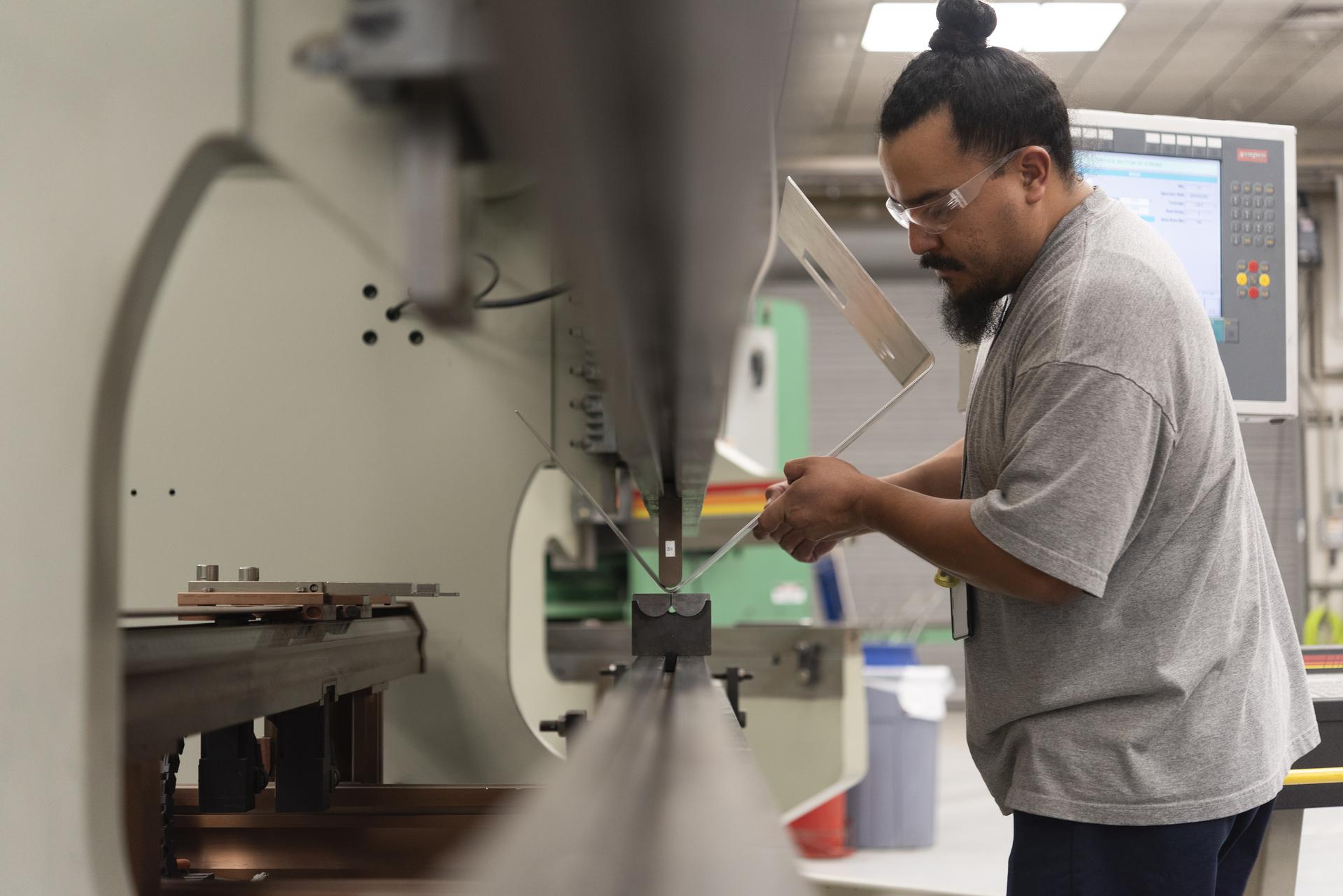
Recent projects, such as advanced wing‑model fabrication and custom lightweight aircraft floorboards, highlight the branch’s essential role in NASA Armstrong’s mission. Whether supporting experimental aircraft, enabling new technology demonstrations, or guiding students through hands‑on fabrication, the Experimental Fabrication Branch helps advance NASA’s mission for the benefit of all.
Share Details Last Updated Jun 22, 2026 EditorDede DiniusContactSarah Mannsarah.mann@nasa.govLocationArmstrong Flight Research Center Related Terms Explore More 5 min read NASA, USGS Scientists Go Rock Hounding in California’s High Desert Article 2 weeks ago 4 min read NASA’s X-59 Aircraft Flies Supersonic for First Time Article 2 weeks ago 6 min read NASA’s X-59 Prepares for First Supersonic Flight Article 4 weeks ago Keep Exploring Discover More Topics From NASAArmstrong Flight Research Center
Aircraft Flown at Armstrong
Armstrong Flight Operations
Armstrong Mission Operations
NASA's Chandra Finds Possible Supernova Remnant
NASA’s Chandra Finds Possible Supernova Remnant
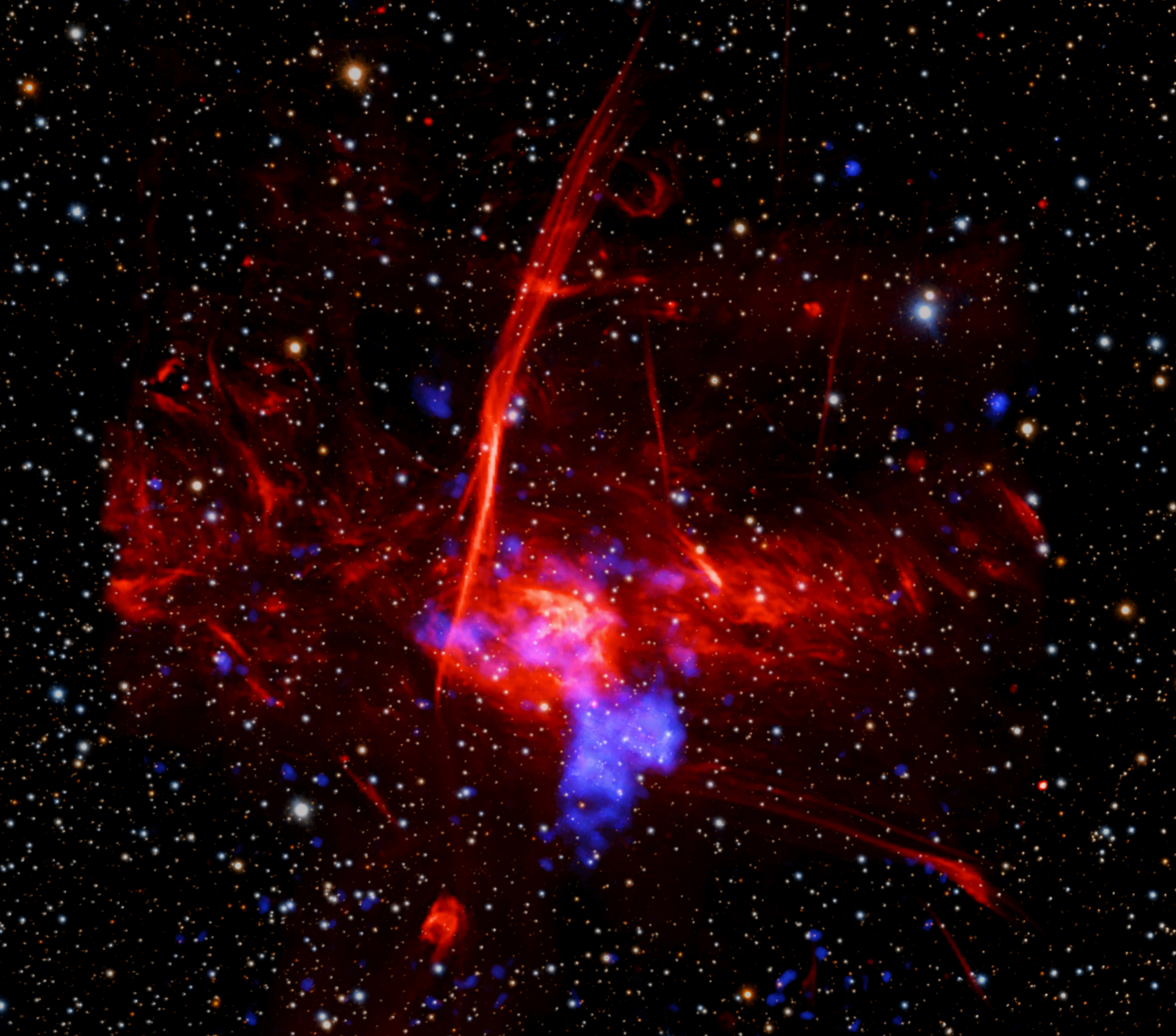
Using data from NASA’s Chandra X-ray Observatory, astronomers may have found a supernova remnant – seen in this June 11, 2026, image – in an intriguing neighborhood in the middle of the Milky Way galaxy. Supernova remnants are the expanding remains of exploded stars and provide elements like iron, oxygen, and silicon that are critical for the formation of planets and for life as we know it to form and flourish.
This new supernova remnant, if confirmed, would be one of the closest ever discovered to the supermassive black hole at the central region of our home galaxy, an exotic region crammed with massive stars, long threads of magnetic fields and dense clouds of gas orbiting rapidly around the Galactic Center.
Read more about this discovery.
Image credit: -ray: NASA/CXC/UCLA/Z. Zhu et al.; ESA/XMM-Newton; Optical: PanSTARRS; Radio: MeerKAT; Infrared (JWST): NASA/ESA/CSA/STScI; Image Processing: NASA/CXC/SAO/L. Frattare and P. Edmonds
NASA to Cover US Spacewalk 95, Host Preview News Conference
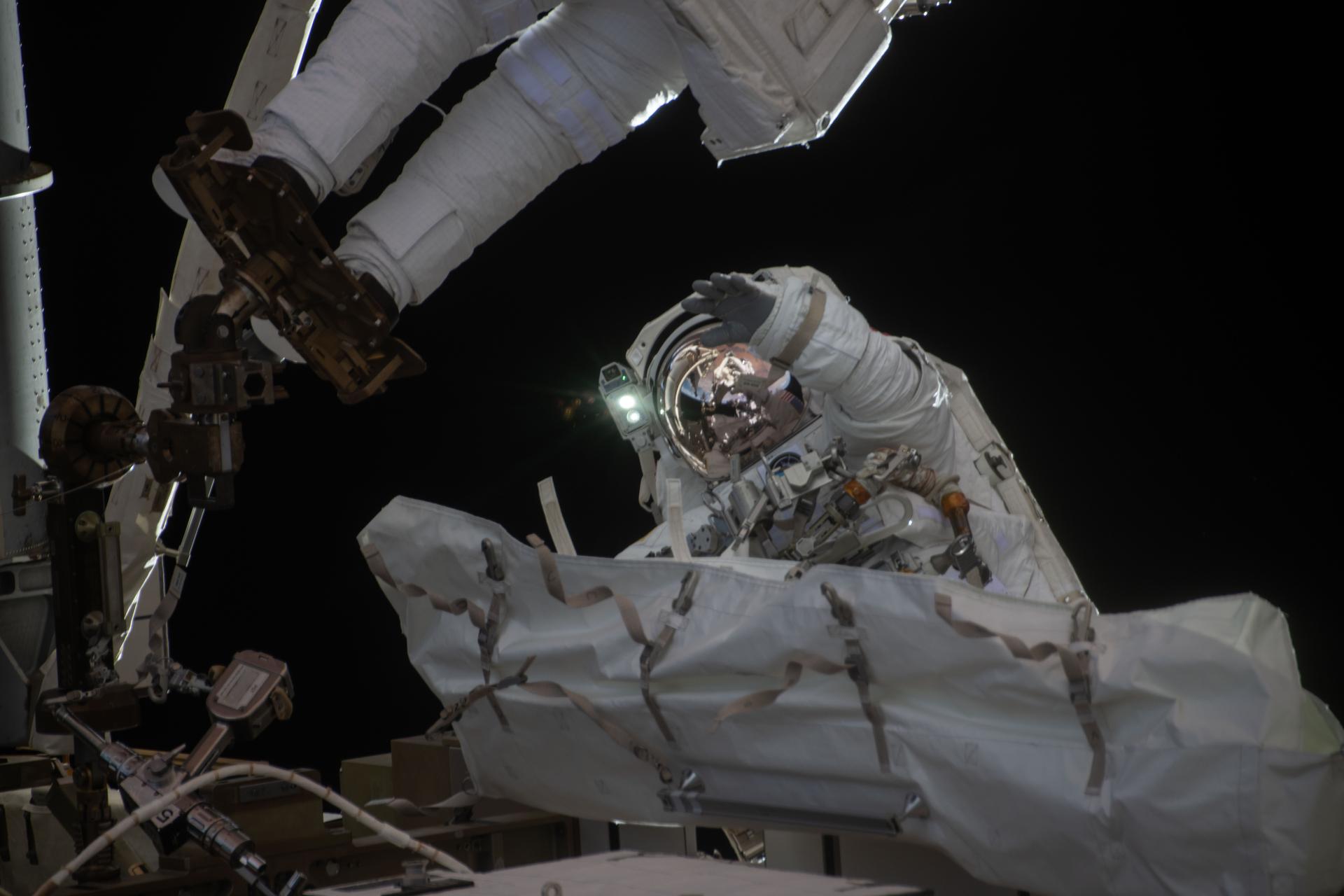
NASA astronauts will venture outside the International Space Station on Tuesday, June 30, to replace a wrist joint on the orbital complex’s Canadarm2 robotic arm. The spacewalk is scheduled to begin at approximately 8:35 a.m. EDT.
Experts from NASA and CSA (Canadian Space Agency) will preview the upcoming spacewalk during a news conference at 2 p.m. on Thursday, June 25, on the agency’s YouTube channel. The briefing will take place at NASA’s Johnson Space Center in Houston. Learn how to watch NASA content through a variety of platforms, including social media.
Participants include:
- Bill Spetch, operations and integration manager, International Space Station Program, NASA Johnson
- Fiona Antkowiak, spacewalk flight director, NASA Johnson
- Jason Dyer, deputy liaison manager, CSA
United States-based media interested in attending in person must contact the Johnson newsroom no later than 5 p.m. Wednesday, June 24, at: jsccommu@mail.nasa.gov. Media joining by phone should request dial‑in details by the same deadline. To ask a question, media must dial in no later than 15 minutes before the start of the news conference.
Tuesday, June 30
NASA astronauts Chris Williams and Jessica Meir will exit the station’s Quest airlock to replace a wrist joint that malfunctioned during normal Canadarm2 operations on May 27 after the arm drew elevated motor current and did not move as expected.
Watch NASA’s live U.S. spacewalk 95 coverage beginning at 7 a.m. EDT on NASA+, Amazon Prime, Netflix, and the agency’s YouTube channel. The spacewalk is expected to last roughly six-and-a-half hours.
NASA worked alongside CSA to understand the issue and determined a spacewalk was required to replace the joint using a spare already aboard the space station. Repairs to robotics, like Canadarm2, are normal and expected after more than 25 years of continuous operations, as the system was designed with replaceable components and planned maintenance in mind.
This spacewalk will be the second for Williams and the fifth for Meir. Williams will serve as spacewalk crew member 1 and will wear a suit with red stripes. Meir will serve as crew member 2 and will wear an unmarked suit. It will be the 280th spacewalk in support of space station assembly, maintenance, and upgrades.
To learn more about International Space Station research, operations, and its crews, visit:
-end-
Jimi Russell
Headquarters, Washington
202-358-1100
james.j.russell@nasa.gov
Sandra Jones
Johnson Space Center, Houston
281-483-5111
sandra.p.jones@nasa.gov
New-to-science spider builds trap that flings ants into the air
New-to-science spider builds trap that flings ants into the air
How menopause radically changes the brain – and what happens after
How menopause radically changes the brain – and what happens after
‘Fusogenic’ neurosurgery let paralysed pigs walk again – are we next?
‘Fusogenic’ neurosurgery let paralysed pigs walk again – are we next?
A promising natural technique to remove CO2 could backfire
A promising natural technique to remove CO2 could backfire
Interstellar Comet 3I/ATLAS Has Cold, Ancient Origins
The most recent interstellar visitor was crisscrossing our galaxy for some 10 to 12 billion years before it came near the Sun.
The post Interstellar Comet 3I/ATLAS Has Cold, Ancient Origins appeared first on Sky & Telescope.
NASA’s Webb Finds Clues to Ancient, Distant Origin of Comet 3I/ATLAS
- Webb
- News
- Overview
- Science
- Observatory
- Multimedia
- Team
- More
Image: NASA, ESA, CSA, STScI, Martin Cordiner (CUA, NASA-GSFC); Image Processing: Alyssa Pagan (STScI)
As interstellar comet 3I/ATLAS began moving away from the Sun in December 2025, astronomers took the opportunity to turn NASA’s powerful James Webb Space Telescope in its direction and capture detailed measurements of its chemical components. The comet was freshly warmed from its closest pass by the Sun, and its ancient ice had been converted to a bright coma of gas ideal for observation.
Webb captured detailed data, including chemical ratios of carbon and deuterium, also known as heavy hydrogen, that are not found in solar system comets. The results surprised researchers. Working backward, astronomers used the components that make up comet 3I/ATLAS to understand the environment in which it formed.
A paper detailing the findings published June 22 in the journal Nature.
Image: Interstellar Comet 3I/ATLAS (NIRSpec IFU) Researchers used the NIRSpec (Near-Infrared Spectrograph) instrument on NASA’s James Webb Space Telescope to map specific chemical contents of comet 3I/ATLAS as it moved away from the Sun. Image: NASA, ESA, CSA, STScI, Martin Cordiner (CUA, NASA-GSFC); Image Processing: Alyssa Pagan (STScI)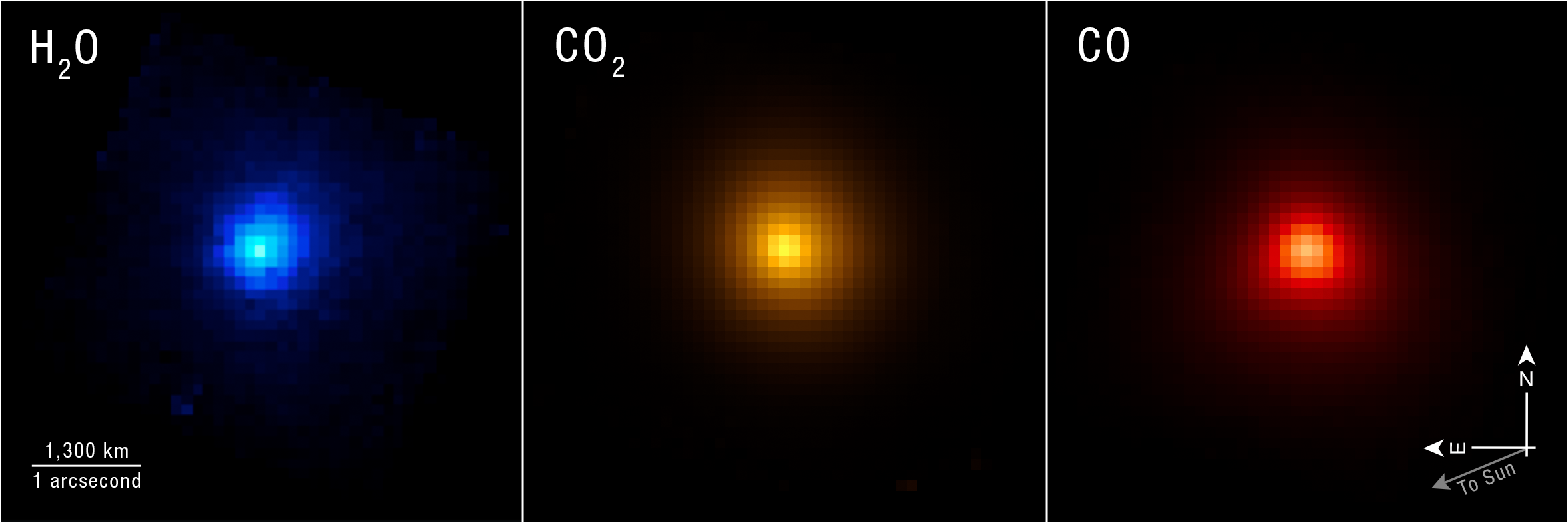
The comet’s name comes from its status as the third confirmed interstellar comet, meaning it originated outside the solar system, and the telescope that first spotted it, the NASA-funded ATLAS (Asteroid Terrestrial-impact Last Alert System).
“This was a unique opportunity to study an ancient object from the distant galaxy, probably pre-dating our Sun and solar system,” said astro-chemist Martin Cordiner of NASA’s Goddard Space Flight Center in Greenbelt, Maryland, and lead author of the study. “On the one hand, we get direct insight into that distant time and place, and on the other, we learn something about how unusual our own solar system may be.”
Cordiner and the research team joined astronomers from many sub-disciplines in taking the opportunity to get a look at 3I/ATLAS on its journey through the solar system. They received approval to interrupt Webb’s planned schedule of observations to make use of its NIRSpec (Near-Infrared Spectrograph) instrument to study the comet.
NIRSpec revealed exceptionally high levels of deuterium, about 30 times more than seen in solar system comets. This implies that 3I/ATLAS may have originated in a very cold system much earlier in the history of our galaxy. During its formation, the material that became incorporated into 3I/ATLAS was likely exposed to plenty of radiation, but not any long-term warmth that would have reprocessed its “heavy water” ice, with deuterium, into the type of H2O ice we are familiar with on Earth.
Image: 3I/ATLAS Compared to Solar System Comets These graphs lay out the significant difference in composition between the interstellar comet 3I/ATLAS and comets originating in our solar system. This very specific data helps researchers build a picture of the comet’s original planetary system. Illustration: NASA, ESA, CSA, Martin Cordiner (CUA, NASA-GSFC), Leah Hustak (STScI)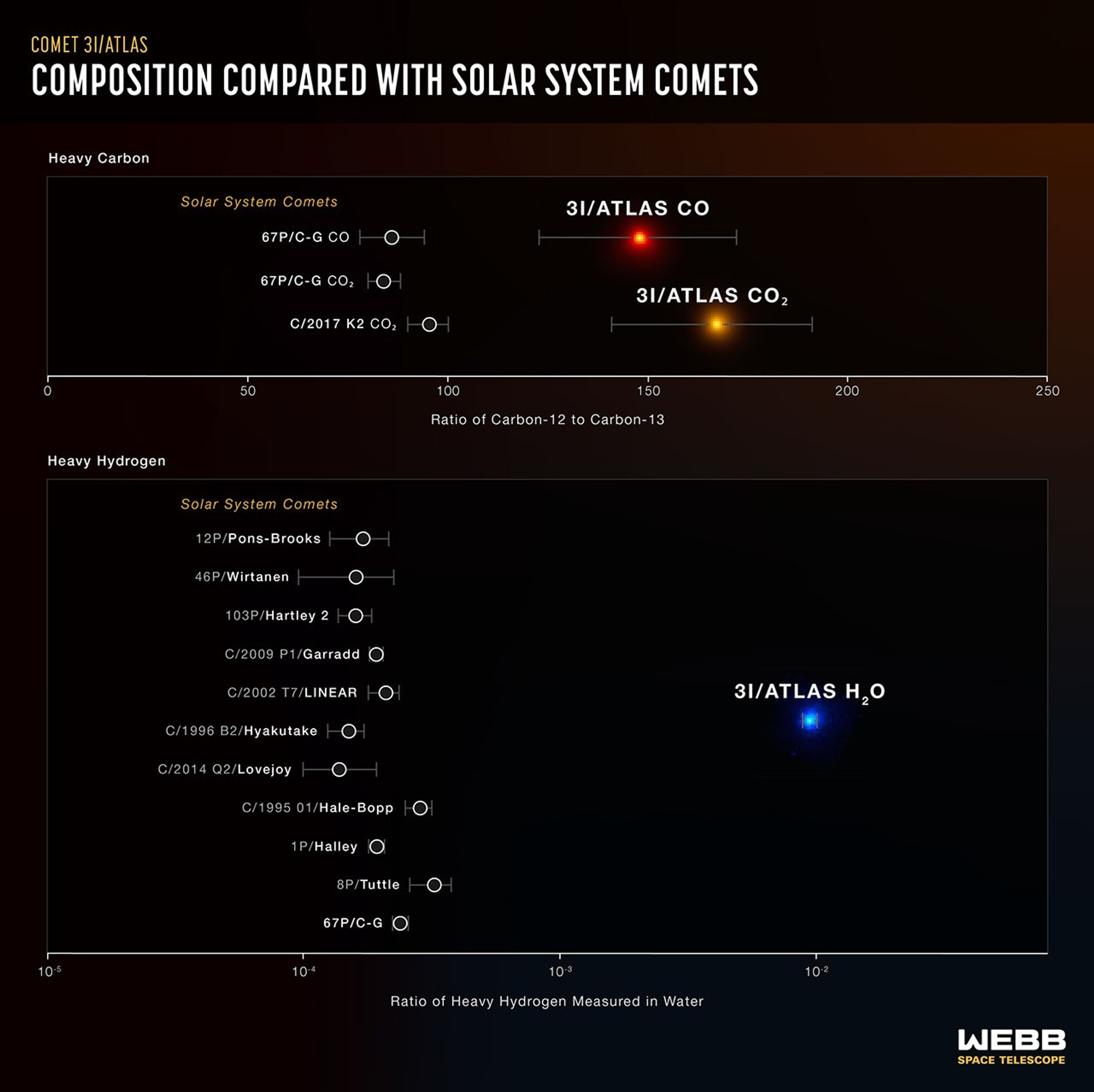
Additionally, NIRSpec showed only traces of carbon-13 compared to lighter-weight carbon-12. This also points to a very old origin for 3I/ATLAS, as stellar systems become enriched with carbon-13 over time as generations of stars are born and die in the galaxy. That is why there are higher levels of carbon-13 in our system, around our Sun, which formed relatively recently, 4.5 billion years ago.
The research team estimates that 3I/ATLAS could have formed as long as 10 to 12 billion years ago, during the universe’s “cosmic noon,” when star formation was at its height. Its young origin system was likely ensconced in a relatively cold, dense cloud. The abundance of heavy water shows that 3I/ATLAS spent its formative years in a deeply frozen state.
A separate study using the European Southern Observatory’s Very Large Telescope, led by astronomer Cyrielle Opitom of the University of Edinburgh, complements Webb’s findings with an analysis of 3I/ATLAS’s carbon and nitrogen varieties in the form of the chemical cyanide.
“For us as scientists, finding these rare isotopes is fascinating, but the bigger picture here is looking at the possibilities of prebiotic chemistry elsewhere in the galaxy,” said Stefanie Milam of NASA Goddard and co-author of the study with Cordiner. “So far, we know of only one place in the vast cosmos where chemical ingredients led to life – our solar system, our Earth. Analysis of these interstellar objects is a major step towards learning how common, or uncommon, the conditions for the evolution of life are in the universe.”
The James Webb Space Telescope is the world’s premier space science observatory. Webb is solving mysteries in our solar system, looking beyond to distant worlds around other stars, and probing the mysterious structures and origins of our universe and our place in it. Webb is an international program led by NASA with its partners, ESA (European Space Agency) and CSA (Canadian Space Agency).
To learn more about Webb, visit:
Downloads & Related InformationThe following sections contain links to download this article’s images and videos in all available resolutions followed by related information links, media contacts, and if available, research paper and Spanish translation links.
Related Images & Videos Interstellar Comet 3I/ATLAS (NIRSpec IFU)Researchers used the NIRSpec (Near-Infrared Spectrograph) instrument on NASA’s James Webb Space Telescope to map specific chemical contents of comet 3I/ATLAS as it moved away from the Sun.
3I/ATLAS Compared to Solar System Comets
These graphs lay out the significant difference in composition between the interstellar comet 3I/ATLAS and comets originating in our solar system. This very specific data helps researchers build a picture of the comet’s original planetary system.
Related Links
Read more: NASA’s Webb Detects Methane on Interstellar Comet 3I/ATLAS
Explore more: NASA’s 3I/ATLAS Observation Timeline
Watch: Interstellar Visitor is Fastest Comet Ever Recorded
Watch: ViewSpace | Interstellar Comet Measured
More Webb: News | Images | Science | Home Page
Laura Betz
NASA’s Goddard Space Flight Center
Greenbelt, Maryland
laura.e.betz@nasa.gov
Leah Ramsay
Space Telescope Science Institute
Baltimore, Maryland
Christine Pulliam
Space Telescope Science Institute
Baltimore, Maryland
Research paper published in Nature
Keep Exploring Related Topics James Webb Space Telescope
Webb is the premier observatory of the next decade, serving thousands of astronomers worldwide. It studies every phase in the…
Asteroids, Comets & Meteors
Asteroids, Comets, and Meteors Stories
Exploring Our Solar System with Webb
Interstellar Comet 3I/ATLAS is almost as old as the universe itself
The evidence is mounting: this interstellar visitor is even older and weirder than anyone thought
Webb finds clues to ancient origin of Comet 3I/ATLAS
The third identified interstellar comet in human history has a surprising chemical makeup, raising questions as to how common, or unusual, conditions in our own Solar System may be.
NASA’s Webb Finds Clues to Ancient, Distant Origin of Comet 3I/ATLAS
- Webb
- News
- Overview
- Science
- Observatory
- Multimedia
- Team
- More
Image: NASA, ESA, CSA, STScI, Martin Cordiner (CUA, NASA-GSFC); Image Processing: Alyssa Pagan (STScI)
As interstellar comet 3I/ATLAS began moving away from the Sun in December 2025, astronomers took the opportunity to turn NASA’s powerful James Webb Space Telescope in its direction and capture detailed measurements of its chemical components. The comet was freshly warmed from its closest pass by the Sun, and its ancient ice had been converted to a bright coma of gas ideal for observation.
Webb captured detailed data, including chemical ratios of carbon and deuterium, also known as heavy hydrogen, that are not found in solar system comets. The results surprised researchers. Working backward, astronomers used the components that make up comet 3I/ATLAS to understand the environment in which it formed.
A paper detailing the findings published June 22 in the journal Nature.
Image: Interstellar Comet 3I/ATLAS (NIRSpec IFU) Researchers used the NIRSpec (Near-Infrared Spectrograph) instrument on NASA’s James Webb Space Telescope to map specific chemical contents of comet 3I/ATLAS as it moved away from the Sun. Image: NASA, ESA, CSA, STScI, Martin Cordiner (CUA, NASA-GSFC); Image Processing: Alyssa Pagan (STScI)The comet’s name comes from its status as the third confirmed interstellar comet, meaning it originated outside the solar system, and the telescope that first spotted it, the NASA-funded ATLAS (Asteroid Terrestrial-impact Last Alert System).
“This was a unique opportunity to study an ancient object from the distant galaxy, probably pre-dating our Sun and solar system,” said astro-chemist Martin Cordiner of NASA’s Goddard Space Flight Center in Greenbelt, Maryland, and lead author of the study. “On the one hand, we get direct insight into that distant time and place, and on the other, we learn something about how unusual our own solar system may be.”
Cordiner and the research team joined astronomers from many sub-disciplines in taking the opportunity to get a look at 3I/ATLAS on its journey through the solar system. They received approval to interrupt Webb’s planned schedule of observations to make use of its NIRSpec (Near-Infrared Spectrograph) instrument to study the comet.
NIRSpec revealed exceptionally high levels of deuterium, about 30 times more than seen in solar system comets. This implies that 3I/ATLAS may have originated in a very cold system much earlier in the history of our galaxy. During its formation, the material that became incorporated into 3I/ATLAS was likely exposed to plenty of radiation, but not any long-term warmth that would have reprocessed its “heavy water” ice, with deuterium, into the type of H2O ice we are familiar with on Earth.
Image: 3I/ATLAS Compared to Solar System Comets These graphs lay out the significant difference in composition between the interstellar comet 3I/ATLAS and comets originating in our solar system. This very specific data helps researchers build a picture of the comet’s original planetary system. Illustration: NASA, ESA, CSA, Martin Cordiner (CUA, NASA-GSFC), Leah Hustak (STScI)Additionally, NIRSpec showed only traces of carbon-13 compared to lighter-weight carbon-12. This also points to a very old origin for 3I/ATLAS, as stellar systems become enriched with carbon-13 over time as generations of stars are born and die in the galaxy. That is why there are higher levels of carbon-13 in our system, around our Sun, which formed relatively recently, 4.5 billion years ago.
The research team estimates that 3I/ATLAS could have formed as long as 10 to 12 billion years ago, during the universe’s “cosmic noon,” when star formation was at its height. Its young origin system was likely ensconced in a relatively cold, dense cloud. The abundance of heavy water shows that 3I/ATLAS spent its formative years in a deeply frozen state.
A separate study using the European Southern Observatory’s Very Large Telescope, led by astronomer Cyrielle Opitom of the University of Edinburgh, complements Webb’s findings with an analysis of 3I/ATLAS’s carbon and nitrogen varieties in the form of the chemical cyanide.
“For us as scientists, finding these rare isotopes is fascinating, but the bigger picture here is looking at the possibilities of prebiotic chemistry elsewhere in the galaxy,” said Stefanie Milam of NASA Goddard and co-author of the study with Cordiner. “So far, we know of only one place in the vast cosmos where chemical ingredients led to life – our solar system, our Earth. Analysis of these interstellar objects is a major step towards learning how common, or uncommon, the conditions for the evolution of life are in the universe.”
The James Webb Space Telescope is the world’s premier space science observatory. Webb is solving mysteries in our solar system, looking beyond to distant worlds around other stars, and probing the mysterious structures and origins of our universe and our place in it. Webb is an international program led by NASA with its partners, ESA (European Space Agency) and CSA (Canadian Space Agency).
To learn more about Webb, visit:
Downloads & Related InformationThe following sections contain links to download this article’s images and videos in all available resolutions followed by related information links, media contacts, and if available, research paper and Spanish translation links.
Related Images & Videos Interstellar Comet 3I/ATLAS (NIRSpec IFU)Researchers used the NIRSpec (Near-Infrared Spectrograph) instrument on NASA’s James Webb Space Telescope to map specific chemical contents of comet 3I/ATLAS as it moved away from the Sun.
3I/ATLAS Compared to Solar System Comets
These graphs lay out the significant difference in composition between the interstellar comet 3I/ATLAS and comets originating in our solar system. This very specific data helps researchers build a picture of the comet’s original planetary system.
Related Links
Read more: NASA’s Webb Detects Methane on Interstellar Comet 3I/ATLAS
Explore more: NASA’s 3I/ATLAS Observation Timeline
Watch: Interstellar Visitor is Fastest Comet Ever Recorded
Watch: ViewSpace | Interstellar Comet Measured
More Webb: News | Images | Science | Home Page
Contact Media
Laura Betz
NASA’s Goddard Space Flight Center
Greenbelt, Maryland
laura.e.betz@nasa.gov
Leah Ramsay
Space Telescope Science Institute
Baltimore, Maryland
Christine Pulliam
Space Telescope Science Institute
Baltimore, Maryland
Related Terms Keep Exploring Related Topics James Webb Space Telescope
Webb is the premier observatory of the next decade, serving thousands of astronomers worldwide. It studies every phase in the…
Asteroids, Comets & Meteors
Asteroids, Comets, and Meteors Stories
Exploring Our Solar System with Webb
Are Asteroid-Mass Black Holes Hiding in the Cosmic Gamma-Ray Glow?
There are multiple ways to form black holes. The one most commonly taught in high school physics classes is that they are created from the collapse of a dying star. But there are another class of black holes, known as Primordial Black Holes (PBHs) that could have been created immediately after the Big Bang by matter collapsing in on it. Or that’s the theory at least. Though long theorized, we’ve never actually seen one of them, though scientists have suggested that they might account for the missing mass of the universe, which we otherwise describe as “dark matter”. But a new paper, available in pre-print on arXiv from researchers at Oakland University in Michigan and Rice University in Texas, calls that theory into question, at least for a certain type of PBH.
Stem cells banish severe autoimmune disease for 15 years
Two people were the first to receive the therapy for a condition that damages the spinal cord and optic nerve