
Feed aggregator
Thailand’s Krabi Coast
- Earth
- Earth Observatory
- Image of the Day
- EO Explorer
- Topics
- More Content
- About
Brushing your teeth in hospital could prevent catching a bad infection
Brushing your teeth in hospital could prevent catching a bad infection
Hospital-acquired pneumonia reduced by daily toothbrushing
Hospital-acquired pneumonia reduced by daily toothbrushing
The Vera C. Rubin Observatory has Discovered 11,000 New Asteroids, and It's Barely Even Started!
Rubin’s largest asteroid haul yet, gathered before the Legacy Survey of Space and Time even begins, is just the “tip of the iceberg”
Why game theory could be critical in a nuclear war
Military strategists use game theory to evaluate possible strategies—but there are limits to what this approach to decision-making can achieve
How a Renaissance gambling dispute spawned probability theory
A dispute over how to divvy up the pot in an interrupted game of chance led early mathematicians to invent modern risk assessment
What Happens When Light Goes Boom? Part 4: What Brad Bradington Is Good For
Cherenkov radiation isn't just a beautiful phenomenon. It turns up in nuclear reactors, in the upper atmosphere, in gamma ray telescopes on three continents, in a cubic kilometer of Antarctic ice, and in hospital imaging suites. Here's what a light boom is actually good for.
Master of chaos wins $3-million math prize for ‘blowing up’ equations
For decades, mathematician Frank Merle has been embracing the messy math behind lasers and fluids
"Immature" Lunar Soil Could Be Suitable for Roadways on the Moon
Using lunar regolith simulant, a team of researchers demonstrated that "immature" regolith similar to what is expected around the Moon's southern polar region is suitable for rovers to drive on.
The science behind the peptide craze
The world of peptides has exploded in wellness circles, but the benefits of injecting these gray-market molecules rest on little clinical evidence
NSF awards record number of coveted Ph.D. fellowships in surprise move
Quantum science and AI research are big winners just a year after this U.S. funding giant slashed its Graduate Research Fellowship Program awards in half
What Happens When Light Goes Boom? Part 3: Brad Bradington Sprints
We have the crowd. We have the star. Now it's time to put them together. Here's exactly what happens — and why — when a charged particle outruns the local speed of light in a material. Also: why it's always blue.
CSDA Quality Assessment Report Evaluates Satellogic NewSat Data
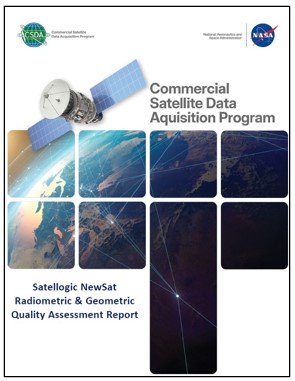
A new quality assessment report from NASA’s Commercial Satellite Data Acquisition (CSDA) program approves the use of data from Satellogic’s NewSat constellation, which includes the Mark IV and Mark V sensor generations, for scientific use.
Issued March 9, 2026, the Commercial Satellite Data Acquisition Program Satellogic NewSat Radiometric & Geometric Quality Assessment Report documents the evaluation process of the NASA subject matter experts (SMEs) enlisted to analyze the quality of the constellation’s radiometric and geometric data products.
The SMEs analyzed 60 top-of-atmosphere reflectance images collected between 2021 and 2025, focusing on radiometric and geometric performance across multiple sites. Results showed generally strong radiometric accuracy, with the majority of spectral bands performing within 10% of Aqua MODIS reference values and signal-to-noise ratios meeting “Good” rating criteria for more than half of the bands. Geometric performance exceeded their specified sensor spatial response specifications, with some variability noted between sensor generations. (The Mark IV received an “Excellent” grade for sensor spatial response while the Mark V received a “Basic” grade.)
Since the release of the report, Satellogic has changed aspects of their data processing, in part to address findings and recommendations in the report. CSDA is engaged in a quality assessment of their revised products and will report on the results in the near future.
About the CSDA ProgramNASA’s Earth Science Division (ESD) established the CSDA program to identify, evaluate, and acquire commercial remote sensing data that enhances NASA’s Earth science research and applications. CSDA provides structured on-ramping opportunities for emerging commercial satellite data vendors, enabling NASA to continuously integrate innovative data sources as the private sector evolves. By leveraging these partnerships, NASA’s ESD aims to accelerate scientific discovery and expand applications of Earth observation data for the NASA Earth science research and applications community and societal benefit.
Since its initial pilot, the CSDA Program has conducted three on-ramp activities, resulting in the addition of several vendors into sustainment. Since then, the program has streamlined its evaluation process by introducing high-quality, SME-led data assessments, accelerating reviews and strengthening NASA’s engagement with the rapidly growing commercial data ecosystem. The CSDA’s evaluation criteria include:
- Accessibility of data
- Completeness and accuracy of metadata
- User support services provided by the commercial entity
- Usefulness of submitted data for science and applications
This approach ensures NASA gains timely access to high-quality, mission-relevant commercial data, and provides valuable feedback to private-sector providers, fostering innovation, improved data products, and alignment of industry capabilities with NASA’s evolving scientific needs.
ResourcesTo read the CSDA’s Satellogic NewSat Radiometric & Geometric Quality Assessment Report, visit the CSDA website.
View the recent CSDA Vendor Focus Webinar on Satellogic on the CSDA program’s YouTube channel.
For more information about the CSDA program’s process for identifying commercial satellite vendors for on-ramp and evaluation, visit the CSDA website.
CSDA Quality Assessment Report Evaluates Satellogic NewSat Data
A new quality assessment report from NASA’s Commercial Satellite Data Acquisition (CSDA) program approves the use of data from Satellogic’s NewSat constellation, which includes the Mark IV and Mark V sensor generations, for scientific use.
Issued March 9, 2026, the Commercial Satellite Data Acquisition Program Satellogic NewSat Radiometric & Geometric Quality Assessment Report documents the evaluation process of the NASA subject matter experts (SMEs) enlisted to analyze the quality of the constellation’s radiometric and geometric data products.
The SMEs analyzed 60 top-of-atmosphere reflectance images collected between 2021 and 2025, focusing on radiometric and geometric performance across multiple sites. Results showed generally strong radiometric accuracy, with the majority of spectral bands performing within 10% of Aqua MODIS reference values and signal-to-noise ratios meeting “Good” rating criteria for more than half of the bands. Geometric performance exceeded their specified sensor spatial response specifications, with some variability noted between sensor generations. (The Mark IV received an “Excellent” grade for sensor spatial response while the Mark V received a “Basic” grade.)
Since the release of the report, Satellogic has changed aspects of their data processing, in part to address findings and recommendations in the report. CSDA is engaged in a quality assessment of their revised products and will report on the results in the near future.
About the CSDA ProgramNASA’s Earth Science Division (ESD) established the CSDA program to identify, evaluate, and acquire commercial remote sensing data that enhances NASA’s Earth science research and applications. CSDA provides structured on-ramping opportunities for emerging commercial satellite data vendors, enabling NASA to continuously integrate innovative data sources as the private sector evolves. By leveraging these partnerships, NASA’s ESD aims to accelerate scientific discovery and expand applications of Earth observation data for the NASA Earth science research and applications community and societal benefit.
Since its initial pilot, the CSDA Program has conducted three on-ramp activities, resulting in the addition of several vendors into sustainment. Since then, the program has streamlined its evaluation process by introducing high-quality, SME-led data assessments, accelerating reviews and strengthening NASA’s engagement with the rapidly growing commercial data ecosystem. The CSDA’s evaluation criteria include:
- Accessibility of data
- Completeness and accuracy of metadata
- User support services provided by the commercial entity
- Usefulness of submitted data for science and applications
This approach ensures NASA gains timely access to high-quality, mission-relevant commercial data, and provides valuable feedback to private-sector providers, fostering innovation, improved data products, and alignment of industry capabilities with NASA’s evolving scientific needs.
ResourcesTo read the CSDA’s Satellogic NewSat Radiometric & Geometric Quality Assessment Report, visit the CSDA website.
View the recent CSDA Vendor Focus Webinar on Satellogic on the CSDA program’s YouTube channel.
For more information about the CSDA program’s process for identifying commercial satellite vendors for on-ramp and evaluation, visit the CSDA website.
How a Black Hole and a Shredded Star Could Light Up a Galaxy
In 2014, a strange cloudy object called G2 made a close approach to Sagittarius A*, (Sag A*) the supermassive black hole at the heart of the Milky Way Galaxy. Astronomers were pretty excited, partly because they thought it might get torn apart by Sag A*'s intense gravitational pull. That didn't happen, and the event was a cosmic fizzle. Instead, G2 skipped around the black hole. Various observations showed that it wasn't just a gas cloud. It was likely a dusty protostellar object encased in a dusty cloud. Or perhaps several merged stars. But, it survived the flyby and continued on a shortened orbit.
Webinar 4/29: NASA CSDA Program Vendor Focus- MDA Space
NASA’s Earth Science Division (ESD) established the Commercial Satellite Data Acquisition (CSDA) program to explore the potential of commercial satellite data in advancing the agency’s Earth science research and application objectives. The program aims to identify, assess, and acquire data from commercial providers, which may offer a cost-effective means of supplementing Earth observations collected by NASA, other U.S. Government agencies, and international collaborators.
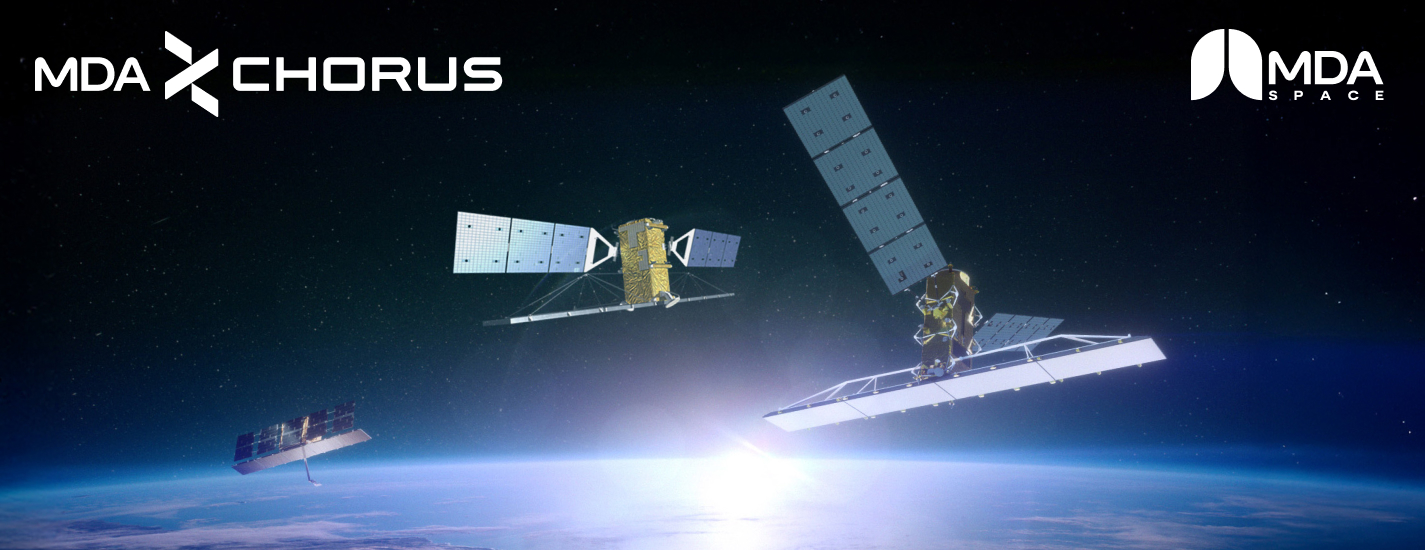
During this NASA CSDA program vendor webinar, speakers will introduce MDA Space and the company’s satellite constellation; show participants how to discover, access, and work with these satellite C-band synthetic aperture radar (SAR) products; and speak to how these data products complement NASA Earth science data holdings for research and applications. Additional topics will focus on the services available to data users and getting assistance with the NASA CSDA program vendor MDA Space datasets, services, and tools.
For Information and to RegisterWebinar 4/29: NASA CSDA Program Vendor Focus- MDA Space
NASA’s Earth Science Division (ESD) established the Commercial Satellite Data Acquisition (CSDA) program to explore the potential of commercial satellite data in advancing the agency’s Earth science research and application objectives. The program aims to identify, assess, and acquire data from commercial providers, which may offer a cost-effective means of supplementing Earth observations collected by NASA, other U.S. Government agencies, and international collaborators.
During this NASA CSDA program vendor webinar, speakers will introduce MDA Space and the company’s satellite constellation; show participants how to discover, access, and work with these satellite C-band synthetic aperture radar (SAR) products; and speak to how these data products complement NASA Earth science data holdings for research and applications. Additional topics will focus on the services available to data users and getting assistance with the NASA CSDA program vendor MDA Space datasets, services, and tools.
For information and to Register