
Feed aggregator
Curiosity Blog, Sols 4879-4885: Struggle at Atacama
- Curiosity Home
- Science
- News and Features
- Multimedia
- Mars Missions
- Mars Home
3 min read
Curiosity Blog, Sols 4879-4885: Struggle at Atacama NASA’s Mars rover Curiosity acquired this image, of its drill (above, now free of the Atacama block) and the stubborn stone block, again back on the surface (below), on May 2, 2026. Curiosity captured the image using its Mast Camera (Mastcam) on Sol 4883, or Martian day 4,883 of the Mars Science Laboratory mission, at 09:14:58 UTC. NASA/JPL-Caltech/MSSS
Written by William Farrand, Senior Research Scientist, Space Science Institute
Earth planning date: Friday, May 1, 2026
Chile’s Atacama desert is the driest mid-latitude desert in the world, receiving only 15 millimeters (0.59 inches) of precipitation per year. Only the dry valleys of Antarctica receive less precipitation. These environmental conditions have made the Atacama a challenging place to survive in. Like its namesake, the Atacama drill target on Mars presented a challenge to the Curiosity rover and to the rover team.
The planning week began with the downlinked data indicating that a successful drill hole was made in the Atacama target, but the rock being drilled into was a detached block and as the arm was raised to extract the drill, the rock came along with it! Not being in the sample collection business, like her twin rover Perseverance, Curiosity’s rover planners went to work to develop a plan to extract the drill bit from the rock. These included efforts at changing the orientation of the drill bit, and attached block, as well as carrying out percussion to try to vibrate the rock off. Ultimately, as a result of activities like these in the Sol 4883-4885 plan, we freed the drill from the Atacama block.
With in-situ science activities precluded due to the efforts to free the drill bit from the Atacama block, the science at that time instead focused on remote sensing. The Sol 4879-4880 plan included ChemCam LIBS measurements of a dark cobble, “Pichiacani,” and a dark pebble, “Poco a Poco.” ChemCam also attempted passive reflectance measurements of white blocks on the slope of the distant Paniri butte and RMI imaging of Valle Grande. Mastcam collected documentation images of the ChemCam targets and also carried out change detection imaging of the target “Playa los Metales.”
The Sol 4881-4882 plan consisted of LIBS scanning of bedrock targets “El Plomo” and “El Turbio.” Mastcam change detection on the Playa los Metales regions continued. Mastcam also extended the previously collected “Kimsa Chata” mosaic. In the Sol 4883-4885 plan, the team was able to take advantage of the efforts to remove the Atacama block by carrying out ChemCam LIBS observations of the granular material below where the block had been. This included the target “Cuturipa,” below where the block had been, and a profile of the wall of the cavity where the block had been, which was given the target name “Chaitén.” ChemCam also observed a light-toned block, “Chiloé,” that had been covered by the Atacama block. ChemCam RMI imaging was planned for the layering of the Mishe Mokwa butte and of “Azul Pampa,” a rock with prominent polygonal patterns. The plan also included a Navcam dust-devil survey, ChemCam passive-sky measurements, and an APXS atmospheric observation.
Future activities involve wrapping up the drill campaign on Atacama and, nominally, seeking a more firmly rooted drill target in order to collect drill tailings for analysis, which were lost from Atacama as part of the effort to dislodge the drill bit from the rock.
Learn more, and watch as the Atacama target rock gets stuck and unstuck
-
Want to read more posts from the Curiosity team?
-
Want to learn more about Curiosity’s science instruments?
Article
6 days ago
3 min read Curiosity Blog, Sols 4867-4872: Sand Fill In Antofagasta Crater and Finding Our Next Drill Target
Article
2 weeks ago
3 min read Curiosity Blog, Sols 4859-4866: One Small Crater and Thousands of Polygons
Article
3 weeks ago
Keep Exploring Discover More Topics From NASA Mars
Mars is the fourth planet from the Sun, and the seventh largest. It’s the only planet we know of inhabited…
All Mars Resources
Explore this collection of Mars images, videos, resources, PDFs, and toolkits. Discover valuable content designed to inform, educate, and inspire,…
Rover Basics
Each robotic explorer sent to the Red Planet has its own unique capabilities driven by science. Many attributes of a…
Mars Exploration: Science Goals
The key to understanding the past, present or future potential for life on Mars can be found in NASA’s four…
Curiosity Blog, Sols 4879-4885: Struggle at Atacama
- Curiosity Home
- Science
- News and Features
- Multimedia
- Mars Missions
- Mars Home
3 min read
Curiosity Blog, Sols 4879-4885: Struggle at Atacama NASA’s Mars rover Curiosity acquired this image, of its drill (above, now free of the Atacama block) and the stubborn stone block, again back on the surface (below), on May 2, 2026. Curiosity captured the image using its Mast Camera (Mastcam) on Sol 4883, or Martian day 4,883 of the Mars Science Laboratory mission, at 09:14:58 UTC. NASA/JPL-Caltech/MSSSWritten by William Farrand, Senior Research Scientist, Space Science Institute
Earth planning date: Friday, May 1, 2026
Chile’s Atacama desert is the driest mid-latitude desert in the world, receiving only 15 millimeters (0.59 inches) of precipitation per year. Only the dry valleys of Antarctica receive less precipitation. These environmental conditions have made the Atacama a challenging place to survive in. Like its namesake, the Atacama drill target on Mars presented a challenge to the Curiosity rover and to the rover team.
The planning week began with the downlinked data indicating that a successful drill hole was made in the Atacama target, but the rock being drilled into was a detached block and as the arm was raised to extract the drill, the rock came along with it! Not being in the sample collection business, like her twin rover Perseverance, Curiosity’s rover planners went to work to develop a plan to extract the drill bit from the rock. These included efforts at changing the orientation of the drill bit, and attached block, as well as carrying out percussion to try to vibrate the rock off. Ultimately, as a result of activities like these in the Sol 4883-4885 plan, we freed the drill from the Atacama block.
With in-situ science activities precluded due to the efforts to free the drill bit from the Atacama block, the science at that time instead focused on remote sensing. The Sol 4879-4880 plan included ChemCam LIBS measurements of a dark cobble, “Pichiacani,” and a dark pebble, “Poco a Poco.” ChemCam also attempted passive reflectance measurements of white blocks on the slope of the distant Paniri butte and RMI imaging of Valle Grande. Mastcam collected documentation images of the ChemCam targets and also carried out change detection imaging of the target “Playa los Metales.”
The Sol 4881-4882 plan consisted of LIBS scanning of bedrock targets “El Plomo” and “El Turbio.” Mastcam change detection on the Playa los Metales regions continued. Mastcam also extended the previously collected “Kimsa Chata” mosaic. In the Sol 4883-4885 plan, the team was able to take advantage of the efforts to remove the Atacama block by carrying out ChemCam LIBS observations of the granular material below where the block had been. This included the target “Cuturipa,” below where the block had been, and a profile of the wall of the cavity where the block had been, which was given the target name “Chaitén.” ChemCam also observed a light-toned block, “Chiloé,” that had been covered by the Atacama block. ChemCam RMI imaging was planned for the layering of the Mishe Mokwa butte and of “Azul Pampa,” a rock with prominent polygonal patterns. The plan also included a Navcam dust-devil survey, ChemCam passive-sky measurements, and an APXS atmospheric observation.
Future activities involve wrapping up the drill campaign on Atacama and, nominally, seeking a more firmly rooted drill target in order to collect drill tailings for analysis, which were lost from Atacama as part of the effort to dislodge the drill bit from the rock.
Learn more, and watch as the Atacama target rock gets stuck and unstuck
-
Want to read more posts from the Curiosity team?
-
Want to learn more about Curiosity’s science instruments?
Article
6 days ago
3 min read Curiosity Blog, Sols 4867-4872: Sand Fill In Antofagasta Crater and Finding Our Next Drill Target
Article
2 weeks ago
3 min read Curiosity Blog, Sols 4859-4866: One Small Crater and Thousands of Polygons
Article
3 weeks ago
Keep Exploring Discover More Topics From NASA Mars
Mars is the fourth planet from the Sun, and the seventh largest. It’s the only planet we know of inhabited…
All Mars Resources
Explore this collection of Mars images, videos, resources, PDFs, and toolkits. Discover valuable content designed to inform, educate, and inspire,…
Rover Basics
Each robotic explorer sent to the Red Planet has its own unique capabilities driven by science. Many attributes of a…
Mars Exploration: Science Goals
The key to understanding the past, present or future potential for life on Mars can be found in NASA’s four…
Subaru Telescope Reveals New Data on the Interior Composition of 3I/ATLAS
The Subaru Telescope observed the interstellar comet 3I/ATLAS (C/2025 N1) on January 7, 2026 (UT), after it made its closest approach to the Sun. By observing colors in the coma around the comet, astronomers could estimate the ratio of carbon dioxide to water. This ratio is much lower than that inferred from earlier observations by space telescopes. These findings suggest that the chemistry of the coma is evolving over time and offers clues to the structure of comet 3I/ATLAS.
Babies may ‘catch’ yawns from their mother in the womb, new study finds
Researchers found that fetuses were more likely to yawn when their mother did, suggesting humans may experience yawn contagion throughout their life
650 NASA Volunteers Have Co-Authored Scientific Papers
After a recent count, NASA Citizen Science is proud to report that more than 650 people who have volunteered to participate in NASA citizen science projects have co-authored peer-reviewed research papers with scientists on those project teams. These volunteers made incredible contributions like:
- Spotting comets, gamma-ray bursts, and brown dwarfs in data collected by space telescopes.
- Observing auroras, sprites, and noctilucent clouds from here on Earth.
- Using their backyard telescopes to gather data on exoplanets or their cell phones to report mosquito breeding habitat.
- Using their ham radios to study Earth’s ionosphere.
And all of them saw their passion and dedication translated into lasting contributions to the scientific literature that will inform generations of researchers to come.
Explore these frequently asked questions and discover how you, too, can be a part of scientific discovery and become a co-author.
Why do peer-reviewed research papers matter?
When scientists make a discovery, they write up the details of their research and its results in a manuscript and submit it to a scientific journal. The journal’s editors subject the manuscript to the ‘peer-review’ process, in which they invite other scientists to verify and validate the methods used and the novelty and importance of the results. Peer-reviewed research papers are the primary way scientists document what they discover or learn and share it with each other and the world. Once a paper passes the peer-review process, it is published where other scientists can read it, criticize it, and build on it.
Contributing to published scientific literature is an important and celebrated part of a scientific career – for PhD scientists and citizen scientists alike. A list of published papers is the core of any scientist’s resume, and any budding scientist’s first publication is widely considered a milestone worth celebrating. Three cheers for each and every one of the 650 published citizen science project volunteers!
How can I get involved in writing a scientific paper through NASA citizen science?
Sometimes, volunteers get lucky – they’re simply notified by the project science team that their contributions have made it into a scientific paper. However, if you are determined to become a published author, it helps to choose your project carefully and then to take initiative.
First, find a project that interests you. In the words of citizen scientist Michael Primm, “pick one or more [projects that] appeal to you, and try them out for size. If you don’t like them, try other ones.” Once you have a project you like, do the task frequently enough to get comfortable and confident. Read all the project material you can, including any frequently asked questions and blog posts the team may have written. Many of the extraordinary breakthroughs in these projects come from participants noticing patterns in the data that are unusual – you can’t do this unless you’ve developed a good sense of what’s “normal.”
“Find a project where you can communicate directly with the scientists involved,” said Marc Kuchner, citizen science officer, NASA Headquarters in Washington. “That way, you can get the coaching and mentorship you need to learn the paper-writing process.” A good place to start is with the projects listed on the publications by NASA citizen scientists webpage, since these projects have track records of involving volunteers in papers.
“After you’ve followed the instructions and participated in a project, it’s all about asking questions!” said Kuchner. “Ask other participants first, and read the project’s FAQ and Research pages. Dig into scientific journal articles, if you can. Before long, you’ll find yourself with a novel and meaningful question nobody knows the answer to. Then you’ll have an excellent reason to start a conversation with the science team.”
Second, look for ways to interact with project scientists and teams and stay informed and involved. Many NASA citizen science project teams have regular calls or meetings with participants. They also sometimes give participants the option to sign up for an email list, through which they share additional opportunities to interact with the scientists leading the projects.
“Don’t be afraid to ask for help, either from your fellow citizen scientists or even the pros of the project you’re working on,” said citizen scientist Les Hamlet, co-author of three papers and counting.
NASA partner SciStarter also hosts a series of Do NASA Science Live virtual events, which offer another way to meet scientists. These virtual events, held roughly once a month, feature experts from NASA citizen science projects who are eager to interact with volunteers. You can see the schedule and sign up here for the next Do NASA Science Live event.
Many projects have virtual bulletin boards, like the “TALK” boards of Zooniverse-hosted projects, which can facilitate discussions with the science team. Or you can reach out by email to the science team by looking them up on the project’s team page. Just remember these science teams are busy, so do your homework first by reading all the project materials before you reach out.
NASA volunteer Michiharu Hyogo offered some tips to help others get started on the journey toward becoming a published author. There are also numerous online resources and guides for anyone new to writing scientific papers.
What if I’m still a student? Can I get involved in writing a paper?
Yes, the same advice above applies to students. There’s no better way to explore whether or not you’d like to pursue a career in science or a new scientific field of study than to do the work of a scientist and get involved in the process of publishing your findings. If you become a published co-author, you’ll also have the added advantage of listing your publication on your resume for internship, undergraduate, or graduate school applications. Several high school students and many undergraduate or graduate students have written papers with NASA citizen science project teams, including Matteo Kimura, Emily Burns-Kaurin, Darcy Wenn, and Michaela B. Allen.
A few NASA citizen scientists who have co-authored scientific papers present their findings. Clockwise from the upper left: Peter Jalowiczor, Michael Hunnekul, Danny Roylance, Michaela Allen, and Svetoslav Alexandrov.
Ride the rollercoaster!
Science can be unpredictable, which can make writing papers feel like a roller-coaster ride at times. “Don’t give up if your first try was not successful,” said published citizen scientist Michael Hunnekuhl. Most projects take years to produce results. Sometimes, nature doesn’t cooperate, and a science team must change directions instead of writing the paper they initially imagined. But with 42 citizen science projects online, NASA has plenty of room for your science ambitions. Go to https://science.nasa.gov/citizen-science/, pick a project, and start your science journey today.
Facebook logo @nasascience_ @nasascience_ Instagram logo @nasascience_ Linkedin logo @nasascience_ Share Details Last Updated May 05, 2026 Editor NASA Science Editorial Team Related Terms Explore More 5 min read NASA Research Shows Early Life Relied on Rare MetalArticle
3 hours ago
3 min read New NASA HEAT Coloring Book Blends Art, Science, and Cultural Perspectives
A new Sun-centered and science-focused coloring book produced by NASA in partnership with the University…
Article
4 hours ago
2 min read NASA Volunteers Double Known Population of Brown Dwarfs
A new paper from NASA’s Backyard Worlds: Planet 9 project announces that volunteers have essentially…
Article
5 hours ago
650 NASA Volunteers Have Co-Authored Scientific Papers
After a recent count, NASA Citizen Science is proud to report that more than 650 people who have volunteered to participate in NASA citizen science projects have co-authored peer-reviewed research papers with scientists on those project teams. These volunteers made incredible contributions like:
- Spotting comets, gamma-ray bursts, and brown dwarfs in data collected by space telescopes.
- Observing auroras, sprites, and noctilucent clouds from here on Earth.
- Using their backyard telescopes to gather data on exoplanets or their cell phones to report mosquito breeding habitat.
- Using their ham radios to study Earth’s ionosphere.
And all of them saw their passion and dedication translated into lasting contributions to the scientific literature that will inform generations of researchers to come.
Explore these frequently asked questions and discover how you, too, can be a part of scientific discovery and become a co-author.
Why do peer-reviewed research papers matter?
When scientists make a discovery, they write up the details of their research and its results in a manuscript and submit it to a scientific journal. The journal’s editors subject the manuscript to the ‘peer-review’ process, in which they invite other scientists to verify and validate the methods used and the novelty and importance of the results. Peer-reviewed research papers are the primary way scientists document what they discover or learn and share it with each other and the world. Once a paper passes the peer-review process, it is published where other scientists can read it, criticize it, and build on it.
Contributing to published scientific literature is an important and celebrated part of a scientific career – for PhD scientists and citizen scientists alike. A list of published papers is the core of any scientist’s resume, and any budding scientist’s first publication is widely considered a milestone worth celebrating. Three cheers for each and every one of the 650 published citizen science project volunteers!
How can I get involved in writing a scientific paper through NASA citizen science?
Sometimes, volunteers get lucky – they’re simply notified by the project science team that their contributions have made it into a scientific paper. However, if you are determined to become a published author, it helps to choose your project carefully and then to take initiative.
First, find a project that interests you. In the words of citizen scientist Michael Primm, “pick one or more [projects that] appeal to you, and try them out for size. If you don’t like them, try other ones.” Once you have a project you like, do the task frequently enough to get comfortable and confident. Read all the project material you can, including any frequently asked questions and blog posts the team may have written. Many of the extraordinary breakthroughs in these projects come from participants noticing patterns in the data that are unusual – you can’t do this unless you’ve developed a good sense of what’s “normal.”
“Find a project where you can communicate directly with the scientists involved,” said Marc Kuchner, citizen science officer, NASA Headquarters in Washington. “That way, you can get the coaching and mentorship you need to learn the paper-writing process.” A good place to start is with the projects listed on the publications by NASA citizen scientists webpage, since these projects have track records of involving volunteers in papers.
“After you’ve followed the instructions and participated in a project, it’s all about asking questions!” said Kuchner. “Ask other participants first, and read the project’s FAQ and Research pages. Dig into scientific journal articles, if you can. Before long, you’ll find yourself with a novel and meaningful question nobody knows the answer to. Then you’ll have an excellent reason to start a conversation with the science team.”
Second, look for ways to interact with project scientists and teams and stay informed and involved. Many NASA citizen science project teams have regular calls or meetings with participants. They also sometimes give participants the option to sign up for an email list, through which they share additional opportunities to interact with the scientists leading the projects.
“Don’t be afraid to ask for help, either from your fellow citizen scientists or even the pros of the project you’re working on,” said citizen scientist Les Hamlet, co-author of three papers and counting.
NASA partner SciStarter also hosts a series of Do NASA Science Live virtual events, which offer another way to meet scientists. These virtual events, held roughly once a month, feature experts from NASA citizen science projects who are eager to interact with volunteers. You can see the schedule and sign up here for the next Do NASA Science Live event.
Many projects have virtual bulletin boards, like the “TALK” boards of Zooniverse-hosted projects, which can facilitate discussions with the science team. Or you can reach out by email to the science team by looking them up on the project’s team page. Just remember these science teams are busy, so do your homework first by reading all the project materials before you reach out.
NASA volunteer Michiharu Hyogo offered some tips to help others get started on the journey toward becoming a published author. There are also numerous online resources and guides for anyone new to writing scientific papers.
What if I’m still a student? Can I get involved in writing a paper?
Yes, the same advice above applies to students. There’s no better way to explore whether or not you’d like to pursue a career in science or a new scientific field of study than to do the work of a scientist and get involved in the process of publishing your findings. If you become a published co-author, you’ll also have the added advantage of listing your publication on your resume for internship, undergraduate, or graduate school applications. Several high school students and many undergraduate or graduate students have written papers with NASA citizen science project teams, including Matteo Kimura, Emily Burns-Kaurin, Darcy Wenn, and Michaela B. Allen.
A few NASA citizen scientists who have co-authored scientific papers present their findings. Clockwise from the upper left: Peter Jalowiczor, Michael Hunnekul, Danny Roylance, Michaela Allen, and Svetoslav Alexandrov.Ride the rollercoaster!
Science can be unpredictable, which can make writing papers feel like a roller-coaster ride at times. “Don’t give up if your first try was not successful,” said published citizen scientist Michael Hunnekuhl. Most projects take years to produce results. Sometimes, nature doesn’t cooperate, and a science team must change directions instead of writing the paper they initially imagined. But with 42 citizen science projects online, NASA has plenty of room for your science ambitions. Go to https://science.nasa.gov/citizen-science/, pick a project, and start your science journey today.
Facebook logo @nasascience_ @nasascience_ Instagram logo @nasascience_ Linkedin logo @nasascience_ Share Details Last Updated May 05, 2026 Editor NASA Science Editorial Team Related Terms Explore More 5 min read NASA Research Shows Early Life Relied on Rare MetalArticle
3 hours ago
3 min read New NASA HEAT Coloring Book Blends Art, Science, and Cultural Perspectives
A new Sun-centered and science-focused coloring book produced by NASA in partnership with the University…
Article
4 hours ago
2 min read NASA Volunteers Double Known Population of Brown Dwarfs
A new paper from NASA’s Backyard Worlds: Planet 9 project announces that volunteers have essentially…
Article
5 hours ago
Why some mathematicians think we should abandon pi
A growing minority believes it’s a mistake to tie so many mathematical formulas to the famed 3.14... value. Another value, tau, could be better
NASA’s Curiosity Rover Frees Its Drill From a Rock
NASA/JPL-Caltech Photojournal Navigation Downloads NASA’s Curiosity Rover Frees Its Drill From a Rock
GIF (50.56 MB)
PIA26723 Figure A
GIF (48.45 MB)
PIA26723 Figure B
GIF (50.24 MB)
Description
This series of images shows NASA’s Curiosity Mars rover as it got a rock stuck to the drill on the end of its robotic arm and, after waving the arm and running the drill a few times, finally detached the rock. The imagery showing the entire process was captured by the black-and-white hazard cameras on the front of Curiosity’s chassis and by navigation cameras on its mast, or head.
On April 25, 2026, Curiosity drilled a sample from a rock nicknamed “Atacama,” which is an estimated 1.5 feet in diameter at its base, 6 inches thick and weighs roughly 28.6 pounds (13 kilograms). When the rover retracted its arm, the entire rock lifted out of the ground, suspended by the fixed sleeve that surrounds the rotating drill bit. Drilling has fractured or separated the upper layers of rocks in the past, but a rock has never remained attached to the drill sleeve. The team initially tried vibrating the drill to shake off the rock, but saw no change.
Then, on April 29, they tried reorienting Curiosity’s robotic arm and vibrating the drill again. Imagery in the GIF shows sand falling from Atacama, but the rock stayed attached to the rover.
Finally, on May 1, Curiosity’s team tried again, tilting the drill more, rotating and vibrating the drill, and spinning the drill bit. The team planned to perform these actions multiple times but the rock came off on the first round, fracturing as it hit the ground.
Figure A
Figure A is the same GIF with yellow time stamps added in the upper left corner.
Figure B
Figure B is an alternate view of the same activities from the navigation cameras on Curiosity’s mast, or head.
Curiosity was built by NASA’s Jet Propulsion Laboratory, which is managed by Caltech in Pasadena, California. JPL leads the mission on behalf of NASA’s Science Mission Directorate in Washington as part of NASA’s Mars Exploration Program portfolio.
To learn more about Curiosity, visit:
science.nasa.gov/mission/msl-curiosity
Keep Exploring Discover More Topics From Photojournal
Photojournal
Search Photojournal
Photojournal’s Latest Content
Feedback
NASA’s Curiosity Rover Frees Its Drill From a Rock
NASA/JPL-Caltech Photojournal Navigation Downloads NASA’s Curiosity Rover Frees Its Drill From a Rock
GIF (50.56 MB)
PIA26723 Figure A
GIF (48.45 MB)
PIA26723 Figure B
GIF (50.24 MB)
Description
This series of images shows NASA’s Curiosity Mars rover as it got a rock stuck to the drill on the end of its robotic arm and, after waving the arm and running the drill a few times, finally detached the rock. The imagery showing the entire process was captured by the black-and-white hazard cameras on the front of Curiosity’s chassis and by navigation cameras on its mast, or head.
On April 25, 2026, Curiosity drilled a sample from a rock nicknamed “Atacama,” which is an estimated 1.5 feet in diameter at its base, 6 inches thick and weighs roughly 28.6 pounds (13 kilograms). When the rover retracted its arm, the entire rock lifted out of the ground, suspended by the fixed sleeve that surrounds the rotating drill bit. Drilling has fractured or separated the upper layers of rocks in the past, but a rock has never remained attached to the drill sleeve. The team initially tried vibrating the drill to shake off the rock, but saw no change.
Then, on April 29, they tried reorienting Curiosity’s robotic arm and vibrating the drill again. Imagery in the GIF shows sand falling from Atacama, but the rock stayed attached to the rover.
Finally, on May 1, Curiosity’s team tried again, tilting the drill more, rotating and vibrating the drill, and spinning the drill bit. The team planned to perform these actions multiple times but the rock came off on the first round, fracturing as it hit the ground.
Figure AFigure A is the same GIF with yellow time stamps added in the upper left corner.
Figure BFigure B is an alternate view of the same activities from the navigation cameras on Curiosity’s mast, or head.
Curiosity was built by NASA’s Jet Propulsion Laboratory, which is managed by Caltech in Pasadena, California. JPL leads the mission on behalf of NASA’s Science Mission Directorate in Washington as part of NASA’s Mars Exploration Program portfolio.
To learn more about Curiosity, visit:
science.nasa.gov/mission/msl-curiosity
Keep Exploring Discover More Topics From Photojournal
Photojournal
Search Photojournal
Photojournal’s Latest Content
Feedback
Meet the Constellations: Leo, the Lion
Leo, the Lion, is one of the most recognizable of the spring constellations, with its large size, distinctive shape, and plentiful bright stars.
The post Meet the Constellations: Leo, the Lion appeared first on Sky & Telescope.
NASA Astronaut to Answer Questions from Students in Florida
2 min read
Preparations for Next Moonwalk Simulations Underway (and Underwater) NASA astronaut Chris Williams calls down to mission controllers during Crew Medical Officer training while inside the International Space Station’s Destiny laboratory module.Credit: NASA/Jessica Meir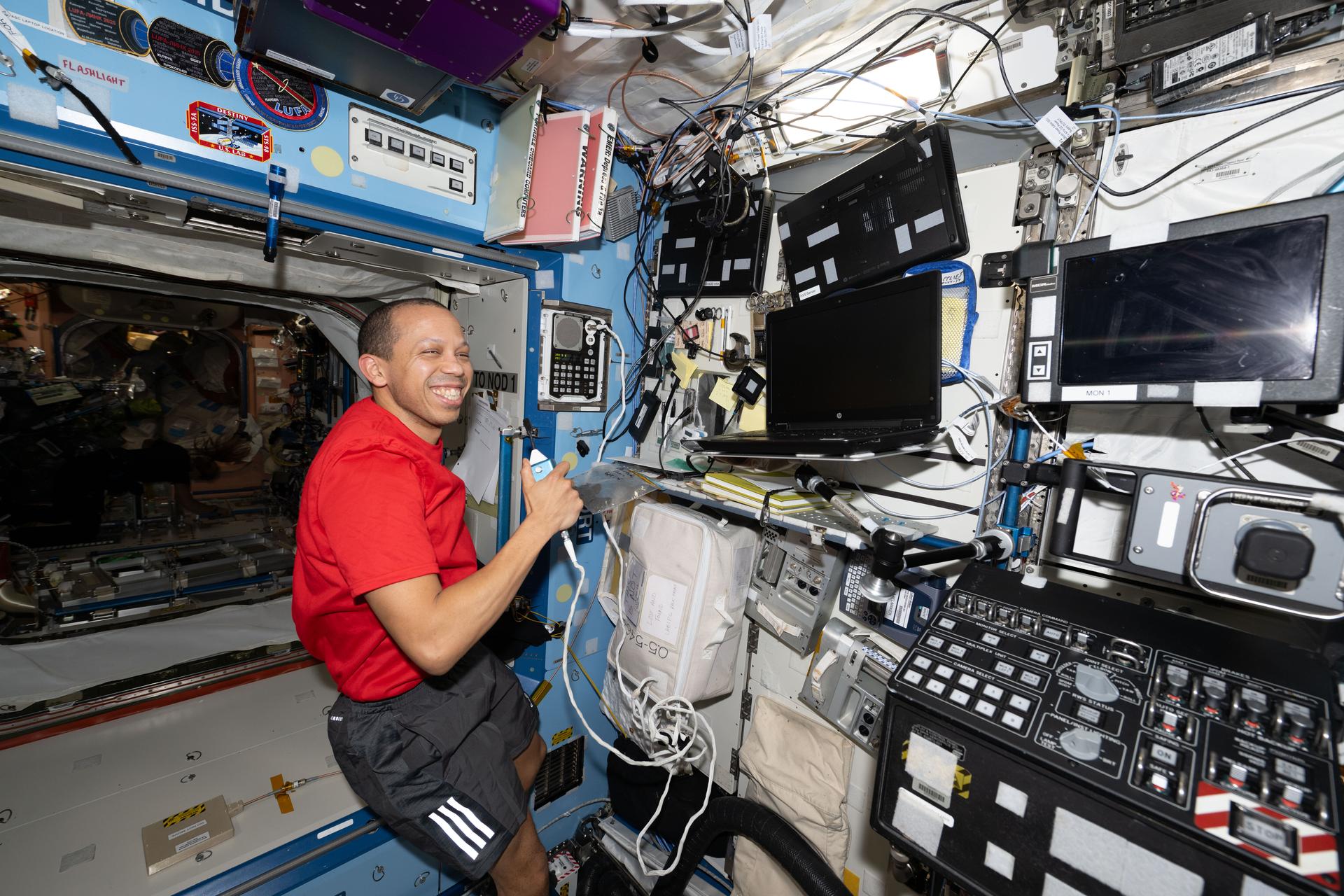
Students in Florida will hear from NASA astronaut Chris Williams as he answers prerecorded science, technology, engineering, and mathematics (STEM) questions while aboard the International Space Station.
The Earth-to-space call will begin at 11 a.m. EDT Friday, May 8, and will stream live on the agency’s Learn With NASA YouTube channel.
This event is hosted by the Aurelia M. Cole Academy in Clermont, Florida, for students in grades K-12 and members of the community. This unique opportunity aims to deepen understanding of space exploration and enhance awareness of STEM careers.
Media interested in covering the event must RSVP by 5 p.m., Thursday, May 7, to Sherri Owens at: 352-253-6522 or owenss@lake.k12.fl.us.
For more than 25 years, astronauts have continuously lived and worked aboard the space station, testing technologies, performing science, and developing skills needed to explore farther from Earth. Astronauts communicate with NASA’s Mission Control Center in Houston 24 hours a day through SCaN’s (Space Communications and Navigation) Near Space Network.
Research and technology investigations taking place aboard the space station benefit people on Earth and support other agency work, including missions at the Moon. As part of NASA’s Artemis program, the agency will send astronauts to the Moon to prepare for future human exploration of Mars, inspiring the world through discovery in a new Golden Age of innovation and exploration.
See more information on NASA in-flight calls at:
https://www.nasa.gov/stemonstation
Share Details Last Updated May 05, 2026 LocationNASA Headquarters Related Terms Explore More 3 min read NASA eClips and GLOBE Educators Strengthen a Regional STEM Ecosystem in Coastal VirginiaThirty-eight science educators representing seven school districts across Virginia’s Tidewater region joined forces with community…
Article 6 hours ago 3 min read New NASA HEAT Coloring Book Blends Art, Science, and Cultural PerspectivesA new Sun-centered and science-focused coloring book produced by NASA in partnership with the University…
Article 12 hours ago 4 min read Breaking Barriers at 3rd Annual Findings from the Field SymposiumThis year’s Findings from the Field Student Research Symposium welcomed 106 students, grades four through…
Article 1 day ago Keep Exploring Discover Related TopicsMissions
Humans in Space
Climate Change
Solar System
NASA Astronaut to Answer Questions from Students in Florida
2 min read
Preparations for Next Moonwalk Simulations Underway (and Underwater) NASA astronaut Chris Williams calls down to mission controllers during Crew Medical Officer training while inside the International Space Station’s Destiny laboratory module.Credit: NASA/Jessica MeirStudents in Florida will hear from NASA astronaut Chris Williams as he answers prerecorded science, technology, engineering, and mathematics (STEM) questions while aboard the International Space Station.
The Earth-to-space call will begin at 11 a.m. EDT Friday, May 8, and will stream live on the agency’s Learn With NASA YouTube channel.
This event is hosted by the Aurelia M. Cole Academy in Clermont, Florida, for students in grades K-12 and members of the community. This unique opportunity aims to deepen understanding of space exploration and enhance awareness of STEM careers.
Media interested in covering the event must RSVP by 5 p.m., Thursday, May 7, to Sherri Owens at: 352-253-6522 or owenss@lake.k12.fl.us.
For more than 25 years, astronauts have continuously lived and worked aboard the space station, testing technologies, performing science, and developing skills needed to explore farther from Earth. Astronauts communicate with NASA’s Mission Control Center in Houston 24 hours a day through SCaN’s (Space Communications and Navigation) Near Space Network.
Research and technology investigations taking place aboard the space station benefit people on Earth and support other agency work, including missions at the Moon. As part of NASA’s Artemis program, the agency will send astronauts to the Moon to prepare for future human exploration of Mars, inspiring the world through discovery in a new Golden Age of innovation and exploration.
See more information on NASA in-flight calls at:
https://www.nasa.gov/stemonstation
Share Details Last Updated May 05, 2026 LocationNASA Headquarters Related Terms Explore More 3 min read NASA eClips and GLOBE Educators Strengthen a Regional STEM Ecosystem in Coastal VirginiaThirty-eight science educators representing seven school districts across Virginia’s Tidewater region joined forces with community…
Article 2 hours ago 3 min read New NASA HEAT Coloring Book Blends Art, Science, and Cultural PerspectivesA new Sun-centered and science-focused coloring book produced by NASA in partnership with the University…
Article 9 hours ago 4 min read Breaking Barriers at 3rd Annual Findings from the Field SymposiumThis year’s Findings from the Field Student Research Symposium welcomed 106 students, grades four through…
Article 1 day ago Keep Exploring Discover Related TopicsMissions
Humans in Space
Climate Change
Solar System
NASA Research Shows Early Life Relied on Rare Metal
5 min read
NASA Research Shows Early Life Relied on Rare Metal Timeline of Earth’s history in billions of years. The new study indicates that life used molybdenum as far back as 3.3 to 3.7 billion years ago, long before levels of molybdenum in the oceans increased to modern levels. Other events in Earth’s history are marked for context. NASA
NASA-funded scientists have discovered that life on Earth over 3 billion years ago relied on the metal molybdenum, which was incredibly scarce in the environment at the time. The study, published in Nature Communications on Tuesday, is the first to show that molybdenum was used by ancient life this far back in our planet’s history.
On Earth today, molybdenum helps speed up vital biochemical reactions in cells. The metal is a component of essential enzymes that drive several major biological reactions in organisms. This is not only important for the individual organisms, but also biogeochemical cycles, such as the nitrogen cycle, which affect our entire planet. Without molybdenum, those important reactions could still happen in nature, but they would be too slow to sustain life.
“Molybdenum sits at the catalytic center of enzymes that run major carbon, nitrogen, and sulfur reactions,” explained Betül Kaçar, head of the Kaçar Lab at the University of Wisconsin-Madison and senior author on the study. Kaçar leads MUSE, a NASA Interdisciplinary Consortia for Astrobiology Research (ICAR) at UW-Madison.
“Asking when life began using molybdenum is really asking when some of the most consequential metabolic strategies became possible,” said Kaçar.
Molybdenum through historyMolybdenum is now relatively common in the environment, and its scarcity is no longer a problem for life. But that wasn’t always the case.
Geological evidence shows that only trace amounts of molybdenum were present in Earth’s oceans billions of years ago. Levels increased around the time that microorganisms began to use photosynthesis, which eventually led to a dramatic boost in the amount of atmospheric oxygen (roughly 2.45 billion years ago). This is known as the Great Oxidation Event and had a profound effect on the evolution of life. A previous NASA study even suggested that the rise of molybdenum in the environment around this time may have been necessary for the evolution of complex life.
But when did life first start using molybdenum? Because of its scarcity on ancient Earth, astrobiologists have wondered if life could have started by using other metals to speed along vital reactions. Tungsten, for instance, behaves similarly in cells and is used today by some organisms that live in extreme environments. Scientists previously theorized that life may have used tungsten first and then evolved to used molybdenum once it became more available. The new study shows this wasn’t necessarily the case.
The team gathered available data on the prevalence of molybdenum through time and reconstructed the history of the metal’s use along the branches of the tree of life. They found that although molybdenum was scarce, ancient microbes on Earth still found a way to use it. The same is true for the use of the metal tungsten.
“Our work shows that both molybdenum and tungsten-using enzyme systems have Archean roots, which suggests that early life likely worked with both metals rather than following a simple “tungsten first, molybdenum later” story,” said Kaçar. “We argue that molybdenum use is far older than many models assumed, with molecular dating placing molybdenum utilization back into the Eoarchean to Mesoarchean, roughly 3.7–3.1 billion years ago, well before the Great Oxidation Event.”
Accessing molybdenumPrevious work from the MUSE ICAR, published in 2024, identified certain niches where early life may have found supplies of molybdenum and other scarce metals deep below the oceans. Hydrothermal vents at the seafloor provide trace metals including iron, zinc, copper, nickel, manganese, vanadium, molybdenum, cobalt, and tungsten.
“Even if Archean seawater held little dissolved molybdenum overall, localized systems such as hydrothermal vents could still have supplied usable amounts of molybdenum and other metals,” said Kaçar.
The new study shows that, even amid an assortment of other useful metals, molybdenum was somehow one of life’s first choices as a metal catalyst.
“Molybdenum may have been worth “choosing” because it enables catalysis across a broad range of substrates and redox conditions,” said Kaçar. “In other words, scarcity did not make molybdenum unimportant; its catalytic advantages may have made it worth evolving ways to acquire and use.”
The study shows how life can find a way to use elements in the environment, even if they are scarce, and reminds us that in the search for life beyond Earth we must be prepared for possibilities that we haven’t yet considered.
Bio-essential elements, search for life in universeSearching for life in the universe isn’t about building a checklist of conditions that look like modern-day Earth. Studying the history of our planet and the evolution of life allows astrobiologists to view periods of time when the Earth was a much different planet than it is today. In this way, we gain a better understanding of the breadth of planets in the universe that could be habitable for life as we know it.
“Our NASA ICAR shows that mapping the evolutionary history of bio-essential elements on Earth can help us predict what life on other worlds might use, and that different abiotic inventories could lead to different biological element choices,” said Kaçar. “Life detection should be metal-aware, redox-aware, and evolution-aware. We should look not just for ‘Earth-like life now,’ but for biochemical strategies that would make sense on a planet with a different history of oxygenation and metal availability.”
For more information on astrobiology at NASA, visit:
https://science.nasa.gov/astrobiology
-end-
Karen Fox / Molly Wasser
Headquarters, Washington
202-358-1600
karen.c.fox@nasa.gov / molly.l.wasser@nasa.gov
NASA Research Shows Early Life Relied on Rare Metal
5 min read
NASA Research Shows Early Life Relied on Rare Metal Timeline of Earth’s history in billions of years. The new study indicates that life used molybdenum as far back as 3.3 to 3.7 billion years ago, long before levels of molybdenum in the oceans increased to modern levels. Other events in Earth’s history are marked for context. NASANASA-funded scientists have discovered that life on Earth over 3 billion years ago relied on the metal molybdenum, which was incredibly scarce in the environment at the time. The study, published in Nature Communications on Tuesday, is the first to show that molybdenum was used by ancient life this far back in our planet’s history.
On Earth today, molybdenum helps speed up vital biochemical reactions in cells. The metal is a component of essential enzymes that drive several major biological reactions in organisms. This is not only important for the individual organisms, but also biogeochemical cycles, such as the nitrogen cycle, which affect our entire planet. Without molybdenum, those important reactions could still happen in nature, but they would be too slow to sustain life.
“Molybdenum sits at the catalytic center of enzymes that run major carbon, nitrogen, and sulfur reactions,” explained Betül Kaçar, head of the Kaçar Lab at the University of Wisconsin-Madison and senior author on the study. Kaçar leads MUSE, a NASA Interdisciplinary Consortia for Astrobiology Research (ICAR) at UW-Madison.
“Asking when life began using molybdenum is really asking when some of the most consequential metabolic strategies became possible,” said Kaçar.
Molybdenum through historyMolybdenum is now relatively common in the environment, and its scarcity is no longer a problem for life. But that wasn’t always the case.
Geological evidence shows that only trace amounts of molybdenum were present in Earth’s oceans billions of years ago. Levels increased around the time that microorganisms began to use photosynthesis, which eventually led to a dramatic boost in the amount of atmospheric oxygen (roughly 2.45 billion years ago). This is known as the Great Oxidation Event and had a profound effect on the evolution of life. A previous NASA study even suggested that the rise of molybdenum in the environment around this time may have been necessary for the evolution of complex life.
But when did life first start using molybdenum? Because of its scarcity on ancient Earth, astrobiologists have wondered if life could have started by using other metals to speed along vital reactions. Tungsten, for instance, behaves similarly in cells and is used today by some organisms that live in extreme environments. Scientists previously theorized that life may have used tungsten first and then evolved to used molybdenum once it became more available. The new study shows this wasn’t necessarily the case.
The team gathered available data on the prevalence of molybdenum through time and reconstructed the history of the metal’s use along the branches of the tree of life. They found that although molybdenum was scarce, ancient microbes on Earth still found a way to use it. The same is true for the use of the metal tungsten.
“Our work shows that both molybdenum and tungsten-using enzyme systems have Archean roots, which suggests that early life likely worked with both metals rather than following a simple “tungsten first, molybdenum later” story,” said Kaçar. “We argue that molybdenum use is far older than many models assumed, with molecular dating placing molybdenum utilization back into the Eoarchean to Mesoarchean, roughly 3.7–3.1 billion years ago, well before the Great Oxidation Event.”
Accessing molybdenumPrevious work from the MUSE ICAR, published in 2024, identified certain niches where early life may have found supplies of molybdenum and other scarce metals deep below the oceans. Hydrothermal vents at the seafloor provide trace metals including iron, zinc, copper, nickel, manganese, vanadium, molybdenum, cobalt, and tungsten.
“Even if Archean seawater held little dissolved molybdenum overall, localized systems such as hydrothermal vents could still have supplied usable amounts of molybdenum and other metals,” said Kaçar.
The new study shows that, even amid an assortment of other useful metals, molybdenum was somehow one of life’s first choices as a metal catalyst.
“Molybdenum may have been worth “choosing” because it enables catalysis across a broad range of substrates and redox conditions,” said Kaçar. “In other words, scarcity did not make molybdenum unimportant; its catalytic advantages may have made it worth evolving ways to acquire and use.”
The study shows how life can find a way to use elements in the environment, even if they are scarce, and reminds us that in the search for life beyond Earth we must be prepared for possibilities that we haven’t yet considered.
Bio-essential elements, search for life in universeSearching for life in the universe isn’t about building a checklist of conditions that look like modern-day Earth. Studying the history of our planet and the evolution of life allows astrobiologists to view periods of time when the Earth was a much different planet than it is today. In this way, we gain a better understanding of the breadth of planets in the universe that could be habitable for life as we know it.
“Our NASA ICAR shows that mapping the evolutionary history of bio-essential elements on Earth can help us predict what life on other worlds might use, and that different abiotic inventories could lead to different biological element choices,” said Kaçar. “Life detection should be metal-aware, redox-aware, and evolution-aware. We should look not just for ‘Earth-like life now,’ but for biochemical strategies that would make sense on a planet with a different history of oxygenation and metal availability.”
For more information on astrobiology at NASA, visit:
https://science.nasa.gov/astrobiology
-end-
Karen Fox / Molly Wasser
Headquarters, Washington
202-358-1600
karen.c.fox@nasa.gov / molly.l.wasser@nasa.gov
Building on America’s 65-Year Legacy of Human Spaceflight
Building on America’s 65-Year Legacy of Human Spaceflight
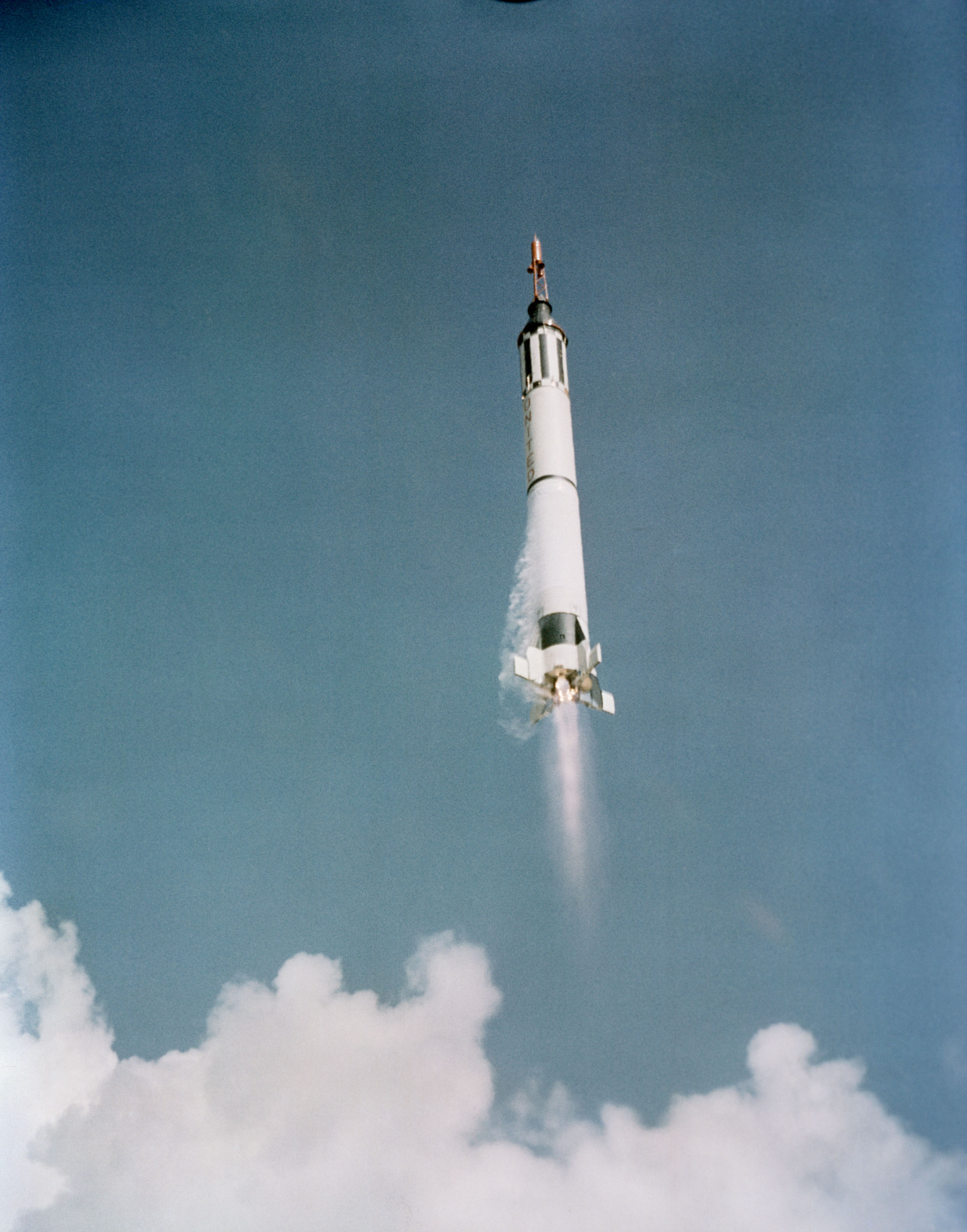
On the morning of May 5, 1961, the Mercury-Redstone 3 launch vehicle lifted into the sky from Cape Canaveral, Florida, carrying astronaut Alan B. Shepard Jr. Over the next 15 minutes, Shepard ascended to an altitude of 116 miles (187 kilometers) in his Freedom 7 spacecraft, becoming the first American to fly into space before splashing down in the Atlantic Ocean. This short flight marked the United States’ entry into human spaceflight and was a defining first step that would carry the nation to the Moon just eight years later.
Sixty-five years later, as NASA accelerates the pace for the Artemis missions that will return astronauts to the surface of the Moon and lay the foundations for a Moon base, the anniversary of Shepard’s flight offers an opportunity to reflect on the pioneering spirit of NASA’s Project Mercury and Project Gemini missions.
Image credit: NASA
Building on America’s 65-Year Legacy of Human Spaceflight
On the morning of May 5, 1961, the Mercury-Redstone 3 launch vehicle lifted into the sky from Cape Canaveral, Florida, carrying astronaut Alan B. Shepard Jr. Over the next 15 minutes, Shepard ascended to an altitude of 116 miles (187 kilometers) in his Freedom 7 spacecraft, becoming the first American to fly into space before splashing down in the Atlantic Ocean. This short flight marked the United States’ entry into human spaceflight and was a defining first step that would carry the nation to the Moon just eight years later.
Sixty-five years later, as NASA accelerates the pace for the Artemis missions that will return astronauts to the surface of the Moon and lay the foundations for a Moon base, the anniversary of Shepard’s flight offers an opportunity to reflect on the pioneering spirit of NASA’s Project Mercury and Project Gemini missions.
Image credit: NASA