
Feed aggregator
What Makes Ultraprocessed Foods Addictive?
A neuroscientist explains how highly processed foods may be key to “food addiction.” She also reveals some solutions
Could Next-Generation Medicines Help Solve the Opioid Crisis?
New medications are in the pipeline that could help people win their battles against addictive substances, including opioids
These Are the Most Exciting Space Science Events for 2026
From crewed lunar voyages to flight tests of fully reusable rockets and launches of new orbital telescopes studying the outer limits of the cosmos, 2026 should be a banner year for space science and exploration
We'll learn about LSD's potential for treating anxiety in 2026
We'll learn about LSD's potential for treating anxiety in 2026
A controversial experiment threatened to kill the multiverse in 2025
A controversial experiment threatened to kill the multiverse in 2025
Benefits of mRNA cancer vaccines could exceed $75 billion in US alone
Benefits of mRNA cancer vaccines could exceed $75 billion in US alone
The Earth Observer: Offering Perspectives from Space through Time

38 min read
The Earth Observer: Offering Perspectives from Space through TimeAn Intertwined History: The Earth Observer and EOS
The Earth Observer, a newsletter issued for nearly 37 years, will release its last online content at the close of 2025. This newsletter evolved in parallel with NASA’s Earth Observing System (EOS). It is almost impossible to speak of this newsletter without mentioning EOS. As The Earth Observer prepares its final publication, NASA also plans to shutter its three EOS flagship satellites (discussed below) possibly as early as the end of 2026.
While EOS was “much more than its satellites,” one cannot deny that the satellite missions and their iconic images provide an entry point to the overarching work conducted by the EOS science teams for almost three decades. These efforts spanned crucial complementary ground- and aircraft-based observations along with focused field campaigns to coordinate observations across multiple levels of Earth system time and spatial scales. The teams worked (and continue to work) closely with the NASA Earth Science Division Earth Observing System Data and Information System (EOSDIS) and related Science Investigator Processing System (SIPS) facilities, as well as developed and enhanced the algorithms that support the satellite products. Readers who wish to learn more about these topics should consult The Earth Observer’s archives page, which contains much of the history of this work.
During this point of inflection, The Earth Observer’s publication team felt it important to pause and reflect on the significance of the work detailed in the newsletter throughout this brief slip of time. The result is the article that follows.
A Flagship of an Idea: Almost Four Decades of Science
As described in the article, A Condensed History of the Earth Observing System (EOS) [June 1989, 1:3. 2–3], what would become known as EOS had its foundation in the recommendations of an ad hoc NASA study group that convened in 1981 to “determine what could and should be done to study integrated Earth science measurement needs.” Initially, the study group envisioned several large platforms in space, each with numerous instruments that would be serviced by the Space Shuttle, similar to servicing of the Hubble Telescope on several occasions. Known as System Z [Sept.–Oct. 2008, 20:5, 4–7], this early vision “laid the groundwork for a Mission to Planet Earth” but was reimagined after the tragic loss of the Space Shuttle Challenger in January 1986. An article written at the end of the Shuttle program included a sidebar that detailed the impracticality of launching shuttle missions into polar orbit to service EOS satellites, see Polar Shuttle Launches: The Path Almost Taken, [Sept.–Oct. 2011, 23:5, 6–7]. Eventually, the large space platform concept morphed into several mid-size flagship satellite missions, known today as Terra, Aqua, and Aura. Smaller satellite missions would supplement and enhance the data gathered by the “big three” satellites – see Figure 1.
To view this video please enable JavaScript, and consider upgrading to a web browser that
supports HTML5 video
Technological advances further enhanced and refined this vision, allowing satellites to fly in close formation to capture near-simultaneous measurements in much the same way they would if they were on a single platform. The Afternoon Constellation, or A-Train, is a shining example of this international effort and is described in more detail below.
NASA released the first EOS Announcement of Opportunity in 1988, and a panel selected the winning proposals. An EOS Project Science Office was established to manage the projects. During this time of rapid development, NASA leadership was keenly aware of the need to keep the international EOS community abreast of the latest information. Enter The Earth Observer newsletter. First published in March 1989, the newsletter was the natural conduit to bridge this communication gap. To set the stage of how things have changed, an early article, titled Direct Transmissions of EOS Data to Worldwide Users [July–Aug. 1990, 2:6, 2–4], introduced the readership to the World Wide Web, which promoted “a ‘place’ where scientists communicate with each other and with the data they have collected with the help of their professional colleagues from the engineering and operations disciplines.”
In the more than 1000 printed pages published in the past three decades. The Earth Observer has chronicled the story of EOS and NASA’s broader Earth Science program. The publication has captured – often in meticulous detail – the intensive work behind the scenes that has gone into the development of the technologies, algorithms, and data centers that gather data from Earth observing satellites, suborbital observations, and other experiments to inform end users who use the data to address societal issues.
In the years before the first EOS missions launched, the newsletter reported in earnest on Investigator Working Group (IWG) meetings, Payload Panel Reviews (reviewing the instruments planned for the EOS platforms), and Mission and Instrument Science Team Meetings. As EOS matured, the newsletter began reporting on the development and implementation of specific science missions, launches, milestones, and research generated from the data collected. The editorial staff began publishing more feature articles to appear along with the meeting and workshop reports. The newsletter shared news stories developed by NASA’s Earth Science News Team and other bimonthly content (e.g., Education Update, Science in the News). “The Editor’s Corner” column in the newsletter gave the EOS Senior Project Scientist a platform to offer commentary on current events in NASA Earth Science as well as on the content of the current issue of the newsletter. While not formally named for the first few issues, an editorial article has been a cornerstone of the publication since the beginning.
The Earth Observer has produced several articles reflecting on its interwoven history with EOS, such as The Earth Observer: Twenty-Five Years Telling NASA’s Earth Science Story [March–April 2014, 26:2, 4–12] and A Thirtieth Anniversary Reflection from the Executive Editor {March–April 2019, 31:2, 4–6]. These stories expand upon the topics covered in the brief review presented in this article.
Satellite Missions: the Backbone of EOS Science
EOS was originally organized around 24 critical science measurements deemed integral to understand planetary processes and assess variability, long-term trends, and climate change. These science measurements serve as a roadmap for organizing EOS data products and mission objectives. The 24 measurements coalesced into five broad categories that reflect Earth science disciplines:
- Atmosphere: aerosol properties, cloud properties (e.g., fraction and opacity), atmospheric temperature and pressure profiles, water vapor, ozone (O3), trace gases [e.g., carbon dioxide (CO2), sulfur dioxide, and formaldehyde], and total solar irradiance;
- Ocean: ocean color (chlorophyll), sea surface temperature, sea ice cover and motion, ocean surface topography and sea level, and sea surface salinity;
- Land/Cryosphere: land surface temperature, soil moisture, snow and ice cover (extent and elevation), land cover and change (e.g., forest cover), and topography;
- Radiation/Energy Balance: radiant energy balance (incoming and outgoing radiation), and precipitation (e.g., rainfall, snow); and
- Solid Earth: static gravity field and synthetic aperture radar observations.
The Grand Vision of EOS: Three Flagships Leading the Earth Observing Fleet
In the late 1980s and early 1990s, a team of scientists envisaged the concept for two missions – EOS-AM1 and EOS-PM1. The synergy of this system was the ability to make observations in the morning (10:30 AM mean local time, or MLT), a time when cloud cover over the tropical equatorial and other land regions would be at a minimum, and afternoon (1:30 PM MLT), a time when continental convection would peak. The plan was to have two instruments – the Moderate Resolution Imaging Spectroradiometer (MODIS) and Clouds and Earth’s Radiant Energy System (CERES) – overlap on the two platforms along with other instruments unique to each mission.
In parallel, the teams envisioned EOS-CHEM1, a satellite platform identical to EOS-PM1 but carrying a payload focused on atmospheric chemistry. Like EOS-PM1, EOS-CHEM1 would be placed in an afternoon orbit but lag slightly in its equatorial crossing time (1:45 PM MLT) to optimize its position for atmospheric chemistry observations.
Each mission was slated to be the first in a series that would launch at five-year intervals to ensure continuity of critical Earth science measurements. Budgetary realities and technical advances eventually rendered plans for the second and third series of each satellite obsolete; however, all three flagship missions endured far beyond their planned six-year lifetime and have outlasted the originally proposed 15-year timeframe for each series.
Terra
Terra, originally named EOS-AM1, launched in December 1999 – see Figure 2. Terra carries five instruments – MODIS, CERES (two copies), Multiangle Imaging Spectroradiometer (MISR), Advanced Spaceborne Thermal Emission and Reflection Radiometer (ASTER), and Measurements of Pollution in the Troposphere (MOPITT) – and was designed to capture information about Earth’s atmosphere, carbon cycle and ecosystems, climate variability, water and energy cycle, weather, and the planet’s surface and interior. The Earth Observer captured early Terra data in the article, Terra Spacecraft Open For Business [March–April 2000, 12:2, 24].
After over 26 years in service, Terra remains in orbit and continues to gather data; as of this writing all instruments accept MOPITT remain active. However, since 2020 the spacecraft has been allowed to drift from its carefully maintained 10:30 AM MLT equator crossing time toward earlier MLT crossings. This was done to conserve enough fuel to control Terra’s eventual atmospheric reentry. The Terra team also conducted orbital lowering maneuver on the spacecraft in 2022. A more complete history of Terra is available in the online article, Terra: The End of An Era, published on December 29, 2025.
Figure 2. An artistic rendering of the Terra spacecraft. The image shows the locations of its five instruments. Note that there are two Clouds and Earth’s Radiant Energy System instruments aboard the satellite and one each of the other four instruments. Figure credit: NASA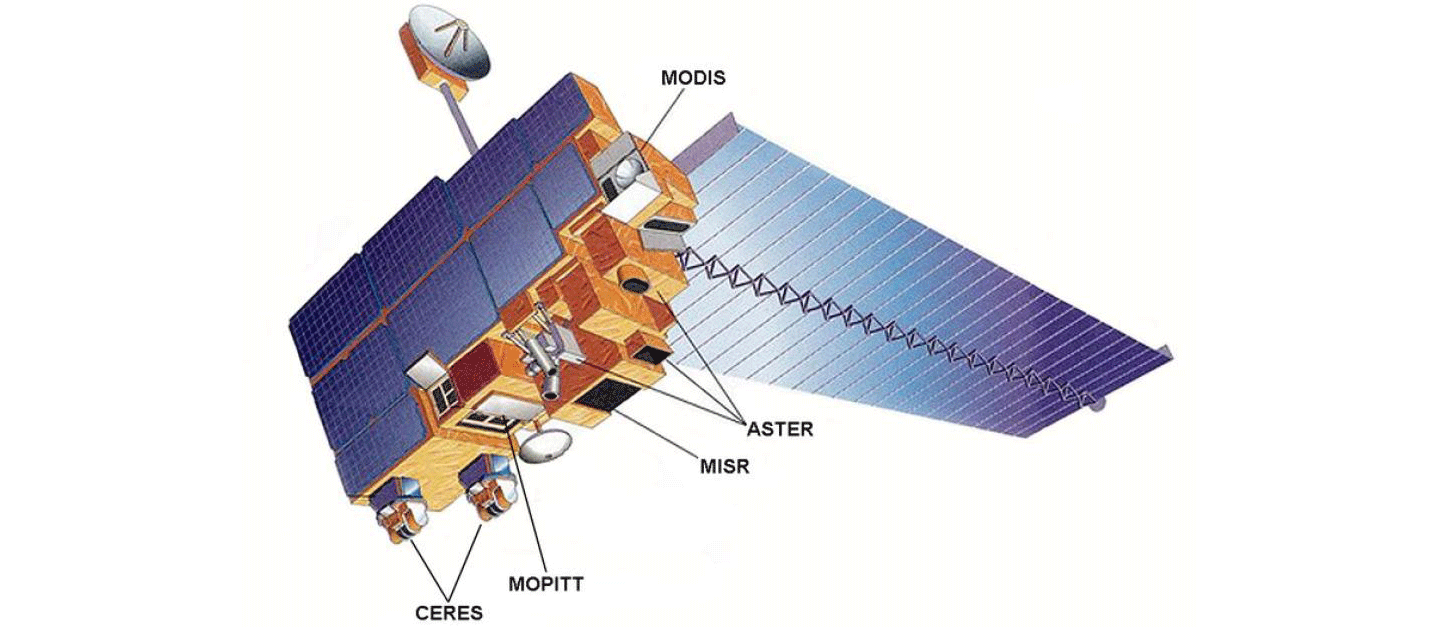
Aqua
Aqua, originally named EOS-PM1, launched in May 2002 – see Figure 3. An article in The Earth Observer at the time of launch described the mission, Aqua is Launched! [March–April 2002, 14:2, 2]. The second EOS flagship carried six different instruments into orbit – Atmospheric Infrared Sounder (AIRS), Advanced Microwave Sounding Unit–A (AMSU-A1 and -A2), CERES (two copies), MODIS (both of which also fly on Terra), the Advanced Microwave Scanning Radiometer for EOS (AMSR–E), and Humidity Sounder for Brazil (HSB). Aqua’s mission focused on collecting data on global precipitation, evaporation, and the cycling of water. Aqua paired its data with Terra, offering the scientific community additional insights into the daily cycles for important scientific parameters to understand the global water cycle.
The Earth Observer article, Aqua: 10 Years After Launch [Nov.–Dec. 2012, 24:6, 4–17] provides an overview of the mission’s accomplishments during its first decade in orbit. Due to fuel limitations, Aqua completed the last of its drag makeup maneuvers in December 2021. Like Terra, the satellite is now in a free-drift mode, slowly descending below the A-Train orbit and crossing the equator later and at lower altitudes. A more recent newsletter article, Aqua Turns 20 [May–June 2022, 34:3, 5–12] reflects on Aqua’s accomplishments and legacy after two decades in orbit. As of this writing MODIS, CERES, AMSU, and CERES remain active.
Figure 3. An artistic rendering of NASA’s Aqua satellite. The mission collects data about the Earth’s water cycle, including evaporation from the oceans, water vapor in the atmosphere, clouds, precipitation, soil moisture, sea ice, land ice, and snow cover on the land and the ocean. Figure credit: NASAAura
Originally named EOS-CHEM1, Aura was the third and final flagship mission, and was launched in July 2004 – see Figure 4. The Earth Observer detailed the first post-launch science team meeting, Aura Science Team Meeting [March–April 2004, 17:2, 8–11]. Aura followed a Sun-synchronous, near-polar orbit, crossing the equator 15 minutes after Aqua. Similar to Aqua, Aura completed its final inclination adjustment maneuver in April 2023 to save its remaining fuel to allow for controlled reentry. As a consequence, the satellite has drifted out of the A-Train orbit, slowly continuing to move to a later equatorial crossing time and lower orbit altitude.
Aura’s payload included four instruments: the Microwave Limb Sounder (MLS), High Resolution Dynamics Limb Sounder (HIRDLS), Tropospheric Emission Spectrometer (TES), and Ozone Monitoring Instrument (OMI). These instruments gather information on trace gases and aerosols in the atmosphere. The key mission objectives aimed to monitor recovery of the stratospheric O3 hole, evaluate air quality, and monitor the role of the atmosphere in climate change. The article, Aura Celebrates Ten Years in Orbit [Nov.–Dec. 2014, 26:6, 4–16] detailed Aura’s first decade of accomplishments. The online article, Aura at 20 Years, published Sept. 16, 2024, reported on Aura’s status and achievements as it began its third decade of continuous operations. As of this writing MLS and OMI remain active.
Figure 4. An artistic rendering of the Aura satellite. Aura gathers information on trace gases and aerosols in the atmosphere. Figure credit: NASA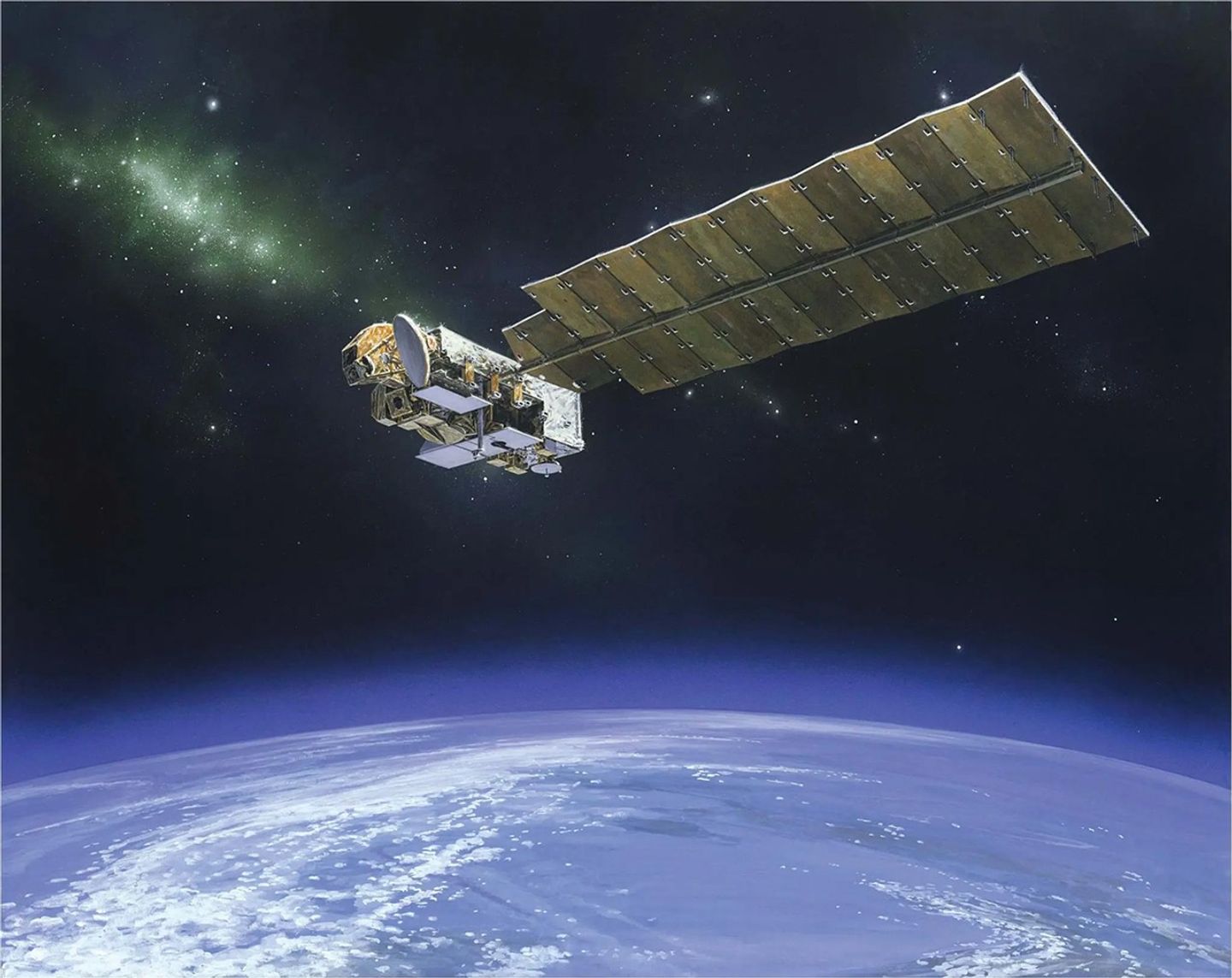
Building and Dismantling the “A-Train”
Between 2002 and 2014, a series of satellites joined the A-Train constellation – see Figure 5. This international effort includes the two EOS flagship satellites with afternoon equatorial crossing times (Aqua and Aura) as well as the Orbiting Carbon Observatory–2 (OCO-2), CloudSat, and the Cloud-Aerosol Lidar and Infrared Pathfinder Satellite Observations (CALIPSO). In addition, Polarization and Anisotropy of Reflectances for Atmospheric Sciences coupled with observations from a Lidar (PARASOL) and Global Change Observation Missions with a focus on the water cycle (GCOM-W) are two international missions that became part of the A-Train constellation.
In the past decade, many of the satellites in the A-Train have either retired or have been allowed to drift out of the constellation. As of this writing, only two satellites – OCO-2 and GCOM-W1 – remain in their positions in the A-Train gathering data.
Three A-Train symposiums have been organized to bring the Earth science community together to discuss the achievements and future synergy of these missions. The outcome from each of these meetings were reported in The Earth Observer. The most recent of these was: The Third A-Train Symposium: Summary and Perspectives on a Decade of Constellation-Based Earth Observations [July–Aug. 2017, 29:4, 4–18].
Figure 5. An artistic depiction of all the satellites that participated in the Afternoon Constellation (A-Train), except for Polarization and Anisotropy of Reflectances for Atmospheric Sciences coupled with observations from a Lidar (PARASOL). CloudSat and Cloud-Aerosol Lidar and Infrared Pathfinder Satellite Observations (CALIPSO) lowered their orbits. Called the C-Train, the orbit of these satellites overlapped the A-Train, enabling science observations with other A-Train missions. More details about the A-train is available on the constellation’s website. Figure credit: NASA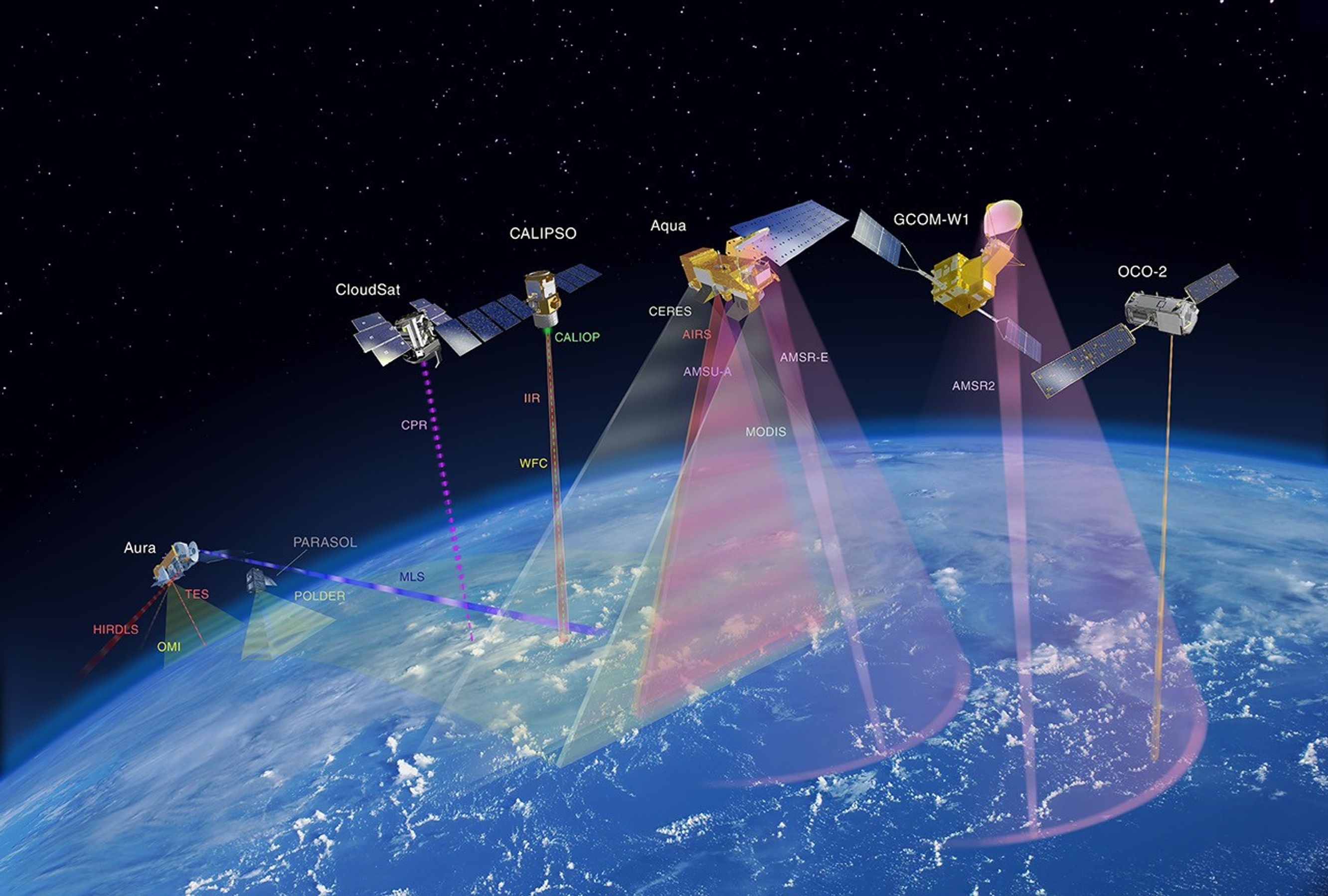
Science from the EOS Fleet
The next several sections provide a highlight of science from key missions outside of Terra, Aqua, and Aura. The content has been organized in terms of measurements – with an overarching focus on water (oceans and fresh water), atmosphere, and land. This summary is far from exhaustive. A record of much of the amazing science conducted during these missions is detailed in the archives of The Earth Observer.
Interpreting an Ocean of Data
When viewed from space, Earth has been described as a “blue marble.” The planet’s abundance of liquid water is found in the oceans, and while not potable, the oceans play a critical role in regulating Earth’s climate. Satellites provide an unparalleled way to study the global ocean. With each new mission, the process of data collection has been refined and improved. The scientific community can now measure ocean color as a proxy for surface productivity as well as measure subtle changes in surface ocean salinity. These data have improved weather and climate models to increase the accuracy of storm projection and help the scientific community better understand the movement of energy around the planet.
Aqua was the flagship mission dedicated to studying water on Earth, but other missions have contributed and expanded on this data record. For example, Japan’s GCOM-W1 mission, also known as SHIZUKU (Japanese for droplet), continues to gather information on precipitation, water vapor, wind velocity above the ocean, sea water temperature, water levels on land, and snow depths. These data support weather models to improve forecasts to monitor tropical cyclones. The subsections that follow provide examples of how data from these satellites support different science objectives, as well as examples of the science deciphered by both flagship and ancillary platforms within the A-Train. All of these missions and science have been covered in The Earth Observer over the past several decades.
Discerning the Ocean’s True Colors
Ocean color data are crucial for studying the primary productivity and biogeochemistry of the oceans. The Coastal Zone Color Scanner (CZCS), launched on the Nimbus 7 satellite in 1978 and ceasing operations in 1986 – gave the earliest perspective of the oceans from space. SeaWiFS, which served as a follow-on to CZCS, was launched on the privately owned Seastar spacecraft on Aug. 1, 1997 to produce ocean color data and offered a synoptic look at the global biosphere. This mission was a data-buy, where NASA purchased the data from Orbital Imaging Corporation. An article in The Earth Observer, titled Sea-viewing Wide Field-of-view Sensor [March–April 1998, 10:2, 20–22] detailed how the satellite gathered chlorophyll-a data that was calibrated to field measurements from a Marine Optical Buoy. The research community have used this information to understand primary productivity in the surface ocean and global biogeochemistry. This data offered an early assessment of the role of the ocean in the global carbon cycle. It also produced one of the first global perspectives of the impact of El Niño and La Nina events around the world. Coastal and fishery managers have used this data to improve the health of these important ecosystems. Launched for a five-year mission, SeaWiFs gathered data until December 2010.
More recently, NASA launched the Plankton, Aerosol, Cloud ocean Ecosystem (PACE) satellite in February 2024 to gather data on ocean and terrestrial ecosystem productivity – see Figure 6. While other missions studied ocean color in the interim between SeaWiFS and PACE (e.g., MODIS on Terra and Aqua), PACE offers an exponential leap forward with its three-instrument payload that includes: the Ocean Color Instrument (OCI), Hyper-Angular Rainbow Polarimeter–2 (HARP2), and Spectropolarimeter for Planetary Exploration (SPEXone). The PACE mission aims to clarify how the ocean and atmosphere exchange CO2, a key factor in understanding the evolution of Earth’s climate system. The satellite also examines the role of aerosols in providing micronutrients that fuel phytoplankton growth in the surface ocean. The data gathered extends the aerosol and ocean biological, ecological, and biogeochemical records that were initiated by other satellites. The Dec. 29, 2025 article, Keeping Up with PACE: Summary of the 2025 PAC3 Meeting, reports on three recent meetings related to the mission.
Figure 6. An artistic rendering of the Plankton, Aerosol, Cloud ocean Ecosystem (PACE) observatory and the instrument panels that it carries. PACE focuses on clarifying how the ocean and atmosphere exchange carbon dioxide. Figure credit: NASA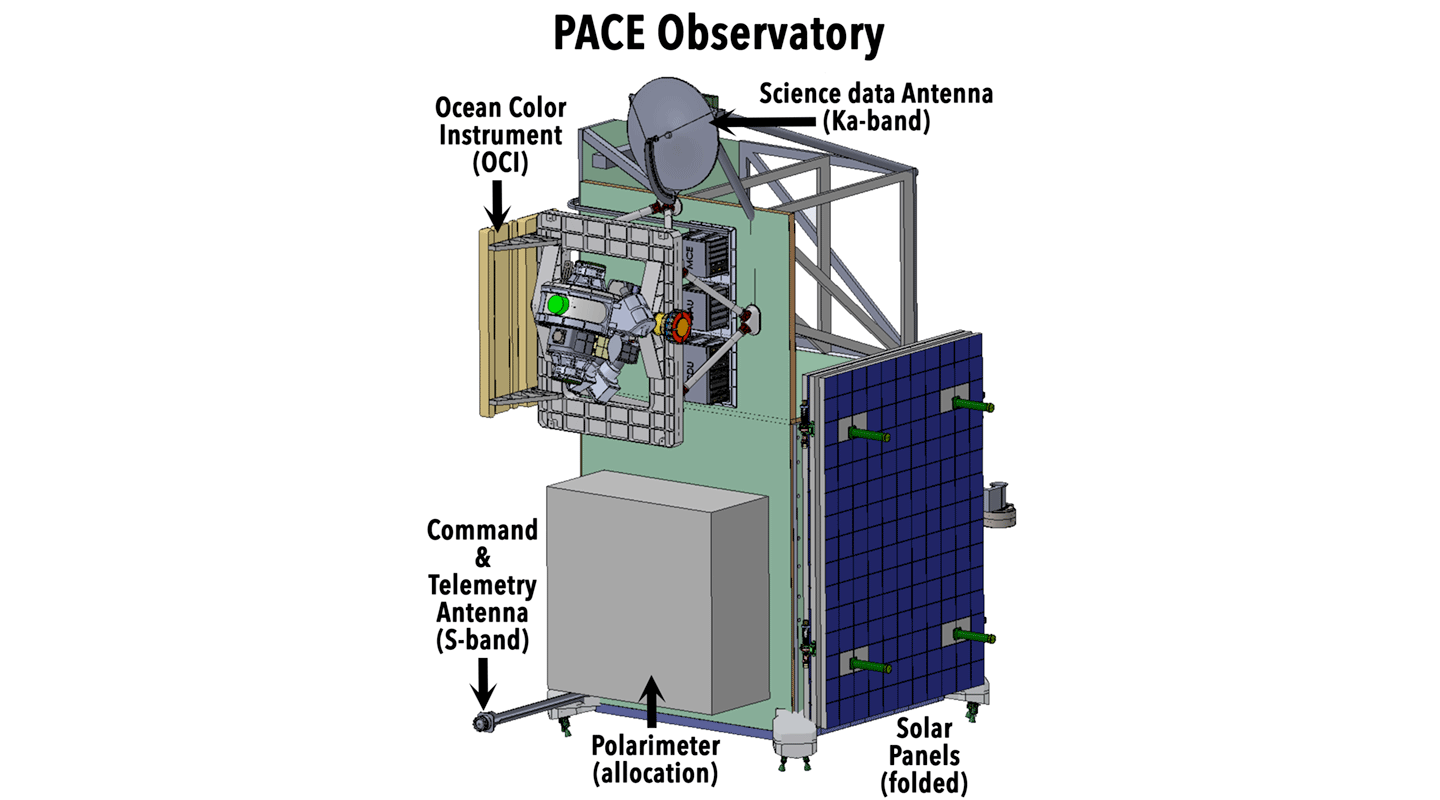
Mapping the Ocean Surface to Reveal the Rising Seas
The Ocean Surface Topography (TOPEX)/Poseidon mission, launched on Aug. 10, 1992, was the first in a series of missions that have measured ocean surface topography, or the variations in sea surface height. This record now extends more than 30 years. TOPEX/Poseidon spent more than 13 years in orbit. The data gathered helped to improve the scientific community’s understanding of ocean circulation and its impact on global climate – including sea level rise. TOPEX/Poseidon produced the first global views of seasonal current changes, which allowed scientists to forecast and better understand El Niño events. These early efforts to distribute data were captured in The Earth Observer article, Jet Propulsion Laboratory DAAC Begins TOPEX Data Distribution [March–April 1993, 6:2, 24].
Jason followed TOPEX/Poseidon to continue the measure of sea level as well as wind speed and wave height for more than 95% of Earth’s ice-free ocean – see Figure 7. Jason consists of a series of satellites, with Jason-1, launched in 2001, remaining in orbit for 11 years. It was followed by Jason-2, also called the Ocean Surface Topography Mission (OSTM), which was launched in 2008. Jason-2 gathered data for 11 years. Jason-3 launched in January 2016 and remains in orbit, continuing the sea level dataset. The Earth Observer has reported on meetings of the Ocean Surface Topography Science Team over the years. The online article, Summary of the 2023 Ocean Surface Topography Team Meeting, was published May 31, 2024 and includes the most recent updates available.
Figure 7. Beginning with TOPEX/Poseidon in 1992, a series of ocean surface topography missions have maintained a continuous record of global sea surface height data with the best possible accuracy along the same exact ground track. Dubbed the “reference” altimetry missions, shown here are TOPEX/Poseidon, Jason-1, and the Ocean Surface Topography Mission/Jason-2 (OSTM/Jason-2) in the tandem orbit pattern. This is used to cross-calibrate each mission to the next. By flying in formation, just one minute apart for a period of several months, scientists can be sure that each successive mission is exactly calibrated to its predecessor. Connecting each record to the next, these reference missions have built a record of sea level that stretches more than 30 years with centimeter level accuracy for every corner of the ocean. The reference mission has now been taken over by, Sentinel 6 Michael Freilich, which will hand the baton to the recently launched Sentinel 6B sometime in 2026. Figure credit: NASA/JPL/CNES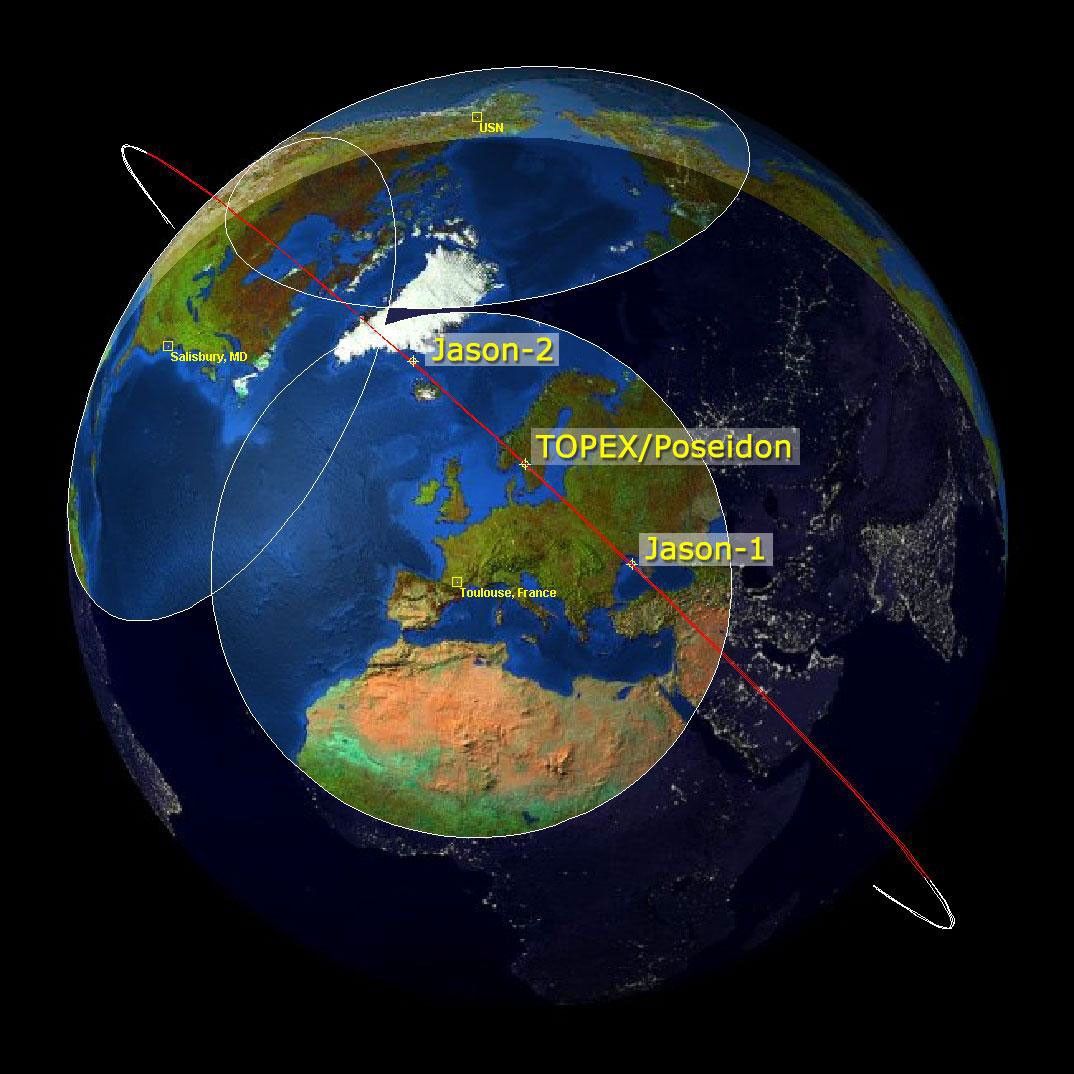
The international partnership between the United States [NASA and the National Oceanic and Atmospheric Administration (NOAA)], the European Space Agency (ESA), and the French Space Agency [Centre National d’Études Spatiales (CNES)] collaborate to create the ESA’s Copernicus Sentinel–6 missions. The Sentinel-6B, launched Nov. 16, 2025, will follow the path of the Sentinel-6 Michael Freilich (originally called Sentinel–6A) satellite, which has been in orbit for five years – see Figure 8. These two Sentinel 6 missions continue the global measurements of sea level, wind speed, wave height, and atmospheric temperature. The data will be used in marine weather forecasts as well as to improve commercial and naval navigation, search and rescue missions, and tracking garbage and pollutants in the ocean. To learn more about Sentinel-6B, see the online article, Sentinel-6B Extends Global Ocean Height Record, published Dec. 22, 2025.
While the Surface Water and Ocean Topography (SWOT) mission is fully described in the next section – with emphasis placed on its novel surface water observation capabilities – it should be noted that SWOT is also an ocean topography mission that obtains data similar to TOPEX/Poseidon, Jason, and Sentinel-6 missions. These data will contribute to the long-term time series of the sea surface height record.
Figure 8. Sentinel-6B, an Earth-observing satellite jointly developed by NASA and U.S. and European partners, will observe the ocean and measure sea level rise to provide insights into our home planet that will improve weather forecasts and flood predictions, increase public safety, and protect coastal infrastructure. The Sentinel missions are part of the European Space Agency’s Copernicus Programme. Figure credit: NASA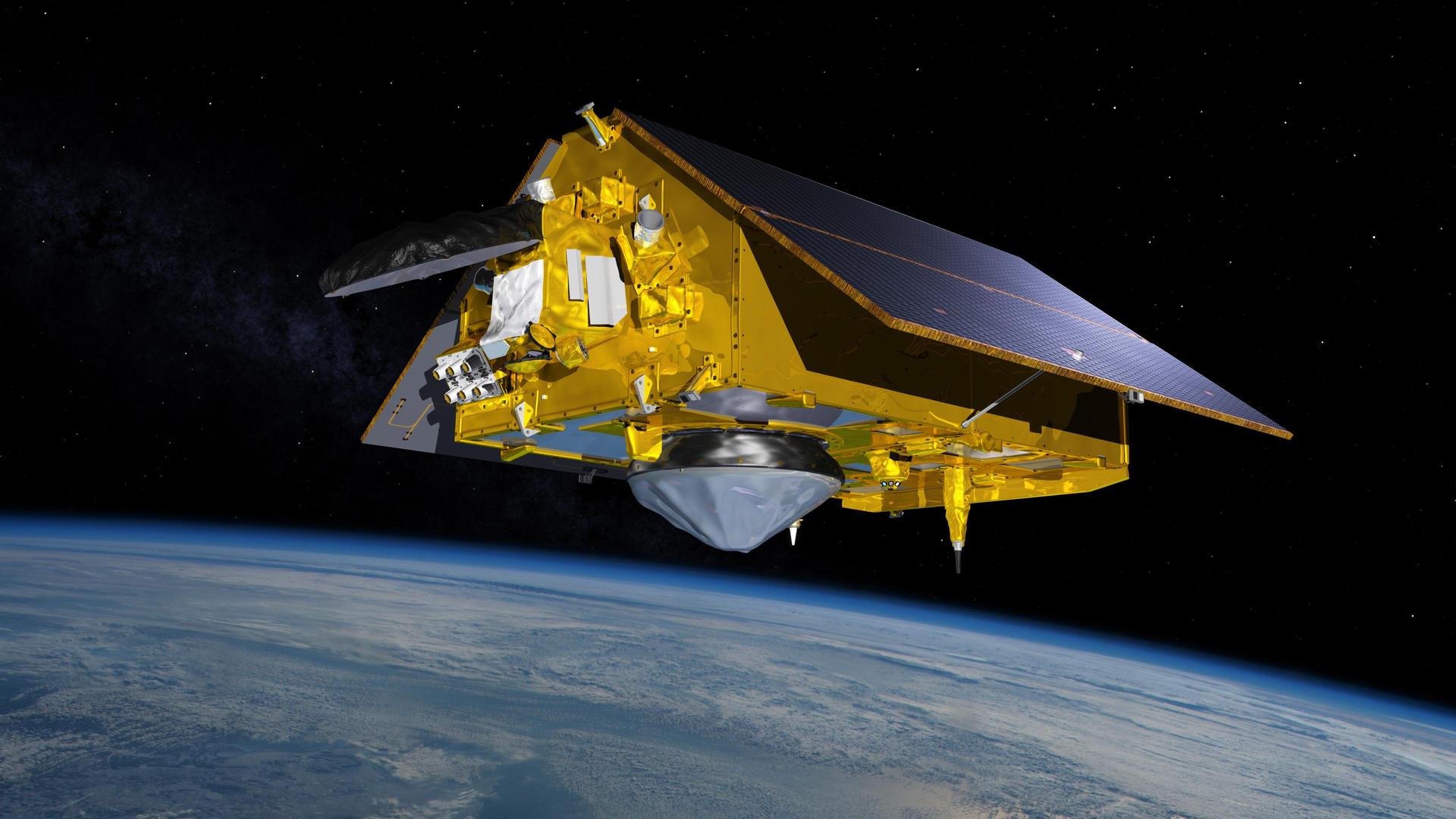
Sampling the Salty Seas
Launched June 2011, Aquarius was an international collaboration between NASA and Argentina’s Comisión Nacional de Actividades Espaciales (CONAE). The cooperative effort was detailed in the article, Aquarius: A Brief (Recent) History of an International Effort [July–Aug. 2010, 22:4, 4–5]. The satellite carried a microwave radiometer that was sensitive enough to measure salinity to an accuracy of 0.2 practical salinity units (psu) on a monthly basis. It also carried a scatterometer to measure surface ocean roughness. Pairing data from the two instruments allowed the team to overcome the challenges of measuring salinity from space. This feat is detailed in the article, For Aquarius, Sampling Seas No ‘Grain of Salt’ Task [July–Aug. 2011, 23:4, 42–43]. The more accurate, global measurements of ocean salinity that Aquarius obtained have helped the research community better understand ocean circulation. The mission ended in 2015, after the satellite experienced a power failure.
Focusing on Freshwater
While most water on the planet is housed in the ocean, fresh water is a primary concern for life on the planet. Fresh water accounts for ~3% of the total amount water on the planet. Of that small amount, a significant portion is locked in ice on land and as sea ice. The remaining water flows on Earth’s surface and underground. Maintaining a supply of fresh water is critically important to our survival. The location, status, and purity of this precious resource continues to be an on-going focus for many of the missions.
Monitoring Rain and Snow
The joint NASA/National Space Development Agency of Japan (NASDA – which is now known as the Japan Aerospace Exploration Agency, or JAXA) Tropical Rainfall Measuring Mission (TRMM) carried a Microwave Imager, Visible Infrared Scanner, and Precipitation Radar to gather tropical and subtropical rainfall observations (and two related instruments) – see Figure 9. These data filled a critical knowledge gap – to understand the interactions between the sea, air, and land. Over the years, these data were incorporated into numerous computer models to clarify the role of tropical rainfall on global circulation and formed the basis for experimental quasi-global merged satellite precipitation products. The Earth Observer detailed the early data collection in the article titled TRMMing the Uncertainties: Preliminary Data from the Tropical Rainfall Measuring Mission [May–June 1998, 10:3, 48–50]. The mission was extended twice but eventually the satellite’s maneuvering fuel was exhausted, resulting in a slow decline in the orbital altitude beginning in 2014, with reentry in 2015. Data from TRMM have improved understanding of storm structure of cloud systems, produced reliable global latent heating estimates to improve water transfer estimates within the atmosphere, and continue to be used in calibrating modern precipitation products for the TRMM era.
Figure 9. Artistic rendering of the Tropical Rainfall Measuring Mission (TRMM) in space over a hurricane. TRMM was launched in 1997 and remained in operation until 2015. The satellite was designed to improve our understanding of the distribution and variability of precipitation within the tropics as part of the water cycle in the current climate system. Figure credit: NASA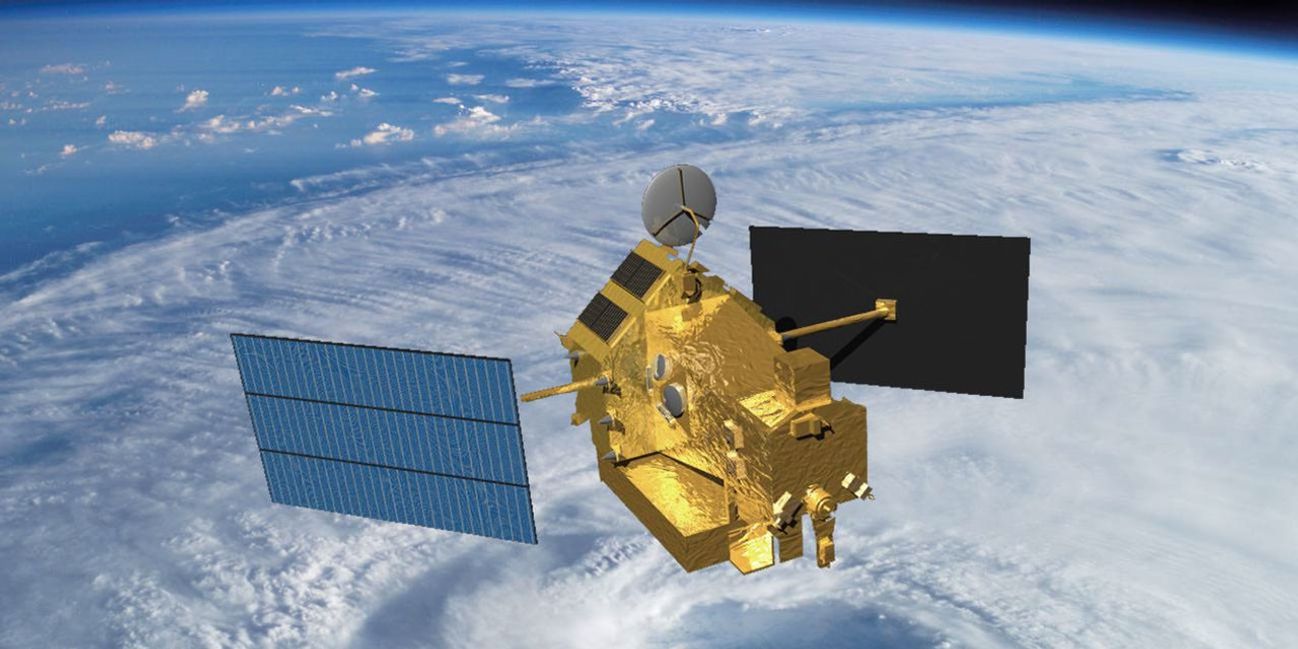
To continue the efforts that began with TRMM – and extend coverage to most of the globe – NASA and JAXA launched the Global Precipitation Measurement (GPM) mission in 2014. This satellite aims to advance our understanding of water and energy cycles, improve forecasting of extreme weather events, and extend current capabilities to use accurate and timely information of precipitation to directly benefit society. The Earth Observer detailed the accomplishments of this mission in the online article, GPM Celebrates Ten Years of Observing Precipitation for Science and Society, published Oct. 3, 2024.
Surveying Earth’s Surface Water
Introduced briefly in the previous section, the SWOT mission is a joint venture between the United States and France. Launched in December 2022, SWOT is conducting the first global survey of Earth’s surface water – see Photo. The mission was introduced to the EOS community in The Earth Observer article, Summary of the 2022 Ocean Surface Topography Science Team Meeting [May–June 2023, 35:3, 19–23]. SWOT carries the Ka-band Radar Interferometer (KaRIN) – the first spaceborne, wide-swath, altimetry instrument capable of high-resolution measurements of sea surface height in the ocean and freshwater bodies. SWOT covers most of the world’s ocean and freshwater bodies with repeated high-resolution elevation measurements. This data have been applied to monitor rivers across the Amazon basin, simulate land/hydrology processes, and predict streamflow. A more comprehensive overview of SWOT applications is detailed in online article, Summary of the 10th SWOT Applications Workshop, published Sept. 20, 2024.
Photo 1. Workers in a clean room in Cannes, France, load the Surface Water and Ocean Topography (SWOT) satellite into a container in preparation for shipping the spacecraft to the United States. SWOT provides the first global survey of Earth’s surface water. Photo credit: Centre National d’Études Spatiales (CNES), Thales Alenia Space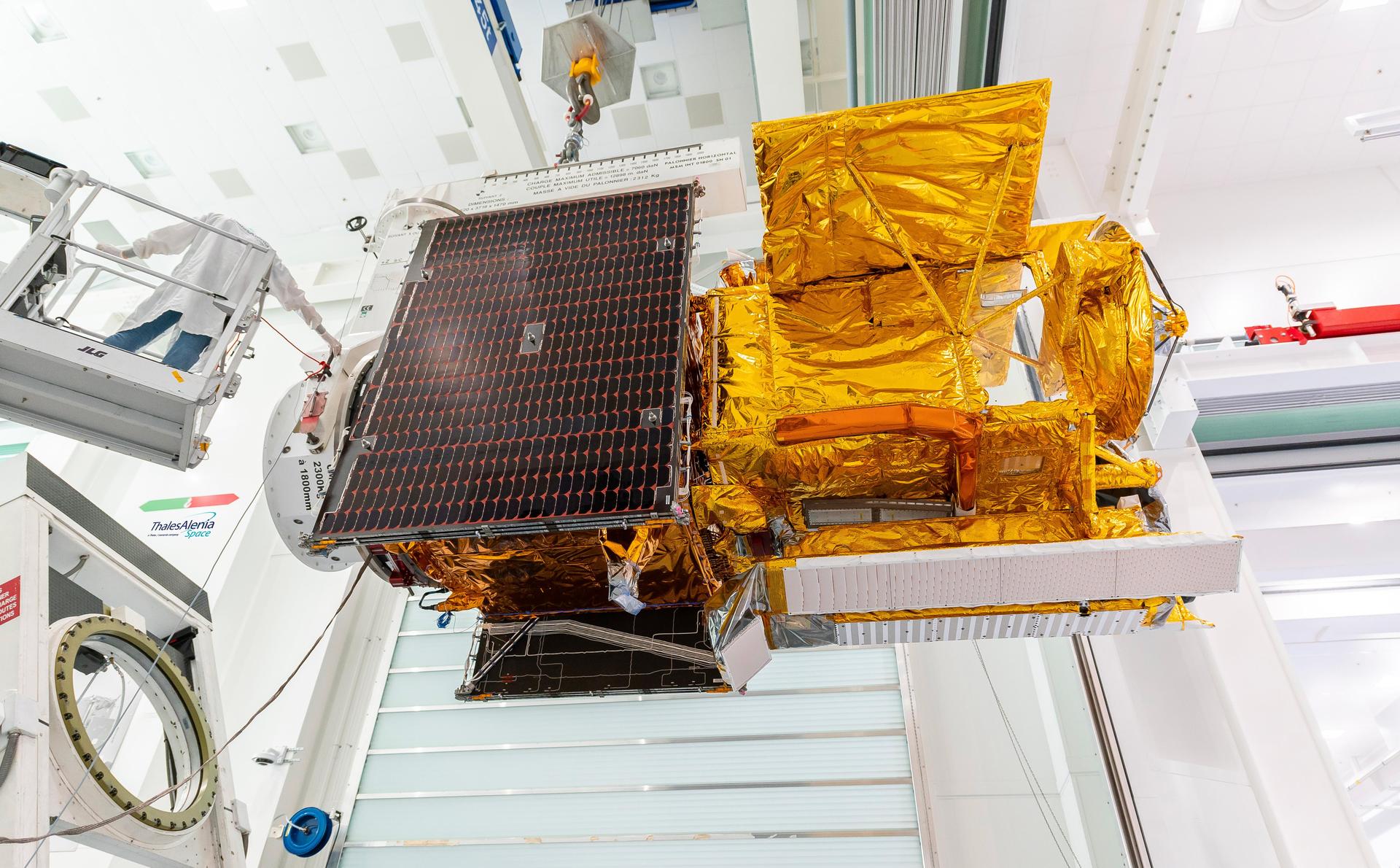
Gracefully Tracking Water Movement
The twin GRACE satellites were launched on March 17, 2002. The mission, a partnership between NASA and the German GeoForschungsZentrum (GFZ) Helmholtz Centre for Geosciences was developed to measure Earth’s shifting masses – most of which comes from water – and map the planet’s gravitational field using a K-band microwave ranging system and accelerometers. Some early results of the satellites appeared in The Editor’s Corner column [Nov.–Dec. 2002, 14:6, 1–2]. GRACE enabled groundbreaking insights into Earth’s evolving water cycle as the satellites tracked monthly mass variations in ice sheets and glaciers, near-surface and underground water storage, the amount of water in large lakes and rivers, as well as changes in sea level and ocean currents.
GRACE’s mission was extended with the GRACE-Follow On (GRACE-FO) mission launched in 2018 – see Figure 10. GRACE-FO continues comprehensive tracking water movement across the planet, including groundwater measurements that have important applications for everyday life. The most recent developments of the GRACE-FO science meeting was detailed in an online article, Summary of the 2023 GRACE Follow-On Science Team Meeting, published March 30, 2024 – and also published in the final print issue [Jan.–Feb. 2024, 35:7, 19–26]. The data gathered during the GRACE-FO mission details large-scale changes in Earth’s groundwater reservoirs, Greenland and Antarctica’s sensitivity to warming ocean waters, and even subtle shifts deep in Earth’s interior that reveal how large earthquakes can develop.
In 2028, NASA will move into a third-generation of gravity observations with the launch of GRACE-Continuity, or GRACE-C, which will further expand the foundational observations of global mass change and expand the societal and economic applications that have been created from these data.
Figure 10. An artistic rendering of the twin Gravity Recovery and Climate Experiment-Follow-On (GRACE-FO) satellites that, like the original GRACE twins, follow each other in orbit, separated by about 137 miles (220 km). GRACE tracks water movement across the planet’s surface. Figure credit: NASA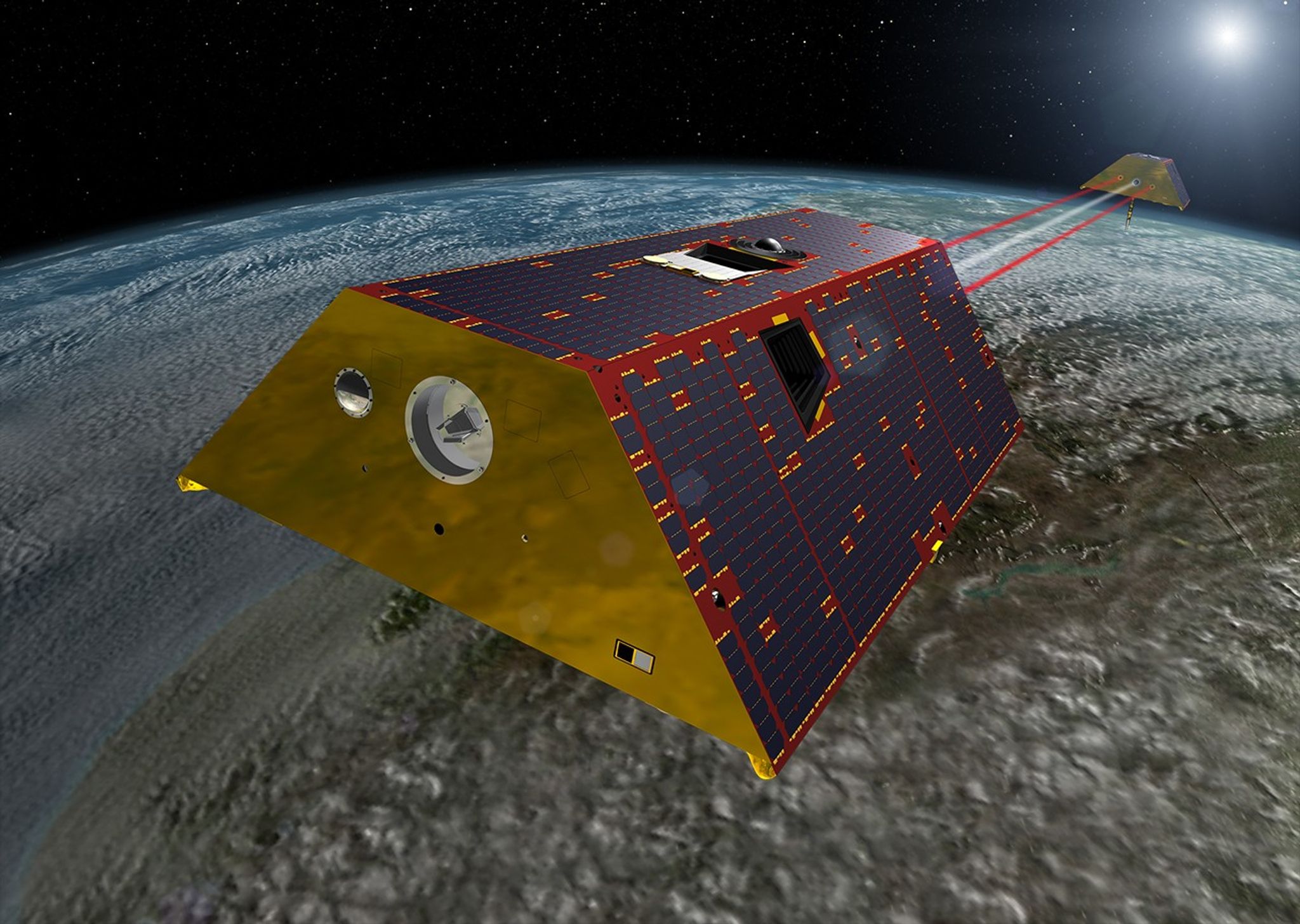
Assessing the Atmosphere from Above
Earth has a unique atmospheric makeup that maintains a stable temperature allowing life to thrive. As far as we know, our atmosphere is unique in the universe. Satellites provide an unparalleled perspective to study variability in the column of air extending from Earth’s surface. While Aura has a suite of instruments making a wide range of atmospheric chemistry measurements, other missions also measure the abundance and impact of atmospheric constituents that, while often invisible to the unaided eye, can have profound impacts on Earth’s air quality and climate. These data have also improved climate models and help the scientific community better understand how energy is emitted into space.
Tracking Tiny Particles with Big Impacts
France’s PARASOL mission was an original member of the international A-Train constellation. Launched in 2004. PARASOL sought to capture the radiative and microphysical properties of clouds and tiny atmospheric aerosol particles using a unique multiangle imaging POLDER polarimeter.
NASA’s Glory mission was intended for operation in the A-Train; it carried a multiangle polarimeter as its instrument. Unfortunately, the spacecraft failed to separate from the Taurus rocket due to a fairing separation failure during its launch in 2011. As a result, POLDER on PARASOL was the only atmospheric polarimeter to fly in space until two (SPEXone and HARP2) launched as part of NASA’s PACE mission. Researchers gathered information from POLDER and other A-Train instruments about how aerosols affect the formation of precipitations and clouds, the movement of water around the planet, and the reflection and absorption of radiative energy that impact overall planetary climate. PARASOL was deactivated in 2013 after nine years in service.
Cloud particles form when water vapor nucleates onto aerosols; changes in one can impact the other. After many years and conversations, it was decided to pair two NASA Earth System Science Pathfinder (ESSP) missions – CloudSat and CALIPSO – and fly them in coordination with each other and with other A-Train satellites. By combining the two datasets, it was possible to explore cloud and aerosol processes. This information helped the community drill into the larger climate questions. The two satellites were launched on the same Delta-II rocket from Vandenberg Air Force Base in California on April 28, 2006. CloudSat used a 94 GHz cloud profiling radar that is 1000 times more sensitive than a typical weather radar, capable of distinguishing between cloud particles and precipitation. CALIPSO contained a Cloud-Aerosol Lidar with Orthogonal Polarization (CALIOP), Wide-Field Camera, and Imaging Infrared Radiometer to detect and distinguish between aerosol particles and cloud particles.
The Earth Observer captured the early data collection of the two satellites in the article, CloudSat and CALIPSO: A Long Journey to Launch…But What a Year It’s Been!! [May–June 2007, 19:3, 7–12]. The later article, A Useful Pursuit of Shadows: CloudSat and CALIPSO Celebrate Ten Years of Observing Clouds and Aerosols [July–Aug. 2016, 28:4, 4–12] provided a review of the accomplishments of the missions after 10 years in orbit. CALIPSO and CloudSat were both deactivated in 2023 after 17 years of service.
An Oracle of High-Altitude Wisdom
The Stratospheric Aerosol and Gas Experiment (SAGE) has experienced several iterations, extending back nearly half a century. The initial SAGE mission launched on Feb. 18, 1979, aboard the Applications Explorer Mission-B (AEM-B) to measure vertical distribution of aerosols and important gases in the upper troposphere and stratosphere (UTS). The satellite failed after three years in orbit. In 1984, SAGE II began collecting data on stratospheric O3, producing a stable record of this important greenhouse gas from 1984–2005. SAGE III was launched on Метеор-3М (SAGE III/M3M). The third-generation satellite produced an accurate measurement of the vertical structure of aerosols, O3, water vapor, and other important trace gases in the upper troposphere and stratosphere. The satellite was terminated on March 6, 2006, following a power supply system failure, resulting in loss of communication with the satellite.
Another version of SAGE III was launched to the International Space Station (ISS) on Feb. 19, 2017, where it was installed on the EXpedite the PRocessing of Experiments to Space Station (ExPRESS) Logistics Carrier [ELC-4] – an unpressurized attached payload platform for ISS. SAGE III/ISS, which is shown mounted on ELC-4 in Figure 11, has completed its prime mission after three years of operation. NASA granted approval to extend the SAGE III/ISS mission through at least 2026 – meaning the instrument will continue to provide the public and science community with world-class vertical profiles of O3, aerosol, water vapor, and other trace gases, e.g., nitrogen dioxide (NO2) and nitrate (NO3), data products for at least another year. An article titled, Summary of the 2024 SAGE III/ISS Meeting, published May 26, 2025, details the latest findings from SAGE.
Figure 11. An artistic rendering of the Stratospheric Aerosol and Gas Experiment-III (SAGE-III), which is externally mounted on the International Space Station’s Japanese Experiment Module–Exposed Facility (JEM-EF) EXPRESS Logistics Carrier (ELC)-4. SAGE III/ISS measures the vertical structure of aerosols, ozone (O3), water vapor, and other important trace gasses in the upper troposphere and stratosphere. Figure credit: NASA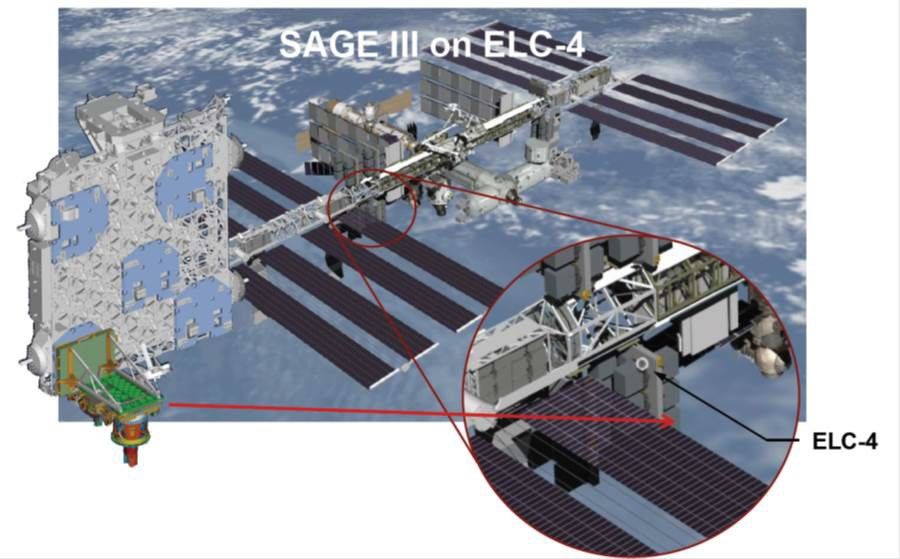
Watching Earth Exhale
The Orbiting Carbon Observatory (OCO) was launched into space in February 2009, but it failed to separate from the Taurus rocket during its ascent, leading to mission failure and loss of the satellite. Undaunted, the EOS community began again and assembled OCO-2, which was successfully launched into orbit, joining the A-Train on July 2, 2014 – see Figure 12. The satellite’s mission focused on making precise, high-resolution measurements of atmospheric CO2. OCO-2 measures reflected sunlight that interacts with the atmosphere. Using diffraction gratings to separate the reflected sunlight into spectra, OCO-2 measures the absorption levels for the different molecular bands to calculate CO2 concentration. This information is invaluable for the quantification of CO2 emissions and can characterize both sources and sinks of this critical greenhouse gas. The mission was detailed in an article, titled Orbiting Carbon Observatory-2: Observing CO2 from Space [July–Aug. 2014, 26:4, 4–12].
On May 4, 2019, NASA launched the third iteration in the OCO group to the ISS. It was subsequently installed on the Japanese Experiment Module–Exposed Facility (JEM-EF). Constructed from parts left over from OCO-2, OCO-3 continues the mission of making CO2 measurements with a focus on daily variability. In particular, the measurements explore the role of plants and trees in the major tropical rain forests of South America, Africa, and Southeast Asia. As of today, both OCO-2 and OCO–3 remain operational and gathering data.
The science team reflected on both these missions in a recent article posted in the online article, A Tapestry of Tales: 10th Anniversary Reflections from NASA’S OCO-2 Mission, published Aug. 12, 2025.
Figure 12. An artistic rendering of OCO-2 in orbit above Earth. OCO-2 measures the concentration of trace gases in the atmosphere. Figure credit: NASA/JPL-Caltech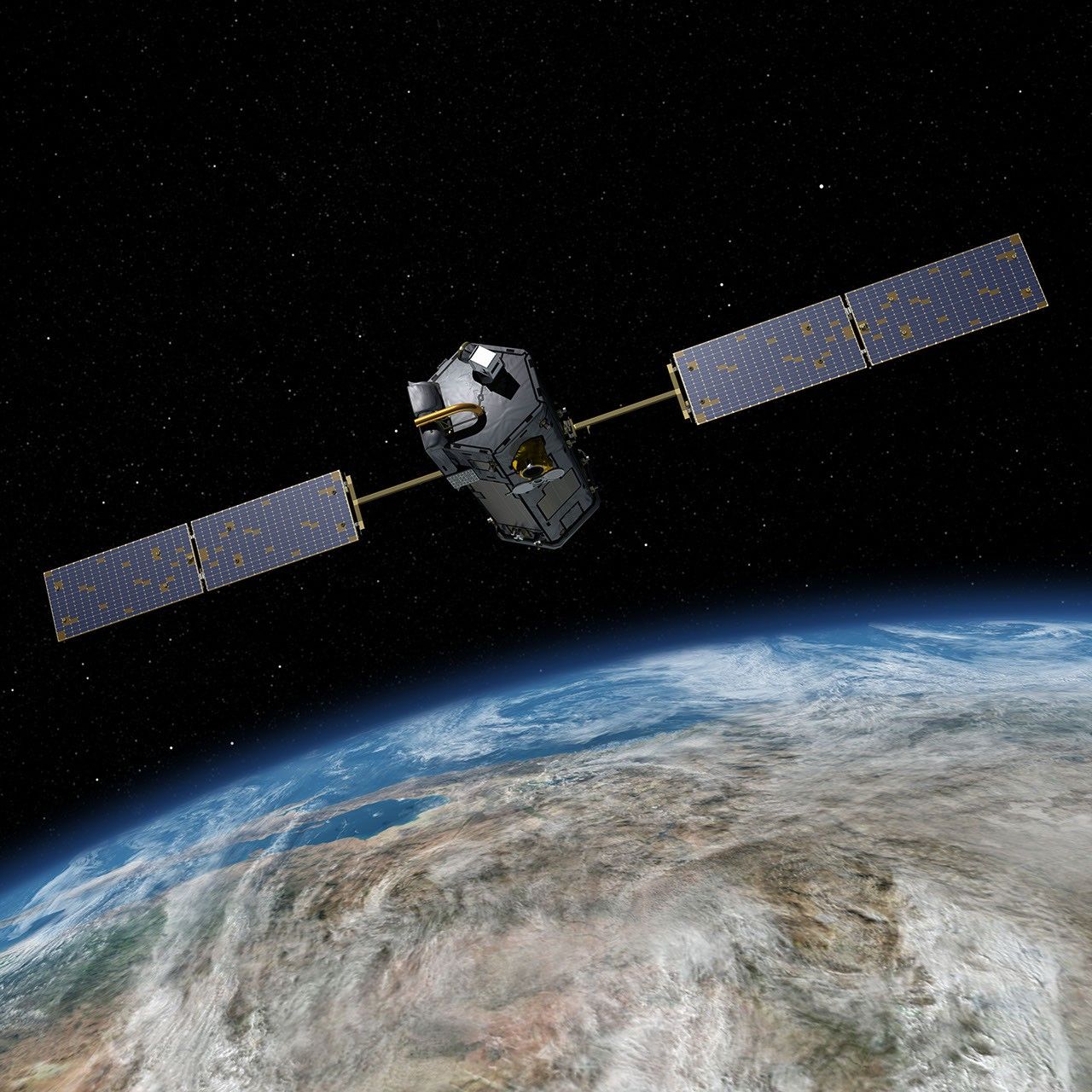
Tracking the Sun’s Output
In December 1999, NASA launched the Active Cavity Radiometer Irradiance Monitor Satellite (ACRIMSAT) satellite to extend the more than two-decade record of total solar irradiance (TSI). Scientists use this important measurement to quantify the solar energy input to the planet and thereby its interactions with Earth’s oceans, land masses, and atmosphere. It is also a critical component to understand variations of the planet’s climate. The Active Cavity Radiometer Irradiance Monitor 3 (ACRIM3) instrument onboard combined the best features of the ACRIM I (flown on the Solar Maximum Mission), ACRIM II (flown on the Upper Atmosphere Research Satellite), and SpaceLab-1 ACRIM (flown on Space Shuttle Columbia, STS 9). ACRIM3 improved on its predecessors by incorporating a new electronics and package design. The Earth Observer captured the initial information from this mission in the article, The ACRIMSAT/ACRIM3 Experiment — Extending the Precision, Long-Term Total Solar Irradiance Climate Database [May–June 2001, 13:3, 14–17]. ACRIMSAT spent 14 years in orbit and ACRIM3 extended the TSI record to 36 years (i.e., building on measurements from previous ACRIM missions).
NASA continued its quest to observe the incident solar energy budget with the launch of the Solar Radiation and Climate Experiment (SORCE) in January 2003. SORCE focused on measuring solar radiation incident to the top of the Earth’s atmosphere. The Total Irradiance Monitor (TIM) onboard continued the TSI record that the ACRIM series of satellites established. In addition to TIM, the satellite carried a Spectral Irradiance Monitor (SIM), an Extreme Ultraviolet (XUV) Photometer System [XPS], and a stellar observation from the Solar Stellar Irradiance Comparison Experiment (SOLSTICE). The satellite has produced groundbreaking TSI and spectral solar irradiance (SSI) measurements – two key inputs for atmosphere and climate modeling.
Early results from SORCE are detailed in the article, The SORCE (SOlar Radiation and Climate Experiment) Satellite Successfully Launched [Jan.–Feb. 2003, 15:1, 16–19]. The article, The SORCE Mission Celebrates 10 Years [Jan.–Feb. 2013, 25:1, 3–13] details the most significant results from a decade of SORCE observations. Designed for a five-year mission, SORCE gathered data until 2020 – although a degradation of a battery power that began in 2008 increasingly hindered data collection for the remainder of the mission. During its time in orbit, SORCE captured two of the Sun’s 11-year solar cycles and observed the solar cycle minimum in both 2008 and 2019. SORCE’s orbit will decay and re-enter Earth’s atmosphere in 2032.
To continue the crucial long-term TSI and the SSI record that SORCE originated, NASA launched the Total and Spectral Solar Irradiance Sensor (TSIS-1) to the ISS on Dec. 15, 2017, which was installed on JEM-EF ELC-3. The satellite’s mission set out to measure the total amount of sunlight that falls on the planet’s surface – see Visualization 1. This data will clarify the distribution of different wavelengths of light. TSIS-1 was introduced in The Earth Observer article, Summary of the 2018 Sun–Climate Symposium [May–June 2018, 30:3, 21–27]. Similar to SORCE, TSIS-1 carries a TIM and SIM. The instrument extends the multidecadal SSI record and provides highly accurate, stable, and continuous observations that are critical to understanding the present climate conditions and predicting future conditions. The most recent efforts from this mission were detailed in the online article, Summary of the 2023 Sun–Climate Symposium, published July 18, 2024. TSIS-1 has been extended by at least three more years as part of the Earth Sciences Senior Review process. A follow-on mission, TSIS-2, is under development to extend the long-term observational record through continued TSI and SSI measurements.
Visualization 1. NASA’s Total and Spectral solar Irradiance Sensor (TSIS-1) measures the total amount of solar energy input to Earth as well as the distribution of the Sun’s energy across a wide range of wavelengths. The animation illustrates the various wavelengths of light that are partially reflected into space at different places in the column of atmosphere above the ground.Visualization credit: NASA
Chronicling the Changing Land Surface
Along with Terra, other satellites also provide global estimates about the land. Each new mission provides the scientific community more information to refine these measurements. These data have improved climate models as well as improved our understanding of how the planet’s interior is altering the surface of the planet.
Measuring Ice and Vegetation Heights
NASA launched ICESat in 2003 on a three-to-five-year mission to provide information on ice sheet mass balance and cloud properties. It carried the Geoscience Laser Altimeter System (GLAS), which combines a precision surface lidar with a sensitive dual-wavelength cloud and aerosol lidar. ICESat was decommissioned seven years after launch. The science team began efforts for the follow-on mission, ICESat-2, which launched on Sept. 15, 2018 – see Figure 13. Data collected during a series of Operation IceBridge field campaigns to the Arctic and Antarctic helped to fill the data gap between the two satellite missions – allowing for continuity of measurements. ICESat-2 carries a payload of a photon-counting laser altimeter on its three-year mission. The laser is split into six beams capable of measuring the elevation of the cryosphere, including ice sheets, glaciers, and sea ice, down to a fraction of an inch. The laser altimeter also gathers the height of ocean and land surfaces, including forests, snow, lakes, rivers, ocean waves, and urban areas. The mission objective includes quantifying polar ice sheet contribution to sea-level change, estimating sea-ice thickness, and measuring vegetation canopy height. The mission was detailed in The Earth Observer article, ICESat-2: Measuring the Height of Ice from Space [Sept.–Oct.. 2018, 30:5, 4–10]. The research community has been using this information to investigate how the ice sheets of Antarctica and Greenland are changing as the planet warms.
Figure 13. Illustration of the Ice, Cloud, and land Elevation Satellite-2 (ICESat-2) spacecraft. ICESat-2 measures the elevation of aspects of the cryosphere, including ice sheets, glaciers, and sea ice. Figure credit: NASA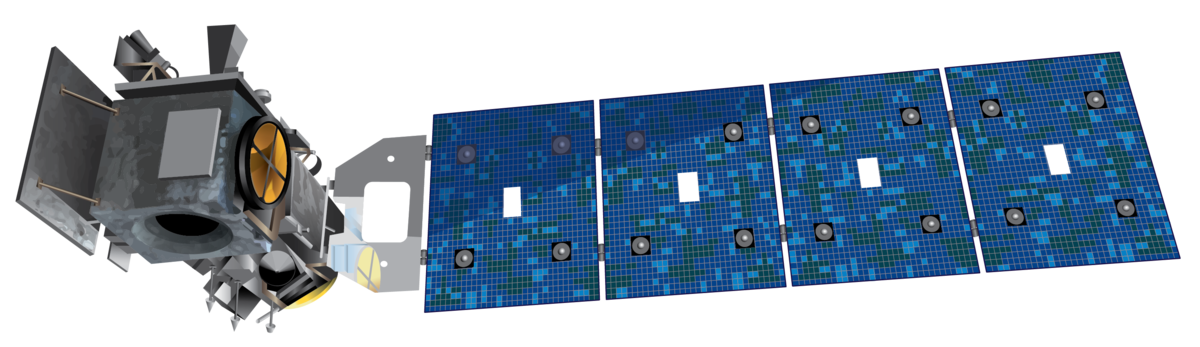
NASA’s Global Ecosystem Dynamics Investigation (GEDI – pronounced “jedi”) mission was launched to the ISS on Dec. 5, 2018 and was subsequently installed on the JEM–EF ELC-6. From that vantage point GEDI produces high-resolution laser ranging observations of the three-dimensional (3D) structure of Earth that can be used to make precise measurements of forest canopy height and canopy vertical structure – see Visualization 2. These measurements have improved understanding of important atmospheric and water cycling processes, biodiversity, and habitat. Upon completion of its prime mission, which lasted from December 2018 to March 2023, GEDI was moved from the ISS’s EFU-6 to EFU-7 (storage). Since April 2024, the GEDI instrument has been back in its original location on EFU-6 and continues to collect high-resolution observations of Earth’s 3D structure from space. The GEDI research team hopes the mission can continue collecting data until 2030.
To view this video please enable JavaScript, and consider upgrading to a web browser that
supports HTML5 video
The GEDI mission has been covered in The Earth Observer through summaries of periodic meetings of the GEDI Science Team. The online article, Summary of the 2025 GEDI Science Team Meeting, is the most recent installment of GEDI’s progress, published on Aug. 18, 2025. This article includes discussion of “the return of the GEDI” from hibernation and the science results since then.
Monitoring Earth in Intricate Detail
The Soil Moisture Active Passive (SMAP) mission was designed to measure the amount of water in surface soil across Earth. The satellite was launched from Vandenberg Air Force Base on Jan. 31, 2015. The satellite payload consisted of both an active microwave radar and a passive microwave radiometer to measure a swath of the planet 1000-km (~621-mi) wide. The radar transmitter failed just nine months after launch on July 7, 2015. Although the loss of the radar was unfortunate, the nine months where both instruments functioned provided an invaluable dataset that established the dependence of L-band radar signals on soil moisture, vegetative water content, and freeze–thaw state. Two of these variables (surface soil moisture and freeze–thaw state) are critical variables that influence the planet’s water, energy, and carbon cycles. The three variables influence weather and climate. Furthermore, the SMAP team quickly turned a setback into a success. They repurposed the channels that had been dedicated to the radar to record the reflected signals from the Global Navigation Satellite System (GNSS) constellation in August 2015, making SMAP the first full-polarimetric GNSS reflectometer in space for the investigation of land surface and cryosphere.
The Earth Observer article, SMAP: Mapping Soil Moisture and Freeze/Thaw State from Space [Jan.–Feb. 2015, 27:1, 14–19] offered a preview of SMAP that was published shortly after its launch. A more recent online article, A Decade of Global Water Cycle Monitoring: The Soil Moisture Active Passive Mission, published Aug. 18, 2025, reflects on the achievements of SMAP after a decade of operations.
More specific to vegetation water content, NASA launched the ECOsystem Spaceborne Thermal Radiometer Experiment on Space Station (ECOSTRESS) to ISS on June 29, 2018. It was subsequently installed on the JEM–EF ELC 10, placing it in close proximity to GEDI (installed on ELC 6) and enabling combined observations. While GEDI focuses on the canopy height and related characteristics, ECOSTRESS monitors the combined evaporation and transpiration of living plants – known as evapotranspiration (ET). ECOSTRESS determines ET indirectly through measurements of the thermal infrared brightness temperatures of plants.
As with GEDI, The Earth Observer has reported on the activities of the ECOSTRESS mission. The most recent coverage was in the article, ECOSTRESS 2019 Workshop Summary: Science, Applications, and Hands-On Training [July–Aug. 2018, 31:4, 15–18.]
Last, but certainly not least, the most recent Earth observing satellite to launch is a joint venture between NASA and the Indian Space Research Organization (ISRO). The NASA-ISRO Synthetic Aperture Radar (NISAR) took to the skies on July 30, 2025, from the Satish Dhawan Space Centre on India’s southeastern coast aboard an ISRO Geosynchronous Satellite Launch Vehicle (GSLV) rocket 5. The mission was designed to observe and measure some of the planet’s most complex processes – see Figure 14. The launch was lauded in the Editor’s Corner published online on Sept. 10, 2025.
NISAR uses two different radar frequencies – L-band and S-band synthetic aperture radar (SAR). The dual system can penetrate clouds and forest canopies to allow researchers to measure changes on the planet’s surface, down to a centimeter (~0.4 in). This level of detail allows the research community to investigate ecosystem disturbances, ice-sheet collapse, natural hazards, sea level rise, and groundwater issues. The satellite will also capture changes in forest and wetland ecosystems. It will expand on our understanding of deformation of the planetary crust that can help predict earthquakes, landslides, and volcanic activity. All of this data will help mitigate damage from a disaster and help communities prepare a disaster response. Some early results from the both NISAR radars are discussed in the Final Editor’s Corner column, published online on Dec. 29, 2025.
Figure 14. The NASA-ISRO Synthetic Aperture Radar (NISAR) Synthetic Aperture Radar can observer Earth’s land and ice with unmatched precision, offering real-time insights into earthquakes, floods, and climate shifts. Figure credit: NASA/Jet Propulsion Laboratory–Caltech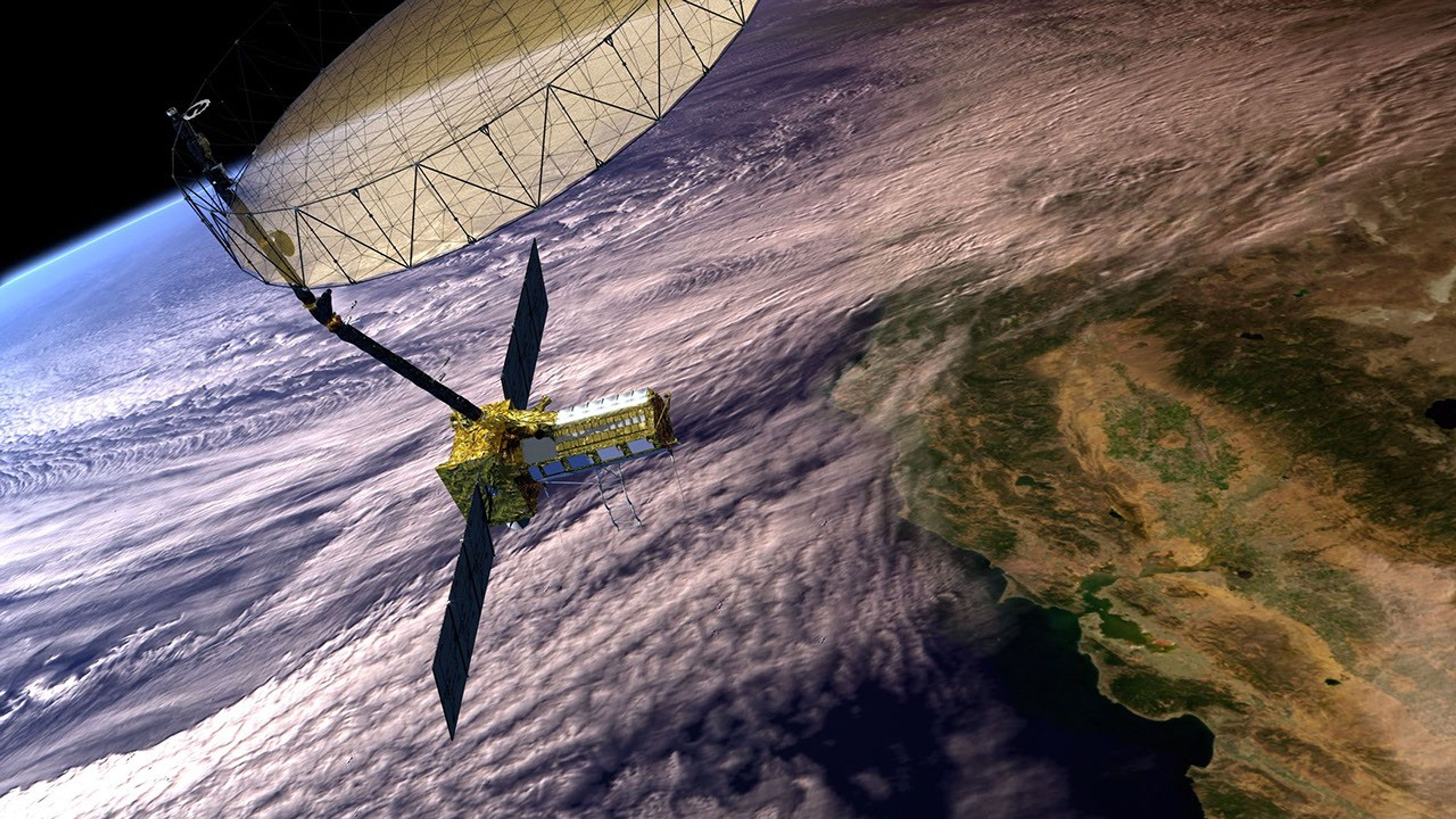
Conclusion
Over the past 36 years, The Earth Observer has borne witness to some of the most monumental scientific achievements of NASA Earth Science and chronicled those stories for the community. While the format of the publication evolved considerably over the years, the satellite missions that have been the focus of this article are one of the primary “lenses” that the newsletter has had to observe and reflect on the story of NASA Earth Science. These continuous global observations have revolutionized society’s knowledge of our home planet and how humans might be altering it.
The staff of The Earth Observer have navigated many different modes of communication over the past three-and-a-half decades, but the commitment to delivering high-quality content has remained constant. It has been the highest honor of every member of our publication team – past and present – to work on this material. While the newsletter is coming to an end, it is hoped that the Archives page continues to be a rich source of historic information about NASA’s EOS and Earth science over the past three and a half decades.
On behalf of the current Editorial Team, we, the authors of this reflection, wish to thank every person who has contributed to the success of this newsletter over the years – and to extend to all in the NASA Earth Science community best wishes for the year ahead and continued success in your remote observation endeavors.
Stacy Kish
NASA’s Goddard Space Flight Center/EarthSpin
stacykishwrites@gmail.com
Alan B. Ward
NASA’s Goddard Space Flight Center/Global Science &Technology Inc.
alan.b.ward@nasa.gov
The Earth Observer: Offering Perspectives from Space through Time
38 min read
The Earth Observer: Offering Perspectives from Space through TimeAn Intertwined History: The Earth Observer and EOS
The Earth Observer, a newsletter issued for nearly 37 years, will release its last online content at the close of 2025. This newsletter evolved in parallel with NASA’s Earth Observing System (EOS). It is almost impossible to speak of this newsletter without mentioning EOS. As The Earth Observer prepares its final publication, NASA also plans to shutter its three EOS flagship satellites (discussed below) possibly as early as the end of 2026.
While EOS was “much more than its satellites,” one cannot deny that the satellite missions and their iconic images provide an entry point to the overarching work conducted by the EOS science teams for almost three decades. These efforts spanned crucial complementary ground- and aircraft-based observations along with focused field campaigns to coordinate observations across multiple levels of Earth system time and spatial scales. The teams worked (and continue to work) closely with the NASA Earth Science Division Earth Observing System Data and Information System (EOSDIS) and related Science Investigator Processing System (SIPS) facilities, as well as developed and enhanced the algorithms that support the satellite products. Readers who wish to learn more about these topics should consult The Earth Observer’s archives page, which contains much of the history of this work.
During this point of inflection, The Earth Observer’s publication team felt it important to pause and reflect on the significance of the work detailed in the newsletter throughout this brief slip of time. The result is the article that follows.
A Flagship of an Idea: Almost Four Decades of Science
As described in the article, A Condensed History of the Earth Observing System (EOS) [June 1989, 1:3. 2–3], what would become known as EOS had its foundation in the recommendations of an ad hoc NASA study group that convened in 1981 to “determine what could and should be done to study integrated Earth science measurement needs.” Initially, the study group envisioned several large platforms in space, each with numerous instruments that would be serviced by the Space Shuttle, similar to servicing of the Hubble Telescope on several occasions. Known as System Z [Sept.–Oct. 2008, 20:5, 4–7], this early vision “laid the groundwork for a Mission to Planet Earth” but was reimagined after the tragic loss of the Space Shuttle Challenger in January 1986. An article written at the end of the Shuttle program included a sidebar that detailed the impracticality of launching shuttle missions into polar orbit to service EOS satellites, see Polar Shuttle Launches: The Path Almost Taken, [Sept.–Oct. 2011, 23:5, 6–7]. Eventually, the large space platform concept morphed into several mid-size flagship satellite missions, known today as Terra, Aqua, and Aura. Smaller satellite missions would supplement and enhance the data gathered by the “big three” satellites – see Figure 1.
To view this video please enable JavaScript, and consider upgrading to a web browser that
supports HTML5 video
Technological advances further enhanced and refined this vision, allowing satellites to fly in close formation to capture near-simultaneous measurements in much the same way they would if they were on a single platform. The Afternoon Constellation, or A-Train, is a shining example of this international effort and is described in more detail below.
NASA released the first EOS Announcement of Opportunity in 1988, and a panel selected the winning proposals. An EOS Project Science Office was established to manage the projects. During this time of rapid development, NASA leadership was keenly aware of the need to keep the international EOS community abreast of the latest information. Enter The Earth Observer newsletter. First published in March 1989, the newsletter was the natural conduit to bridge this communication gap. To set the stage of how things have changed, an early article, titled Direct Transmissions of EOS Data to Worldwide Users [July–Aug. 1990, 2:6, 2–4], introduced the readership to the World Wide Web, which promoted “a ‘place’ where scientists communicate with each other and with the data they have collected with the help of their professional colleagues from the engineering and operations disciplines.”
In the more than 1000 printed pages published in the past three decades. The Earth Observer has chronicled the story of EOS and NASA’s broader Earth Science program. The publication has captured – often in meticulous detail – the intensive work behind the scenes that has gone into the development of the technologies, algorithms, and data centers that gather data from Earth observing satellites, suborbital observations, and other experiments to inform end users who use the data to address societal issues.
In the years before the first EOS missions launched, the newsletter reported in earnest on Investigator Working Group (IWG) meetings, Payload Panel Reviews (reviewing the instruments planned for the EOS platforms), and Mission and Instrument Science Team Meetings. As EOS matured, the newsletter began reporting on the development and implementation of specific science missions, launches, milestones, and research generated from the data collected. The editorial staff began publishing more feature articles to appear along with the meeting and workshop reports. The newsletter shared news stories developed by NASA’s Earth Science News Team and other bimonthly content (e.g., Education Update, Science in the News). “The Editor’s Corner” column in the newsletter gave the EOS Senior Project Scientist a platform to offer commentary on current events in NASA Earth Science as well as on the content of the current issue of the newsletter. While not formally named for the first few issues, an editorial article has been a cornerstone of the publication since the beginning.
The Earth Observer has produced several articles reflecting on its interwoven history with EOS, such as The Earth Observer: Twenty-Five Years Telling NASA’s Earth Science Story [March–April 2014, 26:2, 4–12] and A Thirtieth Anniversary Reflection from the Executive Editor {March–April 2019, 31:2, 4–6]. These stories expand upon the topics covered in the brief review presented in this article.
Satellite Missions: the Backbone of EOS Science
EOS was originally organized around 24 critical science measurements deemed integral to understand planetary processes and assess variability, long-term trends, and climate change. These science measurements serve as a roadmap for organizing EOS data products and mission objectives. The 24 measurements coalesced into five broad categories that reflect Earth science disciplines:
- Atmosphere: aerosol properties, cloud properties (e.g., fraction and opacity), atmospheric temperature and pressure profiles, water vapor, ozone (O3), trace gases [e.g., carbon dioxide (CO2), sulfur dioxide, and formaldehyde], and total solar irradiance;
- Ocean: ocean color (chlorophyll), sea surface temperature, sea ice cover and motion, ocean surface topography and sea level, and sea surface salinity;
- Land/Cryosphere: land surface temperature, soil moisture, snow and ice cover (extent and elevation), land cover and change (e.g., forest cover), and topography;
- Radiation/Energy Balance: radiant energy balance (incoming and outgoing radiation), and precipitation (e.g., rainfall, snow); and
- Solid Earth: static gravity field and synthetic aperture radar observations.
The Grand Vision of EOS: Three Flagships Leading the Earth Observing Fleet
In the late 1980s and early 1990s, a team of scientists envisaged the concept for two missions – EOS-AM1 and EOS-PM1. The synergy of this system was the ability to make observations in the morning (10:30 AM mean local time, or MLT), a time when cloud cover over the tropical equatorial and other land regions would be at a minimum, and afternoon (1:30 PM MLT), a time when continental convection would peak. The plan was to have two instruments – the Moderate Resolution Imaging Spectroradiometer (MODIS) and Clouds and Earth’s Radiant Energy System (CERES) – overlap on the two platforms along with other instruments unique to each mission.
In parallel, the teams envisioned EOS-CHEM1, a satellite platform identical to EOS-PM1 but carrying a payload focused on atmospheric chemistry. Like EOS-PM1, EOS-CHEM1 would be placed in an afternoon orbit but lag slightly in its equatorial crossing time (1:45 PM MLT) to optimize its position for atmospheric chemistry observations.
Each mission was slated to be the first in a series that would launch at five-year intervals to ensure continuity of critical Earth science measurements. Budgetary realities and technical advances eventually rendered plans for the second and third series of each satellite obsolete; however, all three flagship missions endured far beyond their planned six-year lifetime and have outlasted the originally proposed 15-year timeframe for each series.
Terra
Terra, originally named EOS-AM1, launched in December 1999 – see Figure 2. Terra carries five instruments – MODIS, CERES (two copies), Multiangle Imaging Spectroradiometer (MISR), Advanced Spaceborne Thermal Emission and Reflection Radiometer (ASTER), and Measurements of Pollution in the Troposphere (MOPITT) – and was designed to capture information about Earth’s atmosphere, carbon cycle and ecosystems, climate variability, water and energy cycle, weather, and the planet’s surface and interior. The Earth Observer captured early Terra data in the article, Terra Spacecraft Open For Business [March–April 2000, 12:2, 24].
After over 26 years in service, Terra remains in orbit and continues to gather data; as of this writing all instruments accept MOPITT remain active. However, since 2020 the spacecraft has been allowed to drift from its carefully maintained 10:30 AM MLT equator crossing time toward earlier MLT crossings. This was done to conserve enough fuel to control Terra’s eventual atmospheric reentry. The Terra team also conducted orbital lowering maneuver on the spacecraft in 2022. A more complete history of Terra is available in the online article, Terra: The End of An Era, published on December 29, 2025.
Figure 2. An artistic rendering of the Terra spacecraft. The image shows the locations of its five instruments. Note that there are two Clouds and Earth’s Radiant Energy System instruments aboard the satellite and one each of the other four instruments. Figure credit: NASAAqua
Aqua, originally named EOS-PM1, launched in May 2002 – see Figure 3. An article in The Earth Observer at the time of launch described the mission, Aqua is Launched! [March–April 2002, 14:2, 2]. The second EOS flagship carried six different instruments into orbit – Atmospheric Infrared Sounder (AIRS), Advanced Microwave Sounding Unit–A (AMSU-A1 and -A2), CERES (two copies), MODIS (both of which also fly on Terra), the Advanced Microwave Scanning Radiometer for EOS (AMSR–E), and Humidity Sounder for Brazil (HSB). Aqua’s mission focused on collecting data on global precipitation, evaporation, and the cycling of water. Aqua paired its data with Terra, offering the scientific community additional insights into the daily cycles for important scientific parameters to understand the global water cycle.
The Earth Observer article, Aqua: 10 Years After Launch [Nov.–Dec. 2012, 24:6, 4–17] provides an overview of the mission’s accomplishments during its first decade in orbit. Due to fuel limitations, Aqua completed the last of its drag makeup maneuvers in December 2021. Like Terra, the satellite is now in a free-drift mode, slowly descending below the A-Train orbit and crossing the equator later and at lower altitudes. A more recent newsletter article, Aqua Turns 20 [May–June 2022, 34:3, 5–12] reflects on Aqua’s accomplishments and legacy after two decades in orbit. As of this writing MODIS, CERES, AMSU, and CERES remain active.
Figure 3. An artistic rendering of NASA’s Aqua satellite. The mission collects data about the Earth’s water cycle, including evaporation from the oceans, water vapor in the atmosphere, clouds, precipitation, soil moisture, sea ice, land ice, and snow cover on the land and the ocean. Figure credit: NASAAura
Originally named EOS-CHEM1, Aura was the third and final flagship mission, and was launched in July 2004 – see Figure 4. The Earth Observer detailed the first post-launch science team meeting, Aura Science Team Meeting [March–April 2004, 17:2, 8–11]. Aura followed a Sun-synchronous, near-polar orbit, crossing the equator 15 minutes after Aqua. Similar to Aqua, Aura completed its final inclination adjustment maneuver in April 2023 to save its remaining fuel to allow for controlled reentry. As a consequence, the satellite has drifted out of the A-Train orbit, slowly continuing to move to a later equatorial crossing time and lower orbit altitude.
Aura’s payload included four instruments: the Microwave Limb Sounder (MLS), High Resolution Dynamics Limb Sounder (HIRDLS), Tropospheric Emission Spectrometer (TES), and Ozone Monitoring Instrument (OMI). These instruments gather information on trace gases and aerosols in the atmosphere. The key mission objectives aimed to monitor recovery of the stratospheric O3 hole, evaluate air quality, and monitor the role of the atmosphere in climate change. The article, Aura Celebrates Ten Years in Orbit [Nov.–Dec. 2014, 26:6, 4–16] detailed Aura’s first decade of accomplishments. The online article, Aura at 20 Years, published Sept. 16, 2024, reported on Aura’s status and achievements as it began its third decade of continuous operations. As of this writing MLS and OMI remain active.
Figure 4. An artistic rendering of the Aura satellite. Aura gathers information on trace gases and aerosols in the atmosphere. Figure credit: NASABuilding and Dismantling the “A-Train”
Between 2002 and 2014, a series of satellites joined the A-Train constellation – see Figure 5. This international effort includes the two EOS flagship satellites with afternoon equatorial crossing times (Aqua and Aura) as well as the Orbiting Carbon Observatory–2 (OCO-2), CloudSat, and the Cloud-Aerosol Lidar and Infrared Pathfinder Satellite Observations (CALIPSO). In addition, Polarization and Anisotropy of Reflectances for Atmospheric Sciences coupled with observations from a Lidar (PARASOL) and Global Change Observation Missions with a focus on the water cycle (GCOM-W) are two international missions that became part of the A-Train constellation.
In the past decade, many of the satellites in the A-Train have either retired or have been allowed to drift out of the constellation. As of this writing, only two satellites – OCO-2 and GCOM-W1 – remain in their positions in the A-Train gathering data.
Three A-Train symposiums have been organized to bring the Earth science community together to discuss the achievements and future synergy of these missions. The outcome from each of these meetings were reported in The Earth Observer. The most recent of these was: The Third A-Train Symposium: Summary and Perspectives on a Decade of Constellation-Based Earth Observations [July–Aug. 2017, 29:4, 4–18].
Figure 5. An artistic depiction of all the satellites that participated in the Afternoon Constellation (A-Train), except for Polarization and Anisotropy of Reflectances for Atmospheric Sciences coupled with observations from a Lidar (PARASOL). CloudSat and Cloud-Aerosol Lidar and Infrared Pathfinder Satellite Observations (CALIPSO) lowered their orbits. Called the C-Train, the orbit of these satellites overlapped the A-Train, enabling science observations with other A-Train missions. More details about the A-train is available on the constellation’s website. Figure credit: NASAScience from the EOS Fleet
The next several sections provide a highlight of science from key missions outside of Terra, Aqua, and Aura. The content has been organized in terms of measurements – with an overarching focus on water (oceans and fresh water), atmosphere, and land. This summary is far from exhaustive. A record of much of the amazing science conducted during these missions is detailed in the archives of The Earth Observer.
Interpreting an Ocean of Data
When viewed from space, Earth has been described as a “blue marble.” The planet’s abundance of liquid water is found in the oceans, and while not potable, the oceans play a critical role in regulating Earth’s climate. Satellites provide an unparalleled way to study the global ocean. With each new mission, the process of data collection has been refined and improved. The scientific community can now measure ocean color as a proxy for surface productivity as well as measure subtle changes in surface ocean salinity. These data have improved weather and climate models to increase the accuracy of storm projection and help the scientific community better understand the movement of energy around the planet.
Aqua was the flagship mission dedicated to studying water on Earth, but other missions have contributed and expanded on this data record. For example, Japan’s GCOM-W1 mission, also known as SHIZUKU (Japanese for droplet), continues to gather information on precipitation, water vapor, wind velocity above the ocean, sea water temperature, water levels on land, and snow depths. These data support weather models to improve forecasts to monitor tropical cyclones. The subsections that follow provide examples of how data from these satellites support different science objectives, as well as examples of the science deciphered by both flagship and ancillary platforms within the A-Train. All of these missions and science have been covered in The Earth Observer over the past several decades.
Discerning the Ocean’s True Colors
Ocean color data are crucial for studying the primary productivity and biogeochemistry of the oceans. The Coastal Zone Color Scanner (CZCS), launched on the Nimbus 7 satellite in 1978 and ceasing operations in 1986 – gave the earliest perspective of the oceans from space. SeaWiFS, which served as a follow-on to CZCS, was launched on the privately owned Seastar spacecraft on Aug. 1, 1997 to produce ocean color data and offered a synoptic look at the global biosphere. This mission was a data-buy, where NASA purchased the data from Orbital Imaging Corporation. An article in The Earth Observer, titled Sea-viewing Wide Field-of-view Sensor [March–April 1998, 10:2, 20–22] detailed how the satellite gathered chlorophyll-a data that was calibrated to field measurements from a Marine Optical Buoy. The research community have used this information to understand primary productivity in the surface ocean and global biogeochemistry. This data offered an early assessment of the role of the ocean in the global carbon cycle. It also produced one of the first global perspectives of the impact of El Niño and La Nina events around the world. Coastal and fishery managers have used this data to improve the health of these important ecosystems. Launched for a five-year mission, SeaWiFs gathered data until December 2010.
More recently, NASA launched the Plankton, Aerosol, Cloud ocean Ecosystem (PACE) satellite in February 2024 to gather data on ocean and terrestrial ecosystem productivity – see Figure 6. While other missions studied ocean color in the interim between SeaWiFS and PACE (e.g., MODIS on Terra and Aqua), PACE offers an exponential leap forward with its three-instrument payload that includes: the Ocean Color Instrument (OCI), Hyper-Angular Rainbow Polarimeter–2 (HARP2), and Spectropolarimeter for Planetary Exploration (SPEXone). The PACE mission aims to clarify how the ocean and atmosphere exchange CO2, a key factor in understanding the evolution of Earth’s climate system. The satellite also examines the role of aerosols in providing micronutrients that fuel phytoplankton growth in the surface ocean. The data gathered extends the aerosol and ocean biological, ecological, and biogeochemical records that were initiated by other satellites. The Dec. 29, 2025 article, Keeping Up with PACE: Summary of the 2025 PAC3 Meeting, reports on three recent meetings related to the mission.
Figure 6. An artistic rendering of the Plankton, Aerosol, Cloud ocean Ecosystem (PACE) observatory and the instrument panels that it carries. PACE focuses on clarifying how the ocean and atmosphere exchange carbon dioxide. Figure credit: NASAMapping the Ocean Surface to Reveal the Rising Seas
The Ocean Surface Topography (TOPEX)/Poseidon mission, launched on Aug. 10, 1992, was the first in a series of missions that have measured ocean surface topography, or the variations in sea surface height. This record now extends more than 30 years. TOPEX/Poseidon spent more than 13 years in orbit. The data gathered helped to improve the scientific community’s understanding of ocean circulation and its impact on global climate – including sea level rise. TOPEX/Poseidon produced the first global views of seasonal current changes, which allowed scientists to forecast and better understand El Niño events. These early efforts to distribute data were captured in The Earth Observer article, Jet Propulsion Laboratory DAAC Begins TOPEX Data Distribution [March–April 1993, 6:2, 24].
Jason followed TOPEX/Poseidon to continue the measure of sea level as well as wind speed and wave height for more than 95% of Earth’s ice-free ocean – see Figure 7. Jason consists of a series of satellites, with Jason-1, launched in 2001, remaining in orbit for 11 years. It was followed by Jason-2, also called the Ocean Surface Topography Mission (OSTM), which was launched in 2008. Jason-2 gathered data for 11 years. Jason-3 launched in January 2016 and remains in orbit, continuing the sea level dataset. The Earth Observer has reported on meetings of the Ocean Surface Topography Science Team over the years. The online article, Summary of the 2023 Ocean Surface Topography Team Meeting, was published May 31, 2024 and includes the most recent updates available.
Figure 7. Beginning with TOPEX/Poseidon in 1992, a series of ocean surface topography missions have maintained a continuous record of global sea surface height data with the best possible accuracy along the same exact ground track. Dubbed the “reference” altimetry missions, shown here are TOPEX/Poseidon, Jason-1, and the Ocean Surface Topography Mission/Jason-2 (OSTM/Jason-2) in the tandem orbit pattern. This is used to cross-calibrate each mission to the next. By flying in formation, just one minute apart for a period of several months, scientists can be sure that each successive mission is exactly calibrated to its predecessor. Connecting each record to the next, these reference missions have built a record of sea level that stretches more than 30 years with centimeter level accuracy for every corner of the ocean. The reference mission has now been taken over by, Sentinel 6 Michael Freilich, which will hand the baton to the recently launched Sentinel 6B sometime in 2026. Figure credit: NASA/JPL/CNESThe international partnership between the United States [NASA and the National Oceanic and Atmospheric Administration (NOAA)], the European Space Agency (ESA), and the French Space Agency [Centre National d’Études Spatiales (CNES)] collaborate to create the ESA’s Copernicus Sentinel–6 missions. The Sentinel-6B, launched Nov. 16, 2025, will follow the path of the Sentinel-6 Michael Freilich (originally called Sentinel–6A) satellite, which has been in orbit for five years – see Figure 8. These two Sentinel 6 missions continue the global measurements of sea level, wind speed, wave height, and atmospheric temperature. The data will be used in marine weather forecasts as well as to improve commercial and naval navigation, search and rescue missions, and tracking garbage and pollutants in the ocean. To learn more about Sentinel-6B, see the online article, Sentinel-6B Extends Global Ocean Height Record, published Dec. 22, 2025.
While the Surface Water and Ocean Topography (SWOT) mission is fully described in the next section – with emphasis placed on its novel surface water observation capabilities – it should be noted that SWOT is also an ocean topography mission that obtains data similar to TOPEX/Poseidon, Jason, and Sentinel-6 missions. These data will contribute to the long-term time series of the sea surface height record.
Figure 8. Sentinel-6B, an Earth-observing satellite jointly developed by NASA and U.S. and European partners, will observe the ocean and measure sea level rise to provide insights into our home planet that will improve weather forecasts and flood predictions, increase public safety, and protect coastal infrastructure. The Sentinel missions are part of the European Space Agency’s Copernicus Programme. Figure credit: NASASampling the Salty Seas
Launched June 2011, Aquarius was an international collaboration between NASA and Argentina’s Comisión Nacional de Actividades Espaciales (CONAE). The cooperative effort was detailed in the article, Aquarius: A Brief (Recent) History of an International Effort [July–Aug. 2010, 22:4, 4–5]. The satellite carried a microwave radiometer that was sensitive enough to measure salinity to an accuracy of 0.2 practical salinity units (psu) on a monthly basis. It also carried a scatterometer to measure surface ocean roughness. Pairing data from the two instruments allowed the team to overcome the challenges of measuring salinity from space. This feat is detailed in the article, For Aquarius, Sampling Seas No ‘Grain of Salt’ Task [July–Aug. 2011, 23:4, 42–43]. The more accurate, global measurements of ocean salinity that Aquarius obtained have helped the research community better understand ocean circulation. The mission ended in 2015, after the satellite experienced a power failure.
Focusing on Freshwater
While most water on the planet is housed in the ocean, fresh water is a primary concern for life on the planet. Fresh water accounts for ~3% of the total amount water on the planet. Of that small amount, a significant portion is locked in ice on land and as sea ice. The remaining water flows on Earth’s surface and underground. Maintaining a supply of fresh water is critically important to our survival. The location, status, and purity of this precious resource continues to be an on-going focus for many of the missions.
Monitoring Rain and Snow
The joint NASA/National Space Development Agency of Japan (NASDA – which is now known as the Japan Aerospace Exploration Agency, or JAXA) Tropical Rainfall Measuring Mission (TRMM) carried a Microwave Imager, Visible Infrared Scanner, and Precipitation Radar to gather tropical and subtropical rainfall observations (and two related instruments) – see Figure 9. These data filled a critical knowledge gap – to understand the interactions between the sea, air, and land. Over the years, these data were incorporated into numerous computer models to clarify the role of tropical rainfall on global circulation and formed the basis for experimental quasi-global merged satellite precipitation products. The Earth Observer detailed the early data collection in the article titled TRMMing the Uncertainties: Preliminary Data from the Tropical Rainfall Measuring Mission [May–June 1998, 10:3, 48–50]. The mission was extended twice but eventually the satellite’s maneuvering fuel was exhausted, resulting in a slow decline in the orbital altitude beginning in 2014, with reentry in 2015. Data from TRMM have improved understanding of storm structure of cloud systems, produced reliable global latent heating estimates to improve water transfer estimates within the atmosphere, and continue to be used in calibrating modern precipitation products for the TRMM era.
Figure 9. Artistic rendering of the Tropical Rainfall Measuring Mission (TRMM) in space over a hurricane. TRMM was launched in 1997 and remained in operation until 2015. The satellite was designed to improve our understanding of the distribution and variability of precipitation within the tropics as part of the water cycle in the current climate system. Figure credit: NASATo continue the efforts that began with TRMM – and extend coverage to most of the globe – NASA and JAXA launched the Global Precipitation Measurement (GPM) mission in 2014. This satellite aims to advance our understanding of water and energy cycles, improve forecasting of extreme weather events, and extend current capabilities to use accurate and timely information of precipitation to directly benefit society. The Earth Observer detailed the accomplishments of this mission in the online article, GPM Celebrates Ten Years of Observing Precipitation for Science and Society, published Oct. 3, 2024.
Surveying Earth’s Surface Water
Introduced briefly in the previous section, the SWOT mission is a joint venture between the United States and France. Launched in December 2022, SWOT is conducting the first global survey of Earth’s surface water – see Photo. The mission was introduced to the EOS community in The Earth Observer article, Summary of the 2022 Ocean Surface Topography Science Team Meeting [May–June 2023, 35:3, 19–23]. SWOT carries the Ka-band Radar Interferometer (KaRIN) – the first spaceborne, wide-swath, altimetry instrument capable of high-resolution measurements of sea surface height in the ocean and freshwater bodies. SWOT covers most of the world’s ocean and freshwater bodies with repeated high-resolution elevation measurements. This data have been applied to monitor rivers across the Amazon basin, simulate land/hydrology processes, and predict streamflow. A more comprehensive overview of SWOT applications is detailed in online article, Summary of the 10th SWOT Applications Workshop, published Sept. 20, 2024.
Photo 1. Workers in a clean room in Cannes, France, load the Surface Water and Ocean Topography (SWOT) satellite into a container in preparation for shipping the spacecraft to the United States. SWOT provides the first global survey of Earth’s surface water. Photo credit: Centre National d’Études Spatiales (CNES), Thales Alenia SpaceGracefully Tracking Water Movement
The twin GRACE satellites were launched on March 17, 2002. The mission, a partnership between NASA and the German GeoForschungsZentrum (GFZ) Helmholtz Centre for Geosciences was developed to measure Earth’s shifting masses – most of which comes from water – and map the planet’s gravitational field using a K-band microwave ranging system and accelerometers. Some early results of the satellites appeared in The Editor’s Corner column [Nov.–Dec. 2002, 14:6, 1–2]. GRACE enabled groundbreaking insights into Earth’s evolving water cycle as the satellites tracked monthly mass variations in ice sheets and glaciers, near-surface and underground water storage, the amount of water in large lakes and rivers, as well as changes in sea level and ocean currents.
GRACE’s mission was extended with the GRACE-Follow On (GRACE-FO) mission launched in 2018 – see Figure 10. GRACE-FO continues comprehensive tracking water movement across the planet, including groundwater measurements that have important applications for everyday life. The most recent developments of the GRACE-FO science meeting was detailed in an online article, Summary of the 2023 GRACE Follow-On Science Team Meeting, published March 30, 2024 – and also published in the final print issue [Jan.–Feb. 2024, 35:7, 19–26]. The data gathered during the GRACE-FO mission details large-scale changes in Earth’s groundwater reservoirs, Greenland and Antarctica’s sensitivity to warming ocean waters, and even subtle shifts deep in Earth’s interior that reveal how large earthquakes can develop.
In 2028, NASA will move into a third-generation of gravity observations with the launch of GRACE-Continuity, or GRACE-C, which will further expand the foundational observations of global mass change and expand the societal and economic applications that have been created from these data.
Figure 10. An artistic rendering of the twin Gravity Recovery and Climate Experiment-Follow-On (GRACE-FO) satellites that, like the original GRACE twins, follow each other in orbit, separated by about 137 miles (220 km). GRACE tracks water movement across the planet’s surface. Figure credit: NASAAssessing the Atmosphere from Above
Earth has a unique atmospheric makeup that maintains a stable temperature allowing life to thrive. As far as we know, our atmosphere is unique in the universe. Satellites provide an unparalleled perspective to study variability in the column of air extending from Earth’s surface. While Aura has a suite of instruments making a wide range of atmospheric chemistry measurements, other missions also measure the abundance and impact of atmospheric constituents that, while often invisible to the unaided eye, can have profound impacts on Earth’s air quality and climate. These data have also improved climate models and help the scientific community better understand how energy is emitted into space.
Tracking Tiny Particles with Big Impacts
France’s PARASOL mission was an original member of the international A-Train constellation. Launched in 2004. PARASOL sought to capture the radiative and microphysical properties of clouds and tiny atmospheric aerosol particles using a unique multiangle imaging POLDER polarimeter.
NASA’s Glory mission was intended for operation in the A-Train; it carried a multiangle polarimeter as its instrument. Unfortunately, the spacecraft failed to separate from the Taurus rocket due to a fairing separation failure during its launch in 2011. As a result, POLDER on PARASOL was the only atmospheric polarimeter to fly in space until two (SPEXone and HARP2) launched as part of NASA’s PACE mission. Researchers gathered information from POLDER and other A-Train instruments about how aerosols affect the formation of precipitations and clouds, the movement of water around the planet, and the reflection and absorption of radiative energy that impact overall planetary climate. PARASOL was deactivated in 2013 after nine years in service.
Cloud particles form when water vapor nucleates onto aerosols; changes in one can impact the other. After many years and conversations, it was decided to pair two NASA Earth System Science Pathfinder (ESSP) missions – CloudSat and CALIPSO – and fly them in coordination with each other and with other A-Train satellites. By combining the two datasets, it was possible to explore cloud and aerosol processes. This information helped the community drill into the larger climate questions. The two satellites were launched on the same Delta-II rocket from Vandenberg Air Force Base in California on April 28, 2006. CloudSat used a 94 GHz cloud profiling radar that is 1000 times more sensitive than a typical weather radar, capable of distinguishing between cloud particles and precipitation. CALIPSO contained a Cloud-Aerosol Lidar with Orthogonal Polarization (CALIOP), Wide-Field Camera, and Imaging Infrared Radiometer to detect and distinguish between aerosol particles and cloud particles.
The Earth Observer captured the early data collection of the two satellites in the article, CloudSat and CALIPSO: A Long Journey to Launch…But What a Year It’s Been!! [May–June 2007, 19:3, 7–12]. The later article, A Useful Pursuit of Shadows: CloudSat and CALIPSO Celebrate Ten Years of Observing Clouds and Aerosols [July–Aug. 2016, 28:4, 4–12] provided a review of the accomplishments of the missions after 10 years in orbit. CALIPSO and CloudSat were both deactivated in 2023 after 17 years of service.
An Oracle of High-Altitude Wisdom
The Stratospheric Aerosol and Gas Experiment (SAGE) has experienced several iterations, extending back nearly half a century. The initial SAGE mission launched on Feb. 18, 1979, aboard the Applications Explorer Mission-B (AEM-B) to measure vertical distribution of aerosols and important gases in the upper troposphere and stratosphere (UTS). The satellite failed after three years in orbit. In 1984, SAGE II began collecting data on stratospheric O3, producing a stable record of this important greenhouse gas from 1984–2005. SAGE III was launched on Метеор-3М (SAGE III/M3M). The third-generation satellite produced an accurate measurement of the vertical structure of aerosols, O3, water vapor, and other important trace gases in the upper troposphere and stratosphere. The satellite was terminated on March 6, 2006, following a power supply system failure, resulting in loss of communication with the satellite.
Another version of SAGE III was launched to the International Space Station (ISS) on Feb. 19, 2017, where it was installed on the EXpedite the PRocessing of Experiments to Space Station (ExPRESS) Logistics Carrier [ELC-4] – an unpressurized attached payload platform for ISS. SAGE III/ISS, which is shown mounted on ELC-4 in Figure 11, has completed its prime mission after three years of operation. NASA granted approval to extend the SAGE III/ISS mission through at least 2026 – meaning the instrument will continue to provide the public and science community with world-class vertical profiles of O3, aerosol, water vapor, and other trace gases, e.g., nitrogen dioxide (NO2) and nitrate (NO3), data products for at least another year. An article titled, Summary of the 2024 SAGE III/ISS Meeting, published May 26, 2025, details the latest findings from SAGE.
Figure 11. An artistic rendering of the Stratospheric Aerosol and Gas Experiment-III (SAGE-III), which is externally mounted on the International Space Station’s Japanese Experiment Module–Exposed Facility (JEM-EF) EXPRESS Logistics Carrier (ELC)-4. SAGE III/ISS measures the vertical structure of aerosols, ozone (O3), water vapor, and other important trace gasses in the upper troposphere and stratosphere. Figure credit: NASAWatching Earth Exhale
The Orbiting Carbon Observatory (OCO) was launched into space in February 2009, but it failed to separate from the Taurus rocket during its ascent, leading to mission failure and loss of the satellite. Undaunted, the EOS community began again and assembled OCO-2, which was successfully launched into orbit, joining the A-Train on July 2, 2014 – see Figure 12. The satellite’s mission focused on making precise, high-resolution measurements of atmospheric CO2. OCO-2 measures reflected sunlight that interacts with the atmosphere. Using diffraction gratings to separate the reflected sunlight into spectra, OCO-2 measures the absorption levels for the different molecular bands to calculate CO2 concentration. This information is invaluable for the quantification of CO2 emissions and can characterize both sources and sinks of this critical greenhouse gas. The mission was detailed in an article, titled Orbiting Carbon Observatory-2: Observing CO2 from Space [July–Aug. 2014, 26:4, 4–12].
On May 4, 2019, NASA launched the third iteration in the OCO group to the ISS. It was subsequently installed on the Japanese Experiment Module–Exposed Facility (JEM-EF). Constructed from parts left over from OCO-2, OCO-3 continues the mission of making CO2 measurements with a focus on daily variability. In particular, the measurements explore the role of plants and trees in the major tropical rain forests of South America, Africa, and Southeast Asia. As of today, both OCO-2 and OCO–3 remain operational and gathering data.
The science team reflected on both these missions in a recent article posted in the online article, A Tapestry of Tales: 10th Anniversary Reflections from NASA’S OCO-2 Mission, published Aug. 12, 2025.
Figure 12. An artistic rendering of OCO-2 in orbit above Earth. OCO-2 measures the concentration of trace gases in the atmosphere. Figure credit: NASA/JPL-CaltechTracking the Sun’s Output
In December 1999, NASA launched the Active Cavity Radiometer Irradiance Monitor Satellite (ACRIMSAT) satellite to extend the more than two-decade record of total solar irradiance (TSI). Scientists use this important measurement to quantify the solar energy input to the planet and thereby its interactions with Earth’s oceans, land masses, and atmosphere. It is also a critical component to understand variations of the planet’s climate. The Active Cavity Radiometer Irradiance Monitor 3 (ACRIM3) instrument onboard combined the best features of the ACRIM I (flown on the Solar Maximum Mission), ACRIM II (flown on the Upper Atmosphere Research Satellite), and SpaceLab-1 ACRIM (flown on Space Shuttle Columbia, STS 9). ACRIM3 improved on its predecessors by incorporating a new electronics and package design. The Earth Observer captured the initial information from this mission in the article, The ACRIMSAT/ACRIM3 Experiment — Extending the Precision, Long-Term Total Solar Irradiance Climate Database [May–June 2001, 13:3, 14–17]. ACRIMSAT spent 14 years in orbit and ACRIM3 extended the TSI record to 36 years (i.e., building on measurements from previous ACRIM missions).
NASA continued its quest to observe the incident solar energy budget with the launch of the Solar Radiation and Climate Experiment (SORCE) in January 2003. SORCE focused on measuring solar radiation incident to the top of the Earth’s atmosphere. The Total Irradiance Monitor (TIM) onboard continued the TSI record that the ACRIM series of satellites established. In addition to TIM, the satellite carried a Spectral Irradiance Monitor (SIM), an Extreme Ultraviolet (XUV) Photometer System [XPS], and a stellar observation from the Solar Stellar Irradiance Comparison Experiment (SOLSTICE). The satellite has produced groundbreaking TSI and spectral solar irradiance (SSI) measurements – two key inputs for atmosphere and climate modeling.
Early results from SORCE are detailed in the article, The SORCE (SOlar Radiation and Climate Experiment) Satellite Successfully Launched [Jan.–Feb. 2003, 15:1, 16–19]. The article, The SORCE Mission Celebrates 10 Years [Jan.–Feb. 2013, 25:1, 3–13] details the most significant results from a decade of SORCE observations. Designed for a five-year mission, SORCE gathered data until 2020 – although a degradation of a battery power that began in 2008 increasingly hindered data collection for the remainder of the mission. During its time in orbit, SORCE captured two of the Sun’s 11-year solar cycles and observed the solar cycle minimum in both 2008 and 2019. SORCE’s orbit will decay and re-enter Earth’s atmosphere in 2032.
To continue the crucial long-term TSI and the SSI record that SORCE originated, NASA launched the Total and Spectral Solar Irradiance Sensor (TSIS-1) to the ISS on Dec. 15, 2017, which was installed on JEM-EF ELC-3. The satellite’s mission set out to measure the total amount of sunlight that falls on the planet’s surface – see Visualization 1. This data will clarify the distribution of different wavelengths of light. TSIS-1 was introduced in The Earth Observer article, Summary of the 2018 Sun–Climate Symposium [May–June 2018, 30:3, 21–27]. Similar to SORCE, TSIS-1 carries a TIM and SIM. The instrument extends the multidecadal SSI record and provides highly accurate, stable, and continuous observations that are critical to understanding the present climate conditions and predicting future conditions. The most recent efforts from this mission were detailed in the online article, Summary of the 2023 Sun–Climate Symposium, published July 18, 2024. TSIS-1 has been extended by at least three more years as part of the Earth Sciences Senior Review process. A follow-on mission, TSIS-2, is under development to extend the long-term observational record through continued TSI and SSI measurements.
Visualization 1. NASA’s Total and Spectral solar Irradiance Sensor (TSIS-1) measures the total amount of solar energy input to Earth as well as the distribution of the Sun’s energy across a wide range of wavelengths. The animation illustrates the various wavelengths of light that are partially reflected into space at different places in the column of atmosphere above the ground.Visualization credit: NASA
Chronicling the Changing Land Surface
Along with Terra, other satellites also provide global estimates about the land. Each new mission provides the scientific community more information to refine these measurements. These data have improved climate models as well as improved our understanding of how the planet’s interior is altering the surface of the planet.
Measuring Ice and Vegetation Heights
NASA launched ICESat in 2003 on a three-to-five-year mission to provide information on ice sheet mass balance and cloud properties. It carried the Geoscience Laser Altimeter System (GLAS), which combines a precision surface lidar with a sensitive dual-wavelength cloud and aerosol lidar. ICESat was decommissioned seven years after launch. The science team began efforts for the follow-on mission, ICESat-2, which launched on Sept. 15, 2018 – see Figure 13. Data collected during a series of Operation IceBridge field campaigns to the Arctic and Antarctic helped to fill the data gap between the two satellite missions – allowing for continuity of measurements. ICESat-2 carries a payload of a photon-counting laser altimeter on its three-year mission. The laser is split into six beams capable of measuring the elevation of the cryosphere, including ice sheets, glaciers, and sea ice, down to a fraction of an inch. The laser altimeter also gathers the height of ocean and land surfaces, including forests, snow, lakes, rivers, ocean waves, and urban areas. The mission objective includes quantifying polar ice sheet contribution to sea-level change, estimating sea-ice thickness, and measuring vegetation canopy height. The mission was detailed in The Earth Observer article, ICESat-2: Measuring the Height of Ice from Space [Sept.–Oct.. 2018, 30:5, 4–10]. The research community has been using this information to investigate how the ice sheets of Antarctica and Greenland are changing as the planet warms.
Figure 13. Illustration of the Ice, Cloud, and land Elevation Satellite-2 (ICESat-2) spacecraft. ICESat-2 measures the elevation of aspects of the cryosphere, including ice sheets, glaciers, and sea ice. Figure credit: NASANASA’s Global Ecosystem Dynamics Investigation (GEDI – pronounced “jedi”) mission was launched to the ISS on Dec. 5, 2018 and was subsequently installed on the JEM–EF ELC-6. From that vantage point GEDI produces high-resolution laser ranging observations of the three-dimensional (3D) structure of Earth that can be used to make precise measurements of forest canopy height and canopy vertical structure – see Visualization 2. These measurements have improved understanding of important atmospheric and water cycling processes, biodiversity, and habitat. Upon completion of its prime mission, which lasted from December 2018 to March 2023, GEDI was moved from the ISS’s EFU-6 to EFU-7 (storage). Since April 2024, the GEDI instrument has been back in its original location on EFU-6 and continues to collect high-resolution observations of Earth’s 3D structure from space. The GEDI research team hopes the mission can continue collecting data until 2030.
To view this video please enable JavaScript, and consider upgrading to a web browser that
supports HTML5 video
The GEDI mission has been covered in The Earth Observer through summaries of periodic meetings of the GEDI Science Team. The online article, Summary of the 2025 GEDI Science Team Meeting, is the most recent installment of GEDI’s progress, published on Aug. 18, 2025. This article includes discussion of “the return of the GEDI” from hibernation and the science results since then.
Monitoring Earth in Intricate Detail
The Soil Moisture Active Passive (SMAP) mission was designed to measure the amount of water in surface soil across Earth. The satellite was launched from Vandenberg Air Force Base on Jan. 31, 2015. The satellite payload consisted of both an active microwave radar and a passive microwave radiometer to measure a swath of the planet 1000-km (~621-mi) wide. The radar transmitter failed just nine months after launch on July 7, 2015. Although the loss of the radar was unfortunate, the nine months where both instruments functioned provided an invaluable dataset that established the dependence of L-band radar signals on soil moisture, vegetative water content, and freeze–thaw state. Two of these variables (surface soil moisture and freeze–thaw state) are critical variables that influence the planet’s water, energy, and carbon cycles. The three variables influence weather and climate. Furthermore, the SMAP team quickly turned a setback into a success. They repurposed the channels that had been dedicated to the radar to record the reflected signals from the Global Navigation Satellite System (GNSS) constellation in August 2015, making SMAP the first full-polarimetric GNSS reflectometer in space for the investigation of land surface and cryosphere.
The Earth Observer article, SMAP: Mapping Soil Moisture and Freeze/Thaw State from Space [Jan.–Feb. 2015, 27:1, 14–19] offered a preview of SMAP that was published shortly after its launch. A more recent online article, A Decade of Global Water Cycle Monitoring: The Soil Moisture Active Passive Mission, published Aug. 18, 2025, reflects on the achievements of SMAP after a decade of operations.
More specific to vegetation water content, NASA launched the ECOsystem Spaceborne Thermal Radiometer Experiment on Space Station (ECOSTRESS) to ISS on June 29, 2018. It was subsequently installed on the JEM–EF ELC 10, placing it in close proximity to GEDI (installed on ELC 6) and enabling combined observations. While GEDI focuses on the canopy height and related characteristics, ECOSTRESS monitors the combined evaporation and transpiration of living plants – known as evapotranspiration (ET). ECOSTRESS determines ET indirectly through measurements of the thermal infrared brightness temperatures of plants.
As with GEDI, The Earth Observer has reported on the activities of the ECOSTRESS mission. The most recent coverage was in the article, ECOSTRESS 2019 Workshop Summary: Science, Applications, and Hands-On Training [July–Aug. 2018, 31:4, 15–18.]
Last, but certainly not least, the most recent Earth observing satellite to launch is a joint venture between NASA and the Indian Space Research Organization (ISRO). The NASA-ISRO Synthetic Aperture Radar (NISAR) took to the skies on July 30, 2025, from the Satish Dhawan Space Centre on India’s southeastern coast aboard an ISRO Geosynchronous Satellite Launch Vehicle (GSLV) rocket 5. The mission was designed to observe and measure some of the planet’s most complex processes – see Figure 14. The launch was lauded in the Editor’s Corner published online on Sept. 10, 2025.
NISAR uses two different radar frequencies – L-band and S-band synthetic aperture radar (SAR). The dual system can penetrate clouds and forest canopies to allow researchers to measure changes on the planet’s surface, down to a centimeter (~0.4 in). This level of detail allows the research community to investigate ecosystem disturbances, ice-sheet collapse, natural hazards, sea level rise, and groundwater issues. The satellite will also capture changes in forest and wetland ecosystems. It will expand on our understanding of deformation of the planetary crust that can help predict earthquakes, landslides, and volcanic activity. All of this data will help mitigate damage from a disaster and help communities prepare a disaster response. Some early results from the both NISAR radars are discussed in the Final Editor’s Corner column, published online on Dec. 29, 2025.
Figure 14. The NASA-ISRO Synthetic Aperture Radar (NISAR) Synthetic Aperture Radar can observer Earth’s land and ice with unmatched precision, offering real-time insights into earthquakes, floods, and climate shifts. Figure credit: NASA/Jet Propulsion Laboratory–CaltechConclusion
Over the past 36 years, The Earth Observer has borne witness to some of the most monumental scientific achievements of NASA Earth Science and chronicled those stories for the community. While the format of the publication evolved considerably over the years, the satellite missions that have been the focus of this article are one of the primary “lenses” that the newsletter has had to observe and reflect on the story of NASA Earth Science. These continuous global observations have revolutionized society’s knowledge of our home planet and how humans might be altering it.
The staff of The Earth Observer have navigated many different modes of communication over the past three-and-a-half decades, but the commitment to delivering high-quality content has remained constant. It has been the highest honor of every member of our publication team – past and present – to work on this material. While the newsletter is coming to an end, it is hoped that the Archives page continues to be a rich source of historic information about NASA’s EOS and Earth science over the past three and a half decades.
On behalf of the current Editorial Team, we, the authors of this reflection, wish to thank every person who has contributed to the success of this newsletter over the years – and to extend to all in the NASA Earth Science community best wishes for the year ahead and continued success in your remote observation endeavors.
Stacy Kish
NASA’s Goddard Space Flight Center/EarthSpin
stacykishwrites@gmail.com
Alan B. Ward
NASA’s Goddard Space Flight Center/Global Science &Technology Inc.
alan.b.ward@nasa.gov
A Pioneering Study Assesses the Likelihood of Asteroid Mining
A team led by the Institute of Space Sciences (ICE-CSIC) analyzed samples of C-type asteroids in a recent study. Their findings support the idea that these asteroids can serve as a crucial source of materials if and when asteroid mining is realized.
Why Supermassive Black Holes Turn Down Feasts
Supermassive black holes have a reputation for devouring everything in sight, but new observations from the Atacama Large Millimetre/submillimetre Array reveal they can be surprisingly picky eaters. Even when galaxy mergers deliver enormous amounts of cold molecular gas directly to a black hole’s doorstep, many choose to nibble rather than gorge raising questions about what triggers feeding episodes. The discovery suggests black hole growth during galaxy collisions may be far more inefficient and episodic than we previously thought.
Terra: The End of An Era
27 min read
Terra: The End of An EraIntroduction
Launched into the night sky more than 26 years ago, on Dec. 19, 1999, from Vandenberg Air Force Base (now Space Force Base), Terra was NASA’s first Earth Observing System (EOS) flagship mission to study Earth’s land surface from space via a coordinated series of polar-orbiting and low-inclination satellites that produce long-term global observations useful for understanding the interactions between Earth’s atmosphere, land, snow and ice, oceans, and radiant energy balance. Scheduled for a six-year tour, Terra outlasted its life expectancy by nearly two decades. Despite its longevity, Terra’s mission scientists stopped making inclination adjustments in 2020, allowing the satellite to slowly drift out of its contained orbit. The mission team have also begun the painful process of shutting down the five key instruments as the satellite is prepped for retirement.
“Terra’s impressive human legacy stems from the fact that the mission’s history is grounded in NASA icons,” said Nyssa Rayne [NASA Goddard Space Flight Center (GSFC)—Terra Outreach & Communications Coordinator]. “Even today, Terra continues to benefit from legendary figures, including the current project scientist and instrument calibration/validation experts, who have shaped this mission in monumental ways.”
An Auspicious Beginning to More Than Two Decades of Science
Terra’s mission of discovery was designed to provide a better understanding of the total Earth system. When Terra launched, on the cusp of the 21st century, the research community knew very little about how the land interacted with the atmosphere on a regional and continental scale. The community also lacked a way to quantify surface properties, such as albedo, roughness, evaporation rate, and photosynthesis, from satellite data.
Terra was designed, engineered, and programmed to address these knowledge gaps. Often described as a small bus, Terra measures almost 7-m (23-ft) long and 3.5 m (11 ft) across. In the vast expanse of space, however, Terra travels in an orbit around Earth, like a gnat circling the Sphere in Las Vegas. Carried into space aboard an Atlas-Centaur IIAS expendable launch vehicle from Vandenberg Air Force Base, CA, Terra was placed in orbit 705 km (438 mi) above the planet’s surface, capturing a viewing swatch from each overpass that could be stitched together to produce whole global images. Its flight path was designed to cross the equator to coincide with the time of day when cloud cover along the equator was at a minimum (10:30 AM mean local time).
Five Instruments Wrapped in a Silver Package
First named EOS-AM1, the concept of the Terra mission was envisioned in the 1980s and implemented in the 1990s. Terra builds on the lessons learned from past pioneering programs, including the Upper Atmosphere Research Satellite (UARS), Landsat, the Ocean Topography Experiment (TOPEX)/Poseidon, and the series of Total Ozone Mapping Spectrometer (TOMS) instruments. After many scientific conversations and arguments, it was finally decided that Terra would carry five instruments capable of gathering data that would benefit a variety of Earth scientific disciplines – see Figure 1. An international effort, Terra carries instruments from the United States, Japan, and Canada that allow scientists to document relationships between Earth’s systems and examine their connections. The five instruments include:
Advanced Spaceborne Thermal Emission and Reflection Radiometer (ASTER), which obtains high-resolution images of Earth at 14 different wavelengths of the electromagnetic spectrum that can be used to create detailed maps of land surface, temperature, emissivity, reflectance, and elevation;
Clouds and the Earth’s Radiant Energy System (CERES), which measures Earth’s total radiation budget as well as cloud property estimates that enable scientists to clarify the role that clouds play in the planet’s radiative flux;
Measurement of Pollution in the Troposphere (MOPITT), which measured the distribution, transport, source, and sinks of carbon monoxide (CO) in the troposphere;
Multi-angle Imaging SpectroRadiometer (MISR), which improves the field’s understanding of the fate of sunlight in Earth’s environment, distinguishing between different types of clouds, aerosol particles, and surfaces; and
Moderate Resolution Imaging Spectroradiometer (MODIS), which combines data gathered from CERES and MISR to determine the impact of clouds and aerosols on the Earth’s energy budget.
Figure 1. An artistic rendering of the Terra spacecraft that shows the location of five instruments in its payload: Advanced Spaceborne Thermal Emission and Reflection Radiometer (ASTER), Clouds and the Earth’s Radiant Energy System (CERES), Measurement of Pollution in the Troposphere (MOPITT), Multi-angle Imaging SpectroRadiometer (MISR), and Moderate Resolution Imaging Spectroradiometer (MODIS). Terra carries two CERES instruments and one each of the other four. Figure credit: NASAFocusing a Zoom Lens on Earth
“ASTER’s accurate topographic data will be used for engineering, energy exploration, conserving natural resources, environmental management, public works design, firefighting, recreation, geology and city planning, to name just a few areas,” Michael Abrams [NASA Jet Propulsion Laboratory—U.S. Principal Investigator] told Universe Today in a June 30, 2009 article.
ASTER was designed to capture high-resolution images of Earth. The data cover a range of land scales – anything from the size of 14 bath towels (15 m2 per pixel) to one-fifth of a basketball court (90 m2 per pixel). The instrument was developed as a partnership between NASA, Japan’s Ministry of Economy, Trade and Industry (METI), the National Institute of Advanced Industrial Science and Technology (AIST) in Japan, and the Japan Space Systems (J-spacesystems).
ASTER consists of three telescopes – Visible Near-Infrared (VNIR), Short-Wave Infrared (SWIR), and Thermal Infrared (TIR). (The SWIR is no longer operational.) All three instruments point perpendicular to the direction of motion to change the viewing angle and produce stereoscopic images of our planet. The three telescopes also gather high-resolution images at 14 different bands of the electromagnetic spectrum, ranging from visible to infrared light.
The instrument’s data are used to create detailed maps of land surface temperature, reflectance, and emissivity, how effectively a surface emits thermal radiation. ASTER also produces detailed views of the effects of Earth’s landforms and topography – see Figure 2. These data are used to understand factors that control climate conditions, e.g., evaporation, water flow, and mass movement. It can also be used to explore how fire can change Earth’s surface.
Figure 2. A topographic map of San Francisco, CA developed with Advanced Spaceborne Thermal Emission and Reflection Radiometer (ASTER) data using Global Digital Elevation Model Version 3. Shading represents different elevations of relief. Figure credit: NASA/ Ministry of Economy, Trade and Industry/Advanced Information Systems Technology/Japan Space Systems, and U.S./Japan ASTER Science Team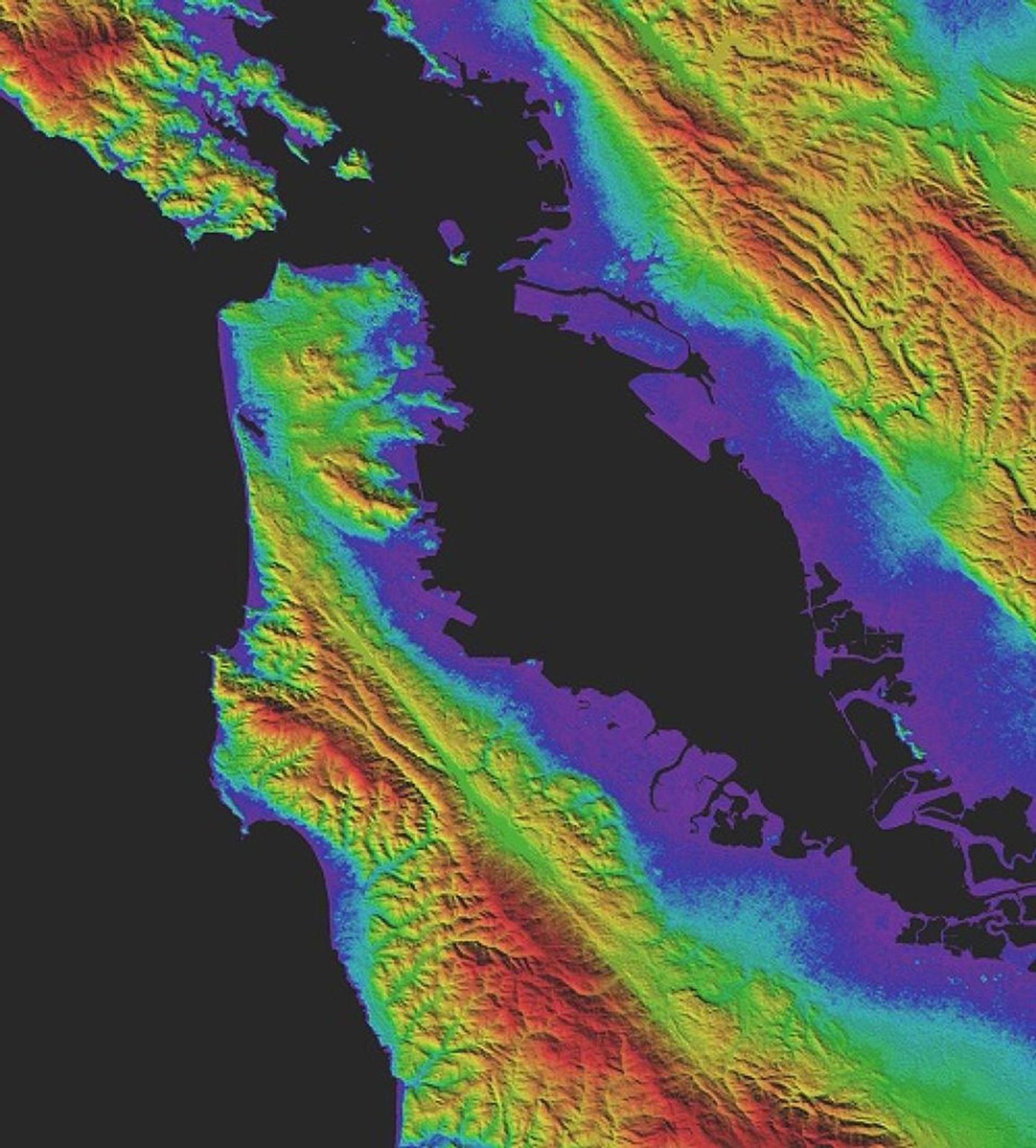
Earth’s Reflection Affects Climate
“Earth’s climate is really driven by a delicate balance between how much of the Sun’s energy is absorbed by the Earth as visible light, and how much the Earth emits to space in the form of infrared radiation,” Norman Loeb [Langley Research Center—PI] told EarthSky in a Nov. 30, 2009 article. “The objective is to observe the Earth’s radiation budget, together with the clouds…over several years, and preferably over several decades, [that] enables us to improve our understanding of how the climate system is changing and really provides an invaluable resource for testing climate models that are used to simulate future climate change.”
Terra maintains two CERES instruments that measure albedo, or solar radiation reflected from Earth’s surface, and emitted thermal infrared radiation. It also explores the role that clouds play in modulating radiative fluxes by examining solar-reflected and Earth-emitted radiation from the land surface to the top of the atmosphere.
CERES was developed at NASA’s Langley Research Center. Terra has two CERES instruments onboard – although one is no longer functional. While they were both operational, one CERES instrument would gather information using cross-track scan mode, where a mirror sweeps back and forth, perpendicular to the sensor’s path. This mode builds two-dimensional images of Earth. The second instrument would gather information in biaxial scan mode, where scanning occurs along two different axes simultaneously. These data provide angular flux information to derive Earth’s radiation balance.Now, Terra’s remaining functional CERES instrument operates in biaxial scan mode and has done so while Terra has drifted from its 10:30 MLT equator crossing time toward earlier MLT crossings.
Researchers pair CERES data with other instruments on Terra to create a fully resolved global diurnal cycle of Earth’s radiation budget at the surface and at different layers of the atmosphere, including the top of the atmosphere. The CERES data products capture variations in Earth’s radiation budget at hourly, daily, and monthly timescales. Climate, weather, and applied science research communities use this data to address a range of research topics that involve the exchange of energy between Earth and space and between the major components of the Earth system – see Figure 3. The article, The State of CERES: Updates and Highlights, published Dec. 29, 2025, contains more details on the current status of the CERES instruments flying on Terra and other platforms as well as summaries of the latest science results.
Figure 3. Sea surface temperature gathered by Terra’s Clouds and the Earth’s Radiant Energy System (CERES) instrument on Jan. 1, 2023. Warm surface water is depicted by red and cooler surface water is depicted by blue and green. Figure credit: NASA Worldview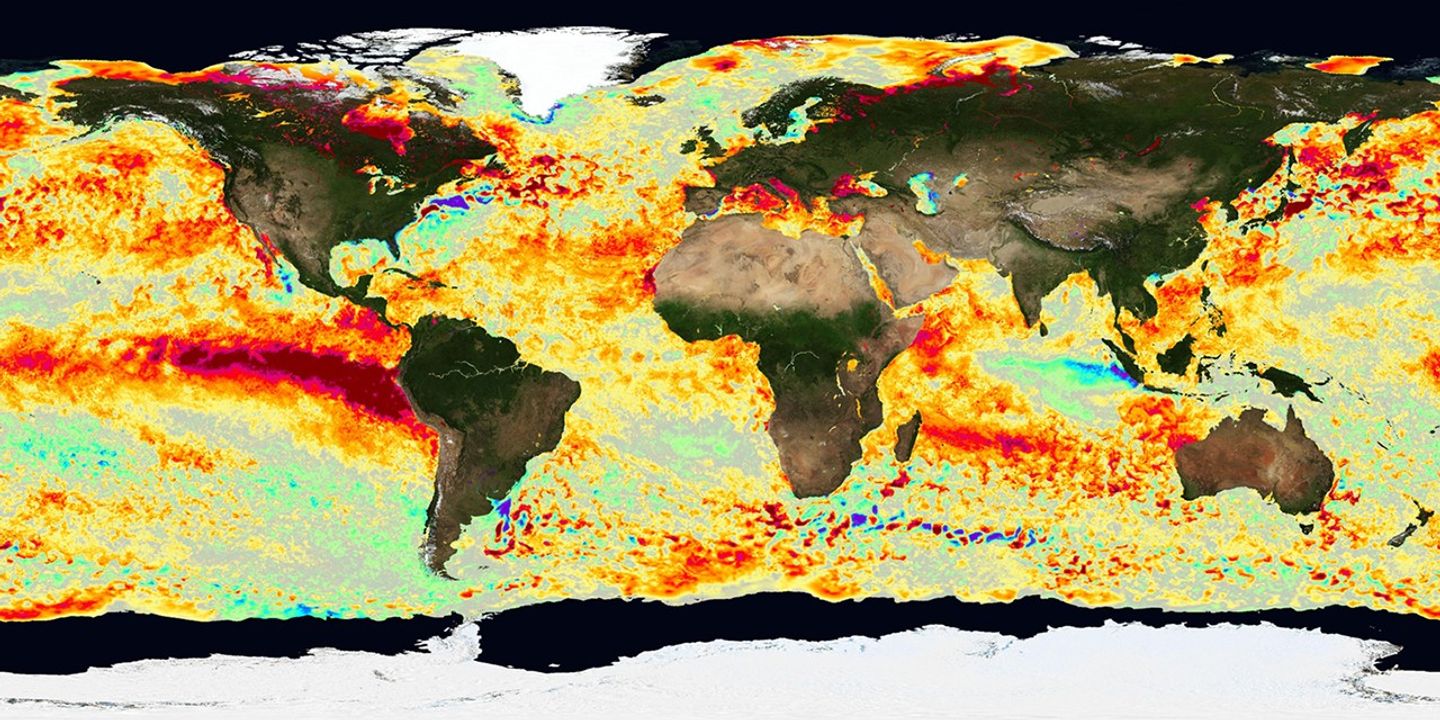
Checking in on the Lower Atmosphere from Space
MOPITT was designed to obtain information about the lower atmosphere – especially as it interacts with the land and ocean biospheres. It was developed as a joint project between the Canadian Space Agency, the University of Toronto, and the National Center for Atmospheric Research (NCAR) in Boulder, CO. The instrument has a spatial resolution of 22 km (14 mi) and covers a swath of Earth’s surface about half the size of Los Angeles [640 km (398 mi)].
MOPITT uses gas correlation spectroscopy to measure the concentration, fate, and distribution of CO, a product of car exhaust, forest fires, and factory exhaust. MOPITT offers near-global coverage every three days of the region being scanned – see Figure 4. These data help scientists identify sources of regional pollution, monitor regional pollution patterns, and track the long-range transport of pollutants.
MOPITT was the longest running record of CO concentration collected from space. The dataset is often combined with MISR data to map aerosols and CO to track sources of air pollution. On April 9, 2025, MOPITT was the first casualty of Terra’s slow demise. It was turned off to conserve energy for the remaining four instruments.
Figure 4. A map of the average carbon monoxide (CO) concentration gathered by Terra’s Measurement of Pollution in the Troposphere (MOPITT) over North America in August 2024. Figure credit: Measurement of Pollution in the Troposphere Instrument Operations Centre, University of Toronto
Focusing on the Tiniest Particles from Multiple Perspectives
“The MISR team has pioneered novel methods for tracking aerosol abundances and particle properties, cloud and aerosol plume heights, height-resolved wind vectors, ice and vegetation structures, and other physical attributes of our planet,” said David Diner [NASA/Jet Propulsion Laboratory—MISR PI]. “These efforts and those of the broader scientific community have led to key insights about how the Earth’s climate and environment are changing.”
MISR was developed at NASA’s Jet Propulsion Laboratory to measure variations of surface and cloud properties as well as aerosols – see Figure 5. These data are used to evaluate the long-term interactions between sunlight and aerosols in the atmosphere and on Earth. Researchers can use MISR data to monitor the monthly, seasonal, and long-term trends in the amount and type of atmospheric aerosol particles.
MISR trains its nine cameras on Earth to capture images from multiple angles that gather reflected sunlight scattered by Earth’s surface, clouds, and suspended airborne particles within a 360-km (224-mi) swath of land. One camera points to the lowest point, while others provide forward and aft-ward view angles at 26.1°, 45.6°, 60.0°, and 70.5°. As MODIS flies overhead, each region of Earth’s surface is successively imaged by all nine cameras in each of four wavelengths that span the visible and infrared spectrum. Its capabilities allow measurements of natural and human-caused particulate matter in the atmosphere, particulate abundance and type, heights of aerosol plumes and cloud tops, along with their speed and direction of motion and the types and extent of land surface cover.
Figure 5. Multi-angle Imaging SpectroRadiometer (MISR) images of aerosol optical depth (AOD) from the new aerosol product in the form of three-month moving averages. The data presented were collected in 2006. Figure credit: NASA’s Atmospheric Science Data Center
According to Diner, outdoor airborne fine particulate matter constitutes the largest environmental health risk worldwide. This fine particulate matter are responsible for millions of premature deaths per year as well as a wide range of adverse human health outcomes. Terra revolutionized the study of these particles, making it possible for researchers to distinguish aerosols resulting from natural and anthropogenic sources and to investigate how different types of aerosols impact human health. Diner points to how MISR data has been used to examine particulate matter in regions of rapid urbanization, such as Asia and North Africa, as well as track aerosol transport after wildfires.
“MISR’s greatest achievement is the diversity of scientific investigations and research papers that have resulted from its unique observational approach,” he said. Diner also points to the associated retrieval algorithms, which have produced an unprecedented data record spanning more than two and a half decades.
The Swiss Army Knife in Terra’s Toolkit
MODIS was designed to monitor atmospheric, land, and oceanic processes, including surface temperature, ocean color, global vegetation, cloud characteristics, temperature and moisture profiles, and snow cover. The instrument was developed at NASA’s Goddard Space Flight Center. It provides large-scale coverage, about 2300 km (~1429 mi) of land at a spatial resolution of 250 m (~820 ft). MODIS can visualize every point on Earth every one to two days. This approach is ideal for tracking a variety of Earth’s systems. It measures the distribution and properties of clouds, as well as aerosols, water vapor, and temperature. MODIS data are also used as input to a radiative transfer model that calculates radiative fluxes at the surface and within the atmosphere.
Figure 6. An image of Typhoon Ragasa captured on Sept. 18, 2025 in the western Pacific Ocean a few hundred miles east of the Philippines. Figure credit: NASA Earth Observatory image by Wanmei Liang, using MODIS data from NASA EOSDIS LANCE and GIBS/Worldview
MODIS data helps scientists determine the amount of water vapor in a column of the atmosphere and the vertical distribution of temperature and water vapor, measurements that are crucial to understanding Earth’s climate system. MODIS also uses visible images and remotely sensed data to monitor changes in land cover by natural forces, such as fires, or anthropogenic changes, such as cropland burning and farming. MODIS data help researchers understand photosynthetic activity of plants on land and in the ocean to improve estimates of the gaseous mixture in the atmosphere. MODIS data also improves weather models and forecasts that can prepare communities for major storm events – see Figure 6.
Researchers combine atmospheric models developed using MODIS data with aerosol products from MISR data to create a generation of maps of near-surface particulate matter concentrations that have been used in numerous health studies. One such study is the Global Burden of Disease, which estimates that more than four million premature deaths occur each year due to exposure to airborne particles.
Data, Data Everywhere, Managing Decades of Information
Terra instruments have been in operation since the satellite was launched more than a quarter of a century ago. The technology at the time was state-of-the-art, allowing Terra to complete more than 100,000 orbits, downloading and transmitting data twice during each orbit to ground stations in Alaska, Norway, and NASA’s Wallops Flight Facility. Terra has produced the longest record of environmental data providing the research community a way to evaluate the effects of natural and human-induced changes in the environment.
The five (now four) instruments gather near real-time data for use in monitoring and managing on-going events. The vast amount of data has generated 87 data products that are distributed through the Land Processes Distributed Active Archive Center (LPDAAC), the Atmospheric Science Data Center (ASDC), the Ocean Color Web, the Atmosphere Archive and Distribution System, and the National Snow and Ice Data Center (NSIDC). The datasets work in concert with other data products to expand the scientific community’s knowledge about Earth systems, resulting in more than 27,000 scientific publications.
The EOS Data and Information System (EOSDIS) provides end-to-end capabilities for managing science data as part of the Earth Science Data Information System (ESDIS). It processes Level 1–4 data products. For those wishing to learn more, The Earth Observer published a comprehensive review of NASA’s Earth Science Data Operations (as of 2017) in the article, Earth Science Data Operations: Acquiring, Distributing, and Delivering NASA Data for the Benefit of Society [March–April 2017, 29:2, 4–18].
Terra’s data in the EOSDIS archive constitute an invaluable two-decade-long record of a wide range of Earth processes. Higher level data processing is completed by Science Investigator-led Processing Systems. In addition, data is available in a variety of archives. Earthdata Search and Earth Explorer make all ASTER products available to all users at no cost. It contains Level-1 (L1A), L1B, L1T data, as well as data from the Global Digital Elevation Model and the North American ASTER Land Surface Emissivity Database. The U.S. Geological Survey Global Visualization Viewer (GLoVis) and ASTER/AIST data archives allow users to search the entire ASTER data archive using a browser interface. Application for Extracting and Exploring Analysis Ready Samples (AppEEARS) offers a simple and efficient way to access and transform geospatial data from a variety of federal data archives. It allows users to subset geospatial datasets using spatial, temporal, and band/layer parameters.
Over the past two decades, Terra’s data acquisition process has transitioned from scheduled downloads to data-driven acquisition. In a 2020 EarthData article, Greg Dell [Earth Science Mission Operations—Project Deputy Director-Operations] explained the priorities in managing data moving from a model of producing a long-term record for the research community to getting data that the scientific community can use as quickly as possible.
“This is a big paradigm shift over the course of the mission,” said Dell. “We’ve been able to accommodate this paradigm shift with ground automation and better, faster networks.”
Crunching the reams of data gathered by Terra’s five instruments requires a series of algorithms so the scientific community can use it effectively. The acknowledgement of this need began at the launch of the mission, with the creation of the Algorithm Theoretical Basis Documents (ATBDs). ATBDs provided the theoretical basis – both the physical theory and the mathematical procedures and possible assumptions being applied – for the calculations that have to be made to convert the radiances received by the instruments to geophysical quantities. Even in Terra’s early days, developers invited panelists from around the world to evaluate algorithmic iterations to assess the strengths and weaknesses of the code. This perspective has continued with the review of newer algorithms by the user community to ensure they can use the data effectively.
In a continued momentum toward transformation, NASA funded the development of Terra Fusion, a new dataset and toolkit that merges the data gathered by the five instruments into a format and spatial context to be used by scientists. The one dataset approach allows the community to find synergy to address large, real-world problems. Data fusion continues to facilitate new research into air pollution, smoke from wildfires, clouds and aerosols, ocean biology, agriculture and land use, vegetation dynamics, hydrology, Earth’s radiation budget, and other Earth science fields that have traditionally used Terra data.
Terra Science Gives Back to Communities Around the World
According to Rayne, since it began in 1988, the idea behind EOS was that interdisciplinary science teams would collaborate with NASA groups to address real-world problems. This unique approach brought together teams that previously may have been siloed across the agency and academia to increase the momentum driving team science. These efforts have yielded impressive outcomes that have advanced various scientific fields but also benefited people around the world. The following subsections describe ways that Terra data have been applied to a variety of topics of societal interest and importance.
Chasing the Path of Totality During an Eclipse
While an eclipse is not highly unusual, it is an exciting event to witness. The shadow that forms when the Moon blocks the Sun’s radiation briefly changes the environment, dropping atmospheric temperature, quieting birds, and imparting an eerie sense of awe. Often these events do not cross heavily populated parts of the planet. During the past quarter century, Terra has had several opportunities to observe eclipses from its orbital vantage point – a prime location to follow the path of totality where the Sun’s rays are completely blocked from Earth’s surface.
Not long after Terra’s launch, the Moon cast a shadow that moved across southeast Asia and North America during an annular solar eclipse on June 20, 2002. Few regions were within the path of totality to witness this event, but MISR on Terra trained its nine cameras along the path to monitor the effect of the eclipse as it passed the central Pacific Ocean.
MODIS also captured true-color images of an exceptionally long total solar eclipse on July 2009 that reached 6 minutes and 39 seconds. The path of totality crossed Japan, Korea, and eastern China.
During the August 2017 eclipse, the path of totality cut across the United States, with a shadow passing over Oregon, Idaho, Wyoming, Nebraska, Kansas, Missouri, Illinois, Kentucky, Tennessee, North Carolina, Georgia, and South Carolina. MODIS captured false-color images of the shadow – see Figure 7. It was the first eclipse to cross the entire continent in almost 100 years and the first to travel coast-to-coast since the founding of the country in 1776. The Earth Observer reported on this remarkable event in NASA Provides Unique Views of the 2017 “Eclipse Across America” [Sept.–Oct. 2017, 29:5, 4–17].
Figure 7. Terra’s Moderate Resolution Imaging Spectroradiometer (MODIS) sensor captured the data used to create the composite image during several overpasses that were collected at different times. Figure credit: Joshua Stevens and Jesse Allen [both: NASA Earth Observatory]
Finally, Terra’s location was not ideal to capture the April 8, 2024 path of totality that crossed over the eastern United States and Canada. However, the satellite was able to capture most of the shadow with limited visible contrast. The Earth Observer staff participated in festivities and covered the event in the article, “Looking Back on Looking Up: The 2024 Total Solar Eclipse,” published on Aug. 22, 2024.
Monitoring Remote Regions for the Spark of a Flame
Terra provides the bird’s eye view of the planet’s surface that is perfect for monitoring remote regions. This vantage point is beneficial for land managers who use Terra’s data to inform decisions and prepare communities for threats, including wildfire and hurricanes. Data from Terra can also be used to map changes to an ecosystem after a fire event.
Terra’s MODIS produced false-color image of the area ravaged by the Camp Fire in 2018, which spanned an area roughly the size of Chicago. Researchers, fire management, and policy makers could interactively browse more than 700 global, full-resolution satellite image layers. The images were paired with underlying data to monitor and evaluate the scarred region – see Figure 8.
Figure 8. A map showing the extent of the Camp Fire in 2018, which was composed using data from the Moderate Resolution Imaging Spectroradiometer (MODIS). The red, black, gold, orange, and green markings indicate different structures in the region affected by the wildfire. The red structures were destroyed completely during the fire. The black structures remained untouched. Green, yellow, and orange structures experienced a degree of fire damage (10–50%). More than 13,000 residential buildings, 500 commercial buildings, and 4,000 other buildings were destroyed in the fire. Figure credit: NASA
Terra has also captured images from fires in the state of New South Wales in southeastern Australia. In November 2019, the fire season began early with Terra capturing smoke on the edge of the continent. The resulting 70 fires that season destroyed 1.1 million hectares (2.7 million acres). In addition to monitoring the fire damage after containment, scientists use Terra data to monitor the movement of smoke across the continent and around the planet.
The following year, Terra captured images of California’s Mineral fire, which began in July 2020 and grew to more than 11,000 acres (17 mi2) amid favorable fire conditions of high winds and dry grass and timber in the region. Fire management used MODIS information to monitor sparks that had potential for starting new fires. This information helped determine evacuation orders and kept surrounding communities apprised of the fire’s movement.
Heavy Rain Inundates the Outback
Researchers use the instruments on Terra to provide a set of eyes to monitor for fires, but it is also beneficial for monitoring flood conditions. Channel Country in the Australian outback is a region that experiences cycles of drought and flood. During periods of heavy rainfall, the excess water drains to a nearby lake. The wet periods can promote growth in pasture lands and support wetlands and endemic species.
In March 2025, this region received unusually heavy rain. In one week, more than a year’s worth of rain fell, swelling multiple rivers and inundating roadways that isolated small towns and grazing lands for weeks. MODIS captured images of flooding across the region – see Figure 9. Officials used the images from Terra and Landsat to direct helicopter evacuations of citizens and livestock.
Experts monitored the region in real time throughout the event. They cited several factors for the unusually heavy rain, including streams of humid air from the north and east that converged over interior Queensland. They also pointed to a low-pressure trough that drove the moisture-laden air to higher and cooler levels of the atmosphere, triggering the formation and release of heavy rain.
Figure 9. The Moderate Resolution Imaging Spectroradiometer (MODIS) captured wide-spread flooding across western Australia on March 29, 2025. The false-color images of the region show water (dark and light blue), land (brown), and vegetation (green). Figure credit: NASA Earth Observatory images by Michala Garrison, using Landsat data from the U.S. Geological Survey and MODIS data from NASA EOSDIS LANCE and GIBS/Worldview
Tracking Churning Ice from Space
Explorers have sought a shortcut from the Atlantic to the Pacific Ocean for centuries. The race for the Northwest Passage was supercharged in the 19th century to shore up trade routes. Many explorers accepted this challenge, and many lives were lost in the quest. It was not until 1905 that Roald Amundsen successfully navigated the Arctic Ocean, emerging into the Pacific Ocean from the Amundsen Gulf, named on his behalf.
The Arctic Ocean continues to be an area of interest today, not only for trade, but also because of the valuable mineral resources along the surrounding shallow continental shelf. Yet, this region still remains tricky to navigate due to chaotic growth and movement of sea ice around the confined northern ocean.
MODIS captured images of this remote region of the planet, offering a bird’s eye view of stationary ice clinging to the shallow shelf. Using this information, researchers studied the seasonal break-up of ice in 2024. They noted the churning, slow rotation of the ice before chocking the few outlet paths into the Atlantic and Pacific Oceans – see Figure 10. Monitoring the release of icebergs updates the status of navigating shipping lanes.
Figure 10. Terra’s Moderate Resolution Imaging Spectroradiometer (MODIS) captured floating fragments of sea ice flowing across the Fram Strait, a 450-km (280-mi) passage between the Arctic Ocean and the Greenland Sea. Figure credit: Wanmei Liang [NASA Earth Observatory]
An Eye on an Eruption
MODIS is also beneficial in monitoring volcanic eruptions from space. On Jan. 18, 2017, Terra passed over Alaska and captured an ash plume emanating from the Bogoslof Volcano on Bogoslof Island along the southern edge of the Bering Sea – see Figure 11. Researchers from the Alaska Volcano Observatory (AVO) in collaboration with the U.S. Geological Survey, the University of Alaska Fairbanks Geophysical Institute, and the Alaska Division of Geological and Geophysical Surveys produced updates as the eruption evolved. The group issues one of four levels of alert ranging from calm (green) to imminent eruption (red). AVO announced a red alert for Bogoslof on Jan. 19, 2017. Beyond the ash plume, the cloud of debris produced cumulonimbus clouds that resulted in lightning strikes.
Figure 11. NASA’s Terra Satellite captures the eruption of the Bogoslof volcano in Alaska, emitting steam and ash around 9:00 PM on Jan. 3, 2017. Figure credit: Jeff Schmaltz [Moderate Resolution Imaging Spectroradiometer (MODIS) Rapid Response Team]
Tracking Lumbering Atmospheric Monsters
Terra instruments provide researchers information about the location and intensification of tropical storms in the Atlantic Ocean and cyclones in the Pacific Ocean. The National Hurricane Center uses information from Terra and other satellites to observe the storm and predict its potential path before issuing watches and warnings to communities in the line of danger.
On Sept. 2, 2008, a disturbance n in the North Atlantic Ocean caught the scientific community’s attention. The storm received a name – Omar – and Terra offered one of the many lenses to monitor its movement across the Atlantic – see Figure 12. The following day, Omar was downgraded to a tropical depression but then it moved over a warm patch of ocean water – allowing it to rapidly intensify into a category 4 hurricane. Forecasters relied on the constant stream of information from Terra’s instruments to update their models and keep the community apprised of the storm’s movement to prepare and make plans for evacuation.
Figure 12. NASA’s Terra satellite produce an image of hurricane Omar as the storm faced strong wind shear on Sept. 2, 2008 in the North Atlantic Ocean. Figure credit: NASA Worldview, Earth Observing System Data and Information System (EOSDIS)
During the early months of the COVID-19 pandemic, Terra continued to monitor the planet from high above. On Aug. 25, 2020, MODIS produced images of a collection of thunderstorms at the center of an intensifying hurricane, named Laura, forming in the Gulf of Mexico. MISR trained its nine cameras on the storm to gather information on changing windspeed and cloud-top height as the storm intensified – see Figure 13. Laura made landfall at Cameron, LA at 1:00 AM as a category 4 hurricane, with sustained winds of 150 mph (130 knots). The hurricane was the strongest storm to hit southwest Louisiana since 1851 when storm records were initiated.
Figure 13. On Aug. 25, 2020 at 12:35 AM EDT, the Moderate Resolution Imaging Spectroradiometer (MODIS) captured the most powerful thunderstorms (yellow) around the eye of hurricane Laura. The temperature at the top of the clouds descended to -80 °F (-62.2 °C). Figure credit: NASA/National Renewable Energy Laboratory
Far Surpassing the Six-year Lifespan… but an Inevitable Decline
Since its launch, Terra has consistently orbited Earth from pole to pole, training all five instruments on the planet’s surface and gathering simultaneous data, with the Earth Science Mission Operations (ESMO) team vigilantly monitoring the satellite’s energy and performance day and (until quite recently) night. As the satellite aged, the team began performing periodic inclination adjustments to maintain the satellite’s orbit and preserve its fuel supply to ensure it could continue to collect data. Their oversight has been so effective that a mission designed with a six-year lifetime continues to operate in 2026. This unplanned longevity is true for all three of the EOS flagships. The article, The Earth Observer: Offering Perspectives from Space through Time, published Dec. 29, 2025, has more to say about the development of Terra and other the EOS flagship missions and the observations made by NASA’s Earth observing fleet.
Inevitably, the decades in Earth’s orbit has taken a toll on the flight hardware. Eventually the fuel to keep the satellite stable in its orbit will run out – even if the instruments onboard are still functioning nominally. To conserve Terra’s remaining fuel to allow for controlled reentry into Earth’s atmosphere and to extend science operations aa long as possible, in late 2020 NASA Headquarters decided it was time to stop making adjustments to maintain Terra’s orbit. As a consequence, the satellite has begun to drift in its orbit, slowly sliding into an earlier equator crossing time. By Fall 2022, Terra’s orbit lowered to about 5 km (3 mi) and began crossing the equator at 10:15 AM. While these changes seem significant, they only created minor adjustments to orbital repeat time and swath width. The research community continued to gather data about atmospheric dynamics, water and energy cycles, atmospheric chemistry, physical and radiative properties of clouds, air-land exchanges of energy, carbon and water, and vertical profiles of CO vulcanology. The Earth Observer discussed the consequences – and opportunities – of these orbit shifts to Terra (and Aqua and Aura) in the article NASA Holds Discussions about the Future of the EOS Flagship Missions [Jan.–Feb. 2023, 35:1, 13–17].
Along with the adjustments in Terra’s orbit, the satellite has also experienced power limitations due to slow degradation of the battery that powers the spacecraft. While ESMO and the instrument Science Teams managed these reductions for as long as possible without impacts on science, early this year the first sacrifice had to be made. MOPITT was switched to safe mode on Feb. 1, 2025 and then turned off on April 9, 2025. As of this writing, the remaining four instruments continue to function, with limitations to the ASTER telescopes.
“It really is a testament to great work by the entire team for being able to keep this spacecraft up in the air and healthy and to be able to produce like it has,” Terri Wood [EDOS—Project Manager] told EarthData in 2020. “It’s people, processes, and programs that make this happen. I just think it’s a real testament to what we can do around here.”
Since Terra’s launch, NASA has sent a series of satellites into orbit to explore the planet’s surface and ultimately learn more about our home. The Afternoon Constellation (A-Train) consisted of five NASA satellites – Aqua (launched in 2002), Aura (launched in 2004), the second Orbiting Carbon Observatory (launched in 2014), the Cloud-Aerosol Lidar and Infrared Pathfinder Satellite Observations (CALIPSO), and CloudSat (both launched in 2006), as well as international partner missions. More information on the A-Train satellites are available in the article, “The Earth Observer: Offering Perspectives from Space through Time,” referenced earlier. These eyes in the sky continue to produce the data that scientists need to answer long-standing questions and tackle complex concerns with new, imaginative approaches.
A Bittersweet Conclusion
Terra began as a spark of imagination during collective conversations among the scientific community more than 40 years ago. This unique approach to team science has resulted in one of the first satellites to study Earth from a holistic perspective, gathering data about the land, water and the atmosphere at the same time, contributing to a diverse collection of scientific disciplines to tackle large questions through team science. Unlike many previous, smaller satellites, Terra was designed from scratch with state-of-the-art technology. The exquisite design ensured each instrument continued to collect data long past the six-year lifespan, offering scientists around the world a long-term record of the planet.
As Terra reaches its conclusion, it will be joined by two sister satellites – Aqua and Aura. The loss of these three EOS flagship satellites, launched more than 20 years earlier, will change the way scientists monitor Earth and affect our understanding of the radiative balance of the planet. May the final years of Terra ignite the imagination of the next generation of scientists to catapult the study of our planet for generations to come.
“Terra was the quintessential and most significant of all of the EOS satellites that made contributions to all aspects of Earth science,” said Michael King [Earth Observing System—former Senior Project Scientist and MODIS—Team Lead]. “All five of the Terra [instruments] made significant and, in many cases, first-of-a-kind global observations relevant to climate change.”
Stacy Kish
NASA’s Goddard Space Flight Center/EarthSpin
stacykishwrites@gmail.com
Terra: The End of An Era
27 min read
Terra: The End of An EraIntroduction
Launched into the night sky more than 26 years ago, on Dec. 19, 1999, from Vandenberg Air Force Base (now Space Force Base), Terra was NASA’s first Earth Observing System (EOS) flagship mission to study Earth’s land surface from space via a coordinated series of polar-orbiting and low-inclination satellites that produce long-term global observations useful for understanding the interactions between Earth’s atmosphere, land, snow and ice, oceans, and radiant energy balance. Scheduled for a six-year tour, Terra outlasted its life expectancy by nearly two decades. Despite its longevity, Terra’s mission scientists stopped making inclination adjustments in 2020, allowing the satellite to slowly drift out of its contained orbit. The mission team have also begun the painful process of shutting down the five key instruments as the satellite is prepped for retirement.
“Terra’s impressive human legacy stems from the fact that the mission’s history is grounded in NASA icons,” said Nyssa Rayne [NASA Goddard Space Flight Center (GSFC)—Terra Outreach & Communications Coordinator]. “Even today, Terra continues to benefit from legendary figures, including the current project scientist and instrument calibration/validation experts, who have shaped this mission in monumental ways.”
An Auspicious Beginning to More Than Two Decades of Science
Terra’s mission of discovery was designed to provide a better understanding of the total Earth system. When Terra launched, on the cusp of the 21st century, the research community knew very little about how the land interacted with the atmosphere on a regional and continental scale. The community also lacked a way to quantify surface properties, such as albedo, roughness, evaporation rate, and photosynthesis, from satellite data.
Terra was designed, engineered, and programmed to address these knowledge gaps. Often described as a small bus, Terra measures almost 7-m (23-ft) long and 3.5 m (11 ft) across. In the vast expanse of space, however, Terra travels in an orbit around Earth, like a gnat circling the Sphere in Las Vegas. Carried into space aboard an Atlas-Centaur IIAS expendable launch vehicle from Vandenberg Air Force Base, CA, Terra was placed in orbit 705 km (438 mi) above the planet’s surface, capturing a viewing swatch from each overpass that could be stitched together to produce whole global images. Its flight path was designed to cross the equator to coincide with the time of day when cloud cover along the equator was at a minimum (10:30 AM mean local time).
Five Instruments Wrapped in a Silver Package
First named EOS-AM1, the concept of the Terra mission was envisioned in the 1980s and implemented in the 1990s. Terra builds on the lessons learned from past pioneering programs, including the Upper Atmosphere Research Satellite (UARS), Landsat, the Ocean Topography Experiment (TOPEX)/Poseidon, and the series of Total Ozone Mapping Spectrometer (TOMS) instruments. After many scientific conversations and arguments, it was finally decided that Terra would carry five instruments capable of gathering data that would benefit a variety of Earth scientific disciplines – see Figure 1. An international effort, Terra carries instruments from the United States, Japan, and Canada that allow scientists to document relationships between Earth’s systems and examine their connections. The five instruments include:
Advanced Spaceborne Thermal Emission and Reflection Radiometer (ASTER), which obtains high-resolution images of Earth at 14 different wavelengths of the electromagnetic spectrum that can be used to create detailed maps of land surface, temperature, emissivity, reflectance, and elevation;
Clouds and the Earth’s Radiant Energy System (CERES), which measures Earth’s total radiation budget as well as cloud property estimates that enable scientists to clarify the role that clouds play in the planet’s radiative flux;
Measurement of Pollution in the Troposphere (MOPITT), which measured the distribution, transport, source, and sinks of carbon monoxide (CO) in the troposphere;
Multi-angle Imaging SpectroRadiometer (MISR), which improves the field’s understanding of the fate of sunlight in Earth’s environment, distinguishing between different types of clouds, aerosol particles, and surfaces; and
Moderate Resolution Imaging Spectroradiometer (MODIS), which combines data gathered from CERES and MISR to determine the impact of clouds and aerosols on the Earth’s energy budget.
Figure 1. An artistic rendering of the Terra spacecraft that shows the location of five instruments in its payload: Advanced Spaceborne Thermal Emission and Reflection Radiometer (ASTER), Clouds and the Earth’s Radiant Energy System (CERES), Measurement of Pollution in the Troposphere (MOPITT), Multi-angle Imaging SpectroRadiometer (MISR), and Moderate Resolution Imaging Spectroradiometer (MODIS). Terra carries two CERES instruments and one each of the other four. Figure credit: NASAFocusing a Zoom Lens on Earth
“ASTER’s accurate topographic data will be used for engineering, energy exploration, conserving natural resources, environmental management, public works design, firefighting, recreation, geology and city planning, to name just a few areas,” Michael Abrams [NASA Jet Propulsion Laboratory—U.S. Principal Investigator] told Universe Today in a June 30, 2009 article.
ASTER was designed to capture high-resolution images of Earth. The data cover a range of land scales – anything from the size of 14 bath towels (15 m2 per pixel) to one-fifth of a basketball court (90 m2 per pixel). The instrument was developed as a partnership between NASA, Japan’s Ministry of Economy, Trade and Industry (METI), the National Institute of Advanced Industrial Science and Technology (AIST) in Japan, and the Japan Space Systems (J-spacesystems).
ASTER consists of three telescopes – Visible Near-Infrared (VNIR), Short-Wave Infrared (SWIR), and Thermal Infrared (TIR). (The SWIR is no longer operational.) All three instruments point perpendicular to the direction of motion to change the viewing angle and produce stereoscopic images of our planet. The three telescopes also gather high-resolution images at 14 different bands of the electromagnetic spectrum, ranging from visible to infrared light.
The instrument’s data are used to create detailed maps of land surface temperature, reflectance, and emissivity, how effectively a surface emits thermal radiation. ASTER also produces detailed views of the effects of Earth’s landforms and topography – see Figure 2. These data are used to understand factors that control climate conditions, e.g., evaporation, water flow, and mass movement. It can also be used to explore how fire can change Earth’s surface.
Figure 2. A topographic map of San Francisco, CA developed with Advanced Spaceborne Thermal Emission and Reflection Radiometer (ASTER) data using Global Digital Elevation Model Version 3. Shading represents different elevations of relief. Figure credit: NASA/ Ministry of Economy, Trade and Industry/Advanced Information Systems Technology/Japan Space Systems, and U.S./Japan ASTER Science TeamEarth’s Reflection Affects Climate
“Earth’s climate is really driven by a delicate balance between how much of the Sun’s energy is absorbed by the Earth as visible light, and how much the Earth emits to space in the form of infrared radiation,” Norman Loeb [Langley Research Center—PI] told EarthSky in a Nov. 30, 2009 article. “The objective is to observe the Earth’s radiation budget, together with the clouds…over several years, and preferably over several decades, [that] enables us to improve our understanding of how the climate system is changing and really provides an invaluable resource for testing climate models that are used to simulate future climate change.”
Terra maintains two CERES instruments that measure albedo, or solar radiation reflected from Earth’s surface, and emitted thermal infrared radiation. It also explores the role that clouds play in modulating radiative fluxes by examining solar-reflected and Earth-emitted radiation from the land surface to the top of the atmosphere.
CERES was developed at NASA’s Langley Research Center. Terra has two CERES instruments onboard – although one is no longer functional. While they were both operational, one CERES instrument would gather information using cross-track scan mode, where a mirror sweeps back and forth, perpendicular to the sensor’s path. This mode builds two-dimensional images of Earth. The second instrument would gather information in biaxial scan mode, where scanning occurs along two different axes simultaneously. These data provide angular flux information to derive Earth’s radiation balance.Now, Terra’s remaining functional CERES instrument operates in biaxial scan mode and has done so while Terra has drifted from its 10:30 MLT equator crossing time toward earlier MLT crossings.
Researchers pair CERES data with other instruments on Terra to create a fully resolved global diurnal cycle of Earth’s radiation budget at the surface and at different layers of the atmosphere, including the top of the atmosphere. The CERES data products capture variations in Earth’s radiation budget at hourly, daily, and monthly timescales. Climate, weather, and applied science research communities use this data to address a range of research topics that involve the exchange of energy between Earth and space and between the major components of the Earth system – see Figure 3. The article, The State of CERES: Updates and Highlights, published Dec. 29, 2025, contains more details on the current status of the CERES instruments flying on Terra and other platforms as well as summaries of the latest science results.
Figure 3. Sea surface temperature gathered by Terra’s Clouds and the Earth’s Radiant Energy System (CERES) instrument on Jan. 1, 2023. Warm surface water is depicted by red and cooler surface water is depicted by blue and green. Figure credit: NASA WorldviewChecking in on the Lower Atmosphere from Space
MOPITT was designed to obtain information about the lower atmosphere – especially as it interacts with the land and ocean biospheres. It was developed as a joint project between the Canadian Space Agency, the University of Toronto, and the National Center for Atmospheric Research (NCAR) in Boulder, CO. The instrument has a spatial resolution of 22 km (14 mi) and covers a swath of Earth’s surface about half the size of Los Angeles [640 km (398 mi)].
MOPITT uses gas correlation spectroscopy to measure the concentration, fate, and distribution of CO, a product of car exhaust, forest fires, and factory exhaust. MOPITT offers near-global coverage every three days of the region being scanned – see Figure 4. These data help scientists identify sources of regional pollution, monitor regional pollution patterns, and track the long-range transport of pollutants.
MOPITT was the longest running record of CO concentration collected from space. The dataset is often combined with MISR data to map aerosols and CO to track sources of air pollution. On April 9, 2025, MOPITT was the first casualty of Terra’s slow demise. It was turned off to conserve energy for the remaining four instruments.
Figure 4. A map of the average carbon monoxide (CO) concentration gathered by Terra’s Measurement of Pollution in the Troposphere (MOPITT) over North America in August 2024. Figure credit: Measurement of Pollution in the Troposphere Instrument Operations Centre, University of TorontoFocusing on the Tiniest Particles from Multiple Perspectives
“The MISR team has pioneered novel methods for tracking aerosol abundances and particle properties, cloud and aerosol plume heights, height-resolved wind vectors, ice and vegetation structures, and other physical attributes of our planet,” said David Diner [NASA/Jet Propulsion Laboratory—MISR PI]. “These efforts and those of the broader scientific community have led to key insights about how the Earth’s climate and environment are changing.”
MISR was developed at NASA’s Jet Propulsion Laboratory to measure variations of surface and cloud properties as well as aerosols – see Figure 5. These data are used to evaluate the long-term interactions between sunlight and aerosols in the atmosphere and on Earth. Researchers can use MISR data to monitor the monthly, seasonal, and long-term trends in the amount and type of atmospheric aerosol particles.
MISR trains its nine cameras on Earth to capture images from multiple angles that gather reflected sunlight scattered by Earth’s surface, clouds, and suspended airborne particles within a 360-km (224-mi) swath of land. One camera points to the lowest point, while others provide forward and aft-ward view angles at 26.1°, 45.6°, 60.0°, and 70.5°. As MODIS flies overhead, each region of Earth’s surface is successively imaged by all nine cameras in each of four wavelengths that span the visible and infrared spectrum. Its capabilities allow measurements of natural and human-caused particulate matter in the atmosphere, particulate abundance and type, heights of aerosol plumes and cloud tops, along with their speed and direction of motion and the types and extent of land surface cover.
Figure 5. Multi-angle Imaging SpectroRadiometer (MISR) images of aerosol optical depth (AOD) from the new aerosol product in the form of three-month moving averages. The data presented were collected in 2006. Figure credit: NASA’s Atmospheric Science Data CenterAccording to Diner, outdoor airborne fine particulate matter constitutes the largest environmental health risk worldwide. This fine particulate matter are responsible for millions of premature deaths per year as well as a wide range of adverse human health outcomes. Terra revolutionized the study of these particles, making it possible for researchers to distinguish aerosols resulting from natural and anthropogenic sources and to investigate how different types of aerosols impact human health. Diner points to how MISR data has been used to examine particulate matter in regions of rapid urbanization, such as Asia and North Africa, as well as track aerosol transport after wildfires.
“MISR’s greatest achievement is the diversity of scientific investigations and research papers that have resulted from its unique observational approach,” he said. Diner also points to the associated retrieval algorithms, which have produced an unprecedented data record spanning more than two and a half decades.
The Swiss Army Knife in Terra’s Toolkit
MODIS was designed to monitor atmospheric, land, and oceanic processes, including surface temperature, ocean color, global vegetation, cloud characteristics, temperature and moisture profiles, and snow cover. The instrument was developed at NASA’s Goddard Space Flight Center. It provides large-scale coverage, about 2300 km (~1429 mi) of land at a spatial resolution of 250 m (~820 ft). MODIS can visualize every point on Earth every one to two days. This approach is ideal for tracking a variety of Earth’s systems. It measures the distribution and properties of clouds, as well as aerosols, water vapor, and temperature. MODIS data are also used as input to a radiative transfer model that calculates radiative fluxes at the surface and within the atmosphere.
Figure 6. An image of Typhoon Ragasa captured on Sept. 18, 2025 in the western Pacific Ocean a few hundred miles east of the Philippines. Figure credit: NASA Earth Observatory image by Wanmei Liang, using MODIS data from NASA EOSDIS LANCE and GIBS/WorldviewMODIS data helps scientists determine the amount of water vapor in a column of the atmosphere and the vertical distribution of temperature and water vapor, measurements that are crucial to understanding Earth’s climate system. MODIS also uses visible images and remotely sensed data to monitor changes in land cover by natural forces, such as fires, or anthropogenic changes, such as cropland burning and farming. MODIS data help researchers understand photosynthetic activity of plants on land and in the ocean to improve estimates of the gaseous mixture in the atmosphere. MODIS data also improves weather models and forecasts that can prepare communities for major storm events – see Figure 6.
Researchers combine atmospheric models developed using MODIS data with aerosol products from MISR data to create a generation of maps of near-surface particulate matter concentrations that have been used in numerous health studies. One such study is the Global Burden of Disease, which estimates that more than four million premature deaths occur each year due to exposure to airborne particles.
Data, Data Everywhere, Managing Decades of Information
Terra instruments have been in operation since the satellite was launched more than a quarter of a century ago. The technology at the time was state-of-the-art, allowing Terra to complete more than 100,000 orbits, downloading and transmitting data twice during each orbit to ground stations in Alaska, Norway, and NASA’s Wallops Flight Facility. Terra has produced the longest record of environmental data providing the research community a way to evaluate the effects of natural and human-induced changes in the environment.
The five (now four) instruments gather near real-time data for use in monitoring and managing on-going events. The vast amount of data has generated 87 data products that are distributed through the Land Processes Distributed Active Archive Center (LPDAAC), the Atmospheric Science Data Center (ASDC), the Ocean Color Web, the Atmosphere Archive and Distribution System, and the National Snow and Ice Data Center (NSIDC). The datasets work in concert with other data products to expand the scientific community’s knowledge about Earth systems, resulting in more than 27,000 scientific publications.
The EOS Data and Information System (EOSDIS) provides end-to-end capabilities for managing science data as part of the Earth Science Data Information System (ESDIS). It processes Level 1–4 data products. For those wishing to learn more, The Earth Observer published a comprehensive review of NASA’s Earth Science Data Operations (as of 2017) in the article, Earth Science Data Operations: Acquiring, Distributing, and Delivering NASA Data for the Benefit of Society [March–April 2017, 29:2, 4–18].
Terra’s data in the EOSDIS archive constitute an invaluable two-decade-long record of a wide range of Earth processes. Higher level data processing is completed by Science Investigator-led Processing Systems. In addition, data is available in a variety of archives. Earthdata Search and Earth Explorer make all ASTER products available to all users at no cost. It contains Level-1 (L1A), L1B, L1T data, as well as data from the Global Digital Elevation Model and the North American ASTER Land Surface Emissivity Database. The U.S. Geological Survey Global Visualization Viewer (GLoVis) and ASTER/AIST data archives allow users to search the entire ASTER data archive using a browser interface. Application for Extracting and Exploring Analysis Ready Samples (AppEEARS) offers a simple and efficient way to access and transform geospatial data from a variety of federal data archives. It allows users to subset geospatial datasets using spatial, temporal, and band/layer parameters.
Over the past two decades, Terra’s data acquisition process has transitioned from scheduled downloads to data-driven acquisition. In a 2020 EarthData article, Greg Dell [Earth Science Mission Operations—Project Deputy Director-Operations] explained the priorities in managing data moving from a model of producing a long-term record for the research community to getting data that the scientific community can use as quickly as possible.
“This is a big paradigm shift over the course of the mission,” said Dell. “We’ve been able to accommodate this paradigm shift with ground automation and better, faster networks.”
Crunching the reams of data gathered by Terra’s five instruments requires a series of algorithms so the scientific community can use it effectively. The acknowledgement of this need began at the launch of the mission, with the creation of the Algorithm Theoretical Basis Documents (ATBDs). ATBDs provided the theoretical basis – both the physical theory and the mathematical procedures and possible assumptions being applied – for the calculations that have to be made to convert the radiances received by the instruments to geophysical quantities. Even in Terra’s early days, developers invited panelists from around the world to evaluate algorithmic iterations to assess the strengths and weaknesses of the code. This perspective has continued with the review of newer algorithms by the user community to ensure they can use the data effectively.
In a continued momentum toward transformation, NASA funded the development of Terra Fusion, a new dataset and toolkit that merges the data gathered by the five instruments into a format and spatial context to be used by scientists. The one dataset approach allows the community to find synergy to address large, real-world problems. Data fusion continues to facilitate new research into air pollution, smoke from wildfires, clouds and aerosols, ocean biology, agriculture and land use, vegetation dynamics, hydrology, Earth’s radiation budget, and other Earth science fields that have traditionally used Terra data.
Terra Science Gives Back to Communities Around the World
According to Rayne, since it began in 1988, the idea behind EOS was that interdisciplinary science teams would collaborate with NASA groups to address real-world problems. This unique approach brought together teams that previously may have been siloed across the agency and academia to increase the momentum driving team science. These efforts have yielded impressive outcomes that have advanced various scientific fields but also benefited people around the world. The following subsections describe ways that Terra data have been applied to a variety of topics of societal interest and importance.
Chasing the Path of Totality During an Eclipse
While an eclipse is not highly unusual, it is an exciting event to witness. The shadow that forms when the Moon blocks the Sun’s radiation briefly changes the environment, dropping atmospheric temperature, quieting birds, and imparting an eerie sense of awe. Often these events do not cross heavily populated parts of the planet. During the past quarter century, Terra has had several opportunities to observe eclipses from its orbital vantage point – a prime location to follow the path of totality where the Sun’s rays are completely blocked from Earth’s surface.
Not long after Terra’s launch, the Moon cast a shadow that moved across southeast Asia and North America during an annular solar eclipse on June 20, 2002. Few regions were within the path of totality to witness this event, but MISR on Terra trained its nine cameras along the path to monitor the effect of the eclipse as it passed the central Pacific Ocean.
MODIS also captured true-color images of an exceptionally long total solar eclipse on July 2009 that reached 6 minutes and 39 seconds. The path of totality crossed Japan, Korea, and eastern China.
During the August 2017 eclipse, the path of totality cut across the United States, with a shadow passing over Oregon, Idaho, Wyoming, Nebraska, Kansas, Missouri, Illinois, Kentucky, Tennessee, North Carolina, Georgia, and South Carolina. MODIS captured false-color images of the shadow – see Figure 7. It was the first eclipse to cross the entire continent in almost 100 years and the first to travel coast-to-coast since the founding of the country in 1776. The Earth Observer reported on this remarkable event in NASA Provides Unique Views of the 2017 “Eclipse Across America” [Sept.–Oct. 2017, 29:5, 4–17].
Figure 7. Terra’s Moderate Resolution Imaging Spectroradiometer (MODIS) sensor captured the data used to create the composite image during several overpasses that were collected at different times. Figure credit: Joshua Stevens and Jesse Allen [both: NASA Earth Observatory]Finally, Terra’s location was not ideal to capture the April 8, 2024 path of totality that crossed over the eastern United States and Canada. However, the satellite was able to capture most of the shadow with limited visible contrast. The Earth Observer staff participated in festivities and covered the event in the article, “Looking Back on Looking Up: The 2024 Total Solar Eclipse,” published on Aug. 22, 2024.
Monitoring Remote Regions for the Spark of a Flame
Terra provides the bird’s eye view of the planet’s surface that is perfect for monitoring remote regions. This vantage point is beneficial for land managers who use Terra’s data to inform decisions and prepare communities for threats, including wildfire and hurricanes. Data from Terra can also be used to map changes to an ecosystem after a fire event.
Terra’s MODIS produced false-color image of the area ravaged by the Camp Fire in 2018, which spanned an area roughly the size of Chicago. Researchers, fire management, and policy makers could interactively browse more than 700 global, full-resolution satellite image layers. The images were paired with underlying data to monitor and evaluate the scarred region – see Figure 8.
Figure 8. A map showing the extent of the Camp Fire in 2018, which was composed using data from the Moderate Resolution Imaging Spectroradiometer (MODIS). The red, black, gold, orange, and green markings indicate different structures in the region affected by the wildfire. The red structures were destroyed completely during the fire. The black structures remained untouched. Green, yellow, and orange structures experienced a degree of fire damage (10–50%). More than 13,000 residential buildings, 500 commercial buildings, and 4,000 other buildings were destroyed in the fire. Figure credit: NASATerra has also captured images from fires in the state of New South Wales in southeastern Australia. In November 2019, the fire season began early with Terra capturing smoke on the edge of the continent. The resulting 70 fires that season destroyed 1.1 million hectares (2.7 million acres). In addition to monitoring the fire damage after containment, scientists use Terra data to monitor the movement of smoke across the continent and around the planet.
The following year, Terra captured images of California’s Mineral fire, which began in July 2020 and grew to more than 11,000 acres (17 mi2) amid favorable fire conditions of high winds and dry grass and timber in the region. Fire management used MODIS information to monitor sparks that had potential for starting new fires. This information helped determine evacuation orders and kept surrounding communities apprised of the fire’s movement.
Heavy Rain Inundates the Outback
Researchers use the instruments on Terra to provide a set of eyes to monitor for fires, but it is also beneficial for monitoring flood conditions. Channel Country in the Australian outback is a region that experiences cycles of drought and flood. During periods of heavy rainfall, the excess water drains to a nearby lake. The wet periods can promote growth in pasture lands and support wetlands and endemic species.
In March 2025, this region received unusually heavy rain. In one week, more than a year’s worth of rain fell, swelling multiple rivers and inundating roadways that isolated small towns and grazing lands for weeks. MODIS captured images of flooding across the region – see Figure 9. Officials used the images from Terra and Landsat to direct helicopter evacuations of citizens and livestock.
Experts monitored the region in real time throughout the event. They cited several factors for the unusually heavy rain, including streams of humid air from the north and east that converged over interior Queensland. They also pointed to a low-pressure trough that drove the moisture-laden air to higher and cooler levels of the atmosphere, triggering the formation and release of heavy rain.
Figure 9. The Moderate Resolution Imaging Spectroradiometer (MODIS) captured wide-spread flooding across western Australia on March 29, 2025. The false-color images of the region show water (dark and light blue), land (brown), and vegetation (green). Figure credit: NASA Earth Observatory images by Michala Garrison, using Landsat data from the U.S. Geological Survey and MODIS data from NASA EOSDIS LANCE and GIBS/WorldviewTracking Churning Ice from Space
Explorers have sought a shortcut from the Atlantic to the Pacific Ocean for centuries. The race for the Northwest Passage was supercharged in the 19th century to shore up trade routes. Many explorers accepted this challenge, and many lives were lost in the quest. It was not until 1905 that Roald Amundsen successfully navigated the Arctic Ocean, emerging into the Pacific Ocean from the Amundsen Gulf, named on his behalf.
The Arctic Ocean continues to be an area of interest today, not only for trade, but also because of the valuable mineral resources along the surrounding shallow continental shelf. Yet, this region still remains tricky to navigate due to chaotic growth and movement of sea ice around the confined northern ocean.
MODIS captured images of this remote region of the planet, offering a bird’s eye view of stationary ice clinging to the shallow shelf. Using this information, researchers studied the seasonal break-up of ice in 2024. They noted the churning, slow rotation of the ice before chocking the few outlet paths into the Atlantic and Pacific Oceans – see Figure 10. Monitoring the release of icebergs updates the status of navigating shipping lanes.
Figure 10. Terra’s Moderate Resolution Imaging Spectroradiometer (MODIS) captured floating fragments of sea ice flowing across the Fram Strait, a 450-km (280-mi) passage between the Arctic Ocean and the Greenland Sea. Figure credit: Wanmei Liang [NASA Earth Observatory]An Eye on an Eruption
MODIS is also beneficial in monitoring volcanic eruptions from space. On Jan. 18, 2017, Terra passed over Alaska and captured an ash plume emanating from the Bogoslof Volcano on Bogoslof Island along the southern edge of the Bering Sea – see Figure 11. Researchers from the Alaska Volcano Observatory (AVO) in collaboration with the U.S. Geological Survey, the University of Alaska Fairbanks Geophysical Institute, and the Alaska Division of Geological and Geophysical Surveys produced updates as the eruption evolved. The group issues one of four levels of alert ranging from calm (green) to imminent eruption (red). AVO announced a red alert for Bogoslof on Jan. 19, 2017. Beyond the ash plume, the cloud of debris produced cumulonimbus clouds that resulted in lightning strikes.
Figure 11. NASA’s Terra Satellite captures the eruption of the Bogoslof volcano in Alaska, emitting steam and ash around 9:00 PM on Jan. 3, 2017. Figure credit: Jeff Schmaltz [Moderate Resolution Imaging Spectroradiometer (MODIS) Rapid Response Team]Tracking Lumbering Atmospheric Monsters
Terra instruments provide researchers information about the location and intensification of tropical storms in the Atlantic Ocean and cyclones in the Pacific Ocean. The National Hurricane Center uses information from Terra and other satellites to observe the storm and predict its potential path before issuing watches and warnings to communities in the line of danger.
On Sept. 2, 2008, a disturbance n in the North Atlantic Ocean caught the scientific community’s attention. The storm received a name – Omar – and Terra offered one of the many lenses to monitor its movement across the Atlantic – see Figure 12. The following day, Omar was downgraded to a tropical depression but then it moved over a warm patch of ocean water – allowing it to rapidly intensify into a category 4 hurricane. Forecasters relied on the constant stream of information from Terra’s instruments to update their models and keep the community apprised of the storm’s movement to prepare and make plans for evacuation.
Figure 12. NASA’s Terra satellite produce an image of hurricane Omar as the storm faced strong wind shear on Sept. 2, 2008 in the North Atlantic Ocean. Figure credit: NASA Worldview, Earth Observing System Data and Information System (EOSDIS)During the early months of the COVID-19 pandemic, Terra continued to monitor the planet from high above. On Aug. 25, 2020, MODIS produced images of a collection of thunderstorms at the center of an intensifying hurricane, named Laura, forming in the Gulf of Mexico. MISR trained its nine cameras on the storm to gather information on changing windspeed and cloud-top height as the storm intensified – see Figure 13. Laura made landfall at Cameron, LA at 1:00 AM as a category 4 hurricane, with sustained winds of 150 mph (130 knots). The hurricane was the strongest storm to hit southwest Louisiana since 1851 when storm records were initiated.
Figure 13. On Aug. 25, 2020 at 12:35 AM EDT, the Moderate Resolution Imaging Spectroradiometer (MODIS) captured the most powerful thunderstorms (yellow) around the eye of hurricane Laura. The temperature at the top of the clouds descended to -80 °F (-62.2 °C). Figure credit: NASA/National Renewable Energy LaboratoryFar Surpassing the Six-year Lifespan… but an Inevitable Decline
Since its launch, Terra has consistently orbited Earth from pole to pole, training all five instruments on the planet’s surface and gathering simultaneous data, with the Earth Science Mission Operations (ESMO) team vigilantly monitoring the satellite’s energy and performance day and (until quite recently) night. As the satellite aged, the team began performing periodic inclination adjustments to maintain the satellite’s orbit and preserve its fuel supply to ensure it could continue to collect data. Their oversight has been so effective that a mission designed with a six-year lifetime continues to operate in 2026. This unplanned longevity is true for all three of the EOS flagships. The article, The Earth Observer: Offering Perspectives from Space through Time, published Dec. 29, 2025, has more to say about the development of Terra and other the EOS flagship missions and the observations made by NASA’s Earth observing fleet.
Inevitably, the decades in Earth’s orbit has taken a toll on the flight hardware. Eventually the fuel to keep the satellite stable in its orbit will run out – even if the instruments onboard are still functioning nominally. To conserve Terra’s remaining fuel to allow for controlled reentry into Earth’s atmosphere and to extend science operations aa long as possible, in late 2020 NASA Headquarters decided it was time to stop making adjustments to maintain Terra’s orbit. As a consequence, the satellite has begun to drift in its orbit, slowly sliding into an earlier equator crossing time. By Fall 2022, Terra’s orbit lowered to about 5 km (3 mi) and began crossing the equator at 10:15 AM. While these changes seem significant, they only created minor adjustments to orbital repeat time and swath width. The research community continued to gather data about atmospheric dynamics, water and energy cycles, atmospheric chemistry, physical and radiative properties of clouds, air-land exchanges of energy, carbon and water, and vertical profiles of CO vulcanology. The Earth Observer discussed the consequences – and opportunities – of these orbit shifts to Terra (and Aqua and Aura) in the article NASA Holds Discussions about the Future of the EOS Flagship Missions [Jan.–Feb. 2023, 35:1, 13–17].
Along with the adjustments in Terra’s orbit, the satellite has also experienced power limitations due to slow degradation of the battery that powers the spacecraft. While ESMO and the instrument Science Teams managed these reductions for as long as possible without impacts on science, early this year the first sacrifice had to be made. MOPITT was switched to safe mode on Feb. 1, 2025 and then turned off on April 9, 2025. As of this writing, the remaining four instruments continue to function, with limitations to the ASTER telescopes.
“It really is a testament to great work by the entire team for being able to keep this spacecraft up in the air and healthy and to be able to produce like it has,” Terri Wood [EDOS—Project Manager] told EarthData in 2020. “It’s people, processes, and programs that make this happen. I just think it’s a real testament to what we can do around here.”
Since Terra’s launch, NASA has sent a series of satellites into orbit to explore the planet’s surface and ultimately learn more about our home. The Afternoon Constellation (A-Train) consisted of five NASA satellites – Aqua (launched in 2002), Aura (launched in 2004), the second Orbiting Carbon Observatory (launched in 2014), the Cloud-Aerosol Lidar and Infrared Pathfinder Satellite Observations (CALIPSO), and CloudSat (both launched in 2006), as well as international partner missions. More information on the A-Train satellites are available in the article, “The Earth Observer: Offering Perspectives from Space through Time,” referenced earlier. These eyes in the sky continue to produce the data that scientists need to answer long-standing questions and tackle complex concerns with new, imaginative approaches.
A Bittersweet Conclusion
Terra began as a spark of imagination during collective conversations among the scientific community more than 40 years ago. This unique approach to team science has resulted in one of the first satellites to study Earth from a holistic perspective, gathering data about the land, water and the atmosphere at the same time, contributing to a diverse collection of scientific disciplines to tackle large questions through team science. Unlike many previous, smaller satellites, Terra was designed from scratch with state-of-the-art technology. The exquisite design ensured each instrument continued to collect data long past the six-year lifespan, offering scientists around the world a long-term record of the planet.
As Terra reaches its conclusion, it will be joined by two sister satellites – Aqua and Aura. The loss of these three EOS flagship satellites, launched more than 20 years earlier, will change the way scientists monitor Earth and affect our understanding of the radiative balance of the planet. May the final years of Terra ignite the imagination of the next generation of scientists to catapult the study of our planet for generations to come.
“Terra was the quintessential and most significant of all of the EOS satellites that made contributions to all aspects of Earth science,” said Michael King [Earth Observing System—former Senior Project Scientist and MODIS—Team Lead]. “All five of the Terra [instruments] made significant and, in many cases, first-of-a-kind global observations relevant to climate change.”
Stacy Kish
NASA’s Goddard Space Flight Center/EarthSpin
stacykishwrites@gmail.com
The Final Earth Observer Editor’s Corner: October–December 2025

14 min read
The Final Earth Observer Editor’s Corner: October–December 2025It is with a heavy heart that I announce that NASA Earth Science Communications has directed The Earth Observer to conduct an orderly shutdown of the publication. No new content will be published after Dec. 31, 2025.
While the sunset of The Earth Observer is bittersweet for our team, the good news is that all of the rich historical and descriptive content preserved on The Earth Observer‘s archives page will remain accessible to the world. If you’ve never checked this page out, I highly encourage you to do so. You’ll find all of our archived issues saved in a PDF format, and – if you scroll down the page – you’ll find an annotated bibliography with links to numerous entries about a variety of topics to provide the historic context of the progress and accomplishments of the Earth Observing System (EOS).
–Alan Ward, Executive Editor, The Earth Observer

Almost 37 years ago, in March 1989, the first issue of The Earth Observer newsletter was released – see Figure 1. The three-page document contained one article that explained the rationale for the National Oceanic and Atmospheric Administration (NOAA) forgoing earlier plans to place instruments on NASA’s first EOS polar platform – at that time envisioned as one of several large platforms operated by NASA, NOAA, Europe, and Japan, with numerous instruments on each platform. Along with this article, that first issue featured an EOS launch schedule, a list of publications and acronyms, and a personals section. Yes, personals. It’s hard to believe that a NASA newsletter would feature personals but remember that this first issue was published at a time before the internet was widely available. The newsletter served as a bridge to quickly connect hundreds of newly chosen EOS investigators scattered worldwide with the latest EOS program developments. The content of early issues included the latest reports from Investigators Working Group meetings, payload panel reviews, and instrument Science Team Meetings (STM). In short, before the Web, The Earth Observer was the thread that kept the various EOS teams connected.
The Earth Observer issue covers: March 1989 (first issue) and Nov. 1989.”> The Earth Observer issue covers: March 1989 (first issue) and Nov. 1989. Figure 1. The look of The Earth Observer has evolved over the years. This graphic shows the evolution of the newsletter’s front-page over the past 36 years. Note how our logo evolved and eventually disappeared. After 2004, new NASA communications guidelines required the NASA logo to be shown on the front instead of the individual program logo. Since 2011, online issues of The Earth Observer have been available in color. A redesign in 2019 included the new logo and tagline for the 30th anniversary; the logo was removed and the tagline tweaked in 2020. The final print issue was published in May 2024. The Earth Observer began publishing content online Summer 2024. The last photo in the series shows the home page for The Earth Observer’s website as of December 2025, which will remain accessible after 2025 as a historic archive. Credit: Debbi McLean/NASA’s Goddard Space Flight Center The Earth Observer issue covers:: Jan.–Feb. 1997 and Jan–Feb. 2000.”> The Earth Observer issue covers:: Jan.–Feb. 1997 and Jan–Feb. 2000. Figure 1. The look of The Earth Observer has evolved over the years. This graphic shows the evolution of the newsletter’s front-page over the past 36 years. Note how our logo evolved and eventually disappeared. After 2004, new NASA communications guidelines required the NASA logo to be shown on the front instead of the individual program logo. Since 2011, online issues of The Earth Observer have been available in color. A redesign in 2019 included the new logo and tagline for the 30th anniversary; the logo was removed and the tagline tweaked in 2020. The final print issue was published in May 2024. The Earth Observer began publishing content online Summer 2024 The last photo in the series shows the home page for The Earth Observer’s website as of December 2025, which will remain accessible after 2025 as a historic archives. Credit: Debbi McLean/NASA’s Goddard Space Flight Center The Earth Observer issue covers: Jan.–Feb. 2006 and Jan.–Feb. 2008.”> The Earth Observer issue covers: Jan.–Feb. 2006 and Jan.–Feb. 2008. Figure 1. The look of The Earth Observer has evolved over the years. This graphic shows the evolution of the newsletter’s front-page over the past 36 years. Note how our logo evolved and eventually disappeared. After 2004, new NASA communications guidelines required the NASA logo to be shown on the front instead of the individual program logo. Since 2011, online issues of The Earth Observer have been available in color. A redesign in 2019 included the new logo and tagline for the 30th anniversary; the logo was removed and the tagline tweaked in 2020. The final print issue was published in May 2024. The Earth Observer began publishing content online Summer 2024 The last photo in the series shows the home page for The Earth Observer’s website as of December 2025, which will remain accessible after 2025 as a historic archives. Credit: Debbi McLean/NASA’s Goddard Space Flight Center The Earth Observer issue covers: Jan.–/Feb. 2011 (now in color) and March–April 2014 (25th anniversary).”> The Earth Observer issue covers: Jan.–/Feb. 2011 (now in color) and March–April 2014 (25th anniversary). Figure 1. The look of The Earth Observer has evolved over the years. This graphic shows the evolution of the newsletter’s front-page over the past 36 years. Note how our logo evolved and eventually disappeared. After 2004, new NASA communications guidelines required the NASA logo to be shown on the front instead of the individual program logo. Since 2011, online issues of The Earth Observer have been available in color. A redesign in 2019 included the new logo and tagline for the 30th anniversary; the logo was removed and the tagline tweaked in 2020. The final print issue was published in May 2024. The Earth Observer began publishing content online Summer 2024 The last photo in the series shows the home page for The Earth Observer’s website as of December 2025, which will remain accessible after 2025 as a historic archives. Credit: Debbi McLean/NASA’s Goddard Space Flight Center The Earth Observe issue covers: Jan.–Feb. 2019 (30th anniversary) and Jan.–Feb. 2020.”> The Earth Observe issue covers: Jan.–Feb. 2019 (30th anniversary) and Jan.–Feb. 2020. Figure 1. The look of The Earth Observer has evolved over the years. This graphic shows the evolution of the newsletter’s front-page over the past 36 years. Note how our logo evolved and eventually disappeared. After 2004, new NASA communications guidelines required the NASA logo to be shown on the front instead of the individual program logo. Since 2011, online issues of The Earth Observer have been available in color. A redesign in 2019 included the new logo and tagline for the 30th anniversary; the logo was removed and the tagline tweaked in 2020. The final print issue was published in May 2024. The Earth Observer began publishing content online Summer 2024 The last photo in the series shows the home page for The Earth Observer’s website as of December 2025, which will remain accessible after 2025 as a historic archives. Credit: Debbi McLean/NASA’s Goddard Space Flight Center The Earth Observer‘s final pdf issue cover (May 2024) and website screenshot (Dec.2025).”> The Earth Observer‘s final pdf issue cover (May 2024) and website screenshot (Dec.2025). Figure 1. The look of The Earth Observer has evolved over the years. This graphic shows the evolution of the newsletter’s front-page over the past 36 years. Note how our logo evolved and eventually disappeared. After 2004, new NASA communications guidelines required the NASA logo to be shown on the front instead of the individual program logo. Since 2011, online issues of The Earth Observer have been available in color. A redesign in 2019 included the new logo and tagline for the 30th anniversary; the logo was removed and the tagline tweaked in 2020. The final print issue was published in May 2024. The Earth Observer began publishing content online Summer 2024 The last photo in the series shows the home page for The Earth Observer’s website as of December 2025, which will remain accessible after 2025 as a historic archives. Credit: Mike Marosy/NASA’s Goddard Space Flight CenterThe history of The Earth Observer is intimately intertwined with the development of EOS; it is difficult to speak of one entity without discussing the other. Over the years, as EOS grew from an idea into actual spacecraft and instruments launching and flying in space, the newsletter began chronicling their journey. Early issues of The Earth Observer describe – often in meticulous detail – the meetings and deliberations during which the EOS concept evolved through various revisions and restructuring before the first EOS mission took flight. In the end, NASA launched three mid-sized “flagship” missions (about the size of a small bus) that became known as Terra (1999), Aqua (2002), and Aura (2004) and complemented their measurement capabilities with numerous other small-to-mid-sized missions. The result is the Earth-observing fleet in orbit above us today. Many of these missions fly in polar, low Earth, or geosynchronous orbit, while several others observe the Earth from the perspective of the International Space Station (ISS) – see Figure 2.
EOS missions are known for their longevity; many missions (and their follow-ons) have long outlived their anticipated life cycle. Each of these missions beam back reams of raw data that must be processed and stored so that it can be accessed and used as input to computer models and scientific studies to understand past environmental conditions, place our current situation in the proper context, and make predictions about the future path our planet could follow.
To view this video please enable JavaScript, and consider upgrading to a web browser that
supports HTML5 video
During its nearly 37-year run, The Earth Observer has borne witness to the successes, failures, frustrations, and advancements of EOS, and of the broader Earth Science endeavors of NASA and its domestic and international partners. Given that publication of this final content marks the end of an era, the newsletter team felt it appropriate to offer some perspective on the newsletter’s contribution. The feature that resulted focuses on the relationship between The Earth Observer and EOS – with specific emphasis on our reporting on satellite missions. See the online article, The Earth Observer: Offering Perspectives from Space Through Time, to learn more.
One of the final items published focuses on Terra, the first EOS flagship, which launched into the night sky on Dec. 18, 1999 from Vandenberg Space Force [then Air Force Base (VSFB)] in California on what was designed as a six-year mission of discovery. Terra’s payload included five instruments – Advanced Spaceborne Thermal Emission and Reflection Radiometer (ASTER), Clouds and the Earth’s Radiant Energy System (CERES), Measurement of Pollution in the Troposphere (MOPITT), Multi-angle Imaging SpectroRadiometer (MISR), and Moderate Resolution Imaging Spectroradiometer (MODIS) – intended to collect data that would fill in gaps in our knowledge of the Earth System (as it stood on the cusp of the 21st century). In particular, the satellite gathered information about how land interacts with the atmosphere on a regional and continental scale. The mission also focused on measuring key planetary characteristics needed to understand Earth’s changing environment (e.g., albedo, roughness, evaporation rate, and photosynthesis). The goal was to provide a holistic approach to address larger scientific questions. For more than 26 years, Terra has trained her five instruments toward Earth and gathered data to address wildfires, flooding, hurricanes, and polar ice.
As 2020 drew to a close, in order to conserve enough fuel for the end of the mission, NASA Headquarters decided it was time to for Terra to stop conducting the periodic maneuvers to maintain its 10:30 AM equator crossing. After ceasing maneuvers, the satellite began to drift, which Terra (and the other flagships) have done for the past few years. As Terra’s life draws to a close, it continues to ignite the imagination of the next generation of scientists to catapult the study of our planet for generations to come. Refer to the article, Terra: The End of an Era, to learn more about the feat of engineering that has kept the satellite gathering data two decades past the end of its “Prime Mission” and the key scientific achievements that have resulted.
Since 1997, six CERES instruments have been launched on the EOS and the Joint Polar Satellite System (JPSS) platforms, including the Tropical Rainfall Measuring Mission (TRMM), Terra [2], Aqua [2], the Suomi National Polar-orbiting Platform (Suomi NPP), and the Joint Polar Satellite System–1 (JPSS-1, now named NOAA–20) missions, and used to study Earth’s radiation budget (ERB) – the amount of sunlight absorbed by Earth and the amount of infrared energy emitted back to space – that has a strong influence on climate. Researchers pair measurements from CERES instruments with information gathered from other sources to clarify ERB. While the latency of CERES data prevents it from being used for weather forecasting directly, the information on ERB can be used to verify the radiation parameterization of computer models used to make weather forecasts and predictions about future climate conditions. The ERB data can also be applied to other science research and applications that benefit society. As an example, researchers have used this data to accurately detail changes in the movement of energy from Earth – especially the role that clouds and aerosols play in Earth’s energy budget. The CERES Science Team has a long history of recording proceedings of their meetings in The Earth Observer. It is thus appropriate that a CERES STM summary should be among the last items published this newsletter. Read more about the current status of CERES in space in the article, The State of CERES: Updates and Highlights.
The CERES STM also includes an update on the Polar Radiant Energy in the Far InfraRed Experiment (PREFIRE) mission, which publicly released its data products in June 2025. PREFIRE measurements are being used to quantify the far-infrared spectrum beyond 15 mm – which accounts for over 50% of the outgoing long wave radiation in polar regions. Additionally, the atmospheric greenhouse effect is sensitive to thin clouds and small water vapor concentration that have strong far infrared signatures. PREFIRE consists of two shoebox-sized CubeSats, which launched into near polar orbits on separate Rocket Lab Electron rockets from New Zealand in May and June of 2024. Each CubeSat has a miniaturized infrared spectrometer onboard covering 5 to 53 mm with 0.84 mm sampling and a planned operational life of one year. A complete infrared emission spectrum will provide fingerprints to differentiate between several important feedback processes (e.g., cloudiness and water vapor) that leads to Arctic warming, sea ice loss, ice sheet melt, and sea level rise.
NOAA and NASA have partnered in many endeavors together. The Earth Observer has reported on these collaborations over the years. One well known example is the two agency’s partnership to develop and launch the Geostationary Operational Environmental Satellites (GOES). This mission has become the backbone of short-term forecasts and warnings of severe weather and environmental hazards. The first satellite, GOES-1, launched in 1975; the most recent, GOES-19, launched in 2024. The technology onboard has improved exponentially over the past five decades. The article, Sentinels in the Sky: 50 Years of GOES Satellite Observations, describes this progression, highlights some of the data obtained, and provides insights into each of these incremental advancements over the past 50 years in this satellite series.
Turning now to another recent launch, the Plankton, Aerosol, Cloud, ocean Ecosystem (PACE) satellite continues to operate nominally. The data PACE returns allow the scientific community to explore the Earth’s ocean, atmosphere, and land surfaces. In February 2025 (10 days prior to the first anniversary of the mission’s launch), the PACE community gathered at NASA’s Goddard Institute for Space Studies (GISS) for the PAC3 meeting, which was so named because it combined three PACE-related activities: the PACE Postlaunch Airborne eXperiment (PACE–PAX), the third PACE Science and Applications Team (SAT3), and the PACE Validation Science Team (PVST). The PAC3 meeting included updates on the three instruments on PACE: the Ocean Color Instrument (OCI), the Hyper-Angular Rainbow Polarimeter–2 (HARP2), and the Spectropolarimeter for Planetary Exploration (SPEXone).
In addition to reporting on PACE, participants during the meeting gave updates on the latest news about the Earth Cloud Aerosol and Radiation Explorer (EarthCARE) observatory, including preparation for validation activities as part of the joint efforts of the European Space Agency (ESA) and Japan Aerospace eXploration Agency (JAXA). The article also details operational highlights, including validation and aerosol products and cloud products. Several Science and Applications Team (SAT3) groups presented results from studies using PACE data and PACE validation studies. The PACE Science Team will continue to monitor Earth and have identified strategies to continue the long-term data calibration and algorithm refinement to ensure the ongoing delivery of information to the research community. The article, Keeping Up with PACE: Summary of the 2025 PAC3 Meeting, provides a full summary of this event.
On Nov. 16, 2025, the Sentinel-6B mission launched from VSFB. The newest satellite in NASA’s Earth observing fleet measures sea levels with an accuracy of one inch every second, covering 90 percent of the oceans every 10 days. It will also contribute the record of atmospheric temperature and humidity measurements. These data are beneficial in observing movement of surface currents, monitoring the transfer of heat through the oceans and around the planet, and tracking changes in water temperature. Sentinel-6B will carry several instruments on this mission, including a radar altimeter, an advanced microwave radiometer, and a radio occultation antenna. The satellite’s observations will be paired with information from other spacecraft to provide detailed information about Earth’s atmosphere that will contribute high-resolution data for computer models to improve weather forecasting.
Sentinel-6B is another shining example of successful collaboration between NASA and NOAA, along with several European partners – ESA, the European Organisation for the Exploitation of Meteorological Satellites (EUMETSAT), Centre National d’Études Spatiales (CNES), and the European Commission.
Sentinel-6B has publicly released an image showing some of its first observations since launch. The map shows sea levels across a vast stretch of the eastern seaboard and Atlantic Ocean – see Figure 3. The image combines data from Sentinel–6B and its “twin” Sentinel-6 Michael Freilich, which launched in 2020. The data were obtained on Nov. 26, 2025 – just ten days after Sentinel-6B launched.
Figure 3. Sentinel-6B (S6B) and Sentinel-6 Michael Freilich (S6MF) captured data on Nov. 26, 2025 of sea levels across a vast stretch of the Atlantic Ocean. Within the crisscrossing bands, red indicates higher water height relative to the long-term average; blue indicates lower water height. The tracks are layered atop the combined observations of all available sea-level satellites. S6MF currently serves as the “reference” mission, allowing data from all other altimeters to be accurately combined into maps like this one. Credit: EUMETSAT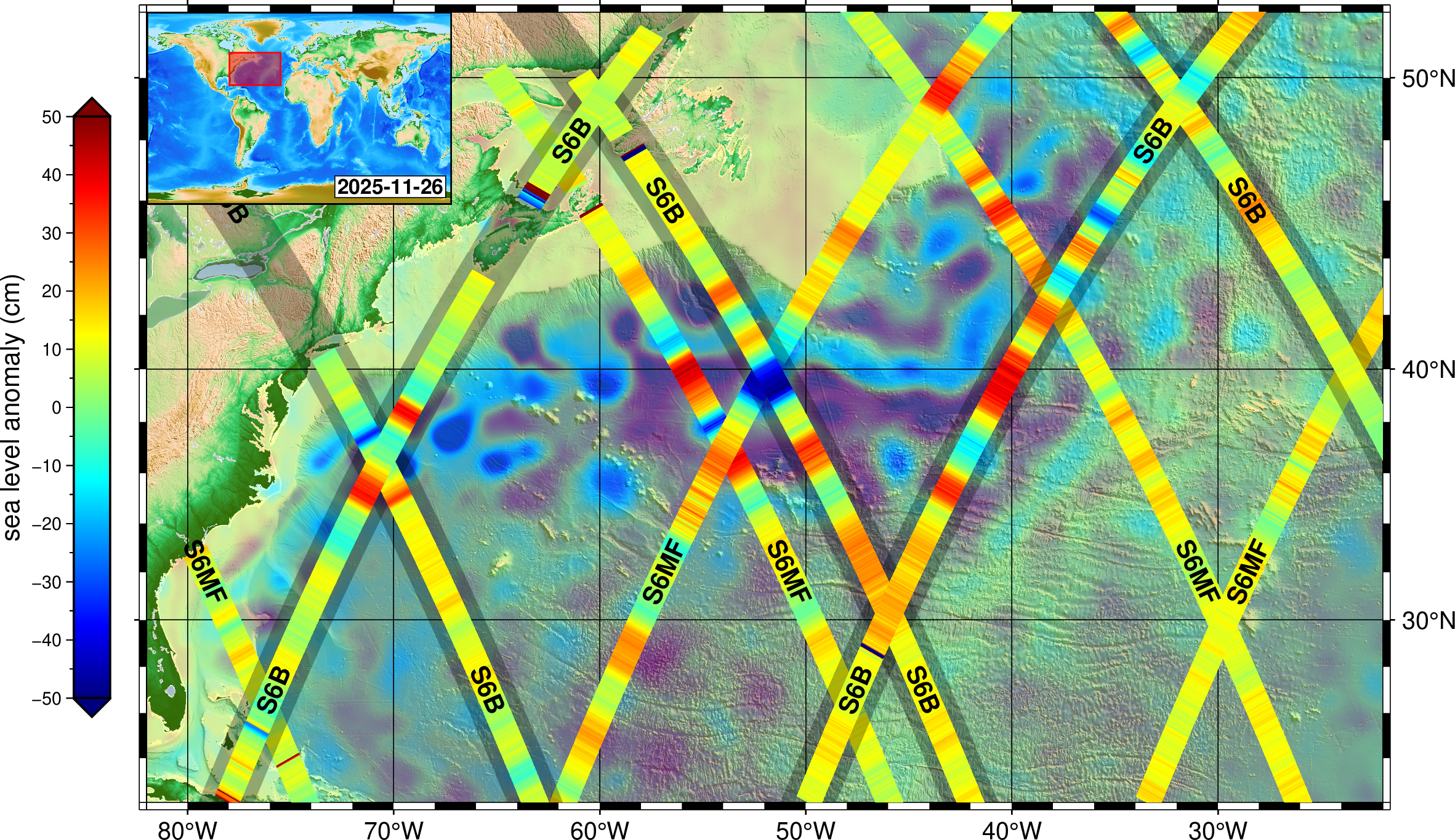
Together, Sentinel-6B and Sentinel-6 Michael Freilich make up the Copernicus Sentinel-6/Jason- Continuity of Service (CS) mission developed by NASA, ESA, EUMETSAT, and NOAA. Sentinel–6/Jason CS continues a series of ocean surface topography missions that began three decades ago with the NASA/CNES Ocean Topography Experiment (TOPEX)/Poseidon mission. The article, Sentinel-6B Extends Global Ocean Height Record, provides an overview of this latest addition to the NASA and to the international Earth observing fleet.
The July–Sept. 2025 posting of “The Editor’s Corner” reported on the successful launch of the joint NASA–Indian Space Research Organization (ISRO) Synthetic Aperture Radar (NISAR) mission on July 30, 2025 from the Satish Dhawan Space Centre on India’s southeastern coast aboard an ISRO Geosynchronous Satellite Launch Vehicle (GSLV) rocket 5. Soon after launch, NISAR entered its Commissioning phase to test out systems before science operations begin. A key milestone of that phase was the completion of the deployment of the 39-ft (12-m) radar antenna reflector on Aug. 15, 2025. A few days later, on Aug. 19, 2025, NISAR obtained its first image and on Nov. 28, 2025, ISRO made the image (and others) publicly available – see Figure 4.
Figure 4. The first NISAR S-band Synthetic Aperture Radar (SAR) image, acquired on Aug. 19, 2025, captures the fertile Godavari River Delta in Andhra Pradesh, India. Various vegetation classes (e.g., mangroves, agriculture, arecanut plantations, aquaculture fields) are clearly seen in the image, which highlights the ability of NISAR’s S-band SAR to map river deltas and agricultural landscapes with precision. Credit: ISRO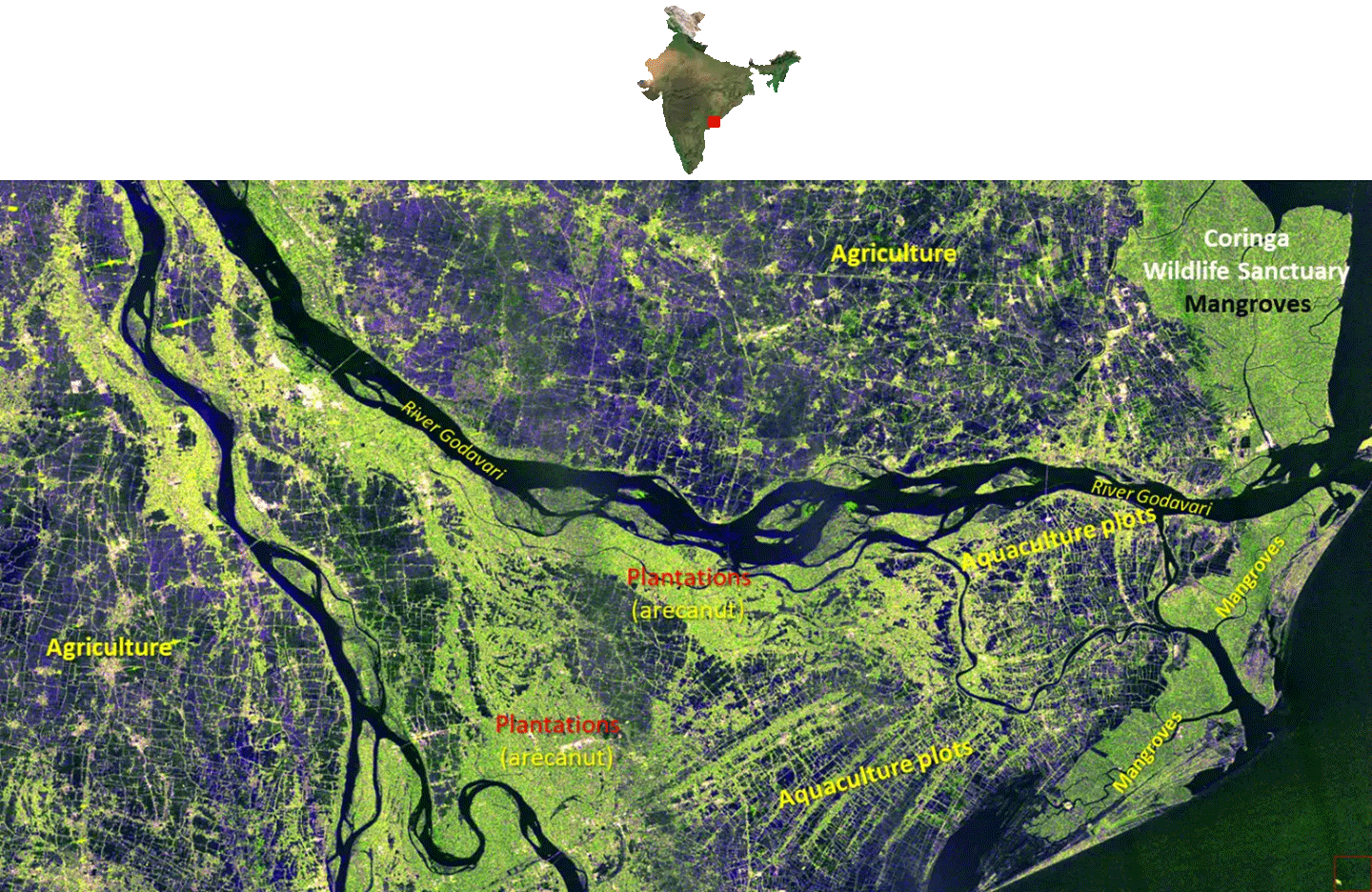
During the Commissioning phase, the S-band Synthetic Aperture Radar (SAR) has been regularly obtaining images over India and over global calibration-validation sites in various payload operating configurations. Reference targets such as Corner reflectors were deployed around Ahmedabad, Gujarat and a few more locations in India for calibration. Data acquired over Amazon rainforests were also used for calibration of spacecraft pointing and images. Based on this, payload data acquisition parameters have been fine-tuned resulting in high-quality images. The initial images have scientists and engineers excited about the potential of using S-band SAR data for various targeted science and application areas like agriculture, forestry, geosciences, hydrology, polar/Himalayan ice/snow, and oceanic studies.
NISAR has not one but two radars onboard. The S-band radar, described above, is India’s contribution to the mission; the L-band radar is NASA’s contribution. The L-band radar has also been active during the first few months of NISAR’s mission acquiring images of targets in the United States. Karen St. Germain [NASA HQ—Director of Earth Science Division] gave the opening presentation on the Hyperwall at NASA’s exhibit during the Fall 2025 meeting of the American Geophysical Union (AGU) in New Orleans, LA on Dec. 15, 2025. Her presentation, which can be viewed on YouTube, has a section on NISAR (beginning at the 5:33 time stamp) and includes several examples of novel applications made possible by NISAR’s L-band SAR imaging capabilities.
During her AGU presentation, St. Germain also showed recent examples of data from the Surface Water Ocean Topography (SWOT) mission [at timestamp 0:03 on the YouTube video], highlighting its surface water mapping capabilities, and from PACE [at timestamp 3:34], highlighting its aerosol and biological monitoring capabilities. These missions not only detect aerosol plumes and phytoplankton blooms but are also able to tell what type they are. She briefly mentioned the Sentinel-6B launch [see timestamp 14:02], teasing her presentation at the Town Hall meeting to be held the next day, where she officially unveiled the Sentinel-6B “first light” image shown as Figure 2 in this editorial.
To conclude, The Earth Observer staff claims a moment of editorial privilege. In a way, we conclude where The Earth Observer began, by sending a “personal message” to all the scientists, engineers, educators, and others – both past and present – who have contributed to EOS and other NASA Earth Science programs that have been covered in this newsletter.
We would like to thank all of the NASA and other leaders, team members, scientists, technicians, students, and staff who have shared your stories over the decades. This publication would not have been the success that it was for so many years without the sustained contributions of the NASA and broader Earth Science community. To all those who volunteered their time to contribute to The Earth Observer over the years, offering your reviews, your subject matter expertise, and your collaboration, we say, “Thank you.” It has been an utmost pleasure to be at the forefront of reporting on the emerging results from your endeavors and bringing this information to the EOS community. We wish you all the best in whatever comes next. While we are saddened to lose the opportunity to continue to share your successes with the Earth Science community via The Earth Observer, we will continue to cheer on your effort and look for future opportunities to publicize your successes however we can.
Alan Ward
Executive Editor of The Earth Observer
Barry Lefer
Associate Director of Research, Earth Science Division
The Final Earth Observer Editor’s Corner: October–December 2025
14 min read
The Final Earth Observer Editor’s Corner: October–December 2025It is with a heavy heart that I announce that NASA Earth Science Communications has directed The Earth Observer to conduct an orderly shutdown of the publication. No new content will be published after Dec. 31, 2025.
While the sunset of The Earth Observer is bittersweet for our team, the good news is that all of the rich historical and descriptive content preserved on The Earth Observer‘s archives page will remain accessible to the world. If you’ve never checked this page out, I highly encourage you to do so. You’ll find all of our archived issues saved in a PDF format, and – if you scroll down the page – you’ll find an annotated bibliography with links to numerous entries about a variety of topics to provide the historic context of the progress and accomplishments of the Earth Observing System (EOS).
–Alan Ward, Executive Editor, The Earth Observer
Almost 37 years ago, in March 1989, the first issue of The Earth Observer newsletter was released – see Figure 1. The three-page document contained one article that explained the rationale for the National Oceanic and Atmospheric Administration (NOAA) forgoing earlier plans to place instruments on NASA’s first EOS polar platform – at that time envisioned as one of several large platforms operated by NASA, NOAA, Europe, and Japan, with numerous instruments on each platform. Along with this article, that first issue featured an EOS launch schedule, a list of publications and acronyms, and a personals section. Yes, personals. It’s hard to believe that a NASA newsletter would feature personals but remember that this first issue was published at a time before the internet was widely available. The newsletter served as a bridge to quickly connect hundreds of newly chosen EOS investigators scattered worldwide with the latest EOS program developments. The content of early issues included the latest reports from Investigators Working Group meetings, payload panel reviews, and instrument Science Team Meetings (STM). In short, before the Web, The Earth Observer was the thread that kept the various EOS teams connected.
The Earth Observer issue covers: March 1989 (first issue) and Nov. 1989.”> The Earth Observer issue covers: March 1989 (first issue) and Nov. 1989. Figure 1. The look of The Earth Observer has evolved over the years. This graphic shows the evolution of the newsletter’s front-page over the past 36 years. Note how our logo evolved and eventually disappeared. After 2004, new NASA communications guidelines required the NASA logo to be shown on the front instead of the individual program logo. Since 2011, online issues of The Earth Observer have been available in color. A redesign in 2019 included the new logo and tagline for the 30th anniversary; the logo was removed and the tagline tweaked in 2020. The final print issue was published in May 2024. The Earth Observer began publishing content online Summer 2024. The last photo in the series shows the home page for The Earth Observer’s website as of December 2025, which will remain accessible after 2025 as a historic archive. Credit: Debbi McLean/NASA’s Goddard Space Flight Center The Earth Observer issue covers:: Jan.–Feb. 1997 and Jan–Feb. 2000.”> The Earth Observer issue covers:: Jan.–Feb. 1997 and Jan–Feb. 2000. Figure 1. The look of The Earth Observer has evolved over the years. This graphic shows the evolution of the newsletter’s front-page over the past 36 years. Note how our logo evolved and eventually disappeared. After 2004, new NASA communications guidelines required the NASA logo to be shown on the front instead of the individual program logo. Since 2011, online issues of The Earth Observer have been available in color. A redesign in 2019 included the new logo and tagline for the 30th anniversary; the logo was removed and the tagline tweaked in 2020. The final print issue was published in May 2024. The Earth Observer began publishing content online Summer 2024 The last photo in the series shows the home page for The Earth Observer’s website as of December 2025, which will remain accessible after 2025 as a historic archives. Credit: Debbi McLean/NASA’s Goddard Space Flight Center The Earth Observer issue covers: Jan.–Feb. 2006 and Jan.–Feb. 2008.”> The Earth Observer issue covers: Jan.–Feb. 2006 and Jan.–Feb. 2008. Figure 1. The look of The Earth Observer has evolved over the years. This graphic shows the evolution of the newsletter’s front-page over the past 36 years. Note how our logo evolved and eventually disappeared. After 2004, new NASA communications guidelines required the NASA logo to be shown on the front instead of the individual program logo. Since 2011, online issues of The Earth Observer have been available in color. A redesign in 2019 included the new logo and tagline for the 30th anniversary; the logo was removed and the tagline tweaked in 2020. The final print issue was published in May 2024. The Earth Observer began publishing content online Summer 2024 The last photo in the series shows the home page for The Earth Observer’s website as of December 2025, which will remain accessible after 2025 as a historic archives. Credit: Debbi McLean/NASA’s Goddard Space Flight Center The Earth Observer issue covers: Jan.–/Feb. 2011 (now in color) and March–April 2014 (25th anniversary).”> The Earth Observer issue covers: Jan.–/Feb. 2011 (now in color) and March–April 2014 (25th anniversary). Figure 1. The look of The Earth Observer has evolved over the years. This graphic shows the evolution of the newsletter’s front-page over the past 36 years. Note how our logo evolved and eventually disappeared. After 2004, new NASA communications guidelines required the NASA logo to be shown on the front instead of the individual program logo. Since 2011, online issues of The Earth Observer have been available in color. A redesign in 2019 included the new logo and tagline for the 30th anniversary; the logo was removed and the tagline tweaked in 2020. The final print issue was published in May 2024. The Earth Observer began publishing content online Summer 2024 The last photo in the series shows the home page for The Earth Observer’s website as of December 2025, which will remain accessible after 2025 as a historic archives. Credit: Debbi McLean/NASA’s Goddard Space Flight Center The Earth Observe issue covers: Jan.–Feb. 2019 (30th anniversary) and Jan.–Feb. 2020.”> The Earth Observe issue covers: Jan.–Feb. 2019 (30th anniversary) and Jan.–Feb. 2020. Figure 1. The look of The Earth Observer has evolved over the years. This graphic shows the evolution of the newsletter’s front-page over the past 36 years. Note how our logo evolved and eventually disappeared. After 2004, new NASA communications guidelines required the NASA logo to be shown on the front instead of the individual program logo. Since 2011, online issues of The Earth Observer have been available in color. A redesign in 2019 included the new logo and tagline for the 30th anniversary; the logo was removed and the tagline tweaked in 2020. The final print issue was published in May 2024. The Earth Observer began publishing content online Summer 2024 The last photo in the series shows the home page for The Earth Observer’s website as of December 2025, which will remain accessible after 2025 as a historic archives. Credit: Debbi McLean/NASA’s Goddard Space Flight Center The Earth Observer‘s final pdf issue cover (May 2024) and website screenshot (Dec.2025).”> The Earth Observer‘s final pdf issue cover (May 2024) and website screenshot (Dec.2025). Figure 1. The look of The Earth Observer has evolved over the years. This graphic shows the evolution of the newsletter’s front-page over the past 36 years. Note how our logo evolved and eventually disappeared. After 2004, new NASA communications guidelines required the NASA logo to be shown on the front instead of the individual program logo. Since 2011, online issues of The Earth Observer have been available in color. A redesign in 2019 included the new logo and tagline for the 30th anniversary; the logo was removed and the tagline tweaked in 2020. The final print issue was published in May 2024. The Earth Observer began publishing content online Summer 2024 The last photo in the series shows the home page for The Earth Observer’s website as of December 2025, which will remain accessible after 2025 as a historic archives. Credit: Mike Marosy/NASA’s Goddard Space Flight CenterThe history of The Earth Observer is intimately intertwined with the development of EOS; it is difficult to speak of one entity without discussing the other. Over the years, as EOS grew from an idea into actual spacecraft and instruments launching and flying in space, the newsletter began chronicling their journey. Early issues of The Earth Observer describe – often in meticulous detail – the meetings and deliberations during which the EOS concept evolved through various revisions and restructuring before the first EOS mission took flight. In the end, NASA launched three mid-sized “flagship” missions (about the size of a small bus) that became known as Terra (1999), Aqua (2002), and Aura (2004) and complemented their measurement capabilities with numerous other small-to-mid-sized missions. The result is the Earth-observing fleet in orbit above us today. Many of these missions fly in polar, low Earth, or geosynchronous orbit, while several others observe the Earth from the perspective of the International Space Station (ISS) – see Figure 2.
EOS missions are known for their longevity; many missions (and their follow-ons) have long outlived their anticipated life cycle. Each of these missions beam back reams of raw data that must be processed and stored so that it can be accessed and used as input to computer models and scientific studies to understand past environmental conditions, place our current situation in the proper context, and make predictions about the future path our planet could follow.
To view this video please enable JavaScript, and consider upgrading to a web browser that
supports HTML5 video
During its nearly 37-year run, The Earth Observer has borne witness to the successes, failures, frustrations, and advancements of EOS, and of the broader Earth Science endeavors of NASA and its domestic and international partners. Given that publication of this final content marks the end of an era, the newsletter team felt it appropriate to offer some perspective on the newsletter’s contribution. The feature that resulted focuses on the relationship between The Earth Observer and EOS – with specific emphasis on our reporting on satellite missions. See the online article, The Earth Observer: Offering Perspectives from Space Through Time, to learn more.
One of the final items published focuses on Terra, the first EOS flagship, which launched into the night sky on Dec. 18, 1999 from Vandenberg Space Force [then Air Force Base (VSFB)] in California on what was designed as a six-year mission of discovery. Terra’s payload included five instruments – Advanced Spaceborne Thermal Emission and Reflection Radiometer (ASTER), Clouds and the Earth’s Radiant Energy System (CERES), Measurement of Pollution in the Troposphere (MOPITT), Multi-angle Imaging SpectroRadiometer (MISR), and Moderate Resolution Imaging Spectroradiometer (MODIS) – intended to collect data that would fill in gaps in our knowledge of the Earth System (as it stood on the cusp of the 21st century). In particular, the satellite gathered information about how land interacts with the atmosphere on a regional and continental scale. The mission also focused on measuring key planetary characteristics needed to understand Earth’s changing environment (e.g., albedo, roughness, evaporation rate, and photosynthesis). The goal was to provide a holistic approach to address larger scientific questions. For more than 26 years, Terra has trained her five instruments toward Earth and gathered data to address wildfires, flooding, hurricanes, and polar ice.
As 2020 drew to a close, in order to conserve enough fuel for the end of the mission, NASA Headquarters decided it was time to for Terra to stop conducting the periodic maneuvers to maintain its 10:30 AM equator crossing. After ceasing maneuvers, the satellite began to drift, which Terra (and the other flagships) have done for the past few years. As Terra’s life draws to a close, it continues to ignite the imagination of the next generation of scientists to catapult the study of our planet for generations to come. Refer to the article, Terra: The End of an Era, to learn more about the feat of engineering that has kept the satellite gathering data two decades past the end of its “Prime Mission” and the key scientific achievements that have resulted.
Since 1997, six CERES instruments have been launched on the EOS and the Joint Polar Satellite System (JPSS) platforms, including the Tropical Rainfall Measuring Mission (TRMM), Terra [2], Aqua [2], the Suomi National Polar-orbiting Platform (Suomi NPP), and the Joint Polar Satellite System–1 (JPSS-1, now named NOAA–20) missions, and used to study Earth’s radiation budget (ERB) – the amount of sunlight absorbed by Earth and the amount of infrared energy emitted back to space – that has a strong influence on climate. Researchers pair measurements from CERES instruments with information gathered from other sources to clarify ERB. While the latency of CERES data prevents it from being used for weather forecasting directly, the information on ERB can be used to verify the radiation parameterization of computer models used to make weather forecasts and predictions about future climate conditions. The ERB data can also be applied to other science research and applications that benefit society. As an example, researchers have used this data to accurately detail changes in the movement of energy from Earth – especially the role that clouds and aerosols play in Earth’s energy budget. The CERES Science Team has a long history of recording proceedings of their meetings in The Earth Observer. It is thus appropriate that a CERES STM summary should be among the last items published this newsletter. Read more about the current status of CERES in space in the article, The State of CERES: Updates and Highlights.
The CERES STM also includes an update on the Polar Radiant Energy in the Far InfraRed Experiment (PREFIRE) mission, which publicly released its data products in June 2025. PREFIRE measurements are being used to quantify the far-infrared spectrum beyond 15 mm – which accounts for over 50% of the outgoing long wave radiation in polar regions. Additionally, the atmospheric greenhouse effect is sensitive to thin clouds and small water vapor concentration that have strong far infrared signatures. PREFIRE consists of two shoebox-sized CubeSats, which launched into near polar orbits on separate Rocket Lab Electron rockets from New Zealand in May and June of 2024. Each CubeSat has a miniaturized infrared spectrometer onboard covering 5 to 53 mm with 0.84 mm sampling and a planned operational life of one year. A complete infrared emission spectrum will provide fingerprints to differentiate between several important feedback processes (e.g., cloudiness and water vapor) that leads to Arctic warming, sea ice loss, ice sheet melt, and sea level rise.
NOAA and NASA have partnered in many endeavors together. The Earth Observer has reported on these collaborations over the years. One well known example is the two agency’s partnership to develop and launch the Geostationary Operational Environmental Satellites (GOES). This mission has become the backbone of short-term forecasts and warnings of severe weather and environmental hazards. The first satellite, GOES-1, launched in 1975; the most recent, GOES-19, launched in 2024. The technology onboard has improved exponentially over the past five decades. The article, Sentinels in the Sky: 50 Years of GOES Satellite Observations, describes this progression, highlights some of the data obtained, and provides insights into each of these incremental advancements over the past 50 years in this satellite series.
Turning now to another recent launch, the Plankton, Aerosol, Cloud, ocean Ecosystem (PACE) satellite continues to operate nominally. The data PACE returns allow the scientific community to explore the Earth’s ocean, atmosphere, and land surfaces. In February 2025 (10 days prior to the first anniversary of the mission’s launch), the PACE community gathered at NASA’s Goddard Institute for Space Studies (GISS) for the PAC3 meeting, which was so named because it combined three PACE-related activities: the PACE Postlaunch Airborne eXperiment (PACE–PAX), the third PACE Science and Applications Team (SAT3), and the PACE Validation Science Team (PVST). The PAC3 meeting included updates on the three instruments on PACE: the Ocean Color Instrument (OCI), the Hyper-Angular Rainbow Polarimeter–2 (HARP2), and the Spectropolarimeter for Planetary Exploration (SPEXone).
In addition to reporting on PACE, participants during the meeting gave updates on the latest news about the Earth Cloud Aerosol and Radiation Explorer (EarthCARE) observatory, including preparation for validation activities as part of the joint efforts of the European Space Agency (ESA) and Japan Aerospace eXploration Agency (JAXA). The article also details operational highlights, including validation and aerosol products and cloud products. Several Science and Applications Team (SAT3) groups presented results from studies using PACE data and PACE validation studies. The PACE Science Team will continue to monitor Earth and have identified strategies to continue the long-term data calibration and algorithm refinement to ensure the ongoing delivery of information to the research community. The article, Keeping Up with PACE: Summary of the 2025 PAC3 Meeting, provides a full summary of this event.
On Nov. 16, 2025, the Sentinel-6B mission launched from VSFB. The newest satellite in NASA’s Earth observing fleet measures sea levels with an accuracy of one inch every second, covering 90 percent of the oceans every 10 days. It will also contribute the record of atmospheric temperature and humidity measurements. These data are beneficial in observing movement of surface currents, monitoring the transfer of heat through the oceans and around the planet, and tracking changes in water temperature. Sentinel-6B will carry several instruments on this mission, including a radar altimeter, an advanced microwave radiometer, and a radio occultation antenna. The satellite’s observations will be paired with information from other spacecraft to provide detailed information about Earth’s atmosphere that will contribute high-resolution data for computer models to improve weather forecasting.
Sentinel-6B is another shining example of successful collaboration between NASA and NOAA, along with several European partners – ESA, the European Organisation for the Exploitation of Meteorological Satellites (EUMETSAT), Centre National d’Études Spatiales (CNES), and the European Commission.
Sentinel-6B has publicly released an image showing some of its first observations since launch. The map shows sea levels across a vast stretch of the eastern seaboard and Atlantic Ocean – see Figure 3. The image combines data from Sentinel–6B and its “twin” Sentinel-6 Michael Freilich, which launched in 2020. The data were obtained on Nov. 26, 2025 – just ten days after Sentinel-6B launched.
Figure 3. Sentinel-6B (S6B) and Sentinel-6 Michael Freilich (S6MF) captured data on Nov. 26, 2025 of sea levels across a vast stretch of the Atlantic Ocean. Within the crisscrossing bands, red indicates higher water height relative to the long-term average; blue indicates lower water height. The tracks are layered atop the combined observations of all available sea-level satellites. S6MF currently serves as the “reference” mission, allowing data from all other altimeters to be accurately combined into maps like this one. Credit: EUMETSATTogether, Sentinel-6B and Sentinel-6 Michael Freilich make up the Copernicus Sentinel-6/Jason- Continuity of Service (CS) mission developed by NASA, ESA, EUMETSAT, and NOAA. Sentinel–6/Jason CS continues a series of ocean surface topography missions that began three decades ago with the NASA/CNES Ocean Topography Experiment (TOPEX)/Poseidon mission. The article, Sentinel-6B Extends Global Ocean Height Record, provides an overview of this latest addition to the NASA and to the international Earth observing fleet.
The July–Sept. 2025 posting of “The Editor’s Corner” reported on the successful launch of the joint NASA–Indian Space Research Organization (ISRO) Synthetic Aperture Radar (NISAR) mission on July 30, 2025 from the Satish Dhawan Space Centre on India’s southeastern coast aboard an ISRO Geosynchronous Satellite Launch Vehicle (GSLV) rocket 5. Soon after launch, NISAR entered its Commissioning phase to test out systems before science operations begin. A key milestone of that phase was the completion of the deployment of the 39-ft (12-m) radar antenna reflector on Aug. 15, 2025. A few days later, on Aug. 19, 2025, NISAR obtained its first image and on Nov. 28, 2025, ISRO made the image (and others) publicly available – see Figure 4.
Figure 4. The first NISAR S-band Synthetic Aperture Radar (SAR) image, acquired on Aug. 19, 2025, captures the fertile Godavari River Delta in Andhra Pradesh, India. Various vegetation classes (e.g., mangroves, agriculture, arecanut plantations, aquaculture fields) are clearly seen in the image, which highlights the ability of NISAR’s S-band SAR to map river deltas and agricultural landscapes with precision. Credit: ISRODuring the Commissioning phase, the S-band Synthetic Aperture Radar (SAR) has been regularly obtaining images over India and over global calibration-validation sites in various payload operating configurations. Reference targets such as Corner reflectors were deployed around Ahmedabad, Gujarat and a few more locations in India for calibration. Data acquired over Amazon rainforests were also used for calibration of spacecraft pointing and images. Based on this, payload data acquisition parameters have been fine-tuned resulting in high-quality images. The initial images have scientists and engineers excited about the potential of using S-band SAR data for various targeted science and application areas like agriculture, forestry, geosciences, hydrology, polar/Himalayan ice/snow, and oceanic studies.
NISAR has not one but two radars onboard. The S-band radar, described above, is India’s contribution to the mission; the L-band radar is NASA’s contribution. The L-band radar has also been active during the first few months of NISAR’s mission acquiring images of targets in the United States. Karen St. Germain [NASA HQ—Director of Earth Science Division] gave the opening presentation on the Hyperwall at NASA’s exhibit during the Fall 2025 meeting of the American Geophysical Union (AGU) in New Orleans, LA on Dec. 15, 2025. Her presentation, which can be viewed on YouTube, has a section on NISAR (beginning at the 5:33 time stamp) and includes several examples of novel applications made possible by NISAR’s L-band SAR imaging capabilities.
During her AGU presentation, St. Germain also showed recent examples of data from the Surface Water Ocean Topography (SWOT) mission [at timestamp 0:03 on the YouTube video], highlighting its surface water mapping capabilities, and from PACE [at timestamp 3:34], highlighting its aerosol and biological monitoring capabilities. These missions not only detect aerosol plumes and phytoplankton blooms but are also able to tell what type they are. She briefly mentioned the Sentinel-6B launch [see timestamp 14:02], teasing her presentation at the Town Hall meeting to be held the next day, where she officially unveiled the Sentinel-6B “first light” image shown as Figure 2 in this editorial.
To conclude, The Earth Observer staff claims a moment of editorial privilege. In a way, we conclude where The Earth Observer began, by sending a “personal message” to all the scientists, engineers, educators, and others – both past and present – who have contributed to EOS and other NASA Earth Science programs that have been covered in this newsletter.
We would like to thank all of the NASA and other leaders, team members, scientists, technicians, students, and staff who have shared your stories over the decades. This publication would not have been the success that it was for so many years without the sustained contributions of the NASA and broader Earth Science community. To all those who volunteered their time to contribute to The Earth Observer over the years, offering your reviews, your subject matter expertise, and your collaboration, we say, “Thank you.” It has been an utmost pleasure to be at the forefront of reporting on the emerging results from your endeavors and bringing this information to the EOS community. We wish you all the best in whatever comes next. While we are saddened to lose the opportunity to continue to share your successes with the Earth Science community via The Earth Observer, we will continue to cheer on your effort and look for future opportunities to publicize your successes however we can.
Alan Ward
Executive Editor of The Earth Observer
Barry Lefer
Associate Director of Research, Earth Science Division