
Feed aggregator
NASA Brings Space Exploration to the FIFA World Cup

From June 11 through July 19, NASA’s free interactive exhibit at FIFA Fan Festival™ brought space exploration to soccer fans in East Downtown Houston.
More than 500,000 visitors explored the exhibit during the tournament, learning how the agency’s missions, research, and technology benefit life on Earth.
FIFA Fan Festival visitors explore NASA’s exhibit. NASA/Luna Posadas Nava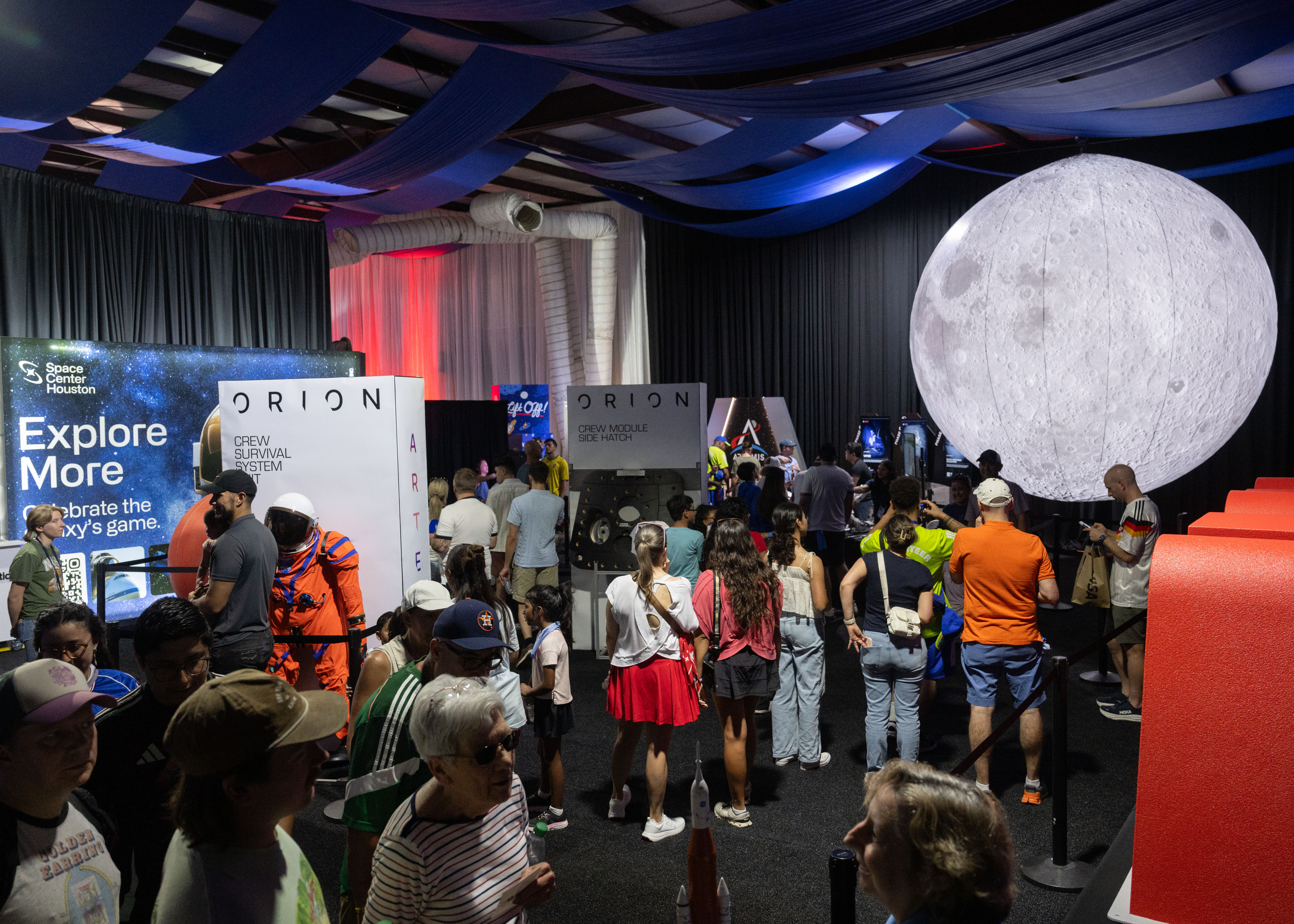
The exhibit introduced a global audience to the Artemis program, Moon Base, the International Space Station, and the future of human space exploration.
Attendees learn about NASA’s missions at the agency’s FIFA Fan Festival exhibit in East Downtown Houston. NASA/Luna Posadas Nava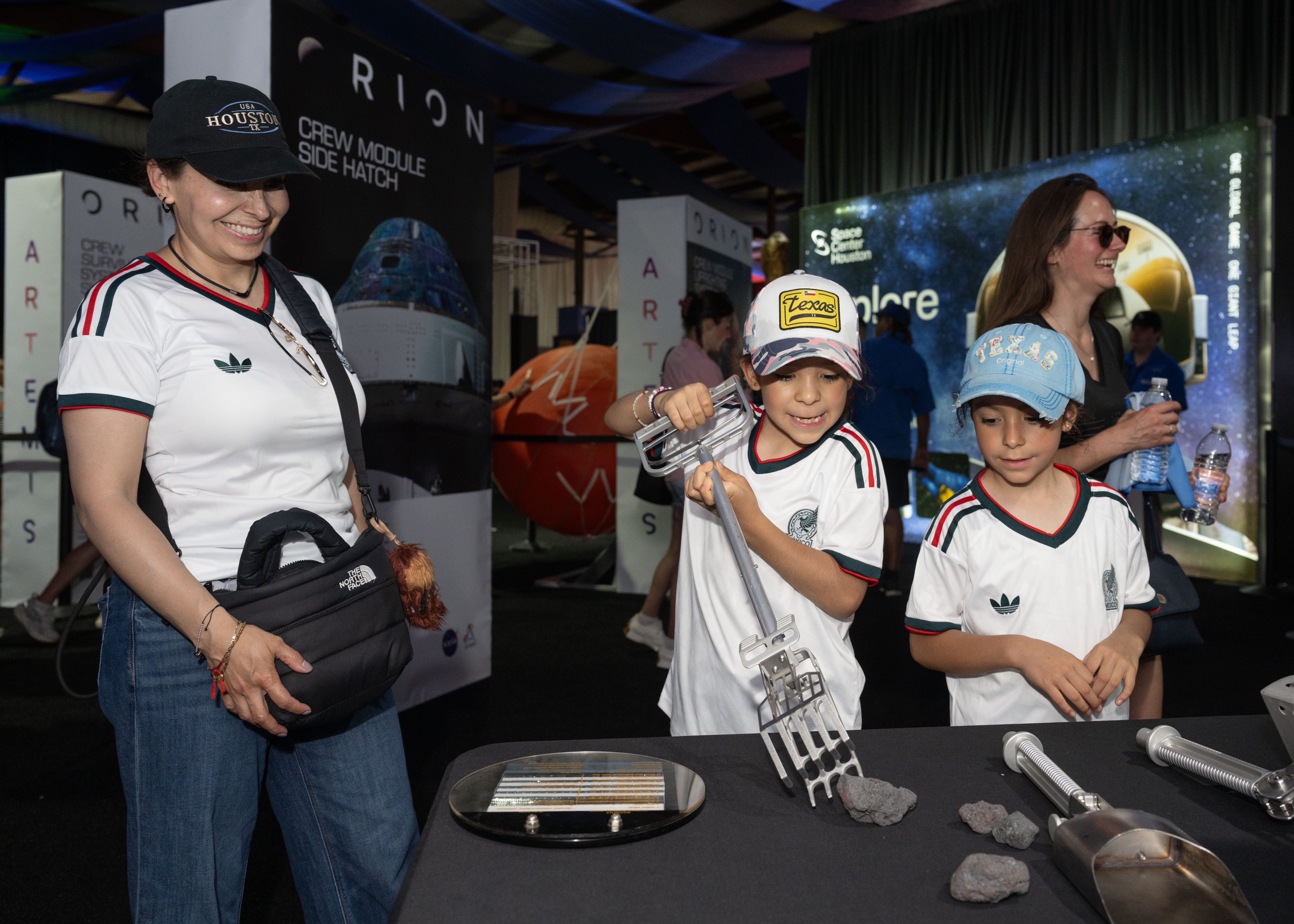
World Cup fans explored an Orion spacecraft exhibit, an International Space Station model, NASA’s Orion Crew Survival System suit, astromaterials, Hubble Space Telescope imagery, the Lunar and Mars Touch Table exhibit, a space-flown FIFA World Cup soccer ball, Space Center Houston activities, photo opportunities, and other hands-on experiences.
Visitors practice driving on the lunar surface in a lunar rover simulator at the agency’s exhibit during FIFA Fan Fest. NASA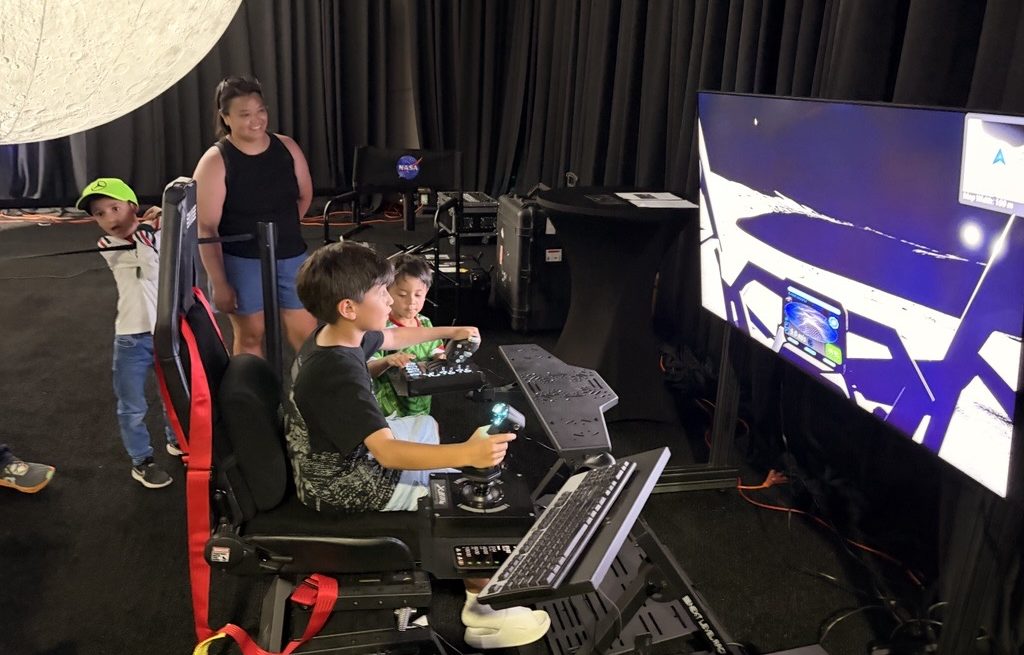
Attendees also climbed into a lunar rover simulator to drive across a virtual lunar surface, explored a Moon Base display demonstrating how astronauts could live and work on the Moon during future Artemis missions, and examined lunar tools designed to support Artemis exploration.
NASA’s Artemis II Commander Reid Wiseman and Pilot Victor Glover were honored guests at NRG Stadium in Houston before the match between the Netherlands and Sweden on June 20, 2026.Sebastian Widmann/Getty Images
The tournament welcomed special guests, as well. On June 20, Artemis II Commander Reid Wiseman and Pilot Victor Glover participated in World Cup activities as the stadium captains ahead of the Netherlands-Sweden match at NRG Stadium, where they received a standing ovation from more than 67,000 fans.
While the weather prevented them from appearing on the FIFA Fan Festival main stage, the pair shared their experiences through media interviews.
Artemis II crew members Victor Glover and Reid Wiseman participate in an interview at FIFA Fan Fest headquarters on June 20, 2026. NASA/Helen Arase Vargas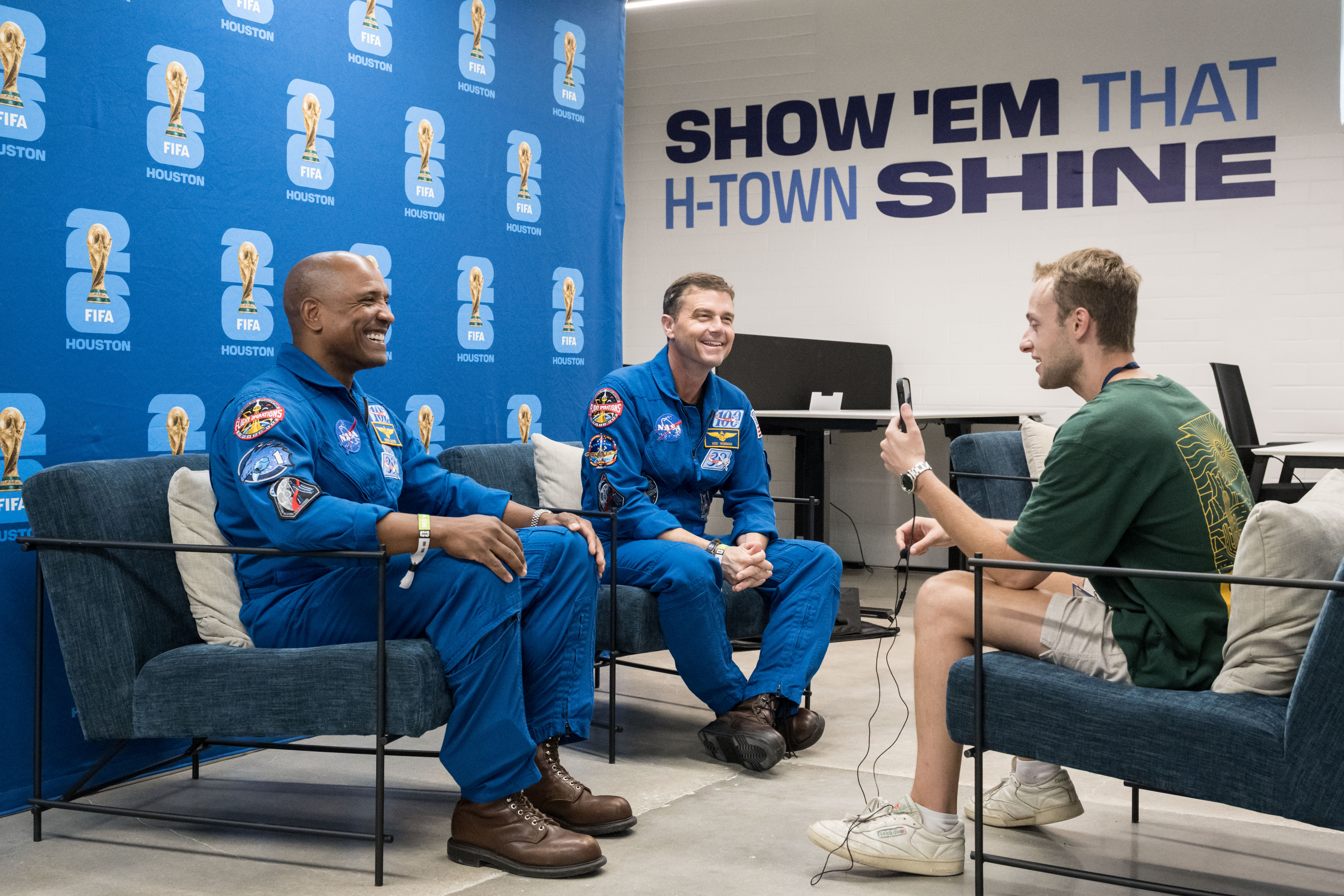
NASA also highlighted the connection between space exploration and soccer through a STEMonstration developed in collaboration with Adidas. Filmed aboard the space station, the demonstration shows how the same physics that govern motion in space also shape the game on Earth.
Expedition 74 crew members kicked off FIFA Fan Festival with a prerecorded welcome message that aired on opening day. Throughout the tournament, the crew recorded greetings that played during matches and at Fan Festival events across the United States and Mexico.
ESA (European Space Agency) astronaut Sophie Adenot joined the celebration by recording a “Viking Row” aboard the space station. ESA astronauts Andreas Mogensen and Marcus Wandt participated from the ground in a playful tribute connecting fans on Earth with life in orbit.
NASA astronaut Mark Vande Hei speaks to fans before kicking the ceremonial soccer ball at FIFA Fan Fest on July 19, 2026. NASA/Robert Markowitz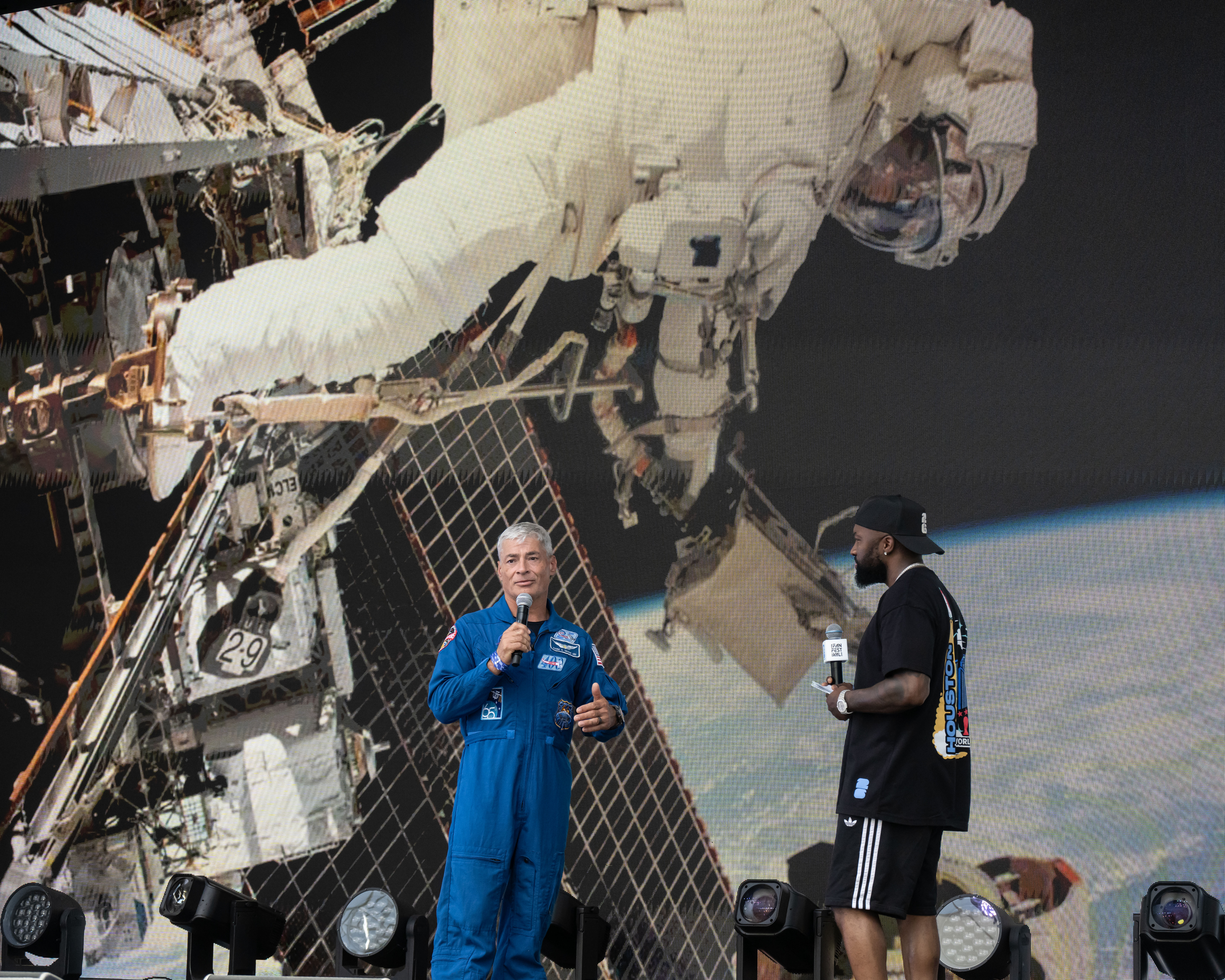
After nearly 40 days of showcasing NASA’s missions to soccer fans from around the world, FIFA Fan Fest concluded with a final message from the Expedition 74 crew during the official closing ceremony. On the ground, NASA astronaut Mark Vande Hei took the Fan Festival stage to share his journey to becoming an astronaut, his first view of Earth from space, and how the focus required for a spacewalk mirrors the concentration soccer players need on the field. He then kicked the ceremonial soccer ball, bringing NASA’s participation in the festival to a close.
NASA’s Johnson Space Center volunteers pose for a group photo at FIFA Fan Fest. NASA/Helen Arase Vargas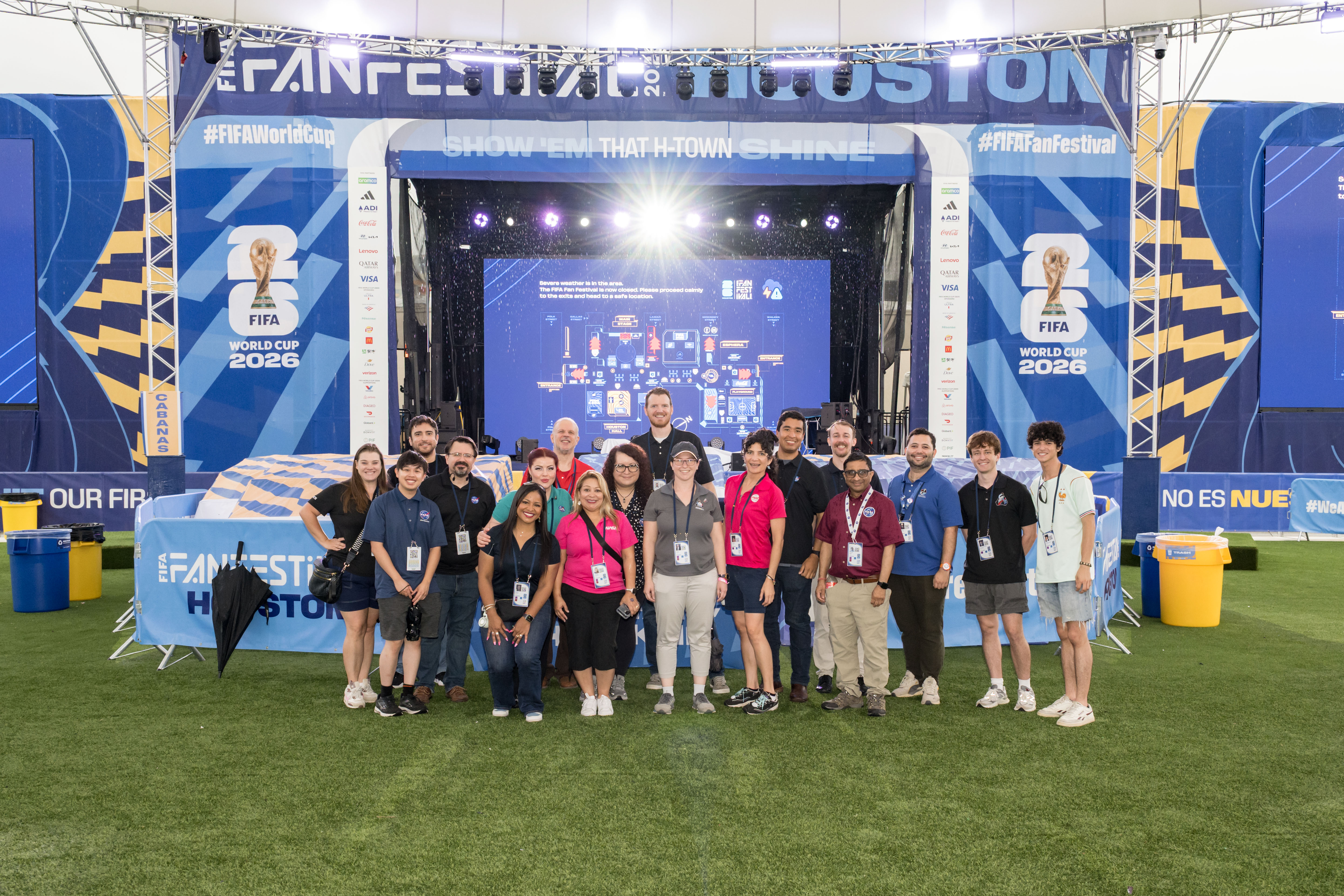
“We could not have done this without the incredible NASA team who volunteered,” said Jessica Cordero, Johnson community engagement lead. “They connected with fans and shared the excitement of Artemis III and NASA’s return to the Moon. They are truly the best volunteer crew on the planet!”
Explore NASA’s Exhibit NASA’s exhibit at FIFA Fan Festival.NASA/Luna Posadas Nava About the AuthorSumer Loggins Share Details Last Updated Aug 03, 2026 Related Terms Explore More 5 min read Ike Theriot Helps Prepare Astronauts to Work on the Moon Article 22 hours ago 7 min read NASA Johnson Interns Shaping the Future of Exploration Article 5 days ago 6 min read NASA Science Soars During August Total Solar EclipseEditor’s note: An update to this story was made on July 30, 2026, to share…
Article 1 week ago Keep Exploring Discover More Topics From NASAMissions
Humans in Space
Climate Change
Solar System
NASA Brings Space Exploration to the FIFA World Cup
From June 11 through July 19, NASA’s free interactive exhibit at FIFA Fan Festival™ brought space exploration to soccer fans in East Downtown Houston.
More than 500,000 visitors explored the exhibit during the tournament, learning how the agency’s missions, research, and technology benefit life on Earth.
FIFA Fan Festival visitors explore NASA’s exhibit. NASA/Luna Posadas NavaThe exhibit introduced a global audience to the Artemis program, Moon Base, the International Space Station, and the future of human space exploration.
Attendees learn about NASA’s missions at the agency’s FIFA Fan Festival exhibit in East Downtown Houston. NASA/Luna Posadas NavaWorld Cup fans explored an Orion spacecraft exhibit, an International Space Station model, NASA’s Orion Crew Survival System suit, astromaterials, Hubble Space Telescope imagery, the Lunar and Mars Touch Table exhibit, a space-flown FIFA World Cup soccer ball, Space Center Houston activities, photo opportunities, and other hands-on experiences.
Visitors practice driving on the lunar surface in a lunar rover simulator at the agency’s exhibit during FIFA Fan Fest. NASAAttendees also climbed into a lunar rover simulator to drive across a virtual lunar surface, explored a Moon Base display demonstrating how astronauts could live and work on the Moon during future Artemis missions, and examined lunar tools designed to support Artemis exploration.
NASA’s Artemis II Commander Reid Wiseman and Pilot Victor Glover were honored guests at NRG Stadium in Houston before the match between the Netherlands and Sweden on June 20, 2026.Sebastian Widmann/Getty ImagesThe tournament welcomed special guests, as well. On June 20, Artemis II Commander Reid Wiseman and Pilot Victor Glover participated in World Cup activities as the stadium captains ahead of the Netherlands-Sweden match at NRG Stadium, where they received a standing ovation from more than 67,000 fans.
While the weather prevented them from appearing on the FIFA Fan Festival main stage, the pair shared their experiences through media interviews.
Artemis II crew members Victor Glover and Reid Wiseman participate in an interview at FIFA Fan Fest headquarters on June 20, 2026. NASA/Helen Arase VargasNASA also highlighted the connection between space exploration and soccer through a STEMonstration developed in collaboration with Adidas. Filmed aboard the space station, the demonstration shows how the same physics that govern motion in space also shape the game on Earth.
Expedition 74 crew members kicked off FIFA Fan Festival with a prerecorded welcome message that aired on opening day. Throughout the tournament, the crew recorded greetings that played during matches and at Fan Festival events across the United States and Mexico.
ESA (European Space Agency) astronaut Sophie Adenot joined the celebration by recording a “Viking Row” aboard the space station. ESA astronauts Andreas Mogensen and Marcus Wandt participated from the ground in a playful tribute connecting fans on Earth with life in orbit.
NASA astronaut Mark Vande Hei speaks to fans before kicking the ceremonial soccer ball at FIFA Fan Fest on July 19, 2026. NASA/Robert MarkowitzAfter nearly 40 days of showcasing NASA’s missions to soccer fans from around the world, FIFA Fan Fest concluded with a final message from the Expedition 74 crew during the official closing ceremony. On the ground, NASA astronaut Mark Vande Hei took the Fan Festival stage to share his journey to becoming an astronaut, his first view of Earth from space, and how the focus required for a spacewalk mirrors the concentration soccer players need on the field. He then kicked the ceremonial soccer ball, bringing NASA’s participation in the festival to a close.
NASA’s Johnson Space Center volunteers pose for a group photo at FIFA Fan Fest. NASA/Helen Arase Vargas“We could not have done this without the incredible NASA team who volunteered,” said Jessica Cordero, Johnson community engagement lead. “They connected with fans and shared the excitement of Artemis III and NASA’s return to the Moon. They are truly the best volunteer crew on the planet!”
Explore NASA’s Exhibit NASA’s exhibit at FIFA Fan Festival.NASA/Luna Posadas Nava About the AuthorSumer Loggins Share Details Last Updated Aug 03, 2026 Related Terms Explore More 5 min read Ike Theriot Helps Prepare Astronauts to Work on the Moon Article 9 hours ago 7 min read NASA Johnson Interns Shaping the Future of Exploration Article 5 days ago 6 min read NASA Science Soars During August Total Solar EclipseEditor’s note: An update to this story was made on July 30, 2026, to share…
Article 1 week ago Keep Exploring Discover More Topics From NASAMissions
Humans in Space
Climate Change
Solar System
A Perfect Year for the Perseid Meteor Shower
The year's best meteor shower has its peak on the night of August 12th.
The post A Perfect Year for the Perseid Meteor Shower appeared first on Sky & Telescope.
The journey of Sophie Adenot's bonus food
What does it take to send gourmet food to the International Space Station? Follow ESA astronaut Sophie Adenot's bonus menu from a French kitchen to orbit, where chefs, engineers and food specialists work together to transform traditional recipes into meals that are safe for spaceflight, while preserving the flavours, memories and moments of sharing that make them special.
Meet the Constellations: Delphinus, the Dolphin
Delphinus, the constellation looks just like a tiny Dolphin that's splashing its way through the sky amidst other famous summer sights.
The post Meet the Constellations: Delphinus, the Dolphin appeared first on Sky & Telescope.
Daddy long legs perform fellatio—and other wild facts about how these arachnids mate
Some female daddy longlegs will perform fellatio, perhaps to avoid potential violence from males, while males of another species entice females with a secretion on their penises
Cyclosporiasis cases surge while new research questions ‘protein maxxing’
An outbreak of Cyclospora infections tied to produce spreads across multiple states as new research challenges the protein maxxing craze
APOD: 2026 August 3 – Vaporizing Meteor Photobombs the Lacerta Nebula
APOD
Astronomy Picture of the Day
Discover the cosmos! Each day a different image or photograph of our fascinating universe is featured, along with a brief explanation written by a professional astronomer.
Vaporizing Meteor Photobombs the Lacerta Nebula
Explanation: What’s happening to this meteor? This bright meteor streak appeared and disappeared quickly during a long exposure of the Great Lacerta Nebula, seen faintly in red toward the center of the image. The meteoroid, likely a small pebble, creates its glow partly by heating and exciting surrounding air in Earth’s atmosphere, but itself vaporizes and leaves wind-blown gas and dust with colors that give clues to its composition. The featured image was captured last month from Death Valley Observatories in Nevada, USA. This month, though, is particularly good for seeing meteors. Presently there are three meteor showers ongoing, although they are currently competing for visibility with the glow of a bright gibbous Moon. The most active of these showers, the Perseids, will be busiest in about 10 days — after the Moon has dimmed considerably. This year, the Perseids peak nearly coincides with not only a new Moon, but, from some locations, one that totally eclipses the Sun.
Sky Surprise: What picture did APOD feature on your birthday? (>1995)
Tomorrow’s picture: open space…
NASA Science Activation & Michigan Tech. U. Random APOD Generator Yesterday’s Image APOD: 2026 August 2 – A Fire Rainbow over West Virginia Tomorrow’s Image
APOD: 2026 August 3 – Vaporizing Meteor Photobombs the Lacerta Nebula
APOD
Astronomy Picture of the Day
Discover the cosmos! Each day a different image or photograph of our fascinating universe is featured, along with a brief explanation written by a professional astronomer.
Vaporizing Meteor Photobombs the Lacerta Nebula
Explanation: What’s happening to this meteor? This bright meteor streak appeared and disappeared quickly during a long exposure of the Great Lacerta Nebula, seen faintly in red toward the center of the image. The meteoroid, likely a small pebble, creates its glow partly by heating and exciting surrounding air in Earth’s atmosphere, but itself vaporizes and leaves wind-blown gas and dust with colors that give clues to its composition. The featured image was captured last month from Death Valley Observatories in Nevada, USA. This month, though, is particularly good for seeing meteors. Presently there are three meteor showers ongoing, although they are currently competing for visibility with the glow of a bright gibbous Moon. The most active of these showers, the Perseids, will be busiest in about 10 days — after the Moon has dimmed considerably. This year, the Perseids peak nearly coincides with not only a new Moon, but, from some locations, one that totally eclipses the Sun.
Sky Surprise: What picture did APOD feature on your birthday? (>1995)
Tomorrow’s picture: open space…
NASA Science Activation & Michigan Tech. U. Random APOD Generator Yesterday’s Image APOD: 2026 August 2 – A Fire Rainbow over West Virginia Tomorrow’s Image
Plan for Next Year's Total Solar Eclipse: August 2, 2027
The longest total solar eclipse visible from land until 2114 will sweep across Spain and North Africa on August 2, 2027. Here’s how to choose where to watch it.
The post Plan for Next Year's Total Solar Eclipse: August 2, 2027 appeared first on Sky & Telescope.
APOD: 2026 August 2 – A Fire Rainbow over West Virginia
APOD
Astronomy Picture of the Day
Discover the cosmos! Each day a different image or photograph of our fascinating universe is featured, along with a brief explanation written by a professional astronomer.
A Fire Rainbow over West Virginia
Explanation: What’s happening to this cloud? Ice crystals in a distant cirrus cloud are acting like little floating prisms. Known informally as a fire rainbow for its flame-like appearance, a circumhorizon arc appears parallel to the horizon. For a circumhorizontal arc to be visible, the Sun must be at least 58 degrees high in a sky where cirrus clouds present below — in this case cirrus fibratus. The numerous, flat, hexagonal ice-crystals that compose the cirrus cloud must be aligned horizontally to properly refract sunlight in a collectively similar manner. Therefore, circumhorizontal arcs are somewhat unusual to see. The featured fire rainbow was photographed in 2021 near North Fork Mountain in West Virginia, USA.
Tomorrow’s picture: meteoric photobomb

NASA Science Activation & Michigan Tech. U. Random APOD Generator Yesterday’s Image APOD: 2026 August 1 – Buck Moon and Belt of Venus Tomorrow’s Image APOD: 2026 August 3 – Vaporizing Meteor Photobombs the Lacerta Nebula
APOD: 2026 August 2 – A Fire Rainbow over West Virginia
APOD
Astronomy Picture of the Day
Discover the cosmos! Each day a different image or photograph of our fascinating universe is featured, along with a brief explanation written by a professional astronomer.
A Fire Rainbow over West Virginia
Explanation: What’s happening to this cloud? Ice crystals in a distant cirrus cloud are acting like little floating prisms. Known informally as a fire rainbow for its flame-like appearance, a circumhorizon arc appears parallel to the horizon. For a circumhorizontal arc to be visible, the Sun must be at least 58 degrees high in a sky where cirrus clouds present below — in this case cirrus fibratus. The numerous, flat, hexagonal ice-crystals that compose the cirrus cloud must be aligned horizontally to properly refract sunlight in a collectively similar manner. Therefore, circumhorizontal arcs are somewhat unusual to see. The featured fire rainbow was photographed in 2021 near North Fork Mountain in West Virginia, USA.
Tomorrow’s picture: meteoric photobomb
NASA Science Activation & Michigan Tech. U. Random APOD Generator Yesterday’s Image APOD: 2026 August 1 – Buck Moon and Belt of Venus Tomorrow’s Image APOD: 2026 August 3 – Vaporizing Meteor Photobombs the Lacerta Nebula
The Asteroid That May Be Three Worlds
We have been watching asteroid (44) Nysa for well over a century without ever really knowing what it looks like. Now the sharpest images ever taken of it, from two of the largest telescopes on Earth, have revealed two deep valleys running right around its circumference and the team behind them think those are necks, joining three separate lobes into a single 75 kilometre body. If that holds up, Nysa is the first three lobed world we have ever found. And in the glare beside it the same observations turned up something nobody was looking for, a tiny moon a kilometre across, which may be the thing that settles the argument.
August Podcast: Three Big Events!
This month we’ve got three big celestial events to cover: eclipses of the Sun and Moon, and especially good prospects for the Perseid meteor shower. Plus we’ll track down a few planets, and gaze at the center of our galaxy. So load up on the bug juice, and come along on this month’s Sky Tour.
The post August Podcast: Three Big Events! appeared first on Sky & Telescope.
Smashed Ice Worlds Formed Neptune's Inner Moons and Rings
The planet Neptune has 16 known moons, with its largest Moon, Triton, comprising more than 99.5 percent of the mass of all of them. Triton’s incredible size has led scientists to hypothesize it was a captured object originating from the Kuiper Belt, which wreaked havoc on Neptune’s original moon system upon its capture and subsequential elliptical orbit. Today, some remnants of these original moons are part of the dusty rings that orbit Neptune. But what did that original moon system consist of? Were they the same small worlds observed today or are they pieces of what was once much larger worlds?
APOD: 2026 August 1 – Buck Moon and Belt of Venus
APOD
Astronomy Picture of the Day
Discover the cosmos! Each day a different image or photograph of our fascinating universe is featured, along with a brief explanation written by a professional astronomer.
Buck Moon and Belt of Venus
Explanation: The Buck Moon is a traditional name for the full moon of July. In this colorful Adriatic sea and skyscape captured on July 28 from Krk Island along the coast of Croatia, a full Buck Moon is just rising over distant mountains. Since a full moon rises as the Sun sets, Earth’s shadow also rises in the twilight scene, a diffuse gray band extending above the mountainous southeastern horizon. Above Earth’s shadow band is the pinkish antitwilight arch. That subtly tinted band of backscattered sunlight is more widely known as the Belt of Venus. As it shares the eastern horizon with the atmospheric shadow of Earth and Belt of Venus, this full Buck Moon seems to set the stage for the New Moon to come. The New Moon of August 12 will cast its own shadow on planet Earth in a much anticipated total solar eclipse.
Tomorrow’s picture: fire and rainbow
NASA Science Activation & Michigan Tech. U. Random APOD Generator Yesterday’s Image APOD: 2026 July 31 – NGC 4372 and the Dark Doodad Tomorrow’s Image APOD: 2026 August 2 – A Fire Rainbow over West Virginia
APOD: 2026 August 1 – Buck Moon and Belt of Venus
APOD
Astronomy Picture of the Day
Discover the cosmos! Each day a different image or photograph of our fascinating universe is featured, along with a brief explanation written by a professional astronomer.
Buck Moon and Belt of Venus
Explanation: The Buck Moon is a traditional name for the full moon of July. In this colorful Adriatic sea and skyscape captured on July 28 from Krk Island along the coast of Croatia, a full Buck Moon is just rising over distant mountains. Since a full moon rises as the Sun sets, Earth’s shadow also rises in the twilight scene, a diffuse gray band extending above the mountainous southeastern horizon. Above Earth’s shadow band is the pinkish antitwilight arch. That subtly tinted band of backscattered sunlight is more widely known as the Belt of Venus. As it shares the eastern horizon with the atmospheric shadow of Earth and Belt of Venus, this full Buck Moon seems to set the stage for the New Moon to come. The New Moon of August 12 will cast its own shadow on planet Earth in a much anticipated total solar eclipse.
Tomorrow’s picture: fire and rainbow
NASA Science Activation & Michigan Tech. U. Random APOD Generator Yesterday’s Image APOD: 2026 July 31 – NGC 4372 and the Dark Doodad Tomorrow’s Image APOD: 2026 August 2 – A Fire Rainbow over West Virginia