

Feed aggregator
Odyssey Team Celebrates on a Global Map of Mars
NASA/JPL-Caltech Photojournal Navigation Downloads Odyssey Team Celebrates on a Global Map of Mars
JPEG (18.11 MB)
Description
Team members past and present from NASA’s 2001 Mars Odyssey orbiter mission gathered on April 15, 2026, to celebrate 25 years since the spacecraft’s launch, which took place April 7, 2001. For the occasion, the team rolled out a giant global map of Mars created using imagery from Odyssey’s THEMIS (Thermal Emission Imaging System) infrared camera. The celebration took place at NASA’s Jet Propulsion Laboratory in Southern California, which leads the mission.
Keep Exploring Discover More Topics From Photojournal
Photojournal
Search Photojournal
Photojournal’s Latest Content
Feedback
Odyssey Team Celebrates on a Global Map of Mars
NASA/JPL-Caltech Photojournal Navigation Downloads Odyssey Team Celebrates on a Global Map of Mars
JPEG (18.11 MB)
Description
Team members past and present from NASA’s 2001 Mars Odyssey orbiter mission gathered on April 15, 2026, to celebrate 25 years since the spacecraft’s launch, which took place April 7, 2001. For the occasion, the team rolled out a giant global map of Mars created using imagery from Odyssey’s THEMIS (Thermal Emission Imaging System) infrared camera. The celebration took place at NASA’s Jet Propulsion Laboratory in Southern California, which leads the mission.
Keep Exploring Discover More Topics From Photojournal
Photojournal
Search Photojournal
Photojournal’s Latest Content
Feedback
What’s Up: May 2026 Skywatching Tips from NASA
The Eta Aquarid meteor shower brings shooting stars before dawn, the Moon meets brilliant Venus after sunset, and May wraps up with a rare Blue Moon.
Skywatching Highlights- May 5 + 6 : Best time to see the Eta Aquarids
- May 18: Moon and Venus conjunction
- May 31: Blue moon
Shooting stars before dawn, a brilliant meetup between the Moon and Venus, and a rare “Blue Moon” to end the month.
That’s What’s Up this May.
First up: the Eta Aquarid meteor shower, which peaks in early May.
These shooting stars come from Halley’s Comet. Every year, Earth passes through the comet’s dusty trail, and those tiny particles burn up in our atmosphere. That’s what creates those bright streaks across the sky.
Halley’s Comet last passed through the inner solar system in 1986, and won’t return until 2061.
The Eta Aquarids appear to come from the constellation Aquarius. That’s where the shower gets its name.
NASA/JPL-Caltech
These meteors are fast, racing into Earth’s atmosphere at about 40 miles per second. And because they’re moving so quickly, they can leave behind glowing trails that linger for a moment after the flash.
At peak, the shower can produce up to about 50 meteors an hour under ideal skies. The best time to watch? In the hours before dawn, looking generally toward the eastern sky.
For the best chance of seeing meteor showers, go somewhere dark, let your eyes adjust for about 20 to 30 minutes, and avoid bright lights, including your phone screen.
The peak is expected around May 5th to 6th, but bright moonlight this year may wash out some of the fainter meteors.
On May 18th, look west just after sunset.
NASA/JPL-Caltech
The Moon gets a bright little sidekick as Venus shines nearby. The crescent Moon helps point the way, making this an easy one to spot.
Venus is one of the brightest objects we can see from Earth, often called the Evening Star.
The Moon and Venus look close together because they line up from our point of view on Earth. But in reality, they’re separated by millions of miles in space.
Last month, Artemis II launched right around the time of the April 1st Full Moon, sending astronauts around the Moon for the first time in more than 50 years and giving us some spectacular new views of our closest neighbor.
And now, May ends with another lunar moment: a Full Moon on May 31st. This one is a Blue Moon.
But it actually won’t look blue.
Blue Moon is the name given to the second Full Moon in a single calendar month. It’s a relatively rare event, hence the phrase “once in a blue moon.”
So whether you’re up before sunrise or out after sunset, May is a great time to look up.
Here are the phases of the Moon for May.
NASA/JPL-Caltech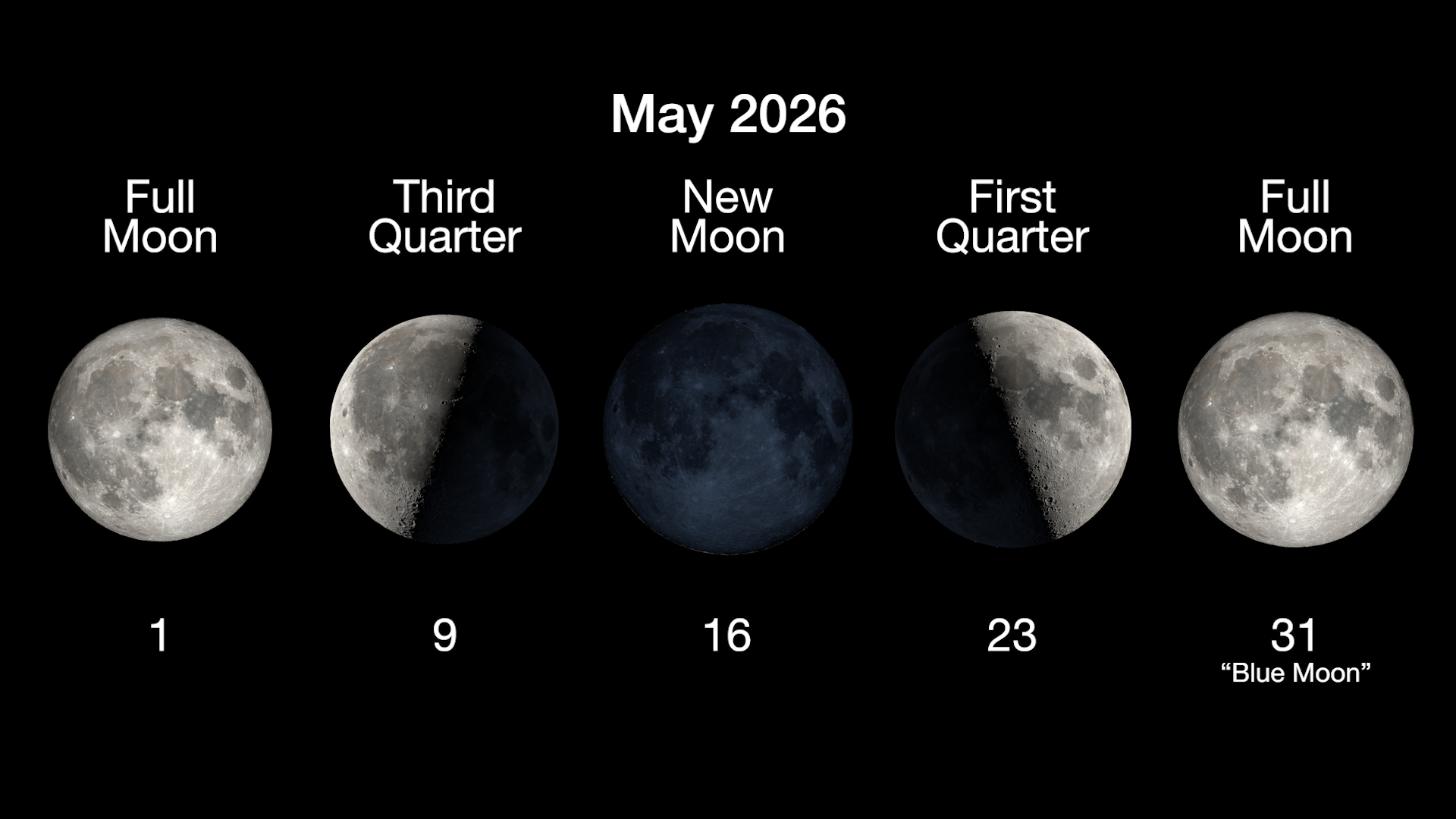
You can stay up to date on all of NASA’s missions exploring the solar system and beyond at science.nasa.gov.
I’m Raquel Villanueva from NASA’s Jet Propulsion Laboratory, and that’s What’s Up for this month.
Keep Exploring Discover More Topics From NASA
What’s Up
Skywatching
Galaxies
Stars
What’s Up: May 2026 Skywatching Tips from NASA
The Eta Aquarid meteor shower brings shooting stars before dawn, the Moon meets brilliant Venus after sunset, and May wraps up with a rare Blue Moon.
Skywatching Highlights- May 5 + 6 : Best time to see the Eta Aquarids
- May 18: Moon and Venus conjunction
- May 31: Blue moon
Shooting stars before dawn, a brilliant meetup between the Moon and Venus, and a rare “Blue Moon” to end the month.
That’s What’s Up this May.
First up: the Eta Aquarid meteor shower, which peaks in early May.
These shooting stars come from Halley’s Comet. Every year, Earth passes through the comet’s dusty trail, and those tiny particles burn up in our atmosphere. That’s what creates those bright streaks across the sky.
Halley’s Comet last passed through the inner solar system in 1986, and won’t return until 2061.
The Eta Aquarids appear to come from the constellation Aquarius. That’s where the shower gets its name.
NASA/JPL-CaltechThese meteors are fast, racing into Earth’s atmosphere at about 40 miles per second. And because they’re moving so quickly, they can leave behind glowing trails that linger for a moment after the flash.
At peak, the shower can produce up to about 50 meteors an hour under ideal skies. The best time to watch? In the hours before dawn, looking generally toward the eastern sky.
For the best chance of seeing meteor showers, go somewhere dark, let your eyes adjust for about 20 to 30 minutes, and avoid bright lights, including your phone screen.
The peak is expected around May 5th to 6th, but bright moonlight this year may wash out some of the fainter meteors.
On May 18th, look west just after sunset.
NASA/JPL-CaltechThe Moon gets a bright little sidekick as Venus shines nearby. The crescent Moon helps point the way, making this an easy one to spot.
Venus is one of the brightest objects we can see from Earth, often called the Evening Star.
The Moon and Venus look close together because they line up from our point of view on Earth. But in reality, they’re separated by millions of miles in space.
Last month, Artemis II launched right around the time of the April 1st Full Moon, sending astronauts around the Moon for the first time in more than 50 years and giving us some spectacular new views of our closest neighbor.
And now, May ends with another lunar moment: a Full Moon on May 31st. This one is a Blue Moon.
But it actually won’t look blue.
Blue Moon is the name given to the second Full Moon in a single calendar month. It’s a relatively rare event, hence the phrase “once in a blue moon.”
So whether you’re up before sunrise or out after sunset, May is a great time to look up.
Here are the phases of the Moon for May.
NASA/JPL-CaltechYou can stay up to date on all of NASA’s missions exploring the solar system and beyond at science.nasa.gov.
I’m Raquel Villanueva from NASA’s Jet Propulsion Laboratory, and that’s What’s Up for this month.
Keep Exploring Discover More Topics From NASA
What’s Up
Skywatching
Galaxies
Stars
Trump withdraws wellness influencer and MAHA activist Casey Means as surgeon general nominee
On Thursday the president announced he is nominating Nicole Saphier, a radiologist and Fox News contributor, as the nation’s top doctor
'Green' cryptocurrency uses 18 times more energy than makers claim
'Green' cryptocurrency uses 18 times more energy than makers claim
Scientists use AI to test whether life can run on only 19 amino acids
An engineered E. coli strain survived after one amino acid was designed out of many of its ribosomal proteins—an early test of whether life’s chemistry can be simplified
Artemis III Rocket Core Stage Moves to NASA Kennedy
Artemis III Moon Rocket Core Stage on the Move

Teams move the core stage, or largest section, of the SLS (Space Launch System) rocket for NASA’s Artemis III mission into the Vehicle Assembly Building at the agency’s Kennedy Space Center in Florida in this photo from April 27, 2026.
The SLS core stage traveled 900 miles on the Pegasus barge from NASA’s Michoud Assembly Facility in New Orleans where the stage is manufactured, to complete assembly of the massive rocket at NASA Kennedy.
This mission will launch crew aboard the Orion spacecraft on top of the SLS rocket to test rendezvous and docking capabilities between Orion and commercial spacecraft needed to land astronauts on the Moon.
Image credit: NASA/Glenn Benson
NASA Welcomes Morocco as 64th Artemis Accords Signatory
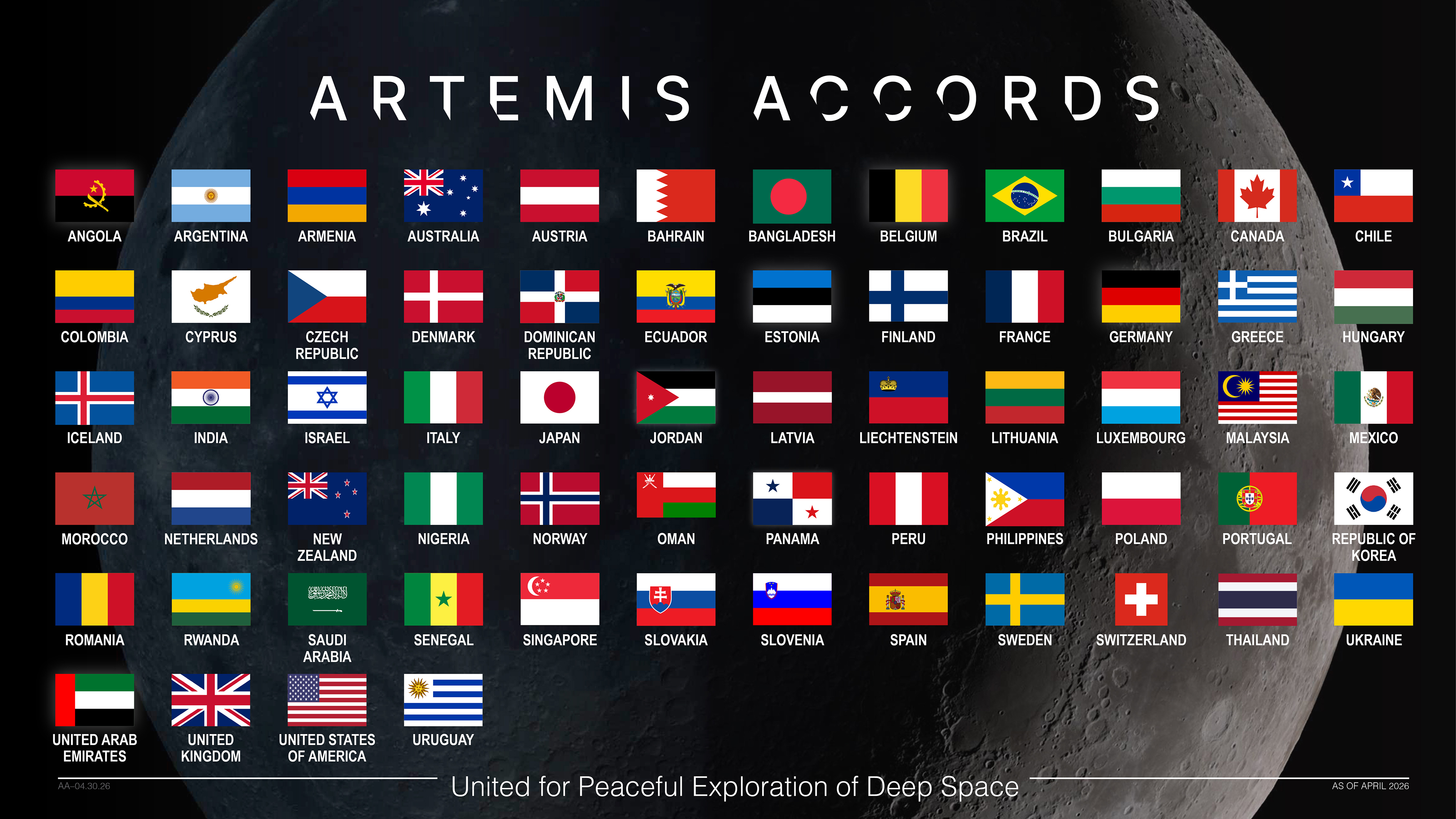
The Kingdom of Morocco signed the Artemis Accords on April 29th during a ceremony in the country’s capital, Rabat, becoming the latest nation to commit to the responsible exploration of space.
“It is my privilege to welcome the Kingdom of Morocco as the newest signatory to the Artemis Accords,” said NASA Administrator Jared Isaacman in recorded remarks. “The accords began as the framework for like-minded nations to come together for the peaceful exploration of space. But now, under President Trump’s vision for an enduring presence on the lunar surface, Artemis Accords partners will be able to make meaningful contributions to that collective effort. Citizens from every Artemis nation will play a pivotal role in humanity’s greatest adventure.”
Foreign Minister Nasser Bourita of Morocco signed the accords on behalf of the country. Bourita underscored Morocco’s commitment to shared values across a range of critical sectors.
The signing ceremony took place during the Deputy Secretary of State Christopher Landau’s official visit to Morocco with the U.S. Ambassador to Morocco Duke Buchan III also participating in the event.
In 2020, during the first Trump Administration, the United States, led by NASA and the State Department, joined with seven other founding nations to establish the Artemis Accords, responding to the growing interest in lunar activities by both governments and private companies. The accords introduced the first set of practical principles aimed at enhancing the safety and coordination between like-minded nations as they explore the Moon, Mars, and beyond.
Signing the Artemis Accords means committing to explore peaceably and transparently, to render aid to those in need, to enable access to scientific data that all of humanity can learn from, to ensure activities do not interfere with those of others, and to preserve historically significant sites and artifacts by developing best practices for space exploration for the benefit of all.
More countries are expected to sign the Artemis Accords in the months and years ahead, as NASA continues its work to establish a safe, peaceful, and prosperous future in space.
Learn more about the Artemis Accords at:
https://www.nasa.gov/artemis-accords
Share Details Last Updated Apr 30, 2026 LocationNASA Headquarters Related TermsNASA Goddard’s Greenbelt Visitor Center Marks 50th Anniversary
Trimmed in bicentennial pageantry, NASA opened a visitor center at its Goddard campus in Greenbelt, Maryland, in May 1976. Fifty years on, the Goddard Visitor Center continues to inspire through exhibits and programs on the past, present, and future of space exploration.
Dr. John Clark, then NASA Goddard’s center director, provides opening remarks at the visitor center ribbon cutting in May 1976.NASA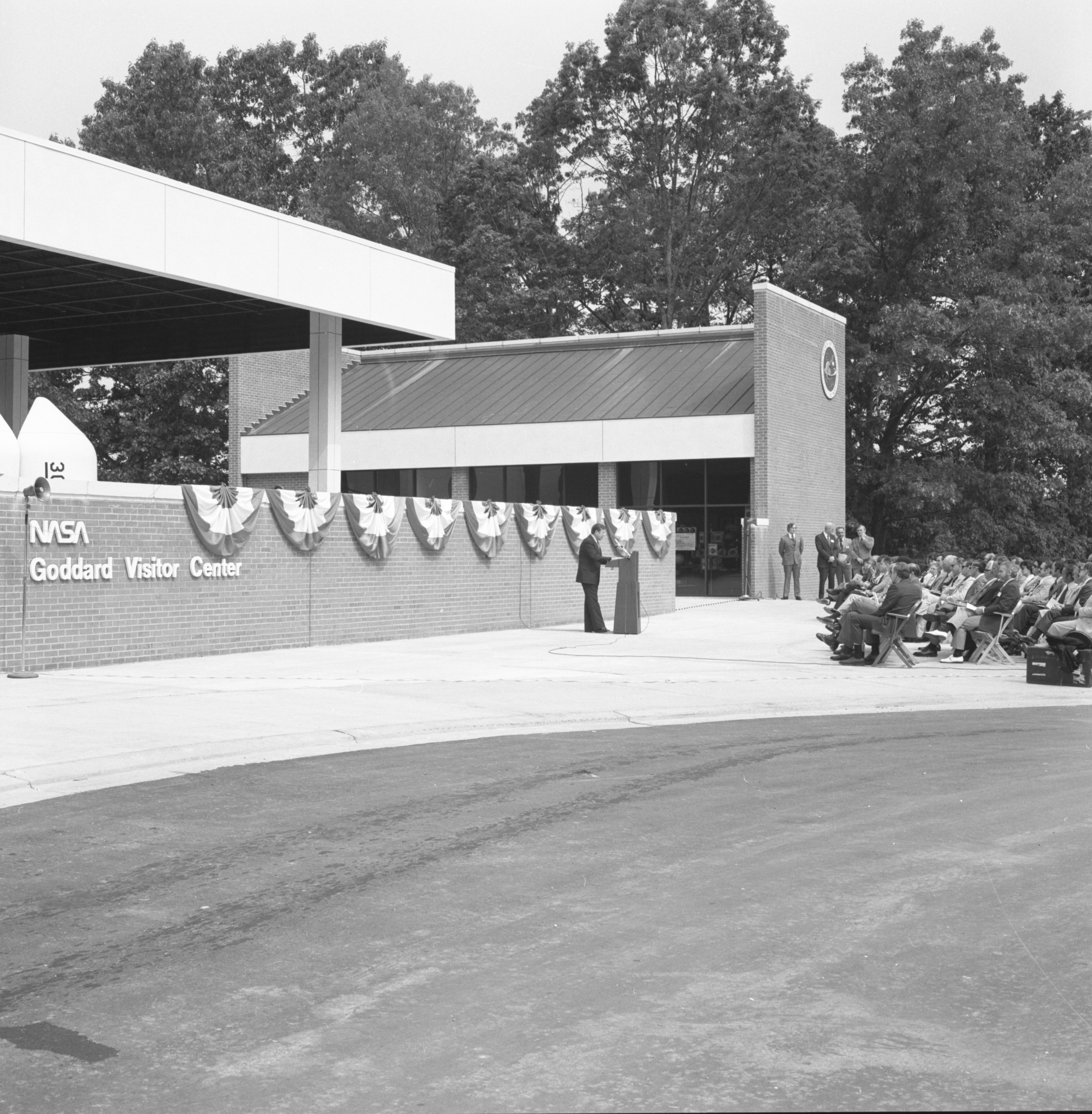
“NASA’s 1958 charter tasks us with sharing our work as broadly as we can,” said NASA Goddard Center Director Cynthia Simmons. “The visitor centers we have maintained at our Greenbelt, Maryland, location and Wallops Flight Facility in Virginia are core to us meeting that charge and fostering the next generation of space explorers.”
When the visitor center first opened its doors (just a few weeks before the Smithsonian’s National Air and Space Museum in Washington), much of it was open-air. Instead of gilded scissors, a reenactment of Dr. Robert Goddard’s first rocket launch snapped the ribbon.
Initial exhibits featured a full-scale mockup of the Orbiting Astronomical Observatory (a Hubble telescope precursor), a phone station to transmit guests’ voices 45,000 miles round trip through Applications Technology Satellite-3, and an active meteorology station displaying satellite views of Western Hemisphere weather.
The Visitor Center at NASA’s Goddard Space Flight Center in Greenbelt, Md. (shown here in a 2010 aerial photo), opened its doors to the public for the first time in May 1976.NASA/Bill Hrybyk This aerial photograph from 1966 shows what was then the Bureau of Standards’ WWV radio station. After the station relocated to Colorado, NASA Goddard used the structure for facilities storage before converting it into a visitor center.NASA The Delta-B rocket at the NASA Goddard Visitor Center was originally displayed at the 1964 New York World’s Fair. NASA Goddard managed the highly successful Thor-Delta program throughout the 1960s and ’70s. In this photo from 1978, a keen eye will see a small model rocket just taking flight to the right of the Delta. Model rocket launches have been a mainstay at the visitor center. They now typically occur the first Saturday of the month.NASA The Orbiting Astronomical Observatory-3, also known as Copernicus, was a space telescope that operated for nearly a decade after its 1972 launch. It was a spiritual predecessor to the Hubble Space Telescope. This model was on display at the NASA Goddard Visitor Center in 1976.NASA A visitor center guest in 1977 learns about the Sun. NASA This late-1970s exhibit centered on Dr. Robert Goddard. In 1926, Goddard became the first person ever to successfully launch a liquid-fueled rocket. NASA named its first spaceflight complex in his honor in 1959.NASA A space shuttle model with payload doors open hangs from the ceiling in this mid-1990s visitor center exhibit. The right side of the image describes NASA’s Get Away Special (GAS) Program, which was an opportunity for researchers, students, and other groups to put small payloads in extra space aboard shuttles. Each was contained in a cylinder like those displayed here. The GAS Program can be thought of as a precursor to the CubeSat and other small satellite programs of today.NASA This photograph shows a crowd of guests at a NASA Goddard community day in 1993.NASA Longtime Goddard Visitor Center staffer “D.J.” Emmanuel stands by a Gemini capsule on display here in 2005.NASA During a May 2007 trip to the United States, Queen Elizabeth II and Prince Philip, The Duke of Edinburgh, visited NASA Goddard. Here, the queen and prince look on as then-Goddard Center Director Dr. Ed Weiler demonstrates “Science on a Sphere.” This system, developed by the National Oceanic and Atmospheric Administration (NOAA), uses computers and four video projectors to display animated images on the outside of a six-foot diameter sphere.NASA/Pat Izzo The “Moon Tree” in front of the visitor center at NASA’s Goddard Space Flight Center in Greenbelt, Md. This sycamore (shown in a 2009 file photo) grew from a seed carried to the Moon aboard Apollo 14 and was planted here on June 9, 1977.NASA/Pat Izzo This arched entryway of Hubble Space Telescope imagery greeted guests at the NASA Goddard visitor center in the 2010s.NASA/Debbie McCallum These three guests were among some 400 who attended a “Yuri’s Night” celebration at the visitor center on April 10, 2010. Yuri’s Night, a celebration of achievements in space exploration, was named in honor of cosmonaut Yuri Gagarin, the first human in space.NASA/Bill Hrybyk“The visitor center serves the community by providing engaging exhibits and programming focused on the work of NASA overall and NASA’s Goddard Space Flight Center in particular,” said Amanda Harvey, the visitor center’s engagement coordinator. “We are an important place for people to discover, explore, and experience what it is that NASA does.”
Longtime staffer “D.J.” Emmanuel is himself proof-positive of the sentiment: “The first time I actually got introduced to Goddard was at a talk to see the tools astronauts used during the first Hubble servicing mission in 1993.” He started volunteering his time at the visitor center and then transitioned to fulltime staff.
Harvey and Emmanuel are employees of the NASA Communication Services contract, and the two operate the visitor center with the help of a dedicated team of volunteers.
The original structure and grounds of the visitor center housed WWV, a radio station for what was then the Bureau of Standards (now the National Institute of Standards and Technology, NIST). The station relocated to Colorado in the mid-1960s — campus legend maintains that WWV’s broadcasts interfered with Apollo Program tests and necessitated the move. NASA Goddard used the transmitter building for facility maintenance storage until renovations for a visitor center began in earnest in 1975.
As space exploration has advanced and NASA Goddard’s contributions have evolved, so too has the visitor center, which today hosts a 4K science film movie theater, Hubble telescope artifacts, a custom-programmed Roman telescope video game arcade console — no quarters required — and several more displays and activities.
“I keep going back and looking at the exhibits and reading something new that I haven’t read before,” Emmanuel said. “It’s a great way to introduce kids to the world of science and to space.”
And as much as the visitor center enriches its guests, the reverse is also true: “My favorite memories usually involve young visitors dressed like astronauts,” Harvey said. “Their excitement is palpable and so inspiring. It makes me want to have more programs and serve my community the best that I can!”
Over its first decade of operations, the visitor center hosted just shy of 600,000 guests. Thousands upon thousands more have come in the years since, with virtual field trips now also helping bring NASA Goddard beyond the local community.
Some things, though, have not changed since that rocket-powered ribbon-cutting 50 years ago: Now as then, a towering, 100-foot-tall Delta-B rocket still watches over the grounds. A seed taken to the Moon aboard Apollo 14 grew into the sycamore that has stood by the main entrance for decades.
And just as it was in 1976, the cost of admission is free.
The NASA Goddard Visitor Center will celebrate its 50th on Saturday, May 2, from 1 p.m. to 3 p.m. No RSVP is required.
For more information on events and programs:
https://www.nasa.gov/visitgoddard
Research and multimedia assistance for this story was provided by the NASA Goddard Archives. Researchers may direct reference requests to history@mail.nasa.gov.
By Rob Garner
NASA’s Goddard Space Flight Center, Greenbelt, Md.
Goddard Visitor Center
Goddard Events & Programs
Onsite Field Trips and Facility Tours
Goddard Visitor Center Virtual Field Trips
Share Details Last Updated Apr 30, 2026 EditorRob GarnerContactRob Garnerrob.garner@nasa.govLocationGoddard Space Flight Center Related TermsYour oral microbiome could affect your weight, liver and diabetes risk
Your oral microbiome could affect your weight, liver and diabetes risk
NASA Explores Prioritizing First Response Drones in Crowded Skies
3 min read
Preparations for Next Moonwalk Simulations Underway (and Underwater) Partners from NASA, Texas public safety organizations, industry partners, and the Federal Aviation Administration gathered in the region of North Texas Feb. 18 to understand how public safety drones can operate alongside commercial drones safely and effectively.Credit: Texas Department of Public Safety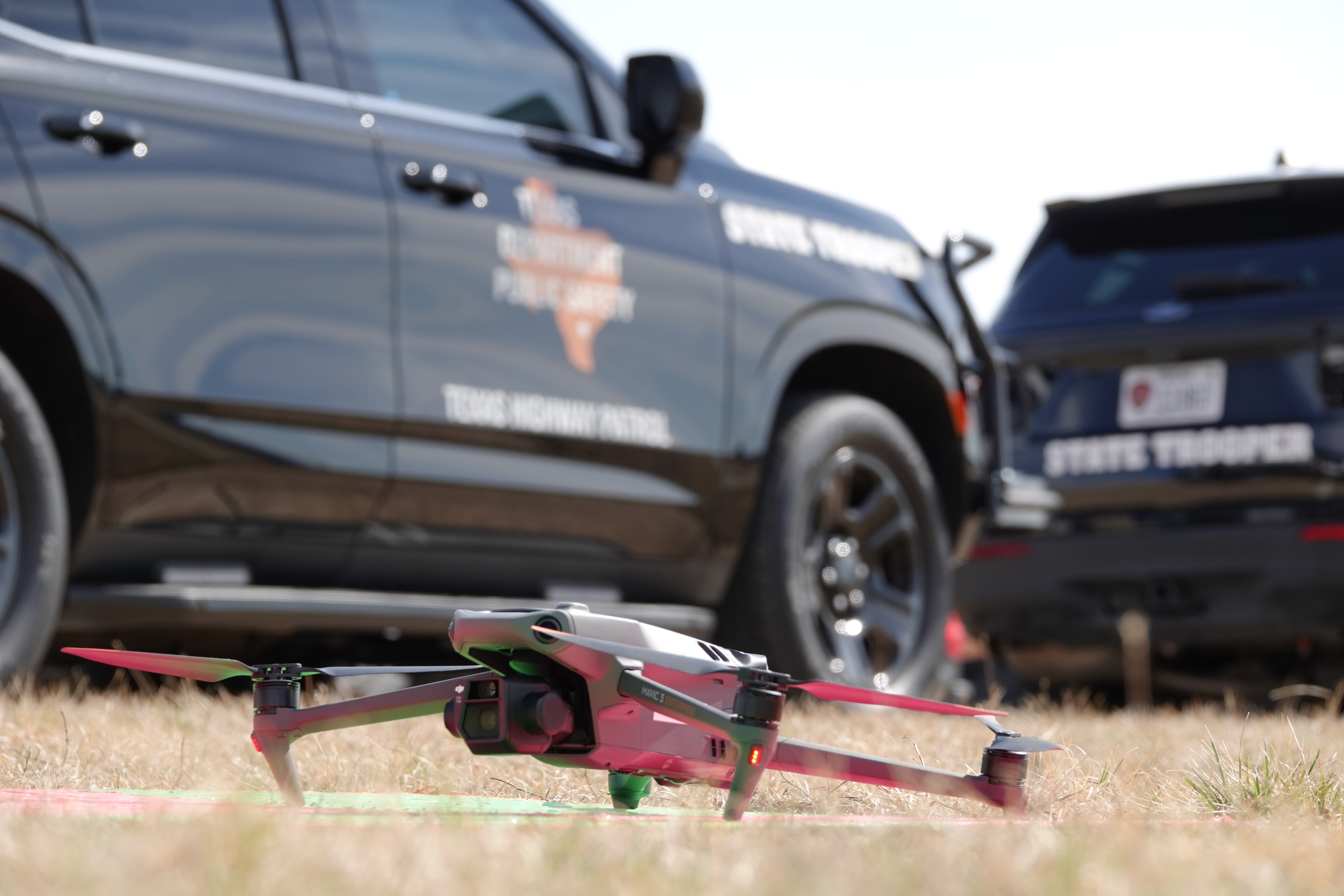
Our streets are crowded with commuters and delivery vehicles, but when a police car or fire engine approaches with its lights and sirens on, drivers clear the way. In the coming years, drones for deliveries and other commercial tasks will become common in the skies over our communities, and NASA is working to ensure first responder vehicles in the air get the same kind of clearance that they do on the ground.
A recent flight exercise in the North Texas region showed how airspace prioritization tools could help first responder drones move quickly and safely through crowded skies. Researchers from NASA’s Ames Research Center in California’s Silicon Valley teamed up with local and state public safety agencies, industry partners, and the Federal Aviation Administration (FAA) to test how emergency crews could get priority airspace access in real time. The exercise is the latest collaboration between NASA and FAA in the area. North Texas is an FAA-designated region that allows for commercial drone deliveries to fly daily.
When a police, fire, or rescue drone launched during the exercise, other drones would move aside. When multiple public safety organizations responded to simulated emergencies, their officials communicated to prioritize access for the right drones.
“Just as ambulances use lights and sirens to signal vehicles to move out of the way, public safety operators require the ability to share airspace safely,” said Abhay Borade, a research lead for the Air Traffic Management and Safety project at NASA Ames. “The key is to prioritize safety of flight operations, while balancing the efficient use of the airspace for all operators.”
The Texas testing helped NASA better understand how commercial flights differ from public safety drone missions – emergency crews rarely fly predictable routes. During a search, a pursuit, or when scanning a dangerous environment, they may need to change direction suddenly.
Researchers collected data on how unpredictable vehicle movements – demonstrated by having a drone follow an officer driving an SUV erratically, simulating a fleeing suspect in a vehicle chase – might affect nearby commercial drone activity. The result demonstrated NASA’s development of air traffic systems and tools to prioritize public safety operators as commercial drone usage increases.
“By working closely with industry and federal partners, we’re helping build the data, tools, and traffic management frameworks needed to ensure the future of drone operations is safe, responsible, and scalable for everyone,” said Shivanjli Sharma, Air Traffic Management and Safety project manager at NASA Ames. Participants involved in the demonstration included the drone airspace management companies Drone Sense, Avision, ANRA Technologies, as well as the FAA, the Texas Department of Public Safety, and the police departments from the Texas cities of Fort Worth, Arlington, and Irving.
Share Details Last Updated Apr 30, 2026 Related Terms Explore More 4 min read There’s No Place Like NASA’s New X-59 Hangar Home Article 2 days ago 8 min read NASA Celebrates Decade of University Innovation in Aeronautics Article 6 days ago 4 min read NASA Releases Powerful LAVA Software to US Aerospace Industry Article 1 week ago Keep Exploring Discover More Topics From NASAAeronautics Research Mission Directorate
Ames Research Center
Airspace Operations and Safety Program
Air Traffic Management and Safety Project
The effort to rescue ‘Timmy’ the humpback whale just took a risky turn
Rescuers had called off the effort to save “Timmy,” a humpback whale that had stranded in the Baltic Sea last month. But now a last-ditch attempt to move the creature by barge is underway
Interstellar Comet 3I/ATLAS Has Cold, Ancient Origins
The most recent interstellar visitor was crisscrossing our galaxy for some 10 to 12 billion years before it came near the Sun.
The post Interstellar Comet 3I/ATLAS Has Cold, Ancient Origins appeared first on Sky & Telescope.
A New Way to Plan Trajectories to Asteroids
There are tens of thousands of Near-Earth Objects (NEOs) that represent some of the most easily accessible resources in the solar system. If we can get to them at least. Planning trajectories to rendezvous with these miniature worlds is notoriously difficult, and requires a massive amount of computational power to calculate. But a new paper from astrodynamicist Alessandro Beolchi of Khalifa University of Science and Technology and his co-authors offers a much less computationally intensive way to find these trajectories, and has the added bonus of finding the much less energy-intensive paths to boot.