
Feed aggregator
Shaken, Not Stirred: NASA’s StarBurst Aces Extreme Temperature Tests
Heated, cooled, shaken, and settled – NASA’s StarBurst instrument is several steps closer to being ready for launch. The small satellite is now awaiting instrument calibration following a successful integration in Canada and rigorous testing by engineers at the agency’s Marshall Space Flight Center in Huntsville, Alabama.
StarBurst is designed to detect the initial emission of short gamma-ray bursts, some of the most powerful explosions in the universe and a key indicator of neutron star mergers. This would provide valuable insight into such events, which are also detected through gravitational waves by observatories on Earth. These events are where most of the heavy metals in the universe, such as gold and platinum, are formed. To date, only one such event has been observed simultaneously in gravitational waves and gamma-rays; StarBurst is expected to find up to 10 per year.
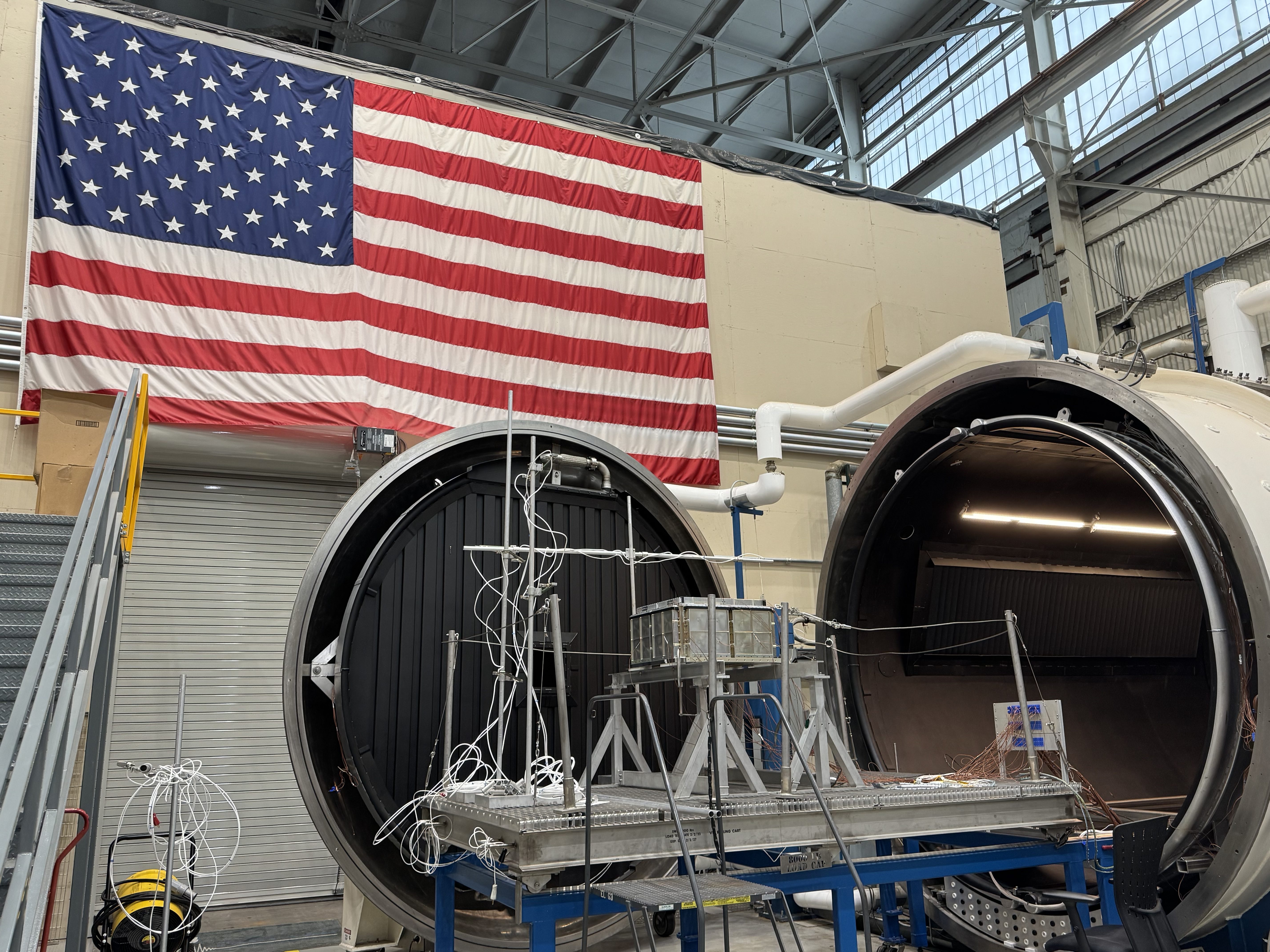
StarBurst arrived at NASA Marshall in March 2025. During its time at the center, the instrument underwent thermal testing in a vacuum chamber and flight vibration testing.
The team held StarBurst’s nonstop thermal testing in a vacuum chamber, 24 hours a day for 18 days. Technicians placed radioactive material into the vacuum chamber, giving StarBurst the ability to detect gamma-ray signals during the tests.
NASA Marshall test engineers fit test the multi-layer insulation blanket in early August at Marshall’s Stray Light Facility. The thermal blanket will insulate the crystal detector units. NASA/Michael Allen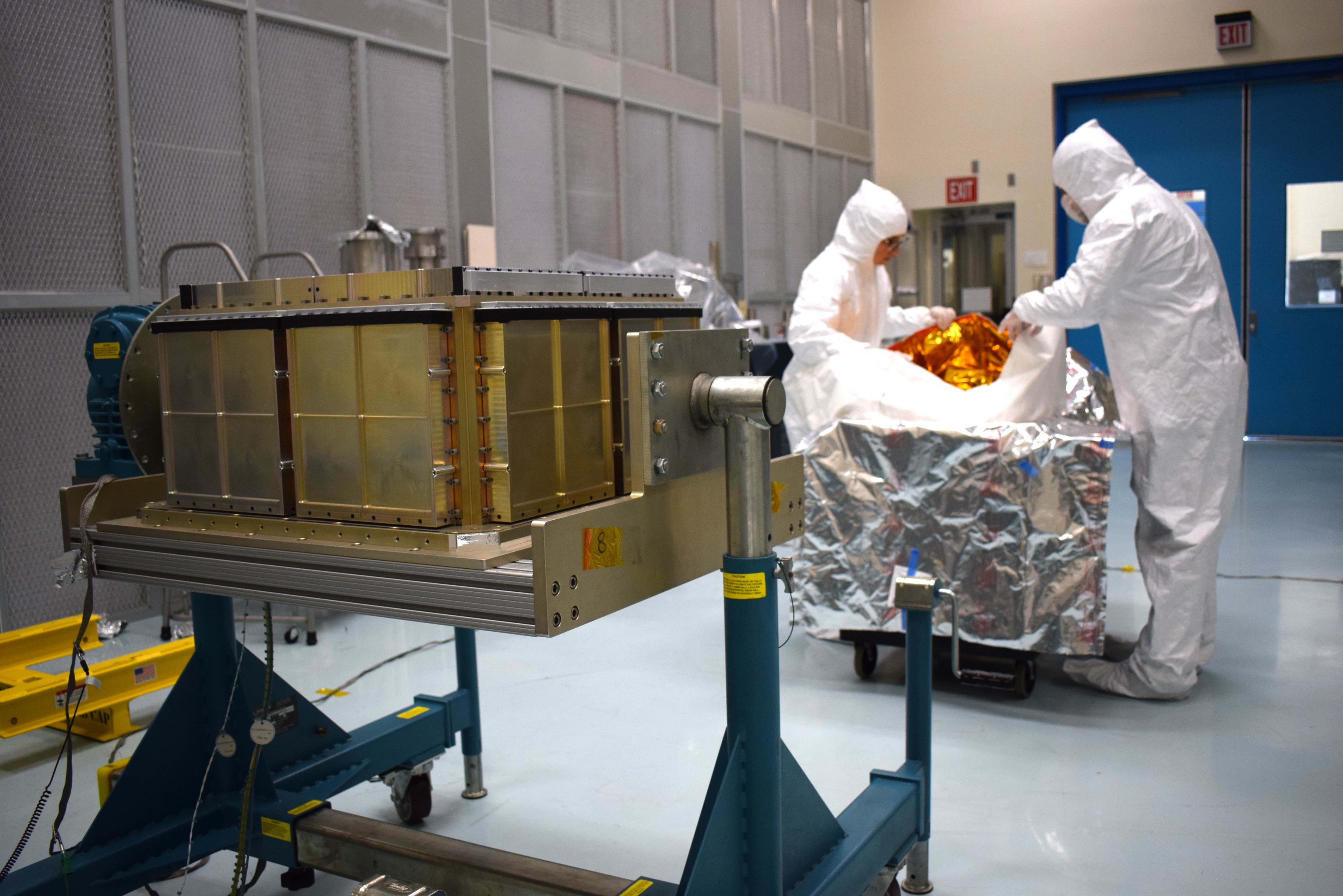
Test teams conducted thermal balance testing to simulate the hottest and coldest situations the instrument will operate under in space. Data from these tests improves thermal models used by NASA engineers, while also ensuring the satellite can handle these temperatures in orbit.
NASA engineers also completed a 24-hour “bake-out,” a process that removes unwanted gas or vapor from the instrument using extreme heat in a vacuum.
“NASA’s StarBurst mission is ready for its next stage of assembly and is one step closer to flight,” said Daniel Kocevski, principal investigator at NASA Marshall. “Testing at NASA Marshall has verified engineering models, adding our understanding of how StarBurst will operate in space as it observes gamma ray emission from merging neutron stars to help us better understand the building blocks of Earth—and the universe.”
Outside of the vacuum chamber, a “vibe test” bolted the instrument to a special “shaker table” to simulate the vibrations and turbulence StarBurst will experience during launch.
While at NASA Marshall, StarBurst underwent a series of tests in a vacuum chamberNASA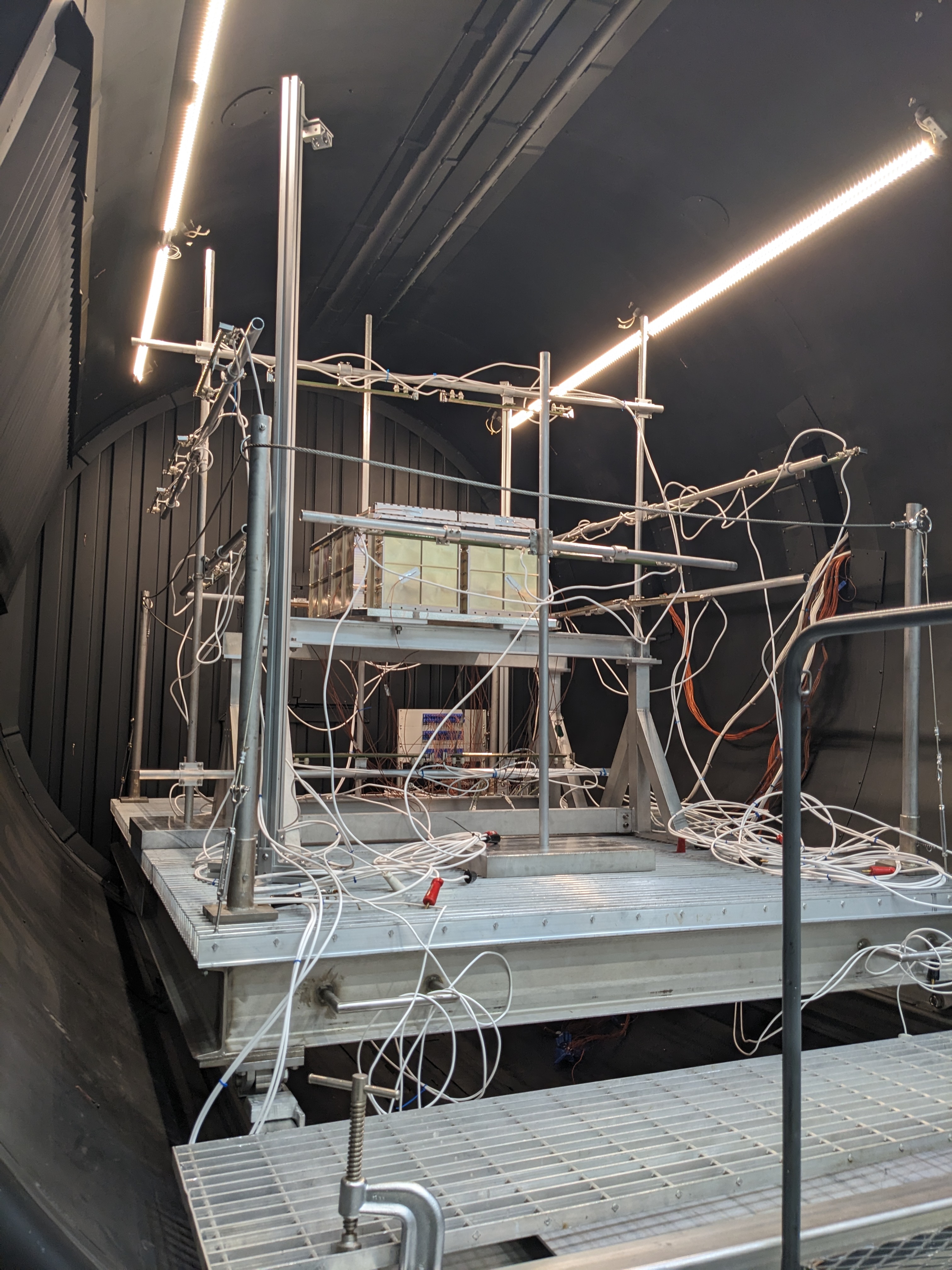
The Marshall team shipped the StarBurst instrument to Space Flight Laboratory at the University of Toronto, which manufactured the spacecraft bus, in August.
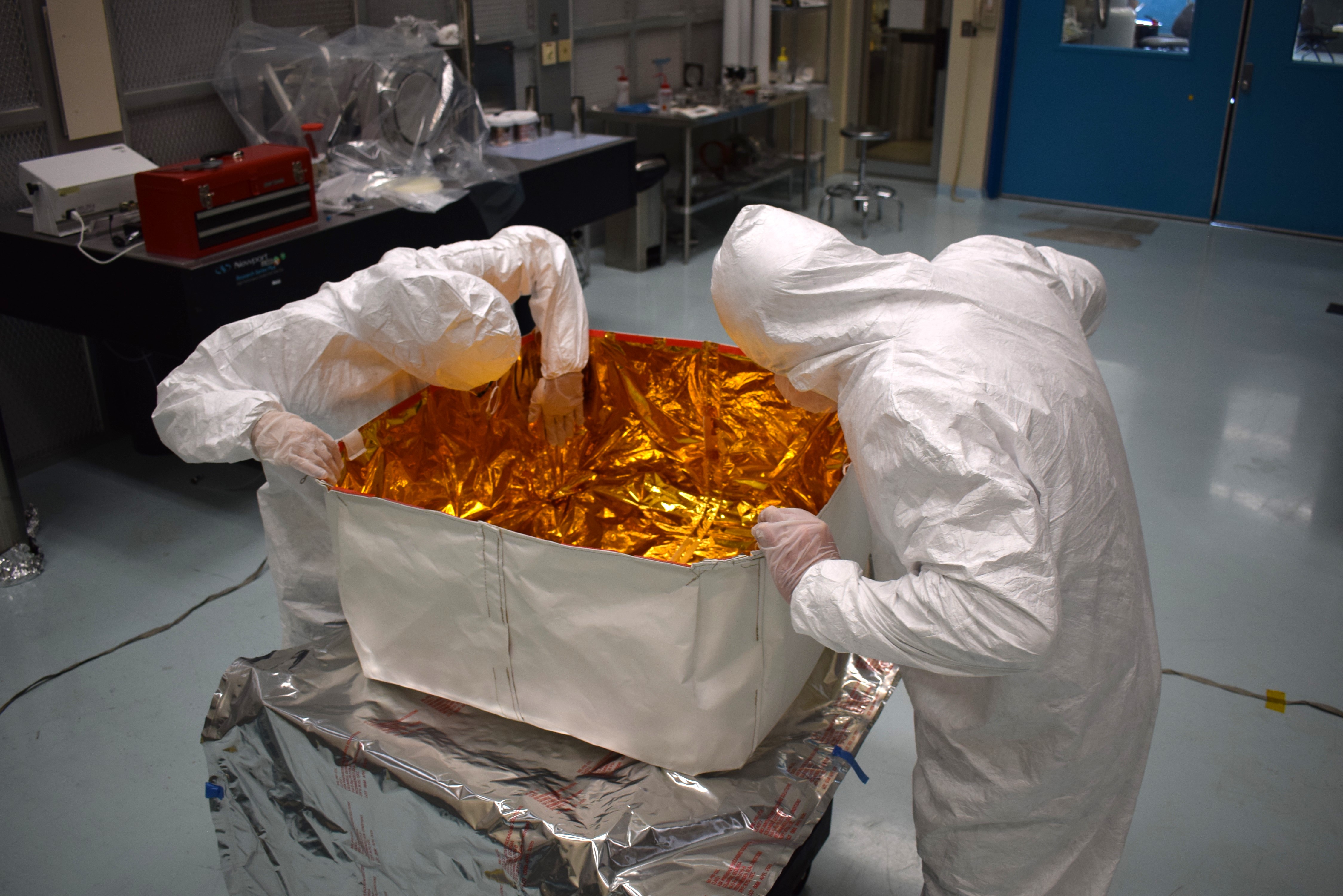
Prior to shipment, teams at Marshall’s Stray Light Facility fit-tested the multi-layer insulation blanket needed to insulate the crystal detector units from the harsh space environment. StarBurst is equipped with 12 of these detectors, which serve as the main gamma-ray detection system on the spacecraft.
Marshall team members traveled to Toronto and were on hand to help integrate the instrument with the spacecraft bus in early September. Testing at Marshall set the stage for planned post-integration testing, which included functional testing and electromagnetic compatibility testing. StarBurst is scheduled to undergo additional calibration, vibration, and thermal vacuum testing in the spring.
Integration teams intend to have StarBurst launch-ready by June 2026. NASA plans to launch the satellite as early as 2027 during the next run of the Laser-Interferometer Gravitational Wave Observatory to maximize the chance of detecting gamma-ray bursts that coincide with gravitational wave events. To date, such a joint gamma-ray and gravitational-wave detection has been observed only once.
StarBurst was successfully integrated with the spacecraft bus Marshall team members were on hand to help integrate the instrument with the spacecraft bus at the Space Flight Laboratory at the University of Toronto in early September. NASA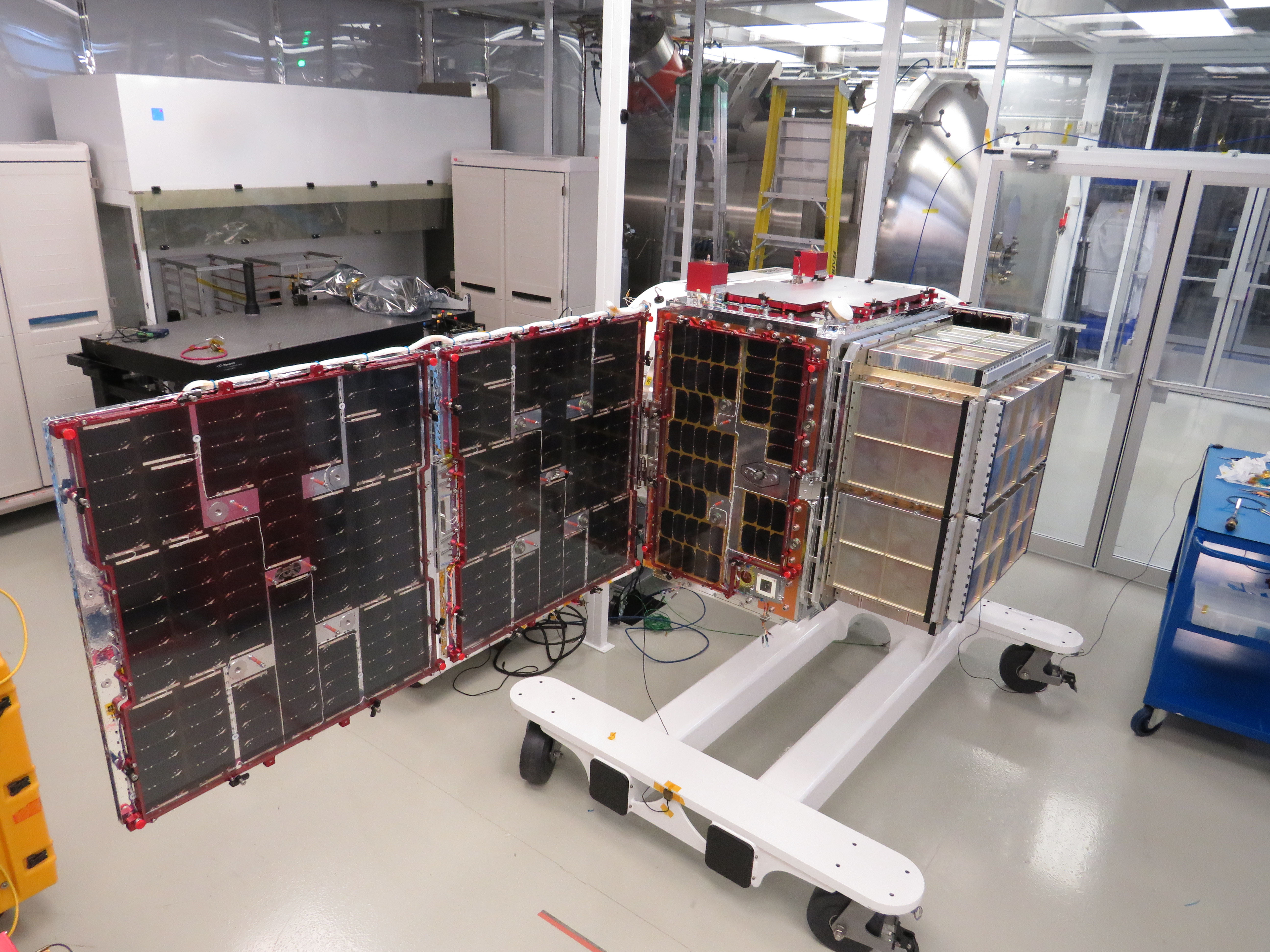
StarBurst is a collaborative effort led by NASA’s Marshall Space Flight Center, with partnerships with the U.S. Naval Research Laboratory, the University of Alabama Huntsville, the Universities Space Research Association, and the University of Toronto Institute for Aerospace Studies Space Flight Laboratory. StarBurst was selected for development as part of the NASA Astrophysics Pioneers program, which supports lower-cost, smaller hardware missions to conduct compelling astrophysics science.
To learn more about StarBurst visit:
https://science.nasa.gov/mission/starburst/
Share Details Last Updated Jan 09, 2026 EditorLee MohonContactCorinne M. Beckingercorinne.m.beckinger@nasa.govJoel Wallacejoel.w.wallace@nasa.govLocationMarshall Space Flight Center Related TermsShaken, Not Stirred: NASA’s StarBurst Aces Extreme Temperature Tests
Heated, cooled, shaken, and settled – NASA’s StarBurst instrument is several steps closer to being ready for launch. The small satellite is now awaiting instrument calibration following a successful integration in Canada and rigorous testing by engineers at the agency’s Marshall Space Flight Center in Huntsville, Alabama.
StarBurst is designed to detect the initial emission of short gamma-ray bursts, some of the most powerful explosions in the universe and a key indicator of neutron star mergers. This would provide valuable insight into such events, which are also detected through gravitational waves by observatories on Earth. These events are where most of the heavy metals in the universe, such as gold and platinum, are formed. To date, only one such event has been observed simultaneously in gravitational waves and gamma-rays; StarBurst is expected to find up to 10 per year.
StarBurst arrived at NASA Marshall in March 2025. During its time at the center, the instrument underwent thermal testing in a vacuum chamber and flight vibration testing.
The team held StarBurst’s nonstop thermal testing in a vacuum chamber, 24 hours a day for 18 days. Technicians placed radioactive material into the vacuum chamber, giving StarBurst the ability to detect gamma-ray signals during the tests.
NASA Marshall test engineers fit test the multi-layer insulation blanket in early August at Marshall’s Stray Light Facility. The thermal blanket will insulate the crystal detector units. NASA/Michael AllenTest teams conducted thermal balance testing to simulate the hottest and coldest situations the instrument will operate under in space. Data from these tests improves thermal models used by NASA engineers, while also ensuring the satellite can handle these temperatures in orbit.
NASA engineers also completed a 24-hour “bake-out,” a process that removes unwanted gas or vapor from the instrument using extreme heat in a vacuum.
“NASA’s StarBurst mission is ready for its next stage of assembly and is one step closer to flight,” said Daniel Kocevski, principal investigator at NASA Marshall. “Testing at NASA Marshall has verified engineering models, adding our understanding of how StarBurst will operate in space as it observes gamma ray emission from merging neutron stars to help us better understand the building blocks of Earth—and the universe.”
Outside of the vacuum chamber, a “vibe test” bolted the instrument to a special “shaker table” to simulate the vibrations and turbulence StarBurst will experience during launch.
While at NASA Marshall, StarBurst underwent a series of tests in a vacuum chamberNASAThe Marshall team shipped the StarBurst instrument to Space Flight Laboratory at the University of Toronto, which manufactured the spacecraft bus, in August.
Prior to shipment, teams at Marshall’s Stray Light Facility fit-tested the multi-layer insulation blanket needed to insulate the crystal detector units from the harsh space environment. StarBurst is equipped with 12 of these detectors, which serve as the main gamma-ray detection system on the spacecraft.
Marshall team members traveled to Toronto and were on hand to help integrate the instrument with the spacecraft bus in early September. Testing at Marshall set the stage for planned post-integration testing, which included functional testing and electromagnetic compatibility testing. StarBurst is scheduled to undergo additional calibration, vibration, and thermal vacuum testing in the spring.
Integration teams intend to have StarBurst launch-ready by June 2026. NASA plans to launch the satellite as early as 2027 during the next run of the Laser-Interferometer Gravitational Wave Observatory to maximize the chance of detecting gamma-ray bursts that coincide with gravitational wave events. To date, such a joint gamma-ray and gravitational-wave detection has been observed only once.
StarBurst was successfully integrated with the spacecraft bus Marshall team members were on hand to help integrate the instrument with the spacecraft bus at the Space Flight Laboratory at the University of Toronto in early September. NASAStarBurst is a collaborative effort led by NASA’s Marshall Space Flight Center, with partnerships with the U.S. Naval Research Laboratory, the University of Alabama Huntsville, the Universities Space Research Association, and the University of Toronto Institute for Aerospace Studies Space Flight Laboratory. StarBurst was selected for development as part of the NASA Astrophysics Pioneers program, which supports lower-cost, smaller hardware missions to conduct compelling astrophysics science.
To learn more about StarBurst visit:
https://science.nasa.gov/mission/starburst/
Share Details Last Updated Jan 09, 2026 EditorLee MohonContactCorinne M. Beckingercorinne.m.beckinger@nasa.govJoel Wallacejoel.w.wallace@nasa.govLocationMarshall Space Flight Center Related TermsBest of 2025: Artemis II SLS (Space Launch System) Projected on Washington Monument
Sinking trees in Arctic Ocean could remove 1 billion tonnes of CO2
Sinking trees in Arctic Ocean could remove 1 billion tonnes of CO2
Stevie Wonder’s Rule for AI at CES 2026—‘Make Life Better for the Living’
At CES 2026, Stevie Wonder offered a simple test for tech. And in the smart glasses boom, the most persuasive tools aren’t about perfect sight but day-to-day independence.
The Milky Way’s Black Hole Is Quiet Now, But Its Recent Past Was Far More Active
The supermassive black hole in the Milky Way's galactic center, Sagittarius A-star, is known for being quiet and dim. But that wasn't always the case. The powerful XRISM x-ray telescope shows that it flared brightly at least once in the very recent past.
Flight Engineers Give NASA’s Dragonfly Lift
In sending a car-sized rotorcraft to explore Saturn’s moon Titan, NASA’s Dragonfly mission will undertake an unprecedented voyage of scientific discovery. And the work to ensure that this first-of-its-kind project can fulfill its ambitious exploration vision is underway in some of the nation’s most advanced space simulation and testing laboratories.
From left, Johns Hopkins APL engineers Tyler Radomsky and Felipe Ruiz install a rotor on the Dragonfly test model at the Transonic Dynamics Tunnel at NASA’s Langley Research Center in Virginia. NASA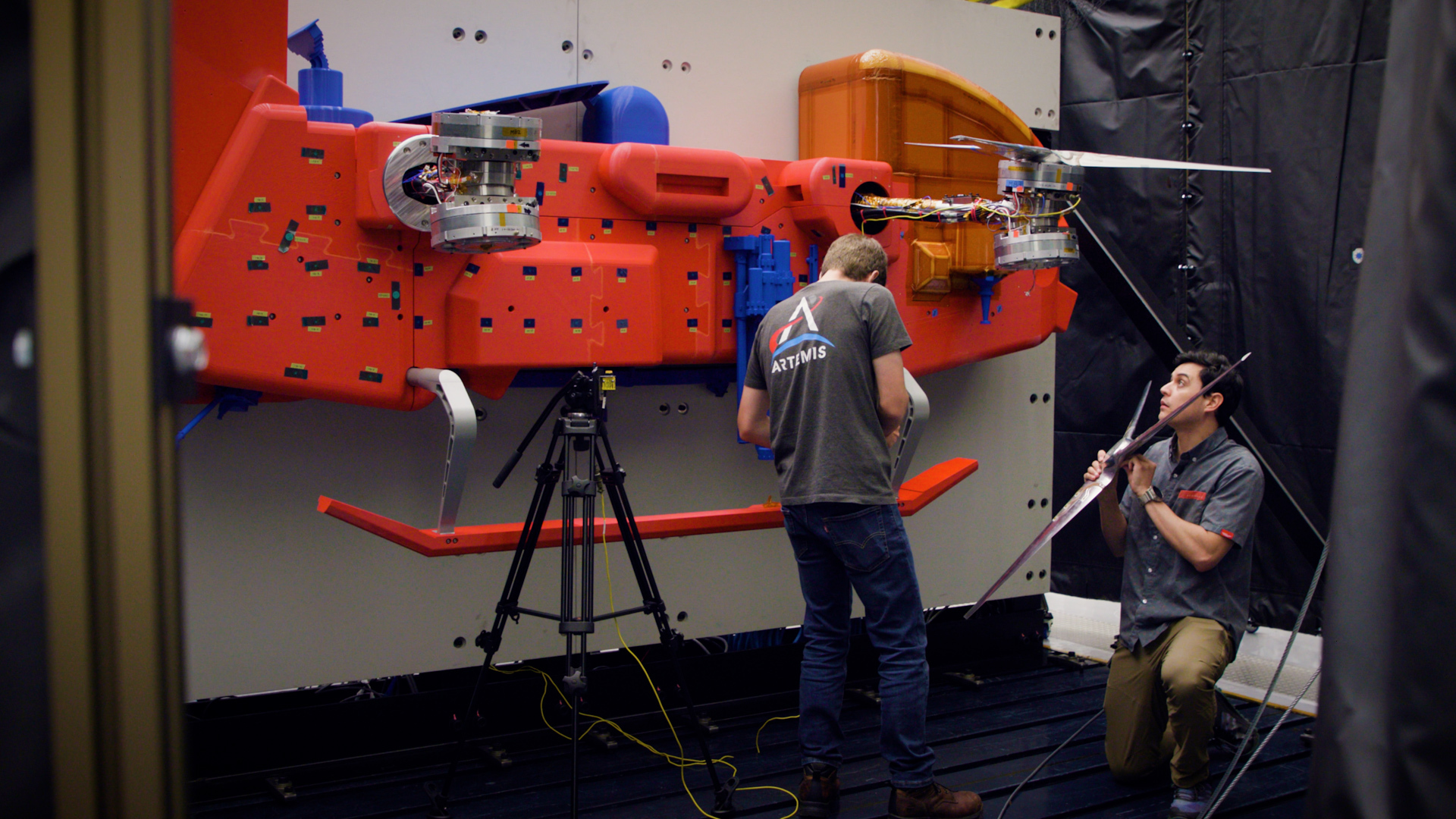
Set for launch in in 2028, the Dragonfly rotorcraft is being designed and built at the Johns Hopkins Applied Physics Laboratory (APL) in Laurel, Maryland, with contributions from organizations around the world. On arrival in 2034, Dragonfly will exploit Titan’s dense atmosphere and low gravity to fly to dozens of locations, exploring varied environments from organic equatorial dunes to an impact crater where liquid water and complex organic materials essential to life (at least as we know it) may have existed together.
Aerodynamic testing
When full rotorcraft integration and testing begins in February, the team will tap into a trove of data gathered through critical technical trials conducted over the past three years, including, most recently, two campaigns at the Transonic Dynamics Tunnel (TDT) facility at NASA’s Langley Research Center in Hampton, Virginia.
From left, Charles Pheng, Ryan Miller, John Kayrouz, Kristen Carey and Josie Ward prepare for the first aeromechanical performance tests of the full-scale Dragonfly rotors in the Transonic Dynamics Tunnel at NASA’s Langley Research Center in Virginia.NASA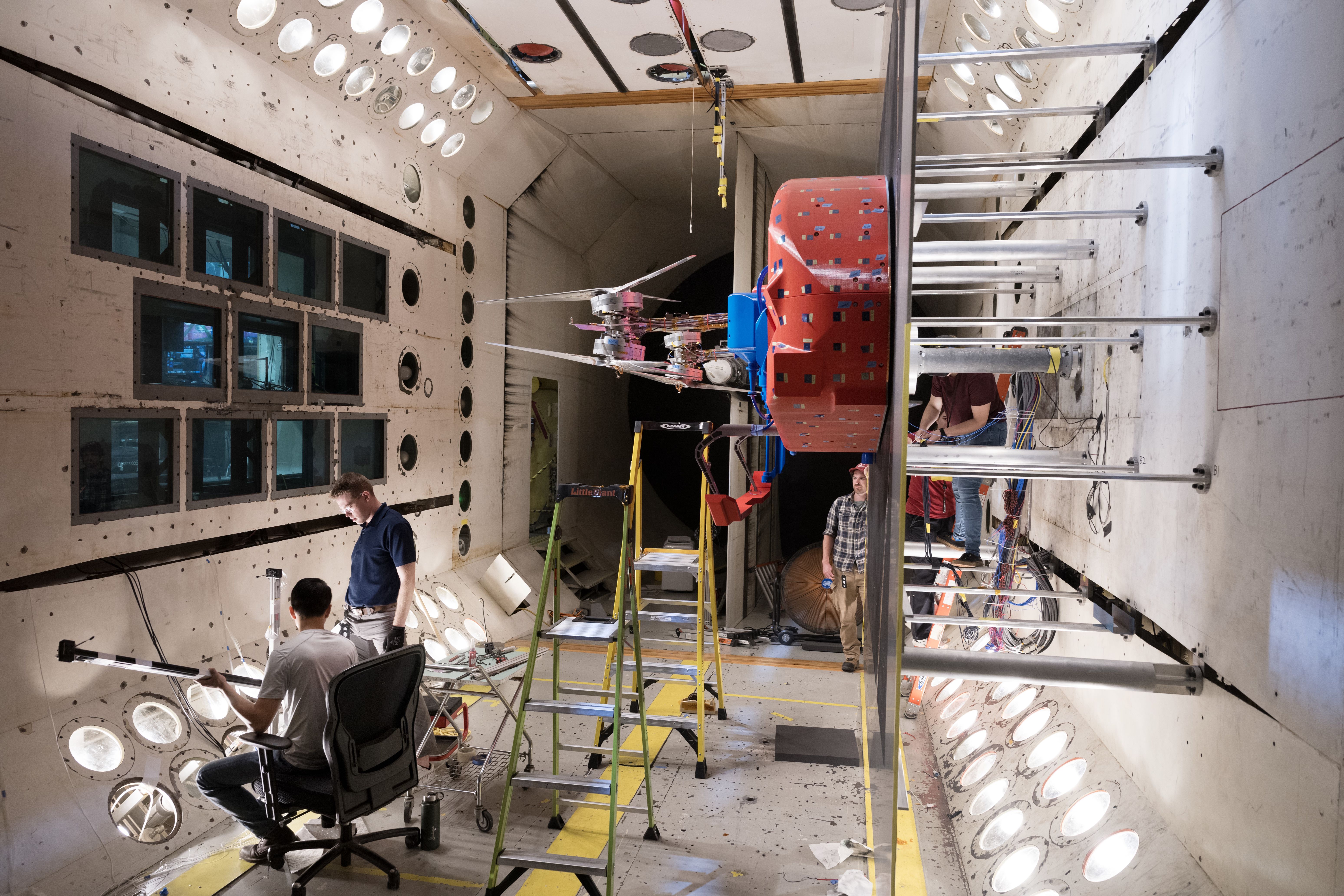
The TDT is a versatile 16-foot-high, 16-foot-wide, 20-foot-long testing hub that has hosted studies for NASA, the Department of War, the aircraft industry and an array of universities.
Over five weeks, from August into September, the team evaluated the performance of Dragonfly’s rotor system – which provides the lift for the lander to fly and enables it to maneuver – in Titan-like conditions, looking at aeromechanical performance factors such as stress on the rotor arms, and effects of vibration on the rotor blades and lander body. In late December, the team also wrapped up a set of aerodynamics tests on smaller-scale Dragonfly rotor models in the TDT.
“When Dragonfly enters the atmosphere at Titan and parachutes deploy after the heat shield does its job, the rotors are going to have to work perfectly the first time,” said Dave Piatak, branch chief for aeroelasticity at NASA Langley. “There’s no room for error, so any concerns with vehicle structural dynamics or aerodynamics need to be known now and tested on the ground. With the Transonic Dynamics Tunnel here at Langley, NASA offers just the right capability for the Dragonfly team to gather this critical data.”
Critical parts
In his three years as an experimental machinist at APL, Cory Pennington has crafted parts for projects dispatched around the globe. But fashioning rotors for a drone to explore another world in our solar system? That was new – and a little daunting.
“The rotors are some of the most important parts on Dragonfly,” Pennington said. “Without the rotors, it doesn’t fly – and it doesn’t meet its mission objectives at Titan.”
Experimental machinist Cory Pennington examines a freshly milled, full-scale Dragonfly rotor in the machine shop at the Johns Hopkins Applied Physics Laboratory (APL) in Laurel, Maryland. NASA/Johns Hopkins APL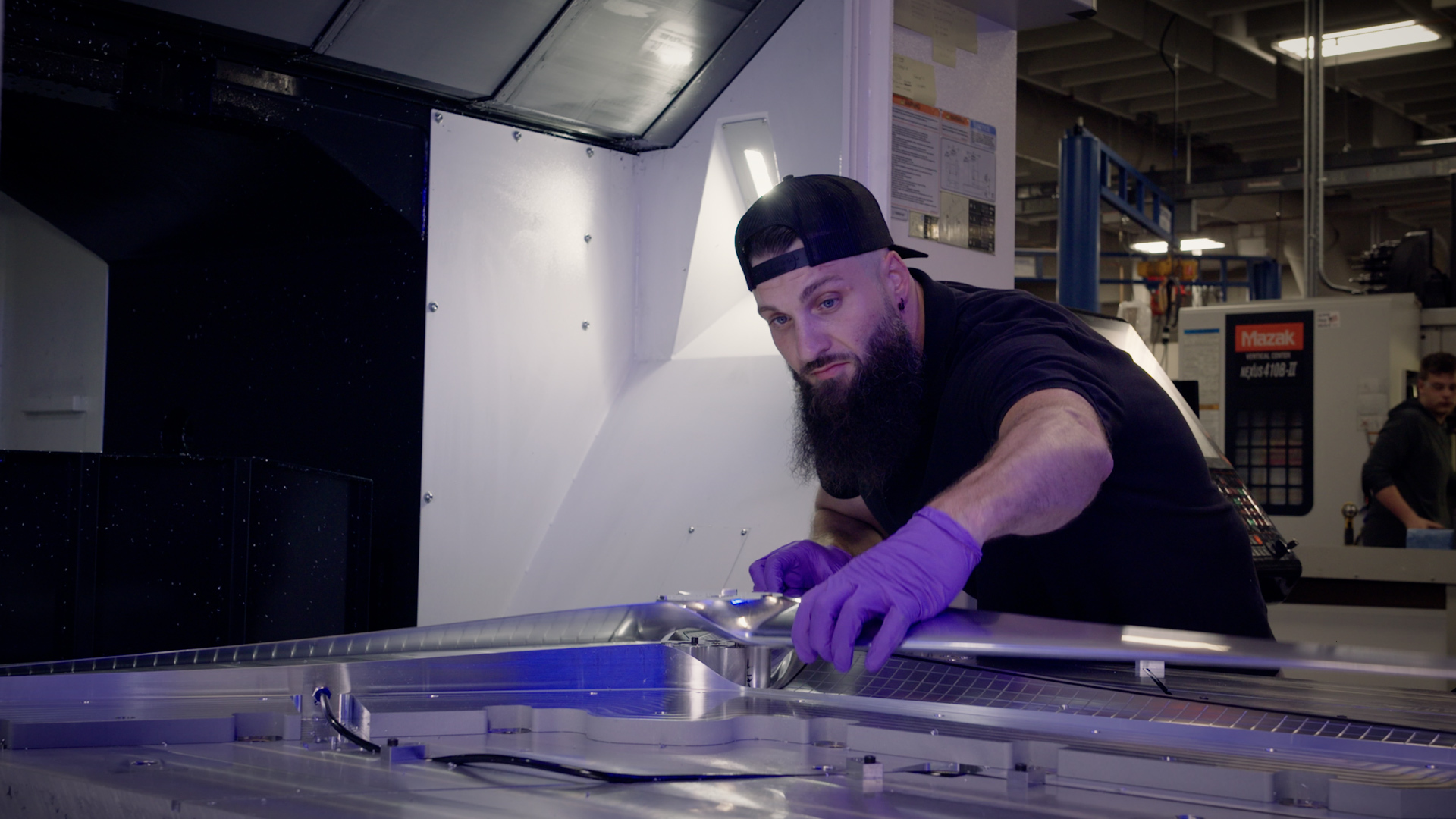
Pennington and team cut Dragonfly’s first rotors on Nov. 1, 2024. They refined the process as they went: starting with waterjet paring of 1,000-pound aluminum blocks, followed by rough machining, cover fitting, vent-hole drilling and hole-threading. After an inspection, the parts were cleaned, sent out for welding and returned for final finishing.
“We didn’t have time or materials to make test parts or extras, so every cut had to be right the first time,” Pennington said, adding that the team also had to find special tools and equipment to accommodate some material changes and design tweaks.
The team was able to deliver the parts a month early. Engineers set up and spin-tested the rotors at APL – attached to a full-scale model representing half of the Dragonfly lander – before transporting the entire package to the TDT at NASA Langley in late July.
“On Titan, we’ll control the speeds of Dragonfly’s different rotors to induce forward flight, climbs, descents and turns,” said Felipe Ruiz, lead Dragonfly rotor engineer at APL.
“It’s a complicated geometry going to a flight environment that we are still learning about. So the wind tunnel tests are one of the most important venues for us to demonstrate the design.”
And the rotors passed the tests.
“Not only did the tests validate the design team’s approach, we’ll use all that data to create high-fidelity representations of loads, forces and dynamics that help us predict Dragonfly’s performance on Titan with a high degree of confidence,” said Rick Heisler, wind tunnel test lead from APL.
Next, the rotors will undergo fatigue and cryogenic trials under simulated Titan conditions, where the temperature is minus 290 degrees Fahrenheit (minus 178 degrees Celsius), before building the actual flight rotors.
“We’re not just cutting metal — we’re fabricating something that’s going to another world,” Pennington said. “It’s incredible to know that what we build will fly on Titan.”
Collaboration, innovation
Elizabeth “Zibi” Turtle, Dragonfly principal investigator at APL, says the latest work in the TDT demonstrates the mission’s innovation, ingenuity and collaboration across government and industry.
“The team worked well together, under time pressure, to develop solutions, assess design decisions, and execute fabrication and testing,” she said. “There’s still much to do between now and our launch in 2028, but everyone who worked on this should take tremendous pride in these accomplishments that make it possible for Dragonfly to fly on Titan.”
To view this video please enable JavaScript, and consider upgrading to a web browser that supports HTML5 video
When NASA's Dragonfly begins full rotorcraft integration and testing in early 2026, the mission team will tap into a trove of data gathered through critical technical trials conducted over the past three years, including, most recently, a testing campaign in at the Transonic Dynamics Tunnel (TDT) Facility at NASA’s Langley Research Center in Hampton, Virginia. NASA/Johns Hopkins APLDragonfly has been a collaborative effort from the start. Kenneth Hibbard, mission systems engineer from APL, cites the vertical-lift expertise of Penn State University on the initial rotor design, aero-related modeling and analysis, and testing support in the TDT, as well as NASA Langley’s 14-by-22-foot Subsonic Tunnel. Sikorsky Aircraft of Connecticut has also supported aeromechanics and aerodynamics testing and analysis, as well as flight hardware modeling and simulation.
The Johns Hopkins Applied Physics Laboratory (APL) in Laurel, Maryland, leads the Dragonfly mission for NASA in collaboration with several NASA centers, industry partners, academic institutions and international space agencies. Elizabeth “Zibi” Turtle of APL is the principal investigator. Dragonfly is part of NASA’s New Frontiers Program, managed by the Planetary Missions Program Office at NASA Marshall Space Flight Center in Huntsville, Alabama, for the agency’s Science Mission Directorate in Washington.
For more information on NASA’s Dragonfly mission, visit:
https://science.nasa.gov/mission/dragonfly/
by Mike Buckley
Johns Hopkins Applied Physics Laboratory
MEDIA CONTACTS:
Karen Fox / Molly Wasser
Headquarters, Washington
240-285-5155 / 240-419-1732
karen.c.fox@nasa.gov / molly.l.wasser@nasa.gov
Joe Atkinson
NASA’s Langley Research Center, Hampton, Virginia
757-755-5375
joseph.s.atkinson@nasa.gov
Mike Buckley
Johns Hopkins Applied Physics Laboratory, Laurel, Maryland
443-567-3145
michael.buckley@jhuapl.edu
Flight Engineers Give NASA’s Dragonfly Lift
In sending a car-sized rotorcraft to explore Saturn’s moon Titan, NASA’s Dragonfly mission will undertake an unprecedented voyage of scientific discovery. And the work to ensure that this first-of-its-kind project can fulfill its ambitious exploration vision is underway in some of the nation’s most advanced space simulation and testing laboratories.
From left, Johns Hopkins APL engineers Tyler Radomsky and Felipe Ruiz install a rotor on the Dragonfly test model at the Transonic Dynamics Tunnel at NASA’s Langley Research Center in Virginia. NASASet for launch in in 2028, the Dragonfly rotorcraft is being designed and built at the Johns Hopkins Applied Physics Laboratory (APL) in Laurel, Maryland, with contributions from organizations around the world. On arrival in 2034, Dragonfly will exploit Titan’s dense atmosphere and low gravity to fly to dozens of locations, exploring varied environments from organic equatorial dunes to an impact crater where liquid water and complex organic materials essential to life (at least as we know it) may have existed together.
Aerodynamic testing
When full rotorcraft integration and testing begins in February, the team will tap into a trove of data gathered through critical technical trials conducted over the past three years, including, most recently, two campaigns at the Transonic Dynamics Tunnel (TDT) facility at NASA’s Langley Research Center in Hampton, Virginia.
From left, Charles Pheng, Ryan Miller, John Kayrouz, Kristen Carey and Josie Ward prepare for the first aeromechanical performance tests of the full-scale Dragonfly rotors in the Transonic Dynamics Tunnel at NASA’s Langley Research Center in Virginia.NASAThe TDT is a versatile 16-foot-high, 16-foot-wide, 20-foot-long testing hub that has hosted studies for NASA, the Department of War, the aircraft industry and an array of universities.
Over five weeks, from August into September, the team evaluated the performance of Dragonfly’s rotor system – which provides the lift for the lander to fly and enables it to maneuver – in Titan-like conditions, looking at aeromechanical performance factors such as stress on the rotor arms, and effects of vibration on the rotor blades and lander body. In late December, the team also wrapped up a set of aerodynamics tests on smaller-scale Dragonfly rotor models in the TDT.
“When Dragonfly enters the atmosphere at Titan and parachutes deploy after the heat shield does its job, the rotors are going to have to work perfectly the first time,” said Dave Piatak, branch chief for aeroelasticity at NASA Langley. “There’s no room for error, so any concerns with vehicle structural dynamics or aerodynamics need to be known now and tested on the ground. With the Transonic Dynamics Tunnel here at Langley, NASA offers just the right capability for the Dragonfly team to gather this critical data.”
Critical parts
In his three years as an experimental machinist at APL, Cory Pennington has crafted parts for projects dispatched around the globe. But fashioning rotors for a drone to explore another world in our solar system? That was new – and a little daunting.
“The rotors are some of the most important parts on Dragonfly,” Pennington said. “Without the rotors, it doesn’t fly – and it doesn’t meet its mission objectives at Titan.”
Experimental machinist Cory Pennington examines a freshly milled, full-scale Dragonfly rotor in the machine shop at the Johns Hopkins Applied Physics Laboratory (APL) in Laurel, Maryland. NASA/Johns Hopkins APLPennington and team cut Dragonfly’s first rotors on Nov. 1, 2024. They refined the process as they went: starting with waterjet paring of 1,000-pound aluminum blocks, followed by rough machining, cover fitting, vent-hole drilling and hole-threading. After an inspection, the parts were cleaned, sent out for welding and returned for final finishing.
“We didn’t have time or materials to make test parts or extras, so every cut had to be right the first time,” Pennington said, adding that the team also had to find special tools and equipment to accommodate some material changes and design tweaks.
The team was able to deliver the parts a month early. Engineers set up and spin-tested the rotors at APL – attached to a full-scale model representing half of the Dragonfly lander – before transporting the entire package to the TDT at NASA Langley in late July.
“On Titan, we’ll control the speeds of Dragonfly’s different rotors to induce forward flight, climbs, descents and turns,” said Felipe Ruiz, lead Dragonfly rotor engineer at APL.
“It’s a complicated geometry going to a flight environment that we are still learning about. So the wind tunnel tests are one of the most important venues for us to demonstrate the design.”
And the rotors passed the tests.
“Not only did the tests validate the design team’s approach, we’ll use all that data to create high-fidelity representations of loads, forces and dynamics that help us predict Dragonfly’s performance on Titan with a high degree of confidence,” said Rick Heisler, wind tunnel test lead from APL.
Next, the rotors will undergo fatigue and cryogenic trials under simulated Titan conditions, where the temperature is minus 290 degrees Fahrenheit (minus 178 degrees Celsius), before building the actual flight rotors.
“We’re not just cutting metal — we’re fabricating something that’s going to another world,” Pennington said. “It’s incredible to know that what we build will fly on Titan.”
Collaboration, innovation
Elizabeth “Zibi” Turtle, Dragonfly principal investigator at APL, says the latest work in the TDT demonstrates the mission’s innovation, ingenuity and collaboration across government and industry.
“The team worked well together, under time pressure, to develop solutions, assess design decisions, and execute fabrication and testing,” she said. “There’s still much to do between now and our launch in 2028, but everyone who worked on this should take tremendous pride in these accomplishments that make it possible for Dragonfly to fly on Titan.”
To view this video please enable JavaScript, and consider upgrading to a web browser that supports HTML5 video
When NASA's Dragonfly begins full rotorcraft integration and testing in early 2026, the mission team will tap into a trove of data gathered through critical technical trials conducted over the past three years, including, most recently, a testing campaign in at the Transonic Dynamics Tunnel (TDT) Facility at NASA’s Langley Research Center in Hampton, Virginia. NASA/Johns Hopkins APLDragonfly has been a collaborative effort from the start. Kenneth Hibbard, mission systems engineer from APL, cites the vertical-lift expertise of Penn State University on the initial rotor design, aero-related modeling and analysis, and testing support in the TDT, as well as NASA Langley’s 14-by-22-foot Subsonic Tunnel. Sikorsky Aircraft of Connecticut has also supported aeromechanics and aerodynamics testing and analysis, as well as flight hardware modeling and simulation.
The Johns Hopkins Applied Physics Laboratory (APL) in Laurel, Maryland, leads the Dragonfly mission for NASA in collaboration with several NASA centers, industry partners, academic institutions and international space agencies. Elizabeth “Zibi” Turtle of APL is the principal investigator. Dragonfly is part of NASA’s New Frontiers Program, managed by the Planetary Missions Program Office at NASA Marshall Space Flight Center in Huntsville, Alabama, for the agency’s Science Mission Directorate in Washington.
For more information on NASA’s Dragonfly mission, visit:
https://science.nasa.gov/mission/dragonfly/
by Mike Buckley
Johns Hopkins Applied Physics Laboratory
MEDIA CONTACTS:
Karen Fox / Molly Wasser
Headquarters, Washington
240-285-5155 / 240-419-1732
karen.c.fox@nasa.gov / molly.l.wasser@nasa.gov
Joe Atkinson
NASA’s Langley Research Center, Hampton, Virginia
757-755-5375
joseph.s.atkinson@nasa.gov
Mike Buckley
Johns Hopkins Applied Physics Laboratory, Laurel, Maryland
443-567-3145
michael.buckley@jhuapl.edu
NASA is performing an unprecedented medical evacuation from the ISS
NASA is performing an unprecedented medical evacuation from the ISS
Microbiome study hints that fibre could be linked to better sleep
Microbiome study hints that fibre could be linked to better sleep
I Am Artemis: Dave Reynolds
As booster manager for NASA’s SLS (Space Launch System), Dave Reynolds’ path to NASA is embodied by his childhood poster of the space shuttle’s Return to Flight initiative, which hangs in his office, serving as a constant reminder that his journey to the agency began decades ago.
Growing up in Roy, Utah, Reynolds remembers standing outside to watch the billowing smoke rise from booster tests at Northrop Grumman’s Promontory facility. Rockets were the backdrop of his childhood, and growing up during the shuttle missions sparked his fascination for space exploration.
As the booster manager for the SLS, Dave is responsible for the design, development, and flight of the boosters—work that echoes the sense of significance that inspired him as a child to study spaceflight.
“I couldn’t quite verbalize what I felt then, but as I’ve matured over time, I now realize I want to be a part of the team sending astronauts to the Moon, and I have a personal desire to ensure the safety of those individuals,” Reynolds said.
Dave Reynolds, the booster manager for SLS (Space Launch System), works inside the Next Generation Booster Avionics Mockup at NASA’s Marshall Space Flight Center in Huntsville, Alabama. Reynolds is responsible for the design, development, and flight of the boosters for the rocket that carry NASA’s Orion spacecraft and astronauts to the Moon as part of the Artemis II mission. NASA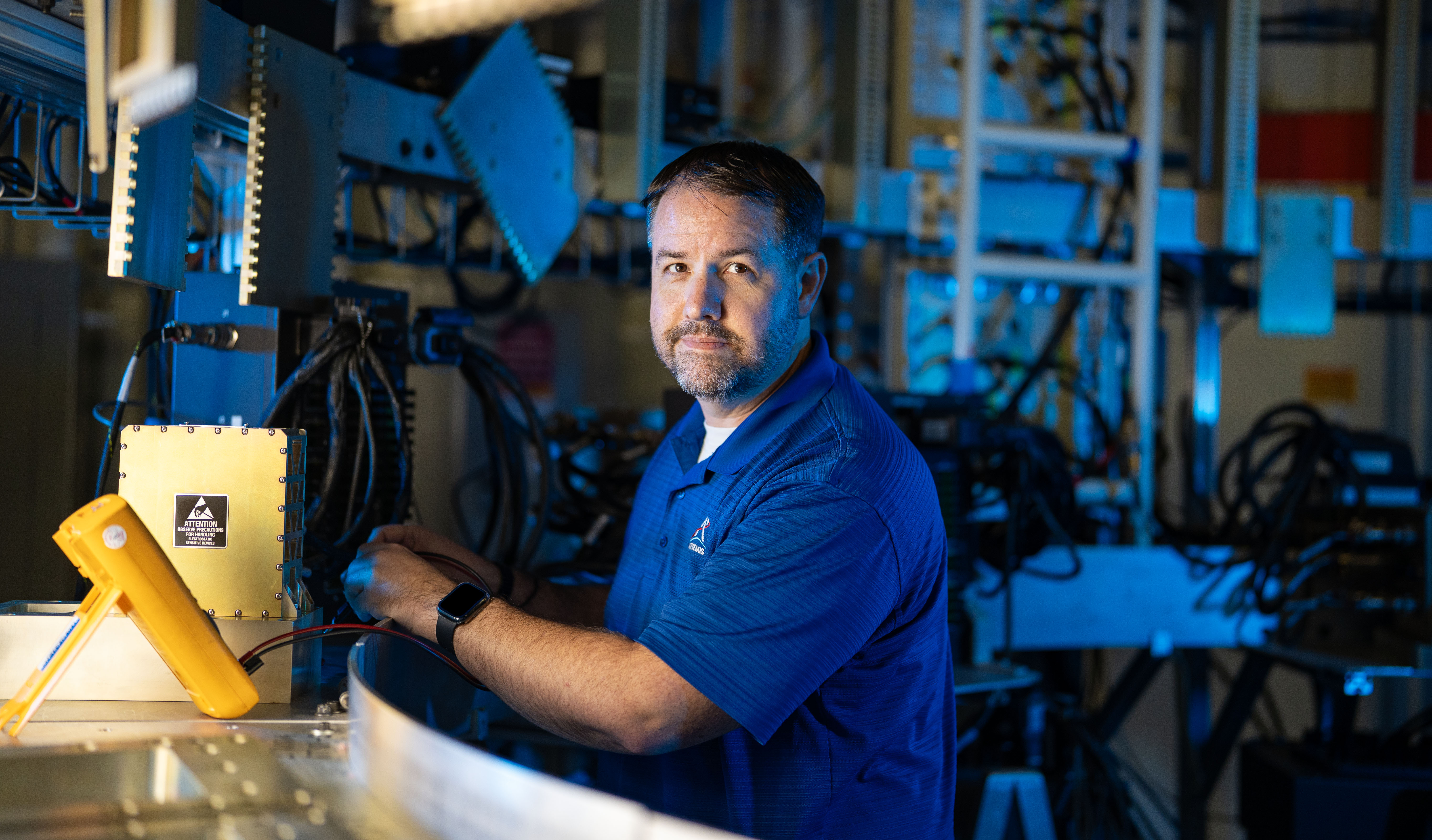
Early in his career at NASA’s Marshall Space Flight Center in Huntsville, Alabama, Reynolds worked on the J-2X — a liquid-cryogenic engine that was once slated as a candidate to power the SLS upper stage. In 2012, he made a jump to solid rocket motors when he became the subsystem manager for the SLS boosters office. Reynolds spent his days managing and testing motor cases, seals, igniters, and separation motors.
He was promoted to deputy manager for the SLS office where he helped oversee development of the solid rocket boosters. He also was given the task of developing and managing the evolved composite boosters that would be used for future Artemis missions.
With the launch of Artemis II on the horizon, Reynolds is thrilled to be part of the team preparing to send a crew of four astronauts around the Moon.
Deep down, I’m really excited about Artemis II. The eight-year-old me is still in there, eager to watch the smoke rising from those booster tests at a distance. He wouldn’t believe the things I’ve seen and what I’m about to see.Dave Reynolds
Booster Manager for Space Launch System
“Deep down, I’m really excited about Artemis II. The eight-year-old me is still in there, eager to watch the smoke rising from those booster tests at a distance. He wouldn’t believe the things I’ve seen and what I’m about to see,” Reynolds said.
Reynolds witnessed moments that would have stunned his eight-year-old self. In 2022, he watched as the SLS illuminated the morning sky during the launch of Artemis I. More recently, the evolved booster he helped develop performed its first full-scale test. Reynolds watched as the booster roared to life – just miles from his hometown in Utah.
Reynolds, at NASA’s Kennedy Space Center’s Vehicle Assembly Building in front of the SLS rocket that powered the Artemis I mission. Through Artemis, NASA will send astronauts to explore the Moon for scientific discovery, economic benefits, and build the foundation for the first crewed missions to Mars. NASA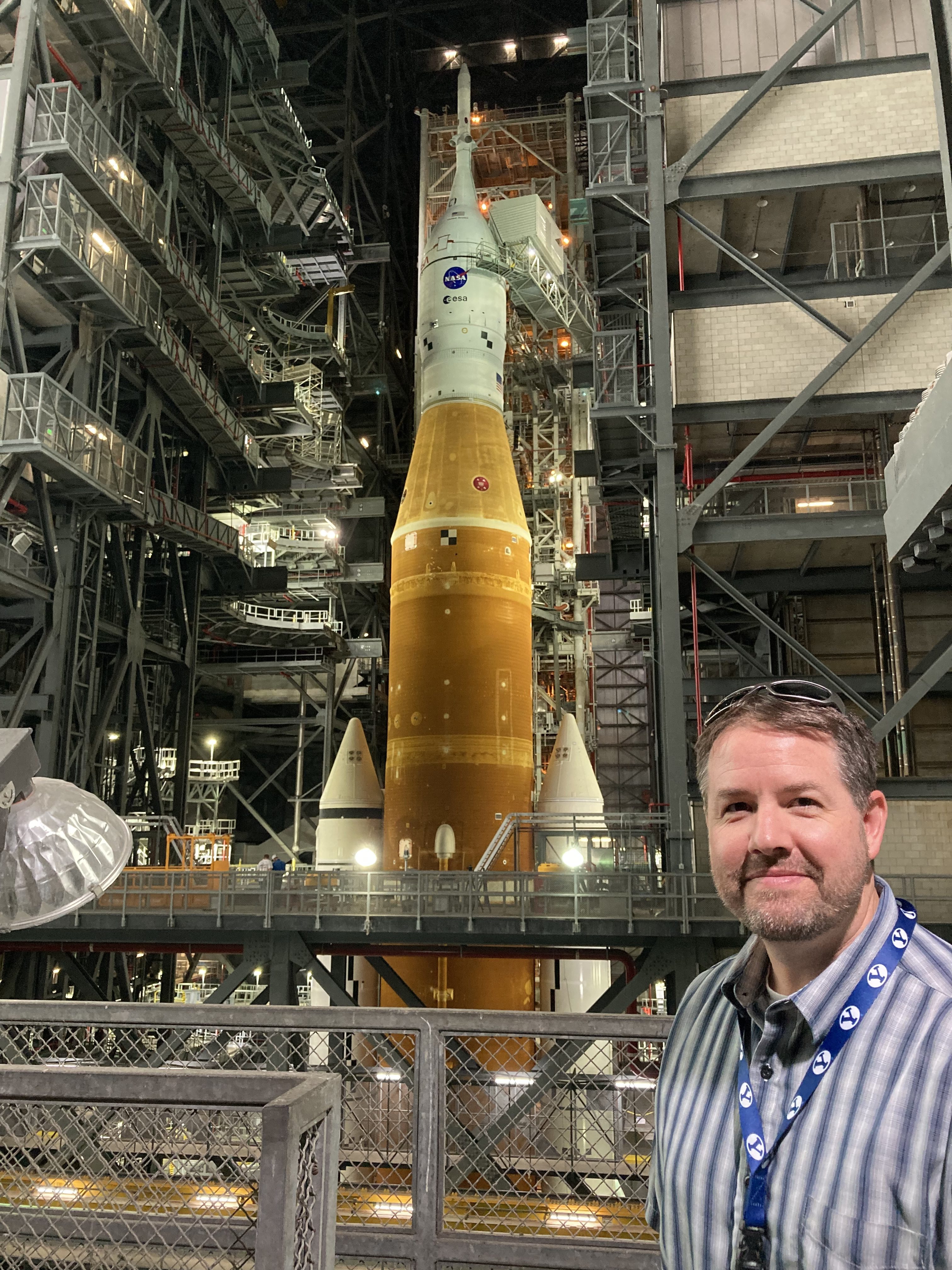
From his driveway to the test site, Reynolds’ curiosity grew into a career shaped by purpose, responsibility, and respect for the work ahead. The poster hanging on Reynolds’ wall isn’t just a souvenir from the past – it’s a reminder of where his interest took root and how far that curiosity has carried him.
As the team moves closer to the launch of Artemis II which will take astronauts around the Moon, Reynolds feels a familiar sense of exhilaration. The questions that once drew him toward space are still guiding him today, except this time he is one of the individuals helping to shape the answers.
Learn more about NASA’s Space Launch System at:
About the AuthorLane Polak Share Details Last Updated Jan 10, 2026 EditorLee MohonLocationMarshall Space Flight Center Related Terms Explore More 4 min read NASA Artemis II Moon Rocket Ready to Fly Crew Article 4 months ago 3 min read NASA Progresses Toward Artemis II Moon Mission Article 2 months ago 4 min read Artemis II Flight Crew, Teams Conduct Demonstration Ahead of Launch Article 3 weeks ago Keep Exploring Discover More Topics From NASAArtemis
Space Launch System (SLS)
Artemis IIFour astronauts will fly around the Moon to test NASA's foundational human deep space exploration capabilities, the Space Launch System…
Solar System
I Am Artemis: Dave Reynolds
As booster manager for NASA’s SLS (Space Launch System), Dave Reynolds’ path to NASA is embodied by his childhood poster of the space shuttle’s Return to Flight initiative, which hangs in his office, serving as a constant reminder that his journey to the agency began decades ago.
Growing up in Roy, Utah, Reynolds remembers standing outside to watch the billowing smoke rise from booster tests at Northrop Grumman’s Promontory facility. Rockets were the backdrop of his childhood, and growing up during the shuttle missions sparked his fascination for space exploration.
As the booster manager for the SLS, Dave is responsible for the design, development, and flight of the boosters—work that echoes the sense of significance that inspired him as a child to study spaceflight.
“I couldn’t quite verbalize what I felt then, but as I’ve matured over time, I now realize I want to be a part of the team sending astronauts to the Moon, and I have a personal desire to ensure the safety of those individuals,” Reynolds said.
Dave Reynolds, the booster manager for SLS (Space Launch System), works inside the Next Generation Booster Avionics Mockup at NASA’s Marshall Space Flight Center in Huntsville, Alabama. Reynolds is responsible for the design, development, and flight of the boosters for the rocket that carry NASA’s Orion spacecraft and astronauts to the Moon as part of the Artemis II mission. NASAEarly in his career at NASA’s Marshall Space Flight Center in Huntsville, Alabama, Reynolds worked on the J-2X — a liquid-cryogenic engine that was once slated as a candidate to power the SLS upper stage. In 2012, he made a jump to solid rocket motors when he became the subsystem manager for the SLS boosters office. Reynolds spent his days managing and testing motor cases, seals, igniters, and separation motors.
He was promoted to deputy manager for the SLS office where he helped oversee development of the solid rocket boosters. He also was given the task of developing and managing the evolved composite boosters that would be used for future Artemis missions.
With the launch of Artemis II on the horizon, Reynolds is thrilled to be part of the team preparing to send a crew of four astronauts around the Moon.
Deep down, I’m really excited about Artemis II. The eight-year-old me is still in there, eager to watch the smoke rising from those booster tests at a distance. He wouldn’t believe the things I’ve seen and what I’m about to see.Dave Reynolds
Booster Manager for Space Launch System
“Deep down, I’m really excited about Artemis II. The eight-year-old me is still in there, eager to watch the smoke rising from those booster tests at a distance. He wouldn’t believe the things I’ve seen and what I’m about to see,” Reynolds said.
Reynolds witnessed moments that would have stunned his eight-year-old self. In 2022, he watched as the SLS illuminated the morning sky during the launch of Artemis I. More recently, the evolved booster he helped develop performed its first full-scale test. Reynolds watched as the booster roared to life – just miles from his hometown in Utah.
Reynolds, at NASA’s Kennedy Space Center’s Vehicle Assembly Building in front of the SLS rocket that powered the Artemis I mission. Through Artemis, NASA will send astronauts to explore the Moon for scientific discovery, economic benefits, and build the foundation for the first crewed missions to Mars. NASAFrom his driveway to the test site, Reynolds’ curiosity grew into a career shaped by purpose, responsibility, and respect for the work ahead. The poster hanging on Reynolds’ wall isn’t just a souvenir from the past – it’s a reminder of where his interest took root and how far that curiosity has carried him.
As the team moves closer to the launch of Artemis II which will take astronauts around the Moon, Reynolds feels a familiar sense of exhilaration. The questions that once drew him toward space are still guiding him today, except this time he is one of the individuals helping to shape the answers.
Learn more about NASA’s Space Launch System at:
About the AuthorLane Polak Share Details Last Updated Jan 10, 2026 EditorLee MohonLocationMarshall Space Flight Center Related Terms Explore More 4 min read NASA Artemis II Moon Rocket Ready to Fly Crew Article 4 months ago 3 min read NASA Progresses Toward Artemis II Moon Mission Article 2 months ago 4 min read Artemis II Flight Crew, Teams Conduct Demonstration Ahead of Launch Article 3 weeks ago Keep Exploring Discover More Topics From NASAArtemis
Space Launch System (SLS)
Artemis IIFour astronauts will fly around the Moon to test NASA's foundational human deep space exploration capabilities, the Space Launch System…
Solar System
Scientists Discover Brain Circuit That Acts Like a ‘Brake’ on Motivation
A new study in macaques identifies a brain circuit that acts like a “brake” on motivation
How the Most Common Types of Planets Are Created
A new study finds that hot super-Earths begin as large puffy worlds with low densities. Over time their atmospheres are stripped away to leave more dense planets orbiting close to their stars.