
Feed aggregator
February Podcast: Winter’s Milky Way
In this month’s episode, go on a tour of the stars and planets that you’ll see overhead during February. First we’ll keep tabs on the Moon; say good-bye to Saturn; trace out the Winter Milky Way; and explore some lesser-known constellations near Orion.
The post February Podcast: Winter’s Milky Way appeared first on Sky & Telescope.
Largest galaxy survey yet confirms that the Universe is not clumpy enough
The six-year results from the Dark Energy Survey highlight unresolved tensions in standard cosmological theory
How Claude Code is bringing vibe coding to everyone
Coding for the rest of us finally feels possible now that tools like Claude Code turn plain English into working software
For the First Time, Scientists Detect Molecule Critical to Life in Interstellar Space
For the first time, a complex, ring-shaped molecule containing 13 atoms—including sulfur—has been detected in interstellar space, based on laboratory measurements. The discovery closes a critical gap by linking simple chemistry in space with the complex organic building blocks found in comets and meteorites. This represents a major step toward explaining the cosmic origins of the chemistry of life.
Cracks on Europa Sport Traces of Ammonia
The search for life-supporting worlds in the Solar System includes the Jovian moon Europa. Yes, it's an iceberg of a world, but underneath its frozen exterior lies a deep, salty ocean and a nickel-iron core. It's heated by tidal flexing, and that puts pressure on the interior ocean, sending water and salts to the surface. As things turn out, there's also evidence of ammonia-bearing compounds on the surface. All these things combine to provide a fascinating look at Europa's geology and potential as a haven for life.
NASA Selects Axiom Space for Fifth Private Mission to Space Station
NASA and Axiom Space have signed an order for the fifth private astronaut mission to the International Space Station, targeted to launch no earlier than January 2027 from the agency’s Kennedy Space Center in Florida.
“The award of our fifth private astronaut mission shows that commercial space is not a distant promise, but a present reality,” said NASA Administrator Jared Isaacman. “By expanding access and sharpening competition in low Earth orbit, these missions are building the capabilities NASA will rely on as we move outward to the Moon, Mars, and beyond. We look forward to building upon those capabilities with many private astronaut missions to come.”
Axiom Mission 5 is expected to spend up to 14 days aboard the space station. A specific launch date will depend on overall spacecraft traffic at the orbital outpost and other planning considerations.
“The International Space Station is a critical platform for enabling commercial industry in low Earth orbit,” said Dana Weigel, manager, International Space Station Program, NASA’s Johnson Space Center in Houston. “Private astronaut missions allow the station to be used as a proving ground for new markets and technologies while enabling science, research, and outreach to contribute to a growing space economy.”
Axiom Space will submit four proposed crew members to NASA and its international partners for review. Once approved and confirmed, they will train with NASA, international partners, and the launch provider for their mission.
“We are honored NASA awarded Axiom Space its fifth human spaceflight mission,” said Jonathan Cirtain, president and CEO, Axiom Space. “All four previous missions have expanded the global community of space explorers, diversifying scientific investigations in microgravity, and providing significant insight that is benefitting the development of our next-generation space station, Axiom Station. The award underscores Axiom Space’s commitment to redefining access to space, fostering international collaboration, and enabling research opportunities in low Earth orbit for the benefit of all.”
Axiom Space will purchase mission services from NASA, including crew consumables, cargo delivery, storage, and other in-orbit resources for daily use. NASA will purchase from Axiom Space the capability to return scientific samples that must be kept cold during transit back to Earth.
NASA made the selection from proposals received in response to its March 2025 NASA Research Announcement. The agency is finalizing the mission order for the sixth private astronaut mission to the space station and will share additional information once available.
Missions aboard the International Space Station, including private astronaut missions, contribute to advancing scientific knowledge and demonstrating new technologies for future human and robotic exploration flights as part of NASA’s Moon and Mars exploration approach, including lunar missions through NASA’s Artemis campaign.
Learn more about NASA’s commercial space strategy at:
https://www.nasa.gov/commercial-space
-end-
Jimi Russell
Headquarters, Washington
202-358-1600
james.j.russell@nasa.gov
Anna Schneider / Joseph Zakrzewski
Johnson Space Center, Houston
281-483-5111
anna.c.schneider@nasa.gov / joseph.a.zakrzewski@nasa.gov
NASA Selects Axiom Space for Fifth Private Mission to Space Station
NASA and Axiom Space have signed an order for the fifth private astronaut mission to the International Space Station, targeted to launch no earlier than January 2027 from the agency’s Kennedy Space Center in Florida.
“The award of our fifth private astronaut mission shows that commercial space is not a distant promise, but a present reality,” said NASA Administrator Jared Isaacman. “By expanding access and sharpening competition in low Earth orbit, these missions are building the capabilities NASA will rely on as we move outward to the Moon, Mars, and beyond. We look forward to building upon those capabilities with many private astronaut missions to come.”
Axiom Mission 5 is expected to spend up to 14 days aboard the space station. A specific launch date will depend on overall spacecraft traffic at the orbital outpost and other planning considerations.
“The International Space Station is a critical platform for enabling commercial industry in low Earth orbit,” said Dana Weigel, manager, International Space Station Program, NASA’s Johnson Space Center in Houston. “Private astronaut missions allow the station to be used as a proving ground for new markets and technologies while enabling science, research, and outreach to contribute to a growing space economy.”
Axiom Space will submit four proposed crew members to NASA and its international partners for review. Once approved and confirmed, they will train with NASA, international partners, and the launch provider for their mission.
“We are honored NASA awarded Axiom Space its fifth human spaceflight mission,” said Jonathan Cirtain, president and CEO, Axiom Space. “All four previous missions have expanded the global community of space explorers, diversifying scientific investigations in microgravity, and providing significant insight that is benefitting the development of our next-generation space station, Axiom Station. The award underscores Axiom Space’s commitment to redefining access to space, fostering international collaboration, and enabling research opportunities in low Earth orbit for the benefit of all.”
Axiom Space will purchase mission services from NASA, including crew consumables, cargo delivery, storage, and other in-orbit resources for daily use. NASA will purchase from Axiom Space the capability to return scientific samples that must be kept cold during transit back to Earth.
NASA made the selection from proposals received in response to its March 2025 NASA Research Announcement. The agency is finalizing the mission order for the sixth private astronaut mission to the space station and will share additional information once available.
Missions aboard the International Space Station, including private astronaut missions, contribute to advancing scientific knowledge and demonstrating new technologies for future human and robotic exploration flights as part of NASA’s Moon and Mars exploration approach, including lunar missions through NASA’s Artemis campaign.
Learn more about NASA’s commercial space strategy at:
https://www.nasa.gov/commercial-space
-end-
Jimi Russell
Headquarters, Washington
202-358-1600
james.j.russell@nasa.gov
Anna Schneider / Joseph Zakrzewski
Johnson Space Center, Houston
281-483-5111
anna.c.schneider@nasa.gov / joseph.a.zakrzewski@nasa.gov
"Red Geyser" Galaxies Have Plenty of Star-Forming Gas But Don't Form Stars
Red Geysers are an unusual class of galaxy that contain only old stars. Despite having plenty of star-forming gas, Red Geysers are quenched. Astronomers have mapped the flow of gas in these galaxies and figure out why they're dormant.
NASA Aims to Advance Hypersonic Flight Testing with New Awards
3 min read
Preparations for Next Moonwalk Simulations Underway (and Underwater) The NASA award to SpaceWorks Enterprises will focus on research using the company’s X-60 platform. SpaceWorks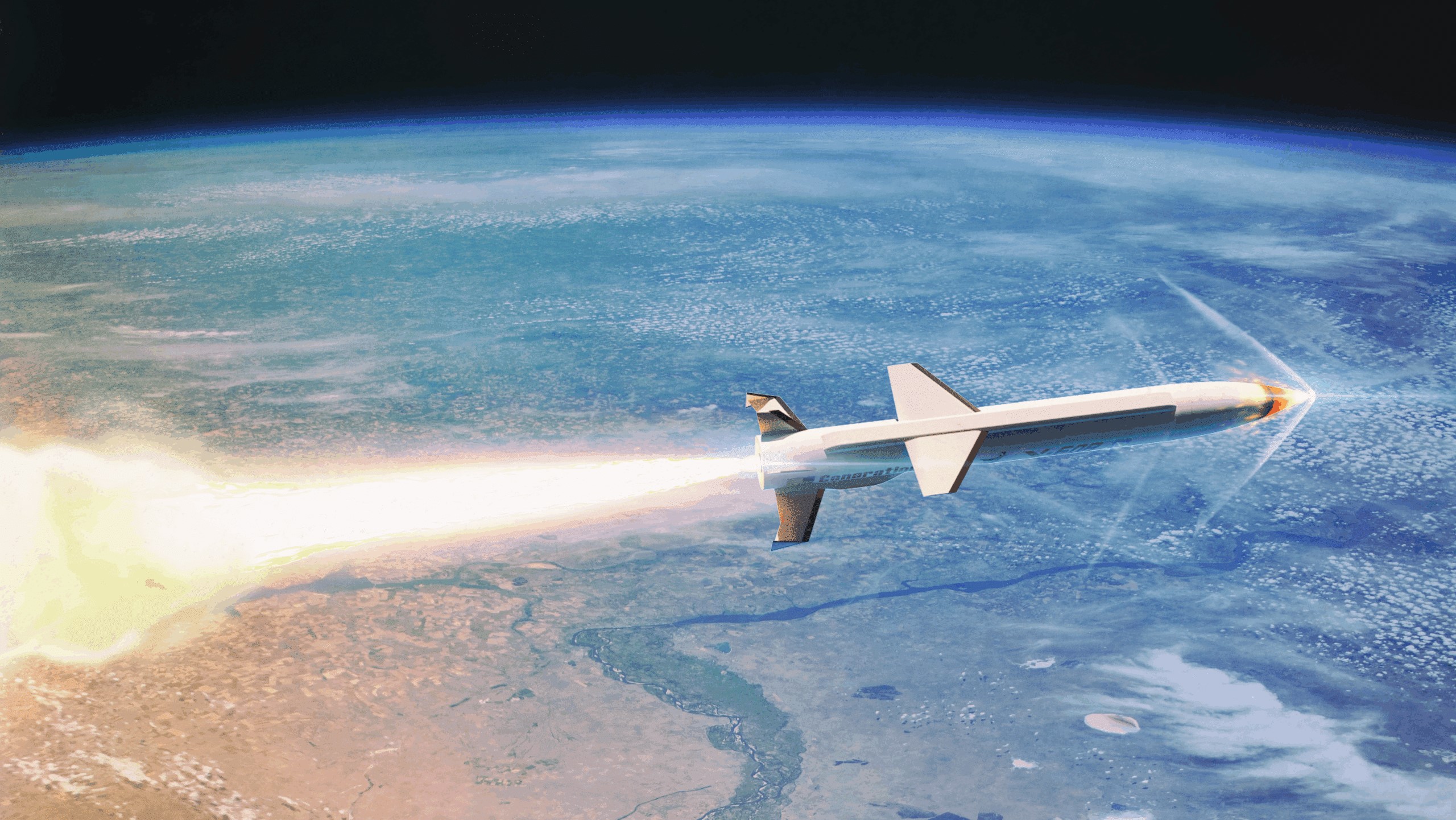
While NASA is working with U.S. aviation to explore commercial supersonic technologies, the agency is also looking forward to an even faster era of flight – one of vehicles that can fly hypersonic, or five times the speed of sound. And to further that vision, NASA has issued two awards for studies into vehicle concepts.
Some types of vehicles – such as rockets – achieve hypersonic speeds by carrying supplies of oxygen to allow their fuel to burn, instead of using the surrounding air. In contrast, NASA’s Hypersonic Technology Project works to advance “airbreathing,” reusable hypersonic aircraft, which take in air as they fly, allowing for much longer sustained cruising at hypersonic speeds.
Given commercial interest in finding applications for airbreathing hypersonic vehicles, the Hypersonic Technology Project is looking to find ways to make testing and development easier. Two contract awards the project made in August are aimed at helping to provide an affordable bridge between hypersonic ground and flight tests.
“With these awards, NASA will collaborate with the commercial hypersonics industry to identify new ways to evaluate technologies through flight tests while we address the challenges of reusable, routine, airbreathing, hypersonic flight,” said Dr. Nateri Madavan, director of NASA’s Advanced Air Vehicles Program.
The new awards went to SpaceWorks Enterprises, of Atlanta, Georgia, and Stratolaunch of Mojave, California, both of which will support a six-month NASA study exploring how current vehicles could be modified to meet the need for reusable, high-cadence, affordable flight-testing capabilities. SpaceWorks, which received $500,000, will focus on the X-60 platform. Stratolaunch, which received $1.2 million, will focus on its Talon-A platform.
Through these awards, NASA wants industry to help define the capabilities needed to achieve flight test requirements. The work will also potentially support a future NASA Making Advancements in Commercial Hypersonics (MACH) project focused on advancing commercial hypersonic vehicles through the development of infrastructure such as cost estimates and schedule requirements for a potential flight vehicle.
NASA advances U.S. hypersonic research through the Hypersonic Technology Project under the agency’s Advanced Air Vehicles Program. NASA intends for these projects to help lead the way in enabling revolutionary advancements in fundamental airbreathing hypersonic technologies.
Facebook logo @NASA@NASAaero@NASAes @NASA@NASAaero@NASA_es Instagram logo @NASA@NASAaero@NASA_es Linkedin logo @NASA Explore More 4 min read NASA Science Flights Venture to Improve Severe Winter Weather Warnings Article 1 week ago 4 min read NASA, GE Aerospace Hybrid Engine System Marks Successful Test Article 1 week ago 4 min read NASA Tests Technology Offering Potential Fuel Savings for Commercial Aviation Article 2 weeks ago Keep Exploring Discover More Topics From NASAMissions
Humans In Space
Solar System ExplorationEyes on the Solar System
Explore NASA’s History
Share Details Last Updated Jan 30, 2026 EditorLillian GipsonContactJim Bankejim.banke@nasa.gov Related TermsNASA Aims to Advance Hypersonic Flight Testing with New Awards
3 min read
Preparations for Next Moonwalk Simulations Underway (and Underwater) The NASA award to SpaceWorks Enterprises will focus on research using the company’s X-60 platform. SpaceWorksWhile NASA is working with U.S. aviation to explore commercial supersonic technologies, the agency is also looking forward to an even faster era of flight – one of vehicles that can fly hypersonic, or five times the speed of sound. And to further that vision, NASA has issued two awards for studies into vehicle concepts.
Some types of vehicles – such as rockets – achieve hypersonic speeds by carrying supplies of oxygen to allow their fuel to burn, instead of using the surrounding air. In contrast, NASA’s Hypersonic Technology Project works to advance “airbreathing,” reusable hypersonic aircraft, which take in air as they fly, allowing for much longer sustained cruising at hypersonic speeds.
Given commercial interest in finding applications for airbreathing hypersonic vehicles, the Hypersonic Technology Project is looking to find ways to make testing and development easier. Two contract awards the project made in August are aimed at helping to provide an affordable bridge between hypersonic ground and flight tests.
“With these awards, NASA will collaborate with the commercial hypersonics industry to identify new ways to evaluate technologies through flight tests while we address the challenges of reusable, routine, airbreathing, hypersonic flight,” said Dr. Nateri Madavan, director of NASA’s Advanced Air Vehicles Program.
The new awards went to SpaceWorks Enterprises, of Atlanta, Georgia, and Stratolaunch of Mojave, California, both of which will support a six-month NASA study exploring how current vehicles could be modified to meet the need for reusable, high-cadence, affordable flight-testing capabilities. SpaceWorks, which received $500,000, will focus on the X-60 platform. Stratolaunch, which received $1.2 million, will focus on its Talon-A platform.
Through these awards, NASA wants industry to help define the capabilities needed to achieve flight test requirements. The work will also potentially support a future NASA Making Advancements in Commercial Hypersonics (MACH) project focused on advancing commercial hypersonic vehicles through the development of infrastructure such as cost estimates and schedule requirements for a potential flight vehicle.
NASA advances U.S. hypersonic research through the Hypersonic Technology Project under the agency’s Advanced Air Vehicles Program. NASA intends for these projects to help lead the way in enabling revolutionary advancements in fundamental airbreathing hypersonic technologies.
Facebook logo @NASA@NASAaero@NASAes @NASA@NASAaero@NASA_es Instagram logo @NASA@NASAaero@NASA_es Linkedin logo @NASA Explore More 4 min read NASA Science Flights Venture to Improve Severe Winter Weather Warnings Article 6 days ago 4 min read NASA, GE Aerospace Hybrid Engine System Marks Successful Test Article 1 week ago 4 min read NASA Tests Technology Offering Potential Fuel Savings for Commercial Aviation Article 2 weeks ago Keep Exploring Discover More Topics From NASAMissions
Humans In Space
Solar System ExplorationEyes on the Solar System
Explore NASA’s History
Share Details Last Updated Jan 30, 2026 EditorLillian GipsonContactJim Bankejim.banke@nasa.gov Related TermsVisualizing Perseverance’s AI-Planned Drive on Mars
NASA/JPL-Caltech Photojournal Navigation Downloads Visualizing Perseverance’s AI-Planned Drive on Mars
PNG (326.26 KB)
PIA26646 Animation
MP4 (157.38 MB)
Description
This animation of NASA’s Perseverance was created with the Caspian visualization tool using data acquired during an 807-foot (246-meter) drive on the rim of Jezero Crater made by the rover on Dec. 10, 2025, the 1,709th Martian day, or sol, of the mission. The mission’s “drivers,” or rover planners, use the information to understand the Perseverance’s autonomous decision-making process during its drive by showing why it chose one specific path over other options.
This was one of two drives, the first being on Dec. 8, in which generative artificial intelligence provided the route planning. The AI analyzed high-resolution orbital imagery from the HiRISE (High Resolution Imaging Science Experiment) camera aboard NASA’s Mars Reconnaissance Orbiter and terrain-slope data from digital elevation models to identify critical terrain features — bedrock, outcrops, hazardous boulder fields, sand ripples, and the like. From that analysis, it generated a continuous path complete with waypoints, fixed locations where the rover takes up a new set of instructions.
The pale blue lines depict the track the rover’s wheels take. The black lines snaking out in front of the rover depict the different path options the rover is considering moment to moment. The white terrain Perseverance drives onto in the animation is a height map generated using data the rover collected during the drive. The pale blue circle that appears in front of the rover near the end of the animation is a waypoint.
NASA’s Jet Propulsion Laboratory, which is managed for the agency by Caltech, built and manages operations of the Perseverance rover.
For more about Perseverance: science.nasa.gov/mission/mars-2020-perseverance/
Keep Exploring Discover More Topics From Photojournal
Photojournal
Search Photojournal
Photojournal’s Latest Content
Feedback
Visualizing Perseverance’s AI-Planned Drive on Mars
NASA/JPL-Caltech Photojournal Navigation Downloads Visualizing Perseverance’s AI-Planned Drive on Mars
PNG (326.26 KB)
PIA26646 Animation
MP4 (157.38 MB)
Description
This animation of NASA’s Perseverance was created with the Caspian visualization tool using data acquired during an 807-foot (246-meter) drive on the rim of Jezero Crater made by the rover on Dec. 10, 2025, the 1,709th Martian day, or sol, of the mission. The mission’s “drivers,” or rover planners, use the information to understand the Perseverance’s autonomous decision-making process during its drive by showing why it chose one specific path over other options.
This was one of two drives, the first being on Dec. 8, in which generative artificial intelligence provided the route planning. The AI analyzed high-resolution orbital imagery from the HiRISE (High Resolution Imaging Science Experiment) camera aboard NASA’s Mars Reconnaissance Orbiter and terrain-slope data from digital elevation models to identify critical terrain features — bedrock, outcrops, hazardous boulder fields, sand ripples, and the like. From that analysis, it generated a continuous path complete with waypoints, fixed locations where the rover takes up a new set of instructions.
The pale blue lines depict the track the rover’s wheels take. The black lines snaking out in front of the rover depict the different path options the rover is considering moment to moment. The white terrain Perseverance drives onto in the animation is a height map generated using data the rover collected during the drive. The pale blue circle that appears in front of the rover near the end of the animation is a waypoint.
NASA’s Jet Propulsion Laboratory, which is managed for the agency by Caltech, built and manages operations of the Perseverance rover.
For more about Perseverance: science.nasa.gov/mission/mars-2020-perseverance/
Keep Exploring Discover More Topics From Photojournal
Photojournal
Search Photojournal
Photojournal’s Latest Content
Feedback
NASA Honor Awards for Cold Atom Lab Team Members
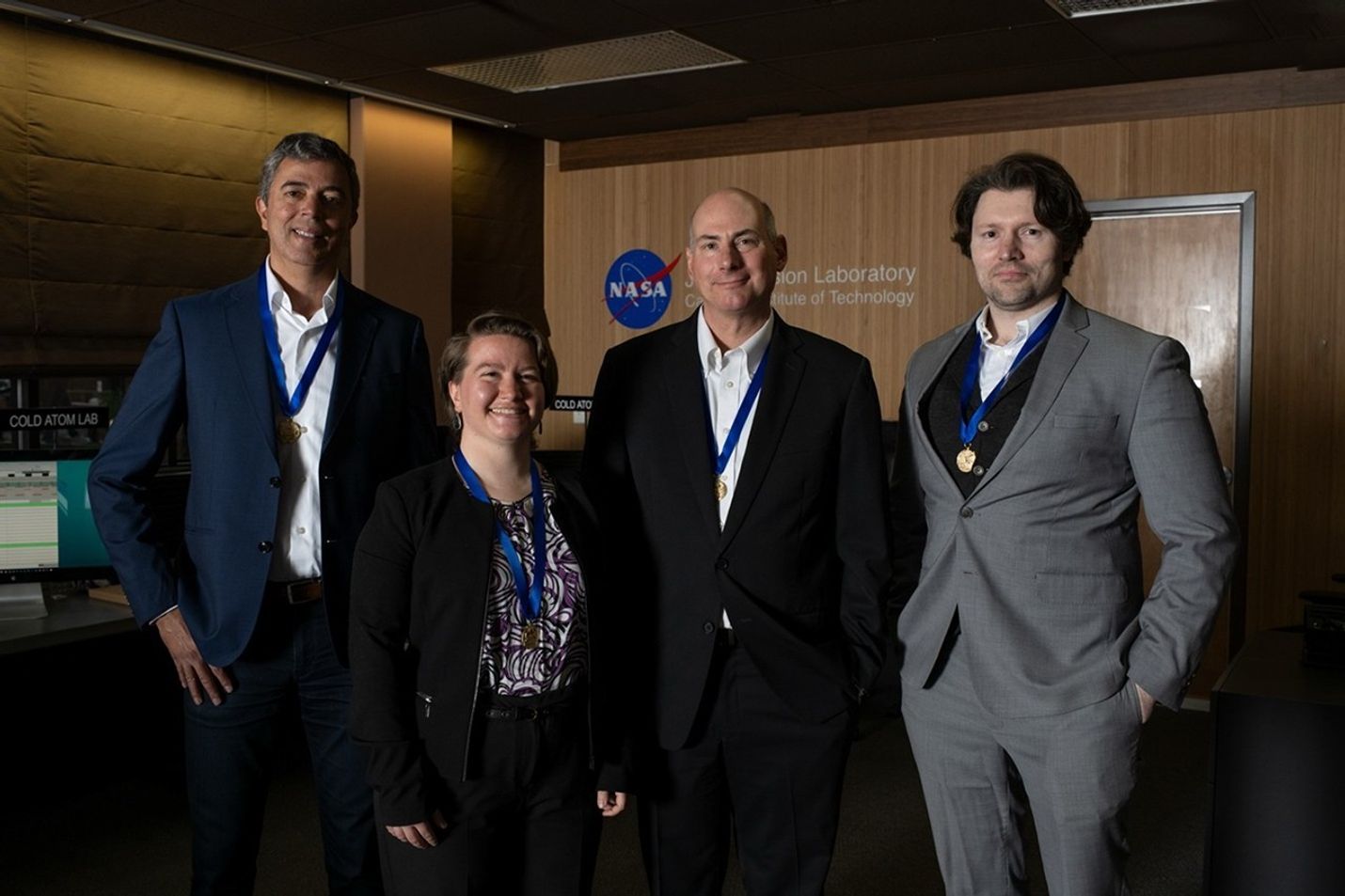
Awarded for notable leadership accomplishments that have significantly influenced NASA’s mission. Sustained leadership and exceptionally high-impact leadership achievements demonstrate the individual’s effectiveness in advancing NASA’s goals and image in present and future terms.
Kamal Oudrhiri – For outstanding leadership of the Cold Atom Laboratory, NASA’s first quantum laboratory in space.
NASA EXCEPTIONAL SCIENTIFIC ACHIEVEMENT MEDALAwarded for exceptional scientific contributions toward achievement of NASA’s mission. This award is given for individual efforts that have resulted in a key scientific discovery or resulted in contribution(s) of fundamental importance in this field or significantly enhanced understanding of the field.
Jason Williams – For exceptional scientific achievements enabling and performing the first pathfinding experiments in quantum sensing of inertial forces with atom interferometry in space.
NASA EXCEPTIONAL PUBLIC ACHIEVEMENT MEDALAwarded for a significant specific achievement or substantial improvement in operations, efficiency, service, financial savings, science, or technology which contributes to the mission of NASA.
Ethan Elliott – For exceptional achievement in generating the first quantum gas mixtures in space and using them to demonstrate dual species matter-wave interferometry for quantum tests.
NASA EARLY CAREER ACHIEVEMENT MEDALThis prestigious NASA medal is awarded for significant performance during the first 10 years of an individual’s career in support of the NASA Mission. The contribution is significant, in that, for an employee who is at such an early phase of career, the contribution has substantially improved the discipline area.
Sarah Rees – For early career achievement in anomaly recovery and complex operation efforts in support of the Cold Atom Laboratory on the International Space Station.
Keep Exploring Discover More Topics From NASA
Cold Atom Laboratory
International Space Station
To view more images, visit the Space Station Gallery.
Jet Propulsion Laboratory
International Space Station Facts and Figures
International Space Station Facts International Space Station Size & Mass
NASA Honor Awards for Cold Atom Lab Team Members
Awarded for notable leadership accomplishments that have significantly influenced NASA’s mission. Sustained leadership and exceptionally high-impact leadership achievements demonstrate the individual’s effectiveness in advancing NASA’s goals and image in present and future terms.
Kamal Oudrhiri – For outstanding leadership of the Cold Atom Laboratory, NASA’s first quantum laboratory in space.
NASA EXCEPTIONAL SCIENTIFIC ACHIEVEMENT MEDALAwarded for exceptional scientific contributions toward achievement of NASA’s mission. This award is given for individual efforts that have resulted in a key scientific discovery or resulted in contribution(s) of fundamental importance in this field or significantly enhanced understanding of the field.
Jason Williams – For exceptional scientific achievements enabling and performing the first pathfinding experiments in quantum sensing of inertial forces with atom interferometry in space.
NASA EXCEPTIONAL PUBLIC ACHIEVEMENT MEDALAwarded for a significant specific achievement or substantial improvement in operations, efficiency, service, financial savings, science, or technology which contributes to the mission of NASA.
Ethan Elliott – For exceptional achievement in generating the first quantum gas mixtures in space and using them to demonstrate dual species matter-wave interferometry for quantum tests.
NASA EARLY CAREER ACHIEVEMENT MEDALThis prestigious NASA medal is awarded for significant performance during the first 10 years of an individual’s career in support of the NASA Mission. The contribution is significant, in that, for an employee who is at such an early phase of career, the contribution has substantially improved the discipline area.
Sarah Rees – For early career achievement in anomaly recovery and complex operation efforts in support of the Cold Atom Laboratory on the International Space Station.
Keep Exploring Discover More Topics From NASA
Cold Atom Laboratory
International Space Station
To view more images, visit the Space Station Gallery.
Jet Propulsion Laboratory
International Space Station Facts and Figures
International Space Station Facts International Space Station Size & Mass
Video: Perseverance Rover’s View of Crater Rim Drive
NASA/JPL-Caltech Photojournal Navigation Downloads Video: Perseverance Rover’s View of Crater Rim Drive
JPEG (659.02 KB)
PIA26647 Animation
MP4 (125.55 MB)
Description
This animation shows Perseverance’s point of view during drive of 807 feet (246 meters) along the rim of Jezero Crater on Dec. 10, 2025, the 1,709th Martian day, or sol, of the mission. Captured over two hours and 35 minutes, 53 Navigation Camera (Navcam) image pairs were combined with rover data on orientation, wheel speed, and steering angle, as well as data from Perseverance’s Inertial Measurement Unit, and placed into a 3D virtual environment. The result is this reconstruction with virtual frames inserted about every 4 inches (0.1 meters) of drive progress.
NASA’s Jet Propulsion Laboratory, which is managed for the agency by Caltech, built and manages operations of the Perseverance rover.
For more about Perseverance: science.nasa.gov/mission/mars-2020-perseverance/
Keep Exploring Discover More Topics From Photojournal
Photojournal
Search Photojournal
Photojournal’s Latest Content
Feedback
Video: Perseverance Rover’s View of Crater Rim Drive
NASA/JPL-Caltech Photojournal Navigation Downloads Video: Perseverance Rover’s View of Crater Rim Drive
JPEG (659.02 KB)
PIA26647 Animation
MP4 (125.55 MB)
Description
This animation shows Perseverance’s point of view during drive of 807 feet (246 meters) along the rim of Jezero Crater on Dec. 10, 2025, the 1,709th Martian day, or sol, of the mission. Captured over two hours and 35 minutes, 53 Navigation Camera (Navcam) image pairs were combined with rover data on orientation, wheel speed, and steering angle, as well as data from Perseverance’s Inertial Measurement Unit, and placed into a 3D virtual environment. The result is this reconstruction with virtual frames inserted about every 4 inches (0.1 meters) of drive progress.
NASA’s Jet Propulsion Laboratory, which is managed for the agency by Caltech, built and manages operations of the Perseverance rover.
For more about Perseverance: science.nasa.gov/mission/mars-2020-perseverance/
Keep Exploring Discover More Topics From Photojournal
Photojournal
Search Photojournal
Photojournal’s Latest Content
Feedback
Mapping Perseverance’s Route With AI
NASA/JPL-Caltech/UofA Photojournal Navigation Downloads Mapping Perseverance’s Route With AI
PNG (1,003.24 KB)
Description
This annotated image from NASA’s HiRISE (High Resolution Imaging Science Experiment) camera aboard the agency’s Mars Reconnaissance Orbiter image depicts the AI-planned route and the actual route taken by NASA’s Perseverance Mars rover during its 807-foot (246-meter) drive on Dec. 10, 2025, the 1,709th Martian day, or sol, of the mission. The drive was the second of two demonstrations — the first being on Dec. 8 — showing that generative artificial intelligence could be incorporated in the rover’s route planning.
The magenta lines depict the path the rover’s wheels would take if it were to follow AI-processed waypoints, which are indicated with the magenta circles. (Waypoints are fixed locations where the rover takes up a new set of instructions.) The orange lines are based on data downlinked after the drive was complete and depict the actual path the rover took. The short, bold segments of the blue lines at the start of the route, in the upper right, show the portion of the drive that was determined by the mission’s rover drivers and based on imagery taken by the rover of the surface ahead. The surface areas in pale green boxes are called “keep-in zones.” Perseverance’s self-driving software is only allowed to pick routes inside those zones.
The graphic was generated using Hyperdrive, part of the software suite used to plan rover drives and manage the massive influx of engineering data from the Perseverance rover.
NASA’s Jet Propulsion Laboratory, which is managed for the agency by Caltech, built and manages operations of the Perseverance rover.
For more about Perseverance: science.nasa.gov/mission/mars-2020-perseverance/
The University of Arizona in Tucson, operates HiRISE, which was built by BAE Systems in Boulder, Colorado. JPL manages the Mars Reconnaissance Orbiter for SMD.
Keep Exploring Discover More Topics From Photojournal
Photojournal
Search Photojournal
Photojournal’s Latest Content
Feedback
Mapping Perseverance’s Route With AI
NASA/JPL-Caltech/UofA Photojournal Navigation Downloads Mapping Perseverance’s Route With AI
PNG (1,003.24 KB)
Description
This annotated image from NASA’s HiRISE (High Resolution Imaging Science Experiment) camera aboard the agency’s Mars Reconnaissance Orbiter image depicts the AI-planned route and the actual route taken by NASA’s Perseverance Mars rover during its 807-foot (246-meter) drive on Dec. 10, 2025, the 1,709th Martian day, or sol, of the mission. The drive was the second of two demonstrations — the first being on Dec. 8 — showing that generative artificial intelligence could be incorporated in the rover’s route planning.
The magenta lines depict the path the rover’s wheels would take if it were to follow AI-processed waypoints, which are indicated with the magenta circles. (Waypoints are fixed locations where the rover takes up a new set of instructions.) The orange lines are based on data downlinked after the drive was complete and depict the actual path the rover took. The short, bold segments of the blue lines at the start of the route, in the upper right, show the portion of the drive that was determined by the mission’s rover drivers and based on imagery taken by the rover of the surface ahead. The surface areas in pale green boxes are called “keep-in zones.” Perseverance’s self-driving software is only allowed to pick routes inside those zones.
The graphic was generated using Hyperdrive, part of the software suite used to plan rover drives and manage the massive influx of engineering data from the Perseverance rover.
NASA’s Jet Propulsion Laboratory, which is managed for the agency by Caltech, built and manages operations of the Perseverance rover.
For more about Perseverance: science.nasa.gov/mission/mars-2020-perseverance/
The University of Arizona in Tucson, operates HiRISE, which was built by BAE Systems in Boulder, Colorado. JPL manages the Mars Reconnaissance Orbiter for SMD.
Keep Exploring Discover More Topics From Photojournal
Photojournal
Search Photojournal
Photojournal’s Latest Content
Feedback
NASA stresses ISS crew safety as it gears up for next astronaut launch
After evacuating four astronauts from the ISS last month, NASA is looking ahead to its next crewed mission to the space station