
Feed aggregator
NASA’s next space suit for Artemis has out-of-this-world mobility
Astronauts are flying to the moon for the first time since 1972, and scientists are preparing specialized space suits for the next milestone—landing there
Virginia Trimble, Memory Keeper of Modern Astronomy
Virginia Trimble collected "shiny things" in astronomy — and her curated collections fascinated astronomers around the world.
The post Virginia Trimble, Memory Keeper of Modern Astronomy appeared first on Sky & Telescope.
Turning Forgotten Telescope Data into New Discoveries
Astronomers have been collecting data for generations, and the sad fact is that not all of it has yet been fully analyzed. There are still discoveries hiding in the dark recesses of data archives strewn throughout the astronomical world. Some of them are harder to access than others, such as actual physical plates containing star positions from more than a hundred years ago. But as more and more of this data is archived, astronomers also keep coming up with ever more impressive tools to analyze it. A recent paper from Cyril Tasse of the Paris Observatory and his co-authors, published recently in Nature Astronomy describes an algorithm that analyzes hundreds of thousands of previously unknown data points in radio telescope archives - and they found some interesting features in it.
Milano Cortina 2026
- Earth
- Earth Observatory
- Image of the Day
- EO Explorer
- Topics
- More Content
- About
Milano Cortina 2026
- Earth
- Earth Observatory
- Image of the Day
- EO Explorer
- Topics
- More Content
- About
NASA's Artemis II Spacecraft on the Launch Pad
NASA’s Orion spacecraft, which will carry the Artemis II crew around the Moon, sits at the launch pad on Jan. 17, 2026, after rollout. It rests atop the SLS (Space Launch System) rocket. Orion can provide living space on missions for four astronauts for up to 21 days without docking to another spacecraft. Advances in technology […]
Women and men are almost equally as likely to be diagnosed as autistic by adulthood, new study finds
Boys are more likely to be diagnosed as autistic as children—but by adulthood, that trend changes, according to a new study in Sweden
Curiosity Blog, Sols 4788-4797: Welcome Back from Conjunction
- Curiosity Home
- Science
- News and Features
- Multimedia
- Mars Missions
- Mars Home
2 min read
Curiosity Blog, Sols 4788-4797: Welcome Back from Conjunction NASA’s Mars rover Curiosity acquired this image using its Mast Camera (Mastcam); it shows the “Nevado Sajama” drill site from November, right next to the location of this weekend’s drill. The new drill site will be to the upper left of the existing hole. Curiosity captured the image on Jan. 25, 2026 — Sol 4789, or Martian day 4,789 of the Mars Science Laboratory mission — at 19:20:37 UTC. NASA/JPL-Caltech/MSSS
Written by Alex Innanen, Atmospheric Scientist at York University, Toronto
Earth planning date: Friday, Jan. 30, 2026
Mars has emerged from its holiday behind the Sun, and we here on Earth have been able to reconnect with Curiosity and get back to work on Mars. Our first planning day last Friday gave Curiosity a full weekend of activities, which wrapped up with getting us ready for our next drill. We checked out a broken white rock in the workspace with APXS, MAHLI, and ChemCam’s laser spectrometer and finished up imaging a sandy area we’ve kept an eye on during conjunction to see if we could catch any wind motion, before taking a small drive to our drill location about 2 meters away (about 6 feet).
This location may look familiar — our next drill will be only a few centimeters away from “Nevado Sajama,” which we drilled back in November. The reason we’ve returned here is to do a rare SAM experiment the instrument’s last container of tetramethylammonium hydroxide (or TMAH, for less of a mouthful). TMAH is a chemical that we can mix with our sample from Nevado Sajama to help identify any organic molecules. SAM had only two containers of TMAH (the first of which we used almost six years ago, so we want to be very certain that everything will go well with this experiment. As a result, we did a rehearsal of the handoff of the sample to SAM in Wednesday’s plan, before we drill this weekend.
The TMAH experiment takes up a lot of Curiosity’s energy, so there isn’t a ton to spare for other science activities. Luckily, we’ve spent a lot of time in this area and have collected plenty of images of our surroundings. Because of that, we’ve used our little bit of extra time in the second half of the week for environmental observations. We’re well into the dusty season now, so we’re keeping an eye on dust both near (looking out for dust devils) and far (keeping track of how much dust is in the crater and wider atmosphere).
-
Want to read more posts from the Curiosity team?
-
Want to learn more about Curiosity’s science instruments?
Article
1 month ago
3 min read Wind-Sculpted Landscapes: Investigating the Martian Megaripple ‘Hazyview’
Article
2 months ago
3 min read Curiosity Blog, Sols 4743-4749: Polygons in the Hollow
Article
2 months ago
Keep Exploring Discover More Topics From NASA Mars
Mars is the fourth planet from the Sun, and the seventh largest. It’s the only planet we know of inhabited…
All Mars Resources
Explore this collection of Mars images, videos, resources, PDFs, and toolkits. Discover valuable content designed to inform, educate, and inspire,…
Rover Basics
Each robotic explorer sent to the Red Planet has its own unique capabilities driven by science. Many attributes of a…
Mars Exploration: Science Goals
The key to understanding the past, present or future potential for life on Mars can be found in NASA’s four…
Curiosity Blog, Sols 4788-4797: Welcome Back from Conjunction
- Curiosity Home
- Science
- News and Features
- Multimedia
- Mars Missions
- Mars Home
2 min read
Curiosity Blog, Sols 4788-4797: Welcome Back from Conjunction NASA’s Mars rover Curiosity acquired this image using its Mast Camera (Mastcam); it shows the “Nevado Sajama” drill site from November, right next to the location of this weekend’s drill. The new drill site will be to the upper left of the existing hole. Curiosity captured the image on Jan. 25, 2026 — Sol 4789, or Martian day 4,789 of the Mars Science Laboratory mission — at 19:20:37 UTC. NASA/JPL-Caltech/MSSSWritten by Alex Innanen, Atmospheric Scientist at York University, Toronto
Earth planning date: Friday, Jan. 30, 2026
Mars has emerged from its holiday behind the Sun, and we here on Earth have been able to reconnect with Curiosity and get back to work on Mars. Our first planning day last Friday gave Curiosity a full weekend of activities, which wrapped up with getting us ready for our next drill. We checked out a broken white rock in the workspace with APXS, MAHLI, and ChemCam’s laser spectrometer and finished up imaging a sandy area we’ve kept an eye on during conjunction to see if we could catch any wind motion, before taking a small drive to our drill location about 2 meters away (about 6 feet).
This location may look familiar — our next drill will be only a few centimeters away from “Nevado Sajama,” which we drilled back in November. The reason we’ve returned here is to do a rare SAM experiment the instrument’s last container of tetramethylammonium hydroxide (or TMAH, for less of a mouthful). TMAH is a chemical that we can mix with our sample from Nevado Sajama to help identify any organic molecules. SAM had only two containers of TMAH (the first of which we used almost six years ago, so we want to be very certain that everything will go well with this experiment. As a result, we did a rehearsal of the handoff of the sample to SAM in Wednesday’s plan, before we drill this weekend.
The TMAH experiment takes up a lot of Curiosity’s energy, so there isn’t a ton to spare for other science activities. Luckily, we’ve spent a lot of time in this area and have collected plenty of images of our surroundings. Because of that, we’ve used our little bit of extra time in the second half of the week for environmental observations. We’re well into the dusty season now, so we’re keeping an eye on dust both near (looking out for dust devils) and far (keeping track of how much dust is in the crater and wider atmosphere).
-
Want to read more posts from the Curiosity team?
-
Want to learn more about Curiosity’s science instruments?
Article
1 month ago
3 min read Wind-Sculpted Landscapes: Investigating the Martian Megaripple ‘Hazyview’
Article
2 months ago
3 min read Curiosity Blog, Sols 4743-4749: Polygons in the Hollow
Article
2 months ago
Keep Exploring Discover More Topics From NASA Mars
Mars is the fourth planet from the Sun, and the seventh largest. It’s the only planet we know of inhabited…
All Mars Resources
Explore this collection of Mars images, videos, resources, PDFs, and toolkits. Discover valuable content designed to inform, educate, and inspire,…
Rover Basics
Each robotic explorer sent to the Red Planet has its own unique capabilities driven by science. Many attributes of a…
Mars Exploration: Science Goals
The key to understanding the past, present or future potential for life on Mars can be found in NASA’s four…
NASA, University of Texas Expand Research and Workforce Development
NASA’s Johnson Space Center in Houston and the University of Texas System (UT System) announced the signing of a collaborative Space Act Agreement on Jan. 9, 2026. The agreement expands research and workforce development partnership opportunities across NASA centers and UT System facilities.
NASA’s Johnson Space Center Director Vanessa Wyche and University of Texas System Chancellor John M. Zerwas, participate in a ceremonial signing of a Space Act Agreement at Johnson Space Center in Houston on Jan. 9, 2026.NASA/Helen Arase Vargas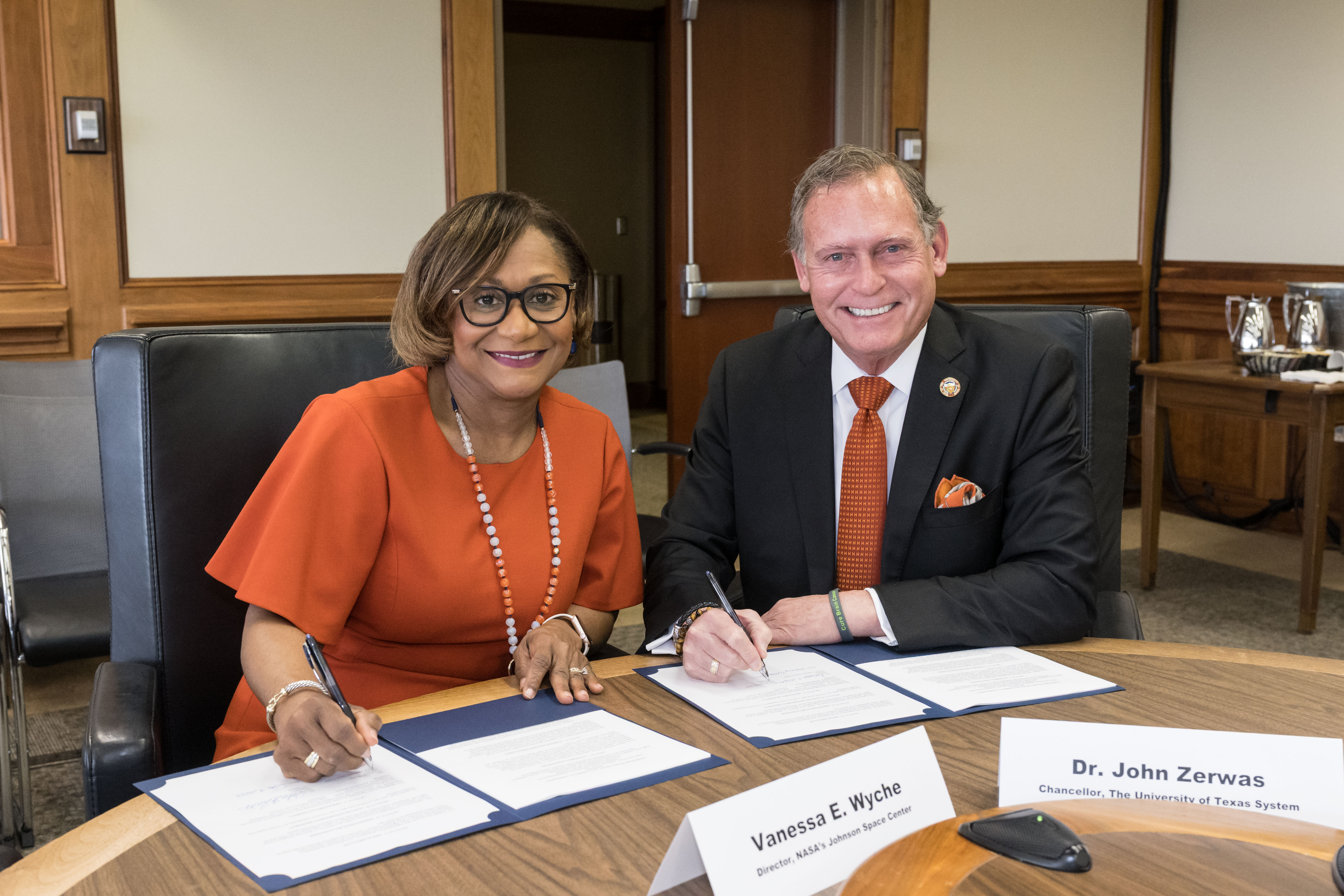
The agreement builds upon decades of collaboration between NASA and the UT System by enabling additional research, teaching resources, and educational engagements that support human spaceflight and grow the pipeline of next-generation talent. It will leverage Johnson’s unique capabilities as the hub of human spaceflight and the UT System’s assets across its 13 institutions.
“NASA’s Johnson Space Center has a long history of working with colleges and universities to help us achieve our human spaceflight missions,” said Johnson Center Director Vanessa Wyche. “We are eager to partner with the UT System to collaborate in vital research and technology development initiatives that will enable us to meet our nation’s exploration goals and advance the future of space exploration.”
The agreement also reflects Johnson’s continued evolution through Dare Unite Explore – a set of commitments designed to ensure the center will remain the world leader in human space exploration. Those commitments include expanding partner access to the center’s world-class facilities and expertise, as well as establishing robust workforce development and recruitment programs.
Johnson Center Director Vanessa Wyche and UT System Chancellor John Zerwas (center) stand with members of their respective leadership teams following the ceremonial agreement signing.NASA/Helen Arase Vargas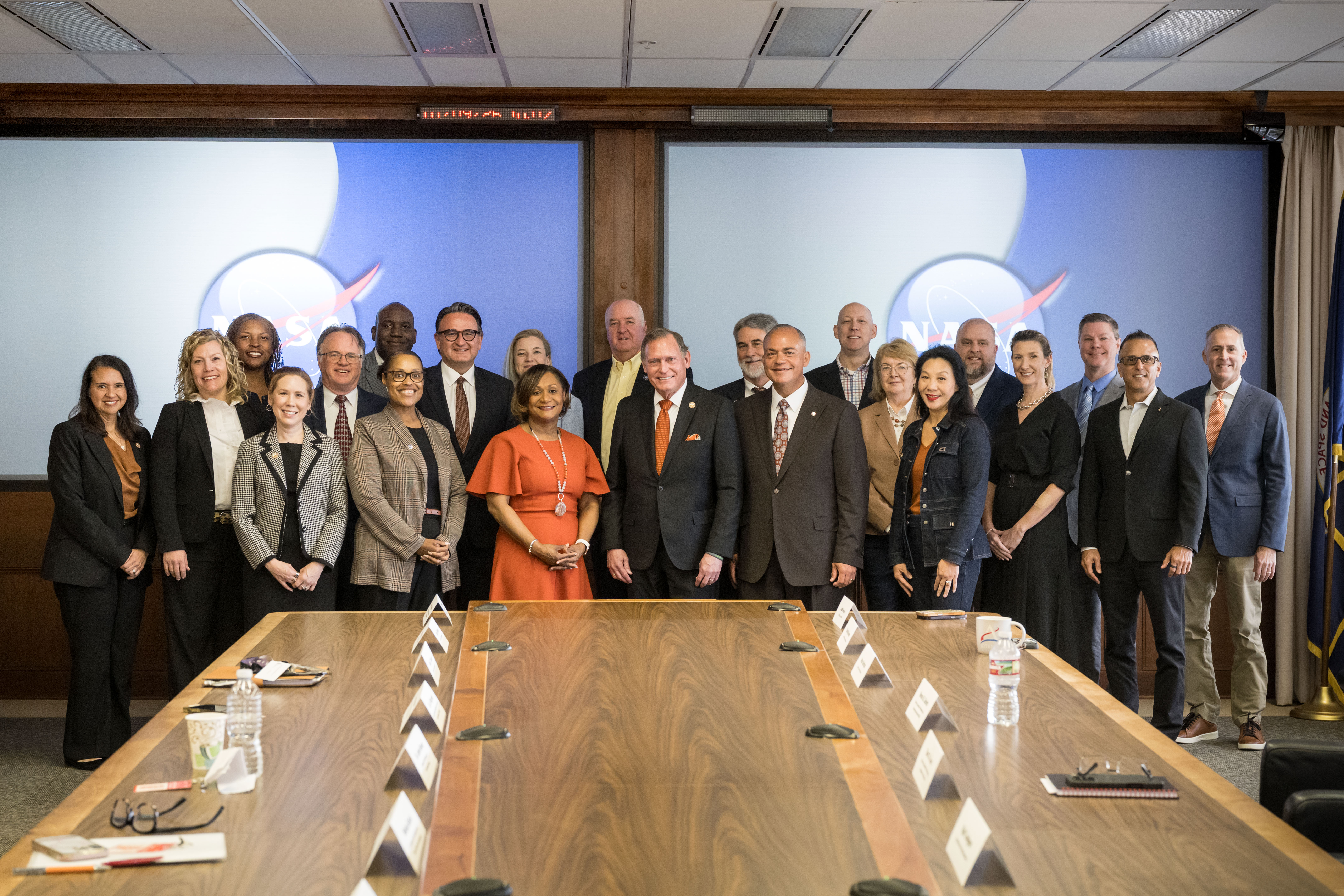
Wyche and UT System Chancellor John M. Zerwas hosted a ceremonial signing event at Johnson. During the event, Wyche and Zerwas, along with the center’s leadership team and the UT System executives and faculty, strategized on potential partnership opportunities and next steps for stakeholders.
Explore More 8 min read Station Nation: Erin Edwards, Deputy Branch Chief for Crew Operations and Capsule Communicator Article 2 days ago 4 min read Preparing for Artemis II: Training for a Mission Around the Moon Article 7 days ago 3 min read NASA Johnson Celebrates 25 Years in Space with Community Day Article 1 week agoNASA, University of Texas Expand Research and Workforce Development
NASA’s Johnson Space Center in Houston and the University of Texas System (UT System) announced the signing of a collaborative Space Act Agreement on Jan. 9, 2026. The agreement expands research and workforce development partnership opportunities across NASA centers and UT System facilities.
NASA’s Johnson Space Center Director Vanessa Wyche and University of Texas System Chancellor John M. Zerwas, participate in a ceremonial signing of a Space Act Agreement at Johnson Space Center in Houston on Jan. 9, 2026.NASA/Helen Arase VargasThe agreement builds upon decades of collaboration between NASA and the UT System by enabling additional research, teaching resources, and educational engagements that support human spaceflight and grow the pipeline of next-generation talent. It will leverage Johnson’s unique capabilities as the hub of human spaceflight and the UT System’s assets across its 13 institutions.
“NASA’s Johnson Space Center has a long history of working with colleges and universities to help us achieve our human spaceflight missions,” said Johnson Center Director Vanessa Wyche. “We are eager to partner with the UT System to collaborate in vital research and technology development initiatives that will enable us to meet our nation’s exploration goals and advance the future of space exploration.”
The agreement also reflects Johnson’s continued evolution through Dare Unite Explore – a set of commitments designed to ensure the center will remain the world leader in human space exploration. Those commitments include expanding partner access to the center’s world-class facilities and expertise, as well as establishing robust workforce development and recruitment programs.
Johnson Center Director Vanessa Wyche and UT System Chancellor John Zerwas (center) stand with members of their respective leadership teams following the ceremonial agreement signing.NASA/Helen Arase VargasWyche and UT System Chancellor John M. Zerwas hosted a ceremonial signing event at Johnson. During the event, Wyche and Zerwas, along with the center’s leadership team and the UT System executives and faculty, strategized on potential partnership opportunities and next steps for stakeholders.
Explore More 8 min read Station Nation: Erin Edwards, Deputy Branch Chief for Crew Operations and Capsule Communicator Article 2 days ago 4 min read Preparing for Artemis II: Training for a Mission Around the Moon Article 1 week ago 3 min read NASA Johnson Celebrates 25 Years in Space with Community Day Article 1 week agoIs the Universe Older Than We Think? Part 2: Tired Light
This is all based on the assumption that galaxies are receding away from us. And I actually cheated a little.
Station Nation: Erin Edwards, Deputy Branch Chief for Crew Operations and Capsule Communicator
As a member of the Crew Operations Office, Erin Edwards and her team manage astronaut candidate training schedules, including field medical exercises, land survival, and underwater operations at NASA’s Neutral Buoyancy Laboratory in Houston. She also develops and tests new training programs to keep crews mission-ready.
Along with her role as a crew operations officer, Edwards works in the International Space Station Mission Control Center as a capsule communicator, or capcom, and instructor. As a capcom, she must be fluent in the language of the spacecraft and its operations to clearly relay important information to the crew, especially during dynamic operations.
Read on to learn about Edwards’ career with NASA and more!
Erin Edwards serves as a capsule communicator, or capcom, in the International Space Station Mission Control Center in Houston.NASA/James Blair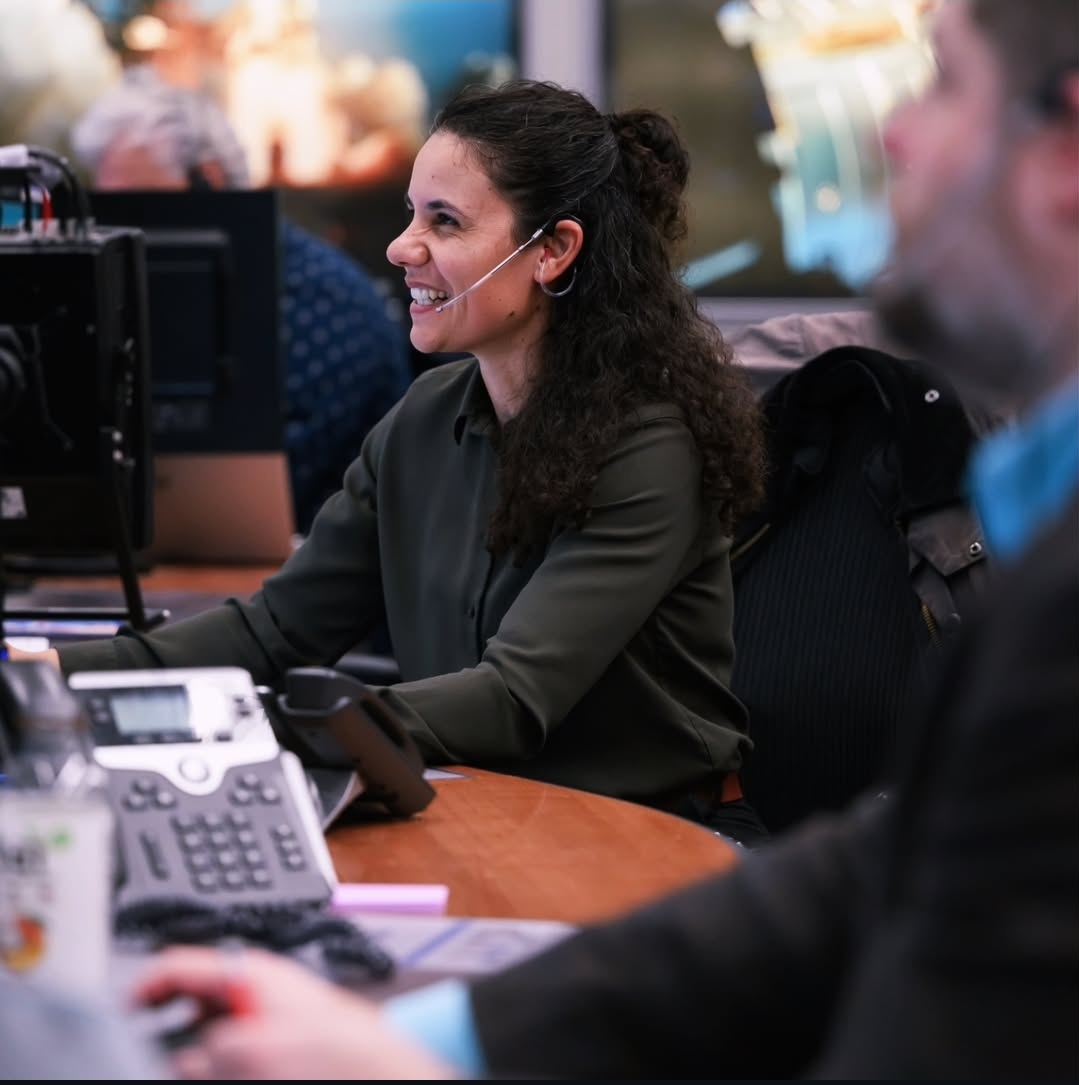
Where are you from?
Port Moody, British Columbia, Canada.
How long have you been working for NASA?
I’ve been at NASA for two years. My term here with the military is three years.
What was your path to NASA?
Super random! I’m a Canadian military pilot, previously working in the Canadian Special Operations Forces Command as an aircraft commander on the CH-146 Griffon. While we use a lot of space-based assets in aviation, the leap to human spaceflight was unexpected.
An opportunity for an officer to work in the astronaut office as a capcom arose a few years ago. As a lifelong space nerd, I figured it would be an amazing opportunity. I applied and was interviewed, and before long, was posted to NASA’s Johnson Space Center as the first Canadian non-astronaut to be posted as a capcom and later as an operations officer.
How would you describe your job to family or friends that may not be familiar with NASA?
My team and I organize the unassigned crew and astronaut candidates’ work lives! As a capcom, I help translate what the engineers are saying in the flight control room for the astronauts aboard the station, and I help with the station activities as call sign Houston. More recently I’ve been assigned as the TH57 Helicopter Project Pilot at AOD to help get that fleet integrated for more lunar-focused Space Flight Readiness Training.
What advice would you give to young individuals aspiring to work in the space industry or at NASA?
Just go for it! You miss 100% of the shots you don’t take, as Wayne Gretzky said. My background as a military helicopter pilot, Navy diver, and mining engineer may appear to have no relevance to NASA, but that diverse experience has turned out to be useful here as an operations officer for astronaut training. I wouldn’t have known that if I hadn’t thrown my hat in the ring. No matter your technical background, there’s probably a place for it in spaceflight. Your experience has unique ways of benefiting such complex, multifaceted programs like spaceflight—so give it a shot!
Is there a space figure you’ve looked up to or someone that inspires you?
Spaceflight isn't something we can do on our own, there are many integrated teams comprised of many different types of people all pulling together to make the impossible happen.Erin Edwards
Deputy Branch Chief for Crew Operations and Capsule Communicator
Honestly, there isn’t a single person, but I think what NASA and my own country’s space program, like others, have committed themselves to as a giant team is what has inspired me over the years. I think I was inspired by that, the mission, and the culture of a united effort of so many to do hard things.
What is your favorite NASA memory or the most meaningful project you’ve worked on during your time with NASA?
There are two! After only a few months at NASA, I was told by my soon-to-be boss, James ‘Vegas’ Kelly, that I was selected to take over NASA astronaut Jonny Kim’s operations job. This was a huge vote of confidence for me as a new team member from Canada. The second was sending my first transmission to the station as a qualified capcom, which was incredibly cool. I am just a big nerd from a small town in Canada, and never in a million years did I think I would be at NASA at that console, so it was a little mind blowing.
Erin Edwards during diving operations at NASA’s Neutral Buoyancy Laboratory in front of the Canadarm2 mock-up.NASA/Tess Caswell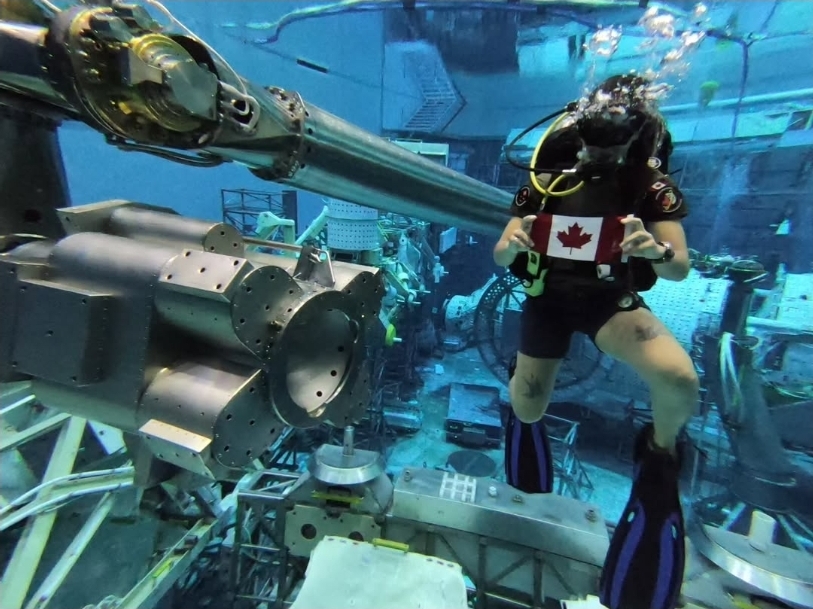
What do you love sharing about station?
Everyone is playing their part to accomplish important science and experiments that we can't do anywhere else.Erin Edwards
Deputy Branch Chief for Crew Operations and Capsule Communicator
People always seem surprised at how big the teams are that support the station and how collaborative of an effort it is. It stretches across disciplines, centers, and even countries. That information is critical for solving problems here on Earth.
November 2, 2025, marked 25 years of continuous human presence. What does this milestone mean to you?
A quarter century of science and partnership aboard the orbital laboratory is a testament to what we can do as a global society when we really want to. To me personally, being able to be here with people who have worked in space or help train the people going next is such a full circle situation. I dreamed of working on a team like this, and it happened 20 years later. That opportunity to fulfill a dream and represent Canada as part of the ISS program means a lot to me!
If you could have dinner with any astronaut, past or present, who would it be?
I was never able to meet Sally Ride. I think I would have loved to ask her some questions and hear her story in person.
Do you have a favorite space-related memory or moment that stands out to you?
Dr. Robert Thirsk, a Canadian astronaut, spoke to my elementary school in 1996, which he had attended years earlier. I was in sixth grade, and it was a formative interaction. Hearing him talk so passionately about his shuttle mission and life with his team aboard the orbiter was absolutely lifechanging. I didn’t know how I was going to do it, but I decided then that I wanted to work in space. That set my course for life. I’ll likely never get to space, but I got pretty close, and it is really something to pursue a goal like that for so long and have it work out, almost
What are some of the key projects you have worked on during your time at NASA? What have been your favorite?
Being able to put my operational helicopter background to use in helping to build the helicopter flight program here has been a really cool and unexpected opportunity! I happened to be the right person at the right time with the right skill set to make a difference in that aspect of training. I’m proud of that.
Erin Edwards pictured in her role as a Royal Canadian Air Force helicopter pilot, where she built skills that she leverages in her work at NASA.Canadian Armed Forces/Erin Edwards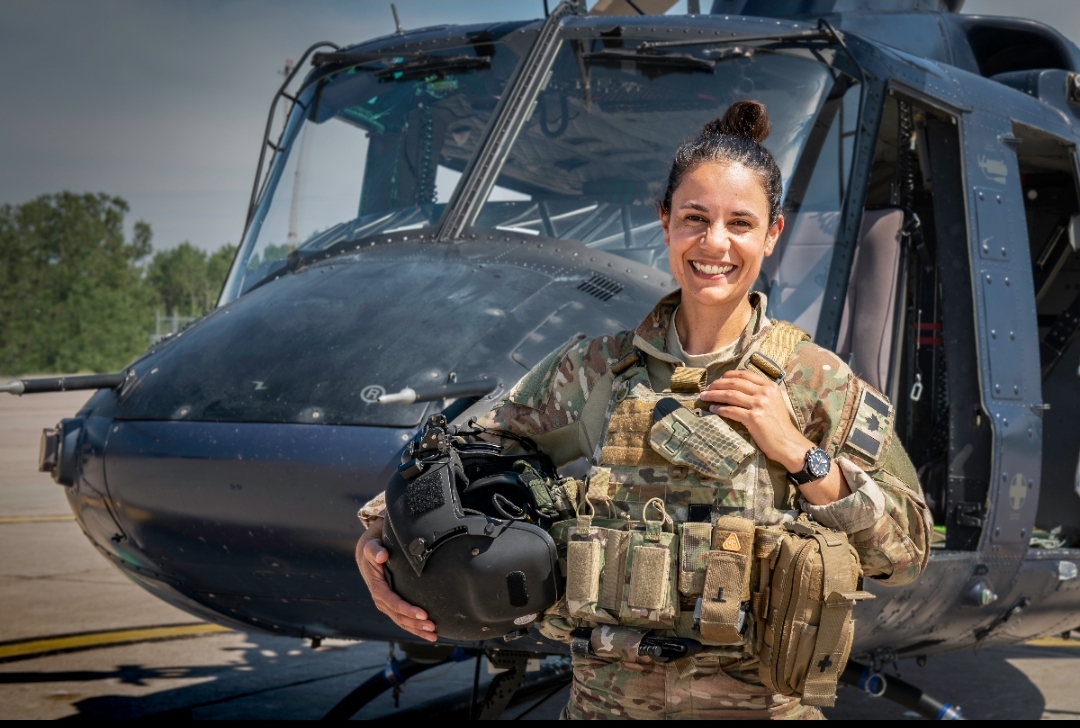
What are your hobbies/things you enjoy doing outside of work?
I’m in my forties, but still really like playing contact rugby, which is such a fun sport. Between the tactics, teamwork, bashing into people on the pitch, and a cheeky beer after a game, it’s a great way to spend a weekend. I run a lot and, when I can, climb – any kind of climbing, sport, bouldering, trad, ice climbing. All of it!
Day launch or night launch?
Night launch!
Favorite space movie?
Apollo 13. Obviously.
NASA Worm or Meatball logo?
Meatball!
The NASA Meatball logo
NASA and its partners have supported humans continuously living and working in space since November 2000. After 25 years of continuous human presence, the space station remains a training and proving ground for the future of commercial space stations, deep space missions, enabling NASA’s Artemis campaign, lunar exploration, and future Mars missions.
Every day, we are conducting exciting research aboard our orbiting laboratory that will help us explore farther into space and bring benefits back to people on Earth. You can keep up with the latest news, videos, and pictures about space station science on the Station Research & Technology news page. It is a curated hub of space station research digital media from Johnson and other centers and space agencies.
Sign up for our weekly email newsletter to get the updates delivered directly to you.
Follow updates on social media at @Space_Station on X, and on the space station accounts on Facebook and Instagram.
Explore More 2 min read NASA, University of Texas Expand Research and Workforce Development Article 19 hours ago 2 min read NASA Honor Awards for Cold Atom Lab Team MembersNASA OUTSTANDING PUBLIC LEADERSHIP MEDAL Awarded for notable leadership accomplishments that have significantly influenced NASA’s…
Article 6 days ago 4 min read Preparing for Artemis II: Training for a Mission Around the Moon Article 6 days agoStation Nation: Erin Edwards, Deputy Branch Chief for Crew Operations and Capsule Communicator
As a member of the Crew Operations Office, Erin Edwards and her team manage astronaut candidate training schedules, including field medical exercises, land survival, and underwater operations at NASA’s Neutral Buoyancy Laboratory in Houston. She also develops and tests new training programs to keep crews mission-ready.
Along with her role as a crew operations officer, Edwards works in the International Space Station Mission Control Center as a capsule communicator, or capcom, and instructor. As a capcom, she must be fluent in the language of the spacecraft and its operations to clearly relay important information to the crew, especially during dynamic operations.
Read on to learn about Edwards’ career with NASA and more!
Erin Edwards serves as a capsule communicator, or capcom, in the International Space Station Mission Control Center in Houston.NASA/James BlairWhere are you from?
Port Moody, British Columbia, Canada.
How long have you been working for NASA?
I’ve been at NASA for two years. My term here with the military is three years.
What was your path to NASA?
Super random! I’m a Canadian military pilot, previously working in the Canadian Special Operations Forces Command as an aircraft commander on the CH-146 Griffon. While we use a lot of space-based assets in aviation, the leap to human spaceflight was unexpected.
An opportunity for an officer to work in the astronaut office as a capcom arose a few years ago. As a lifelong space nerd, I figured it would be an amazing opportunity. I applied and was interviewed, and before long, was posted to NASA’s Johnson Space Center as the first Canadian non-astronaut to be posted as a capcom and later as an operations officer.
How would you describe your job to family or friends that may not be familiar with NASA?
My team and I organize the unassigned crew and astronaut candidates’ work lives! As a capcom, I help translate what the engineers are saying in the flight control room for the astronauts aboard the station, and I help with the station activities as call sign Houston. More recently I’ve been assigned as the TH57 Helicopter Project Pilot at AOD to help get that fleet integrated for more lunar-focused Space Flight Readiness Training.
What advice would you give to young individuals aspiring to work in the space industry or at NASA?
Just go for it! You miss 100% of the shots you don’t take, as Wayne Gretzky said. My background as a military helicopter pilot, Navy diver, and mining engineer may appear to have no relevance to NASA, but that diverse experience has turned out to be useful here as an operations officer for astronaut training. I wouldn’t have known that if I hadn’t thrown my hat in the ring. No matter your technical background, there’s probably a place for it in spaceflight. Your experience has unique ways of benefiting such complex, multifaceted programs like spaceflight—so give it a shot!
Is there a space figure you’ve looked up to or someone that inspires you?
Spaceflight isn't something we can do on our own, there are many integrated teams comprised of many different types of people all pulling together to make the impossible happen.Erin Edwards
Deputy Branch Chief for Crew Operations and Capsule Communicator
Honestly, there isn’t a single person, but I think what NASA and my own country’s space program, like others, have committed themselves to as a giant team is what has inspired me over the years. I think I was inspired by that, the mission, and the culture of a united effort of so many to do hard things.
What is your favorite NASA memory or the most meaningful project you’ve worked on during your time with NASA?
There are two! After only a few months at NASA, I was told by my soon-to-be boss, James ‘Vegas’ Kelly, that I was selected to take over NASA astronaut Jonny Kim’s operations job. This was a huge vote of confidence for me as a new team member from Canada. The second was sending my first transmission to the station as a qualified capcom, which was incredibly cool. I am just a big nerd from a small town in Canada, and never in a million years did I think I would be at NASA at that console, so it was a little mind blowing.
Erin Edwards during diving operations at NASA’s Neutral Buoyancy Laboratory in front of the Canadarm2 mock-up.NASA/Tess CaswellWhat do you love sharing about station?
Everyone is playing their part to accomplish important science and experiments that we can't do anywhere else.Erin Edwards
Deputy Branch Chief for Crew Operations and Capsule Communicator
People always seem surprised at how big the teams are that support the station and how collaborative of an effort it is. It stretches across disciplines, centers, and even countries. That information is critical for solving problems here on Earth.
November 2, 2025, marked 25 years of continuous human presence. What does this milestone mean to you?
A quarter century of science and partnership aboard the orbital laboratory is a testament to what we can do as a global society when we really want to. To me personally, being able to be here with people who have worked in space or help train the people going next is such a full circle situation. I dreamed of working on a team like this, and it happened 20 years later. That opportunity to fulfill a dream and represent Canada as part of the ISS program means a lot to me!
If you could have dinner with any astronaut, past or present, who would it be?
I was never able to meet Sally Ride. I think I would have loved to ask her some questions and hear her story in person.
Do you have a favorite space-related memory or moment that stands out to you?
Dr. Robert Thirsk, a Canadian astronaut, spoke to my elementary school in 1996, which he had attended years earlier. I was in sixth grade, and it was a formative interaction. Hearing him talk so passionately about his shuttle mission and life with his team aboard the orbiter was absolutely lifechanging. I didn’t know how I was going to do it, but I decided then that I wanted to work in space. That set my course for life. I’ll likely never get to space, but I got pretty close, and it is really something to pursue a goal like that for so long and have it work out, almost
What are some of the key projects you have worked on during your time at NASA? What have been your favorite?
Being able to put my operational helicopter background to use in helping to build the helicopter flight program here has been a really cool and unexpected opportunity! I happened to be the right person at the right time with the right skill set to make a difference in that aspect of training. I’m proud of that.
Erin Edwards pictured in her role as a Royal Canadian Air Force helicopter pilot, where she built skills that she leverages in her work at NASA.Canadian Armed Forces/Erin EdwardsWhat are your hobbies/things you enjoy doing outside of work?
I’m in my forties, but still really like playing contact rugby, which is such a fun sport. Between the tactics, teamwork, bashing into people on the pitch, and a cheeky beer after a game, it’s a great way to spend a weekend. I run a lot and, when I can, climb – any kind of climbing, sport, bouldering, trad, ice climbing. All of it!
Day launch or night launch?
Night launch!
Favorite space movie?
Apollo 13. Obviously.
NASA Worm or Meatball logo?
Meatball!
The NASA Meatball logoNASA and its partners have supported humans continuously living and working in space since November 2000. After 25 years of continuous human presence, the space station remains a training and proving ground for the future of commercial space stations, deep space missions, enabling NASA’s Artemis campaign, lunar exploration, and future Mars missions.
Every day, we are conducting exciting research aboard our orbiting laboratory that will help us explore farther into space and bring benefits back to people on Earth. You can keep up with the latest news, videos, and pictures about space station science on the Station Research & Technology news page. It is a curated hub of space station research digital media from Johnson and other centers and space agencies.
Sign up for our weekly email newsletter to get the updates delivered directly to you.
Follow updates on social media at @Space_Station on X, and on the space station accounts on Facebook and Instagram.
Explore More 2 min read NASA, University of Texas Expand Research and Workforce Development Article 2 days ago 2 min read NASA Honor Awards for Cold Atom Lab Team MembersNASA OUTSTANDING PUBLIC LEADERSHIP MEDAL Awarded for notable leadership accomplishments that have significantly influenced NASA’s…
Article 7 days ago 4 min read Preparing for Artemis II: Training for a Mission Around the Moon Article 7 days agoNasal spray could prevent infections from any flu strain
Nasal spray could prevent infections from any flu strain
Lung cancer hijacks the brain to trick the immune system
Lung cancer tumor cells in mice communicate with the brain, sending signals to deactivate the body’s immune response, a study finds
Cosmic Collision: The JWST Found An Early 5-Galaxy Merger
The JWST found a system of at least five interacting galaxies only 800 million years after the Big Bang. The discovery adds weight to the growing understanding that galaxies were interacting and shaping their surroundings far earlier than scientists thought. There's also evidence that the collision was redistributing heavy elements beyond the galaxies themselves.
Physicists trace particles back to the quantum vacuum
Scientists have found “strange quarks” that originated as virtual particles that sprang from nothing