NASA News

NASA Fires Up Powerful Lithium-Fed Thruster for Trips to Mars
A technology that could propel crewed missions to Mars and robotic spacecraft throughout the solar system was recently put to the test at NASA’s Jet Propulsion Laboratory in Southern California. On Feb. 24, for the first time in years and at power levels exceeding any previous test in the United States, a team fired up an electromagnetic thruster that runs on lithium metal vapor.
This prototype achieved power levels beyond the highest-power electric thrusters on any of the agency’s current spacecraft. Valuable data from the first firing of this thruster will help inform an upcoming series of tests.
“At NASA, we work on many things at once, and we haven’t lost sight of Mars. The successful performance of our thruster in this test demonstrates real progress toward sending an American astronaut to set foot on the Red Planet,” said NASA Administrator Jared Isaacman. “This marks the first time in the United States that an electric propulsion system has operated at power levels this high, reaching up to 120 kilowatts. We will continue to make strategic investments that will propel that next giant leap.”
JPL senior research scientist James Polk peers into the condensable metal propellant (CoMeT) vacuum facility at JPL’s Electric Propulsion Lab, where a high-power electric thruster prototype his team developed was being put to the test in February 2026.NASA/JPL-CaltechDuring five ignitions, the tungsten electrode at the thruster’s center glowed bright white, reaching over 5,000 degrees Fahrenheit (2,800 degrees Celsius). The work was conducted in JPL’s Electric Propulsion Lab, home to the condensable metal propellant vacuum facility, a unique national asset for safely testing electric thrusters that use metal vapor propellants at up to megawatt-class power levels.
Powering upElectric propulsion uses up to 90% less propellant than traditional, high-thrust chemical rockets. Current electric propulsion thrusters, like those powering NASA’s Psyche mission, use solar power to accelerate propellants, producing a low, continuous thrust that reaches high speeds over time. NASA JPL is testing a lithium-fed magnetoplasmadynamic (MPD) thruster, a technology that has been researched since the 1960s but never flown operationally. The MPD engine differs from existing thrusters by using high currents interacting with a magnetic field to electromagnetically accelerate lithium plasma.
The prototype thruster is enclosed in JPL’s condensable metal propellant (CoMeT) vacuum facility, a unique national asset designed to safely test thrusters using metal-vapor propellants as part of potential megawatt-class electric propulsion systems.NASA/JPL-CaltechDuring the test, the team achieved power levels of up to 120 kilowatts. That’s over 25 times the power of the thrusters on Psyche, which is currently operating the highest-power electric thrusters of any NASA spacecraft. In the vacuum of space, the gentle but steady force Psyche’s thrusters provide over time accelerates the spacecraft to 124,000 mph.
“Designing and building these thrusters over the last couple of years has been a long lead-up to this first test,” said James Polk, senior research scientist at JPL. “It’s a huge moment for us because we not only showed the thruster works, but we also hit the power levels we were targeting. And we know we have a good testbed to begin addressing the challenges to scaling up.”
Going electricTo view the test, Polk peered through a small portal into the 26-foot-long (8-meter-long) water-cooled vacuum chamber. Inside, the thruster flared to life, its nozzle-shaped outer electrode glowing incandescent as it emitted a vibrant red plume. Polk has researched lithium-fed MPD thrusters for decades, having worked on NASA’s Dawn mission and the agency’s Deep Space 1, the first demonstration of electric propulsion beyond Earth orbit.
The team aims to reach power levels between 500 kilowatts and 1 megawatt per thruster in coming years. Because the hardware operates at such high temperatures, proving the components can withstand the heat over many hours of testing will be a key challenge. A human mission to Mars might need 2 to 4 megawatts of power, requiring multiple MPD thrusters, which would have to operate for more than 23,000 hours.
Lithium-fed MPD thrusters have the potential to operate at high power levels, use propellant efficiently, and provide significantly greater thrust than currently flying electric thrusters. Fully developed and paired with a nuclear power source, they could reduce launch mass and support payloads required for human Mars missions.
The MPD thruster work, in development for the past 2½ years, is led by JPL in collaboration with Princeton University in New Jersey and NASA’s Glenn Research Center in Cleveland. It is funded by NASA’s Space Nuclear Propulsion project, which in 2020 began supporting a megawatt-class nuclear electric propulsion program for human Mars missions by focusing on five critical technology elements, of which the electric propulsion subsystem is one. The project, based at the agency’s Marshall Space Flight Center in Huntsville, Alabama, is part of the NASA’s Space Technology Mission Directorate.
To learn about NASA’s nuclear efforts, visit:
https://www.nasa.gov/ignition/
Media Contact
Melissa Pamer
Jet Propulsion Laboratory, Pasadena, Calif.
626-314-4928
melissa.pamer@jpl.nasa.gov
2026-026
Explore More 4 min read NASA Connects Little Red Dots with Chandra, WebbA newly discovered object may be a key to unlocking the true nature of a…
Article 16 hours ago 4 min read NASA Laser Terminal Enhances Views During Artemis II Mission Article 20 hours ago 5 min read NASA’s Perseverance, Curiosity Panoramas Capture Two Sides of Mars Article 2 days ago Keep Exploring Discover More Topics From NASAJet Propulsion Laboratory
Marshall Space Flight Center
Glenn Research Center
Technology Demonstration Missions (TDM)
NASA Laser Terminal Enhances Views During Artemis II Mission
Millions of people watched the historic launch of Artemis II and were captivated by the mission’s 10-day journey around the Moon as NASA astronauts Reid Wiseman, Victor Glover, and Christina Koch, and CSA (Canadian Space Agency) astronaut Jeremy Hansen ventured farther into space than any human before. Part of the public’s ability to experience the mission in high-definition was due to laser communications.
To view this video please enable JavaScript, and consider upgrading to a web browser that supports HTML5 video
An animation depicting the Orion capsule using infrared light. Although infrared light is shown here, it is actually invisible to the human eye.NASA/Dave RyanLaser, or optical, communications systems use invisible infrared light to transmit more data in a single downlink than traditional radio frequency systems. During Artemis II, NASA tested an optical communications system to demonstrate the benefits laser communications can bring to future human spaceflight missions to the Moon.
The optical terminal, a payload attached to the Orion spacecraft’s exterior, marked the first time laser communications supported a crewed mission at lunar distance. The terminal collected and transmitted high-definition video, flight procedures, photos, engineering and science data, and voice communications to Earth over laser signals when the spacecraft had line of sight with ground terminals.
The Orion capsule showing the Orion Artemis II Optical Communications System (O2O). O2O was developed by the Massachusetts Institute of Technology Lincoln Laboratory in Lexington, Massachusetts. NASA“Access to high-resolution imagery and other scientific data during dynamic science mission phases is a game changer,” said Dr. Kelsey Young, Artemis II lunar science lead. “It means faster insights, better science decision-making to support the crew as they’re completing science exploration, and a mission with a more integrated science presence. It felt like we were right there with the crew, and it maximized the lunar science impact of the mission as it allowed for a more productive crew science conference the morning after the flyby.”
Access to high-resolution imagery and other scientific data during dynamic science mission phases is a game changer."Dr. Kelsey young
Artemis II Lunar Science Lead
During the about 10-day journey, the laser communications system exchanged 484 gigabytes of data between Orion and Earth, roughly equivalent to 100 high-definition movies compared to the capacity of standard radio frequency systems. The crisp, clear photos of Earthset, Earthrise, and many of the other mission images were downlinked over the Orion Artemis II optical communication system’s laser links. The terminal also was able to transmit data to the Orion capsule, delivering information to the crew.
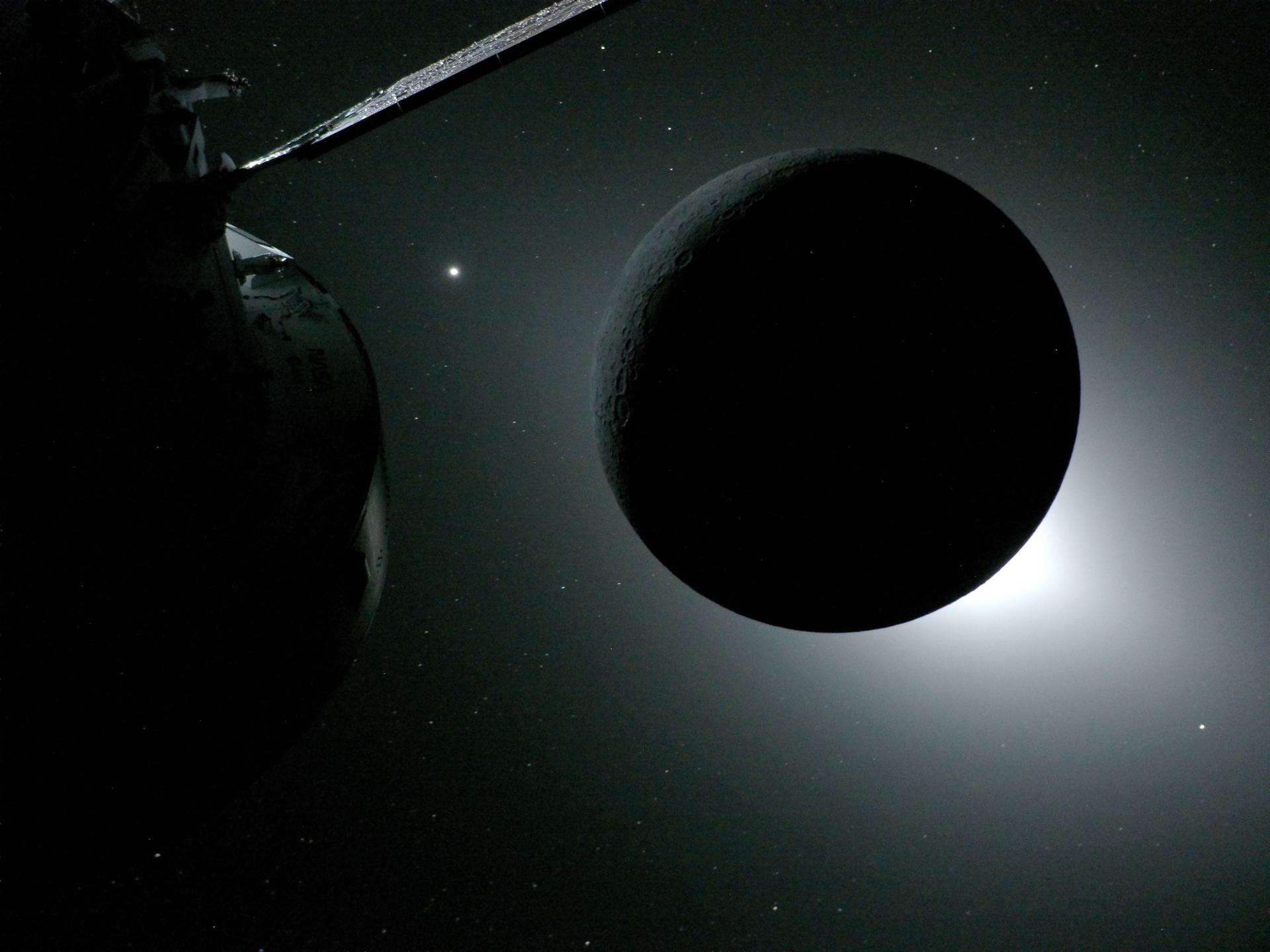
The solar eclipse captured from a camera mounted on one of the Orion spacecraft’s solar array wings during the Artemis II crew’s flyby of the Moon’s far side.NASAArtemis II’s primary communications support came from the Near Space Network and Deep Space Network, NASA’s traditional radio frequency systems. At lunar distances, with the current processing structure, these systems were limited to single-digit data rates in the megabits per second range. When the optical system was in use, the Orion crew module established multiple 260 megabits per second downlinks, surpassing many of its demonstration goals.
On Earth, NASA ground station telescopes at the NASA’s Jet Propulsion Laboratory in Southern California and White Sands Complex in New Mexico were selected for their high-altitude, dry environments to ensure a strong link between Earth and the optical terminal aboard Orion. These stations collected the bulk of Orion’s optical signals, hitting a record of 26 gigabytes of data received, downloaded, and transmitted to mission control in under an hour – enabling faster data transfer than most home internet capabilities.
This video from the NASA broadcast shows the Orion feed switching from the radio frequency link over to the optical link and the change in clarity.In addition to NASA’s two main ground stations, Orion also downlinked data to a newly developed site at the Australian National University Quantum Optical Ground Station at Mount Stromlo in Canberra, Australia. After several years of technical support, subject matter experts from NASA’s Glenn Research Center in Cleveland and the agency’s Goddard Space Flight Center in Greenbelt, Maryland, worked with the university to build and demonstrate a lunar-capable optical telescope leveraging affordable parts developed by commercial industry.
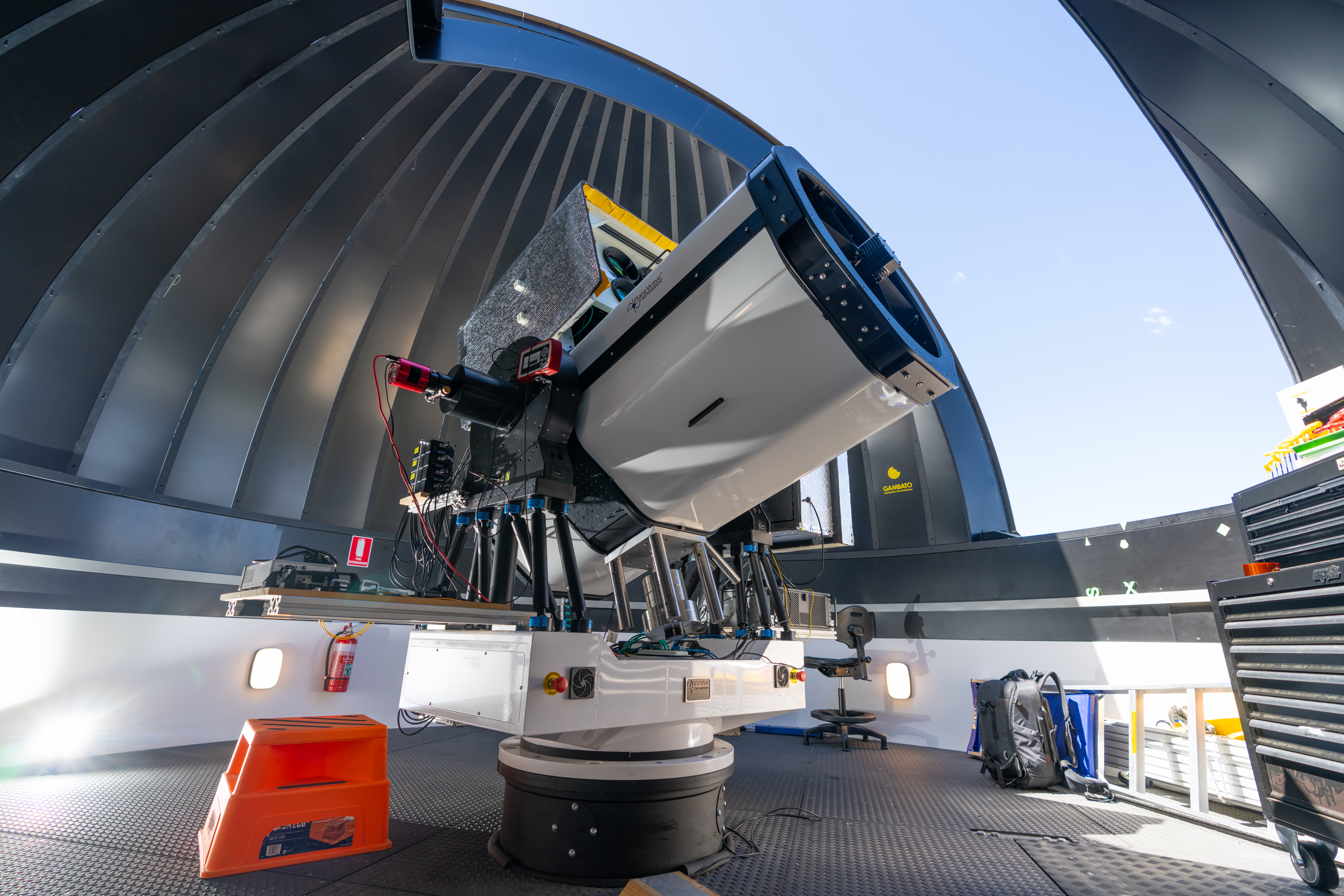
Quantum Optical Ground Station (QOGS) at the Mount Stromlo Observatory in Canberra, Australia.ANU/Nic VeversThroughout the mission, the Australian site achieved dual-stream video with Orion for more than 15.5 hours, contributing to NASA’s “Live Views from Orion” feed, which enabled millions of viewers to follow Artemis II milestones. The ground station successfully downlinked the terminal’s highest possible data rate of 260 megabits per seconds, proving that commercial, off-the-shelf parts can be leveraged to decrease the cost, time, and difficulty required to assemble optical ground stations.
Space communications isn’t just about moving bytes, it’s about delivering the images, the video, and the voices of the crew that bring a mission to life.Greg Heckler
SCaN Deputy Program Manager for Capability Development
“Space communications isn’t just about moving bytes, it’s about delivering the images, the video, and the voices of the crew that bring a mission to life,” said Greg Heckler, SCaN’s deputy program manager for capability development. “With the optical payload, we were able to watch astronauts embark on their journey in near real-time. Those moments gave us a breathtaking new view of Earth and revealed the crew isn’t just a team, but a family.”
As NASA pushes the boundaries of human exploration, the successful use of laser communications demonstrated faster data transfer, offering a glimpse into options for future agency missions.
Under Artemis, NASA will send astronauts on increasingly difficult missions to explore more of the Moon for scientific discovery and economic benefits, building the foundation for the first crewed missions to Mars.
Learn more about the Artemis II mission:
https://www.nasa.gov/artemis-ii
Share Details Last Updated Apr 28, 2026 EditorLauren LowLocationGoddard Space Flight Center Related Terms Explore More 3 min read I Am Artemis: Erik Richards Article 1 month ago 5 min read Networks Keeping NASA’s Artemis II Mission Connected Article 3 months ago 3 min read I Am Artemis: Peter Rossoni Article 5 days agoSix Years of Curiosity’s Wheels on the Move
NASA/JPL-Caltech Photojournal Navigation Downloads PIA26721 Animation
MP4 (47.13 MB)
Description
NASA’s Curiosity Mars rover used its right navigation camera — one of two on the rover’s mast, or head — to capture the images in this timelapse, which spans six years of driving. The images were snapped between Jan. 2, 2020, and March 8, 2026 (the 2,633rd and 4,830th Martian day, or sol, of the mission, respectively). The images were taken when the mast was looking behind the rover to help the science team choose rocks to study.
Curiosity’s team is using this timelapse to watch for sand grains shifting on the rover’s deck. Distinguishing between sand jostled by each drive and wind gusts can provide new information about seasonal changes in the atmosphere.
Curiosity was built by NASA’s Jet Propulsion Laboratory, which is managed by Caltech in Pasadena, California. JPL leads the mission on behalf of NASA’s Science Mission Directorate in Washington as part of NASA’s Mars Exploration Program portfolio.
To learn more about Curiosity, visit:
science.nasa.gov/mission/msl-curiosity
Keep Exploring Discover More Topics From Photojournal
Photojournal
Search Photojournal
Photojournal’s Latest Content
Feedback
Science in Space
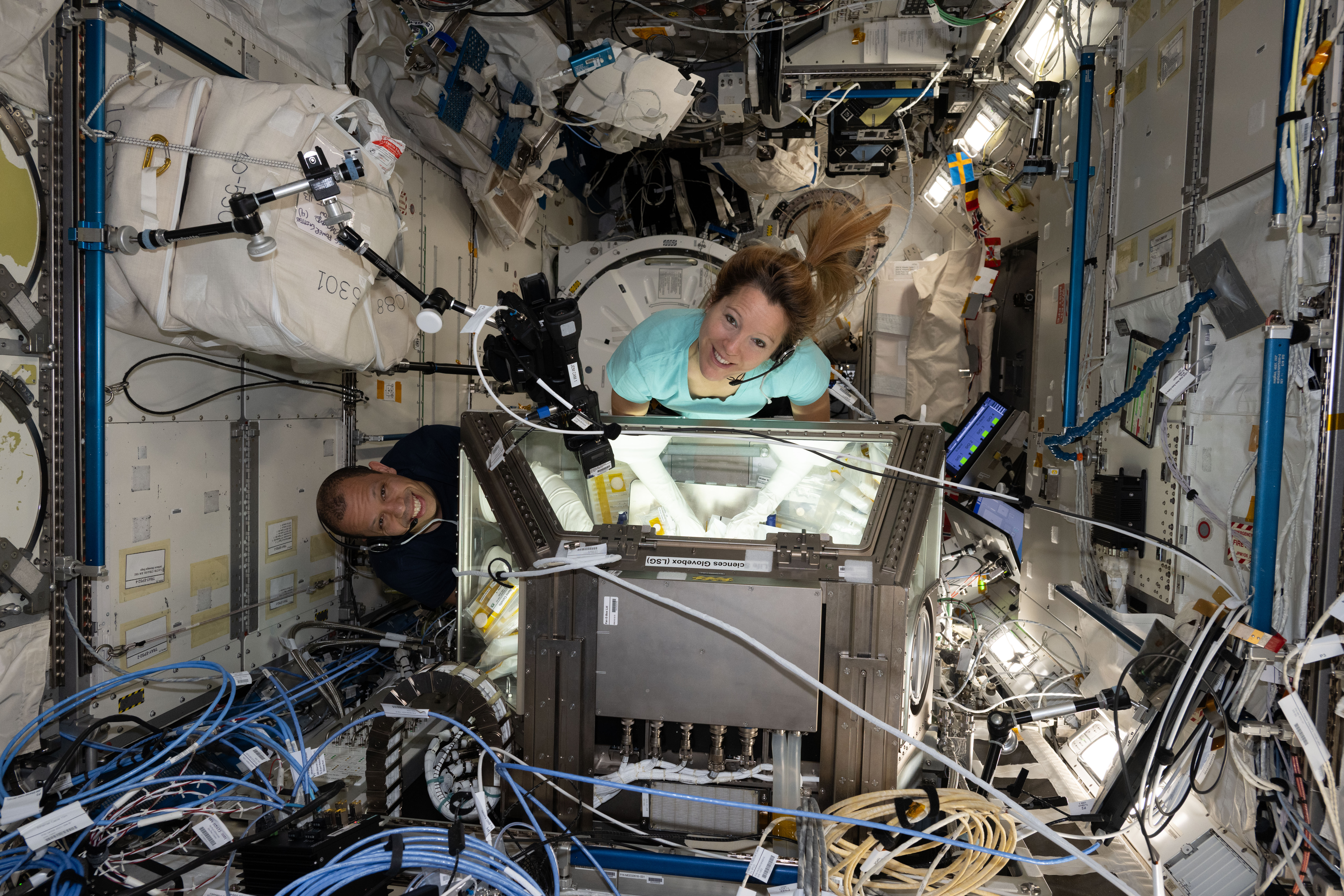
Astronauts Chris Williams of NASA and Sophie Adenot of the European Space Agency work together in the Kibo laboratory module’s Life Science Glovebox, processing genetic-material samples for the DNA Nano Therapeutics‑3 experiment. The investigation is exploring DNA‑inspired assembly techniques as a way to manufacture treatments—such as chemotherapy and immunotherapy—that can kill cancer cells and activate the immune system.
Find out what’s happening on the International Space Station on the blog.
Image credit: NASA/Jessica Meir
Fiery Fall Color in Southern Chile
- Earth
- Earth Observatory
- Image of the Day
- EO Explorer
- Topics
- More Content
- About
NASA’s X-59 Gets Freedom 250 Logo
NASA’s X-59 is helping the nation celebrate the 250th anniversary of its independence with an update to its livery – its official paint job and insignia.
The one-of-a-kind research aircraft is the centerpiece of NASA’s Quesst mission to demonstrate technology to fly supersonic, or faster than the speed of sound, without generating loud sonic booms.
Keep up with X-59 on the NASA Quesst blog.
Image credit: NASA/Carla Thomas
NASA’s Perseverance, Curiosity Panoramas Capture Two Sides of Mars
NASA’s Curiosity and Perseverance rovers have captured two 360-degree landscapes that highlight how the missions are revealing details of the Red Planet’s formation, watery past, and potential for life. Located 2,345 miles (3,775 kilometers) apart from each other on Mars — about the distance from Los Angeles to Washington, D.C. — both rovers are exploring areas that are billions of years old. But as the nearly 15-year-old Curiosity reaches ever-younger terrain in the foothills of Mount Sharp, the 5-year-old Perseverance is venturing into some of the oldest landscapes in the entire solar system. By time-traveling in opposite directions, the rovers are filling in missing details about the planet’s history.
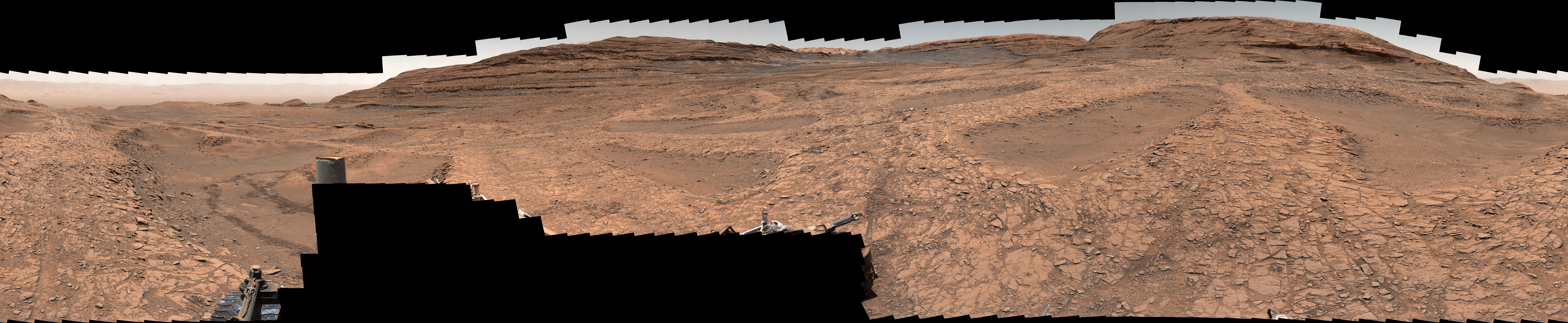
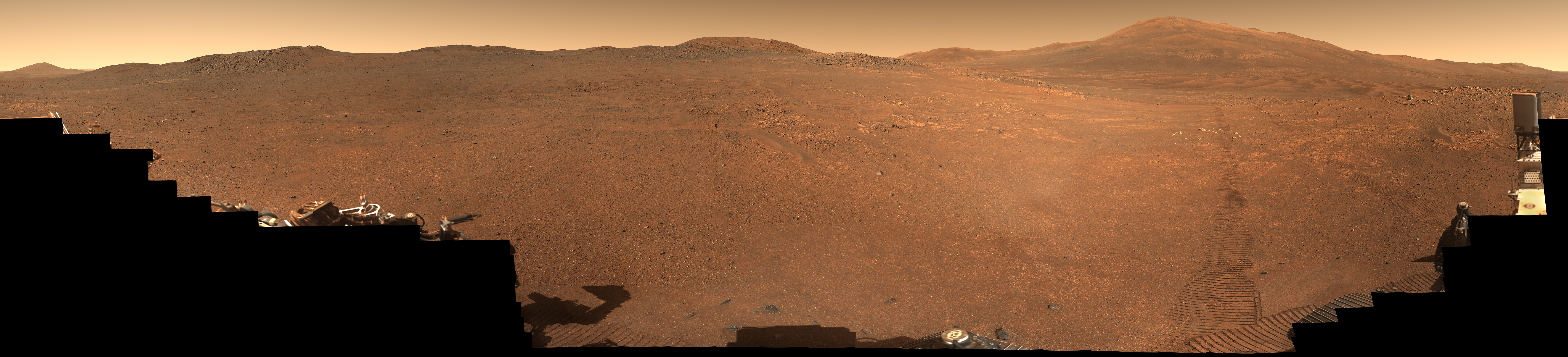
Stitched together from 1,031 images taken between Nov. 9 and Dec. 7, 2025, Curiosity’s 360-degree panorama offers a detailed look into a region filled with a vast network of boxwork formations: Resembling giant spiderwebs in orbiter images, the low ridges were created by groundwater that once flowed through large fractures in the bedrock. The minerals left behind hardened the rock along the fractures, resulting in erosion-resistant ridges.
Perseverance’s panorama focuses on a place nicknamed “Lac de Charmes,” which sits outside the rim of Jezero Crater. Taken between Dec. 18, 2025, and Jan. 25, 2026, 980 images were stitched together for a 360-degree view capturing the Jezero rim and ancient rocks around the crater.
Driven by CuriosityToday, both of these landscapes are frigid deserts, but evidence of a more dynamic past hides within. When Curiosity landed on the floor of Gale Crater in 2012, it set out to determine whether Mars once had the conditions to support life. Within a year, a sample drilled from an ancient lakebed confirmed those conditions had been present, including the right chemistry and potential nutrients for microbes.
NASA’s Curiosity Mars rover captured this 360-degree view of a region filled with low ridges called boxwork formations between Nov. 9 and Dec. 7, 2025. At 1.5 billion pixels, this is one of the largest panoramas Curiosity has ever taken.Since 2014, Curiosity has been ascending Mount Sharp. Towering 3 miles (5 kilometers) above the crater floor, the mountain first began forming when layers of sediment were deposited in a series of lakes. Long after those lakes dried up, ponds and streams returned several times, leaving a record in the mountain’s layers that formed in drier eras. Because the lowest layers are oldest and higher layers are youngest, Curiosity is essentially progressing back through geological time as it slowly climbs the mountain.
Last year, Curiosity’s team documented how they found that the mineral siderite might be storing carbon dioxide that once was part of a thicker, early atmosphere. Scientists had long suspected that carbonate minerals such as siderite formed when carbon dioxide dissolved into ancient lakes, but such deposits had only rarely been found.
The mission also announced the detection of three of the largest organic molecules ever found on Mars in a sample it had drilled in 2013. The discovery of these long-chain hydrocarbons — possibly the remnants of fatty acids — are a milestone in the search for more complex, prebiotic chemistry on the Red Planet.
And this year, they announced that a rock Curiosity drilled and analyzed in 2020 includes the most diverse collection of organic molecules ever found on the Red Planet. Of the 21 carbon-containing molecules identified in the sample, seven of them were detected for the first time on Mars.
Persevering for sciencePerseverance landed in Mars’ Jezero Crater in 2021 to study the origin of ancient rocks within the crater and to hunt for evidence that microbial life once existed. Billions of years ago, molten rock cooled to form the floor of Jezero Crater. A river then fed a lake in the crater, leaving behind sediments where traces of microbes could have been preserved. In 2024, the mission discovered a rock nicknamed “Cheyava Falls” that was dotted with “leopard spots,” a pattern formed by chemical reactions that microbes are known to create in rocks here on Earth.
NASA’s Perseverance Mars rover captured this 360-degree panorama of a region nicknamed “Crocodile Bridge” on the rim of Jezero Crater. This region holds some of the oldest rocks anywhere in the solar system.NASA/JPL-Caltech/ASU/MSSSWhile Curiosity pulverizes its rock samples for analysis, Perseverance collects samples as intact rock cores, each about the size of a piece of blackboard chalk, and stores them in metal tubes. Aside from a backup set of 10 tubes Perseverance deposited in a sample depot, the rover keeps all its samples (23 so far) on board in its interior. Scientists hope to get these samples into labs on Earth where they can investigate them more fully with instruments far bigger and more complicated than those that can be sent to Mars.
Meanwhile, Perseverance continues to investigate other aspects of the Red Planet. For instance, this past fall, mission scientists shared the first recordings of electrical sparks in passing dust devils — a phenomenon that had only been theorized before Perseverance’s microphones caught them. A separate study detailed how one of Perseverance’s sensitive cameras was able to capture the first visible light auroras from the surface of another planet.
Both missions are looking forward to the next discoveries as they continue to unravel the secrets of Mars. Curiosity has left the boxwork region behind as it continues to explore a mountain layer enriched in salty minerals called sulfates; Perseverance will keep heading toward locations that hold exceptionally old terrain, including one called “Singing Canyon.”
Managed for NASA by Caltech, NASA’s Jet Propulsion Laboratory in Southern California built and manages operations of both Curiosity and Perseverance on behalf of the agency’s Science Mission Directorate as part of NASA’s Mars Exploration Program portfolio.
To learn more about NASA’s exploration of Mars, visit:
News Media Contact
Andrew Good
Jet Propulsion Laboratory, Pasadena, Calif.
818-393-2433
andrew.c.good@jpl.nasa.gov
Karen Fox / Alana Johnson
NASA Headquarters, Washington
202-358-1600 / 202-358-1501
karen.c.fox@nasa.gov / alana.r.johnson@nasa.gov
2026-025
Explore More 5 min read NASA’s Curiosity Finds Organic Molecules Never Seen Before on Mars Article 7 days ago 6 min read ‘Interstellar Glaciers’: NASA’s SPHEREx Maps Vast Galactic Ice Regions Article 2 weeks ago 4 min read NASA-ISRO Satellite Captures Pacific Northwest Through Clouds Article 1 month ago Keep Exploring Discover More Topics From NASA Perseverance RoverThis rover and its aerial sidekick were assigned to study the geology of Mars and seek signs of ancient microbial…
Curiosity Rover (MSL)
Mars Exploration: Science GoalsThe key to understanding the past, present or future potential for life on Mars can be found in NASA’s four…
Mars ResourcesExplore this page for a curated collection of Mars resources.
You Can Help Humans Thrive in Space
The second Artemis mission took four astronauts around the moon and back – the first crewed deep-space flight since 1972. Not everyone gets a chance to put on a space suit, but you can still be an important part of NASA’s human space exploration story by doing NASA science!
Volunteers with NASA’s citizen science projects have tested chili pepper plant varieties to grow in space, monitored active regions on the Sun, and analyzed data from experiments on how life adapts to the low-gravity, high-radiation environment of space. Participation does not require citizenship in any particular country – you only need a love of science and a desire to help. Join one of the projects below and help NASA make space travel safer and healthier.
Only a few minutes to spare? Space Umbrella is a great project for you. The brief online project tutorial will teach you how to read data collected by NASA’s Magnetosphere Multiscale (MMS) mission, which has been flying back and forth across Earth’s magnetosphere since 2015. By sorting data into in-magnetosphere and out-of-magnetosphere readings, you will help scientists learn more about how solar storms interact with our magnetosphere. Solar storms can pose a serious threat to astronauts, so this work can help missions minimize risks from radiation in space.
Are you a classroom teacher for students in grades 6-12? Through Growing Beyond Earth, middle and high school students and their teachers collaborate with Fairchild Botanical Garden scientists to grow candidate plants that are being evaluated as astronaut food. Today, on the International Space Station, astronauts tend to some of the same experimental leafy greens and hot pepper plants to unlock the secrets of how best to space farm terrestrial species. On really long missions, it won’t just be a question of easing the monotony of packaged/prepared foods – astronauts will have to grow their own food to supplement their diets. Sign up here to learn more.
Do you have some experience with data analysis? The Open Science Data Repository Analysis Working Groups need you to help analyze data from experiments about life in space. Join this international community of scientists, students, and everyone in between to help us understand how terrestrial life – from plants to mice and microbes to astronauts – responds to the space environment.
Into ham radio? Join the team called Ham Radio Science Citizen Investigation (HamSCI) and use your ham radio skills to deploy your own personal space weather station! These stations are designed to be relatively low cost and easy to build and deploy by science professionals, educational institutions, and citizen scientists (you!). Your observations will be aggregated into a central database to help answer questions about how the ionosphere responds to the Sun and the neutral atmosphere.
There are many more ways you can do NASA science. Check out all the current projects supported by NASA that need your help answering questions about our universe, solar system, and Earth. Learn More and Get Involved Pick Your Project!These NASA science projects below are open to everyone (no citizenship required).
Facebook logo @nasascience_ @nasascience_ Instagram logo @nasascience_ Linkedin logo @nasascience_ Share Details Last Updated Apr 27, 2026 Related Terms Explore More 3 min read Volunteers Help NASA Astronauts Record Lunar Flashes
As NASA’s Artemis II astronauts zipped around the Moon in early April, they observed flashes…
Article
1 hour ago
2 min read Volunteers Discover Rare Space Weather Events Using Their Ears
Scientists are working to understand exactly how these waves behave, and the team behind NASA’s…
Article
1 week ago
4 min read NASA Data Hackathon Inspires Community Action
Article
1 month ago
Volunteers Help NASA Astronauts Record Lunar Flashes
As NASA’s Artemis II astronauts zipped around the Moon in early April, they observed flashes of light caused by meteoroids hitting the lunar surface. At the same time, volunteers for the NASA-funded Impact Flash project scanned the Moon with their own telescopes and sent their videos to scientists to share what they saw from Earth.
“We were incredibly grateful for the videos people submitted,” said Impact Flash project lead Ben Fernando, a planetary scientist at Los Alamos National Laboratory. The locations and brightness of flashes observed by different instruments at different locations together can help constrain the nature and origin of the impactors, as well as the craters they form.
The Artemis II astronauts have splashed back down to Earth, so their observations of the Moon from space have come to a halt for now, but the Impact Flash team is just getting started. They need your continued help scanning the Moon to watch for flashes. If you have access to a telescope four inches in diameter or greater with video capabilities, your observations can make a difference. The more observations you submit, the better the team will be able to constrain the present-day impact rate on the Moon and how it changes over time. Instructions for making and uploading your observations can be found on the Impact Flash website.
In the future, the project team also plans to use your impact flash observations to study tremors on the Moon, similar to earthquakes. They’re called ‘moonquakes’ and they help us figure out what lies beneath the Moon’s surface.
“We are planning to send seismometers to the Moon to measure how the ground shakes,” said Fernando. “Your measurements of impact flashes will help us work out the sources of moonquakes we detect. This will help us work out what the Moon’s interior looks like.”
To collect data during the Artemis II mission, the Impact Flash investigators teamed up with several other groups of amateur astronomers, including the NASA-funded Kilo-nova Catchers, Exoplanet Watch, UNITE (Unistellar Network Investigating TESS Exoplanets), and Night Sky Network teams, as well as the Lunar Impact Flashes project, based at the National Research Council of Italy (IMATI-CNR). Thank you to all those who submitted data.
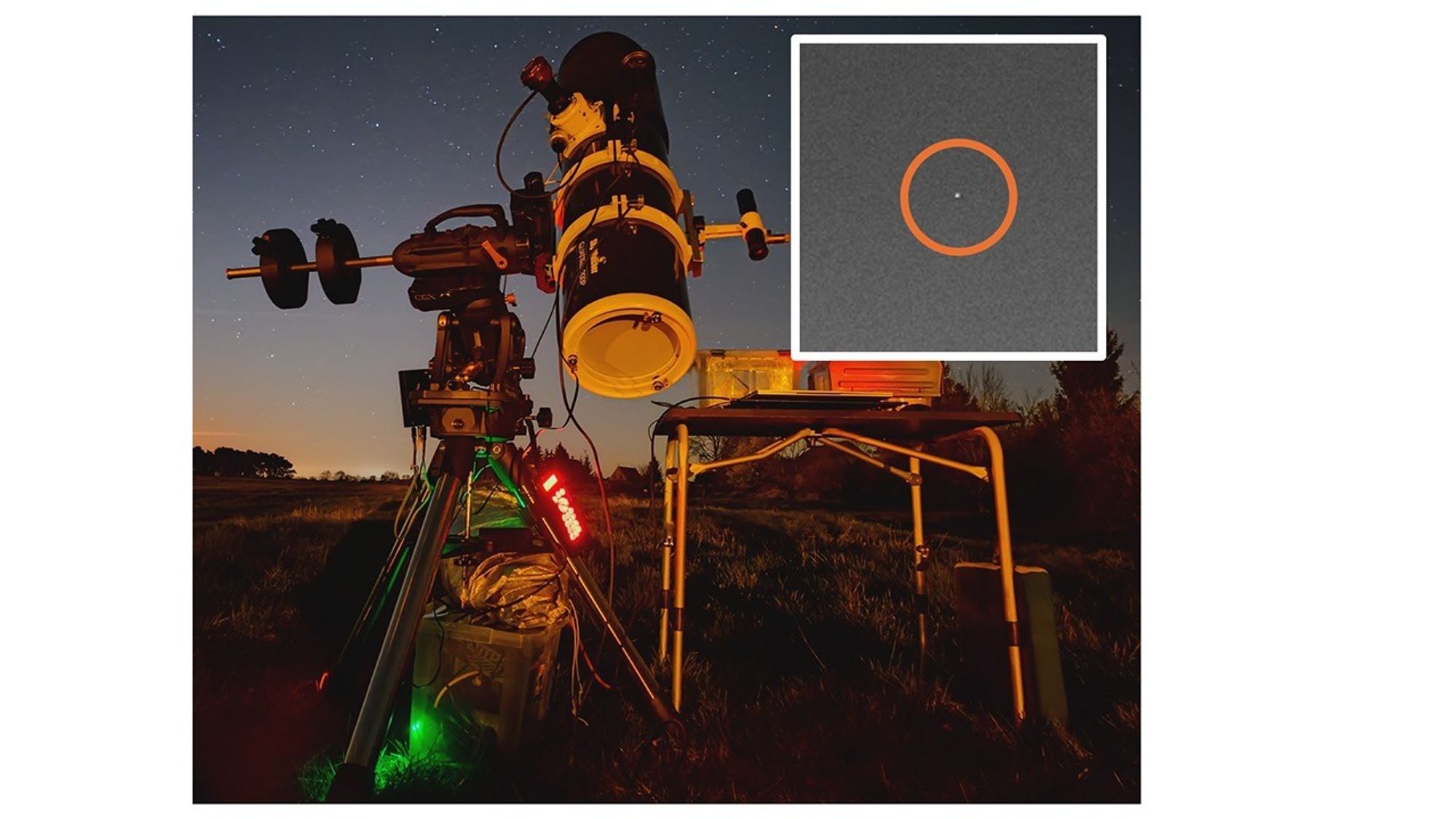
Impact Flash volunteer Joerg Tomczak sent in this image of the Moon he took during NASA’s Artemis II mission, as well as a photo of his telescope. The bright dot in the orange circle shows an impact flash candidate Credit: Joerg Tomczak Grab your telescope and get started with Impact Flash: https://www.geodes.umd.edu/impactflashThe Impact Flash team acknowledges the work done by Institute for Applied Mathematics and Information Technologies-Consiglio Nazionale delle Ricerche (IMATI-CNR)/Italy (E. M. Alessi, M. T. Artesi) to set up the web page and A. Cook (Aberystwyth Univ., UK) and D. Koschny (Technical University of Munich, DE) for data curation. The IMATI-CNR team receives funding from the Italian Space Agency, corresponding to ESA’s (European Space Agency) Lunar Meteoroid Impacts Observer mission.
Learn More and Get Involved Impact Flash!You and your telescope can join a global network of amateur astronomers documenting meteors hitting the moon.
Facebook logo @nasascience_ @nasascience_ Instagram logo @nasascience_ Linkedin logo @nasascience_ Share Details Last Updated Apr 27, 2026 Related Terms Explore More 3 min read CSDA Quality Assessment Report Evaluates Satellogic NewSat Data
The report adds to the growing documentation on commercial data’s contributions to Earth science research…
Article
1 week ago
2 min read Volunteers Discover Rare Space Weather Events Using Their Ears
Scientists are working to understand exactly how these waves behave, and the team behind NASA’s…
Article
1 week ago
5 min read NASA Finds Young Stars Dim in X-rays Surprisingly Quickly
Article
2 weeks ago