
Feed aggregator
Europe’s heatwave is the hottest and most humid ever
Europe’s heatwave is the hottest and most humid ever
The Battle for Sullivan’s Island
- Earth
- Earth Observatory
- Image of the Day
- EO Explorer
- Topics
- More Content
- About
Euclid's New Portrait of the Milky Way's Crowded Bulge
The ESA's Euclid space telescope took 26 hours to capture this portrait of the Milky Way's central bulge. This isn't part of its primary mission; instead it's kind of like bonus science. It'll be used in the Roman Space Telescope's gravitational microlensing search for exoplanets. Regardless of the science, it's an impressive image.
The Galaxy That Cleared the Fog
For its first billion years the universe was lost in fog, a thick haze of hydrogen that swallowed light whole. Something burned it away, and astronomers have long wondered what. Now Hubble has caught a tiny, furious galaxy in the very act of clearing the murk, glimpsed as it was just 1.4 billion years after the big bang. It may be the smoking gun for how the universe first became clear.
Expedition 73 Crew Reflects on Science, Teamwork, and Life in Orbit
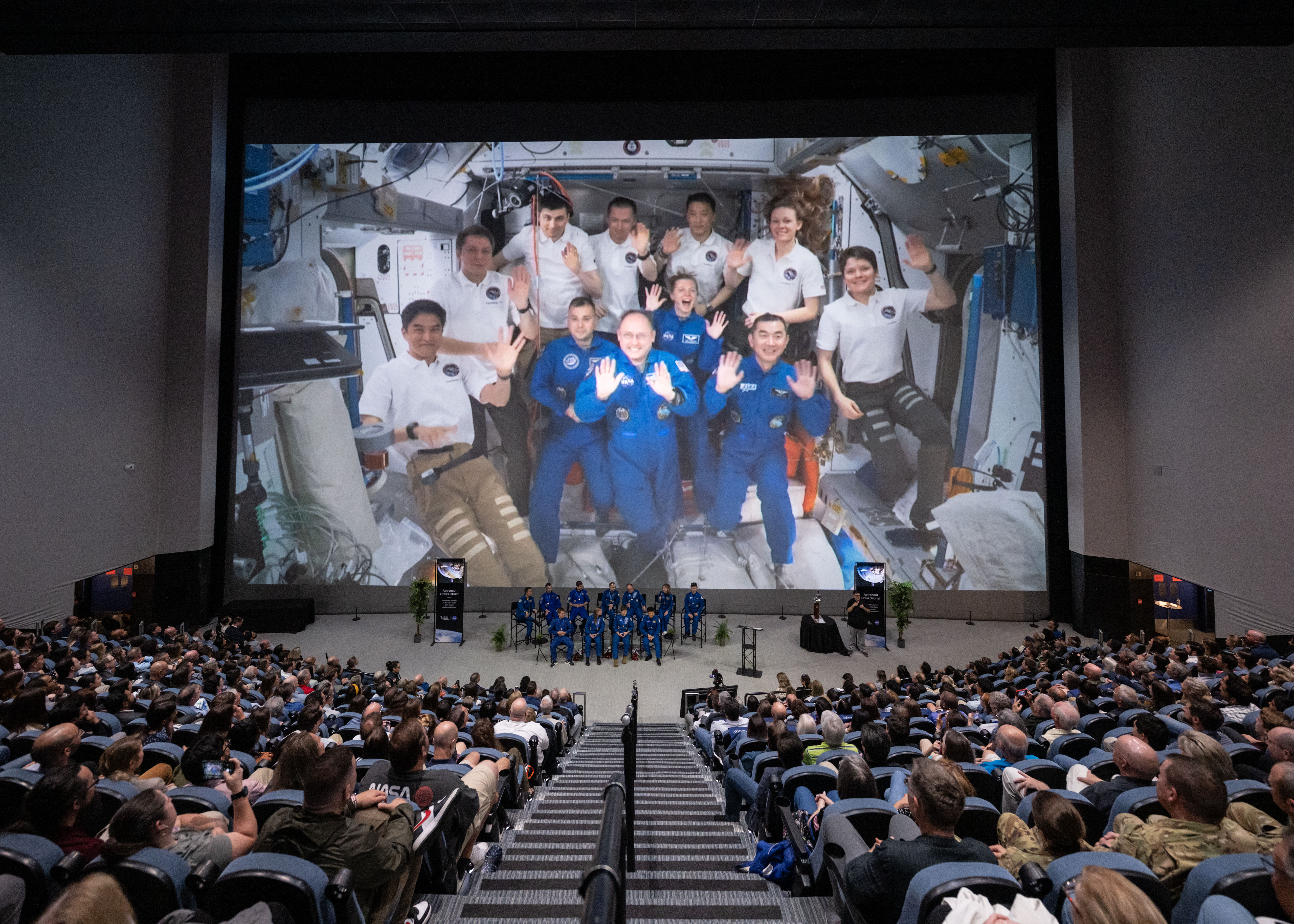
On June 16, astronauts and cosmonauts gathered at Space Center Houston to share stories from their missions aboard the International Space Station and recognize the teamwork and people on the ground that made their missions possible.
The Expedition 73 Welcome Home Ceremony brought together members of NASA’s SpaceX Crew-10, Soyuz MS-27, and NASA’s SpaceX Crew-11 missions. During the event, the crews reflected on the science, partnerships, and international collaboration that defined their time in orbit.
Remarks were delivered by NASA’s Johnson Space Center Director Vanessa Wyche, Low Earth Orbit Program’s Deputy Manager for the International Space Station Dina Contella, Richard Jones with NASA’s commercial crew office, Flight Operations Director Norm Knight, Johnson Employee Relations Lead David Kelley, and Space Center Houston Chief Operating and Strategy Officer Keesha Bullock. Together, they recognized the accomplishments of the crews and the team members who helped make the expedition a success.
NASA’s Johnson Space Center Director Vanessa Wyche gives opening remarks at the crew debrief and awards ceremony. NASA/Luna Posadas Nava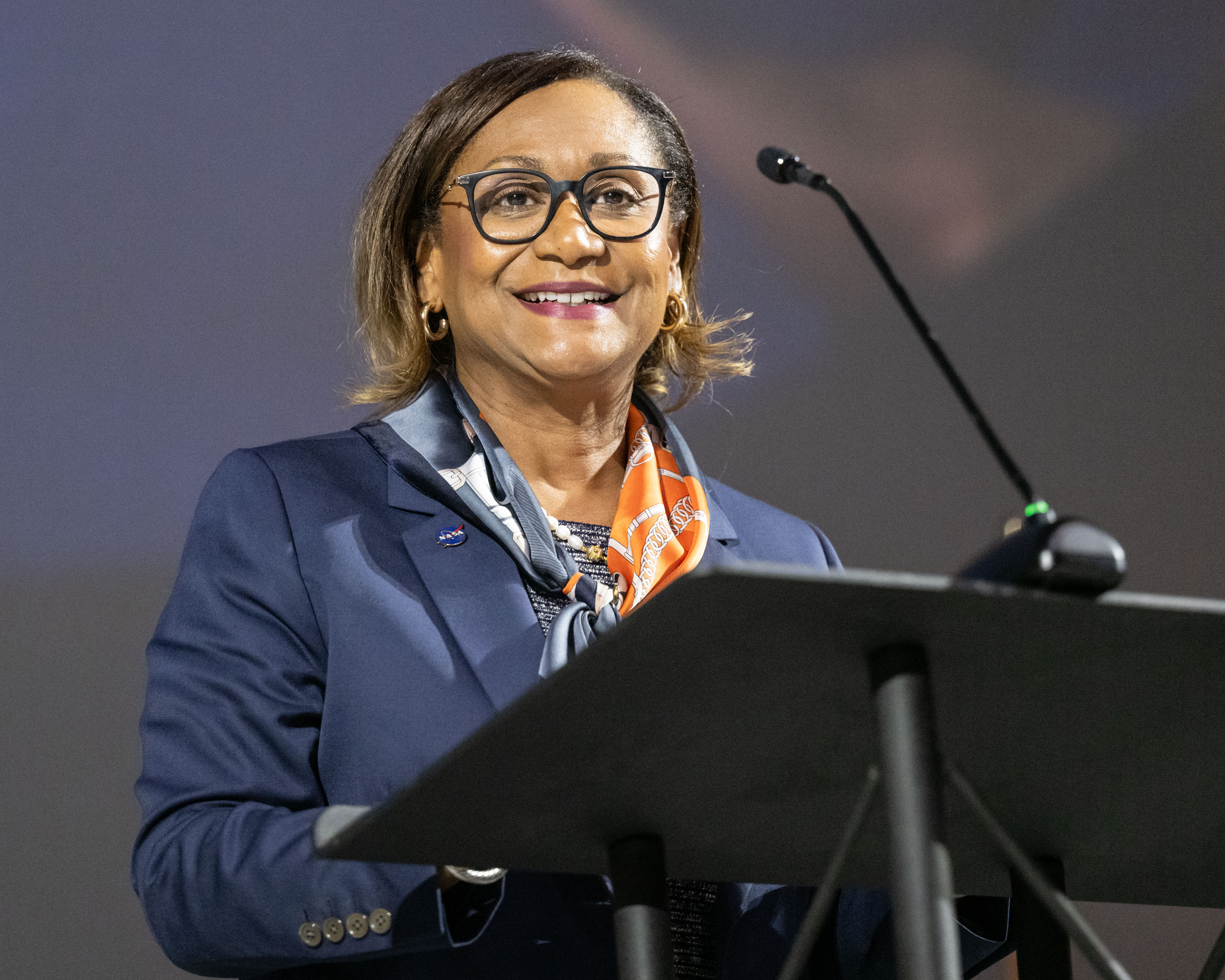
Wyche welcomed the crews home and reflected on the accomplishments of Expedition 73.
“Together, these crews exemplified professionalism, resilience, and the spirit of international cooperation,” Wyche said. “Their work ensured the continued success of the International Space Station Program and demonstrated the strength of our multi-vehicle crew transportation strategy.”
During the expedition, all available docking ports were occupied simultaneously for the first time, with eight spacecraft attached to the station. The crew also supported visiting missions, including Axiom Mission 4, and multiple cargo deliveries while maintaining a full schedule of scientific investigations.
Crew members completed three spacewalks, installing hardware that supports future solar array upgrades and maintenance activities critical to station operations.
NASA astronaut Anne McClain is photographed near one of the International Space Station’s main solar arrays during a spacewalk to upgrade the orbital outpost’s power generation system and relocate a communications antenna on May 1, 2026. NASA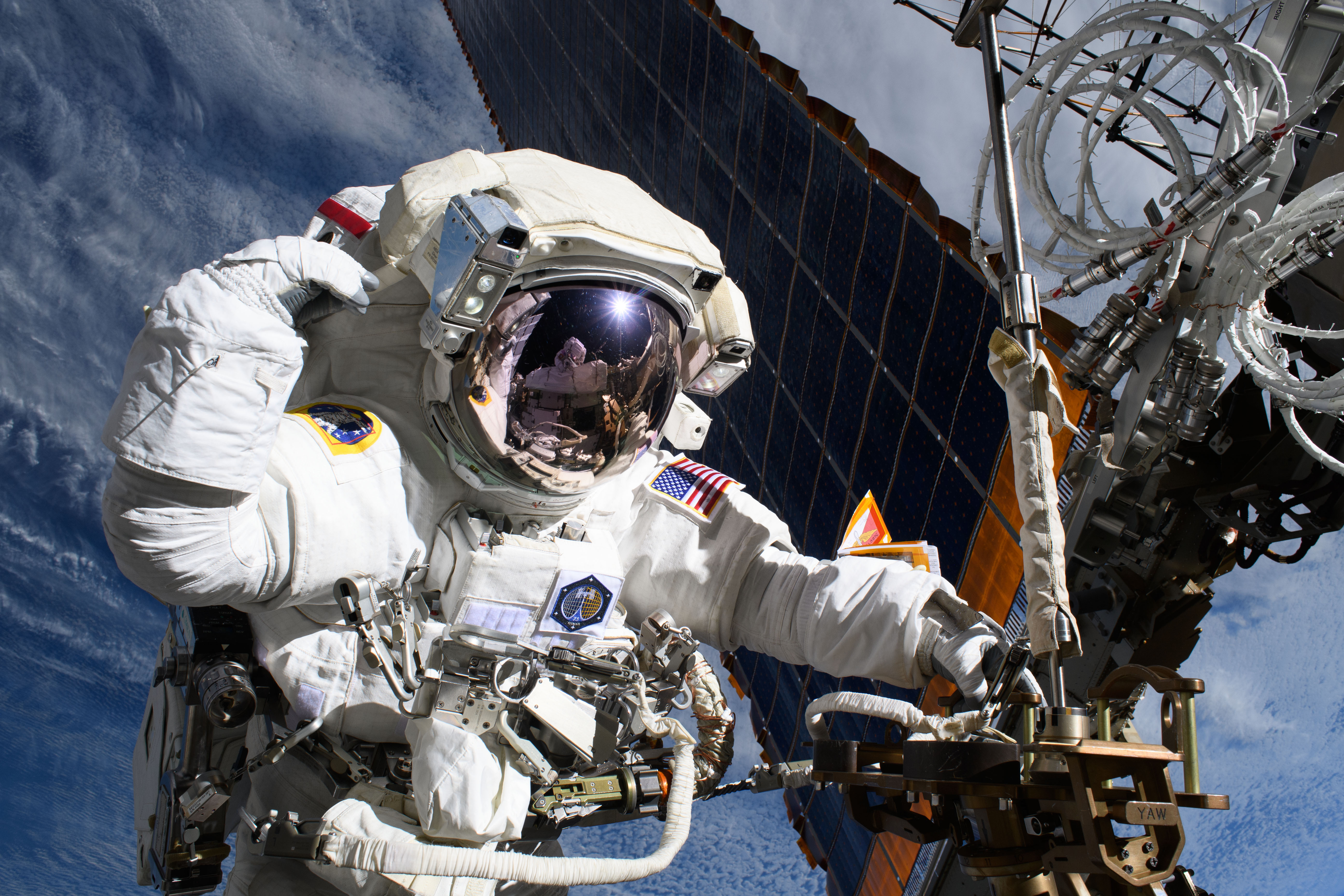
The ceremony also recognized the workforce whose dedication supported every aspect of Expedition 73, from mission planning and operations to research, training, and crew safety.
“You learned each other’s languages, and often, when we didn’t know the right answers, you partnered with us, and you would come up with the answers and help,” said International Space Station Program Deputy Manager Dina Contella. “You really helped make us successful.”
She noted that collaboration extended well beyond the crew in orbit, with teams across the program matching that dedication throughout the expedition.
Contella shared that Expedition 73 included six cargo missions, the inaugural flight of JAXA’s (Japan Aerospace Exploration Agency) HTV-X1 cargo spacecraft, and more than 37,000 pounds of supplies, equipment, and scientific investigations delivered to the space station.
She also thanked the Commercial Crew Program and Flight Operations teams for helping safely transport crews to and from the station and support mission operations.
More than 1,000 employees representing 40 teams received NASA Group Achievement Awards, while 23 individuals were honored with Superior Achievement Awards for their contributions to the mission.
NASA astronaut Zena Cardman and JAXA (Japan Aerospace Exploration Agency) astronaut Kimiya Yui receive the NASA Exceptional Bravery Honors at the crew debrief. From left: NASA astronaut Zena Cardman, Johnson Director Vanessa Wyche, Richard Jones with NASA’s commercial crew office, International Space Station Deputy Manager Dina Contella, and JAXA astronaut Kimiya Yui. NASA/Luna Posadas Nava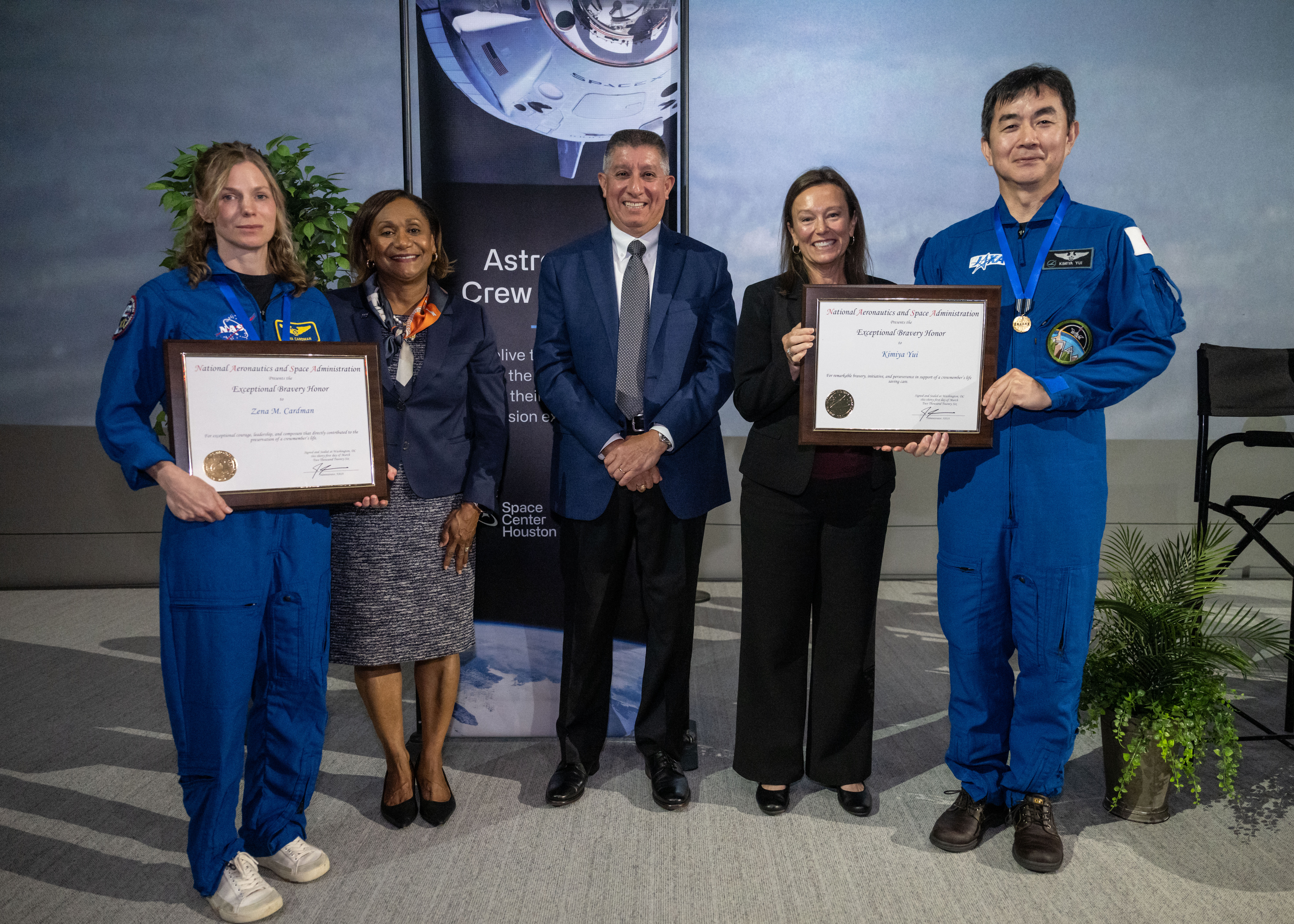
NASA astronaut Zena Cardman and JAXA astronaut Kimiya Yui received NASA Exceptional Bravery Honors for demonstrating exceptional courage, leadership, and composure during a medical event.
Flight Operations Director Norm Knight thanked the teams that supported Expedition 73 from the ground while recognizing the crews’ contributions throughout their missions. “You represent an astronaut corps that is the best of the best, epitomizing courage and teamwork,” Knight told the crew. “Every opportunity or challenge that came your way, you met with confidence and creativity.”
NASA astronaut Jonny Kim conducts an investigation to assess the effects of microgravity on bone marrow stem cells, including their ability to secrete proteins that form and dissolve bone.NASA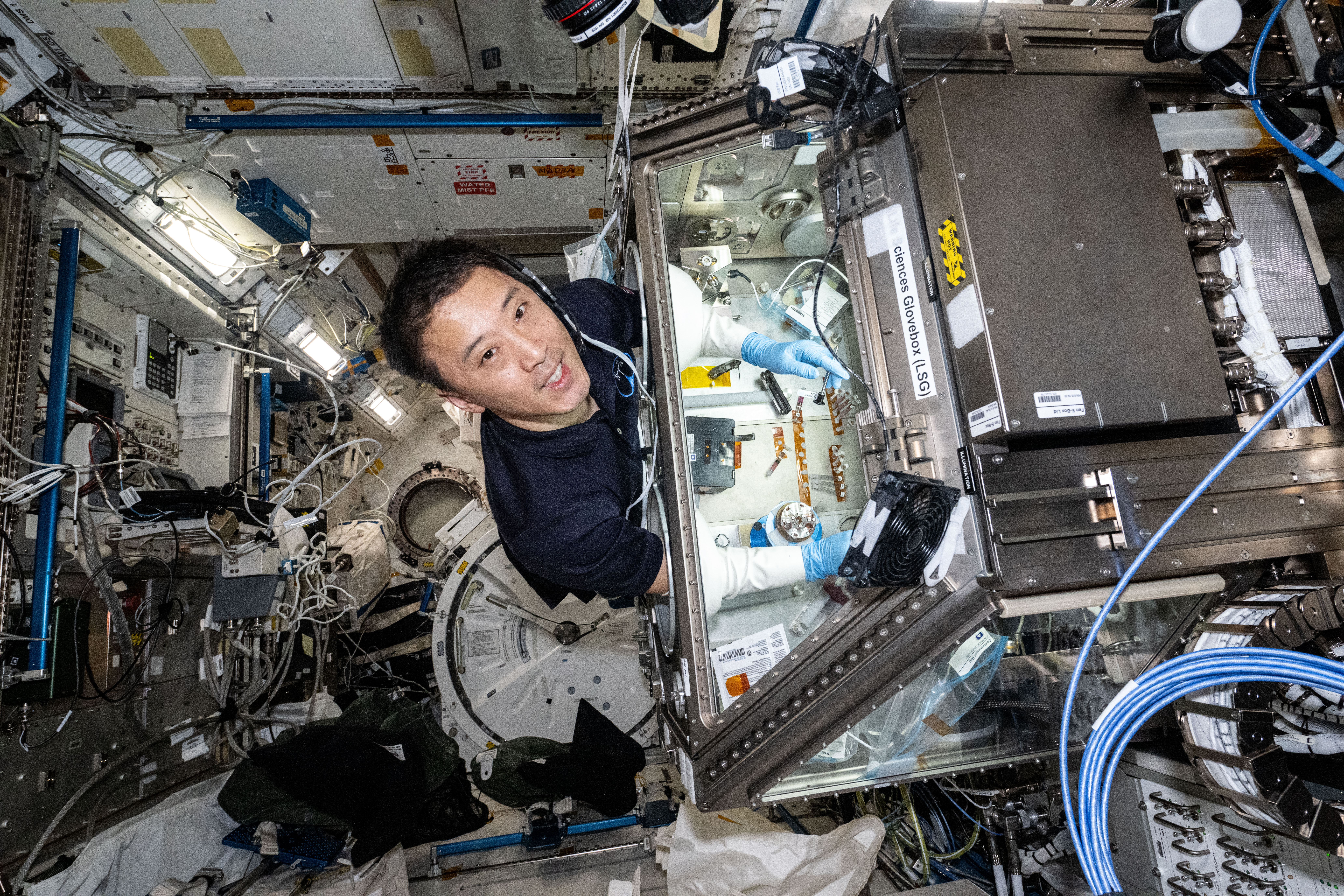
Crew members reflected on the station’s legacy as a platform for discovery, innovation, and international partnership after more than 25 years of continuous human presence in orbit.
Research conducted during Expedition 73 included investigations in human physiology, biology, materials science, pharmaceutical development, and technologies designed to benefit life on Earth and future exploration missions.
The crews also discussed research aboard the station that will help prepare NASA for future missions to the Moon and Mars, including advanced life-support systems and water recovery technologies.
NASA astronaut Nichole Ayers holds space botany hardware that supports the low Earth orbit Integrated Flori-culture Experiment (LIFE) investigation as she floats inside the space station’s cupola. The study examines how radiation and microgravity affect plant growth to support future exploration and improve crop production on Earth. NASA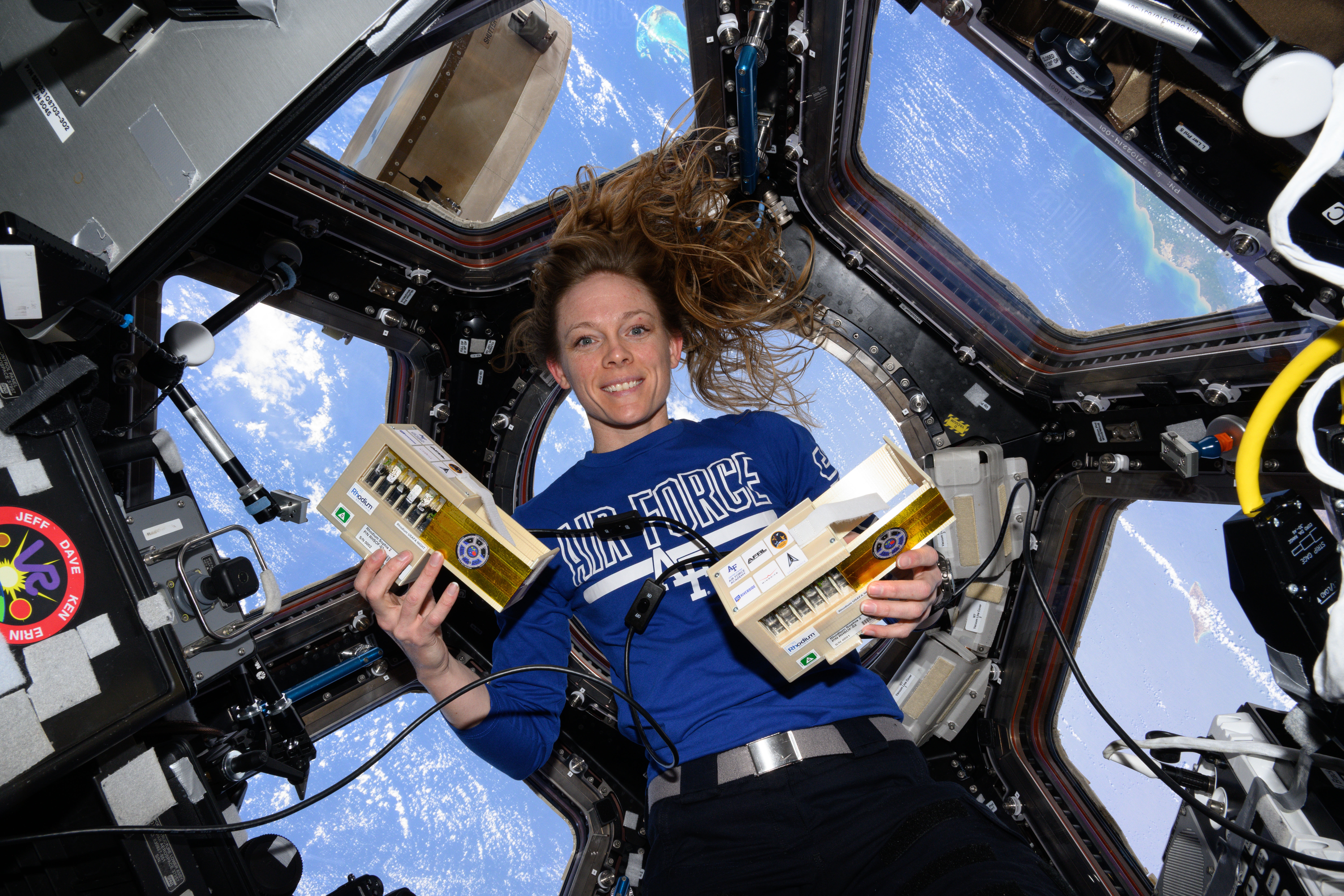
Beyond science and operations, the crew built strong bonds during their months in orbit. They marked birthdays, holidays, and mission milestones together, often creating elaborate cakes from the limited ingredients available aboard the station.
NASA astronaut Anne McClain celebrates her birthday with a cake, gifts, and cards aboard the space station’s Unity module. NASA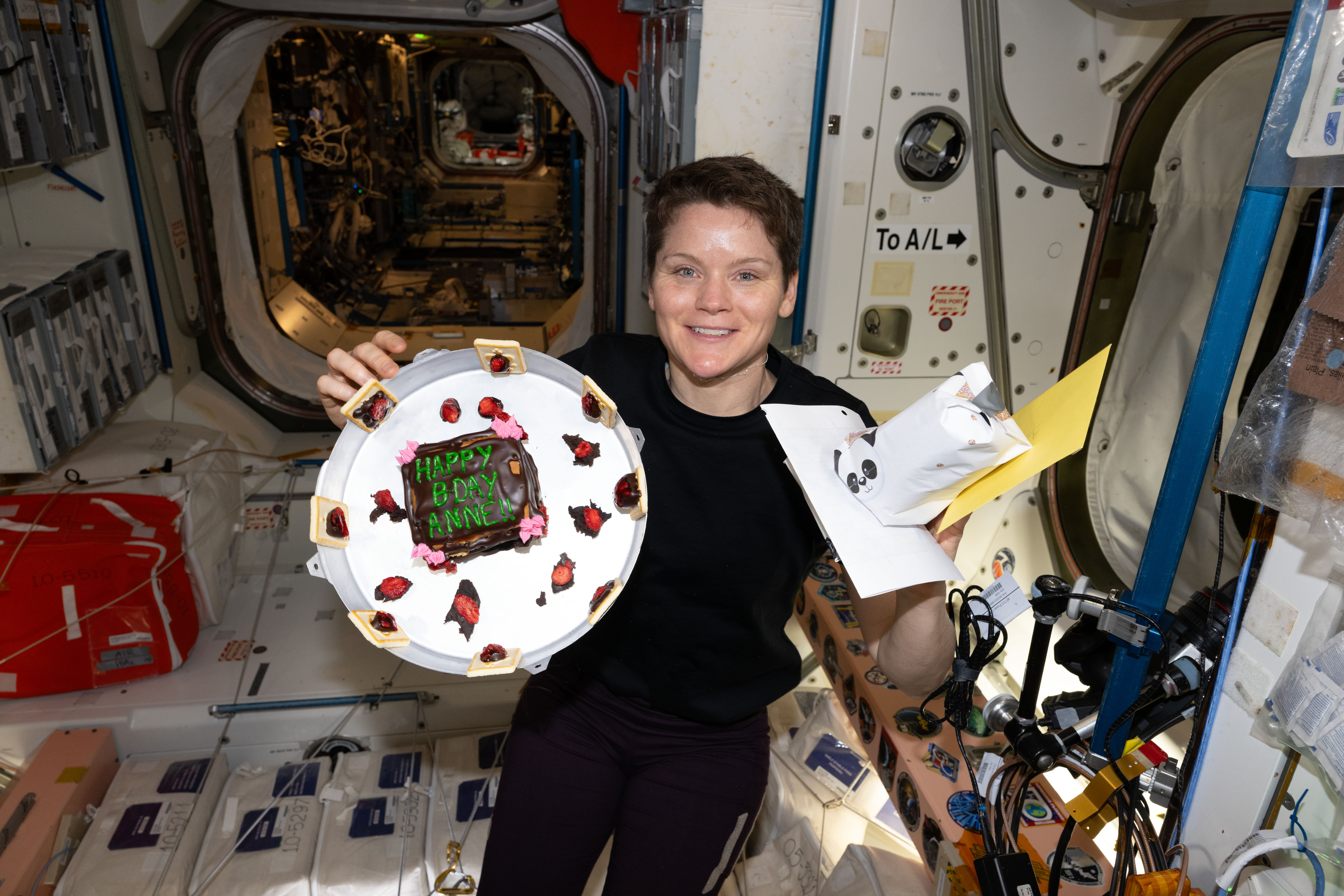
Many crew members said their strongest memories centered on the people around them, and that trust and teamwork remained essential to mission success.
Viewing Earth from orbit provided the crew with a powerful reminder of humanity’s shared connection.
“When you look back at Earth, what we have in common is so much more important than what makes us different,” said McClain. “We’re all on this one planet. We’re all on the same crew.”
Awardees pose for a group photo from the Expedition 73 crew debrief and awards ceremony.NASA/Luna Posadas Nava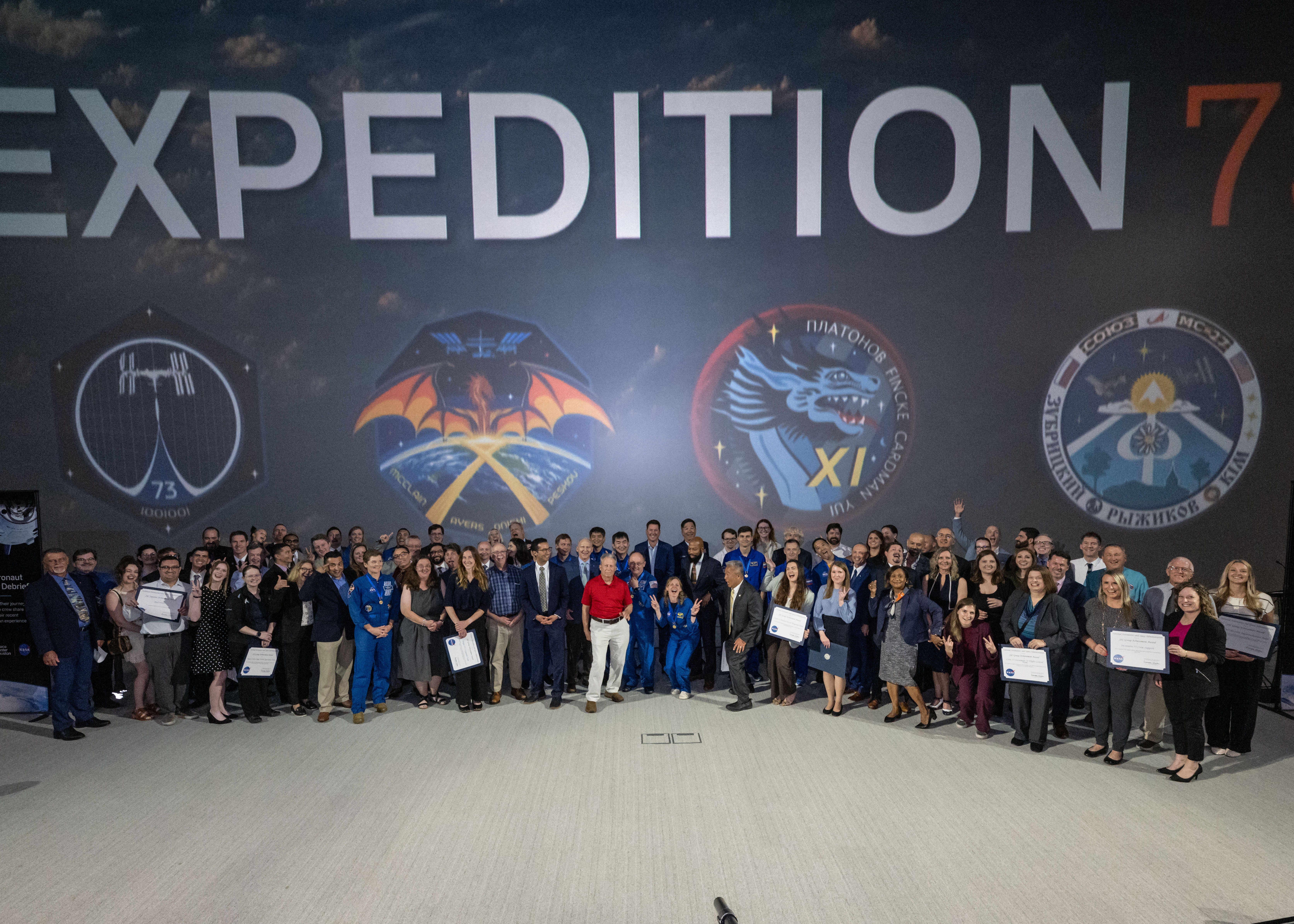
The evening concluded with the crew expressing gratitude to all those who supported their missions from launch through landing.
“It was overwhelming in the most wonderful way to step off that aircraft and see so many team members who had supported us and see family and friends for the first time,” said Cardman. “We are so grateful.”
View the list of award recipients here.
Watch the full Expedition 73 crew debrief and awards ceremony below.
Explore More 3 min read A Turquoise Tint for the Black SeaPhytoplankton added a milky blue hue to the waters of the Black Sea and nearby…
Article 1 day ago 5 min read NASA at the Ion: Orion Lessons from Artemis II Shape NASA’s Moon to Mars Path Article 2 days ago 2 min read Astronaut Jessica Meir Assists With Hardware Updates for NASA’s Cold Atom LabDescription NASA astronaut Jessica Meir inspects optical fibers while installing hardware updates to the agency’s…
Article 1 week agoExpedition 73 Crew Reflects on Science, Teamwork, and Life in Orbit
On June 16, astronauts and cosmonauts gathered at Space Center Houston to share stories from their missions aboard the International Space Station and recognize the teamwork and people on the ground that made their missions possible.
The Expedition 73 Welcome Home Ceremony brought together members of NASA’s SpaceX Crew-10, Soyuz MS-27, and NASA’s SpaceX Crew-11 missions. During the event, the crews reflected on the science, partnerships, and international collaboration that defined their time in orbit.
Remarks were delivered by NASA’s Johnson Space Center Director Vanessa Wyche, Low Earth Orbit Program’s Deputy Manager for the International Space Station Dina Contella, Richard Jones with NASA’s commercial crew office, Flight Operations Director Norm Knight, Johnson Employee Relations Lead David Kelley, and Space Center Houston Chief Operating and Strategy Officer Keesha Bullock. Together, they recognized the accomplishments of the crews and the team members who helped make the expedition a success.
NASA’s Johnson Space Center Director Vanessa Wyche gives opening remarks at the crew debrief and awards ceremony. NASA/Luna Posadas NavaWyche welcomed the crews home and reflected on the accomplishments of Expedition 73.
“Together, these crews exemplified professionalism, resilience, and the spirit of international cooperation,” Wyche said. “Their work ensured the continued success of the International Space Station Program and demonstrated the strength of our multi-vehicle crew transportation strategy.”
During the expedition, all available docking ports were occupied simultaneously for the first time, with eight spacecraft attached to the station. The crew also supported visiting missions, including Axiom Mission 4, and multiple cargo deliveries while maintaining a full schedule of scientific investigations.
Crew members completed three spacewalks, installing hardware that supports future solar array upgrades and maintenance activities critical to station operations.
NASA astronaut Anne McClain is photographed near one of the International Space Station’s main solar arrays during a spacewalk to upgrade the orbital outpost’s power generation system and relocate a communications antenna on May 1, 2026. NASAThe ceremony also recognized the workforce whose dedication supported every aspect of Expedition 73, from mission planning and operations to research, training, and crew safety.
“You learned each other’s languages, and often, when we didn’t know the right answers, you partnered with us, and you would come up with the answers and help,” said International Space Station Program Deputy Manager Dina Contella. “You really helped make us successful.”
She noted that collaboration extended well beyond the crew in orbit, with teams across the program matching that dedication throughout the expedition.
Contella shared that Expedition 73 included six cargo missions, the inaugural flight of JAXA’s (Japan Aerospace Exploration Agency) HTV-X1 cargo spacecraft, and more than 37,000 pounds of supplies, equipment, and scientific investigations delivered to the space station.
She also thanked the Commercial Crew Program and Flight Operations teams for helping safely transport crews to and from the station and support mission operations.
More than 1,000 employees representing 40 teams received NASA Group Achievement Awards, while 23 individuals were honored with Superior Achievement Awards for their contributions to the mission.
NASA astronaut Zena Cardman and JAXA (Japan Aerospace Exploration Agency) astronaut Kimiya Yui receive the NASA Exceptional Bravery Honors at the crew debrief. From left: NASA astronaut Zena Cardman, Johnson Director Vanessa Wyche, Richard Jones with NASA’s commercial crew office, International Space Station Deputy Manager Dina Contella, and JAXA astronaut Kimiya Yui. NASA/Luna Posadas NavaNASA astronaut Zena Cardman and JAXA astronaut Kimiya Yui received NASA Exceptional Bravery Honors for demonstrating exceptional courage, leadership, and composure during a medical event.
Flight Operations Director Norm Knight thanked the teams that supported Expedition 73 from the ground while recognizing the crews’ contributions throughout their missions. “You represent an astronaut corps that is the best of the best, epitomizing courage and teamwork,” Knight told the crew. “Every opportunity or challenge that came your way, you met with confidence and creativity.”
NASA astronaut Jonny Kim conducts an investigation to assess the effects of microgravity on bone marrow stem cells, including their ability to secrete proteins that form and dissolve bone.NASACrew members reflected on the station’s legacy as a platform for discovery, innovation, and international partnership after more than 25 years of continuous human presence in orbit.
Research conducted during Expedition 73 included investigations in human physiology, biology, materials science, pharmaceutical development, and technologies designed to benefit life on Earth and future exploration missions.
The crews also discussed research aboard the station that will help prepare NASA for future missions to the Moon and Mars, including advanced life-support systems and water recovery technologies.
NASA astronaut Nichole Ayers holds space botany hardware that supports the low Earth orbit Integrated Flori-culture Experiment (LIFE) investigation as she floats inside the space station’s cupola. The study examines how radiation and microgravity affect plant growth to support future exploration and improve crop production on Earth. NASABeyond science and operations, the crew built strong bonds during their months in orbit. They marked birthdays, holidays, and mission milestones together, often creating elaborate cakes from the limited ingredients available aboard the station.
NASA astronaut Anne McClain celebrates her birthday with a cake, gifts, and cards aboard the space station’s Unity module. NASAMany crew members said their strongest memories centered on the people around them, and that trust and teamwork remained essential to mission success.
Viewing Earth from orbit provided the crew with a powerful reminder of humanity’s shared connection.
“When you look back at Earth, what we have in common is so much more important than what makes us different,” said McClain. “We’re all on this one planet. We’re all on the same crew.”
Awardees pose for a group photo from the Expedition 73 crew debrief and awards ceremony.NASA/Luna Posadas NavaThe evening concluded with the crew expressing gratitude to all those who supported their missions from launch through landing.
“It was overwhelming in the most wonderful way to step off that aircraft and see so many team members who had supported us and see family and friends for the first time,” said Cardman. “We are so grateful.”
View the list of award recipients here.
Watch the full Expedition 73 crew debrief and awards ceremony below.
Explore More 3 min read A Turquoise Tint for the Black SeaPhytoplankton added a milky blue hue to the waters of the Black Sea and nearby…
Article 22 hours ago 5 min read NASA at the Ion: Orion Lessons from Artemis II Shape NASA’s Moon to Mars Path Article 1 day ago 2 min read Astronaut Jessica Meir Assists With Hardware Updates for NASA’s Cold Atom LabDescription NASA astronaut Jessica Meir inspects optical fibers while installing hardware updates to the agency’s…
Article 1 week agoNASA, US Small Business Administration to Announce Partnership
NASA and the U.S. Small Business Administration will sign a memorandum of agreement during a ceremony at 1 p.m. EDT, Monday, June 29, at NASA Headquarters in Washington.
The agreement will create a new interagency initiative that directly responds to President Donald J. Trump’s National Space Policy and supports the growth of the American space economy.
Participants include:
- NASA Administrator Jared Isaacman
- SBA Administrator Kelly Loeffler
This event is in person only. Media interested in attending must RSVP no later than 10 a.m. on June 29 to: hq-media@mail.nasa.gov. NASA’s media accreditation policy is available online.
For more information about NASA’s missions, visit:
-end-
Camille Gallo / Cheryl Warner
Headquarters, Washington
202-358-1600
camille.m.gallo@nasa.gov / cheryl.m.warner@nasa.gov
NASA, US Small Business Administration to Announce Partnership
NASA and the U.S. Small Business Administration will sign a memorandum of agreement during a ceremony at 1 p.m. EDT, Monday, June 29, at NASA Headquarters in Washington.
The agreement will create a new interagency initiative that directly responds to President Donald J. Trump’s National Space Policy and supports the growth of the American space economy.
Participants include:
- NASA Administrator Jared Isaacman
- SBA Administrator Kelly Loeffler
This event is in person only. Media interested in attending must RSVP no later than 10 a.m. on June 29 to: hq-media@mail.nasa.gov. NASA’s media accreditation policy is available online.
For more information about NASA’s missions, visit:
-end-
Camille Gallo / Cheryl Warner
Headquarters, Washington
202-358-1600
camille.m.gallo@nasa.gov / cheryl.m.warner@nasa.gov
NASA Welcomes Botswana as 68th Artemis Accords Signatory
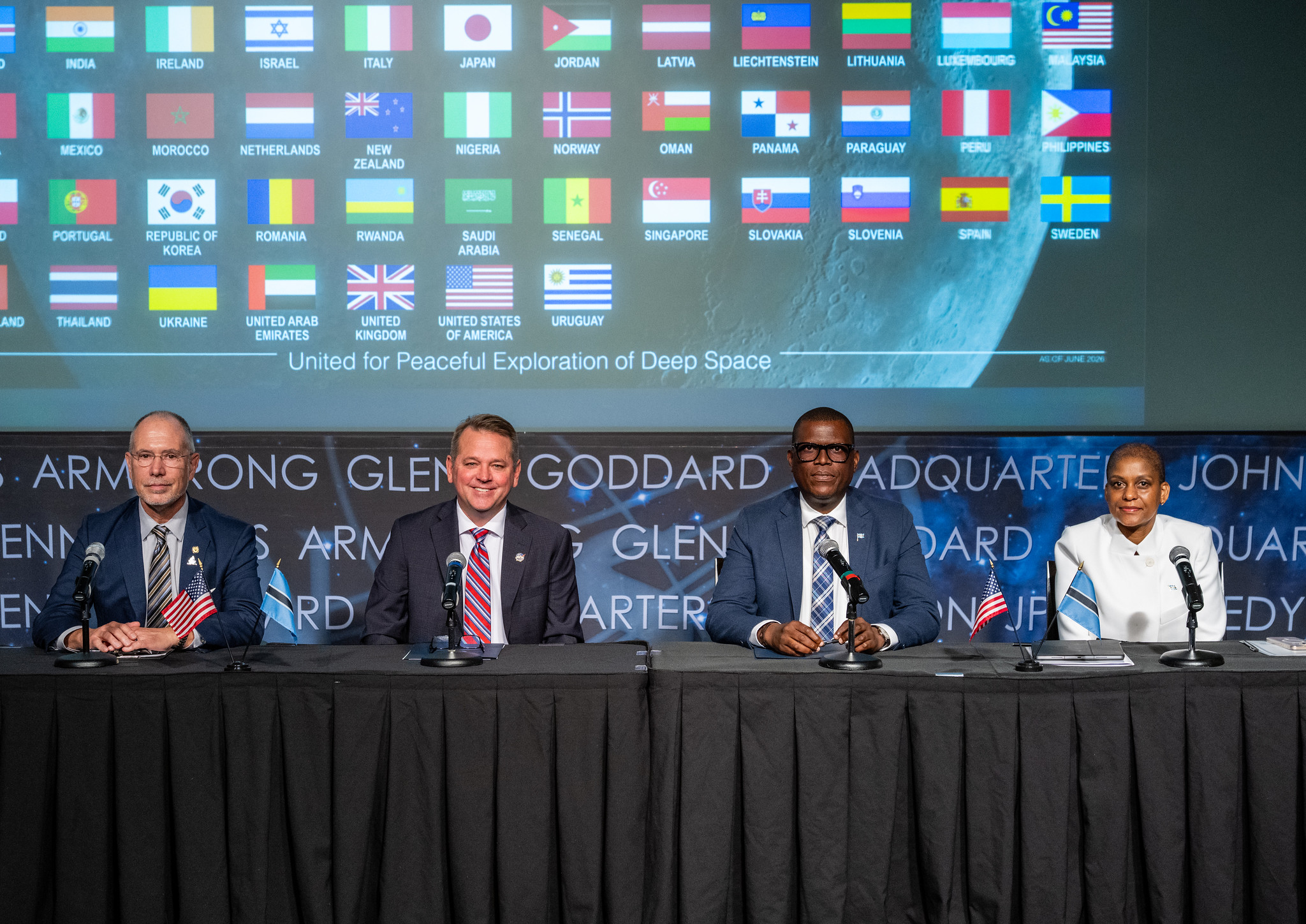
The Republic of Botswana signed the Artemis Accords Thursday during a ceremony hosted by NASA at the agency’s headquarters in Washington, becoming the sixth African nation to join a growing community of nations committed to the peaceful, transparent, and responsible exploration of space.
“It is my privilege to welcome Botswana as the newest signatory of the Artemis Accords,” said NASA Deputy Administrator Matt Anderson. “Today marks an important milestone in our international partnership and in the continued growth of the Artemis community. Botswana joins at an important moment. Earlier this month, we announced the crew of Artemis III and, as we speak, their spacecraft is being assembled as they prepare to play their part in mankind’s greatest adventure.”
Botswana’s Minister of Communications and Innovation David Tshere signed on behalf of the country. U.S. Department of State Senior Advisor for Space Gregory Autry, and Mabedi Ngwenya, acting ambassador of the Republic of Botswana to the United States, also participated in the ceremony.
“Botswana like many countries, we have interest in space exploration, found it important to become a signatory to the Artemis Accords to promote the safe, transparent, and sustainable civil space exploration, and to advance international cooperation, and a shared framework for responsible activities in the space,” said Tshere.
This new chapter builds on Botswana’s long history of collaboration with the United States in space-based Earth observation. In the early 1970s, Botswana participated in the satellite program later known as Landsat, joining dozens of other nations in pioneering satellite-based environmental observation. Botswana marked another milestone with the launch of its first Earth observation satellite, Botswana Satellite 1, in March 2025, aboard a SpaceX Falcon 9.
In 2020, during the first Trump Administration, the United States, led by NASA and the State Department, joined with seven other founding nations to establish the Artemis Accords, responding to the growing interest in lunar activities by both governments and private companies. The Artemis Accords introduced the first set of practical principles aimed at enhancing the safety and coordination between like-minded nations as they explore the Moon, Mars, and beyond.
Signing the Artemis Accords means committing to explore peaceably and transparently, to render aid to those in need, to enable access to scientific data that all of humanity can learn from, to ensure activities do not interfere with those of others, and to preserve historically significant sites and artifacts by developing best practices for space exploration for the benefit of all.
More countries are expected to sign the Artemis Accords in the months and years ahead, as NASA continues its work to establish a safe, peaceful, and prosperous future in space.
Learn more about the Artemis Accords at:
Share Details Last Updated Jun 25, 2026 Related TermsNASA Welcomes Botswana as 68th Artemis Accords Signatory
The Republic of Botswana signed the Artemis Accords Thursday during a ceremony hosted by NASA at the agency’s headquarters in Washington, becoming the sixth African nation to join a growing community of nations committed to the peaceful, transparent, and responsible exploration of space.
“It is my privilege to welcome Botswana as the newest signatory of the Artemis Accords,” said NASA Deputy Administrator Matt Anderson. “Today marks an important milestone in our international partnership and in the continued growth of the Artemis community. Botswana joins at an important moment. Earlier this month, we announced the crew of Artemis III and, as we speak, their spacecraft is being assembled as they prepare to play their part in mankind’s greatest adventure.”
Botswana’s Minister of Communications and Innovation David Tshere signed on behalf of the country. U.S. Department of State Senior Advisor for Space Gregory Autry, and Mabedi Ngwenya, acting ambassador of the Republic of Botswana to the United States, also participated in the ceremony.
“Botswana like many countries, we have interest in space exploration, found it important to become a signatory to the Artemis Accords to promote the safe, transparent, and sustainable civil space exploration, and to advance international cooperation, and a shared framework for responsible activities in the space,” said Tshere.
This new chapter builds on Botswana’s long history of collaboration with the United States in space-based Earth observation. In the early 1970s, Botswana participated in the satellite program later known as Landsat, joining dozens of other nations in pioneering satellite-based environmental observation. Botswana marked another milestone with the launch of its first Earth observation satellite, Botswana Satellite 1, in March 2025, aboard a SpaceX Falcon 9.
In 2020, during the first Trump Administration, the United States, led by NASA and the State Department, joined with seven other founding nations to establish the Artemis Accords, responding to the growing interest in lunar activities by both governments and private companies. The Artemis Accords introduced the first set of practical principles aimed at enhancing the safety and coordination between like-minded nations as they explore the Moon, Mars, and beyond.
Signing the Artemis Accords means committing to explore peaceably and transparently, to render aid to those in need, to enable access to scientific data that all of humanity can learn from, to ensure activities do not interfere with those of others, and to preserve historically significant sites and artifacts by developing best practices for space exploration for the benefit of all.
More countries are expected to sign the Artemis Accords in the months and years ahead, as NASA continues its work to establish a safe, peaceful, and prosperous future in space.
Learn more about the Artemis Accords at:
Share Details Last Updated Jun 25, 2026 Related TermsNASA Selects Rocket Lab to Launch Sun, Earth Science Missions

NASA has selected Rocket Lab to provide the launch service for both the agency’s PolSIR (Polarized Submillimeter Ice-cloud Radiometer) and Total and Spectral Solar Irradiance Sensor-2 (TSIS-2) missions.
The two selections are part of NASA’s Venture-Class Acquisition of Dedicated and Rideshare (VADR) launch services contract. This contract allows the agency to award fixed-price indefinite-delivery/indefinite-quantity launch service task orders during VADR’s 10-year ordering period, with a maximum total contract value of $300 million.
The PoISIR mission will help provide a better understanding of ice clouds that form at high altitudes throughout tropical and subtropical regions. Rocket Lab will launch PolSIR aboard two of its dedicated Electron rockets no earlier than June 2027 from Launch Complex 1 in Mahia, New Zealand.
Consisting of two small satellites, both of PoISIR’s 16U CubeSats have a scientific instrument designed to measure a specific spectrum of electromagnetic radiation, which will determine how the amount of ice in tropical clouds rises and falls during the day, as well as how the ice changes connect to larger storms. The instruments also will help determine how ice clouds affect sunlight and heat radiation throughout the day. The pair of CubeSats will fly in orbits separated by several hours to observe the pattern of cloud ice content changes over a day. This information will help researchers make more accurate weather predictions.
The PolSIR mission’s principal investigator is Vanderbilt University in Nashville. Science operations will be conducted by the Space Science and Engineering Center at the University of Wisconsin in Madison. The two spacecraft are being built by Blue Canyon Technologies.
The TSIS-2 mission will measure the Sun’s energy input to Earth. The spacecraft will provide critical data for understanding our planet’s ocean currents, seasons, and weather. The mission will continue NASA’s work to study and protect our home planet by providing insights that can only be gathered from space. Rocket Lab will launch TSIS-2 aboard an Electron rocket in early 2027 from Launch Complex 1 in Mahia.
The satellite measures Earth’s solar energy input, both the total irradiance, which is the Sun’s overall brightness at the top of Earth’s atmosphere, and the spectral irradiance, or how that energy is distributed across ultraviolet, visible, and infrared wavelengths. The satellite’s two instruments, the Total Irradiance Monitor and the Spectral Irradiance Monitor, are similar to those used for TSIS-1. Together, they cover a wavelength range that includes 96% of the energy in the solar spectrum. While TSIS‑1 works from the International Space Station, TSIS‑2 will operate from a free‑flying spacecraft.
Managed by NASA’s Goddard Space Flight Center in Greenbelt, Maryland, TSIS-2 includes instruments provided by the Laboratory for Atmospheric and Space Physics at the University of Colorado, Boulder, and the spacecraft is provided by General Atomics – Electromagnetic Systems.
NASA’s Launch Services Program, based at the agency’s Kennedy Space Center in Florida, manages the VADR contract.
Learn more about VADR online:
https://www.nasa.gov/vadr-venture-class-acquisition-of-dedicated-and-rideshare-launch-services