
Feed aggregator
A Day of Flight Testing at NASA Armstrong
3 min read
Preparations for Next Moonwalk Simulations Underway (and Underwater) NASA flight test engineer A.J. Jaffe and pilot Nils Larson walk on the ramp before a flight Tuesday, Jan. 13, 2026, at NASA’s Armstrong Flight Research Center in Edwards, California. The two support the agency’s Crossflow Attenuated Natural Laminar Flow (CATNLF) project, which aims to lower fuel costs for future commercial aircraft by testing a scale-model wing designed to improve laminar flow.NASA/Christopher LC Clark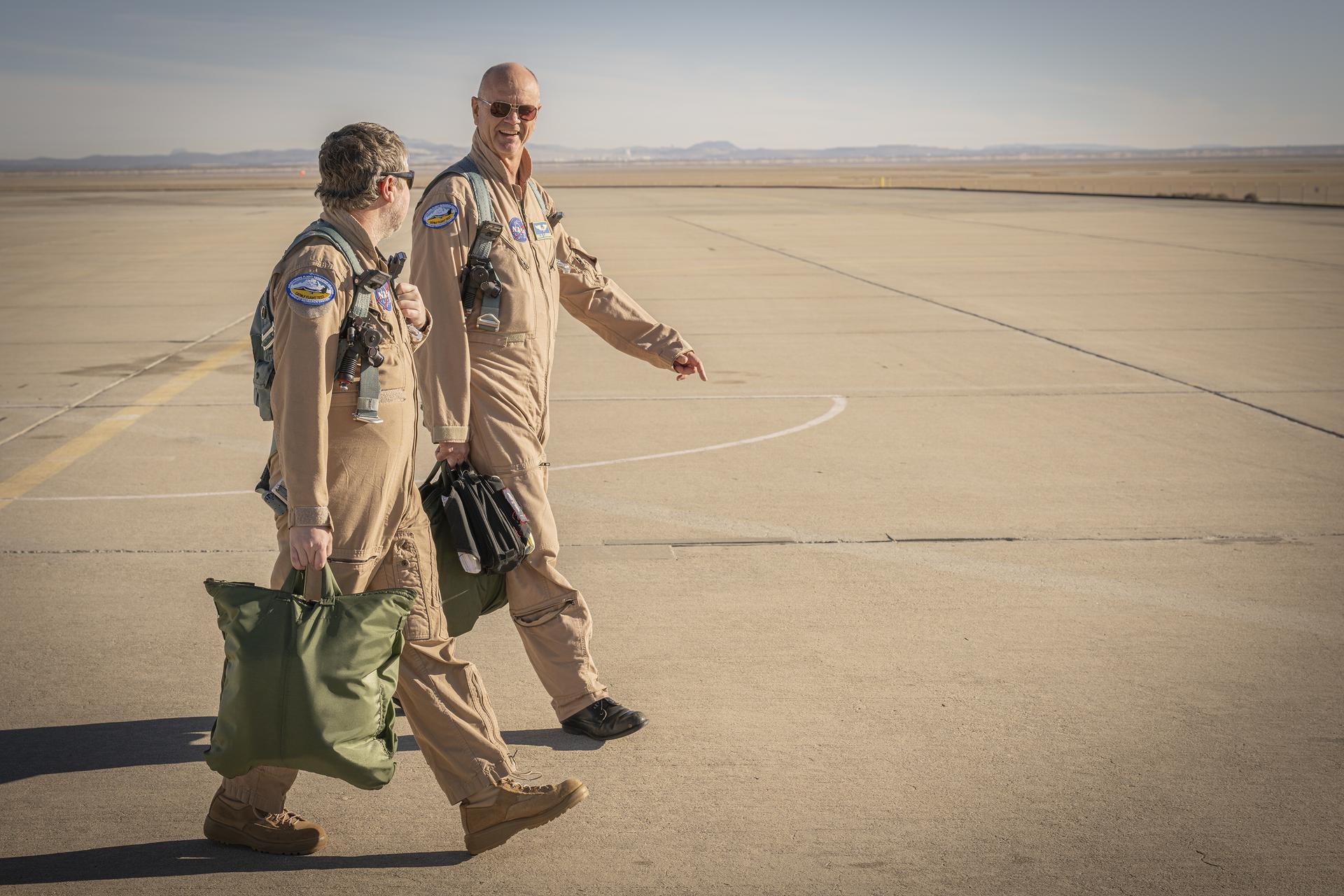
Flight testing is a team sport. For nearly 80 years, teams at NASA’s Armstrong Flight Research Center in Edwards, California, have used flight testing to push the limits of aerodynamics and advance aviation.
Earlier this year, NASA’s Crossflow Attenuated Natural Laminar Flow (CATNLF) initiative tested a wing concept that would maximize the smooth flow of air known as laminar flow, which could lower fuel costs for future airliners. During flight testing, researchers strapped a scale-model CATNLF wing to the bottom of a NASA F-15 aircraft.
Here’s what a day of CATNLF flight testing looked like.
NASA ground crew prepares the agency’s F-15 research aircraft and Cross Flow Attenuated Natural Laminar Flow (CATNLF) test article ahead of its first high-speed taxi test on Tuesday, Jan. 12, 2026, at NASA’s Armstrong Flight Research Center in Edwards, California. The CATNLF design aims to reduce drag on wing surfaces to improve efficiency and, in turn, reduce fuel burn.NASA/Christopher LC Clark 5 a.m. — Aircraft staging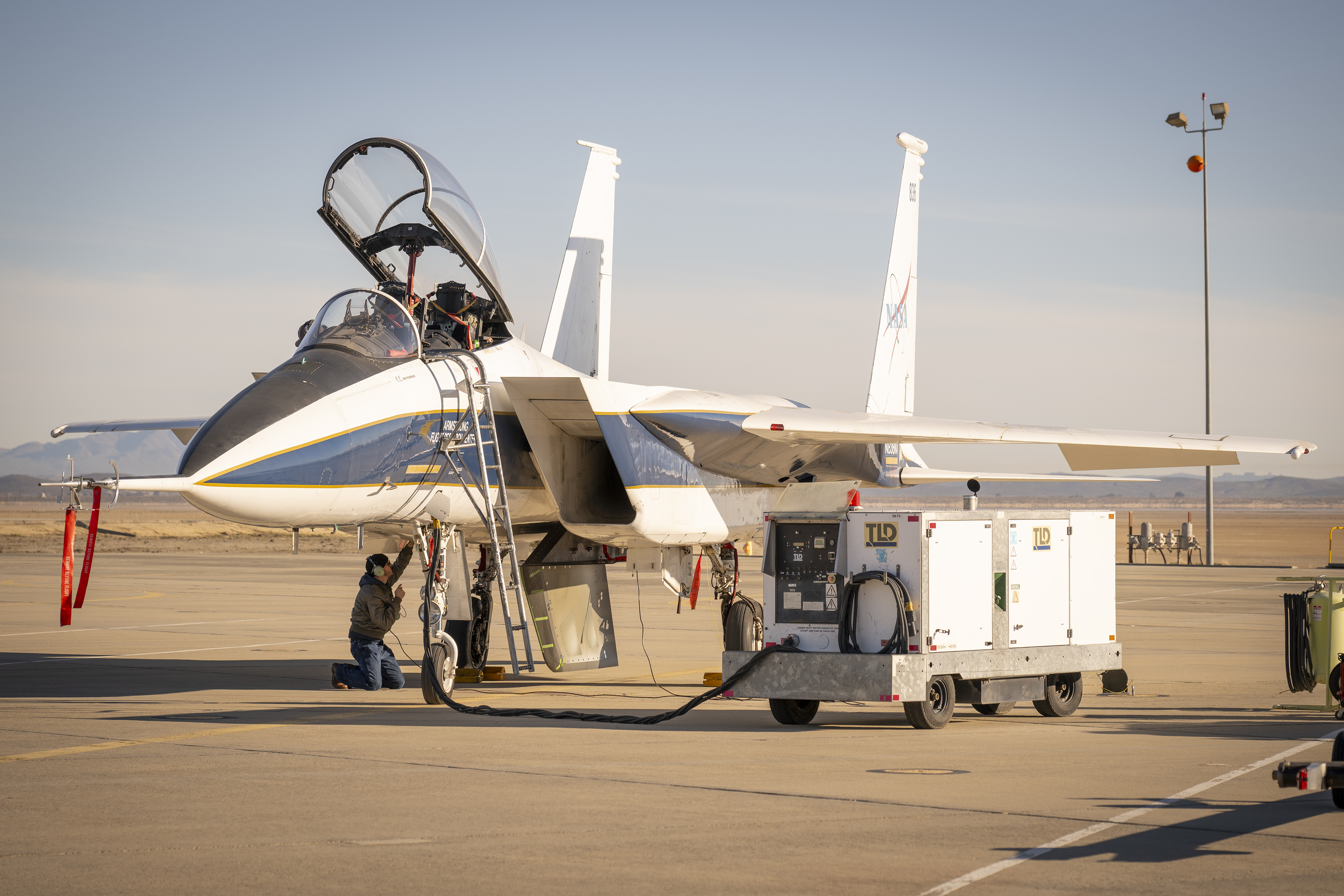
Ground crews ready the aircraft for the mission. If the operation involves a chase plane — a second aircraft to monitor the test flight — it would also be prepared, along with its crew.
6 a.m. — Crew briefPilots, engineers, maintenance techs, project leads, researchers, photographers, and videographers meet to review the flight’s goals, weather reports, and final details.
NASA researchers Mike Frederick, right, and Michelle Banchy, left, along with Ashante Jordan and intern Phillip Nguyen, sit in a control room and prepare for a flight test Thursday, Jan. 29, 2026, at NASA’s Armstrong Flight Research Center in Edwards, California. The agency’s Crossflow Attenuated Natural Laminar Flow (CATNLF) project aims to lower fuel costs for future commercial aircraft by testing a scale-model wing designed to improve laminar flow.NASA/Christopher LC Clark 6:30 a.m. — Control room checks, air crew suit-up
Researchers head to the control room to complete day-of checks, confirming all communications, displays, and instruments are functioning.
Pilots suit up in life support, including custom‑fit pressure suits, harnesses, helmets, and masks. If a photographer, videographer, or flight test engineer will be in the aircraft’s back seat, they do the same.
6:45 a.m. — Air crew steps, control room preparationsThe pilot completes preflight checks with the crew chief and technicians for the aircraft’s electrical systems. The pilot and the crew chief sign a flight preparedness report confirming the aircraft is ready to fly.
Inside the control room, the team prepares to monitor the flight using the same set of test cards, a step-by-step plan for the flight.
7 a.m. — Pilot secured in jetThe pilot and backseat crew member climb into their seats, strap in, and secure any gear they’ve brought for the test. The pilot completes preflight ground checks.
7:15 a.m. — Aircraft taxiThe pilot communicates with the control tower and taxis to the runway. Control room teams at NASA Armstrong monitor the aircraft via radio.
7:30 a.m. — TakeoffThe pilot accelerates down the runway and, at the proper speed, pulls back on the stick to take off. Once airborne, the pilot coordinates with air traffic control at Edwards Air Force Base and the NASA Armstrong control room while flying to the designated test area.
A F-15 aircraft owned by NASA’s Armstrong Flight Research Center in Edwards, California, flies above a mountain range on Tuesday, April 21, 2026. The agency’s Crossflow Attenuated Natural Laminar Flow (CATNLF) test article is attached to the bottom of this F-15. This project aims to lower fuel costs for future commercial aircraft by testing a scale-model wing designed to improve laminar flow. NASA/Jim Ross 7:30 to 8:30 a.m. — Flight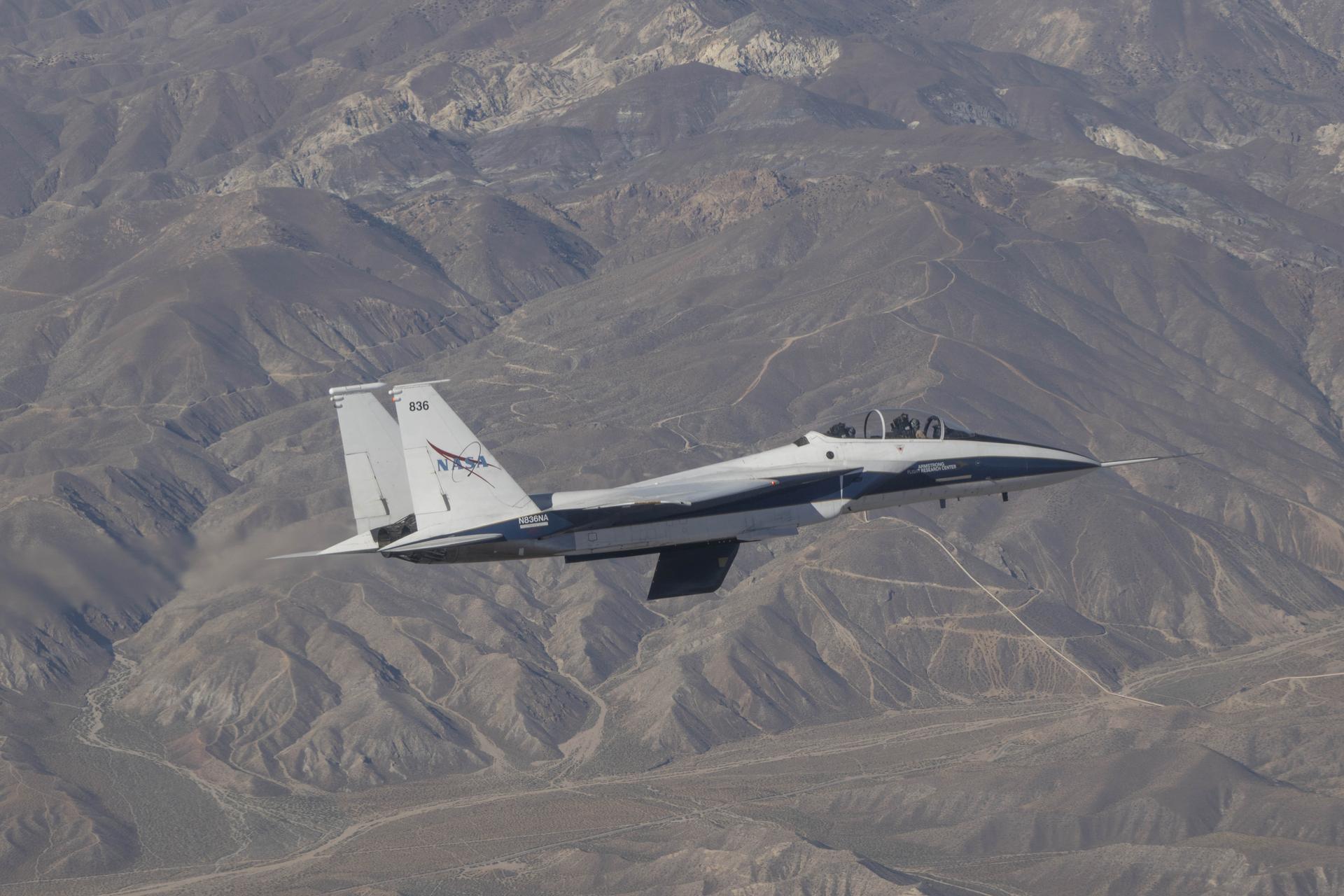
At the test location, the team coordinates with the pilot on altitude, speed, and maneuvers. The test conductor relays each task, and the pilot completes them one-by-one. The pilot and control room monitor the performance of the hardware, instruments, aircraft, or software throughout the sequence. After completing the test points, the pilot returns to base.
8:45 a.m. — Landing, towingThe pilot lands and taxis to the ramp at NASA Armstrong, where the crew chief meets the jet. After the pilot exits, the aircraft is towed into the hangar for maintenance.
9:30 a.m. — Crew debriefThe pilot, project team, and mission controlstaff return to the briefing room tocapture lessons learned and document items for follow-up.
10 a.m. — Data download, second flight prepTeams download flight data for analysis. If two flights are scheduled, preparations begin immediately for the second.
Four NASA employees walk toward a hangar after a flight Thursday, Feb. 4, 2026, at NASA’s Armstrong Flight Research Center in Edwards, California. The team supports the agency’s Crossflow Attenuated Natural Laminar Flow (CATNLF) project, which aims to lower fuel costs for future commercial aircraft by testing a scale-model wing designed to improve laminar flow.NASA/Christopher LC Clark Share Details Last Updated Jun 30, 2026 EditorDede DiniusContactTeresa Whitingteresa.whiting@nasa.govLocationArmstrong Flight Research Center Related Terms Explore More 5 min read NASA’s Newest Wind Tunnel Builds on Legacy of Innovation Article 23 hours ago 3 min read This is How NASA Flight Tests New Technology Article 1 week ago 9 min read ARMD Research Solicitations (Updated June 23) Article 1 week ago Keep Exploring Discover More Topics From NASA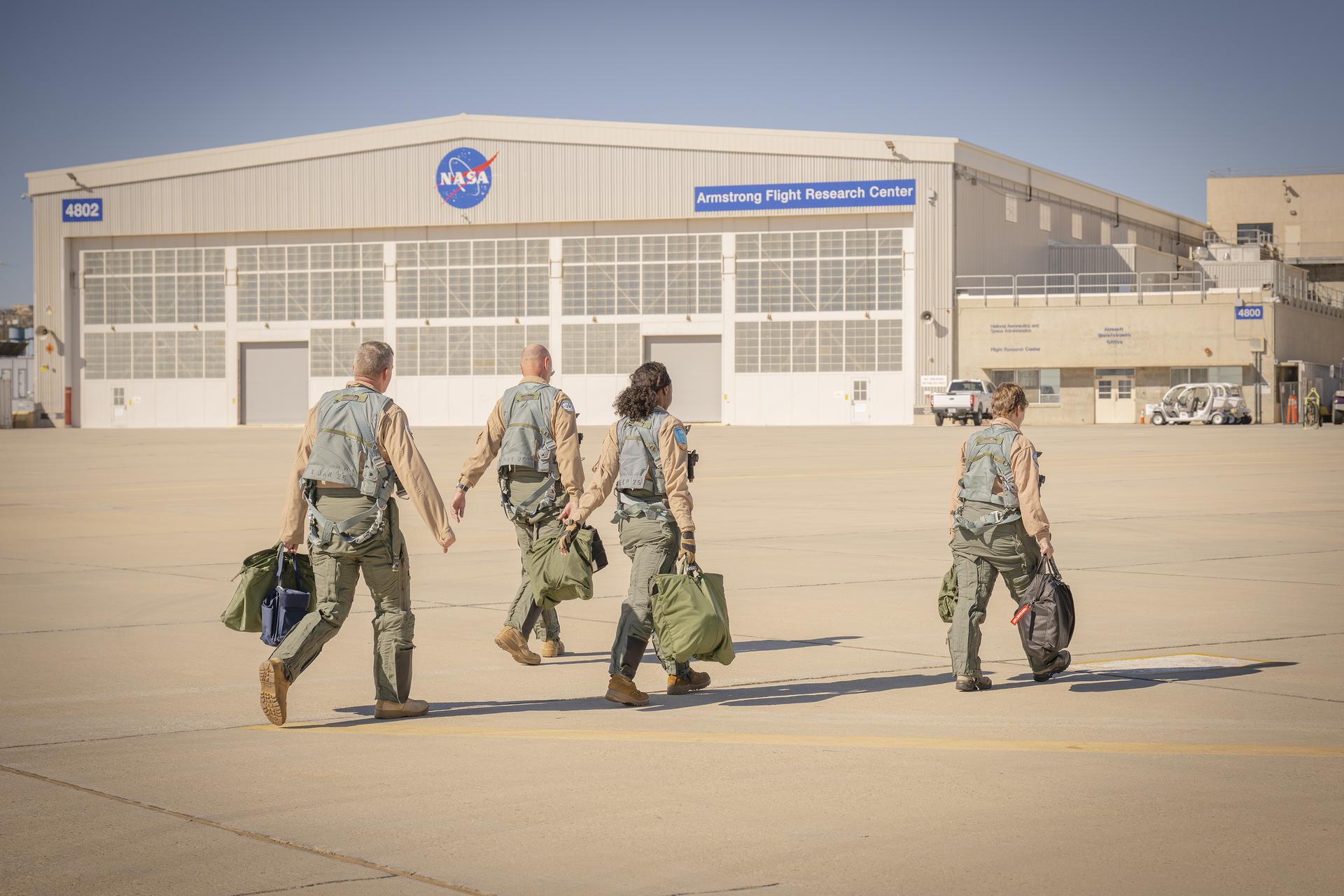
Armstrong Flight Research Center
Aircraft Flown at Armstrong
Quesst: The Aircraft
Aeronautics
A Day of Flight Testing at NASA Armstrong
3 min read
Preparations for Next Moonwalk Simulations Underway (and Underwater) NASA flight test engineer A.J. Jaffe and pilot Nils Larson walk on the ramp before a flight Tuesday, Jan. 13, 2026, at NASA’s Armstrong Flight Research Center in Edwards, California. The two support the agency’s Crossflow Attenuated Natural Laminar Flow (CATNLF) project, which aims to lower fuel costs for future commercial aircraft by testing a scale-model wing designed to improve laminar flow.NASA/Christopher LC ClarkFlight testing is a team sport. For nearly 80 years, teams at NASA’s Armstrong Flight Research Center in Edwards, California, have used flight testing to push the limits of aerodynamics and advance aviation.
Earlier this year, NASA’s Crossflow Attenuated Natural Laminar Flow (CATNLF) initiative tested a wing concept that would maximize the smooth flow of air known as laminar flow, which could lower fuel costs for future airliners. During flight testing, researchers strapped a scale-model CATNLF wing to the bottom of a NASA F-15 aircraft.
Here’s what a day of CATNLF flight testing looked like.
NASA ground crew prepares the agency’s F-15 research aircraft and Cross Flow Attenuated Natural Laminar Flow (CATNLF) test article ahead of its first high-speed taxi test on Tuesday, Jan. 12, 2026, at NASA’s Armstrong Flight Research Center in Edwards, California. The CATNLF design aims to reduce drag on wing surfaces to improve efficiency and, in turn, reduce fuel burn.NASA/Christopher LC Clark 5 a.m. — Aircraft stagingGround crews ready the aircraft for the mission. If the operation involves a chase plane — a second aircraft to monitor the test flight — it would also be prepared, along with its crew.
6 a.m. — Crew briefPilots, engineers, maintenance techs, project leads, researchers, photographers, and videographers meet to review the flight’s goals, weather reports, and final details.
NASA researchers Mike Frederick, right, and Michelle Banchy, left, along with Ashante Jordan and intern Phillip Nguyen, sit in a control room and prepare for a flight test Thursday, Jan. 29, 2026, at NASA’s Armstrong Flight Research Center in Edwards, California. The agency’s Crossflow Attenuated Natural Laminar Flow (CATNLF) project aims to lower fuel costs for future commercial aircraft by testing a scale-model wing designed to improve laminar flow.NASA/Christopher LC Clark 6:30 a.m. — Control room checks, air crew suit-upResearchers head to the control room to complete day-of checks, confirming all communications, displays, and instruments are functioning.
Pilots suit up in life support, including custom‑fit pressure suits, harnesses, helmets, and masks. If a photographer, videographer, or flight test engineer will be in the aircraft’s back seat, they do the same.
6:45 a.m. — Air crew steps, control room preparationsThe pilot completes preflight checks with the crew chief and technicians for the aircraft’s electrical systems. The pilot and the crew chief sign a flight preparedness report confirming the aircraft is ready to fly.
Inside the control room, the team prepares to monitor the flight using the same set of test cards, a step-by-step plan for the flight.
7 a.m. — Pilot secured in jetThe pilot and backseat crew member climb into their seats, strap in, and secure any gear they’ve brought for the test. The pilot completes preflight ground checks.
7:15 a.m. — Aircraft taxiThe pilot communicates with the control tower and taxis to the runway. Control room teams at NASA Armstrong monitor the aircraft via radio.
7:30 a.m. — TakeoffThe pilot accelerates down the runway and, at the proper speed, pulls back on the stick to take off. Once airborne, the pilot coordinates with air traffic control at Edwards Air Force Base and the NASA Armstrong control room while flying to the designated test area.
A F-15 aircraft owned by NASA’s Armstrong Flight Research Center in Edwards, California, flies above a mountain range on Tuesday, April 21, 2026. The agency’s Crossflow Attenuated Natural Laminar Flow (CATNLF) test article is attached to the bottom of this F-15. This project aims to lower fuel costs for future commercial aircraft by testing a scale-model wing designed to improve laminar flow. NASA/Jim Ross 7:30 to 8:30 a.m. — FlightAt the test location, the team coordinates with the pilot on altitude, speed, and maneuvers. The test conductor relays each task, and the pilot completes them one-by-one. The pilot and control room monitor the performance of the hardware, instruments, aircraft, or software throughout the sequence. After completing the test points, the pilot returns to base.
8:45 a.m. — Landing, towingThe pilot lands and taxis to the ramp at NASA Armstrong, where the crew chief meets the jet. After the pilot exits, the aircraft is towed into the hangar for maintenance.
9:30 a.m. — Crew debriefThe pilot, project team, and mission controlstaff return to the briefing room tocapture lessons learned and document items for follow-up.
10 a.m. — Data download, second flight prepTeams download flight data for analysis. If two flights are scheduled, preparations begin immediately for the second.
Four NASA employees walk toward a hangar after a flight Thursday, Feb. 4, 2026, at NASA’s Armstrong Flight Research Center in Edwards, California. The team supports the agency’s Crossflow Attenuated Natural Laminar Flow (CATNLF) project, which aims to lower fuel costs for future commercial aircraft by testing a scale-model wing designed to improve laminar flow.NASA/Christopher LC Clark Share Details Last Updated Jun 30, 2026 EditorDede DiniusContactTeresa Whitingteresa.whiting@nasa.govLocationArmstrong Flight Research Center Related Terms Explore More 5 min read NASA’s Newest Wind Tunnel Builds on Legacy of Innovation Article 23 hours ago 3 min read This is How NASA Flight Tests New Technology Article 1 week ago 9 min read ARMD Research Solicitations (Updated June 23) Article 1 week ago Keep Exploring Discover More Topics From NASAArmstrong Flight Research Center
Aircraft Flown at Armstrong
Quesst: The Aircraft
Aeronautics
La NASA adjudica nuevas misiones científicas para Base Lunar y adelanta nuevas oportunidades
Read this news release in English here.
La NASA anunció el martes la selección de tres empresas para llevar a cabo cuatro nuevas misiones a la Luna a finales de 2028 como parte del programa Base Lunar de la agencia. Astrobotic, Firefly Aerospace e Intuitive Machines entregarán cargas útiles científicas de la NASA a la superficie lunar mientras la agencia construye el primer puesto de avanzada en otro mundo.
“Estas nuevas adjudicaciones a nuestros socios comerciales, que suman casi 600 millones de dólares para enviar más misiones a la Luna con cargas útiles científicas, demuestran nuestro compromiso de acelerar el esfuerzo para establecer una presencia a largo plazo en la superficie lunar, y nos brindan más oportunidades para desarrollar las capacidades que necesitamos para prosperar allí”, dijo Lori Glaze, administradora asociada de la Dirección de Misiones de Vuelos Espaciales Tripulados de la sede central de la NASA en Washington.
A Astrobotic se le adjudicaron 297,9 millones de dólares en total para dos entregas, mientras que Firefly Aerospace e Intuitive Machines recibieron 144,2 y 148,3 millones de dólares, respectivamente, para una entrega cada una, como parte de la iniciativa de Servicios Comerciales de Carga Útil Lunar (CLPS, por sus siglas en inglés) de la agencia, uno de los pilares de Base Lunar. Cada una usará versiones actualizadas de diseños de módulos de aterrizaje que ya han volado, para permitir la mayor cadencia de misiones de la NASA.
“Estamos construyendo un campo de pruebas para las operaciones de Base Lunar”, dijo Ryan Stephan, director interino de módulos de aterrizaje de carga del programa Base Lunar de la NASA. “Acelerar la cadencia con la que adjudicamos nuevas misiones a la Luna y las oportunidades de lanzamiento nos permite avanzar rápidamente para aprender, repetir y mejorar”.
Con 17 misiones de entrega a la superficie lunar a cargo de múltiples proveedores, la NASA también anunció nuevas oportunidades para que la industria estadounidense contribuya a la Base Lunar. La agencia está barajando planes para enviar a la Luna el Vehículo de Exploración Polar para Observación, Cartografía y Exploración In Situ (PROMISE, por su acrónimo en inglés), una versión de desarrollo de ingeniería del rover Perseverance en Marte. Los expertos de la agencia definirán las posibles oportunidades de PROMISE para caracterizar la superficie lunar y el subsuelo, y para prospectar recursos.
Además, la NASA tiene previsto solicitar propuestas en los próximos meses para módulos de aterrizaje lunar que transporten una demostración de tecnología de energía y aviónica, otro conjunto de cargas científicas y un generador de imágenes ópticas del Polo Sur. La NASA también publicará una convocatoria abierta para demostraciones tecnológicas de la Base Lunar y solicitará propuestas para una constelación de retransmisores de comunicaciones y navegación lunar para mejorar la comunicación entre los elementos de la Base Lunar y la Tierra.
Las adjudicaciones anunciadas el 30 de junio desempeñarán un papel fundamental en el establecimiento de la infraestructura para las operaciones en la superficie lunar. Las empresas son responsables de iniciar y ejecutar los procesos de contratación proporcionar una evaluación de un módulo de aterrizaje lunar previo similar e incorporar las lecciones aprendidas para mejorar la fiabilidad general de la misión.
Cada entrega llevará tres cargas útiles de la NASA a la superficie lunar:
- Instrumento Cámara estéreo para el estudio de los penachos en la superficie lunar (SCALPSS, por sus siglas en inglés): un conjunto de cuatro cámaras que utiliza una técnica llamada fotogrametría estéreo para producir una vista tridimensional del impacto del penacho de gases del motor sobre el polvo lunar a medida que el módulo de aterrizaje desciende sobre la superficie de la Luna. Al recopilar datos de una variedad de motores de distintos tamaños, combustibles y lugares de aterrizaje, estas imágenes estéreo de alta resolución ayudarán a crear modelos para predecir la erosión del polvo lunar y las características de los materiales eyectados, lo que desempeñará un papel vital a medida que se entreguen en la Luna naves espaciales y equipamiento más grandes y pesados cerca unos de otros.
- Conjunto de retrorreflectores láser (LRA, por sus siglas en inglés): refleja los haces láser transmitidos por orbitadores lunares o naves espaciales en fase de aterrizaje para ayudarles a determinar su posición orbital o a navegar hacia la superficie. Es un pequeño dispositivo del tamaño de una galleta, formado por ocho prismas de cuarzo en forma de esquina de cubo colocados en un marco de aluminio en forma de cúpula. El conjunto es pasivo, no requiere energía ni mantenimiento. Estos conjuntos han volado en anteriores módulos de aterrizaje del programa CLPS y en módulos de aterrizaje lunar internacionales, y se seguirán utilizando para construir una red de marcadores permanentes de ubicación en la Luna para la exploración futura.
- Espectrómetro de transferencia lineal de energía (LETS, por sus siglas en inglés): ayuda a comprender mejor el entorno de radiación a partir de distintas trayectorias de tránsito lunar y en diferentes lugares de la superficie lunar. Derivado de equipamiento ya existente, este monitor de radiación utiliza un diminuto y avanzado detector de silicio para medir la energía que transporta la radiación espacial entrante. Proporcionará información sobre la intensidad de la radiación y el tipo de radiación que impacta en la superficie lunar, y brinda la clase de datos detallados sobre radiación que la NASA necesita para diseñar misiones más seguras, proteger a los astronautas y planificar la exploración de larga duración.
La agencia también está estudiando opciones para que estos módulos de aterrizaje entreguen otras cargas útiles a la Luna.
“Al enviar los mismos instrumentos científicos en varios módulos de aterrizaje, comprenderemos mejor los posibles peligros durante el aterrizaje y crearemos una red global de datos ambientales y marcadores de ubicación en la Luna”, dijo Joel Kearns, administrador asociado adjunto para la exploración de la Dirección de Misiones Científicas en la sede central de la NASA. “Es similar a tener estaciones meteorológicas en distintos lugares de la Tierra. Estas tres cargas útiles han demostrado su fiabilidad en vuelo y sus datos son fundamentales para apoyar la exploración segura de la superficie lunar con seres humanos”.
La NASA avanza en el desarrollo de la Base Lunar, una iniciativa a largo plazo de exploración e infraestructura lunar diseñada para permitir una presencia humana sostenida y ampliar la actividad científica y comercial en la superficie de la Luna.
Como parte de una edad de oro de innovación y exploración, la NASA enviará astronautas en misiones cada vez más difíciles para explorar más de la Luna con fines de descubrimiento científico y beneficios económicos, y para continuar sentando las bases para las primeras misiones tripuladas a Marte.
Para obtener más información sobre la Base Lunar, visite el sitio web (en inglés):
https://www.nasa.gov/moonbase
-fin-
Rachel Kraft / Molly Wasser / María José Viñas
Sede central, Washington
+1 202-358-1600
rachel.h.kraft@nasa.gov / molly.l.wasser@nasa.gov / maria-jose.vinasgarcia@nasa.gov
Ivry Artis / Kenna Pell
Centro Espacial Johnson, Houston
+1 281-483-5111
ivry.w.artis@nasa.gov / kenna.m.pell@nasa.gov
La NASA adjudica nuevas misiones científicas para Base Lunar y adelanta nuevas oportunidades
Read this news release in English here.
La NASA anunció el martes la selección de tres empresas para llevar a cabo cuatro nuevas misiones a la Luna a finales de 2028 como parte del programa Base Lunar de la agencia. Astrobotic, Firefly Aerospace e Intuitive Machines entregarán cargas útiles científicas de la NASA a la superficie lunar mientras la agencia construye el primer puesto de avanzada en otro mundo.
“Estas nuevas adjudicaciones a nuestros socios comerciales, que suman casi 600 millones de dólares para enviar más misiones a la Luna con cargas útiles científicas, demuestran nuestro compromiso de acelerar el esfuerzo para establecer una presencia a largo plazo en la superficie lunar, y nos brindan más oportunidades para desarrollar las capacidades que necesitamos para prosperar allí”, dijo Lori Glaze, administradora asociada de la Dirección de Misiones de Vuelos Espaciales Tripulados de la sede central de la NASA en Washington.
A Astrobotic se le adjudicaron 297,9 millones de dólares en total para dos entregas, mientras que Firefly Aerospace e Intuitive Machines recibieron 144,2 y 148,3 millones de dólares, respectivamente, para una entrega cada una, como parte de la iniciativa de Servicios Comerciales de Carga Útil Lunar (CLPS, por sus siglas en inglés) de la agencia, uno de los pilares de Base Lunar. Cada una usará versiones actualizadas de diseños de módulos de aterrizaje que ya han volado, para permitir la mayor cadencia de misiones de la NASA.
“Estamos construyendo un campo de pruebas para las operaciones de Base Lunar”, dijo Ryan Stephan, director interino de módulos de aterrizaje de carga del programa Base Lunar de la NASA. “Acelerar la cadencia con la que adjudicamos nuevas misiones a la Luna y las oportunidades de lanzamiento nos permite avanzar rápidamente para aprender, repetir y mejorar”.
Con 17 misiones de entrega a la superficie lunar a cargo de múltiples proveedores, la NASA también anunció nuevas oportunidades para que la industria estadounidense contribuya a la Base Lunar. La agencia está barajando planes para enviar a la Luna el Vehículo de Exploración Polar para Observación, Cartografía y Exploración In Situ (PROMISE, por su acrónimo en inglés), una versión de desarrollo de ingeniería del rover Perseverance en Marte. Los expertos de la agencia definirán las posibles oportunidades de PROMISE para caracterizar la superficie lunar y el subsuelo, y para prospectar recursos.
Además, la NASA tiene previsto solicitar propuestas en los próximos meses para módulos de aterrizaje lunar que transporten una demostración de tecnología de energía y aviónica, otro conjunto de cargas científicas y un generador de imágenes ópticas del Polo Sur. La NASA también publicará una convocatoria abierta para demostraciones tecnológicas de la Base Lunar y solicitará propuestas para una constelación de retransmisores de comunicaciones y navegación lunar para mejorar la comunicación entre los elementos de la Base Lunar y la Tierra.
Las adjudicaciones anunciadas el 30 de junio desempeñarán un papel fundamental en el establecimiento de la infraestructura para las operaciones en la superficie lunar. Las empresas son responsables de iniciar y ejecutar los procesos de contratación proporcionar una evaluación de un módulo de aterrizaje lunar previo similar e incorporar las lecciones aprendidas para mejorar la fiabilidad general de la misión.
Cada entrega llevará tres cargas útiles de la NASA a la superficie lunar:
- Instrumento Cámara estéreo para el estudio de los penachos en la superficie lunar (SCALPSS, por sus siglas en inglés): un conjunto de cuatro cámaras que utiliza una técnica llamada fotogrametría estéreo para producir una vista tridimensional del impacto del penacho de gases del motor sobre el polvo lunar a medida que el módulo de aterrizaje desciende sobre la superficie de la Luna. Al recopilar datos de una variedad de motores de distintos tamaños, combustibles y lugares de aterrizaje, estas imágenes estéreo de alta resolución ayudarán a crear modelos para predecir la erosión del polvo lunar y las características de los materiales eyectados, lo que desempeñará un papel vital a medida que se entreguen en la Luna naves espaciales y equipamiento más grandes y pesados cerca unos de otros.
- Conjunto de retrorreflectores láser (LRA, por sus siglas en inglés): refleja los haces láser transmitidos por orbitadores lunares o naves espaciales en fase de aterrizaje para ayudarles a determinar su posición orbital o a navegar hacia la superficie. Es un pequeño dispositivo del tamaño de una galleta, formado por ocho prismas de cuarzo en forma de esquina de cubo colocados en un marco de aluminio en forma de cúpula. El conjunto es pasivo, no requiere energía ni mantenimiento. Estos conjuntos han volado en anteriores módulos de aterrizaje del programa CLPS y en módulos de aterrizaje lunar internacionales, y se seguirán utilizando para construir una red de marcadores permanentes de ubicación en la Luna para la exploración futura.
- Espectrómetro de transferencia lineal de energía (LETS, por sus siglas en inglés): ayuda a comprender mejor el entorno de radiación a partir de distintas trayectorias de tránsito lunar y en diferentes lugares de la superficie lunar. Derivado de equipamiento ya existente, este monitor de radiación utiliza un diminuto y avanzado detector de silicio para medir la energía que transporta la radiación espacial entrante. Proporcionará información sobre la intensidad de la radiación y el tipo de radiación que impacta en la superficie lunar, y brinda la clase de datos detallados sobre radiación que la NASA necesita para diseñar misiones más seguras, proteger a los astronautas y planificar la exploración de larga duración.
La agencia también está estudiando opciones para que estos módulos de aterrizaje entreguen otras cargas útiles a la Luna.
“Al enviar los mismos instrumentos científicos en varios módulos de aterrizaje, comprenderemos mejor los posibles peligros durante el aterrizaje y crearemos una red global de datos ambientales y marcadores de ubicación en la Luna”, dijo Joel Kearns, administrador asociado adjunto para la exploración de la Dirección de Misiones Científicas en la sede central de la NASA. “Es similar a tener estaciones meteorológicas en distintos lugares de la Tierra. Estas tres cargas útiles han demostrado su fiabilidad en vuelo y sus datos son fundamentales para apoyar la exploración segura de la superficie lunar con seres humanos”.
La NASA avanza en el desarrollo de la Base Lunar, una iniciativa a largo plazo de exploración e infraestructura lunar diseñada para permitir una presencia humana sostenida y ampliar la actividad científica y comercial en la superficie de la Luna.
Como parte de una edad de oro de innovación y exploración, la NASA enviará astronautas en misiones cada vez más difíciles para explorar más de la Luna con fines de descubrimiento científico y beneficios económicos, y para continuar sentando las bases para las primeras misiones tripuladas a Marte.
Para obtener más información sobre la Base Lunar, visite el sitio web (en inglés):
https://www.nasa.gov/moonbase
-fin-
Rachel Kraft / Molly Wasser / María José Viñas
Sede central, Washington
+1 202-358-1600
rachel.h.kraft@nasa.gov / molly.l.wasser@nasa.gov / maria-jose.vinasgarcia@nasa.gov
Ivry Artis / Kenna Pell
Centro Espacial Johnson, Houston
+1 281-483-5111
ivry.w.artis@nasa.gov / kenna.m.pell@nasa.gov
NextSTEP-3 B: Moon Base Demonstrations
Notice ID: Coming Soon
- July, 2026 – Anticipated Synopsis Release [System for Awards Management]
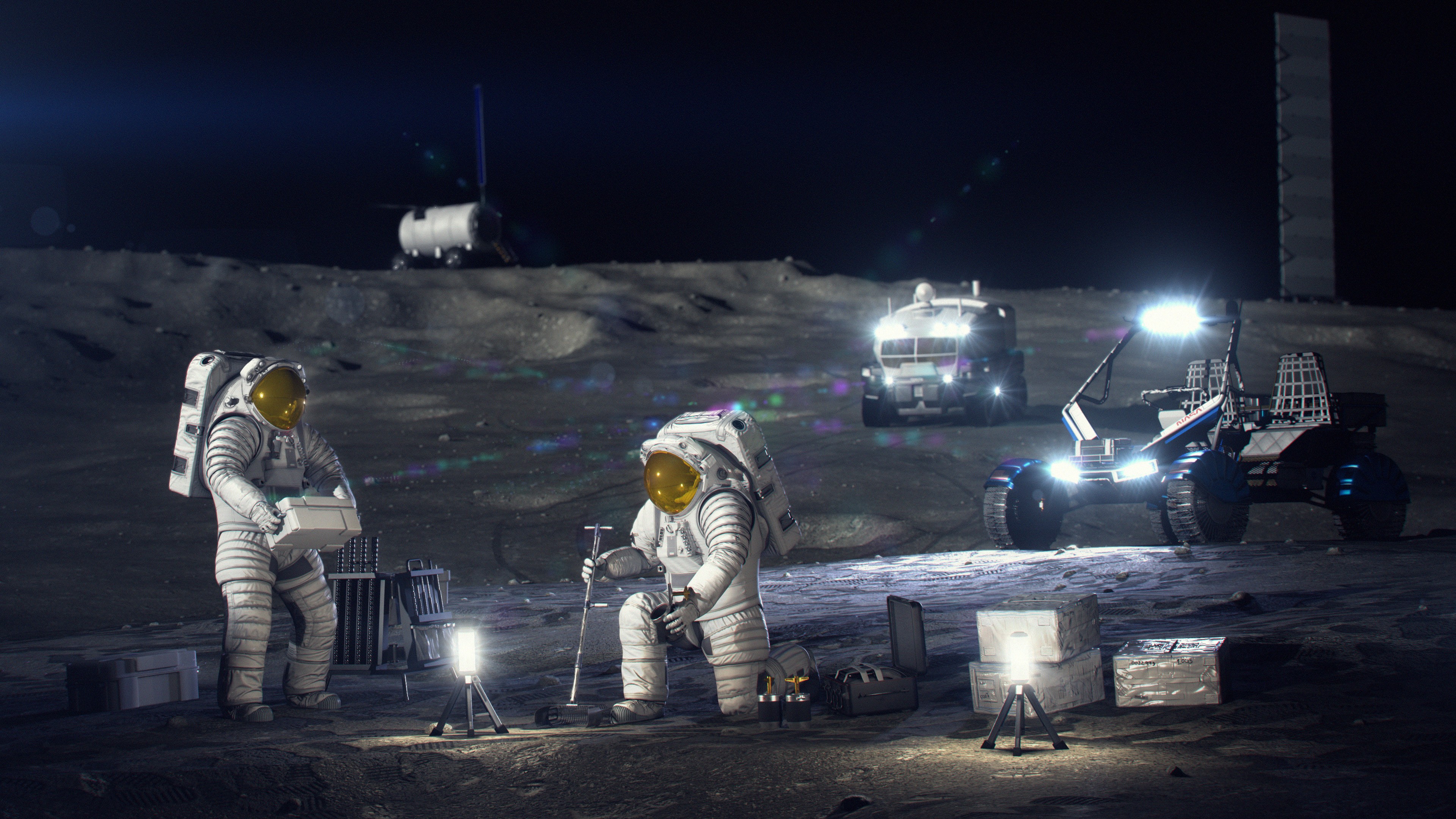
NASA’s Human Spaceflight Mission Directorate is seeking innovative ideas from industry partners through a new solicitation appendix under the NextSTEP-3 Omnibus Broad Agency Announcement. Appendix B: Moon Base Demonstrations calls for industry-led demonstrations, risk reduction, and special topic activities that enable an enduring human presence on the lunar surface.
NASA’s Moon Base, located in the lunar South Pole region, will serve as the premier proving ground for deep space exploration, empowering scientific discovery and the development of advanced space technologies. To accelerate phased implementation of the Moon Base, NASA is working with its partners to bridge the gap between technology development and mission operations.
This solicitation seeks industry proposals for concept demonstrations, risk reduction opportunities, and studies that address Moon Base architecture gaps. Awards will focus on the integration, demonstration, and maturation of concepts beyond component technology development.
NASA Administrator Jared Isaacman and Carlos García-Galán, Moon Base program manager, announced this new opportunity during a discussion with media on Tuesday, June 30. NASA anticipates the solicitation will be posted to the System for Awards Management in early July.
The solicitation’s first directed topic call will be on surface power. Follow-on directed topic calls will solicit innovations in other topic areas listed below.
Solicitation Topics- Infrastructure
- Power Systems
- Communications & Positioning, Navigation, and Timing (C&PNT)
- Transportation
- Mobility
- Habitation
- Autonomy & Robotics
- Lunar Science
- Concepts of Operations
Ignition
Moon Base
Artemis
NextSTEP
NextSTEP-3 B: Moon Base Demonstrations
Notice ID: Coming Soon
- July, 2026 – Anticipated Synopsis Release [System for Awards Management]
NASA’s Human Spaceflight Mission Directorate is seeking innovative ideas from industry partners through a new solicitation appendix under the NextSTEP-3 Omnibus Broad Agency Announcement. Appendix B: Moon Base Demonstrations calls for industry-led demonstrations, risk reduction, and special topic activities that enable an enduring human presence on the lunar surface.
NASA’s Moon Base, located in the lunar South Pole region, will serve as the premier proving ground for deep space exploration, empowering scientific discovery and the development of advanced space technologies. To accelerate phased implementation of the Moon Base, NASA is working with its partners to bridge the gap between technology development and mission operations.
This solicitation seeks industry proposals for concept demonstrations, risk reduction opportunities, and studies that address Moon Base architecture gaps. Awards will focus on the integration, demonstration, and maturation of concepts beyond component technology development.
NASA Administrator Jared Isaacman and Carlos García-Galán, Moon Base program manager, announced this new opportunity during a discussion with media on Tuesday, June 30. NASA anticipates the solicitation will be posted to the System for Awards Management in early July.
The solicitation’s first directed topic call will be on surface power. Follow-on directed topic calls will solicit innovations in other topic areas listed below.
Solicitation Topics- Infrastructure
- Power Systems
- Communications & Positioning, Navigation, and Timing (C&PNT)
- Transportation
- Mobility
- Habitation
- Autonomy & Robotics
- Lunar Science
- Concepts of Operations
Ignition
Moon Base
Artemis
NextSTEP
NASA Awards More Moon Base Science, Previews New Opportunities
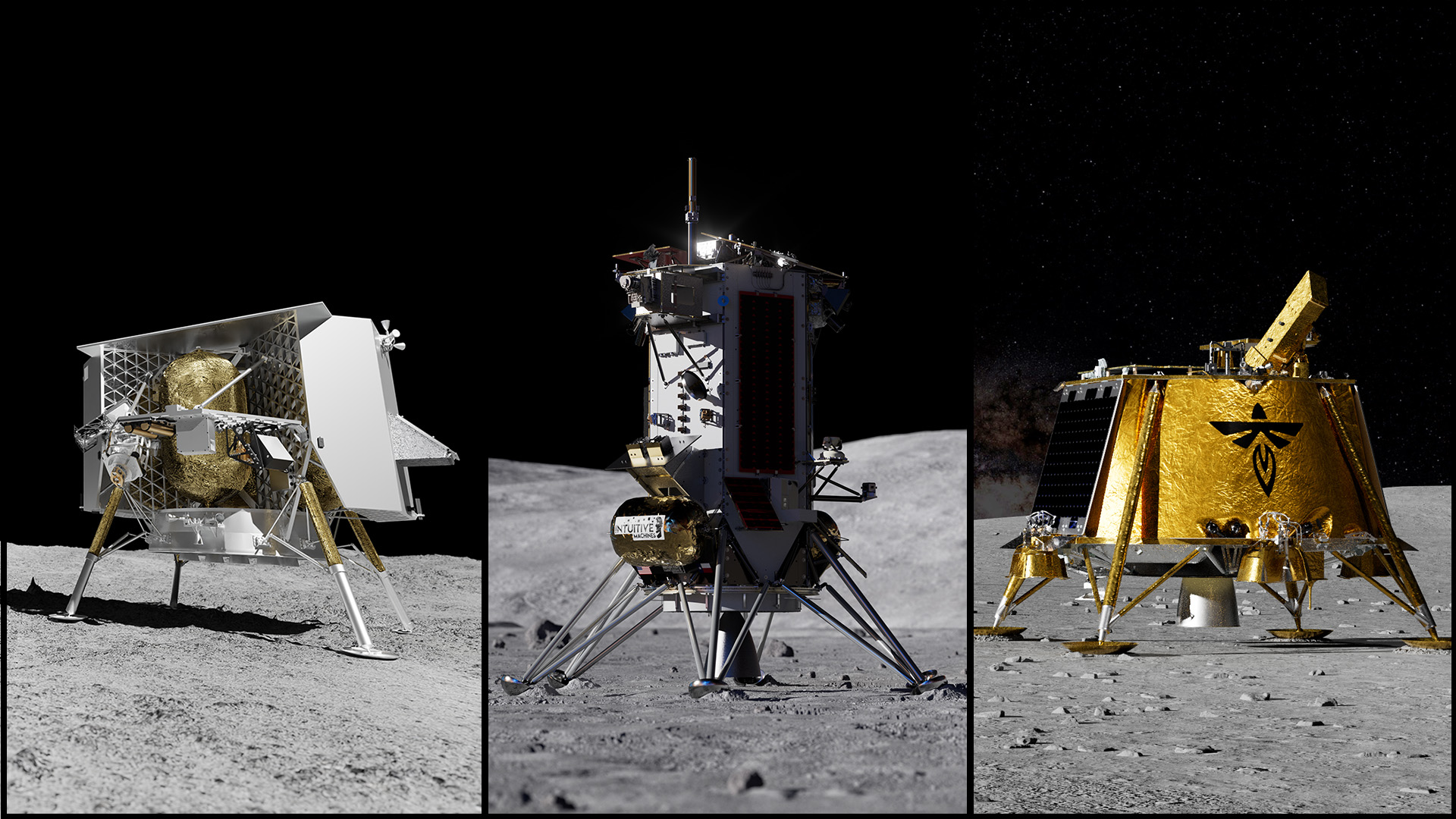
NASA announced Tuesday the selection of three companies to land four new missions on the Moon in late 2028 as part of the agency’s Moon Base Program. Astrobotic, Firefly Aerospace, and Intuitive Machines will deliver NASA science payloads to the lunar surface as the agency builds the first outpost on another celestial world.
“These new awards to our commercial partners, totaling nearly $600 million to land more missions on the Moon with science payloads, demonstrate our commitment to accelerating our effort to build a long-term presence on the lunar surface, and give us more opportunity to develop the skills we need to prosper there,” said Lori Glaze, associate administrator for the Human Spaceflight Mission Directorate at NASA Headquarters in Washington.
Astrobotic is awarded $297.9 million total for two deliveries, as well as Firefly Aerospace $144.2 million and Intuitive Machines $148.3 million for one delivery each as part of the agency’s CLPS (Commercial Lunar Payload Services) initiative, a backbone of the Moon Base. Each will use updated versions of already-flown lander designs to enable NASA’s increased mission cadence.
“We’re building a proving ground for Moon Base operations,” said Ryan Stephan, NASA’s Moon Base acting director of cargo landers. “Accelerating our Moon mission ordering cadence and launch opportunities enable us to move quickly to learn, iterate, and improve.”
With 17 lunar surface deliveries across multiple providers, NASA also announced new opportunities for American industry to contribute to the Moon Base. The agency is considering plans to send to the Moon, PROMISE (Polar Rover for Observation, Mapping, and In-Situ Exploration), an engineering development version of the Mars Perseverance rover. Agency experts will define potential opportunities for PROMISE to characterize the lunar surface, subsurface, and prospect for resources.
In addition, NASA plans to solicit proposals in the coming months for lunar landers to deliver a power and avionics technology demonstration, another science manifest, and a South Pole optical imager. NASA also will share an open solicitation for Moon Base technology demonstrations and seek a lunar communication and navigation relay constellation to enable improved communication between Moon Base elements and Earth.
The awards announced June 30 will play a critical role in establishing the infrastructure for lunar surface operations. The companies are responsible for initiating and executing procurements, providing an assessment of a similar previous lunar lander, and incorporating lessons learned to improve the overall mission reliability.
Each delivery will carry three NASA payloads to the lunar surface:
- Stereo Camera for Lunar Plume Surface Studies (SCALPSS): An array of four cameras that uses a technique called stereo photogrammetry to produce a 3D view of the impact of an engine’s exhaust plume on lunar dust as the lander descends on the Moon’s surface. Collecting data from a variety of engine sizes, propellants, and landing locations, these high-resolution stereo images will aid in creating models to predict lunar dust erosion and ejecta characteristics, playing a vital role as bigger, heavier spacecraft and hardware are delivered to the Moon near each other.
- Laser Retroreflector Array (LRA): Reflects laser beams transmitted by Moon orbiters or landing spacecraft to help them determine their orbit position or navigate to the surface. A small cookie-sized device made of eight quartz corner-cube prisms set into a dome-shaped aluminum frame, the array is passive, requiring no power or maintenance. These arrays have flown on previous CLPS landers and international lunar landers and will continue to be used to build a network of permanent location markers on the Moon for future exploration.
- Linear Energy Transfer Spectrometer (LETS): Helps to better understand the radiation environment from a variety of lunar transit approaches and at different locations on the lunar surface. Derived from heritage hardware, this radiation monitor uses a tiny, advanced silicon detector to measure the energy carried by incoming space radiation. It will provide information about how strong radiation is and what kind of radiation is hitting the lunar surface, and provides the kind of detailed radiation data NASA needs to design safer missions, protect astronauts, and plan long‑duration exploration.
The agency also is reviewing options for these landers to deliver potential additional payloads to the Moon.
“By flying the same science instruments on multiple landers, we will better understand potential hazards during landing and build out a global network of environmental data and location markers on the Moon,” said Joel Kearns, deputy associate administrator for exploration, Science Mission Directorate, NASA Headquarters. “It’s akin to having weather stations in different locations on Earth. These three payloads are flight-proven and their data is critical to supporting safe human exploration of the lunar surface.”
NASA is advancing development of the Moon Base, a long-term lunar exploration and infrastructure initiative designed to enable sustained human presence and expanded scientific and commercial activity on the lunar surface.
As part of the Golden Age of innovation and exploration, NASA will send astronauts on increasingly difficult missions to explore more of the Moon for scientific discovery, economic benefits, and to build on our foundation for the first crewed missions to Mars.
For more information about NASA’s Moon Base plans, visit:
-end-
Rachel Kraft / Molly Wasser
Headquarters, Washington
202-358-1600
rachel.h.kraft@nasa.gov / molly.l.wasser@nasa.gov
Ivry Artis / Kenna Pell
Johnson Space Center, Houston
281-483-5111
ivry.w.artis@nasa.gov / kenna.m.pell@nasa.gov
NASA Awards More Moon Base Science, Previews New Opportunities
Editor’s note: This release was updated on June 30, 2026, to clarify the engineering development version for the PROMISE rover.
NASA announced Tuesday the selection of three companies to land four new missions on the Moon in late 2028 as part of the agency’s Moon Base Program. Astrobotic, Firefly Aerospace, and Intuitive Machines will deliver NASA science payloads to the lunar surface as the agency builds the first outpost on another celestial world.
“These new awards to our commercial partners, totaling nearly $600 million to land more missions on the Moon with science payloads, demonstrate our commitment to accelerating our effort to build a long-term presence on the lunar surface, and give us more opportunity to develop the skills we need to prosper there,” said Lori Glaze, associate administrator for the Human Spaceflight Mission Directorate at NASA Headquarters in Washington.
Astrobotic is awarded $297.9 million total for two deliveries, as well as Firefly Aerospace $144.2 million and Intuitive Machines $148.3 million for one delivery each as part of the agency’s CLPS (Commercial Lunar Payload Services) initiative, a backbone of the Moon Base. Each will use updated versions of already-flown lander designs to enable NASA’s increased mission cadence.
“We’re building a proving ground for Moon Base operations,” said Ryan Stephan, NASA’s Moon Base acting director of cargo landers. “Accelerating our Moon mission ordering cadence and launch opportunities enable us to move quickly to learn, iterate, and improve.”
With 17 lunar surface deliveries across multiple providers, NASA also announced new opportunities for American industry to contribute to the Moon Base. The agency is considering plans to send to the Moon, PROMISE (Polar Rover for Observation, Mapping, and In-Situ Exploration), a hybrid engineering development version of the Mars Perseverance and Curiosity rovers. Agency experts will define potential opportunities for PROMISE to characterize the lunar surface, subsurface, and prospect for resources.
In addition, NASA plans to solicit proposals in the coming months for lunar landers to deliver a power and avionics technology demonstration, another science manifest, and a South Pole optical imager. NASA also will share an open solicitation for Moon Base technology demonstrations and seek a lunar communication and navigation relay constellation to enable improved communication between Moon Base elements and Earth.
The awards announced June 30 will play a critical role in establishing the infrastructure for lunar surface operations. The companies are responsible for initiating and executing procurements, providing an assessment of a similar previous lunar lander, and incorporating lessons learned to improve the overall mission reliability.
Each delivery will carry three NASA payloads to the lunar surface:
- Stereo Camera for Lunar Plume Surface Studies (SCALPSS): An array of four cameras that uses a technique called stereo photogrammetry to produce a 3D view of the impact of an engine’s exhaust plume on lunar dust as the lander descends on the Moon’s surface. Collecting data from a variety of engine sizes, propellants, and landing locations, these high-resolution stereo images will aid in creating models to predict lunar dust erosion and ejecta characteristics, playing a vital role as bigger, heavier spacecraft and hardware are delivered to the Moon near each other.
- Laser Retroreflector Array (LRA): Reflects laser beams transmitted by Moon orbiters or landing spacecraft to help them determine their orbit position or navigate to the surface. A small cookie-sized device made of eight quartz corner-cube prisms set into a dome-shaped aluminum frame, the array is passive, requiring no power or maintenance. These arrays have flown on previous CLPS landers and international lunar landers and will continue to be used to build a network of permanent location markers on the Moon for future exploration.
- Linear Energy Transfer Spectrometer (LETS): Helps to better understand the radiation environment from a variety of lunar transit approaches and at different locations on the lunar surface. Derived from heritage hardware, this radiation monitor uses a tiny, advanced silicon detector to measure the energy carried by incoming space radiation. It will provide information about how strong radiation is and what kind of radiation is hitting the lunar surface, and provides the kind of detailed radiation data NASA needs to design safer missions, protect astronauts, and plan long‑duration exploration.
The agency also is reviewing options for these landers to deliver potential additional payloads to the Moon.
“By flying the same science instruments on multiple landers, we will better understand potential hazards during landing and build out a global network of environmental data and location markers on the Moon,” said Joel Kearns, deputy associate administrator for exploration, Science Mission Directorate, NASA Headquarters. “It’s akin to having weather stations in different locations on Earth. These three payloads are flight-proven and their data is critical to supporting safe human exploration of the lunar surface.”
NASA is advancing development of the Moon Base, a long-term lunar exploration and infrastructure initiative designed to enable sustained human presence and expanded scientific and commercial activity on the lunar surface.
As part of the Golden Age of innovation and exploration, NASA will send astronauts on increasingly difficult missions to explore more of the Moon for scientific discovery, economic benefits, and to build on our foundation for the first crewed missions to Mars.
For more information about NASA’s Moon Base plans, visit:
-end-
Rachel Kraft / Molly Wasser
Headquarters, Washington
202-358-1600
rachel.h.kraft@nasa.gov / molly.l.wasser@nasa.gov
Ivry Artis / Kenna Pell
Johnson Space Center, Houston
281-483-5111
ivry.w.artis@nasa.gov / kenna.m.pell@nasa.gov
The world's fastest spider tops 3.5 metres per second
The most detailed survey of the universe ever conducted starts now
This physicist is hunting for the biggest black hole in the universe
#799: Heavy Lift Rockets
The Saturn 5 was a monster, capable of sending humans and a lander to the Moon and bringing them back again. But the number of heavy lift rockets since then has gotten pretty sparse. Now, with tens if not hundreds of thousands of satellites in the works, giant new space telescopes and multi-ton lunar landers in development there are heavy lift solutions to match. So let’s talk about them! From yesterday's Saturn V to today's Ariane VI, rockets capable of launching large telescopes or small space stations in a single go are modern marvels. They are also wildly dangerous, and not exactly compatible. Let's look at today's fleet of rockets and just what they're accomplishing.
Earth Microbes Can Survive Individual Martian Hazards—and Evade Astronaut Immune Systems
Hopefully, we’re about to travel back to the Moon relatively soon. And while the original “giant leap for mankind” was taken by a human, Neil Armstrong brought a plethora of other forms of life along with him. Humans themselves are essentially walking ecosystems, and understanding how our microbial companions survive in the harsh environments of space will be critical to ensure the health and safety of future astronauts, no matter where their giant leaps might be. A new PhD thesis from Tommaso Zaccaria at Radboud University showcases just how well-suited to some of these harsh environments terrestrial pathogens actually are.