
Feed aggregator
A celebrity cluster in the spotlight
#779: Milankovitch Cycles
Humans live short lives, and from our perspective the seasons are something that come and go with perfect regularity. But astronomers know the terrible truth! And that there are cycles that slowly shift over tens of thousands of years, shifting the cycles and the Earth’s climate. Today we’ll talk about the Milankovich Cycles! The Earth’s orbit, tilt, and other physical attributes aren’t quite as constant as you might think! Come learn how long-term changes do and don’t affect our climate.
Show Notes- Milankovitch Cycles Explained
- Historical Context
- Earth’s Orbital Mechanics
- Axial Tilt and Precession
- Climate and Glaciation
- Earth in a Larger Cosmic Context
- Science in Progress
Fraser Cain:
Welcome to AstronomyCast, our weekly facts-based journey through the Cosmos, where we help you understand not only what we know, but how we know what we know. I’m Fraser Cain. I’m the publisher of Universe Today.
With me is Dr. Pamela Gay, a senior scientist for the Planetary Science Institute and the director of CosmoQuest. Hey Pamela, how you doing?
Dr. Pamela Gay:
I am doing well. Next week we will not be recording live because I’m actually going on a vacation.
Fraser Cain:
Right on. So I have been going through old media that I recall loving, but hadn’t watched recently. And so I think I might’ve mentioned to people that I re-watched the original Lord of the Rings trilogy, the ones with the extended editions in the box set with the four discs per, man, they’re so great.
Like obviously the movies were great, but just that we’ve entered this world where nobody wants to see behind the scenes to hear the commentary, to see the additional deleted scenes.
Dr. Pamela Gay:
I don’t understand that.
Fraser Cain:
Yeah. Like, like as a media creator, I want to see how the sausage gets made. And so being able to see all of these little featurettes that they publish in addition to that is so wonderful.
And I’m guessing that Netflix tried this and just found that, that people were watching them and they’re like, who cares? Right? Like we don’t even need any of this stuff anymore.
Let’s just get the movie and get in, get out.
Dr. Pamela Gay:
So Disney Plus does do them for their Star Wars shows. So each of the Star Wars shows has a behind the scenes special. And those are actually really cool.
They make me want to go try there. They have this giant room that they record in that allows them to like, yeah, it’s amazing.
Fraser Cain:
Yeah. So keep doing that. And then I watched the Matrix series and they held up, especially the first one, like the first one.
There’s a few bits in the beginning where I was like, oh, cringe. Right. But then the rest of the movie I thought was absolutely terrific.
I enjoyed the next two movies. I know a lot of people, although I really disliked the ending of the third movie. So, um, and then I rewatched Moon, which is with Sam Rockwell and where he’s a, he’s an astronaut on the moon running a mining operation.
And it’s, it’s such a great movie. Oh, it’s so good. So, uh, and that was a long time since I’ve watched that movie.
And so I’d forgotten most of the details. And so I’m really enjoying realizing that there are movies that I have enjoyed in the past. And now my, my, I don’t remember the details from scene to scene.
And so it’s kind of like I’m rewatching it fresh. And yet I know that this is going to be a guaranteed great movie. So, uh, if you haven’t already go back, find movies that it’s been so long that you probably don’t remember the details, but you know, you’re going to love them.
Television shows.
Dr. Pamela Gay:
Blade Runner.
Fraser Cain:
Yeah.
Dr. Pamela Gay:
So good. Yeah.
Fraser Cain:
I watched, I watched Blade Runner with my wife probably about six years ago with that sort of same idea. And then we watched the 2049, but now I don’t even remember how 2049 went, so it’s time to watch it again. So there you go.
That’s my recommendation. Go back, find some old media that you’re kind of nostalgic about, but you’re holding off because like, I’ve seen that movie. Have you?
Do you remember it? Are those neurons? Are those neurons still present?
Dr. Pamela Gay:
See it in the modern political context.
Fraser Cain:
Hmm. There you go. Humans live short lives and from our perspective, the seasons are something that come and go with perfect regularity.
But astronomers know the terrible truth and that there are cycles that slowly shift over tens of thousands of years, shifting the cycles and the Earth’s climate. Today we’ll talk about the Milankovitch cycles. So I think we’re going to need another disclaimer.
And that is that all of the cycles that we’re going to talk about and their influence on the Earth’s climate happen very slowly and they have absolutely no connection to the climate change that scientists are currently measuring. It’s also true. Right.
And so they are, you know, that we are sort of forcing climate change because of the greenhouse gases that are being emitted by our modern civilization in a way that is very easy to calculate. You can literally do this on the back of an envelope, calculate, you know, take the volume of the mass, the volume of the Earth’s atmosphere, measure the amount of carbon dioxide that’s in it. You can calculate the average global temperature that will be expected at various concentrations and there will be sort of specific differences depending on whether it’s the Arctic.
That’s where the complexity comes in, all the simulation and so on, but you can just do this math. So I know like some of you are going to say, I’m never going to listen to astronomy cast again. That’s fine.
You know, like you’re going to, you got to do what you got to do. I know that some of you are going to be sort of angry that we’re not sort of, or that you’re hoping that we are going to somehow turn this into an explanation for climate change and we are not. No.
We’re just that these unfold on cycles that are much longer. So, so with that, and I don’t want to like dance around the reality of the astronomy and the geology and the, and the ball of that, things can be true at once.
Dr. Pamela Gay:
There can be ongoing orbital kinematic cycles and there can be anthropogenic climate change. Both can be true.
Fraser Cain:
Yes. And so, you know, can the Milankovitch cycles be, uh, there was the, the explanation for climate change? No, people checked.
Yeah. So there you go. And like, we don’t need to go into that.
Like there’s a whole other world where there’s all kinds of papers where people are checking and it has no effect. So let’s get on then to the Milankovitch cycles with this sort of like, Hey, it’s 1971 and we’ve never sort of experienced the modern political diatribe, uh, against, uh, the results of, of climate science work. And people just want to learn about the kinematics and, uh, orbital, uh, interesting things that happen with planets going around stars.
So let’s talk about the cycles.
Dr. Pamela Gay:
So you know, first you have to go all the way back to the 1920s, which is really cool to me. But do you have to go back to like the, before the BCE, like you have to go back to the Greeks? I mean, you could.
I want to. We’ve actually known about precession for a long time because folks like Ptolemy that were looking back through historic calendars of stellar positions were able to track the changing North pole. It was more complicated than that.
I just oversimplified a whole lot of stuff there.
Fraser Cain:
I’m going to rabbit hole for one second, which is that the ancient Greeks suspected that the earth orbits around the sun and that the proof that they, that they would use to confirm that was that they were looking for a stellar parallax. And we know now that that parallax is there, but you know, essentially the shifting of the view of the stars based on the position of the earth, whether it’s on one side of the sun or the other, right? That’s how you tell that the earth is going around the sun.
You know, it’s this background that is sort of shifting back and forth every year. And they knew that that’s what you would expect to see. And they tried to find it, but all they had were these little sighting tubes that they use that they would align with a star at the right time and the right place.
And they couldn’t measure to the level of precision that was required to be able to confirm the stellar parallax. And so they went down the, no, no, no. The earth is the center of the universe.
Yeah. Amazing. The Greeks were amazing what they could, what they were able to do anyway.
So yeah, they had their suspicions. They were already starting to detect the motion of, of the stars in the sky year after year.
Dr. Pamela Gay:
They just underestimated the, the size of the universe. And when you underestimate the size of the universe, you expect the parallax is to be much, much bigger than it actually is. But they did see other motions in the sky over time.
And that’s just super cool. There’s neat stories related to the salinity of the oceans that you can go find. There’s all sorts of cool stuff.
Now it was in the 1920s that folks tried to like mathematically take this on as geophysics began to be an actual field. So the 1920s is when astrophysics was born, when geophysics was born, when we started taking all of these things that we observed and having enough understanding of math to be able to say, well, this is why we see these things we see. And they had started to realize at this point that there had been geological cycles with glacial periods.
Europe has lots and lots of evidence for glaciers. North America has evidence for glaciers. And so a Serbian scientist, Milutin Milankovic, in the 1920s worked through James Kroll’s earlier work, trying to do all the maths by hand to figure out, all right, what are the different motions we need to consider?
And so you have things like our Earth’s orbit is mostly circular, but not perfectly circular. So at the beginning of January is when the Earth is closest to the sun. It’s a fairly small effect, but it adds up.
And over the course of millennia, Jupiter and Saturn’s influence causes the orbit to get slightly more elliptical and slightly rounder and slightly more elliptical and slightly rounder. We’re actually heading towards a rounder phase right now. But the degree of change this causes is several days per season of asymmetry between the seasons.
So here in the northern hemisphere, because you move faster in your orbit when you’re closer to the sun, we have a slightly shorter winter, we are getting slightly more sunlight. So the summer to winter dichotomy in the north is less than it is in the south. And we literally get less winter in the north.
So that is excellent. Someday, the orbit will be much closer to round and it will essentially be equal seasons for everybody. But we’re not there right now.
We’re headed that direction.
Fraser Cain:
And how long does that cycle take?
Dr. Pamela Gay:
So this is one of those cycles that isn’t as periodic as others because you’re dealing with Jupiter’s orbit and you’re dealing with Saturn’s orbit. So when you’re looking up the extremes, the extremes occur on millions of years. So like the highest eccentricity ever was 250 million years ago.
Fraser Cain:
And that’s like the Earth’s orbit was the most elliptical that it could be.
Dr. Pamela Gay:
Yeah. Yeah. And so in general, there’s a 400,000 year coupling and it’s paired up with the 100,000 year cycles that we see from other factors.
Right.
Fraser Cain:
So about every 100,000 years, you get a sort of a full cycle through the Earth moving from what is a more circular orbit to a more elliptical orbit. And we, as you mentioned, we experience these seasons. The north experiences shorter winters, longer summers.
The south experiences longer winters, shorter summers. And partly that’s due to the eccentricity. Essentially, Earth is at its closest point to the sun when the northern hemisphere is having, is dead in the heart of its winter.
It’s so close to solstice. Yeah. Yeah.
Dr. Pamela Gay:
It’s wild.
Fraser Cain:
Yeah. It’s incredible. And so I know winter may feel like it sucks for the northern hemisphere, but it could be worse consider the people in the southern hemisphere.
And one of the things that we see is that the Arctic can have extremely cold temperatures, but Antarctica has ludicrously cold temperatures. So yeah. So weirdly, the southern hemisphere experiences these more severe winters than we experience in the north.
Dr. Pamela Gay:
And there’s other weird stuff on top of this, like the fact that there’s so much land in the north. Yes. That has all sorts of weird effects because oceans are thermal sinks and land is capable of varying much faster.
So we know there’s other complicating factors on top of this, and that’s what makes it awesome.
Fraser Cain:
And so this shift is driven by the interactions of the gravity from Jupiter and Saturn on the Earth’s orbit, tugging it bit by bit by bit, orbit after orbit after orbit, slowly circularizing its orbit, and then slowly making its orbit more eccentric again. So that is the first cycle.
Dr. Pamela Gay:
Yes.
Fraser Cain:
Let’s move on to book two of the Milankovitch cycles.
Dr. Pamela Gay:
So that is describing the overall shape of our orbit. Now, once you have the shape of the orbit to contend with, you have the Earth’s position within that orbit, by which I mean the way we’re tilted. So we’re quite lucky right now that for us here in the northern hemisphere, I mean, we have winter solstice so close to perihelion.
It didn’t have to be that way. And the tilt that we have right now isn’t hugely problematic. It’s 23.4 degrees. And that tilt will vary over time from 22.1 to 24.5. So we have this tilt that’s varying, and we have the whole thing is rotating. So the amount that we’re tilted can get more extreme, which makes the seasons more extreme.
Fraser Cain:
Right.
Dr. Pamela Gay:
And where we’re pointed relative to the stars will change. And the tilt is changing on a 41,000-year cycle.
Fraser Cain:
Okay. All right. So I’ve sort of imagined this imaginary line that’s passing through the poles of the Earth, and the Earth is spinning around this imaginary line.
Yeah. And if you sort of look at the angle of what that line is, it’s sort of slowly drifting down and then slowly drifting up, slowly drifting back and forth over this 41,000 years. And so during that 41,000-year period, you’ll have the point of the maximum thing, and then it will go through the minimum and then return to the maximum.
And that’s sort of your cycle, your 41,000 years. And so we’re at 20… You said 23.4. Yeah. So we’re kind of smack in the middle of the potential axial tilt. Yeah, it’s perfectly reasonable. A more extreme axial tilt or a less extreme axial tilt.
And I guess if we had zero axial tilt, then there would be no seasons. Everything would be the same every day forever.
Dr. Pamela Gay:
And then on top of this, that entire tilt is rotating. It’s precession like the precession of a top, and that is happening on a 25.7,000-year cycle. So every 25,700 years, that is rotating.
And so that change changes when the seasons are occurring throughout the year.
Fraser Cain:
Right. And I think we all learned, hopefully, in elementary school or whatever, how the seasons work. I’m sure a pop quiz, when you ask somebody how the seasons work, but essentially…
Dr. Pamela Gay:
A lot of people have no idea. It’s really kind of amazing.
Fraser Cain:
Yeah, yeah, yeah. But the gist is, again, imagine the Earth. It’s this ball that’s spinning.
It’s tilted at an angle of 23.5 degrees. During the summertime, the Northern Hemisphere is tilted towards the sun. Therefore, it’s experiencing more sunlight, and the Southern Hemisphere is experiencing less sunlight.
And then when the situation is reversed, then it’s the Southern Hemisphere that’s experiencing more sunlight, and it’s the Northern Hemisphere that’s receiving less. But in addition to that kind of angle changing, you also get this wobbling of the top. And as you said, the seasons reverse over the course of about 26,000 years.
I’ll bet you we did the same thing. Think back to young Pamela in high school or elementary school, learning this baffling fact and doing the math to figure out how quickly the days change. Did you do that?
No. I did. Oh, man.
I was like, wait a minute. That means that since the Roman time, the seasons have shifted by some number of days. And I calculated, I forget what, a handful of days, like a couple of weeks have shifted.
That summer has arrived, I don’t know, earlier or later, I forget which way it goes, by a measurable number of days than what they used to experience.
Dr. Pamela Gay:
These are things that have to get taken into account in archaeology. And so when you’re trying to consider historical reports of the seasons that things occurred from enough thousands of years ago, slight changes that when you’re dating things based on what flowers are in bloom, that’s the kind of stuff that kind of matters. And it’s just wild to think about all the different changes that are going on.
And it all comes down to just a little bit of torque here, a little bit of torque there. It’s all about uneven forces over time.
Fraser Cain:
And so what’s driving the wobble?
Dr. Pamela Gay:
So it all comes down to the Earth isn’t a perfect sphere and the sun and the moon’s gravitational force just do a little bit more yanking where there’s a little bit more stuff to yank on and that adds up to create this torque that generates the precession that we see.
Fraser Cain:
Okay, well, we’re going to continue on to chapter three of the Milankovitch cycle. All right, let’s move on to book three. That was my favorite book in the trilogy of the Milankovitch cycle.
No, I have no opinion.
Dr. Pamela Gay:
So on top of this, you have the Earth’s ellipticity means that there’s an axis of the orbit that is longer and an axis of the orbit that is shorter. And where those axes are, are rotating over time. And so you have how much the Earth’s orbit is round changes over time.
You have the tilt changes over time. You have where the tilt is pointed changing over time. And you have where the orbit is pointed changing over time.
And yeah, it all adds up to change. You have to keep track of both. Where is the nearest point of the sun?
Where’s the furthest point of the sun relative to the stars? And also, where is the north and south pole pointed relative to the stars? So that you can figure out how do the solstices and perihelion and apohelion all line up or fail to line up.
Fraser Cain:
And so what impact did this have historically on the climate of the Earth?
Dr. Pamela Gay:
Well, so it was expected that there’d be a order of tens of thousands of years cycle in the glacial period. For reasons we have not figured out yet, there is a hundred thousand cycle in the glaciation period. And again, we’re still trying to figure out what are the additional effects that were missed the first time around?
Like one of the effects that was missed the first time around is the tilt of the orbit relative to the moment of inertia of the solar system has changed over time.
Fraser Cain:
Right. So sorry. Yeah.
So like the Earth is tilted off of the sun’s orbit. Yeah, the Earth’s orbit is tilted.
Dr. Pamela Gay:
Off of Jupiter’s defined plane that is kind of the primary plane of the solar system. Yeah.
Fraser Cain:
And so if you imagine you sort of hold your hand out and you kind of imagine like here’s the orbit of the sun. Here’s the equator of the sun. And then Earth is like slightly tilted off that.
We call that the plane of the ecliptic is where the Earth’s orbit is that that tilt is kind of going up and down as well. And that’s fairly new. Like this would be a fourth chapter that Milankovitch wrote after.
Dr. Pamela Gay:
But he didn’t write it.
Fraser Cain:
But he didn’t write it. No, no. But like if he did, you know, he wanted to make more money because the trilogy had done so well.
He would have written part four, the orbital inclination. But you know, he never got around to that chapter. So, um, but, but like, isn’t it really about that?
Sometimes these forces, these, these positions average each other out that they do that you’ve got. We’re a little bit close. You know, we’re, we’re on average closer to the sun.
Things are kind of warmer, but then we’re on average like a little more tilted away. The northern hemisphere is more extreme, but then, but then it’s pushing in another way and things get bad when they all line up in the worst possible ways. So you get the coldest, the most extreme, all of these things start to compound on each other.
And then you can find those in the geologic record of like, oh yeah, we had a really bad glacier. Well, no, no kidding. We had, you know, we, we, that all those variations are happening cycle after cycle after cycle.
And each one is having this independent experience, you know, cause to the earth. And sometimes they all balance out and there’s no change. And other times each one is hits the extreme and then you get a severe glaciation or a very long warm period.
Right.
Dr. Pamela Gay:
And, and the other issue that we have to deal with is there’s probably stuff that we just haven’t found in the geologic record because for the most part, each new glacial period likes to just scrape away the evidence of the past glaciation period. We periodically get things like asteroid impacts that kill the dinosaurs. We get massive changes to the life forms on the planet that lead to massive anoxic events and stuff like that.
And so each of the things that is tied to massive die offs does its own part to the environment of our world. So yes, human beings are changing our planet. We are not the first life form to do this.
We are just the most recent to do this. And, and so the geologic record is super complicated to couple with, with what caused what, because sometimes it’s the volcanoes got angry and Siberia, all of it erupted because it could. The Siberian traps is the most terrifying thing in the geologic record as near as I can tell.
Just, just saying.
Fraser Cain:
Right.
Dr. Pamela Gay:
Yeah. If you, if you want to stay awake at night, go read about that.
Fraser Cain:
Look at the Deccan traps.
Dr. Pamela Gay:
Yeah. That’s another one that’s terrifying. So trying to understand, is it, what, what have we missed?
What secondary effects are we missing? What additional things do we need to take into consideration? We’re still learning all of this and that’s what’s so amazing and why we keep doing science is because there is so much stuff left to learn and hopefully to find in, in some rock outcrop we haven’t explored yet.
And this is the thing that the folks who work in fossils are constantly discovering is there’s going to be a new cave. There’s going to be a new rock outcrop. There’s going to be a new, something erodes and uncovers something amazing.
And we’ll find the answers over time.
Fraser Cain:
So one interesting cycle that is sort of disconnected is that the, the solar system is moving around the galaxy, around the Milky Way. Yeah. And that it has, like the, like the earth is going sort of up and down in its orbit compared to the sun, the solar system bobs up and down in the Milky Way as it orbits around.
And that it’s thought that maybe that there, that the solar system is protected by the mutual magnetic fields in the interstellar medium. And so there are times when maybe the, as the solar system rises up above the galactic plane, it can experience more cosmic radiation and maybe that could have led to times of greater die-offs on the, on the planet. So, so, you know, although there’s, there’s no sun that we are orbiting in the Milky Way that is, you know, giving us illumination that we need that defines the global temperature.
There can be, you know, particles that are colliding with the planet, whether, depending on our position above and below the galactic plane, which is a totally different cycle. And, you know, not necessarily super confirmed to be a thing, but it’s kind of interesting to think about these even larger cycles. It’s all cycles within cycles.
Dr. Pamela Gay:
And that one is thought to also be tied to the, the sudden, a whole bunch more comets get sent on their way into the inner solar system. They also get sent out of the solar system. They get sent in both directions.
Fraser Cain:
Yeah. Yeah. Or, or like I said, or less protection from cosmic rays by the some magnetic fields of all of the stars.
So yeah, it’s a, it’s a very interesting sort of idea to think about. Cool. Well, there you go.
The Milankovitch cycle.
Dr. Pamela Gay:
And now you know.
Fraser Cain:
And now you know. Thanks Pamela.
Dr. Pamela Gay:
Thank you, Fraser. And thank you so much to everyone out on Patreon that supports us and allows us to keep putting these episodes together. This week.
I’d like to thank the following $10 a month and up patrons. Abraham Cottrell, Alex Cohen, Andrew Allen, Andy Moore, Arno DeGroot, Bore Andro-Levsvall, Benjamin Carrier, Bill Smith, Boogie Nut, Brian Breed, Brian Kilby, Buzz Parsec, Claudia Mastriani, Cooper, Daniel Schechter, David Gates, Diane Philippon, Don Mundus, Ed, Eric Lee, Father Prax, Frederick Salvo, G. Caleb Sexton, Gerhard Schweitzer, Gold, Greg Vylde, Hannah Tackery, Jacob Houle, Jarvis Earl, Jeanette Wink, Jim McGeehan, Joanne Mulvey, John Muthis.
Thank you so very much.
Fraser Cain:
Thanks, Pamela. We’ll see you next week.
Dr. Pamela Gay:
Thank you, Fraser. Move on.
Fraser Cain:
I guess we won’t.
Dr. Pamela Gay:
No, next week we won’t. Next week. I’m I’m going on vacation with friends.
Fraser Cain:
We’ll see you in two weeks.
Dr. Pamela Gay:
Okay, bye-bye.
Live ShowsSnow Buries Kamchatka
- Earth
- Earth Observatory
- Image of the Day
- EO Explorer
- Topics
- More Content
- About
Snow Buries Kamchatka
- Earth
- Earth Observatory
- Image of the Day
- EO Explorer
- Topics
- More Content
- About
Piercing crocodile close-up wins ecology photo competition
Piercing crocodile close-up wins ecology photo competition
Natural ovulation the best option before an IVF frozen embryo transfer
Natural ovulation the best option before an IVF frozen embryo transfer
NASA’s Artemis II Mission to Fly Legacy Keepsakes with Astronaut Crew
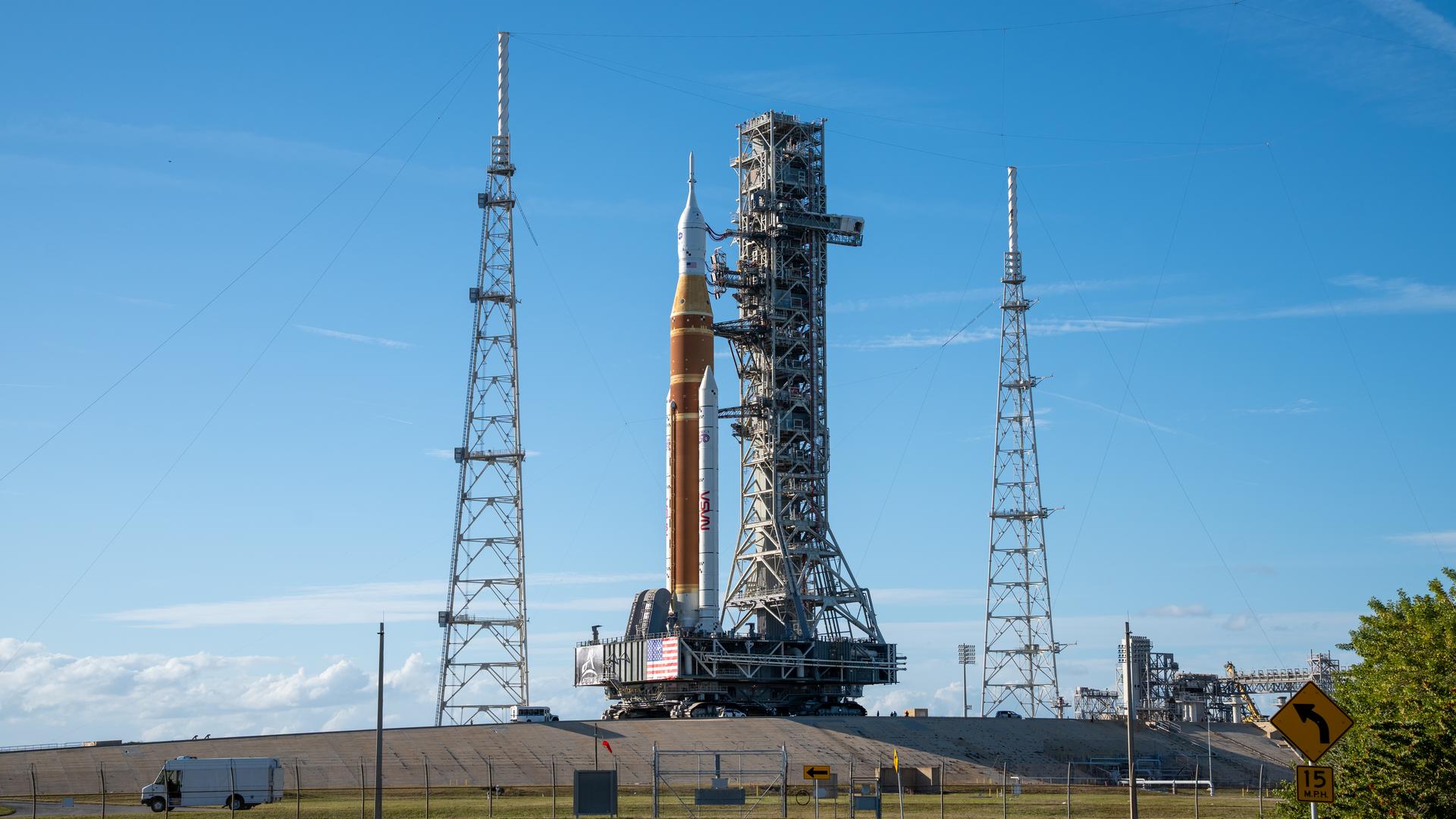
As America approaches its 250th anniversary of declaring independence, NASA’s Artemis II mission will carry a host of mementos that reflect the nation’s long tradition of exploration, innovation, and leadership in its official flight kit. The items will fly aboard the Orion spacecraft, launched on top of the Space Launch System (SLS) rocket, as it carries four astronauts around the Moon on the first crewed test flight of the agency’s Artemis campaign.
“Historical artifacts flying aboard Artemis II reflect the long arc of American exploration and the generations of innovators who made this moment possible,” said NASA Administrator Jared Isaacman. “This mission will bring together pieces of our earliest achievements in aviation, defining moments from human spaceflight, and symbols of where we’re headed next. During America’s 250th anniversary, Orion will carry astronauts around the Moon while also carrying our history forward into the next chapter beyond Earth.”
Selected to honor America’s historic achievements in space, inspire the next generation of explorers, and reinforce U.S. leadership through international cooperation in science and education, the mementos continue a proud tradition carried forward from Artemis I and earlier human spaceflight missions. Together, they highlight the freedom and innovation that have unlocked the Golden Age of human space exploration.
A 1-inch by-1-inch swatch of muslin fabric from the original Wright Flyer the Wright Brothers used to make the first powered flight in 1903 will be flying aboard Artemis II, lent by the Smithsonian’s National Air and Space Museum. A smaller square cut of the swatch previously flew aboard space shuttle Discovery on STS-51D in 1985 and will make its second journey into space. After the mission, the fabric will be reunited with two other 1903 Wright Flyer swatches at the museum, celebrating the nation’s history and innovation in aviation.
Also flying aboard the Artemis II mission will be a 13-by-8-inch American flag, which flew with the first shuttle mission, STS-1, the final shuttle mission, STS-135, and NASA’s first crewed test flight of SpaceX’s Crew Dragon spacecraft, SpaceX Demo-2.
A flag that was set to fly on NASA’s Apollo 18 mission is included in the flight kit and will make its premiere flight with Orion. The flag serves as a powerful emblem of America’s renewed commitment to human exploration of the Moon, while honoring the legacy of the Apollo pioneers who first blazed the trail.
Orion also will carry a copy of a 4-by-5-inch negative of a photo from the Ranger 7 mission, the first U.S. mission to successfully make contact with the lunar surface. NASA’s Jet Propulsion Laboratory in California managed the Ranger series of spacecraft, built to help identify safe Moon landing sites for Apollo astronauts. The photo represents a major turning point in the race to the Moon that will be echoed today through the success of Artemis.
On Artemis I, a variety of tree seeds flew and were distributed to educational organizations and teachers after the mission, following in the footsteps of tree seeds flown aboard the Apollo 14 mission sprouted into “Moon Trees” after being returned to Earth. The seeds have since taken root at 236 locations across the U.S. to become their own Artemis I Moon Trees. Soil samples collected from the base of established Artemis I Moon Trees planted at NASA’s 10 centers will fly aboard Artemis II, representing the full cycle of exploration: launch, flight, growth, and return to space again. The CSA (Canadian Space Agency) will fly various tree seeds in the kit with the intention of distributing them after the mission.
Also included in the kit will be an SD card including the millions of names of those who participated in the “Send Your Name to Space” campaign, bringing the public along on this journey. The kit will include a variety of flags, patches, and pins to be distributed after the mission to stakeholders and employees who contributed to the flight.
Additionally, NASA has included items from several of its partners in the kit. Stickers and patches from CSA will fly, and ESA (European Space Agency) will fly a flag in the kit for distribution after the mission, marking NASA’s international collaboration with other space agencies through Artemis. Orion’s European Service Module, the powerhouse of the spacecraft, is provided by ESA.
Carrying mementos on the NASA spacecraft has been a tradition since the 1960s, one that was continued on Artemis I, the first uncrewed test flight of Orion and the SLS. During this mission, Orion carried a symbolic flight kit including historical artifacts, from Apollo missions STEM, or science, technology, engineering, and math, items, digitized student essays and teacher pledges, and more.
The official flight kit for Artemis II, which contains about 10 pounds of mementos in total, augments important scientific research aboard Orion.
View a full list of the items included in kit: Artemis II Official Flight KitJan 21, 2026
PDF (46.33 KB)
Explore More 11 min read Últimos preparativos para la primera misión tripulada a la Luna con la campaña Artemis de la NASA Article 1 week ago 7 min read Final Steps Underway for NASA’s First Crewed Artemis Moon Mission Article 2 weeks ago 4 min read I Am Artemis: Jacki Mahaffey Article 2 weeks agoNASA’s Artemis II Mission to Fly Legacy Keepsakes with Astronaut Crew
As America approaches its 250th anniversary of declaring independence, NASA’s Artemis II mission will carry a host of mementos that reflect the nation’s long tradition of exploration, innovation, and leadership in its official flight kit. The items will fly aboard the Orion spacecraft, launched on top of the Space Launch System (SLS) rocket, as it carries four astronauts around the Moon on the first crewed test flight of the agency’s Artemis campaign.
“Historical artifacts flying aboard Artemis II reflect the long arc of American exploration and the generations of innovators who made this moment possible,” said NASA Administrator Jared Isaacman. “This mission will bring together pieces of our earliest achievements in aviation, defining moments from human spaceflight, and symbols of where we’re headed next. During America’s 250th anniversary, Orion will carry astronauts around the Moon while also carrying our history forward into the next chapter beyond Earth.”
Selected to honor America’s historic achievements in space, inspire the next generation of explorers, and reinforce U.S. leadership through international cooperation in science and education, the mementos continue a proud tradition carried forward from Artemis I and earlier human spaceflight missions. Together, they highlight the freedom and innovation that have unlocked the Golden Age of human space exploration.
A 1-inch by-1-inch swatch of muslin fabric from the original Wright Flyer the Wright Brothers used to make the first powered flight in 1903 will be flying aboard Artemis II, lent by the Smithsonian’s National Air and Space Museum. A smaller square cut of the swatch previously flew aboard space shuttle Discovery on STS-51D in 1985 and will make its second journey into space. After the mission, the fabric will be reunited with two other 1903 Wright Flyer swatches at the museum, celebrating the nation’s history and innovation in aviation.
Also flying aboard the Artemis II mission will be a 13-by-8-inch American flag, which flew with the first shuttle mission, STS-1, the final shuttle mission, STS-135, and NASA’s first crewed test flight of SpaceX’s Crew Dragon spacecraft, SpaceX Demo-2.
A flag that was set to fly on NASA’s Apollo 18 mission is included in the flight kit and will make its premiere flight with Orion. The flag serves as a powerful emblem of America’s renewed commitment to human exploration of the Moon, while honoring the legacy of the Apollo pioneers who first blazed the trail.
Orion also will carry a copy of a 4-by-5-inch negative of a photo from the Ranger 7 mission, the first U.S. mission to successfully make contact with the lunar surface. NASA’s Jet Propulsion Laboratory in California managed the Ranger series of spacecraft, built to help identify safe Moon landing sites for Apollo astronauts. The photo represents a major turning point in the race to the Moon that will be echoed today through the success of Artemis.
On Artemis I, a variety of tree seeds flew and were distributed to educational organizations and teachers after the mission, following in the footsteps of tree seeds flown aboard the Apollo 14 mission sprouted into “Moon Trees” after being returned to Earth. The seeds have since taken root at 236 locations across the U.S. to become their own Artemis I Moon Trees. Soil samples collected from the base of established Artemis I Moon Trees planted at NASA’s 10 centers will fly aboard Artemis II, representing the full cycle of exploration: launch, flight, growth, and return to space again. The CSA (Canadian Space Agency) will fly various tree seeds in the kit with the intention of distributing them after the mission.
Also included in the kit will be an SD card including the millions of names of those who participated in the “Send Your Name to Space” campaign, bringing the public along on this journey. The kit will include a variety of flags, patches, and pins to be distributed after the mission to stakeholders and employees who contributed to the flight.
Additionally, NASA has included items from several of its partners in the kit. Stickers and patches from CSA will fly, and ESA (European Space Agency) will fly a flag in the kit for distribution after the mission, marking NASA’s international collaboration with other space agencies through Artemis. Orion’s European Service Module, the powerhouse of the spacecraft, is provided by ESA.
Carrying mementos on the NASA spacecraft has been a tradition since the 1960s, one that was continued on Artemis I, the first uncrewed test flight of Orion and the SLS. During this mission, Orion carried a symbolic flight kit including historical artifacts, from Apollo missions STEM, or science, technology, engineering, and math, items, digitized student essays and teacher pledges, and more.
The official flight kit for Artemis II, which contains about 10 pounds of mementos in total, augments important scientific research aboard Orion.
View a full list of the items included in kit: Artemis II Official Flight KitJan 21, 2026
PDF (46.33 KB)
Explore More 11 min read Últimos preparativos para la primera misión tripulada a la Luna con la campaña Artemis de la NASA Article 1 week ago 7 min read Final Steps Underway for NASA’s First Crewed Artemis Moon Mission Article 2 weeks ago 4 min read I Am Artemis: Jacki Mahaffey Article 2 weeks agoA New Study of Lunar Rocks Suggests Earth's Water Might Not Have Come from Meteorites
High-precision oxygen isotopes in Apollo lunar soils reveal a persistent impactor fingerprint, showing that impacts contributed only a tiny fraction of Earth’s water.
Hunting For T-Tauri Stars In A Dark Cloud
The Hubble Mission Team has released another image of the space telescope's study of star formation. This image shows the dark cloud Lupus 3, a star-forming region about 500 light-years away. Lupus 3 contains bright young T-Tauri stars, and 2 hot young stars that are creating a beautiful nebula.
Nights with Mira, a Most Wonderful Star
Mira the Wonderful is back! Of course, it's always been there, but now it's near maximum brightness and easily visible with the unaided eye.
The post Nights with Mira, a Most Wonderful Star appeared first on Sky & Telescope.
NASA Crew-11 astronauts reflect on ISS medical evacuation and future of human spaceflight
At a press conference, former ISS commander Mike Fincke said Crew-11’s evacuation of the space station left him feeling more confident about human space exploration
NASA Invites Media to Crew-10 Visit at Marshall

NASA will host two astronauts at 10 a.m. CST Friday, Jan. 23, for a media opportunity at the agency’s Marshall Space Flight Center in Huntsville, Alabama.
NASA astronaut Nichole Ayers and JAXA (Japan Aerospace Exploration Agency) astronaut Takuya Onishi, who served as part of NASA’s SpaceX Crew-10 mission, will discuss their recent mission to the International Space Station.
Media interested in attending the event must confirm their attendance with Lance D. Davis, lance.d.davis@nasa.gov, and Molly Porter, molly.a.porter@nasa.gov, by 12 p.m., Thursday, Jan. 22 to receive further instructions.
The Crew-10 mission launched March 14 and was NASA’s 11th human spaceflight with SpaceX to the space station for the agency’s Commercial Crew Program. Aboard the station, the crew completed dozens of experiments and technology demonstrations before safely returning to Earth on Aug. 9, 2025.
NASA’s Commercial Crew Program provides reliable access to space, maximizing the use of the station for research and development and supporting future missions beyond low Earth orbit by partnering with private companies to transport astronauts to and from the space station.
The International Space Station remains the springboard to NASA’s next leap in space exploration, including future missions to the Moon and, eventually, Mars. The agency’s Huntsville Operations Support Center, or HOSC, at Marshall provides engineering and mission operations support for the space station, Commercial Crew Program, and other missions.
Within the HOSC, the commercial crew support team provides engineering and safety and mission assurance expertise for launch vehicles, spacecraft propulsion, and integrated vehicle performance. The HOSC’s Payload Operations Integration Center, which operates, plans, and coordinates science experiments aboard the space station 365 days a year, 24 hours a day, supported the Crew-10 mission, managing communications between the International Space Station crew and researchers worldwide.
Learn more about Crew-10 and agency’s Commercial Crew Program at:
https://www.nasa.gov/commercialcrew
-end-
Lance D. Davis
Marshall Space Flight Center, Huntsville, Ala.
256-640-9065
lance.d.davis@nasa.gov
Molly Porter
Marshall Space Flight Center, Huntsville, Ala.
256-424-5158
molly.a.porter@nasa.gov