

Feed aggregator
LIVE: Exploring the Universe
Sick Astronaut on ISS Forces Early Transfer of Command from NASA Crew Member to Russian Cosmonaut
NASA astronaut and ISS leader Mike Fincke transferred station command to a Russian cosmonaut ahead of an unprecedented medical evacuation
A Zombie Star Blows A Magnetic Wind
Gas and dust flowing from stars can, under the right conditions, clash with a star's surroundings and create a shock wave. Now, astronomers using the European Southern Observatory's Very Large Telescope (ESO's VLT) have imaged a beautiful shock wave around a dead star—a discovery that has left them puzzled. According to all known mechanisms, the small, dead star RXJ0528+2838 should not have such a structure around it. This discovery, as enigmatic as it's stunning, challenges our understanding of how dead stars interact with their surroundings.
2026 Civil Space Shortfall Ranking

NASA has identified a list of 32 technology shortfalls and invites you to give input on your critical technology needs using this feedback mechanism. Whether you’re part of the space technology community or an interested member of the public, your input is invaluable. By registering and providing your feedback, you could help inform of national space technology priorities. NASA will analyze and aggregate the rankings to produce priority lists for each stakeholder group, which will be made publicly available for continued collaboration.
This prioritization framework will guide the Space Technology Mission Directorate’s evaluation of current development efforts to identify necessary adjustments within its existing portfolios. The shortfall prioritization process may inspire new investments or spark innovative partnerships with stakeholders. This initiative also has the potential to unlock emerging commercial opportunities and accelerate growth in the U.S. space economy.
Understanding and prioritizing the most important and impactful efforts allows STMD to appropriately direct available resources to best support mission needs for NASA and the nation.
Open Date: January 12, 2026
Close Date: February 20, 2026
For more information, visit: https://www.spacetechpriorities.org/
2026 Civil Space Shortfall Ranking
NASA has identified a list of 32 technology shortfalls and invites you to give input on your critical technology needs using this feedback mechanism. Whether you’re part of the space technology community or an interested member of the public, your input is invaluable. By registering and providing your feedback, you could help inform of national space technology priorities. NASA will analyze and aggregate the rankings to produce priority lists for each stakeholder group, which will be made publicly available for continued collaboration.
This prioritization framework will guide the Space Technology Mission Directorate’s evaluation of current development efforts to identify necessary adjustments within its existing portfolios. The shortfall prioritization process may inspire new investments or spark innovative partnerships with stakeholders. This initiative also has the potential to unlock emerging commercial opportunities and accelerate growth in the U.S. space economy.
Understanding and prioritizing the most important and impactful efforts allows STMD to appropriately direct available resources to best support mission needs for NASA and the nation.
Open Date: January 12, 2026
Close Date: February 20, 2026
For more information, visit: https://www.spacetechpriorities.org/
NASA Welcomes Portugal as 60th Artemis Accords Signatory
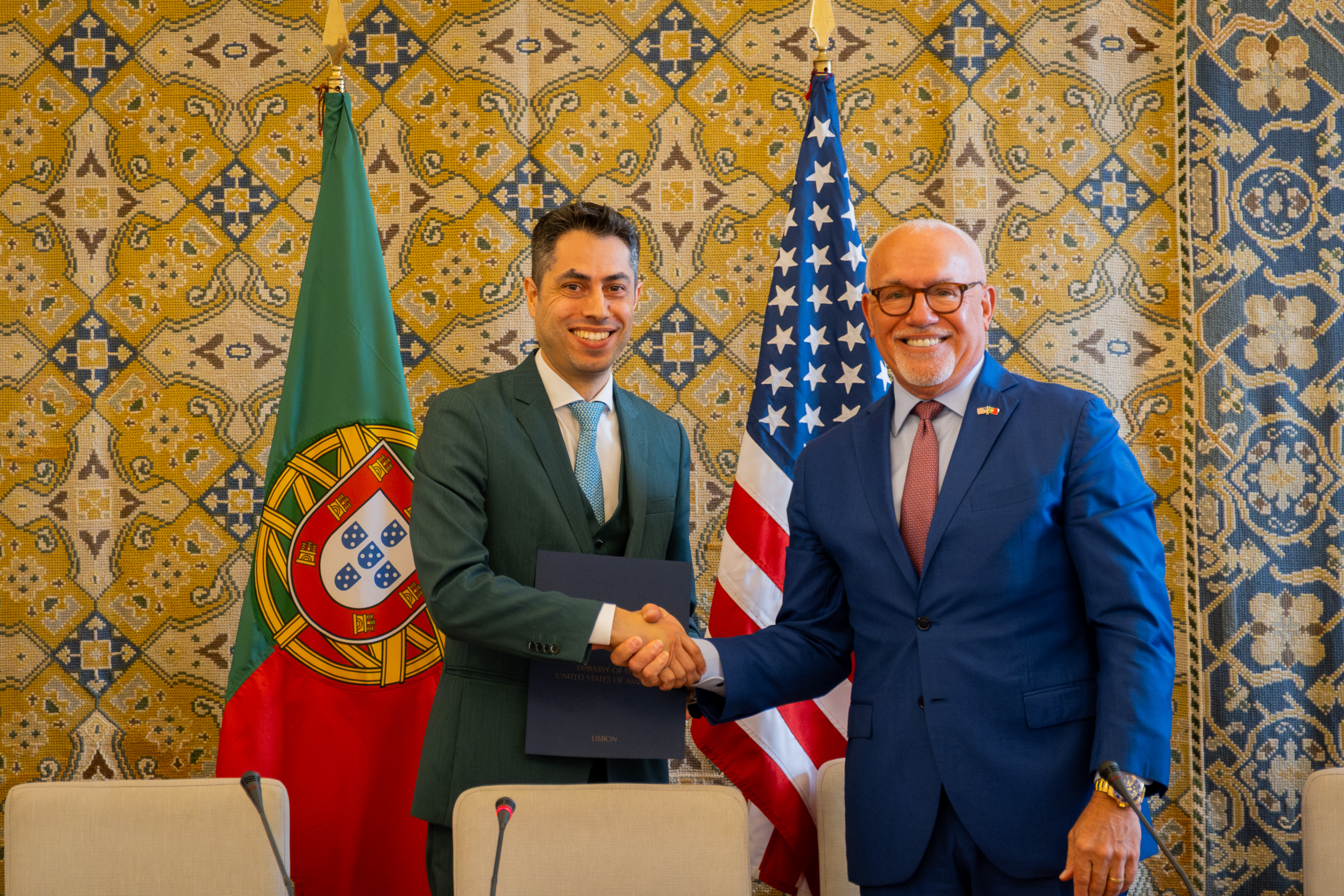
Portugal is the latest nation to sign the Artemis Accords alongside 59 other countries in a commitment to advancing principles for the responsible exploration of the Moon, Mars, and beyond with NASA.
“Portugal joins a cadre of nations building the framework for safe, transparent, and prosperous activity in space,” said NASA Administrator Jared Isaacman in recorded remarks. “This is our generation’s Golden Age of Exploration. Together, we are advancing innovation, driving international collaboration, and discovering the secrets of the universe.”
Portugal’s Secretary of State for Science and Innovation Helena Canhão signed the Artemis Accords on behalf of the country on Jan. 11.
“2026 is the year in which humans will return to the Moon. It will mark the beginning of a new era of space exploration, reminiscent of the Portuguese explorers of the past, such as Magellan and his circumnavigation of our planet,” said Hugo Costa, executive director of the recently established Portuguese Space Agency, about the signing. “As a nation that approaches space sustainability with great care and responsibility, Portugal and the Portuguese Space Agency are proud to join the Artemis Accords and contribute to the sustainable, beneficial, and peaceful use of space for all humankind.”
A ceremony to recognize the signing was held on Monday in the capital city Lisbon, during a semi-annual meeting between the United States and Portugal to discuss cooperation between the two governments.
“This is a meaningful step forward for responsible space exploration,” said U.S. Ambassador to Portugal John J. Arrigo, who participated in the event. “Shared principles like those in the Artemis Accords are essential to ensuring that space remains a domain of stability, safety, and opportunity for all nations.”
In 2020, during the first Trump Administration, the United States, led by NASA and the U.S. Department of State, joined with seven other founding nations to establish the Artemis Accords, responding to the growing interest in lunar activities by both governments and private companies.
The accords introduced the first set of practical principles aimed at enhancing the safety, transparency, and coordination of civil space exploration on the Moon, Mars, and beyond.
Signing the Artemis Accords means to explore peaceably and transparently, to render aid to those in need, to ensure unrestricted access to scientific data that all of humanity can learn from, to ensure activities do not interfere with those of others, to preserve historically significant sites and artifacts, and to develop best practices for how to conduct space exploration activities for the benefit of all.
More countries are expected to sign the Artemis Accords in the months and years ahead.
Learn more about the Artemis Accords at:
https://www.nasa.gov/artemis-accords
-end-
Bethany Stevens / Elizabeth Shaw
Headquarters, Washington
202-358-1600
bethany.c.stevens@nasa.gov / elizabeth.a.shaw@nasa.gov
NASA Welcomes Portugal as 60th Artemis Accords Signatory
Portugal is the latest nation to sign the Artemis Accords alongside 59 other countries in a commitment to advancing principles for the responsible exploration of the Moon, Mars, and beyond with NASA.
“Portugal joins a cadre of nations building the framework for safe, transparent, and prosperous activity in space,” said NASA Administrator Jared Isaacman in recorded remarks. “This is our generation’s Golden Age of Exploration. Together, we are advancing innovation, driving international collaboration, and discovering the secrets of the universe.”
Portugal’s Secretary of State for Science and Innovation Helena Canhão signed the Artemis Accords on behalf of the country on Jan. 11.
“2026 is the year in which humans will return to the Moon. It will mark the beginning of a new era of space exploration, reminiscent of the Portuguese explorers of the past, such as Magellan and his circumnavigation of our planet,” said Hugo Costa, executive director of the recently established Portuguese Space Agency, about the signing. “As a nation that approaches space sustainability with great care and responsibility, Portugal and the Portuguese Space Agency are proud to join the Artemis Accords and contribute to the sustainable, beneficial, and peaceful use of space for all humankind.”
A ceremony to recognize the signing was held on Monday in the capital city Lisbon, during a semi-annual meeting between the United States and Portugal to discuss cooperation between the two governments.
“This is a meaningful step forward for responsible space exploration,” said U.S. Ambassador to Portugal John J. Arrigo, who participated in the event. “Shared principles like those in the Artemis Accords are essential to ensuring that space remains a domain of stability, safety, and opportunity for all nations.”
In 2020, during the first Trump Administration, the United States, led by NASA and the U.S. Department of State, joined with seven other founding nations to establish the Artemis Accords, responding to the growing interest in lunar activities by both governments and private companies.
The accords introduced the first set of practical principles aimed at enhancing the safety, transparency, and coordination of civil space exploration on the Moon, Mars, and beyond.
Signing the Artemis Accords means to explore peaceably and transparently, to render aid to those in need, to ensure unrestricted access to scientific data that all of humanity can learn from, to ensure activities do not interfere with those of others, to preserve historically significant sites and artifacts, and to develop best practices for how to conduct space exploration activities for the benefit of all.
More countries are expected to sign the Artemis Accords in the months and years ahead.
Learn more about the Artemis Accords at:
https://www.nasa.gov/artemis-accords
-end-
Bethany Stevens / Elizabeth Shaw
Headquarters, Washington
202-358-1600
bethany.c.stevens@nasa.gov / elizabeth.a.shaw@nasa.gov
Quantum computers could help sharpen images of exoplanets
Quantum computers could help sharpen images of exoplanets
NASA Stennis Engineer Proud to Serve During NASA’s Return to the Moon
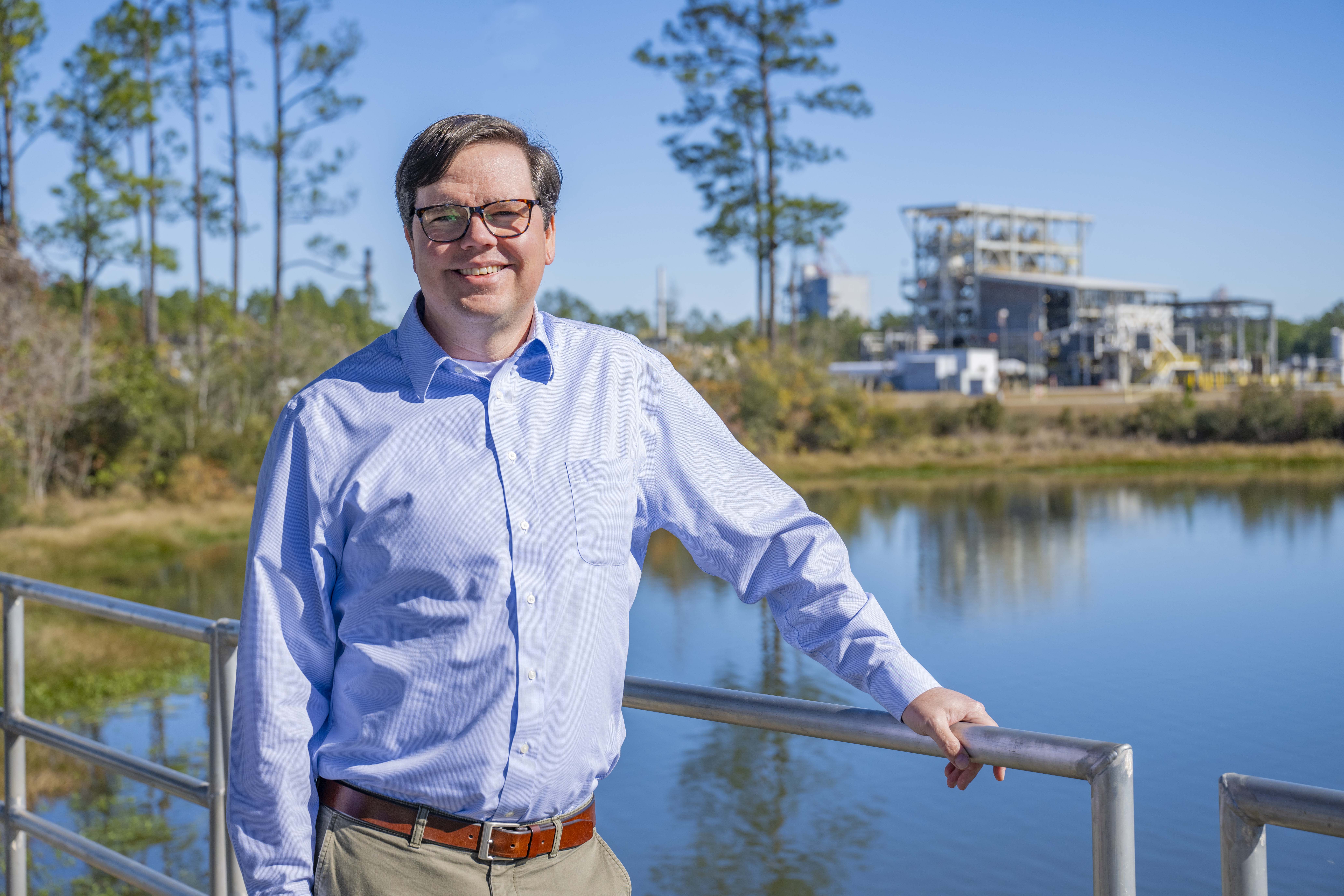
Richard Wear calls it an honor to be working at NASA’s Stennis Space Center near Bay St. Louis, Mississippi, during a historic time as NASA prepares to send astronauts around the Moon for the first time in more than 50 years on the Artemis II mission.
“I have not stopped learning in the 15 years that I have been here,” Wear said.
As acting chief of the Mechanical Engineering Branch, the Slidell, Louisiana, resident primarily supports testing at the E Test Complex, where NASA and commercial companies carry out propulsion test operations.
The complex features four stands with 12 test cells capable of supporting a range of component and engine test activities. The versatility of the complex infrastructure and test team allows it to support projects for commercial aerospace companies, large and small.
“The unique high pressure systems bring customers from all over the country,” Wear said. “I am proud to have been a part of testing for our commercial partners over the years, some of which have become successful and recognized across the world.”
From Alabama to NASA StennisEducation was always a priority in Wear’s household. His mom taught math, and his dad majored in chemistry. It influenced the Tuscaloosa, Alabama, native’s decision to pursue engineering.
After earning bachelor’s and master’s degrees in mechanical engineering from the University of Alabama, Wear began his career in 2006 at NASA’s Michoud Assembly Facility in New Orleans as a contractor for Lockheed Martin. He worked in the thermal analysis group to support the space shuttle external tank program. His role focused on studying how heat moved through the tank’s structure and its thermal protection systems.
When NASA needed to fill a thermal analysis role at NASA Stennis in 2010, Wear applied and quickly embraced the challenge. Initially hired to focus on thermal analysis, he soon expanded his expertise to include fluid analysis and thermodynamics. Even in his current supervisory role, Wear continues to contribute technical analysis and support testing.
Life at NASA StennisWear describes NASA Stennis as a “hands-on, get-it-done center” with a culture that is serious, yet fun.
As a smaller NASA center, everyone has the chance to make a difference.
Wear believes the work environment provides new employees the opportunity to meet developmental goals faster.
“I think that is also true for our test customers and tenants,” Wear said. “Sometimes with our customers at the E Test Complex, they are just starting out, so we can guide them to a successful outcome by sharing our knowledge. We want all our employees and customers to be successful and I think that really shows.”
The mission-focused culture has shaped Wear’s own career.
Since joining NASA Stennis in 2010 as a junior analyst, he advanced to senior analyst, then lead project fluid systems analyst, before being named thermal-fluid subject matter expert in 2018. In 2022, he accepted the deputy chief position in the Mechanical Engineering Branch and has served as acting chief since March 2025.
Even in a supervisor role, Wear continues to find inspiration in the teamwork around him.
“The focus here is always on the mission, not on whose job it is,” he said. “That true team effort motivates me to do my best every day.”
Advice for Future EngineersOne part of Wear’s role he enjoys is training students. Inspiration came to him during recent interviews with students for the Pathways Internship. The conversations were with several students that have a passion for NASA, its mission, and for space exploration.
“Working hard in school and getting good grades is part of it, but I think persistence and attitude plays a huge part,” Wear said. “For example, we have told our prospective Pathways Interns multiple times that attitude is one of the most important parts of getting a job at NASA Stennis after an internship.”
Wear recommends all students do their research, figure out what he or she does not know, and then find someone who can help fill the gap.
This approach of staying curious and persistent is what put Wear in the right place at the right time as NASA writes a new chapter of space history that will return America to the Moon and beyond.
Learn More About Careers at NASA Stennis Explore More 5 min read A Look Back at NASA Stennis in 2025 Article 4 weeks ago 2 min read NASA Makes Webby 30s List of Most Iconic, Influential on Internet Article 4 months ago 5 min read Crossroads to the Future – NASA Stennis Grows into a Model Federal City Article 4 months agoNASA Stennis Engineer Proud to Serve During NASA’s Return to the Moon
Richard Wear calls it an honor to be working at NASA’s Stennis Space Center near Bay St. Louis, Mississippi, during a historic time as NASA prepares to send astronauts around the Moon for the first time in more than 50 years on the Artemis II mission.
“I have not stopped learning in the 15 years that I have been here,” Wear said.
As acting chief of the Mechanical Engineering Branch, the Slidell, Louisiana, resident primarily supports testing at the E Test Complex, where NASA and commercial companies carry out propulsion test operations.
The complex features four stands with 12 test cells capable of supporting a range of component and engine test activities. The versatility of the complex infrastructure and test team allows it to support projects for commercial aerospace companies, large and small.
“The unique high pressure systems bring customers from all over the country,” Wear said. “I am proud to have been a part of testing for our commercial partners over the years, some of which have become successful and recognized across the world.”
From Alabama to NASA StennisEducation was always a priority in Wear’s household. His mom taught math, and his dad majored in chemistry. It influenced the Tuscaloosa, Alabama, native’s decision to pursue engineering.
After earning bachelor’s and master’s degrees in mechanical engineering from the University of Alabama, Wear began his career in 2006 at NASA’s Michoud Assembly Facility in New Orleans as a contractor for Lockheed Martin. He worked in the thermal analysis group to support the space shuttle external tank program. His role focused on studying how heat moved through the tank’s structure and its thermal protection systems.
When NASA needed to fill a thermal analysis role at NASA Stennis in 2010, Wear applied and quickly embraced the challenge. Initially hired to focus on thermal analysis, he soon expanded his expertise to include fluid analysis and thermodynamics. Even in his current supervisory role, Wear continues to contribute technical analysis and support testing.
Life at NASA StennisWear describes NASA Stennis as a “hands-on, get-it-done center” with a culture that is serious, yet fun.
As a smaller NASA center, everyone has the chance to make a difference.
Wear believes the work environment provides new employees the opportunity to meet developmental goals faster.
“I think that is also true for our test customers and tenants,” Wear said. “Sometimes with our customers at the E Test Complex, they are just starting out, so we can guide them to a successful outcome by sharing our knowledge. We want all our employees and customers to be successful and I think that really shows.”
The mission-focused culture has shaped Wear’s own career.
Since joining NASA Stennis in 2010 as a junior analyst, he advanced to senior analyst, then lead project fluid systems analyst, before being named thermal-fluid subject matter expert in 2018. In 2022, he accepted the deputy chief position in the Mechanical Engineering Branch and has served as acting chief since March 2025.
Even in a supervisor role, Wear continues to find inspiration in the teamwork around him.
“The focus here is always on the mission, not on whose job it is,” he said. “That true team effort motivates me to do my best every day.”
Advice for Future EngineersOne part of Wear’s role he enjoys is training students. Inspiration came to him during recent interviews with students for the Pathways Internship. The conversations were with several students that have a passion for NASA, its mission, and for space exploration.
“Working hard in school and getting good grades is part of it, but I think persistence and attitude plays a huge part,” Wear said. “For example, we have told our prospective Pathways Interns multiple times that attitude is one of the most important parts of getting a job at NASA Stennis after an internship.”
Wear recommends all students do their research, figure out what he or she does not know, and then find someone who can help fill the gap.
This approach of staying curious and persistent is what put Wear in the right place at the right time as NASA writes a new chapter of space history that will return America to the Moon and beyond.
Learn More About Careers at NASA Stennis Explore More 5 min read A Look Back at NASA Stennis in 2025 Article 4 weeks ago 2 min read NASA Makes Webby 30s List of Most Iconic, Influential on Internet Article 4 months ago 5 min read Crossroads to the Future – NASA Stennis Grows into a Model Federal City Article 4 months agoWhite Dwarf Star (Artist’s Concept)
White Dwarf Star (Artist’s Concept)

A smaller white dwarf star (left) pulls material from a larger star into a swirling accretion disk in this artist’s concept released Nov. 19, 2025, to illustrate the first use of NASA’s IXPE (Imaging X-ray Polarization Explorer) to study a white dwarf star.
IXPE spent nearly one week focused on EX Hydrae, a white dwarf star system located in the constellation Hydra, approximately 200 light-years from Earth. Using IXPE’s unique X-ray polarization capability, astronomers examined the star, unlocking the geometry of energetic binary systems.
Read more about EX Hydrae and IXPE.
Image credit: MIT/Jose-Luis Olivares
White Dwarf Star (Artist’s Concept)
A smaller white dwarf star (left) pulls material from a larger star into a swirling accretion disk in this artist’s concept released Nov. 19, 2025, to illustrate the first use of NASA’s IXPE (Imaging X-ray Polarization Explorer) to study a white dwarf star.
IXPE spent nearly one week focused on EX Hydrae, a white dwarf star system located in the constellation Hydra, approximately 200 light-years from Earth. Using IXPE’s unique X-ray polarization capability, astronomers examined the star, unlocking the geometry of energetic binary systems.
Read more about EX Hydrae and IXPE.
Image credit: MIT/Jose-Luis Olivares
New Study Probes How Same-Sex Behaviors Evolved in Nonhuman Primates
New research links same-sex behaviors in nonhuman primates to the evolution of complex social structures
Views of the Moon - Replay
Few Cosmic Events Can Rival The Brightness Of This Black Hole Shredding A Star Apart
A distant black hole shredded a companion star that got too close. The star was torn to pieces and the explosion was an extremely powerful event, more energetic than a supernova. At its peak, the energy released was 400 billion times brighter than the Sun.