
Feed aggregator
5 Tips to Craft a Standout NASA Internship Application
3 min read
Preparations for Next Moonwalk Simulations Underway (and Underwater) Four NASA interns pose in front of the NASA Pavilion at the EAA AirVenture Oshkosh, an annual airshow in Oshkosh, Wisconsin.NASA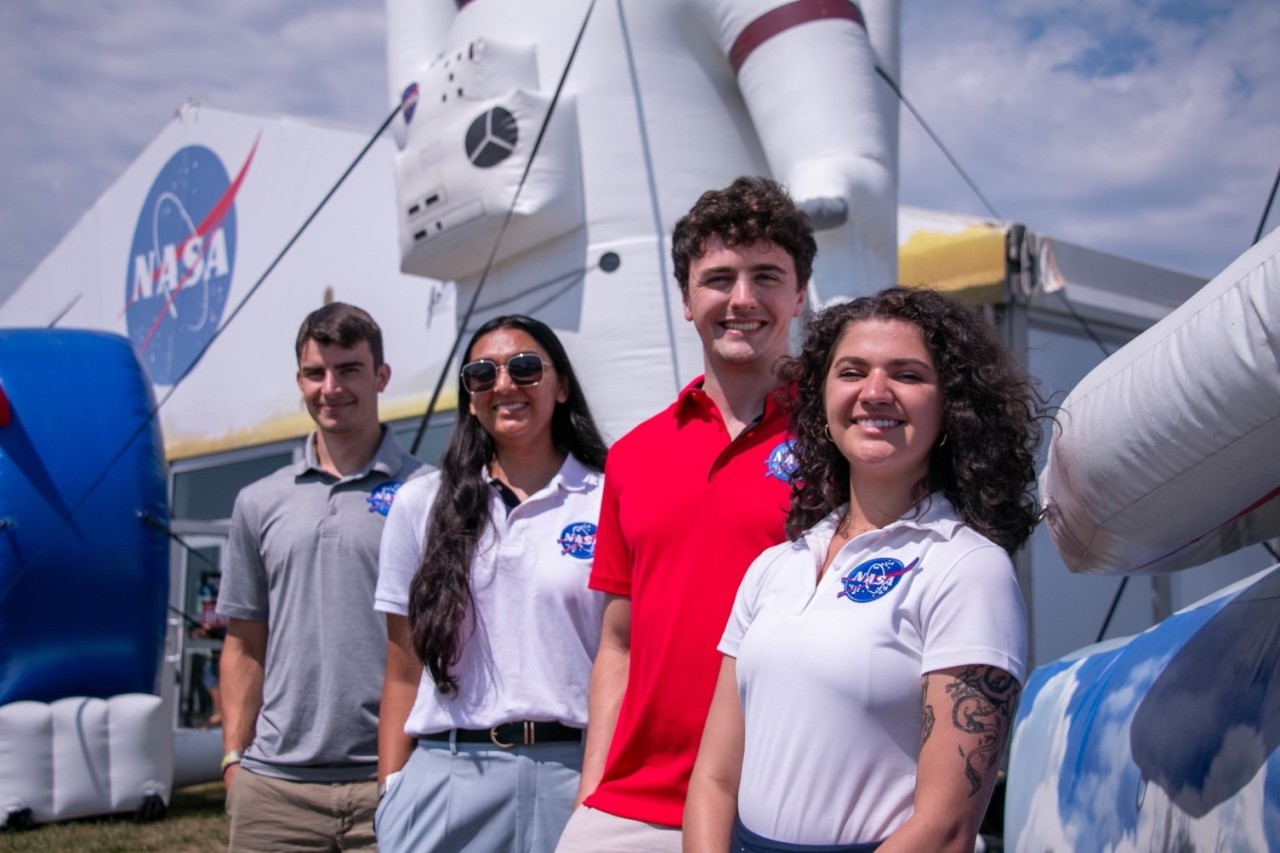
A NASA internship provides a stellar opportunity to launch your future as part of America’s aerospace workforce. NASA interns take on meaningful work and contribute to exciting agency projects with the guidance of a supportive mentor. The agency’s internship program regularly ranks as the nation’s most prestigious and competition is steep: in fiscal year 2025, NASA’s Office of STEM Engagement received about 250,000 internship applications for its roughly 1,800 internship opportunities.
To give you the best shot at a NASA internship, we’ve compiled a list of tips mentors say can make an application stand out from the crowd. It is NASA’s mentors who create internship project descriptions, review applications, and take the lead in choosing candidates to work on their specific internship projects. Here’s what they had to say:
1. Your personal statement is your chance to make a lasting impression.Mentors pay close attention to personal statements to identify the best candidate for their project and team. A powerful personal statement shares personal background, experience, and goals, and how they relate to the needs of the project.
NASA mentors are looking for interns who will enjoy the work and fit in with the team culture. Beyond your academic background, grades, and interests, this is your chance to share your curiosity, enthusiasm, passion, or resilience. Show us who you are and what you can do!
2. Show off your academic achievements.Mentors love to see what academic expertise and hands-on experience you can bring to the internship project. Your resume, transcripts, grade point average, coursework, research, academic projects, awards, and accomplishments are valuable highlights in your application.
3. Tell us about your extracurriculars, too!Who are you outside the classroom?
Mentors like to see well-rounded candidates whose interests take them beyond their chosen academic and career path. Include any extracurricular activities you participate in, such as a club or team at school or an organization in your community. Whether you’re involved in a local rocketry club, a school athletic team, or a musical ensemble, these pursuits may demonstrate academic skills or soft skills such as collaboration. Shared hobbies can also be a great point of personal connection with a future mentor.
4. Include as many of your skills as possible.Share the valuable skills that you can bring to an internship project. These could be technical skills, such as experience with specific tools or computer programming languages, and non-technical skills, which may include communications skills or leadership experience. Mentors search for skills that meet their project requirements and, match with the role, but also for unique skills that might be an added asset.
5. Give yourself a chance.Don’t count yourself out before you get started! If you have a passion for spaceflight or aviation, it’s worth applying for a NASA internship – even if you’re not a math, science, engineering, or technology major. That’s because NASA achieves its exploration goals with the support of a nationwide team with a wide variety of skills: communicators, creatives, business specialists, legal experts, and so many more. Take a look at NASA’s internship opportunities and you’ll find projects in a wide range of fields.
Yes, competition is fierce. But someone is going to land that internship – and that person could be you!
Learn More- Check eligibility requirements, see current deadlines, and launch your internship journey at https://intern.nasa.gov.
- Click here to find NASA resume tips.
Scientific Balloon Begins Antarctic Ascent
Scientific Balloon Begins Antarctic Ascent
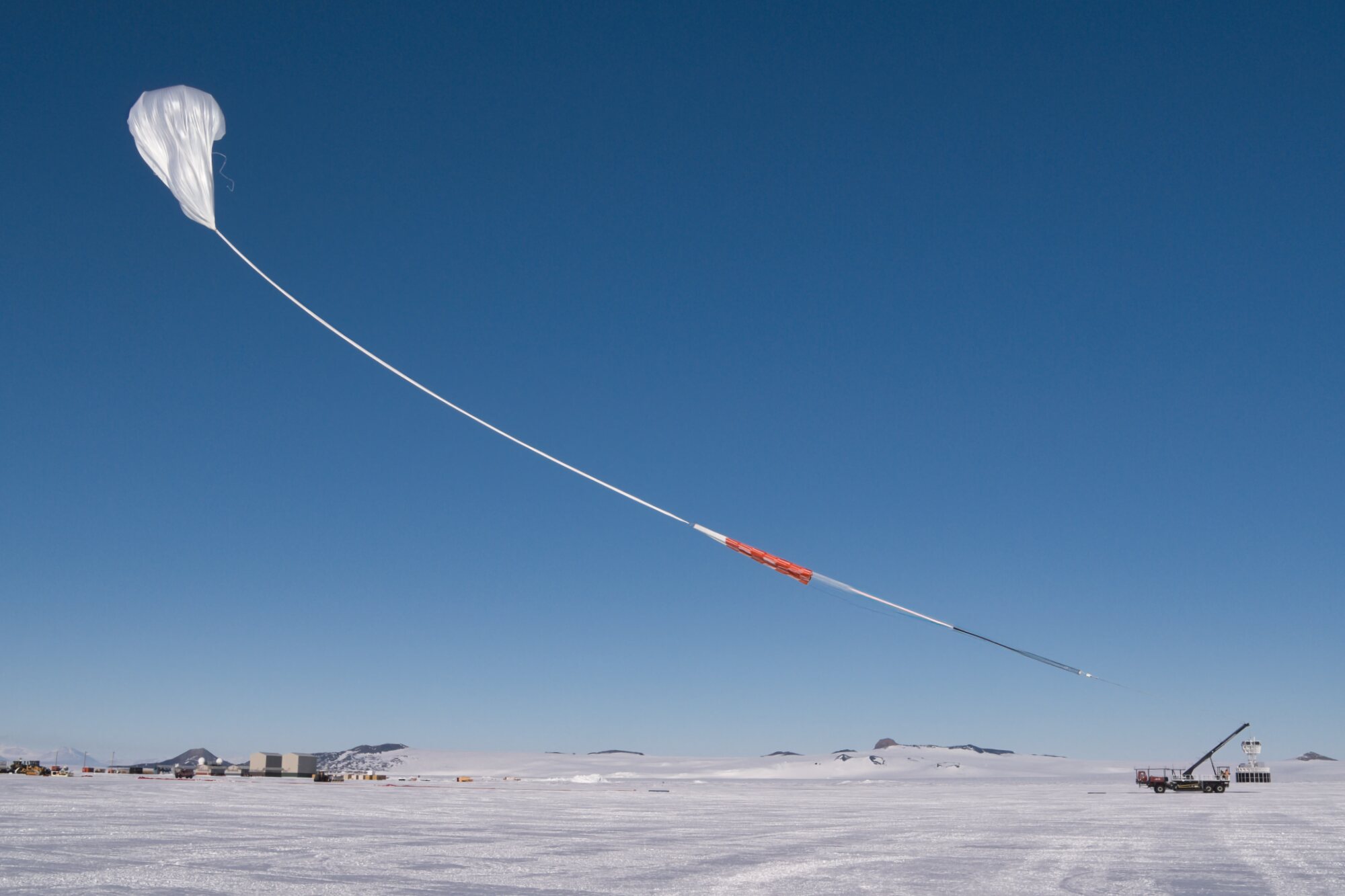
A scientific balloon starts its ascent into the air as it prepares to launch carrying NASA’s Payload for Ultrahigh Energy Observations (PUEO) mission. The mission lifted off from Antarctica at 5:56 a.m. NZST, Saturday, Dec. 20 (11:56 a.m., Friday, Dec. 19 in U.S. Eastern Time).
The PUEO mission is designed to detect radio signals created when highly energetic particles called neutrinos from space hit the ice. The PUEO payload will collect data that give us insight into events like the creation of black holes and neutron star mergers. Alongside the PUEO mission are two other balloons carrying calibration equipment sending test signals to help scientists make sure the payload equipment is working correctly when it tries to detect real signals from space.
Track the balloons in realtime.
Image credit: NASA/Scott Battaion
Longest-Ever Look at Stormy Region on the Sun Offers New Clues to Space Weather
Scientists observed an active region on the sun for a record 94 days, marking a “milestone in solar physics”
Press conference with ESA astronaut Sophie Adenot
Media representatives joined French ESA astronaut Sophie Adenot, on Monday 5 January, for a hybrid press conference to learn more about her first mission to space.
This event, held at the European Astronaut Centre (EAC) in Germany, was the final media event in Europe ahead of her launch to the International Space Station.
Sophie selected the name ‘εpsilon’ for her first mission, currently planned no earlier than 15 February, reflecting the power of small, yet impactful contributions, and how many parts come together to make a whole.
During εpsilon, Sophie will conduct a wide range of tasks on the International Space Station, including European-led scientific experiments, medical research, supporting Earth observation and contributing to operations and maintenance on the Station.
What if the idea of the autism spectrum is completely wrong?
What if the idea of the autism spectrum is completely wrong?
Weird clump in the early universe is piping hot and we don’t know why
Weird clump in the early universe is piping hot and we don’t know why
El Niño was linked to famines in Europe in the early modern period
El Niño was linked to famines in Europe in the early modern period
The best new popular science books of January 2026
The best new popular science books of January 2026
2026 will shed light on whether a little-known drug helps with autism
2026 will shed light on whether a little-known drug helps with autism
Not Every Galaxy Has a Central Black Hole
Many less massive galaxies appear to lack something astronomers thought was ubiquitous: a central, supermassive black hole.
The post Not Every Galaxy Has a Central Black Hole appeared first on Sky & Telescope.
A strange kind of quantumness may be key to quantum computers' success
A strange kind of quantumness may be key to quantum computers' success
The Ambitious Plan to Spot Habitable Moons Around Giant Planets
So far, humanity has yet to find its first “exomoon” - a Moon orbiting a planet outside of the solar system. But that hasn’t been for lack of trying. According to a new paper by Thomas Winterhalder of the European Southern Observatory and his co-authors available as a pre-print on arXiv, the reason isn’t because those Moons don’t exist, but simply because we lack the technology to detect them. They propose a new “kilometric baseline interferometer” that can detect moons as small as the Earth up to 200 parsecs (652 light years) away.
Why Does Life Keep Evolving These Geometric Patterns?
A global catalog shows how creatures across the tree of life balance rigidity with flexibility in remarkably consistent ways