

Feed aggregator
Science crossword: At the same time
Play this crossword inspired by the June 2026 issue of Scientific American
June 2026: Science history from 50, 100 and 150 years ago
Door-building spiders; a new quantum liquid
The future of robot armies is here – and it’s not what you think
The future of robot armies is here – and it’s not what you think
Smile launch highlights
ESA’s Smile satellite launched aboard a Vega-C rocket from Europe’s Spaceport in French Guiana. The rocket lifted off on at 04:52 BST / 05:52 CEST (00:52 local time) on 19 May 2026.
Smile flew to space on Vega-C flight VV29. At 35 m tall, a Vega-C weighs 210 tonnes on the launch pad and the rocket used three solid-propellant-powered stages to take Smile to orbit before the fourth liquid-propellant stage took over for a precise drop-off around Earth.Smile (the Solar wind Magnetosphere Ionosphere Link Explorer) is a joint mission between the European Space Agency (ESA) and the Chinese Academy of Sciences (CAS).
Smile will use four science instruments to study how Earth responds to the solar wind from the Sun. In doing so, Smile will improve our understanding of solar storms, geomagnetic storms and the science of space weather.
SMILE: European Space Weather Mission Launches
An innovative new mission will probe the mystery of how the Earth’s magnetosphere interacts with the solar wind.
The post SMILE: European Space Weather Mission Launches appeared first on Sky & Telescope.
Smile lifts off on quest to reveal Earth’s invisible shield against the solar wind
The Smile spacecraft lifted off on a Vega-C rocket from Europe’s Spaceport in French Guiana at 04:52 BST / 05:52 CEST (00:52 local time) on 19 May 2026. The launch marks the beginning of an ambitious mission to better understand solar storms, geomagnetic storms, and the science of space weather.
TESS Data Reveals 27 New Planet Candidates in Binary Systems
You’re doing some late afternoon work on the habitat as part of humanity’s first exoplanet settlement, but the sun is going down so you’re trying to speed things up. Just as the light dims, everything suddenly starts getting brighter. You look up and see the sun starting to rise again, except it’s your second sun. You kick yourself for not checking the daily sunrise and sunset logs, but you’re happy you get to put in a bit more work before you eat dinner.
Farming in Ancient Lake Agassiz
- Earth
- Earth Observatory
- Image of the Day
- EO Explorer
- Topics
- More Content
- About
Farming in Ancient Lake Agassiz
- Earth
- Earth Observatory
- Image of the Day
- EO Explorer
- Topics
- More Content
- About
A lamp flickering on and off inspires the math mystery of Thomson’s lamp
If you switch a lamp on and off an infinite number of times, will the light end up on or off? Somehow math says both
#794: Stargate Science
We continue our ad-hoc miniseries through sci-fi franchises. This week we’ll talk about Stargate, worm holes, mind parasites and self-replicating bots. There’s a lot to talk about!
Show Notes- Stargates, wormholes, and hyperspace travel
- Travel between galaxies including Pegasus Galaxy and Atlantis
- Wormhole stability and Einstein-Rosen bridges
- Faster-than-light travel and teleportation rings
- Naquadah and unstable Quadria as power sources
- Superheavy elements and island of stability discussion
- Matter-antimatter energy concepts
- Energy weapons, plasma, and shield technology
- Human migration across the galaxy
- Ancient alien civilizations and ascension
- Goa’uld parasites and Tok’ra coexistence
- Real-world parasite comparisons like cordyceps
- Asgard cloning and genetic degradation
- Replicators as self-replicating machines
- Praise for Stargate Universe
- Stargate compared to the Isekai genre
- Appreciation for Stargate’s humor and relatable characters
- Humanity’s technological rise across the series
Fraser Cain:
Astronomy Cast, Episode 794, The Science of Stargate. Welcome to Astronomy Cast, our weekly facts-based journey through the Cosmos, where we help you understand not only what we know, but how we know what we know. I'm Fraser Cain, I'm the publisher of Universe Today.
With me, as always, is Dr. Pamela Gay, a senior scientist for the Planetary Science Institute and the director of CosmoQuest. Hey Pamela, how are you doing?
Dr. Pamela Gay:
I am particularly well, because I've been brought a 44-ounce cranberry slushie, so I'm going to be getting progressively more sugar high throughout the piece.
Fraser Cain:
Yeah, so you won't hear all of the breaks that we take as Pamela goes to the bathroom, but just assume they will have happened. 44 ounces, I don't even know what that is in milliliters, that's a lot. We continue our ad-hoc mini-series through sci-fi franchises.
This week, we'll talk about Stargate, wormholes, mind parasites, and self-replicating bots. There's a lot to talk about. Alright, Stargate.
Now this is objectively the best sci-fi series. So I just, you know, I need to put my, and I'm not just saying it's my favorite, I'm saying that it's objectively the best, that in a court of law, it would stand up, people would make their case, and in the end, Stargate would win. I brook no argument from anyone, that is just the truth, the reality, this is the universe that we live in.
The Stargate universe. Obviously, you know, people will give me grief to that, they'll send emails, send your emails to Pamela at, no, Starstrider, no. So well, so let's just start with the big one, with the Stargate universe, and that of course is the Stargates themselves.
What is the science of what they're doing in Stargate?
Dr. Pamela Gay:
So in theory, there are a series of rings that if you put in the correct number of locked-in runes, will allow you to travel to a matching gate in our galaxy, or, or... Into another galaxy. If you figure out how to enter even more runes, you can travel, with added energy, to another universe, thus, Atlantis.
Fraser Cain:
Other galaxy.
Dr. Pamela Gay:
Other galaxy, that's what I meant to say.
Fraser Cain:
Yeah, they're not another universe, they're another galaxy, I think they're in Andromeda? So we're re-watching Stargate right now, my wife and I, and so we're into season seven right now, so we're pretty deep in the re-watch. And again, I'm like, I'm really enjoying going back and re-watching shows that I know that I love, but it's been so long that I actually don't remember the details.
It is literally a new show to me. Every episode, I'm like, I don't remember this, I don't remember that, I don't remember this episode. We just watched Dark City, and that I mostly remembered, the movie, and we just watched the Iron Giant, and I mostly remember that movie, but with the Stargate episodes, each one, like I know the high-level stuff, who the people are, who the factions are, who some of the main characters are, but the episodes, I am as shocked and surprised when the twist is revealed as I was when I first watched the show, which is such a wonderful feeling. It is. When you realize that you can now just go back and re-watch your entire media library, everything you've ever loved is all there waiting for you to be watched again.
Okay, so what is the physics principle that is connecting these Stargates together?
Dr. Pamela Gay:
So the idea is that you can, and this breaks the physics, you can connect two points together using a wormhole through basically an extra dimension.
Fraser Cain:
Right, the Einstein-Rosen bridge.
Dr. Pamela Gay:
Now, the problem is that mathematically, those suckers become super unstable the moment any mass enters them, which makes it really hard to travel from one point to another through them. So yeah, that's slightly problematic. Right.
Fraser Cain:
And we've mentioned this in a previous episode, like a long, long time ago, when you would sort of allow us to talk about this subject. I believe it was nonsense that needs to be debunked. But in that Einstein-Rosen, they came up with the math for how this would work, but the downsides are, as you said, that if any actual matter or energy is in there, then the thing immediately collapses.
But we've seen the classic examples in interstellar and all that, where you take a piece of paper, you draw the two locations, and then you fold it over and you punch right through, boom, these places are connected. And so theoretically, there's some factory, some wormhole factory that the ancients are building and then they're putting them on spaceships, and then they're taking these wormholes to various locations around the galaxy. And so then you can activate them in the wormhole network and be able to communicate.
Dr. Pamela Gay:
But it's even wilder than that, because each point is connected to all the other coordinates. So it feels much more like they're able to generate wormholes that go from one point to the other.
Fraser Cain:
Right. As opposed to having the kind of wormholes. This is a really cool idea, that if you could make a stable wormhole, you could take one half of the wormhole, put it on a spacecraft, go close to the speed of light, and you have made a time machine.
Because the different sides of the wormhole have experienced different amounts of time. And so you will go through one at the local time, and then you will pop out of the other at the local time for the wormhole. And so theoretically, you can have a time machine.
Dr. Pamela Gay:
But the light hasn't made it between those two places.
Fraser Cain:
Right. The light hasn't. You're being transmitted instantly through these, through a distortion in space-time.
So the idea was around, of course, these are in Star Trek as well. I mean, we didn't even bring this up in, think about Deep Space Nine. I'm sure they're in Star Wars.
I mean, that's kind of what the hyperlanes are.
Dr. Pamela Gay:
So in the last season of Ahsoka, they have the ability with extra power to get.
Fraser Cain:
Right. Spacewhales go with the space whales to another galaxy.
Dr. Pamela Gay:
Right. And this is where I will die on the hill. The night sisters are actually Bene Gesserit.
But yeah.
Fraser Cain:
Did you just cross the streams? I did.
Dr. Pamela Gay:
I did. Yeah, but.
Fraser Cain:
As opposed to them just stealing a cool idea.
Dr. Pamela Gay:
I'm just going to cross the streams.
Fraser Cain:
Yep.
Dr. Pamela Gay:
OK. OK.
Fraser Cain:
So so then if you don't have a wormhole, if you don't have a Stargate and a DHD, a dial home device at the planet that you're attempting to reach, you can use a spacecraft.
Dr. Pamela Gay:
And this this is a two part system where you have the Stargate. Then you have the control thing that causes the different ringy bits to move and lock in the different runes. Now, the wormhole is generated by the ring thing.
And so you can replace the control system. So the control system is just like your remote, basically. Yeah.
So so just to be clear, I don't know why I'm being so pragmatic. True. And and yes, they do have in the Stargate universe the ability to move through space on spaceships that are also capable of going fast.
And and this is how you get the the spacecraft that land on top of the pyramids, which is really cool CGI in the Stargate movie. But but the aliens in the Stargate universe are just creepy.
Fraser Cain:
We'll get we'll get we'll get to the to the life forms in a second. But OK, but the yeah, so so they have faster than light travel as well. And it's their version of hyperspace.
And so you have a hyperspace drive on your spacecraft and that allows you to travel at faster than the speed of light and you generate a hyperspace tunnel in front of you and then you enter that and and go. And there's like one episode where they have where they're about to crash into the earth and realize that they can hyperspace through the earth, which is very cool.
Dr. Pamela Gay:
So but it's not infinite speed. So they have the same problem as Star Trek Voyager of if you end up through some fate too far away, you're not getting home.
Fraser Cain:
No, but they they talk about, say, the the the Asgards. Yes. Living outside of the Milky Way.
And then whenever there's a problem, they request the Asgards and the Asgards show up almost instantaneously. So so there is very fast movement, different technology and different civilizations. Yeah, there is very fast move through it.
OK, so then they've got a teleportation system, which are the rings.
Dr. Pamela Gay:
Yes. And this is one of those things where you have to wonder, is this like a mini wormhole? Is this like it's not clear how those work.
But again, they like to have things work through rings and those are vertical rings versus they go up and down versus standing. Right.
Fraser Cain:
Yeah. Yeah. So you go into this this room.
It's very much like the transporter of Star Trek that you go into this room, you stand in the middle, these rings pop up, then the rings pop up in the destination. And there you are. Yeah. And you need the rings to move between locations, which is kind of cool. So you don't just randomly transport yourself to some random location. You have to go to a place where.
So you're exactly right that it feels like it's like a mini version of a of a wormhole, however, that works. All right. So let's talk about some of the the technologies that are involved in this.
And I think one of the main things, one of the essentially the main resource that everybody's fighting over in the Stargate universe is Nakuta, which is the equivalent of dilithium. Well, it's not exactly the same as dilithium crystals, but it is it is the same pinch point of a resource that everybody is looking for Nakuta.
Dr. Pamela Gay:
I have to admit, I never fixated on that and have no memory of anything other than it exists. So you, sir, who are currently rewatching, please continue.
Fraser Cain:
So theoretically, the Nakuta is in a stable island of resources farther up the periodic table of elements. And so this is something we've debunked in the past. But in theory, this is just like another element that you can mine, I guess, in the same way you combine dilithium crystals and that it produces an enormous amount of energy like a fission reactor.
And that that and that that is what is needed to power hyperspace drives, to power the Stargates and so on. And then there is this unstable version of a called the Quadria, which has been found on this one planet. And that is used, but it is is unstable.
And so it has unpredictable results. And that is the power source that the that humans use in their spaceships is the quadrics. They have a source for this stuff.
But a lot of the conflict between the the empires in Stargate are over planets that have Nakuta that they're then trying to mine and subjugate the the people who live there and and so on. They have a lot of other technologies that are kind of related. They have this zero point energy as another kind of reactor, like antimatter reactors, which and they have a lot of stuff that the that the Asgards use.
So they're they're able to be able to power all of these.
Dr. Pamela Gay:
So let's back up and unpack some of these ideas. So so backing first up to the island of stability, there is when you look at our periodic table, there's the main chunk at the top that those are fairly stable. Then there's all the stuff down at the bottom.
Those those are not stable. Those.
Fraser Cain:
Americium.
Dr. Pamela Gay:
Yes. Thank you. Is is very unstable, which has a lot of ironies in twenty twenty six.
And and so as we're going through figuring out how to bombard the cores of atoms with protons or neutrons and get them to move up to heavier and heavier things that don't tend to hang around. There is this idea that you can get back to some place where you've added enough to the core that it's able to hold itself together because of the geometry. Now, so far, we haven't been able to get close enough to prove or disprove this idea.
But the fact that we never find any of this in the universe and supernovae are a thing has a lot of people thinking it doesn't actually exist or we would have found it by now.
Fraser Cain:
Yeah. Nature has provided a particle accelerator capable of fashioning elements with an enormous number of protons and neutrons, and we have not found them. But that a colliding neutron stars is so much more energetic than anything humanity can possibly offer.
And yet and we know that the Earth has many of the elements that came from colliding neutron stars. And yet we don't find anything beyond the the table of elements as we see it.
Dr. Pamela Gay:
Okay. So that was concept one that you just kind of rolled over. Yes.
Zero point. Zero point energy is this idea that our universe hasn't actually like gotten to the lowest allowable energy. So if you think of that model you got for an atom when you were in high school, where electrons can jump up to a variety of different energy levels and then they decay down to lower energies until they get back down to that base energy.
Well, we're up. The idea is that we're not at the base, we're up at like two or maybe higher, and it is collapses to lower energies that perhaps are responsible for the epoch of inflation. It could also like do very violent things to all the rules of physics in our universe as we know it, if we actually undergo a zero point collapse.
So hopefully that's not a thing. But the idea is our universe isn't at the lowest stable energy point and has further can collapse to it.
Fraser Cain:
And then antimatter reactors, I think it's relatively cheap.
Dr. Pamela Gay:
Yeah, that's matter, antimatter, they annihilate when mixed correctly.
Fraser Cain:
Yeah. So let's talk about the weapons. You know, Teal'c has this energy weapon, the staff weapon, it feels like it's relatively straightforward, you know, shoots a bolt out of the end of the weapon.
Dr. Pamela Gay:
It's a bolt of energy. It's just a pulse. It's the same annoyance you get in pretty much every other series of, wait, how are we able to watch something that should be traveling at the speed of light move across the room?
But there we are.
Fraser Cain:
Yeah, yeah. Well, maybe it's not moving the speed of light. It's a blob of energized plasma or something.
Yeah.
Dr. Pamela Gay:
I mean, it will have massif it's electricity. So maybe it's a blob of slow moving electrons.
Fraser Cain:
Yeah. And then the other weapon that they have is it's called the Zat gun or the Zat Nikta. And it is the it's the little one that kind of pops open and then they it's their it's their version of the phaser.
Dr. Pamela Gay:
Yeah.
Fraser Cain:
And so one hit stuns, two hits kills and three hits disintegrates. Is the is the rules of the universe. And so instead of setting your thing at stun or kill, you can just hit them once with it and they pass out.
But if you hit them twice, then you kill them.
Dr. Pamela Gay:
Don't do that. And I don't know what the time frame is, but you can hide the body easily enough.
Fraser Cain:
Yeah, I don't know what that. Well, yeah. So if you do need to, then you just vaporize them with a third hit and they just disappear.
So they go through they go through through that. And again, I mean, however, these things work, they are clearly somehow messing with your nervous system, electricity, you know, your nervous system runs on electricity. So there's some kind of squishy biology explanation for how this all comes together.
Dr. Pamela Gay:
But it doesn't leave the same wild scarring that that getting struck by lightning does. So at least there's that positive.
Fraser Cain:
Yeah, yeah, yeah. And so, you know, the question I always have is like, what's the time frame that if you used to hit a person once, like because all the main characters have been hit by these at guns multiple times. So is it just like once in your life?
No, obviously not. Is it once in a day? I it's probably like getting a sunburn.
Dr. Pamela Gay:
Yeah.
Fraser Cain:
Yeah. I mean, like you can be out in the sun for whatever, half an hour and then you'll start to burn or 10 minutes or whatever is the number. But then how long of a break do you need before you can then go back under the sun for 10 minutes?
Is it the next day? Is it the same day? Do you have to wait an hour?
What is the what is the what is the delay for being out in the indirect sunlight for you to get a burn again?
Dr. Pamela Gay:
The rate at which the energy dissipates, I guess.
Fraser Cain:
Yeah.
Dr. Pamela Gay:
So it doesn't depend on if you're surrounded by an insulating material or on something conductive.
Fraser Cain:
Yeah, yeah, yeah, yeah. So but they're very handy weapons. And then, of course, you have shields both on the spacecraft and personal shields for the for the ghouls, which we're going to get to.
And again, I think we've you know, we kind of covered shields in Star Trek, both Star Trek and probably Star Wars. So, you know, same same thing, some kind of electromagnetic shield that you are putting around yourself that is redirecting harmful energy away from you.
Dr. Pamela Gay:
And I have to just put out a congratulations to the folks over in the YouTube chat who can spell the things in the Stargate universe correctly.
Fraser Cain:
This is just confirmation of what I of what I said. All right. So one thing I don't think you were sort of expecting this, but one thing that I really like is that almost all of the entities that they interact with are human beings.
They all speak English, which, you know, is obviously a problem. But they all are transported from Earth. Yes.
To different locations, which is such a it's such a cool idea that all this mythology, that all of these, you know, are the ghouls and that you have this migration across the galaxy because these people have been taken to these worlds and set up essentially as slaves.
Dr. Pamela Gay:
And that that idea is in Star Trek. Just to be clear, there was the elder race that it transported human beings and plopped them down in different places.
Fraser Cain:
Right. Right. And that's why Vulcans and Romulans and everybody kind of looks the same.
Dr. Pamela Gay:
No, it's there's actual humans on other worlds that were put there by this race. I've forgotten the name of that. I think it's the same race that holds the.
There's this place that they're absolutely not allowed to fight. It's the glowing light organisms. I think their name begins with the letter O and that's not useful.
Fraser Cain:
In in Stargate, Star Trek, Star Trek, both Star Trek and Stargate, because there's there is a white glowing thing in Stargate. All right.
Dr. Pamela Gay:
Yeah.
Fraser Cain:
Yeah.
Dr. Pamela Gay:
Yeah. So so both of them have that idea that there were ancient humans that were used to seed life on other worlds. This is why in the original Star Trek you end up with the planet that has the Native American population.
But Stargate does it in in a much cooler way where the origin of so many different myths that involve human like gods. So the Egyptian gods, the Viking gods, or I guess Norse is the correct phrase. The Norse gods, the Greek gods, they go through them all like Chinese mythology, Japanese mythology.
Yeah, it's really cool.
Fraser Cain:
Yeah, they pull all of this mythology and then each one of these is actually a system lord, one of the the big bad, the gold, which we're going to get to in a second, that are running portions of the galaxy and fighting with each other. And essentially they use the humans as their slave shock troops and put them to work and brainwash them and make them think that these are their gods. But in fact, Earth is the is the heart is the original place because, you know, people always ask me this question.
How how do we know that we're that humans didn't come from another planet? Well, we can trace our ancestors back to the to the very first life form on Earth. We know we evolved on Earth.
Dr. Pamela Gay:
I read too much science fiction. Let's talk about the Goulds.
Fraser Cain:
So so the Gula, the word you just said correctly, the Goulds, the Goulds as as General Hammond would call them, the Goulds.
Dr. Pamela Gay:
The the idea is they are a parasitic life form that goes through multiple phases. They are largely aquatic. They go from being in basically the ponds that they're reproduced in pools, whatever, to taking over human hosts where they live in the gut.
And when they're juvenile, they they support their life form, but they don't take over its brain. Now, the problem is these are life forms that are fully capable of joining forces with the human nervous system. And so very much like the Trill in Star Trek, you end up with life forms that are a joining between the parasite and its ego and the human being.
The Trill do not generally go read books, take over and control the human. The Gould, the word you can say, the Gould, that word, yeah, they I their raison d'etre is apparently to take over. Yes.
The the human being and make it their own. And these are life forms that also have extra energy so they can like cause glowing eyes, um, rapid healing. Yeah.
Fraser Cain:
Yeah. And strength, intelligence, things like that.
Dr. Pamela Gay:
So it's one of these things where it's good to live forever, but a whole lot not if you're the host.
Fraser Cain:
Right. Yes. Yeah.
Yeah. I mean, the idea of a parasite, I mean, this is this has its place in in science. I mean, we see the cordyceps, which is a kind of fungi that will take an ant, take an ant's brain, have it force it to climb to the top of the tallest plant that it can find and then and then die and extend the fruiting bodies of the cordyceps to then allow, you know, it to be able to replicate itself.
Dr. Pamela Gay:
Or in theory, there's a lot of parasites that do things that get the host body consumed or take it to life forces.
Fraser Cain:
Yeah. Or isn't the one like the one in in cat litter that makes mice be more brave?
Dr. Pamela Gay:
Yeah.
Fraser Cain:
And so easier to get.
Dr. Pamela Gay:
And that causes them to get eaten. Yeah. And and so the idea that there are life forms out there capable of taking over hosts by affecting their neurochemistry is a known thing.
There are zombie funguses.
Fraser Cain:
Yeah. Parasites that will replace a fish's tongue.
Dr. Pamela Gay:
That. Yeah, that's a real thing. People, there is a parasite that eats the tongue and then becomes the tongue and gets a first bite so that it can aid in eating.
Yeah.
Fraser Cain:
Yeah. It's crazy. It's so gross.
Dr. Pamela Gay:
It's so awful. Okay. Yeah.
My stomach has literally just gone.
Fraser Cain:
Yeah. Yeah. Yeah.
So the but but it's a great idea that you by having the young gestating inside the bodies of the warriors and priestesses. Yeah. You're you're supplying their immune system.
And so they are completely reliant on this. They cannot escape if they wanted to. They have to you.
They have to use this.
Dr. Pamela Gay:
Yeah. Once their immune system has changed, there's no going back. So yeah.
So you can replace the parasite inside someone, which happens to Teal'c, of course. But you can't turn them back normal. Now, there is a cast of the word you can say and I can't that.
Right. The Tok'ra.
Fraser Cain:
Yeah.
Dr. Pamela Gay:
The good ones. Right.
Fraser Cain:
The good guys.
Dr. Pamela Gay:
They believe that they can coexist more like the Trill do and shared the body in a mutually supportive way. Yeah. There's lots of really cool stuff that goes on.
Fraser Cain:
Yeah, totally. Totally. So and then the other thing is the ancients, which were the people that made the Stargate network.
Yeah. And and sort of one of the things that you you learn is that the ancients left technology strewn around kind of like a roadside picnic. And so then it's up to humanity to sort of go through the Stargate to find these little bits and pieces of ancient technology and then try to use this to defend against the the gold.
And then, you know, in Atlantis, they realize there's a whole ancient city in another galaxy and and and so on. But the the sort of thing that does show up quite a bit is that there are these transcended, oh, I forget what they call them, but essentially have ascended. They write these ascended beings.
And this is something that happens to Daniel Jackson for half the season. Yeah.
Dr. Pamela Gay:
Yeah.
Fraser Cain:
When I think the actor wanted to take some time off of the show. And so they replaced him with Cornemic. And then he he came back at the end of the season.
Dr. Pamela Gay:
There's also an interesting Easter egg. It's not an Easter egg. There's an interesting side thing to note where the actor who plays Daniel Jackson starts out looking very much like you would expect a classroom and laboratory archaeologist to look just a little bit like clearly not working out all the time.
And then at one point he comes back super buff and he's like, you know, well, so he went off and he films an action adventure movie. So that's what happened. It's the actor who filmed an action adventure movie and ended up with a completely different physique as a result.
So. Right.
Fraser Cain:
That's fun to watch. And and so the there's one race in this, the Asgard.
Dr. Pamela Gay:
Yeah.
Fraser Cain:
Who are the little gray guys. The little gray guys. Yeah.
Which is so great, right, that they are the the perfect gray aliens. They really have been messing with humanity for forever. But they're essentially the protectors of humanity.
But but the science that I find really interesting about them is that they're all clones.
Dr. Pamela Gay:
Yes. And that's actually also a problem for them.
Fraser Cain:
Right. Right. They suffer this problem that that they're getting this genetic degradation over time because of their reliance on cloning.
Dr. Pamela Gay:
Yeah. And and it's one of these things where they didn't have to clone. They just like you see in other science fiction stories, somewhere along the line, it was just like, this is a better way to do things.
And the idea of having sex is yicky. And so they're trying to figure out how to change their ways to save their species. And and then there's also the replicants, the replicators.
Yeah, they're kind of like the perfect evildoer. They're like if Minecraft used nano bricks to attack just like they have the ability to use everything around them to convert it into machinery. And and it's wild the way they just like take over everything.
Fraser Cain:
Yeah. They're kind of like the Borg.
Dr. Pamela Gay:
Yeah. But the Borg, I don't consume matter and recycle it into robots the same way.
Fraser Cain:
Right. So they keep them looking people like as opposed to they just consume everything down to the atomic level and put it back together in a form. Yeah.
I really dislike the replicators, the whole storyline, the whole implementation of it. I really every time the replicators are on the show, my wife and I, we just groan and roll our eyes and tough through it because I just I really don't like it. They're they're not an interesting enemy to me.
And and the storylines aren't that aren't that interesting, although this kind of and they knew that the CGI was good, though. Yeah. I don't want to sort of spoil where they go with the storyline, but but in the end, it's actually quite a very emotional, brutal ending to the replicators.
Cool. So there's a lot of other stuff. Life is short.
I made a list beforehand. They've got communication systems. They've got sensors.
But yeah, I think that's all the big.
Dr. Pamela Gay:
They got Jason Momoa.
Fraser Cain:
Yeah, right. Jason Momoa, the little baby Jason Momoa early on in Stargate Atlantis and then Stargate Universe. I mean, using a lot of the same technology.
And it's an ancient ship that's moving from star system to star system. They only had two seasons of it. I loved Stargate Universe.
Dr. Pamela Gay:
Yeah, I loved it, too.
Fraser Cain:
Yeah. Yeah. It's really too bad.
So I think hopefully, apparently they're working on a new new versions of Stargate. So hopefully we'll see something show up in our lives.
Dr. Pamela Gay:
It's it is amazing. And yeah, it also just like the social stuff they get, like the way human beings, human, really, really good.
Fraser Cain:
Yeah.
Dr. Pamela Gay:
In the series.
Fraser Cain:
So yeah, I mean, I think like there is a level of humor and yes, and and people not taking themselves as seriously in Stargate that I just like there's a charm to it. Yes, that they just don't have in Star Wars and Star Trek. Yeah.
And I just don't think that like I've never seen anything in either one of those shows that except for maybe Andor, but the band was grim and dark. Again, it's not right. But I've not seen anything that runs this, I don't know, this light and just feels very, very, very relatable.
Dr. Pamela Gay:
Yeah.
Fraser Cain:
I mean, the thing that I really love about Stargate is how much the pieces of the puzzle come back together later on to form a larger picture that they they find a little piece of technology over here and they find a little piece of technology over there. And then you meet with the three years later, they call on those people because now they're an ally and they can help them out. But they can't help them out in this situation, but they can't help them right now.
And then and now the humans have have figured out this technology. Now they have a ship and now they have control over and now they know how to power the wormholes. And it just you get this technological progression.
That goes on through the 10 seasons of Stargate from zero from zero to humanity is on its way to becoming a Milky Way spanning civilization. And it makes sense in a way that I haven't seen any other show tackle.
Dr. Pamela Gay:
There's an element of Isekai to Stargate because you have the humans suddenly got dropped into this completely new situation where they have to figure out how to level up.
Fraser Cain:
Yes.
Dr. Pamela Gay:
And Star Trek and Star Wars don't have that.
Fraser Cain:
Yeah.
Dr. Pamela Gay:
And and so I think part of us are part of our heart is there to cheer on.
Fraser Cain:
Yeah.
Dr. Pamela Gay:
The Richard Dean Anderson's character who's like, what is this science? I just have a gun and I want to shoot.
Fraser Cain:
Just tell me how it works.
Dr. Pamela Gay:
Right. So I think that bit of Isekai for before that word was even something I knew existed.
Fraser Cain:
It just adds a completely different what's the word?
Dr. Pamela Gay:
Isekai is the the kind of Japanese storytelling. Am I mispronouncing it? Where where you get dropped into either you're given a new magical ability.
Fraser Cain:
You're OK. OK, I see. I see.
Yeah. Like like the kind of thing you read in light novels and stuff.
Dr. Pamela Gay:
Right. Right.
Fraser Cain:
Yeah. Lit RPG. Yeah.
Dr. Pamela Gay:
There's the lit RPG of the Roomba that gets brought into an alternate universe. Yeah. And become sentient.
Fraser Cain:
Yeah. Very cool. All right.
So again, best series, sci fi series ever. Watch it. Thanks, everyone.
Thanks, Pamela.
Dr. Pamela Gay:
And we are about to record our next episode. They will go out two weeks in a row, though. So if you're listening to the podcast, this is the part where I say thank you for amusing me with your usernames, because there are some amazing ones right now.
And I'm sorry for how I'm about to mispronounce them. Some of you have realized you can get me to say truly ridiculous things by having a truly ridiculous username. To those of you who make me laugh, I salute you.
To those of you whose names I'm about to mispronounce, I'm just really sorry. This week, we would like to thank Abraham Cottrell, Alex Raine, Andrew Stevenson, Arnaud de Groot, Balki, Benjamin Davies, Boogie Nett, Brian Kilby, Cammy Rassian, Conrad Haling, Daniel Schechter, David Gates, Dizastrina, Dwight Ilk, Eric Lee, Flower Guy, Galactic President, Scooper Star McScoopsalot, Gold, Gregory Singleton, J. Alex Anderson, Jarvis Earl, Jeff Wilson, Jim of Everett, John Esseth, John Vays, J.P. Sullivan, Kate Sindretto, Kenneth Ryan, Kinsaia Panflanko, Lee Harbourn, Marco Ierassi, Mark Steven Razanek, Matthew Crampton, Michael Prashada, Michelle Cullen, Olga, Paul Jarman, Peter, Red Bar is watching, R.J. Basque, Ron Thorson, Satche Takaba, Shersom, Sean Marion, Shobhana, Stephen Miller, the Lonely Sandperson, Tushar Nakini, Will Hamilton. Thank you all so very much.
Fraser Cain:
All right, thanks, everyone, and we will see you next week.
Dr. Pamela Gay:
Bye bye.
Live ShowAstronomers Find New Circumbinary "Tatooine-like" Planet Candidates
There's a distinct category of exoworlds out there that orbit two stars. They're called "circumbinary" planets and up until recently, astronomers had only found about 18 of them among the 6000+ other known exoplanets and candidates. Now, a team at the University of New South Wales (UNSW) in Sydney, Australia, have found 27 more potential circumbinary worlds. They credit a new method, called apsidal precession, for their finding.
Curiosity Blog, Sols 4893-4899: Drilling at Campo Marte and a Visit From the Psyche Spacecraft
- Curiosity Home
- Science
- News and Features
- Multimedia
- Mars Missions
- Mars Home
3 min read
Curiosity Blog, Sols 4893-4899: Drilling at Campo Marte and a Visit From the Psyche Spacecraft NASA’s Mars rover Curiosity acquired this image, as the rover used its APXS instrument to measure the composition of the “Campo Marte” block in preparation for drilling. Curiosity captured the image using its Front Hazard Avoidance Camera (Front Hazcam) on May 14, 2026 — Sol 4895, or Martian day 4,895 of the Mars Science Laboratory mission — at 16:29:02 UTC. NASA/JPL-Caltech
Written by Lucy Lim, Planetary Scientist at NASA Goddard Space Flight Center
Earth planning date: Friday, May 15, 2026
After freeing the rover’s arm from the “Atacama” block, we are ready to drill again! The new drill target will represent the same geologic stratum as Atacama, which is the layered sulfate unit above the boxwork structures. We’ve named the new block “Campo Marte” after a natural red sandstone feature in Bolivia, following the theme of choosing target names in this Martian quadrangle from locations near the Uyuni region in South America. The name can be literally translated from Spanish as “Field of Mars” or “Mars Field,” appropriate for a target on Mars. In preparation for drilling, we measured the composition of Campo Marte with the ChemCam LIBS and the APXS as well as obtaining close-up imaging with MAHLI. Additional LIBS rasters provided geochemical data on nearby blocks, including a couple of vein and nodule-like features. As we’ve seen in several rover stops in this unit, the “Paso Malo” block and several others are covered in a prominent polygonal texture.
We’ve also imaged the Campo Marte block from several angles and determined that it’s substantially thicker than the Atacama block, so we’re hoping that its greater mass will keep it on the ground after drilling so that we can withdraw the drill bit normally this time. The team did get some interesting data on the volume and density of the Atacama block from our little adventure but we don’t feel the need to repeat that particular experiment.
In the meantime, we had a chance to support another solar system exploration mission as the Psyche spacecraft flew close by Mars in order to pick up a gravitational boost on its way to the main asteroid belt.
The Psyche spacecraft’s eventual destination is the asteroid 16 Psyche, one of the largest members of an unusual spectral category of asteroids that hasn’t yet been visited by a spacecraft. Although 16 Psyche is expected to be quite different from Mars as a science target (for example, it is too small to maintain a Mars-like atmosphere) this flyby was still a valuable opportunity to exercise the spacecraft’s instruments and data analysis pipelines, and validate their calibration. Because of this the Curiosity team planned an extra set of atmospheric observations timed to coordinate with the Psyche flyby: a zenith movie with Navcam to document clouds and a Mastcam solar observation to measure atmospheric opacity. The Mastcam was also supported by a fresh set of calibration data. Together with other coordinated observations from the Mars orbiters and Perseverance rover, these are intended to contribute to the Psyche instrument validation effort.
-
Want to read more posts from the Curiosity team?
-
Want to learn more about Curiosity’s science instruments?
Article
7 days ago
3 min read Curiosity Blog, Sols 4879-4885: Struggle at Atacama
Article
2 weeks ago
2 min read Curiosity Blog, Sols 4873-4878: Welcome to the Atacama Drill Target
Article
3 weeks ago
Keep Exploring Discover More Topics From NASA Mars
Mars is the fourth planet from the Sun, and the seventh largest. It’s the only planet we know of inhabited…
All Mars Resources
Explore this collection of Mars images, videos, resources, PDFs, and toolkits. Discover valuable content designed to inform, educate, and inspire,…
Rover Basics
Each robotic explorer sent to the Red Planet has its own unique capabilities driven by science. Many attributes of a…
Mars Exploration: Science Goals
The key to understanding the past, present or future potential for life on Mars can be found in NASA’s four…
Mystery of the ancient giant stone jars of Laos may have been solved
Mystery of the ancient giant stone jars of Laos may have been solved
A Brief-ish History of SETI. Part V: The First Interstellar Messengers
During the 1970s, the first interstellar probes were launched, carrying messages specifically designed to be intelligible to extraterrestrial species. The messages were essentially a "message in a bottle" intended for an advanced civilization, should they find the probes someday.
Johnson Photographers Honored for Award-Winning Portraits
Three photographers at NASA’s Johnson Space Center who inspire the world through visual storytelling earned top honors in the portrait category at the 2025 NASA Imagery Experts Program Annual Awards.
“Congratulations to all three on this impressive achievement and for capturing such breathtaking imagery,” said Johnson Director Vanessa Wyche. “Their work represents the collaboration, precision, and creativity that drive human space exploration forward.”
David DeHoyos, Josh Valcarcel, and Bill Stafford were recognized during the award ceremony held April 20, 2026, in Las Vegas.
From engineering tests to astronaut training to mission control operations, these photographers document the people and work central to NASA’s human spaceflight mission.
First place: David DeHoyos ESA (European Space Agency) astronaut Sophie Adenot pauses for a pensive moment during her official NASA portrait session at Johnson Space Center in Houston.NASA/David DeHoyos Sophie is so kind and friendly with a beautiful presence. Being around her made everyone feel good, which allowed my creativity to flow.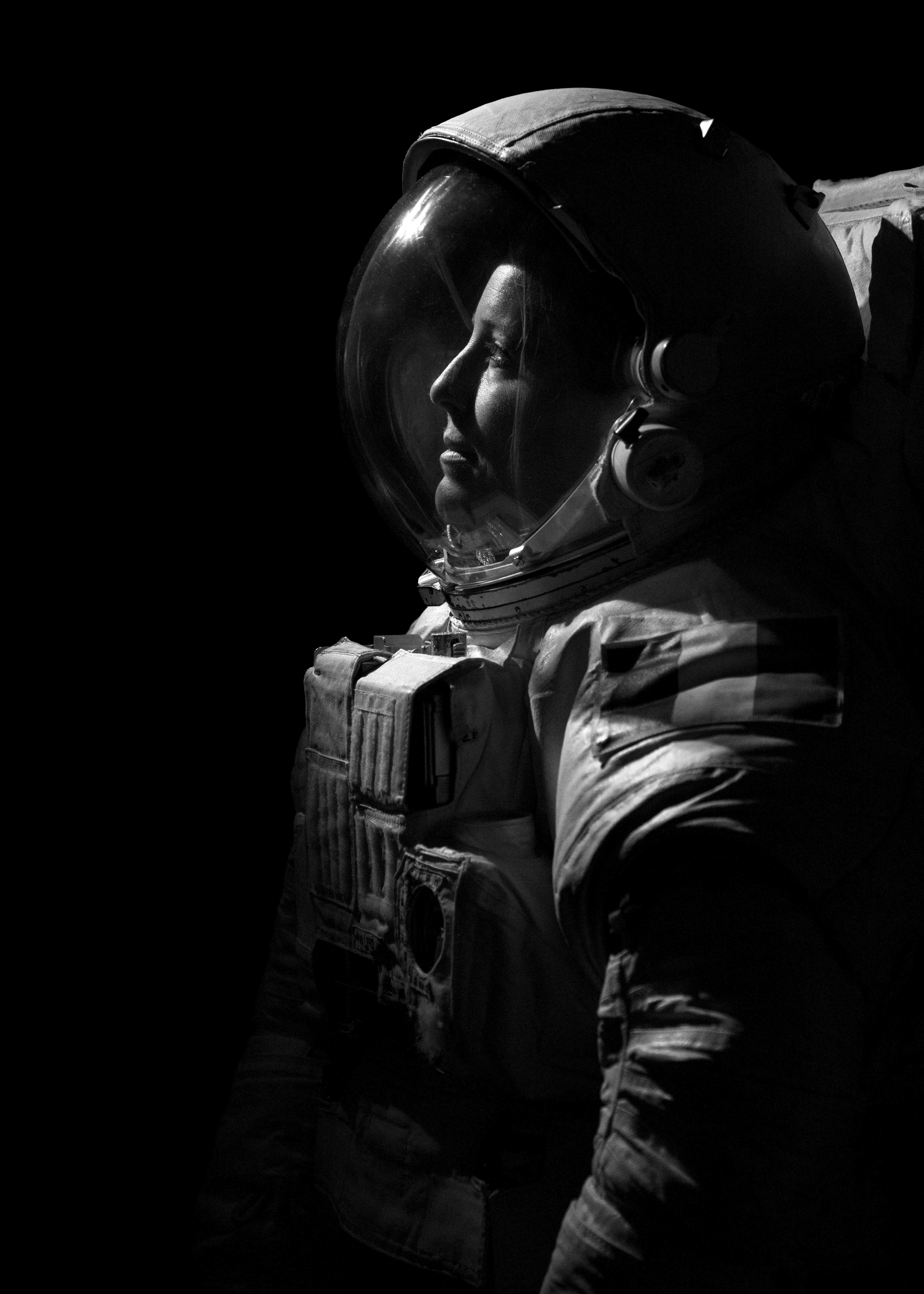
David Dehoyos
NASA Photographer
Portrait of NASA photographer David DeHoyos.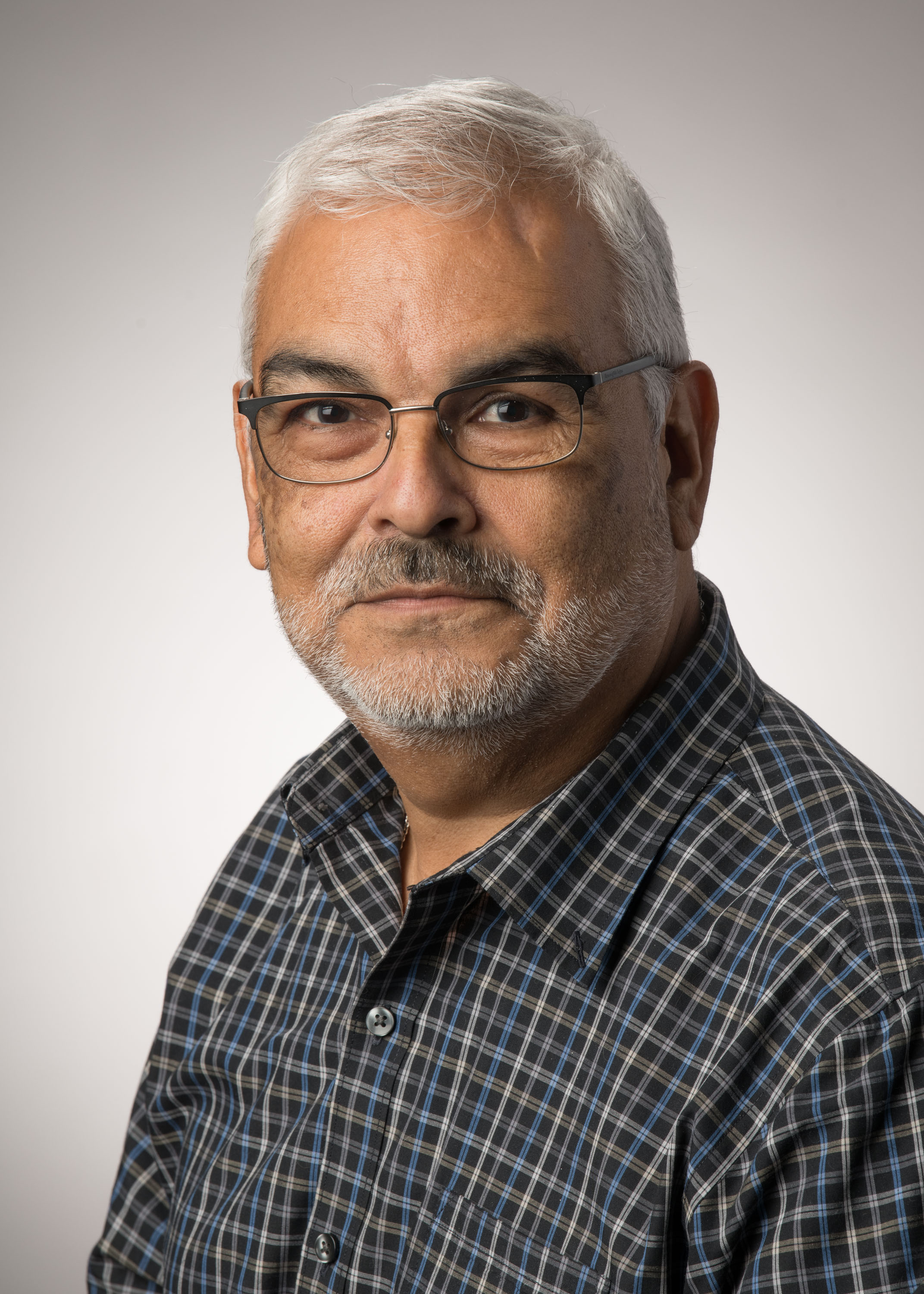
A Houston native, born in 1963, David DeHoyos’ life has been deeply shaped by the city’s dual legacy of arts and aerospace.
DeHoyos graduated from Houston’s High School for the Performing and Visual Arts in 1981 with a specialization in photography. After spending a decade refining his technical craft in photo labs, he joined Johnson’s photography department in 1991.
“This opportunity represented the fulfillment of a lifelong ambition,” said DeHoyos. “Growing up during the fervor of the Apollo era, I always dreamed of contributing to NASA’s mission. I am so honored and blessed to be amongst a team of wonderful people and, more importantly, friends.”
Second place: Josh Valcarcel NASA astronaut Jessica Meir poses with an Extravehicular Mobility Unit (EMU) spacesuit during an official portrait session.NASA/Josh Valcarcel Jessica’s quiet presence reflects years of preparation, passion, and responsibility. She understands, more clearly than most of us ever will, the fragility of the body, the precision of systems, and the narrow margins within which exploration unfolds.Josh Valcarcel
NASA Photographer
Portrait of NASA scientific photographer Josh Valcarcel.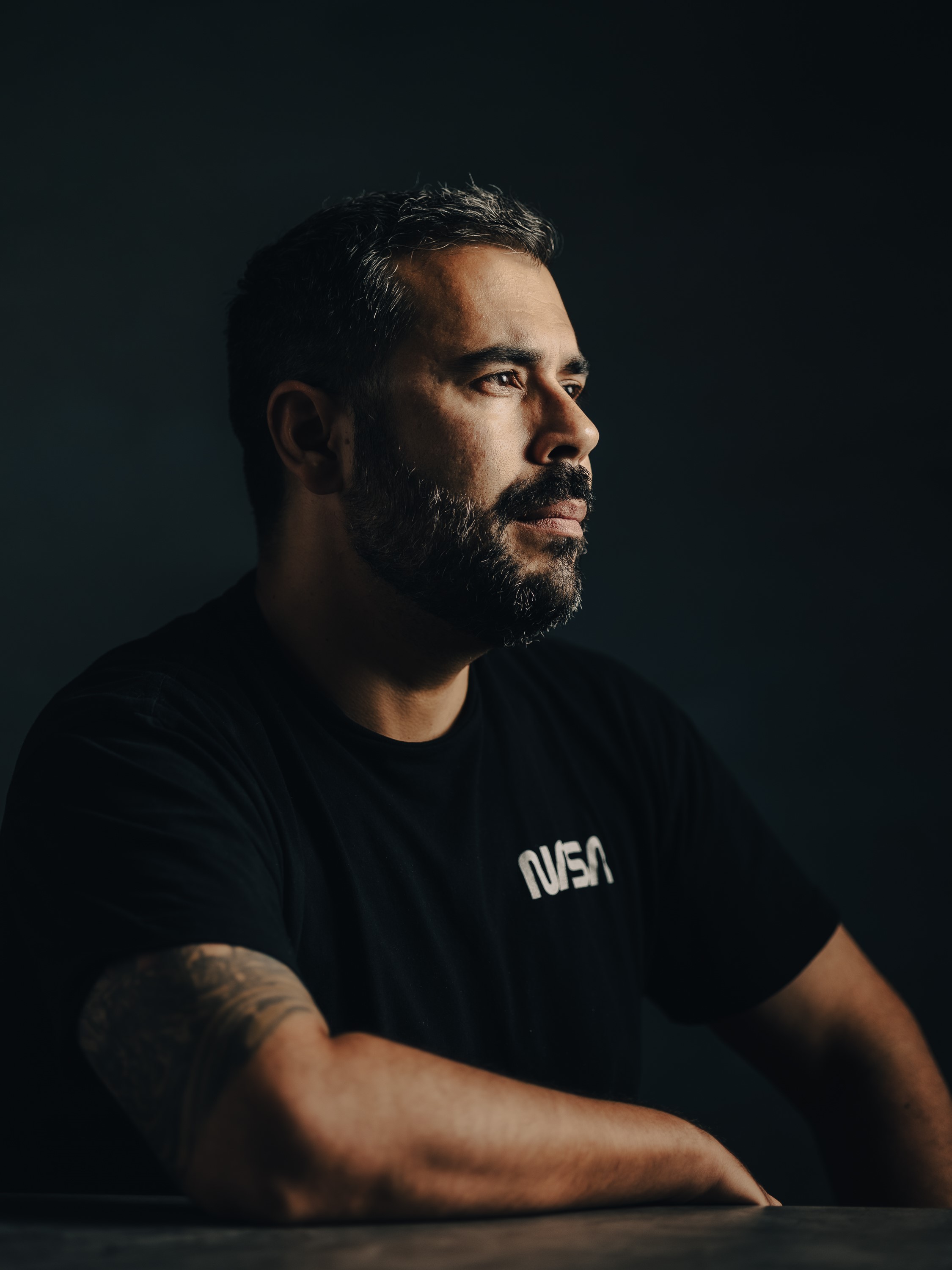
Josh Valcarcel has worked as a professional photographer and videographer for over 20 years and has been a scientific photographer at Johnson since 2017. He previously served as a staff photographer and photo editor at WIRED magazine and as a mass communication specialist in the U.S. Navy, capturing stories from flight deck operations to remote island nations across the Pacific.
“As a NASA photographer, I’ve had the privilege of witnessing impossible dreams become reality every day,” said Valcarcel. “That experience has shown me that with the right vision, culture, and trust, what once seemed impossible can become part of everyday life.”
Third place: Bill Stafford Expedition 74 crew member Christopher Williams in an EMU spacesuit.NASA/Bill Stafford There’s a stillness and quiet resolve in Chris’ expression that says everything about who he is and what he’s about to do.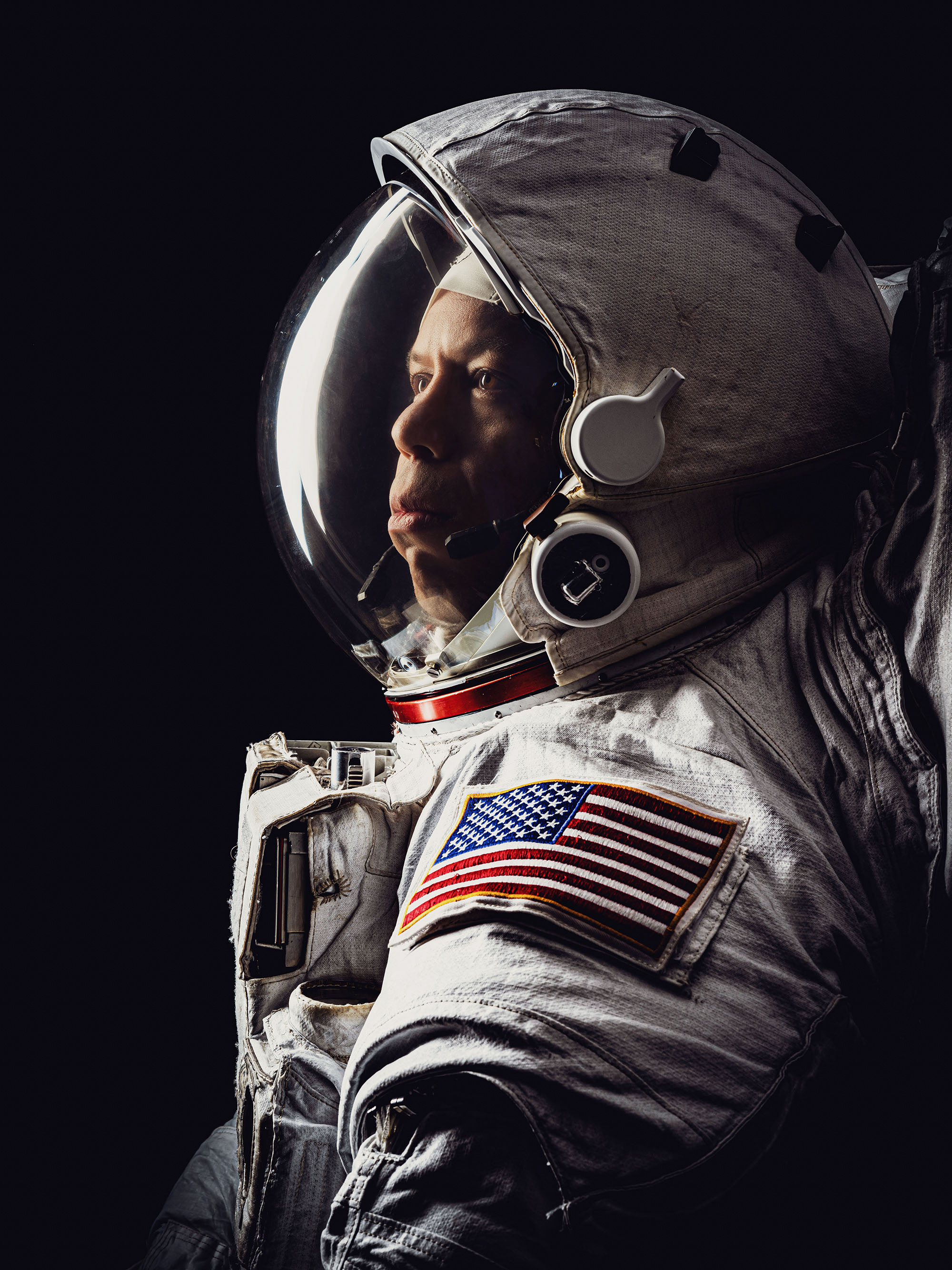
Bill Stafford
NASA Photographer
Portrait of NASA scientific photographer Bill Stafford.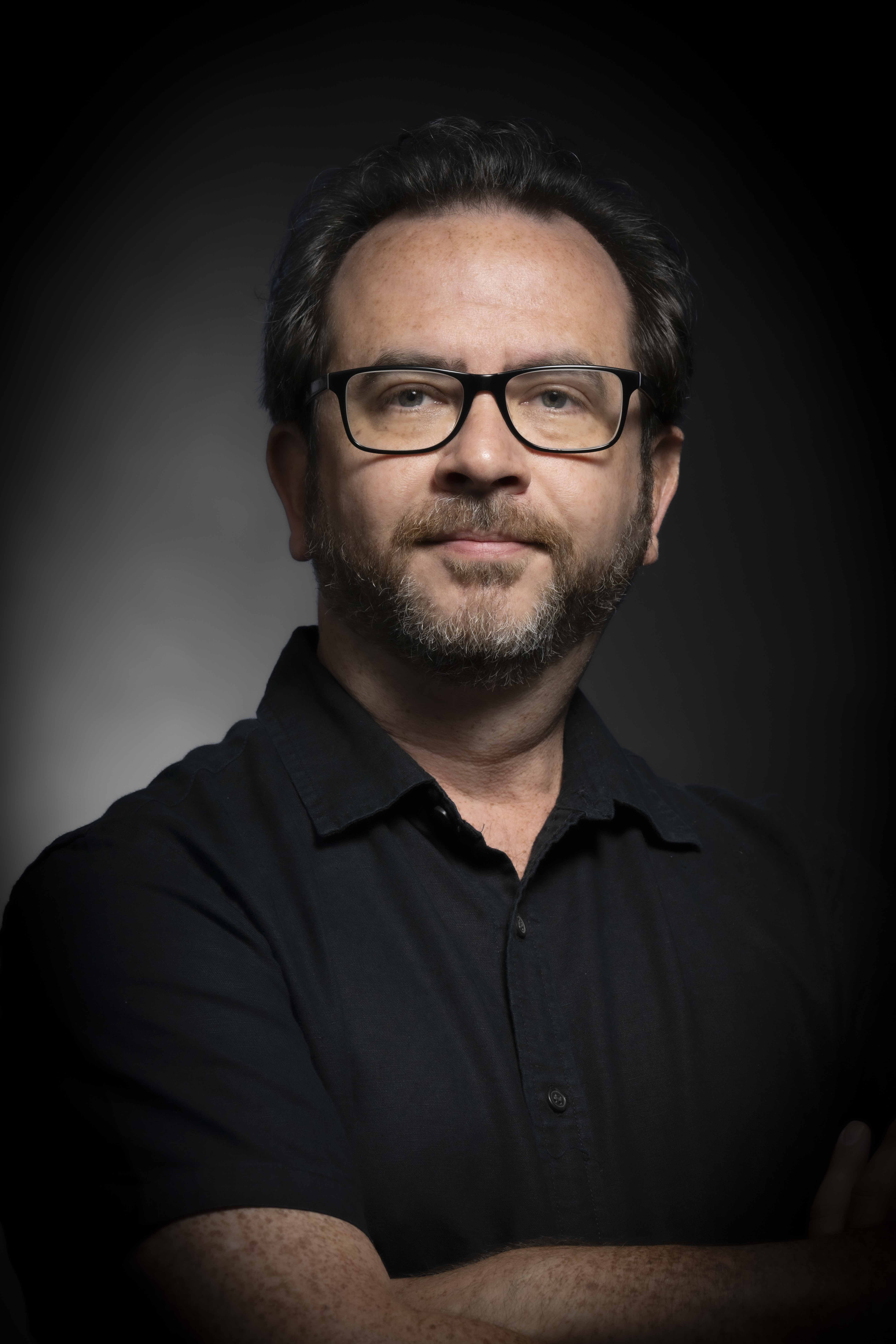
A Texas native and 1999 graduate of East Texas A&M University, Bill Stafford has served as a photographer and videographer for NASA since graduation, documenting over two decades of the nation’s space exploration milestones.
In addition to his work with NASA, Stafford teaches photography at the Gilruth Center. He is passionate about sharing his expertise and helping others develop their skills behind the lens.
“Photography is how I find meaning in the moments around me, and working at NASA has given me a front-row seat to some of the most remarkable stories of our time,” said Stafford. “My job is to slow things down long enough to find the moment inside the moment: the small details that tell the bigger story.”
Explore More 2 min read Nicholas Houghton: Engineering Crew Safety for NASA’s Artemis Missions Article 1 week ago 3 min read Industry Moon Lander Training Cabin Lands at NASA for Artemis Article 2 weeks ago 2 min read Blue Origin Moon Lander Completes Testing at NASA Vacuum Chamber Article 2 weeks agoEbola outbreak triggers U.S. ban on travelers from three African nations
At least six Americans are believed to have been exposed to the Ebola virus, and one person who appears to have contracted the virus has been evacuated to Germany
Iron and Ice: Earth's Passage Through the Interstellar Cloud
Our Solar System is currently passing through the Local Interstellar Cloud, a region of highly diluted gas and dust between the stars. On its path, Earth continuously accumulates iron-60, a rare radioactive isotope of iron produced in stellar explosions. This has now been confirmed by an international research team led by the Helmholtz-Zentrum Dresden-Rossendorf (HZDR) through the analysis of Antarctic ice tens of thousands of years old. From the steady but time-varying influx, the researchers conclude that the radioactive isotope has been stored within the cloud since a long-past stellar explosion.