

Feed aggregator
One scientist’s 10-year quest to calculate the strength of gravity
Earth’s gravitational force, g, has been known for centuries. But the exact value of G, the universal gravitational constant, is elusive
Colibre: A New Cosmic Simulation With Cinematic Flair
The new Colibre cosmological simulation includes more critical detail than previous simulations. It also includes updated models of things like AGN feedback and star formation. The simulations also include a sonic component, giving the results a cinematic and information-rich flair.
Gravity's strength measured more reliably than ever before
Gravity's strength measured more reliably than ever before
RFK, Jr., praises ibogaine for depression treatment. Is the psychedelic a magic bullet?
At a Senate hearing on Wednesday, Robert F. Kennedy, Jr., referred to ibogaine as the most promising treatment for PTSD and depression “that anybody’s ever seen.” Does the science hold that up?
RFK, Jr., puts psychedelics on fast track to FDA review and approval
The U.S. Food and Drug Administration is seeking to accelerate the review process for three companies that are studying psilocybin and an MDMA-like drug as treatments for depression and PTSD
I Am Artemis: Peter Rossoni
Listen to this audio excerpt from Peter Rossoni, Orion Artemis II Optical Communications System flight manager:
0:00 / 0:00
Your browser does not support the audio element.As a child, Peter Rossoni watched the Apollo missions launch with his family. In April 2026, he became a part of NASA’s Artemis II mission, helping enable communications as astronauts journeyed around the Moon.
Rossoni’s path to NASA began as he followed his parents’ footsteps into science. That foundation eventually led him to laser communications and NASA’s Artemis II test flight.
Peter Rossoni in an optical lab at the Massachusetts Institute of Technology Lincoln Laboratory in Lexington, Massachusetts. MIT-LL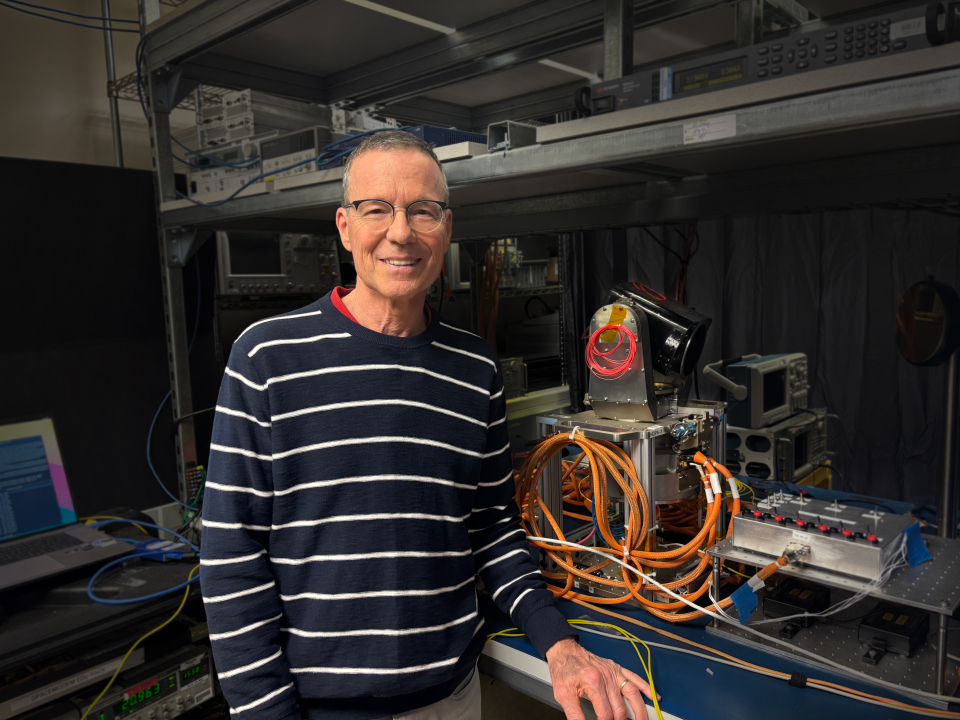
Today, Rossoni is the flight manager for the Orion Artemis II Optical Communication System at NASA’s Goddard Space Flight Center in Greenbelt, Maryland. Throughout Artemis II, he oversaw the first use of laser communications on a crewed deep space mission.
The optical terminal flew aboard the Orion spacecraft alongside NASA astronauts Reid Wiseman, Victor Glover, and Christina Koch, and CSA (Canadian Space Agency) astronaut Jeremy Hansen. Through the system, laser communications links transmitted video, photos, engineering, and science data, flight procedures, and crew communications to Earth from the lunar vicinity. In total, the terminal transferred over 450 gigabytes of data to Earth. That’s roughly equivalent to 100 high-definition movies.
The Orion capsule in flight with the O2O payload pointed out. NASA
During the approximately 10-day mission, Rossoni joined the mission control team to ensure smooth data flow from the laser communications terminal on Orion to the Mission Control Center at the agency’s Johnson Space Center in Houston.
“Communications is an important pillar of exploration. We’re venturing into deep space for longer periods of time, and we need that vital link back to the home base. Laser communications were proven to work in previous experiments, so the demonstration phase is over. Artemis II showed us what it can do operationally.”
Laser communications were proven to work in previous experiments, so the demonstration phase is over. Artemis II showed us what it can do operationally.Peter Rossoni
Flight Manager for the Orion Artemis II Optical Communications System
Laser communications systems use invisible infrared light to pack more data into a single transmission. With downlink speeds of up to 260 megabits per second, the optical communications system was capable of transmitting a full-length 4K movie from the Moon to Earth in about a minute.
“Beyond supporting a crewed mission around the Moon, I’m excited to work with an amazing team of talented engineers and visionaries who understand that high-performance communications and networking is a key element of exploration infrastructure.”
Merging existing infrastructure with the next-generation system was no easy feat. While the system’s laser communications path operated in parallel to traditional radio communications, both tied into the same networks at the Mission Control Center and aboard Orion. The team developed solutions that would allow the systems to work together at the higher rates that laser communications can provide.
To prepare for liftoff, Rossoni and the optical flight and ground teams supported extensive testing activities, including practice runs simulating team and facility operations, the operational readiness reviews confirming the system’s terminal and ground segment, and assuring the teams work smoothly together for the mission. The result was a communications system with up to 100 times greater capacity, enhancing the connection between astronauts and their support teams, while freeing the radio communications systems for sensitive and critical data streams.
“A well-respected scientist at Goddard once said, ‘communications is the secret sauce behind all NASA missions. For Artemis II in particular, with the astronauts’ mission and safety at stake, it was critical to have robust communications to both enhance successful exploration and address any eventualities in the demanding environment of deep space. I had a deep sense of fulfillment when the Orion Artemis II optical communications system started working, and it kept growing as the mission progressed, with more and more objectives achieved.”
I had a deep sense of fulfillment when the Orion Artemis II optical communications system started working, and it kept growing as the mission progressed, with more and more objectives achieved.Peter Rossoni
Flight Manager for the Orion Artemis II Optical Communications System
About the AuthorKendall MurphyTechnical WriterKendall Murphy is a technical writer for the Space Communications and Navigation program office. She specializes in internal and external engagement, educating readers about space communications and navigation technology.
Share Details Last Updated Apr 24, 2026 EditorLauren LowLocationGoddard Space Flight Center Related Terms Explore More 3 min read I Am Artemis: Erik Richards Article 1 month ago 5 min read Networks Keeping NASA’s Artemis II Mission Connected Article 3 months ago 1 min read I am Artemis: Steven Horowitz Article 5 years ago Keep Exploring Discover More Topics From NASAMissions
Humans in Space
Climate Change
Solar System
I Am Artemis: Peter Rossoni
Listen to this audio excerpt from Peter Rossoni, Orion Artemis II Optical Communications System flight manager:
0:00 / 0:00
Your browser does not support the audio element.As a child, Peter Rossoni watched the Apollo missions launch with his family. In April 2026, he became a part of NASA’s Artemis II mission, helping enable communications as astronauts journeyed around the Moon.
Rossoni’s path to NASA began as he followed his parents’ footsteps into science. That foundation eventually led him to laser communications and NASA’s Artemis II test flight.
Peter Rossoni in an optical lab at the Massachusetts Institute of Technology Lincoln Laboratory in Lexington, Massachusetts. MIT-LLToday, Rossoni is the flight manager for the Orion Artemis II Optical Communication System at NASA’s Goddard Space Flight Center in Greenbelt, Maryland. Throughout Artemis II, he oversaw the first use of laser communications on a crewed deep space mission.
The optical terminal flew aboard the Orion spacecraft alongside NASA astronauts Reid Wiseman, Victor Glover, and Christina Koch, and CSA (Canadian Space Agency) astronaut Jeremy Hansen. Through the system, laser communications links transmitted video, photos, engineering, and science data, flight procedures, and crew communications to Earth from the lunar vicinity. In total, the terminal transferred over 450 gigabytes of data to Earth. That’s roughly equivalent to 100 high-definition movies.
The Orion capsule in flight with the O2O payload pointed out. NASADuring the approximately 10-day mission, Rossoni joined the mission control team to ensure smooth data flow from the laser communications terminal on Orion to the Mission Control Center at the agency’s Johnson Space Center in Houston.
“Communications is an important pillar of exploration. We’re venturing into deep space for longer periods of time, and we need that vital link back to the home base. Laser communications were proven to work in previous experiments, so the demonstration phase is over. Artemis II showed us what it can do operationally.”
Laser communications were proven to work in previous experiments, so the demonstration phase is over. Artemis II showed us what it can do operationally.Peter Rossoni
Flight Manager for the Orion Artemis II Optical Communications System
Laser communications systems use invisible infrared light to pack more data into a single transmission. With downlink speeds of up to 260 megabits per second, the optical communications system was capable of transmitting a full-length 4K movie from the Moon to Earth in about a minute.
“Beyond supporting a crewed mission around the Moon, I’m excited to work with an amazing team of talented engineers and visionaries who understand that high-performance communications and networking is a key element of exploration infrastructure.”
Merging existing infrastructure with the next-generation system was no easy feat. While the system’s laser communications path operated in parallel to traditional radio communications, both tied into the same networks at the Mission Control Center and aboard Orion. The team developed solutions that would allow the systems to work together at the higher rates that laser communications can provide.
To prepare for liftoff, Rossoni and the optical flight and ground teams supported extensive testing activities, including practice runs simulating team and facility operations, the operational readiness reviews confirming the system’s terminal and ground segment, and assuring the teams work smoothly together for the mission. The result was a communications system with up to 100 times greater capacity, enhancing the connection between astronauts and their support teams, while freeing the radio communications systems for sensitive and critical data streams.
“A well-respected scientist at Goddard once said, ‘communications is the secret sauce behind all NASA missions. For Artemis II in particular, with the astronauts’ mission and safety at stake, it was critical to have robust communications to both enhance successful exploration and address any eventualities in the demanding environment of deep space. I had a deep sense of fulfillment when the Orion Artemis II optical communications system started working, and it kept growing as the mission progressed, with more and more objectives achieved.”
I had a deep sense of fulfillment when the Orion Artemis II optical communications system started working, and it kept growing as the mission progressed, with more and more objectives achieved.Peter Rossoni
Flight Manager for the Orion Artemis II Optical Communications System
About the AuthorKendall MurphyTechnical WriterKendall Murphy is a technical writer for the Space Communications and Navigation program office. She specializes in internal and external engagement, educating readers about space communications and navigation technology.
Share Details Last Updated Apr 24, 2026 EditorLauren LowLocationGoddard Space Flight Center Related Terms Explore More 3 min read I Am Artemis: Erik Richards Article 1 month ago 5 min read Networks Keeping NASA’s Artemis II Mission Connected Article 3 months ago 1 min read I am Artemis: Steven Horowitz Article 5 years ago Keep Exploring Discover More Topics From NASAMissions
Humans in Space
Climate Change
Solar System
Alien comet reveals our solar system is the oddball
Measurements of this interstellar comet’s molecular makeup show an excess of heavy water molecules that is dramatically different from anything known to have ever formed around our sun
How darkness might save migratory birds
Light pollution is dangerous for birds flying over towns and cities. Here’s how you can help
New JWST images reveal cosmic question marks and buckyballs in a planetary nebula
New James Webb Space Telescope images could shed fresh light on how dying stars evolve over time
The Day of the Trifid Nebula
The Day of the Trifid Nebula

This shimmering region of star-formation, a close-up of the Trifid Nebula about 5,000 light-years from Earth, was captured in intricate detail by NASA’s Hubble Space Telescope in an image released on April 20, 2026. The colors in Hubble’s visible light image, which marks the 36th anniversary of the mission’s launch on April 24, are reminiscent of an underwater scene filled with fine-grained sediments fluttering through the ocean’s depths.
Several massive stars, which are outside this field of view, have shaped this region for at least 300,000 years. Their powerful winds continue to blow an enormous bubble, a small portion of which is shown here, that pushes and compresses the cloud’s gas and dust, triggering new waves of star formation.
Learn more about the Trifid Nebula.
Image credit: NASA, ESA, STScI; Image Processing: Joseph DePasquale (STScI)
The Day of the Trifid Nebula
This shimmering region of star-formation, a close-up of the Trifid Nebula about 5,000 light-years from Earth, was captured in intricate detail by NASA’s Hubble Space Telescope in an image released on April 20, 2026. The colors in Hubble’s visible light image, which marks the 36th anniversary of the mission’s launch on April 24, are reminiscent of an underwater scene filled with fine-grained sediments fluttering through the ocean’s depths.
Several massive stars, which are outside this field of view, have shaped this region for at least 300,000 years. Their powerful winds continue to blow an enormous bubble, a small portion of which is shown here, that pushes and compresses the cloud’s gas and dust, triggering new waves of star formation.
Learn more about the Trifid Nebula.
Image credit: NASA, ESA, STScI; Image Processing: Joseph DePasquale (STScI)
NASA Astronauts to Answer Questions from Missouri Students
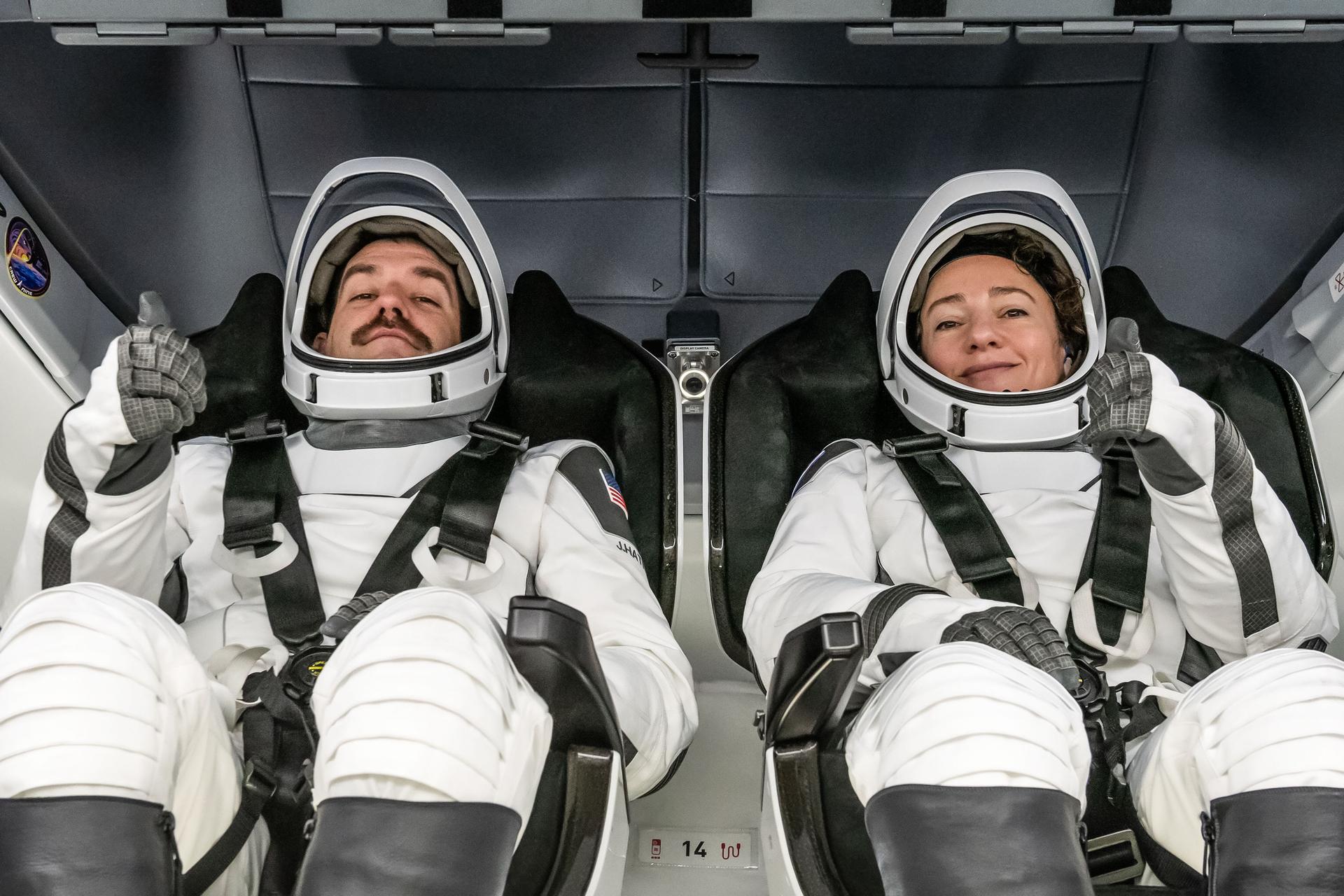
Students in Missouri will hear from NASA astronauts Jessica Meir and Jack Hathaway as they answer prerecorded science, technology, engineering, and mathematics (STEM) questions while aboard the International Space Station.
The Earth-to-space call will begin at 10:50 a.m. EDT Thursday, April 30, and will stream live on the agency’s Learn With NASA YouTube channel.
This event is hosted by the University of Missouri Pre-Employment Transition Services in Columbia, Missouri, for students in grades K-12 and members of the community. This opportunity aims to deepen understanding of space exploration and inspire students to pursue a future career in STEM.
Media interested in covering the event must RSVP by 5 p.m., Wednesday, April 29, to Kimberly Pudlowski at: 636-697-5845 or kimberly.gee@missouri.edu.
For more than 25 years, astronauts have continuously lived and worked aboard the space station, testing technologies, performing science, and developing skills needed to explore farther from Earth. Astronauts communicate with NASA’s Mission Control Center in Houston 24 hours a day through SCaN’s (Space Communications and Navigation) Near Space Network.
Research and technology investigations taking place aboard the space station benefit people on Earth and support other agency work, including missions at the Moon. As part of NASA’s Artemis program, the agency will send astronauts to the Moon to prepare for future human exploration of Mars, inspiring the world through discovery in a new Golden Age of innovation and exploration.
See more information on NASA in-flight education calls at:
https://www.nasa.gov/stemonstation
-end-
Gerelle Dodson
Headquarters, Washington
202-358-1600
gerelle.q.dodson@nasa.gov
Sandra Jones
Johnson Space Center, Houston
281-483-5111
sandra.p.jones@nasa.gov
NASA Astronauts to Answer Questions from Missouri Students
Students in Missouri will hear from NASA astronauts Jessica Meir and Jack Hathaway as they answer prerecorded science, technology, engineering, and mathematics (STEM) questions while aboard the International Space Station.
The Earth-to-space call will begin at 10:50 a.m. EDT Thursday, April 30, and will stream live on the agency’s Learn With NASA YouTube channel.
This event is hosted by the University of Missouri Pre-Employment Transition Services in Columbia, Missouri, for students in grades K-12 and members of the community. This opportunity aims to deepen understanding of space exploration and inspire students to pursue a future career in STEM.
Media interested in covering the event must RSVP by 5 p.m., Wednesday, April 29, to Kimberly Pudlowski at: 636-697-5845 or kimberly.gee@missouri.edu.
For more than 25 years, astronauts have continuously lived and worked aboard the space station, testing technologies, performing science, and developing skills needed to explore farther from Earth. Astronauts communicate with NASA’s Mission Control Center in Houston 24 hours a day through SCaN’s (Space Communications and Navigation) Near Space Network.
Research and technology investigations taking place aboard the space station benefit people on Earth and support other agency work, including missions at the Moon. As part of NASA’s Artemis program, the agency will send astronauts to the Moon to prepare for future human exploration of Mars, inspiring the world through discovery in a new Golden Age of innovation and exploration.
See more information on NASA in-flight education calls at:
https://www.nasa.gov/stemonstation
-end-
Gerelle Dodson
Headquarters, Washington
202-358-1600
gerelle.q.dodson@nasa.gov
Sandra Jones
Johnson Space Center, Houston
281-483-5111
sandra.p.jones@nasa.gov
See the Moon Occult Regulus for The Americas Saturday Night
Much of visual astronomy requires nothing more than clear skies, keen eyes, and patience. If you’re out skywatching Saturday evening and live in North or South America, watch for the waxing gibbous Moon pairing with Regulus at dusk. For a privileged region, the Moon will actually blot out or occult the star, in one of the best-placed lunar occultations of a bright star for 2026.
This Week's Sky at a Glance, April 24 – May 3
The Moon occults Regulus in twilight or bright afternoon for most of North America. Venus lines up between Aldebaran and the Pleiades. Sirius nears its heliacal setting.
The post This Week's Sky at a Glance, April 24 – May 3 appeared first on Sky & Telescope.
Week in images: 20-24 April 2026
Week in images: 20-24 April 2026
Discover our week through the lens
NASA Celebrates Decade of University Innovation in Aeronautics
8 min read
Preparations for Next Moonwalk Simulations Underway (and Underwater)
For 10 years, a NASA initiative has helped the agency produce breakthrough aeronautical innovations while fostering the aviation workforce of tomorrow – and the University Leadership Initiative (ULI) is still flying high, making awards with the potential to change 21st century air travel.
Through ULI, NASA has supported more than 1,100 students at 100 schools, allowing them to pursue advancements in top priority areas for U.S. aviation, including high-speed flight, advanced air mobility, future airspace management and safety, and electrified propulsion.
Many of those students have used their ULI experience as a springboard to careers in aviation. And many of their ideas — such as designing more efficient wings or building supersonic aircraft that can change shape in flight — are either being investigated further by industry or the technologies adopted outright.
As it celebrates a decade of success, NASA’s ULI team is looking forward to leveraging student innovations with new awards in 2026 and beyond.
“Through ULI we’re building the workforce of the future and fostering the skill sets we so desperately need to compete globally,” said John Cavolowsky, director of NASA’s Transformative Aeronautics Concepts Program at NASA Headquarters in Washington.
Through ULI we're building the workforce of the future and fostering the skill set we so desperately need to compete globally.john cavolowsky
Director, Transformative Aeronautics Concepts Program
What makes ULI unique from other NASA research projects, and especially appealing to universities, is that it provides the opportunity for university students and faculty to propose what research to conduct.
Usually, NASA determines the research it needs and then does the work itself or through partnerships and contracts. But with ULI, the agency shares its goals and universities consider how they can best help realize them.
“There are no better ways in my mind to help develop that talent within the students than to engage them in identifying big problems and then give them the resources they need to use their creativity to solve them,” Cavolowsky said.
ULI historyNASA’s relationship with academia and reliance on its research proficiency is written into NASA’s DNA going back to the days of the National Advisory Committee for Aeronautics, from which NASA was formed in 1958.
“For more than a century we have leaned on the brilliance and the capabilities of universities to help us think,” Cavolowsky said. “With ULI we can ensure they continue to bring their fresh ideas and young energy to the work we do at NASA Aeronautics.”
ULI evolved from an earlier project called Leading Edge Aeronautics Research for NASA (LEARN). NASA selected five LEARN teams in 2015 to pursue truly outside of the box ideas that showed promise but needed additional study.
One of those teams, for example, sought to take a cue from migrating flocks of birds by asking if airliners could save fuel by cruising in a giant ‘V’ formation. The numbers were intriguing and simple flight tests proved the concept, although the idea never made it to practice.
Slightly retooled but keeping the innovative spirit of LEARN, ULI was officially announced in 2016 and a year later NASA selected five teams of university professors and students to contribute solutions to the biggest aeronautical challenges of the 21st century.
A decade later, NASA has made a total of $220 million in awards to 33 teams over eight rounds of solicitations
Smooth flyingOne of the earliest selected ULI teams was led by James Coder, who at the time was an aerospace engineering professor at the University of Tennessee in Knoxville. His team worked on technology that would smooth the airflow around a wing to make it more efficient.
Technically known as slotted natural laminar flow (SNLF) wings, Coder has called the idea a potential game changer for commercial airliners. The more efficient wing would mean less drag on an airplane, which in turn could help airlines save money on fuel.
Coder credits ULI for not only helping to prove the technology’s effectiveness – with the aid of wind tunnel testing at NASA’s Ames Research Center in California – but for providing students with an experience they couldn’t get elsewhere.
Three University of Tennessee/Knoxville students and co-investigator Dan Somers (in red jacket) prepare a slotted laminar flow wing section for testing in a wind tunnel at NASA’s Ames Research Center in California.University of Tennessee/Knoxville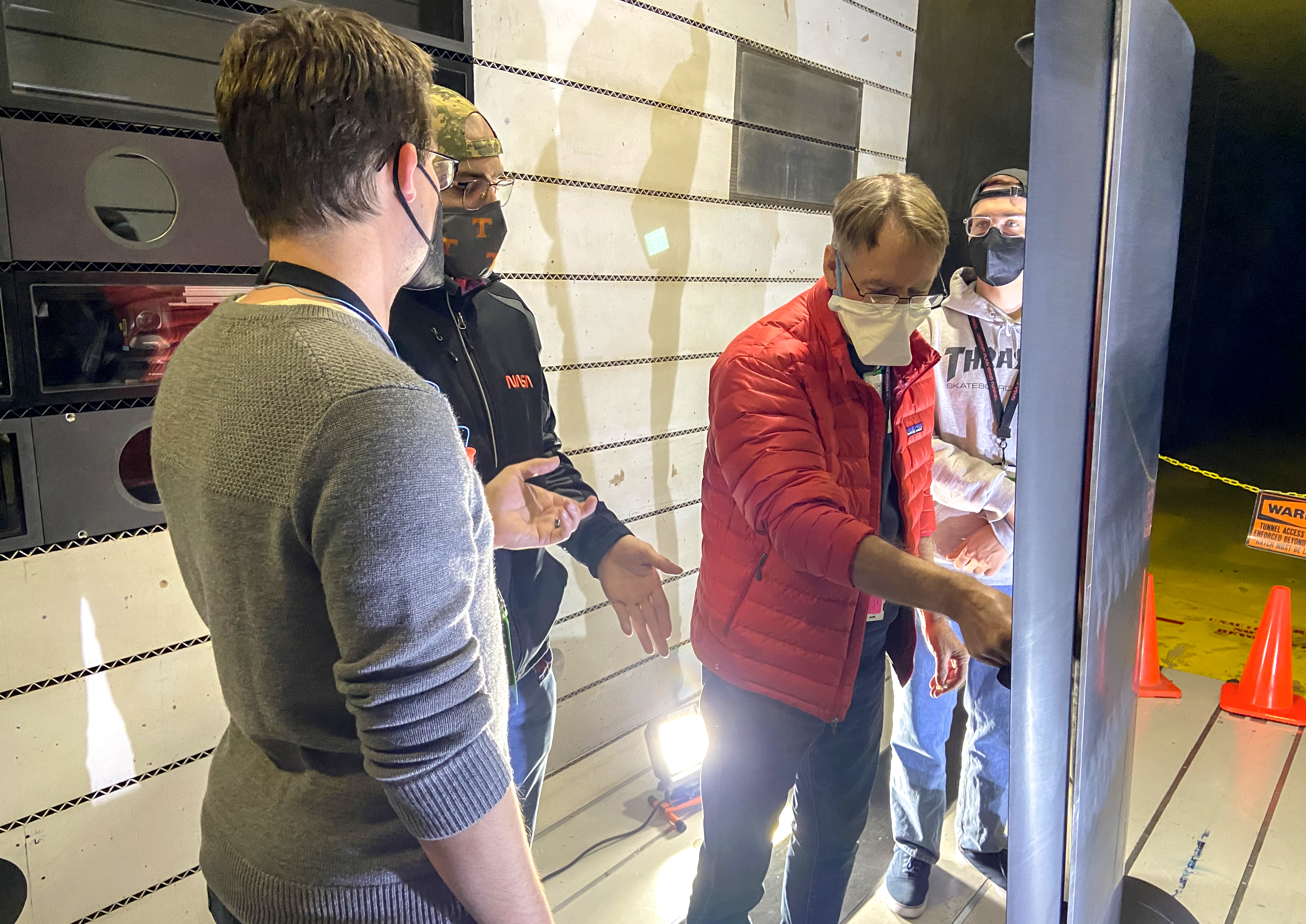
“After 10 years industry remains interested in the SNLF technology and I am optimistic for good reason about its future,” Coder said. “And project alumni have gone on to do many wonderful things and leverage what they did and learned through the ULI.”
With ULI experience prominent on their resumes, several of the students on Coder’s team wound up with jobs in industry – such as Boeing and Lockheed Martin – and government labs. One is currently a NASA Pathways intern working on his PhD.
Now at Pennsylvania State University, Coder remains a strong advocate for ULI.
“It goes above and beyond simple workforce development,” he said. “We recognized early on the value-add of ULI is the students themselves. While we could have just trained students en masse, we wanted to put them in the front seat of technical leadership on the project. I think this was a very successful strategy that benefited the project and the students as they embarked on their careers.”
Mighty morphingForrest Carpenter is another example of a student whose ULI support led to work after graduation – in this case at NASA.
“Working on the ULI project was an incredible experience, one I will always be thankful for and will remember fondly,” Carpenter said. “I think the project challenged me to be something more than ‘just an engineer;’ really helping my professional development and giving me a clearer focus on my passion.”
As a student at Texas A&M, he was part of a team selected by NASA in 2017 to research a novel idea in which a supersonic aircraft could alter its shape to fly more efficiently based on the atmospheric conditions in real time. Dimitris Lagoudas, now the university’s interim department head for aerospace engineering, led the team.
Members of a University Leadership Initiative round one team led by Texas A&M University participate in a status update meeting with NASA prior to their final review in 2022.Texas A&M University / Jonathan Weaver-Rosen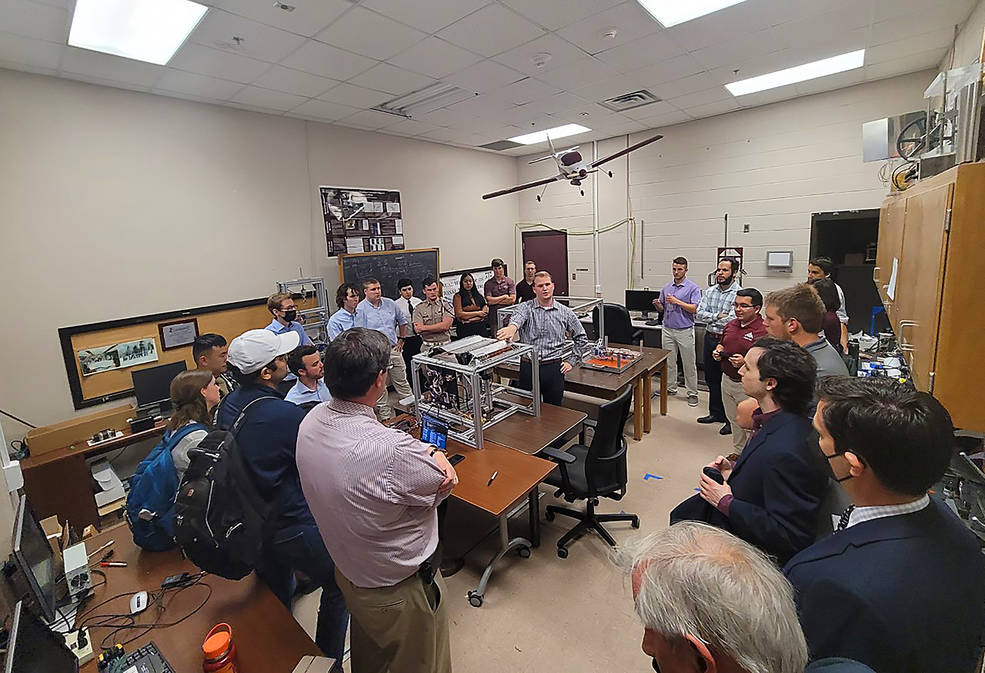
A laser shooting out ahead of the aircraft would take measurements of the oncoming air and then the aircraft’s computer would command patches of shape memory alloys and other mechanisms to morph the aircraft’s outer shape.
One possible application of the technology could be in contributing to the reduction of the loudness of a sonic boom, expanding on the science behind NASA’s X-59 quiet supersonic technology demonstrator that seeks to reduce the sonic boom to a sonic thump.
“My main research role on the team was performing Computational Fluid Dynamics simulations of the various geometries we were looking at, including a pre-production version of X-59,” Carpenter said.
His work on the idea continues. A follow-on NASA project, GoSWIFT, will flight test the core technologies Carpenter and his ULI team worked on at Texas A&M. Only this time, Carpenter is the co-lead for the tests, which are targeted to take place at NASA’s Armstrong Flight Research Center in California in the near future.
Carpenter’s enthusiasm for his work and gratitude for how ULI led to his career with NASA resonates with many other ULI alumni.
“The number of students impacted, and how they were impacted, by a long-term project like ULI is huge,” Carpenter said. “NASA’s involvement in this kind of activity can only strengthen the research done in this country and to help inspire and develop the next generation of our workforce.”
ULI is supported by the Transformative Aeronautics Concepts Program within NASA’s Aeronautics Research Mission Directorate, which publishes ULI solicitations and other opportunities to collaborate with the agency’s aeronautical innovators.
About the AuthorJim BankeManaging Editor/Senior WriterJim Banke is a veteran aviation and aerospace communicator with more than 40 years of experience as a writer, producer, consultant, and project manager based at Cape Canaveral, Florida. He is part of NASA Aeronautics' Strategic Communications Team and is Managing Editor for the Aeronautics topic on nasa.gov. In 2007 he was recognized with a Distinguished Public Service Medal, NASA's highest honor for a non-government employee.
Facebook logo @NASA@NASAaero@NASAes @NASA@NASAaero@NASA_es Instagram logo @NASA@NASAaero@NASA_es Linkedin logo @NASA Explore More 4 min read NASA Releases Powerful LAVA Software to US Aerospace Industry Article 5 days ago 4 min read NASA, Organ Sharing Network UNOS to Study Faster Organ Transport Article 7 days ago 1 min read 2025-2026 Dream with Us Design Challenge Winners Article 2 weeks ago Keep Exploring Discover More Topics From NASAMissions
Artemis
Aeronautics STEM
Explore NASA’s History
Share Details Last Updated Apr 24, 2026 EditorJim BankeContactLynne Sahaylynne.sahay@nasa.gov Related Terms