
Feed aggregator
What Created This Strange Iron Bar In The Ring Nebula?
The Ring Nebula is a well-studied planetary nebula about 2,570 light-years away. Nnew observations of the nebula with a new instrument have revealed a previously unseen component. The William Herschel Telescope used its WEAVE instrument to detect a massive 'iron bar' inside the nebula's inner layer.
Scientists investigate ‘dark oxygen’ in deep-sea mining zone
Scientists investigate ‘dark oxygen’ in deep-sea mining zone
RSV is surging, but antibody shots and vaccines can protect babies
Cases of respiratory syncytial virus are increasing, but vaccines and antibody shots can keep young children out of the hospital
NASA’s SLS Rocket: Secondary Payloads
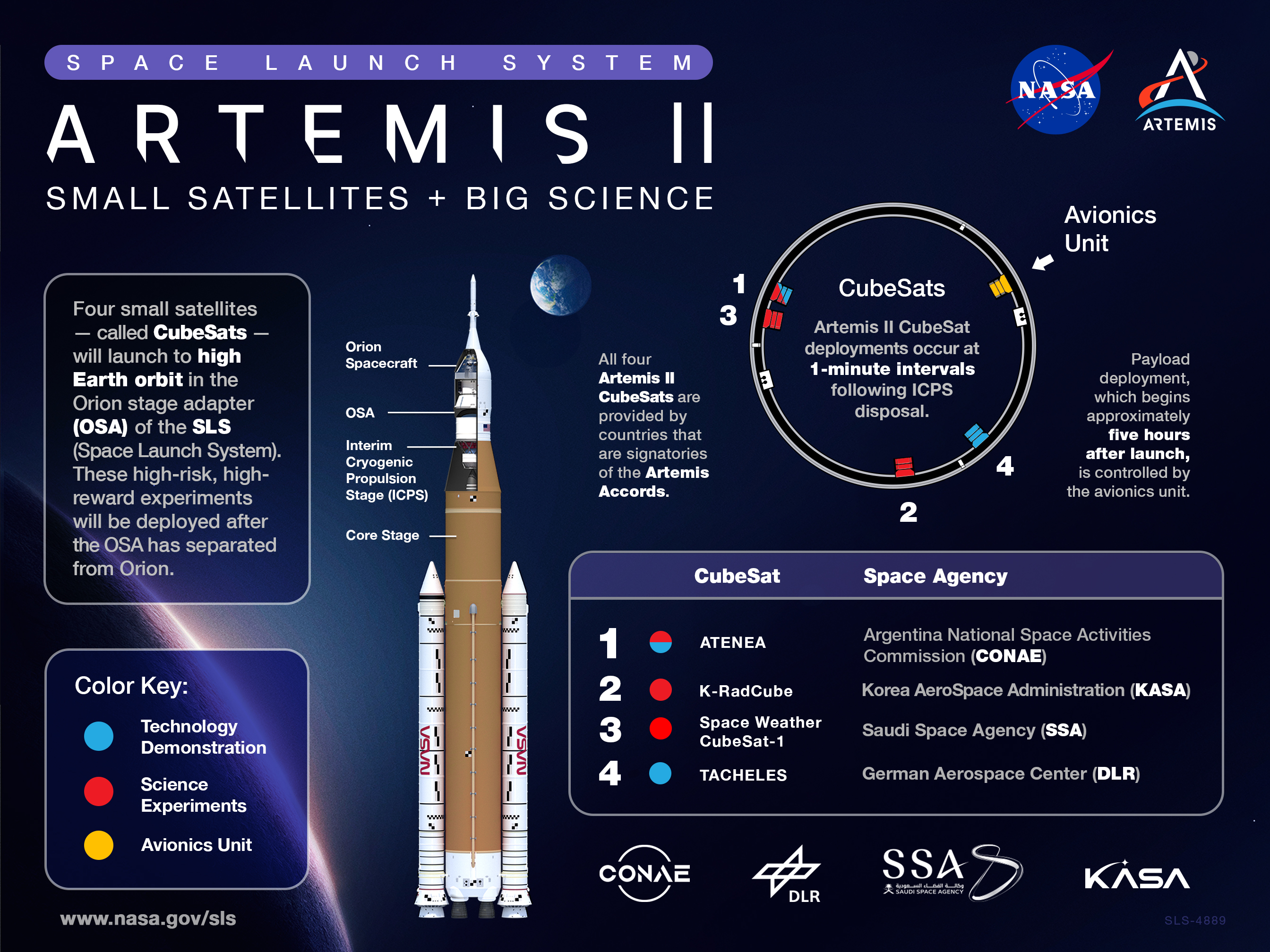
When NASA’s SLS (Space Launch System) rocket launches the agency’s Artemis II mission to the Moon, four CubeSats, or small satellites, will be hitching a ride inside the rocket’s Orion stage adapter (OSA). All four Artemis II CubeSats are provided by countries that are signatories of the Artemis Accords. Payload deployment, which begins approximately five hours after launch, is controlled by the avionics unit.
Image Credit: NASA/Kevin O’Brien
NASA’s SLS Rocket: Secondary Payloads
When NASA’s SLS (Space Launch System) rocket launches the agency’s Artemis II mission to the Moon, four CubeSats, or small satellites, will be hitching a ride inside the rocket’s Orion stage adapter (OSA). All four Artemis II CubeSats are provided by countries that are signatories of the Artemis Accords. Payload deployment, which begins approximately five hours after launch, is controlled by the avionics unit.
Image Credit: NASA/Kevin O’Brien
World has entered an era of ‘global water bankruptcy,’ U.N. warns
Humans are using more water than Earth can support, with many water sources already damaged beyond repair, a report from the United Nations found
World is entering an era of 'water bankruptcy'
World is entering an era of 'water bankruptcy'
NASA Unlocks Golden Age of Innovation, Exploration in Trump’s First Year
One year into President Donald J. Trump’s second term, NASA is delivering measurable progress across human spaceflight, science, aeronautics, and cutting-edge technology. These advances mark the beginning of a new Golden Age of American space leadership driven by clear national direction and historic investment through the Working Families Tax Cut Act.
Since his inauguration as the 47th President of the United States, NASA has sharpened its mission rooted in President Trump’s national space policy, reinforcing American superiority in space and accelerating progress across exploration, discovery, and innovation. With a renewed focus on human spaceflight, scientific excellence, and national capability, the agency is moving with clarity and momentum.
President Trump’s enduring commitment to space exploration has shaped every aspect of this progress. During his first term, the United States stood up the U.S. Space Force, commenced the Artemis campaign, established the Artemis Accords, which now have 60 signatories and are still growing, and returned American astronauts to human spaceflight from U.S. soil following the space shuttle era.
Now, with a clear National Space Policy and Working Family Tax Cut Act, NASA has the direction, resources, and authority to advance a bold vision for the future.
In the first year of the President’s second term, NASA has flown two human spaceflight missions, launched 15 science missions, and successfully test-flown a new X-plane, while accelerating work across lunar exploration, Earth science, planetary defense, next-generation aeronautics, and technologies to prepare for future missions to Mars.
Soon, NASA will launch the Artemis II mission, sending humans around the Moon for the first time in over 50 years, and setting the stage for America’s return to the lunar surface, but this time, to stay. These milestones reflect a workforce empowered to move faster, think bigger, and deliver results for the American people.
“In the first year of this administration, NASA has moved with clarity, purpose, and momentum, advancing President Trump’s bold vision for American leadership in space,” said NASA Administrator Jared Isaacman. “From strengthening our focus on human spaceflight and preparing for the first deep space exploration by NASA astronauts in more than half a century, to accelerating innovation across science, technology, and national capability, the President has provided the clearest executive direction for NASA since the Kennedy era. President Trump’s National Space Policy sharpened our mission, aligned our priorities, and empowered our workforce to move faster and think bigger. Because of that leadership, NASA is confidently delivering on a future of American space superiority for generations to come.”
NASA is positioned to build on this momentum. Under President Trump’s leadership, American astronauts will return to the surface of the Moon by 2028 and establish a sustained human presence with a lunar base. The agency will continue launching missions of science and discovery, including bringing the Nancy Grace Roman Space Telescope into operation before the end of the year. In line with the President’s vision, NASA is advancing nuclear power and propulsion technologies to enable deep space missions and transform what is possible for exploration.
With a focused mission, empowered workforce, and strong partnership with industry and international allies, NASA is entering the second year of President Trump’s second term positioned to change the world, extending American leadership in space and unlocking discoveries that will benefit humanity for decades to come.
For more information about NASA’s missions and programs, visit:
-end-
Bethany Stevens / George Alderman
Headquarters, Washington
771-216-2606 / 202-374-6002
bethany.c.stevens@nasa.gov / george.a.alderman@nasa.gov
NASA Unlocks Golden Age of Innovation, Exploration in Trump’s First Year
One year into President Donald J. Trump’s second term, NASA is delivering measurable progress across human spaceflight, science, aeronautics, and cutting-edge technology. These advances mark the beginning of a new Golden Age of American space leadership driven by clear national direction and historic investment through the Working Families Tax Cut Act.
Since his inauguration as the 47th President of the United States, NASA has sharpened its mission rooted in President Trump’s national space policy, reinforcing American superiority in space and accelerating progress across exploration, discovery, and innovation. With a renewed focus on human spaceflight, scientific excellence, and national capability, the agency is moving with clarity and momentum.
President Trump’s enduring commitment to space exploration has shaped every aspect of this progress. During his first term, the United States stood up the U.S. Space Force, commenced the Artemis campaign, established the Artemis Accords, which now have 60 signatories and are still growing, and returned American astronauts to human spaceflight from U.S. soil following the space shuttle era.
Now, with a clear National Space Policy and Working Family Tax Cut Act, NASA has the direction, resources, and authority to advance a bold vision for the future.
In the first year of the President’s second term, NASA has flown two human spaceflight missions, launched 15 science missions, and successfully test-flown a new X-plane, while accelerating work across lunar exploration, Earth science, planetary defense, next-generation aeronautics, and technologies to prepare for future missions to Mars.
Soon, NASA will launch the Artemis II mission, sending humans around the Moon for the first time in over 50 years, and setting the stage for America’s return to the lunar surface, but this time, to stay. These milestones reflect a workforce empowered to move faster, think bigger, and deliver results for the American people.
“In the first year of this administration, NASA has moved with clarity, purpose, and momentum, advancing President Trump’s bold vision for American leadership in space,” said NASA Administrator Jared Isaacman. “From strengthening our focus on human spaceflight and preparing for the first deep space exploration by NASA astronauts in more than half a century, to accelerating innovation across science, technology, and national capability, the President has provided the clearest executive direction for NASA since the Kennedy era. President Trump’s National Space Policy sharpened our mission, aligned our priorities, and empowered our workforce to move faster and think bigger. Because of that leadership, NASA is confidently delivering on a future of American space superiority for generations to come.”
NASA is positioned to build on this momentum. Under President Trump’s leadership, American astronauts will return to the surface of the Moon by 2028 and establish a sustained human presence with a lunar base. The agency will continue launching missions of science and discovery, including bringing the Nancy Grace Roman Space Telescope into operation before the end of the year. In line with the President’s vision, NASA is advancing nuclear power and propulsion technologies to enable deep space missions and transform what is possible for exploration.
With a focused mission, empowered workforce, and strong partnership with industry and international allies, NASA is entering the second year of President Trump’s second term positioned to change the world, extending American leadership in space and unlocking discoveries that will benefit humanity for decades to come.
For more information about NASA’s missions and programs, visit:
-end-
Bethany Stevens / George Alderman
Headquarters, Washington
771-216-2606 / 202-374-6002
bethany.c.stevens@nasa.gov / george.a.alderman@nasa.gov
Why did Jeffrey Epstein cultivate famous scientists?
The Epstein files revive questions of whether the disgraced financier sought to merely cultivate famous scientists, or to shape science itself
Chernobyl cooling systems have lost power but meltdown risk is low
Chernobyl cooling systems have lost power but meltdown risk is low
Satellites could use magnetic fields to avoid collisions
Satellites could use magnetic fields to avoid collisions
Hubble Nets Menagerie of Young Stellar Objects
Hubble Nets Menagerie of Young Stellar Objects
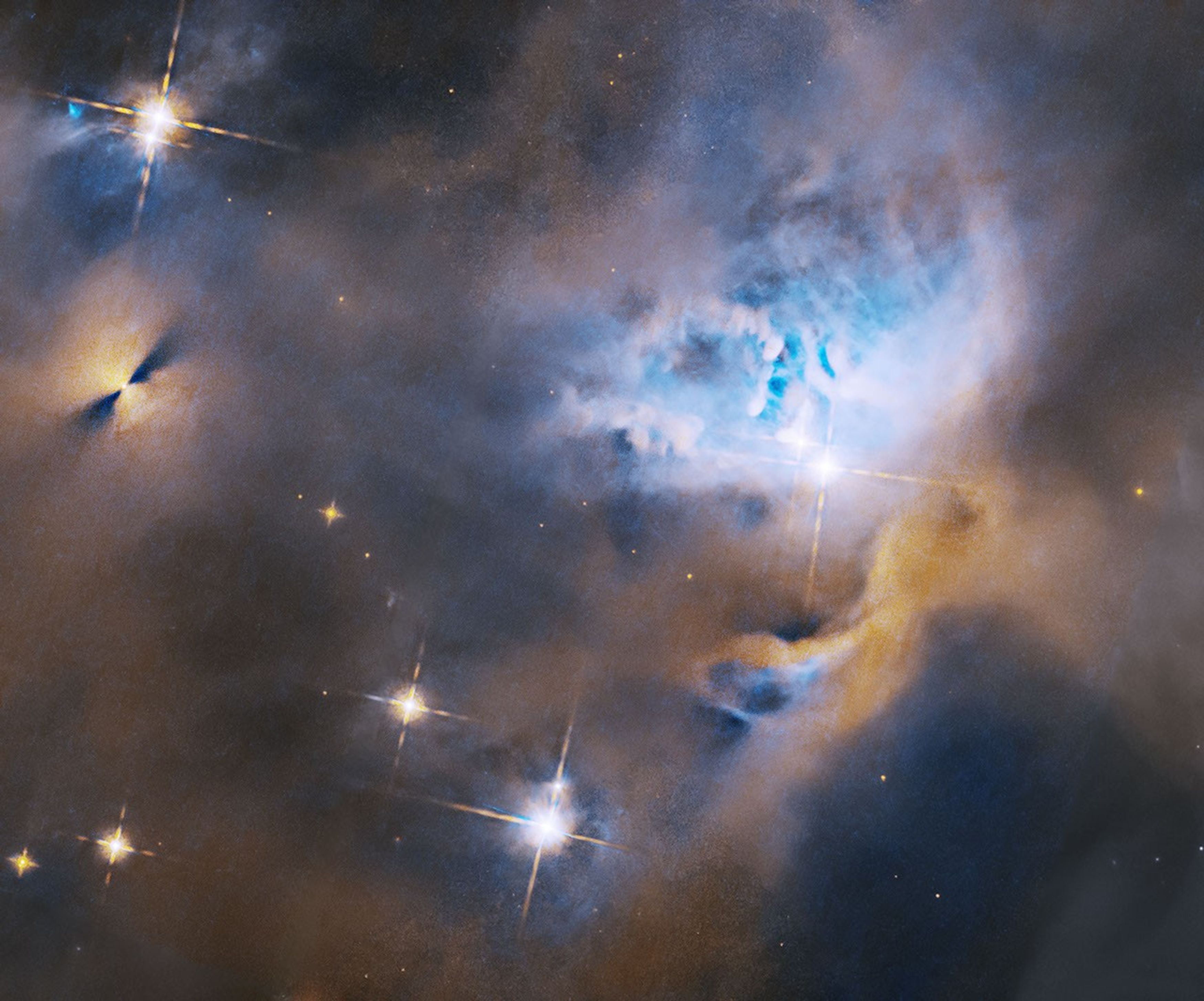
A disparate collection of young stellar objects bejewels a cosmic panorama in the star-forming region NGC 1333 in this new image from NASA’s Hubble Space Telescope. To the left, an actively forming star called a protostar casts its glow on the surrounding gas and dust, creating a reflection nebula. Two dark stripes on opposite sides of the bright point (upper left) are its protoplanetary disk, a region where planets could form, and the disk’s shadow, cast across the large envelope of material around the star. Material accumulates onto the protostar through this rotating disk of gas and dust, a product of the collapsing cloud of gas and dust that gave birth to the star. Where the shadow stops and the disk begins is presently unknown.
To the center right, an outflow cavity reveals a fan-shaped reflection nebula. The two stars at its base, HBC 340 (lower) and HBC 341 (upper), unleash stellar winds, or material flowing from the surface of the star, that clear out the cavity from the surrounding molecular cloud over time. A reflection nebula like this one is illuminated by light from nearby stars that is scattered by the surrounding gas and dust.
This reflection nebula fluctuates in brightness over time, which researchers attribute to variations in brightness of HBC 340 and HBC 341. HBC 340 is the primary source of the fluctuation as the brighter and more variable star.
HBC 340 and HBC 341 are Orion variable stars, a class of forming stars that change in brightness irregularly and unpredictably, possibly due to stellar flares and ejections of matter from their surfaces. Orion variable stars, so named because they are associated with diffuse nebulae like the Orion Nebula, eventually evolve into non-variable stars.
In this image, the four beaming stars near the bottom of the image and one in the top right corner are also Orion variable stars. The rest of the cloudscape is studded with other young stellar objects.
NGC 1333 lies about 950 light-years away in the Perseus molecular cloud, and was imaged by Hubble to learn more about young stellar objects, such as properties of circumstellar disks and outflows in the gas and dust created by these stars.
Hubble Nets Menagerie of Young Stellar Objects
A disparate collection of young stellar objects bejewels a cosmic panorama in the star-forming region NGC 1333 in this new image from NASA’s Hubble Space Telescope. To the left, an actively forming star called a protostar casts its glow on the surrounding gas and dust, creating a reflection nebula. Two dark stripes on opposite sides of the bright point (upper left) are its protoplanetary disk, a region where planets could form, and the disk’s shadow, cast across the large envelope of material around the star. Material accumulates onto the protostar through this rotating disk of gas and dust, a product of the collapsing cloud of gas and dust that gave birth to the star. Where the shadow stops and the disk begins is presently unknown.
To the center right, an outflow cavity reveals a fan-shaped reflection nebula. The two stars at its base, HBC 340 (lower) and HBC 341 (upper), unleash stellar winds, or material flowing from the surface of the star, that clear out the cavity from the surrounding molecular cloud over time. A reflection nebula like this one is illuminated by light from nearby stars that is scattered by the surrounding gas and dust.
This reflection nebula fluctuates in brightness over time, which researchers attribute to variations in brightness of HBC 340 and HBC 341. HBC 340 is the primary source of the fluctuation as the brighter and more variable star.
HBC 340 and HBC 341 are Orion variable stars, a class of forming stars that change in brightness irregularly and unpredictably, possibly due to stellar flares and ejections of matter from their surfaces. Orion variable stars, so named because they are associated with diffuse nebulae like the Orion Nebula, eventually evolve into non-variable stars.
In this image, the four beaming stars near the bottom of the image and one in the top right corner are also Orion variable stars. The rest of the cloudscape is studded with other young stellar objects.
NGC 1333 lies about 950 light-years away in the Perseus molecular cloud, and was imaged by Hubble to learn more about young stellar objects, such as properties of circumstellar disks and outflows in the gas and dust created by these stars.
The 2030 Race for a Moon Reactor
The US’s federally funded space program has been struggling of late. With the recent cancellation of the Mars Sample Return mission, and mass layoffs / resignations taking place at NASA, the general sense of a lack of morale at the agency is palpable, even from a distance. Jared Isaacman, the billionaire software entrepreneur and rocket enthusiast who was recently confirmed as NASA administrator during his second confirmation hearing, hopes to change that, and one of his priorities is pushing the Artemis missions for a permanent human presence on the Moon. However, at least one big technical hurdle remains before being able to do so - how to power a base during the two week long lunar night. A recent press release describes how NASA, and another branch of the federal government (the Department of Energy - DoE) hope to solve that problem - with a lunar-ready nuclear fission reactor