
Feed aggregator
New York City, New Orleans at greatest risk of extreme damage from floods, new analysis reveals
While New York City leads in terms of the absolute number of people threatened by flood, more than 98 percent of New Orleans’ population is at risk, according to a new study
NASA Targets Early September for Roman Space Telescope Launch
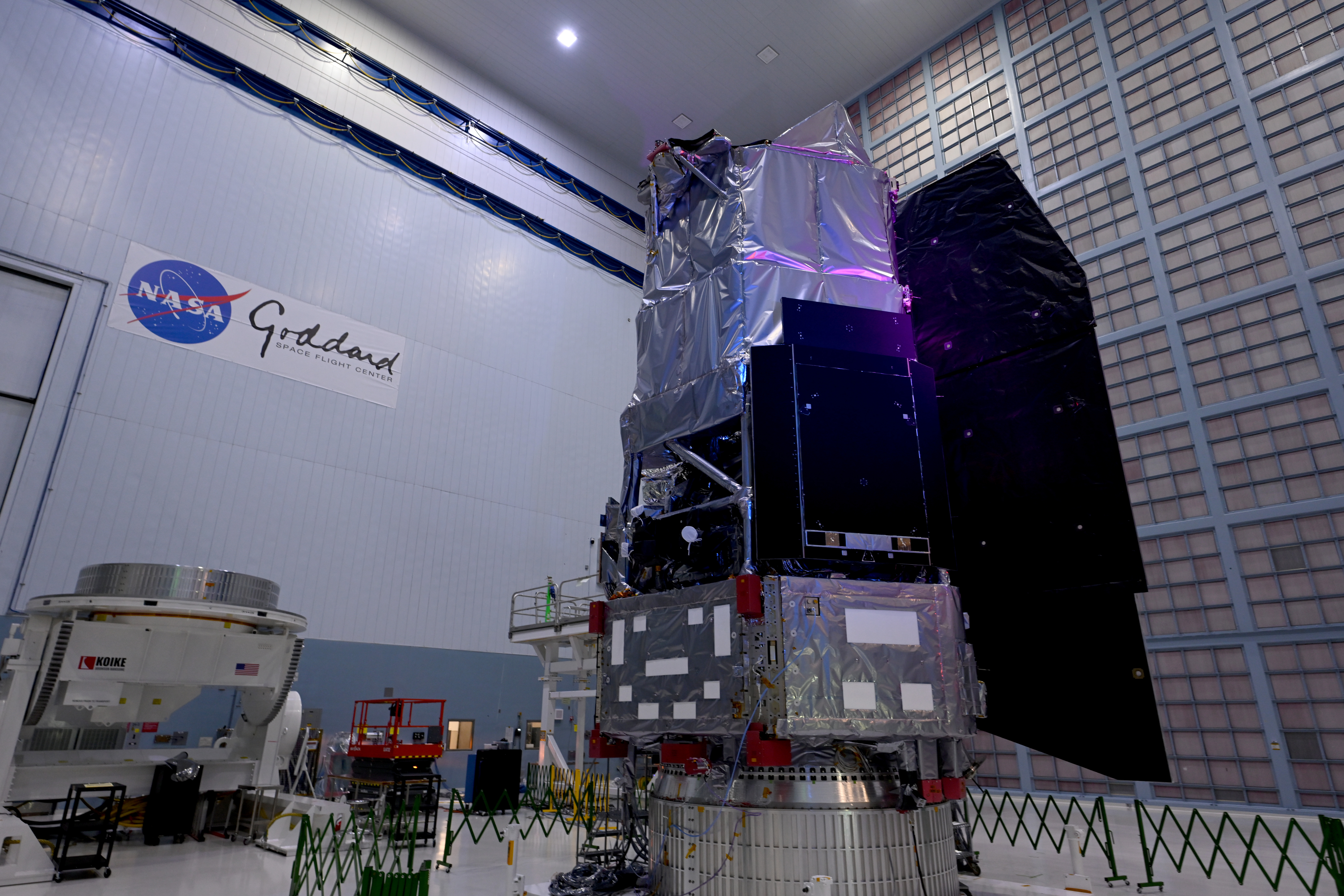
NASA’s Nancy Grace Roman Space Telescope team now is targeting as soon as early September 2026 for launch, ahead of the agency’s commitment to flight no later than May 2027.
“Roman’s accelerated development is a true success story of what we can achieve when public investment, institutional expertise, and private enterprise come together to take on the near-impossible missions that change the world,” said NASA Administrator Jared Isaacman, who announced the update at a news conference on April 21 at the agency’s Goddard Space Flight Center in Greenbelt, Maryland.
Roman will pair a large field of view with crisp infrared vision to survey deep, vast swaths of sky. While the mission was designed with dark energy, dark matter, and exoplanets in mind, Roman’s unprecedented observational capability will offer practically limitless opportunities for astronomers to explore all kinds of cosmic topics.
By the end of its five-year primary mission, Roman is expected to amass a 20,000-terabyte data archive. Scientists can draw on it to identify and study 100,000 exoplanets, hundreds of millions of galaxies, billions of stars, and rare objects and phenomena — including some that astronomers have never witnessed before.
Roman will launch on a SpaceX Falcon Heavy rocket from Launch Complex 39A at NASA’s Kennedy Space Center in Florida. NASA and SpaceX will share more information about a specific launch date, and the agency will continue to share updates concerning prelaunch preparations as new information becomes available.
The Nancy Grace Roman Space Telescope is managed at NASA’s Goddard Space Flight Center, with participation by NASA’s Jet Propulsion Laboratory and Caltech/IPAC in Southern California, the Space Telescope Science Institute (STScI) in Baltimore, and scientists from various research institutions.
To learn more about the Roman mission, visit:
Media contact:
Claire Andreoli
NASA’s Goddard Space Flight Center, Greenbelt, Md.
301-286-1940
NASA Targets Early September for Roman Space Telescope Launch
NASA’s Nancy Grace Roman Space Telescope team now is targeting as soon as early September 2026 for launch, ahead of the agency’s commitment to flight no later than May 2027.
“Roman’s accelerated development is a true success story of what we can achieve when public investment, institutional expertise, and private enterprise come together to take on the near-impossible missions that change the world,” said NASA Administrator Jared Isaacman, who announced the update at a news conference on April 21 at the agency’s Goddard Space Flight Center in Greenbelt, Maryland.
Roman will pair a large field of view with crisp infrared vision to survey deep, vast swaths of sky. While the mission was designed with dark energy, dark matter, and exoplanets in mind, Roman’s unprecedented observational capability will offer practically limitless opportunities for astronomers to explore all kinds of cosmic topics.
By the end of its five-year primary mission, Roman is expected to amass a 20,000-terabyte data archive. Scientists can draw on it to identify and study 100,000 exoplanets, hundreds of millions of galaxies, billions of stars, and rare objects and phenomena — including some that astronomers have never witnessed before.
Roman will launch on a SpaceX Falcon Heavy rocket from Launch Complex 39A at NASA’s Kennedy Space Center in Florida. NASA and SpaceX will share more information about a specific launch date, and the agency will continue to share updates concerning prelaunch preparations as new information becomes available.
The Nancy Grace Roman Space Telescope is managed at NASA’s Goddard Space Flight Center, with participation by NASA’s Jet Propulsion Laboratory and Caltech/IPAC in Southern California, the Space Telescope Science Institute (STScI) in Baltimore, and scientists from various research institutions.
To learn more about the Roman mission, visit:
Media contact:
Claire Andreoli
NASA’s Goddard Space Flight Center, Greenbelt, Md.
301-286-1940
RFK, Jr., set to overhaul key committee that issues disease screening recommendations
Lawmakers grilled Secretary of Health and Human Services Robert F. Kennedy, Jr., on cuts and changes to the U.S. Preventive Services Task Force, which focuses on preventive health screening
NASA’s Nancy Grace Roman Space Telescope will launch in September
Ahead of schedule and under budget, the Nancy Grace Roman Space Telescope will launch in early September. The mission aims to map the universe in unprecedented detail
NASA Astronaut Anil Menon to Discuss Upcoming Launch, Mission

Editor’s Note: This advisory was updated on April 23, 2026, to extend the deadline for phone RSVPs, as well as to correctly state that Anil Menon is a colonel in the United States Space Force.
NASA will host a news conference at 1:45 p.m. EDT Wednesday, April 29, from the agency’s Johnson Space Center in Houston to preview astronaut Anil Menon’s upcoming mission to the International Space Station.
Watch the news conference live on NASA’s YouTube channel. Learn how to watch NASA content through a variety of online platforms, including social media.
Following the news conference, individual interviews with Menon will begin at 3 p.m.
United States-based media interested in attending the news conference in person must contact the NASA Johnson newsroom at jsccommu@mail.nasa.gov by 5 p.m. Monday, April 27. U.S. and international media interested in participating by phone must contact NASA Johnson by 9:45 a.m. Wednesday, April 29. A copy of NASA’s media accreditation policy is available online.
Requests for interviews with Menon should be submitted by 5 p.m., April 27. In-person interviews are limited to U.S. media. International media may request to conduct interviews virtually.
The Soyuz MS-29 mission, targeted to launch Tuesday, July 14, will carry Menon and his crewmates, Roscosmos cosmonauts Pyotr Dubrov and Anna Kikina, to the International Space Station for an eight-month stay as part of Expeditions 74/75. It will be Menon’s first spaceflight.
Selected as a NASA astronaut in 2021, Menon graduated with the 23rd astronaut class in 2024. After completing initial astronaut candidate training, he began preparing for his first space station flight assignment.
Menon was born and raised in Minneapolis and is an emergency medicine physician, mechanical engineer, and colonel in the United States Space Force. He holds a bachelor’s degree in neurobiology from Harvard University in Cambridge, Massachusetts. He also earned a master’s degree in mechanical engineering and a medical degree from Stanford University in Palo Alto, California. Menon completed his emergency medicine and aerospace medicine residency at Stanford and the University of Texas Medical Branch in Galveston, respectively.
Menon still actively practices emergency medicine at Memorial Hermann’s Texas Medical Center and teaches residents at the University of Texas’ residency program. For NASA, Menon also has served as an expedition flight surgeon for the agency’s crew members aboard the space station. Previously, Menon worked at SpaceX and served as the company’s first flight surgeon, helping to launch the first crewed Dragon spacecraft on NASA’s SpaceX Demo-2 mission in 2020 and building its medical organization to support humans on future missions.
For more than 25 years, people have lived and worked continuously aboard the International Space Station, advancing scientific knowledge and making research breakthroughs that are not possible on Earth. The station is a testbed for NASA to understand and overcome the challenges of long-duration spaceflight, expand commercial opportunities in low Earth orbit, and prepare for deep space missions to the Moon as part of the Artemis program in preparation for future human missions to Mars.
Learn more about the International Space Station at:
-end-
Joshua Finch / Jimi Russell
Headquarters, Washington
202-358-1100
joshua.a.finch@nasa.gov / james.j.russell@nasa.gov
Anna Schneider / Shaneequa Vereen
Johnson Space Center, Houston
281-483-5111
anna.c.schneider@nasa.gov / shaneequa.y.vereen@nasa.gov
NASA Astronaut Anil Menon to Discuss Upcoming Launch, Mission
NASA will host a news conference at 1:45 p.m. EDT Wednesday, April 29, from the agency’s Johnson Space Center in Houston to preview astronaut Anil Menon’s upcoming mission to the International Space Station.
Watch the news conference live on NASA’s YouTube channel. Learn how to watch NASA content through a variety of online platforms, including social media.
Following the news conference, individual interviews with Menon will begin at 3 p.m.
United States-based media interested in attending the news conference in person must contact the NASA Johnson newsroom at jsccommu@mail.nasa.gov by 5 p.m. Monday, April 27. U.S. and international media interested in participating by phone must contact NASA Johnson by 9:45 a.m. Thursday, April 23. A copy of NASA’s media accreditation policy is available online.
Requests for interviews with Menon should be submitted by 5 p.m., April 27. In-person interviews are limited to U.S. media. International media may request to conduct interviews virtually.
The Soyuz MS-29 mission, targeted to launch Tuesday, July 14, will carry Menon and his crewmates, Roscosmos cosmonauts Pyotr Dubrov and Anna Kikina, to the International Space Station for an eight-month stay as part of Expeditions 74/75. It will be Menon’s first spaceflight.
Selected as a NASA astronaut in 2021, Menon graduated with the 23rd astronaut class in 2024. After completing initial astronaut candidate training, he began preparing for his first space station flight assignment.
Menon was born and raised in Minneapolis and is an emergency medicine physician, mechanical engineer, and lieutenant colonel in the United States Air Force. He holds a bachelor’s degree in neurobiology from Harvard University in Cambridge, Massachusetts. He also earned a master’s degree in mechanical engineering and a medical degree from Stanford University in Palo Alto, California. Menon completed his emergency medicine and aerospace medicine residency at Stanford and the University of Texas Medical Branch in Galveston, respectively.
Menon still actively practices emergency medicine at Memorial Hermann’s Texas Medical Center and teaches residents at the University of Texas’ residency program. For NASA, Menon also has served as an expedition flight surgeon for the agency’s crew members aboard the space station. Previously, Menon worked at SpaceX and served as the company’s first flight surgeon, helping to launch the first crewed Dragon spacecraft on NASA’s SpaceX Demo-2 mission in 2020 and building its medical organization to support humans on future missions.
For more than 25 years, people have lived and worked continuously aboard the International Space Station, advancing scientific knowledge and making research breakthroughs that are not possible on Earth. The station is a testbed for NASA to understand and overcome the challenges of long-duration spaceflight, expand commercial opportunities in low Earth orbit, and prepare for deep space missions to the Moon as part of the Artemis program in preparation for future human missions to Mars.
Learn more about the International Space Station at:
-end-
Joshua Finch / Jimi Russell
Headquarters, Washington
202-358-1100
joshua.a.finch@nasa.gov / james.j.russell@nasa.gov
Anna Schneider / Shaneequa Vereen
Johnson Space Center, Houston
281-483-5111
anna.c.schneider@nasa.gov / shaneequa.y.vereen@nasa.gov
We need more radioactive drugs. Can we make them from nuclear waste?
We need more radioactive drugs. Can we make them from nuclear waste?
Table tennis-playing robot on track to becoming world champion
Table tennis-playing robot on track to becoming world champion
The Nancy Grace Roman Space Telescope Is Ready to Fly
NASA has announced that the Nancy Grace Roman Space Telescope is all set for a September launch.
The post The Nancy Grace Roman Space Telescope Is Ready to Fly appeared first on Sky & Telescope.
LIVE :THE SUN UP CLOSE - Live Views
Night and (Earth) Day
Night and (Earth) Day
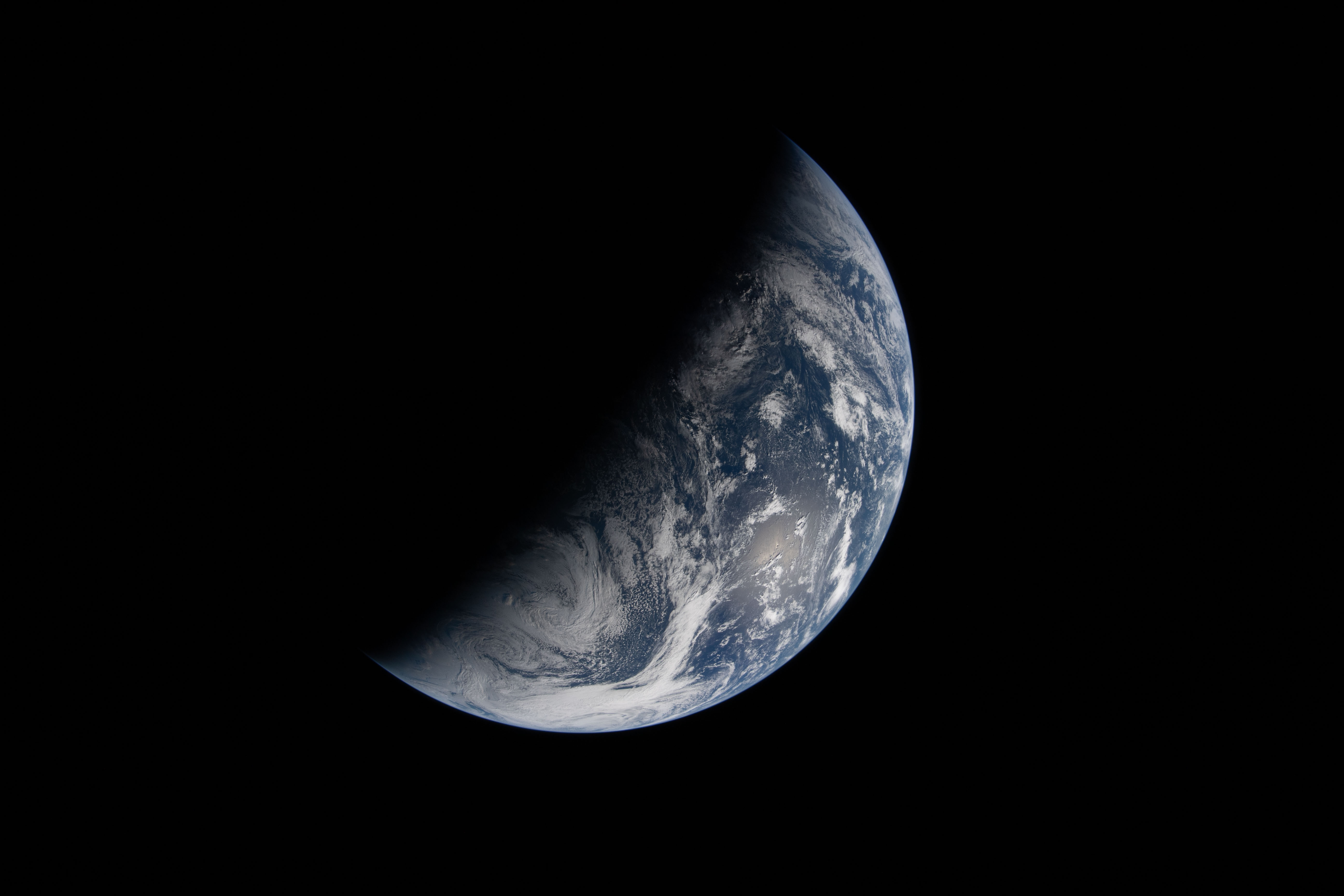
This image, released in celebration of Earth Day, shows the terminator – the line between night and day – on Earth. The Artemis II astronauts captured this view on April 2, 2026, during their journey to the Moon.
NASA science improves life on Earth every day. The agency provides insights on our home planet that can only be gathered from space to help put actionable satellite information in the hands of decision-makers. In addition, NASA’s observations of Earth and the technologies the agency develops provide the foundation needed to explore and sustain human life on the Moon, Mars, and beyond.
Download this year’s Earth Day poster.
Image credit: NASA
Night and (Earth) Day
This image, released in celebration of Earth Day, shows the terminator – the line between night and day – on Earth. The Artemis II astronauts captured this view on April 2, 2026, during their journey to the Moon.
NASA science improves life on Earth every day. The agency provides insights on our home planet that can only be gathered from space to help put actionable satellite information in the hands of decision-makers. In addition, NASA’s observations of Earth and the technologies the agency develops provide the foundation needed to explore and sustain human life on the Moon, Mars, and beyond.
Download this year’s Earth Day poster.
Image credit: NASA
The solar system’s first solids had a fast start
Rather than slowly condensing over millions of years, the first building blocks of Earth and other planets may have formed rapidly in a chaotic disk at the dawn of the solar system
Smoking ban for people born after 2008 is on the cusp of becoming law in the U.K.
This ban applies to various tobacco products and also seeks to beef up existing laws that restrict the sale and marketing of vapes to children