

Feed aggregator
Space Station Research Informs New FDA-Approved Cancer Therapy
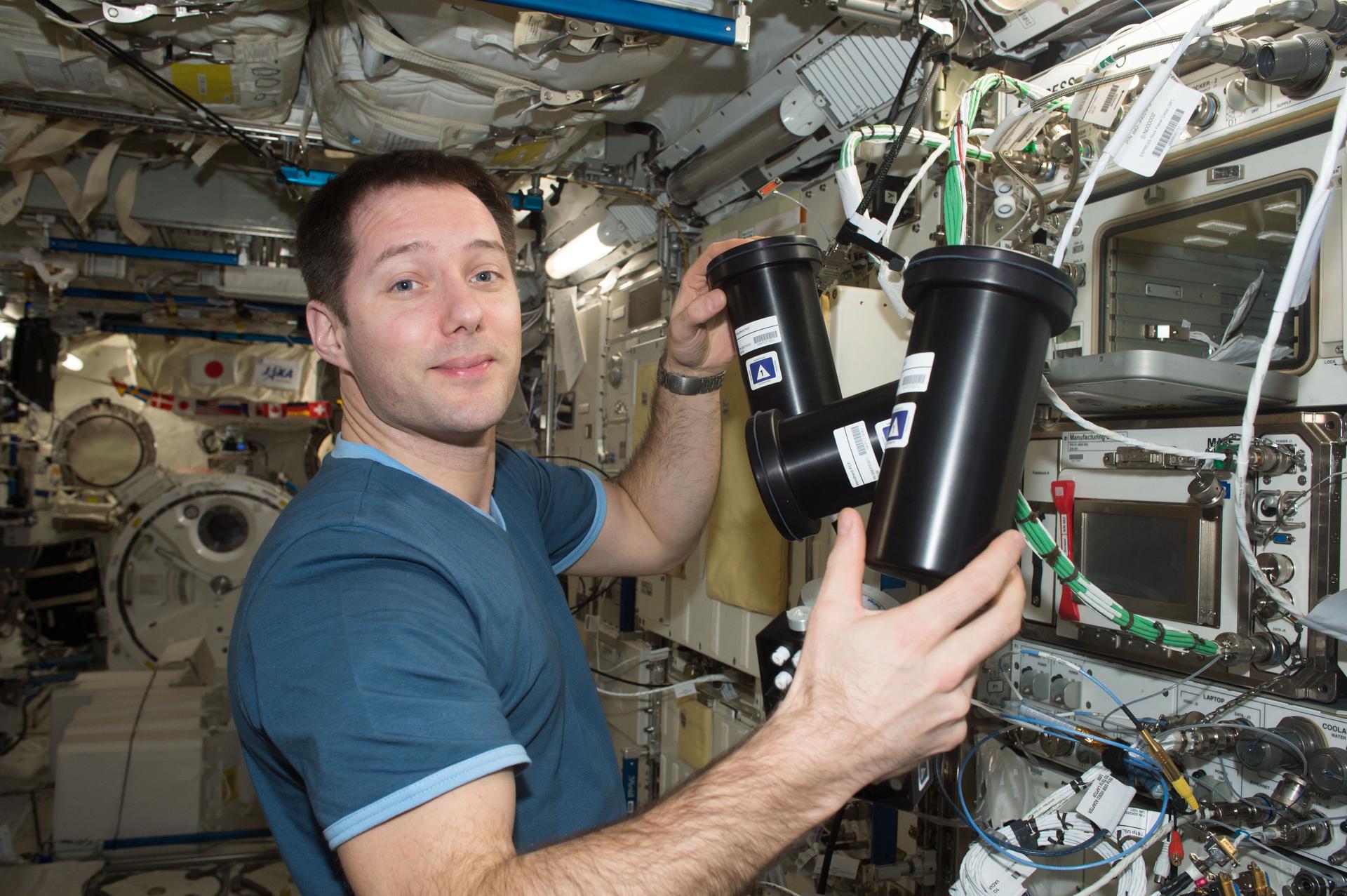
NASA opens the International Space Station for scientists and researchers, inviting them to use the benefits of microgravity for commercial and public research, technology demonstrations, and more. Today, a portion of the crew’s time aboard station is devoted to private industry, including medical research that addresses complex health challenges on Earth and prepares astronauts for future deep space missions.
In collaboration with scientists at Merck, protein crystal growth research on the space station yielded early insights regarding the structure and size of particles best suited for the development of a new formulation of the company’s cancer medicine pembrolizumab for subcutaneous injection. This new route of delivery was approved by the U.S. Food and Drug Administration in September and offers a time-saving alternative to intravenous infusion for certain patients. These research efforts aboard the space station were supported by the ISS National Laboratory.
Originally, the treatment was delivered during an in-office visit via infusion therapy into the patient’s veins, a process that could take up to two hours. Initial delivery improvements reduced infusion times to less than 30 minutes every three weeks. The newly approved subcutaneous injectable form takes about one minute every three weeks, promising to improve quality of life for patients by reducing cost and significantly reducing treatment time for patients and healthcare providers.
UV imaging of a ground control sample (left) and spaceflight sample (right) from Merck’s research shows the much more uniform size and distribution of crystals grown in microgravity. These results helped researchers to refine ground-based production of uniform crystalline suspensions required for an injectable version of the company’s cancer medicine, pembrolizumab.Merck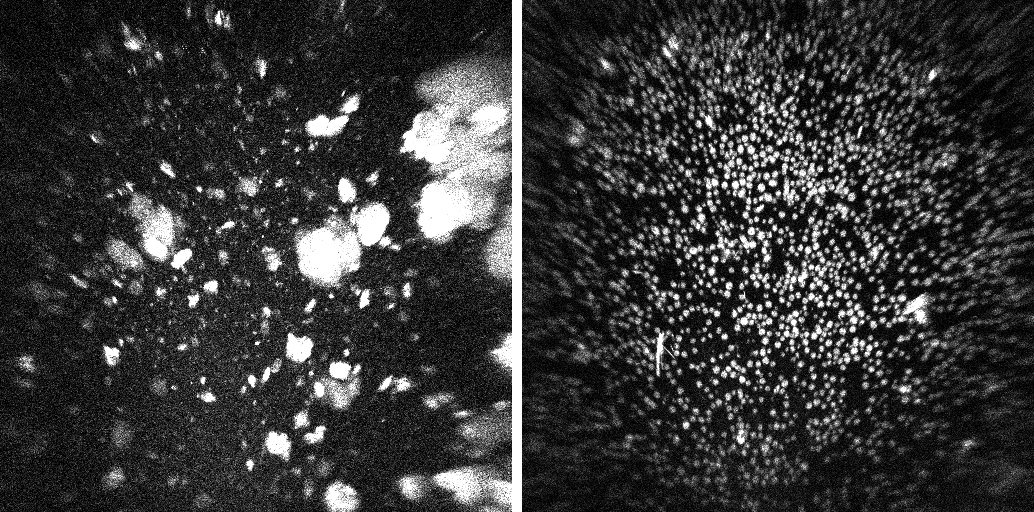
Since 2014, Merck has flown crystal growth experiments to the space station to better understand how crystals form, including the monoclonal antibody used in this cancer treatment. Monoclonal antibodies are lab-made proteins that help the body fight diseases. This research focused on producing crystalline suspensions that dissolve easily in liquid, making it possible to deliver the medication by injection. In microgravity, the absence of gravity’s physical forces allows scientists to grow larger, more uniform, and higher-quality crystals than those grown in ground-based labs, advancing medication development and structural modeling.
Research aboard the space station has provided valuable insights into how gravity influences crystallization, helping to improve drug formulations. The work of NASA and its partners aboard the space station improves lives on Earth, grows a commercial economy in low Earth orbit, and prepares for human exploration of the Moon and Mars.
Keep Exploring Discover More Topics From NASASpace Station Research Results
Station Benefits for Humanity
International Space Station
Humans In Space
First Sky Map from NASA’s SPHEREx Observatory
First Sky Map from NASA’s SPHEREx Observatory

NASA’s SPHEREx Observatory has mapped the entire sky in 102 infrared colors, as seen here in this image released on Dec. 18, 2025. This image features a selection of colors emitted primarily by stars (blue, green, and white), hot hydrogen gas (blue), and cosmic dust (red).
While not visible to the human eye, these 102 infrared wavelengths of light are prevalent in the cosmos, and observing the entire sky this way enables scientists to answer big questions, including how a dramatic event that occurred in the first billionth of a trillionth of a trillionth of a second after the big bang influenced the 3D distribution of hundreds of millions of galaxies in our universe. In addition, scientists will use the data to study how galaxies have changed over the universe’s nearly 14-billion-year history and learn about the distribution of key ingredients for life in our own galaxy.
Image credit: NASA/JPL-Caltech
First Sky Map from NASA’s SPHEREx Observatory
NASA’s SPHEREx Observatory has mapped the entire sky in 102 infrared colors, as seen here in this image released on Dec. 18, 2025. This image features a selection of colors emitted primarily by stars (blue, green, and white), hot hydrogen gas (blue), and cosmic dust (red).
While not visible to the human eye, these 102 infrared wavelengths of light are prevalent in the cosmos, and observing the entire sky this way enables scientists to answer big questions, including how a dramatic event that occurred in the first billionth of a trillionth of a trillionth of a second after the big bang influenced the 3D distribution of hundreds of millions of galaxies in our universe. In addition, scientists will use the data to study how galaxies have changed over the universe’s nearly 14-billion-year history and learn about the distribution of key ingredients for life in our own galaxy.
Image credit: NASA/JPL-Caltech
Rogue Saturn Discovered Floating Through the Milky Way
Astronomers have measured the mass of a free-floating planet for the first time. Comparable to Saturn, it’s surprisingly massive for such rogue worlds.
The post Rogue Saturn Discovered Floating Through the Milky Way appeared first on Sky & Telescope.
Doctor Visits for Flu Hit Highest Level in Almost 30 Years
Almost one in 10 people who visited a doctor in the U.S. in the week ending on December 27 were there for flulike symptoms, according to new data
The first commercial space stations will start orbiting Earth in 2026
The first commercial space stations will start orbiting Earth in 2026
US will need both carrots and sticks to reach net zero
US will need both carrots and sticks to reach net zero
Diving Into Human Spaceflight Safety with NASA Johnson’s Craig Shannon
Growing up in Houston, Craig Shannon was always inspired by NASA and the spirit of exploration the agency represents. Yet it was a passion for scuba diving that unexpectedly led to his more than 23-year career at NASA’s Johnson Space Center.
Shannon became a certified diver and scuba instructor while earning his bachelor’s degree in communications from Stephen F. Austin State University. He happened to meet divers from NASA’s Neutral Buoyancy Laboratory (NBL) at a local environmental cleanup event during his senior year. “The encounter planted a seed,” he said.
Craig Shannon during a dive in the Neutral Buoyancy Laboratory pool at NASA’s Johnson Space Center. Image courtesy of Craig Shannon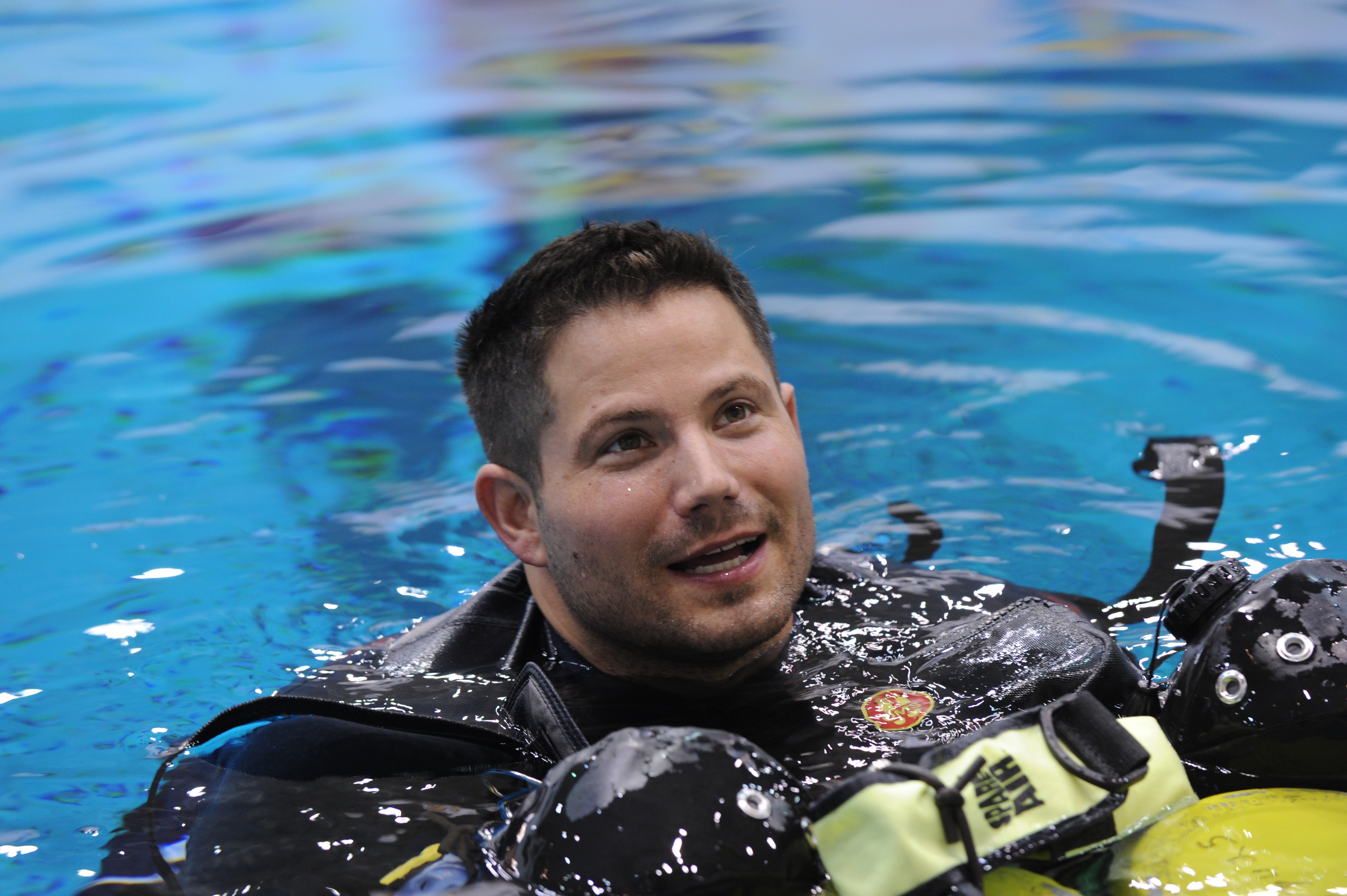
Shannon was hired as an NBL diver shortly after graduation, launching what would become a 19-year career in dive operations. He progressed through a variety of roles – from utility diver, instructor, and training officer, to dive operations lead, training group lead, and ultimately, dive operations manager. “Each role deepened my understanding of operational excellence, safety, and leadership in high-performance environments,” he said. Shannon added that becoming the dive operations manager was one of the defining points of his career. “I had the privilege of leading an exceptional team and contributing directly to astronaut training and operational excellence.”
Seeking new challenges and opportunities for professional growth, Shannon transitioned to a test safety officer position at Johnson for about four years, expanding his knowledge of technical risk management in different environments. He returned to the NBL in 2025, this time as a safety officer. In that role, Shannon works to protect employees’ well-being and the facility’s operational integrity. His responsibilities are a mix of proactive safety initiatives – such as facility inspections, safety training, and communication – and incident response, which involves investigating mishaps and close calls and developing corrective action plans to prevent recurrence. He also serves as an internal technical consultant, fielding safety-related questions from employees and visitors and providing guidance that complies with Occupational Safety and Health Administration and NASA safety standards.
“I work across functions with operations, engineering, medical, and training teams to integrate safety into all daily processes and long-term planning,” he said. “It brings full circle my commitment to the safety and success of human spaceflight training.”
Former NASA astronaut Mike Massimino helps Craig Shannon suit up for a suited test dive in the Neutral Buoyancy Laboratory pool.Image courtesy of Craig Shannon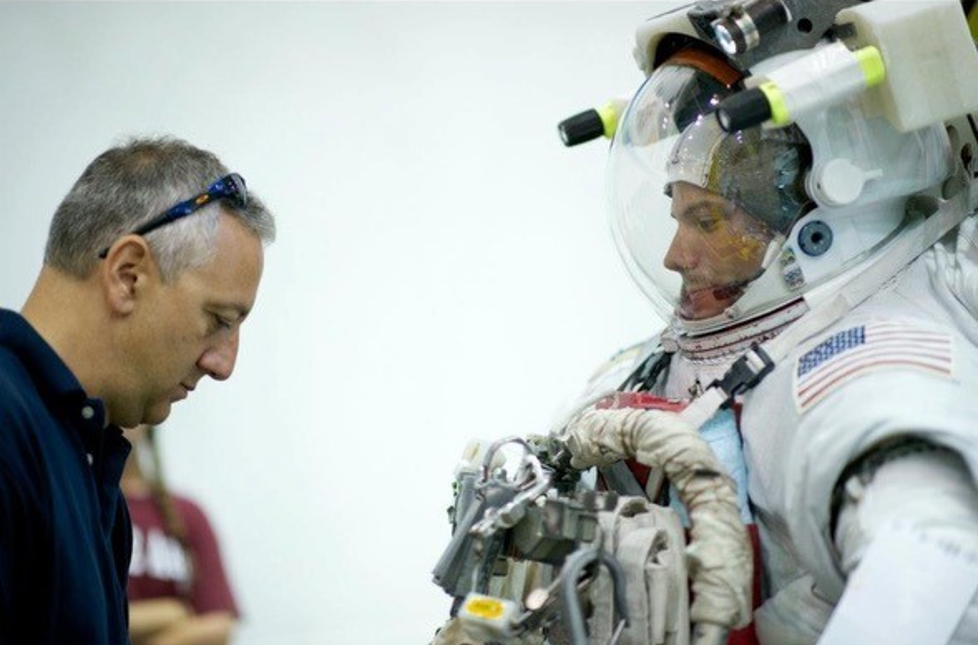
Shannon acknowledged that not having an engineering degree has made work more challenging at times, but it has not hindered his advancement. “I’ve earned key positions by committing myself to continuous learning, gaining in-depth knowledge of the technical areas I work in, and consistently demonstrating dedication to both my employers and my career,” he said. “My path has required hard work, adaptability, and a proactive approach to professional growth, which I view as strengths that have allowed me to contribute meaningfully in a highly technical setting.”
Shannon has also learned the importance of embracing change. “Change isn’t always easy, but it’s often where the most learning and development happen,” he said. “Whether it was stepping into leadership for the first time, shifting into a new field, or returning to a familiar place with a new purpose, each transition brought growth I never could have anticipated.” He added that patience, accountability, and empathy are important leadership qualities that help build stronger, more resilient teams.
While Shannon takes pride in his work, he said his family is his greatest achievement. “I’m most proud of raising three amazing children with my wife, Kimberley. They have been my grounding force and greatest inspiration,” he said.
Craig Shannon, his wife Kimberley, and their three children enjoy family time at the beach in Florida. Image courtesy of Craig Shannon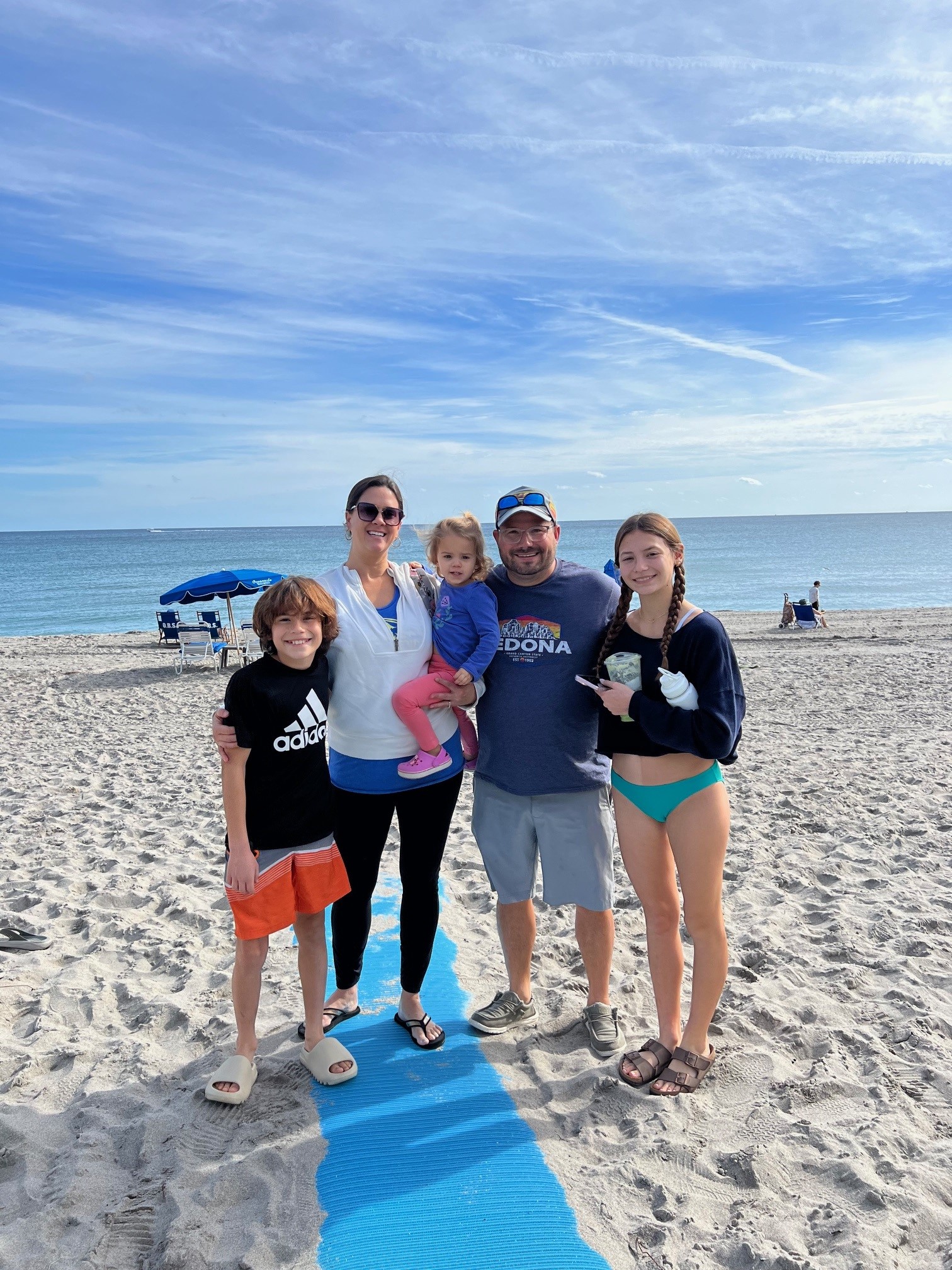
He is also the proud co-owner of a local scuba diving company, which allows him to combine his love for diving, travel, and community. “I’ve had the privilege of leading dive trips around the world with groups of amazing people—sharing unforgettable underwater experiences and fostering a strong, adventurous dive community,” he said. “It’s a way for me to stay connected to the roots of my diving career and continue exploring the world through the lens of curiosity and connection.”
He encourages the next generation to find something they are passionate about. “It’s important to be genuinely excited about what you do and to face the challenges ahead with determination and curiosity,” he said. “That energy, paired with a willingness to adapt and grow, has carried me through each phase of my career. Challenges will come, but how you meet them defines your path.”
Explore More 4 min read I Am Artemis: Jacki Mahaffey Article 2 days ago 2 min read Holidays in Space: 25 Years of Space Station Celebrations Article 2 weeks ago 11 min read NASA Johnson’s 2025 Milestones Article 3 weeks agoDiving Into Human Spaceflight Safety with NASA Johnson’s Craig Shannon
Growing up in Houston, Craig Shannon was always inspired by NASA and the spirit of exploration the agency represents. Yet it was a passion for scuba diving that unexpectedly led to his more than 23-year career at NASA’s Johnson Space Center.
Shannon became a certified diver and scuba instructor while earning his bachelor’s degree in communications from Stephen F. Austin State University. He happened to meet divers from NASA’s Neutral Buoyancy Laboratory (NBL) at a local environmental cleanup event during his senior year. “The encounter planted a seed,” he said.
Craig Shannon during a dive in the Neutral Buoyancy Laboratory pool at NASA’s Johnson Space Center. Image courtesy of Craig ShannonShannon was hired as an NBL diver shortly after graduation, launching what would become a 19-year career in dive operations. He progressed through a variety of roles – from utility diver, instructor, and training officer, to dive operations lead, training group lead, and ultimately, dive operations manager. “Each role deepened my understanding of operational excellence, safety, and leadership in high-performance environments,” he said. Shannon added that becoming the dive operations manager was one of the defining points of his career. “I had the privilege of leading an exceptional team and contributing directly to astronaut training and operational excellence.”
Seeking new challenges and opportunities for professional growth, Shannon transitioned to a test safety officer position at Johnson for about four years, expanding his knowledge of technical risk management in different environments. He returned to the NBL in 2025, this time as a safety officer. In that role, Shannon works to protect employees’ well-being and the facility’s operational integrity. His responsibilities are a mix of proactive safety initiatives – such as facility inspections, safety training, and communication – and incident response, which involves investigating mishaps and close calls and developing corrective action plans to prevent recurrence. He also serves as an internal technical consultant, fielding safety-related questions from employees and visitors and providing guidance that complies with Occupational Safety and Health Administration and NASA safety standards.
“I work across functions with operations, engineering, medical, and training teams to integrate safety into all daily processes and long-term planning,” he said. “It brings full circle my commitment to the safety and success of human spaceflight training.”
Former NASA astronaut Mike Massimino helps Craig Shannon suit up for a suited test dive in the Neutral Buoyancy Laboratory pool.Image courtesy of Craig ShannonShannon acknowledged that not having an engineering degree has made work more challenging at times, but it has not hindered his advancement. “I’ve earned key positions by committing myself to continuous learning, gaining in-depth knowledge of the technical areas I work in, and consistently demonstrating dedication to both my employers and my career,” he said. “My path has required hard work, adaptability, and a proactive approach to professional growth, which I view as strengths that have allowed me to contribute meaningfully in a highly technical setting.”
Shannon has also learned the importance of embracing change. “Change isn’t always easy, but it’s often where the most learning and development happen,” he said. “Whether it was stepping into leadership for the first time, shifting into a new field, or returning to a familiar place with a new purpose, each transition brought growth I never could have anticipated.” He added that patience, accountability, and empathy are important leadership qualities that help build stronger, more resilient teams.
While Shannon takes pride in his work, he said his family is his greatest achievement. “I’m most proud of raising three amazing children with my wife, Kimberley. They have been my grounding force and greatest inspiration,” he said.
Craig Shannon, his wife Kimberley, and their three children enjoy family time at the beach in Florida. Image courtesy of Craig ShannonHe is also the proud co-owner of a local scuba diving company, which allows him to combine his love for diving, travel, and community. “I’ve had the privilege of leading dive trips around the world with groups of amazing people—sharing unforgettable underwater experiences and fostering a strong, adventurous dive community,” he said. “It’s a way for me to stay connected to the roots of my diving career and continue exploring the world through the lens of curiosity and connection.”
He encourages the next generation to find something they are passionate about. “It’s important to be genuinely excited about what you do and to face the challenges ahead with determination and curiosity,” he said. “That energy, paired with a willingness to adapt and grow, has carried me through each phase of my career. Challenges will come, but how you meet them defines your path.”
Explore More 4 min read I Am Artemis: Jacki Mahaffey Article 2 days ago 2 min read Holidays in Space: 25 Years of Space Station Celebrations Article 2 weeks ago 11 min read NASA Johnson’s 2025 Milestones Article 3 weeks agoReaching the Precipice in Angola
- Earth
- Earth Observatory
- Image of the Day
- EO Explorer
- Topics
- More Content
- About
Reaching the Precipice in Angola
- Earth
- Earth Observatory
- Image of the Day
- EO Explorer
- Topics
- More Content
- About
Stars And Planets Are Linked Together, And Dust Is The Key To Understanding How
Stars and planets are linked together in their formation, evolution, and even in their demises. But many of the details behind this are yet to be revealed. New research outlines an observing strategy that could uncover more critical details.
A New Year of Star-Camping
For 2026, I want to be more myself — less stress and rumination, more centeredness and joy — and that’s going to necessitate a lot more time beneath the stars.
The post A New Year of Star-Camping appeared first on Sky & Telescope.