

Feed aggregator
La NASA transmitirá en directo el regreso y el amerizaje de Crew 11
Read this press release in English here.
La NASA y SpaceX prevén que, si las condiciones meteorológicas lo permiten, el desacoplamiento de la misión SpaceX Crew 11 de la agencia espacial estadounidense de la Estación Espacial Internacional se produzca no antes de las 5:05 p.m. EST (hora del este) del miércoles 14 de enero.
El 8 de enero, la NASA anunció su decisión de traer de vuelta a la Tierra antes de lo previsto a los integrantes de la misión SpaceX Crew 11 de la agencia desde la estación espacial, mientras los equipos técnicos siguen de cerca un problema médico que afecta a un miembro de la tripulación que actualmente vive y trabaja a bordo del laboratorio orbital. Debido a la confidencialidad médica, no es apropiado que la NASA comparta más detalles sobre el miembro de la tripulación, quien se encuentra estable.
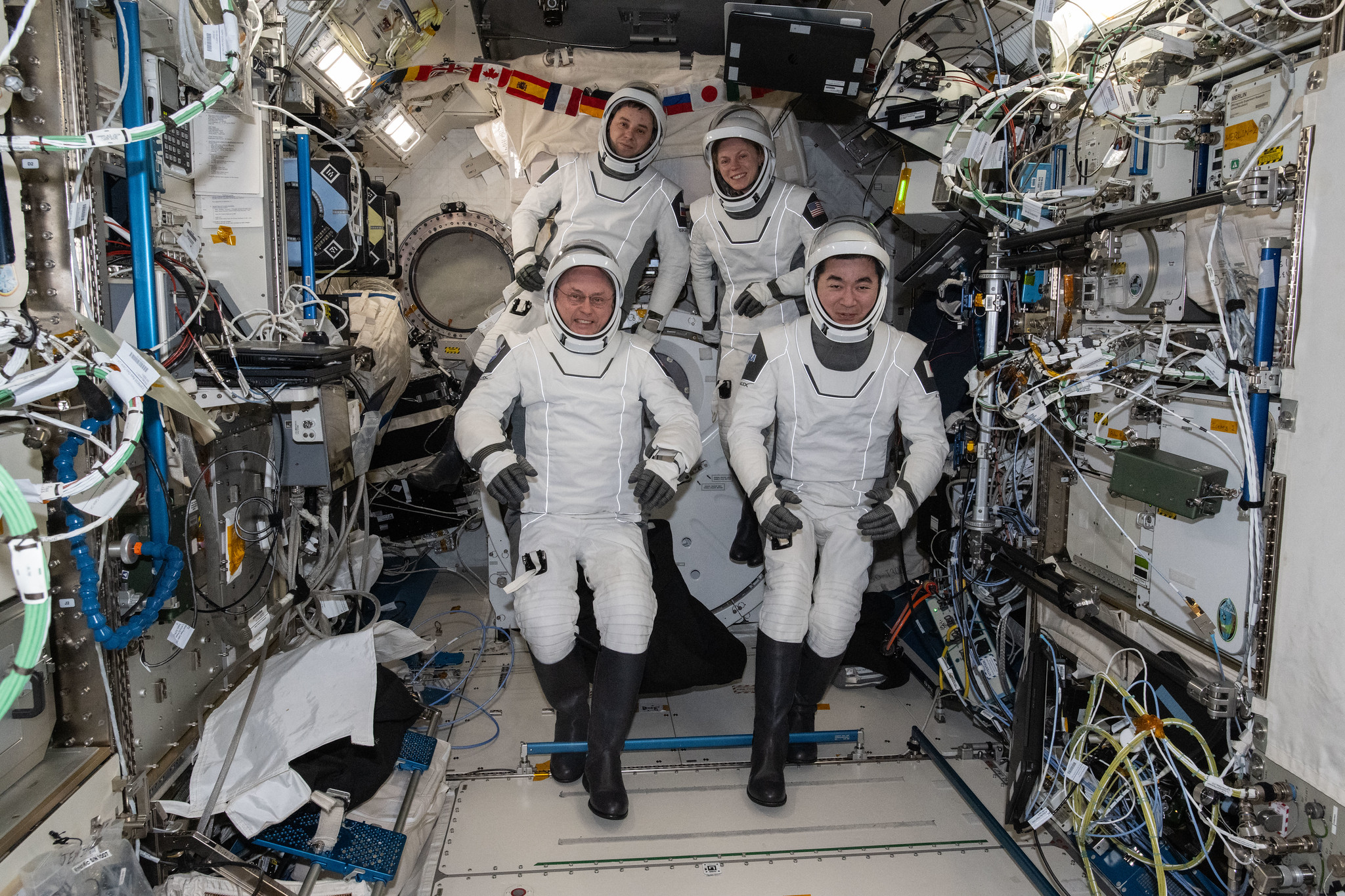
Está planeado que los astronautas de la NASA Zena Cardman y Mike Fincke, el astronauta de JAXA (Agencia Japonesa de Exploración Aeroespacial) Kimiya Yui y el cosmonauta de Roscosmos Oleg Platonov americen frente a la costa de California a las 3:41 a.m. del jueves 15 de enero.
Los responsables de la misión continúan supervisando las condiciones en la zona de recuperación, ya que el desacoplamiento de la nave Dragon de SpaceX depende de las condiciones operativas de la nave espacial, la preparación del equipo de recuperación, las condiciones meteorológicas, el estado del mar y otros factores. La NASA y SpaceX seleccionarán una hora y un lugar concretos para el amerizaje cuando se acerque la fecha del desacoplamiento de la nave espacial de Crew 11.
La cobertura en directo (en inglés) de la NASA del regreso y las actividades relacionadas se retransmitirá en NASA+, Amazon Prime, y el canal de YouTube de la agencia. Aprenda cómo transmitir contenido de la NASA a través de diversas plataformas en línea, incluidas las redes sociales.
La cobertura de la NASA es la siguiente (todas las horas son del este y están sujetas a cambios en función de las operaciones en tiempo real):
Miércoles, 14 de enero
3 p.m. – Comienza la cobertura del cierre de escotilla en NASA+, Amazon Prime, y YouTube.
3:30 p.m. – Cierre de escotilla
4:45 p.m. – Comienza la cobertura del desacoplamiento en NASA+, Amazon Prime, y YouTube.
5:05 p.m. – Desacoplamiento
Tras la finalización de la cobertura del desacoplamiento, la NASA distribuirá las conversaciones (solo en formato audio) entre la tripulación Crew 11, la estación espacial y los controladores de vuelo durante el tránsito de la nave Dragon alejándose del complejo orbital.
Jueves, 15 de enero
2:15 a.m. – Comienza la cobertura del regreso en NASA+, Amazon Prime, y YouTube.
2:51 a.m. – Encendido de desorbitado
3:41 a.m. – Amerizaje
5:45 a.m. – El administrador de la NASA, Jared Isaacman, liderará una rueda de prensa sobre el regreso a la Tierra que se transmitirá en directo a través de NASA+, Amazon Prime, y el canal de YouTube de la agencia.
Para participar virtualmente en la conferencia de prensa, los medios de comunicación deben ponerse en contacto con la sala de prensa del Centro Espacial Johnson de la NASA para obtener los detalles de la llamada antes de las 5 p.m. CST (hora del centro) del 14 de enero, enviando un correo electrónico a jsccommu@mail.nasa.gov o llamando al +1 281-483-5111. Para hacer preguntas, los medios de comunicación deben llamar al menos 10 minutos antes del inicio de la conferencia. La política de acreditación de medios de comunicación de la agencia está disponible en línea (en inglés).
Encuentre la cobertura completa de la misión, el blog de tripulaciones comerciales de la NASA y más información sobre la misión Crew 11 (todo en inglés) en:
https://www.nasa.gov/commercialcrew
-fin-
Joshua Finch / Jimi Russell / María José Viñas
Sede central, Washington
+1 202-358-1100
joshua.a.finch@nasa.gov / james.j.russell@nasa.gov / maria-jose.vinasgarcia@nasa.gov
Sandra Jones / Joseph Zakrzewski
Centro Espacial Johnson, Houston
+1 281-483-5111
sandra.p.jones@nasa.gov / joseph.a.zakrzewski@nasa.gov
Steve Siceloff
Centro Espacial Kennedy, Fla.
+1 321-867-2468
steven.p.siceloff@nasa.gov
La NASA transmitirá en directo el regreso y el amerizaje de Crew 11
Read this press release in English here.
La NASA y SpaceX prevén que, si las condiciones meteorológicas lo permiten, el desacoplamiento de la misión SpaceX Crew 11 de la agencia espacial estadounidense de la Estación Espacial Internacional se produzca no antes de las 5:05 p.m. EST (hora del este) del miércoles 14 de enero.
El 8 de enero, la NASA anunció su decisión de traer de vuelta a la Tierra antes de lo previsto a los integrantes de la misión SpaceX Crew 11 de la agencia desde la estación espacial, mientras los equipos técnicos siguen de cerca un problema médico que afecta a un miembro de la tripulación que actualmente vive y trabaja a bordo del laboratorio orbital. Debido a la confidencialidad médica, no es apropiado que la NASA comparta más detalles sobre el miembro de la tripulación, quien se encuentra estable.
Está planeado que los astronautas de la NASA Zena Cardman y Mike Fincke, el astronauta de JAXA (Agencia Japonesa de Exploración Aeroespacial) Kimiya Yui y el cosmonauta de Roscosmos Oleg Platonov americen frente a la costa de California a las 3:41 a.m. del jueves 15 de enero.
Los responsables de la misión continúan supervisando las condiciones en la zona de recuperación, ya que el desacoplamiento de la nave Dragon de SpaceX depende de las condiciones operativas de la nave espacial, la preparación del equipo de recuperación, las condiciones meteorológicas, el estado del mar y otros factores. La NASA y SpaceX seleccionarán una hora y un lugar concretos para el amerizaje cuando se acerque la fecha del desacoplamiento de la nave espacial de Crew 11.
La cobertura en directo (en inglés) de la NASA del regreso y las actividades relacionadas se retransmitirá en NASA+, Amazon Prime, y el canal de YouTube de la agencia. Aprenda cómo transmitir contenido de la NASA a través de diversas plataformas en línea, incluidas las redes sociales.
La cobertura de la NASA es la siguiente (todas las horas son del este y están sujetas a cambios en función de las operaciones en tiempo real):
Miércoles, 14 de enero
3 p.m. – Comienza la cobertura del cierre de escotilla en NASA+, Amazon Prime, y YouTube.
3:30 p.m. – Cierre de escotilla
4:45 p.m. – Comienza la cobertura del desacoplamiento en NASA+, Amazon Prime, y YouTube.
5:05 p.m. – Desacoplamiento
Tras la finalización de la cobertura del desacoplamiento, la NASA distribuirá las conversaciones (solo en formato audio) entre la tripulación Crew 11, la estación espacial y los controladores de vuelo durante el tránsito de la nave Dragon alejándose del complejo orbital.
Jueves, 15 de enero
2:15 a.m. – Comienza la cobertura del regreso en NASA+, Amazon Prime, y YouTube.
2:51 a.m. – Encendido de desorbitado
3:41 a.m. – Amerizaje
5:45 a.m. – El administrador de la NASA, Jared Isaacman, liderará una rueda de prensa sobre el regreso a la Tierra que se transmitirá en directo a través de NASA+, Amazon Prime, y el canal de YouTube de la agencia.
Para participar virtualmente en la conferencia de prensa, los medios de comunicación deben ponerse en contacto con la sala de prensa del Centro Espacial Johnson de la NASA para obtener los detalles de la llamada antes de las 5 p.m. CST (hora del centro) del 14 de enero, enviando un correo electrónico a jsccommu@mail.nasa.gov o llamando al +1 281-483-5111. Para hacer preguntas, los medios de comunicación deben llamar al menos 10 minutos antes del inicio de la conferencia. La política de acreditación de medios de comunicación de la agencia está disponible en línea (en inglés).
Encuentre la cobertura completa de la misión, el blog de tripulaciones comerciales de la NASA y más información sobre la misión Crew 11 (todo en inglés) en:
https://www.nasa.gov/commercialcrew
-fin-
Joshua Finch / Jimi Russell / María José Viñas
Sede central, Washington
+1 202-358-1100
joshua.a.finch@nasa.gov / james.j.russell@nasa.gov / maria-jose.vinasgarcia@nasa.gov
Sandra Jones / Joseph Zakrzewski
Centro Espacial Johnson, Houston
+1 281-483-5111
sandra.p.jones@nasa.gov / joseph.a.zakrzewski@nasa.gov
Steve Siceloff
Centro Espacial Kennedy, Fla.
+1 321-867-2468
steven.p.siceloff@nasa.gov
When Baby Stars Throw Tantrums
NASA’s Hubble Space Telescope has captured stunning new image of HH 80/81, a pair of objects created when supersonic jets from a newborn star slam into previously expelled gas clouds, heating them to extreme levels. These jets, powered by a protostar 20 times more massive than our Sun, stretch over 32 light years through space and travel at speeds exceeding 1,000 kilometres per second, making them the fastest outflows ever recorded from a young star.
These small lifestyle tweaks can add a year to your life
These small lifestyle tweaks can add a year to your life
NASA to Provide Live Coverage of Crew-11 Return, Splashdown
Lee este comunicado de prensa en español aquí.
NASA and SpaceX are targeting no earlier than 5:05 p.m. EST, Wednesday, Jan. 14, for the undocking of the agency’s SpaceX Crew-11 mission from the International Space Station, pending weather conditions.
On Jan. 8, NASA announced its decision to return the agency’s SpaceX Crew-11 mission to Earth from the space station earlier than originally planned as teams monitor a medical concern with a crew member currently living and working aboard the orbital laboratory, who is stable. Due to medical privacy, it is not appropriate for NASA to share more details about the crew member.
NASA astronauts Zena Cardman and Mike Fincke, JAXA (Japan Aerospace Exploration Agency) astronaut Kimiya Yui, and Roscosmos cosmonaut Oleg Platonov are targeted to splash down off the coast of California at 3:41 a.m. on Thursday, Jan. 15.
Mission managers continue monitoring conditions in the recovery area, as undocking of the SpaceX Dragon depends on spacecraft readiness, recovery team readiness, weather, sea states, and other factors. NASA and SpaceX will select a specific splashdown time and location closer to the Crew-11 spacecraft undocking.
NASA’s live coverage of return and related activities will stream on NASA+, Amazon Prime, and the agency’s YouTube channel. Learn how to stream NASA content through a variety of online platforms, including social media.
NASA’s coverage is as follows (all times Eastern and subject to changed based on real-time operations):
Wednesday, Jan. 14
3 p.m. – Hatch closure coverage begins on NASA+, Amazon Prime, and YouTube.
3:30 p.m. – Hatch closing
4:45 p.m. – Undocking coverage begins on NASA+, Amazon Prime, and YouTube.
5:05 p.m. – Undocking
Following the conclusion of undocking coverage, NASA will distribute audio-only communications between Crew-11, the space station, and flight controllers during Dragon’s transit away from the orbital complex.
Thursday, Jan. 15
2:15 a.m. – Return coverage begins on NASA+, Amazon Prime, and YouTube.
2:51 a.m. – Deorbit burn
3:41 a.m. – Splashdown
5:45 a.m. – NASA Administrator Jared Isaacman will lead a Return to Earth news conference streaming live on NASA+, Amazon Prime, and the agency’s YouTube channel.
To participate virtually in the news conference, media must contact the NASA Johnson newsroom for call details by 5 p.m. CST, Jan. 14, at: jsccommu@mail.nasa.gov or 281-483-5111. To ask questions, media must dial in no later than 10 minutes before the start of the call. The agency’s media credentialing policy is available online.
Find full mission coverage, NASA’s commercial crew blog, and more information about the Crew-11 mission at:
https://www.nasa.gov/commercialcrew
-end-
Joshua Finch / Jimi Russell
Headquarters, Washington
202-358-1100
joshua.a.finch@nasa.gov / james.j.russell@nasa.gov
Sandra Jones / Joseph Zakrzewski
Johnson Space Center, Houston
281-483-5111
sandra.p.jones@nasa.gov / joseph.a.zakrzewski@nasa.gov
Steve Siceloff
Kennedy Space Center, Fla.
321-867-2468
steven.p.siceloff@nasa.gov
NASA to Provide Live Coverage of Crew-11 Return, Splashdown
Editor’s note: This advisory was updated on Wednesday, Jan. 14 to update the undocking time and coverage
Lee este comunicado de prensa en español aquí.
NASA and SpaceX are targeting no earlier than 5:20 p.m. EST, Wednesday, Jan. 14, for the undocking of the agency’s SpaceX Crew-11 mission from the International Space Station, pending weather conditions.
On Jan. 8, NASA announced its decision to return the agency’s SpaceX Crew-11 mission to Earth from the space station earlier than originally planned as teams monitor a medical concern with a crew member currently living and working aboard the orbital laboratory, who is stable. Due to medical privacy, it is not appropriate for NASA to share more details about the crew member.
NASA astronauts Zena Cardman and Mike Fincke, JAXA (Japan Aerospace Exploration Agency) astronaut Kimiya Yui, and Roscosmos cosmonaut Oleg Platonov are targeted to splash down off the coast of California at 3:41 a.m. on Thursday, Jan. 15.
Mission managers continue monitoring conditions in the recovery area, as undocking of the SpaceX Dragon depends on spacecraft readiness, recovery team readiness, weather, sea states, and other factors. NASA and SpaceX will select a specific splashdown time and location closer to the Crew-11 spacecraft undocking.
NASA’s live coverage of return and related activities will stream on NASA+, Amazon Prime, and the agency’s YouTube channel. Learn how to stream NASA content through a variety of online platforms, including social media.
NASA’s coverage is as follows (all times Eastern and subject to changed based on real-time operations):
Wednesday, Jan. 14
3 p.m. – Hatch closure coverage begins on NASA+, Amazon Prime, and YouTube.
3:30 p.m. – Hatch closing
5 p.m. – Undocking coverage begins on NASA+, Amazon Prime, and YouTube.
5:20 p.m. – Undocking
Following the conclusion of undocking coverage, NASA will distribute audio-only communications between Crew-11, the space station, and flight controllers during Dragon’s transit away from the orbital complex.
Thursday, Jan. 15
2:15 a.m. – Return coverage begins on NASA+, Amazon Prime, and YouTube.
2:51 a.m. – Deorbit burn
3:41 a.m. – Splashdown
5:45 a.m. – NASA Administrator Jared Isaacman will lead a Return to Earth news conference streaming live on NASA+, Amazon Prime, and the agency’s YouTube channel.
To participate virtually in the news conference, media must contact the NASA Johnson newsroom for call details by 5 p.m. CST, Jan. 14, at: jsccommu@mail.nasa.gov or 281-483-5111. To ask questions, media must dial in no later than 10 minutes before the start of the call. The agency’s media credentialing policy is available online.
Find full mission coverage, NASA’s commercial crew blog, and more information about the Crew-11 mission at:
https://www.nasa.gov/commercialcrew
-end-
Joshua Finch / Jimi Russell
Headquarters, Washington
202-358-1100
joshua.a.finch@nasa.gov / james.j.russell@nasa.gov
Sandra Jones / Joseph Zakrzewski
Johnson Space Center, Houston
281-483-5111
sandra.p.jones@nasa.gov / joseph.a.zakrzewski@nasa.gov
Steve Siceloff
Kennedy Space Center, Fla.
321-867-2468
steven.p.siceloff@nasa.gov
Two New CubeSats to Monitor Nearby Stars and Distant Black Holes
Two new smallsat missions, named SPARCS and BlackCAT, promise to examine stellar flares and explosions in the early universe.
The post Two New CubeSats to Monitor Nearby Stars and Distant Black Holes appeared first on Sky & Telescope.
NASA’s Pandora Small Satellite Launched
NASA’s Pandora Small Satellite Launched
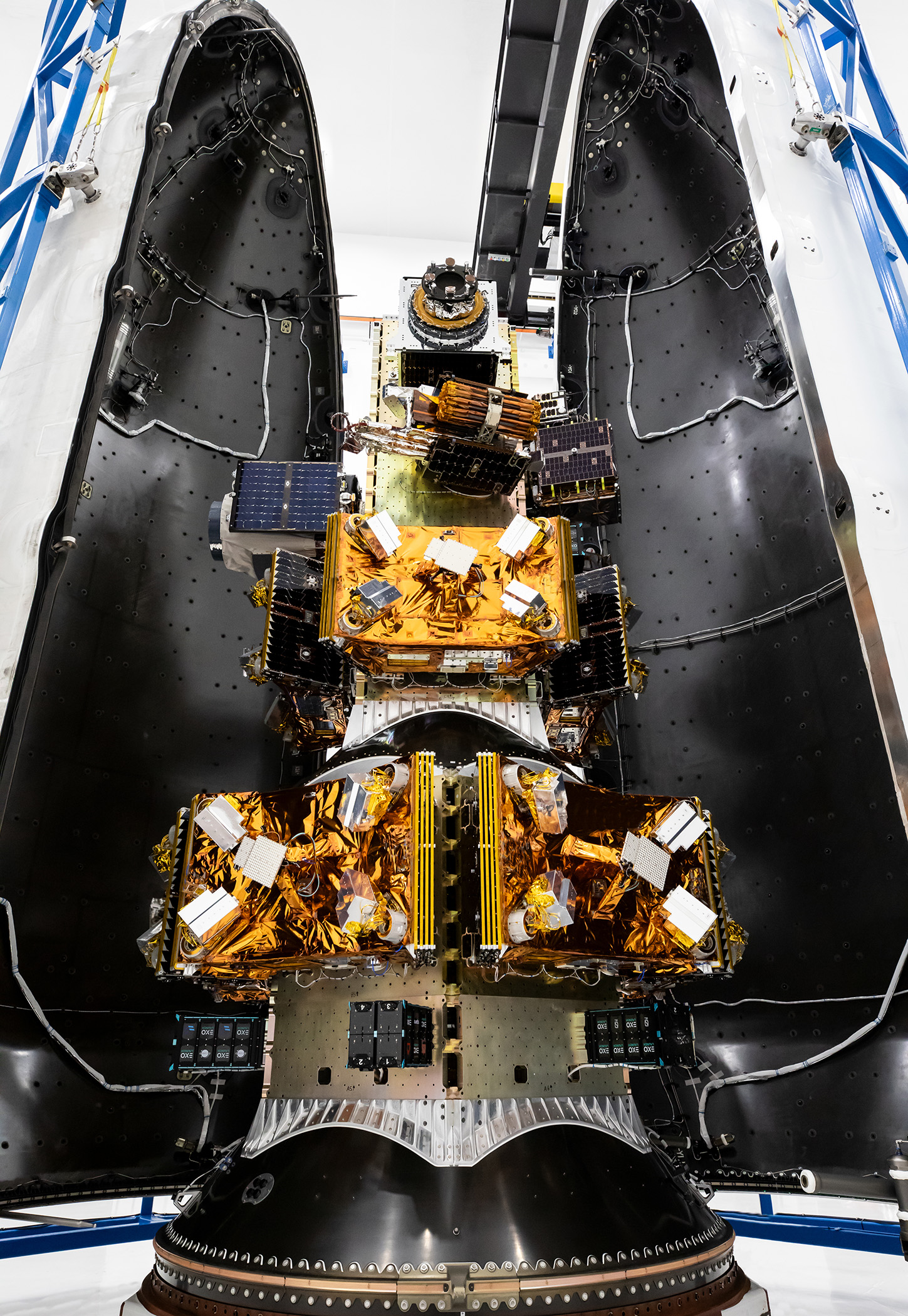
In this photo from early January 2026, teams prepare to encapsulate NASA’s Pandora small satellite, NASA-sponsored Star-Planet Activity Research CubeSat (SPARCS), and the Black Hole Coded Aperture Telescope (BlackCAT) CubeSat, inside a SpaceX Falcon 9 payload fairing.
A SpaceX Falcon 9 rocket carrying NASA’s Pandora small satellite lifted off at 5:44 a.m. PST Sunday, Jan. 11, from Space Launch Complex 4 East at Vandenberg Space Force Base located on California’s central coast.
During its initial year, Pandora will provide an in-depth study of at least 20 known planets orbiting distant stars to determine the composition of their atmospheres — especially the presence of hazes, clouds, and water.
Image credit: SpaceX
NASA’s Pandora Small Satellite Launched
In this photo from early January 2026, teams prepare to encapsulate NASA’s Pandora small satellite, NASA-sponsored Star-Planet Activity Research CubeSat (SPARCS), and the Black Hole Coded Aperture Telescope (BlackCAT) CubeSat, inside a SpaceX Falcon 9 payload fairing.
A SpaceX Falcon 9 rocket carrying NASA’s Pandora small satellite lifted off at 5:44 a.m. PST Sunday, Jan. 11, from Space Launch Complex 4 East at Vandenberg Space Force Base located on California’s central coast.
During its initial year, Pandora will provide an in-depth study of at least 20 known planets orbiting distant stars to determine the composition of their atmospheres — especially the presence of hazes, clouds, and water.
Image credit: SpaceX
Young Stellar Objects Are Prominent In A New Hubble Image
A disparate collection of young stellar objects bejewels a cosmic panorama in the star-forming region NGC 1333 in this new image from NASA’s Hubble Space Telescope. To the left, an actively forming star called a protostar casts its glow on the surrounding gas and dust, creating a reflection nebula. Two dark stripes on opposite sides […]
NASA, Department of Energy to Develop Lunar Surface Reactor by 2030

NASA, along with the U.S. Department of Energy (DOE), announced Tuesday a renewed commitment to their longstanding partnership to support the research and development of a fission surface power system for use on the Moon under the Artemis campaign and future NASA missions to Mars.
A recently signed memorandum of understanding between the agencies solidifies this collaboration and advances President Trump’s vision of American space superiority by deploying nuclear reactors on the Moon and in orbit, including the development of a lunar surface reactor by 2030. This effort ensures the United States leads the world in space exploration and commerce.
“Under President Trump’s national space policy, America is committed to returning to the Moon, building the infrastructure to stay, and making the investments required for the next giant leap to Mars and beyond,” said NASA Administrator Jared Isaacman. “Achieving this future requires harnessing nuclear power. This agreement enables closer collaboration between NASA and the Department of Energy to deliver the capabilities necessary to usher in the Golden Age of space exploration and discovery.”
NASA and DOE anticipate deploying a fission surface power system capable of producing safe, efficient, and plentiful electrical power that will be able to operate for years without the need to refuel. The deployment of a lunar surface reactor will enable future sustained lunar missions by providing continuous and abundant power, regardless of sunlight or temperature.
“History shows that when American science and innovation come together, from the Manhattan Project to the Apollo Mission, our nation leads the world to reach new frontiers once thought impossible,” said U.S. Secretary of Energy Chris Wright. “This agreement continues that legacy. Thanks to President Trump’s leadership and his America First Space Policy, the department is proud to work with NASA and the commercial space industry on what will be one of the greatest technical achievements in the history of nuclear energy and space exploration.”
The agencies’ joint effort to develop, fuel, authorize, and ready a lunar surface reactor for launch builds upon more than 50 years of successful collaboration in support of space exploration, technology development, and the strengthening of our national security.
For more about NASA’s Moon to Mars exploration plans, visit:
https://www.nasa.gov/moontomarsarchitecture
-end-
Bethany Stevens
Headquarters, Washington
771-216-2606
bethany.c.stevens@nasa.gov
NASA, Department of Energy to Develop Lunar Surface Reactor by 2030
NASA, along with the U.S. Department of Energy (DOE), announced Tuesday a renewed commitment to their longstanding partnership to support the research and development of a fission surface power system for use on the Moon under the Artemis campaign and future NASA missions to Mars.
A recently signed memorandum of understanding between the agencies solidifies this collaboration and advances President Trump’s vision of American space superiority by deploying nuclear reactors on the Moon and in orbit, including the development of a lunar surface reactor by 2030. This effort ensures the United States leads the world in space exploration and commerce.
“Under President Trump’s national space policy, America is committed to returning to the Moon, building the infrastructure to stay, and making the investments required for the next giant leap to Mars and beyond,” said NASA Administrator Jared Isaacman. “Achieving this future requires harnessing nuclear power. This agreement enables closer collaboration between NASA and the Department of Energy to deliver the capabilities necessary to usher in the Golden Age of space exploration and discovery.”
NASA and DOE anticipate deploying a fission surface power system capable of producing safe, efficient, and plentiful electrical power that will be able to operate for years without the need to refuel. The deployment of a lunar surface reactor will enable future sustained lunar missions by providing continuous and abundant power, regardless of sunlight or temperature.
“History shows that when American science and innovation come together, from the Manhattan Project to the Apollo Mission, our nation leads the world to reach new frontiers once thought impossible,” said U.S. Secretary of Energy Chris Wright. “This agreement continues that legacy. Thanks to President Trump’s leadership and his America First Space Policy, the department is proud to work with NASA and the commercial space industry on what will be one of the greatest technical achievements in the history of nuclear energy and space exploration.”
The agencies’ joint effort to develop, fuel, authorize, and ready a lunar surface reactor for launch builds upon more than 50 years of successful collaboration in support of space exploration, technology development, and the strengthening of our national security.
For more about NASA’s Moon to Mars exploration plans, visit:
https://www.nasa.gov/moontomarsarchitecture
-end-
Bethany Stevens
Headquarters, Washington
771-216-2606
bethany.c.stevens@nasa.gov
Siwarha's Wake Gives it Away at Betelgeuse
Betelgeuse is the star that everybody can't wait to see blow up, preferably sooner than later. That's because it's a red supergiant on the verge of becoming a supernova and there hasn't been one explode this close in recorded human history. It's been changing its brightness and showing strange surface behavior, which is why astronomers track its activity closely. Are these changes due to its aging process? Do they mean it's about to blow up? Probably not.
New Evidence That An Ancient Martian Ocean Covered Half The Planet
Mars Was Half Covered by an Ocean susannakohler33808 Mon, 01/12/2026 - 12:00 Mars Was Half Covered by an Ocean https://mediarelations.unibe.ch/media_releases/2026/media_releases_2026/mars_was_half_covered_by_an_ocean/index_eng.html
Supermassive Black Hole Sagittarius A* May Have Once Shone 10,000 Times Brighter Than Today
New research suggests that the x-ray light coming from the Milky Way’s central black hole Sagittarius A* has changed dramatically in the span of just a few hundred years
The hunt for where the last Neanderthals lived
The hunt for where the last Neanderthals lived
U.S. Greenhouse Gas Emissions Are Rising for the First Time in Two Years—They Could Climb Far Higher
The skyrocketing electricity demands of AI data centers—and a cold snap—are driving up America’s emissions after years of declines, a new report finds