

Feed aggregator
First Sky Map from NASA’s SPHEREx Observatory

NASA’s SPHEREx Observatory has mapped the entire sky in 102 infrared colors, as seen here in this image released on Dec. 18, 2025. This image features a selection of colors emitted primarily by stars (blue, green, and white), hot hydrogen gas (blue), and cosmic dust (red).
While not visible to the human eye, these 102 infrared wavelengths of light are prevalent in the cosmos, and observing the entire sky this way enables scientists to answer big questions, including how a dramatic event that occurred in the first billionth of a trillionth of a trillionth of a second after the big bang influenced the 3D distribution of hundreds of millions of galaxies in our universe. In addition, scientists will use the data to study how galaxies have changed over the universe’s nearly 14-billion-year history and learn about the distribution of key ingredients for life in our own galaxy.
Image credit: NASA/JPL-Caltech
First Sky Map from NASA’s SPHEREx Observatory
NASA’s SPHEREx Observatory has mapped the entire sky in 102 infrared colors, as seen here in this image released on Dec. 18, 2025. This image features a selection of colors emitted primarily by stars (blue, green, and white), hot hydrogen gas (blue), and cosmic dust (red).
While not visible to the human eye, these 102 infrared wavelengths of light are prevalent in the cosmos, and observing the entire sky this way enables scientists to answer big questions, including how a dramatic event that occurred in the first billionth of a trillionth of a trillionth of a second after the big bang influenced the 3D distribution of hundreds of millions of galaxies in our universe. In addition, scientists will use the data to study how galaxies have changed over the universe’s nearly 14-billion-year history and learn about the distribution of key ingredients for life in our own galaxy.
Image credit: NASA/JPL-Caltech
Rogue Saturn Discovered Floating Through the Milky Way
Astronomers have measured the mass of a free-floating planet for the first time. Comparable to Saturn, it’s surprisingly massive for such rogue worlds.
The post Rogue Saturn Discovered Floating Through the Milky Way appeared first on Sky & Telescope.
Doctor Visits for Flu Hit Highest Level in Almost 30 Years
Almost one in 10 people who visited a doctor in the U.S. in the week ending on December 27 were there for flulike symptoms, according to new data
The first commercial space stations will start orbiting Earth in 2026
The first commercial space stations will start orbiting Earth in 2026
US will need both carrots and sticks to reach net zero
US will need both carrots and sticks to reach net zero
Diving Into Human Spaceflight Safety with NASA Johnson’s Craig Shannon
Growing up in Houston, Craig Shannon was always inspired by NASA and the spirit of exploration the agency represents. Yet it was a passion for scuba diving that unexpectedly led to his more than 23-year career at NASA’s Johnson Space Center.
Shannon became a certified diver and scuba instructor while earning his bachelor’s degree in communications from Stephen F. Austin State University. He happened to meet divers from NASA’s Neutral Buoyancy Laboratory (NBL) at a local environmental cleanup event during his senior year. “The encounter planted a seed,” he said.
Craig Shannon during a dive in the Neutral Buoyancy Laboratory pool at NASA’s Johnson Space Center. Image courtesy of Craig Shannon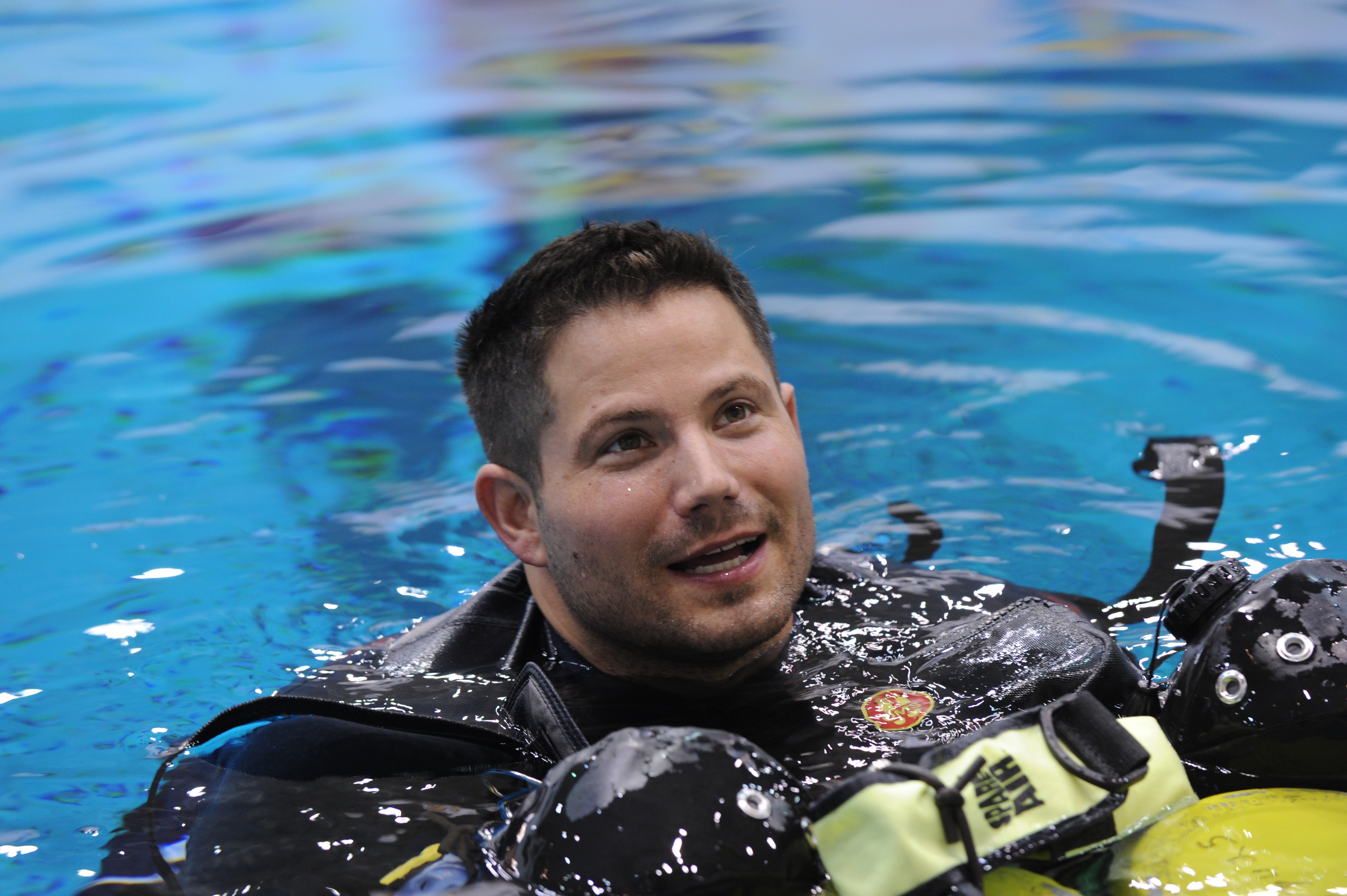
Shannon was hired as an NBL diver shortly after graduation, launching what would become a 19-year career in dive operations. He progressed through a variety of roles – from utility diver, instructor, and training officer, to dive operations lead, training group lead, and ultimately, dive operations manager. “Each role deepened my understanding of operational excellence, safety, and leadership in high-performance environments,” he said. Shannon added that becoming the dive operations manager was one of the defining points of his career. “I had the privilege of leading an exceptional team and contributing directly to astronaut training and operational excellence.”
Seeking new challenges and opportunities for professional growth, Shannon transitioned to a test safety officer position at Johnson for about four years, expanding his knowledge of technical risk management in different environments. He returned to the NBL in 2025, this time as a safety officer. In that role, Shannon works to protect employees’ well-being and the facility’s operational integrity. His responsibilities are a mix of proactive safety initiatives – such as facility inspections, safety training, and communication – and incident response, which involves investigating mishaps and close calls and developing corrective action plans to prevent recurrence. He also serves as an internal technical consultant, fielding safety-related questions from employees and visitors and providing guidance that complies with Occupational Safety and Health Administration and NASA safety standards.
“I work across functions with operations, engineering, medical, and training teams to integrate safety into all daily processes and long-term planning,” he said. “It brings full circle my commitment to the safety and success of human spaceflight training.”
Former NASA astronaut Mike Massimino helps Craig Shannon suit up for a suited test dive in the Neutral Buoyancy Laboratory pool.Image courtesy of Craig Shannon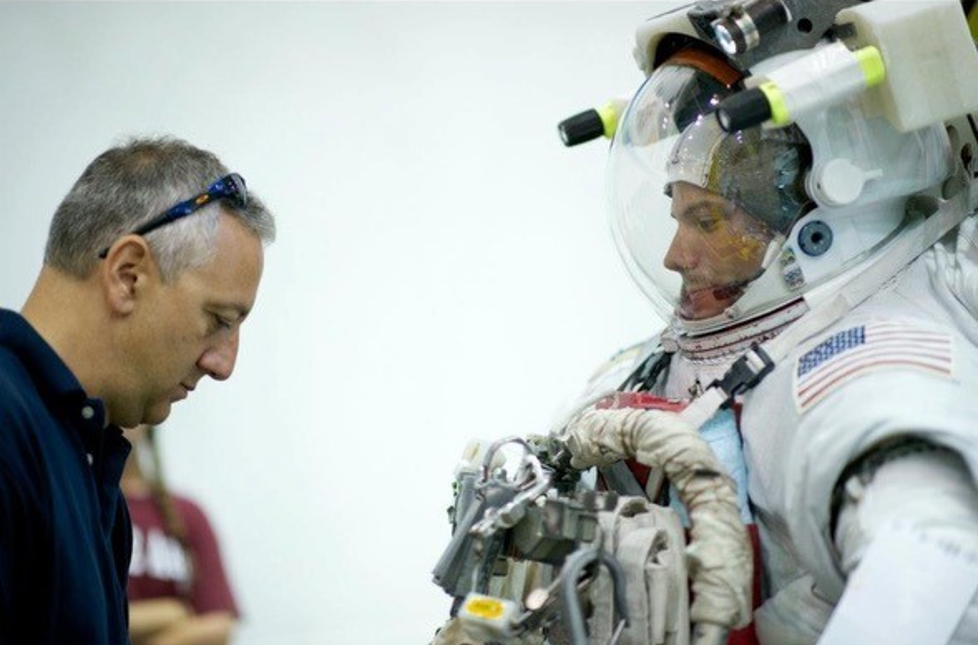
Shannon acknowledged that not having an engineering degree has made work more challenging at times, but it has not hindered his advancement. “I’ve earned key positions by committing myself to continuous learning, gaining in-depth knowledge of the technical areas I work in, and consistently demonstrating dedication to both my employers and my career,” he said. “My path has required hard work, adaptability, and a proactive approach to professional growth, which I view as strengths that have allowed me to contribute meaningfully in a highly technical setting.”
Shannon has also learned the importance of embracing change. “Change isn’t always easy, but it’s often where the most learning and development happen,” he said. “Whether it was stepping into leadership for the first time, shifting into a new field, or returning to a familiar place with a new purpose, each transition brought growth I never could have anticipated.” He added that patience, accountability, and empathy are important leadership qualities that help build stronger, more resilient teams.
While Shannon takes pride in his work, he said his family is his greatest achievement. “I’m most proud of raising three amazing children with my wife, Kimberley. They have been my grounding force and greatest inspiration,” he said.
Craig Shannon, his wife Kimberley, and their three children enjoy family time at the beach in Florida. Image courtesy of Craig Shannon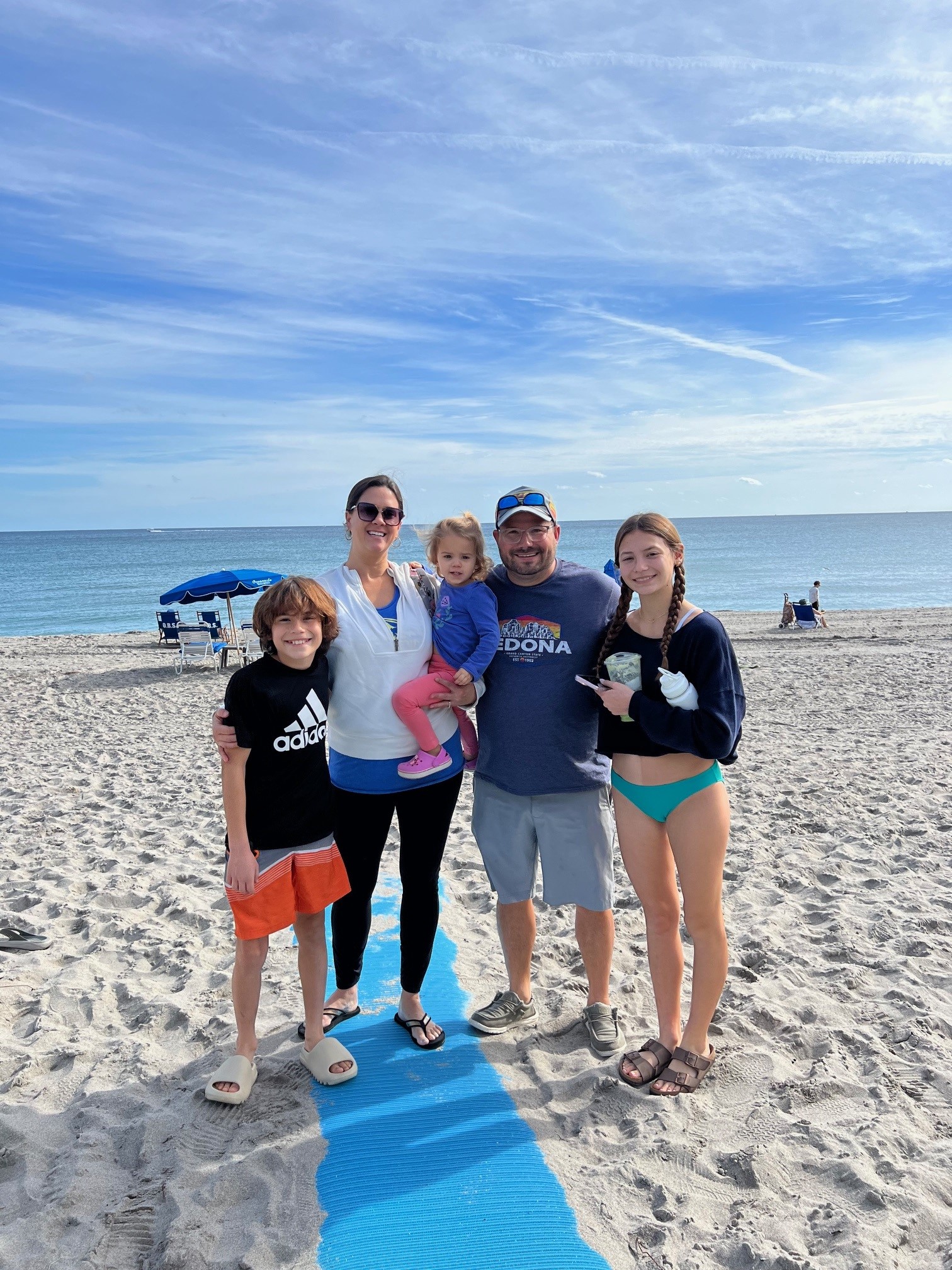
He is also the proud co-owner of a local scuba diving company, which allows him to combine his love for diving, travel, and community. “I’ve had the privilege of leading dive trips around the world with groups of amazing people—sharing unforgettable underwater experiences and fostering a strong, adventurous dive community,” he said. “It’s a way for me to stay connected to the roots of my diving career and continue exploring the world through the lens of curiosity and connection.”
He encourages the next generation to find something they are passionate about. “It’s important to be genuinely excited about what you do and to face the challenges ahead with determination and curiosity,” he said. “That energy, paired with a willingness to adapt and grow, has carried me through each phase of my career. Challenges will come, but how you meet them defines your path.”
Explore More 4 min read I Am Artemis: Jacki Mahaffey Article 2 days ago 2 min read Holidays in Space: 25 Years of Space Station Celebrations Article 2 weeks ago 11 min read NASA Johnson’s 2025 Milestones Article 3 weeks agoDiving Into Human Spaceflight Safety with NASA Johnson’s Craig Shannon
Growing up in Houston, Craig Shannon was always inspired by NASA and the spirit of exploration the agency represents. Yet it was a passion for scuba diving that unexpectedly led to his more than 23-year career at NASA’s Johnson Space Center.
Shannon became a certified diver and scuba instructor while earning his bachelor’s degree in communications from Stephen F. Austin State University. He happened to meet divers from NASA’s Neutral Buoyancy Laboratory (NBL) at a local environmental cleanup event during his senior year. “The encounter planted a seed,” he said.
Craig Shannon during a dive in the Neutral Buoyancy Laboratory pool at NASA’s Johnson Space Center. Image courtesy of Craig ShannonShannon was hired as an NBL diver shortly after graduation, launching what would become a 19-year career in dive operations. He progressed through a variety of roles – from utility diver, instructor, and training officer, to dive operations lead, training group lead, and ultimately, dive operations manager. “Each role deepened my understanding of operational excellence, safety, and leadership in high-performance environments,” he said. Shannon added that becoming the dive operations manager was one of the defining points of his career. “I had the privilege of leading an exceptional team and contributing directly to astronaut training and operational excellence.”
Seeking new challenges and opportunities for professional growth, Shannon transitioned to a test safety officer position at Johnson for about four years, expanding his knowledge of technical risk management in different environments. He returned to the NBL in 2025, this time as a safety officer. In that role, Shannon works to protect employees’ well-being and the facility’s operational integrity. His responsibilities are a mix of proactive safety initiatives – such as facility inspections, safety training, and communication – and incident response, which involves investigating mishaps and close calls and developing corrective action plans to prevent recurrence. He also serves as an internal technical consultant, fielding safety-related questions from employees and visitors and providing guidance that complies with Occupational Safety and Health Administration and NASA safety standards.
“I work across functions with operations, engineering, medical, and training teams to integrate safety into all daily processes and long-term planning,” he said. “It brings full circle my commitment to the safety and success of human spaceflight training.”
Former NASA astronaut Mike Massimino helps Craig Shannon suit up for a suited test dive in the Neutral Buoyancy Laboratory pool.Image courtesy of Craig ShannonShannon acknowledged that not having an engineering degree has made work more challenging at times, but it has not hindered his advancement. “I’ve earned key positions by committing myself to continuous learning, gaining in-depth knowledge of the technical areas I work in, and consistently demonstrating dedication to both my employers and my career,” he said. “My path has required hard work, adaptability, and a proactive approach to professional growth, which I view as strengths that have allowed me to contribute meaningfully in a highly technical setting.”
Shannon has also learned the importance of embracing change. “Change isn’t always easy, but it’s often where the most learning and development happen,” he said. “Whether it was stepping into leadership for the first time, shifting into a new field, or returning to a familiar place with a new purpose, each transition brought growth I never could have anticipated.” He added that patience, accountability, and empathy are important leadership qualities that help build stronger, more resilient teams.
While Shannon takes pride in his work, he said his family is his greatest achievement. “I’m most proud of raising three amazing children with my wife, Kimberley. They have been my grounding force and greatest inspiration,” he said.
Craig Shannon, his wife Kimberley, and their three children enjoy family time at the beach in Florida. Image courtesy of Craig ShannonHe is also the proud co-owner of a local scuba diving company, which allows him to combine his love for diving, travel, and community. “I’ve had the privilege of leading dive trips around the world with groups of amazing people—sharing unforgettable underwater experiences and fostering a strong, adventurous dive community,” he said. “It’s a way for me to stay connected to the roots of my diving career and continue exploring the world through the lens of curiosity and connection.”
He encourages the next generation to find something they are passionate about. “It’s important to be genuinely excited about what you do and to face the challenges ahead with determination and curiosity,” he said. “That energy, paired with a willingness to adapt and grow, has carried me through each phase of my career. Challenges will come, but how you meet them defines your path.”
Explore More 4 min read I Am Artemis: Jacki Mahaffey Article 2 days ago 2 min read Holidays in Space: 25 Years of Space Station Celebrations Article 2 weeks ago 11 min read NASA Johnson’s 2025 Milestones Article 3 weeks agoReaching the Precipice in Angola
- Earth
- Earth Observatory
- Image of the Day
- EO Explorer
- Topics
- More Content
- About
Reaching the Precipice in Angola
- Earth
- Earth Observatory
- Image of the Day
- EO Explorer
- Topics
- More Content
- About
Stars And Planets Are Linked Together, And Dust Is The Key To Understanding How
Stars and planets are linked together in their formation, evolution, and even in their demises. But many of the details behind this are yet to be revealed. New research outlines an observing strategy that could uncover more critical details.
A New Year of Star-Camping
For 2026, I want to be more myself — less stress and rumination, more centeredness and joy — and that’s going to necessitate a lot more time beneath the stars.
The post A New Year of Star-Camping appeared first on Sky & Telescope.
Wegovy Weight-Loss Pills Hit U.S. Pharmacies—Costs and Treatments Explained
The first GLP-1 pills for weight loss are hitting U.S. pharmacies. But how will they be prescribed?
NASA’s IXPE Measures White Dwarf Star for First Time

By Michael Allen
For the first time, scientists have used NASA’s IXPE (Imaging X-ray Polarization Explorer) to study a white dwarf star. Using IXPE’s unique X-ray polarization capability, astronomers examined a star called the intermediate polar EX Hydrae, unlocking the geometry of energetic binary systems.
In 2024, IXPE spent nearly one week focused on EX Hydrae, a white dwarf star system located in the constellation Hydra, approximately 200 light-years from Earth. A paper about the results published in the Astrophysical Journal. Astrophysics research scientists based at the Massachusetts Institute of Technology in Cambridge led the study, along with co-authors at the University of Iowa, East Tennessee State University, University of Liége, and Embry Riddle Aeronautical University.
A white dwarf star occurs after a star runs out of hydrogen fuel to fuse in its core but is not massive enough to explode as core-collapse supernovae. What remains is very dense, roughly the same diameter as Earth with as much mass as our Sun.
EX Hydrae is in a binary system with a main sequence companion star, from which gas is continuously falling onto the white dwarf. How exactly the white dwarf is accumulating, or accreting, this matter and where it arrives on the white dwarf depends on the strength of the white dwarf star’s magnetic field.
In the case of EX Hydrae, its magnetic field is not strong enough to focus matter completely at the star’s poles. But, it is still rapidly adding mass to the accretion disk, earning the classification “intermediate polars.
In an intermediate polar system, material forms an accretion disk while also being pulled towards its magnetic poles. During this phenomenon, matter reaches tens of millions of degrees Fahrenheit, bouncing off other material bound to the white dwarf star, creating large columns of gas that emit high-energy X-rays – a cosmic situation perfect for IXPE to study.
“NASA IXPE’s one-of-a-kind polarimetry capability allowed us to measure the height of the accreting column from the white dwarf star to be almost 2,000 miles high – without as many assumptions required as past calculations,” said Sean Gunderson, MIT scientist and lead author on the paper. “The X-rays we observed likely scattered off the white dwarf’s surface itself. These features are far smaller than we could hope to image directly and clearly show the power of polarimetry to ‘see’ these sources in detail never before possible.”
Information from IXPE’s polarization data of EX Hydrae will help scientists understand other highly energetic binary systems.
More about IXPEThe IXPE mission, which continues to provide unprecedented data enabling groundbreaking discoveries about celestial objects across the universe, is a joint NASA and Italian Space Agency mission with partners and science collaborators in 12 countries. It is led by NASA’s Marshall Space Flight Center in Huntsville, Alabama. BAE Systems, Inc., headquartered in Falls Church, Virginia, manages spacecraft operations together with the University of Colorado’s Laboratory for Atmospheric and Space Physics in Boulder. Learn more about IXPE’s ongoing mission here:
Share Details Last Updated Jan 06, 2026 EditorLee MohonContactCorinne M. Beckingercorinne.m.beckinger@nasa.govLocationMarshall Space Flight Center Related Terms