
Feed aggregator
Últimos preparativos para la primera misión tripulada a la Luna con la campaña Artemis de la NASA

Read this article in English here.
Conforme la NASA se acerca al lanzamiento del vuelo de prueba Artemis II, la agencia pronto llevará por primera vez su cohete Sistema de Lanzamiento Espacial (SLS, por sus siglas en inglés) y la nave espacial Orion a la plataforma de lanzamiento en el Centro Espacial Kennedy de la agencia en Florida para comenzar la integración final, las pruebas y los ensayos para el lanzamiento.
La NASA tiene como objetivo comenzar desde el sábado 17 de enero su traslado desde el Edificio de Ensamblaje de Vehículos hasta la Plataforma de Lanzamientos 39B, lo que tardará varias horas. El viaje de casi 6,5 kilómetros (cuatro millas) en el vehículo transportador oruga 2 podría durar hasta 12 horas. Los equipos técnicos están trabajando día y noche para dar por terminadas todas las tareas antes del transporte del cohete. Sin embargo, esta fecha objetivo está sujeta a cambios si fuera necesario tiempo adicional para los preparativos técnicos o debido a las condiciones meteorológicas.
“Nos estamos acercando a la misión Artemis II, y tenemos su lanzamiento a la vuelta de la esquina”, dijo Lori Glaze, administradora asociada interina para la Dirección de Misiones de Desarrollo de Sistemas de Exploración de la NASA. “Nos quedan pasos importantes en nuestro camino hacia el lanzamiento, y la seguridad de la tripulación seguirá siendo nuestra principal prioridad en todo momento, a medida que nos acercamos al regreso de la humanidad a la Luna”.
Al igual que con todos los nuevos desarrollos de sistemas complejos, los ingenieros han estado solucionando varios problemas en los últimos días y semanas. Durante las comprobaciones finales antes del traslado, los técnicos detectaron que un cable relacionado con el sistema de terminación de vuelo estaba doblado en contra de las especificaciones. El personal técnico lo está reemplazando y hará pruebas con el nuevo cable durante el fin de semana. Además, una válvula relacionada con la presurización de la escotilla de Orion presentó problemas que hicieron necesario llevar a cabo pruebas de demostración de la cuenta regresiva el 20 de diciembre pasado. El 5 de enero, el equipo reemplazó la válvula e hizo pruebas de su funcionamiento que resultaron exitosas. Los ingenieros también trabajaron para resolver fugas en el hardware de soporte en tierra que es necesario para cargar oxígeno gaseoso en Orion a fin de proporcionar aire respirable.
Traslado
Una vez que el cohete y la nave espacial integrados lleguen a la plataforma de lanzamiento, la NASA comenzará inmediatamente una larga lista de verificación para los preparativos en la plataforma de lanzamiento, incluyendo la conexión de equipos mecánicos de apoyo en tierra, como líneas eléctricas, conductos del sistema de control ambiental de combustible y tomas de surtido de combustible criogénico. Los equipos de personal técnico encenderán todos los sistemas integrados en la plataforma por primera vez para garantizar que los componentes del hardware de vuelo funcionen correctamente entre sí, con el lanzador móvil y con los sistemas de infraestructura terrestre.
Una vez que esté todo completado, los astronautas de Artemis II, Reid Wiseman, Victor Glover y Christina Koch de la NASA, y el astronauta de la CSA (Agencia Espacial Canadiense) Jeremy Hansen, llevarán a cabo una caminata final en la plataforma.
Ensayo general con circulación de combustible y llenado de tanques
A finales de enero, la NASA llevará a cabo un ensayo general con circulación de combustible, el cual es una prueba previa al lanzamiento para llenar los tanques de combustible en el cohete. Durante este ensayo general, el personal técnico hace una demostración de la capacidad de cargar más de 700.000 galones de combustible criogénico en el cohete, lleva a cabo una cuenta regresiva para el lanzamiento y practica la extracción segura del combustible del cohete sin tripulación presente en el sitio.
Durante el lanzamiento, el equipo de cierre, o de tareas finales, será responsable de asegurar a los astronautas en Orion y cerrar sus escotillas. El personal de cierre también utilizará este ensayo para practicar sus procedimientos de forma segura sin tener tripulación a bordo de la nave espacial.
El ensayo general con circulación de combustible incluirá varios “encendidos”, o pruebas de funcionamiento, para demostrar la capacidad del equipo de lanzamiento para detener, reanudar y reiniciar operaciones en varios momentos diferentes de los últimos 10 minutos de la cuenta regresiva, conocida como conteo terminal.
La ejecución del primer encendido comenzará aproximadamente en las 49 horas antes del lanzamiento, cuando los equipos encargados de lanzamiento son llamados a sus estaciones, hasta 1 minuto y 30 segundos antes del lanzamiento, seguido de una pausa planificada de tres minutos y luego la reanudación de la cuenta regresiva hasta 33 segundos antes del lanzamiento, el punto en el que el secuenciador de lanzamiento automático del cohete controlará los últimos segundos de la cuenta regresiva. Luego, los equipos técnicos volverán a reiniciar a T-10 minutos y detendrán el conteo, y luego reanudarán los procedimientos hasta 30 segundos antes del lanzamiento como parte de una segunda ejecución.
Si bien la NASA ha integrado las lecciones aprendidas con Artemis I en los procedimientos de la cuenta regresiva para el lanzamiento, la agencia hará una pausa para abordar cualquier problema durante la prueba o en cualquier otro momento si surgen retos técnicos. Los ingenieros vigilarán de cerca la carga de combustible de hidrógeno líquido y oxígeno líquido en el cohete, después de los desafíos que se encontraron con la carga de hidrógeno líquido durante los ensayos generales con circulación de combustible de Artemis I. Los equipos técnicos también prestarán mucha atención a la efectividad de los procedimientos recientemente actualizados para limitar la cantidad de nitrógeno gaseoso que se acumula en el espacio que está entre el módulo de tripulación de Orion y las escotillas del sistema de cancelación de lanzamiento, lo que podría representar un problema para el personal de cierre.
Es posible que se requieran ensayos generales con circulación de combustible adicionales para garantizar que el vehículo esté completamente revisado y apto para el vuelo.
De ser necesario, la NASA podría trasladar al cohete SLS y la nave Orion de vuelta al Edificio de Ensamblaje de Vehículos para realizar trabajos adicionales antes del lanzamiento después del ensayo general con circulación de combustible.
Próximos pasos para el lanzamiento
Después de un exitoso ensayo general con circulación de combustible, la NASA convocará una revisión de aptitud para el vuelo en la cual el equipo de gestión de la misión evaluará la aptitud de todos los sistemas, incluyendo el hardware de vuelo, la infraestructura y el personal de lanzamiento, vuelo y recuperación antes de comprometerse con una fecha de lanzamiento.
Aunque la ventana para el lanzamiento de Artemis II se podría iniciar tan pronto como el viernes 6 de febrero, el equipo de gestión de la misión evaluará la aptitud para el vuelo después del ensayo general con toda la nave espacial, la infraestructura de lanzamiento, y la tripulación y el personal de operaciones antes de seleccionar una fecha para el lanzamiento.
A fin de determinar las posibles fechas de lanzamiento, los ingenieros identificaron las restricciones clave necesarias para cumplir la misión y mantener a salvo a la tripulación dentro de Orion. Los períodos de lanzamiento resultantes son los días o las semanas en los que la nave espacial y el cohete pueden cumplir los objetivos de la misión. Estos períodos de lanzamiento explican la compleja mecánica orbital relacionada con el lanzamiento en una trayectoria precisa hacia la Luna mientras la Tierra rota sobre su eje y la Luna orbita la Tierra cada mes en su ciclo lunar. Esto da como resultado un patrón de alrededor de una semana de oportunidades de lanzamiento, seguido de tres semanas sin oportunidades de lanzamiento.
Existen varios parámetros principales que establecen la disponibilidad del lanzamiento dentro de estos períodos. Debido a su trayectoria única en relación con las misiones de alunizaje posteriores, estas limitaciones clave son exclusivas del vuelo de prueba de la misión Artemis II.
- El día y la hora de lanzamiento deben permitir que SLS pueda llevar a Orion a una órbita terrestre alta, donde la tripulación y los equipos técnicos en tierra evaluarán los sistemas de soporte vital de la nave espacial antes de que la tripulación emprenda su viaje con rumbo a la Luna.
- Orion también debe estar en la alineación adecuada con la Tierra y la Luna en el momento del encendido de motores con inyección translunar. El encendido de motores con inyección translunar de Artemis II pone a Orion en rumbo de sobrevolar la Luna, y también lo pone en una trayectoria de retorno libre, en la cual la nave espacial utiliza la gravedad de la Luna para enviar la nave espacial de regreso a la Tierra sin maniobras adicionales importantes de propulsión.
- La trayectoria para un día determinado debe garantizar que Orion no esté en la oscuridad durante más de 90 minutos a la vez para que las alas de los paneles solares puedan recibir y convertir la luz solar en electricidad, y la nave espacial pueda mantener un rango de temperatura óptimo. Los planificadores de la misión eliminan las posibles fechas de lanzamiento que llevarían a Orion a eclipses prolongados durante el vuelo.
- La fecha de lanzamiento debe sustentar una trayectoria que permita el perfil de entrada adecuado planificado durante el regreso de Orion a la Tierra.
Los períodos a continuación muestran la disponibilidad de llevar a cabo el lanzamiento hasta abril de 2026. Los planificadores de la misión mejoran estos períodos en función de un análisis actualizado más o menos dos meses antes de que estos comiencen, y ellos están sujetos a cambios.
Período de lanzamiento del 31 de enero al 14 de febrero
- Oportunidades de lanzamiento los días 6, 7, 8, 10 y 11 de febrero
Período de lanzamiento del 28 de febrero al 13 de marzo
- Oportunidades de lanzamiento los días 6, 7, 8, 9, 11 de marzo
Período de lanzamiento del 27 de marzo al 10 de abril
- Oportunidades de lanzamiento los días 1, 3, 4, 5, 6 de abril
Además de las oportunidades de lanzamiento basadas en la mecánica orbital y los requisitos de desempeño, también existen restricciones sobre qué días dentro de un período de lanzamiento pueden ser viables en función de la reposición de productos básicos, las condiciones meteorológicas y las operaciones de otros usuarios en el cronograma del Área Este. Como regla general, se pueden hacer hasta cuatro intentos de lanzamiento dentro de la semana aproximada de oportunidades que existen dentro de un período de lanzamiento.
Mientras la agencia se prepara para su primera misión tripulada más allá de la órbita terrestre en más de 50 años, la NASA espera aprender durante los procesos, tanto en tierra como en vuelo, y dejará que la aptitud y el desempeño de sus sistemas indiquen el momento en que la agencia está lista para el lanzamiento.
Como parte de una edad de oro de innovación y exploración, el vuelo de prueba de Artemis II, el cual tendrá una duración aproximada de 10 días, es el primer vuelo tripulado para la campaña Artemis de la NASA. Este es otro paso hacia nuevas misiones tripuladas de Estados Unidos en la superficie de la Luna, lo que llevará a una presencia sostenida en la Luna que ayudará a la agencia a prepararse para enviar a los primeros astronautas estadounidenses a Marte.
Encuentra más información sobre la campaña Artemis de la NASA en el siguiente sitio web (en inglés):
Share Details Last Updated Jan 12, 2026 LocationNASA Headquarters Related TermsComplement-ARIE NAMs Reduction to Practice Challenge

Recent technological advances have set the stage for a renewed focus on human-based solutions called new approach methodologies (NAMs) that can complement, and in some cases replace, animal models in research and regulatory testing. These NAMs generally span advanced cell-tissue-organoid (in vitro), computational modeling (in silico), and cell-free biochemical analysis (in chemico) techniques, with each type of NAM offering different advantages. A combination and integration of multiple NAMs elements into a synergistic approach that augments gaps and/or deficiencies in individual NAMs approaches is a “combinatorial NAM” and could ultimately allow for improved predictions of human clinical response. Although many combinatorial NAMs are still early in development, not validated and standardized, nor available to the market broadly, combinatorial NAMs can potentially transform the way biomedical research, drug development, and clinical trials are conducted. To accelerate development and validation of combinatorial NAMs for human-based scientific and regulatory purposes, the National Institutes of Health (NIH) Common Fund’s Complement-Animal Research In Experimentation (Complement-ARIE) program in collaboration with the Food and Drug Administration (FDA) and Environmental Protection Agency (EPA), is launching the Reduction to Practice (RTP) Challenge. This challenge invites innovative combinatorial NAMs solutions from multidisciplinary teams who can successfully demonstrate implementation of their human-based solution in a practical and usable form within a 3-year period. Solvers will have the chance to win up to $1,430,000 in cumulative cash prizes and have their solution provided validation and/or qualification support by the Complement-ARIE Validation and Qualification Network (VQN). This Challenge is open to the public.
Award: $7,000,000 in total prizes
Open Date: Phase 1 – September 30, 2025, Phase 2 – July 2, 2026; Phase 3 – August 1, 2027
Close Date: Phase 1 – March 1, 2026
For more information, visit: https://www.herox.com/Complement-ARIE-RTP
Rubin Observatory Spots Fastest Spinning Asteroid Ever
The Vera C. Rubin Observatory has discovered the fastest-spinning asteroid ever over 500 meters in size.
We're about to simulate a human brain on a supercomputer
We're about to simulate a human brain on a supercomputer
Did Asteroids Collide Near Fomalhaut – Again?
The young, nearby star may be experiencing an episode of repeated, violent collisions within its forming planetary system.
The post Did Asteroids Collide Near Fomalhaut – Again? appeared first on Sky & Telescope.
Unveiling the Turbulent 'Teenage Years' of the Universe
Combining data from different telescopes is one of the best ways to get a fuller picture of far-off objects. Because telescopes such as Hubble (visible light), the James Webb Space Telescope (infrared), and the Atacama Large Millimeter Array (radio) each collect data in different wavelengths, they are able to capture distinct features of objects like galaxies that other telescopes cannot observe. A new paper by a large group of authors, headed by Andreas Faisst of Caltech, presented at the American Astronomical Society Meeting last week and published in The Astrophysical Journal Supplement tracks eighteen early galaxies in as broad of a spectrum as those instruments can collect, and most significantly found that they seem to “grow up” faster than expected.
Views of the Moon - Replay
Why it’s easy to be misunderstood when talking about probability
Why it’s easy to be misunderstood when talking about probability
Woodpeckers’ Secret Strength Revealed—Plus, Flu Surge, AI Sleep Predictions and CES 2026 Trends
Why flu cases are spiking, how AI predicts disease from your sleep, and what surprising biomechanics lie behind woodpeckers’ powerful pecks.
Susan Schuh: Supporting the Humans in Human Spaceflight
Susan Schuh has dedicated her career to helping humans adapt to life beyond Earth.
As the Flight Crew Integration Operational Habitability (OpsHab) team lead in NASA’s Human Health and Performance Directorate at Johnson Space Center in Houston, Schuh leads efforts to understand what it is really like to live and work in space. She turns that information into progress by documenting astronauts’ feedback to improve current and future spaceflight missions.
Official portrait of Susan Schuh. NASA/Josh Valcarcel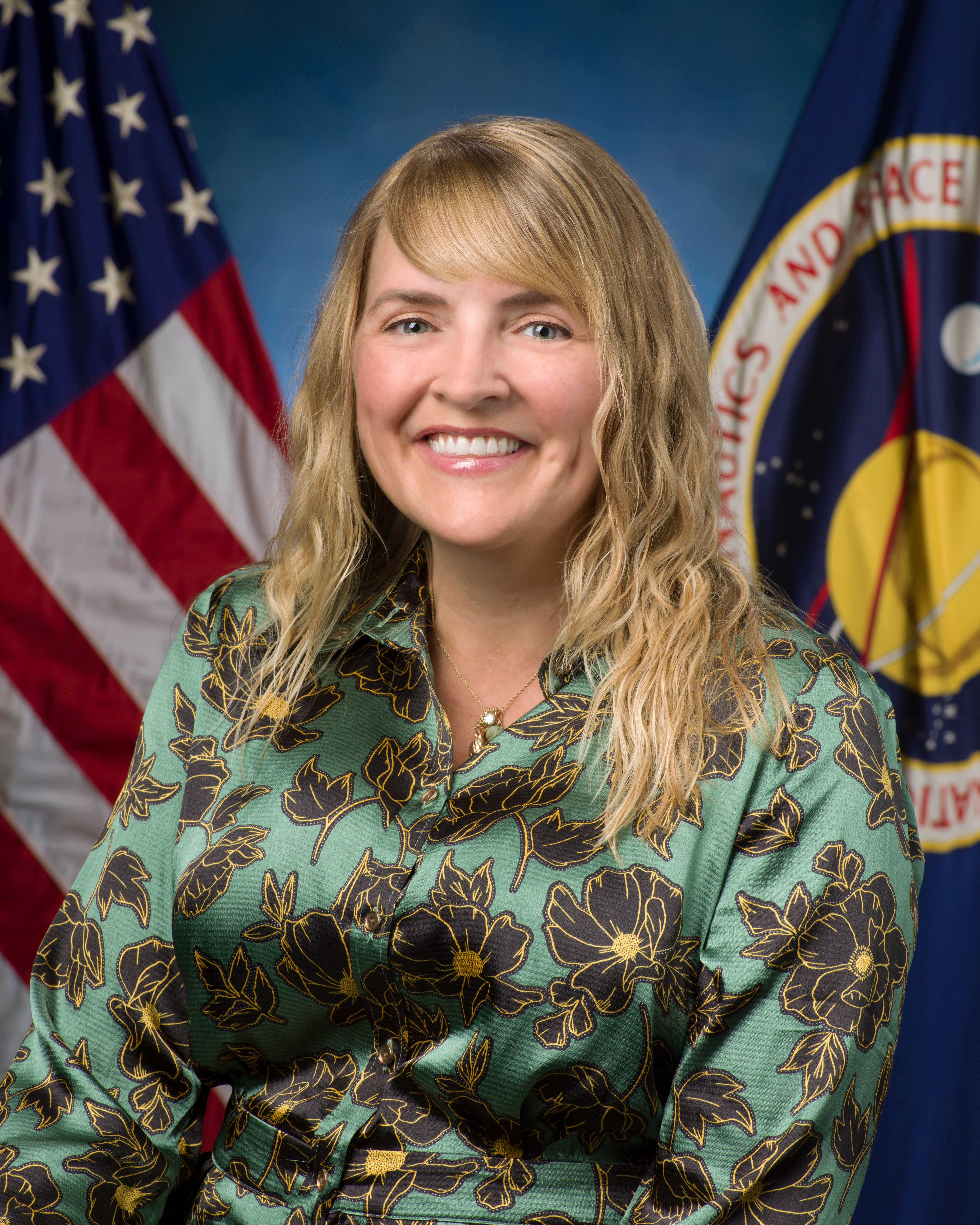
Her work not only supports crews aboard the International Space Station, but also provides critical information for NASA’s preparations to explore more of the lunar surface than ever before through Artemis missions.
Her team supports astronaut inflight and postflight debriefs, capturing and analyzing feedback to help NASA apply lessons learned. They also manage one of NASA’s most valuable habitability tools, the Crew Comments Database. With more than 115,000 entries spanning 25 years of International Space Station missions, it is the only comprehensive and searchable record of crew feedback in existence. Every comment, from how astronauts sleep to how they organize supplies, becomes part of NASA’s collective learning.
“The Crew Comments Database is my work pride and joy,” Schuh said. “It’s been an invaluable resource for operations and development and continues to lend itself to future exploration.”
Schuh’s path to NASA began with a mentor who saw her potential early on. While studying psychology at Flagler College in St. Augustine, Florida, she was introduced to human factors research by Dr. Gerald Gamache, whose work on the effects of the Chernobyl reactor explosion helped shape her understanding of how people function in complex environments.
While completing her master’s degree in human factors and systems at Embry-Riddle Aeronautical University in Daytona Beach, Florida, Schuh began her first internship at NASA in 2000. “Even from the first days of my internship at Johnson, I knew I was meant to be a part of this community supporting humans living and working in space,” she said.
Schuh left Johnson briefly to support human systems integration for the Navy and Air Force but returned in 2006. Since then, she has continued to shape how astronauts experience living and working in space.
NASA astronauts and panelists participate in the Parent Support Panel Discussion at NASA’s Johnson Space Center. Johnson Employee Assistance Program counselor Anika Isaac, top left, moderated the event alongside Susan Schuh, second from left, top row. Author Emily Oster, front center, joined astronaut parents, from left, Christina Koch, Jessica Watkins, Jessica Meir, and Reid Wiseman. NASA/David DeHoyos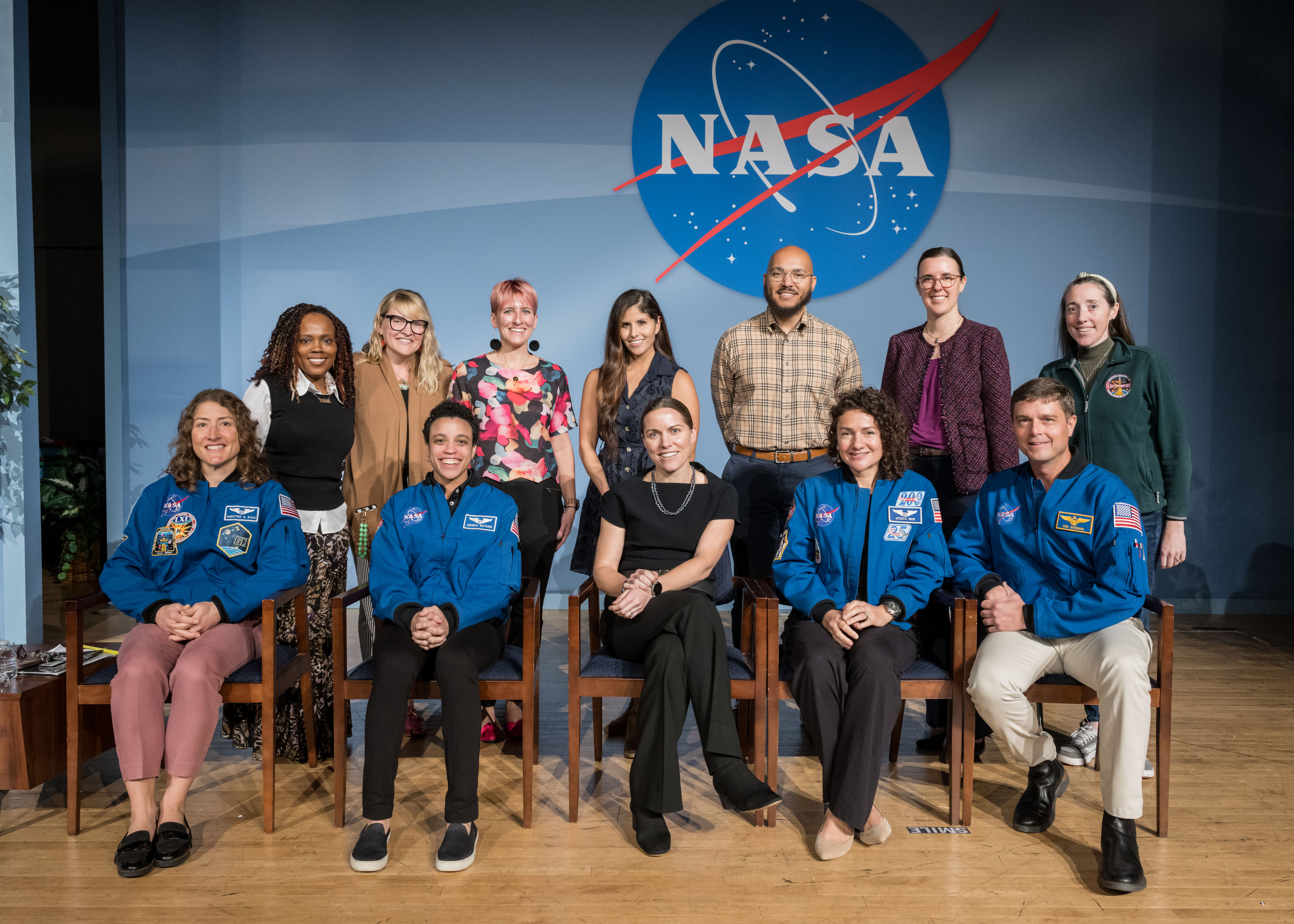
Her mentor’s influence extended beyond Schuh’s technical work. “Dr. Gamache was also a community builder outside of his professional life, and I’d like to think some of that rubbed off on me,” she said. That inspiration led her to found the Johnson Parenting community in 2020, which now includes more than 600 members who share support and resources for working parents across the center.
Schuh has learned that her work is about more than data—it is about people. “Being purposeful in taking time to listen and be willing to learn and collaborate has made all the difference for me,” she said. “Over time, I’ve learned a lot about perseverance. This work has required it, encouraging folks to utilize the Crew Comments Database and keeping the feedback process empowered and robust.”
Susan Schuh is honored with a Space Flight Awareness Silver Snoopy award on March 24, 2022. She is pictured with her daughter, Lorelei.NASA/Robert Markowitz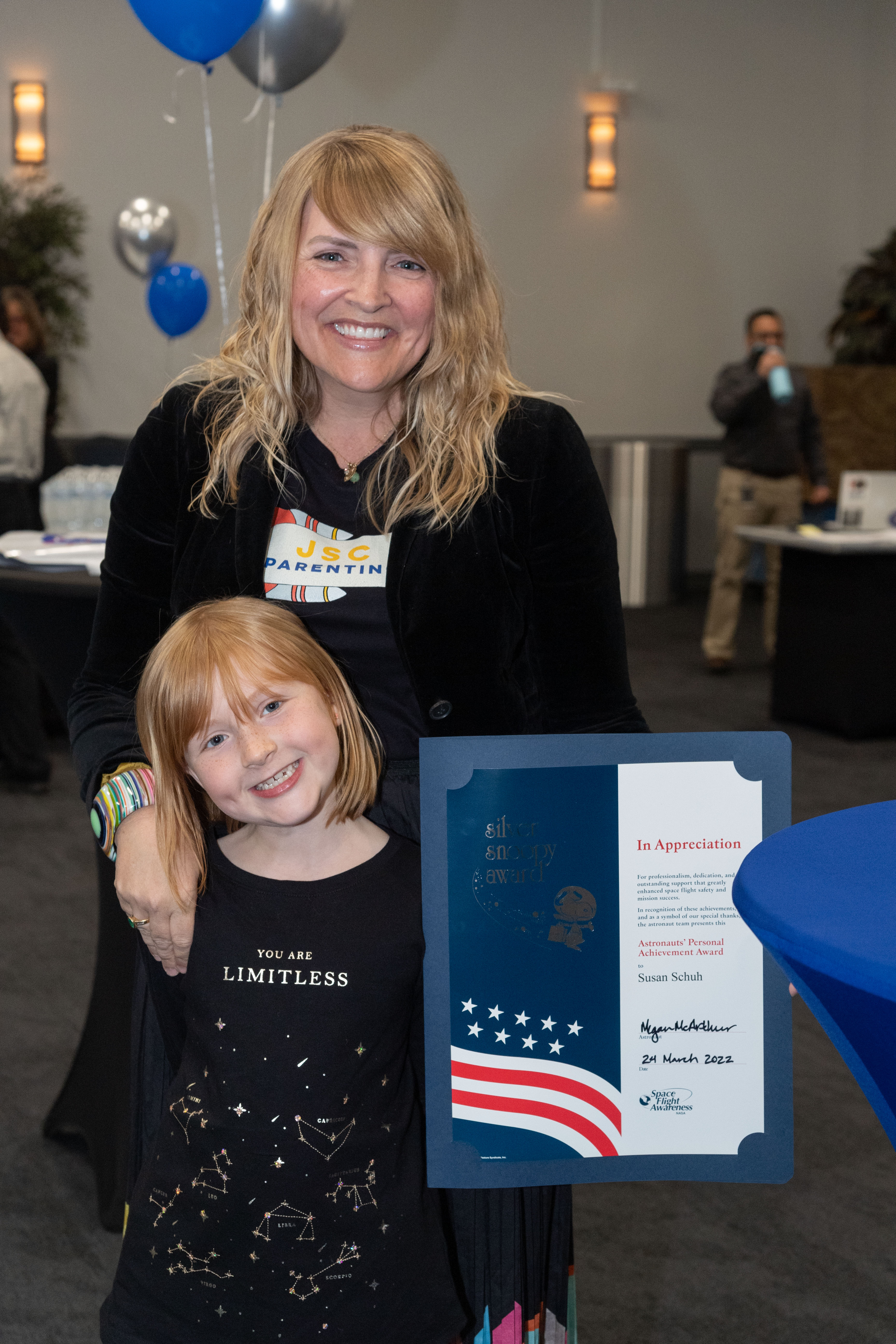
She is most proud of her family, known as Team Schuh—her husband, Scott, who works on the Orion Ascent Abort Mode Team, and their three daughters, Wilhelmina, Lorelei, and Franny. “They’re the reason I keep striving to balance work, family, and everything in between,” she said.
Finding that balance has been an ongoing struggle for her. “One of my biggest professional challenges, especially in the last 14 years since my oldest daughter was born, has been finding work-life balance,” she said. “I often struggle with creating boundaries and calling it a day at a reasonable time. I won’t pretend I have the secret recipe, but I’m working on it for sure.” Schuh credits the Johnson Parenting community for helping her and others along the way.
Susan Schuh with her husband, Scott, and their three daughters, Wilhelmina, Lorelei, and Franny.
Outside of work, Schuh finds peace in the water and in nature. Her father, who worked in underwater engineering, taught her to scuba dive when she was 11. “We’ve taken some amazing multi-day trips together, including multiple visits to Cay Sal Bank,” she said. “He’s my favorite dive buddy, and I look forward to many more dive trips with him.”
Looking ahead, Schuh hopes to pass on that same sense of purpose she has found at NASA to the next generation. “Make connections and nurture them. It’s always cool to be kind,” she said. “Stay true to yourself and your values. Tell the people you admire how and why they inspire you.”
Explore More 1 min read NASA Starts Up Gateway’s Power System for First Time Article 4 days ago 4 min read NASA Celebrates Artemis II During Houston Texans Space City Day Article 5 days ago 4 min read 25 Years in Orbit: Science, Innovation, and the Future of Exploration Article 5 days agoSusan Schuh: Supporting the Humans in Human Spaceflight
Susan Schuh has dedicated her career to helping humans adapt to life beyond Earth.
As the Flight Crew Integration Operational Habitability (OpsHab) team lead in NASA’s Human Health and Performance Directorate at Johnson Space Center in Houston, Schuh leads efforts to understand what it is really like to live and work in space. She turns that information into progress by documenting astronauts’ feedback to improve current and future spaceflight missions.
Official portrait of Susan Schuh. NASA/Josh ValcarcelHer work not only supports crews aboard the International Space Station, but also provides critical information for NASA’s preparations to explore more of the lunar surface than ever before through Artemis missions.
Her team supports astronaut inflight and postflight debriefs, capturing and analyzing feedback to help NASA apply lessons learned. They also manage one of NASA’s most valuable habitability tools, the Crew Comments Database. With more than 115,000 entries spanning 25 years of International Space Station missions, it is the only comprehensive and searchable record of crew feedback in existence. Every comment, from how astronauts sleep to how they organize supplies, becomes part of NASA’s collective learning.
“The Crew Comments Database is my work pride and joy,” Schuh said. “It’s been an invaluable resource for operations and development and continues to lend itself to future exploration.”
Schuh’s path to NASA began with a mentor who saw her potential early on. While studying psychology at Flagler College in St. Augustine, Florida, she was introduced to human factors research by Dr. Gerald Gamache, whose work on the effects of the Chernobyl reactor explosion helped shape her understanding of how people function in complex environments.
While completing her master’s degree in human factors and systems at Embry-Riddle Aeronautical University in Daytona Beach, Florida, Schuh began her first internship at NASA in 2000. “Even from the first days of my internship at Johnson, I knew I was meant to be a part of this community supporting humans living and working in space,” she said.
Schuh left Johnson briefly to support human systems integration for the Navy and Air Force but returned in 2006. Since then, she has continued to shape how astronauts experience living and working in space.
NASA astronauts and panelists participate in the Parent Support Panel Discussion at NASA’s Johnson Space Center. Johnson Employee Assistance Program counselor Anika Isaac, top left, moderated the event alongside Susan Schuh, second from left, top row. Author Emily Oster, front center, joined astronaut parents, from left, Christina Koch, Jessica Watkins, Jessica Meir, and Reid Wiseman. NASA/David DeHoyosHer mentor’s influence extended beyond Schuh’s technical work. “Dr. Gamache was also a community builder outside of his professional life, and I’d like to think some of that rubbed off on me,” she said. That inspiration led her to found the Johnson Parenting community in 2020, which now includes more than 600 members who share support and resources for working parents across the center.
Schuh has learned that her work is about more than data—it is about people. “Being purposeful in taking time to listen and be willing to learn and collaborate has made all the difference for me,” she said. “Over time, I’ve learned a lot about perseverance. This work has required it, encouraging folks to utilize the Crew Comments Database and keeping the feedback process empowered and robust.”
Susan Schuh is honored with a Space Flight Awareness Silver Snoopy award on March 24, 2022. She is pictured with her daughter, Lorelei.NASA/Robert MarkowitzShe is most proud of her family, known as Team Schuh—her husband, Scott, who works on the Orion Ascent Abort Mode Team, and their three daughters, Wilhelmina, Lorelei, and Franny. “They’re the reason I keep striving to balance work, family, and everything in between,” she said.
Finding that balance has been an ongoing struggle for her. “One of my biggest professional challenges, especially in the last 14 years since my oldest daughter was born, has been finding work-life balance,” she said. “I often struggle with creating boundaries and calling it a day at a reasonable time. I won’t pretend I have the secret recipe, but I’m working on it for sure.” Schuh credits the Johnson Parenting community for helping her and others along the way.
Susan Schuh with her husband, Scott, and their three daughters, Wilhelmina, Lorelei, and Franny.Outside of work, Schuh finds peace in the water and in nature. Her father, who worked in underwater engineering, taught her to scuba dive when she was 11. “We’ve taken some amazing multi-day trips together, including multiple visits to Cay Sal Bank,” she said. “He’s my favorite dive buddy, and I look forward to many more dive trips with him.”
Looking ahead, Schuh hopes to pass on that same sense of purpose she has found at NASA to the next generation. “Make connections and nurture them. It’s always cool to be kind,” she said. “Stay true to yourself and your values. Tell the people you admire how and why they inspire you.”
Explore More 1 min read NASA Starts Up Gateway’s Power System for First Time Article 4 days ago 4 min read NASA Celebrates Artemis II During Houston Texans Space City Day Article 4 days ago 4 min read 25 Years in Orbit: Science, Innovation, and the Future of Exploration Article 4 days agoIs the Universe Made of Math? Part 3: The Frog and the Bird
Beginning in the 1980’s, another physicist, Roger Penrose, came up with what he called the Triangle of Reality, which sounds like the nerdiest cult in history (and when later I get to talk about the Pythagoreans you’ll see that I’m right).
NASA to Return SpaceX Crew Ahead of Schedule
NASA has announced that it and SpaceX will return the Crew-11 mission team to Earth from the ISS (due to medical concerns with a crew member) no earlier than 5 p.m. EST (2 p.m. PST) on Wednesday, Jan. 14th.
Astronomers Spot a Barred Spiral Galaxy That Existed Just 2 Billion Years After the Big Bang
Astronomers have uncovered a barred spiral galaxy that existed over 2 billion years after the Big Bang, potentially making it the earliest barred spiral galaxy ever observed.
Pandora Mission Launches to Explore Atmospheres on Alien Worlds
NASA's new, small observatory — launched successfully on January 11th — has a big mission: to characterize exoplanet atmospheres.
The post Pandora Mission Launches to Explore Atmospheres on Alien Worlds appeared first on Sky & Telescope.
Is the Universe Made of Math? Part 2: The Minimalist Universe
Like, it shouldn’t be this easy. Yeah I know physics is kind of hard, and it has taken us centuries to reach our present level of knowledge, and we know we’re still a long way from complete knowledge of time and space.