
Feed aggregator
The Galaxy Cluster That Grew Up Too Fast
Astronomers have discovered a massive galaxy cluster assembling itself just one billion years after the Big Bang, there’s just one problem… it shouldn’t exist! Current models suggest it shouldn’t have formed when it did, Using NASA’s Chandra X-ray Observatory and James Webb Space Telescope working in tandem, scientists spotted JADES-ID1, a protocluster containing at least 66 galaxies wrapped in a vast cloud of million degree gas forming during what should have been the universe’s infancy.
Crew-12: Docking, hatch opening and welcome remarks
Watch the docking operations of Crew-12 to the International Space Station (ISS), which took place on 14 February 2026 at 21:15 CET. The docking is followed by the hatch opening and the welcome remarks by the astronauts already present in the ISS.
ESA astronaut Sophie Adenot flies as mission specialist. The other Crew-12 members are NASA astronauts Jessica Meir and Jack Hathaway, respectively commander and pilot of the mission, and Roscosmos cosmonaut Andrei Fedyaev, mission specialist.
The French ESA astronaut is the first of her class, the Hoppers, to fly. Sophie has chosen the name εpsilon for her mission, which may last up to nine months. On board the Station, she will conduct a wide range of tasks, including European-led scientific experiments and medical research, support Earth observation activities, and contribute to operations and maintenance on the Station.
8 romance novels for readers who love science, too
Scientific American’s staff recommends eight books that are as full of science as they are of love
Scientists Continue to Trace the Origin of the Mysterious "Amaterasu" Cosmic Ray Particle
The Amaterasu particle was detected in 2021 by the Telescope Array experiment in the U.S. It is the second-highest-energy cosmic ray ever observed, carrying around 40 million times more energy than particles accelerated at the Large Hadron Collider. Such particles are exceedingly rare and thought to originate in some of the most extreme environments in the universe.
Let these nine romantic animals inspire you on Valentine’s Day
These amorous creatures could put Casanova to shame—from beguiling dancing seahorses to peacocking spiders
These 5 diets could add years to your life even if you have bad genes
These 5 diets could add years to your life even if you have bad genes
Following one of these five diets may be the key to living longer
It’s no surprise that eating fruits and vegetables is good for you, but diets that are rich in these foods could boost longevity, too, according to a new study
Why an Army antidrone laser grounded flights at El Paso International Airport
Sources say an Army antidrone laser near Fort Bliss prompted a brief FAA airspace closure—spotlighting the hazards of battlefield technology in civilian skies
World’s oldest cold virus found in 18th-century woman's lungs
World’s oldest cold virus found in 18th-century woman's lungs
Huge hot blobs inside Earth may have made its magnetic field wonky
Huge hot blobs inside Earth may have made its magnetic field wonky
NASA’s SpaceX Crew-12 Launch
Crew-12 Launches
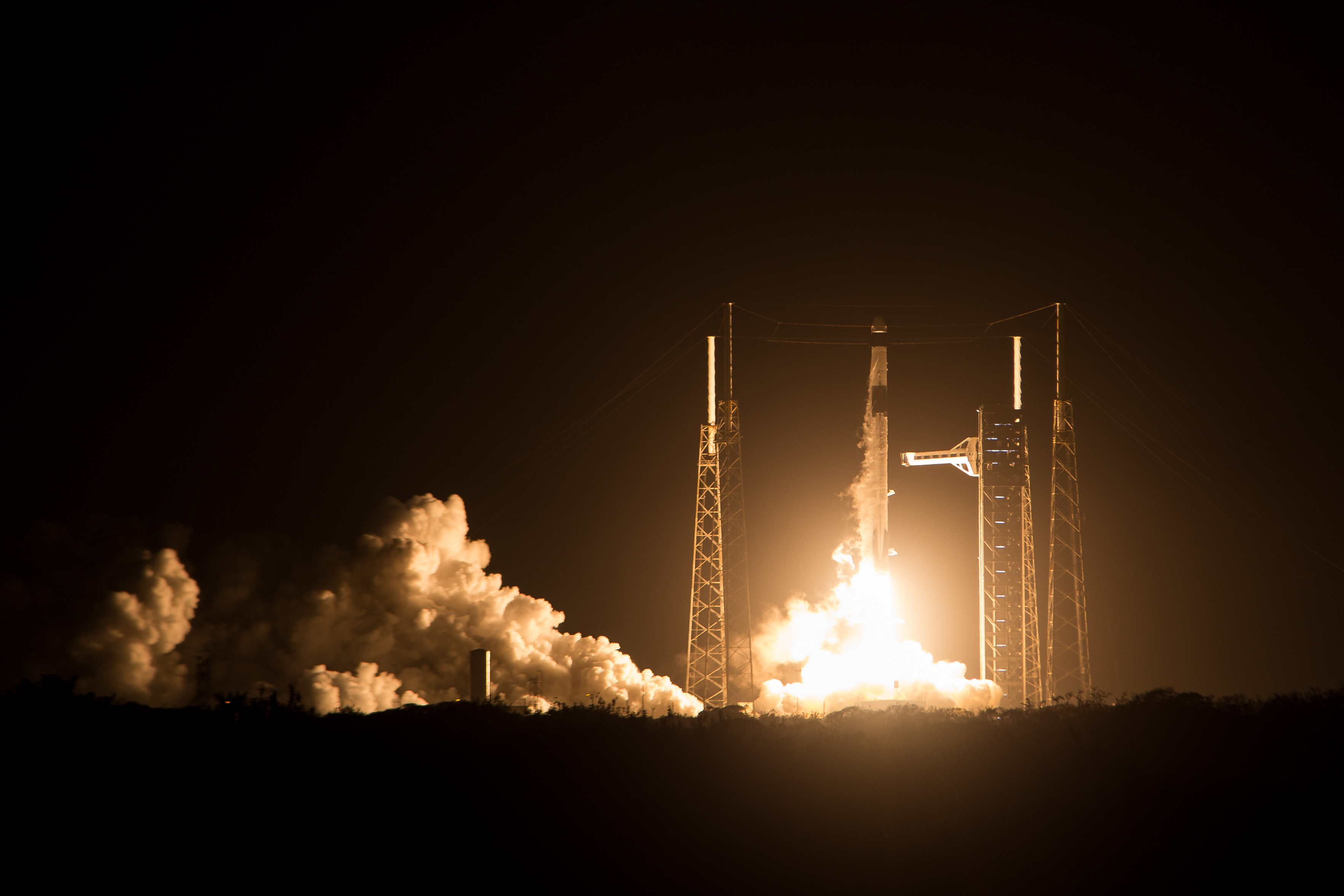
A SpaceX Falcon 9 rocket carrying the company’s Dragon spacecraft is launched on NASA’s SpaceX Crew-12 mission to the International Space Station with NASA astronauts Jessica Meir, Jack Hathaway, ESA (European Space Agency) astronaut Sophie Adenot, and Roscosmos cosmonaut Andrey Fedyaev onboard, Friday, Feb. 13, 2026, from Cape Canaveral Space Force Station in Florida. NASA’s SpaceX Crew-12 mission is the twelfth crew rotation mission of the SpaceX Dragon spacecraft and Falcon 9 rocket to the International Space Station as part of the agency’s Commercial Crew Program. Meir, Hathaway, Adenot, and Fedyaev launched at 5:15 a.m. EST from Space Launch Complex 40 at the Cape Canaveral Space Force Station to begin a mission aboard the orbital outpost.
After NASA astronauts Jessica Meir and Jack Hathaway, ESA (European Space Agency) astronaut Sophie Adenot, and Roscosmos cosmonaut Andrey Fedyaev arrive at the space station, they will conduct various experiments and technology demonstrations to benefit life on Earth and in orbit, furthering our journey back to the Moon, to Mars, and beyond.
Crew-12 Launches
A SpaceX Falcon 9 rocket carrying the company’s Dragon spacecraft is launched on NASA’s SpaceX Crew-12 mission to the International Space Station with NASA astronauts Jessica Meir, Jack Hathaway, ESA (European Space Agency) astronaut Sophie Adenot, and Roscosmos cosmonaut Andrey Fedyaev onboard, Friday, Feb. 13, 2026, from Cape Canaveral Space Force Station in Florida. NASA’s SpaceX Crew-12 mission is the twelfth crew rotation mission of the SpaceX Dragon spacecraft and Falcon 9 rocket to the International Space Station as part of the agency’s Commercial Crew Program. Meir, Hathaway, Adenot, and Fedyaev launched at 5:15 a.m. EST from Space Launch Complex 40 at the Cape Canaveral Space Force Station to begin a mission aboard the orbital outpost.
After NASA astronauts Jessica Meir and Jack Hathaway, ESA (European Space Agency) astronaut Sophie Adenot, and Roscosmos cosmonaut Andrey Fedyaev arrive at the space station, they will conduct various experiments and technology demonstrations to benefit life on Earth and in orbit, furthering our journey back to the Moon, to Mars, and beyond.
Accidental discovery hints at mystery structures within our brain
Accidental discovery hints at mystery structures within our brain
Week in images: 09-13 February 2026
Week in images: 09-13 February 2026
Discover our week through the lens
No Sign of Gravitational Waves From Single Supermassive Black Hole Binaries Yet
The universe is a big place, and tracking down some of the more interesting parts of it is tricky. Some of the most interesting parts of it, at least from a physics perspective, are merging black holes, so scientists spend a lot of time trying to track those down. One of the most recent attempts to do so was published in The Astrophysical Journal Letters by the North American Nanohertz Observatory for Gravitational Waves (NANOGrav) collaboration. While they didn’t find any clear-cut evidence of continuous gravitational waves from merging black hole systems, they did manage to point out plenty of false alarms, and even disprove some myths about ones we thought actually existed.