
Feed aggregator
Trump Officials Keep Comparing the U.S.’s Vaccine Schedule to Denmark’s. They’re Missing the Point
The U.S.’s and Denmark’s health systems are starkly different, so it makes sense that their vaccination schedules would differ, too
Is the Big Bang a Myth? Part 3: The Splitting of the Forces
The early universe was a very different place than today. And by “early” I don’t mean a billion or even ten billion years ago. The universe is about 13.77 billion years old, and when it was only a handful of seconds old, it was completely unrecognizable.
Recent Surveys Reveal Dwarf Galaxies May Not Contain Supermassive Black Holes
A new study, analyzing over 1,600 galaxies observed with Chandra over two decades, suggests that smaller galaxies do not contain supermassive black holes nearly as often as larger galaxies do.
How Conifers and Christmas Trees Secretly Shaped U.S. History
Christmas trees—and conifers in general—have made some surprising cameos throughout U.S. history, author Trent Preszler reveals in his book Evergreen
Is the Big Bang a Myth? Part 2: The Primaeval Atom
In the early 20th century, after years of effort, Albert Einstein developed his general theory of relativity. This was a massive improvement in our understanding of gravity, giving us a sophisticated view into the inner workings of that fundamental force.
Why Humanoid Robots and Embodied AI Still Struggle in the Real World
General-purpose robots remain rare not for a lack of hardware but because we still can’t give machines the physical intuition humans learn through experience
Why Old Moon Dust Looks So Different from the Fresh Stuff
Tracking down resources on the Moon is a critical process if humanity decides to settle there permanently. However, some of our best resources to do that currently are orbiting satellites who use various wavelengths to scan the Moon and determine what the local environment is made out of. One potential confounding factor in those scans is “space weathering” - i.e. how the lunar surface might change based on bombardment from both the solar wind and micrometeroid impacts. A new paper from a researchers at the Southwest Research Institute adds further context to how to interpret ultra-violet data from one of the most prolific of the resource assessment satellites - the Lunar Reconnaissance Orbiter (LRO) - and unfortunately, the conclusion they draw is that, for some resources such as titanium, their presence might be entirely obscured by the presence of “old” regolith.
Measuring Radio Leaks from 36,000 Kilometres Up
Radio astronomers hunting for the faint whispers of the early universe face an unexpected threat from above: satellites designed to be silent are leaking radio noise into space. New research using the Murchison Widefield Array has set the first limits on unintended radio emissions from distant geostationary satellites, revealing that most remain mercifully quiet in the frequency range crucial for next-generation telescopes. The findings offer cautious hope that the Square Kilometre Array, set to become the world's most sensitive radio telescope, might avoid the radio pollution crisis now plaguing observations of low Earth orbit satellites.
This Week's Sky at a Glance, December 12 – 21
Big Jupiter now rises in the east-southeast less than an hour after dark. It's high in sharp telescopic viewing by about 10 p.m.
The post This Week's Sky at a Glance, December 12 – 21 appeared first on Sky & Telescope.
New Cell Transplant Therapy Restores Insulin Production in Patient with Type 1 Diabetes
Scientists have successfully transplanted gene-edited insulin-producing cells into a man with type 1 diabetes—allowing him to make some of his own insulin without immunosuppressants.
NASA Astronaut Jonny Kim to Discuss Eight-Month Space Station Mission
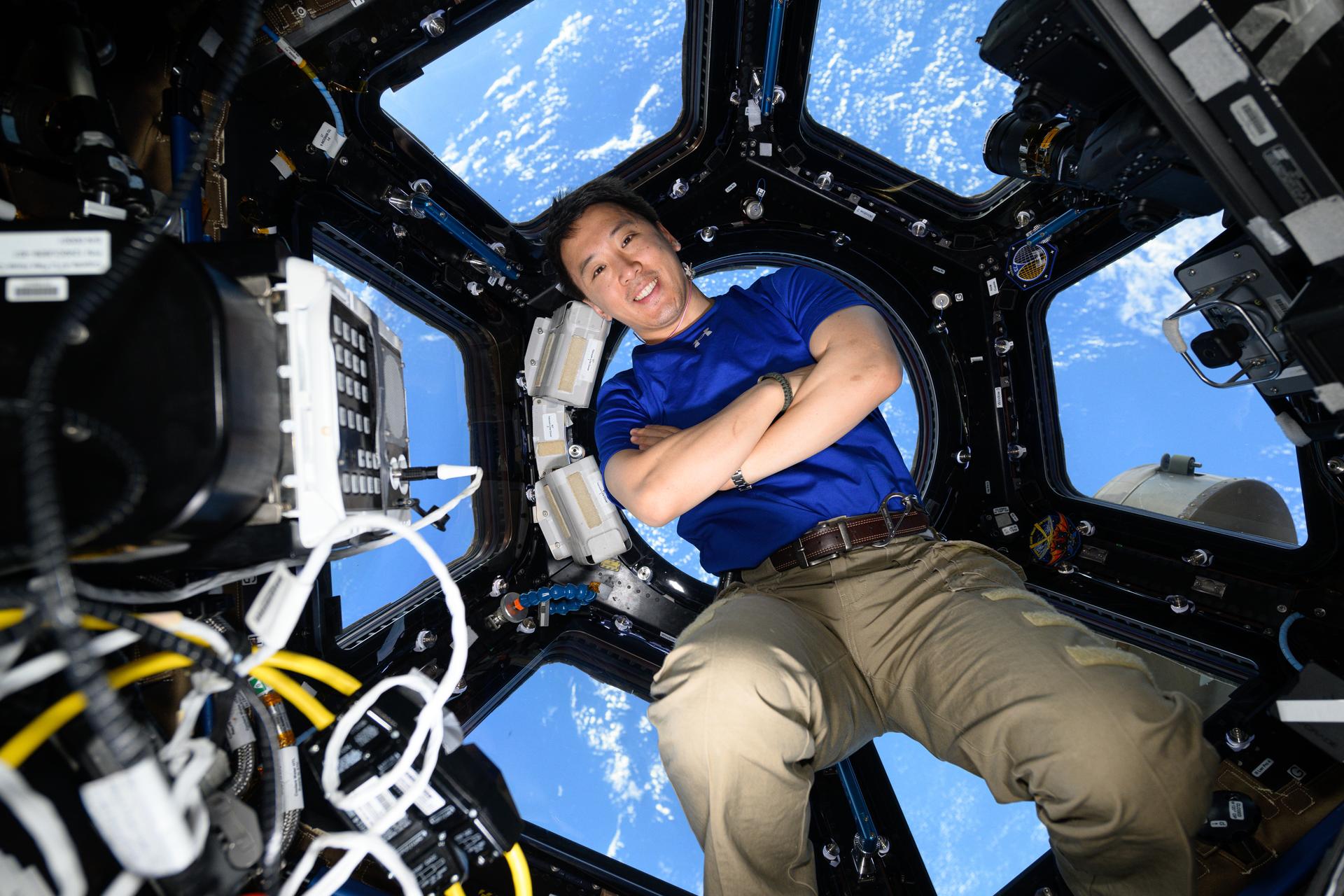
NASA astronaut Jonny Kim will recap his recent mission aboard the International Space Station during a news conference at 3:30 p.m. EST Friday, Dec. 19, from the agency’s Johnson Space Center in Houston.
Watch the news conference live on NASA’s YouTube channel. Learn how to stream NASA content through a variety of online platforms, including social media.
Media interested in participating in person must contact the NASA Johnson newsroom no later than 5 p.m. Thursday, Dec. 18, at 281-483-5111 or jsccommu@mail.nasa.gov.
Media wishing to participate by phone must contact the Johnson newsroom no later than two hours before the start of the event. To ask questions by phone, media must dial into the news conference no later than 15 minutes prior to the start of the call. NASA’s media accreditation policy is available online.
Kim returned to Earth on Dec. 9, along with Roscosmos cosmonauts Sergey Ryzhikov and Alexey Zubritsky. He logged 245 days as an Expedition 72/73 flight engineer during his first spaceflight. The trio completed 3,920 orbits of the Earth over the course of their nearly 104-million-mile journey. They also saw the arrival of nine visiting spacecraft and the departure of six.
During his mission, Kim contributed to a wide range of scientific investigations and technology demonstrations. He studied the behavior of bioprinted tissues containing blood vessels in microgravity for an experiment helping advance space-based tissue production to treat patients on Earth. He also evaluated the remote command of multiple robots in space for the Surface Avatar study, which could support the development of robotic assistants for future exploration missions. Additionally, Kim worked on developing in-space manufacturing of DNA-mimicking nanomaterials, which could improve drug delivery technologies and support emerging therapeutics and regenerative medicine.
Learn more about International Space Station research and operations at:
-end-
Jimi Russell
Headquarters, Washington
202-358-1100
james.j.russell@nasa.gov
Shaneequa Vereen
Johnson Space Center, Houston
281-483-5111
shaneequa.y.vereen@nasa.gov
NASA Astronaut Jonny Kim to Discuss Eight-Month Space Station Mission
NASA astronaut Jonny Kim will recap his recent mission aboard the International Space Station during a news conference at 3:30 p.m. EST Friday, Dec. 19, from the agency’s Johnson Space Center in Houston.
Watch the news conference live on NASA’s YouTube channel. Learn how to stream NASA content through a variety of online platforms, including social media.
Media interested in participating in person must contact the NASA Johnson newsroom no later than 5 p.m. Thursday, Dec. 18, at 281-483-5111 or jsccommu@mail.nasa.gov.
Media wishing to participate by phone must contact the Johnson newsroom no later than two hours before the start of the event. To ask questions by phone, media must dial into the news conference no later than 15 minutes prior to the start of the call. NASA’s media accreditation policy is available online.
Kim returned to Earth on Dec. 9, along with Roscosmos cosmonauts Sergey Ryzhikov and Alexey Zubritsky. He logged 245 days as an Expedition 72/73 flight engineer during his first spaceflight. The trio completed 3,920 orbits of the Earth over the course of their nearly 104-million-mile journey. They also saw the arrival of nine visiting spacecraft and the departure of six.
During his mission, Kim contributed to a wide range of scientific investigations and technology demonstrations. He studied the behavior of bioprinted tissues containing blood vessels in microgravity for an experiment helping advance space-based tissue production to treat patients on Earth. He also evaluated the remote command of multiple robots in space for the Surface Avatar study, which could support the development of robotic assistants for future exploration missions. Additionally, Kim worked on developing in-space manufacturing of DNA-mimicking nanomaterials, which could improve drug delivery technologies and support emerging therapeutics and regenerative medicine.
Learn more about International Space Station research and operations at:
-end-
Jimi Russell
Headquarters, Washington
202-358-1100
james.j.russell@nasa.gov
Shaneequa Vereen
Johnson Space Center, Houston
281-483-5111
shaneequa.y.vereen@nasa.gov
Thank The JWST For Confirming The First Runaway Supermassive Black Hole
Astronomers have been observing the Cosmic Owl for years, wondering if what they were seeing was a long-predicted runaway black hole. Now, 50 years after scientists first predicted the phenomenon, the JWST has provided the clinching evidence.
What Is 'Spoofing'? How a U.S.-Seized Oil Tanker Reportedly Tried to Evade Detection
An oil tanker seized by the U.S. this week reportedly used a technique that scrambled its location, but new advanced visual tracking can help expose such ships’ true coordinates
Hubble Catches Another Glimpse of 3I/ATLAS
The NASA/ESA Hubble Space Telescope reobserved interstellar comet 3I/ATLAS on 30 November with its Wide Field Camera 3 instrument. At the time, the comet was about 286 million km from Earth. Hubble tracked the comet as it moved across the sky.