

Feed aggregator
What’s the weirdest planet in the solar system?
All the sun’s planets are oddballs. But some are more so than others
What is Mythos and why are experts worried about Anthropic’s AI model
The company says Mythos is too dangerous to release publicly. Cybersecurity experts agree the model's capabilities matter, but not all of them are buying the most alarming claims
NASA's SPHEREx Observatory Maps Interstellar Ice in Milky Way
NASA’s SPHEREx Observatory Maps Interstellar Ice in Milky Way
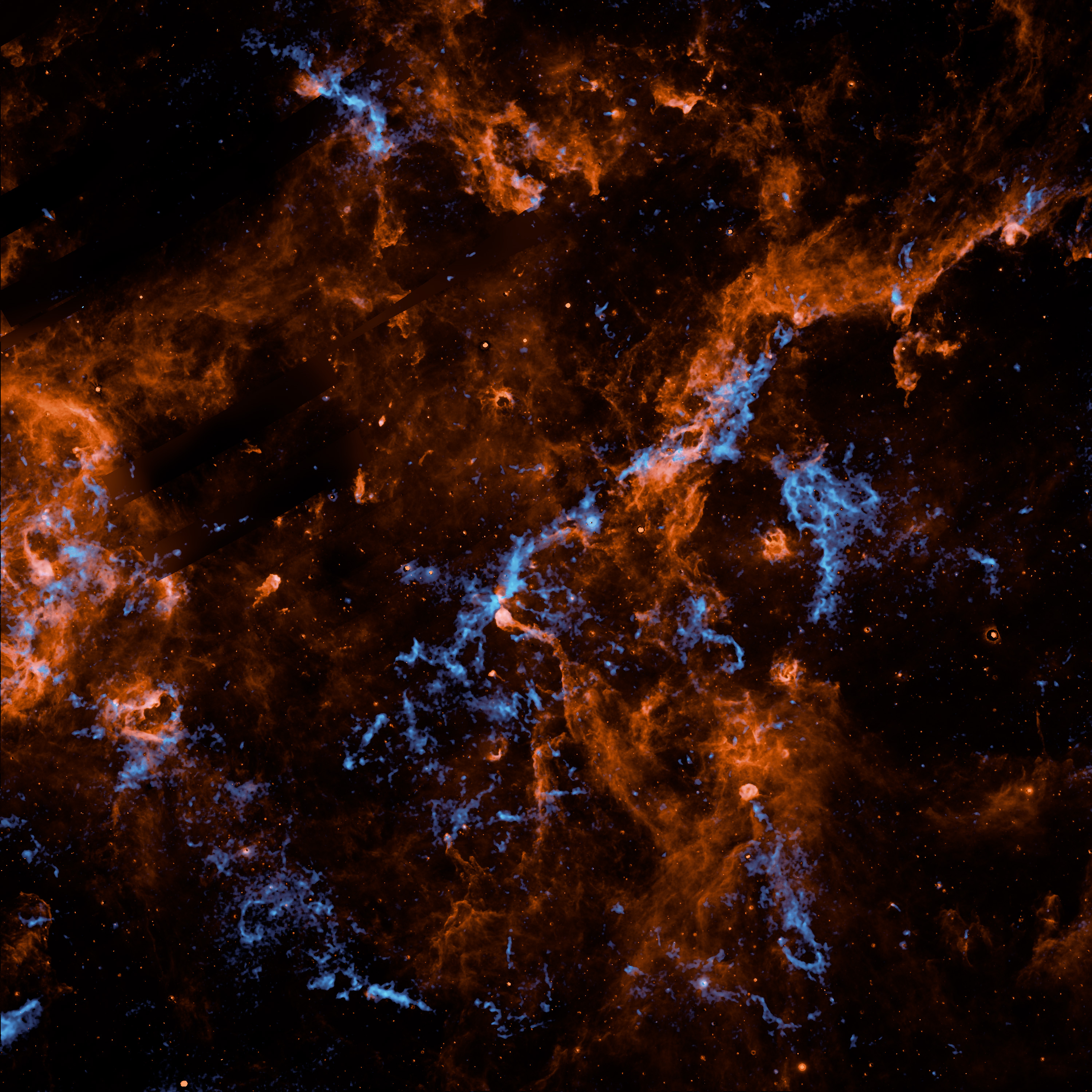
An observation made by NASA’s SPHEREx (Spectro-Photometer for the History of the Universe, Epoch of Reionization, and Ices Explorer) shows the chemical signatures of water ice (shown in bright blue) and polycyclic aromatic hydrocarbons (orange) in Cygnus X, one of the most active and turbulent regions of star birth in our Milky Way galaxy. The image was released on April 15, 2026, along with a study detailing the observation.
One of SPHEREx’s main goals is to map the chemical signatures of various types of interstellar ice. This ice includes molecules like water, carbon dioxide, and carbon monoxide, which are vital to the chemistry that allows life to develop. Researchers believe these ice reservoirs, attached to the surfaces of tiny dust grains, are where most of the universe’s water is formed and stored. The water in Earth’s oceans — and the ices in comets and on other planets and moons in our galaxy — originates from these regions.
SPHEREx launched March 11, 2025, and has the unique ability to see the sky in 102 colors, each representing a different wavelength of infrared light that offers distinctive information about galaxies, stars, planet-forming regions, and other cosmic features.
Read more about what SPHEREx found.
Image credit: NASA/JPL-Caltech/IPAC/Hora et al.
NASA’s SPHEREx Observatory Maps Interstellar Ice in Milky Way
An observation made by NASA’s SPHEREx (Spectro-Photometer for the History of the Universe, Epoch of Reionization, and Ices Explorer) shows the chemical signatures of water ice (shown in bright blue) and polycyclic aromatic hydrocarbons (orange) in Cygnus X, one of the most active and turbulent regions of star birth in our Milky Way galaxy. The image was released on April 15, 2026, along with a study detailing the observation.
One of SPHEREx’s main goals is to map the chemical signatures of various types of interstellar ice. This ice includes molecules like water, carbon dioxide, and carbon monoxide, which are vital to the chemistry that allows life to develop. Researchers believe these ice reservoirs, attached to the surfaces of tiny dust grains, are where most of the universe’s water is formed and stored. The water in Earth’s oceans — and the ices in comets and on other planets and moons in our galaxy — originates from these regions.
SPHEREx launched March 11, 2025, and has the unique ability to see the sky in 102 colors, each representing a different wavelength of infrared light that offers distinctive information about galaxies, stars, planet-forming regions, and other cosmic features.
Read more about what SPHEREx found.
Image credit: NASA/JPL-Caltech/IPAC/Hora et al.
Week in images: 13-17 April 2026
Week in images: 13-17 April 2026
Discover our week through the lens
How your body and brain construct chronic pain
Author Rachel Zoffness breaks down why we have chronic pain and how science shows that it’s all in our head
To Survive Deep Space, Astronauts May Owe a Debt to Microscopic Worms
Living long-term on the Moon means surviving the devastating toll that deep space takes on a human body. Astronauts in low gravity environments suffer muscle and bone loss, vision-altering fluid shifts, and heavy radiation exposure - all of which are incredibly hazardous to our biology. So, to help future lunar explorers survive, a new crew just arrived at the International Space Station (ISS). That might not sound surprising, except this crew is composed of worms.
AI music is reviving the same fights that shaped the player piano
As AI songs get harder to tell apart from human-made music, an older technology offers a revealing preview of the fight over artistry, labor and pay
Mars orbiter watches mysterious wave of darkness spread across red planet’s surface
Observations by the Mars Express orbiter reveal rapid changes on the Red Planet’s surface from windblown volcanic ash
Watch This Dark Volcanic Ash Creep Across the Red Planet
Mars is well known as a static, frozen desert. We tend to think of the only thing changing on the surface of the Red Planet is due to the occasional dust storm. But if you look closely - and are willing to wait decades - you’ll see the planet is very much alive - at least in the environmental sense. The European Space Agency just released some spectacular new images from the High Resolution Stereo Camera (HRSC) on its Mars Express Orbiter, one of which shows a surprisingly “fast” geological change happening in Utopia Planitia. A dark, ominous-looking blanket of volcanic ash is actively creeping across the bright red sands - and it's moving (relatively) fast.
Why birds were the only dinosaurs to survive Earth’s worst day
How a few unique traits helped modern-style birds—the last living dinosaurs—survive the asteroid apocalypse that took out T. rex and other mighty beasts
This Week's Sky at a Glance, April 17 – 26
The waxing Moon this week visits Venus, the Pleiades, and the Jupiter-Pollux-Castor triangle, then occults Regulus in a bright sky.
The post This Week's Sky at a Glance, April 17 – 26 appeared first on Sky & Telescope.
Why is it so hard to change your mind?
Why is it so hard to change your mind?
The rise, the fall and the rebound of cyclic cosmology
The rise, the fall and the rebound of cyclic cosmology
Earth from Space: Land of rainforests
Spring Rains Saturate Michigan
- Earth
- Earth Observatory
- Image of the Day
- EO Explorer
- Topics
- More Content
- About
Spring Rains Saturate Michigan
- Earth
- Earth Observatory
- Image of the Day
- EO Explorer
- Topics
- More Content
- About