
Feed aggregator
NASA Selects Two Earth System Explorers Missions
Two next-generation satellite missions announced Thursday will help NASA better understand Earth and improve capabilities to foresee environmental events and mitigate disasters.
“NASA uses the unique vantage point of space to study our home planet to deliver life-saving data into the hands of disaster response and decision-makers every day for the benefit of all, while also informing future exploration across our solar system,” said Nicky Fox, associate administrator, Science Mission Directorate, NASA Headquarters in Washington. “By understanding Earth’s surface topography, ecosystems and atmosphere, while also enabling longer range weather forecasting, these missions will help us better study the extreme environments beyond our home planet to ensure the safety of astronauts and spacecraft as we return to the Moon with the Artemis campaign and journey onward to Mars and beyond.”
These two missions were selected for continued development as part of NASA’s Earth System Explorers Program, which conducts principal investigator-led Earth science missions based on key priorities laid out by the science community and national needs. The program is designed to enable high-quality Earth system science investigations to focus on previously identified key targeted observables.
The STRIVE (Stratosphere Troposphere Response using Infrared Vertically-resolved light Explorer) mission will provide daily, near-global, high-resolution measurements of temperature, a variety of Earth’s atmospheric elements, and aerosol properties from the upper troposphere to the mesosphere – at a much higher spatial density than any previous mission. It also will measure vertical profiles of ozone and trace gasses needed to understand the recovery of the ozone layer. The data collected from STRIVE would support longer-range weather forecasts, an important tool in protecting coastal communities, where nearly half the world’s population lives. The mission is led by Lyatt Jaeglé at the University of Washington in Seattle.
The EDGE (Earth Dynamics Geodetic Explorer) mission will observe the three-dimensional structure of terrestrial ecosystems and the surface topography of glaciers, ice sheets, and sea ice. The mission will provide an advancement beyond the measurements currently recorded from space by NASA’s ICESat-2 (Ice, Cloud, and land Elevation Satellite 2) and GEDI (Global Ecosystem Dynamics Investigation). The data collected by EDGE will measure conditions affecting land and sea transportation corridors, terrain, and other areas of commercial interest. The mission is led by Helen Amanda Fricker at the University of California San Diego.
The selected missions will advance to the next phase of development. Each mission will be subject to confirmation review in 2027, which will assess the progress of the missions and the availability of funds. If confirmed, the total estimated cost of each mission, not including launch, will not exceed $355 million with a mission launch date of no earlier than 2030.
For more information about the Earth System Explorers Program, visit:
https://explorers.larc.nasa.gov/2023ESE
-end-
Liz Vlock
Headquarters, Washington
202-358-1600
elizabeth.a.vlock@nasa.gov
NASA Selects Two Earth System Explorers Missions
Two next-generation satellite missions announced Thursday will help NASA better understand Earth and improve capabilities to foresee environmental events and mitigate disasters.
“NASA uses the unique vantage point of space to study our home planet to deliver life-saving data into the hands of disaster response and decision-makers every day for the benefit of all, while also informing future exploration across our solar system,” said Nicky Fox, associate administrator, Science Mission Directorate, NASA Headquarters in Washington. “By understanding Earth’s surface topography, ecosystems and atmosphere, while also enabling longer range weather forecasting, these missions will help us better study the extreme environments beyond our home planet to ensure the safety of astronauts and spacecraft as we return to the Moon with the Artemis campaign and journey onward to Mars and beyond.”
These two missions were selected for continued development as part of NASA’s Earth System Explorers Program, which conducts principal investigator-led Earth science missions based on key priorities laid out by the science community and national needs. The program is designed to enable high-quality Earth system science investigations to focus on previously identified key targeted observables.
The STRIVE (Stratosphere Troposphere Response using Infrared Vertically-resolved light Explorer) mission will provide daily, near-global, high-resolution measurements of temperature, a variety of Earth’s atmospheric elements, and aerosol properties from the upper troposphere to the mesosphere – at a much higher spatial density than any previous mission. It also will measure vertical profiles of ozone and trace gasses needed to understand the recovery of the ozone layer. The data collected from STRIVE would support longer-range weather forecasts, an important tool in protecting coastal communities, where nearly half the world’s population lives. The mission is led by Lyatt Jaeglé at the University of Washington in Seattle.
The EDGE (Earth Dynamics Geodetic Explorer) mission will observe the three-dimensional structure of terrestrial ecosystems and the surface topography of glaciers, ice sheets, and sea ice. The mission will provide an advancement beyond the measurements currently recorded from space by NASA’s ICESat-2 (Ice, Cloud, and land Elevation Satellite 2) and GEDI (Global Ecosystem Dynamics Investigation). The data collected by EDGE will measure conditions affecting land and sea transportation corridors, terrain, and other areas of commercial interest. The mission is led by Helen Amanda Fricker at the University of California San Diego.
The selected missions will advance to the next phase of development. Each mission will be subject to confirmation review in 2027, which will assess the progress of the missions and the availability of funds. If confirmed, the total estimated cost of each mission, not including launch, will not exceed $355 million with a mission launch date of no earlier than 2030.
For more information about the Earth System Explorers Program, visit:
https://explorers.larc.nasa.gov/2023ESE
-end-
Liz Vlock
Headquarters, Washington
202-358-1600
elizabeth.a.vlock@nasa.gov
Is There A Link Between Primordial Black Holes, Neutrinos, and Dark Matter?
In 2023, a subatomic particle called a neutrino crashed into Earth with such a high amount of energy that it should have been impossible. In fact, there are no known sources anywhere in the universe capable of producing such energy—100,000 times more than the highest-energy particle ever produced by the Large Hadron Collider, the world's most powerful particle accelerator. However, a team of physicists at the University of Massachusetts Amherst recently hypothesized that something like this could happen when a special kind of black hole, called a "quasi-extremal primordial black hole," explodes.
Career Spotlight: Welder (Ages 14-18)
A welder uses tools that join two or more parts through forces such as heat or pressure. Metals are the materials most commonly used in welding, but it’s also possible to weld thermoplastics or wood. Welders use their hands, skills, and problem-solving abilities to create something new.
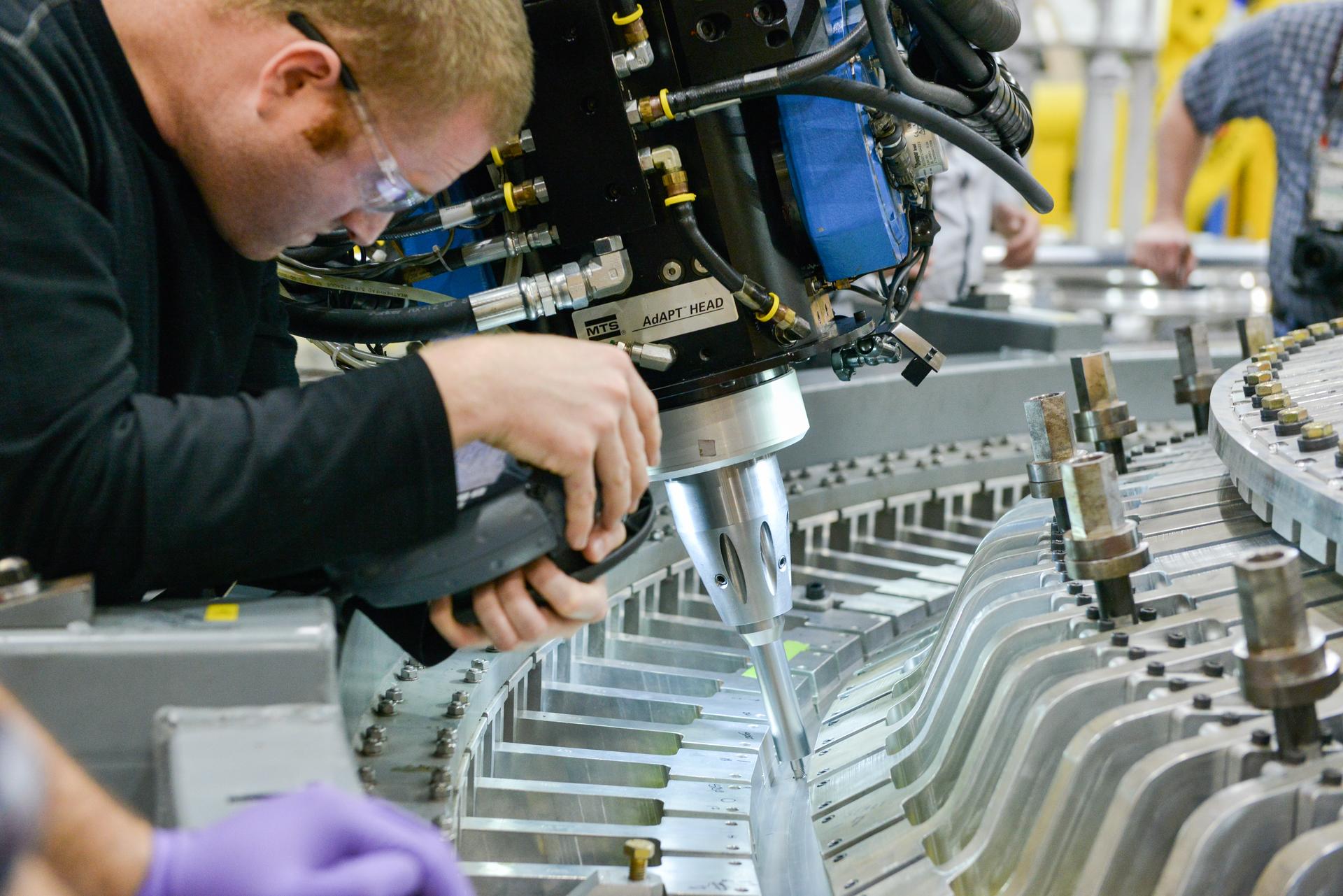
At NASA, welders use different types of welding processes to assemble spacecraft and rocket components. Welders also put their expertise to work on equipment and facilities that make space exploration possible, such as launch pads, fuel tanks, propellant lines, and buildings where rockets are assembled.
What are the different types of welding?Welding can be done in many different ways. Here are some of the types of welding used at NASA:
- Arc Welding: Uses electricity to melt metals and fuse them together. There are many types of arc welding, including TIG and MIG welding, described below.
- Tungsten Inert Gas (TIG) Welding: Uses a protective gas like argon or helium to keep the metal from reacting with air. TIG welding doesn’t leave behind splatter or residue, giving a clean, precise weld.
- Metal Inert Gas (MIG) Welding: While not as clean and precise as TIG welding, is used for fast, strong welds on thicker materials, like sheet metal.
- Laser Welding: Enables welders to create tiny, perfect joints for delicate components.
- Ultrasonic Welding: Uses sound and friction to create a solid-state bond between layers of metal.
After graduating from high school, there are a couple of pathways to choose from. You can pursue an associate’s degree in welding, typically a two-year program available through community colleges and technical schools. Another option is to obtain a certificate from a vocational school or trade school. An apprenticeship during or after this training is often the next step toward a career as a professional welder.
A NASA welder working on the RS-25 engine.NASA How can I start preparing today to become a welder?Taking a welding class at your high school or local college is a great way to find out whether it’s a skill you enjoy. Research welding degrees and programs at colleges and schools to determine which one(s) fit your needs and interest. It’s also a good idea to research job vacancies to learn what employers are looking for. Finally, seek out opportunities for hands-on experience to help you practice and improve your welding skills.
Michelle Bahnsen uses TIG welding techniques to join two metal sheets.NASA Once I tried it, I really, really enjoyed it. There’s just something about creating something with your hands. It gives you a sense of accomplishment.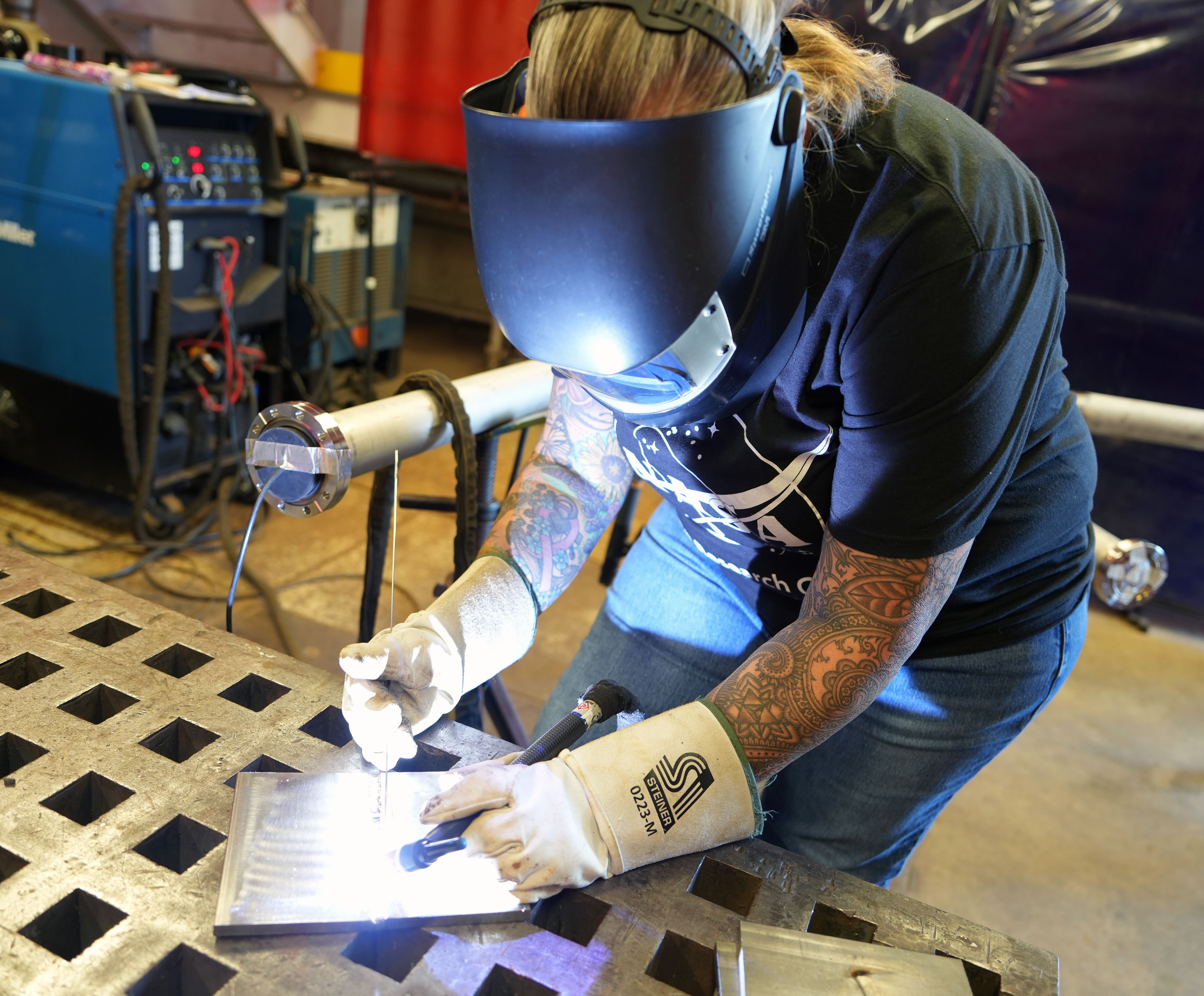
Michelle Bahnsen
Research laboratory mechanic/welder at NASA’s Armstrong Test Facility, part of the agency’s Glenn Research Center
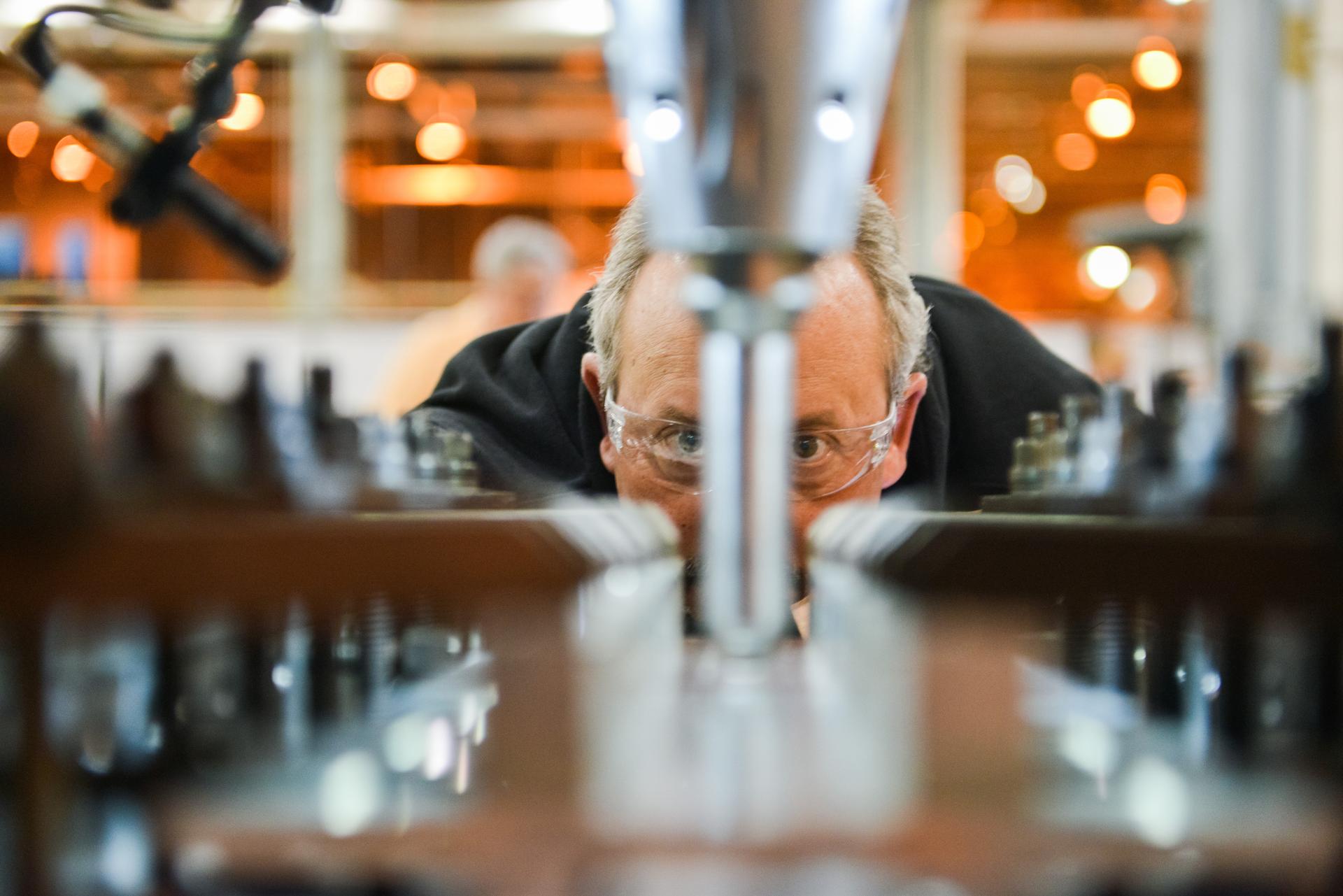
A research laboratory mechanic and welder joins two metal sheets.NASA Advice from other NASA welders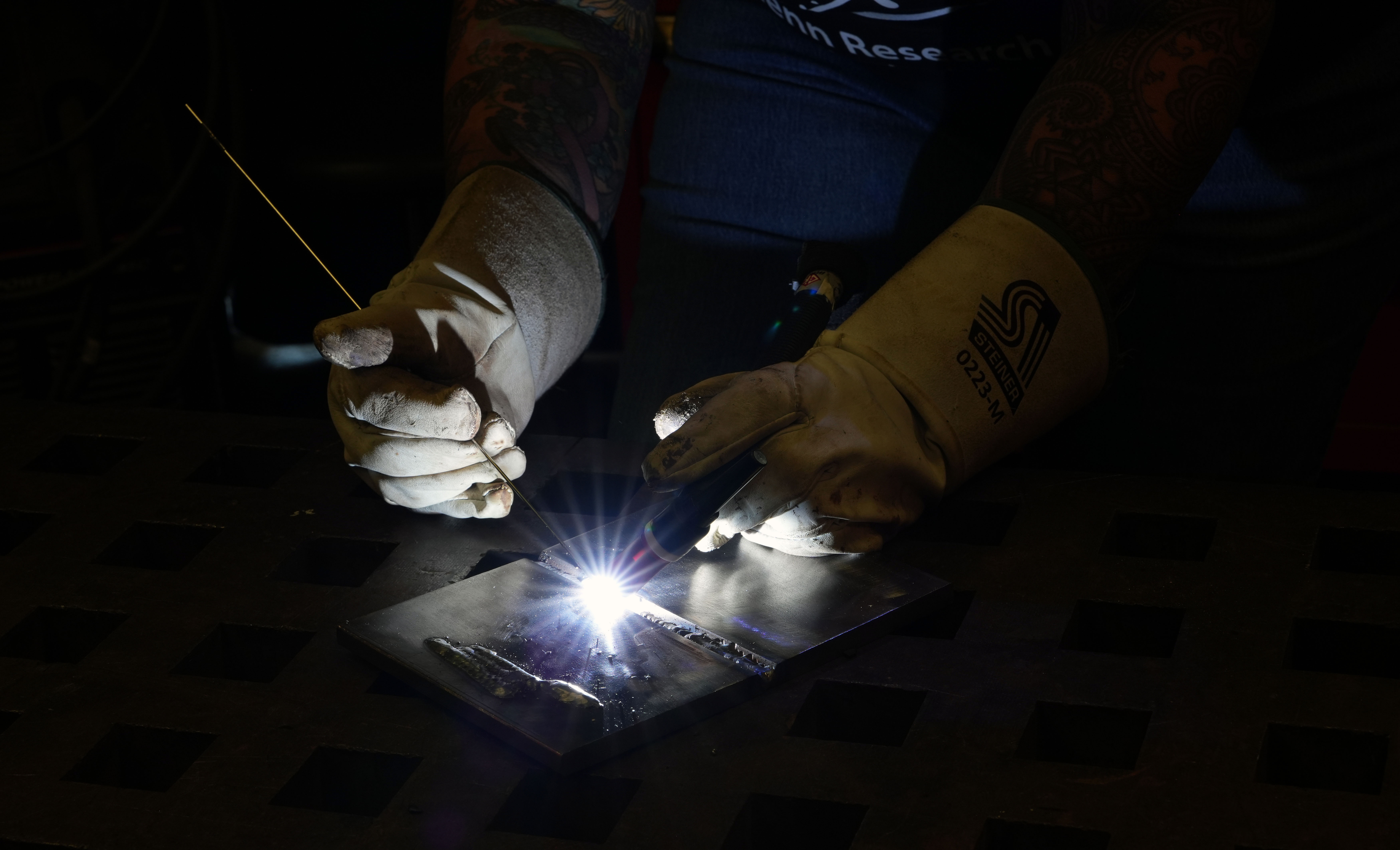
- “Building your knowledge in math and science is always a helpful tool, as you’ll need to understand measurements, geometry, and materials.” – Spencer Wells, engineering technician, Kennedy Space Center
- “One of the best ways to set yourself up as a welder is by attending a vocational school for welding, and then working in an apprentice/internship to gain work experience and training.” – Enricque Lee, tool and die apprentice, NASA’s Glenn Research Center
- Occupational Outlook for Welders: Pay, Education, Job Outlook, and More (From the U.S. Bureau of Labor Statistics)
- NASA Careers
- Career Spotlight: Engineer
- Career Spotlight: Scientist
- Career Spotlight: Technologist
- Career Spotlight: Mathematician
Career Spotlight: Welder (Ages 14-18)
A welder uses tools that join two or more parts through forces such as heat or pressure. Metals are the materials most commonly used in welding, but it’s also possible to weld thermoplastics or wood. Welders use their hands, skills, and problem-solving abilities to create something new.
At NASA, welders use different types of welding processes to assemble spacecraft and rocket components. Welders also put their expertise to work on equipment and facilities that make space exploration possible, such as launch pads, fuel tanks, propellant lines, and buildings where rockets are assembled.
What are the different types of welding?Welding can be done in many different ways. Here are some of the types of welding used at NASA:
- Arc Welding: Uses electricity to melt metals and fuse them together. There are many types of arc welding, including TIG and MIG welding, described below.
- Tungsten Inert Gas (TIG) Welding: Uses a protective gas like argon or helium to keep the metal from reacting with air. TIG welding doesn’t leave behind splatter or residue, giving a clean, precise weld.
- Metal Inert Gas (MIG) Welding: While not as clean and precise as TIG welding, is used for fast, strong welds on thicker materials, like sheet metal.
- Laser Welding: Enables welders to create tiny, perfect joints for delicate components.
- Ultrasonic Welding: Uses sound and friction to create a solid-state bond between layers of metal.
After graduating from high school, there are a couple of pathways to choose from. You can pursue an associate’s degree in welding, typically a two-year program available through community colleges and technical schools. Another option is to obtain a certificate from a vocational school or trade school. An apprenticeship during or after this training is often the next step toward a career as a professional welder.
A NASA welder working on the RS-25 engine.NASA How can I start preparing today to become a welder?Taking a welding class at your high school or local college is a great way to find out whether it’s a skill you enjoy. Research welding degrees and programs at colleges and schools to determine which one(s) fit your needs and interest. It’s also a good idea to research job vacancies to learn what employers are looking for. Finally, seek out opportunities for hands-on experience to help you practice and improve your welding skills.
Michelle Bahnsen uses TIG welding techniques to join two metal sheets.NASA Once I tried it, I really, really enjoyed it. There’s just something about creating something with your hands. It gives you a sense of accomplishment.Michelle Bahnsen
Research laboratory mechanic/welder at NASA’s Armstrong Test Facility, part of the agency’s Glenn Research Center
A research laboratory mechanic and welder joins two metal sheets.NASA Advice from other NASA welders- “Building your knowledge in math and science is always a helpful tool, as you’ll need to understand measurements, geometry, and materials.” – Spencer Wells, engineering technician, Kennedy Space Center
- “One of the best ways to set yourself up as a welder is by attending a vocational school for welding, and then working in an apprentice/internship to gain work experience and training.” – Enricque Lee, tool and die apprentice, NASA’s Glenn Research Center
- Occupational Outlook for Welders: Pay, Education, Job Outlook, and More (From the U.S. Bureau of Labor Statistics)
- NASA Careers
- Career Spotlight: Engineer
- Career Spotlight: Scientist
- Career Spotlight: Technologist
- Career Spotlight: Mathematician
Kanzi the famous bonobo may have understood ‘pretend’ objects
This famous ape may have understood pretend actions—suggesting he had the capacity to imagine
Five stunning images from the Close-up Photographer of the Year awards
Five stunning images from the Close-up Photographer of the Year awards
The toxic burden of pesticides is growing all around the world
The toxic burden of pesticides is growing all around the world
Methane surge in 2020 was linked to lower pollution during lockdowns
Methane surge in 2020 was linked to lower pollution during lockdowns
Bonobo's pretend tea party shows capacity for imagination
Bonobo's pretend tea party shows capacity for imagination
South Carolina measles outbreak is triggering dangerous brain swelling in some children
The South Carolina measles outbreak has triggered rare but serious brain swelling in some children
NASA’s SpaceX Crew-12 to Study Adaptation to Altered Gravity
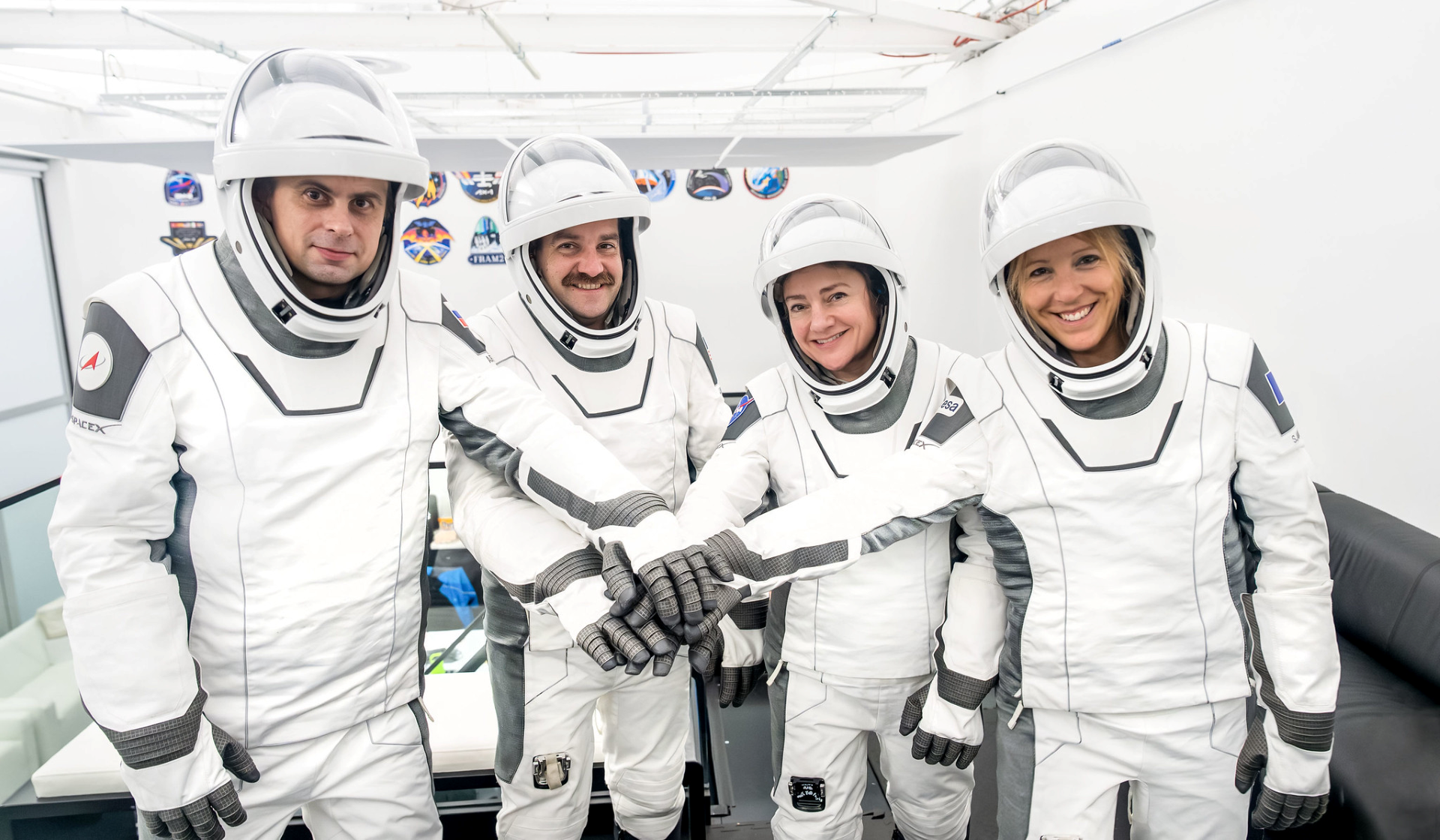
NASA’s SpaceX Crew-12 mission is preparing to launch for a long-duration science mission aboard the International Space Station. During the mission, select crew members will participate in human health studies focused on understanding how astronauts’ bodies adapt to the low-gravity environment of space, including a new study examining subtle changes in blood flow.
The experiments, led by NASA’s Human Research Program, include astronauts performing ultrasounds of their blood vessels to study altered circulation and completing simulated lunar landings to assess disorientation during gravitational transitions, among other tasks. The results will help NASA plan for extended stays in space and future exploration missions.
The new study, called Venous Flow, will examine whether time aboard the space station increases the chance of crew members developing blood clots. In weightlessness, blood and other bodily fluids can move toward the head, potentially altering circulation. Any resulting blood clots could pose serious health risks, including strokes.
“Our goal is to use this information to better understand how fluid shifts affect clotting risk, so that when astronauts go on long-duration missions to the Moon and Mars, we can build the best strategies to keep them safe,” said Dr. Jason Lytle, a physiologist at NASA’s Johnson Space Center in Houston who is leading the study.
To learn more, crew members in this study will undergo preflight and postflight MRIs, ultrasound scans, blood draws, and blood pressure checks. During the flight, crew members also will capture their own jugular vein ultrasounds, take blood pressure readings, and draw blood samples for scientists to analyze after their return to Earth.
In another study, called Manual Piloting, select crew members will perform multiple simulated Moon landings before, during, and after the mission. Designed to assess their piloting and decision-making skills, participants attempt to fly a virtual spacecraft toward the lunar South Pole region — the same area future Artemis crews plan to explore.
“Astronauts may experience disorientation during gravitational transitions, which can make tasks like landing a spacecraft challenging,” said Dr. Scott Wood, a neuroscientist at NASA Johnson who is coordinating the investigation.
While spacecraft landings on the Moon and Mars are expected to be automated, crews must be prepared to take over and pilot the vehicle if necessary.
“This study will help us examine astronauts’ ability to operate a spacecraft after adapting from one gravity environment to another, and whether training near the end of their spaceflight can help prepare crews for landing,” said Wood. “We’ll monitor their ability to manually override, redirect, and control a vehicle, which will guide our strategy for training Artemis crews for future Moon missions.”
The risk of astronauts experiencing disorientation from gravitational transitions increases the longer they’re in space. For this study, which debuted during the agency’s SpaceX Crew-11 mission, researchers plan to recruit seven astronauts for short-term private missions lasting up to 30 days and 14 astronauts for long-duration missions lasting at least 106 days. A control group performing the same tasks as the astronauts will provide a basis of comparison.
A different study will investigate potential treatments for spaceflight associated neuro-ocular syndrome, or SANS, which causes vision and eye changes. Researchers will examine whether taking a daily B vitamin supplement can help relieve SANS symptoms.
After returning to Earth, select crew members will participate in a study that documents any injuries, such as scrapes or bruises that may occur during landing. Transitioning from weightlessness to Earth’s gravity can increase the injury risk without proper safeguards. The data will help researchers improve spacecraft design to better protect crews from landing forces.
____
NASA’s Human Research Program
NASA’s Human Research Program pursues methods and technologies to support safe, productive human space travel. Through science conducted in laboratories, ground-based analogs, commercial missions, the International Space Station and Artemis missions, the program scrutinizes how spaceflight affects human bodies and behaviors. Such research drives the program’s quest to innovate ways that keep astronauts healthy and mission ready as human space exploration expands to the Moon, Mars, and beyond.
Explore More 4 min read NASA Selects Participants to Track Artemis II Mission Article 2 weeks ago 5 min read Out of This World Discoveries: Space Station Research in 2025 Article 3 weeks ago 4 min read NASA’s SpaceX Crew-11 Wraps Up Space Station Science Article 3 weeks ago Keep Exploring Discover More Topics From NASALiving in Space
Artemis
Human Research Program
Space Station Research and Technology
NASA’s SpaceX Crew-12 to Study Adaptation to Altered Gravity
NASA’s SpaceX Crew-12 mission is preparing to launch for a long-duration science mission aboard the International Space Station. During the mission, select crew members will participate in human health studies focused on understanding how astronauts’ bodies adapt to the low-gravity environment of space, including a new study examining subtle changes in blood flow.
The experiments, led by NASA’s Human Research Program, include astronauts performing ultrasounds of their blood vessels to study altered circulation and completing simulated lunar landings to assess disorientation during gravitational transitions, among other tasks. The results will help NASA plan for extended stays in space and future exploration missions.
The new study, called Venous Flow, will examine whether time aboard the space station increases the chance of crew members developing blood clots. In weightlessness, blood and other bodily fluids can move toward the head, potentially altering circulation. Any resulting blood clots could pose serious health risks, including strokes.
“Our goal is to use this information to better understand how fluid shifts affect clotting risk, so that when astronauts go on long-duration missions to the Moon and Mars, we can build the best strategies to keep them safe,” said Dr. Jason Lytle, a physiologist at NASA’s Johnson Space Center in Houston who is leading the study.
To learn more, crew members in this study will undergo preflight and postflight MRIs, ultrasound scans, blood draws, and blood pressure checks. During the flight, crew members also will capture their own jugular vein ultrasounds, take blood pressure readings, and draw blood samples for scientists to analyze after their return to Earth.
In another study, called Manual Piloting, select crew members will perform multiple simulated Moon landings before, during, and after the mission. Designed to assess their piloting and decision-making skills, participants attempt to fly a virtual spacecraft toward the lunar South Pole region — the same area future Artemis crews plan to explore.
“Astronauts may experience disorientation during gravitational transitions, which can make tasks like landing a spacecraft challenging,” said Dr. Scott Wood, a neuroscientist at NASA Johnson who is coordinating the investigation.
While spacecraft landings on the Moon and Mars are expected to be automated, crews must be prepared to take over and pilot the vehicle if necessary.
“This study will help us examine astronauts’ ability to operate a spacecraft after adapting from one gravity environment to another, and whether training near the end of their spaceflight can help prepare crews for landing,” said Wood. “We’ll monitor their ability to manually override, redirect, and control a vehicle, which will guide our strategy for training Artemis crews for future Moon missions.”
The risk of astronauts experiencing disorientation from gravitational transitions increases the longer they’re in space. For this study, which debuted during the agency’s SpaceX Crew-11 mission, researchers plan to recruit seven astronauts for short-term private missions lasting up to 30 days and 14 astronauts for long-duration missions lasting at least 106 days. A control group performing the same tasks as the astronauts will provide a basis of comparison.
A different study will investigate potential treatments for spaceflight associated neuro-ocular syndrome, or SANS, which causes vision and eye changes. Researchers will examine whether taking a daily B vitamin supplement can help relieve SANS symptoms.
After returning to Earth, select crew members will participate in a study that documents any injuries, such as scrapes or bruises that may occur during landing. Transitioning from weightlessness to Earth’s gravity can increase the injury risk without proper safeguards. The data will help researchers improve spacecraft design to better protect crews from landing forces.
____
NASA’s Human Research Program
NASA’s Human Research Program pursues methods and technologies to support safe, productive human space travel. Through science conducted in laboratories, ground-based analogs, commercial missions, the International Space Station and Artemis missions, the program scrutinizes how spaceflight affects human bodies and behaviors. Such research drives the program’s quest to innovate ways that keep astronauts healthy and mission ready as human space exploration expands to the Moon, Mars, and beyond.
Explore More 4 min read NASA Selects Participants to Track Artemis II Mission Article 2 weeks ago 5 min read Out of This World Discoveries: Space Station Research in 2025 Article 3 weeks ago 4 min read NASA’s SpaceX Crew-11 Wraps Up Space Station Science Article 3 weeks ago Keep Exploring Discover More Topics From NASALiving in Space
Artemis
Human Research Program
Space Station Research and Technology
Epstein files show a complicated relationship with science and journalism
Jeffrey Epstein aggressively sought access to publishers, mentions of Scientific American and other media in Department of Justice files show
Katharine Burr Blodgett’s brilliant career began at the ‘House of Magic’
When a young Katharine Burr Blodgett joined future Nobel Prize winner Irving Langmuir at the General Electric Company’s industrial research laboratory in Schenectady, N.Y, it was the start of her brilliant career
Where did Luna 9 land on the moon?
Scientists have spent decades searching for the final resting place of Luna 9, the first spacecraft to soft-land on the moon. Now they’re on the cusp of finding it