
Feed aggregator
Satellite Megaconstellations Are Now Threatening Telescopes in Space
Proliferating satellites are beginning to harm the science work of the beloved Hubble Space Telescope and other observatories
These Two Galaxies Are Tying The Knot And Producing Stars
The European Space Agency has release its ESA/Webb Picture of the Month and it features a pair of dwarf galaxies engaged in a tentative dance, like nervous partners at a social. The pair are a staggering 24 million light-years away. But even at that great distance, the pair of galaxies is the closest-known interacting pair of dwarfs, other than the Milky Way's Magellanic Clouds, where both the stellar populations and the gas bridge linking the galaxies have been observed.
Forming moon may have taken three big impacts early in Earth’s history
Forming moon may have taken three big impacts early in Earth’s history
Hazardous Material Summary Tables (HMSTs)
3 min read
Preparations for Next Moonwalk Simulations Underway (and Underwater) A space toxicologist at NASA JSC.NASA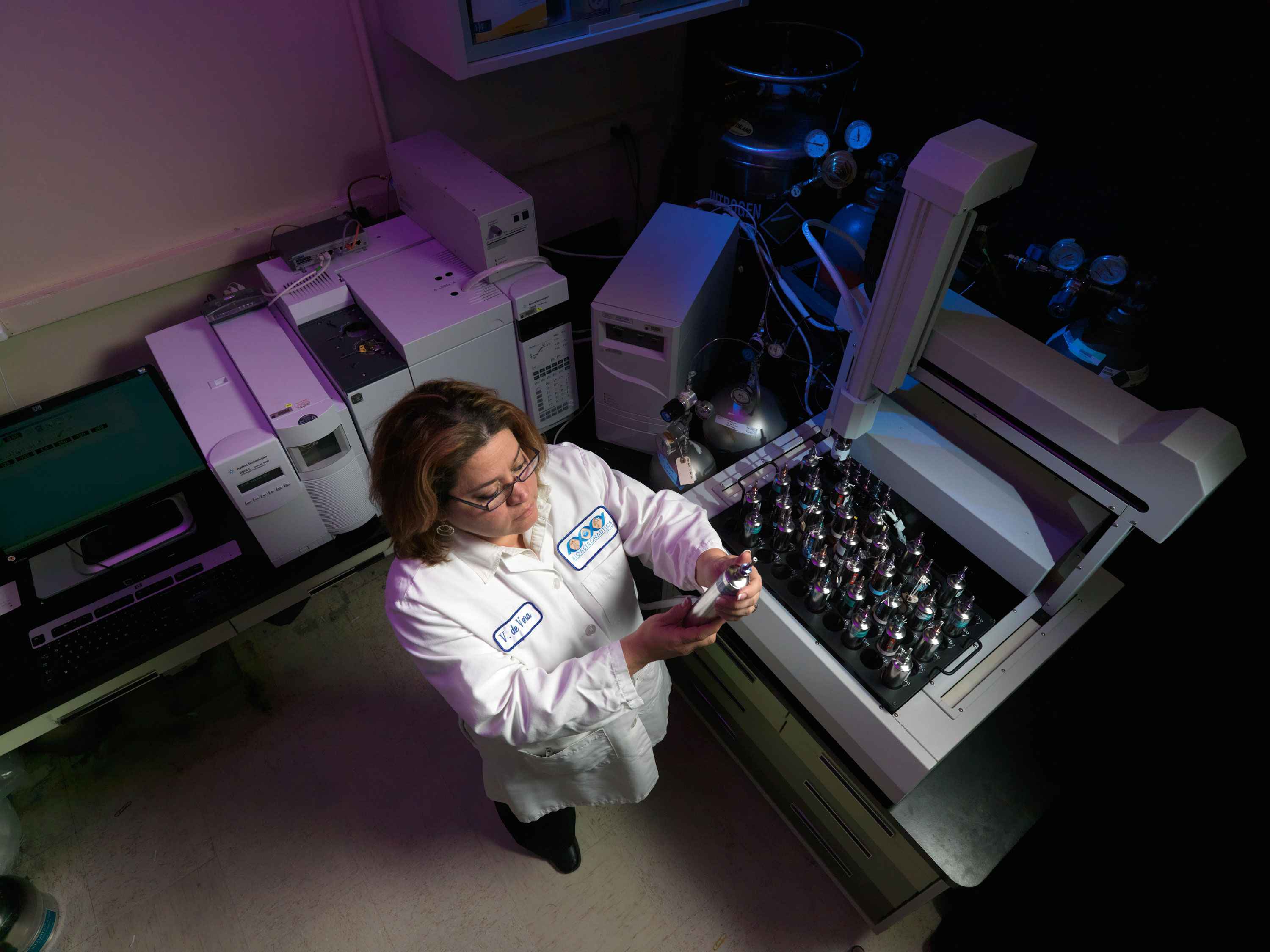
Hazardous Materials Summary Tables (HMSTs) are a compilation of the chemical, biological, and flammability hazards of materials on a given flight or mission. HMSTs are required by Safety for all Programs, including but not limited to ISS, Commercial Crew Program (CCP), Multi Purpose Crew Vehicle (MPCV), and Gateway. Johnson Space Center (JSC) toxicologists evaluate the toxic hazard level of all liquids, gases, particles, or gels flown on or to any manned U.S. spacecraft. The biosafety hazard level and flammability levels are assigned by JSC microbiologists and materials experts and are documented in an HMST and in a computerized in-flight version of the HMST called the HazMat (Hazardous Materials) database.
How To Obtain Toxicological Hazard Assessments“Requirements for Submission of Data Needed for Toxicological Assessment of Chemical and Biologicals to be Flown on Manned Spacecraft”
- JSC 27472 (PDF, 766KB) defines the terms “chemicals” and “biological materials” as applied to items being flown on or to any U.S. spacecraft. It explains who must submit information to the JSC toxicologists concerning the materials to be flown and specifies what information is needed. It provides schedules, formats, and contact information.
- Additional US requirements for biological materials can be found on the Biosafety Review Board (BRB) page.
- Additional US requirements for environmental control and life support (ECLS) assessments can be found in JSC 66869 (PDF, 698KB).
For all flights to ISS and all Artemis requests (Orion, Gateway, Human Lander System (HLS)), please submit data via the electronic hazardous materials summary table (eHMST) tool. If you do not have access to this tool, please submit a NAMS request for access to JSC – CMC External Tools. Please reference eHMST training for more information
NOTE: For experimental payloads/hardware planned for launch on a Russian vehicle, stowed and/or operated on the Russian Segment of ISS, or planned for return or disposal on a Russian vehicle, we strongly encourage payload providers to submit biological and chemical data to the Russian Institute for Biomedical Problems (moukhamedieva@imbp.ru OR barantseva@imbp.ru).
Hazard AssessmentsToxicological hazard assessments are conducted according to JSC 26895 – Guidelines for Assessing the Toxic Hazard of Spacecraft Chemicals and Test Materials. The resulting Toxicity Hazard Level (THL) in combination with the BioSafety Level (BSL) and Flammability Hazard Level (FHL) form the basis for the combined Hazard Response Level (HRL) used for labeling and operational response per flight rule B20-16.
Toxicology and Environmental Chemistry Share Details Last Updated Dec 03, 2025 EditorRobert E. LewisLocationJohnson Space Center Related Terms Explore More 5 min read Toxicology and Environmental Chemistry Article 3 years ago 4 min read Exposure Guidelines (SMACs and SWEGs) Article 3 years ago 4 min read Toxicology Analysis of Spacecraft Air Article 2 days ago Keep Exploring Discover Related TopicsMissions
Humans in Space
Climate Change
Solar System
Hazardous Material Summary Tables (HMSTs)
3 min read
Preparations for Next Moonwalk Simulations Underway (and Underwater) A space toxicologist at NASA JSC.NASAHazardous Materials Summary Tables (HMSTs) are a compilation of the chemical, biological, and flammability hazards of materials on a given flight or mission. HMSTs are required by Safety for all Programs, including but not limited to ISS, Commercial Crew Program (CCP), Multi Purpose Crew Vehicle (MPCV), and Gateway. Johnson Space Center (JSC) toxicologists evaluate the toxic hazard level of all liquids, gases, particles, or gels flown on or to any manned U.S. spacecraft. The biosafety hazard level and flammability levels are assigned by JSC microbiologists and materials experts and are documented in an HMST and in a computerized in-flight version of the HMST called the HazMat (Hazardous Materials) database.
How To Obtain Toxicological Hazard Assessments“Requirements for Submission of Data Needed for Toxicological Assessment of Chemical and Biologicals to be Flown on Manned Spacecraft”
- JSC 27472 (PDF, 766KB) defines the terms “chemicals” and “biological materials” as applied to items being flown on or to any U.S. spacecraft. It explains who must submit information to the JSC toxicologists concerning the materials to be flown and specifies what information is needed. It provides schedules, formats, and contact information.
- Additional US requirements for biological materials can be found on the Biosafety Review Board (BRB) page.
- Additional US requirements for environmental control and life support (ECLS) assessments can be found in JSC 66869 (PDF, 698KB).
For all flights to ISS and all Artemis requests (Orion, Gateway, Human Lander System (HLS)), please submit data via the electronic hazardous materials summary table (eHMST) tool. If you do not have access to this tool, please submit a NAMS request for access to JSC – CMC External Tools. Please reference eHMST training for more information
NOTE: For experimental payloads/hardware planned for launch on a Russian vehicle, stowed and/or operated on the Russian Segment of ISS, or planned for return or disposal on a Russian vehicle, we strongly encourage payload providers to submit biological and chemical data to the Russian Institute for Biomedical Problems (moukhamedieva@imbp.ru OR barantseva@imbp.ru).
Hazard AssessmentsToxicological hazard assessments are conducted according to JSC 26895 – Guidelines for Assessing the Toxic Hazard of Spacecraft Chemicals and Test Materials. The resulting Toxicity Hazard Level (THL) in combination with the BioSafety Level (BSL) and Flammability Hazard Level (FHL) form the basis for the combined Hazard Response Level (HRL) used for labeling and operational response per flight rule B20-16.
Toxicology and Environmental Chemistry Share Details Last Updated Dec 03, 2025 EditorRobert E. LewisLocationJohnson Space Center Related Terms Explore More 5 min read Toxicology and Environmental Chemistry Article 3 years ago 4 min read Exposure Guidelines (SMACs and SWEGs) Article 3 years ago 4 min read Toxicology Analysis of Spacecraft Air Article 2 days ago Keep Exploring Discover Related TopicsMissions
Humans in Space
Climate Change
Solar System
Toxicology Analysis of Spacecraft Air
4 min read
Preparations for Next Moonwalk Simulations Underway (and Underwater) SpaceX Crew-1 Pilot Victor Glover and Mission Specialist Shannon Walker work with a Grab Sample Container (GSC) in the SpaceX Crew Dragon Resilience spacecraft while en route to the ISS.NASA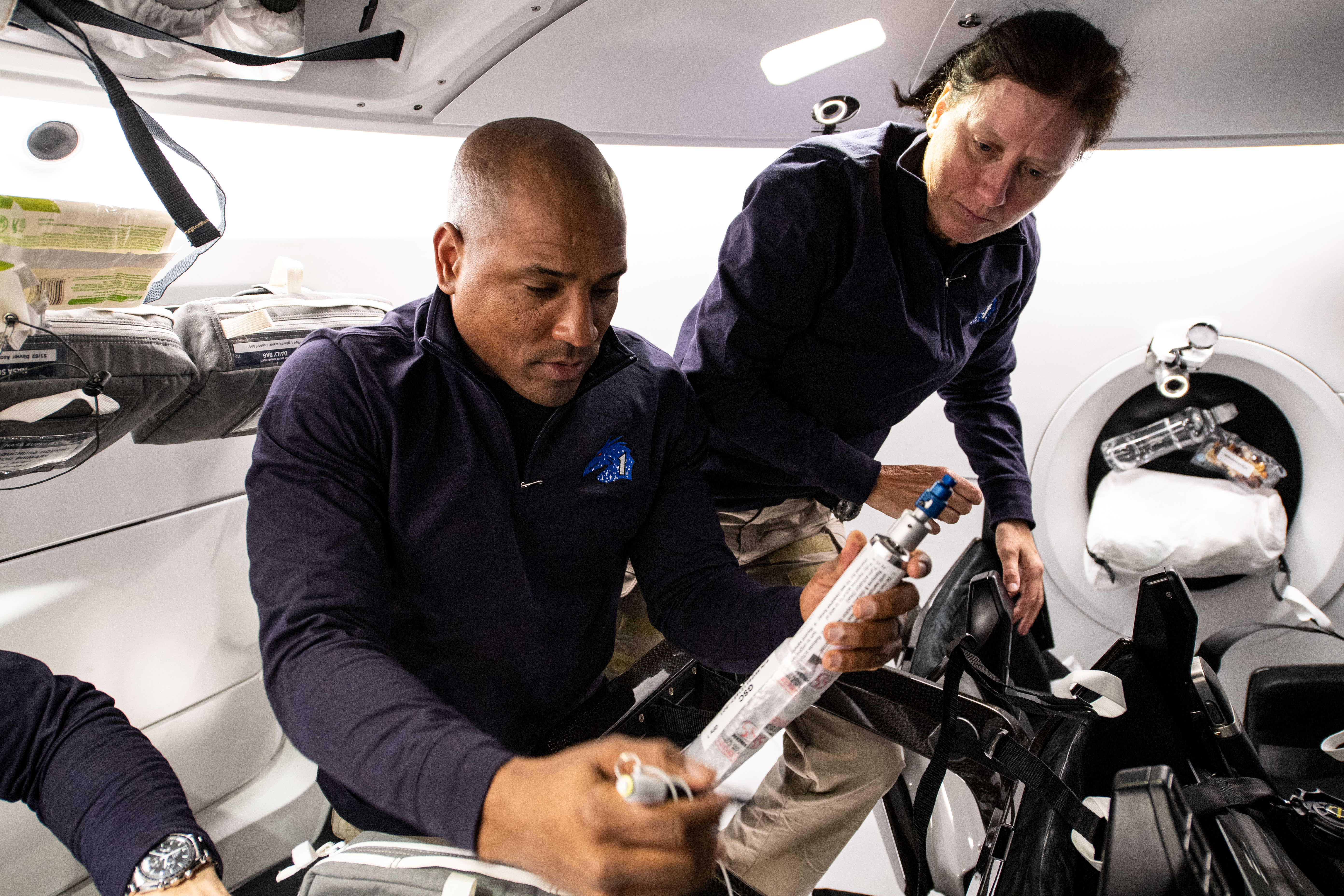
Toxicology and Environmental Chemistry (TEC) monitors airborne contaminants in both spacecraft air and water. In-flight monitors are employed to provide real-time insight into the environmental conditions on ISS. Archival samples are collected and returned to Earth for full characterization of ISS air and water.
Real-time in-flight air analytical instruments include the Air Quality Monitors (AQM), carbon dioxide (CO2 monitors), and a compound specific analyzer for combustion products (CSA-CP). Real-time in-flight water monitoring capabilities include the colorimetric water quality monitoring kit (CWQMK) and the ISS total organic carbon analyzer (TOCA).
Post-flight analyses are performed on archival samples of spacecraft air and water obtained at specific times and locations during a mission. Air archival samples are collected using “grab sample containers” (GSC) and formaldehyde badges. The U.S. and Russian water recovery systems on the ISS process atmospheric moisture (U.S. and Russian systems) and urine distillate (U.S. system only) into clean, potable water for the crew to use. The Water Kit is utilized to collect archival samples of the potable water and are routinely returned to the ground to monitor the quality of the water produced by the systems. Samples of condensate and wastewater are also collected and returned to check for the presence of contaminants that could break through the water recovery systems.
Results of Post-Flight Analysis of In-Flight Air Samples (Most Recent First)- Increment 71 Report Including NG-21 Ingress and Boeing-CFT Ascent (1MB)
- Increment 70 including SpaceX-29, Axiom-3, NG-20, and SpaceX-30 Ingresses (817KB)
- Increment 69 Report Including Ax2 SpX28 NG19 Ingress (1MB)
- Increment 68 Report NG18 SpX26 SpX27 Ingress (845KB)
- Increment 65 Report with SpX22, MLM, NG16, SpX23 Ingresses (1.5MB)
- Increment 67 Report with OFT2 and SpX25 Ingress (962KB)
- Increment 66 Report SpX-24 NG-17 Ingress (835KB)
- Increment 64 including SpX-21 and NG-15 Ingress (897KB)
- Increment 63 Including HTV-9 and NG-14 Ingress (884KB)
- Increment 62-63 Benzene Anomaly Report (442KB)
- Increment 62 Including NG-13 and SpX-20 Ingress (747KB)
- Increment 61 including NG-12 and SpX-19 Egress (1.1MB)
- Increment 60 including SpX-18 and HTV8 Ingress (1.27MB)
- Increment 59 including NG-11 and SpX-17 Ingress (3.4MB)
- Increment 58 Report (2.78MB)
- Increment 57 including NG-10 and SpX-16 Ingress (2.71MB)
- SpaceX Demo-1 Ingress SM and DM1 Contingencies (792KB)
- Increment 56, HTV-7 and Node 1 Contingency Report (3.5MB)
- Increment 55 and SpX14 and OA9 Ingresses Report (1.9MB)
- Increment 54, including SpX-13 Ingress (877KB)
- Increment 53, including OA-8 Ingress and Node 1 Contingency Investigation (743KB)
- Increment 52 Report, including JEM odor contingency, SpX-11 and SpX-12 ingress, and WPA MF bed contingency samples
- Increment 51 and OA-7 Ingress Report (1.47MB)
- Increment 50 and HTV-6, SpX-10 Ingresses (2.72 MB)
- Increment 49 OA-5 Ingress and Oil Paint Odor Investigation Report (3.12MB)
- Increment 48, SpX-9 Ingress, and Oil Paint Odor Investigation Report (3.43MB)
- Increment 47, BEAM/OA-6/SpX-8 Ingresses, and Node 3 Siloxane Investigation Report (4.82MB)
- Increment 46 and Node 3 Contingency Report (4.4MB)
- Increment 45 and OA-4 Ingress (3MB)
- Increment 44 and HTV-5 Ingress Report (1.6MB)
- Increment 43, SpX-6 Ingress, Ethanol Investigation, and Node 1 Contingency Report (6.2MB)
- Increment 42 Report (4MB)
- Increment 41 Report (3.3MB)
- Space X-5 First Ingress Air Quality and Node 3 Contingency Report (2MB)
- SpaceX-4 First Ingress Air Quality Report (1.32MB)
- Increment 40, Orb-2/ATV-5 Ingresses, and SM Contingency (2.92 MB)
- Increment 39 and SpX-3 Ingress (5.75 MB)
- Increment 38 and Orb-1 Ingress (8.02 MB)
- Increment 37 and Orb-D1 Ingress (5.9 MB)
- Increment 36 and HTV-4 Ingress (7.22 MB)
- Increment 35 Report (4.04 MB)
- Increment 34 Report (5.64 MB)
- Feb. 2013 Contingency Sample Report (1.91 MB)
- Space X-2 First Entry Sample Analyses (1.56 MB)
- Soyuz 31S Return Samples (2.98 MB)
- Space X-1 First Entry Sample Analysis (39 KB)
- Revised Soyuz 30 Return Samples (7.46 MB)
- Space X-Demo First Entry Sample Analysis (767 KB)
- Soyuz 28 and Soyuz 29 Return Samples (1 MB)
- Soyuz 27 Return Samples (824 KB)
- STS-134, ULF7, 26S (2 MB)
- STS-133 / ISS-ULF5 (396 KB)
- Soyuz 25S Mission Report (286 KB)
- Soyuz 24S Return Samples of ISS Air (740 KB)
- Soyuz 23S Return Samples (593 KB)
- STS-132 / ISS-ULF4 (1.31 MB)
- STS-131 / ISS-19A (3.55 MB)
- STS-130 / ISS-20A (1.27 MB)
- STS-129 / ISS-ULF3 (1.4 MB)
Missions
Humans in Space
Climate Change
Solar System
Toxicology Analysis of Spacecraft Air
4 min read
Preparations for Next Moonwalk Simulations Underway (and Underwater) SpaceX Crew-1 Pilot Victor Glover and Mission Specialist Shannon Walker work with a Grab Sample Container (GSC) in the SpaceX Crew Dragon Resilience spacecraft while en route to the ISS.NASAToxicology and Environmental Chemistry (TEC) monitors airborne contaminants in both spacecraft air and water. In-flight monitors are employed to provide real-time insight into the environmental conditions on ISS. Archival samples are collected and returned to Earth for full characterization of ISS air and water.
Real-time in-flight air analytical instruments include the Air Quality Monitors (AQM), carbon dioxide (CO2 monitors), and a compound specific analyzer for combustion products (CSA-CP). Real-time in-flight water monitoring capabilities include the colorimetric water quality monitoring kit (CWQMK) and the ISS total organic carbon analyzer (TOCA).
Post-flight analyses are performed on archival samples of spacecraft air and water obtained at specific times and locations during a mission. Air archival samples are collected using “grab sample containers” (GSC) and formaldehyde badges. The U.S. and Russian water recovery systems on the ISS process atmospheric moisture (U.S. and Russian systems) and urine distillate (U.S. system only) into clean, potable water for the crew to use. The Water Kit is utilized to collect archival samples of the potable water and are routinely returned to the ground to monitor the quality of the water produced by the systems. Samples of condensate and wastewater are also collected and returned to check for the presence of contaminants that could break through the water recovery systems.
Results of Post-Flight Analysis of In-Flight Air Samples (Most Recent First)- Increment 71 Report Including NG-21 Ingress and Boeing-CFT Ascent (1MB)
- Increment 70 including SpaceX-29, Axiom-3, NG-20, and SpaceX-30 Ingresses (817KB)
- Increment 69 Report Including Ax2 SpX28 NG19 Ingress (1MB)
- Increment 68 Report NG18 SpX26 SpX27 Ingress (845KB)
- Increment 65 Report with SpX22, MLM, NG16, SpX23 Ingresses (1.5MB)
- Increment 67 Report with OFT2 and SpX25 Ingress (962KB)
- Increment 66 Report SpX-24 NG-17 Ingress (835KB)
- Increment 64 including SpX-21 and NG-15 Ingress (897KB)
- Increment 63 Including HTV-9 and NG-14 Ingress (884KB)
- Increment 62-63 Benzene Anomaly Report (442KB)
- Increment 62 Including NG-13 and SpX-20 Ingress (747KB)
- Increment 61 including NG-12 and SpX-19 Egress (1.1MB)
- Increment 60 including SpX-18 and HTV8 Ingress (1.27MB)
- Increment 59 including NG-11 and SpX-17 Ingress (3.4MB)
- Increment 58 Report (2.78MB)
- Increment 57 including NG-10 and SpX-16 Ingress (2.71MB)
- SpaceX Demo-1 Ingress SM and DM1 Contingencies (792KB)
- Increment 56, HTV-7 and Node 1 Contingency Report (3.5MB)
- Increment 55 and SpX14 and OA9 Ingresses Report (1.9MB)
- Increment 54, including SpX-13 Ingress (877KB)
- Increment 53, including OA-8 Ingress and Node 1 Contingency Investigation (743KB)
- Increment 52 Report, including JEM odor contingency, SpX-11 and SpX-12 ingress, and WPA MF bed contingency samples
- Increment 51 and OA-7 Ingress Report (1.47MB)
- Increment 50 and HTV-6, SpX-10 Ingresses (2.72 MB)
- Increment 49 OA-5 Ingress and Oil Paint Odor Investigation Report (3.12MB)
- Increment 48, SpX-9 Ingress, and Oil Paint Odor Investigation Report (3.43MB)
- Increment 47, BEAM/OA-6/SpX-8 Ingresses, and Node 3 Siloxane Investigation Report (4.82MB)
- Increment 46 and Node 3 Contingency Report (4.4MB)
- Increment 45 and OA-4 Ingress (3MB)
- Increment 44 and HTV-5 Ingress Report (1.6MB)
- Increment 43, SpX-6 Ingress, Ethanol Investigation, and Node 1 Contingency Report (6.2MB)
- Increment 42 Report (4MB)
- Increment 41 Report (3.3MB)
- Space X-5 First Ingress Air Quality and Node 3 Contingency Report (2MB)
- SpaceX-4 First Ingress Air Quality Report (1.32MB)
- Increment 40, Orb-2/ATV-5 Ingresses, and SM Contingency (2.92 MB)
- Increment 39 and SpX-3 Ingress (5.75 MB)
- Increment 38 and Orb-1 Ingress (8.02 MB)
- Increment 37 and Orb-D1 Ingress (5.9 MB)
- Increment 36 and HTV-4 Ingress (7.22 MB)
- Increment 35 Report (4.04 MB)
- Increment 34 Report (5.64 MB)
- Feb. 2013 Contingency Sample Report (1.91 MB)
- Space X-2 First Entry Sample Analyses (1.56 MB)
- Soyuz 31S Return Samples (2.98 MB)
- Space X-1 First Entry Sample Analysis (39 KB)
- Revised Soyuz 30 Return Samples (7.46 MB)
- Space X-Demo First Entry Sample Analysis (767 KB)
- Soyuz 28 and Soyuz 29 Return Samples (1 MB)
- Soyuz 27 Return Samples (824 KB)
- STS-134, ULF7, 26S (2 MB)
- STS-133 / ISS-ULF5 (396 KB)
- Soyuz 25S Mission Report (286 KB)
- Soyuz 24S Return Samples of ISS Air (740 KB)
- Soyuz 23S Return Samples (593 KB)
- STS-132 / ISS-ULF4 (1.31 MB)
- STS-131 / ISS-19A (3.55 MB)
- STS-130 / ISS-20A (1.27 MB)
- STS-129 / ISS-ULF3 (1.4 MB)
Missions
Humans in Space
Climate Change
Solar System
The Scientific American Staff’s Favorite Books of 2025
Here are the 67 books Scientific American staffers couldn’t put down this year, from fantasy epics to gripping nonfiction
How to Catch a Comet That Hasn't Been Discovered Yet
There’s been a lot of speculation recently about interstellar visitor 3I/ATLAS - much of which is probably caused by low quality data given that we have to observe it from either Earth, or in some case Mars. In either case it’s much further away that what would be the ideal. But that might not be the case for a future interstellar object. The European Space Agency (ESA) is planning a mission that could potentially visit a new interstellar visitor, or a comet that is making its first pass into the inner solar system. But, given the constraints of the mission, any such potential target object would have to meet a string of conditions. A new paper by lead Professor Colin Snodgrass of the University of Edinburgh of his colleagues, discusses what those conditions are, and assesses the likelihood that we’ll find a good candidate within a reasonable time of the mission's launch.
Scientific American’s Best Fiction and Nonfiction Picks for Science-Minded Readers
Scientific American unveils its first-ever best fiction and nonfiction books of the year, spotlighting stories that blend science, imagination and unforgettable voices.
EarthCARE lifts the clouds on climate models
True to its promise, the European Space Agency’s EarthCARE satellite is now being used to calculate directly how clouds and aerosols influence Earth’s energy balance – the all-important balance that regulates our climate. In doing so, EarthCARE is poised to sharpen the accuracy of climate models, the very tools that guide global climate policy and action.
A martian butterfly flaps its wings
Is it an insect? A strange fossil? An otherworldly eye, or even a walnut? No, it’s an intriguing kind of martian butterfly spotted by ESA’s Mars Express.
NASA Astronaut Jonny Kim Advances Research Aboard Space Station
5 min read
Preparations for Next Moonwalk Simulations Underway (and Underwater) NASA astronaut Jonny Kim floats inside the Cupola of the International Space Station.NASA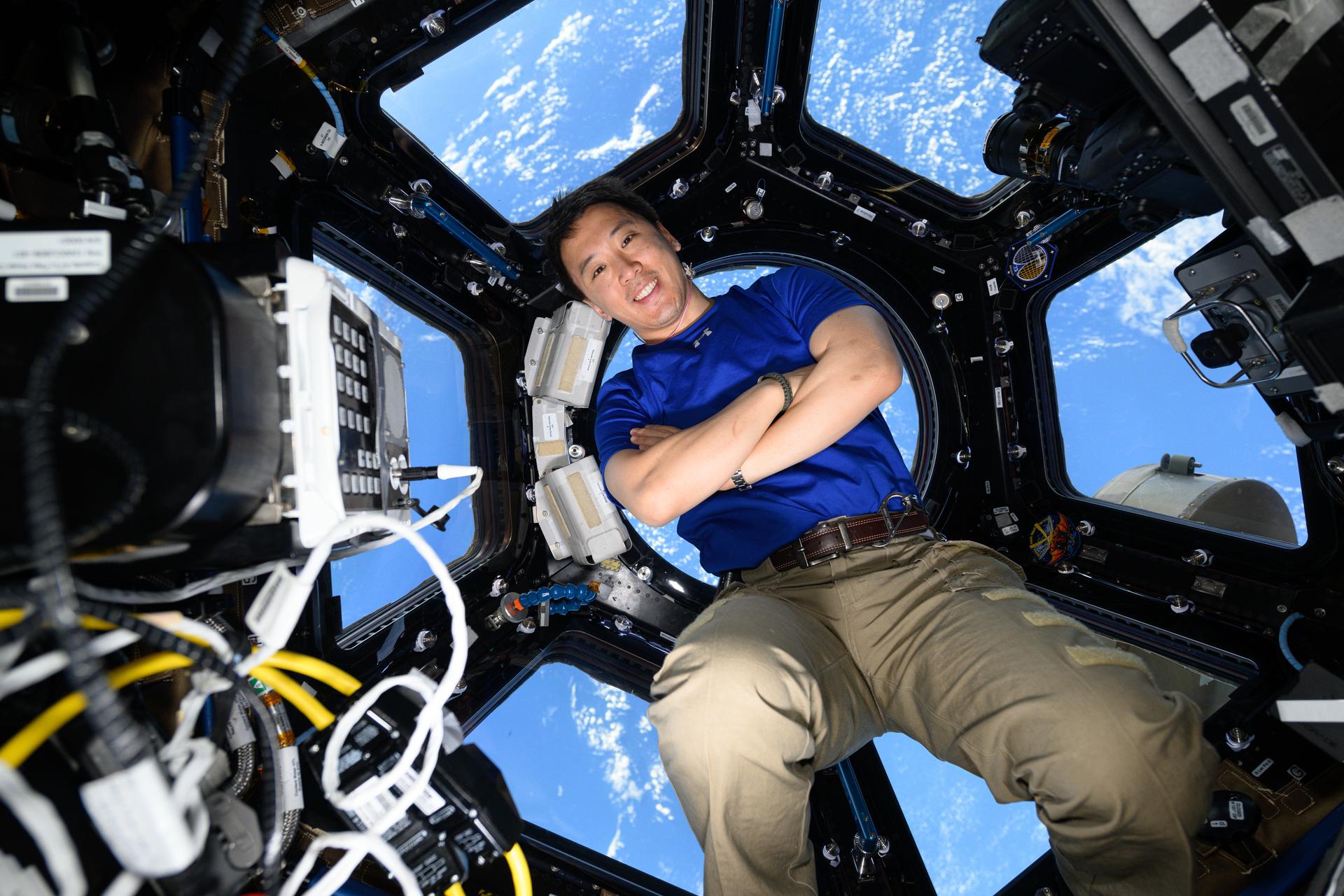
NASA astronaut Jonny Kim is wrapping up his first mission aboard the International Space Station in early December. During his stay, Kim conducted scientific experiments and technology demonstrations to benefit humanity on Earth and advance NASA’s Artemis campaign in preparation for future human missions to Mars.
Here is a look at some of the science Kim completed during his mission:
Medical check-ups in microgravity NASA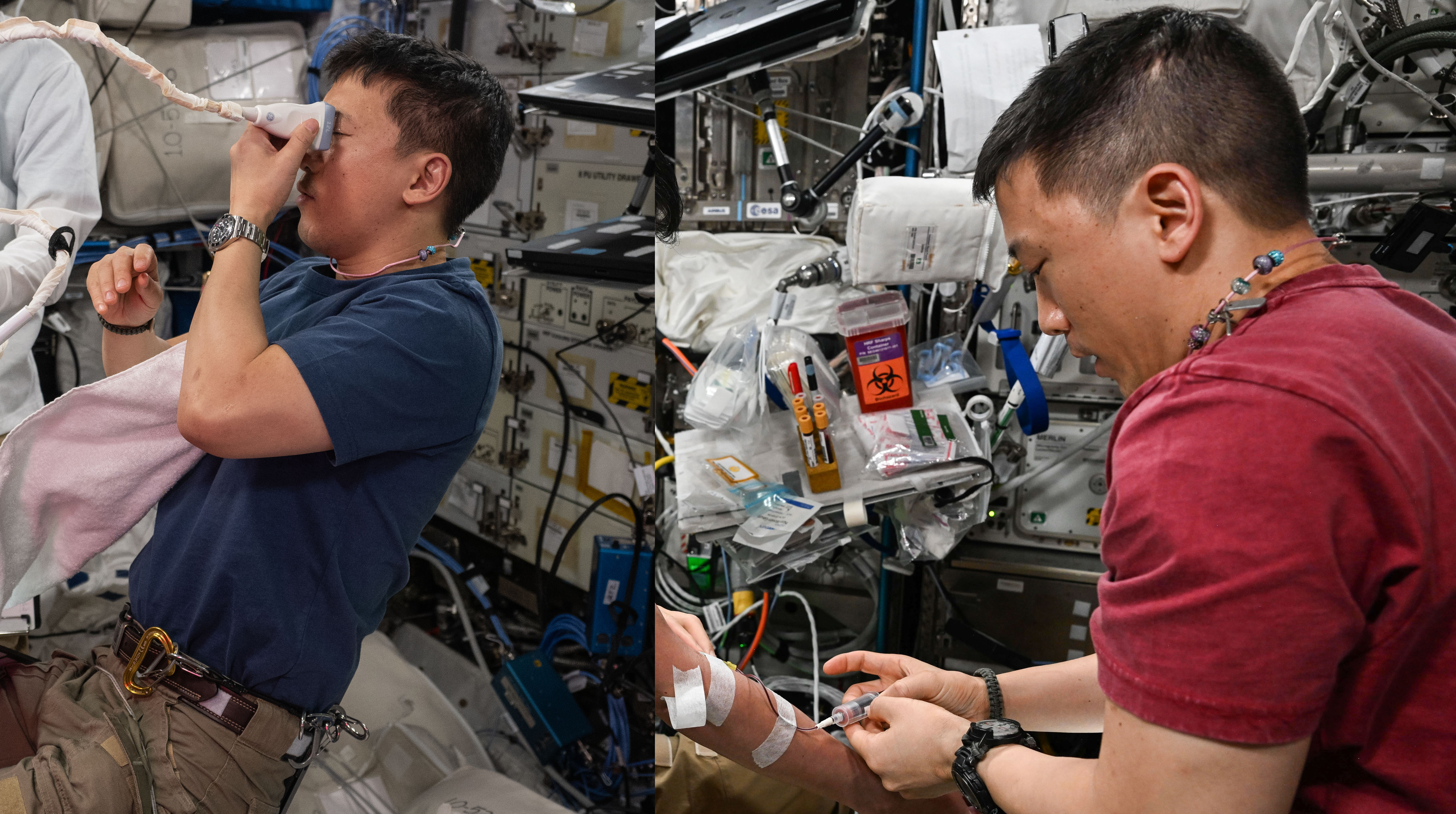
NASA astronaut Jonny Kim, a medical doctor, completed several routine medical exams while aboard the International Space Station. NASA flight surgeons and researchers monitor crew health using a variety of tools, including blood tests, eye exams, and ultrasounds.
Kim conducts an ultrasound of his eye in the left image. Eye exams are essential as long-duration spaceflight may cause changes to the eye’s structure and affect vision, a condition known as spaceflight associated neuro-ocular syndrome, or SANS. In the right image, Kim draws blood from a fellow crew member. These blood sample collections provide important insights into crew cartilage and bone health, cardiovascular function, inflammation, stress, immune function, and nutritional status.
NASA astronauts complete regular medical exams before, during, and after spaceflight to monitor astronaut health and develop better tools and measures for future human exploration missions to the Moon and Mars.
Learn more about human research on space station.
Low light plant growth NASA NASANASA astronaut Jonny Kim photographs dwarf tomato sprouts grown using a nutrient supplement instead of photosynthesis as part of a study on plant development and gene expression. The plants are given an acetate supplement as a secondary nutrition source, which could increase growth and result in better yields, all while using less power and fewer resources aboard the space station and future spacecraft.
Learn more about Rhodium USAFA NIGHT.
Radioing future space explorers NASA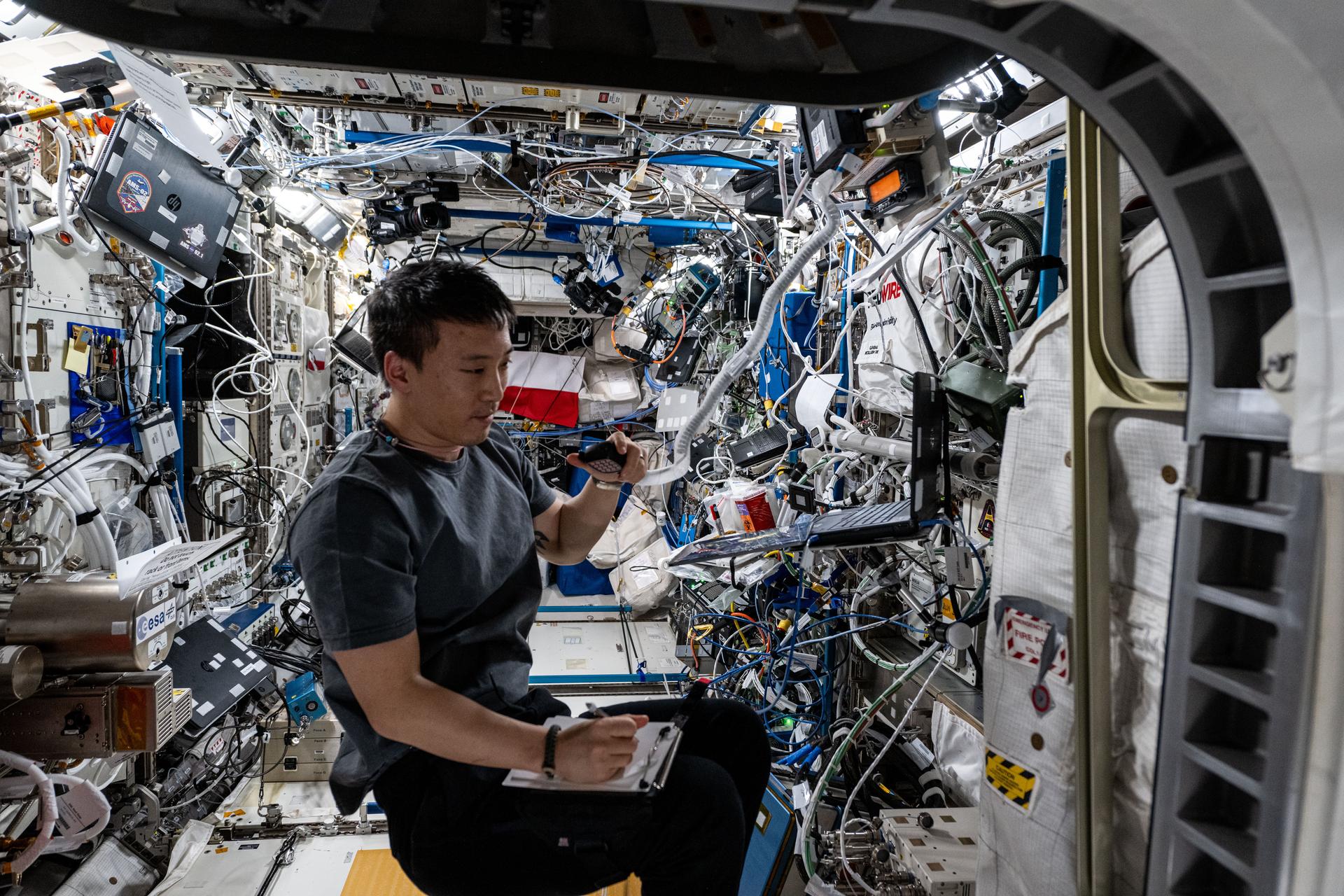
NASA astronaut Jonny Kim uses a ham radio to speak with students on Earth via an educational program connecting students worldwide with astronauts aboard the International Space Station. Students can ask about life aboard the orbiting laboratory and the many experiments conducted in microgravity. This program encourages an interest in STEM (science, technology, engineering, and mathematics) and inspires the next generation of space explorers.
Learn more about ISS Ham Radio.
Encoding DNA with data NASA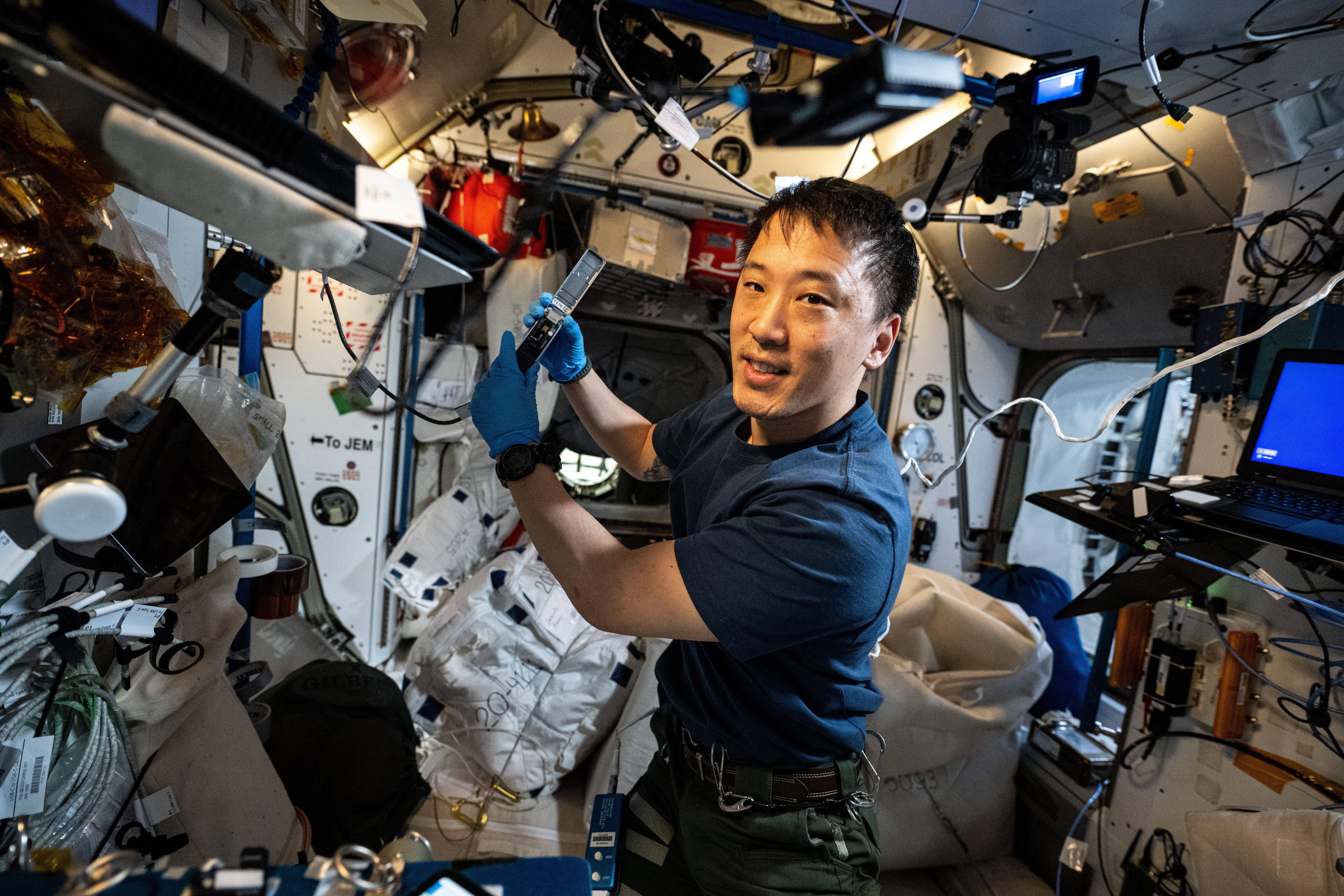
Secure and reliable data storage and transmission are essential to maintain the protection, accuracy, and accessibility of information. In this photo, NASA astronaut Jonny Kim displays research hardware that tests the viability of encoding, transmitting, and decoding encrypted information via DNA sequences. As part of this experiment, DNA with encrypted information is sequenced aboard the space station to determine the impact of the space environment on its stability. Using DNA to store and transmit data could reduce the weight and energy requirements compared to traditional methods used for long-duration space missions and Earth-based industries.
Learn more about Voyager DNA Decryption.
Remote robotics NASA
Future deep space exploration could rely on robotics remotely operated by humans. NASA astronaut Jonny Kim tests a technology demonstration that allows astronauts to remotely control robots on Earth from the International Space Station. Findings from this investigation could help fine-tune user-robot operating dynamics during future missions to the Moon, Mars, and beyond.
Learn more about Surface Avatar.
Blocking bone loss NASA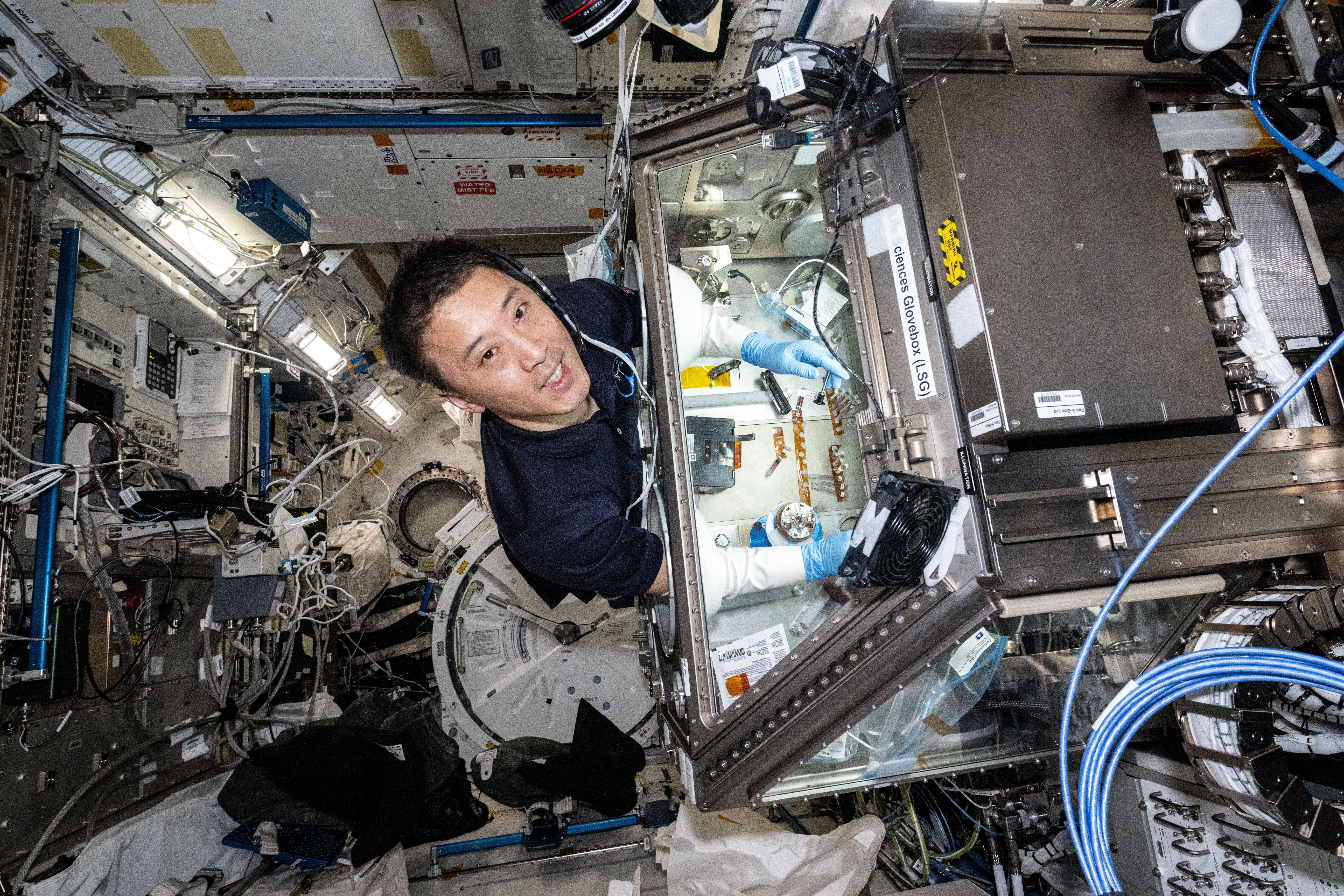
NASA astronaut Jonny Kim conducts an investigation to assess the effects of microgravity on bone marrow stem cells, including their ability to secrete proteins that form and dissolve bone. Bone loss, an age-related factor on Earth, is aggravated by weightlessness and is a health concern for astronauts. Researchers are evaluating whether blocking signals that cause loss could protect astronauts during long-duration spaceflights. The findings could also lead to preventative measures and treatments for bone loss caused by aging or disease on Earth.
Learn more about MABL-B.
Upscaling production NASA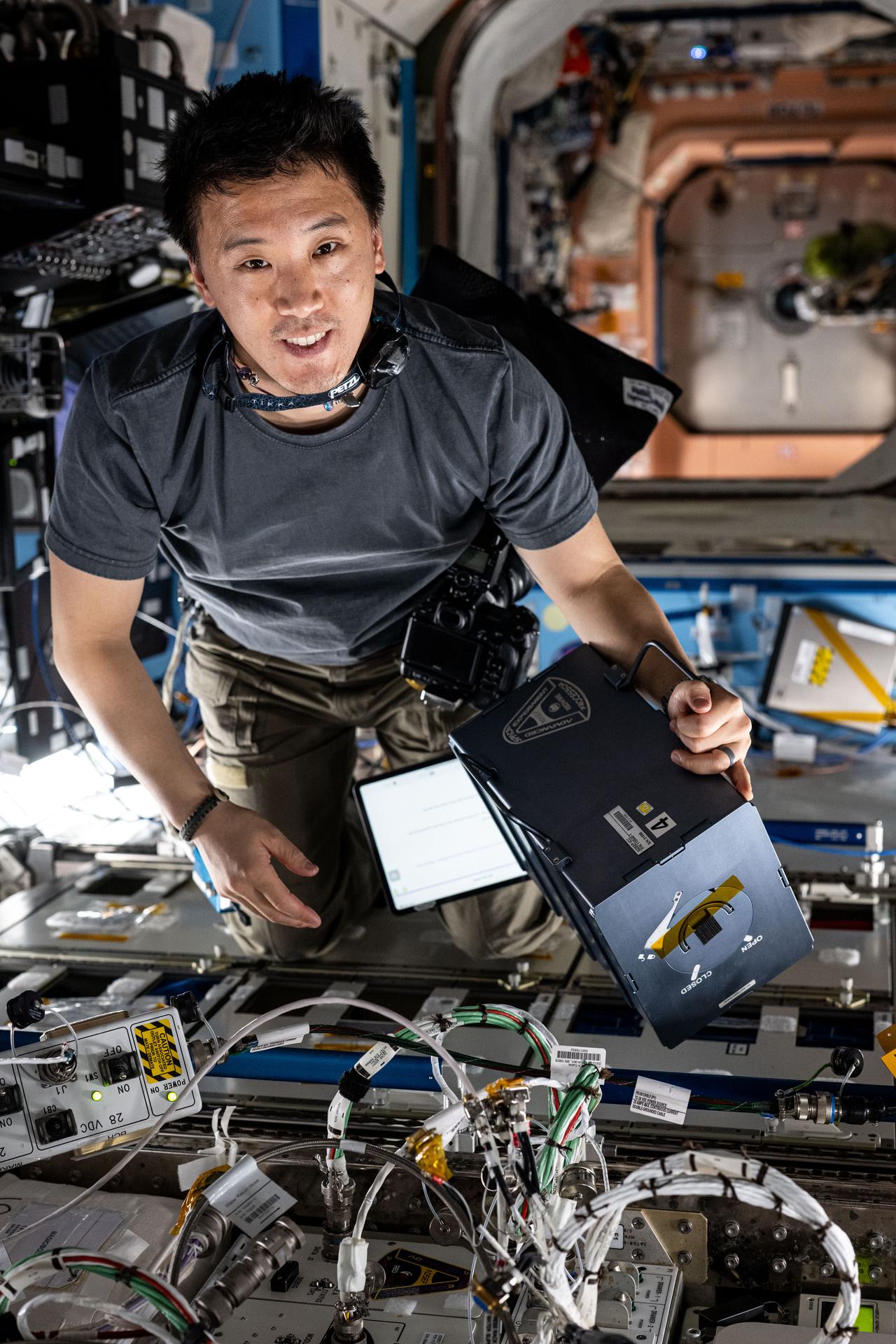
NASA astronaut Jonny Kim tests new hardware installed to an existing crystallization facility that enables increased production of crystals and other commercially relevant materials, like golden nanospheres. These tiny, spherical gold particles have optical and electronic applications, and are biocompatible, making them useful for medication delivery and diagnostics. As part of this experiment aboard the space station, Kim attempted to process larger, more uniform golden nanospheres than those produced on the ground.
Learn more about ADSEP-ICC.
Nutrients on demand NASA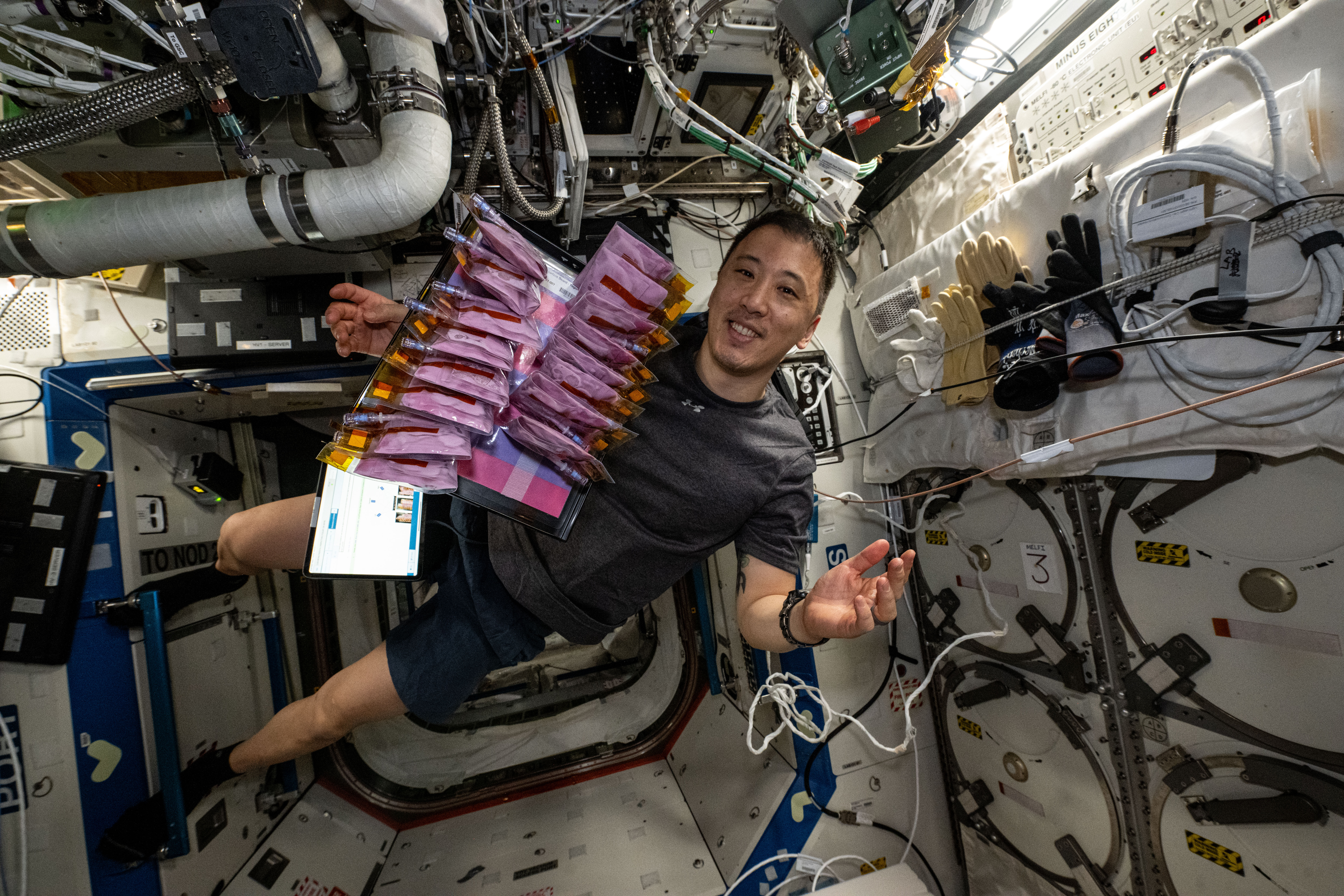
Some vitamins and nutrients in foods and supplements lose their potency during long-term storage, and insufficient intake of even a single nutrient can lead to diseases and other health issues. NASA astronaut Jonny Kim displays purple-pink production bags for an investigation aimed at producing nutrient-rich yogurt and kefir using bioengineered yeasts and probiotics. The unique color comes from a food-grade pH indicator that allows astronauts to visually monitor the fermentation process.
Learn more about BioNutrients-3.
Next-Gen medicine and manufacturing NASA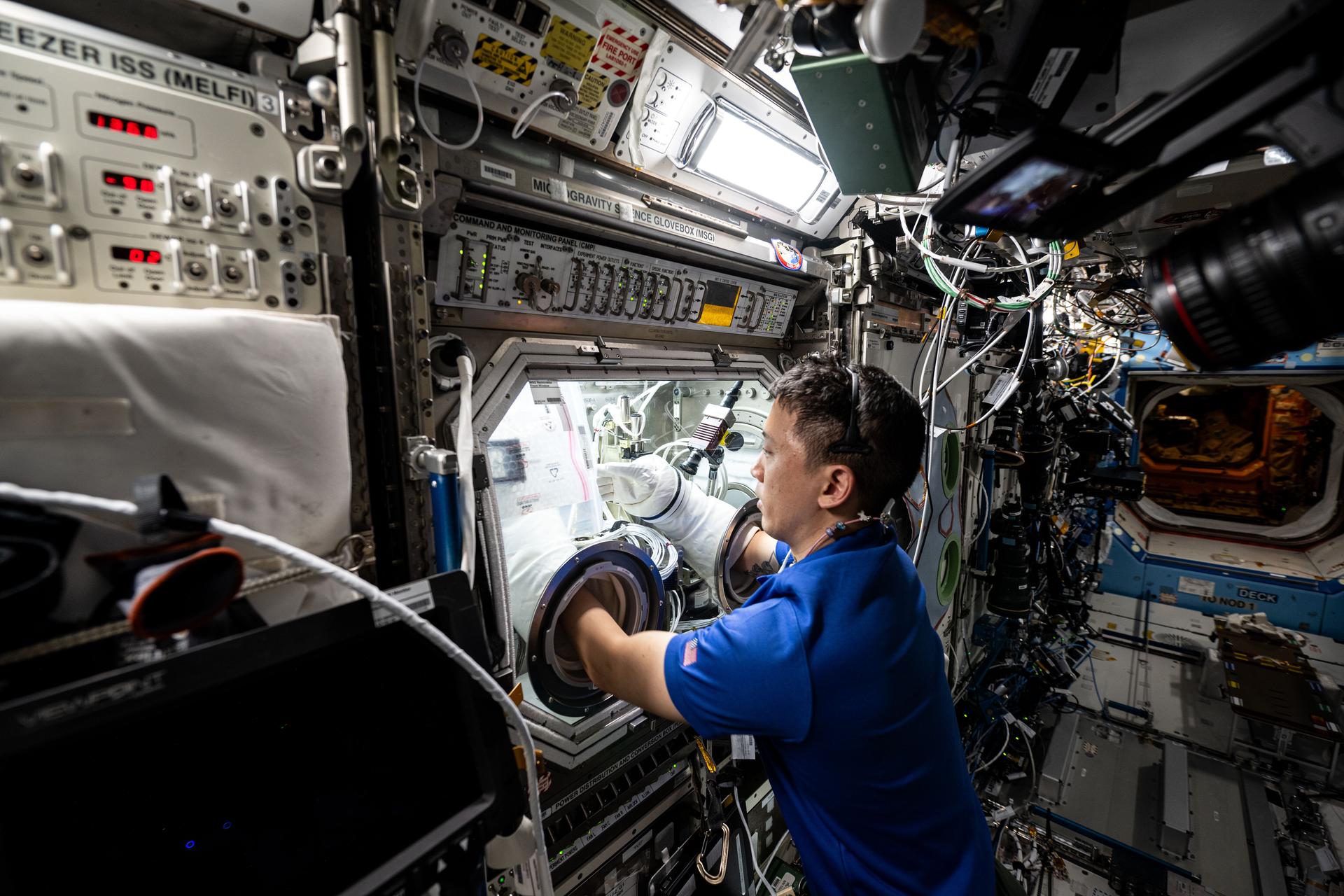
NASA astronaut Jonny Kim uses the Microgravity Science Glovebox to study how high-concentration protein fluids behave in microgravity. This study helps researchers develop more accurate models to predict the behavior of these complex fluids in various scenarios, which advances manufacturing processes in space and on Earth. It also can enable the development of next-generation medicines for treating cancers and other diseases.
Learn more about Ring Sheared Drop-IBP-2.
Observing colossal Earth events NASA
On Sept. 28, 2025, NASA astronaut Jonny Kim photographed Hurricane Humberto from the International Space Station. Located at 250 miles above Earth, the orbiting laboratory’s unique orbit allows crew members to photograph the planet’s surface including hurricanes, dust storms, and fires. These images are used to document disasters and support first responders on the ground.
Learn more about observing Earth from space station.
Keep Exploring Discover More Topics From NASALatest News from Space Station Research
Space Station Research Results
Humans In Space
International Space Station
NASA Astronaut Jonny Kim Advances Research Aboard Space Station
5 min read
Preparations for Next Moonwalk Simulations Underway (and Underwater) NASA astronaut Jonny Kim floats inside the Cupola of the International Space Station.NASANASA astronaut Jonny Kim is wrapping up his first mission aboard the International Space Station in early December. During his stay, Kim conducted scientific experiments and technology demonstrations to benefit humanity on Earth and advance NASA’s Artemis campaign in preparation for future human missions to Mars.
Here is a look at some of the science Kim completed during his mission:
Medical check-ups in microgravity NASANASA astronaut Jonny Kim, a medical doctor, completed several routine medical exams while aboard the International Space Station. NASA flight surgeons and researchers monitor crew health using a variety of tools, including blood tests, eye exams, and ultrasounds.
Kim conducts an ultrasound of his eye in the left image. Eye exams are essential as long-duration spaceflight may cause changes to the eye’s structure and affect vision, a condition known as spaceflight associated neuro-ocular syndrome, or SANS. In the right image, Kim draws blood from a fellow crew member. These blood sample collections provide important insights into crew cartilage and bone health, cardiovascular function, inflammation, stress, immune function, and nutritional status.
NASA astronauts complete regular medical exams before, during, and after spaceflight to monitor astronaut health and develop better tools and measures for future human exploration missions to the Moon and Mars.
Learn more about human research on space station.
Low light plant growth NASA NASANASA astronaut Jonny Kim photographs dwarf tomato sprouts grown using a nutrient supplement instead of photosynthesis as part of a study on plant development and gene expression. The plants are given an acetate supplement as a secondary nutrition source, which could increase growth and result in better yields, all while using less power and fewer resources aboard the space station and future spacecraft.
Learn more about Rhodium USAFA NIGHT.
Radioing future space explorers NASANASA astronaut Jonny Kim uses a ham radio to speak with students on Earth via an educational program connecting students worldwide with astronauts aboard the International Space Station. Students can ask about life aboard the orbiting laboratory and the many experiments conducted in microgravity. This program encourages an interest in STEM (science, technology, engineering, and mathematics) and inspires the next generation of space explorers.
Learn more about ISS Ham Radio.
Encoding DNA with data NASASecure and reliable data storage and transmission are essential to maintain the protection, accuracy, and accessibility of information. In this photo, NASA astronaut Jonny Kim displays research hardware that tests the viability of encoding, transmitting, and decoding encrypted information via DNA sequences. As part of this experiment, DNA with encrypted information is sequenced aboard the space station to determine the impact of the space environment on its stability. Using DNA to store and transmit data could reduce the weight and energy requirements compared to traditional methods used for long-duration space missions and Earth-based industries.
Learn more about Voyager DNA Decryption.
Remote robotics NASAFuture deep space exploration could rely on robotics remotely operated by humans. NASA astronaut Jonny Kim tests a technology demonstration that allows astronauts to remotely control robots on Earth from the International Space Station. Findings from this investigation could help fine-tune user-robot operating dynamics during future missions to the Moon, Mars, and beyond.
Learn more about Surface Avatar.
Blocking bone loss NASANASA astronaut Jonny Kim conducts an investigation to assess the effects of microgravity on bone marrow stem cells, including their ability to secrete proteins that form and dissolve bone. Bone loss, an age-related factor on Earth, is aggravated by weightlessness and is a health concern for astronauts. Researchers are evaluating whether blocking signals that cause loss could protect astronauts during long-duration spaceflights. The findings could also lead to preventative measures and treatments for bone loss caused by aging or disease on Earth.
Learn more about MABL-B.
Upscaling production NASANASA astronaut Jonny Kim tests new hardware installed to an existing crystallization facility that enables increased production of crystals and other commercially relevant materials, like golden nanospheres. These tiny, spherical gold particles have optical and electronic applications, and are biocompatible, making them useful for medication delivery and diagnostics. As part of this experiment aboard the space station, Kim attempted to process larger, more uniform golden nanospheres than those produced on the ground.
Learn more about ADSEP-ICC.
Nutrients on demand NASASome vitamins and nutrients in foods and supplements lose their potency during long-term storage, and insufficient intake of even a single nutrient can lead to diseases and other health issues. NASA astronaut Jonny Kim displays purple-pink production bags for an investigation aimed at producing nutrient-rich yogurt and kefir using bioengineered yeasts and probiotics. The unique color comes from a food-grade pH indicator that allows astronauts to visually monitor the fermentation process.
Learn more about BioNutrients-3.
Next-Gen medicine and manufacturing NASANASA astronaut Jonny Kim uses the Microgravity Science Glovebox to study how high-concentration protein fluids behave in microgravity. This study helps researchers develop more accurate models to predict the behavior of these complex fluids in various scenarios, which advances manufacturing processes in space and on Earth. It also can enable the development of next-generation medicines for treating cancers and other diseases.
Learn more about Ring Sheared Drop-IBP-2.
Observing colossal Earth events NASAOn Sept. 28, 2025, NASA astronaut Jonny Kim photographed Hurricane Humberto from the International Space Station. Located at 250 miles above Earth, the orbiting laboratory’s unique orbit allows crew members to photograph the planet’s surface including hurricanes, dust storms, and fires. These images are used to document disasters and support first responders on the ground.
Learn more about observing Earth from space station.
Keep Exploring Discover More Topics From NASALatest News from Space Station Research
Space Station Research Results
Humans In Space
International Space Station
NASA Awards Lunar Freezer System Contract
NASA has selected the University of Alabama at Birmingham to provide the necessary systems required to return temperature sensitive science payloads to Earth from the Moon.
The Lunar Freezer System contract is an indefinite-delivery/indefinite-quantity award with cost-plus-fixed-fee delivery orders. The contract begins Thursday, Dec. 4, with a 66-month base period along with two optional periods that could extend the award through June 3, 2033. The contract has a total estimated value of $37 million.
Under the contract, the awardee will be responsible for providing safe, reliable, and cost-effective hardware and software systems NASA needs to maintain temperature-critical science materials, including lunar geological samples, human research samples, and biological experimentation samples, as they travel aboard Artemis spacecraft to Earth from the lunar surface. The awarded contractor was selected after a thorough evaluation by NASA engineers of the proposals submitted. NASA’s source selection authority made the selection after reviewing the evaluation material based on the evaluation criteria contained in the request for proposals.
For information about NASA and other agency programs, visit:
-end-
Tiernan Doyle
Headquarters, Washington
202-358-1600
tiernan.doyle@nasa.gov
NASA Awards Lunar Freezer System Contract
NASA has selected the University of Alabama at Birmingham to provide the necessary systems required to return temperature sensitive science payloads to Earth from the Moon.
The Lunar Freezer System contract is an indefinite-delivery/indefinite-quantity award with cost-plus-fixed-fee delivery orders. The contract begins Thursday, Dec. 4, with a 66-month base period along with two optional periods that could extend the award through June 3, 2033. The contract has a total estimated value of $37 million.
Under the contract, the awardee will be responsible for providing safe, reliable, and cost-effective hardware and software systems NASA needs to maintain temperature-critical science materials, including lunar geological samples, human research samples, and biological experimentation samples, as they travel aboard Artemis spacecraft to Earth from the lunar surface. The awarded contractor was selected after a thorough evaluation by NASA engineers of the proposals submitted. NASA’s source selection authority made the selection after reviewing the evaluation material based on the evaluation criteria contained in the request for proposals.
For information about NASA and other agency programs, visit:
-end-
Tiernan Doyle
Headquarters, Washington
202-358-1600
tiernan.doyle@nasa.gov
To Celebrate 25 Years In Service, The Gemini Observatory Imaged The Butterfly Nebula
To celebrate 25 years since the completion of the International Gemini Observatory, students in Chile voted for the Gemini South telescope to image NGC 6302 — a billowing planetary nebula that resembles a cosmic butterfly. The International Gemini Observatory is partly funded by the U.S. National Science Foundation (NSF) and operated by NSF NOIRLab.