NASA - Breaking News

Toxicology and Environmental Chemistry
5 min read
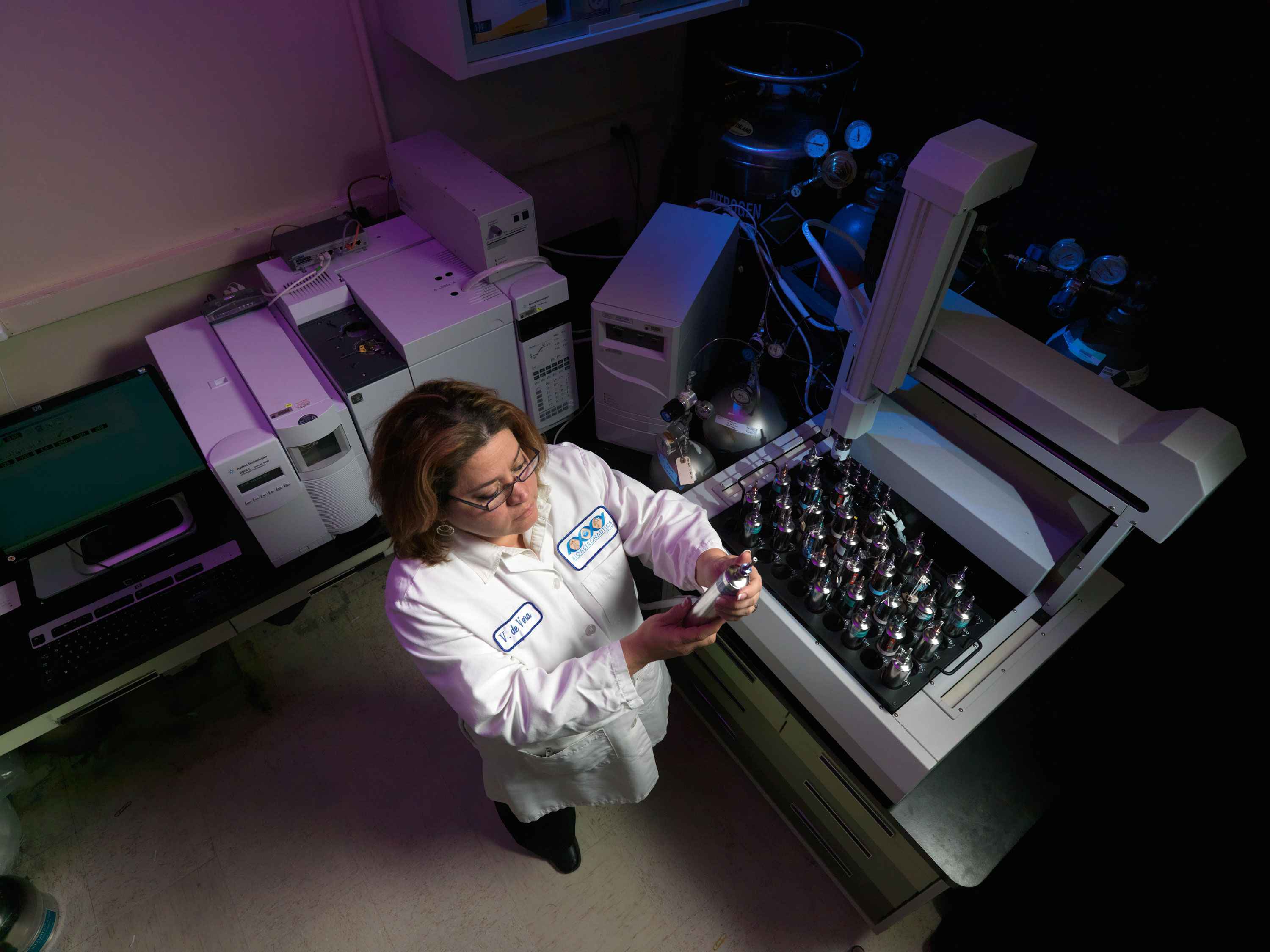
Preparations for Next Moonwalk Simulations Underway (and Underwater) An environmental chemist at NASA JSCNASA Ensuring Astronaut SafetyAchieving safe exploration of space in vehicles that rely upon closed environmental systems to recycle air and water to sustain life and are operated in extremely remote locations is a major challenge. The Toxicology and Environmental Chemistry (TEC) group at Johnson Space Center (JSC) is made up of 2 interrelated groups: Toxicology support and the Environmental Chemistry Laboratory. The scientists in both groups play an important role in ensuring that the crew of the ISS are breathing clean air and drinking clean water. Personnel within the TEC establish safe spacecraft environmental limits, monitor the air and water quality aboard current spacecraft (ISS and Commercial Crew and Cargo vehicles), and support technology advancements. The TEC employs in-flight monitoring capabilities as well as postflight sample analysis techniques to monitor the air and water quality from spaceflight.
Fun Fact: We are currently recovering 85% of the water from crew urine and turning it back into drinking water.NASA
An Agency ResourceThe Toxicology group at JSC serves as the NASA-wide resource for aspects of space toxicology and is responsible for several different duties that are focused on protecting crewmembers and spacecraft systems from toxic exposures in spaceflight. These include assessing chemical hazards for flight, establishing limits for contaminants in spacecraft air and water, assessing and evaluating environmental data from spacecraft in flight, and assessing the potential for off-gas products from new vehicles or modules. These assessments are documented in:
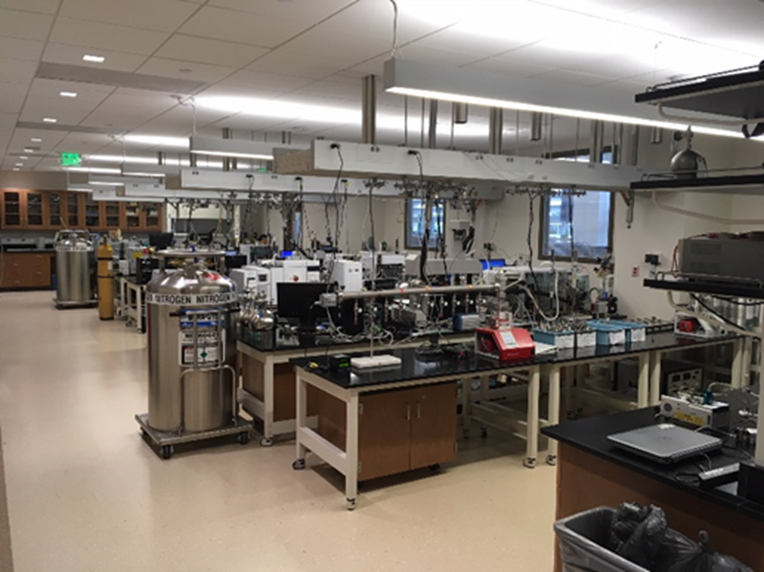
Hazardous Materials Summary Tables (HMSTs) and Hazardous Materials data files (HazMats) Spacecraft Maximum Allowable Concentrations (SMACs) and Spacecraft Water Exposure Guidelines (SWEGs) The TEC air quality laboratory.NASAThe Environmental Chemistry laboratory at JSC occupies approximately 6,000 sq. ft. of laboratory space in one of the newest buildings on site. This is a fully equipped environmental and analytical laboratory with analysts that have supported multiple human spaceflight programs and provided center support for both gas and liquid analysis. The work in the laboratories operates under an ISO 9001/AS9100-certified quality plan with dedicated and independent quality personnel.
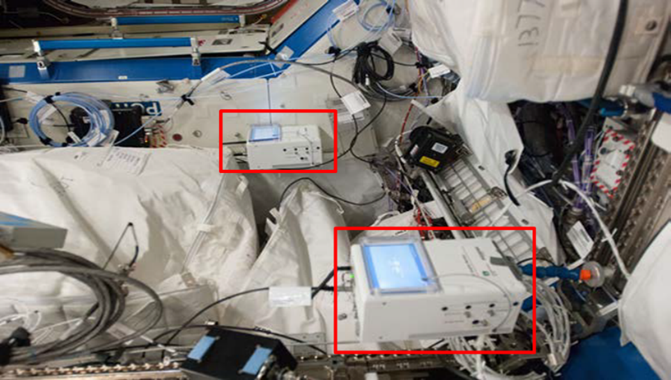
Liquid chromatograph mass spectrometer.NASAThe Environmental Chemistry Laboratory monitors for contaminants in spacecraft air using both in-flight and post-flight methods. Onboard the International Space Station (ISS), 2 Air Quality Monitors (AQMs) use gas chromatography/differential mobility spectrometry to detect and quantify 23 target volatile organic compounds to provide near real-time insight into the status of the ISS atmosphere. Other real-time monitors supported by the Environmental Chemistry laboratory include the compound-specific analyzer-combustion products (CSA-CP), which use electrochemical sensors to analyze the atmosphere for the presence of compounds produced by fire, and the CO2 monitor, which uses non-dispersive infrared reflectance to monitor for the presence of elevated CO2. For detailed post-flight analysis in the Environmental Chemistry Laboratory, astronauts use grab sample containers to collect in-flight samples, which are then returned to JSC for a detailed environmental analysis. Similarly, formaldehyde monitoring kits contain badges used to collect formaldehyde. These also are returned to the ground for spectroscopic analysis.
Air quality monitors used for volatile organic compound detection positioned in the U.S. Lab on the ISS.NASAThe Environmental Chemistry Laboratory also analyzes archival samples returned from the ISS. The majority of water consumed by crewmembers on the ISS is recycled from a combination of condensed atmospheric humidity and urine. This wastewater is then treated by the U.S. water processor assembly (WPA) to produce potable water, which is analyzed to ensure that the water meets U.S. potability requirements. Samples of the humidity condensate and condensate/urine distillate also are returned for analysis to provide insight into the operation of the WPA and the overall US water recovery system. The TEC relies upon the in-flight analytical capability provided by the ISS total organic carbon analyzer (TOCA) to determine real-time total organic carbon concentrations, which are used to protect ISS crew health as well as manage the U.S. water system consumables. Similarly, the colorimetric water quality monitoring kit (CWQMK) is used to provide insight into the biocide concentration in the U.S. water.
The CSA-CP used to monitor for evidence of fires or smoldering events on the ISS.NASAWater samples are also collected in flight and stored for return to Johnson Space Center. The following ground-based equipment is used to analyze archival samples to ensure suitable air and water quality:
- Liquid Chromatography/Refractive Index Detection (LC/RI)
- Gas Chromatography/Flame Ionization Detector (GC/FID)
- Gas Chromatography/Thermal Conductivity Detector (GC/TCD)
- Trace Gas Analyzer
- Gas Chromatography/Mass Spectrometry (GC/MS)
- Liquid Chromatography/Mass Spectrometry (LC/MS)
- Inductively Coupled Plasma/Mass Spectrometry (ICP/MS)
- Ion Chromatography (IC)
- UV/VIS Spectrophotometry
- Fourier Transform Infrared Reflectance (FTIR)
- Total Organic Carbon Analyzer (TOCA)
In addition to analysis of flight samples and real-time data, the Environmental Chemistry laboratory team plays an important role in the development of new Environmental Control and Life Support Systems hardware by providing analytical support during ground testing. Similarly, the TEC scientists pursue and support technology demonstrations aimed at developing new methods for real-time data collection. Recent examples of this support have included the multi-gas monitor (MGM) and the personal CO2 monitor. TEC scientists make vital contributions to consolidating environmental monitoring hardware to reduce mass and volume requirements, both of which are important as NASA moves to more long-term missions in smaller vehicles.
The U.S. TOCA used to test water quality in real-time on the ISSNASA Spaceflight Air and Water QualityToxicology and Environmental Chemistry (TEC) monitors airborne contaminants in both spacecraft air and water. In-flight monitors are employed to provide real-time insight into the environmental conditions on ISS. Archival samples are collected and returned to Earth for full characterization of ISS air and water.
Results of Post-Flight Analysis of In-Flight Air and Water Samples Points of ContactPaul Mudgett, PhD
Valerie Ryder, PhD DABT
Spencer Williams, PhD DABT
William T. Wallace, PhD
Humans In Space
Missions
International Space Station
Solar System
Statistics and Data Science
3 min read
Preparations for Next Moonwalk Simulations Underway (and Underwater) Statistics and Data Science Enabling Successful ResearchA major aim of biomedical research at NASA is to acquire data to evaluate, understand, and assess the biomedical hazards of spaceflight and to develop effective countermeasures. Data Science (S&DS) personnel provide statistical support to groups within the NASA JSC Human Health and Performance Directorate and other NASA communities. They have expertise in the development of complex study designs, the application of modern statistical methods, and the analysis of data collected under NASA operational constraints (small sample sizes, the limited population of astronauts).
Fun Fact: Did you know statistics is more than just means and standard deviations? Statistics is the science of collecting, analyzing, presenting and interpreting data. NASA depends on data to make decisions and statistics is crucial to making good decisions. Statistics and Data Science (S&DS) help transform data into evidence.NASA
Data Science SupportBeyond statistics, the group aids with data engineering and exploring data. Data engineering includes extracting and transforming data in preparation for analysis and visualization. Data can come in many different formats, the S&DS team helps researchers harmonize (bring data sets together) information across sources. Exploration includes initial analysis and building informative visualizations to deepen the understanding of the evidence. Analyzing and interpreting data to produce insights follow.
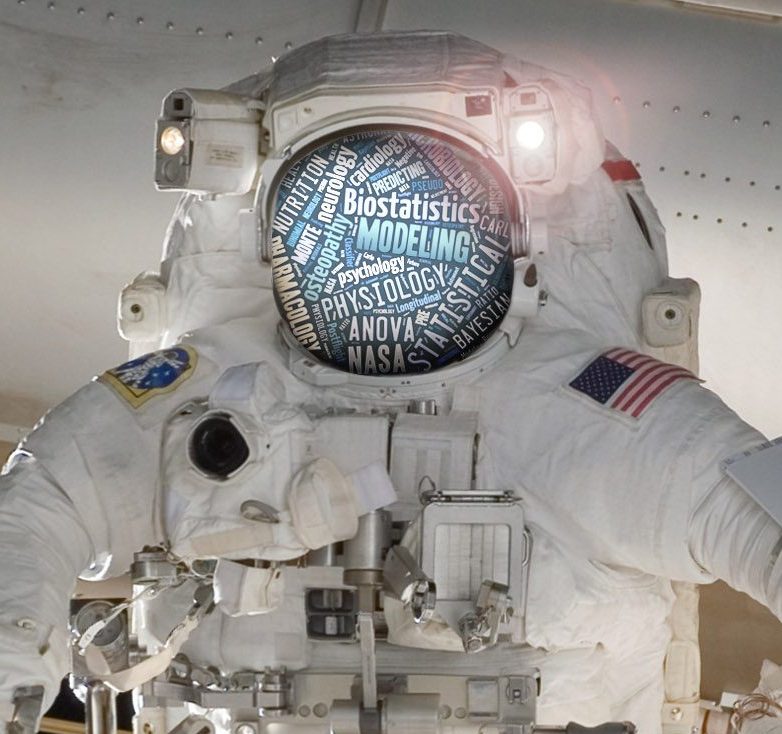
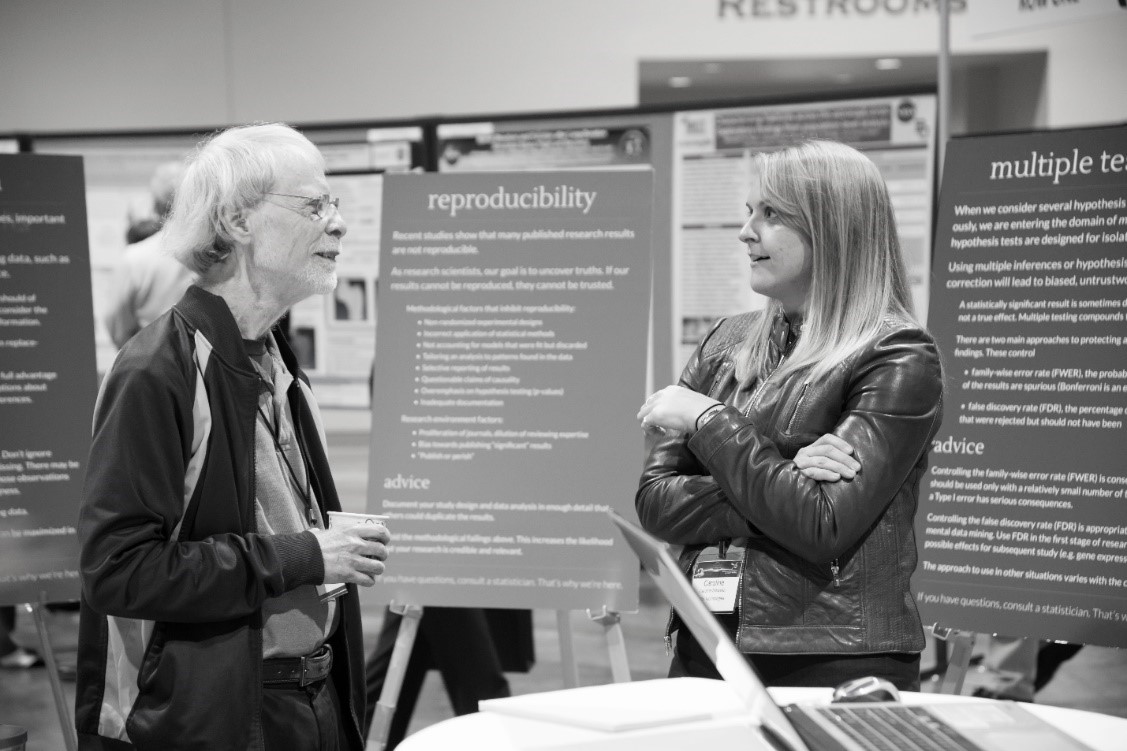
S&DS statistician Dr. Alan Feiveson consulting with Lifetime Surveillance of Astronaut Health’s Statistical Data Analyst Caroline Schaefer at a Statistics helpdesk during the Human Research Program’s Investigators’ Workshop in 2017.NASA Statistical Consulting ServicesThe S&DS team provides collaboration and consulting expertise to the Directorate in the application of statistical theory and practice to ongoing biomedical research. Personnel aid in the preparation of sections of research proposals that deal with experiment design, statistical modeling, and subsequent analysis of anticipated research data. Once data are gathered, S&DS statisticians assist with analysis, visualization, and interpretation of results so that investigators can extract the most information while maintaining statistical integrity. A S&DS statistician may be a co-investigator on a project requiring sophisticated statistical modeling and/or analysis techniques. Through collaboration, members of the S&DS team expand their knowledge base in such diverse medical fields as environmental physiology, osteopathy, neurology, pharmacology, microbiology, cardiology, nutrition, and psychology. To meet the unique data collected by NASA, statisticians may develop new techniques to address challenges such as small sample sizes of ISS studies, missing data, operational constraints, and novel measures of outcome.
OutreachCollaborators with the S&DS team often reside within the Directorate, but statistics and data science support is extended to other organizations within the Johnson Space Center, including the Engineering Directorate, Human Resources, and the Education Office. The S&DS team also provides a venue wherein high school, undergraduate, and graduate interns can participate in the analysis and interpretation of NASA biomedical data. Students assigned to the S&DS team have a rare opportunity to gain real-world experience with research in a variety of biomedical fields.
Point of ContactMillennia Young, PhD
Human Health and Performance Capabilities Share Details Last Updated Dec 16, 2025 EditorRobert E. LewisLocationJohnson Space Center Related Terms Explore More 3 min read Bone and Mineral Evaluation and Analysis Article 3 years ago 3 min read Exercise Physiology and Countermeasures Article 3 years ago 1 min read Core Laboratory Article 3 years ago Keep Exploring Discover More Topics From NASAHumans In Space
Missions
International Space Station
Solar System
One of NASA’s Key Cameras Orbiting Mars Takes 100,000th Image
3 min read
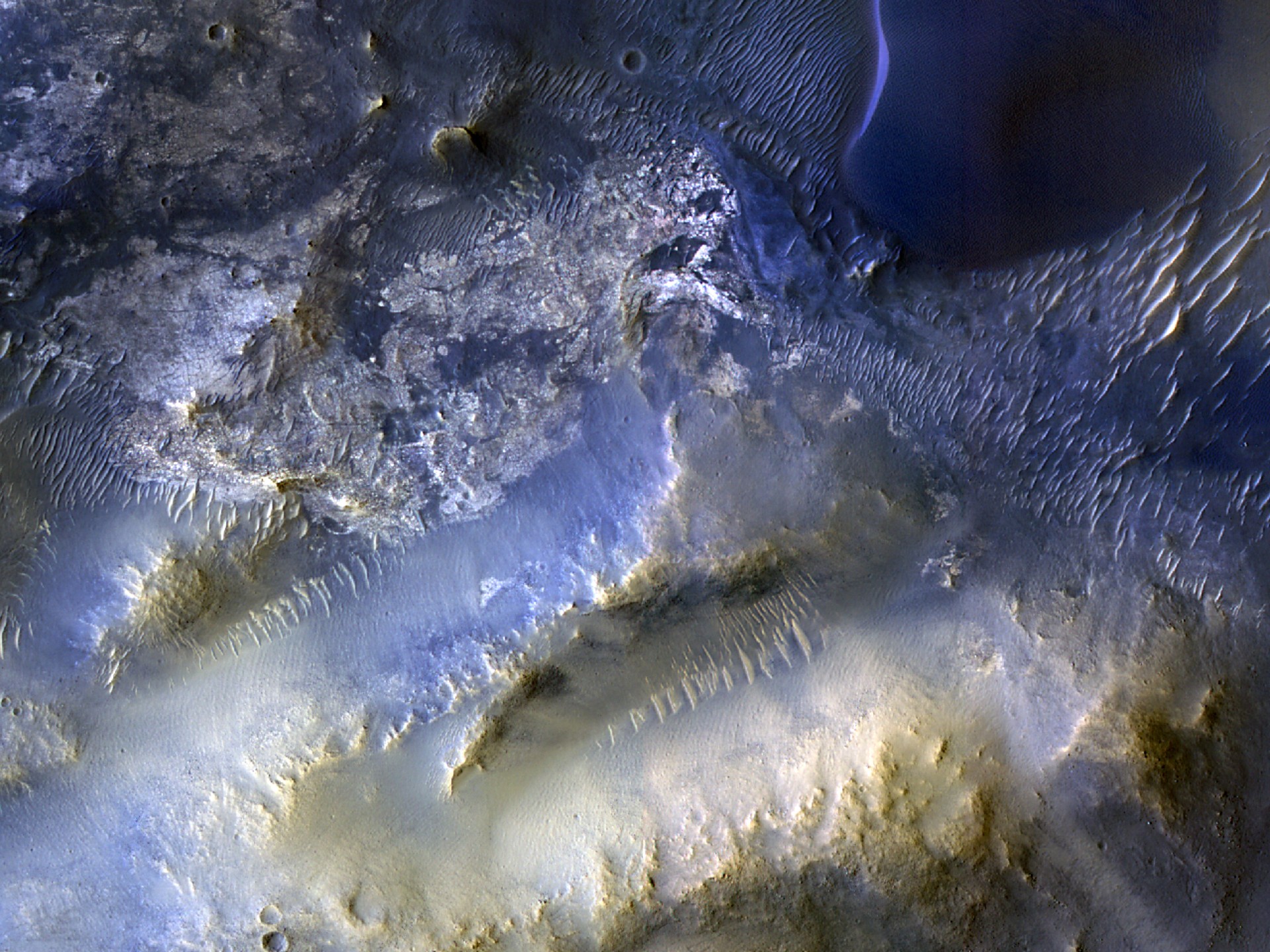
Preparations for Next Moonwalk Simulations Underway (and Underwater) This view of a region called Syrtis Major is from the 100,000th image captured by NASA’s Mars Reconnaissance Orbiter using its HiRISE camera. Over nearly 20 years, HiRISE has helped scientists understand how the Red Planet’s surface is constantly changing. NASA/JPL-Caltech/University of ArizonaMesas and dunes stand out in the view snapped by HiRISE, one of the imagers aboard the agency’s Mars Reconnaissance Orbiter.
After nearly 20 years at the Red Planet, NASA’s Mars Reconnaissance Orbiter (MRO) has snapped its 100,000th image of the surface with its HiRISE camera. Short for High Resolution Imaging Science Experiment, HiRISE is the instrument the mission relies on for high-resolution images of features ranging from impact craters, sand dunes, and ice deposits to potential landing sites. Those images, in turn, help improve our understanding of Mars and prepare for NASA’s future human missions there.
Captured Oct. 7, this milestone image from the spacecraft shows mesas and dunes within Syrtis Major, a region about 50 miles (80 kilometers) southeast of Jezero Crater, which NASA’s Perseverance rover is exploring. Scientists are analyzing the image to better understand the source of windblown sand that gets trapped in the region’s landscape, eventually forming dunes.
“HiRISE hasn’t just discovered how different the Martian surface is from Earth, it’s also shown us how that surface changes over time,” said MRO’s project scientist, Leslie Tamppari of NASA’s Jet Propulsion Laboratory in Southern California. “We’ve seen dune fields marching along with the wind and avalanches careening down steep slopes.”
To view this video please enable JavaScript, and consider upgrading to a web browser that supports HTML5 video
Watch highlights of images captured by HiRISE, the high-resolution camera aboard NASA’s Mars Reconnaissance Orbiter, including its 100,000th image, showing the plains and dunes of Syrtis Major.NASA/JPL-Caltech/University of ArizonaThe subject of the 100,000th image was recommended by a high school student through the HiWish site, where anyone can suggest parts of the planet to study. Team members at University of Arizona in Tucson, which operates the camera, also make 3D models of HiRISE imagery so that viewers can experience virtual flyover videos.
“Rapid data releases, as well as imaging targets suggested by the broader science community and public, have been a hallmark of HiRISE,” said the camera’s principal investigator, Shane Byrne of the University of Arizona in Tucson. “One hundred thousand images just like this one have made Mars more familiar and accessible for everyone.”
More about MRO
NASA’s Jet Propulsion Laboratory in Southern California manages MRO for NASA’s Science Mission Directorate in Washington as part of NASA’s Mars Exploration Program portfolio. Lockheed Martin Space in Denver built MRO and supports its operations.
The University of Arizona in Tucson operates HiRISE, which was built by Ball Aerospace & Technologies Corp., in Boulder, Colorado.
For more information, visit:
https://science.nasa.gov/mission/mars-reconnaissance-orbiter
MRO Captures Images of Comet 3I/ATLAS Mars Orbiter Shines New Light on Martian Mystery Mars Orbiter Learns New Moves After Nearly 20 YearsNews Media Contacts
Andrew Good
Jet Propulsion Laboratory, Pasadena, Calif.
818-393-2433
andrew.c.good@jpl.nasa.gov
Karen Fox / Molly Wasser
NASA Headquarters, Washington
202-358-1600
karen.c.fox@nasa.gov / molly.l.wasser@nasa.gov
2025-140
Share Details Last Updated Dec 16, 2025 Related Terms Explore More 6 min read NASA JPL Shakes Things Up Testing Future Commercial Lunar Spacecraft Article 1 hour ago 5 min read NASA, Partners Share First Data From New US-European Sea Satellite Article 7 hours ago 3 min read NASA’s Webb, Curiosity Named in TIME’s Best Inventions Hall of FameTwo icons of discovery, NASA’s James Webb Space Telescope and NASA’s Curiosity rover, have earned…
Article 4 days ago Keep Exploring Discover Related Topics Mars ExplorationMars is the only planet we know of inhabited entirely by robots. Learn more about the Mars Missions.
Mars Reconnaissance OrbiterNASA’s Mars Reconnaissance Orbiter (MRO) is the second longest-lived spacecraft to orbit Mars, after 2001 Mars Odyssey.
MRO ScienceOverview Among other ongoing achievements, data collected by Mars Reconnaissance Orbiter continues to help Mars scientists and engineers characterize potential…
All Mars ResourcesExplore this collection of Mars images, videos, resources, PDFs, and toolkits. Discover valuable content designed to inform, educate, and inspire,…
Maintaining the Gold Standard: The Future of Landsat Calibration and Validation
By Amit Angal, Senior Engineer at Goddard Space Flight Center
The Landsat Calibration and Validation (Cal/Val) group helps uphold Landsat’s reputation as the gold standard of satellite imagery. They ensure that the Operational Land Imager (OLI) and the Thermal Infrared Sensor (TIRS) aboard Landsats 8 and 9 provide high-quality scientific measurements to users around the world. In 2025, the Cal/Val group contributed over 60 pages to the second edition of “Comprehensive Remote Sensing” (Kaita et. al, 2026), organizing content from NASA, USGS, academia, and industry scientists. Cal/Val support staff authored multiple sections, including a summary of results from Landsat 9 and of the evolution of spectral, spatial, and radiometric characteristics throughout the Landsat missions.
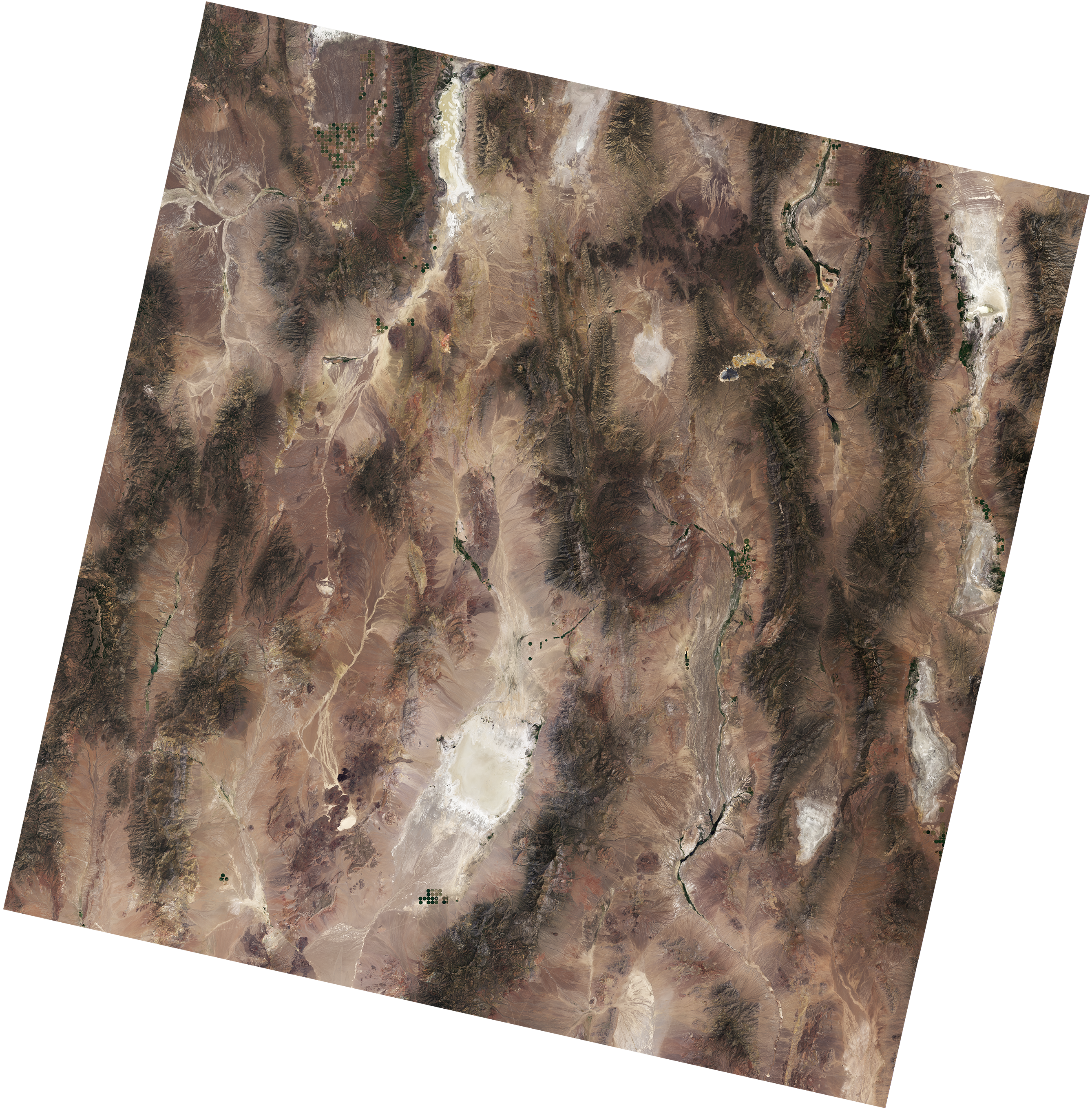
A natural-color Landsat 9 image of Railroad Valley Playa in Nevada, acquired on June 29, 2024. A portion of the playa is used as a radiometric calibration and validation site for various satellite sensors including Landsat 8 and 9’s OLI instruments.NASA/USGSThe Cal/Val team at NASA Goddard Space Flight Center works closely with the Landsat Flight Operations Team to plan weekly calibration activities to maintain the radiometric accuracy of Landsat products. In October 2025, a Landsat 9 anomaly occurred related to its solar array drive assembly (SADA) potentiometer. The spacecraft and instruments were placed in a safehold, pausing data collections. The Cal/Val team assessed the instruments after they recovered from this anomaly, including monitoring the instrument telemetry, detector gains, and noise performance. The team identified a mis-loaded detector map and updated the calibration of both the reflective and thermal emissive bands to ensure consistent, accurate data. After six days in the safehold, the instrument resumed normal operations.
The NASA Cal/Val team supports their USGS counterparts with quarterly updates to the Calibration Parameter File (CPF) by providing inputs for relative and absolute gains as needed. This work involves collaborating with USGS scientists to ensure the consistency of the Combined Radiometric Model (CRaM). The CRaM approach integrates radiometric responses from on-board calibrators to enhance long-term calibration stability throughout mission lifetimes. The CRaM algorithm also provides an extensible framework for future satellite missions. A peer-reviewed publication detailing the CRaM’s approach and future applications was submitted to Science of Remote Sensing.
On January 14-16, 2025, the Landsat Cal/Val team organized and hosted the first semiannual Technical Information Meeting (TIM) at NASA Goddard Space Flight Center. NASA and USGS scientists welcomed collaborating scientists from South Dakota State University (SDSU), the University of Arizona Tucson, and Rochester Institute of Technology for presentations and discussions on Landsat imaging performance, algorithms, and instrument health. On May 28-29, 2025, the Cal/Val team attended the second semiannual TIM at SDSU.
The Landsat Cal/Val Team is validating the accuracy of the Harmonized Landsat and Sentinel-2 (HLS) v2.0 product, which combines data from multiple satellites to create a continuous record of Earth’s surface reflectance measurements since 2013. The team is testing the dataset using RadCalNet, a global network of automated ground stations that provide precise, standardized measurements. The team compared measurements from four RadCalNet sites, including the well-established Railroad Valley Playa site in Nevada, against near-simultaneous HLS data. Their analysis shows the satellite and ground measurements agree within expected uncertainty ranges—a strong validation of the HLS product’s accuracy.
The team presented these findings at the CEOS IVOS calibration meeting in Tucson, Arizona (September 1-5, 2025) and is currently preparing a peer-reviewed article to share the complete results.
Path ForwardThe Cal/Val team applies lessons learned from Landsat missions to better plan calibration efforts for the next generation of instruments. Using instrument performance checklists from Landsat 8/9, the team is building a framework of in-house geometric and radiometric testing and extending algorithms for future Landsat instruments.
The Landsat Cal/Val Team is actively tackling a critical challenge in solar irradiance modeling. While new hyperspectral sensor technologies have made it possible to create highly accurate solar models with much lower uncertainty, the remote sensing community still lacks agreed-upon methods for applying these advanced models. A dedicated subgroup within the Landsat Cal/Val Team is now developing and testing standardized approaches to bridge this gap. Their goal is to create clear recommendations and best practices that the scientific community can refine together and implement consistently.
This work addresses a fundamental need—transforming promising hyperspectral solar modeling capabilities into practical, standardized tools that researchers can confidently use across different projects and applications.
Explore More 3 min read What’s Next for HLSIn 2025, the Harmonized Landsat and Sentinel-2 (HLS) program established itself as a cornerstone for…
Article 2 hours ago 2 min read GLOBE Expands with Landsat Land Cover ComparisonsThe Global Learning and Observations to Benefit the Environment (GLOBE) Program has launched a new…
Article 6 days ago 4 min read Tool Uses NASA Data to Take Temperature of Rivers from SpaceNew research uses more than 40 years of data from NASA and the U.S. Geological…
Article 2 weeks agoNextSTEP-3 B: Moon to Mars Architecture Studies
Notice ID: M2M-MSFC-0001
NAICS Codes:
- 541715 – Research and Development in the Physical, Engineering, and Life Sciences (except Nanotechnology and Biotechnology)
NASA seeks industry-led architecture concept development, concept refinement studies, and risk-reduction activities that address Moon to Mars Architecture gaps through the Next Space Technologies for Exploration Partnerships-3 (NextSTEP-3). NASA plans to release this solicitation — NextSTEP-3 Appendix B: Moon to Mars Architectural Studies — near the beginning of calendar year 2026. For full details, consult the links under the notice ID above.
NASA’s Moon to Mars Architecture defines capabilities needed for long-term, human-led scientific discovery in deep space. The agency’s architecture approach distills agency-developed objectives into capabilities and elements that support exploration and science goals. NASA continuously evolves that blueprint for crewed exploration, setting humanity on a path to the Moon, Mars, and beyond by collaborating with experts across industry, academia, and the international community.
This proposed solicitation seeks partner participation on a recurring basis, targeting several calls per year for proposal submissions. The proposals should focus on topics addressing infrastructure, transportation, habitation, concepts of operations, and planetary science capabilities identified in the latest revision of the Architecture Definition Document. The solicitation establishes a flexible acquisition strategy that accommodates both directed-topic calls on specific areas of government interest, as well as open topic calls.
NASA anticipates the first Appendix B directed-topic study calls will focus on lunar and Mars mission concepts. NASA intends to issue a directed call for research into an integrated surface power infrastructure (or power grid) that can evolve to support increasingly ambitious lunar missions. (Note: this call excludes proposals addressing the Fission Surface Power System Announcement for Partnership Proposal but may include all technology solutions including alternate fission, solar hybrid, or other power grid approaches.)
Concurrently, NASA will issue a directed call for Mars crew transportation concept development, trade studies, and identification of risk reduction activities. This call would include in-space transportation, Mars surface access, and Mars ascent options for crew and cargo.
Bassac River, Southern Vietnam
A camera on the International Space Station captured this Oct. 2, 2025, photo of the Bassac River in Cù Lao Dung, a river islet district in southern Vietnam. The Bassac River surrounds the district before emptying into the South China Sea. The river’s brown waters at its mouth result from massive amounts of silt, clay, and organic matter carried from upstream regions of the Mekong River Basin, combined with tidal forces from the sea that stir up sediment. This photograph was taken from as the space station orbited 260 miles above Earth.
Image credit: NASA
NASA’s Roman Telescope Will Observe Thousands of Newfound Cosmic Voids
Lee esta nota de prensa en español aquí.
Our universe is filled with galaxies, in all directions as far as our instruments can see. Some researchers estimate that there are as many as two trillion galaxies in the observable universe. At first glance, these galaxies might appear to be randomly scattered across space, but they’re not. Careful mapping has shown that they are distributed across the surfaces of giant cosmic “bubbles” up to several hundred million light-years across. Inside these bubbles, few galaxies are found, so those regions are called cosmic voids. NASA’s Nancy Grace Roman Space Telescope will allow us to measure these voids with new precision, which can tell us about the history of the universe’s expansion.
To view this video please enable JavaScript, and consider upgrading to a web browser that supports HTML5 video
This narrated video sequence illustrates how NASA's Nancy Grace Roman Space Telescope will be able to observe cosmic voids in the universe. These highly detailed measurements will help constrain cosmological models.Credit: Video: NASA, STScI; Visualization: Frank Summers (STScI); Script Writer: Frank Summers (STScI); Narration: Frank Summers (STScI); Audio: Danielle Kirshenblat (STScI); Science: Giulia Degni (Roma Tre University), Alice Pisani (CPPM), Giovanni Verza (Center for Computational Astrophysics/Flatiron Inst.)“Roman’s ability to observe wide areas of the sky to great depths, spotting an abundance of faint and distant galaxies, will revolutionize the study of cosmic voids,” said Giovanni Verza of the Flatiron Institute and New York University, lead author on a paper published in The Astrophysical Journal.
Cosmic RecipeThe cosmos is made of three key components: normal matter, dark matter, and dark energy. The gravity of normal and dark matter tries to slow the expansion of the universe, while dark energy opposes gravity to speed up the universe’s expansion. The nature of both dark matter and dark energy are currently unknown. Scientists are trying to understand them by studying their effects on things we can observe, such as the distribution of galaxies across space.
“Since they’re relatively empty of matter, voids are regions of space that are dominated by dark energy. By studying voids, we should be able to put powerful constraints on the nature of dark energy,” said co-author Alice Pisani of CNRS (the French National Centre for Scientific Research) in France and Princeton University in New Jersey.
To determine how Roman might study voids, the researchers considered one potential design of the Roman High-Latitude Wide-Area Survey, one of three core community surveys that Roman will conduct. The High-Latitude Wide-Area Survey will look away from the plane of our galaxy (hence the term high latitude in galactic coordinates). The team found that this survey should be able to detect and measure tens of thousands of cosmic voids, some as small as just 20 million light-years across. Such large numbers of voids will allow scientists to use statistical methods to determine how their observed shapes are influenced by the key components of the universe.
To determine the actual, 3D shapes of the voids, astronomers will use two types of data from Roman — the positions of galaxies in the sky and their cosmological redshift, the latter of which is determined using spectroscopic data. To convert redshift to a physical distance, astronomers make assumptions about the components of the universe, including the strength of dark energy and how it might have evolved over time.
Pisani compared it to trying to infer a cake recipe (i.e., the universe’s makeup) from the final dessert served to you. “You try to put in the right ingredients — the right amount of matter, the right amount of dark energy — and then you check whether your cake looks as it should. If it doesn’t, that means you put in the wrong ingredients.”
In this case, the appearance of the “cake” is the shape found by statistically stacking all of the voids detected by Roman on top of each other. On average, voids are expected to have a spherical shape because there is no “preferred” location or direction in the universe (i.e., the universe is both homogeneous and isotropic on large scales). This means that, if the stacking is done correctly, the resulting shape will be perfectly round (or spherically symmetric). If not, then you have to adjust your cosmic recipe.
Power of RomanThe researchers emphasized that to study cosmic voids in large numbers, an observatory must be able to probe a large volume of the universe, because the voids themselves can be tens or hundreds of millions of light-years across. The spectroscopic data necessary to study voids will come from a portion of the Roman High-Latitude Wide-Area Survey that will cover on the order of 2,400 square degrees of the sky, or 12,000 full moons. It will also be able to see fainter and more distant objects, yielding a greater density of galaxies than complementary missions like ESA’s (European Space Agency’s) Euclid.
“Voids are defined by the fact that they contain so few galaxies. So to detect voids, you have to be able to observe galaxies that are quite sparse and faint. With Roman, we can better look at the galaxies that populate voids, which ultimately will give us greater understanding of the cosmological parameters like dark energy that are sculpting voids,” said co-author Giulia Degni of Roma Tre University and INFN (the National Institute of Nuclear Physics) in Rome.
The Nancy Grace Roman Space Telescope is managed at NASA’s Goddard Space Flight Center in Greenbelt, Maryland, with participation by NASA’s Jet Propulsion Laboratory in Southern California; Caltech/IPAC in Pasadena, California; the Space Telescope Science Institute in Baltimore; and a science team comprising scientists from various research institutions. The primary industrial partners are BAE Systems, Inc. in Boulder, Colorado; L3Harris Technologies in Melbourne, Florida; and Teledyne Scientific & Imaging in Thousand Oaks, California.
By Christine Pulliam
Space Telescope Science Institute, Baltimore, Md.
cpulliam@stsci.edu