NASA - Breaking News

Out of This World Discoveries: Space Station Research in 2025
As Earth completed its orbit around the Sun to close out 2025, the International Space Station circled our planet more than 5,800 times. Serving as humanity’s unique laboratory in space, the station has hosted thousands of experiments and technology demonstrations, advancing science in ways that cannot be replicated on Earth.
In 2025 alone, more than 750 experiments supported exploration missions, improved life on Earth, and opened commercial opportunities in low Earth orbit. The space station continues to drive innovation by enabling human exploration of the Moon and Mars, transforming medical research, deepening our understanding of the universe, and fostering a growing commercial economy.
Read through just a handful of 2025’s innovative research achievements from the orbiting laboratory.
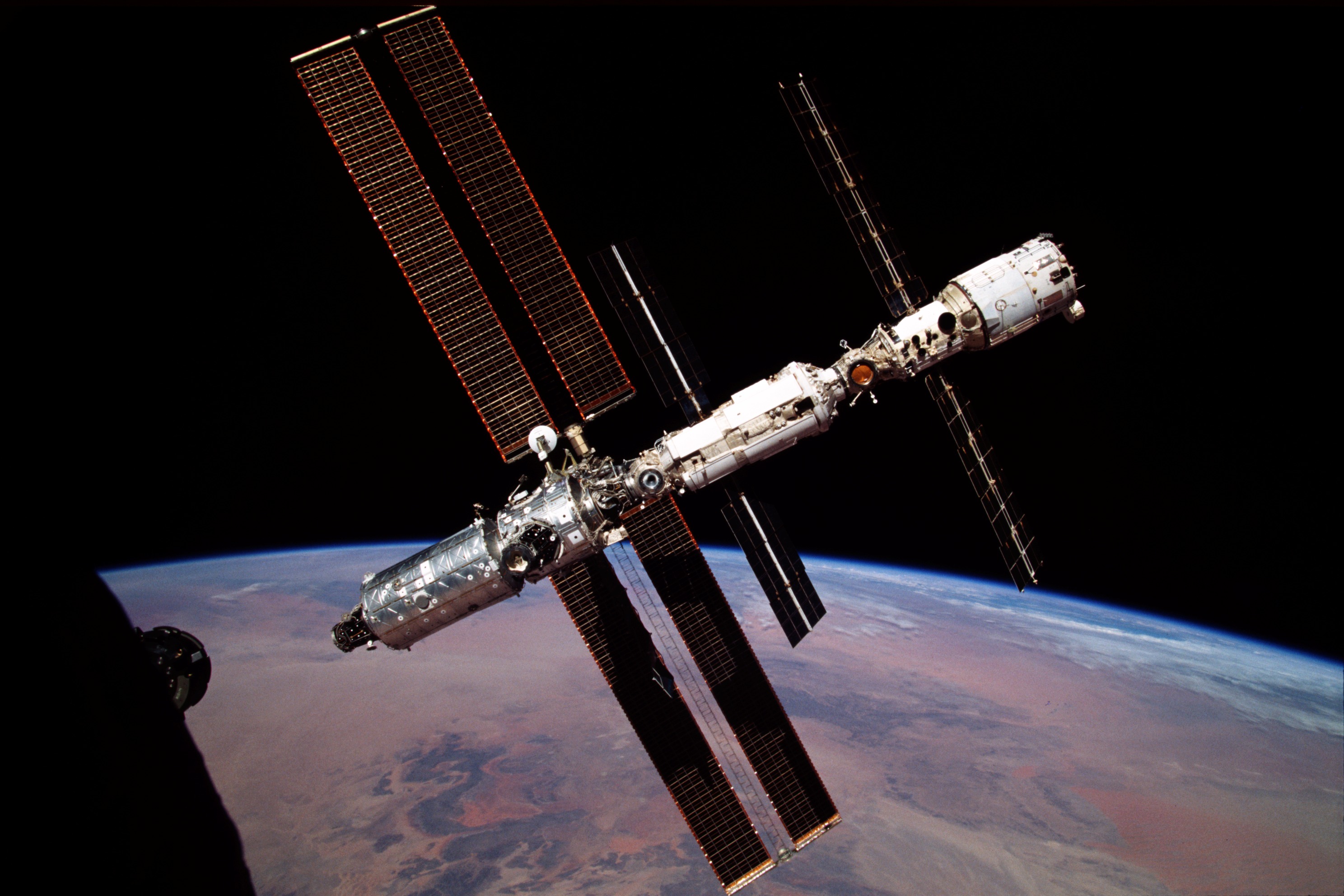
25 Years of humans researching in orbit The International Space Station photographed in 2000 by the Expedition 1 crew.NASAOn Nov. 2, 2025, humanity reached a milestone of cosmic proportions: 25 years of continuous human presence aboard the International Space Station. Since the first crew arrived on Nov. 2, 2000, NASA and its partners from around the world have conducted more than 4,000 research investigations and technology demonstrations. More than 290 people from 26 countries have visited the space station, where continuous human presence enables research that surpasses the capabilities of satellites and autonomous platforms. The space station’s unique microgravity environment, paired with crew operations, continues to unlock discoveries and push the boundaries of humanity’s curiosity and innovation.
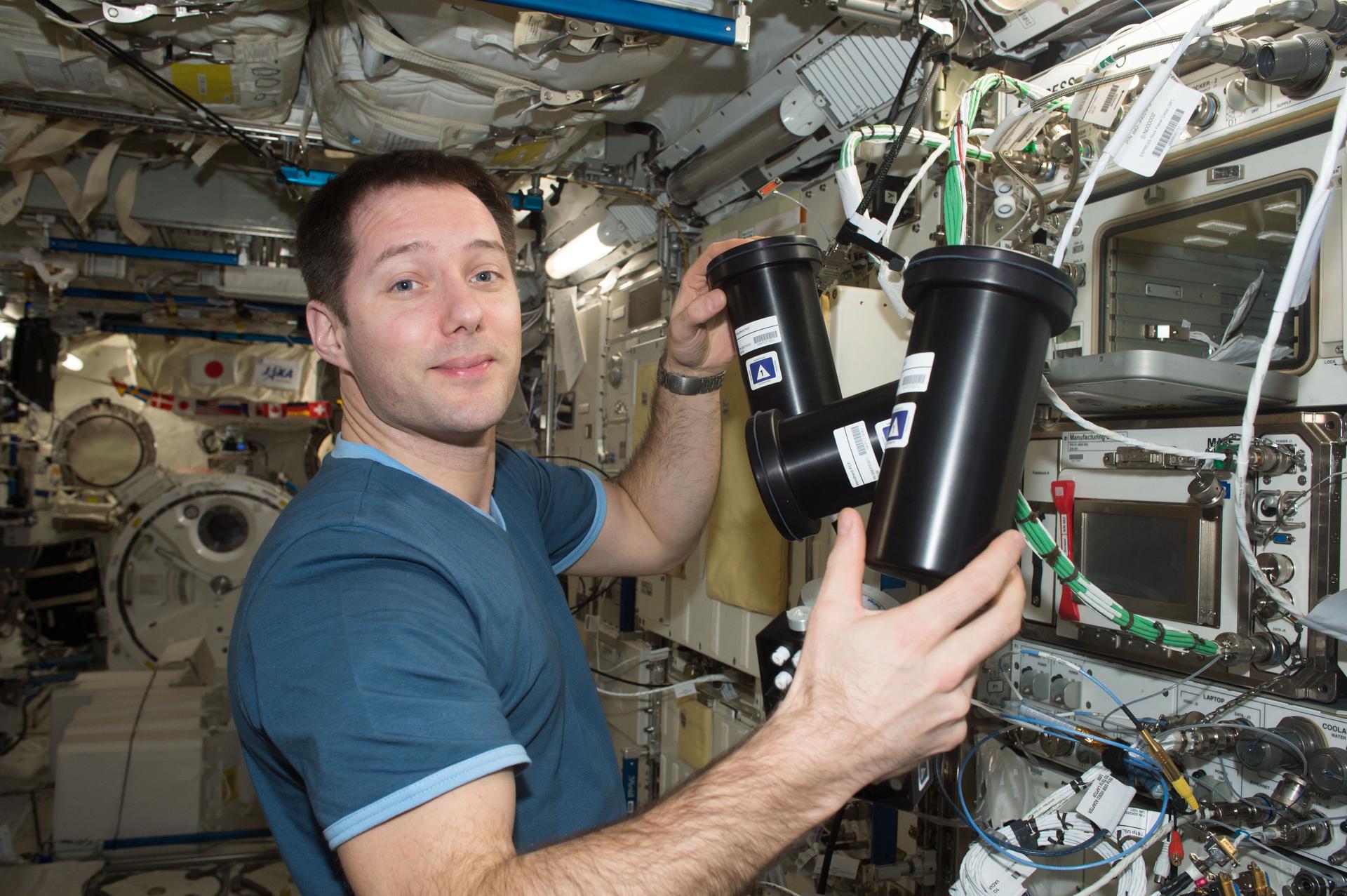
A breakthrough cancer treatment ESA (European Space Agency) astronaut Thomas Pesquet conducts research aboard the International Space Station supporting the advancement of cancer therapeutics.NASAResearch aboard the International Space Station helped inform the development of a newly FDA-approved injectable medication used to treat several types of early-stage cancers. The research yielded early insights into the structure and size of particles needed to develop the medication through protein crystal growth experiments. This new delivery method promises to lower costs and significantly reduce treatment time for patients and healthcare providers, while maintaining drug efficiency. Microgravity research can produce higher-quality, medically relevant crystals than Earth-based labs, enabling these types of medical advances. These developments showcase how space station research can drive innovation, improve lives, and foster commercial opportunities.
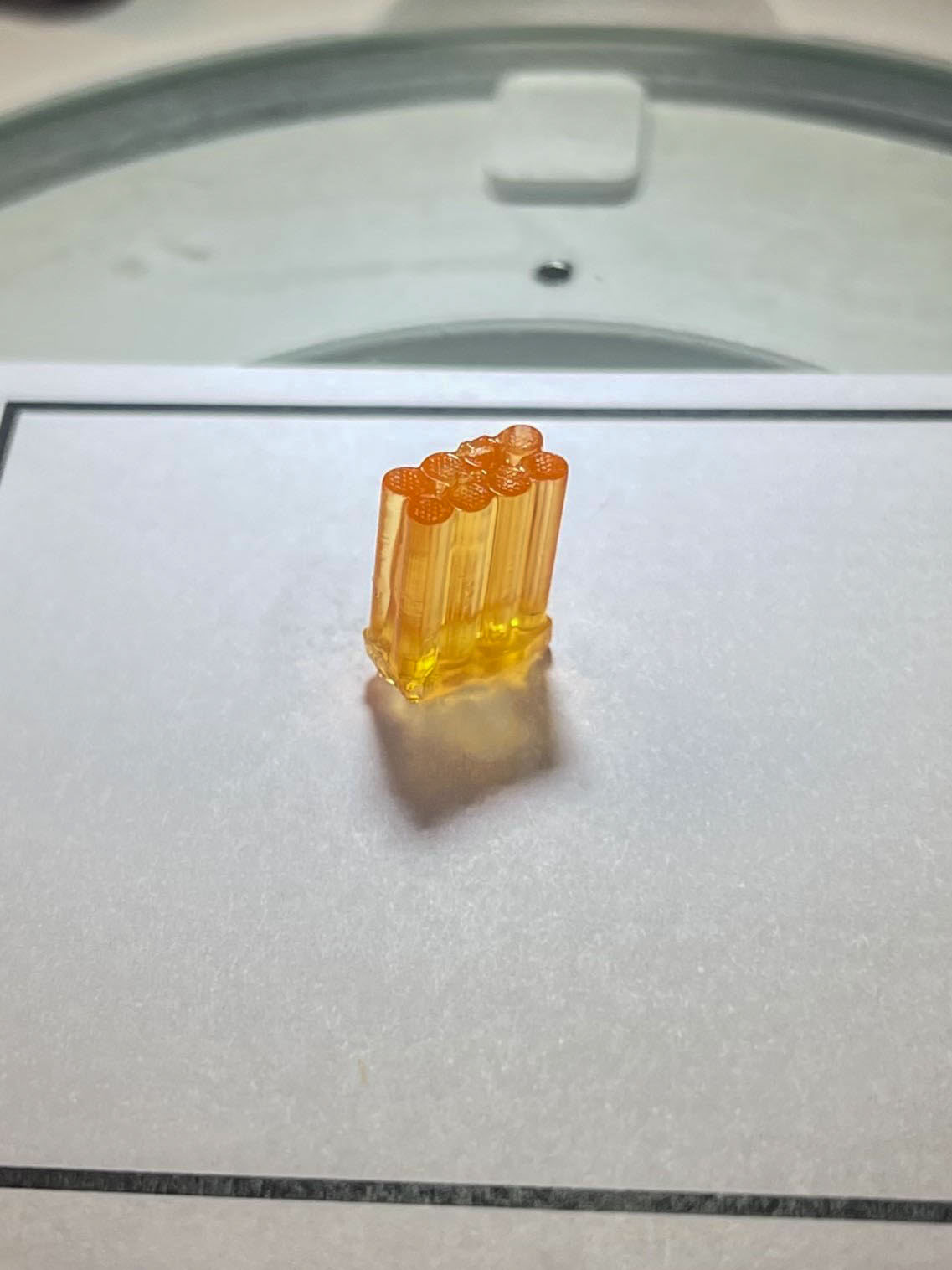
Medical implants printed in orbit Eight medical devices for peripheral nerve repair were printed simultaneously aboard the International Space Station. Credit: Auxilium Biotechnologies.Eight medical implants designed to support nerve regeneration were successfully 3D printed aboard the International Space Station for preclinical trials on Earth. When nerve damage occurs, these types of implants are designed to improve blood flow and enable targeted drug delivery. Printing in microgravity can prevent particle settling, resulting in more uniform and stable structures. In-space manufacturing is helping to advance medical treatments and other technologies while also enabling astronauts to print devices and tools on demand during future missions.
Learn more about InSPA-Auxilium Bioprinter.
A new understanding of our Sun Using data from NASA’s CODEX (Coronal Diagnostic Experiment), this animated, color-coded heat map shows temperature changes of the Sun over the course of couple days, where red indicates hotter regions and purple indicates cooler ones.NASA/KASI/INAF/CODEX Dextre, attached to the International Space Station’s Canadarm2 robotic arm, carries CODEX.NASAA solar coronagraph aboard the International Space Station captured its first unique images detailing the Sun’s outer atmosphere while measuring solar wind temperature and speed. The instrument blocks the Sun’s bright light to reveal its faint outer atmosphere, or corona, where solar wind originates. Earlier experiments focused on the corona’s density, but this new device enables the study of what heats and accelerates the solar wind, offering a more complete picture of how energy moves through the Sun’s atmosphere. These observations help researchers understand how solar activity affects Earth and space-based technology, such as satellites, communications networks, and power systems.
Learn more about CODEX.
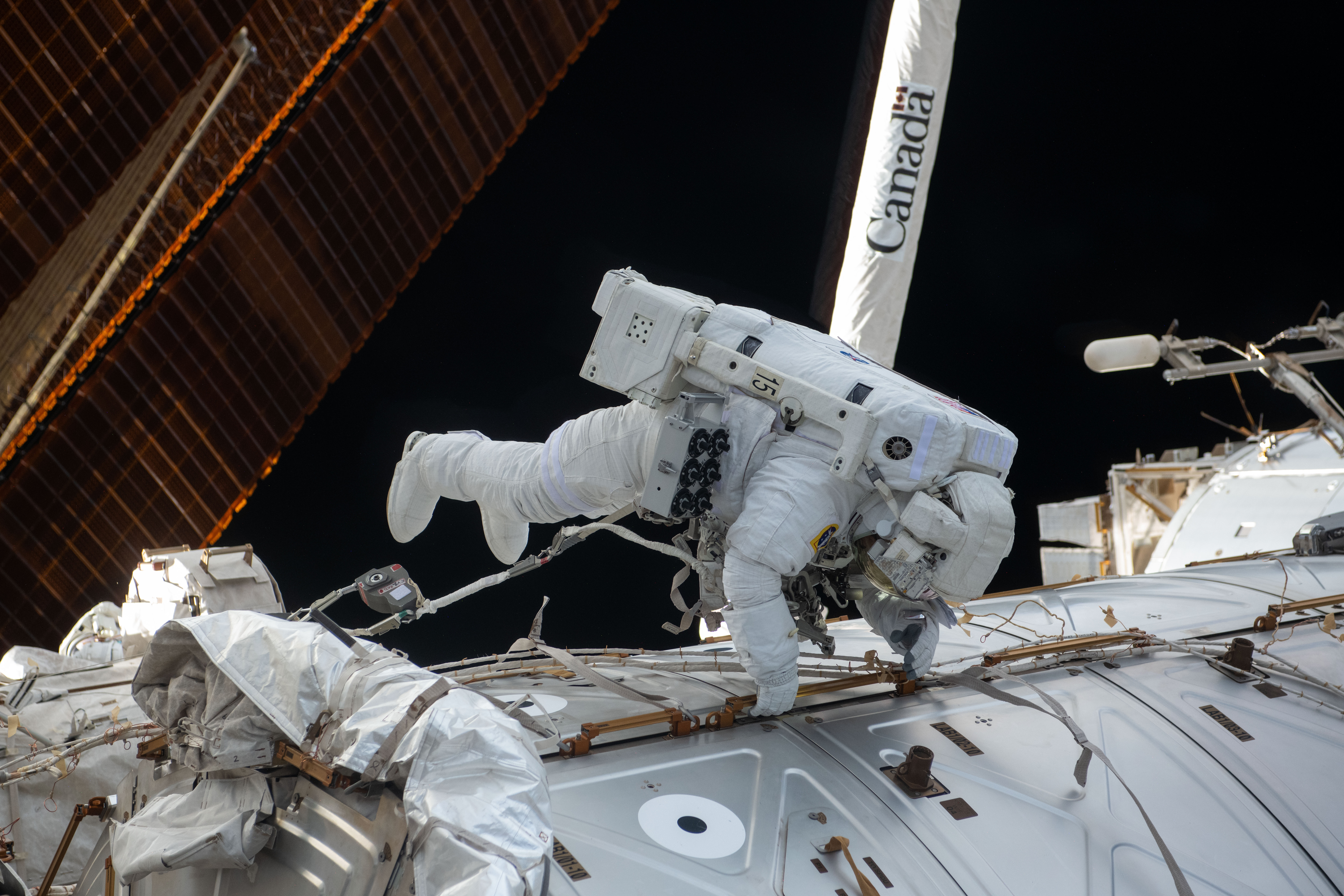
Hunting for microscopic space travelers NASA astronaut Butch Wilmore works outside the International Space Station on Jan. 30, 2025, during a five-hour and 26-minute spacewalk.NASANASA astronaut Butch Wilmore collected microbiological samples during a spacewalk outside the International Space Station. Samples were taken near the life support system vents to see if the orbital complex releases microorganisms. This experiment helps researchers examine if and how these microorganisms survive and reproduce in the harsh space environment, as well as how they may behave at destinations such as the Moon and Mars. After returning to Earth, the samples underwent DNA extraction and sequencing. Another round of collections is planned for future spacewalks. The data could help determine whether changes are needed on crewed spacecraft and spacesuits to reduce biocontamination during missions to explore destinations where life may exist now or in the past.
Learn more about ISS External Microorganisms.
A fully docked space station Northrop Grumman’s Cygnus XL spacecraft is grappled by the International Space Station’s Canadarm2. In the background, JAXA’s (Japan Aerospace Exploration Agency) HTV-X1 cargo craft is docked to the orbital complex.NASA The International Space Station visiting spacecraft configuration on Dec.1, 2025 showing eight spacecraft parked at the orbital complex.NASAFor the first time in International Space Station history, all eight docking ports of the orbiting laboratory were occupied at once. Three crew spacecraft and five cargo resupply craft were attached to station, including JAXA’s new cargo vehicle HTV-X1 and Northrup Grumman’s new Cygnus XL. The eight spacecraft delivered astronauts, cargo, and scientific experiments from around the world to be conducted in the unique microgravity environment. This milestone highlights the space station’s evolution, inviting commercial partners and international collaboration to continue expanding the orbiting laboratory’s research capabilities.
Space station research meets the Moon’s surface NICER (Neutron Star Interior Composition Explorer) is shown mounted to the International Space Station in the image on the left, and LEXI (right) is shown attached to the top of Firefly Aerospace’s Blue Ghost in an artist’s concept.NASA/Firefly AerospaceThree experiments that landed on the Moon during Firefly Aerospace’s Blue Ghost Mission-1 were enabled by earlier research aboard the International Space Station. These studies help improve space weather monitoring, test computer recovery from radiation damage, and advance lunar navigation systems. The orbiting laboratory continues to lay the foundation for missions beyond low Earth orbit, driving exploration deeper into space.
Learn more.
The space station continues to deliver out-of-this-world achievements that cannot be replicated on Earth. Its research capabilities are a springboard for humanity’s future in innovation and testing the limits of what’s possible.
Here’s to 2026 — another year of defying physics and pushing the boundaries of science and exploration.
Share Details Last Updated Jan 16, 2026 Related Terms Keep Exploring Discover More Topics From NASALatest News from Space Station Research
Humans In Space
Space Station Research Results
International Space Station
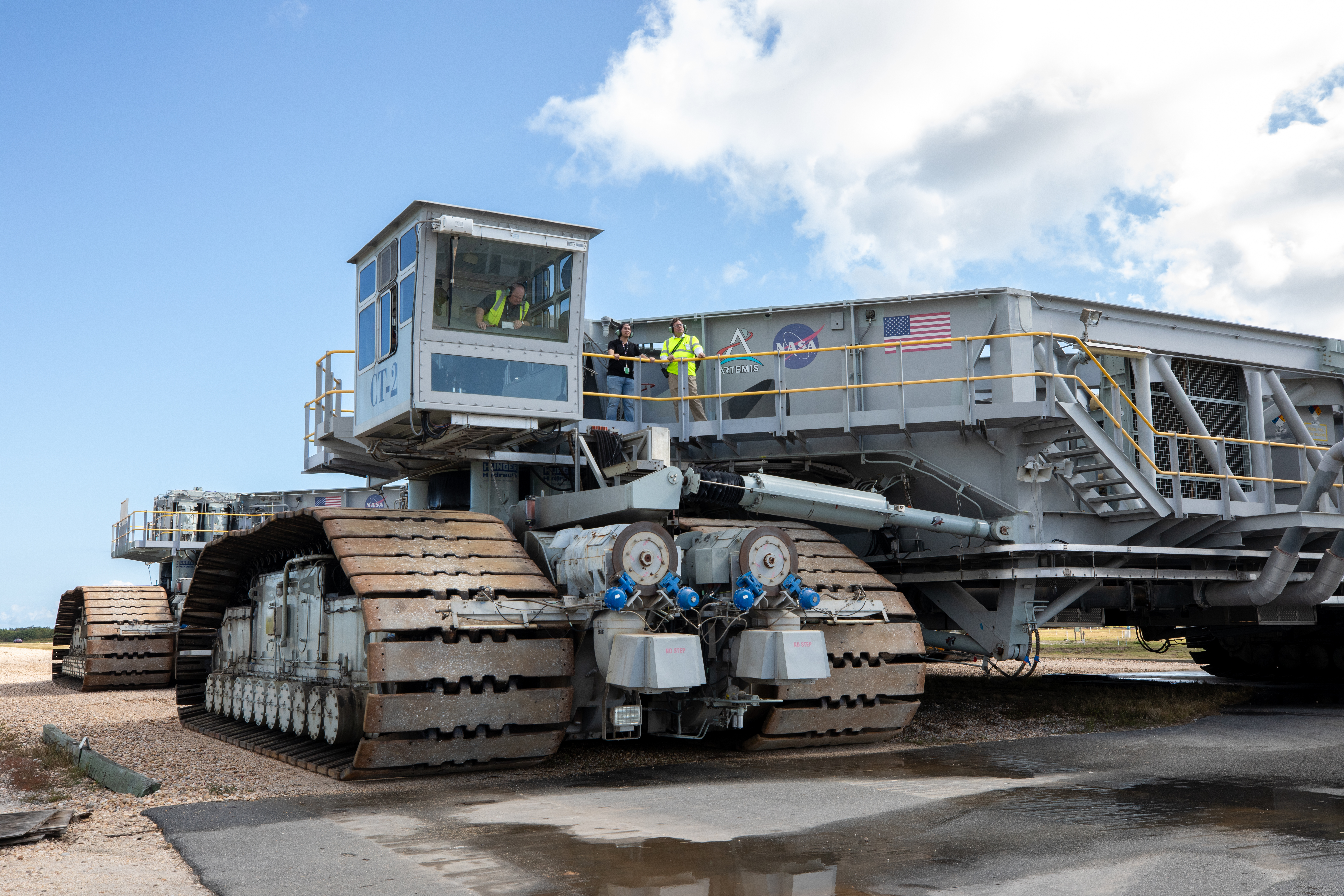
NASA’s Crawler Preps for Artemis II Rollout
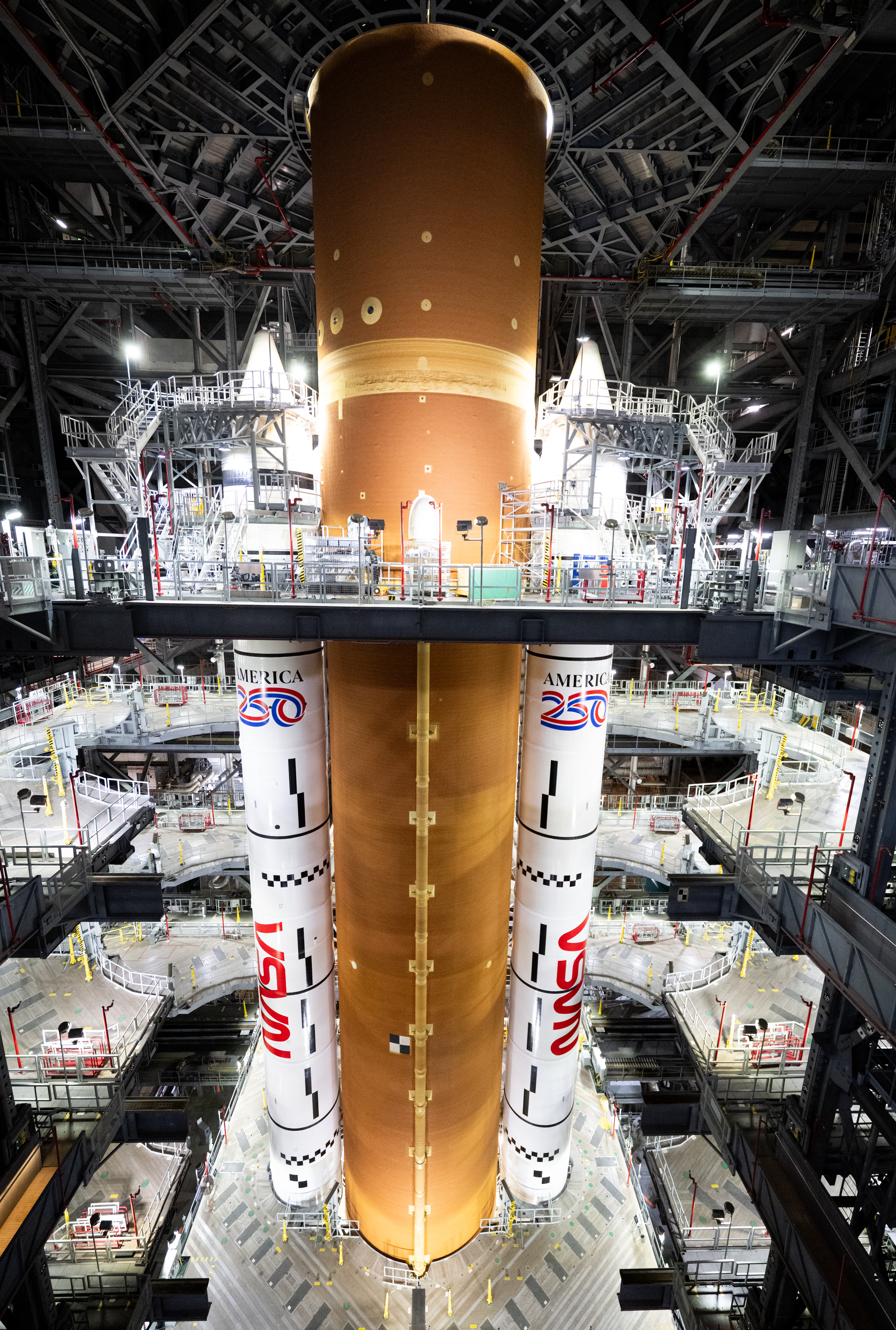
NASA’s Crawler-transporter 2 moves toward the Vehicle Assembly Building at NASA’s Kennedy Space Center in Florida on Friday, Jan. 9, 2026. The crawler will transport NASA’s SLS (Space Launch System) rocket with the Orion spacecraft to Launch Complex 39B ahead of the Artemis II launch which will journey Commander Reid Wiseman, Pilot Victor Glover, and Mission Specialist Christina Koch from NASA, and Mission Specialist Jeremy Hansen from the CSA (Canadian Space Agency), around the Moon and back to Earth no later than April 2026.
The crawler-transporters have carried the load of taking rockets and spacecraft to the launch pad for more than 50 years at NASA’s Kennedy Space Center in Florida. Each the size of a baseball infield and powered by locomotive and large electrical power generator engines, the crawler-transporters stand ready to keep up the work for the next generation of launch vehicles to lift astronauts into space; Crawler-transporter 2 in particular is integral to the Artemis missions.
Image credit: NASA/Ben Smegelsky
Hubble Observes Ghostly Cloud Alive with Star Formation
- Hubble Home
- Overview
- Impact & Benefits
- Science
- Observatory
- Team
- Multimedia
- News
- More
2 min read
Hubble Observes Ghostly Cloud Alive with Star Formation A seemingly serene landscape of gas and dust is hopping with star formation behind the scenes.NASA, ESA, and K. Stapelfeldt (Jet Propulsion Laboratory); Processing: Gladys Kober (NASA/Catholic University of America) Download this image (84.5 MB)While this eerie NASA Hubble Space Telescope image may look ghostly, it’s actually full of new life. Lupus 3 is a star-forming cloud about 500 light-years away in the constellation Scorpius.
White wisps of gas swirl throughout the region, and in the lower-left corner resides a dark dust cloud. Bright T Tauri stars shine at the left, bottom right, and upper center, while other young stellar objects dot the image.
T Tauri stars are actively forming stars in a specific stage of formation. In this stage, the enveloping gas and dust dissipates from radiation and stellar winds, or outflows of particles from the emerging star. T Tauri stars are typically less than 10 million years old and vary in brightness both randomly and periodically due to the environment and nature of a forming star. The random variations may be due to instabilities in the accretion disk of dust and gas around the star, material from that disk falling onto the star and being consumed, and flares on the star’s surface. The more regular, periodic changes may be caused by giant sunspots rotating in and out of view.
T Tauri stars are in the process of contracting under the force of gravity as they become main sequence stars which fuse hydrogen to helium in their cores. Studying these stars can help astronomers better understand the star formation process.
New images added every day between January 12-17, 2026! Follow @NASAHubble on social media for the latest Hubble images and news and see Hubble’s Stellar Construction Zones for more images of young stellar objects.
Facebook logo @NASAHubble @NASAHubble Instagram logo @NASAHubble Explore More Exploring the Birth of Stars Hubble’s Nebulae Hubble’s Star ClustersMedia Contact:
Claire Andreoli
NASA’s Goddard Space Flight Center, Greenbelt, MD
claire.andreoli@nasa.gov
Since its 1990 launch, the Hubble Space Telescope has changed our fundamental understanding of the universe.
Hubble’s Stellar Construction Zones
Explore the Night Sky
Hubble News
Blooming Seas Around the Chatham Islands
- Earth
- Earth Observatory
- Image of the Day
- EO Explorer
- Topics
- More Content
- About
NASA Adds Two F-15 Aircraft to Support Supersonic Flight Research
3 min read
Preparations for Next Moonwalk Simulations Underway (and Underwater) Oregon Air National Guard ground crew guides one of the NASA’s newest F-15 aircraft onto the ramp at the agency’s Armstrong Flight Research Center in Edwards, California, on Monday, Dec. 22, 2025. The retired U.S. Air Force F-15s come from the Oregon Air National Guard’s 173rd Fighter Wing and will transition from military service to support NASA’s flight research fleet. NASA/Christopher LC Clark Oregon Air National Guard and NASA flight crew look out across the desert while awaiting the arrival of the NASA’s newest F-15 aircraft from the Oregon Air National Guard’s 173rd Fighter Wing to NASA’s Armstrong Flight Research Center in Edwards, California, on Monday, Dec. 22, 2025NASA/Christopher LC Clark NASA’s newest F-15 aircraft arrive at the agency’s Armstrong Flight Research Center in Edwards, California, on Monday, Dec. 22, 2025. The two retired U.S. Air Force F-15s will support ongoing supersonic flight research for NASA’s Flight Demonstrations and Capabilities Project and the Quesst mission’s X-59 quiet supersonic research aircraft.NASA/Christopher LC Clark NASA staff and Oregon Air National Guard’s 173rd Fighter Wing crew pose for a group photo at NASA’s Armstrong Flight Research Center in Edwards, California, on Monday, Dec. 22, 2025. The group stands in front of one of two F-15 aircraft added to the agency’s flight research fleet.NASA/Christopher LC Clark Oregon Air National Guard pilots deliver NASA’s newest F-15 aircraft from the Oregon Air National Guard’s 173rd Fighter Wing at Kingsley Field to NASA’s Armstrong Flight Research Center in Edwards, California, on Monday, Dec. 22, 2025. After completing their final flights with the Air Force, the two aircraft begin their new role supporting NASA’s flight research.NASA/Christopher LC ClarkTwo retired U.S. Air Force F-15 jets have joined the flight research fleet at NASA’s Armstrong Flight Research Center in Edwards, California, transitioning from military service to a new role enabling breakthrough advancements in aerospace.
The F-15s will support supersonic flight research for NASA’s Flight Demonstrations and Capabilities project, including testing for the Quesst mission’s X-59 quiet supersonic research aircraft. One of the aircraft will return to the air as an active NASA research aircraft. The second will be used for parts to support long-term fleet sustainment.
“These two aircraft will enable successful data collection and chase plane capabilities for the X-59 through the life of the Low Boom Flight Demonstrator project” said Troy Asher, director for flight operations at NASA Armstrong. “They will also enable us to resume operations with various external partners, including the Department of War and commercial aviation companies.”
The aircraft came from the Oregon Air National Guard’s 173rd Fighter Wing at Kingsley Field. After completing their final flights with the Air Force, the two aircraft arrived at NASA Armstrong Dec. 22, 2025.
“NASA has been flying F-15s since some of the earliest models came out in the early 1970s,” Asher said. “Dozens of scientific experiments have been flown over the decades on NASA’s F-15s and have made a significant contribution to aeronautics and high-speed flight research.”
The F-15s allow NASA to operate in high-speed, high-altitude flight-testing environments. The aircraft can carry experimental hardware externally – under its wings or slung under the center – and can be modified to support flight research.
Now that these aircraft have joined NASA’s fleet, the team at Armstrong can modify their software, systems, and flight controls to suit mission needs. The F-15’s ground clearance allows researchers to install instruments and experiments that would not fit beneath many other aircraft.
NASA has already been operating two F-15s modified so their pilots can operate more comfortably at up to 60,000 feet, the top of the flight envelop for the X-59, which will cruise at 55,000 feet. The new F-15 that will fly for NASA will receive the same modification, allowing for operations at altitudes most standard aircraft cannot reach. The combination of capability, capacity, and adaptability makes the F-15s uniquely suited for flight research at NASA Armstrong.
“The priority is for them to successfully support the X-59 through completion of that mission,” Asher said. “And over the longer term, these aircraft will help position NASA to continue supporting advanced aeronautics research and partnerships.”
Share Details Last Updated Jan 15, 2026 EditorDede DiniusContactNicolas Cholulanicolas.h.cholula@nasa.gov Related Terms Explore More 6 min read Flight Engineers Give NASA’s Dragonfly Lift Article 7 days ago 6 min read NASA’s Pandora Satellite, CubeSats to Explore Exoplanets, BeyondEditor’s Note, Jan. 13, 2026: Mission controllers received full acquisition of signal from the Pandora…
Article 1 week ago 1 min read NASA Starts Up Gateway’s Power System for First Time Article 1 week ago Keep Exploring Discover More Topics From NASAArmstrong Flight Research Center
Humans in Space
Climate Change
Solar System
NASA’s SpaceX Crew-11 Wraps Up Space Station Science
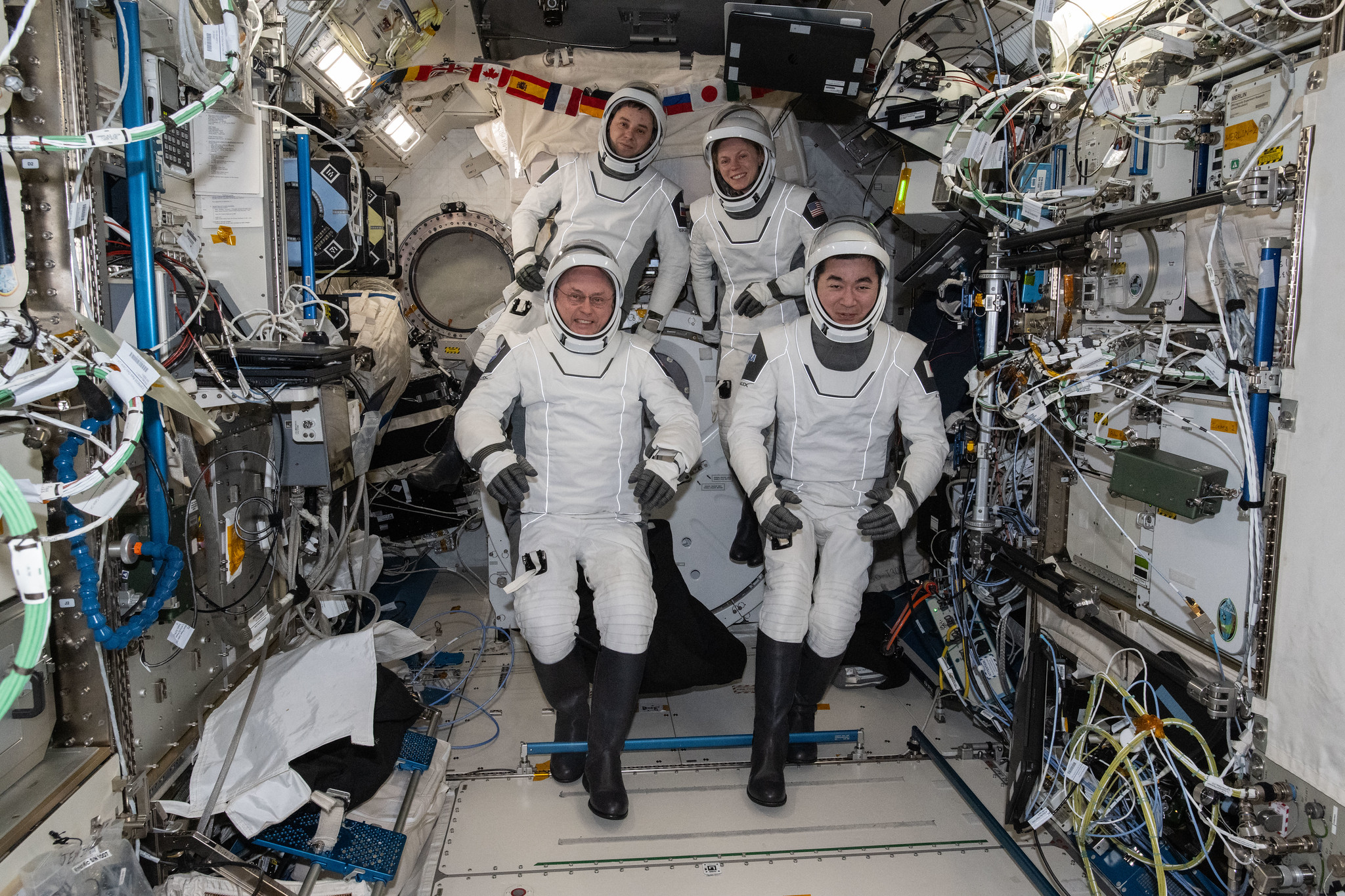
NASA’s SpaceX Crew-11 mission with agency astronauts Zena Cardman and Mike Fincke, JAXA (Japan Aerospace Exploration Agency) astronaut Kimiya Yui, and Roscosmos cosmonaut Oleg Platonov returned to Earth after a long-duration mission aboard the International Space Station.
During their stay, Cardman, Fincke, and Yui contributed more than 850 hours of research to help prepare humanity for the return to the Moon and future missions to Mars, while improving life back on Earth.
Here’s a glimpse into the science completed during the Crew-11 mission:
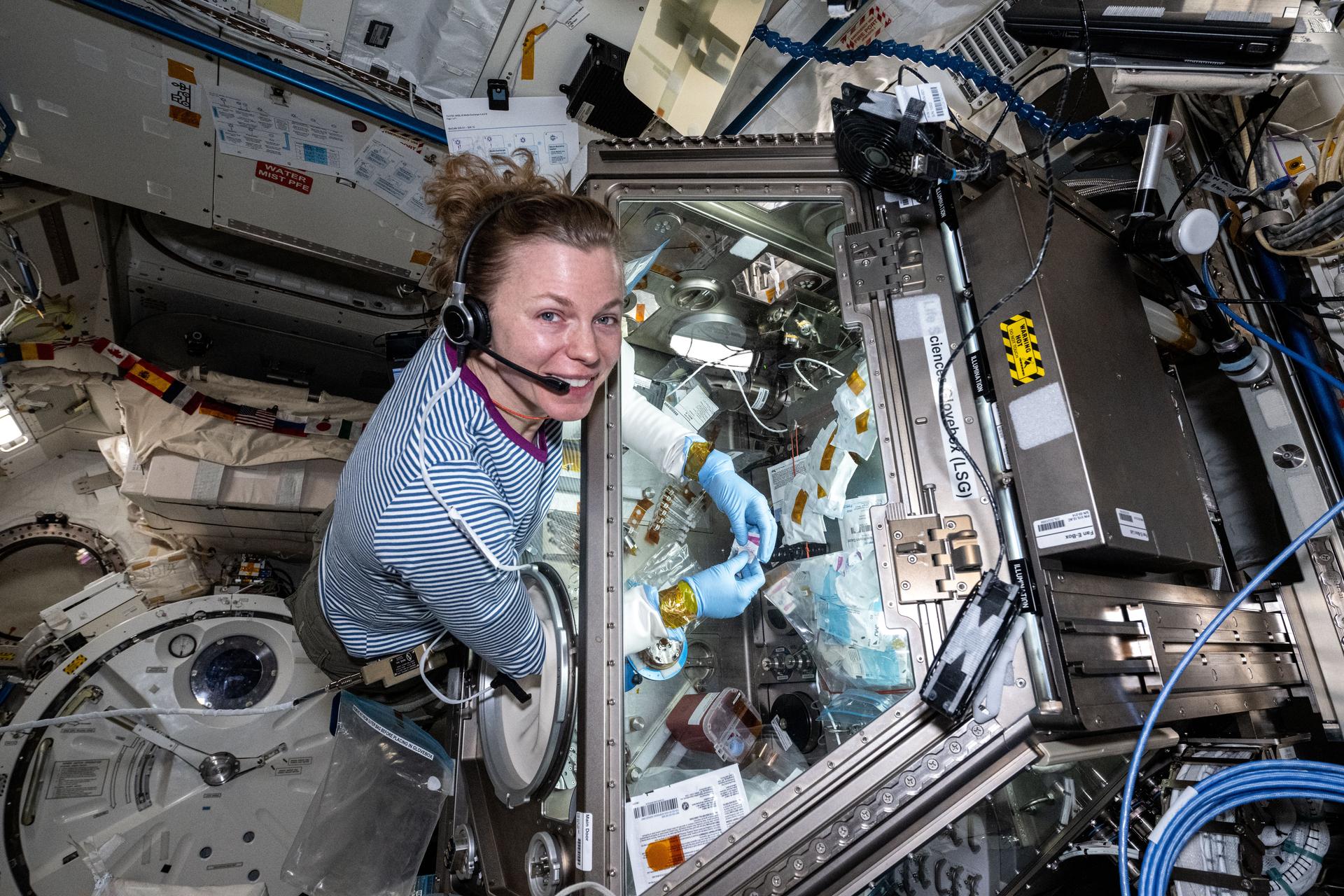
Bolstering bone resilienceNASA astronaut Zena Cardman works with bone stem cells aboard the International Space Station to improve our understanding of how bone loss occurs during spaceflight. Studying bone cell activity in microgravity could help researchers learn how to control bone loss to protect astronauts’ bone density during future long-duration space missions and inform treatments for diseases like osteoporosis on Earth.
Learn more about MABL-B.
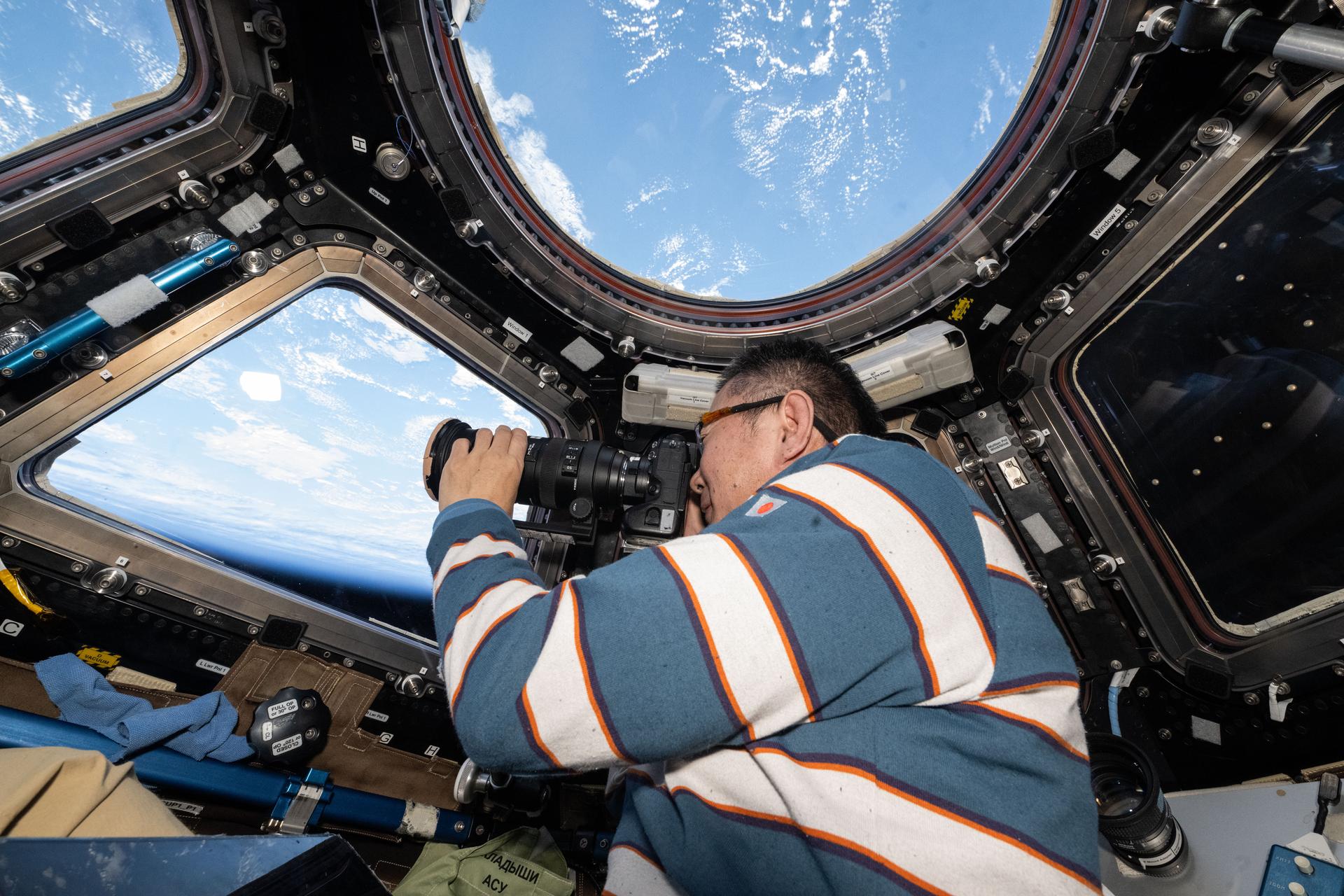
Observing Earth and beyondJAXA (Japan Aerospace Exploration Agency) astronaut Kimiya Yui photographs the Earth from the International Space Station’s cupola. For more than 40 years, astronauts have used hand-held cameras to capture millions of images documenting Earth’s geographic features, weather patterns, urban growth, changes to its surface, and the impacts of natural disasters such as hurricanes and floods.
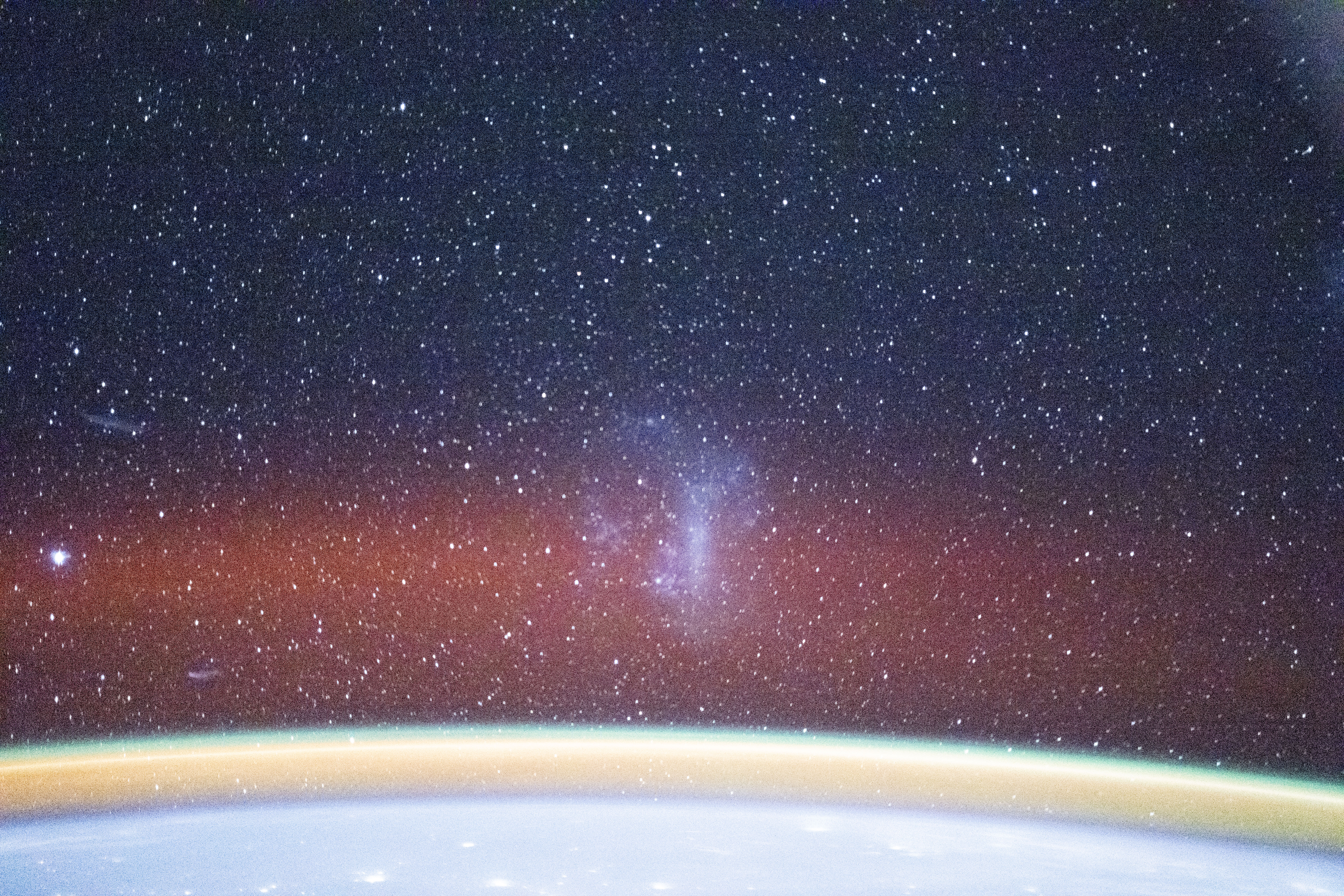
Astronauts also use the cupola and other viewports aboard the space station to gaze into the cosmos without Earth’s atmospheric interference. Just as viewing Earth from 250 miles above provides a new perspective on our home planet, looking out into the stars from the orbiting laboratory offers a clearer view of our universe.
Space catchNASA astronaut Mike Fincke poses aboard the International Space Station with a new device designed to test an inflatable capture bag’s ability to open, close, and stay airtight in microgravity. This technology could be used to remove space debris from orbit, protecting future spacecraft and crew members. It also may enable trapping samples during exploration missions and support the capture and mining of small asteroids.
Learn more about Capture Bag Demo.
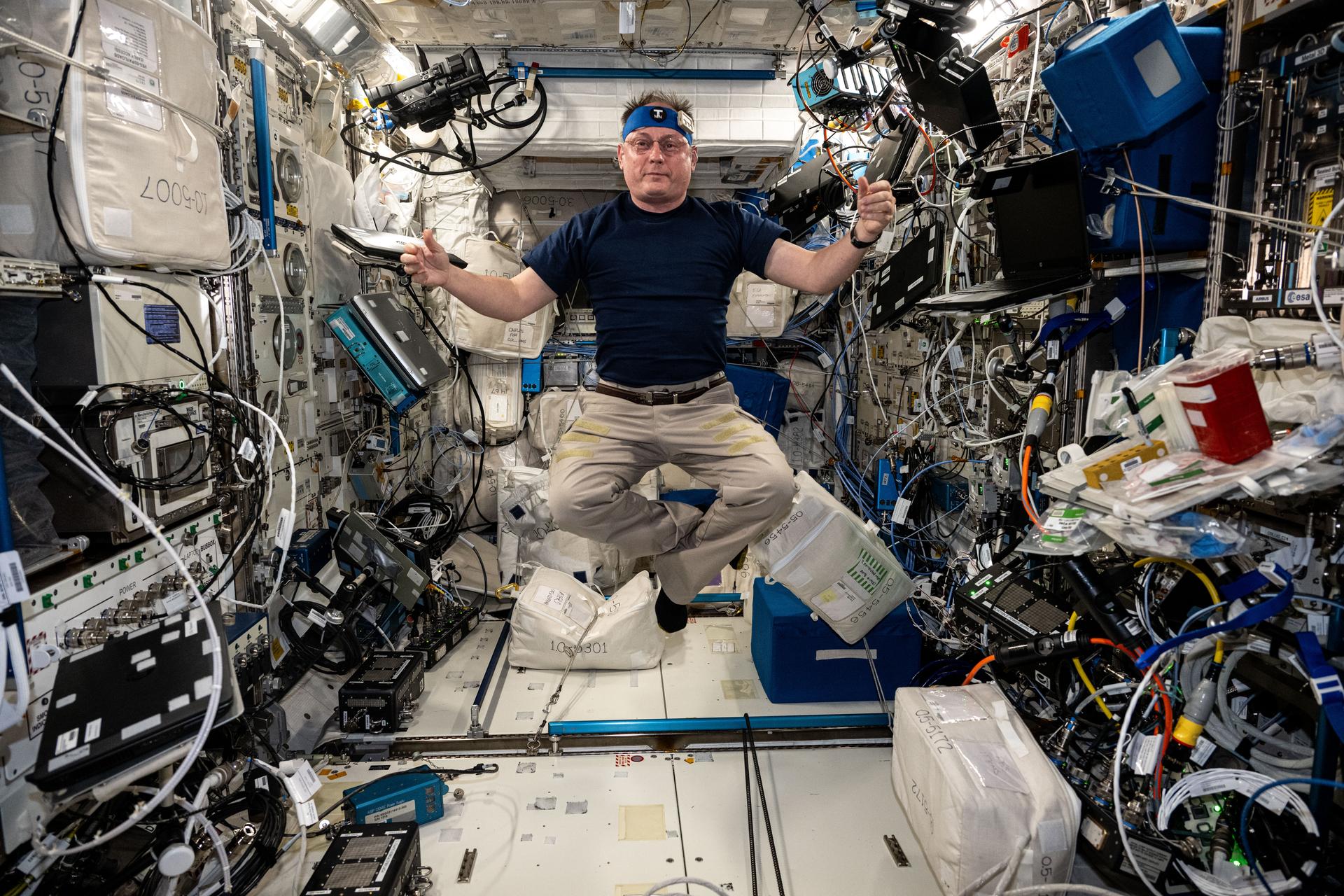
Tracking internal temperatureNASA astronaut Mike Fincke wears a temperature-monitoring headband that tracks how the human body regulates its core temperature during spaceflight. Adjusting to living and working aboard the International Space Station can influence human temperature regulation. This headband provides an easy, non-invasive way to collect temperature data while astronauts conduct their daily activities. The sensor is also being tested on Earth and may help prevent hyperthermia in people working in high-temperature environments.
Learn more about T-Mini.
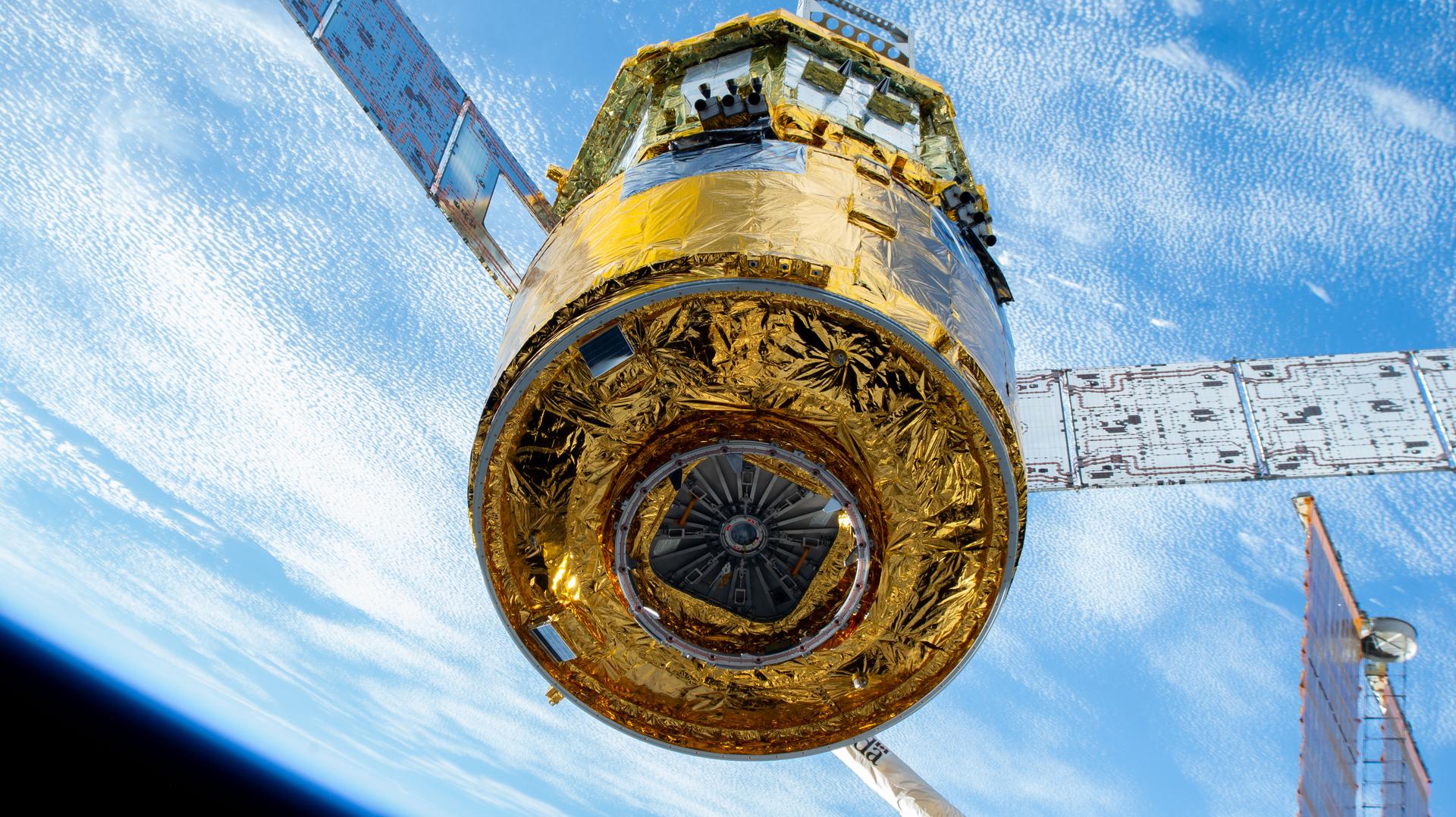
A new cargo vehicleJAXA’s (Japan Aerospace Exploration Agency) new cargo resupply spacecraft, HTV-X1, is shown after being captured by the International Space Station’s Canadarm2 robotic arm during the Crew-11 mission. The spacecraft launched from Tanegashima Space Center on Oct. 26, 2025, delivering approximately 12,800 pounds of science, supplies, and hardware to the orbital complex. New cargo spacecraft expand the station’s capability to support more research and receive critical supplies.
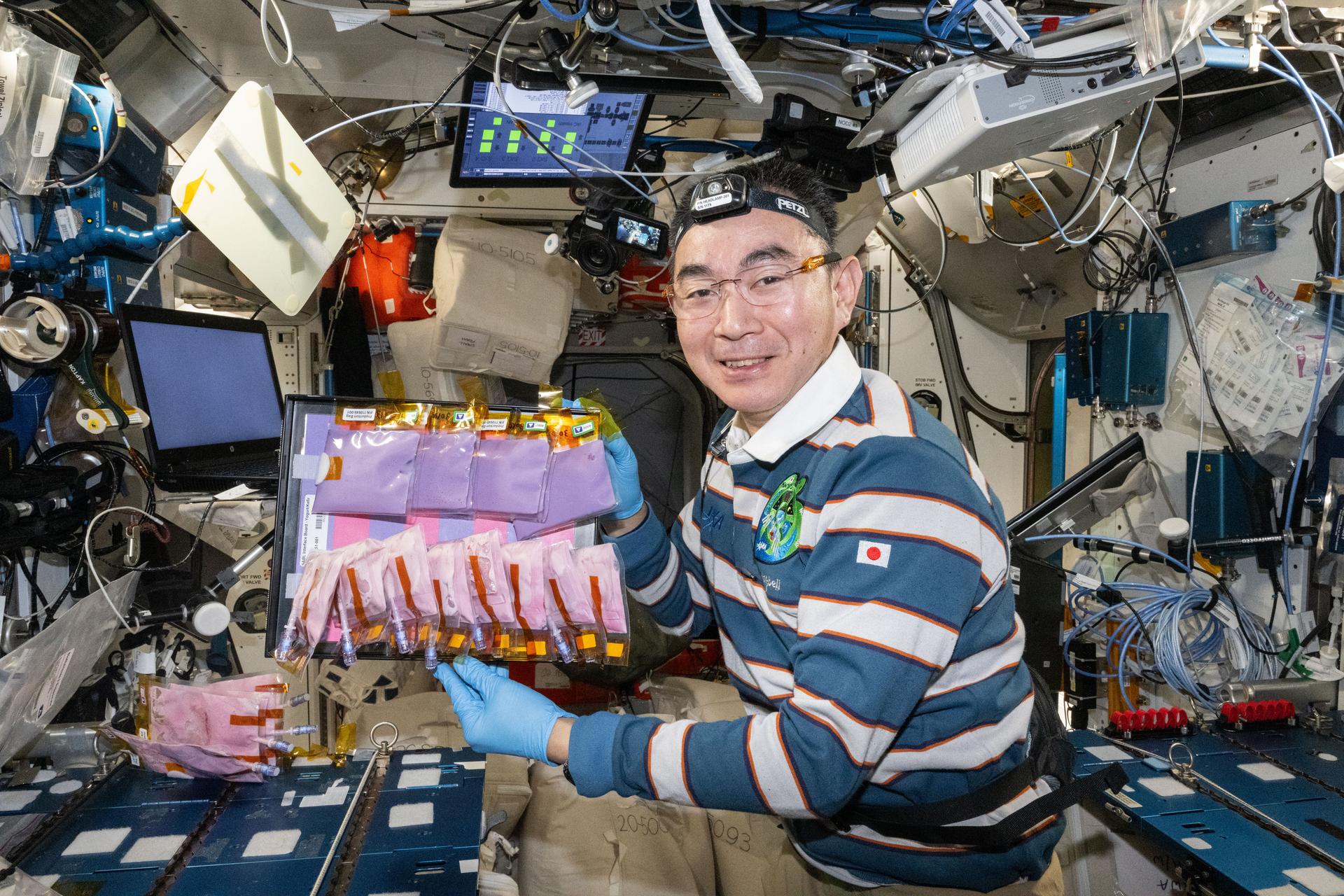
Making nutrients on demandJAXA (Japan Aerospace Exploration Agency) astronaut Kimiya Yui holds yogurt bags produced aboard the International Space Station that could provide important nutrients during missions far from Earth. Certain nutrients degrade when stored for long periods of time, and deficiency in even one can lead to illness. Researchers are building on previous experiments to develop a method for producing on-demand vitamins and nutrients in space using microorganisms.
Learn more about BioNutrients-3.
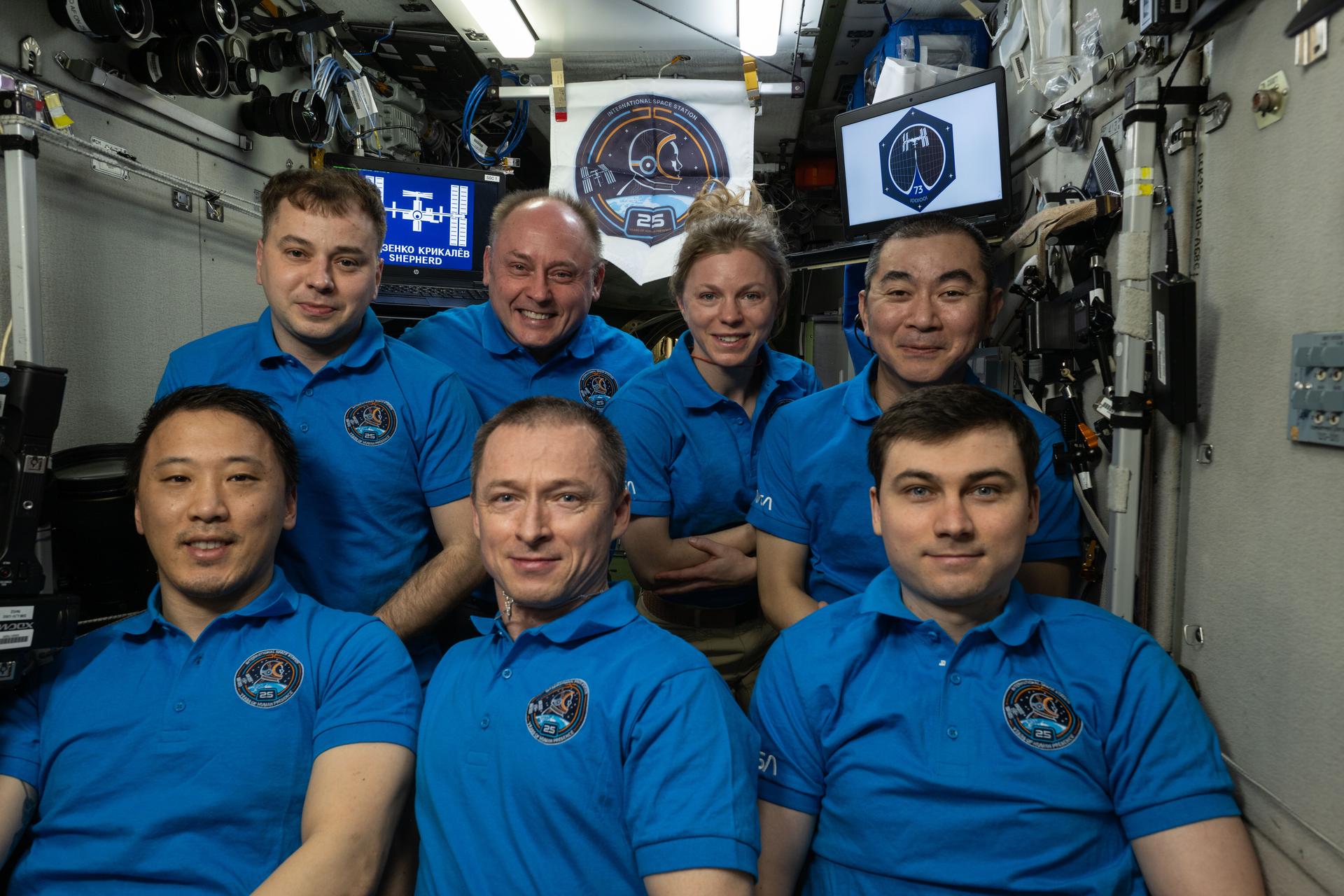
Celebrating a historic milestoneThe Expedition 73 crew poses for a portrait to commemorate 25 years of continuous human presence aboard the International Space Station. In the front row from left, NASA astronaut Jonny Kim, Roscosmos cosmonaut Sergey Ryzhikov, and Roscosmos cosmonaut Alexey Zubritsky. In the back row, Roscosmos cosmonaut Oleg Platonov, NASA astronauts Mike Fincke and Zena Cardman, and JAXA (Japan Aerospace Exploration Agency) astronaut Kimiya Yui.
A truly global endeavor, the space station has been visited by more than 290 people from 26 countries, along with a variety of international and commercial spacecraft. Since the first crew arrived, NASA and its partners have conducted thousands of research investigations and technology demonstrations to advance exploration of the Moon and Mars and benefit life on Earth.
Share Details Last Updated Jan 15, 2026 Related Terms Keep Exploring Discover More Topics From NASAInternational Space Station
Space Station Research and Technology Resources
Space Station Research Results
Latest News from Space Station Research
NASA Data Helps Maine Oyster Farmers Choose Where to Grow
- Earth
- Explore
- Science at Work
- Multimedia
- Data
- For Researchers
- About Us
When oyster farmer Luke Saindon went looking for a place to grow shellfish in Maine, he knew that picking the wrong patch of water could sink the farm before it began. So Saindon did something oyster farmers couldn’t have done a generation ago: He used NASA satellite data to view the coastline from space.
“Starting a farm is a big venture,” said Saindon, the director for The World Is Your Oyster farm in Wiscasset, Maine. “If you choose the wrong spot, you can blow through a lot of money without ever bringing oysters to market.”
NASA satellites had been passing over these waters for years, recording temperatures and other conditions. Using a site-selection tool created by University of Maine researchers, Saindon examined satellite maps showing where water temperatures and food levels might be best for growing oysters. The maps pointed him toward a wide, shallow bay near his home. Four years later, the farm is still there — and the oysters are thriving.
Luke Saindon, director of The World Is Your Oyster farm in Wiscasset, Maine, checks oyster cages on the farm’s floating platform.© Jacqueline Clarke/The World Is Your Oyster, used with permissionSaindon believes that using the satellite data to select his oyster farm site resulted in faster-than-average growth rates.
“This is an example of how NASA’s Earth science program supports our nation,” said Chris Neigh, the Landsat 8 and 9 project scientist at NASA’s Goddard Space Flight Center in Greenbelt, Maryland. “We collect global data, but its value grows when it’s used locally to help communities work smarter and make their livelihoods more sustainable.”
From orbit to oysterThat same satellite-based approach is now the foundation of a study published Jan. 15 in the journal Aquaculture. Led by University of Maine scientists Thomas Kiffney and Damian Brady, the research demonstrates how temperature data from Landsat — the joint NASA and U.S. Geological Survey mission — combined with European Sentinel-2 satellite estimates of oyster food availability, namely plankton, can predict how quickly eastern oysters (Crassostrea virginica) reach market size.
The team built a satellite data–driven model of how oysters divide their energy among growth, survival, and reproduction. Feed the model sea surface temperature and satellite estimates of chlorophyll and particulate organic matter — signals of how much plankton and other edible particles are in the water — and it predicts how fast oysters will grow, a big step beyond just spotting good or bad sites for farms.
“By showing where oysters grow faster, the model can help farmers plan ahead,” Kiffney said. “That could mean better decisions about when to seed, when to harvest, and how much product to expect, all of which reduces financial risk.”
That kind of insight is increasingly valuable in Maine, where oyster farming has grown rapidly over the last decade. From 2011 to 2021, the industry’s value increased 78%, rising from about $2.5 million to more than $10 million. As the sector scales up, understanding the finer details of Maine’s coastal waters has become essential — and that’s where NASA satellites come in.
The stakes are considerable. “It takes two to three years of scoping in order to get your permit to grow, and then it can take two years for those oysters to reach market,” Brady said. “So if you’ve chosen the wrong site, you’re four years in the hole right off the bat.”
Sharper eyes on coastMaine’s coastline measures about 3,400 miles (5,500 kilometers) if you follow the tide line. It is a coast of drowned valleys and glacier-scoured granite. Water depth, temperature, and circulation can shift dramatically within a few miles. This complexity makes oyster site selection notoriously difficult, and some satellites that see the coast in broad strokes miss the small, patchy places where oysters live.
“What makes Landsat so powerful for aquaculture is its ability to see finer-scale patterns along the coast,” where farmers put oyster cages in the water, Neigh said.
This false-color image from Landsat 9’s Thermal Infrared Sensor, acquired Oct. 11, 2025, shows the thermal signature of waters off the coast of Maine — revealing finer-scale temperature differences between neighboring coves. Cooler waters appear purple and blue, while warmer water shows up in orange and yellow.NASA/Ross Walter and Allison NussbaumLandsat 8 and 9’s pixels — 98 to 328 feet (30 to 100 meters) across — are able to distinguish more subtle temperature differences between neighboring coves. For a cold-blooded oyster, those distinctions can translate into months of growth. Warm water accelerates feeding and shell development. Cold water slows both.
A challenge for satellites is clouds. Maine’s sky is frequently overcast, and together Landsat 8 and 9 pass over any given point only every eight days. To work around this, the research team analyzed 10 years of Landsat data (2013–2023) and built seasonal “climatologies,” or average temperature patterns for every 98-foot (30-meter) pixel along the coast. Sentinel-2 imagery added estimates of chlorophyll and particulate organic matter, the drifting microscopic food that oysters pull from the water column with rhythmic contractions of their gills.
Field tests at multiple sites showed the technique’s accuracy. “We validated the model against seven years of field data,” Brady said. “It’s a strong indication that these remotely sensed products can inform not just where to grow, but how long it will take to harvest.”
Turning satellite science into tools for growersThe University of Maine team is now developing an online tool to put this model into practice. A grower will be able to click on a coastal location and receive an estimate for time-to-market.
The researchers also assist with workshops through Maine’s Aquaculture in Shared Waters program, teaching farmers how to interpret temperature and water clarity data and apply them to their own sites.
Monique Boutin, an aquaculture technician with The World Is Your Oyster farm, sorts oysters during harvest work on the water in Maine.© Nina Boutin/The World Is Your Oyster, used with permissionFor farmers like Saindon, that translates into something simpler: confidence and efficiency. “Having these kinds of tools lowers the barrier for new people to get into aquaculture,” he said. “It gives you peace of mind that you’re not just guessing.”
The Maine project is helping pave the way for other NASA missions. The PACE satellite (Plankton, Aerosol, Cloud, ocean Ecosystem) launched in 2024 and is now delivering hyperspectral observations of coastal waters. Where earlier sensors could estimate how much plankton was present, PACE can begin to identify the different plankton species themselves. For oysters, mussels, and other filter feeders, that specificity matters. Not all plankton are equal food: Different kinds offer different nutrition, and some plankton are harmful to oysters.
A next step will be turning that richer picture of coastal life into forecasts people working on the water can use, helping farmers trade some of the coast’s mystery for evidence they can apply to their harvest.
By Emily DeMarco
NASA’s Goddard Space Flight Center, Greenbelt, Md.
Share Details Last Updated Jan 15, 2026 EditorChristina CampenContactEmily DeMarcoemily.p.demarco@nasa.govLocationGoddard Space Flight Center Related Terms Keep Exploring Discover More Topics From NASA EarthYour home. Our Mission. And the one planet that NASA studies more than any other.
Earth ObservatoryNASA’s Earth Observatory brings you the Earth, every day: images, stories, and discoveries about the environment, Earth systems, and climate.
Explore Earth Science
Earth Science in ActionNASA’s unique vantage point helps us inform solutions to enhance decision-making, improve livelihoods, and protect our planet.
Hubble Spies Stellar Blast Setting Clouds Ablaze
This new NASA Hubble Space Telescope image captures a jet of gas from a forming star shooting across the dark expanse. The bright pink and green patches running diagonally through the image are HH 80/81, a pair of Herbig-Haro (HH) objects previously observed by Hubble in 1995. The patch to the upper left is part of HH 81, and the bottom streak is part of HH 80.
Herbig-Haro objects are bright, glowing regions that occur when jets of ionized gas ejected by a newly forming star collide with slower, previously ejected outflows of gas from that star. HH 80/81’s outflow stretches over 32 light-years, making it the largest protostellar outflow known.
Protostars are fed by infalling gas from the surrounding environment, some of which can be seen in residual “accretion disks” orbiting the forming star. Ionized material within these disks can interact with the protostars’ strong magnetic fields, which channel some of the particles toward the pole and outward in the form of jets.
As the jets eject material at high speeds, they can produce strong shock waves when the particles collide with previously ejected gas. These shocks heat the clouds of gas and excite the atoms, causing them to glow in what we see as HH objects.
HH 80/81 are the brightest HH objects known to exist. The source powering these luminous objects is the protostar IRAS 18162-2048. It’s roughly 20 times the mass of the Sun, and it’s the most massive protostar in the entire L291 molecular cloud. From Hubble data, astronomers measured the speed of parts of HH 80/81 to be over 1,000 km/s, the fastest recorded outflow in both radio and visual wavelengths from a young stellar object. Unusually, this is the only HH jet found that is driven by a young, very massive star, rather than a type of young, low-mass star.
The sensitivity and resolution of Hubble’s Wide Field Camera 3 was critical to astronomers, allowing them to study fine details, movements, and structural changes of these objects. The HH 80/81 pair lies 5,500 light-years away within the Sagittarius constellation.
Hubble’s Album of Planet-Forming Disks
- Hubble Home
- Overview
- Impact & Benefits
- Science
- Observatory
- Team
- Multimedia
- News
- More
3 min read
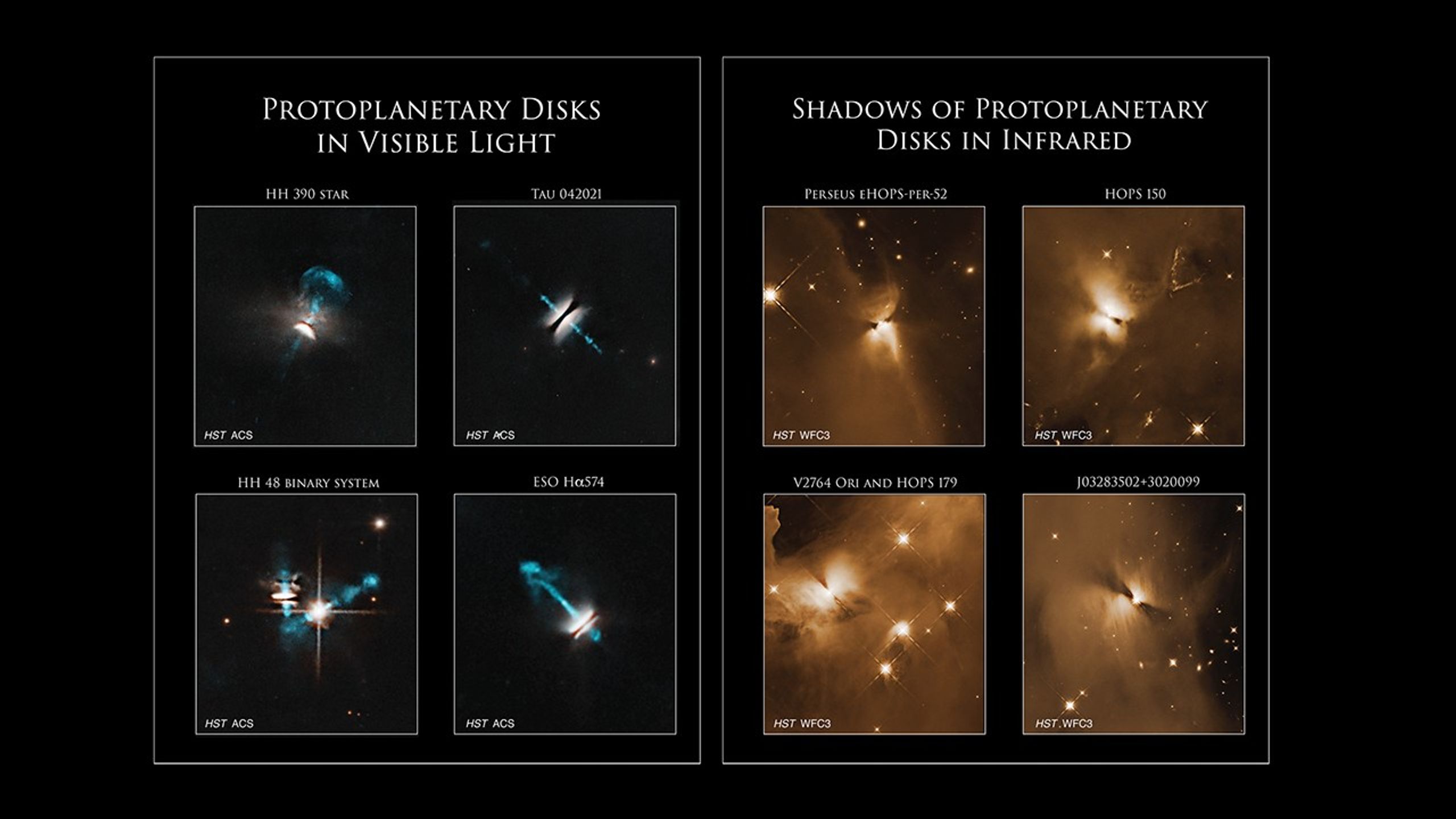
Hubble’s Album of Planet-Forming Disks Hubble images of protoplanetary disks in visible and infrared light show dusty regions around newly developing stars where planets may form.Left: NASA, ESA, and K. Stapelfeldt (Jet Propulsion Laboratory); Processing: Gladys Kober (NASA/Catholic University of America) Right: NASA, ESA, and T. Megeath (University of Toledo); Processing: Gladys Kober (NASA/Catholic University of America)This collection of new images taken by NASA’s Hubble Space Telescope showcases protoplanetary disks, the swirling masses of gas and dust that surround forming stars, in both visible and infrared wavelengths. Through observations of young stellar objects like these, Hubble helps scientists better understand how stars form.
Jets of gas blast from protostars in these visible-light images. HH 390’s outflow is accompanied by a one-sided nebula, evidence that the protoplanetary disk is not viewed edge-on from our perspective. Tau 042021 is a large, symmetrical disk seen edge-on, and is in a late stage of dust evolution, since the dust particles have clumped together into larger grains. HH 48 is a binary protostar system in which gravitational tidal forces from the larger star appear to be influencing the disk of the secondary object. ESO Hα574 is a very compact disk with a “collimated” ― or beam-like and linear ― outflow, and one of the faintest edge-on disks yet recognized.NASA, ESA, and K. Stapelfeldt (Jet Propulsion Laboratory); Processing: Gladys Kober (NASA/Catholic University of America) Download this image (34.6 MB)These visible-light images depict dark, planet-forming dust disks around a hidden, newly developing star, called a protostar. Bipolar jets of fast-moving gases, traveling at about 93 miles (150 km) per second, shoot from both ends of the protostar. The top two images are of protostars found about 450 light-years away in the Taurus Molecular Cloud, while the bottom two are almost 500 light-years away in the Chameleon I star-forming region.
Stars form out of collapsing clouds of gas and dust. As surrounding gas and dust falls toward the protostar, some of it forms a rotating disk around the star that continues to feed the growing object. Planets form from the remaining gas and dust orbiting the star. The bright yellow regions above and below the spinning disks are reflection nebulae, gas and dust lit up by the light of the star.
The jets that are released from the magnetic poles of the stars are an important part of their formation process. The jets, channeled by the protostar’s powerful magnetic fields, disperse angular momentum, which is due to rotational movement of the object. This allows the protostar to spin slowly enough for material to collect. In the images, some of the jets appear to broaden. This occurs when the fast jet collides with the surrounding gas and causes it to glow, an effect called a shock emission.
Bright central protostars and the shadows of their dusty disks appear in these infrared images.NASA, ESA, and T. Megeath (University of Toledo); Processing: Gladys Kober (NASA/Catholic University of America) Download this image (36.6 MB)These edge-on views of protostars in infrared light also reveal thick, dusty protoplanetary disks. The dark areas may look like very large disks, but they are actually much wider shadows cast in the surrounding envelope by the central disks. The bright haze throughout the image comes from light scattering off of the surrounding cloud’s dust grains. The top right and bottom left stars reside in the Orion Molecular Cloud complex about 1,300 light-years away, and the top left and bottom right stars lie in the Perseus Molecular Cloud roughly 1,500 light-years away.
In its early stages, these disks draw from the dust that remains around the forming stars. Unlike visible light, infrared light can travel through this “protostellar envelope.” The protostars in the visible images above are further along in their evolution, so much of the dusty envelope has dissipated. Otherwise, they could not be seen in visible wavelengths.
Viewed in infrared light, the central star is visible through the thick dust of the protoplanetary disks. Bipolar jets are also present but not visible because the hot gas emission isn’t strong enough for Hubble to detect.
HOPS 150 in the top right is actually in a binary system, in orbit with another young protostar. HOPS 150’s companion, HOPS 153, is not pictured in this image.
From a wider Hubble survey of Orion protostars, including HOPS 150 and HOPS 367, astronomers found that regions with a higher density of stars tend to have more companion stars. They also found a similar number of companions between main-sequence (active, hydrogen-fusing stars) and their younger counterparts.
New images added every day between January 12-17, 2026! Follow @NASAHubble on social media for the latest Hubble images and news and see Hubble’s Stellar Construction Zones for more images of young stellar objects.
Facebook logo @NASAHubble @NASAHubble Instagram logo @NASAHubble Explore More Finding Plantary Construction Zones Hubble’s Exoplanets Recognizing Worlds Beyond Our SunMedia Contact:
Claire Andreoli
NASA’s Goddard Space Flight Center, Greenbelt, MD
claire.andreoli@nasa.gov
Since its 1990 launch, the Hubble Space Telescope has changed our fundamental understanding of the universe.
Hubble’s Stellar Construction Zones
Explore the Night Sky
Hubble News
NASA’s SpaceX Crew-11 Mission Returns, Splashes Down off California
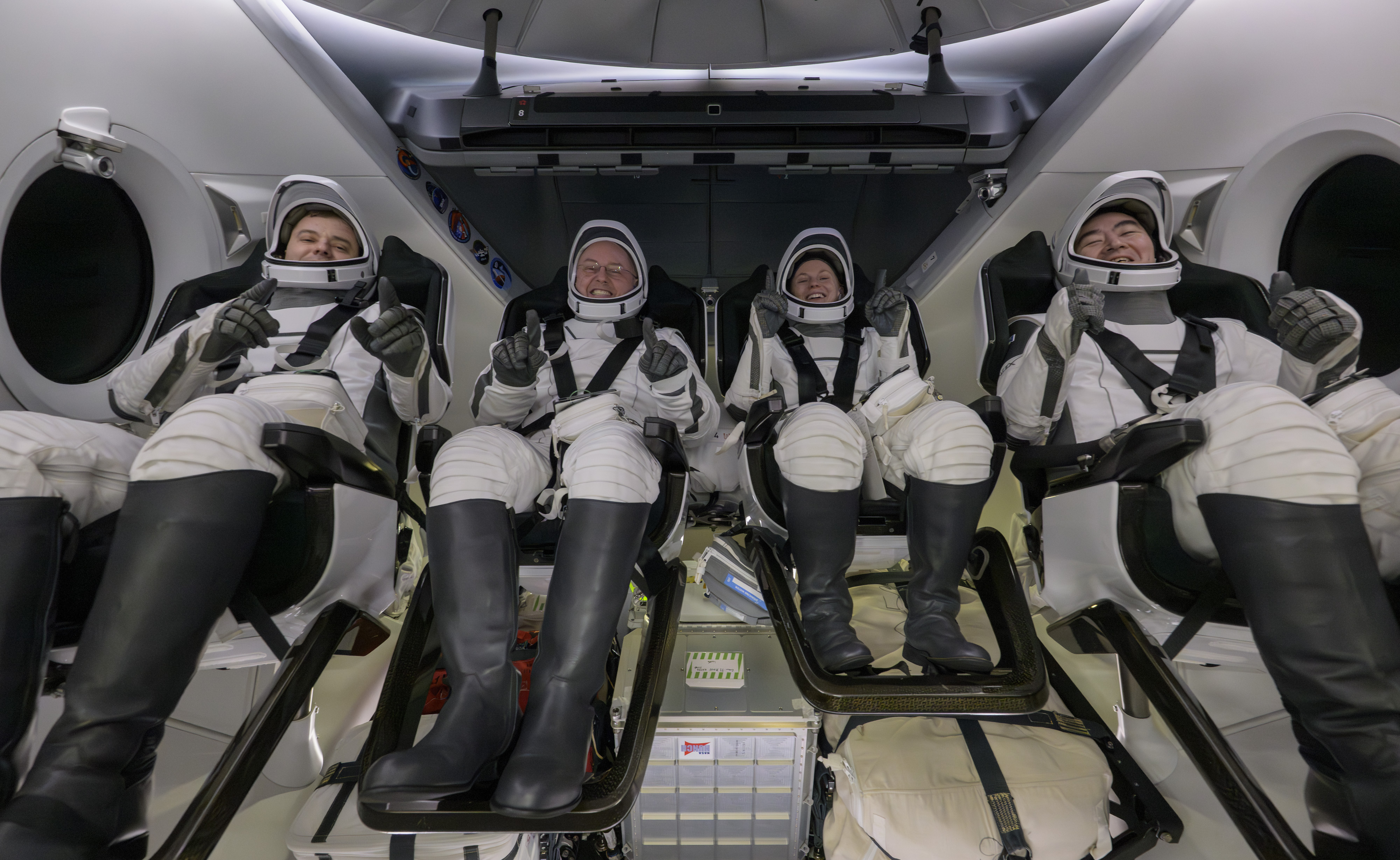
NASA’s SpaceX Crew-11 mission safely splashed down early Thursday morning in the Pacific Ocean off the coast of San Diego, concluding a more than five-month mission aboard the International Space Station.
NASA astronauts Zena Cardman and Mike Fincke, JAXA (Japan Aerospace Exploration Agency) astronaut Kimiya Yui, and Roscosmos cosmonaut Oleg Platonov returned to Earth at 12:41 a.m. PST. Teams aboard SpaceX recovery vessels retrieved the spacecraft and its crew shortly after landing.
“I couldn’t be prouder of our astronauts and the teams on the ground at NASA, SpaceX, and across our international partnerships,” said NASA Administrator Jared Isaacman. “Their professionalism and focus kept the mission on track, even with an adjusted timeline. Crew-11 completed more than 140 science experiments that advance human exploration. Missions like Crew-11 demonstrate the capability inherent in America’s space program—our ability to bring astronauts home as needed, launch new crews quickly, and continue pushing forward on human spaceflight as we prepare for our historic Artemis II mission, from low Earth orbit to the Moon and ultimately Mars.”
Crew-11 returned home about a month earlier than planned because of a medical concern teams are monitoring with one of the crew members, who remains stable. Due to medical privacy, it is not appropriate for NASA to share more details about the crew member. Prior to return, NASA previously coordinated for all four crew members to be transported to a local hospital for additional evaluation, taking advantage of medical resources on Earth to provide the best care possible.
Following the planned overnight hospital stay, the crew members will return to NASA’s Johnson Space Center in Houston and undergo standard postflight reconditioning and evaluations.
The Crew-11 mission lifted off at 11:43 a.m. EDT on Aug.1, 2025, from Launch Complex 39A at NASA’s Kennedy Space Center in Florida. About 15 hours later, the crew’s SpaceX Dragon spacecraft docked to the orbital outpost at 1:27 a.m. CDT on Aug. 2.
During their 167-day mission, the four crew members traveled nearly 71 million miles and completed more than 2,670 orbits around Earth. The Crew-11 mission was Fincke’s fourth spaceflight, Yui’s second, and the first for Cardman and Platonov. Fincke has logged 549 days in space, ranking him fourth among all NASA astronauts for cumulative days in space.
Along the way, Crew-11 logged hundreds of hours of research, maintenance, and technology demonstrations. The crew members also celebrated the 25th anniversary of continuous human presence aboard the orbiting laboratory on Nov. 2, 2025. Research conducted aboard the space station advances scientific knowledge and demonstrates new technologies that enable us to prepare for human exploration of the Moon and Mars.
NASA’s Commercial Crew Program provides reliable access to space, maximizing the use of the International Space Station for research and development by partnering with private U.S. companies, including SpaceX, to transport astronauts to and from the space station.
Learn more about NASA’s Commercial Crew Program at:
https://www.nasa.gov/commercialcrew
-end-
Joshua Finch / Jimi Russell
Headquarters, Washington
202-358-1100
joshua.a.finch@nasa.gov / james.j.russell@nasa.gov
Sandra Jones / Joseph Zakrzewski
Johnson Space Center, Houston
281-483-5111
sandra.p.jones@nasa.gov / joseph.a.zakrzewski@nasa.gov
Steven Siceloff
Kennedy Space Center, Florida
321-867-2468
steven.p.siceloff@nasa.gov
Clouds Swimming over Lago Argentino
- Earth
- Earth Observatory
- Image of the Day
- EO Explorer
- Topics
- More Content
- About
Coverage, Briefing Set for NASA’s Artemis II Moon Rocket Roll to Pad
NASA’s integrated SLS (Space Launch System) rocket and Orion spacecraft for the Artemis II mission is inching closer to launch – literally.
The agency is targeting no earlier than 7 a.m. EST, Saturday, Jan. 17, to begin the multi-hour trek from the Vehicle Assembly Building to Launch Pad 39B at NASA’s Kennedy Space Center in Florida.
A pre rollout mission news conference, live feed of rollout, and a media gaggle will stream on NASA’s YouTube channel. Individual streams for each of these events will be available from that page. Learn how to stream NASA content through a variety of online platforms, including social media.
The time of rollout is subject to change if additional time is needed for technical preparations or weather.
All times are Eastern. Events are as follows:
Friday, Jan. 16:
12 p.m.: Artemis II Rollout, Mission Overview News Conference
- John Honeycutt, Artemis II mission management team chair
- Charlie Blackwell-Thompson, Artemis launch director, Exploration Ground Systems
- Jeff Radigan, Artemis II lead flight director, Flight Operations Directorate
- Lili Villarreal, landing and recovery director, Exploration Ground Systems
- Jacob Bleacher, chief exploration scientist, Exploration Systems Development Mission Directorate
Saturday, Jan. 17:
7 a.m.: Rollout, Artemis II Live Views from Kennedy Space Center feed begins
9 a.m.: Artemis II Crew Rollout Media Event
- NASA Administrator Jared Isaacman and the Artemis II crew, including NASA astronauts Reid Wiseman, Victor Glover, and Christina Koch, and CSA (Canadian Space Agency) astronaut Jeremy Hansen, will answer questions about their preparations and the mission for media in-person at the countdown clock.
NASA’s crawler-transporter 2 will carry the 11-million-pound stack at about one mile per hour along the four-mile route from the Vehicle Assembly Building to Launch Pad 39B, on a journey that will take up to 12 hours.
To participate in the news conference by telephone, media must RSVP no later than two hours before the start to: ksc-newsroom@mail.nasa.gov.
These events will be open in-person only to media previously credentialed for launch. The deadline has passed for in-person accreditation for Artemis II events at Kennedy.
Rollout to the pad marks another milestone leading up to the Artemis II mission. In the coming weeks, NASA will complete final preparations of the rocket and, if needed, rollback SLS and Orion to the Vehicle Assembly Building for additional work. While the Artemis II launch window opens as early as Friday, Feb. 6, the mission management team will assess flight readiness after the wet dress rehearsal across the spacecraft, launch infrastructure, and the crew and operations teams before selecting a launch date.
Follow NASA’s Artemis blog for mission updates.
Through Artemis, NASA will send astronauts to explore the Moon for scientific discovery, economic benefits, and to build the foundation for the first crewed missions to Mars.
Learn more about Artemis at:
-end-
Rachel Kraft / Lauren Low
Headquarters, Washington
202-358-1600
rachel.h.kraft@nasa.gov / lauren.e.low@nasa.gov
Tiffany Fairley
Kennedy Space Center, Fla.
321-867-2468
tiffany.l.fairley@nasa.gov
New York–Newark–Jersey City Metropolitan Area
The New York–Newark–Jersey City Metropolitan Statistical Area, which spans 23 counties across New York, New Jersey, and Connecticut and has a population of about 19.9 million, is pictured at approximately 3:29 a.m. local time Dec. 20, 2025, from the International Space Station as it orbited 262 miles above the Atlantic coast.
Crew members aboard the orbital lab have produced hundreds of thousands of images of the land, oceans, and atmosphere of Earth, and even of the Moon through Crew Earth Observations. Their photographs of Earth record how the planet changes over time due to human activity and natural events. This allows scientists to monitor disasters and direct response on the ground and study a number of phenomena, from the movement of glaciers to urban wildlife.
Image credit: NASA
La NASA publica datos de la temperatura global
Read this press release in English here.
La temperatura global de la superficie terrestre en 2025 fue un poco más cálida que en 2023 pero, dentro de los márgenes de error, ambos años está prácticamente empatados, según un análisis realizado por científicos de la NASA. Desde que comenzaron los registros en 1880, 2024 sigue siendo el año más caluroso.
Las temperaturas globales en 2025 fueron más frías que en 2024, con temperaturas promedio de 1,19° Celsius (2,14° Fahrenheit) por encima del promedio para el período de 1951 a 1980.
El análisis del Instituto Goddard de Estudios Espaciales de la NASA incluye datos de la temperatura del aire obtenidos por más de 25.000 estaciones meteorológicas en todo el mundo, así como por instrumentos a bordo de barcos y boyas que miden la temperatura de la superficie del mar, y estaciones de investigación en la Antártida. Los datos son analizados utilizando métodos que toman en cuenta la distribución cambiante de las estaciones de medición de temperatura y los efectos del calentamiento urbano que podrían sesgar los cálculos.
Además, análisis independientes realizados por la Administración Nacional Oceánica y Atmosférica (NOAA, por sus siglas en inglés), la plataforma Berkeley Earth, el Centro Hadley (que forma parte del servicio meteorológico nacional del Reino Unido) y los Servicios Climáticos Copernicus de Europa han concluido que la temperatura global de la superficie para 2025 ha sido la tercera más calurosa que se haya registrado. Estos científicos utilizan gran parte de los mismos datos de temperatura en sus análisis, pero emplean diferentes metodologías y modelos; todos ellos muestran la misma tendencia al calentamiento continuo.
El conjunto completo de datos de la NASA sobre las temperaturas de la superficie global, así como los detalles de cómo los científicos de la NASA llevaron a cabo el análisis, están disponibles públicamente en línea (en inglés).
Para obtener más información sobre los programas de ciencias de la Tierra de la NASA, visita el sitio web:
https://ciencia.nasa.gov/tierra
-fin-
Liz Vlock / María José Viñas
Sede central, Washington
202-358-1600
elizabeth.a.vlock@nasa.gov / maria-jose.vinasgarcia@nasa.gov
Peter Jacobs
Centro de Vuelo Espacial Goddard, Greenbelt, MD
301-286-0535
peter.jacobs@nasa.gov
NASA Releases Global Temperature Data
Lee este comunicado de prensa en español aquí.
Earth’s global surface temperature in 2025 was slightly warmer than 2023 – but within the margin of error the two years are effectively tied according to an analysis by NASA scientists. Since record-keeping began in 1880, the hottest year on record remains 2024.
Global temperatures in 2025 were cooler than 2024, with average temperatures of 2.14 degrees Fahrenheit (1.19 degrees Celsius) above the 1951 to 1980 average.
The analysis from NASA’s Goddard Institute for Space Studies includes air temperature data acquired by more than 25,000 meteorological stations around the world, from ship- and buoy-based instruments measuring sea surface temperature, and Antarctic research stations. The data are analyzed using methods that account for the changing distribution of temperature stations and for urban heating effects that could skew the calculations.
Additionally, independent analyses by the National Oceanic and Atmospheric Administration, Berkeley Earth, the Hadley Centre (part of the United Kingdom’s weather forecasting Met Office), and Copernicus Climate Services in Europe have concluded the global surface temperature for 2025 was the third warmest on record. These scientists use much of the same temperature data in their analyses but employ different methodologies and models, which exhibit the same ongoing warming trend.
NASA’s full dataset of global surface temperatures, as well as details of how agency scientists conducted the analysis are available online.
For more information about NASA’s Earth science programs, visit:
https://science.nasa.gov/earth
-end-
Liz Vlock
Headquarters, Washington
202-358-1600
elizabeth.a.vlock@nasa.gov
Peter Jacobs
Goddard Space Flight Center, Greenbelt, Md.
301-286-3308
peter.jacobs@nasa.gov
Hubble Observes Stars Flaring to Life in Orion
- Hubble Home
- Overview
- Impact & Benefits
- Science
- Observatory
- Team
- Multimedia
- News
- More
3 min read
Hubble Observes Stars Flaring to Life in Orion Protostar HOPS 181 is buried in layers of dusty gas clouds, but its energy shapes the material that surrounds it. NASA, ESA, and T. Megeath (University of Toledo); Processing: Gladys Kober (NASA/Catholic University of America) A protostar wrapped in obscuring dust creates a cavity with glowing walls while its jet streams into space. NASA, ESA, and T. Megeath (University of Toledo); Processing: Gladys Kober (NASA/Catholic University of America) A curving cavity in a cloud of gas has been hollowed out by a protostar in this Hubble image. NASA, ESA, and T. Megeath (University of Toledo); Processing: Gladys Kober (NASA/Catholic University of America)
Just-forming stars, called protostars, dazzle a cloudy landscape in the Orion Molecular Cloud complex (OMC). These three new images from NASA’s Hubble Space Telescope were taken as part of an effort to learn more about the envelopes of gas and dust surrounding the protostars, as well as the outflow cavities where stellar winds and jets from the developing stars have carved away at the surrounding gas and dust.
Scientists used these Hubble observations as part of a broader survey to study protostellar envelopes, or the gas and dust around the developing star. Researchers found no evidence that the outflow cavities were growing as the protostar moved through the later stages of star formation. They also found that the decreasing accretion of mass onto the protostars over time and the low rate of star formation in the cool, molecular clouds cannot be explained by the progressive clearing out of the envelopes.
The OMC lies within the “sword” of the constellation Orion, roughly 1,300 light-years away.
Protostar HOPS 181 is buried in layers of dusty gas clouds, but its energy shapes the material that surrounds it. NASA, ESA, and T. Megeath (University of Toledo); Processing: Gladys Kober (NASA/Catholic University of America)This Hubble image shows a small group of young stars amidst molecular clouds of gas and dust. Near the center of the image, concealed behind the dusty clouds, lies the protostar HOPS 181. The long, curved arc in the top left of the image is shaped by the outflow of material coming from the protostar, likely from the jets of particles shot out at high speeds from the protostar’s magnetic poles. The light of nearby stars reflects off and is scattered by dust grains that fill the image, giving the region its soft glow.
Download this image (5.7 MB)
A protostar wrapped in obscuring dust creates a cavity with glowing walls while its jet streams into space. NASA, ESA, and T. Megeath (University of Toledo); Processing: Gladys Kober (NASA/Catholic University of America)
Download this image (6 MB)
The bright star in the lower right quadrant called CVSO 188 might seem like the diva in this image, but HOPS 310, located just to the left of center behind the dust, is the true hidden star. This protostar is responsible for the large cavity with bright walls that has been carved into the surrounding cloud of gas and dust by its jets and stellar winds. Running diagonally to the top right is one of the bipolar jets of the protostar. These jets consist of particles launched at high speeds from the protostar’s magnetic poles. Some background galaxies are visible in the upper right of the image.
A curving cavity in a cloud of gas has been hollowed out by a protostar in this Hubble image. NASA, ESA, and T. Megeath (University of Toledo); Processing: Gladys Kober (NASA/Catholic University of America)Download this image (5.7 MB)
The bright protostar to the left in this Hubble image is located within the Orion Molecular Clouds. Its stellar winds — ejected, fast-flowing particles that are spurred by the star’s magnetic field — have carved a large cavity in the surrounding cloud. In the top right, background stars speckle the image.
New images added every day between January 12-17, 2026! Follow @NASAHubble on social media for the latest Hubble images and news and see Hubble’s Stellar Construction Zones for more images of young stellar objects.
Facebook logo @NASAHubble @NASAHubble Instagram logo @NASAHubble Explore MoreExploring the Birth of Stars
Hubble’s Nebulae
Media Contact:
Claire Andreoli
NASA’s Goddard Space Flight Center, Greenbelt, MD
claire.andreoli@nasa.gov
Since its 1990 launch, the Hubble Space Telescope has changed our fundamental understanding of the universe.
Hubble’s Stellar Construction Zones
Explore the Night Sky
Hubble News
Fire on Ice: The Arctic’s Changing Fire Regime
- Earth
- Earth Observatory
- Image of the Day
- EO Explorer
- Topics
- More Content
- About
Fires on the Rise in the Far North
- Earth
- Earth Observatory
- Image of the Day
- EO Explorer
- Topics
- More Content
- About
La NASA transmitirá en directo el regreso y el amerizaje de Crew 11
Read this press release in English here.
La NASA y SpaceX prevén que, si las condiciones meteorológicas lo permiten, el desacoplamiento de la misión SpaceX Crew 11 de la agencia espacial estadounidense de la Estación Espacial Internacional se produzca no antes de las 5:05 p.m. EST (hora del este) del miércoles 14 de enero.
El 8 de enero, la NASA anunció su decisión de traer de vuelta a la Tierra antes de lo previsto a los integrantes de la misión SpaceX Crew 11 de la agencia desde la estación espacial, mientras los equipos técnicos siguen de cerca un problema médico que afecta a un miembro de la tripulación que actualmente vive y trabaja a bordo del laboratorio orbital. Debido a la confidencialidad médica, no es apropiado que la NASA comparta más detalles sobre el miembro de la tripulación, quien se encuentra estable.
Está planeado que los astronautas de la NASA Zena Cardman y Mike Fincke, el astronauta de JAXA (Agencia Japonesa de Exploración Aeroespacial) Kimiya Yui y el cosmonauta de Roscosmos Oleg Platonov americen frente a la costa de California a las 3:41 a.m. del jueves 15 de enero.
Los responsables de la misión continúan supervisando las condiciones en la zona de recuperación, ya que el desacoplamiento de la nave Dragon de SpaceX depende de las condiciones operativas de la nave espacial, la preparación del equipo de recuperación, las condiciones meteorológicas, el estado del mar y otros factores. La NASA y SpaceX seleccionarán una hora y un lugar concretos para el amerizaje cuando se acerque la fecha del desacoplamiento de la nave espacial de Crew 11.
La cobertura en directo (en inglés) de la NASA del regreso y las actividades relacionadas se retransmitirá en NASA+, Amazon Prime, y el canal de YouTube de la agencia. Aprenda cómo transmitir contenido de la NASA a través de diversas plataformas en línea, incluidas las redes sociales.
La cobertura de la NASA es la siguiente (todas las horas son del este y están sujetas a cambios en función de las operaciones en tiempo real):
Miércoles, 14 de enero
3 p.m. – Comienza la cobertura del cierre de escotilla en NASA+, Amazon Prime, y YouTube.
3:30 p.m. – Cierre de escotilla
4:45 p.m. – Comienza la cobertura del desacoplamiento en NASA+, Amazon Prime, y YouTube.
5:05 p.m. – Desacoplamiento
Tras la finalización de la cobertura del desacoplamiento, la NASA distribuirá las conversaciones (solo en formato audio) entre la tripulación Crew 11, la estación espacial y los controladores de vuelo durante el tránsito de la nave Dragon alejándose del complejo orbital.
Jueves, 15 de enero
2:15 a.m. – Comienza la cobertura del regreso en NASA+, Amazon Prime, y YouTube.
2:51 a.m. – Encendido de desorbitado
3:41 a.m. – Amerizaje
5:45 a.m. – El administrador de la NASA, Jared Isaacman, liderará una rueda de prensa sobre el regreso a la Tierra que se transmitirá en directo a través de NASA+, Amazon Prime, y el canal de YouTube de la agencia.
Para participar virtualmente en la conferencia de prensa, los medios de comunicación deben ponerse en contacto con la sala de prensa del Centro Espacial Johnson de la NASA para obtener los detalles de la llamada antes de las 5 p.m. CST (hora del centro) del 14 de enero, enviando un correo electrónico a jsccommu@mail.nasa.gov o llamando al +1 281-483-5111. Para hacer preguntas, los medios de comunicación deben llamar al menos 10 minutos antes del inicio de la conferencia. La política de acreditación de medios de comunicación de la agencia está disponible en línea (en inglés).
Encuentre la cobertura completa de la misión, el blog de tripulaciones comerciales de la NASA y más información sobre la misión Crew 11 (todo en inglés) en:
https://www.nasa.gov/commercialcrew
-fin-
Joshua Finch / Jimi Russell / María José Viñas
Sede central, Washington
+1 202-358-1100
joshua.a.finch@nasa.gov / james.j.russell@nasa.gov / maria-jose.vinasgarcia@nasa.gov
Sandra Jones / Joseph Zakrzewski
Centro Espacial Johnson, Houston
+1 281-483-5111
sandra.p.jones@nasa.gov / joseph.a.zakrzewski@nasa.gov
Steve Siceloff
Centro Espacial Kennedy, Fla.
+1 321-867-2468
steven.p.siceloff@nasa.gov
NASA to Provide Live Coverage of Crew-11 Return, Splashdown
Editor’s note: This advisory was updated on Wednesday, Jan. 14 to update the undocking time and coverage
Lee este comunicado de prensa en español aquí.
NASA and SpaceX are targeting no earlier than 5:20 p.m. EST, Wednesday, Jan. 14, for the undocking of the agency’s SpaceX Crew-11 mission from the International Space Station, pending weather conditions.
On Jan. 8, NASA announced its decision to return the agency’s SpaceX Crew-11 mission to Earth from the space station earlier than originally planned as teams monitor a medical concern with a crew member currently living and working aboard the orbital laboratory, who is stable. Due to medical privacy, it is not appropriate for NASA to share more details about the crew member.
NASA astronauts Zena Cardman and Mike Fincke, JAXA (Japan Aerospace Exploration Agency) astronaut Kimiya Yui, and Roscosmos cosmonaut Oleg Platonov are targeted to splash down off the coast of California at 3:41 a.m. on Thursday, Jan. 15.
Mission managers continue monitoring conditions in the recovery area, as undocking of the SpaceX Dragon depends on spacecraft readiness, recovery team readiness, weather, sea states, and other factors. NASA and SpaceX will select a specific splashdown time and location closer to the Crew-11 spacecraft undocking.
NASA’s live coverage of return and related activities will stream on NASA+, Amazon Prime, and the agency’s YouTube channel. Learn how to stream NASA content through a variety of online platforms, including social media.
NASA’s coverage is as follows (all times Eastern and subject to changed based on real-time operations):
Wednesday, Jan. 14
3 p.m. – Hatch closure coverage begins on NASA+, Amazon Prime, and YouTube.
3:30 p.m. – Hatch closing
5 p.m. – Undocking coverage begins on NASA+, Amazon Prime, and YouTube.
5:20 p.m. – Undocking
Following the conclusion of undocking coverage, NASA will distribute audio-only communications between Crew-11, the space station, and flight controllers during Dragon’s transit away from the orbital complex.
Thursday, Jan. 15
2:15 a.m. – Return coverage begins on NASA+, Amazon Prime, and YouTube.
2:51 a.m. – Deorbit burn
3:41 a.m. – Splashdown
5:45 a.m. – NASA Administrator Jared Isaacman will lead a Return to Earth news conference streaming live on NASA+, Amazon Prime, and the agency’s YouTube channel.
To participate virtually in the news conference, media must contact the NASA Johnson newsroom for call details by 5 p.m. CST, Jan. 14, at: jsccommu@mail.nasa.gov or 281-483-5111. To ask questions, media must dial in no later than 10 minutes before the start of the call. The agency’s media credentialing policy is available online.
Find full mission coverage, NASA’s commercial crew blog, and more information about the Crew-11 mission at:
https://www.nasa.gov/commercialcrew
-end-
Joshua Finch / Jimi Russell
Headquarters, Washington
202-358-1100
joshua.a.finch@nasa.gov / james.j.russell@nasa.gov
Sandra Jones / Joseph Zakrzewski
Johnson Space Center, Houston
281-483-5111
sandra.p.jones@nasa.gov / joseph.a.zakrzewski@nasa.gov
Steve Siceloff
Kennedy Space Center, Fla.
321-867-2468
steven.p.siceloff@nasa.gov