
Feed aggregator
NASA to Preview Katalyst Mission to Boost Swift Spacecraft’s Orbit
NASA will host an audio-only media teleconference at 11 a.m. EDT, Wednesday, June 17, to preview the Katalyst Space mission to boost the orbit of NASA’s Neil Gehrels Swift Observatory.
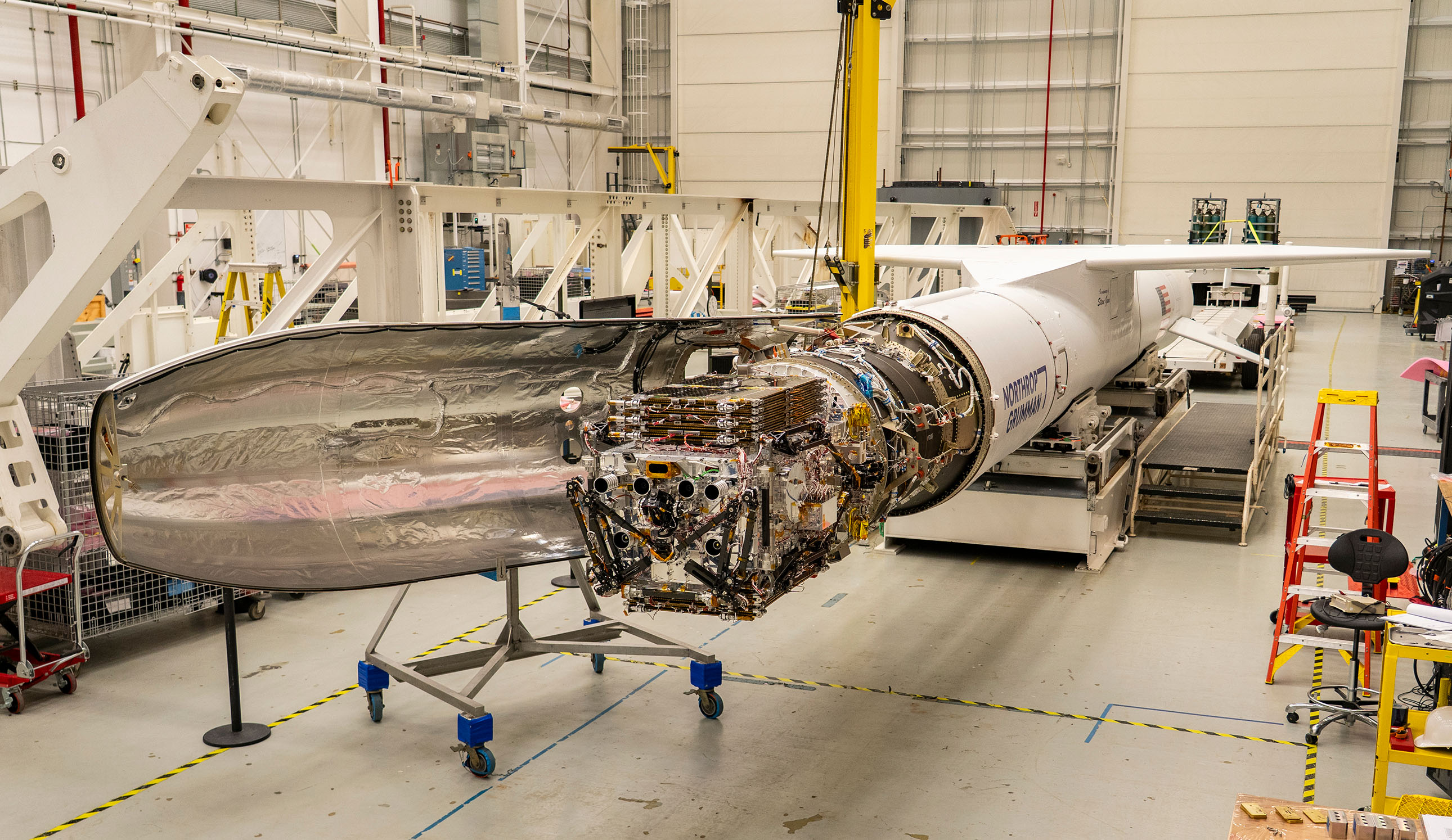
Katalyst’s robotic servicing spacecraft, called LINK, will attempt to rendezvous with Swift and raise its altitude, extending its science mission lifespan and advancing a key capability for the future of space exploration. The LINK spacecraft will launch on Northrop Grumman’s Pegasus XL rocket later this month from Kwajalein Atoll in the Marshall Islands.
Media interested in participating by phone must RSVP no later than two hours before the start of the call to Amy Barra at: amy.l.barra@nasa.gov. NASA’s media accreditation policy is available online.
Audio of the media teleconference will stream on the agency’s website at:
Participants in the media teleconference include:
- Shawn Domagal-Goldman, division director, Astrophysics, NASA Headquarters in Washington
- Brad Cenko, principal investigator, Swift, NASA’s Goddard Space Flight Center in Greenbelt, Maryland
- Kieran Wilson, principal investigator, LINK, Katalyst Space
- Robert Lamontagne, vice president, strategic partnerships, Katalyst Space
- Wes Collier, vice president, launch systems, Northrop Grumman
The Swift mission, which launched in 2004, leads NASA’s fleet of telescopes in studying changes in the high-energy universe, like gamma-ray bursts, which are the most powerful explosions in the cosmos. When a rapid, sudden event takes place in the sky, Swift serves as a “dispatcher,” providing critical information that allows other “first responder” missions to follow up to learn more about how the universe works.
After 21 years, Swift’s low Earth orbit has begun to rapidly decay because of increased solar activity. Rather than allowing the observatory to re-enter Earth’s atmosphere, as many missions do at the end of their lifetimes, NASA is using this opportunity to advance U.S. spacecraft servicing technology. In September 2025, NASA awarded a contract to Katalyst to mount a robotic servicing mission for Swift in less than a year. The mission will use LINK to rendezvous with Swift and boost it to a higher altitude, demonstrating a key capability for the future of space exploration. The mission is targeted for launch in June from Kwajalein Atoll, Marshall Islands.
Learn more about the mission to boost Swift’s orbit at:
https://science.nasa.gov/mission/swift/swift-boost-mission/
-end-
Karen Fox / Alise Fisher
Headquarters, Washington
202-385-1287 / 202-358-2546
karen.c.fox@nasa.gov / alise.m.fisher@nasa.gov
Amy Barra
Wallops Flight Facility, Wallops Island, Va.
757-824-1579
amy.l.barra@nasa.gov
NASA to Preview Katalyst Mission to Boost Swift Spacecraft’s Orbit
NASA will host an audio-only media teleconference at 11 a.m. EDT, Wednesday, June 17, to preview the Katalyst Space mission to boost the orbit of NASA’s Neil Gehrels Swift Observatory.
Katalyst’s robotic servicing spacecraft, called LINK, will attempt to rendezvous with Swift and raise its altitude, extending its science mission lifespan and advancing a key capability for the future of space exploration. The LINK spacecraft will launch on Northrop Grumman’s Pegasus XL rocket later this month from Kwajalein Atoll in the Marshall Islands.
Media interested in participating by phone must RSVP no later than two hours before the start of the call to Amy Barra at: amy.l.barra@nasa.gov. NASA’s media accreditation policy is available online.
Audio of the media teleconference will stream on the agency’s website at:
Participants in the media teleconference include:
- Shawn Domagal-Goldman, division director, Astrophysics, NASA Headquarters in Washington
- Brad Cenko, principal investigator, Swift, NASA’s Goddard Space Flight Center in Greenbelt, Maryland
- Kieran Wilson, principal investigator, LINK, Katalyst Space
- Robert Lamontagne, vice president, strategic partnerships, Katalyst Space
- Wes Collier, vice president, launch systems, Northrop Grumman
The Swift mission, which launched in 2004, leads NASA’s fleet of telescopes in studying changes in the high-energy universe, like gamma-ray bursts, which are the most powerful explosions in the cosmos. When a rapid, sudden event takes place in the sky, Swift serves as a “dispatcher,” providing critical information that allows other “first responder” missions to follow up to learn more about how the universe works.
After 21 years, Swift’s low Earth orbit has begun to rapidly decay because of increased solar activity. Rather than allowing the observatory to re-enter Earth’s atmosphere, as many missions do at the end of their lifetimes, NASA is using this opportunity to advance U.S. spacecraft servicing technology. In September 2025, NASA awarded a contract to Katalyst to mount a robotic servicing mission for Swift in less than a year. The mission will use LINK to rendezvous with Swift and boost it to a higher altitude, demonstrating a key capability for the future of space exploration. The mission is targeted for launch in June from Kwajalein Atoll, Marshall Islands.
Learn more about the mission to boost Swift’s orbit at:
https://science.nasa.gov/mission/swift/swift-boost-mission/
-end-
Karen Fox / Alise Fisher
Headquarters, Washington
202-385-1287 / 202-358-2546
karen.c.fox@nasa.gov / alise.m.fisher@nasa.gov
Amy Barra
Wallops Flight Facility, Wallops Island, Va.
757-824-1579
amy.l.barra@nasa.gov
China’s Tianwen-2 spacecraft arrives at one of Earth’s mysterious ‘quasi-moons’
The Tianwen-2 spacecraft is slowly closing in on the near-Earth asteroid Kamo‘oalewa, on a mission that would bring China’s first asteroid samples back to Earth in 2027
El Niño is here and could tip Earth to a new record hot year
Scientists have been expecting El Niño to set in for quite a while now—and it’s finally official
ILA Berlin 2026: in-flight call with ESA Astronaut Sophie Adenot
ESA astronaut Sophie Adenot joined ILA Berlin 2026 live from the International Space Station for a special in-flight conversation on life and work in orbit, Europe's ambitions in human spaceflight. The call featured ESA Director General Josef Aschbacher and ESA Director of Human and Robotic Exploration Daniel Neuenschwander, as well as ESA astronauts Alexander Gerst and Matthias Maurer, as well as Thomas Reiter, Head of the Space and Security Department in the Federal Ministry of Research, Technology and Space (BMFTR) and former ESA Astronaut.
Dramatic photo of ibis being guided to their winter homes wins award
Dramatic photo of ibis being guided to their winter homes wins award
Luca Parmitano: Artemis III pilot
Revival of Australia’s Molonglo Radio Telescope
Australia's Molonglo Observatory was saved from retirement; now, it holds the promise of future radio observations.
The post Revival of Australia’s Molonglo Radio Telescope appeared first on Sky & Telescope.
Same rocket, new boost
The eighth flight of Europe’s rocket Ariane 6 will have a bigger boost: the P120C solid-propellant rocket motor, used as Ariane 6 booster so far, has been upgraded. The new P160C flying on Ariane 6 flight VA269 offers 10% more performance to orbit.
P160C was developed by Europropulsion under contract from ArianeGroup and Avio. Just like P120C, P160C comes in three main parts, its structure is made in Italy, the rocket engine nozzle in France and the igniter in Norway.
After being shipped to Europe’s Spaceport in French Guiana, the P160C boosters are loaded with 14 tonnes more fuel than P120C and turned into Ariane 6 boosters before being attached to the rocket on the launch pad.
The development of Ariane 6 is another stellar example of European cooperation. The European Space Agency works with an industrial network in 13 European countries, led by prime contractor and design authority ArianeGroup. French space agency CNES manages the range operations at Europe’s Spaceport in French Guiana. Arianespace is the launch service provider for this flight for Amazon.
What AI-herding scientists can learn from watching ‘sheepdog YouTube’
Controlling a small group of “noisy” sheep holds hints for computer algorithms
The one film to watch before seeing Steven Spielberg’s Disclosure Day
The one film to watch before seeing Steven Spielberg’s Disclosure Day
The 2026 World Cup will bring the heat. Here's how to keep cool
Extreme heat poses a risk to players, spectators and workers—find out where the danger is and how to keep cool
Vaping after quitting smoking is linked to lung cancer
Vaping after quitting smoking is linked to lung cancer
Ditching cigarettes for vapes may curb the cancer benefits of quitting
Ditching cigarettes for vapes may curb the cancer benefits of quitting
Tracking urban expansion in hazard-prone areas
The World Settlement Footprint (WSF) Tracker, and its dedicated online platform, have been officially released at an event at the World Bank headquarters in Washington DC.
Air Pollution’s Daily Pulse Over the Northeast
- Earth
- Earth Observatory
- Image of the Day
- EO Explorer
- Topics
- More Content
- About