

Feed aggregator
Why dinosaurs lived much more complex lives than we thought
Curiosity Team Hits Jackpot: A Sample Full of Complex Organic Molecules
Scientists have identified at least seven carbon-rich molecules that NASA's Curiosity rover detected on Mars, and they're more complex than any found before.
The post Curiosity Team Hits Jackpot: A Sample Full of Complex Organic Molecules appeared first on Sky & Telescope.
DOJ indicts former Fauci adviser David Morens on charges related to COVID pandemic
Former National Institutes of Health official David Morens is accused of evading record requests related to the COVID pandemic’s origins and gain-of-function research
A Gently Glowing Galaxy
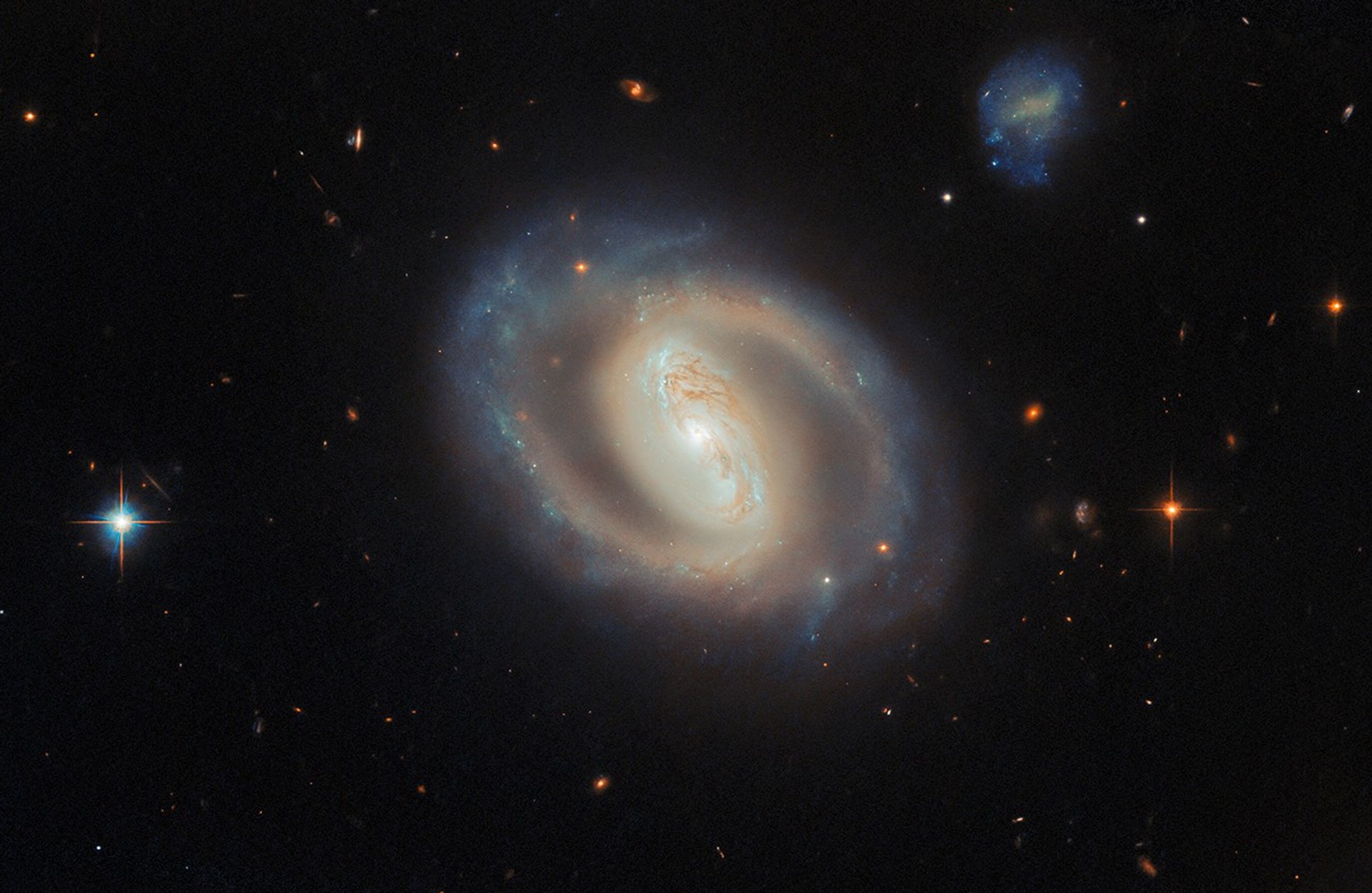
A luminous swirl set against the deep black of space, the barred spiral galaxy IC 486 glows with a soft, ethereal light in this NASA Hubble Space Telescope image from April 13, 2026.
IC 486 lies right on the edge of the constellation Gemini (the Twins), around 380 million light-years from Earth. Classified as a barred spiral galaxy, it features a bright central bar-shaped structure from which its spiral arms unfurl, wrapping around the core in a smooth, almost ring-like pattern.
Read more about IC 486 and how scientists are studying galaxies using observations like this.
Image credit: ESA/Hubble & NASA, M. J. Koss, A. J. Barth
A Gently Glowing Galaxy
A luminous swirl set against the deep black of space, the barred spiral galaxy IC 486 glows with a soft, ethereal light in this NASA Hubble Space Telescope image from April 13, 2026.
IC 486 lies right on the edge of the constellation Gemini (the Twins), around 380 million light-years from Earth. Classified as a barred spiral galaxy, it features a bright central bar-shaped structure from which its spiral arms unfurl, wrapping around the core in a smooth, almost ring-like pattern.
Read more about IC 486 and how scientists are studying galaxies using observations like this.
Image credit: ESA/Hubble & NASA, M. J. Koss, A. J. Barth
NASA, Boeing Advance Truss-Braced Wing Research in Test
3 min read
Preparations for Next Moonwalk Simulations Underway (and Underwater) A scale model of Boeing’s Subsonic Ultra Green Aircraft Research concept undergoes testing in a 5-meter wind tunnel operated by the company QinetiQ in December 2025.QinetiQ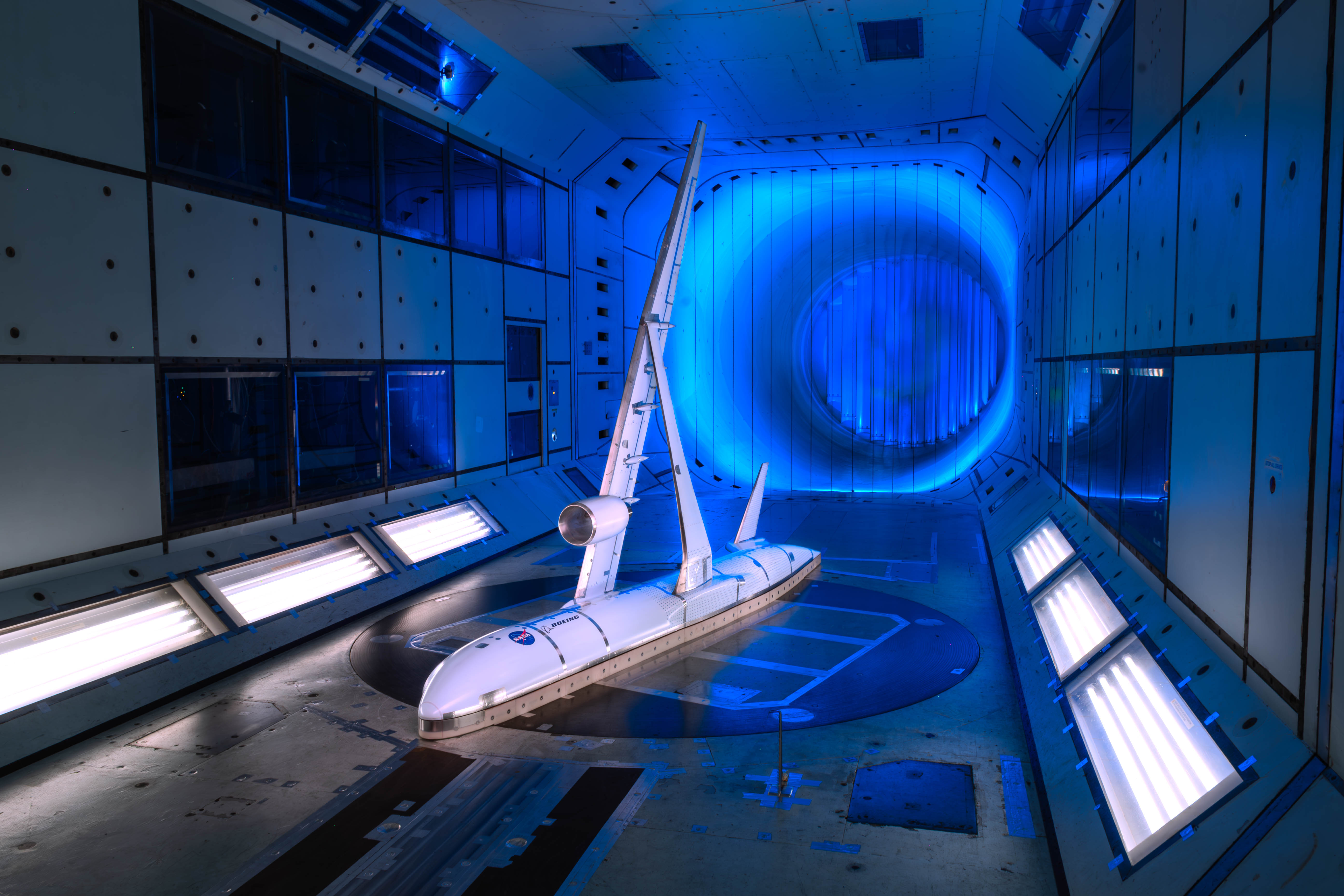
NASA and Boeing have completed wind tunnel testing to study an innovative advanced aircraft design intended to improve aerodynamic efficiency.
A truss-braced wing configuration, involving a long, thin wing with aerodynamically shaped structural supports, has the potential to reduce fuel and operational costs for future airliners, which is why NASA has collaborated with Boeing to advance the design.
But this kind of wing would be much more than a simple tweak to existing designs – for an aircraft the size of a passenger jet, it would be a revolutionary redesign, requiring extensive study from NASA and Boeing.
The most recent round of testing used a complex wind tunnel model to collect data on how air flows around a truss-braced wing model and the forces that would be exerted on such a wing in flight.
The test used a semispan model – essentially half an aircraft mounted on a wind tunnel floor. The model has features built in to simulate the mechanisms that increase the amount of lift a wing produces. By adjusting the model’s slats, flaps, and other moving control surfaces, the team can configure it to the low speed, high-lift settings of takeoff and landing conditions.
The model is part of a collaboration to test what’s known as Boeing’s Subsonic Ultra Green Aircraft Research (SUGAR) concept.
In December, teams completed testing of the model wind tunnel operated by the company QinetiQ in Farnborough, England. This large wind tunnel uses pressurized conditions to predict airplane behavior in takeoff and landing conditions.
The large size of the tunnel gives the model fidelity to better predict the behavior of a plane in flight. This capability allowed the team to confidently assess aerodynamic performance.
NASA and Boeing research teams analyzed data in real time to ensure the model performed as expected. Researchers are still reviewing the full results, but the test has already added valuable information to a growing body of research aimed at reducing fuel use in future aircraft designs.
The testing was just the latest stop for this research. NASA and Boeing have tested the concept at multiple NASA facilities to collect data as they work to build a comprehensive understanding of this advanced airframe concept.
This collaboration serves as an example of how NASA serves as an incubator for breakthrough technology with profound commercial applications. The transonic truss-braced wing concept originated from NASA aeronautics-supported research and NASA and Boeing engineers have worked together, test-by-test, to move this wing design from an idea to a practical reality.
The work began in NASA’s Advanced Air Vehicles Program and continues as part of the Subsonic Flight Demonstrator project under the Integrated Aviation Systems Program in the agency’s Aeronautics Research Mission Directorate.
Share Details Last Updated Apr 29, 2026 EditorDede DiniusContactSarah Mannsarah.mann@nasa.gov Related Terms Explore More 4 min read There’s No Place Like NASA’s New X-59 Hangar Home Article 2 days ago 5 min read NASA Fires Up Powerful Lithium-Fed Thruster for Trips to Mars Article 2 days ago 4 min read NASA Laser Terminal Enhances Views During Artemis II Mission Article 2 days ago Keep Exploring Discover More Topics From NASANASA Armstrong Flight Research Center
Humans in Space
Climate Change
Aeronautics
NASA, Boeing Advance Truss-Braced Wing Research in Test
3 min read
Preparations for Next Moonwalk Simulations Underway (and Underwater) A scale model of Boeing’s Subsonic Ultra Green Aircraft Research concept undergoes testing in a 5-meter wind tunnel operated by the company QinetiQ in December 2025.QinetiQNASA and Boeing have completed wind tunnel testing to study an innovative advanced aircraft design intended to improve aerodynamic efficiency.
A truss-braced wing configuration, involving a long, thin wing with aerodynamically shaped structural supports, has the potential to reduce fuel and operational costs for future airliners, which is why NASA has collaborated with Boeing to advance the design.
But this kind of wing would be much more than a simple tweak to existing designs – for an aircraft the size of a passenger jet, it would be a revolutionary redesign, requiring extensive study from NASA and Boeing.
The most recent round of testing used a complex wind tunnel model to collect data on how air flows around a truss-braced wing model and the forces that would be exerted on such a wing in flight.
The test used a semispan model – essentially half an aircraft mounted on a wind tunnel floor. The model has features built in to simulate the mechanisms that increase the amount of lift a wing produces. By adjusting the model’s slats, flaps, and other moving control surfaces, the team can configure it to the low speed, high-lift settings of takeoff and landing conditions.
The model is part of a collaboration to test what’s known as Boeing’s Subsonic Ultra Green Aircraft Research (SUGAR) concept.
In December, teams completed testing of the model wind tunnel operated by the company QinetiQ in Farnborough, England. This large wind tunnel uses pressurized conditions to predict airplane behavior in takeoff and landing conditions.
The large size of the tunnel gives the model fidelity to better predict the behavior of a plane in flight. This capability allowed the team to confidently assess aerodynamic performance.
NASA and Boeing research teams analyzed data in real time to ensure the model performed as expected. Researchers are still reviewing the full results, but the test has already added valuable information to a growing body of research aimed at reducing fuel use in future aircraft designs.
The testing was just the latest stop for this research. NASA and Boeing have tested the concept at multiple NASA facilities to collect data as they work to build a comprehensive understanding of this advanced airframe concept.
This collaboration serves as an example of how NASA serves as an incubator for breakthrough technology with profound commercial applications. The transonic truss-braced wing concept originated from NASA aeronautics-supported research and NASA and Boeing engineers have worked together, test-by-test, to move this wing design from an idea to a practical reality.
The work began in NASA’s Advanced Air Vehicles Program and continues as part of the Subsonic Flight Demonstrator project under the Integrated Aviation Systems Program in the agency’s Aeronautics Research Mission Directorate.
Share Details Last Updated Apr 29, 2026 EditorDede DiniusContactSarah Mannsarah.mann@nasa.gov Related Terms Explore More 4 min read There’s No Place Like NASA’s New X-59 Hangar Home Article 1 day ago 5 min read NASA Fires Up Powerful Lithium-Fed Thruster for Trips to Mars Article 1 day ago 4 min read NASA Laser Terminal Enhances Views During Artemis II Mission Article 1 day ago Keep Exploring Discover More Topics From NASANASA Armstrong Flight Research Center
Humans in Space
Climate Change
Aeronautics
What you eat for lunch could influence your immune system just hours later
Our food choices could play an important, short-term role in how our bodies respond to infections, new research suggests
NASA Demonstrates New Prescribed Burn Capability for Spaceport
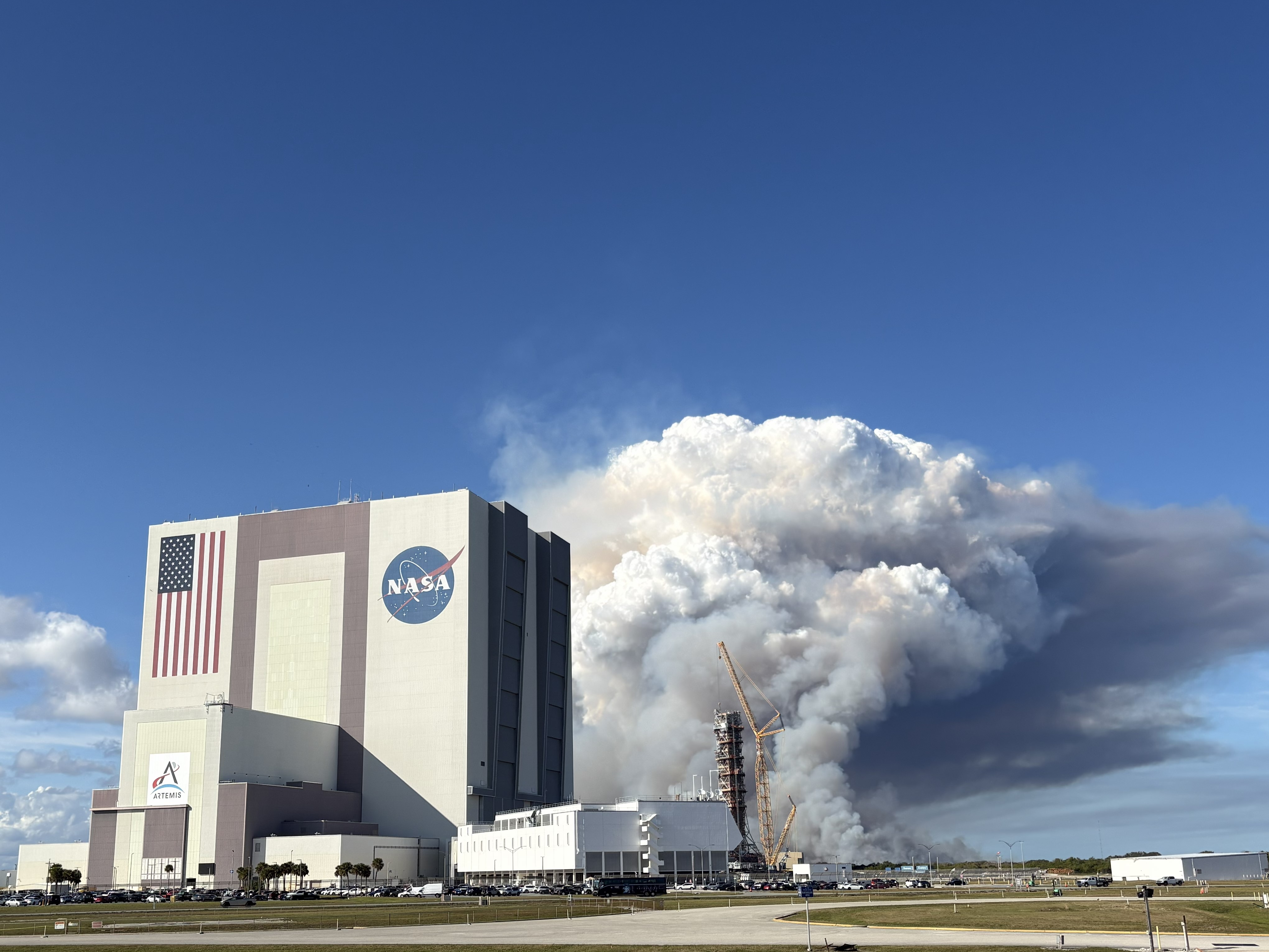
Anyone who has seen a launch at NASA’s Kennedy Space Center in Florida knows the agency’s pursuit of the stars involves some smoke and fire. Sometimes, however, the smoke doesn’t come from the rockets that propel astronauts beyond Earth’s bounds.
That was the case during the second weekend of January 2026, when NASA teamed up with the U.S. Fish and Wildlife Service and commercial space partners to intentionally ignite around 2,600 acres of scrub habitat at NASA Kennedy during an active launch countdown, a first for the busiest spaceport in the world.
Staff from NASA Kennedy’s Spaceport Integration Directorate oversaw two prescribed burns conducted by the Service. The larger burn affected around 1,400 acres on the northeast corner of the center, known as Happy Creek — a key habitat for the federally protected Florida scrub-jay and other wildlife that rely on periodic wildfires to thrive.
The other prescribed burn affected a 1,200-acre section east of Kennedy Parkway and south of the center’s industrial zone, near the spaceport’s seven-story headquarters building, as well as iconic facilities critical to NASA’s past and future space efforts like the Neil A. Armstrong Operations and Checkout Building and the Space Systems Processing Facility.
Historically, the center paused launch operations when using fire as a land management tool within NASA Kennedy’s secure area or the Merritt Island National Wildlife Refuge, which surrounds it. However, with Kennedy’s spaceport surpassing 100 successful liftoffs for the first time in 2025, and with the launch cadence expected to continue climbing in the years to come, officials at both agencies recognized the need to adapt.
NASA and U.S. Fish and Wildlife Service personnel gather at the United States Fish and Wildlife Service off A. Max Brewer Memorial Parkway on Friday, Jan. 9, 2026, in Titusville, Florida to finalize the plan prior to the prescribed burn.NASA/Tim Kozusko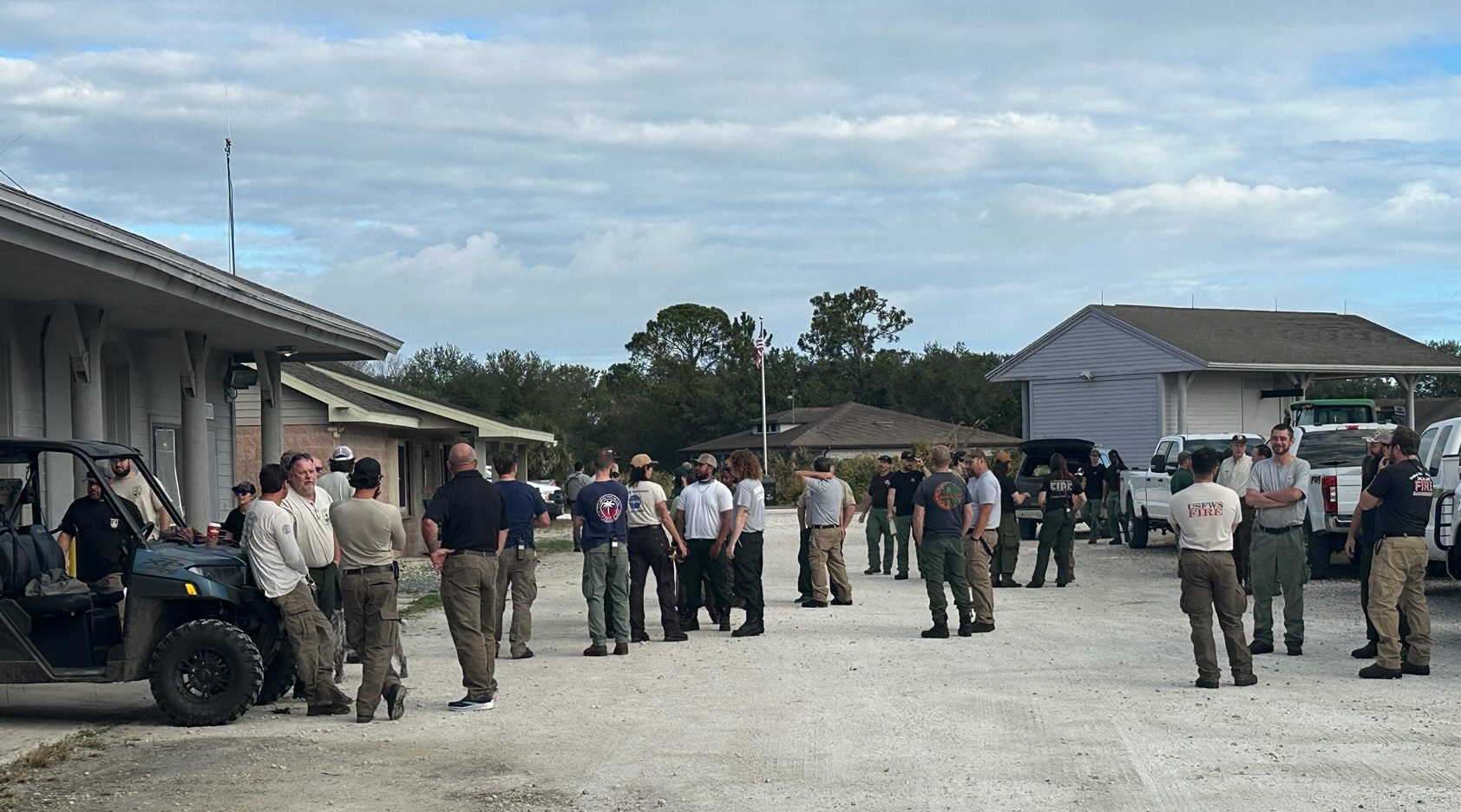
“As more launches occur at Kennedy, the need for proper land management at the refuge has never been greater,” said Greg Gaddis, the center’s senior operations manager for the spaceport. “We must find new ways to lessen the amount of fire fuel on the ground while also keeping pace with the launch needs of our government and commercial partners. Otherwise, an unexpected lightning bolt or some other fire-starter could be catastrophic for America’s space ambitions, as well as the private space industry.”
The increasing launch cadence is one of many factors the prescribed burn manager — also known as the burn boss — must consider when deciding when and where to conduct a prescribed burn at the spaceport. Another critical factor is weather conditions, especially during Florida’s dry season, where constant breeze from the nearby Atlantic Ocean can quickly turn a small fire into a large one. This could potentially pose a significant risk to plant and animal species at the refuge, as well as to the center’s launch infrastructure.
Safety remains the paramount concern. The center’s Space Operations Office worked directly with the Service and the launch mission partners during the burn.
Prior to the Service setting prescribed burns with air and land resources, Kennedy officials reviewed forecasted wind patterns and developed plans to protect workers in buildings affected by the smoke. The center issued smoke warnings, temporarily relocated some personnel, and allowed others to work remotely during the burns. The smoke also caused intermittent closures of some of the center’s main roads and entrances throughout the weekend for safety reasons.
Torches mounted onto vehicles are used to intentionally set over 2,600 acres of the Merritt Island National Wildlife Refuge on fire on Friday, Jan. 9, 2026. Those areas are located inside Kennedy Space Center’s restricted area and occurred during an active launch countdown, the first time that’s ever happened at NASA Kennedy. NASA/Tim Kozusko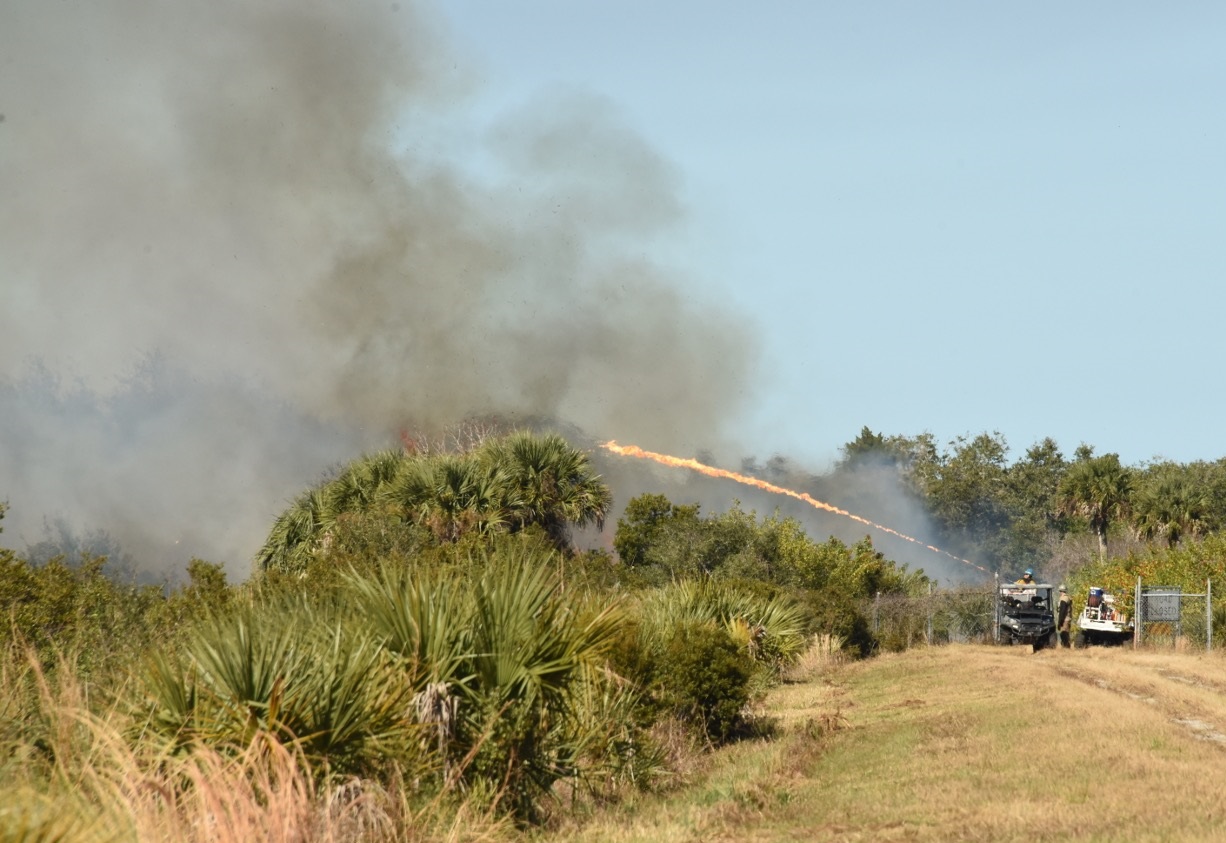
“To do is to learn, and we all learn each day,” said Shawn Sullivan, assistant fire management officer for the Service’s Region 4 and the designated burn boss. “I stood in awe of the people working around me. To listen to the coordination between specialized groups and witness great individual effort was quite an experience.”
Conducting prescribed burns every two or three years is optimal for maintaining the health and resilience of the refuge, especially for wildlife like the Florida scrub-jay, which has adapted to periodic fires. Determining when and where to conduct these burns is one of the most challenging parts for the burn boss and the officials responsible for operating the spaceport. The amount of vegetation in those areas is often a deciding factor when choosing what to burn.
“We want to make sure those areas don’t get clogged up, making it more difficult for firefighters to gain access if they have to protect launch pads or any other infrastructure from a wildfire,” Gaddis added. “It also leaves less fuel a wildfire can use to grow, and that’s always a big help for first responders working to put a fire out.”
NASA Demonstrates New Prescribed Burn Capability for Spaceport
Anyone who has seen a launch at NASA’s Kennedy Space Center in Florida knows the agency’s pursuit of the stars involves some smoke and fire. Sometimes, however, the smoke doesn’t come from the rockets that propel astronauts beyond Earth’s bounds.
That was the case during the second weekend of January 2026, when NASA teamed up with the U.S. Fish and Wildlife Service and commercial space partners to intentionally ignite around 2,600 acres of scrub habitat at NASA Kennedy during an active launch countdown, a first for the busiest spaceport in the world.
Staff from NASA Kennedy’s Spaceport Integration Directorate oversaw two prescribed burns conducted by the Service. The larger burn affected around 1,400 acres on the northeast corner of the center, known as Happy Creek — a key habitat for the federally protected Florida scrub-jay and other wildlife that rely on periodic wildfires to thrive.
The other prescribed burn affected a 1,200-acre section east of Kennedy Parkway and south of the center’s industrial zone, near the spaceport’s seven-story headquarters building, as well as iconic facilities critical to NASA’s past and future space efforts like the Neil A. Armstrong Operations and Checkout Building and the Space Systems Processing Facility.
Historically, the center paused launch operations when using fire as a land management tool within NASA Kennedy’s secure area or the Merritt Island National Wildlife Refuge, which surrounds it. However, with Kennedy’s spaceport surpassing 100 successful liftoffs for the first time in 2025, and with the launch cadence expected to continue climbing in the years to come, officials at both agencies recognized the need to adapt.
NASA and U.S. Fish and Wildlife Service personnel gather at the United States Fish and Wildlife Service off A. Max Brewer Memorial Parkway on Friday, Jan. 9, 2026, in Titusville, Florida to finalize the plan prior to the prescribed burn.NASA/Tim Kozusko“As more launches occur at Kennedy, the need for proper land management at the refuge has never been greater,” said Greg Gaddis, the center’s senior operations manager for the spaceport. “We must find new ways to lessen the amount of fire fuel on the ground while also keeping pace with the launch needs of our government and commercial partners. Otherwise, an unexpected lightning bolt or some other fire-starter could be catastrophic for America’s space ambitions, as well as the private space industry.”
The increasing launch cadence is one of many factors the prescribed burn manager — also known as the burn boss — must consider when deciding when and where to conduct a prescribed burn at the spaceport. Another critical factor is weather conditions, especially during Florida’s dry season, where constant breeze from the nearby Atlantic Ocean can quickly turn a small fire into a large one. This could potentially pose a significant risk to plant and animal species at the refuge, as well as to the center’s launch infrastructure.
Safety remains the paramount concern. The center’s Space Operations Office worked directly with the Service and the launch mission partners during the burn.
Prior to the Service setting prescribed burns with air and land resources, Kennedy officials reviewed forecasted wind patterns and developed plans to protect workers in buildings affected by the smoke. The center issued smoke warnings, temporarily relocated some personnel, and allowed others to work remotely during the burns. The smoke also caused intermittent closures of some of the center’s main roads and entrances throughout the weekend for safety reasons.
Torches mounted onto vehicles are used to intentionally set over 2,600 acres of the Merritt Island National Wildlife Refuge on fire on Friday, Jan. 9, 2026. Those areas are located inside Kennedy Space Center’s restricted area and occurred during an active launch countdown, the first time that’s ever happened at NASA Kennedy. NASA/Tim Kozusko“To do is to learn, and we all learn each day,” said Shawn Sullivan, assistant fire management officer for the Service’s Region 4 and the designated burn boss. “I stood in awe of the people working around me. To listen to the coordination between specialized groups and witness great individual effort was quite an experience.”
Conducting prescribed burns every two or three years is optimal for maintaining the health and resilience of the refuge, especially for wildlife like the Florida scrub-jay, which has adapted to periodic fires. Determining when and where to conduct these burns is one of the most challenging parts for the burn boss and the officials responsible for operating the spaceport. The amount of vegetation in those areas is often a deciding factor when choosing what to burn.
“We want to make sure those areas don’t get clogged up, making it more difficult for firefighters to gain access if they have to protect launch pads or any other infrastructure from a wildfire,” Gaddis added. “It also leaves less fuel a wildfire can use to grow, and that’s always a big help for first responders working to put a fire out.”
DESI Completes Its Epic 3D Map, Hinting that Dark Energy Might Be Changing
On top of Kitt Peak in the Arizona Desert, a robotic surveyor just completed a five year mission to catalogue the positions of tens of millions of galaxies. The Dark Energy Spectroscopic Instrument (DESI) has now created the largest, most detailed 3D map of our universe ever constructed. And it’s not done yet, its main mission has been extended through 2028.
Council on Environmental Quality Permitting Innovators Program
NASA’s Center of Excellence for Collaborative Innovation (CoECI) assists in the use of crowdsourcing across the federal government. CoECI’s NASA Tournament Lab offers the contract capability to run external crowdsourced challenges on behalf of NASA and other agencies.
The Council on Environmental Quality (CEQ), within the Executive Office of the President established by the National Environmental Policy Act (NEPA) in 1970, consults and coordinates with federal agencies, providing guidance on the implementation of NEPA to ensure timely environmental review and permitting processes across the Federal government
Technology solutions could accelerate and modernize environmental review and permitting by connecting data, systems, and processes — enhancing collaboration between agencies and the American public. As part of CEQ’s mandate to ensure timely environmental review across the federal government, CEQ and partner agencies have identified technology gaps outlined in the Permitting Technology Action Plan. However, meeting the bold goals and timeline set by the presidential memorandum will require deeper collaboration among industry and government.
CEQ’s Permitting Innovation Center invites participants to the Permitting Innovators program to share tech solutions that will accelerate and modernize federal environmental review and permitting. CEQ will evaluate eligible submissions and invite a select group of applicants to participate in the inaugural Permitting Innovators Expo in July, where they will demo solutions to federal agency staff and the broader environmental review and permitting community. Top solutions will also be featured in the Permitting Innovators Solutions Catalog.
Open date: April 28, 2026
Submission deadline: June 2, 2026 at 6:00 p.m. ET
For more information, visit: https://www.permittinginnovators.com/
Council on Environmental Quality Permitting Innovators Program
NASA’s Center of Excellence for Collaborative Innovation (CoECI) assists in the use of crowdsourcing across the federal government. CoECI’s NASA Tournament Lab offers the contract capability to run external crowdsourced challenges on behalf of NASA and other agencies.
The Council on Environmental Quality (CEQ), within the Executive Office of the President established by the National Environmental Policy Act (NEPA) in 1970, consults and coordinates with federal agencies, providing guidance on the implementation of NEPA to ensure timely environmental review and permitting processes across the Federal government
Technology solutions could accelerate and modernize environmental review and permitting by connecting data, systems, and processes — enhancing collaboration between agencies and the American public. As part of CEQ’s mandate to ensure timely environmental review across the federal government, CEQ and partner agencies have identified technology gaps outlined in the Permitting Technology Action Plan. However, meeting the bold goals and timeline set by the presidential memorandum will require deeper collaboration among industry and government.
CEQ’s Permitting Innovation Center invites participants to the Permitting Innovators program to share tech solutions that will accelerate and modernize federal environmental review and permitting. CEQ will evaluate eligible submissions and invite a select group of applicants to participate in the inaugural Permitting Innovators Expo in July, where they will demo solutions to federal agency staff and the broader environmental review and permitting community. Top solutions will also be featured in the Permitting Innovators Solutions Catalog.
Open date: April 28, 2026
Submission deadline: June 2, 2026 at 6:00 p.m. ET
For more information, visit: https://www.permittinginnovators.com/
The chips in your phone are probably broken – and that's a good thing
The chips in your phone are probably broken – and that's a good thing
Stunning images from Biomass mark its one year in orbit
To mark the first anniversary of the European Space Agency’s Biomass satellite, we present a selection of striking images captured over the past 12 months, revealing Earth’s forests, and much more, in new detail. In just one year, this pioneering mission has begun transforming our understanding of forest dynamics and advancing how scientists monitor the critical role forests play in regulating the global carbon cycle.