
Feed aggregator
Cheating just three times massively ups the chance of winning at chess
Cheating just three times massively ups the chance of winning at chess
Blooming Seas Around the Chatham Islands
- Earth
- Earth Observatory
- Image of the Day
- EO Explorer
- Topics
- More Content
- About
Blooming Seas Around the Chatham Islands
- Earth
- Earth Observatory
- Image of the Day
- EO Explorer
- Topics
- More Content
- About
NASA Enters Final Preparations for Artemis II Mission
As NASA moves closer to launch of the Artemis II test flight, the agency soon will roll its SLS (Space Launch System) rocket and Orion spacecraft to the launch pad for the first time at the agency’s Kennedy Space Center in Florida to begin final integration, testing, and launch rehearsals. NASA is targeting no earlier.
Views of the Moon - Replay
NASA Adds Two F-15 Aircraft to Support Supersonic Flight Research
3 min read
Preparations for Next Moonwalk Simulations Underway (and Underwater) Oregon Air National Guard ground crew guides one of the NASA’s newest F-15 aircraft onto the ramp at the agency’s Armstrong Flight Research Center in Edwards, California, on Monday, Dec. 22, 2025. The retired U.S. Air Force F-15s come from the Oregon Air National Guard’s 173rd Fighter Wing and will transition from military service to support NASA’s flight research fleet. NASA/Christopher LC Clark Oregon Air National Guard and NASA flight crew look out across the desert while awaiting the arrival of the NASA’s newest F-15 aircraft from the Oregon Air National Guard’s 173rd Fighter Wing to NASA’s Armstrong Flight Research Center in Edwards, California, on Monday, Dec. 22, 2025NASA/Christopher LC Clark NASA’s newest F-15 aircraft arrive at the agency’s Armstrong Flight Research Center in Edwards, California, on Monday, Dec. 22, 2025. The two retired U.S. Air Force F-15s will support ongoing supersonic flight research for NASA’s Flight Demonstrations and Capabilities Project and the Quesst mission’s X-59 quiet supersonic research aircraft.NASA/Christopher LC Clark NASA staff and Oregon Air National Guard’s 173rd Fighter Wing crew pose for a group photo at NASA’s Armstrong Flight Research Center in Edwards, California, on Monday, Dec. 22, 2025. The group stands in front of one of two F-15 aircraft added to the agency’s flight research fleet.NASA/Christopher LC Clark Oregon Air National Guard pilots deliver NASA’s newest F-15 aircraft from the Oregon Air National Guard’s 173rd Fighter Wing at Kingsley Field to NASA’s Armstrong Flight Research Center in Edwards, California, on Monday, Dec. 22, 2025. After completing their final flights with the Air Force, the two aircraft begin their new role supporting NASA’s flight research.NASA/Christopher LC ClarkTwo retired U.S. Air Force F-15 jets have joined the flight research fleet at NASA’s Armstrong Flight Research Center in Edwards, California, transitioning from military service to a new role enabling breakthrough advancements in aerospace.
The F-15s will support supersonic flight research for NASA’s Flight Demonstrations and Capabilities project, including testing for the Quesst mission’s X-59 quiet supersonic research aircraft. One of the aircraft will return to the air as an active NASA research aircraft. The second will be used for parts to support long-term fleet sustainment.
“These two aircraft will enable successful data collection and chase plane capabilities for the X-59 through the life of the Low Boom Flight Demonstrator project” said Troy Asher, director for flight operations at NASA Armstrong. “They will also enable us to resume operations with various external partners, including the Department of War and commercial aviation companies.”
The aircraft came from the Oregon Air National Guard’s 173rd Fighter Wing at Kingsley Field. After completing their final flights with the Air Force, the two aircraft arrived at NASA Armstrong Dec. 22, 2025.
“NASA has been flying F-15s since some of the earliest models came out in the early 1970s,” Asher said. “Dozens of scientific experiments have been flown over the decades on NASA’s F-15s and have made a significant contribution to aeronautics and high-speed flight research.”
The F-15s allow NASA to operate in high-speed, high-altitude flight-testing environments. The aircraft can carry experimental hardware externally – under its wings or slung under the center – and can be modified to support flight research.
Now that these aircraft have joined NASA’s fleet, the team at Armstrong can modify their software, systems, and flight controls to suit mission needs. The F-15’s ground clearance allows researchers to install instruments and experiments that would not fit beneath many other aircraft.
NASA has already been operating two F-15s modified so their pilots can operate safely at up to 60,000 feet, the top of the flight envelop for the X-59, which will cruise at 55,000 feet. The new F-15 that will fly for NASA will receive the same modification, allowing for operations at altitudes most standard aircraft cannot reach. The combination of capability, capacity, and adaptability makes the F-15s uniquely suited for flight research at NASA Armstrong.
“The priority is for them to successfully support the X-59 through completion of that mission,” Asher said. “And over the longer term, these aircraft will help position NASA to continue supporting advanced aeronautics research and partnerships.”
Share Details Last Updated Jan 16, 2026 EditorDede DiniusContactNicolas Cholulanicolas.h.cholula@nasa.gov Related Terms Explore More 3 min read NASA Develops Blockchain Technology to Enhance Air Travel Safety and SecurityThrough a drone flight test at NASA’s Ames Research Center, researchers tested a blockchain-based system…
Article 2 days ago 6 min read Flight Engineers Give NASA’s Dragonfly Lift Article 1 week ago 6 min read NASA’s Pandora Satellite, CubeSats to Explore Exoplanets, BeyondEditor’s Note, Jan. 13, 2026: Mission controllers received full acquisition of signal from the Pandora…
Article 1 week ago Keep Exploring Discover More Topics From NASAArmstrong Flight Research Center
Humans in Space
Climate Change
Solar System
NASA Adds Two F-15 Aircraft to Support Supersonic Flight Research
3 min read
Preparations for Next Moonwalk Simulations Underway (and Underwater) Oregon Air National Guard ground crew guides one of the NASA’s newest F-15 aircraft onto the ramp at the agency’s Armstrong Flight Research Center in Edwards, California, on Monday, Dec. 22, 2025. The retired U.S. Air Force F-15s come from the Oregon Air National Guard’s 173rd Fighter Wing and will transition from military service to support NASA’s flight research fleet. NASA/Christopher LC Clark Oregon Air National Guard and NASA flight crew look out across the desert while awaiting the arrival of the NASA’s newest F-15 aircraft from the Oregon Air National Guard’s 173rd Fighter Wing to NASA’s Armstrong Flight Research Center in Edwards, California, on Monday, Dec. 22, 2025NASA/Christopher LC Clark NASA’s newest F-15 aircraft arrive at the agency’s Armstrong Flight Research Center in Edwards, California, on Monday, Dec. 22, 2025. The two retired U.S. Air Force F-15s will support ongoing supersonic flight research for NASA’s Flight Demonstrations and Capabilities Project and the Quesst mission’s X-59 quiet supersonic research aircraft.NASA/Christopher LC Clark NASA staff and Oregon Air National Guard’s 173rd Fighter Wing crew pose for a group photo at NASA’s Armstrong Flight Research Center in Edwards, California, on Monday, Dec. 22, 2025. The group stands in front of one of two F-15 aircraft added to the agency’s flight research fleet.NASA/Christopher LC Clark Oregon Air National Guard pilots deliver NASA’s newest F-15 aircraft from the Oregon Air National Guard’s 173rd Fighter Wing at Kingsley Field to NASA’s Armstrong Flight Research Center in Edwards, California, on Monday, Dec. 22, 2025. After completing their final flights with the Air Force, the two aircraft begin their new role supporting NASA’s flight research.NASA/Christopher LC ClarkTwo retired U.S. Air Force F-15 jets have joined the flight research fleet at NASA’s Armstrong Flight Research Center in Edwards, California, transitioning from military service to a new role enabling breakthrough advancements in aerospace.
The F-15s will support supersonic flight research for NASA’s Flight Demonstrations and Capabilities project, including testing for the Quesst mission’s X-59 quiet supersonic research aircraft. One of the aircraft will return to the air as an active NASA research aircraft. The second will be used for parts to support long-term fleet sustainment.
“These two aircraft will enable successful data collection and chase plane capabilities for the X-59 through the life of the Low Boom Flight Demonstrator project” said Troy Asher, director for flight operations at NASA Armstrong. “They will also enable us to resume operations with various external partners, including the Department of War and commercial aviation companies.”
The aircraft came from the Oregon Air National Guard’s 173rd Fighter Wing at Kingsley Field. After completing their final flights with the Air Force, the two aircraft arrived at NASA Armstrong Dec. 22, 2025.
“NASA has been flying F-15s since some of the earliest models came out in the early 1970s,” Asher said. “Dozens of scientific experiments have been flown over the decades on NASA’s F-15s and have made a significant contribution to aeronautics and high-speed flight research.”
The F-15s allow NASA to operate in high-speed, high-altitude flight-testing environments. The aircraft can carry experimental hardware externally – under its wings or slung under the center – and can be modified to support flight research.
Now that these aircraft have joined NASA’s fleet, the team at Armstrong can modify their software, systems, and flight controls to suit mission needs. The F-15’s ground clearance allows researchers to install instruments and experiments that would not fit beneath many other aircraft.
NASA has already been operating two F-15s modified so their pilots can operate safely at up to 60,000 feet, the top of the flight envelop for the X-59, which will cruise at 55,000 feet. The new F-15 that will fly for NASA will receive the same modification, allowing for operations at altitudes most standard aircraft cannot reach. The combination of capability, capacity, and adaptability makes the F-15s uniquely suited for flight research at NASA Armstrong.
“The priority is for them to successfully support the X-59 through completion of that mission,” Asher said. “And over the longer term, these aircraft will help position NASA to continue supporting advanced aeronautics research and partnerships.”
Share Details Last Updated Jan 16, 2026 EditorDede DiniusContactNicolas Cholulanicolas.h.cholula@nasa.gov Related Terms Explore More 3 min read NASA Develops Blockchain Technology to Enhance Air Travel Safety and SecurityThrough a drone flight test at NASA’s Ames Research Center, researchers tested a blockchain-based system…
Article 1 day ago 6 min read Flight Engineers Give NASA’s Dragonfly Lift Article 1 week ago 6 min read NASA’s Pandora Satellite, CubeSats to Explore Exoplanets, BeyondEditor’s Note, Jan. 13, 2026: Mission controllers received full acquisition of signal from the Pandora…
Article 1 week ago Keep Exploring Discover More Topics From NASAArmstrong Flight Research Center
Humans in Space
Climate Change
Solar System
Red Dwarfs Are Too Dim To Generate Complex Life
New research shows that complex life is unlikely to ever exist around cool, dim red dwarfs. About 33% of the Milky Way's stars are late M dwarfs, which are the smallest, coolest stars, and are the easiest stars to detect Earth-like planets around. The stars aren't bright enough for photosynthetic organisms to create a Great Oxygenation Event, which led to complex animal life here on Earth.
NASA’s SpaceX Crew-11 Wraps Up Space Station Science
NASA’s SpaceX Crew-11 mission with agency astronauts Zena Cardman and Mike Fincke, JAXA (Japan Aerospace Exploration Agency) astronaut Kimiya Yui, and Roscosmos cosmonaut Oleg Platonov returned to Earth after a long-duration mission aboard the International Space Station.
During their stay, Cardman, Fincke, and Yui contributed more than 850 hours of research to help prepare humanity for the return to the Moon and future missions to Mars, while improving life back on Earth.
Here’s a glimpse into the science completed during the Crew-11 mission:
Bolstering bone resilience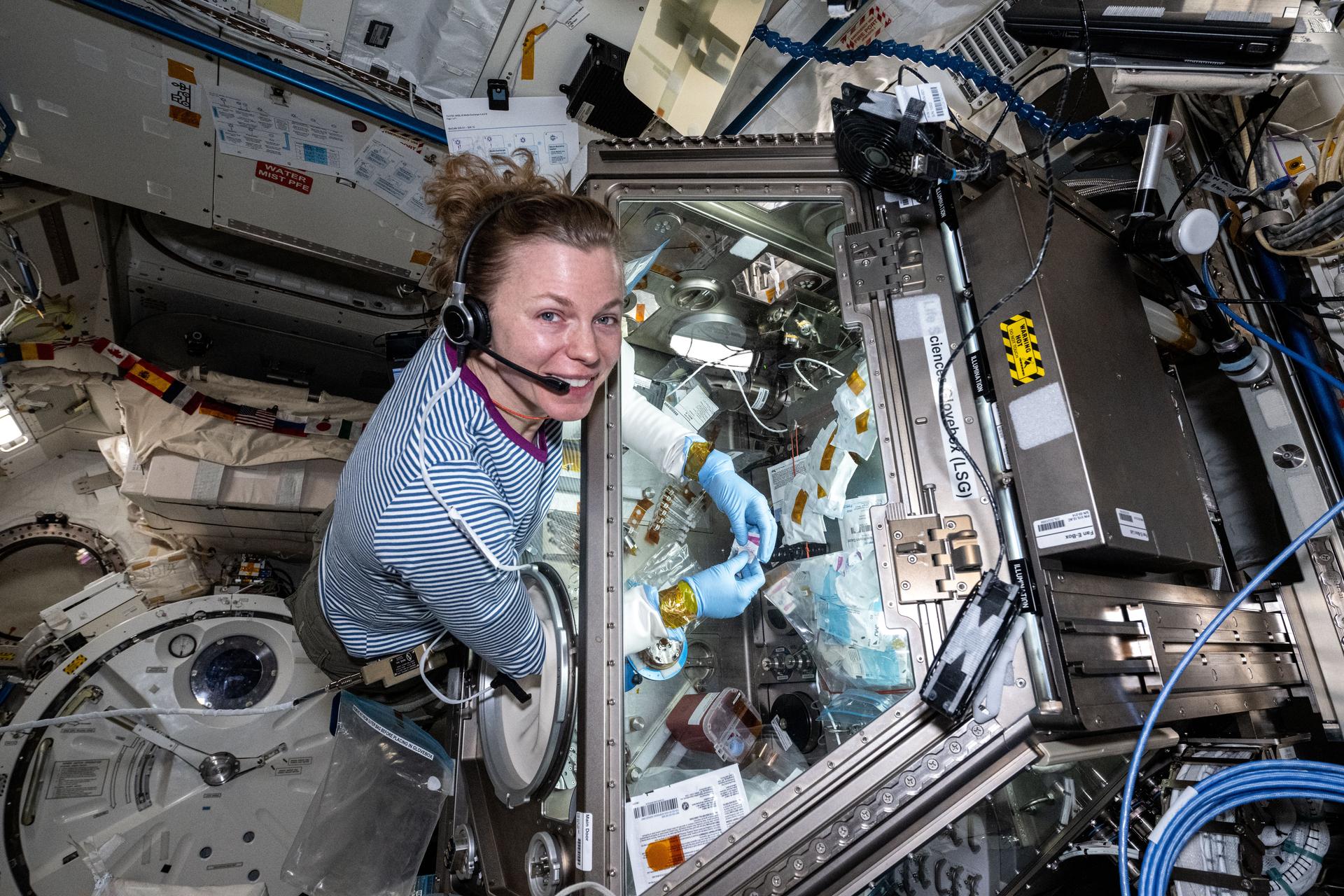
NASA astronaut Zena Cardman works with bone stem cells aboard the International Space Station to improve our understanding of how bone loss occurs during spaceflight. Studying bone cell activity in microgravity could help researchers learn how to control bone loss to protect astronauts’ bone density during future long-duration space missions and inform treatments for diseases like osteoporosis on Earth.
Learn more about MABL-B.
Observing Earth and beyond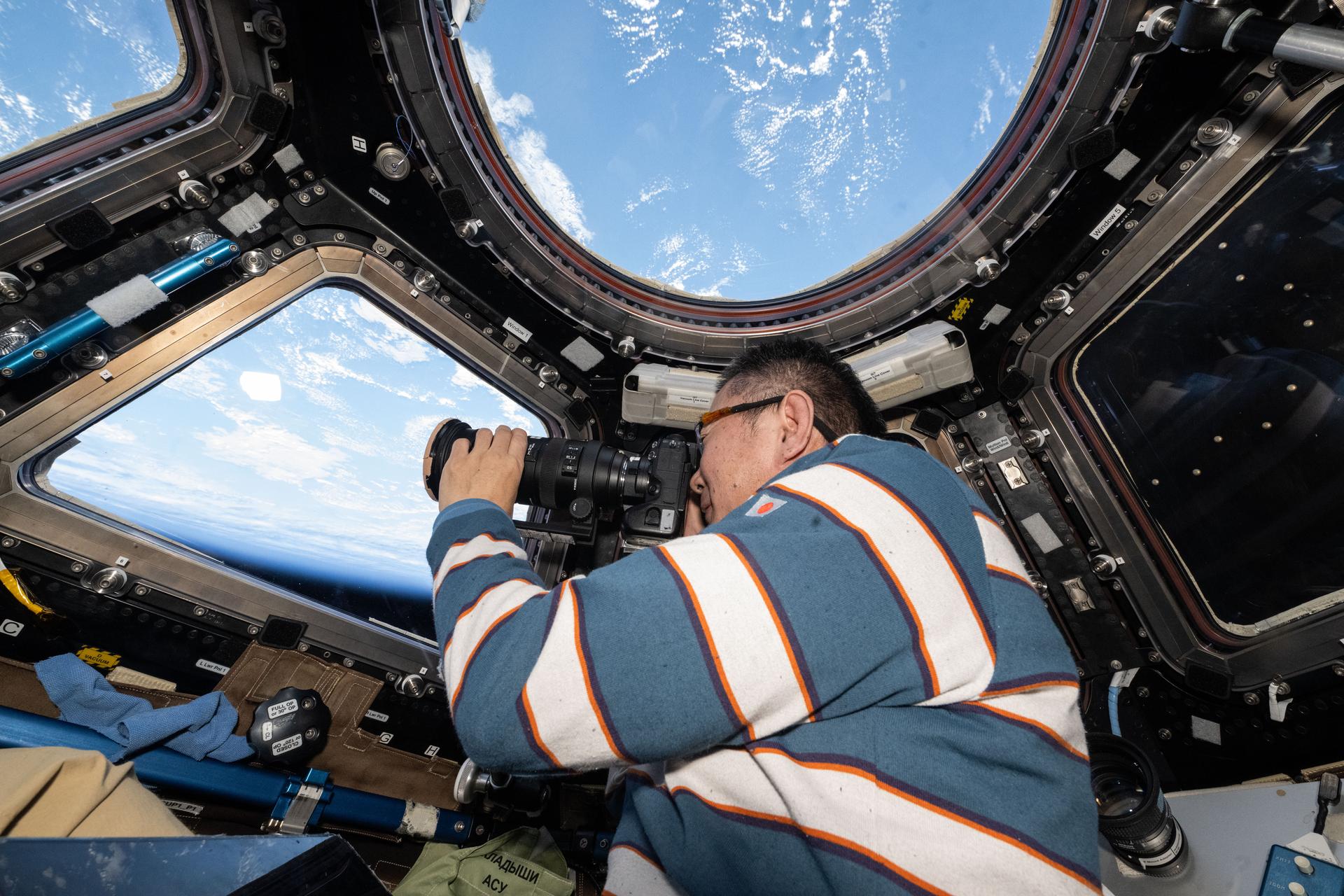
JAXA (Japan Aerospace Exploration Agency) astronaut Kimiya Yui photographs the Earth from the International Space Station’s cupola. For more than 40 years, astronauts have used hand-held cameras to capture millions of images documenting Earth’s geographic features, weather patterns, urban growth, changes to its surface, and the impacts of natural disasters such as hurricanes and floods.
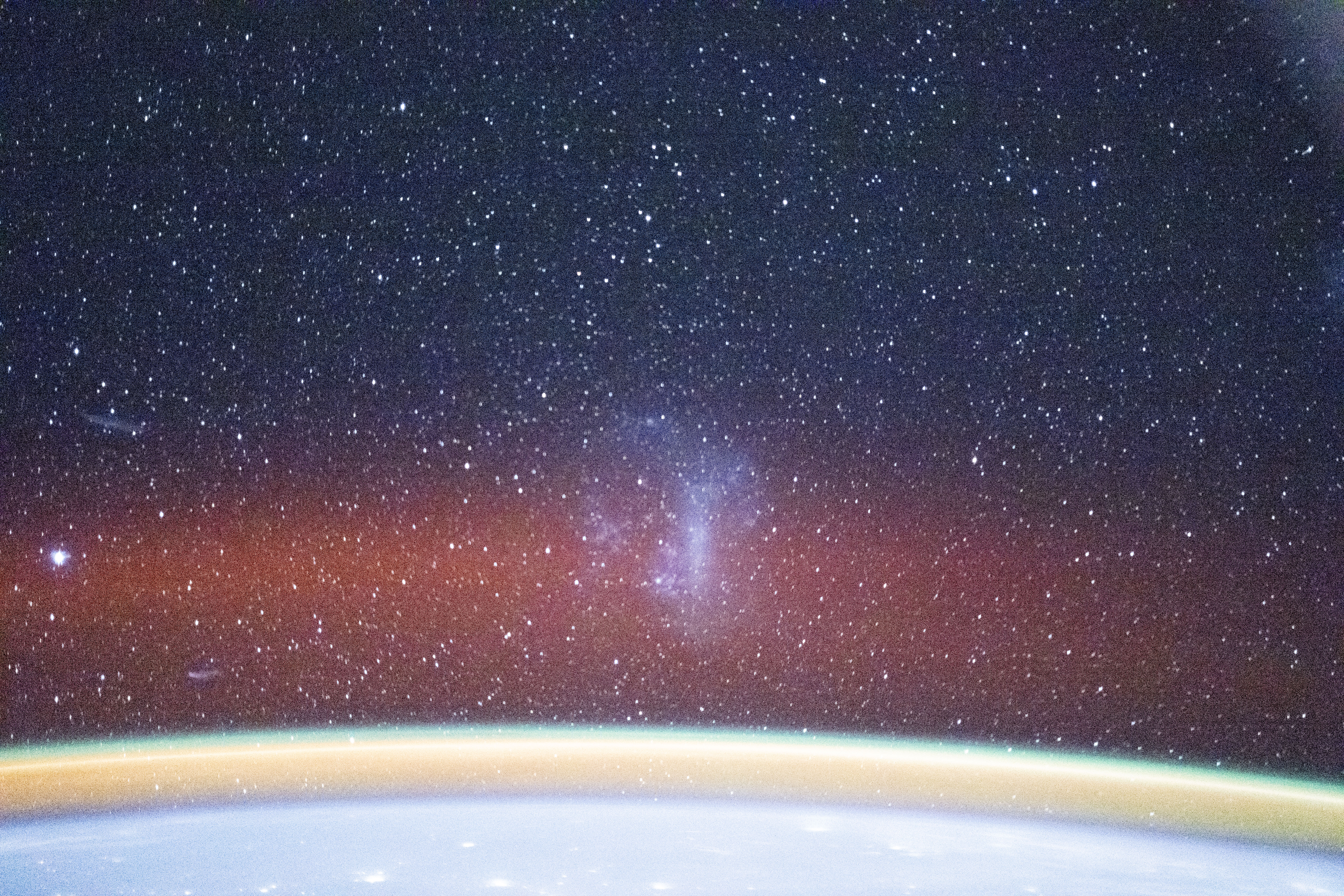
Astronauts also use the cupola and other viewports aboard the space station to gaze into the cosmos without Earth’s atmospheric interference. Just as viewing Earth from 250 miles above provides a new perspective on our home planet, looking out into the stars from the orbiting laboratory offers a clearer view of our universe.
Space catch
NASA astronaut Mike Fincke poses aboard the International Space Station with a new device designed to test an inflatable capture bag’s ability to open, close, and stay airtight in microgravity. This technology could be used to remove space debris from orbit, protecting future spacecraft and crew members. It also may enable trapping samples during exploration missions and support the capture and mining of small asteroids.
Learn more about Capture Bag Demo.
Tracking internal temperature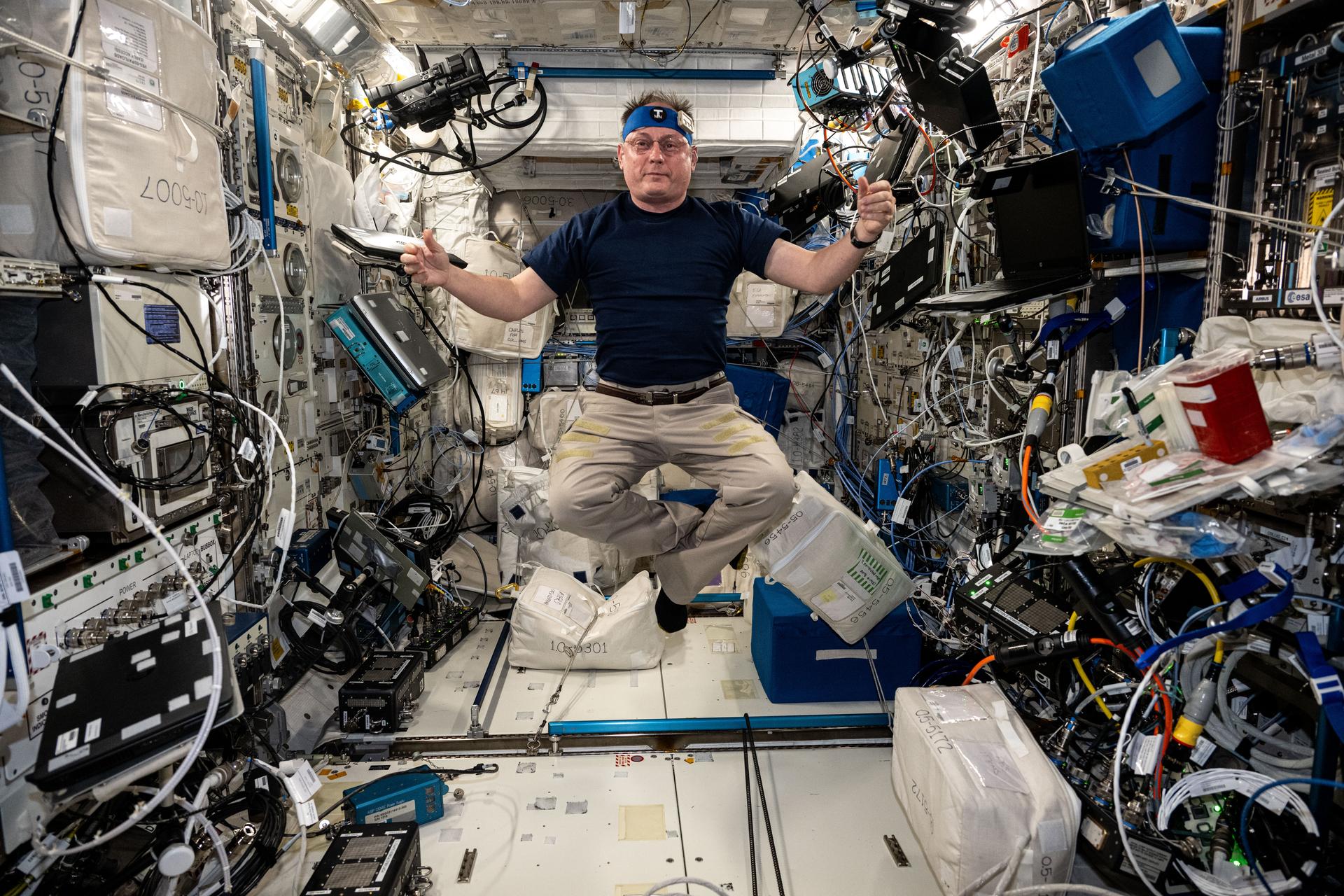
NASA astronaut Mike Fincke wears a temperature-monitoring headband that tracks how the human body regulates its core temperature during spaceflight. Adjusting to living and working aboard the International Space Station can influence human temperature regulation. This headband provides an easy, non-invasive way to collect temperature data while astronauts conduct their daily activities. The sensor is also being tested on Earth and may help prevent hyperthermia in people working in high-temperature environments.
Learn more about T-Mini.
A new cargo vehicle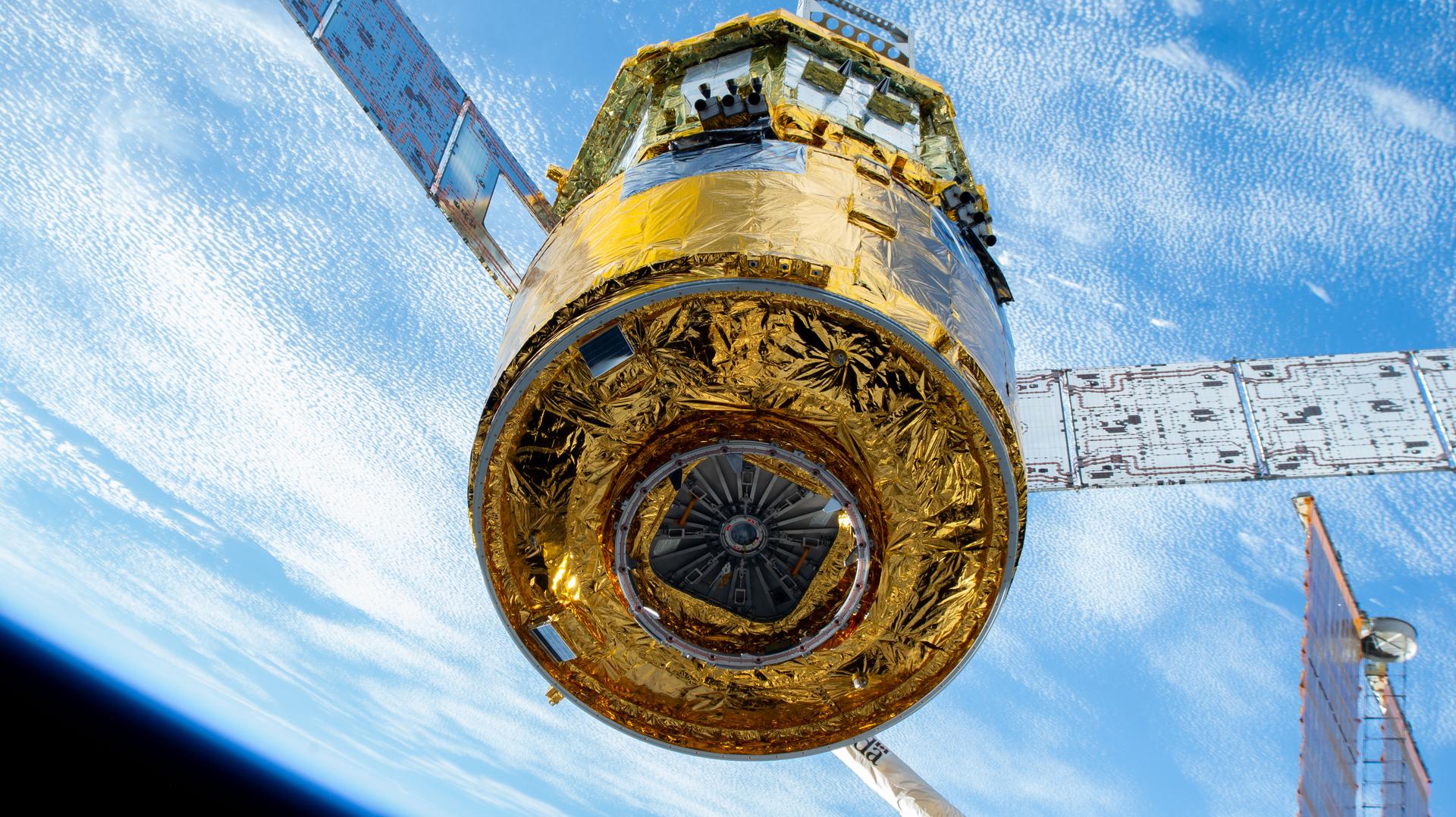
JAXA’s (Japan Aerospace Exploration Agency) new cargo resupply spacecraft, HTV-X1, is shown after being captured by the International Space Station’s Canadarm2 robotic arm during the Crew-11 mission. The spacecraft launched from Tanegashima Space Center on Oct. 26, 2025, delivering approximately 12,800 pounds of science, supplies, and hardware to the orbital complex. New cargo spacecraft expand the station’s capability to support more research and receive critical supplies.
Making nutrients on demand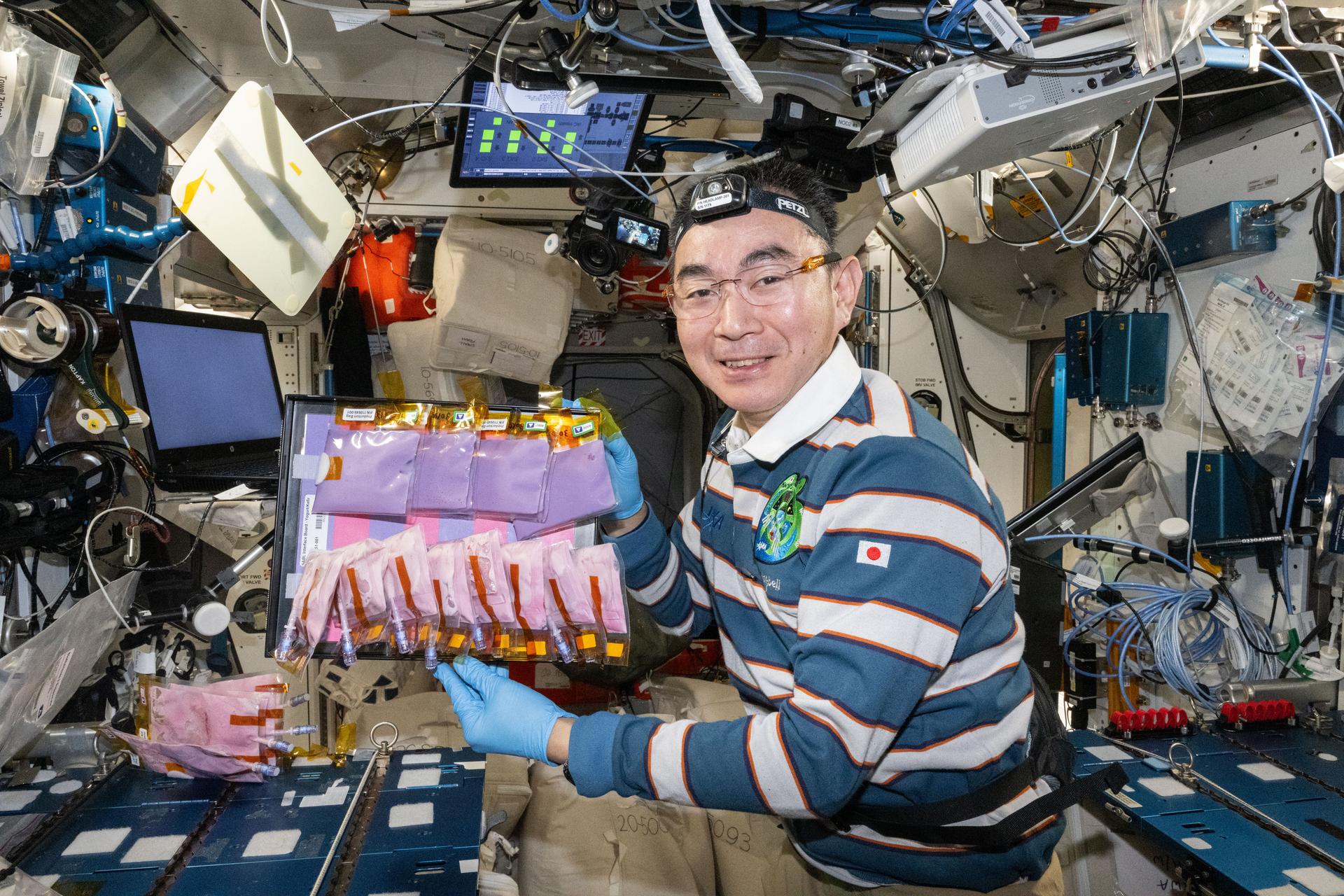
JAXA (Japan Aerospace Exploration Agency) astronaut Kimiya Yui holds yogurt bags produced aboard the International Space Station that could provide important nutrients during missions far from Earth. Certain nutrients degrade when stored for long periods of time, and deficiency in even one can lead to illness. Researchers are building on previous experiments to develop a method for producing on-demand vitamins and nutrients in space using microorganisms.
Learn more about BioNutrients-3.
Celebrating a historic milestone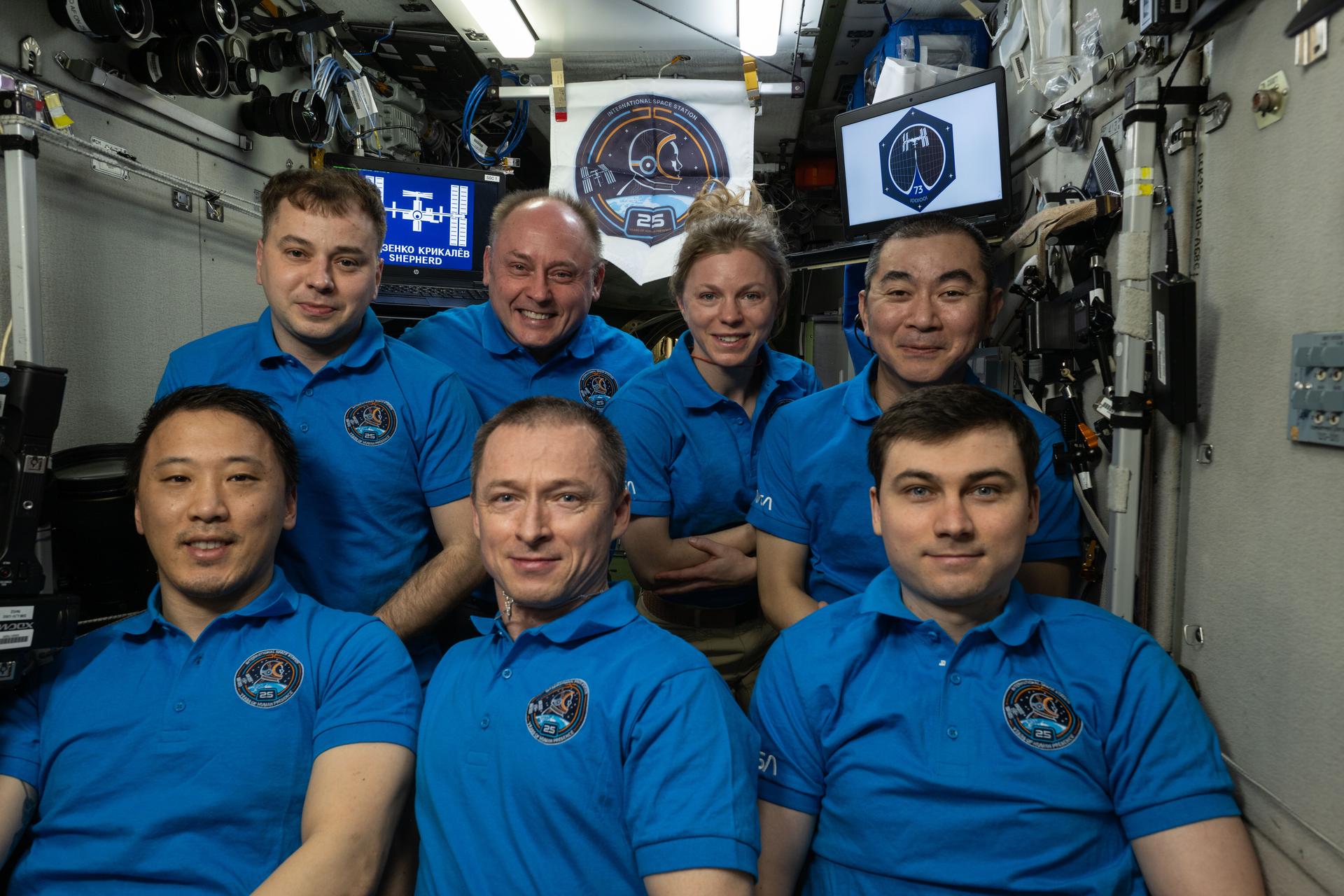
The Expedition 73 crew poses for a portrait to commemorate 25 years of continuous human presence aboard the International Space Station. In the front row from left, NASA astronaut Jonny Kim, Roscosmos cosmonaut Sergey Ryzhikov, and Roscosmos cosmonaut Alexey Zubritsky. In the back row, Roscosmos cosmonaut Oleg Platonov, NASA astronauts Mike Fincke and Zena Cardman, and JAXA (Japan Aerospace Exploration Agency) astronaut Kimiya Yui.
A truly global endeavor, the space station has been visited by more than 290 people from 26 countries, along with a variety of international and commercial spacecraft. Since the first crew arrived, NASA and its partners have conducted thousands of research investigations and technology demonstrations to advance exploration of the Moon and Mars and benefit life on Earth.
Share Details Last Updated Jan 16, 2026 Related Terms Keep Exploring Discover More Topics From NASAInternational Space Station
Space Station Research and Technology Resources
Space Station Research Results
Latest News from Space Station Research
NASA’s SpaceX Crew-11 Wraps Up Space Station Science
NASA’s SpaceX Crew-11 mission with agency astronauts Zena Cardman and Mike Fincke, JAXA (Japan Aerospace Exploration Agency) astronaut Kimiya Yui, and Roscosmos cosmonaut Oleg Platonov returned to Earth after a long-duration mission aboard the International Space Station.
During their stay, Cardman, Fincke, and Yui contributed more than 850 hours of research to help prepare humanity for the return to the Moon and future missions to Mars, while improving life back on Earth.
Here’s a glimpse into the science completed during the Crew-11 mission:
Bolstering bone resilienceNASA astronaut Zena Cardman works with bone stem cells aboard the International Space Station to improve our understanding of how bone loss occurs during spaceflight. Studying bone cell activity in microgravity could help researchers learn how to control bone loss to protect astronauts’ bone density during future long-duration space missions and inform treatments for diseases like osteoporosis on Earth.
Learn more about MABL-B.
Observing Earth and beyondJAXA (Japan Aerospace Exploration Agency) astronaut Kimiya Yui photographs the Earth from the International Space Station’s cupola. For more than 40 years, astronauts have used hand-held cameras to capture millions of images documenting Earth’s geographic features, weather patterns, urban growth, changes to its surface, and the impacts of natural disasters such as hurricanes and floods.
Astronauts also use the cupola and other viewports aboard the space station to gaze into the cosmos without Earth’s atmospheric interference. Just as viewing Earth from 250 miles above provides a new perspective on our home planet, looking out into the stars from the orbiting laboratory offers a clearer view of our universe.
Space catchNASA astronaut Mike Fincke poses aboard the International Space Station with a new device designed to test an inflatable capture bag’s ability to open, close, and stay airtight in microgravity. This technology could be used to remove space debris from orbit, protecting future spacecraft and crew members. It also may enable trapping samples during exploration missions and support the capture and mining of small asteroids.
Learn more about Capture Bag Demo.
Tracking internal temperatureNASA astronaut Mike Fincke wears a temperature-monitoring headband that tracks how the human body regulates its core temperature during spaceflight. Adjusting to living and working aboard the International Space Station can influence human temperature regulation. This headband provides an easy, non-invasive way to collect temperature data while astronauts conduct their daily activities. The sensor is also being tested on Earth and may help prevent hyperthermia in people working in high-temperature environments.
Learn more about T-Mini.
A new cargo vehicleJAXA’s (Japan Aerospace Exploration Agency) new cargo resupply spacecraft, HTV-X1, is shown after being captured by the International Space Station’s Canadarm2 robotic arm during the Crew-11 mission. The spacecraft launched from Tanegashima Space Center on Oct. 26, 2025, delivering approximately 12,800 pounds of science, supplies, and hardware to the orbital complex. New cargo spacecraft expand the station’s capability to support more research and receive critical supplies.
Making nutrients on demandJAXA (Japan Aerospace Exploration Agency) astronaut Kimiya Yui holds yogurt bags produced aboard the International Space Station that could provide important nutrients during missions far from Earth. Certain nutrients degrade when stored for long periods of time, and deficiency in even one can lead to illness. Researchers are building on previous experiments to develop a method for producing on-demand vitamins and nutrients in space using microorganisms.
Learn more about BioNutrients-3.
Celebrating a historic milestoneThe Expedition 73 crew poses for a portrait to commemorate 25 years of continuous human presence aboard the International Space Station. In the front row from left, NASA astronaut Jonny Kim, Roscosmos cosmonaut Sergey Ryzhikov, and Roscosmos cosmonaut Alexey Zubritsky. In the back row, Roscosmos cosmonaut Oleg Platonov, NASA astronauts Mike Fincke and Zena Cardman, and JAXA (Japan Aerospace Exploration Agency) astronaut Kimiya Yui.
A truly global endeavor, the space station has been visited by more than 290 people from 26 countries, along with a variety of international and commercial spacecraft. Since the first crew arrived, NASA and its partners have conducted thousands of research investigations and technology demonstrations to advance exploration of the Moon and Mars and benefit life on Earth.
Share Details Last Updated Jan 16, 2026 Related Terms Keep Exploring Discover More Topics From NASAInternational Space Station
Space Station Research and Technology Resources
Space Station Research Results
Latest News from Space Station Research
Lithium-ion batteries could last longer with chemical tweak
Lithium-ion batteries could last longer with chemical tweak
Kratsios Calls Patchwork State AI Laws ‘Anti-Innovation’ at House Science AI Hearing
The Trump administration’s top science adviser urged the adoption of a single national AI rule book as lawmakers pressed him on who would pay for the build-out
A Controversial U.S. Study of Hepatitis B Vaccines Will Continue in Africa, HHS says
This clinical trial in Guinea-Bissau would withhold vaccination from some babies, sparking ethical concerns
Incredible Cheetah Mummies Show Big Cats Once Roamed the Arabian Peninsula
The naturally mummified remains of dozens of cheetahs hidden deep in caves in Saudia Arabia shed light on where the animals lived in the past, which might inform rewilding efforts
JWST’s ‘Little Red Dots’ May Be ‘Black Hole Stars’
Puzzling red spots in images from the James Webb Space Telescope are probably young supermassive black holes obscured by dense cocoons of gas
Body fat supports your health in surprisingly complex ways
Body fat supports your health in surprisingly complex ways
At 25, Wikipedia Now Faces Its Most Existential Threat—Generative A.I.
Wikipedia had to fight to establish its legitimacy—and now it faces a new existential threat posed by generative AI