

Feed aggregator
Space Out This Summer with Variety of NASA STEM Activities
Summer is “Go” for launch, and NASA has a universe of ways to help you to jump in, explore, and create! Whether you prefer to spend this season fueling your creativity, going outdoors into nature, or daydreaming about your future, NASA offers ways to take your interests to the next level.
Here are some opportunities to level up your skills with NASA STEM this summer.
Rise to Stardance ChallengeFrom Monday, June 1, through Sept. 30, students ages 13 to 18 are invited to flex their creativity in the online Stardance Challenge, a partnership between NASA and the education non-profit Hack Club. Whether you’re into space, coding, hardware, or just love building cool things, this is your chance to work with real NASA mission data from programs like Artemis, the James Webb Space Telescope, and more.
Participants can create anything from code and apps to electronics, circuit boards, models, and simulations. Hack Club will offer peer and expert reviews, prizes, and plenty of opportunities to show off your work. Meanwhile, NASA will provide access to publicly available datasets, mission materials, multimedia, and virtual sessions with subject matter experts who can share insights on space science, engineering, and careers. Ready to start brainstorming? Visit the Hack Club: Stardance Challenge website to explore project options, check out prizes, and RSVP to get a reminder when the challenge opens
NASA Astronaut Megan McArthur is conducting a technology demonstration with Astrobee flying robots.Credit: NASA Go Behind Scenes of NASA Careers
Think NASA is only for astronauts, scientists, and tech experts? Think again. It takes a wide range of professionals and specialists to bring the nation’s aerospace goals to life. Summer is the perfect time to discover how your skills and interests could make a difference at NASA.
Connect directly with NASA experts through online events designed to spark your curiosity and help you explore real STEM career paths. These virtual sessions provide a behind‑the‑scenes look at NASA’s workforce, plus the chance to ask questions.
- Tuesday, June 2: NASA’s Career Technical Education Day at Goddard Space Flight Center dives into robotics, AI, autonomous systems, and the skilled technical careers that keep NASA missions running. Register by May 26.
- Thursday, June 11: Virtual Career Connection: Aviation Technology and Maintenance introduces you to aircraft mechanics and technicians who support NASA’s flight programs and explores pathways into aviation technology careers. Register by June 2.
Looking for more? Check out the Next Gen STEM for Careers web page for videos, articles, and more ways to learn about the variety of jobs at NASA.
Noctilucent clouds seen from Fairbanks, Alaska.Credit: Patrick Cobb – Photovoltaic designer, photographer Dive into NASA Research Through Citizen Science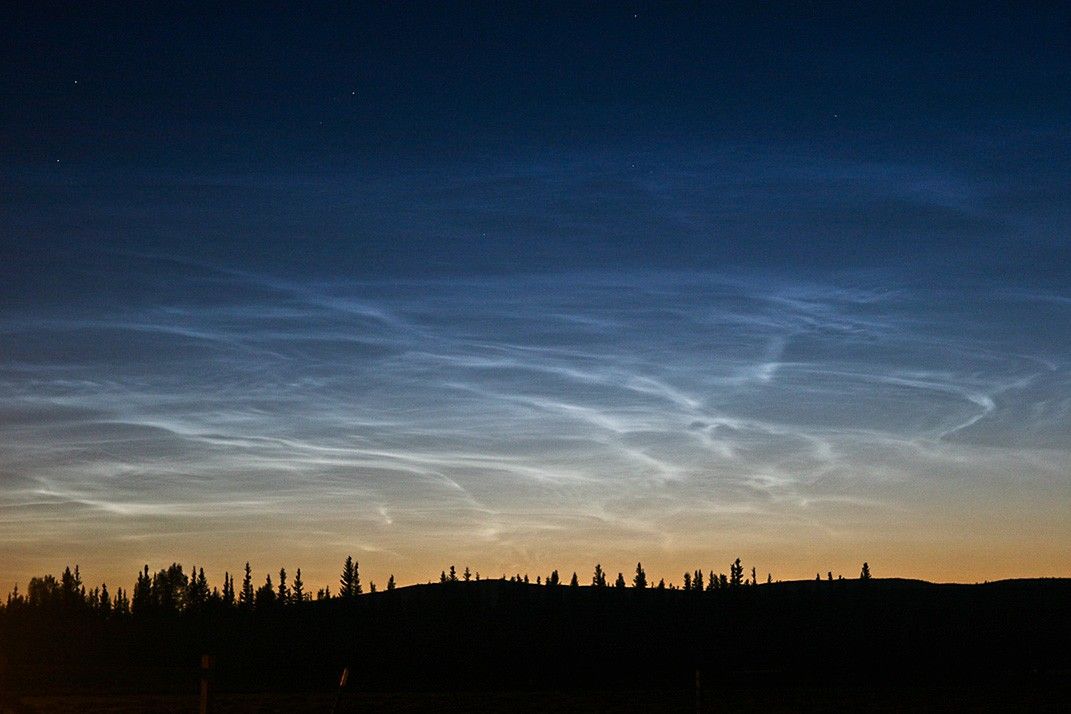
NASA invites people of all ages and backgrounds to do NASA science as a part of real science projects that rely on volunteers. Citizen Science is a great way to make new friends, meet some scientists, and help NASA solve mysteries of the universe this summer – using just a phone or computer. You can join from anywhere, participate on your own schedule, and dive right into real research using actual mission data. Here are two examples:
- Through Space Cloud Watch, you can help NASA study noctilucent clouds. Noctilucent means “night-shining,” and that’s exactly what they do! During summer twilight at high latitudes, these clouds catch sunlight and appear to glow even in a darkened sky. Take a photo and submit a report to help scientists track how these rare clouds are changing.
- Take your cloud‑watching to another planet with Cloudspotting on Mars, where you review real NASA images to identify clouds above the Red Planet and help scientists understand Martian weather.
Curious about what other projects you might enjoy? See all current Citizen Science opportunities available through NASA’s Science Mission Directorate.
No matter how you spend your summer – building projects like the Hack Club’s Stardance Challenge, jumping into real NASA research through citizen science, or exploring possible NASA career paths – there’s a launch pad waiting for you. And remember, NASA’s STEM Resources website is available year-round to serve as your one-stop hub for hands-on activities, videos, articles, and more to spark curiosity and fuel big ideas.
Keep Exploring Discover More Topics From NASAFor Students Grades 9-12
Mobile and Desktop Apps
Games and Interactives
NASA STEM Opportunities and Activities For Students
The spring migration of birds is peaking. Here’s how to watch
The migration of birds from their southern wintering grounds to their breeding grounds in the north is in full swing
Week in images: 27 April - 01 May 2026
Week in images: 27 April - 01 May 2026
Discover our week through the lens
Close-In Planets Act as "Bouncers" to Create Rogue Worlds
Rogue planets sound like rare travelers amongst the stars, freed from the gravitational constraints of a host system, left to forever wander the interstellar void. But modern models suggest these Free Floating Planets (FFPs) as they are technically known, are actually very common - nineteen times more common than planets beyond the “snow line”, which is the distance from the central star where it becomes cold enough that hydrogen compounds like water, ammonia, and methane can condense into ice. But why are FFPs so common? What forces them out of the stellar systems where they form? A new paper from Xiaochen Zheng of the Beijing Planetarium and his co-authors, available in pre-print in arXiv, offers a plausible explanation - planetary “bouncers”.
NHS England rushes to hide software over AI hacking fears
NHS England rushes to hide software over AI hacking fears
The 4 biggest myths about hydration, according to an expert
The 4 biggest myths about hydration, according to an expert
Hubble Spots a Starry Spiral
- Hubble Home
- Overview
- Impact & Benefits
- Science
- Observatory
- Team
- Multimedia
- News
- More
3 min read
Hubble Spots a Starry Spiral This NASA Hubble Space Telescope image features the glittering spiral galaxy NGC 3137, located 53 million light-years away in the constellation Antlia (the Air Pump). ESA/Hubble & NASA, D. Thilker and the PHANGS-HST Team
In this new picture from NASA’s Hubble Space Telescope, a spiral galaxy glittering with star clusters is the center of attention. NGC 3137 is located 53 million light-years away in the constellation Antlia (the Air Pump). As a nearby spiral galaxy, this target offers astronomers an excellent opportunity to study the cycle of stellar birth and death, as well as giving researchers a glimpse of a galactic system similar to our own.
NGC 3137 is of particular interest to astronomers because it travels through space with a group of galaxies that is thought to be similar to the Local Group, the galaxy group that contains our Milky Way. Similar to the Local Group, the NGC 3175 group contains two large spiral galaxies: NGC 3137 and NGC 3175, which Hubble has also observed. In the Local Group, the largest members are the Milky Way galaxy and Andromeda, another spiral galaxy. In addition to two large spiral galaxies, both groups also contain a number of smaller dwarf galaxies, although it’s not yet known how many of these tiny companions the NGC 3175 group has; researchers have found more than 500 dwarf galaxy candidates. By studying this nearby galaxy group, astronomers can learn about the dynamics of our own galactic home.
NGC 3137 is revealed in fantastic detail by Hubble. This image is crafted from observations in six different color bands, creating a view that highlights several facets of this beautiful spiral. The galaxy’s center, which is encircled by a network of fine, dusty clouds, hosts a black hole estimated to be 60 million times more massive than the Sun. NGC 3137 is highly inclined from our point of view, giving a unique perspective on its loose, feathery spiral structure. A couple of photobombing Milky Way stars and a smattering of far more distant background galaxies complete the image.
As stunning as each of these features may be, it’s the galaxy’s brilliant star clusters that steal the show. The galaxy is peppered with dense clusters of bright blue stars and glowing red gas clouds, which signal the presence of hot, young stars still encased in their birth nebulae.
Unsurprisingly, these star clusters are exactly what has drawn Hubble’s keen eye. Researchers are using Hubble to carry out an observing program (#17502; PI: D. Thilker) focusing on star clusters in 55 nearby galaxies. The data collected will help astronomers identify star clusters and the glowing nebulae that surround them, providing a way to measure the ages of stars in galaxies like NGC 3137. These observations give an in-depth view of stellar life in spiral galaxies, from the young stars still in the process of forming to the ancient stellar populations that grew up in the early years of their galactic hosts.
The PHANGS (Physics at High Angular Resolution in Nearby Galaxies)-HST program for which these observations were taken is part of a larger effort by some of the most powerful observatories on (and around) Earth. Hubble contributes greatly to this massive undertaking, which combines Hubble data with observations from the NASA/ESA/CSA James Webb Space Telescope and the Atacama Large Millimeter/submillimeter Array (ALMA). Together, Hubble’s powerful optical and ultraviolet capabilities, Webb’s sensitive infrared eyes, and ALMA’s broad network of radio dishes bring us an unmatched view of star formation in the local universe.
Text credit: ESA/Hubble
Facebook logo @NASAHubble @NASAHubble Instagram logo @NASAHubbleMedia Contact:
Claire Andreoli
NASA’s Goddard Space Flight Center, Greenbelt, MD
claire.andreoli@nasa.gov
Since its 1990 launch, the Hubble Space Telescope has changed our fundamental understanding of the universe.
Hubble’s Galaxies
Hubble Mission Operations
Hubble News
Hubble Spots a Starry Spiral
- Hubble Home
- Overview
- Impact & Benefits
- Science
- Observatory
- Team
- Multimedia
- News
- More
3 min read
Hubble Spots a Starry Spiral This NASA Hubble Space Telescope image features the glittering spiral galaxy NGC 3137, located 53 million light-years away in the constellation Antlia (the Air Pump). ESA/Hubble & NASA, D. Thilker and the PHANGS-HST TeamIn this new picture from NASA’s Hubble Space Telescope, a spiral galaxy glittering with star clusters is the center of attention. NGC 3137 is located 53 million light-years away in the constellation Antlia (the Air Pump). As a nearby spiral galaxy, this target offers astronomers an excellent opportunity to study the cycle of stellar birth and death, as well as giving researchers a glimpse of a galactic system similar to our own.
NGC 3137 is of particular interest to astronomers because it travels through space with a group of galaxies that is thought to be similar to the Local Group, the galaxy group that contains our Milky Way. Similar to the Local Group, the NGC 3175 group contains two large spiral galaxies: NGC 3137 and NGC 3175, which Hubble has also observed. In the Local Group, the largest members are the Milky Way galaxy and Andromeda, another spiral galaxy. In addition to two large spiral galaxies, both groups also contain a number of smaller dwarf galaxies, although it’s not yet known how many of these tiny companions the NGC 3175 group has; researchers have found more than 500 dwarf galaxy candidates. By studying this nearby galaxy group, astronomers can learn about the dynamics of our own galactic home.
NGC 3137 is revealed in fantastic detail by Hubble. This image is crafted from observations in six different color bands, creating a view that highlights several facets of this beautiful spiral. The galaxy’s center, which is encircled by a network of fine, dusty clouds, hosts a black hole estimated to be 60 million times more massive than the Sun. NGC 3137 is highly inclined from our point of view, giving a unique perspective on its loose, feathery spiral structure. A couple of photobombing Milky Way stars and a smattering of far more distant background galaxies complete the image.
As stunning as each of these features may be, it’s the galaxy’s brilliant star clusters that steal the show. The galaxy is peppered with dense clusters of bright blue stars and glowing red gas clouds, which signal the presence of hot, young stars still encased in their birth nebulae.
Unsurprisingly, these star clusters are exactly what has drawn Hubble’s keen eye. Researchers are using Hubble to carry out an observing program (#17502; PI: D. Thilker) focusing on star clusters in 55 nearby galaxies. The data collected will help astronomers identify star clusters and the glowing nebulae that surround them, providing a way to measure the ages of stars in galaxies like NGC 3137. These observations give an in-depth view of stellar life in spiral galaxies, from the young stars still in the process of forming to the ancient stellar populations that grew up in the early years of their galactic hosts.
The PHANGS (Physics at High Angular Resolution in Nearby Galaxies)-HST program for which these observations were taken is part of a larger effort by some of the most powerful observatories on (and around) Earth. Hubble contributes greatly to this massive undertaking, which combines Hubble data with observations from the NASA/ESA/CSA James Webb Space Telescope and the Atacama Large Millimeter/submillimeter Array (ALMA). Together, Hubble’s powerful optical and ultraviolet capabilities, Webb’s sensitive infrared eyes, and ALMA’s broad network of radio dishes bring us an unmatched view of star formation in the local universe.
Text credit: ESA/Hubble
Facebook logo @NASAHubble @NASAHubble Instagram logo @NASAHubbleMedia Contact:
Claire Andreoli
NASA’s Goddard Space Flight Center, Greenbelt, MD
claire.andreoli@nasa.gov
Since its 1990 launch, the Hubble Space Telescope has changed our fundamental understanding of the universe.
Hubble’s Galaxies
Hubble Mission Operations
Hubble News
What is the Kardashev scale, and can we climb it?
The Kardashev scale is an interesting but flawed gauge of a civilization’s growth
What is the AI compute crunch, and why are AI tools hitting usage limits?
Rate limits on Claude and other tools could hint at a deeper squeeze on the chips, power and data centers needed to run advanced AI. Researcher Lennart Heim explains
Oak trees use delaying tactics to thwart hungry caterpillars
Oak trees use delaying tactics to thwart hungry caterpillars
Trump, ibogaine and the science behind the psychedelics boom in the U.S.
Tracing how psychedelics have undergone a revival in the U.S. and what the White House’s new psychedelic push means for research
‘Spectacular’ Viking coin hoard discovery is likely the largest in history
Archaeologists have uncovered around 3,000 silver coins so far—and more could come to light