
Feed aggregator
Backlash builds over NHS plan to hide source code from AI hacking risk
Jeff Bezos’s Blue Origin moon lander completes a crucial test as race with SpaceX heats up
NASA announced that this uncrewed lander, named Endurance, completed vacuum testing on Earth—a key step toward a planned launch later this year
Does a psychedelic trip change your brain? A new study offers a tantalizing clue
Scientists gave people a “heroic” dose of psilocybin and then looked at their brain. Here’s what happened
NASA’S Juno Misson Captures Jupiter Moon Thebe
NASA/JPL-Caltech Photojournal Navigation Downloads NASA’S Juno Misson Captures Jupiter Moon Thebe
JPEG (152.30 KB)
Description
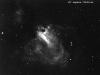
NASA’s Juno spacecraft captured this view of Thebe, the second largest of Jupiter’s inner moons, during a close pass on May 1, 2026. The spacecraft’s Stellar Reference Unit (SRU) captured this image from a distance of approximately 3,100 miles (5,000 kilometers) at a resolution of about 1.9 miles (3 kilometers) per pixel.
Thebe resides at the outer edge of Jupiter’s faint ring system and is believed to play a role in the formation of the planet’s “gossamer” ring through the shedding of dust.
While the SRU’s primary function is to image star fields for navigation, its high sensitivity in low-light conditions makes it a powerful secondary science instrument. The SRU has previously been used to discover “shallow lightning” in Jupiter’s atmosphere and to image the planet’s ring system.
A division of Caltech in Pasadena, California, JPL manages the Juno mission for the principal investigator, Scott J. Bolton, of the Southwest Research Institute in San Antonio. Juno is part of NASA’s New Frontiers Program, which is managed at NASA’s Marshall Space Flight Center in Huntsville, Alabama, for the agency’s Science Mission Directorate in Washington.
For more information about Juno, visit: https://www.nasa.gov/juno
Keep Exploring Discover More Topics From Photojournal
Photojournal
Search Photojournal
Photojournal’s Latest Content
Feedback
NASA’S Juno Misson Captures Jupiter Moon Thebe
NASA/JPL-Caltech Photojournal Navigation Downloads NASA’S Juno Misson Captures Jupiter Moon Thebe
JPEG (152.30 KB)
Description
NASA’s Juno spacecraft captured this view of Thebe, the second largest of Jupiter’s inner moons, during a close pass on May 1, 2026. The spacecraft’s Stellar Reference Unit (SRU) captured this image from a distance of approximately 3,100 miles (5,000 kilometers) at a resolution of about 1.9 miles (3 kilometers) per pixel.
Thebe resides at the outer edge of Jupiter’s faint ring system and is believed to play a role in the formation of the planet’s “gossamer” ring through the shedding of dust.
While the SRU’s primary function is to image star fields for navigation, its high sensitivity in low-light conditions makes it a powerful secondary science instrument. The SRU has previously been used to discover “shallow lightning” in Jupiter’s atmosphere and to image the planet’s ring system.
A division of Caltech in Pasadena, California, JPL manages the Juno mission for the principal investigator, Scott J. Bolton, of the Southwest Research Institute in San Antonio. Juno is part of NASA’s New Frontiers Program, which is managed at NASA’s Marshall Space Flight Center in Huntsville, Alabama, for the agency’s Science Mission Directorate in Washington.
For more information about Juno, visit: https://www.nasa.gov/juno
Keep Exploring Discover More Topics From Photojournal
Photojournal
Search Photojournal
Photojournal’s Latest Content
Feedback
New NASA HEAT Coloring Book Blends Art, Science, and Cultural Perspectives
A new Sun-centered and science-focused coloring book produced by NASA in partnership with the University of Alaska Fairbanks (UAF) is now available for people to learn while showing their artistic side.
The book, titled “Journey Through the Heliosphere: The Sun-Earth System in Color,” has twenty-eight, 11”x14” pages, and includes science facts and coloring pages for ten themes, including the Sun’s magnetic field, the solar wind, the aurora, eclipses, and how the Sun influences Earth. The book’s art and language is designed to engage with and educate students in grades 6-12 and adults. It includes a reference chart of solar terms in seven of Alaska’s many Indigenous languages and features a glossary of scientific terms relating to heliophysics on the last two pages.
Staff from NASA, Oregon State University, the UAF International Arctic Research Center, and the Geophysical Institute’s outreach and design teams collaborated to bring Journey Through the Heliosphere to life over the course of two years. Lynda McGilvary, who leads the Geophysical Institute’s education outreach team, praises this group effort. “It leveraged the strengths of each organization in a way that resulted in something that will support the goal of increasing America’s heliophysics literacy one coloring page at time,” she said. “I think it was a labor of love for us.”
NASA came up with the coloring book idea as part of its Heliophysics Education Activation Team, known as HEAT. HEAT members from NASA and UAF worked together to conceptualize the book and bring the space agency’s science expertise to learners at all levels of knowledge. The book aims to transform the complex system of heliophysics into something that everyone can see, touch and connect with by blending art, science, and cultural perspectives.
The coloring book also had input from 13 Alaska Native language speakers, who shared their cultural knowledge about the Sun. Links within the book connect to the Cultural Connections online pronunciation guide, so users can hear fluent speakers correctly speaking each of the translated words.
McGilvary hopes the coloring book will encourage classroom and community discussions about Alaska’s important linguistic diversity. “We hope that it will lead people to independently seek out and use other languages, especially the heritage languages of their friends and neighbors,” she said.
She also noted the decades-long relationship NASA has with UAF, which brings together cutting-edge science, deep expertise in the Sun–Earth system, and strong connections to Alaska communities. “This coloring book is a tangible reflection of that relationship and the fact that it extends beyond the amazing science that NASA and UAF conduct together,” she said. “It was such a privilege to work with NASA’s heliophysics experts on this publication, and I personally learned so much more about the Sun and our solar system in the process.”
Download the entire coloring book or individual sections of it:
NASA HEAT is part of the NASA Science Activation program, which connects learners of all ages with authentic NASA science content, experts, and experiences. Learn more about how Science Activation connects NASA science experts, real content, and experiences with community leaders to do science in ways that activate minds and promote deeper understanding of our world and beyond: https://science.nasa.gov/learn/about-science-activation/
The title page of the new Coloring Book from NASA HEAT Credit: NASA/UAF
New NASA HEAT Coloring Book Blends Art, Science, and Cultural Perspectives
A new Sun-centered and science-focused coloring book produced by NASA in partnership with the University of Alaska Fairbanks (UAF) is now available for people to learn while showing their artistic side.
The book, titled “Journey Through the Heliosphere: The Sun-Earth System in Color,” has twenty-eight, 11”x14” pages, and includes science facts and coloring pages for ten themes, including the Sun’s magnetic field, the solar wind, the aurora, eclipses, and how the Sun influences Earth. The book’s art and language is designed to engage with and educate students in grades 6-12 and adults. It includes a reference chart of solar terms in seven of Alaska’s many Indigenous languages and features a glossary of scientific terms relating to heliophysics on the last two pages.
Staff from NASA, Oregon State University, the UAF International Arctic Research Center, and the Geophysical Institute’s outreach and design teams collaborated to bring Journey Through the Heliosphere to life over the course of two years. Lynda McGilvary, who leads the Geophysical Institute’s education outreach team, praises this group effort. “It leveraged the strengths of each organization in a way that resulted in something that will support the goal of increasing America’s heliophysics literacy one coloring page at time,” she said. “I think it was a labor of love for us.”
NASA came up with the coloring book idea as part of its Heliophysics Education Activation Team, known as HEAT. HEAT members from NASA and UAF worked together to conceptualize the book and bring the space agency’s science expertise to learners at all levels of knowledge. The book aims to transform the complex system of heliophysics into something that everyone can see, touch and connect with by blending art, science, and cultural perspectives.
The coloring book also had input from 13 Alaska Native language speakers, who shared their cultural knowledge about the Sun. Links within the book connect to the Cultural Connections online pronunciation guide, so users can hear fluent speakers correctly speaking each of the translated words.
McGilvary hopes the coloring book will encourage classroom and community discussions about Alaska’s important linguistic diversity. “We hope that it will lead people to independently seek out and use other languages, especially the heritage languages of their friends and neighbors,” she said.
She also noted the decades-long relationship NASA has with UAF, which brings together cutting-edge science, deep expertise in the Sun–Earth system, and strong connections to Alaska communities. “This coloring book is a tangible reflection of that relationship and the fact that it extends beyond the amazing science that NASA and UAF conduct together,” she said. “It was such a privilege to work with NASA’s heliophysics experts on this publication, and I personally learned so much more about the Sun and our solar system in the process.”
Download the entire coloring book or individual sections of it:
NASA HEAT is part of the NASA Science Activation program, which connects learners of all ages with authentic NASA science content, experts, and experiences. Learn more about how Science Activation connects NASA science experts, real content, and experiences with community leaders to do science in ways that activate minds and promote deeper understanding of our world and beyond: https://science.nasa.gov/learn/about-science-activation/
The title page of the new Coloring Book from NASA HEAT Credit: NASA/UAFA decade of research reveals harms of ‘fitspiration’ content online
The Internet loves fitness-motivation content. Olympian and researcher Valerie Gruest explains why it can be so harmful
Where has the deadly hantavirus come from and how does it spread?
Where has the deadly hantavirus come from and how does it spread?
Hantavirus: Where has the deadly cruise ship outbreak come from?
Hantavirus: Where has the deadly cruise ship outbreak come from?
Drones Scanning Earth's Glaciers Are Paving the Way for Future Mars Helicopters
Mars has lots of glaciers located along its mid-latitudes. We’ve known this for years thanks to the Mars Reconnaissance Orbiter’s (MRO’s) SHARAD sounder. But, despite all of the excellent data it’s managed to gather, SHARAD doesn’t have high enough resolution to accurately measure the boundary between the glacier itself and the rocky material that has been deposited on top of it over the course of billions of years. A new study, published in the journal JGR Planets, details a potential method of finding that boundary—by using a drone.
How scientists made the discoveries behind a game-changing gene therapy for sickle cell disease and won a $3-million Breakthrough Prize
Stuart Orkin and Swee Lay Thein shared a Breakthrough Prize in Life Sciences for their research on genetic causes of sickle cell disease and beta-thalassemia that set the stage for approved gene therapies. The treatments are not accessible to everyone, though
Woman in cancer remission without treatment in highly unusual case
Woman in cancer remission without treatment in highly unusual case
Humpback whales sometimes hang out with their mouth open, baffling scientists
Scientists are trying to decode why humpback whales can be observed hanging around with their mouth open, with no apparent explanation