
Feed aggregator
NASA Shares SpaceX Crew-13 Assignments for Space Station Mission

As part of NASA’s SpaceX Crew-13 mission, four crew members from three space agencies will launch no earlier than mid-September to the International Space Station for a long-duration science expedition.
NASA astronauts Jessica Watkins and Luke Delaney will serve as spacecraft commander and pilot, respectively. They will be joined by CSA (Canadian Space Agency) astronaut Joshua Kutryk and Roscosmos cosmonaut Sergey Teteryatnikov, who will serve as mission specialists. After arriving at the orbiting laboratory, Crew-13 will become members of the space station’s Expedition 75.
This flight is the 13th crew rotation with SpaceX to the space station as part of NASA’s Commercial Crew Program. NASA is advancing the launch date of Crew-13 from November to help increase the frequency of U.S. crew rotation missions to the space station. The crew will conduct scientific investigations and technology demonstrations to help prepare humans for future exploration missions to the Moon and Mars, and benefit people on Earth.
This will be the second flight to the space station for Watkins, who was selected as a NASA astronaut in 2017. Watkins grew up in Lafayette, Colorado, and earned an undergraduate degree in geological and environmental sciences from Stanford University, as well as a doctorate in geology from the University of California, Los Angeles. As a geologist, she studied the Martian surface and was a member of the Curiosity rover science team at NASA’s Jet Propulsion Laboratory in Southern California. Watkins first launched to the space station as a crew member aboard NASA’s SpaceX Crew-4 mission, spending a total of 170 days in space across Expeditions 67/68 in 2022. She will be the first NASA astronaut to launch aboard a SpaceX Dragon spacecraft twice.
Selected as a NASA astronaut in 2021, Delaney earned a bachelor’s degree in mechanical engineering at the University of North Florida and a master’s degree in aerospace engineering at the Naval Postgraduate School. The Florida native is a distinguished naval aviator who participated in exercises throughout the Asia Pacific region and conducted missions in support of Operation Enduring Freedom. As a test pilot, Delaney evaluated developmental aircraft systems and served as a test pilot instructor. He also worked as a research pilot at NASA’s Langley Research Center in Hampton, Virginia, where he supported airborne science missions. This is the first spaceflight for Delaney.
The Crew-13 mission also is the first spaceflight for Kutryk. Prior to his selection as a CSA astronaut in 2017, he served as a CF-18 fighter pilot, flying missions in support of Canada’s NATO, U.N., and North American Aerospace Defense Command commitments. A native of Fort Saskatchewan, Alberta, Kutryk also worked as an experimental and operational test pilot at the Aerospace Engineering Test Establishment in Cold Lake, Alberta. Kutryk received a bachelor’s degree in mechanical engineering from the Royal Military College of Canada in Kingston, Ontario, and he is a distinguished graduate of the United States Air Force Test Pilot school in Edwards, California. He has master’s degrees in space studies, flight test engineering, and defense studies.
Crew-13 will be Teteryatnikov’s first trip to the orbiting laboratory. He graduated from the Naval Academy, St. Petersburg, Russia, in 2011 as an engineer specializing in ship power plant operations. Before his selection as a test cosmonaut, Teteryatnikov served in various naval engineering roles, including undersea vessels and specialized engine room operations. He was selected for the Gagarin Research and Test Cosmonaut Training Center Cosmonaut Corps in 2021 and has served as a test cosmonaut since 2023.
For more than 25 years, people have lived and worked continuously aboard the International Space Station, advancing scientific knowledge and making research breakthroughs that aren’t possible on Earth. The space station helps NASA understand and overcome the challenges of human spaceflight, expand commercial opportunities in low Earth orbit, and build on the foundation for long-duration missions to the Moon, as part of the Artemis program, and to Mars.
Learn more about International Space Station research and operations at:
-end-
Joshua Finch / Jimi Russell
Headquarters, Washington
202-358-1100
joshua.a.finch@nasa.gov / james.j.russell@nasa.gov
Anna Schneider / Mary Pfister
Johnson Space Center, Houston
281-483-5111
anna.c.schneider@nasa.gov / mary.m.pfister@nasa.gov
This Bathtub Ring of Minerals is More Evidence for an Ancient Warm, Wet Mars
NASA's MSL Curiosity rover found a bathtub ring-like deposit of zinc, manganese, and iron in Gale Crater. These metals precipitate out of water in the right conditions, and there's not really any other way they could've become concentrated here. Adding to the excitement, these deposits also form in lakes on Earth, where the concentrated metals are food for some types of bacteria.
NASA Kennedy Prepares Facility for Roman Space Telescope Arrival
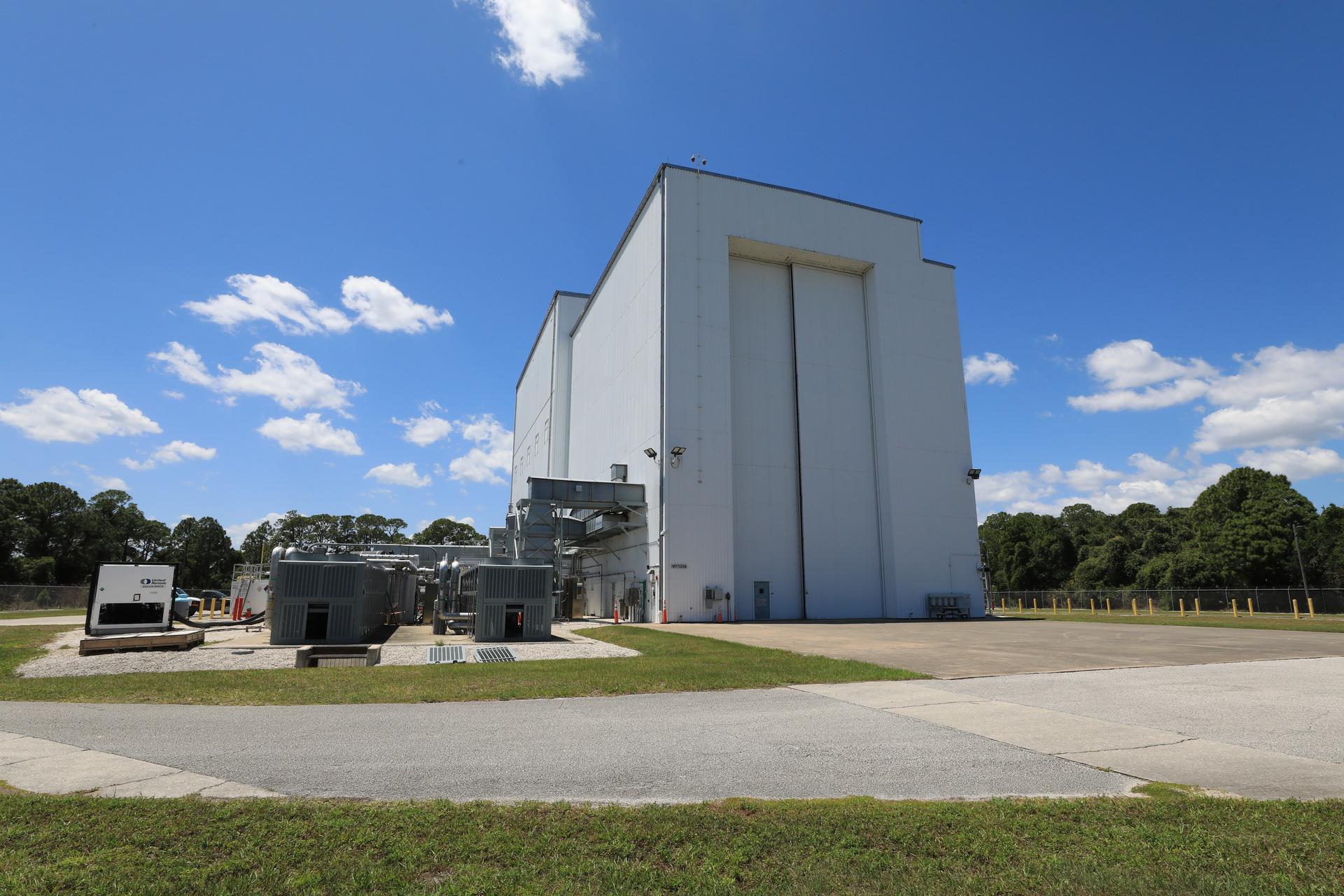
Preparations are underway for launch of NASA’s Nancy Grace Roman Space Telescope as soon as early September on a SpaceX Falcon Heavy rocket from Launch Complex 39A at NASA’s Kennedy Space Center in Florida. The Roman space telescope will provide deep, panoramic views of the cosmos, generating never-before-seen pictures that will revolutionize our understanding of the universe. Before Roman arrives at the launch pad, however, the telescope will complete final inspections, checkouts, and fueling at NASA Kennedy’s Payload Hazardous Servicing Facility (PHSF).
The 40-year-old facility is a dedicated dual-use complex for clean room and hazardous material operations, where numerous spacecraft have undergone final prelaunch processing including receiving, integration, testing, and encapsulation ahead of liftoff. NASA’s Launch Services Program, based at NASA Kennedy, manages the launch service for the Roman mission.
To prepare for Roman’s arrival, the program oversaw several upgrades to the PHSF. This included replacing its air-shower system, a small entry chamber that blasts high-velocity HEPA-filtered air onto people and equipment before they enter a clean room.
“Roman is a very sensitive spacecraft. NASA is always pushing the boundaries of how precise our instruments can be, and the result of that is they need to be very well cared for while they’re being processed at the PHSF,” said Ryan Boehmer, launch site integration manager with the Launch Services Program at NASA Kennedy. “One of the biggest sources of contamination for a spacecraft is people.”
The PHSF is a clean work area, so the facility must be free of any contamination that could negatively impact the Roman spacecraft. Technicians must dress in a protective suit before using the air shower, which sprays air to reduce any particles carried on clothing or equipment and keeps the spacecraft’s environment in the facility as clean and contamination-free as possible.
Dust, debris, or even a piece of hair can interfere with a spacecraft and its instruments as it gathers crucial science data in orbit. The facility is certified to the International Organization for Standardization (ISO) ISO class 8 clean room standards but can exceed that with augmentation. The team is planning to use a HEPA filtration wall to achieve ISO class 7 standards required for Roman.
This image shows the recently upgraded air showers which blast high-velocity HEPA-filtered air onto people before they enter a clean room at NASA’s Payload Hazardous Servicing Facility at the agency’s Kennedy Space Center in Florida on Friday, Feb. 27, 2026. NASA/Kim Shiflett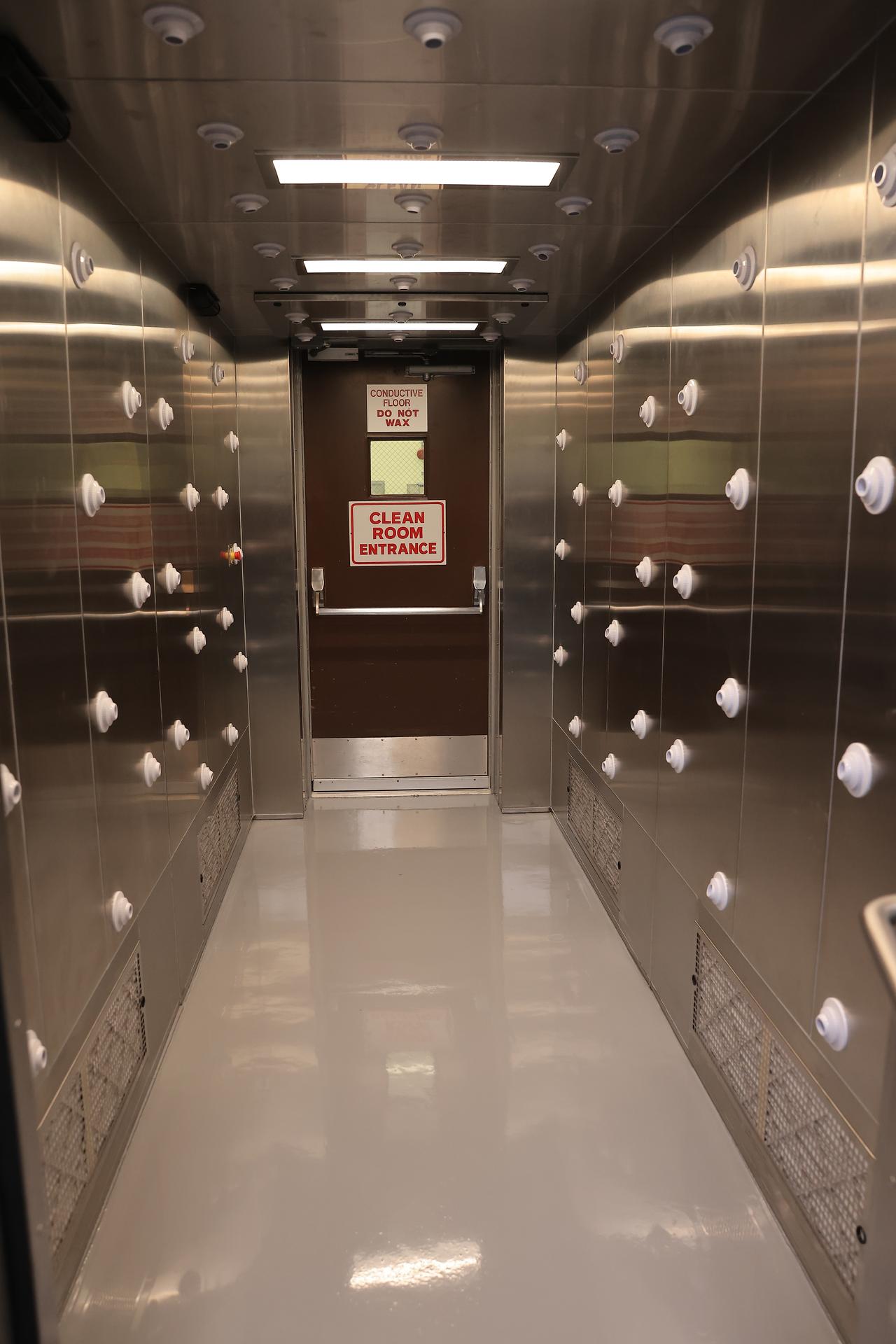
Another PHSF upgrade is its HVAC system, which is far more advanced than a typical residential system. The goal of this upgrade is to replace the facility’s chiller coils to ensure the airlock and clean room remain climate-controlled with backups available if one fails. Additional updates include the compressed-air system’s pressure tank, air dryer, and regulator panel to supply clean, reliable compressed air to slide hardware around the floor – like an air hockey table but on a much larger scale. Massive volumes of filtered air circulate through the facility to prevent outside contaminants from entering the building.
“Another consideration we have is keeping both the spacecraft and people working on it at comfortable temperatures during processing, especially given Florida’s hot and humid environment,” said Genevieve Futch, Launch Services Program mission manager for Roman at NASA Kennedy. “Throughout processing, teams are powering on spacecraft for testing, which can generate heat. All the technicians in the clean room wear significant amounts of protective garments that trap heat, so we rely on the PHSF’s HVAC to reliably maintain the facility’s environment. We don’t want to overheat either the hardware or our team.”
Inside, the temperature is kept around 70° F with a maximum relative humidity of 60% and minimum humidity requirement of 30%. Too much humidity can lead to corrosion, while too little can create static electricity. The team constantly monitors the conditions to ensure the spacecraft’s safety.
Workers also repainted the facility’s 15-ton bridge crane, which is used to lift spacecraft hardware, but not for aesthetic reasons. The new paint helps prevent any paint chips from becoming foreign object debris, commonly referred to as FOD. All the teams working on Roman aim to mitigate even microscopic particles from contaminating the spacecraft. Paint chips are larger and heavier than some of the smallest contaminants, but they could still become airborne debris that can settle on hardware, causing mechanical interference and degrading performance. Removing all potential sources of contamination is part of the launch site planning and reflects the attention to detail required to launch a spacecraft.
Roman will undergo several prelaunch operations, including thermal protection closeout, cleaning, solar array work, and loading hydrazine propellant. The PHSF is one of the very few facilities where spacecraft undergo both hazardous fueling operations and delicate contamination control procedures.
Continuing legacyThe PHSF began operations in 1986 during the Space Shuttle Program, where it supported processing for several major shuttle payloads, including missions supporting NASA’s Hubble Space Telescope. Since 1998, the Launch Services Program has managed 16 launches processed at the PHSF, beginning with the program’s first mission, NASA’s Deep Space 1. Other missions include Mars 2020 Perseverance Rover, NASA’s Europa Clipper spacecraft, and soon to be Roman.
September 1998In the Payload Hazardous Servicing Facility, workers maneuver Deep Space 1 into place to attach the solar panels.NASA April 2009Crew members conduct equipment and procedure familiarization on parts of the payload in the Payload Hazardous Servicing Facility in preparation for their mission to service NASA’s Hubble Space Telescope. NASA/Kim Shiflett January 2020Mars 2020 lift activities in Payload Hazardous Servicing Facility.NASA/Kim Shiflett August 2024Technicians tested deploying a set of massive solar arrays measuring about 46.5 feet (14.2 meters) long and about 13.5 feet (4.1 meters) high for NASA’s Europa Clipper spacecraft inside the agency’s Payload Hazardous Servicing Facility. NASA/Kim Shiflett“We have the responsibility for ensuring the highest practical probability of launch success for these incredibly sophisticated and delicate spacecrafts,” said Boehmer. “We’re a common thread combining the capabilities of commercial rockets with NASA’s scientific spacecraft, and we have experience supporting the processing of everything from space telescopes to Mars rovers to deep space probes in this building.”
Roman will work in collaboration with NASA’s James Webb Space Telescope and Hubble. It is a survey mission with a field of view 100 times larger than Webb and up to 200 times larger than Hubble. Roman’s wide view will help answer essential questions about dark energy, exoplanets, and astrophysics, while Webb can follow up on rare objects Roman discovers, looking at them in greater detail.
“I think it’s human nature to wonder about what is out there in space,” said Boehmer. “I believe when we start getting images from Roman and see more of the universe than ever before, people will connect to that feeling of wonder.”
NASA Kennedy Prepares Facility for Roman Space Telescope Arrival
Preparations are underway for launch of NASA’s Nancy Grace Roman Space Telescope as soon as early September on a SpaceX Falcon Heavy rocket from Launch Complex 39A at NASA’s Kennedy Space Center in Florida. The Roman space telescope will provide deep, panoramic views of the cosmos, generating never-before-seen pictures that will revolutionize our understanding of the universe. Before Roman arrives at the launch pad, however, the telescope will complete final inspections, checkouts, and fueling at NASA Kennedy’s Payload Hazardous Servicing Facility (PHSF).
The 40-year-old facility is a dedicated dual-use complex for clean room and hazardous material operations, where numerous spacecraft have undergone final prelaunch processing including receiving, integration, testing, and encapsulation ahead of liftoff. NASA’s Launch Services Program, based at NASA Kennedy, manages the launch service for the Roman mission.
To prepare for Roman’s arrival, the program oversaw several upgrades to the PHSF. This included replacing its air-shower system, a small entry chamber that blasts high-velocity HEPA-filtered air onto people and equipment before they enter a clean room.
“Roman is a very sensitive spacecraft. NASA is always pushing the boundaries of how precise our instruments can be, and the result of that is they need to be very well cared for while they’re being processed at the PHSF,” said Ryan Boehmer, launch site integration manager with the Launch Services Program at NASA Kennedy. “One of the biggest sources of contamination for a spacecraft is people.”
The PHSF is a clean work area, so the facility must be free of any contamination that could negatively impact the Roman spacecraft. Technicians must dress in a protective suit before using the air shower, which sprays air to reduce any particles carried on clothing or equipment and keeps the spacecraft’s environment in the facility as clean and contamination-free as possible.
Dust, debris, or even a piece of hair can interfere with a spacecraft and its instruments as it gathers crucial science data in orbit. The facility is certified to the International Organization for Standardization (ISO) ISO class 8 clean room standards but can exceed that with augmentation. The team is planning to use a HEPA filtration wall to achieve ISO class 7 standards required for Roman.
This image shows the recently upgraded air showers which blast high-velocity HEPA-filtered air onto people before they enter a clean room at NASA’s Payload Hazardous Servicing Facility at the agency’s Kennedy Space Center in Florida on Friday, Feb. 27, 2026. NASA/Kim ShiflettAnother PHSF upgrade is its HVAC system, which is far more advanced than a typical residential system. The goal of this upgrade is to replace the facility’s chiller coils to ensure the airlock and clean room remain climate-controlled with backups available if one fails. Additional updates include the compressed-air system’s pressure tank, air dryer, and regulator panel to supply clean, reliable compressed air to slide hardware around the floor – like an air hockey table but on a much larger scale. Massive volumes of filtered air circulate through the facility to prevent outside contaminants from entering the building.
“Another consideration we have is keeping both the spacecraft and people working on it at comfortable temperatures during processing, especially given Florida’s hot and humid environment,” said Genevieve Futch, Launch Services Program mission manager for Roman at NASA Kennedy. “Throughout processing, teams are powering on spacecraft for testing, which can generate heat. All the technicians in the clean room wear significant amounts of protective garments that trap heat, so we rely on the PHSF’s HVAC to reliably maintain the facility’s environment. We don’t want to overheat either the hardware or our team.”
Inside, the temperature is kept around 70° F with a maximum relative humidity of 60% and minimum humidity requirement of 30%. Too much humidity can lead to corrosion, while too little can create static electricity. The team constantly monitors the conditions to ensure the spacecraft’s safety.
Workers also repainted the facility’s 15-ton bridge crane, which is used to lift spacecraft hardware, but not for aesthetic reasons. The new paint helps prevent any paint chips from becoming foreign object debris, commonly referred to as FOD. All the teams working on Roman aim to mitigate even microscopic particles from contaminating the spacecraft. Paint chips are larger and heavier than some of the smallest contaminants, but they could still become airborne debris that can settle on hardware, causing mechanical interference and degrading performance. Removing all potential sources of contamination is part of the launch site planning and reflects the attention to detail required to launch a spacecraft.
Roman will undergo several prelaunch operations, including thermal protection closeout, cleaning, solar array work, and loading hydrazine propellant. The PHSF is one of the very few facilities where spacecraft undergo both hazardous fueling operations and delicate contamination control procedures.
Continuing legacyThe PHSF began operations in 1986 during the Space Shuttle Program, where it supported processing for several major shuttle payloads, including missions supporting NASA’s Hubble Space Telescope. Since 1998, the Launch Services Program has managed 16 launches processed at the PHSF, beginning with the program’s first mission, NASA’s Deep Space 1. Other missions include Mars 2020 Perseverance Rover, NASA’s Europa Clipper spacecraft, and soon to be Roman.
September 1998In the Payload Hazardous Servicing Facility, workers maneuver Deep Space 1 into place to attach the solar panels.NASA April 2009Crew members conduct equipment and procedure familiarization on parts of the payload in the Payload Hazardous Servicing Facility in preparation for their mission to service NASA’s Hubble Space Telescope. NASA/Kim Shiflett January 2020Mars 2020 lift activities in Payload Hazardous Servicing Facility.NASA/Kim Shiflett August 2024Technicians tested deploying a set of massive solar arrays measuring about 46.5 feet (14.2 meters) long and about 13.5 feet (4.1 meters) high for NASA’s Europa Clipper spacecraft inside the agency’s Payload Hazardous Servicing Facility. NASA/Kim Shiflett“We have the responsibility for ensuring the highest practical probability of launch success for these incredibly sophisticated and delicate spacecrafts,” said Boehmer. “We’re a common thread combining the capabilities of commercial rockets with NASA’s scientific spacecraft, and we have experience supporting the processing of everything from space telescopes to Mars rovers to deep space probes in this building.”
Roman will work in collaboration with NASA’s James Webb Space Telescope and Hubble. It is a survey mission with a field of view 100 times larger than Webb and up to 200 times larger than Hubble. Roman’s wide view will help answer essential questions about dark energy, exoplanets, and astrophysics, while Webb can follow up on rare objects Roman discovers, looking at them in greater detail.
“I think it’s human nature to wonder about what is out there in space,” said Boehmer. “I believe when we start getting images from Roman and see more of the universe than ever before, people will connect to that feeling of wonder.”
Largest-ever octopus was great white shark of invertebrate predators
Largest-ever octopus was great white shark of invertebrate predators
Do you need to worry about Mythos, Anthropic's computer-hacking AI?
Do you need to worry about Mythos, Anthropic's computer-hacking AI?
Wildfire ‘red flag’ warnings in effect for large chunk of the U.S. Here’s what to know
These wildfire warnings are in place up and down the country, from Texas to North Dakota and Minnesota
How do earthquakes end? A seismic 'stop sign' could help predict earthquake risk
When an earthquake rupturing along a fault hits a barrier, it creates a seismic signature called the “stopping phase.” Scientists have isolated this and could use it to better predict earthquake risk
‘Kraken’ fossils show enormous, intelligent octopuses were top predators in Cretaceous seas
Fossil jaws from colossal octopuses place them at the top of a prehistoric marine food chain
The Most Energetic Neutrino Ever Detected Could Be Primordial
Neutrinos are very difficult to detect. And when they are detected, pinpointing their sources is likewise difficult. New research shows that the most energetic neutrino ever detected must have had an extraordinarly energetic source. It could even be primordial.
NASA Welcomes Jordan as 63rd Artemis Accords Signatory
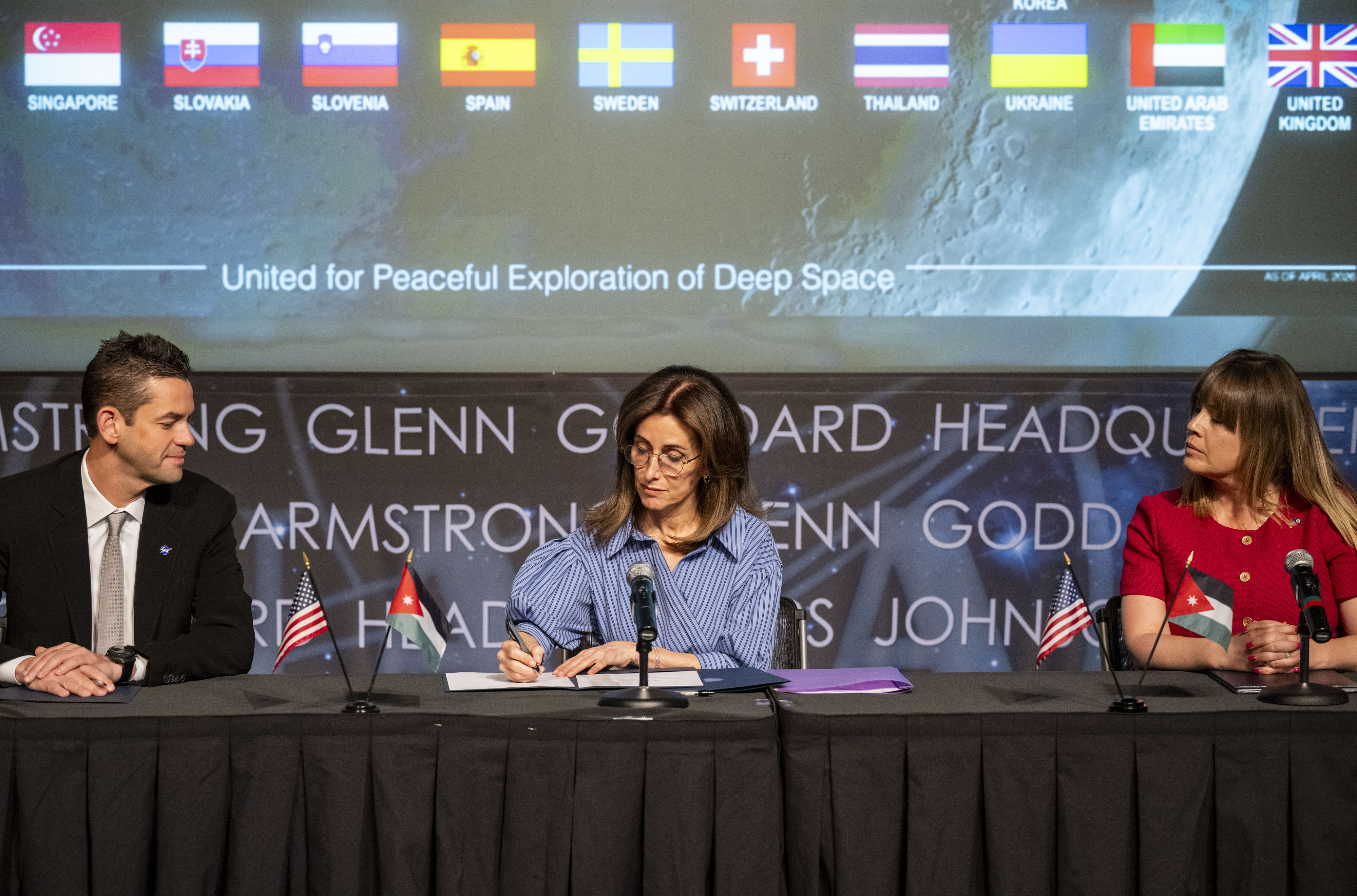
The Hashemite Kingdom of Jordan signed the Artemis Accords Thursday during a ceremony hosted by NASA at the agency’s headquarters in Washington, becoming the latest nation to commit to responsible space exploration to benefit humanity.
“It is my privilege to welcome Jordan as the newest signatory to the Artemis Accords,” said NASA Administrator Jared Isaacman. “By signing the accords today, Jordan brings valuable perspective and capabilities that will help expand the Golden Age of exploration for all mankind. They join at a pivotal moment, as we take the accords principles and put them into practice with humanity’s return to the Moon. Through Artemis, we’re going back to the lunar surface, with contributions from our international partners, to build a Moon Base and to stay.”
Ambassador Dina Kawar of Jordan signed the accords on behalf of the country. U.S. Department of State Acting Principal Deputy Assistant Secretary for Oceans and International Environmental and Scientific Affairs Ruth Perry also participated in the ceremony.
“Jordan has more engineers per capita than almost any country in the world,” said Kawar. “Through the National Council for Future Technologies, His Royal Highness Crown Prince Al Hussein is ensuring that talent has a direction, transforming Jordan into a regional and global technology hub across AI, digital infrastructure, advanced manufacturing, and now space. Today’s signing is proof that this ambition has no ceiling. We invite our American partners to build what comes next with us.”
In 2018, Jordan launched the JY1 satellite, a CubeSat developed by university students. The CubeSat transmitted images and audio from orbit after its launch on a SpaceX Falcon 9 rocket from Vandenberg Space Force Base in California. Jordan’s growing interest in space includes a privately operated analog research facility in Wadi Rum, where the Jordan Space Research Initiative conducted its PETRA1 and PETRA2 missions in 2024 and 2025 to advance human spaceflight and planetary research for real-world benefits on Earth.
In 2020, during the first Trump Administration, the United States, led by NASA and the State Department, joined with seven other founding nations to establish the Artemis Accords, responding to the growing interest in lunar activities by both governments and private companies. The accords introduced the first set of practical principles aimed at enhancing the safety and coordination between like-minded nations as they explore the Moon, Mars, and beyond.
Signing the Artemis Accords means committing to explore peaceably and transparently, to render aid to those in need, to enable access to scientific data that all of humanity can learn from, to ensure activities do not interfere with those of others, and to preserve historically significant sites and artifacts by developing best practices for space exploration for the benefit of all.
More countries are expected to sign the Artemis Accords in the months and years ahead, as NASA continues its work to establish a safe, peaceful, and prosperous future in space.
Learn more about the Artemis Accords at:
https://www.nasa.gov/artemis-accords
Share Details Last Updated Apr 23, 2026 EditorJennifer M. DoorenLocationNASA Headquarters Related TermsNASA Welcomes Jordan as 63rd Artemis Accords Signatory
The Hashemite Kingdom of Jordan signed the Artemis Accords Thursday during a ceremony hosted by NASA at the agency’s headquarters in Washington, becoming the latest nation to commit to responsible space exploration to benefit humanity.
“It is my privilege to welcome Jordan as the newest signatory to the Artemis Accords,” said NASA Administrator Jared Isaacman. “By signing the accords today, Jordan brings valuable perspective and capabilities that will help expand the Golden Age of exploration for all mankind. They join at a pivotal moment, as we take the accords principles and put them into practice with humanity’s return to the Moon. Through Artemis, we’re going back to the lunar surface, with contributions from our international partners, to build a Moon Base and to stay.”
Ambassador Dina Kawar of Jordan signed the accords on behalf of the country. U.S. Department of State Acting Principal Deputy Assistant Secretary for Oceans and International Environmental and Scientific Affairs Ruth Perry also participated in the ceremony.
“Jordan has more engineers per capita than almost any country in the world,” said Kawar. “Through the National Council for Future Technologies, His Royal Highness Crown Prince Al Hussein is ensuring that talent has a direction, transforming Jordan into a regional and global technology hub across AI, digital infrastructure, advanced manufacturing, and now space. Today’s signing is proof that this ambition has no ceiling. We invite our American partners to build what comes next with us.”
In 2018, Jordan launched the JY1 satellite, a CubeSat developed by university students. The CubeSat transmitted images and audio from orbit after its launch on a SpaceX Falcon 9 rocket from Vandenberg Space Force Base in California. Jordan’s growing interest in space includes a privately operated analog research facility in Wadi Rum, where the Jordan Space Research Initiative conducted its PETRA1 and PETRA2 missions in 2024 and 2025 to advance human spaceflight and planetary research for real-world benefits on Earth.
In 2020, during the first Trump Administration, the United States, led by NASA and the State Department, joined with seven other founding nations to establish the Artemis Accords, responding to the growing interest in lunar activities by both governments and private companies. The accords introduced the first set of practical principles aimed at enhancing the safety and coordination between like-minded nations as they explore the Moon, Mars, and beyond.
Signing the Artemis Accords means committing to explore peaceably and transparently, to render aid to those in need, to enable access to scientific data that all of humanity can learn from, to ensure activities do not interfere with those of others, and to preserve historically significant sites and artifacts by developing best practices for space exploration for the benefit of all.
More countries are expected to sign the Artemis Accords in the months and years ahead, as NASA continues its work to establish a safe, peaceful, and prosperous future in space.
Learn more about the Artemis Accords at:
https://www.nasa.gov/artemis-accords
Share Details Last Updated Apr 23, 2026 EditorJennifer M. DoorenLocationNASA Headquarters Related TermsCatching a cold can delay cancer from spreading to the lungs
Catching a cold can delay cancer from spreading to the lungs
Liquid Lifeline: NASA Tech Could Create IV Fluid In Space
4 min read
Preparations for Next Moonwalk Simulations Underway (and Underwater) IVGEN Mini hardware is installed in a replica of the International Space Station’s Life Sciences Glovebox at NASA’s Marshall Space Flight Center in Huntsville, Alabama, in November 2025. The system operates by filtering drinking water on the International Space Station to produce medical-grade IV fluid for use when treating inflight medical conditions.Credit: NASA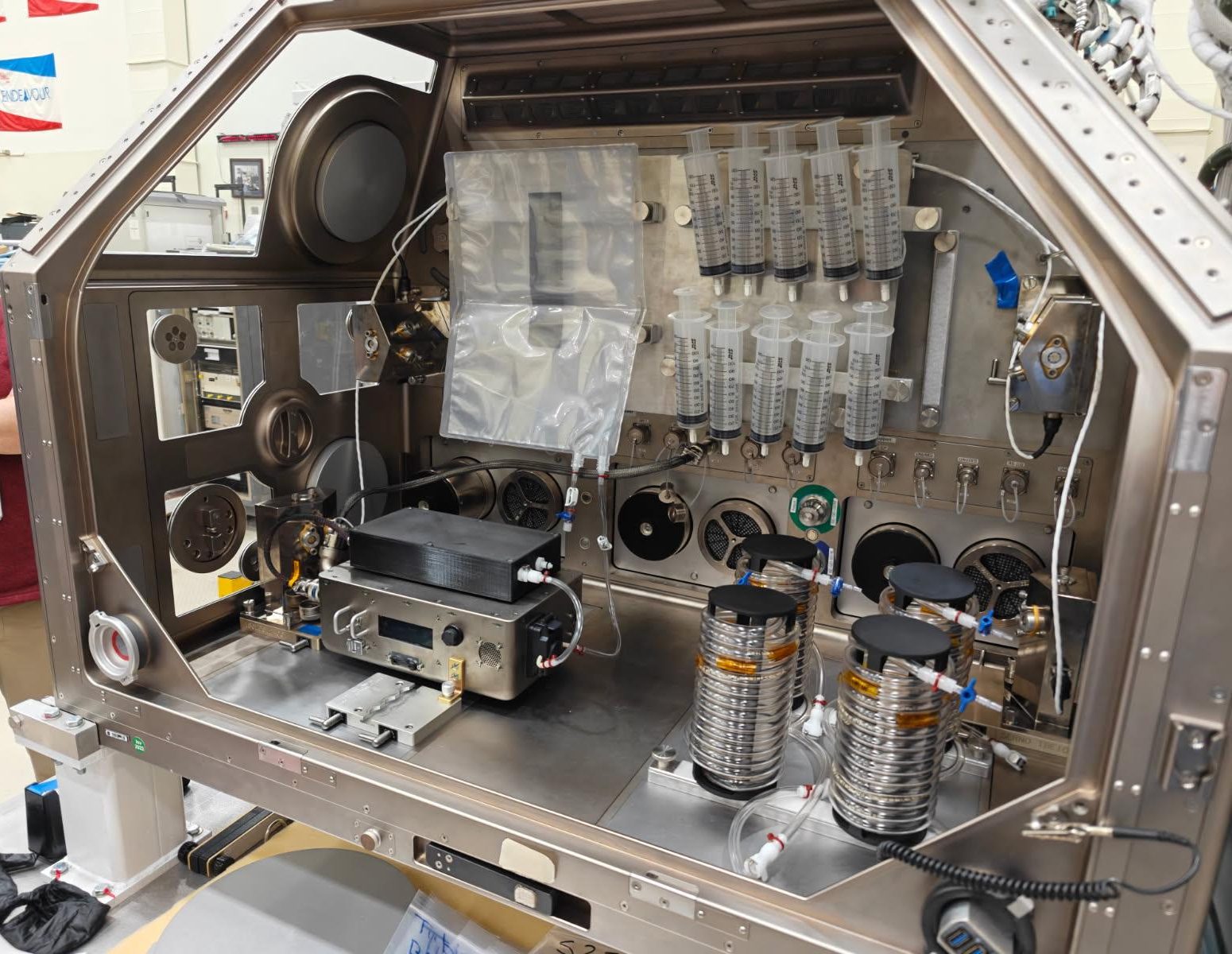
On every crewed mission, NASA packs pouches of a potentially life-saving liquid in its cargo, known as IV (or intravenous) fluid. A simple mix of sodium chloride and purified water, it can treat up to 30% of medical conditions in flight, resolving things like dehydration, burns, and more.
Crewed missions beyond low Earth orbit into deep space could last up to three years and may require IV fluid for crew health. However, current IV fluid shelf life is limited to 16 months. To avoid the complications of stocking a perishable supply of prepacked IV fluid, experts at NASA’s Glenn Research Center in Cleveland have created a technology that can transform water into IV fluid on demand. They now are preparing to test the latest, lightweight version of the system aboard the International Space Station.
The system, known as IntraVenous Fluid GENeration Miniaturized (IVGEN Mini), flew to the station on April 11 aboard NASA’s Northrop Grumman Commercial Resupply Services 24 mission along with other supplies, experiments, and hardware. IVGEN Mini will produce IV fluid during demonstrations this spring and fall to verify that the design works as intended in space.
The system operates by adding space station drinking water to a large supply bag. The bag is connected to IVGEN Mini, which filters the water to remove any particulates and mineral ions. The processed water flows into an output bag that contains premeasured sodium chloride, and the measured combination of both creates sterile, medical-grade IV fluid.
Technicians conduct prelaunch operations on the Northrop Grumman Cygnus XL spacecraft’s pressurized cargo module on Monday, Feb. 23, 2026, inside the Space Systems Processing Facility at NASA’s Kennedy Space Center in Florida. The Cygnus capsule carried supplies, food, and scientific experiments – including IVGEN Mini – for crew members at the International Space Station as part of the company’s 24th cargo resupply mission for NASA on April 11, 2026.Credit: NASA/Kim Shiflett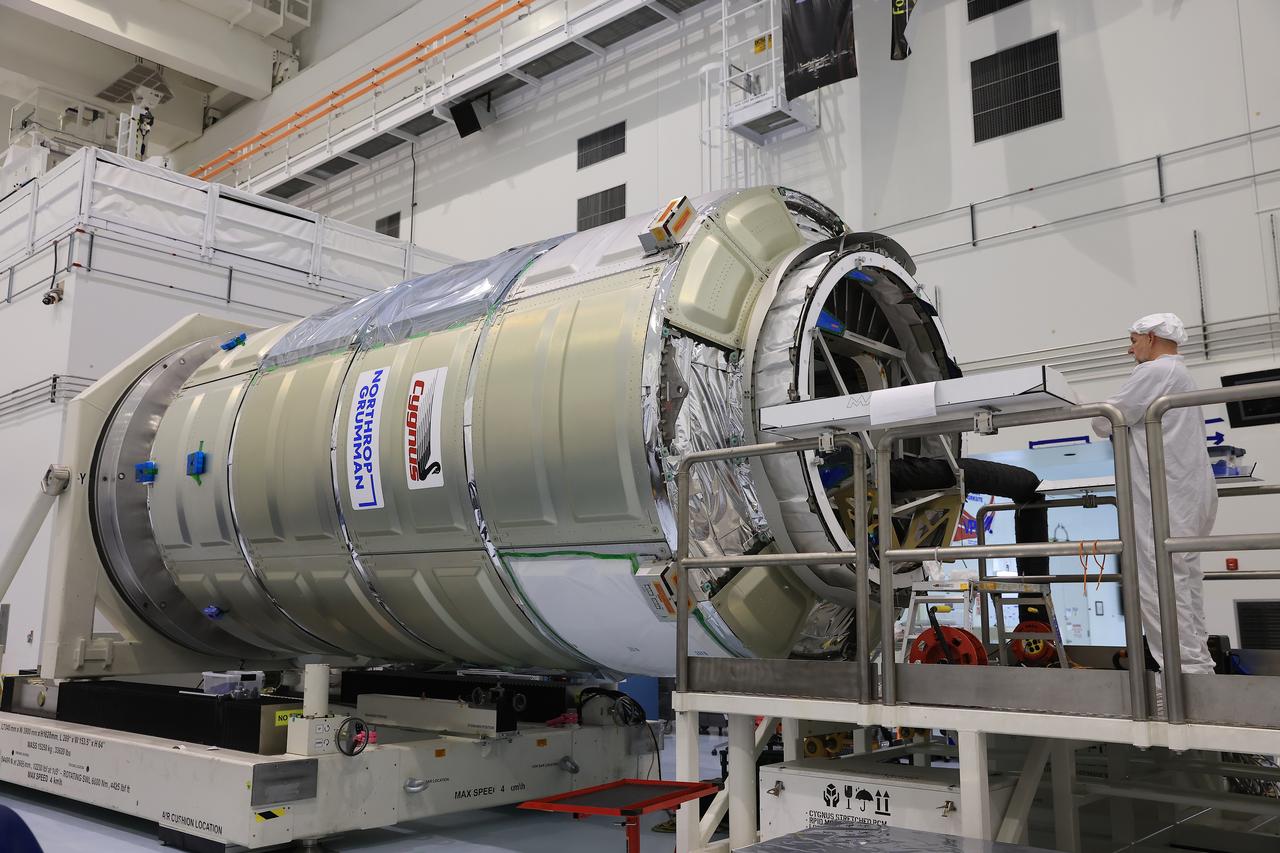
“Following launch, we have tentative operations planned for May,” said Courtney Schkurko, engineering project manager at NASA Glenn. “The crew aboard the International Space Station will operate IVGEN Mini over the course of two days, and 10 liters of fluid will be generated. Those liters will then be prepared to return to Earth and analyzed to make sure the fluid that was generated in flight meets requirements and is safe to use.”
The IVGEN Mini system is the second iteration of this technology, originally called IVGEN, which was demonstrated aboard the space station in 2010. The original was much larger because it included additional sensing equipment to prove that the system worked as intended. Following the successful demonstration, the team created a miniaturized version.
“With IVGEN Mini, we’ve reduced the system’s size and weight,” Schkurko said. “The previous system used gaseous nitrogen to pump fluid through the system. Now, we have pumps that are miniaturized, which allow us to optimize our designs and refine the filtering process.”
In addition to solving the limited shelf life concerns of prepackaged IV fluid, IVGEN Mini also lightens cargo loads. During a deep space mission where crews may spend years in space, cargo must be as lightweight as possible. With IVGEN Mini, NASA won’t need to pack an abundance of IV fluid — it can be produced as needed if supplies run low.
“On a mission to Mars, if you needed to fly 100 liters of IV fluid, those 100 one-liter bags will take up a large amount of space, while IVGEN Mini takes up much less,” Schkurko said. “It’s that trade between packing IV fluid bags that are likely to expire during the mission or taking a small device and making it as you go. The latter means it will always be within expiration period, it will be available to the crew, and it’s one less risk we have to worry about.”
The IVGEN Mini development team poses for a photo in November 2024. The team consists of members from NASA’s Glenn Research Center in Cleveland; Sierra Lobo, Inc.; and NASA’s Johnson Space Center in Houston.Credit: NASA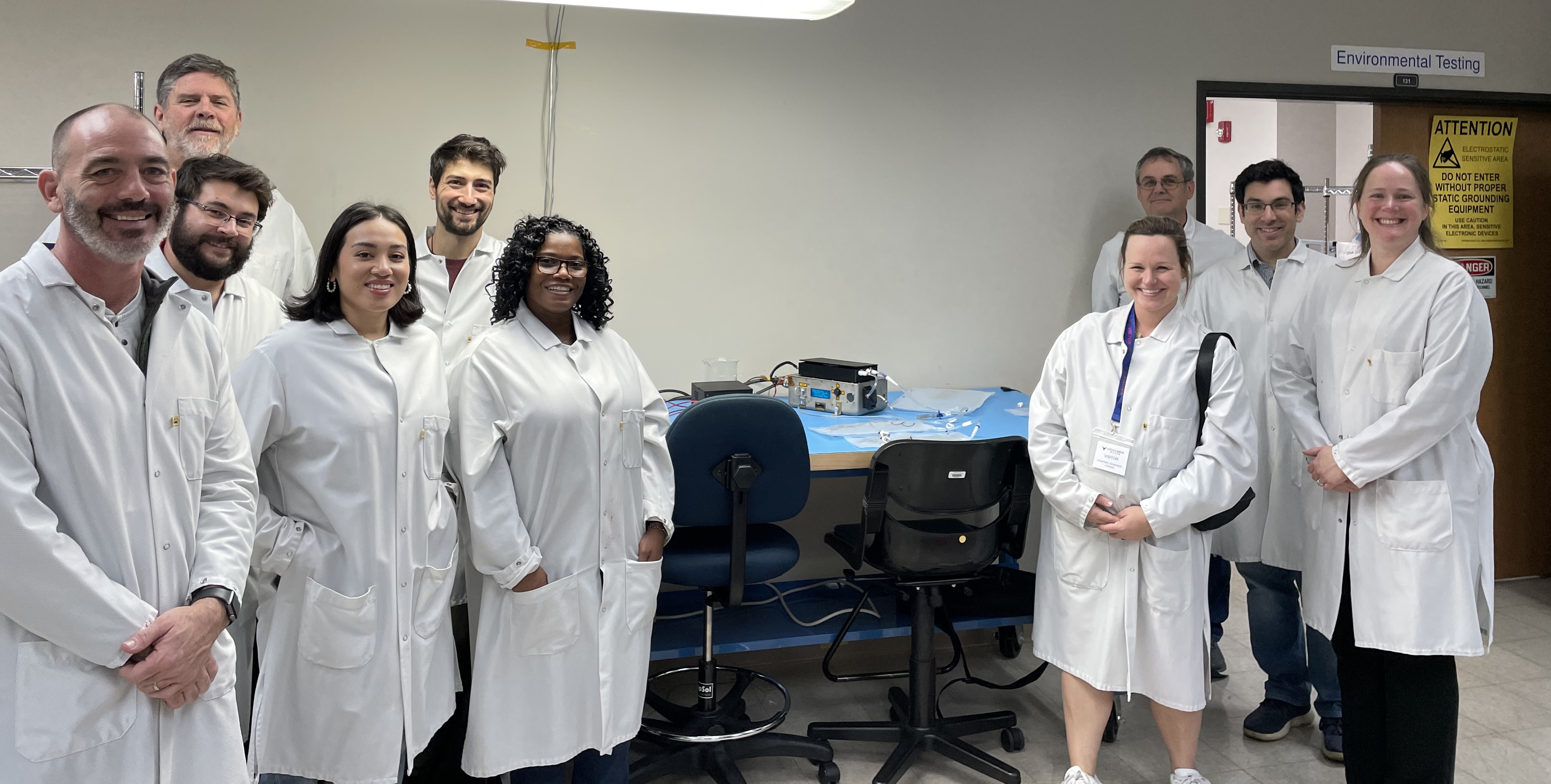
Requirements for IVGEN Mini were based on what medical events could occur during a deep space mission, how much fluid it would take to treat those events, and how quickly the fluid can flow through the system. The current system can produce 1.2 liters of IV fluid per hour, which meets these needs. The team also is adhering to United States Pharmacopeia standards, which ensure the system and the fluid it produces meet required pH values and salinity tolerances, and do not contain bacteria, organic carbon, or particulates. Although IVGEN Mini testing will take place aboard the space station, none of the fluid produced will be administered to the crew.
The IVGEN Mini team is currently planning for shelf-life testing of IV fluid produced by the system as a next phase of this technology. The system is managed by NASA’s Mars Campaign Office as one of the many technologies developed to enable human exploration on the Moon and Mars.
For more information on future innovations for crewed missions to Mars, visit:
https://www.nasa.gov/exploration-systems-development-mission-directorate
Share Details Last Updated Apr 23, 2026 EditorHeather RoeContactShauntina LillyLocationGlenn Research Center Related Terms Explore More 3 min read I Am Artemis: Peter Rossoni Article 1 day ago 8 min read NASA Celebrates Decade of University Innovation in Aeronautics Article 1 day ago 4 min read Johnson Leaders Honored by National Space Club & Foundation Article 2 days ago Keep Exploring Discover Related TopicsMissions
Humans in Space
Climate Change
Solar System
Liquid Lifeline: NASA Tech Could Create IV Fluid In Space
4 min read
Preparations for Next Moonwalk Simulations Underway (and Underwater) IVGEN Mini hardware is installed in a replica of the International Space Station’s Life Sciences Glovebox at NASA’s Marshall Space Flight Center in Huntsville, Alabama, in November 2025. The system operates by filtering drinking water on the International Space Station to produce medical-grade IV fluid for use when treating inflight medical conditions.Credit: NASAOn every crewed mission, NASA packs pouches of a potentially life-saving liquid in its cargo, known as IV (or intravenous) fluid. A simple mix of sodium chloride and purified water, it can treat up to 30% of medical conditions in flight, resolving things like dehydration, burns, and more.
Crewed missions beyond low Earth orbit into deep space could last up to three years and may require IV fluid for crew health. However, current IV fluid shelf life is limited to 16 months. To avoid the complications of stocking a perishable supply of prepacked IV fluid, experts at NASA’s Glenn Research Center in Cleveland have created a technology that can transform water into IV fluid on demand. They now are preparing to test the latest, lightweight version of the system aboard the International Space Station.
The system, known as IntraVenous Fluid GENeration Miniaturized (IVGEN Mini), flew to the station on April 11 aboard NASA’s Northrop Grumman Commercial Resupply Services 24 mission along with other supplies, experiments, and hardware. IVGEN Mini will produce IV fluid during demonstrations this spring and fall to verify that the design works as intended in space.
The system operates by adding space station drinking water to a large supply bag. The bag is connected to IVGEN Mini, which filters the water to remove any particulates and mineral ions. The processed water flows into an output bag that contains premeasured sodium chloride, and the measured combination of both creates sterile, medical-grade IV fluid.
Technicians conduct prelaunch operations on the Northrop Grumman Cygnus XL spacecraft’s pressurized cargo module on Monday, Feb. 23, 2026, inside the Space Systems Processing Facility at NASA’s Kennedy Space Center in Florida. The Cygnus capsule carried supplies, food, and scientific experiments – including IVGEN Mini – for crew members at the International Space Station as part of the company’s 24th cargo resupply mission for NASA on April 11, 2026.Credit: NASA/Kim Shiflett“Following launch, we have tentative operations planned for May,” said Courtney Schkurko, engineering project manager at NASA Glenn. “The crew aboard the International Space Station will operate IVGEN Mini over the course of two days, and 10 liters of fluid will be generated. Those liters will then be prepared to return to Earth and analyzed to make sure the fluid that was generated in flight meets requirements and is safe to use.”
The IVGEN Mini system is the second iteration of this technology, originally called IVGEN, which was demonstrated aboard the space station in 2010. The original was much larger because it included additional sensing equipment to prove that the system worked as intended. Following the successful demonstration, the team created a miniaturized version.
“With IVGEN Mini, we’ve reduced the system’s size and weight,” Schkurko said. “The previous system used gaseous nitrogen to pump fluid through the system. Now, we have pumps that are miniaturized, which allow us to optimize our designs and refine the filtering process.”
In addition to solving the limited shelf life concerns of prepackaged IV fluid, IVGEN Mini also lightens cargo loads. During a deep space mission where crews may spend years in space, cargo must be as lightweight as possible. With IVGEN Mini, NASA won’t need to pack an abundance of IV fluid — it can be produced as needed if supplies run low.
“On a mission to Mars, if you needed to fly 100 liters of IV fluid, those 100 one-liter bags will take up a large amount of space, while IVGEN Mini takes up much less,” Schkurko said. “It’s that trade between packing IV fluid bags that are likely to expire during the mission or taking a small device and making it as you go. The latter means it will always be within expiration period, it will be available to the crew, and it’s one less risk we have to worry about.”
The IVGEN Mini development team poses for a photo in November 2024. The team consists of members from NASA’s Glenn Research Center in Cleveland; Sierra Lobo, Inc.; and NASA’s Johnson Space Center in Houston.Credit: NASARequirements for IVGEN Mini were based on what medical events could occur during a deep space mission, how much fluid it would take to treat those events, and how quickly the fluid can flow through the system. The current system can produce 1.2 liters of IV fluid per hour, which meets these needs. The team also is adhering to United States Pharmacopeia standards, which ensure the system and the fluid it produces meet required pH values and salinity tolerances, and do not contain bacteria, organic carbon, or particulates. Although IVGEN Mini testing will take place aboard the space station, none of the fluid produced will be administered to the crew.
The IVGEN Mini team is currently planning for shelf-life testing of IV fluid produced by the system as a next phase of this technology. The system is managed by NASA’s Mars Campaign Office as one of the many technologies developed to enable human exploration on the Moon and Mars.
For more information on future innovations for crewed missions to Mars, visit:
https://www.nasa.gov/exploration-systems-development-mission-directorate
Share Details Last Updated Apr 23, 2026 EditorHeather RoeContactShauntina LillyLocationGlenn Research Center Related Terms Explore More 3 min read I Am Artemis: Peter Rossoni Article 1 day ago 8 min read NASA Celebrates Decade of University Innovation in Aeronautics Article 1 day ago 4 min read Johnson Leaders Honored by National Space Club & Foundation Article 2 days ago Keep Exploring Discover Related TopicsMissions
Humans in Space
Climate Change
Solar System
NASA Releases Powerful LAVA Software to US Aerospace Industry
4 min read
Preparations for Next Moonwalk Simulations Underway (and Underwater) This simulation of the Artemis I launch generated by NASA’s Launch, Ascent, and Vehicle Aerodynamics (LAVA) framework shows how the Space Launch System rocket’s exhaust plumes interact with the air, water, and the launchpad. Colors on surfaces indicate pressure levels — red for high pressure and blue for low pressure. Teal contours illustrate where water is present.NASA/Chris DeGrendele, Nguyen Ly, François Cadieux, Michael Barad, Emre Sozer, Jared Duensing, Timothy SandstromFor years, NASA engineers have turned to a tool called the Launch, Ascent, and Vehicle Aerodynamics (LAVA) framework to solve airflow challenges that could mean the difference between mission success or failure. When engineers need to know how a spacecraft will navigate re-entry or whether a new aircraft wing design will create enough lift, they turn to LAVA.
NASA recently released this tool to the aerospace community.
LAVA is a computational fluid dynamics software package NASA developed to advance critical aerospace missions, harnessing the agency’s collective expertise. It helps predict how air moves around rockets, aircraft, and spacecraft with stunning accuracy.
The same computational tools simulating Mars landers, predicting launch environments, and optimizing aircraft for efficiency is now available to U.S. researchers, companies, and innovators.
“This isn’t only about releasing software; it’s about accelerating innovation,” said Jared Duensing, LAVA team lead at NASA’s Ames Research Center in California’s Silicon Valley. “When university researchers can run more complex simulations and when small companies can optimize designs with NASA-grade precision, we’re not only sharing tools, we’re unleashing potential.”
This video shows a simulation of the SLS (Space Launch System) rocket using NASA’s Launch Ascent and Vehicle Aerodynamics solver. For the Artemis II test flight, a pair of six-foot-long strakes were added to the core stage of SLS that will smooth vibrations induced by airflow during ascent. The green and yellow colors on the rocket’s surface show how the airflow scrapes against the rocket’s skin. The white and gray areas show changes in air density between the boosters and core stage, with the brightest regions marking shock waves. The strakes reduce vibrations and improve the safety of the integrated vehicle.NASA/Gerrit-Daniel Stich, François Cadieux, Michael Barad, Jared Duensing, Timothy Sandstrom, Derek DalleBig questions, fast answers
NASA has been using computational tools for years to predict how air will move around new aircraft or simulate the thunderous acoustic environment of a rocket launch.
Imagine watching your favorite show on a slow flip-phone versus loading it on a lightning-fast network in crystal-clear 4K high definition. That’s the kind of transformation LAVA brings to aerospace simulations. Complex problems that once took days or weeks now run in hours.
The LAVA software also is compatible with computer hardware employing specialized microprocessors known as graphics processing units (GPUs), which can run many tasks at the same time and reduce power consumption when compared to systems using traditional, more general-purpose central processing units. For traditionally costly simulation methods needed for NASA’s most complex aerospace applications, LAVA has yielded stand-out efficiency on NASA’s flagship GPU-based supercomputer, Cabeus.
But the real breakthrough is how LAVA makes the seemingly impossible routine. Aerospace engineers rely on “scale-resolving simulations” to capture high-fidelity renderings of phenomena that can have profound effects on missions, including pressure waves, turbulent swirls, and acoustic signatures. Those were once resource- and time-consuming. Now, LAVA runs them on modest computing resources, making them readily available and easy to produce, even for novice users.
This video shows a simulation of the flow over a scaled Common Research Model wing using NASA’s Launch Ascent and Vehicle Aerodynamics solver. This video highlights the large region of separated flow on the upper surface of the wing that forms due to the leading-edge ice. Particle tracers are injected near the leading-edge ice and advected downstream. Particles are colored by streamwise velocity, where red indicates lower velocity, and the increasingly lighter blue indicates higher velocity (with white indicating very high velocity).NASA/David Craig Penner, Jeffrey Housman, Timothy A. SandstromAt NASA, engineers have put those capabilities into action to help launch and land spacecraft on the Moon and Mars while driving innovation for the next-generation aircraft. When NASA needed to understand supersonic parachute deployment for Mars missions – something you can’t easily test in Earth’s atmosphere – LAVA provided critical insights.
When engineers had to predict how ice formations would affect aircraft performance, LAVA delivered answers on conditions that are critical for flight safety.
To help astronauts launch safely on Artemis missions, LAVA simulated the launch of Artemis I, enabling engineers to understand the Space Launch System flight environment in detail. Releasing the software means that industry will be able to harness those same capabilities, potentially applying them toward everything from large supersonic airliners to smaller delivery drones and air taxis.
The Launch, Ascent, and Vehicle Aerodynamics (LAVA) team at NASA Ames is developing the capability to simulate supersonic parachute inflation by coupling several physics modules together. It couples computational fluid dynamics for the motion of the air as well as structural dynamics and contact mechanics for the deformation of the parachute. The capability could help reduce risk for upcoming interplanetary missions with atmospheric entry like Dragonfly (Titan) and DaVinci (Venus). The video shows snapshots from the fluid-structure interaction simulation of the third Advanced Supersonic Parachute Inflation Research Experiment (ASPIRE) flight test (SR03) used to validate the approach and develop best practices.NASA/Francois Cadieux, Michael Barad, Timothy SandstromThree approaches, one framework
Most computational fluid dynamics software forces engineers to pick one approach, like being handed a hammer when you need an entire toolbox. The LAVA framework offers three options for generating meshes, or grids of connected dots used to predict the behavior of fluids (including air) in a simulation.
This allows users to switch between the meshes depending on a specific problem or use multiple mesh types to compare predictions. They also can use LAVA alongside other tools for analysis and optimization to improve designs.
Among many other NASA programs and projects, the work on LAVA was supported through NASA’s Transformational Tools and Technologies project, which works to develop new computational tools to help predict aircraft performance. The project is part of NASA’s Transformative Aeronautics Concepts Program under its Aeronautics Research Mission Directorate.
Ready to dive deeper into LAVA? Visit the NASA software catalog for access information and learn more about the tool’s computational capabilities through this seminar about LAVA.
Share Details Last Updated Apr 23, 2026 Related Terms Explore More 4 min read Johnson Leaders Honored by National Space Club & Foundation Article 7 hours ago 4 min read Liquid Lifeline: NASA Tech Could Create IV Fluid In Space Article 14 hours ago 3 min read NASA’s 777 Aircraft Returns Home with Science Flights on the Horizon Article 1 day ago Keep Exploring Discover More Topics From NASAAeronautics
Ames Research Center
Exploration Systems Development Mission Directorate
Space Technology Mission Directorate