
Feed aggregator
Snow Buries Kamchatka
- Earth
- Earth Observatory
- Image of the Day
- EO Explorer
- Topics
- More Content
- About
Snow Buries Kamchatka
- Earth
- Earth Observatory
- Image of the Day
- EO Explorer
- Topics
- More Content
- About
Piercing crocodile close-up wins ecology photo competition
Piercing crocodile close-up wins ecology photo competition
Natural ovulation the best option before an IVF frozen embryo transfer
Natural ovulation the best option before an IVF frozen embryo transfer
NASA’s Artemis II Mission to Fly Legacy Keepsakes with Astronaut Crew
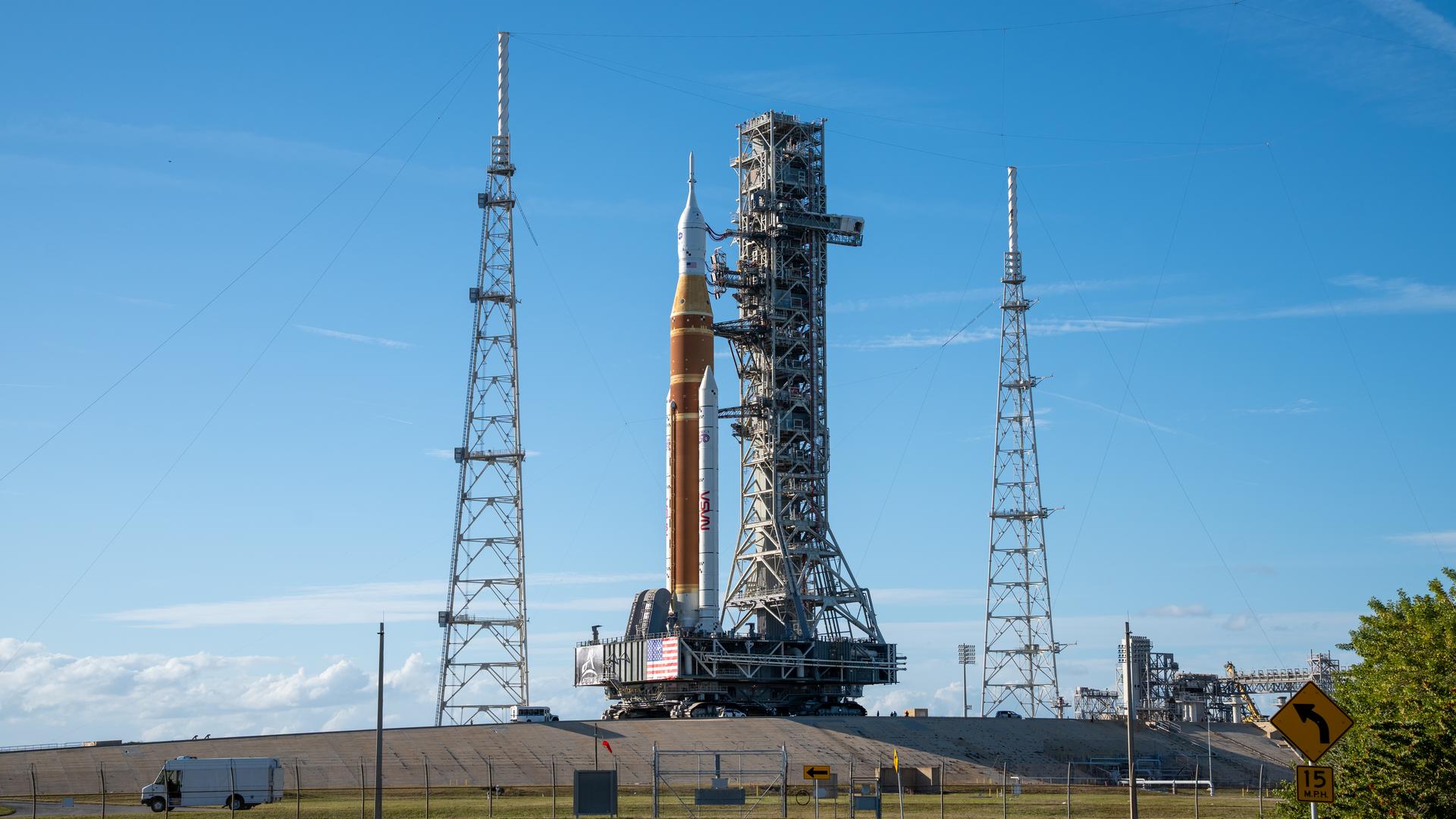
As America approaches its 250th anniversary of declaring independence, NASA’s Artemis II mission will carry a host of mementos that reflect the nation’s long tradition of exploration, innovation, and leadership in its official flight kit. The items will fly aboard the Orion spacecraft, launched on top of the Space Launch System (SLS) rocket, as it carries four astronauts around the Moon on the first crewed test flight of the agency’s Artemis campaign.
“Historical artifacts flying aboard Artemis II reflect the long arc of American exploration and the generations of innovators who made this moment possible,” said NASA Administrator Jared Isaacman. “This mission will bring together pieces of our earliest achievements in aviation, defining moments from human spaceflight, and symbols of where we’re headed next. During America’s 250th anniversary, Orion will carry astronauts around the Moon while also carrying our history forward into the next chapter beyond Earth.”
Selected to honor America’s historic achievements in space, inspire the next generation of explorers, and reinforce U.S. leadership through international cooperation in science and education, the mementos continue a proud tradition carried forward from Artemis I and earlier human spaceflight missions. Together, they highlight the freedom and innovation that have unlocked the Golden Age of human space exploration.
A 1-inch by-1-inch swatch of muslin fabric from the original Wright Flyer the Wright Brothers used to make the first powered flight in 1903 will be flying aboard Artemis II, lent by the Smithsonian’s National Air and Space Museum. A smaller square cut of the swatch previously flew aboard space shuttle Discovery on STS-51D in 1985 and will make its second journey into space. After the mission, the fabric will be reunited with two other 1903 Wright Flyer swatches at the museum, celebrating the nation’s history and innovation in aviation.
Also flying aboard the Artemis II mission will be a 13-by-8-inch American flag, which flew with the first shuttle mission, STS-1, the final shuttle mission, STS-135, and NASA’s first crewed test flight of SpaceX’s Crew Dragon spacecraft, SpaceX Demo-2.
A flag that was set to fly on NASA’s Apollo 18 mission is included in the flight kit and will make its premiere flight with Orion. The flag serves as a powerful emblem of America’s renewed commitment to human exploration of the Moon, while honoring the legacy of the Apollo pioneers who first blazed the trail.
Orion also will carry a copy of a 4-by-5-inch negative of a photo from the Ranger 7 mission, the first U.S. mission to successfully make contact with the lunar surface. NASA’s Jet Propulsion Laboratory in California managed the Ranger series of spacecraft, built to help identify safe Moon landing sites for Apollo astronauts. The photo represents a major turning point in the race to the Moon that will be echoed today through the success of Artemis.
On Artemis I, a variety of tree seeds flew and were distributed to educational organizations and teachers after the mission, following in the footsteps of tree seeds flown aboard the Apollo 14 mission sprouted into “Moon Trees” after being returned to Earth. The seeds have since taken root at 236 locations across the U.S. to become their own Artemis I Moon Trees. Soil samples collected from the base of established Artemis I Moon Trees planted at NASA’s 10 centers will fly aboard Artemis II, representing the full cycle of exploration: launch, flight, growth, and return to space again. The CSA (Canadian Space Agency) will fly various tree seeds in the kit with the intention of distributing them after the mission.
Also included in the kit will be an SD card including the millions of names of those who participated in the “Send Your Name to Space” campaign, bringing the public along on this journey. The kit will include a variety of flags, patches, and pins to be distributed after the mission to stakeholders and employees who contributed to the flight.
Additionally, NASA has included items from several of its partners in the kit. Stickers and patches from CSA will fly, and ESA (European Space Agency) will fly a flag in the kit for distribution after the mission, marking NASA’s international collaboration with other space agencies through Artemis. Orion’s European Service Module, the powerhouse of the spacecraft, is provided by ESA.
Carrying mementos on the NASA spacecraft has been a tradition since the 1960s, one that was continued on Artemis I, the first uncrewed test flight of Orion and the SLS. During this mission, Orion carried a symbolic flight kit including historical artifacts, from Apollo missions STEM, or science, technology, engineering, and math, items, digitized student essays and teacher pledges, and more.
The official flight kit for Artemis II, which contains about 10 pounds of mementos in total, augments important scientific research aboard Orion.
View a full list of the items included in kit: Artemis II Official Flight KitJan 21, 2026
PDF (46.33 KB)
Explore More 11 min read Últimos preparativos para la primera misión tripulada a la Luna con la campaña Artemis de la NASA Article 1 week ago 7 min read Final Steps Underway for NASA’s First Crewed Artemis Moon Mission Article 2 weeks ago 4 min read I Am Artemis: Jacki Mahaffey Article 2 weeks agoNASA’s Artemis II Mission to Fly Legacy Keepsakes with Astronaut Crew
As America approaches its 250th anniversary of declaring independence, NASA’s Artemis II mission will carry a host of mementos that reflect the nation’s long tradition of exploration, innovation, and leadership in its official flight kit. The items will fly aboard the Orion spacecraft, launched on top of the Space Launch System (SLS) rocket, as it carries four astronauts around the Moon on the first crewed test flight of the agency’s Artemis campaign.
“Historical artifacts flying aboard Artemis II reflect the long arc of American exploration and the generations of innovators who made this moment possible,” said NASA Administrator Jared Isaacman. “This mission will bring together pieces of our earliest achievements in aviation, defining moments from human spaceflight, and symbols of where we’re headed next. During America’s 250th anniversary, Orion will carry astronauts around the Moon while also carrying our history forward into the next chapter beyond Earth.”
Selected to honor America’s historic achievements in space, inspire the next generation of explorers, and reinforce U.S. leadership through international cooperation in science and education, the mementos continue a proud tradition carried forward from Artemis I and earlier human spaceflight missions. Together, they highlight the freedom and innovation that have unlocked the Golden Age of human space exploration.
A 1-inch by-1-inch swatch of muslin fabric from the original Wright Flyer the Wright Brothers used to make the first powered flight in 1903 will be flying aboard Artemis II, lent by the Smithsonian’s National Air and Space Museum. A smaller square cut of the swatch previously flew aboard space shuttle Discovery on STS-51D in 1985 and will make its second journey into space. After the mission, the fabric will be reunited with two other 1903 Wright Flyer swatches at the museum, celebrating the nation’s history and innovation in aviation.
Also flying aboard the Artemis II mission will be a 13-by-8-inch American flag, which flew with the first shuttle mission, STS-1, the final shuttle mission, STS-135, and NASA’s first crewed test flight of SpaceX’s Crew Dragon spacecraft, SpaceX Demo-2.
A flag that was set to fly on NASA’s Apollo 18 mission is included in the flight kit and will make its premiere flight with Orion. The flag serves as a powerful emblem of America’s renewed commitment to human exploration of the Moon, while honoring the legacy of the Apollo pioneers who first blazed the trail.
Orion also will carry a copy of a 4-by-5-inch negative of a photo from the Ranger 7 mission, the first U.S. mission to successfully make contact with the lunar surface. NASA’s Jet Propulsion Laboratory in California managed the Ranger series of spacecraft, built to help identify safe Moon landing sites for Apollo astronauts. The photo represents a major turning point in the race to the Moon that will be echoed today through the success of Artemis.
On Artemis I, a variety of tree seeds flew and were distributed to educational organizations and teachers after the mission, following in the footsteps of tree seeds flown aboard the Apollo 14 mission sprouted into “Moon Trees” after being returned to Earth. The seeds have since taken root at 236 locations across the U.S. to become their own Artemis I Moon Trees. Soil samples collected from the base of established Artemis I Moon Trees planted at NASA’s 10 centers will fly aboard Artemis II, representing the full cycle of exploration: launch, flight, growth, and return to space again. The CSA (Canadian Space Agency) will fly various tree seeds in the kit with the intention of distributing them after the mission.
Also included in the kit will be an SD card including the millions of names of those who participated in the “Send Your Name to Space” campaign, bringing the public along on this journey. The kit will include a variety of flags, patches, and pins to be distributed after the mission to stakeholders and employees who contributed to the flight.
Additionally, NASA has included items from several of its partners in the kit. Stickers and patches from CSA will fly, and ESA (European Space Agency) will fly a flag in the kit for distribution after the mission, marking NASA’s international collaboration with other space agencies through Artemis. Orion’s European Service Module, the powerhouse of the spacecraft, is provided by ESA.
Carrying mementos on the NASA spacecraft has been a tradition since the 1960s, one that was continued on Artemis I, the first uncrewed test flight of Orion and the SLS. During this mission, Orion carried a symbolic flight kit including historical artifacts, from Apollo missions STEM, or science, technology, engineering, and math, items, digitized student essays and teacher pledges, and more.
The official flight kit for Artemis II, which contains about 10 pounds of mementos in total, augments important scientific research aboard Orion.
View a full list of the items included in kit: Artemis II Official Flight KitJan 21, 2026
PDF (46.33 KB)
Explore More 11 min read Últimos preparativos para la primera misión tripulada a la Luna con la campaña Artemis de la NASA Article 2 weeks ago 7 min read Final Steps Underway for NASA’s First Crewed Artemis Moon Mission Article 2 weeks ago 4 min read I Am Artemis: Jacki Mahaffey Article 3 weeks agoA New Study of Lunar Rocks Suggests Earth's Water Might Not Have Come from Meteorites
High-precision oxygen isotopes in Apollo lunar soils reveal a persistent impactor fingerprint, showing that impacts contributed only a tiny fraction of Earth’s water.
Hunting For T-Tauri Stars In A Dark Cloud
The Hubble Mission Team has released another image of the space telescope's study of star formation. This image shows the dark cloud Lupus 3, a star-forming region about 500 light-years away. Lupus 3 contains bright young T-Tauri stars, and 2 hot young stars that are creating a beautiful nebula.
Nights with Mira, a Most Wonderful Star
Mira the Wonderful is back! Of course, it's always been there, but now it's near maximum brightness and easily visible with the unaided eye.
The post Nights with Mira, a Most Wonderful Star appeared first on Sky & Telescope.
NASA Crew-11 astronauts reflect on ISS medical evacuation and future of human spaceflight
At a press conference, former ISS commander Mike Fincke said Crew-11’s evacuation of the space station left him feeling more confident about human space exploration
NASA Invites Media to Crew-10 Visit at Marshall

NASA will host two astronauts at 10 a.m. CST Friday, Jan. 23, for a media opportunity at the agency’s Marshall Space Flight Center in Huntsville, Alabama.
NASA astronaut Nichole Ayers and JAXA (Japan Aerospace Exploration Agency) astronaut Takuya Onishi, who served as part of NASA’s SpaceX Crew-10 mission, will discuss their recent mission to the International Space Station.
Media interested in attending the event must confirm their attendance with Lance D. Davis, lance.d.davis@nasa.gov, and Molly Porter, molly.a.porter@nasa.gov, by 12 p.m., Thursday, Jan. 22 to receive further instructions.
The Crew-10 mission launched March 14 and was NASA’s 11th human spaceflight with SpaceX to the space station for the agency’s Commercial Crew Program. Aboard the station, the crew completed dozens of experiments and technology demonstrations before safely returning to Earth on Aug. 9, 2025.
NASA’s Commercial Crew Program provides reliable access to space, maximizing the use of the station for research and development and supporting future missions beyond low Earth orbit by partnering with private companies to transport astronauts to and from the space station.
The International Space Station remains the springboard to NASA’s next leap in space exploration, including future missions to the Moon and, eventually, Mars. The agency’s Huntsville Operations Support Center, or HOSC, at Marshall provides engineering and mission operations support for the space station, Commercial Crew Program, and other missions.
Within the HOSC, the commercial crew support team provides engineering and safety and mission assurance expertise for launch vehicles, spacecraft propulsion, and integrated vehicle performance. The HOSC’s Payload Operations Integration Center, which operates, plans, and coordinates science experiments aboard the space station 365 days a year, 24 hours a day, supported the Crew-10 mission, managing communications between the International Space Station crew and researchers worldwide.
Learn more about Crew-10 and agency’s Commercial Crew Program at:
https://www.nasa.gov/commercialcrew
-end-
Lance D. Davis
Marshall Space Flight Center, Huntsville, Ala.
256-640-9065
lance.d.davis@nasa.gov
Molly Porter
Marshall Space Flight Center, Huntsville, Ala.
256-424-5158
molly.a.porter@nasa.gov
NASA Invites Media to Crew-10 Visit at Marshall
NASA will host two astronauts at 10 a.m. CST Friday, Jan. 23, for a media opportunity at the agency’s Marshall Space Flight Center in Huntsville, Alabama.
NASA astronaut Nichole Ayers and JAXA (Japan Aerospace Exploration Agency) astronaut Takuya Onishi, who served as part of NASA’s SpaceX Crew-10 mission, will discuss their recent mission to the International Space Station.
Media interested in attending the event must confirm their attendance with Lance D. Davis, lance.d.davis@nasa.gov, and Molly Porter, molly.a.porter@nasa.gov, by 12 p.m., Thursday, Jan. 22 to receive further instructions.
The Crew-10 mission launched March 14 and was NASA’s 11th human spaceflight with SpaceX to the space station for the agency’s Commercial Crew Program. Aboard the station, the crew completed dozens of experiments and technology demonstrations before safely returning to Earth on Aug. 9, 2025.
NASA’s Commercial Crew Program provides reliable access to space, maximizing the use of the station for research and development and supporting future missions beyond low Earth orbit by partnering with private companies to transport astronauts to and from the space station.
The International Space Station remains the springboard to NASA’s next leap in space exploration, including future missions to the Moon and, eventually, Mars. The agency’s Huntsville Operations Support Center, or HOSC, at Marshall provides engineering and mission operations support for the space station, Commercial Crew Program, and other missions.
Within the HOSC, the commercial crew support team provides engineering and safety and mission assurance expertise for launch vehicles, spacecraft propulsion, and integrated vehicle performance. The HOSC’s Payload Operations Integration Center, which operates, plans, and coordinates science experiments aboard the space station 365 days a year, 24 hours a day, supported the Crew-10 mission, managing communications between the International Space Station crew and researchers worldwide.
Learn more about Crew-10 and agency’s Commercial Crew Program at:
https://www.nasa.gov/commercialcrew
-end-
Lance D. Davis
Marshall Space Flight Center, Huntsville, Ala.
256-640-9065
lance.d.davis@nasa.gov
Molly Porter
Marshall Space Flight Center, Huntsville, Ala.
256-424-5158
molly.a.porter@nasa.gov
Students Across New England Contribute to Climate Science Through NASA’s GLOBE Green Down
3 min read
Students Across New England Contribute to Climate Science Through NASA’s GLOBE Green Down Students made observations and tracked the changing color of leaves on a variety of species.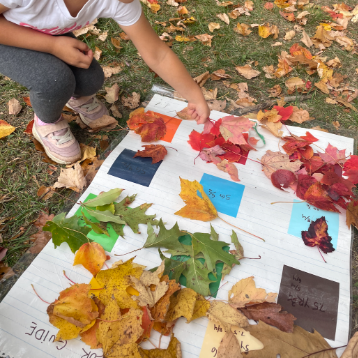
In fall 2025, more than 50 educators and over 1,500 young people across Maine and New Hampshire participated in NASA’s Global Learning and Observation to Benefit the Environment (GLOBE) Green Down, a citizen science (also known as participatory science or community science) initiative that engages students and volunteers in tracking seasonal changes in plant life. By observing and documenting leaf color change and leaf drop, participants contributed valuable data used by scientists studying how ecosystems respond to a changing climate.
GLOBE Green Down is part of NASA’s Global Learning and Observation to Benefit the Environment (GLOBE) Program, which connects students, educators, and the public with authentic scientific research. Using a standardized color guide and observation protocols, participants measured changes in plant health as autumn progressed, generating consistent, high-quality data that can be analyzed alongside observations collected worldwide.
The 2025 field season was led by the Gulf of Maine Research Institute and focused on supporting educators in taking learning outdoors while strengthening students’ scientific observation and data literacy skills. Students from pre-kindergarten through high school studied a wide range of tree species—including maple, oak, birch, ash, beech, poplar, and apple—by making repeated observations in their local environments.
In Portland, Maine, students from five elementary schools conducted observations in their own schoolyards as part of environmental literacy and science education programs. Beyond New England, learners from Machias, Maine to British Columbia, and many locations in between, contributed observations, creating a geographically diverse dataset that reflects regional and continental patterns of seasonal change.
As they collected data, students also began asking their own research questions—mirroring the inquiry process used by scientists. Their questions explored differences in species behavior, the influence of sunlight, drought, wildfire smoke, and the built environment, and how these factors might affect the timing and progression of leaf color change.
Educators reported that participation in GLOBE Green Down helped students develop a stronger connection to their local ecosystems while gaining experience working with real-world scientific data. Many noted that learners were able to use their observations to discuss environmental change at both local and global scales, including potential climate change impacts on seasonal patterns.
This field season was hosted through NASA’s Science Activation program as part of the Learning Ecosystems Northeast (https://science.nasa.gov/sciact-team/gmri/) (LENE) project. LENE brings together educator learning communities across Maine, New Hampshire, Vermont, New York, and Massachusetts, fostering collaboration between school-based and out-of-school educators. Through this network, educators support STEM learning, data literacy, and local ecosystem stewardship—empowering young people to contribute meaningfully to NASA-supported scientific research.
Get Involved with GLOBE- Educators, students, and community members interested in doing NASA science can get involved. The GLOBE Observer app offers hands-on opportunities to collect and share environmental data used by scientists around the world, while building science skills and local environmental awareness. Learn more: https://science.nasa.gov/citizen-science-old/globe-observer/
- LENE is supported by NASA under cooperative agreement award number NNX16AB94A and is part of NASA’s Science Activation Portfolio. Learn more about how Science Activation connects NASA science experts, real content, and experiences with community leaders to do science in ways that activate minds and promote deeper understanding of our world and beyond: https://science.nasa.gov/learn/about-science-activation/
The goal of NASA’s Universe of Learning (UoL) is to connect the public to the…
Article
19 hours ago
3 min read North America’s Greenhouse Hub
The expansion of greenhouses in southern Ontario is changing the appearance of the land surface—and…
Article
2 days ago
7 min read Fire on Ice: The Arctic’s Changing Fire Regime
An increasingly flammable landscape combined with more lightning strikes is leading to larger, more frequent,…
Article
1 week ago
Keep Exploring Discover More Topics From NASA James Webb Space Telescope
Webb is the premier observatory of the next decade, serving thousands of astronomers worldwide. It studies every phase in the…
Perseverance Rover
This rover and its aerial sidekick were assigned to study the geology of Mars and seek signs of ancient microbial…
Parker Solar Probe
On a mission to “touch the Sun,” NASA’s Parker Solar Probe became the first spacecraft to fly through the corona…
Juno
NASA’s Juno spacecraft entered orbit around Jupiter in 2016, the first explorer to peer below the planet’s dense clouds to…
Students Across New England Contribute to Climate Science Through NASA’s GLOBE Green Down
3 min read
Students Across New England Contribute to Climate Science Through NASA’s GLOBE Green Down Students made observations and tracked the changing color of leaves on a variety of species.In fall 2025, more than 50 educators and over 1,500 young people across Maine and New Hampshire participated in NASA’s Global Learning and Observation to Benefit the Environment (GLOBE) Green Down, a citizen science (also known as participatory science or community science) initiative that engages students and volunteers in tracking seasonal changes in plant life. By observing and documenting leaf color change and leaf drop, participants contributed valuable data used by scientists studying how ecosystems respond to a changing climate.
GLOBE Green Down is part of NASA’s Global Learning and Observation to Benefit the Environment (GLOBE) Program, which connects students, educators, and the public with authentic scientific research. Using a standardized color guide and observation protocols, participants measured changes in plant health as autumn progressed, generating consistent, high-quality data that can be analyzed alongside observations collected worldwide.
The 2025 field season was led by the Gulf of Maine Research Institute and focused on supporting educators in taking learning outdoors while strengthening students’ scientific observation and data literacy skills. Students from pre-kindergarten through high school studied a wide range of tree species—including maple, oak, birch, ash, beech, poplar, and apple—by making repeated observations in their local environments.
In Portland, Maine, students from five elementary schools conducted observations in their own schoolyards as part of environmental literacy and science education programs. Beyond New England, learners from Machias, Maine to British Columbia, and many locations in between, contributed observations, creating a geographically diverse dataset that reflects regional and continental patterns of seasonal change.
As they collected data, students also began asking their own research questions—mirroring the inquiry process used by scientists. Their questions explored differences in species behavior, the influence of sunlight, drought, wildfire smoke, and the built environment, and how these factors might affect the timing and progression of leaf color change.
Educators reported that participation in GLOBE Green Down helped students develop a stronger connection to their local ecosystems while gaining experience working with real-world scientific data. Many noted that learners were able to use their observations to discuss environmental change at both local and global scales, including potential climate change impacts on seasonal patterns.
This field season was hosted through NASA’s Science Activation program as part of the Learning Ecosystems Northeast (https://science.nasa.gov/sciact-team/gmri/) (LENE) project. LENE brings together educator learning communities across Maine, New Hampshire, Vermont, New York, and Massachusetts, fostering collaboration between school-based and out-of-school educators. Through this network, educators support STEM learning, data literacy, and local ecosystem stewardship—empowering young people to contribute meaningfully to NASA-supported scientific research.
Get Involved with GLOBE- Educators, students, and community members interested in doing NASA science can get involved. The GLOBE Observer app offers hands-on opportunities to collect and share environmental data used by scientists around the world, while building science skills and local environmental awareness. Learn more: https://science.nasa.gov/citizen-science-old/globe-observer/
- LENE is supported by NASA under cooperative agreement award number NNX16AB94A and is part of NASA’s Science Activation Portfolio. Learn more about how Science Activation connects NASA science experts, real content, and experiences with community leaders to do science in ways that activate minds and promote deeper understanding of our world and beyond: https://science.nasa.gov/learn/about-science-activation/
The goal of NASA’s Universe of Learning (UoL) is to connect the public to the…
Article
19 hours ago
3 min read North America’s Greenhouse Hub
The expansion of greenhouses in southern Ontario is changing the appearance of the land surface—and…
Article
2 days ago
7 min read Fire on Ice: The Arctic’s Changing Fire Regime
An increasingly flammable landscape combined with more lightning strikes is leading to larger, more frequent,…
Article
1 week ago
Keep Exploring Discover More Topics From NASA James Webb Space Telescope
Webb is the premier observatory of the next decade, serving thousands of astronomers worldwide. It studies every phase in the…
Perseverance Rover
This rover and its aerial sidekick were assigned to study the geology of Mars and seek signs of ancient microbial…
Parker Solar Probe
On a mission to “touch the Sun,” NASA’s Parker Solar Probe became the first spacecraft to fly through the corona…
Juno
NASA’s Juno spacecraft entered orbit around Jupiter in 2016, the first explorer to peer below the planet’s dense clouds to…
‘Bat accelerator’ unlocks new clues to how these animals navigate
Bats use echolocation to get around, but it wasn’t clear how these creatures managed to navigate dense environments—until now
NASA’s Universe of Learning Unveils Fresh Facilitator Guides Inspired by Community Feedback
3 min read
NASA’s Universe of Learning Unveils Fresh Facilitator Guides Inspired by Community Feedback NASA’s Universe of Learning Program Facilitator Guides provide educators with detailed resources, including background information, activities, and slide decks to engage audiences in exploring astrophysics themes such as Stars, Data & Image Processing, the Electromagnetic Spectrum, and Finding Exoplanets.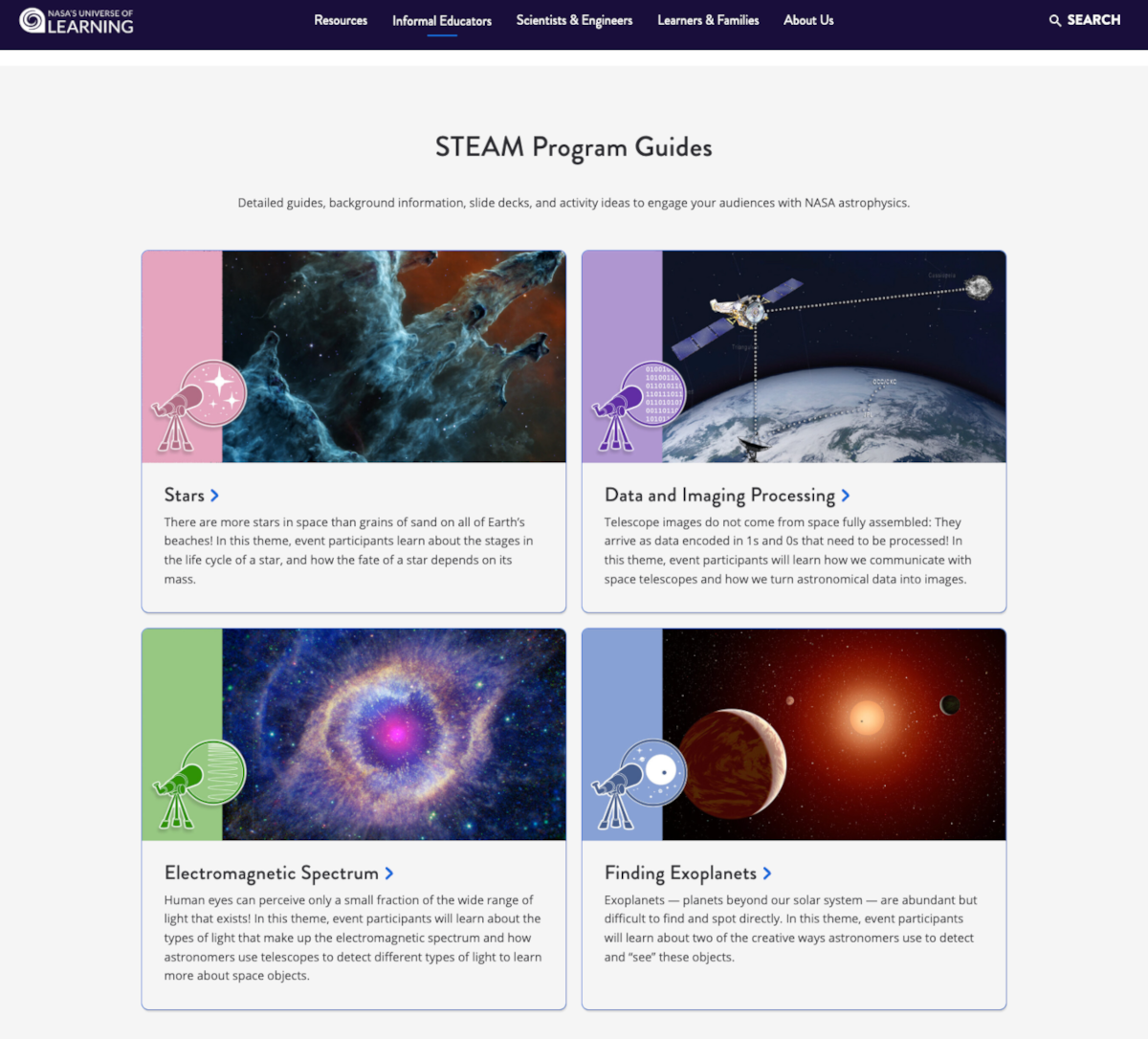
The goal of NASA’s Universe of Learning (UoL) is to connect the public to the data, discoveries, and experts that span NASA’s Astrophysics missions. To make this possible, the NASA’s UoL team creates engaging STEM experiences that let people explore data and discoveries from NASA’s Astrophysics missions and learn from the experts behind them.
Our science center does a lot of work with after school groups weekly. I can’t wait to use this program guide [Finding Exoplanets] to help run some programs for our ‘space week’ this fall. I also appreciate the adaptations for different age groups.Facilitator
Southern Arizona
One example is the Program Facilitator Guides—a series of resources for informal educators that cover different astrophysics themes and empower organizations to share NASA science with their audiences. Since their introduction, these guides have supported libraries and community centers in delivering engaging STEM learning experiences. “”The Programming Guide is just amazing … that resource alone is really great for planning. There’s so many opportunities for programs… and there’s room for your own creativity as well,”” shared one educator.
The NASA’s UoL team is excited to announce the refresh of several Program Facilitator Guides, along with the introduction of a new guide. These resources have been updated based on feedback from the informal education community, collected through evaluation surveys, focus groups, and webinars. From events held last year before the updates, the guides received a highly favorable rating—91% of educators found them useful as a resource, emphasizing their value in supporting informal STEM education. To make them more effective, we implemented the following updates:
- Easy and direct access to all Program Facilitator Guides through a dedicated web page under the “Informal Educators” menu on NASA’s Universe of Learning.
- Creating an easy-to-access URL for the Program Facilitator Guides: https://universe-of-learning.org/program-guides.
- Making available PowerPoint slides and Kahoot Quizzes for the facilitator to complement the Program Facilitator Guide themes.
- Moving activity guides to a more user-friendly and standard template.
- Designing a set of resources around some of the methods astronomers use to find exoplanets — worlds beyond the solar system — in collaboration with a NASA Science Mission Directorate Community of Practice for Education (SCoPE) grantee:
- The “Finding Exoplanets” Program Facilitator Guide.
- The “Lights, Coronagraph, Action!” Activity Guide that demonstrates how astronomers find exoplanets via direct imaging.
- The “Exoplanet Detectives” Activity Guide that shows how astronomers find exoplanets by measuring the amount of light that gets blocked when a planet transits its host star.
The new and updated resources are available now through the following URL: https://www.universe-of-learning.org/program-guides.
For any questions or suggestions, please contact:The NASA’s Universe of Learning team
Email: info@universe-of-learning.org
Website: https://www.universe-of-learning.org/
In fall 2025, more than 50 educators and over 1,500 young people across Maine and…
Article
19 hours ago
5 min read NASA Webb Finds Young Sun-Like Star Forging, Spewing Common Crystals
Article
22 hours ago
4 min read Intricacies of Helix Nebula Revealed With NASA’s Webb
Article
2 days ago
Keep Exploring Discover More Topics From NASA James Webb Space Telescope
Webb is the premier observatory of the next decade, serving thousands of astronomers worldwide. It studies every phase in the…
Perseverance Rover
This rover and its aerial sidekick were assigned to study the geology of Mars and seek signs of ancient microbial…
Parker Solar Probe
On a mission to “touch the Sun,” NASA’s Parker Solar Probe became the first spacecraft to fly through the corona…
Juno
NASA’s Juno spacecraft entered orbit around Jupiter in 2016, the first explorer to peer below the planet’s dense clouds to…
NASA’s Universe of Learning Unveils Fresh Facilitator Guides Inspired by Community Feedback
3 min read
NASA’s Universe of Learning Unveils Fresh Facilitator Guides Inspired by Community Feedback NASA’s Universe of Learning Program Facilitator Guides provide educators with detailed resources, including background information, activities, and slide decks to engage audiences in exploring astrophysics themes such as Stars, Data & Image Processing, the Electromagnetic Spectrum, and Finding Exoplanets.The goal of NASA’s Universe of Learning (UoL) is to connect the public to the data, discoveries, and experts that span NASA’s Astrophysics missions. To make this possible, the NASA’s UoL team creates engaging STEM experiences that let people explore data and discoveries from NASA’s Astrophysics missions and learn from the experts behind them.
Our science center does a lot of work with after school groups weekly. I can’t wait to use this program guide [Finding Exoplanets] to help run some programs for our ‘space week’ this fall. I also appreciate the adaptations for different age groups.Facilitator
Southern Arizona
One example is the Program Facilitator Guides—a series of resources for informal educators that cover different astrophysics themes and empower organizations to share NASA science with their audiences. Since their introduction, these guides have supported libraries and community centers in delivering engaging STEM learning experiences. “”The Programming Guide is just amazing … that resource alone is really great for planning. There’s so many opportunities for programs… and there’s room for your own creativity as well,”” shared one educator.
The NASA’s UoL team is excited to announce the refresh of several Program Facilitator Guides, along with the introduction of a new guide. These resources have been updated based on feedback from the informal education community, collected through evaluation surveys, focus groups, and webinars. From events held last year before the updates, the guides received a highly favorable rating—91% of educators found them useful as a resource, emphasizing their value in supporting informal STEM education. To make them more effective, we implemented the following updates:
- Easy and direct access to all Program Facilitator Guides through a dedicated web page under the “Informal Educators” menu on NASA’s Universe of Learning.
- Creating an easy-to-access URL for the Program Facilitator Guides: https://universe-of-learning.org/program-guides.
- Making available PowerPoint slides and Kahoot Quizzes for the facilitator to complement the Program Facilitator Guide themes.
- Moving activity guides to a more user-friendly and standard template.
- Designing a set of resources around some of the methods astronomers use to find exoplanets — worlds beyond the solar system — in collaboration with a NASA Science Mission Directorate Community of Practice for Education (SCoPE) grantee:
- The “Finding Exoplanets” Program Facilitator Guide.
- The “Lights, Coronagraph, Action!” Activity Guide that demonstrates how astronomers find exoplanets via direct imaging.
- The “Exoplanet Detectives” Activity Guide that shows how astronomers find exoplanets by measuring the amount of light that gets blocked when a planet transits its host star.
The new and updated resources are available now through the following URL: https://www.universe-of-learning.org/program-guides.
For any questions or suggestions, please contact:The NASA’s Universe of Learning team
Email: info@universe-of-learning.org
Website: https://www.universe-of-learning.org/
In fall 2025, more than 50 educators and over 1,500 young people across Maine and…
Article
19 hours ago
5 min read NASA Webb Finds Young Sun-Like Star Forging, Spewing Common Crystals
Article
22 hours ago
4 min read Intricacies of Helix Nebula Revealed With NASA’s Webb
Article
2 days ago
Keep Exploring Discover More Topics From NASA James Webb Space Telescope
Webb is the premier observatory of the next decade, serving thousands of astronomers worldwide. It studies every phase in the…
Perseverance Rover
This rover and its aerial sidekick were assigned to study the geology of Mars and seek signs of ancient microbial…
Parker Solar Probe
On a mission to “touch the Sun,” NASA’s Parker Solar Probe became the first spacecraft to fly through the corona…
Juno
NASA’s Juno spacecraft entered orbit around Jupiter in 2016, the first explorer to peer below the planet’s dense clouds to…
Mystery Prototaxites tower fossils may represent a newly discovered kind of life
Towering Prototaxites ruled Earth before trees—and they may have been a form of life entirely new to science