NASA - Breaking News

NASA Provides Update on Moon Base Rovers, Landers, Missions
Editor’s note: Release was updated May 27, 2026, to provide additional details on the crewed lunar terrain vehicles.
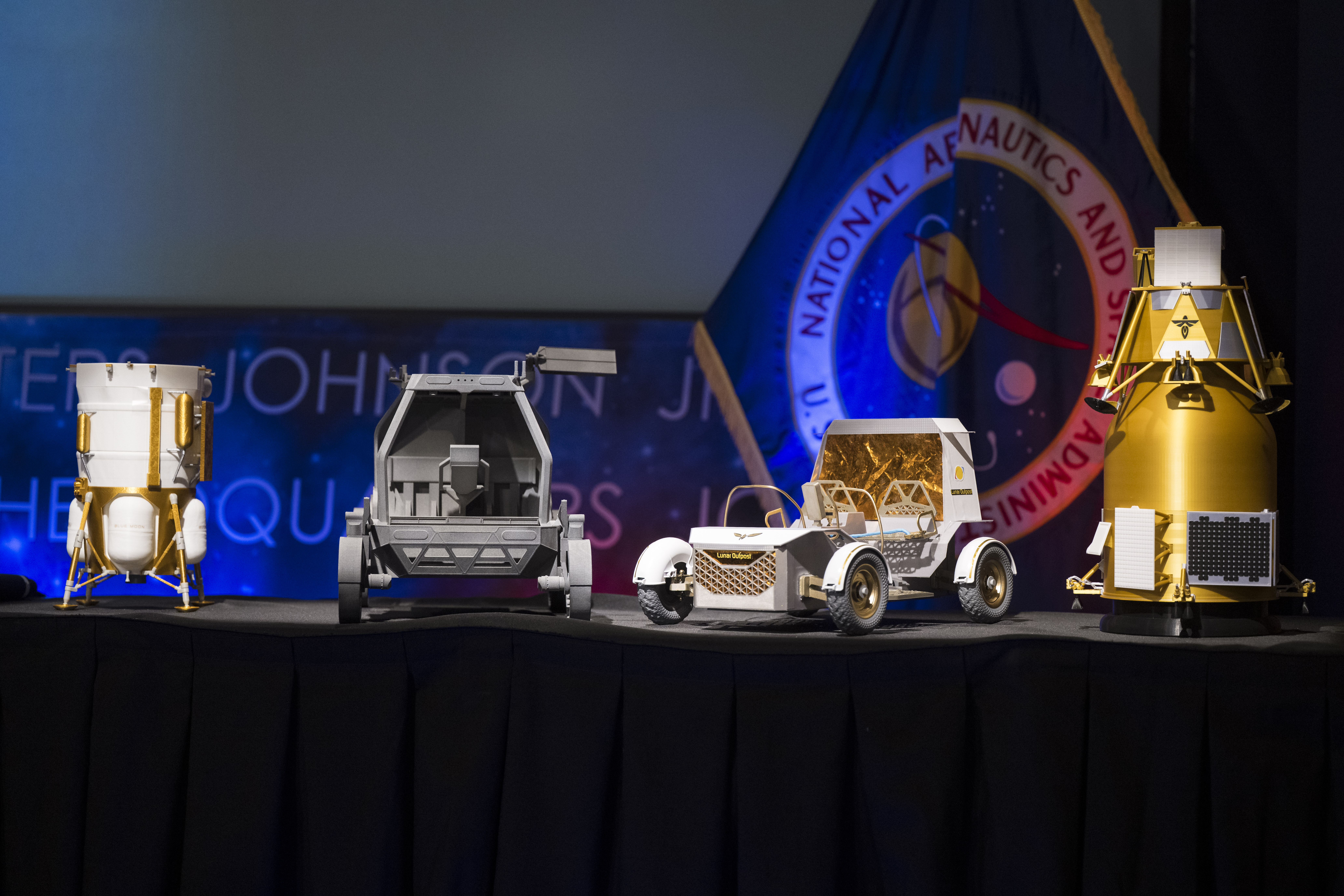
During a Moon Base event Tuesday at NASA’s Headquarters in Washington, the agency announced new contracts for lunar rovers for crew to drive and uncrewed cargo landers bound for the Moon. NASA leaders also shared target launch timeframes and upcoming milestones for the first Moon Base infrastructure and exploration missions to the lunar South Pole region ahead of Artemis astronaut landings.
“The Moon Base will be America’s and humanity’s first outpost on another celestial world,” said NASA Administrator Jared Isaacman. “Every mission, crewed and uncrewed, will be a learning opportunity as we return to the lunar surface, build the infrastructure to stay, and master the skills required to live and operate in one of the most demanding and dangerous environments imaginable. We will go for the science, for all we stand to gain from an economic and technological perspective, for the innovations that will make life better here on Earth, and to prepare for where we will inevitably go next. We are grateful for President Trump’s leadership, the bipartisan commitment from Congress, our industry and international partners, and the dedicated NASA workforce whose expertise enables us to achieve the near-impossible.”
NASA announced the first three Moon Base missions to begin building sustained operations:
- Moon Base I: Targeted for launch no earlier than fall 2026, this mission will use Blue Origin’s Blue Moon Mark 1 Endurance lander to deliver NASA payloads. Equipment will include the Stereo Cameras for Lunar Plume-Surface Studies instrument to study how thrusters interact with the Moon’s surface, and the Laser Retroreflective Array, which helps orbiting spacecraft determine a more precise location using reflected laser light. The mission will land on the Shackleton Connecting Ridge to demonstrate capabilities that reduce risk for future crewed Artemis landing missions in 2028.
- Moon Base II: Planned for launch later this year, this mission will deliver more than 1,100 pounds of cargo on Astrobotic’s Griffin lander, including Astrolab’s FLIP rover, to mature mobility systems that inform future lunar terrain vehicle, or LTV, operations.
- Moon Base III: Also targeted for this year, this mission will fly the first payload selected through NASA’s Payloads and Research Investigations on the Surface of the Moon initiative. Its anchor investigation, Lunar Vertex, will fly on Intuitive Machines’ Nova-C Trinity lunar lander and study lunar swirls, or light spots on the surface of the Moon, to improve understanding of surface evolution and material behavior under extreme conditions. The mission will include payloads from ESA (European Space Agency) and the Korea Astronomy and Space Science Institute, reflecting commercial and international participation in Moon Base activities.
These missions are the first of more than a dozen missions that will be announced this year, each designed to generate operational data and reduce risk ahead of crewed Artemis surface activities.
NASA has awarded Astrolab $219 million and Lunar Outpost $220 million to build and deliver the first phase of LTVs. Awarded under the Phase 1 High Achievability Mission task orders of the Lunar Terrain Vehicle Services contract, these firm-fixed-price, performance-based milestones will enable NASA to deploy crewed and uncrewed mobility systems to the lunar surface by 2028 through the agency’s CLPS (Commercial Lunar Payload Services) initiative. Early surface mobility is a foundational component of the national space policy priority to create an enduring lunar presence.
Astrolab’s Crewed Lunar Vehicle, or CLV‑1, adapted from the company’s FLEX architecture, is a crewed rover designed to transport astronauts, carry supplies, and support remote operations, with a compact stowed configuration, a mass of about 2,000 pounds, and the ability to reach more than 6 mph on level terrain.
Complementing this capability, Lunar Outpost’s Pegasus is a lighter, mission‑ready evolution of its Eagle rover designed explicitly to meet NASA’s updated crewed LTV requirements. Operational for up to a year and capable of manual, autonomous, or teleoperated driving at speeds more than 9 mph, Pegasus incorporates Apollo‑heritage technologies and builds on prototype and flight experience to deliver human‑centered mobility essential for establishing a sustained Moon Base.
Deploying multiple LTVs early in Moon Base development will accelerate technology demonstrations, inform site planning, and reduce operational risk ahead of crewed Artemis missions, enabling NASA to characterize terrain hazards, move materials, pre-stage resources, and mature systems needed for long-duration lunar exploration.
Over the next 18 months, the selected providers will finalize rover designs, conduct crewed evaluations, and qualify flight units for operational readiness, with the resulting LTVs supporting autonomous traverses, terrain preparation, scientific investigations, technology demonstrations, and astronaut transport.
As Moon Base efforts advance, NASA will expand opportunities for additional vendors through on‑ramp competitions, fostering a robust, sustainable approach to lunar mobility and strengthening national priorities in space capability.
To deliver these rovers to the Moon’s South Pole region, NASA awarded Blue Origin $188 million with an option period worth $280.4 million for two task orders, which includes an option period based on initial phase performance. NASA can choose to extend the task order for payload delivery.
This competitive procurement, executed under the CLPS 1.0 indefinite-delivery/indefinite-quantity framework, the CX-2 task order represents a strategic investment in lunar exploration and will play a critical role in enabling mobility and infrastructure development for sustained lunar operations, marking a significant step toward establishing a permanent human presence on the Moon.
Building on the successes and lessons learned from CLPS 1.0, the agency also outlined how the next generation of cargo landers under CLPS 2.0 will continue to deliver payloads to the lunar surface and lunar orbit, supporting NASA’s ambitious goals for sustained lunar operations. This next phase introduces enhanced flexibility, allowing NASA to order turn-key delivery services or start accepting delivery of CLPS hardware for integration into its own missions. The final CLPS 2.0 request for proposal was released on May 15, with responses due on Tuesday, June 30.
Moonfall update
The agency also shared new updates on MoonFall, a mission that will send four drones to fly short hops on the lunar surface as they survey potential landing sites for Artemis astronauts. NASA‘s Jet Propulsion Laboratory in Southern California has been developing the design and testing prototype hardware and has selected Firefly Aerospace to build the spacecraft that will transport the drones from Earth orbit to the Moon. Launch is targeted for 2028.
The drones will independently land on the lunar surface and then gather high-resolution imagery of hard-to-reach terrain over the course of a single lunar day. After each drone’s final flight, its survive-the-night payload will continue to operate for several months, marking a sustained U.S. presence at the lunar South Pole.
More robotic missions to come
Finally, NASA stated in the coming weeks that a selection of additional CLPS 1.0 task awards, issued during the agency’s Ignition event, for Moon Base payloads and technology demonstrations, is forthcoming. In the coming months, there also will be additional opportunities to compete for CLPS 1.0 and 2.0 task orders as Phase 1 technology demonstrations are defined and planned for Moon Base missions.
During the update, NASA leadership reiterated that establishing a sustained lunar presence is aligned with the agency’s broader exploration strategy, supported by increased launch cadence, expanded industry partnerships, and agencywide coordination.
As part of the Golden Age of innovation and exploration, NASA will send astronauts on increasingly difficult missions to explore more of the Moon for scientific discovery, economic benefits, and to build on our foundation for the first crewed missions to Mars.
For more on Moon Base, visit:
-end-
George Alderman / James Gannon
Headquarters, Washington
202-358-1600
george.a.alderman@nasa.gov / james.h.gannon@nasa.gov
Chennai City Lights
Chennai, on India’s southern coast along the Bay of Bengal and with a metropolitan population of about 8.7 million, shines with white LED streetlights in this photograph taken at approximately 9:13 p.m. local time on May 2, 2026, from the International Space Station.
Earth observations from the space station let us see how our planet changes over time. In combination with NASA-developed technologies, these observations provide the foundation needed to explore and sustain human life on the Moon, Mars, and beyond.
Image credit: NASA/Chris Williams
New Instrument Used Antarctic Ice Sheet to Probe Extreme Universe
The Payload for Ultrahigh Energy Observations (PUEO) is a NASA Astrophysics Pioneers Program mission designed to detect the most energetic particles in the universe. The PUEO mission flew high above Antarctica on a Long Duration Balloon (LDB) and used the Antarctic ice sheet as an enormous detection volume to look for radio signals generated by the interactions of extremely energetic astrophysical neutrinos as they passed through the ice. In addition to searching for the highest energy neutrinos, PUEO could also detect radio signals from high energy cosmic rays showering in Earth’s atmosphere (a.k.a. air showers), either as the signals entered directly into the instrument or reflected off the ice below. The sensitivity achieved with the PUEO instrument was a result of technology advancements and careful optimization of the experimental design to enable accommodation within the balloon platform’s launch volume.
The ultra-high energy neutrinos that PUEO was searching for carry information from the most extreme places in the universe, including supermassive black holes that accrete matter at the centers of galaxies, neutron star mergers, and other powerful cosmic accelerators. Because these particles travel large distances along straight lines without being absorbed, they provide a unique view of the distant, most energetic universe. Not only will data collected by PUEO reveal the origin and composition of the highest-energy cosmic rays, it will also test fundamental physics at energies far beyond those achievable in human-made particle accelerators on Earth.
The PUEO mission built on heritage from the NASA-sponsored Antarctic Impulsive Transient Antenna (ANITA) mission, which had four successful flights from 2006-2016. Like ANITA, PUEO consisted of an array of radio-frequency antennas, an onboard data acquisition system that is triggered by neutrino-like signals and processes and saves the data, and a navigation and command and control system. From its 120,000-foot altitude, PUEO monitored an extremely large volume of Antarctic ice, looking for signals from very rare, high-energy neutrino interactions.
The first of NASA’s Astrophysics Pioneers missions to launch, PUEO took off Dec. 20, 2025, from NASA’s Long Duration Balloon Facility near McMurdo Station, Antarctica, and flew for 23 days before landing approximately 120 miles (200 km) from the South Pole. The full payload has been recovered, including the data drives. The PUEO team is currently analyzing the data collected—an undertaking that may take up to a year due to the complex nature of the task.
The PUEO mission’s on-ice integration team is seen here in front of the fully constructed instrument. Credit: Cosmin DeaconuThe significant improvement in sensitivity achieved with the PUEO instrument compared to that of ANITA was due to a variety of technology advancements and careful optimization of the experimental design to enable accommodation within the balloon platform’s constrained launch volume.
Lowering detection threshold with interferometric triggeringAt the heart of PUEO’s technology advancement was a new type of trigger called an interferometric phased array trigger. The PUEO trigger coherently summed signals from multiple antennas in real time, enabling the instrument to detect weaker signals than previously possible. By lowering the trigger threshold, PUEO could dig further into the noise, and find weaker neutrino and cosmic-ray signals than previous experiments.
More channels in a physically constrained spaceThe PUEO antenna collecting area for frequencies above 300 MHz was doubled compared to ANITA, improving the sensitivity to radio emission from particle interactions. To ensure the PUEO payload remained within the allowable launch volume, the team increased the low-frequency cutoff of the PUEO antennas, which enabled them to be even smaller than those used on ANITA.
Low-frequency instrument for air shower characterizationTo improve sensitivity to extensive air showers produced by cosmic rays and potentially neutrinos, PUEO incorporated a new low-frequency instrument that deployed once the payload reached float altitude (it would have been much too large to fit in the allowable launch volume in its flight configuration). This new low-frequency instrument incorporated antennas that are sensitive down to 50 MHz, and extended PUEOs sensitivity to air showers.
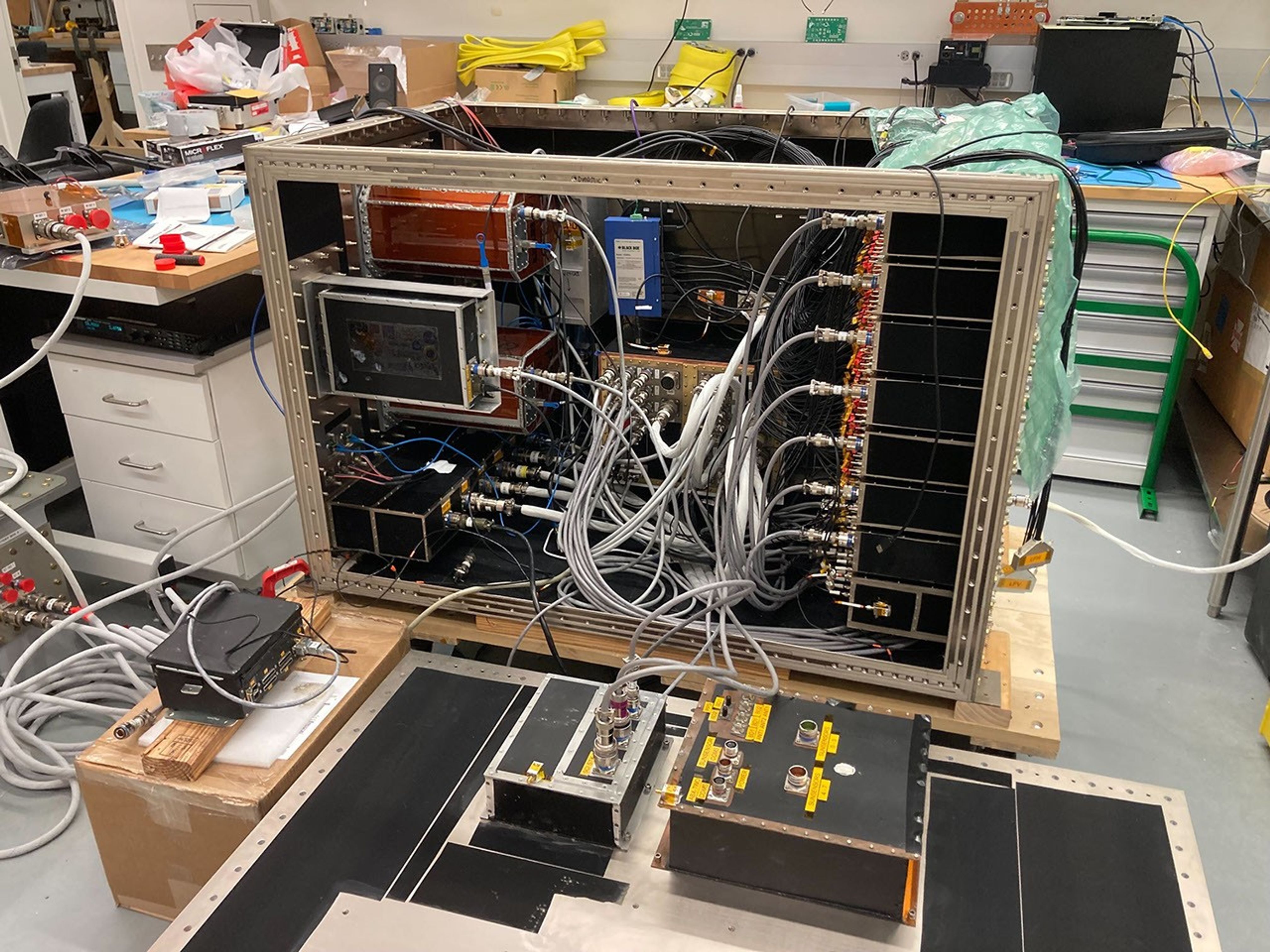
This photo shows the inside of PUEO’s Main Instrument Enclosure, where many of PUEO’s electronics are housed. Credit: Eric OberlaMany of the technology advancements that were developed for PUEO may also be applicable for mission concepts under development that would use the lunar regolith as a detector for ultra-high energy cosmic rays, and other potential future radio missions on the moon.
Project Lead: Dr. Abigail Vieregg, David N. Schramm Director of the Kavli Institute for Cosmological Physics and professor of Physics, Astronomy & Astrophysics, and the Enrico Fermi Institute, University of Chicago, assisted by graduate student, Rachel Scrandis
Sponsoring Organization(s): NASA Astrophysics Division Pioneers Program
A Full Moon Checkup
- Earth
- Earth Observatory
- Image of the Day
- EO Explorer
- Topics
- More Content
- About
Jaclyn Kagey Shapes Humanity’s Return to the Moon
For Jaclyn Kagey, preparing astronauts to put boots on the Moon is part of her daily work.
As the Artemis extravehicular activity lead in NASA’s Flight Operations Directorate, Kagey plays a central role in preparing astronauts to safely explore the lunar surface.
Official portrait of Jaclyn Kagey. NASA/Robert Markowitz My mission is to shape the historic endeavor by working closely with scientists and industry partners to define lunar surface activities. We are setting the standard for humanity’s return to the Moon.Jaclyn Kagey
Artemis Extravehicular Activity Lead
During Artemis missions, astronauts will explore the Moon’s South Pole, a region never visited by humans, paving the way for future deep space exploration.
Kagey helps define how astronauts will work on the Moon, from planning detailed spacewalk timelines to guiding real-time operations. Crews will conduct these activities after stepping outside NASA’s human landing system, a commercial lander designed to safely transport astronauts from lunar orbit to the surface and back.
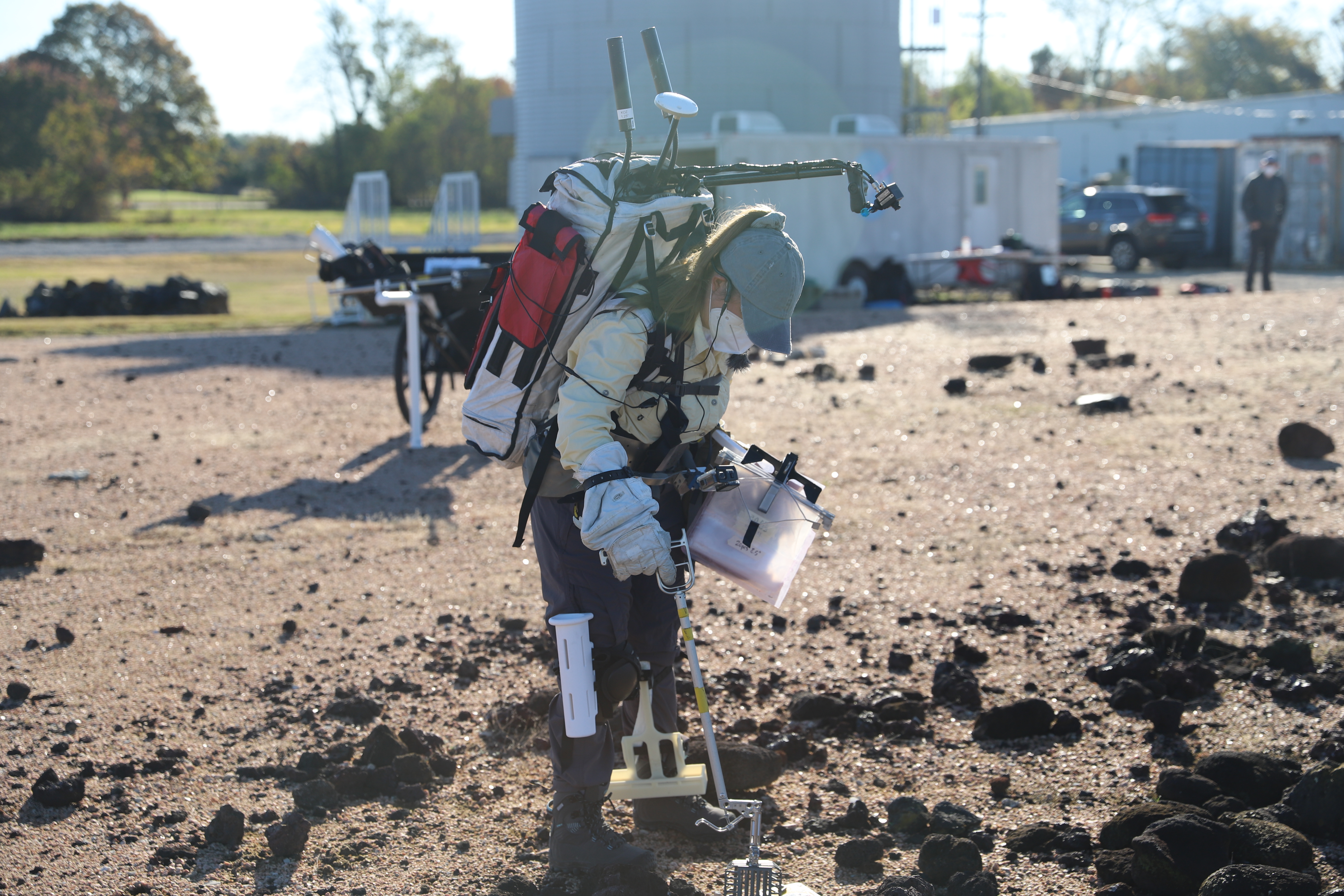
Jaclyn Kagey conducts lunar surface operations training in the Rock Yard at Johnson Space Center, where teams test tools and procedures for future Artemis missions. NASAKagey’s NASA career spans more than 25 years and includes work across some of the agency’s most complex programs.
While studying at Embry-Riddle Aeronautical University, she watched space shuttle launches that solidified her goal of working at NASA. “From a young age, my aspirations were singularly focused on contributing to the nation’s aircraft and spaceflight endeavors,” she said.
That goal became reality through United Space Alliance, where she and her husband began their careers as contractors.
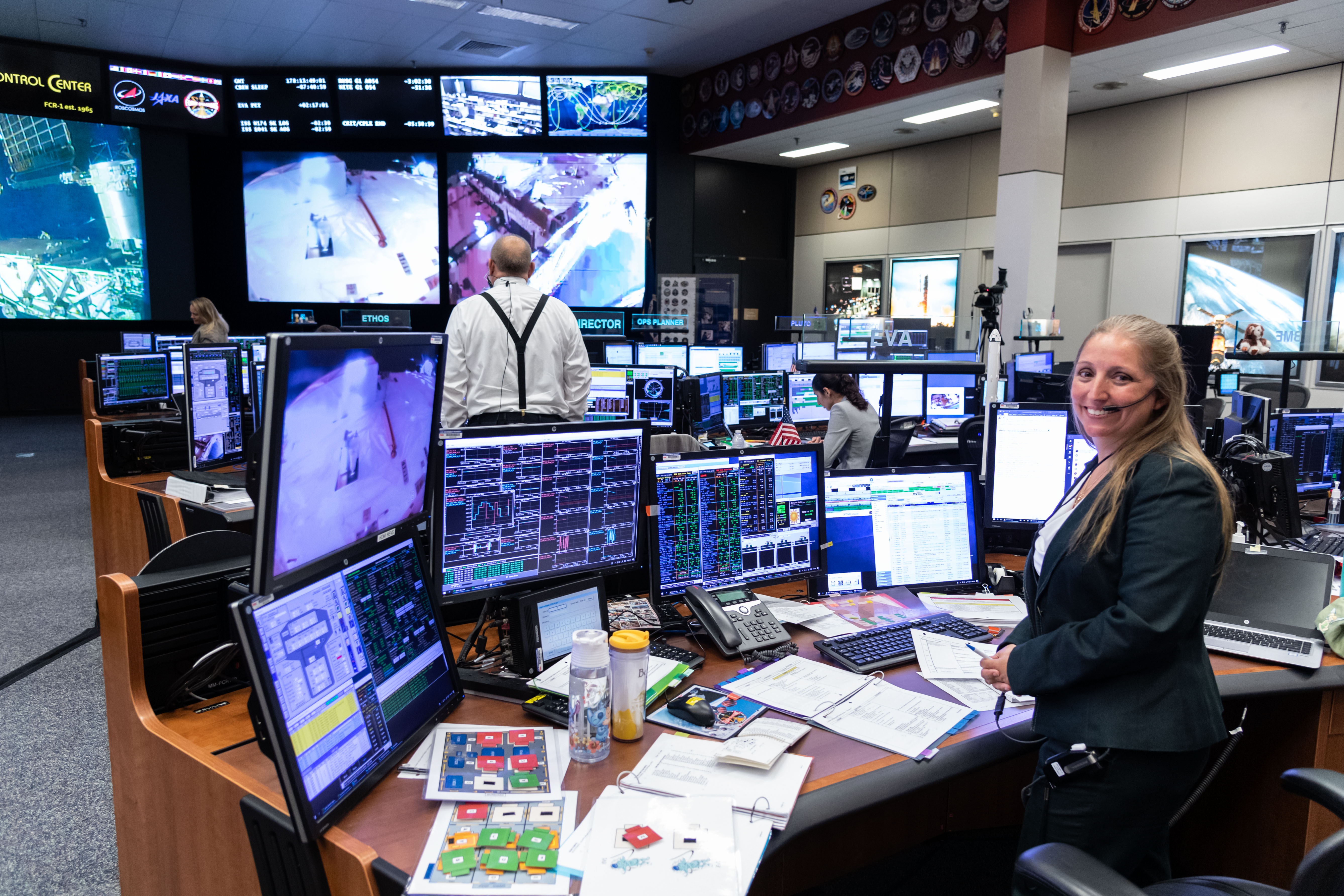
Jaclyn Kagey works in the Mission Control Center during a spacewalk simulation at NASA’s Johnson Space Center in Houston.NASA/Robert MarkowitzOne of her career-defining moments came during a high-pressure operation aboard the International Space Station.
“I’ve planned and executed seven spacewalks, but one that stands out was U.S. EVA 21,” she said. “We had a critical ammonia leak on the station, and from the time the issue was identified, we had just 36 hours to plan, prepare the spacesuits, and execute the repair.”
The team successfully completed the spacewalk and restored the system. “The agility, dedication, and teamwork shown during that operation were remarkable,” Kagey said. “It demonstrated what this team can accomplish under pressure.”
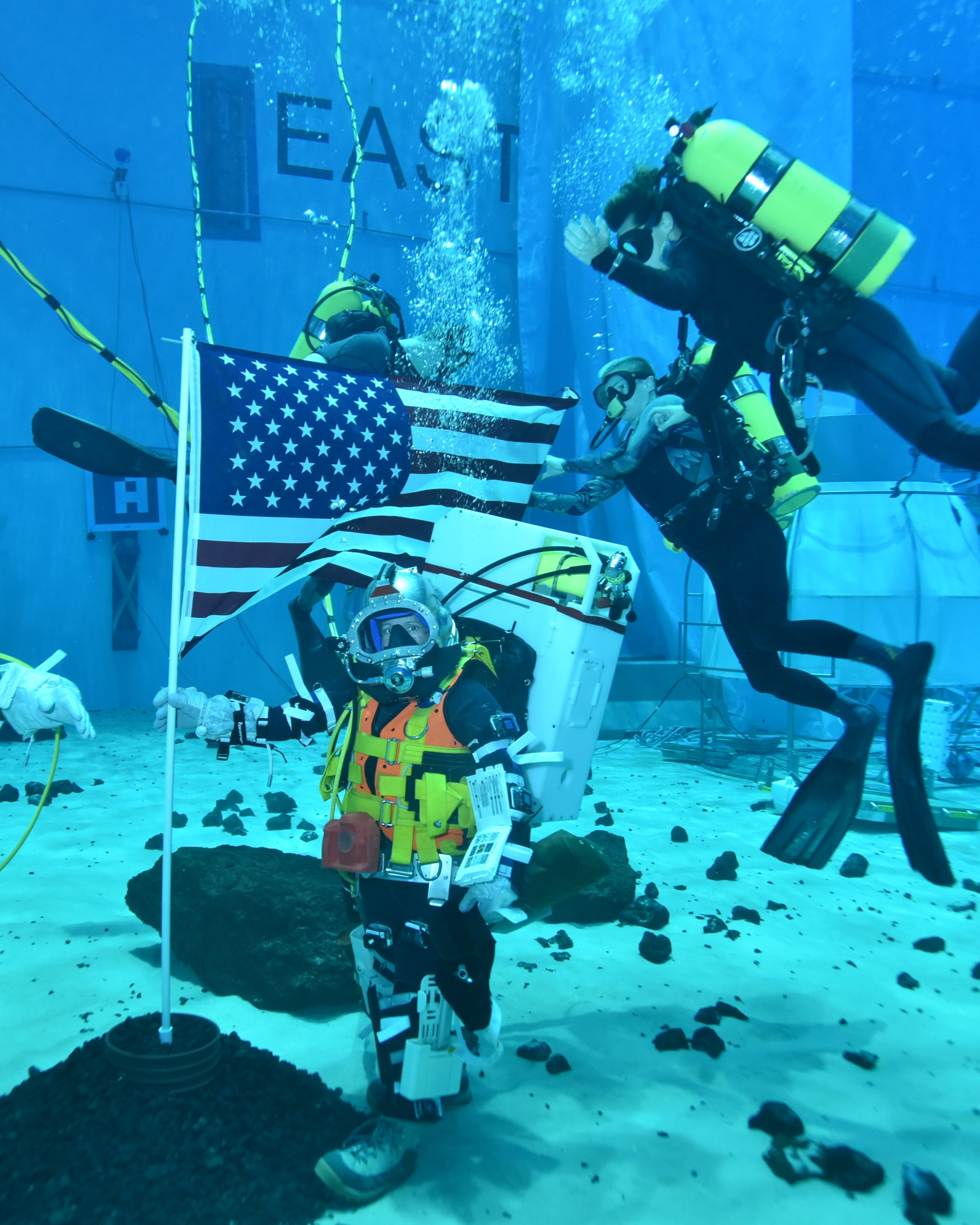
Jaclyn Kagey trains in NASA’s Neutral Buoyancy Laboratory, where astronauts and flight controllers rehearse spacewalk procedures in a simulated microgravity environment.NASA There are times when the mission requires everything you have. There are also times when you have to step back. Learning when to do each is critical.Jaclyn Kagey
Artemis Extravehicular Activity Lead
Throughout her career, Kagey has learned that adaptability is an essential skill.
“Things rarely go exactly as planned, and my job is to respond in a way that keeps the crew safe and the mission moving forward,” she said.
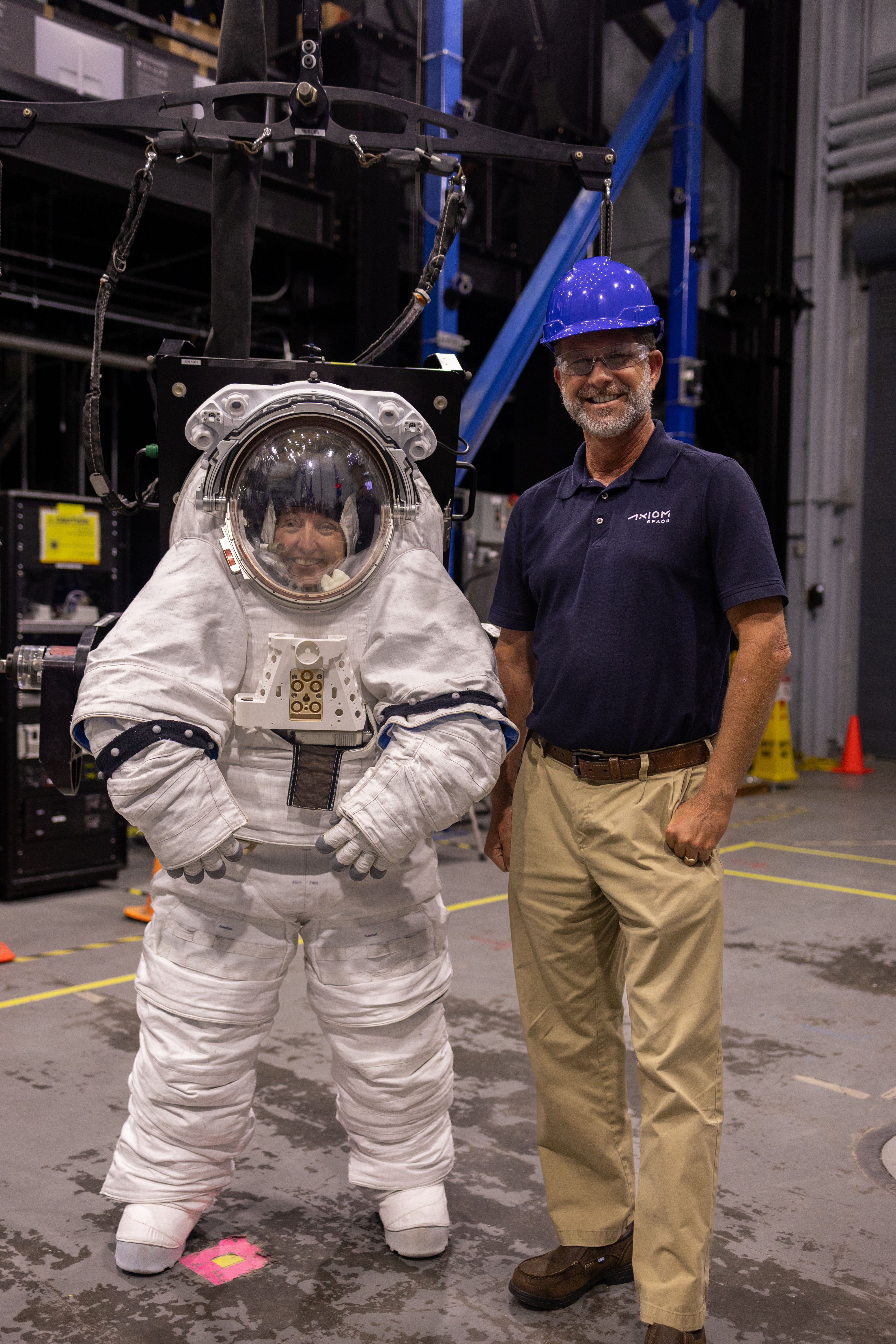
Jaclyn Kagey suited up in Axiom Space’s Extravehicular Mobility Unit (AxEMU) spacesuit during a test on the Active Response Gravity Offload System (ARGOS) at Johnson’s Space Vehicle Mockup Facility. Axiom SpaceKagey’s influence also extends to the future of spacesuit development. Standing on the shorter end of the height spectrum, she once could not complete a full test in the legacy Extravehicular Mobility Unit despite passing the fit check. Although Kagey could don the suit, its proportions were too large for her and made it difficult to move as needed for the test. That experience drove her to advocate for designs that better support a wider range of body types.
That effort came full circle when she recently completed her first test in Axiom Space’s lunar spacesuit, called the Axiom Extravehicular Mobility Unit (AxEMU), on the Active Response Gravity Offload System (ARGOS) at Johnson Space Center in Houston.
“It’s exciting to literally fit into the future of spacewalks!” Kagey said.
About the AuthorSumer Loggins Share Details Last Updated May 25, 2026 Related Terms Explore More 2 min read NASA Seeks Interest for Artemis Mission CubeSats Article 5 days ago 3 min read Lunar Robots: NASA Spotlights Moon Base at 2026 FIRST Robotics Competition Article 5 days ago 4 min read I Am Artemis: Tim Goddard Article 6 days ago Keep Exploring Discover More Topics From NASAMissions
Humans in Space
Climate Change
Solar System
An Early “Decoration Day” Celebration
- Earth
- Earth Observatory
- Image of the Day
- EO Explorer
- Topics
- More Content
- About
Call for Creatives: NASA Seeks Help Illuminating Mission Storytelling
As NASA pushes the boundaries of exploration and innovation for the benefit of humanity, the agency is looking for partners to share mission stories covering Artemis Moon missions, nuclear propulsion, aeronautics, and more.
NASA published an Announcement for Proposals on May 21 asking filmmakers, documentarians, songwriters, storytellers, poets, and others to submit proposals to partner with the agency by Tuesday, June 30.
In this initial round, NASA is seeking up to 10 partners for unfunded Space Act Agreements to share the stories behind, and insights into, multiple NASA missions, including, but not limited to, the following:
- Artemis program, including the recently added Artemis III mission in 2027, and Artemis IV lunar landing in 2028, as well as plans for the agency to develop a Moon Base. Learn more about Artemis on the agency’s website.
- NASA’s advancement of nuclear propulsion, including the Space Reactor-1 Freedom mission to Mars in 2028 carrying the Skyfall payload.
- NASA’s cutting-edge aviation work through flight tests and other efforts.
While this opportunity is focused on U.S. creators, the agency will consider proposals with a minority of international participants. Proposals should detail which area of focus is desired, funding and distribution arrangements, and any specifics needs from NASA to move forward (access to facilities, personnel, etc.).
Full requirements and other details are available online:
https://go.nasa.gov/CreatorProposals
-end-
Camille Gallo / Cheryl Warner
Headquarters, Washington
202-358-1600
camille.m.gallo@nasa.gov / cheryl.m.warner@nasa.gov
NASA Sets Coverage for Roscosmos Spacewalk Outside Space Station
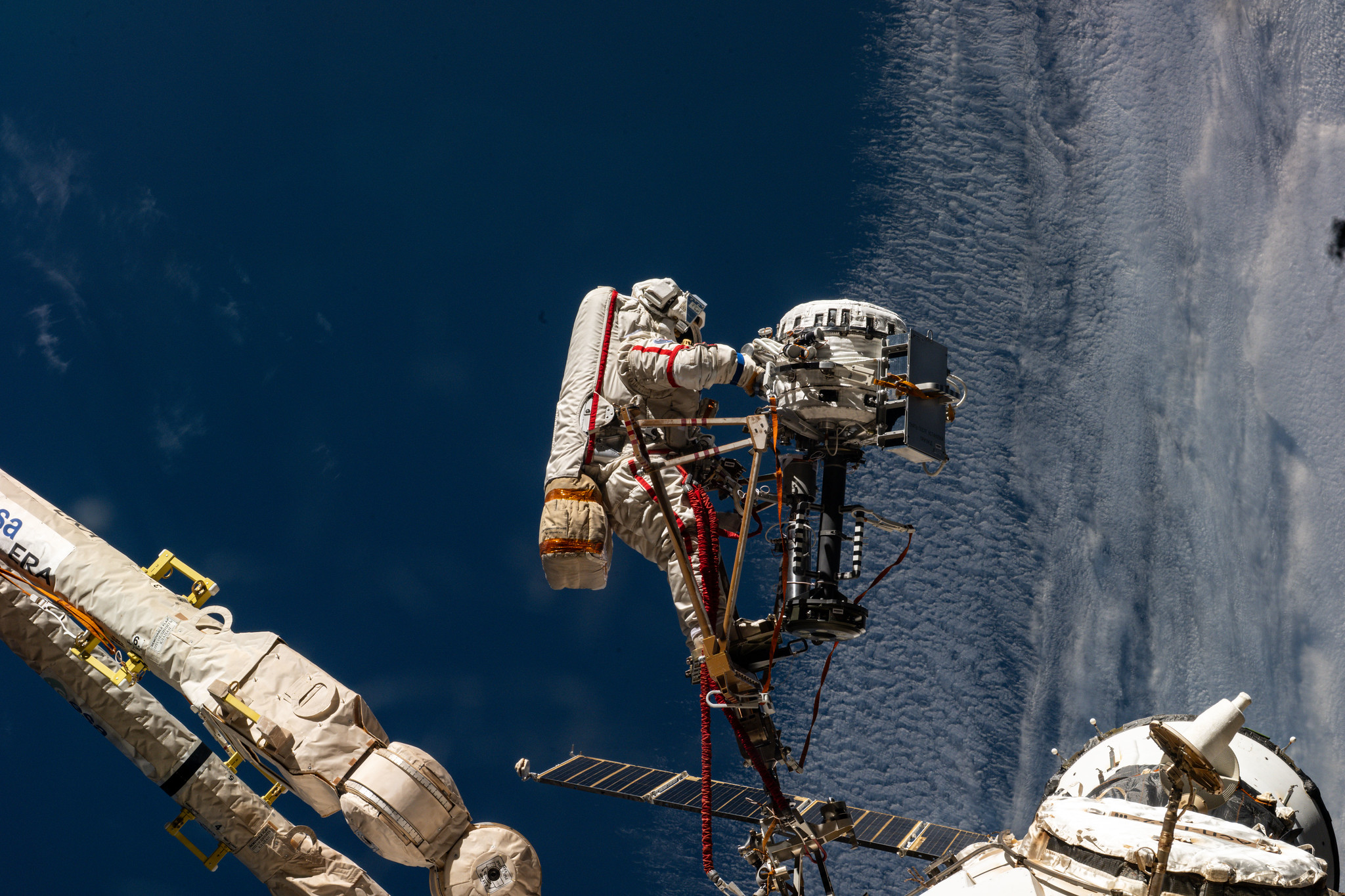
NASA will provide live coverage on Wednesday, May 27, as two Roscosmos cosmonauts conduct a spacewalk outside the International Space Station. The spacewalk is scheduled to begin at approximately 10:15 a.m. EDT and last roughly five hours.
Watch NASA’s live coverage beginning at 9:45 a.m. on NASA+, Amazon Prime, and the agency’s YouTube channel. Learn how to watch NASA content through a variety of online platforms, including social media.
International Space Station Expedition 74 commander Sergey Kud-Sverchkov and flight engineer Sergei Mikaev will install a solar radiation experiment on the Zvezda service module and remove other science hardware from the Poisk and Nauka modules of the orbiting complex’s Roscosmos segment. If time allows, the duo also will photograph one of the Progress 94 cargo spacecraft’s Kurs rendezvous antennas, which failed to deploy in March following its launch to the space station.
This Roscosmos spacewalk will be the second for Kud-Sverchkov and the first for Mikaev. Kud-Sverchkov will wear a spacesuit with red stripes, and Mikaev will wear a spacesuit with blue stripes. It will be the 279th spacewalk in support of space station assembly, maintenance, and upgrades.
To learn more about International Space Station research, operations, and its crews, visit:
-end-
Josh Finch / Jimi Russell
Headquarters, Washington
202-358-1100
joshua.a.finch@nasa.gov / james.j.russell@nasa.gov
Sandra Jones
Johnson Space Center, Houston
281-483-5111
sandra.p.jones@nasa.gov
Webb Studies Star Clusters
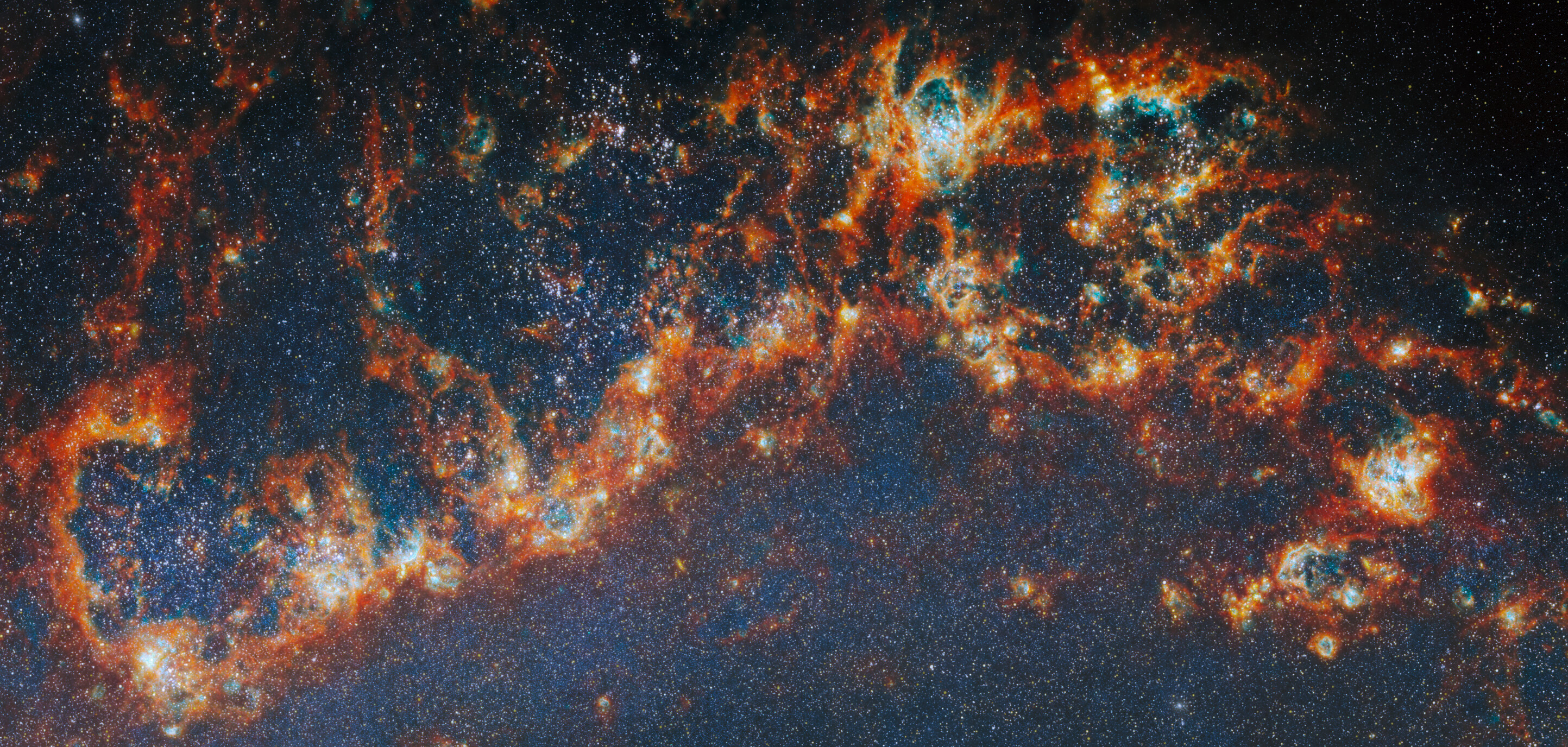
This near-infrared image released on May 6, 2026, shows a section of one of the spiral arms of Messier 51 (M51). M51 is one of four nearby galaxies observed by NASA’s James Webb Space Telescope in a study of nearly 9,000 star clusters.
Data from the study shows that more massive star clusters emerge more quickly from the clouds they are born in. Learning about star formation helps us understand galactic evolution, the dynamics within a galaxy, as well as how and where planets form.
Image credit: ESA/Webb, NASA & CSA, A. Pedrini, A. Adamo (Stockholm University) and the FEAST JWST team
Keeping NASA Flying: Ground Crews Ensure Aircraft Readiness
4 min read
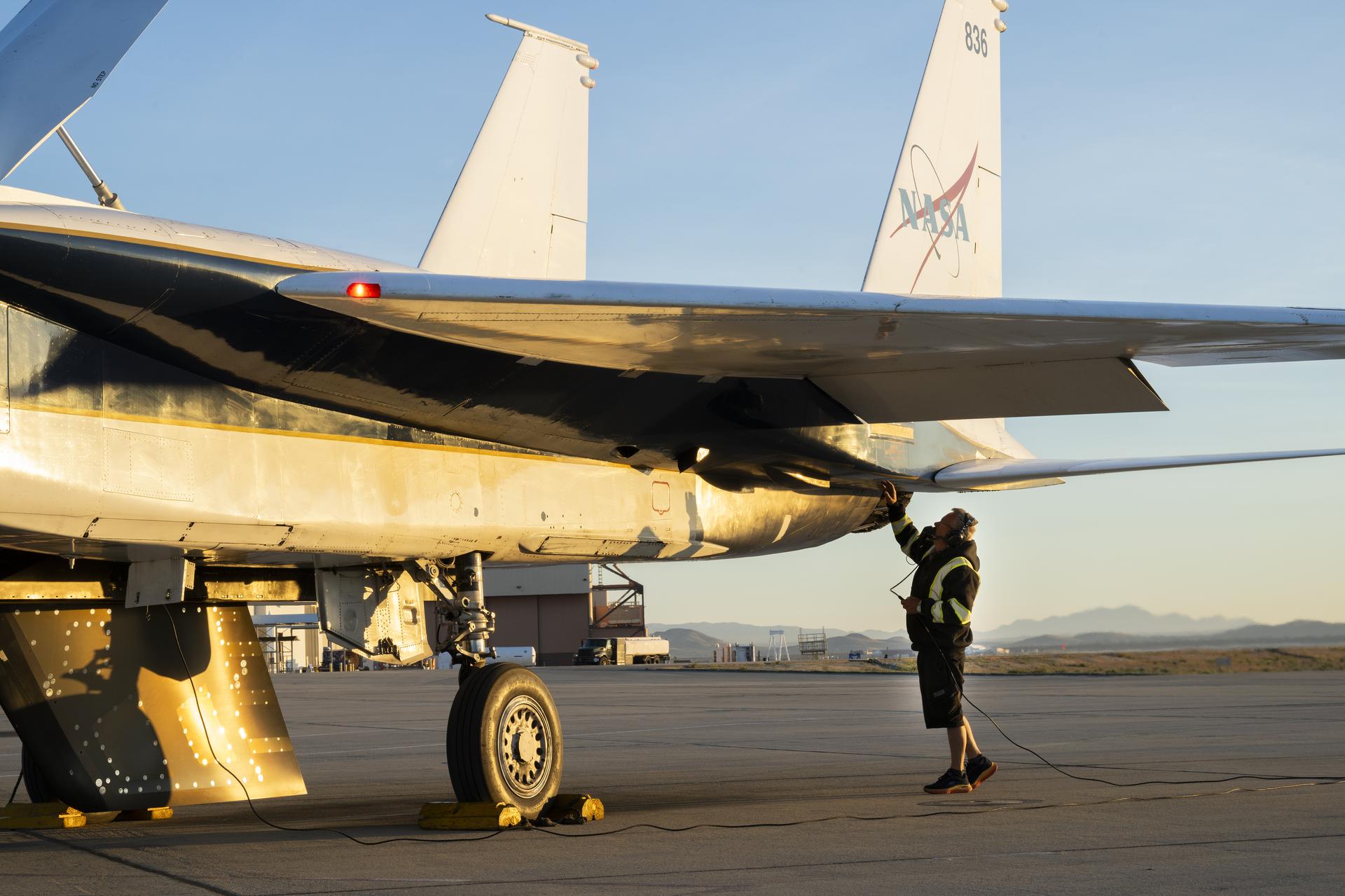
Preparations for Next Moonwalk Simulations Underway (and Underwater) NASA crew chief Walt Kondracki checks an F-15 aircraft Tuesday, March 17, 2026, at NASA’s Armstrong Flight Research Center in Edwards, California. Ground crews, made of various roles, maintain the aircraft to be ready for each mission.NASA/Carla EscamillaFrom high‑speed research flights to high‑altitude science campaigns, NASA depends on aircraft that perform at their best and the ground crews who keep them mission ready.
At NASA’s Armstrong Flight Research Center in Edwards, California, specially trained maintenance crews are essential to keeping the agency’s aircraft flying safely and reliably.
This year, NASA added two F-15s and a Pilatus PC-12 to its fleet at Armstrong. These aircraft – alongside platforms such as the high-altitude ER-2s and NASA’s newest X-plane, the X-59 – reflect a wide range of capabilities. The maintenance staff is responsible for keeping each one mission ready.
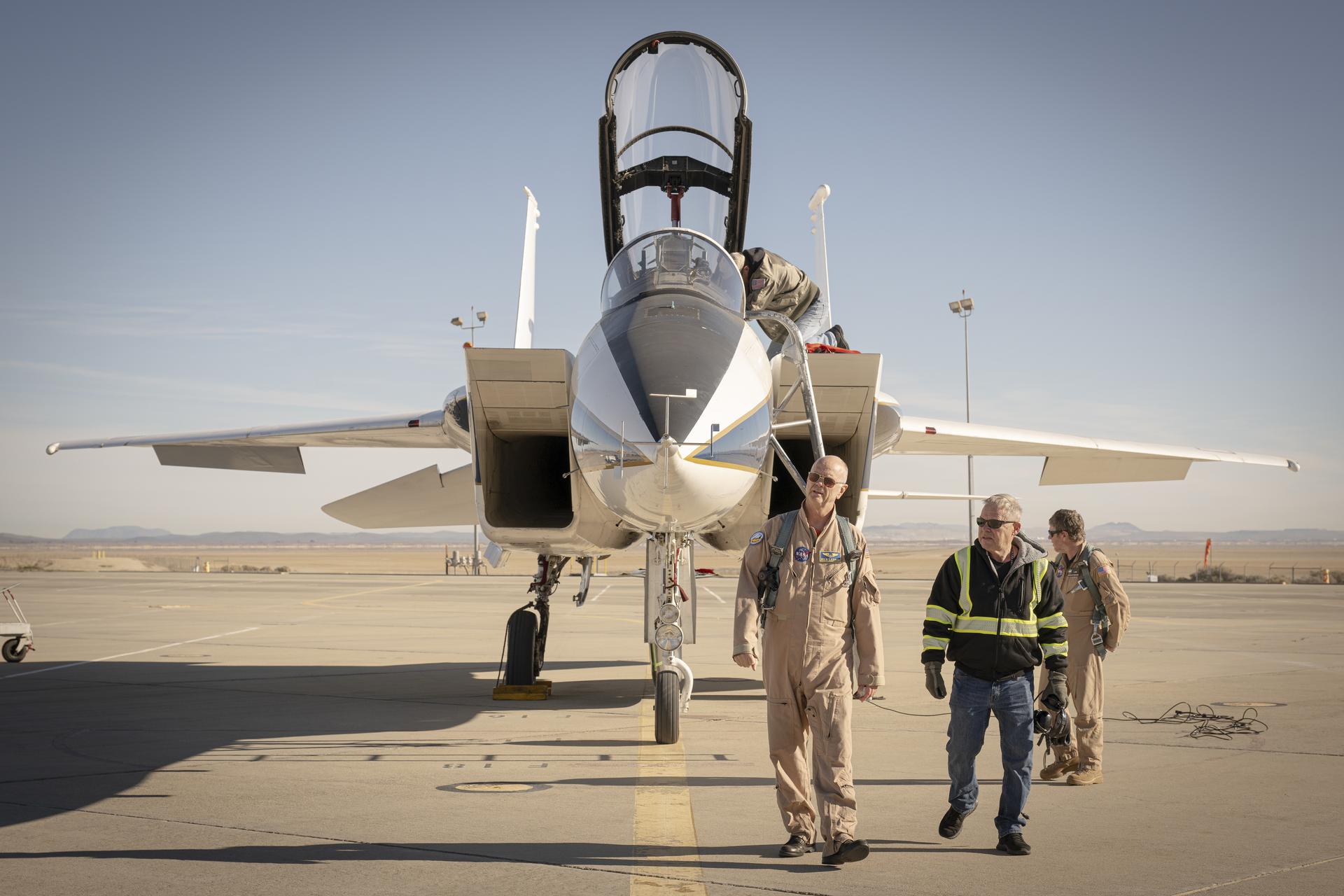
NASA pilot Nils Larson, left, walks next to crew chief Walt Kondracki, right, by an F-15 aircraft Tuesday, Jan. 13, 2026, at NASA’s Armstrong Flight Research Center in Edwards, California. In the background, NASA mechanic Tim Logan secures the cockpit inside of the F-15, and flight test engineer A.J. Jaffe stands to the right.NASA/Christopher LC Clark“That’s the beauty of our Armstrong maintenance teams. They adapt to any type of change,” said Jose “Manny” Rodriguez, NASA Armstrong Gulfstream G-IV crew chief. “One day you could have an instrument being loaded, and the next day it may be aircraft reconfiguration, all while other aircraft systems may need fixing. They adapt and they overcome any situation.”
Each aircraft supports a specific mission, whether it’s conducting science research, serving as a support or chase aircraft, or assisting NASA rocket launches. The aircraft fly at different speeds, carry specialized hardware, and require maintenance crews to stay agile with fast-paced changes.
To ensure NASA can make aeronautics and science advancements safely, the crews work continuously, checking on the ejection seats, filling the tanks with fuel, and changing out brakes, wheels, wiring, and hardware constantly, all of which can degrade with each flight.
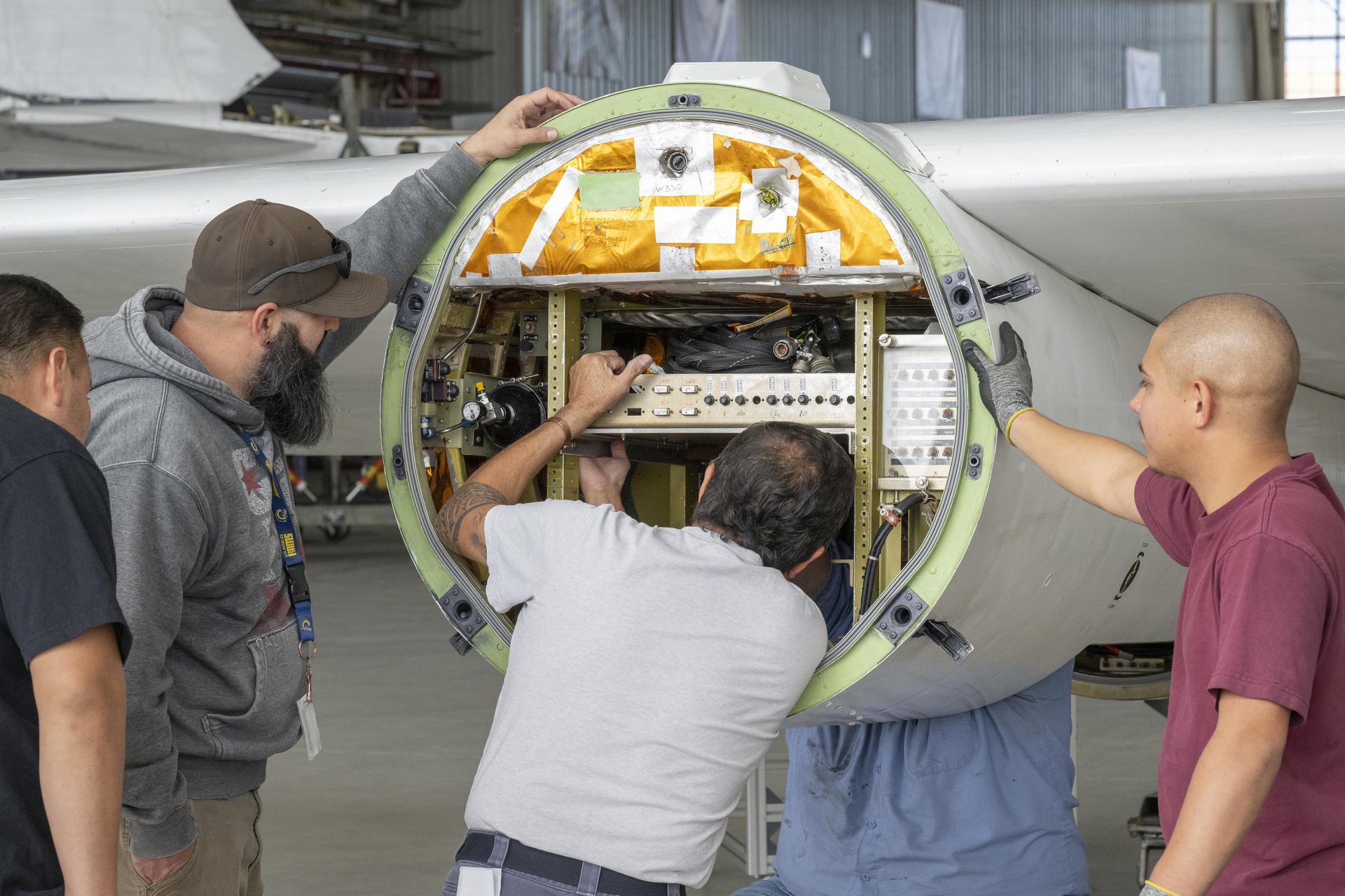
From left, NASA avionics technician Jesse Orellana; quality assurance employee Jose Prieto; mechanic Francisco Rodriguez; and mechanic Vincent Moreno work on an ER-2 aircraft Monday, Jan. 26, 2026, at NASA’s Armstrong Flight Research Center in Edwards, California.NASA/Christopher LC ClarkOn any given day, an aircraft may be flight-ready for a mission, undergoing scheduled maintenance or modifications, or down for longer-term care.
There are typically multiple NASA Armstrong aircraft in the air in one day. Currently, the center’s C-20A is flying in Peru and Panama, the X-59 is often flying twice per day with a chase plane, and the center’s ER-2 is flying in Colorado, supporting the Geological Earth Mapping Experiment (GEMx). All this work is happening at the same time, and Armstrong’s skilled maintenance staff is prepping and fixing aircraft as needed along the way.
The team includes mechanics with both military and civilian backgrounds, and the job involves a lot of on-the-job training.
Maintenance crews are composed of:
- a crew chief – the person in charge of the airplane
- an avionics technician, who specializes in navigation, communication, and flight control systems
- quality assurance personnel, who oversee the work being done
- additional mechanics assigned to each airplane
After the maintenance crew ensures the aircraft is in the best condition possible, the team tows it out to the flightline, and it becomes ready for operations. The NASA pilot assigned to the mission will walk around the aircraft with the assigned crew chief for a final safety check before flight.
“There is a crew chief assigned to every aircraft,” Rodriguez said. “The crew chief is responsible for the integrity of that aircraft, and at the end of the day, his signature and the pilot’s together are what constitutes that the aircraft is safe for flight.”
Maintenance crews track each flight to help ensure it completes the mission without returning early. If an aircraft does return to base early, the maintenance team stands ready. When it lands, the crew is right there again, helping the research team complete the mission and fixing whatever is needed to stay nimble and ready for the next flight.
“It’s difficult at times to work with different airplanes from both the civilian and military sides, but it’s very rewarding to see that we have the capability and the expertise to keep these aircraft flying,” Rodriguez said.
Share Details Last Updated May 22, 2026 Related Terms Explore More 4 min read NASA Announces Winners in University Aeronautics Competition Article 6 days ago 3 min read Meet the Fleet: NASA Armstrong Continues Legacy of Flight Research Article 3 weeks ago 6 min read Cornell Students Aid NASA with Drone Safety in Sky Article 3 weeks ago Keep Exploring Discover More Topics From NASAMissions
Humans in Space
Climate Change
Solar System
NASA to Compete Contract for Jet Propulsion Laboratory Management
NASA announced plans Friday to compete the next contract for managing and operating the agency’s federally funded research and development center (FFRDC) in Southern California at the Jet Propulsion Laboratory (JPL), to ensure continued accountability and strong value for U.S. taxpayers.
The California Institute of Technology (Caltech) has managed the laboratory since its inception in the 1930s, and previous NASA contracts for its management and operations have been awarded sole source to the university since the facility was transferred from the U.S. Army to NASA in 1958.
The rapid growth of the U.S. space economy indicates there may now be a viable competitive market for programmatic and institutional elements of the FFRDC operations.
Conducting a competition for this contract enables NASA to assess the potential benefits of alternative management approaches to the FFRDC, including opportunities to enhance mission performance, innovation, and overall cost and operational efficiency, consistent with federal competition requirements.
This decision is part of a broader governmentwide and agency effort to find efficiencies, strengthen performance, and drive mission outcomes faster and more affordably.
“The Jet Propulsion Laboratory has delivered some of the most extraordinary scientific and engineering achievements in NASA’s history,” said NASA Administrator Jared Isaacman. “As America’s space economy evolves, we have a responsibility to the American people and the scientific community to evaluate how we can execute faster, operate more efficiently, and continue to deliver world-class science and engineering at the highest level. The decision to compete this contract reflects NASA’s commitment to strong stewardship of taxpayer resources and positions Jet Propulsion Laboratory to continue driving world-changing scientific discovery and technological innovation for decades to come.”
The work conducted at JPL remains critically important to the agency, and NASA is committed to maintaining continuity for active and future missions throughout the procurement process. NASA also is committed to maintaining the FFRDC’s existing physical location.
This approach is consistent with broader government practices, including at the Department of Energy, which has held full and open competitions for five of its 16 FFRDC management and operations contracts over the past 10 years.
The current contract with Caltech began Oct. 1, 2018, and runs through Sept. 30, 2028, with a potential maximum value of $30 billion, if all options are exercised. NASA has initiated the procurement process to compete the contract. Beginning this process now allows the agency sufficient time to conduct a comprehensive competition and award cycle while maintaining continuity for ongoing missions and laboratory operations.
For information about NASA and agency programs, visit:
-end-
George Alderman / Cheryl Warner
Headquarters, Washington
202-358-1600
george.a.alderman@nasa.gov / cheryl.m.warner@nasa.gov
NASA Announces Realignment to Accelerate Mission Delivery
Editor’s Note: This advisory was updated May 22, 2026 to include a retirement.
NASA announced Friday an agencywide realignment to increase mission focus and move out on the National Space Policy. These changes position the agency to better deliver on the nation’s highest‑priority objectives with speed and efficiency.
During the Ignition event in late March, NASA Administrator Jared Isaacman and agency leaders outlined the most pressing objectives to deliver on the next chapter of American leadership in space. President Trump’s Executive Order Ensuring American Space Superiority, otherwise known as the National Space Policy, directed NASA to focus talent and resources on objectives including accelerating the Artemis program, establishing a Moon Base, developing a nuclear space reactor, igniting the orbital economy, and expanding missions of science and discovery.
To support the agency’s ambitious short- and long-term goals, NASA is taking action to increase specialization at centers and integrate mission directorates, elevating delivery of technically excellent work. Some of these actions include:
- Center directors will continue reporting to Associate Administrator Amit Kshatriya, empowered to foster the unique capabilities of each center, and strengthen investments in infrastructure and the health of their workforce.
- Mission directorates will now report directly to the administrator, ensuring focus on the mission and enabling them to leverage resources across centers, industry, and international partnerships with greater speed and efficiency.
- The associate administrator also now serves as NASA chief engineer, reinforcing the agency’s technical backbone and ensuring continuity and autonomy in critical engineering decisions.
- The agency continues to focus on rebuilding core competencies, insourcing contractors to civil servants where appropriate, strengthening the intern pipeline, and leveraging the agency’s joint recruitment initiative with the U.S. Office of Personnel Management, NASA Force, to build a strong, sustainable workforce for generations to come.
“This initiative reflects NASA’s extreme focus on executing the mission in direct support of the National Space Policy. We are focusing resources on the most pressing objectives only NASA is capable of undertaking and liberating the workforce from unnecessary bureaucracy and obstacles that impede progress. We aim to rebuild competencies and instill a culture that attracts the best and brightest capable of pursuing the most demanding engineering challenges and moving safely and urgently,” said Isaacman. “There will be no reduction in force, no program cancellations, no closures, but we will achieve cost savings through more efficient execution and taking an active role in delivering the outcomes the world has been waiting for from NASA. This is how we deliver on the mission, meet the moment, and continue to make history on behalf of the American people.”
Mission directorate realignment is as follows:
- Human Spaceflight Mission Directorate (HSMD): With human spaceflight operational to both low Earth orbit and the Moon, the Exploration Systems Development Mission Directorate and Space Operations Mission Directorate will unify as HSMD.
- Research and Technology Mission Directorate (RTMD): NASA will integrate the Aeronautics Research Mission Directorate and Space Technology Mission Directorate into the new RTMD. As a combined research, space technology, and aeronautics organization charged with nuclear power and propulsion development, RTMD will ensure NASA has the capabilities needed for the mission of today and the future.
- Science Mission Directorate (SMD): Remains unchanged and continues to provide the foundation for NASA’s world‑leading scientific discovery.
Additional leadership roles, in alphabetical order, include:
- John Bailey, associate administrator, Mission Support Directorate
- Kevin Coggins, director, SCaN (Space Communications and Navigation), RTMD
- Wesley Deadrick, director, Katherine Johnson IV&V Facility
- Jamie Dunn, director, NASA’s Goddard Space Flight Center
- Carlos García-Galán, program manager, Moon Base, HSMD
- Dr. Lori Glaze, associate administrator, HSMD
- Laurie Grindle, director, Aeronautics Division, RTMD
- Marvin Horne, deputy assistant administrator for Procurement
- Brian Hughes, director, NASA’s Kennedy Space Center
- Kathleen Karika, associate administrator, Office of International and Interagency Relations, OIIR
- Dr. James Kenyon, associate administrator, RTMD
- Kelvin Manning, deputy associate administrator, HSMD
- Meredith McKay, deputy associate administrator, OIIR
- Dave Mitchell, special assignment lead for NASA Headquarters Relocation
- Joel Montalbano, deputy associate administrator, HSMD
- Bradley Niese, associate administrator for Procurement
- Eli Ouder, acting deputy associate administrator, Mission Support Directorate
- Jeremy Parsons, program manager, Artemis, HSMD
- Bob Pearce to retire as head of ARMD after an amazing 36-year career at NASA
- Wanda Peters, deputy associate administrator, RTMD
- Dawn Schaible, director, NASA’s Glenn Research Center
- Cynthia Simmons, deputy director, NASA’s Goddard Space Flight Center
- Steve Sinacore, acting director, Space Reactor Office; program manager for SR-1, LR-1, RTMD
- Adam Steltzner, chief engineer for Special Projects
- Greg Stover, director, Advanced Research and Technology Division, RTMD
- Dana Weigel, program manager, Low Earth Orbit, HSMD
Leadership at unlisted centers remains unchanged.
For more, please visit:
https://www.nasa.gov/nasa-leadership
-end-
Bethany Stevens / Camille Gallo
Headquarters, Washington
202-358-1600
bethany.c.stevens@nasa.gov / camille.m.gallo@nasa.gov
New Material Could Help NASA Melt Moon Rocks, Harness Lunar Resources
4 min read
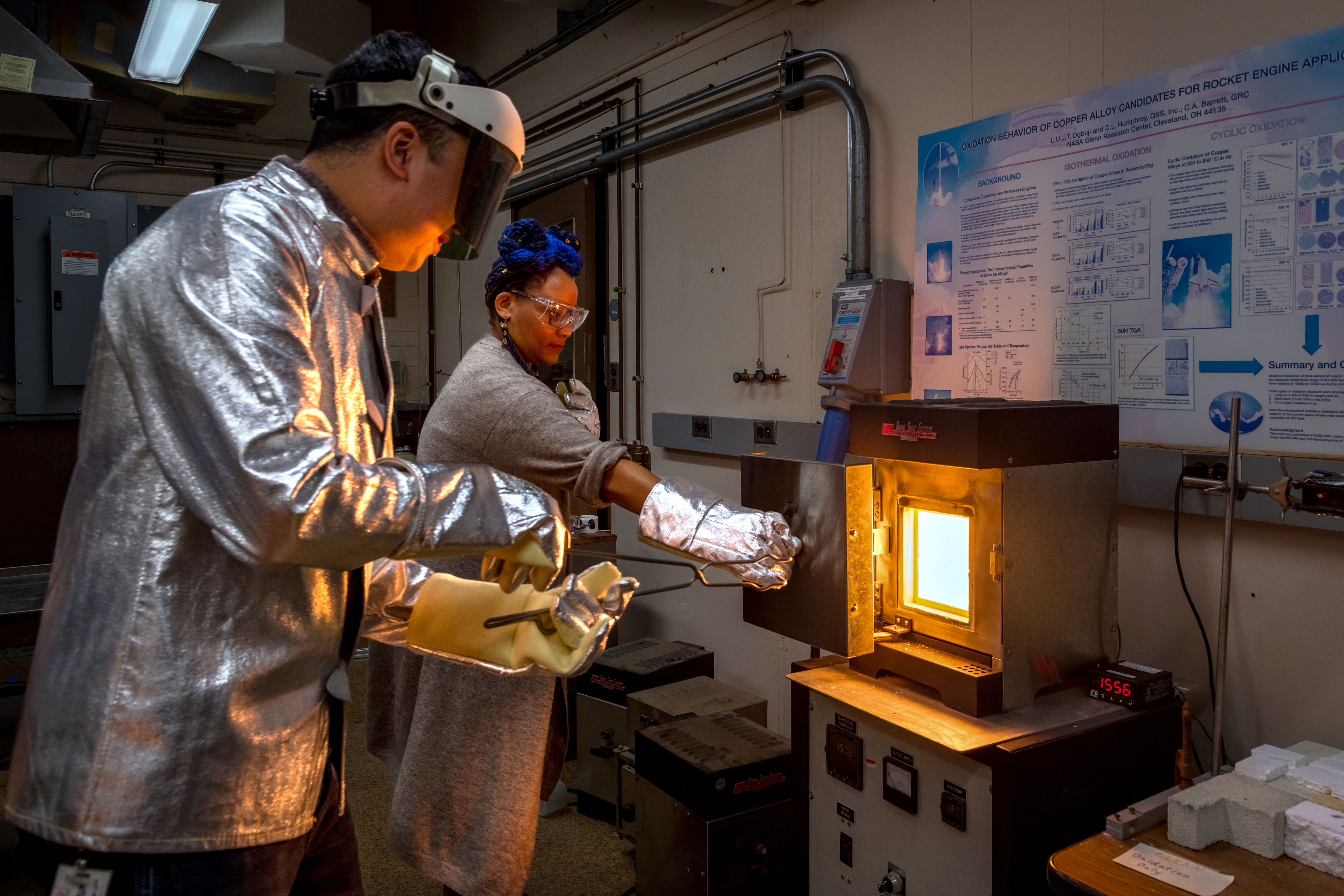
Preparations for Next Moonwalk Simulations Underway (and Underwater) Researchers Dr. Kevin Yu, left, and Dr. Jamesa Stokes prepare to remove a sample of a new material they discovered from a furnace inside a laboratory at NASA’s Glenn Research Center in Cleveland in October 2024. Quenching, or bringing the temperature of the sample down as quickly as possible, helps to ensure no more reactions occur as the sample cools so scientists can focus on studying how it behaves at high temperatures.NASA/Jef JanisA material recently discovered and tested at NASA’s Glenn Research Center in Cleveland could help astronauts pack lighter for future missions to the Moon. NASA is researching ways explorers could “live off the land” by harnessing lunar resources, including melting Moon rocks to extract metals for building infrastructure and oxygen for fuel and life support.
As part of a graduate fellowship through the agency’s Space Technology Graduate Research Opportunities, Dr. Kevin Yu, who now works as a technologist at NASA’s Jet Propulsion Laboratory in Southern California, teamed up with Dr. Jamesa Stokes, a materials research engineer at NASA Glenn, to study how a variety of substances interacted with liquefied Moon dust.
You could call it lava, because it’s basically rocks that are crushed up and then melted. It’s very corrosive, and it will very quickly eat through a lot of commonly used refractory, or heat-resistant, materials.Dr. kevin yu
Technologist at NASA's Jet Propulsion Laboratory
About six months into their research, Stokes and Yu realized they’d stumbled across something promising and entirely new. After combining simulated lunar dust with a compound called scandium oxide and heat treating the mixture using a red-hot furnace, they discovered that an unknown material had formed. The researchers checked and double-checked their work, but the material didn’t match any of the more than 1 million substances in their X-ray analysis database.
A sample of the new material researchers discovered at NASA’s Glenn Research Center in Cleveland sits inside a platinum crucible, or heat-resistant container, after being removed from a high-temperature furnace. Behind the silver-colored container is a dome that protects the sample during handling.NASA/Jef JanisNothing about the material had ever been studied before, so the team started from scratch, measuring the substance’s chemical composition. To make small, isolated samples and continue testing how it reacted with molten Moon dust, they used special grinding and mixing equipment in their laboratory to crush up around eight basic oxide components in ethyl alcohol before baking the mixture at more than 2,900 degrees Fahrenheit inside the furnace.
“It’s actually a very cool-looking powder; it goes in pink, almost like strawberry milk,” Yu said. “It has a built-in color indicator, so by the time you’re done with it, it turns to a light beige or tan color, and that’s how you know the reaction has proceeded the way you wanted it to.”
The pink powder shown at the far right is used to make the new material researchers discovered at NASA’s Glenn Research Center in Cleveland. The other powders to the left are two types of simulated Moon dirt used to represent dust from both the brighter regions of its surface (referred to as lunar highlands) and the darker regions (referred to as lunar maria).NASA/Jef JanisAfter analyzing their results, the team found that the new substance isn’t corroded too quickly by the molten Moon dirt and can withstand the high temperatures needed to melt it — up to six times hotter than the oven in your kitchen. While it’s made with scandium oxide, which can be expensive, it costs much less than precious metals like platinum that would normally be used in these types of high-temperature processes.
The researchers’ insights could help influence NASA’s designs for a future technology that would extract resources from Moon rocks, and the new material could be used to make the pipes or basins holding molten dust inside this potential technology.
The new material’s characteristics also could prove ideal for making coatings that protect parts inside of jet engines, which can reach similarly scorching temperatures. The researchers found it is lighter, less dense, and better at insulating heat than current state-of-the-art coating materials.
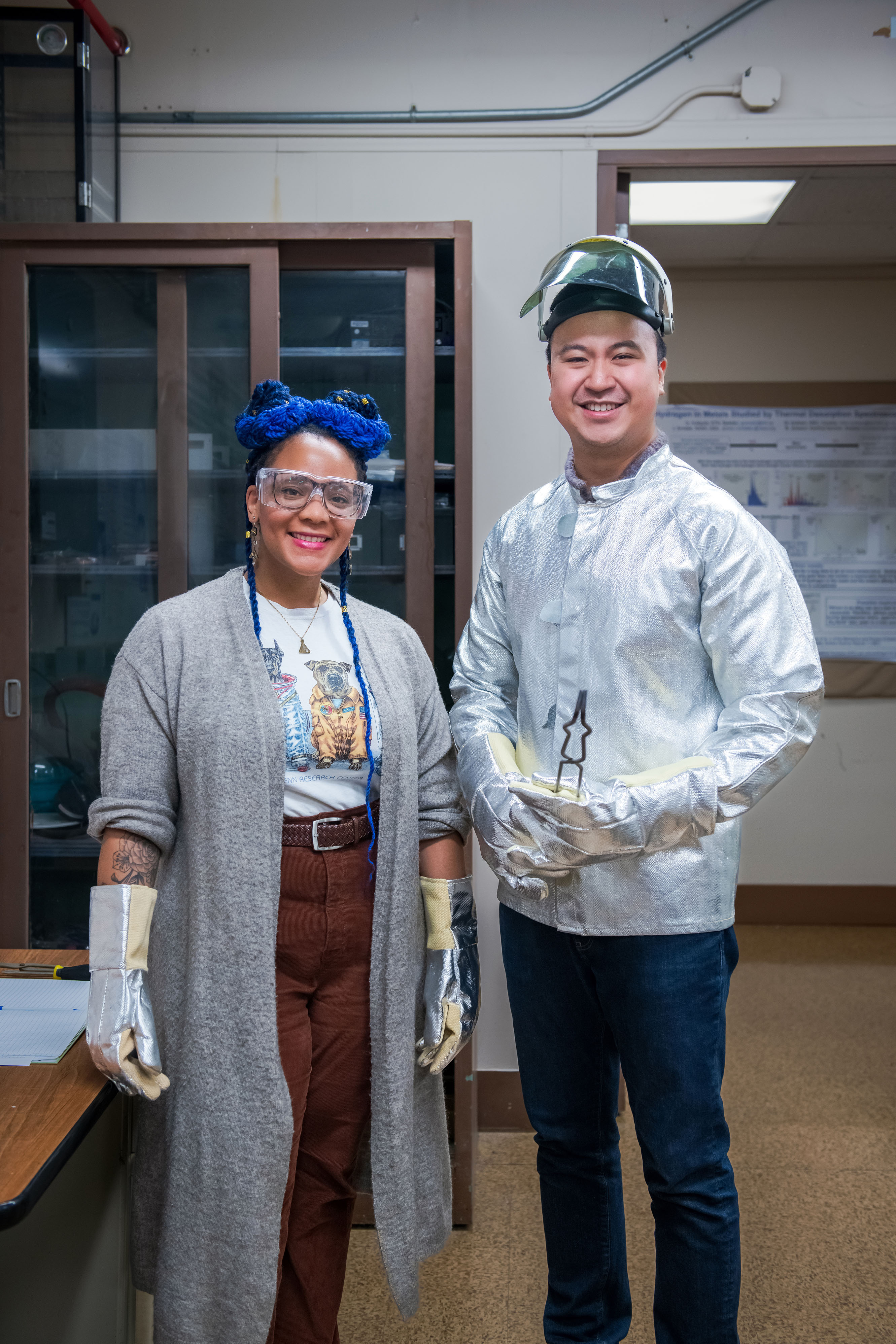
Researchers Dr. Jamesa Stokes, left, and Dr. Kevin Yu pose for a portrait inside of a laboratory at NASA’s Glenn Research Center in Cleveland in October 2024.NASA/Jef JanisWhile Yu and Stokes have now completed their initial tests, they hope to fine-tune the material in the future to purify it and make it even more affordable to produce. Materials research will be integral to exploring the harsh environments of the Moon and beyond.
You can have the best idea in the world for a structure or a vehicle, but if you don’t have the materials that have the right properties to make your vision come true, it’s not going to succeed no matter how well you design it.Dr. Jamesa stokes
Materials Research Engineer at NASA Glenn
Studying new materials also advances NASA’s work on Earth.
“I think trying to push what’s possible with materials also allows for a lot of breakthroughs on the terrestrial side. Having a better understanding of materials for all sorts of applications is what gets me excited to go to work in the morning,” Yu said. “That’s why I love NASA’s mission; it’s for the benefit of all.”
This materials research is supported by NASA’s Space Technology Mission Directorate and NASA’s Aeronautics Research Mission Directorate.
For more information, visit:
Share Details Last Updated May 22, 2026 Related Terms Explore More 4 min read Keeping NASA Flying: Ground Crews Ensure Aircraft Readiness Article 3 days ago 2 min read Hubble Captures Galaxy ClusterLook closely at this image from NASA’s Hubble Space Telescope and you’ll see galaxies of…
Article 3 days ago 2 min read NASA Seeks Interest for Artemis Mission CubeSats Article 4 days ago Keep Exploring Discover Related TopicsMissions
Humans in Space
Climate Change
Solar System
Hubble Captures Galaxy Cluster
- Hubble Home
- Overview
- Impact & Benefits
- Science
- Observatory
- Team
- Multimedia
- News
- More
2 min read
Hubble Captures Galaxy Cluster NASA’s Hubble Space Telescope captured this scene of galaxy cluster MACS J1141.6-1905 in visible and infrared light. NASA, ESA, H. Ebeling (University of Hawaii); Image Processing: G. Kober (NASA/Catholic University of America)Look closely at this image from NASA’s Hubble Space Telescope and you’ll see galaxies of various shapes and sizes clustered together toward the center-left of the image. A few foreground stars shine brightly and are easily distinguished by the spikes that appear to extend outward from each star. These spikes, called diffraction spikes, are the result of how point sources of light (such as stars) bend, or diffract, around the supports for Hubble’s secondary mirror.
Hubble captured this scene of MACS J1141.6-1905 in visible and infrared light. The image includes data from two Hubble observing programs that looked at massive galaxy clusters that shine very brightly in X-rays. Both programs were looking for distant galaxies gravitationally lensed by the cluster. They also wanted to better understand the physical nature of interactions at each cluster’s core. An extra bonus was the addition of Hubble’s visible and infrared observations of these very bright X-ray clusters to its archive.
Hubble’s archive of 1.7 million observations, and counting, is a valuable tool for current and future astronomers. They can mine Hubble’s 36 years of observations and examine the data with new tools, enabling researchers to make new discoveries.
MACS J1141.6-1905 is around four billion light-years away in the constellation Crater (the Cup).
Facebook logo @NASAHubble @NASAHubble Instagram logo @NASAHubbleMedia Contact:
Claire Andreoli
NASA’s Goddard Space Flight Center, Greenbelt, MD
claire.andreoli@nasa.gov
Since its 1990 launch, the Hubble Space Telescope has changed our fundamental understanding of the universe.
Hubble Spectroscopy
Hubble’s Partners in Science
AI and Hubble Science
Tornado Draws a Jagged Line in Mississippi
- Earth
- Earth Observatory
- Image of the Day
- EO Explorer
- Topics
- More Content
- About
NASA to Showcase Mission to Boost Swift Spacecraft’s Orbit
Media are invited to NASA’s Wallops Flight Facility in Virginia on Wednesday, June 17, to view Northrop Grumman’s Pegasus XL rocket, carrying a Katalyst robotic spacecraft that will attempt to boost the orbit of NASA’s Neil Gehrels Swift Observatory.
Katalyst’s robotic servicing spacecraft, called LINK, will launch on Pegasus in June to rendezvous with Swift and raise its altitude, extending its science mission lifespan.
Both United States and international media may apply for onsite credentials to view the Pegasus and the L-1011 Stargazer aircraft that will deploy the rocket at launch. In addition to interview opportunities on site, media also will receive images and video of LINK, as the spacecraft already will be encapsulated in the rocket.
NASA and Katalyst also will host an audio-only media teleconference on June 17 to preview the mission to boost Swift’s orbit. Audio of the media teleconference will stream live on NASA’s YouTube channel. Information about timing and teleconference participants will be shared closer to the event.
The application deadline for U.S. citizens to attend in person is 4 p.m. EDT, Wednesday, June 10. International media without U.S. citizenship must apply by 3 p.m. EDT, Wednesday, May 27. NASA’s media accreditation policy is available online.
Media requesting to participate in person or join the media call must send their accreditation requests to Amy Barra at: amy.l.barra@nasa.gov, with the following information:
- Legal first and last name (must match government identification)
- Phone number
- Job title and organization
- Citizenship
The Swift mission, which launched in 2004, leads NASA’s fleet of space telescopes in studying changes in the high-energy universe. It studies gamma-ray bursts — the most powerful explosions in the universe — and other cosmic objects and events. When a rapid, sudden event takes place in the cosmos, Swift serves as a “dispatcher,” providing critical information that allows other “first responder” missions to follow up to learn more about how the universe works.
Learn more about the mission to boost Swift’s orbit at:
https://science.nasa.gov/mission/swift/swift-boost-mission
-end-
Karen Fox / Alise Fisher
Headquarters, Washington
202-385-1287 / 202-358-2546
karen.c.fox@nasa.gov / alise.m.fisher@nasa.gov
Amy Barra
Wallops Flight Facility, Wallops Island, Virginia
757-824-1579
amy.l.barra@nasa.gov
NASA Joins Artemis Accords Workshop as Global Signings Rise
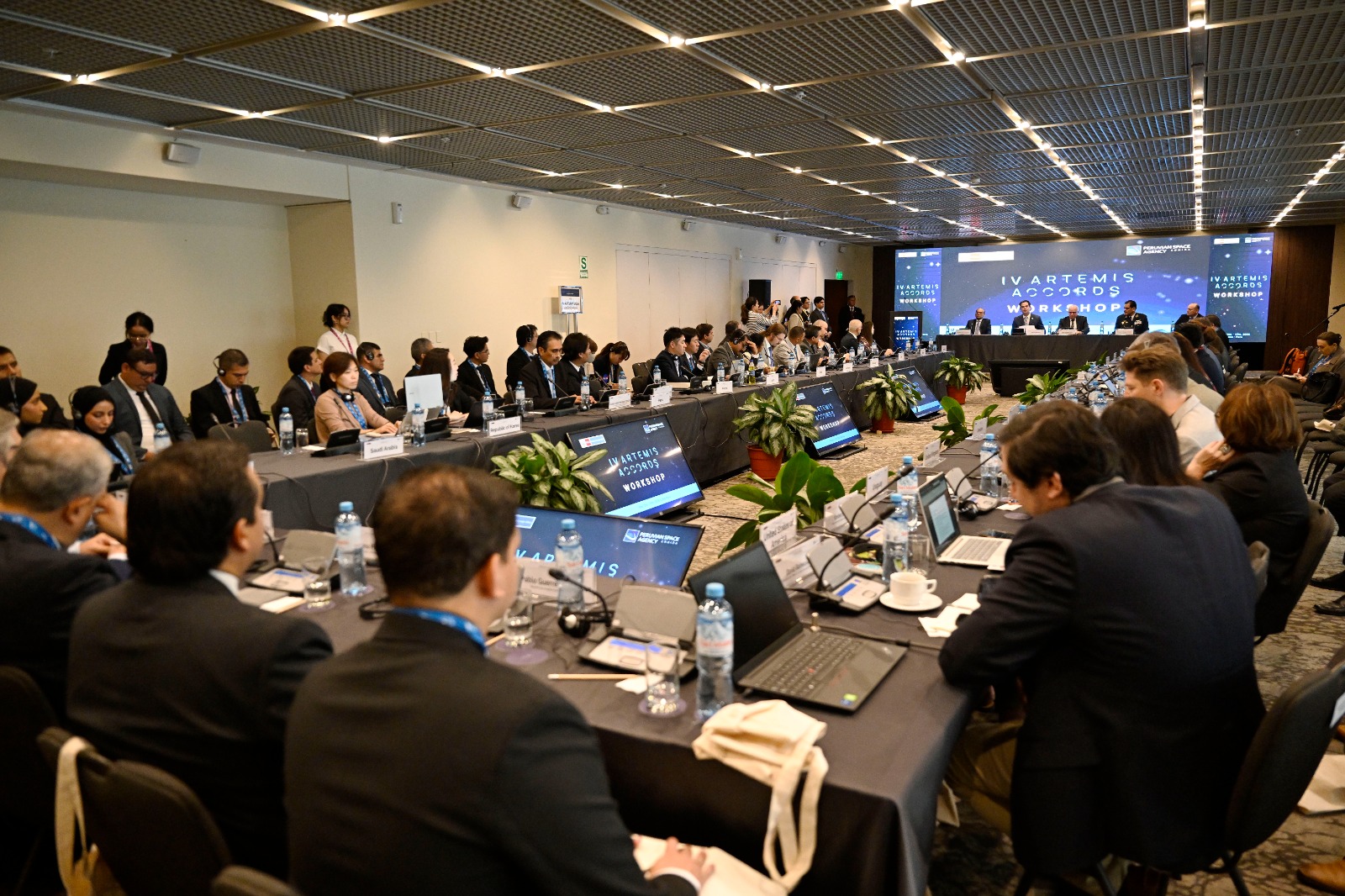
The United States participated in an Artemis Accords workshop in Lima, Peru, last week, following a new wave of nations committing to safe and responsible exploration of the Moon, Mars, and beyond.
Leading up to the event, six countries, including Latvia, Jordan, Morocco, Malta, Ireland, and Paraguay, joined the growing coalition of Artemis Accords signatories during ceremonies held at NASA Headquarters and abroad. This brings the total number of Artemis Accords signatories to 67 like-minded nations.
“This gathering showcases the remarkable global momentum behind the Artemis Accords and our Artemis program,” said NASA Administrator Jared Isaacman. “The Artemis Accords were created in President Trump’s first term and, as we execute his National Space Policy, we are putting these principles into practice. By aligning our capabilities, acting with urgency, and moving forward as partners, these signatory countries will help shape the future, not from the sidelines, but as essential contributors to humanity’s first permanent outpost on the Moon. Each and every Artemis Accords signatory has the opportunity to play a meaningful role with NASA as we work together to build a sustained human presence on the surface of the Moon.”
On May 13-14, representatives from NASA and the U.S. Department of State joined dozens of counterparts from 30 countries, including several of the newest signatories, for technical discussions and a tabletop exercise focused on operating in complex lunar environments.
Peru hosted the fourth annual workshop, marking the first time the gathering has taken place in South America.
“One of our objectives in hosting this edition of the workshops in our country was to increase regional participation,” said Maj. Gen. Roberto Melgar Sheen, director of Peruvian Space Agency (CONIDA). “I am pleased to say that we have achieved this: All South American signatory countries are taking part in this event, with 90% participating in person and 10% virtually.”
The Artemis Accords community reviewed planned lunar landing and orbiting missions from all the signatories in attendance. With more than a dozen lunar landing missions expected over the next 18 months, last week’s discussions and tabletop exercises focused on non-interference, interoperability, release of scientific data, orbital debris and mitigation. These conversations included a presentation on NASA’s exploration plan, which accelerates the agency’s missions to the Moon. Artemis Accords signatories now have expanded opportunities to support NASA’s Moon Base and deepen their participation in the broader Artemis program, following the agency’s Ignition event on March 24.
“Peru joined the Artemis Accords in 2024, aiming to participate in a cutting-edge dialogue mechanism that addresses global trends in space exploration. We aspire to forge cooperative ties with the signatories of the Artemis Accords that contribute to the scientific and aerospace development of our country,” said Peru’s Vice Minister of Foreign Affairs Ambassador Felix Denegri about the workshop.
During the first Trump Administration, the United States, led by NASA and the U.S. State Department, joined with seven other founding nations in 2020 to establish the Artemis Accords in response to the growing interest in lunar activities by both governments and private companies. Today, countries representing every region of the world have committed to responsible principles for exploration.
Signing the Artemis Accords means a commitment to the peaceful and transparent exploration of space; rendering aid to those in need; enabling access to scientific data; ensuring activities do not interfere with those of others; and preserving historically significant sites and artifacts by developing best practices.
More countries are expected to sign the Artemis Accords in the months and years ahead, as NASA continues its work to establish a safe, peaceful, and prosperous future in space.
For more information about the Artemis Accords, visit:
https://www.nasa.gov/artemis-accords
-end-
Camille Gallo / Elizabeth Shaw
Headquarters, Washington
202-358-1600
camille.m.gallo@nasa.gov / elizabeth.a.shaw@nasa.gov
NASA Seeks Interest for Artemis Mission CubeSats
Organizations interested in launching CubeSats on future Artemis missions should respond to NASA’s request for information (RFI) by Monday, June 1, for initial consideration.
“The SLS (Space Launch System) rocket and the Artemis missions provide great opportunities for teams to conduct important, science and technology investigations that contribute to the expansion of human space exploration,” said Courtney Ryals, acting manager, SLS payload integration, NASA’s Marshall Space Flight Center in Huntsville, Alabama.
The RFI will inform potential future opportunities for CubeSats to fly on Artemis III, IV and V. While NASA is reviewing specific mission profiles, the agency expects to accommodate 6U and 12U-sized CubeSats that would deploy in Earth orbit or on a heliocentric disposal trajectory following the separation of the Orion spacecraft from the rocket, as the nanosatellites would deploy from a ring on the upper stage of the rocket. Opportunities may also exist for CubeSats deployed on a reentry trajectory from Earth orbit.
CubeSat sizes are measured in “one unit” or “1U” increments, each measuring 10x10x10 centimeters.
NASA flew 10 CubeSats on the uncrewed Artemis I mission in 2022 and four on the crewed Artemis II mission, deploying each after the upper stage detached from the spacecraft and Orion was flying free on its own to carry out its primary mission. In addition to providing a ride to space as secondary payloads, the agency provides payload integration and engineering support.
As part of the Golden Age of innovation and exploration, NASA will send Artemis astronauts on increasingly difficult missions to explore more of the Moon for scientific discovery, economic benefits, establish an enduring human presence on the lunar surface, and to build on our foundation for the first crewed missions to Mars.
Share Details Last Updated May 21, 2026 EditorLee MohonContactJonathan Dealjonathan.e.deal@nasa.govLocationMarshall Space Flight Center Related Terms Keep Exploring Discover More Topics From NASAArtemis
Space Launch System (SLS)
Artemis III
Artemis IV
NASA’s AWE Completes Mission to Study Earth’s Effect on Space Weather
NASA
On May 21, ground controllers powered down NASA’s AWE (Atmospheric Waves Experiment) instrument, bringing the data collection phase of the mission to a successful and scheduled end, surpassing its planned two-year mission.
Installed on the exterior of the International Space Station since November 2023, AWE studied atmospheric gravity waves, which are giant ripples in the atmosphere caused by strong winds flowing over tall mountains or by violent weather events, such as tornadoes, thunderstorms, and hurricanes. The AWE instrument looked for these waves in colorful bands of light in Earth’s atmosphere, called airglow. Funded by NASA’s Heliophysics Division, AWE investigated how atmospheric gravity waves propagate upward to space and contribute to space weather — conditions in space that can disrupt satellites, as well as navigation and communications signals.
“The AWE mission has proven that our atmosphere is not a ceiling, but a living, breathing ocean in the sky,” said Joe Westlake, director of NASA’s Heliophysics Division at NASA Headquarters in Washington. “For the first time, we can see how a thunderstorm in the Midwest, a hurricane over Florida, or a wind gust over the Andes sends invisible ripples — atmospheric gravity waves — crashing into the edge of space like waves hitting a shoreline. By mapping these ripples from the International Space Station, we’ve discovered that Earth’s weather doesn’t just end at the clouds, instead it reaches out beyond our planet, shaping the space weather that impacts our orbital economy.”
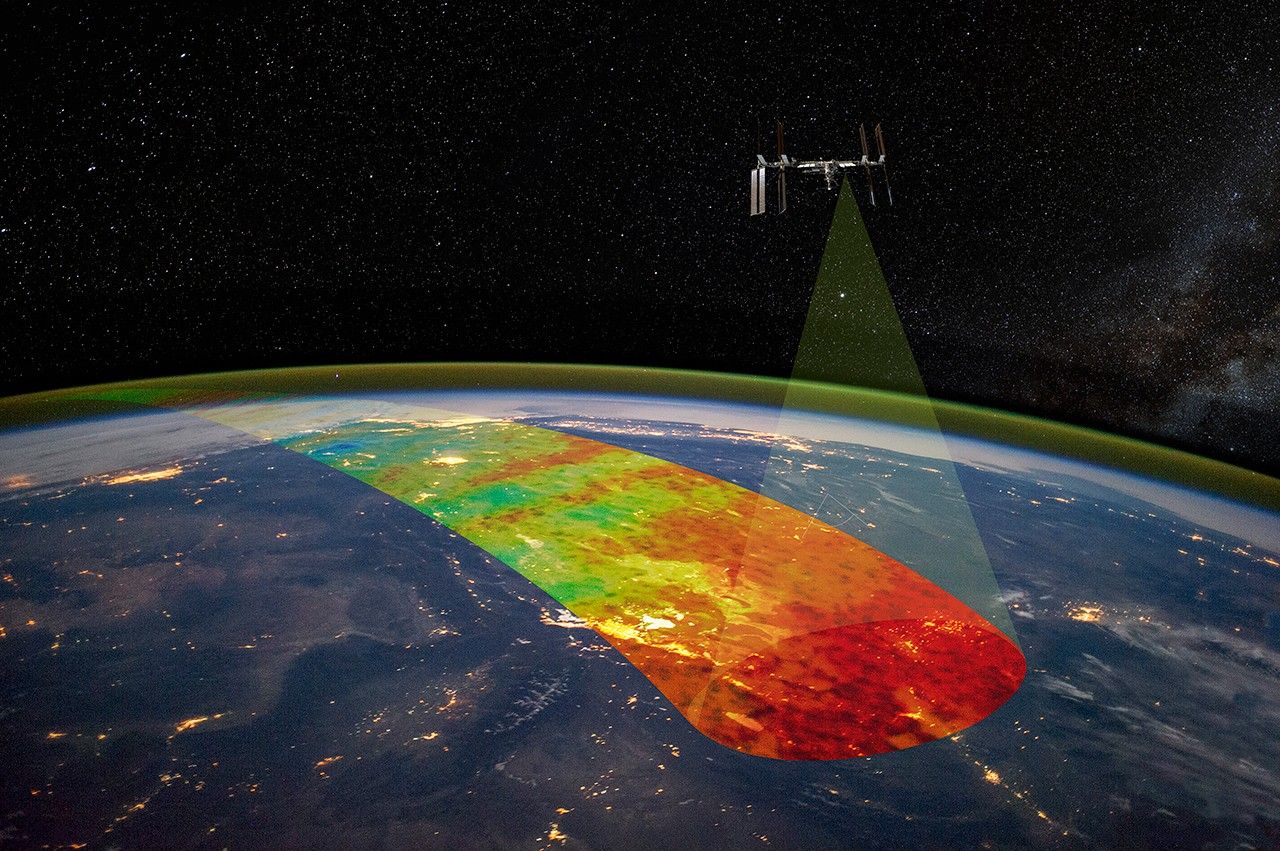
This artist’s conception depicts the Atmospheric Waves Experiment (AWE) scanning the atmosphere from aboard the International Space Station, measuring variations in infrared airglow to track atmospheric gravity waves as they move up from the lower atmosphere into space. Utah State University Space Dynamics LaboratoryDuring AWE’s 30-month residency on the station, the instrument captured four infrared images every second, tallying more than 80 million nighttime images, which is when airglow can be seen. It observed atmospheric gravity waves from numerous extreme weather events, including a tornado outbreak across the central U.S. in May 2024 and Hurricane Helene impacting the gulf coast of Florida in September 2024.
“We’ve seen atmospheric wave signatures associated with major terrestrial events, which provided a clear example of how intense weather systems can generate measurable upper-atmospheric responses,” said AWE’s principal investigator, Ludger Scherliess of Utah State University in Logan.
These events revealed variations in the types of atmospheric gravity waves created by different kinds of storms. For example, when AWE viewed atmospheric gravity waves generated by a thunderstorm in north Texas on May 26, 2024, it saw they were smaller and more irregular, with a notable asymmetry from north to south, compared to waves created by storms in the same part of the country earlier that month.
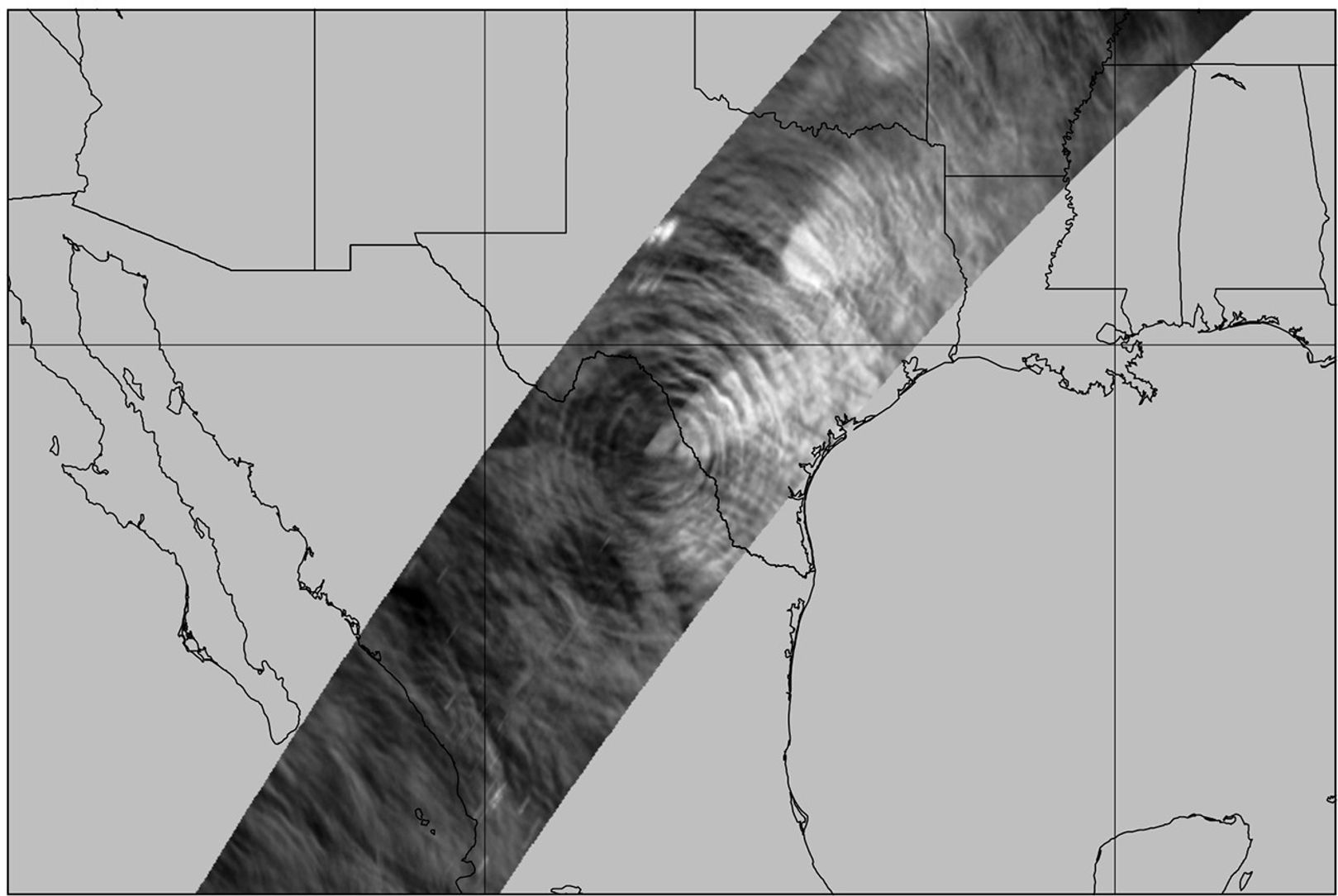
This image from AWE shows concentric atmospheric gravity waves caused by a severe weather event that included a tornado near the U.S.-Mexico border on May 3, 2024. Captured during orbit 2529 of AWE’s stay on the International Space Station, the image shows waves spreading across Texas and Mexico in near-perfect circles, a sight rarely observed with such clarity prior to the AWE mission. NASA/Utah State UniversityIt is important to understand variations in the density of plasma, which is electrically charged gas, in Earth’s upper atmosphere instigated by atmospheric gravity waves, because these variations can disrupt radio signals traveling between satellites and the ground, and from satellite to satellite, degrading the accuracy and reliability of systems used for navigation, timing, and communications.
In a recent study, AWE measurements also revealed the gravity waves with the greatest influence on the upper atmosphere have small horizontal wavelengths, ranging from 30 to 300 kilometers, which AWE was specifically designed to measure.
With its data-collection phase complete, the AWE instrument was turned off to make way for another science experiment that will take its place on the outside of the space station. Called CLARREO Pathfinder (Calibration Absolute Radiance and Refractivity Observatory Pathfinder), the new instrument will take measurements of sunlight reflected by Earth and the Moon that are five to 10 times more accurate than those from existing sensors. The exchange of instruments is a key part of the space station’s mission and versatility as an orbiting laboratory for various types of research.
As the International Space Station traveled over the southeastern United States on Sept. 26, 2024, AWE observed atmospheric gravity waves generated by Hurricane Helene as the storm slammed into the gulf coast of Florida. The curved bands extending to the northwest of Florida, artificially colored red, yellow, and blue, show changes in brightness (or radiance) in a wavelength of infrared light produced by airglow in Earth’s mesosphere. The small black circles on the continent mark the locations of cities. Utah State UniversityIn the coming days, a robotic arm on the space station, called Canadarm2, will remove the AWE instrument from its location. Soon afterward, the AWE instrument will be loaded into part of a SpaceX Dragon cargo spacecraft that will deorbit and burn up as it re-enters the atmosphere. However, all of AWE’s observations will ultimately become available to the public and the scientific community for ongoing research and discovery.
“Data from AWE will continue to be made public for both professional researchers and citizen scientists,” Scherliess said.
Some of this data already is available, including interactive, online visualizations on Utah State University’s website, where AWE’s observations are “painted” in swaths onto a globe or on a map as the space station orbits the planet. Users can rotate the visualizations to view atmospheric gravity waves from different angles.
A still image from an interactive visualization shows AWE data collected over the Western Hemisphere. Utah State UniversityLaunched on Nov. 9, 2023, AWE is managed by the Explorers Program Office at NASA’s Goddard Space Flight Center in Greenbelt, Maryland. Utah State University’s Space Dynamics Laboratory built the AWE instrument and provided the mission operations center.
Hear more about AWE by listening to episode 334 of NASA’s Houston We Have a Podcast, recorded on Jan. 26, 2024.
By Vanessa Thomas
NASA’s Goddard Space Flight Center, Greenbelt, Md.
An international team studying data from NASA’s Fermi Gamma-ray Space Telescope concludes the mission detected…
Article
1 day ago
5 min read NASA’s MAVEN Makes 1st Discovery of Atmospheric Effect at Mars
Article
3 days ago
4 min read Great Balls of Fire
An astronaut on the International Space Station was surprised to photograph a shower of light…
Article
4 days ago
Keep Exploring Discover More Topics From NASA
Missions
Humans in Space
Climate Change
Solar System
NASA Wins Four Telly Awards for Artemis Moon Coverage, More
NASA’s historic Artemis II mission coverage, which connected global audiences to watch the first humans to travel around the Moon in more than half a century, is among the agency’s video productions recognized with four 2026 Telly Awards.
“President Trump’s leadership in establishing the Artemis program reignited America’s bold vision for space exploration and set our nation on a course back to the Moon. During America’s 250th birthday, Artemis II marked the beginning of that new era by sending astronauts around the Moon for the first crewed lunar mission since Apollo, inspiring millions across the country and around the world,” said Will Boyington, associate administrator, Office of Communications, NASA Headquarters in Washington. “These Telly Awards recognize the extraordinary NASA teams who brought that historic journey into homes everywhere through innovative storytelling, live coverage, and an unprecedented digital experience that showcased American leadership in space and renewed the spirit of exploration for a new generation.”
The agency’s continuous, 24/7 livestream of the Artemis II mission, which functioned as both a live event and as a science storytelling experience, combined visuals, real-time mission data, and expert analysis to make a complex spaceflight clear and accessible for an international audience. NASA’s video documentation of mission astronauts and support teams conducting geology training on Earth to prepare for future Artemis missions on the Moon also won a science and technology storytelling award.
In addition, NASA won a screenwriting award for a documentary on the agency’s Hubble Space Telescope, James Webb Space Telescope, and Nancy Grace Roman Space Telescope, narrated by actor John Rhys-Davies.
“By following NASA’s Artemis II coverage in real time on multiple platforms, millions of viewers around the world were able to experience the mission inside the Orion spacecraft and alongside the crew, from lunar flyby to splashdown,” said Brittany Brown, director, Office of Communications Digital and Technology Division, NASA Headquarters in Washington. “Our team’s coordination, from the Mission Control Center at NASA’s Johnson Space Center in Houston to the Moon, technical expertise, and around-the-clock dedication turned a single spaceflight mission into a shared, global experience of wonder and inspiration.”
Full list of NASA’s Telly Award wins:
- NASA’s Artemis II: Humanity’s Return to the Moon
Gold Winner, Science and Technology - NASA’s Artemis II: Humanity’s Return to the Moon
Silver Winner, Live Events and Experiences - Preparing for Artemis: NASA’s Geology Training for Lunar Exploration
Silver Winner, Science and Technology - The Fellowship of the Telescopes
Bronze Winner, Craft-Writing
Livestream coverage of the mission and milestones reached NASA’s largest streaming audience ever on its individual platforms, ultimately reaching nearly 290 million combined views across agency platforms. Commercial streaming partners expanded the mission’s reach to a global audience of hundreds of millions more potential viewers.
Watch all NASA content through a variety of online platforms:
https://www.nasa.gov/ways-to-watch
Share Details Last Updated May 22, 2026 EditorJessica TaveauLocationNASA Headquarters Related Terms