NASA - Breaking News

Reminders of Where We’ve Been, Where We’re Going
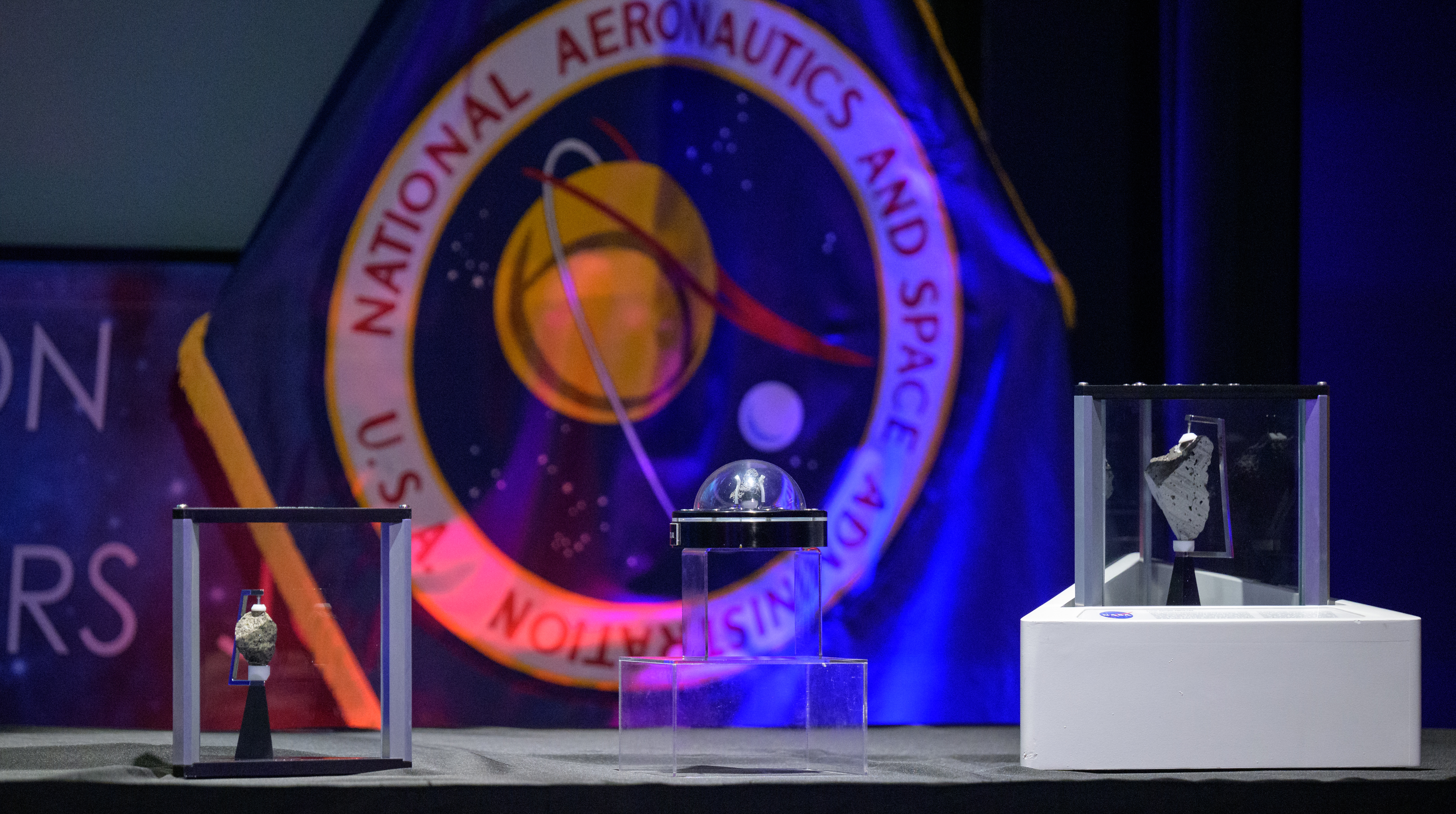
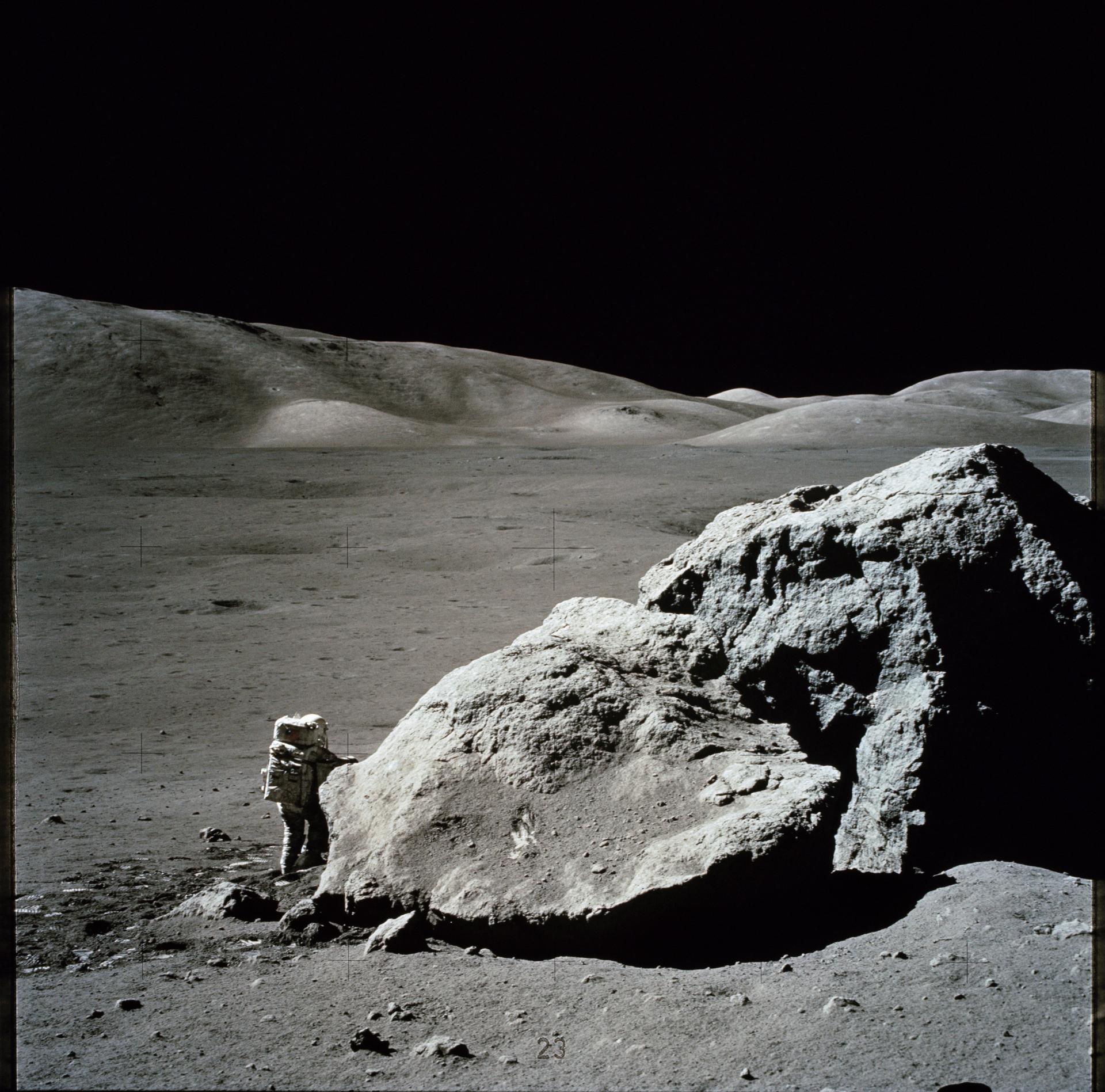
Three Moon rocks are on display during a March 24, 2026, event where NASA announced a series of transformative agencywide initiatives designed to achieve the National Space Policy and advance American leadership in space.
NASA leadership provided updates on mission priorities, including sending the first astronauts to the lunar surface in more than 50 years, establishing the initial elements of a permanent lunar base, getting America underway in space on nuclear propulsion, and other objectives.
Image credit: NASA/Bill Ingalls
3 Ways Students Can Get Involved With Artemis
NASA’s Artemis program will establish a sustainable lunar presence, unlock new scientific discoveries, and develop technologies for spaceflight to Mars and beyond – and students can help shape this new era of space exploration.
As America launches this new Golden Age of innovation and exploration, NASA and its partners offer exciting opportunities for students to get involved in the mission and strengthen the future workforce through internships, competitions, and more.
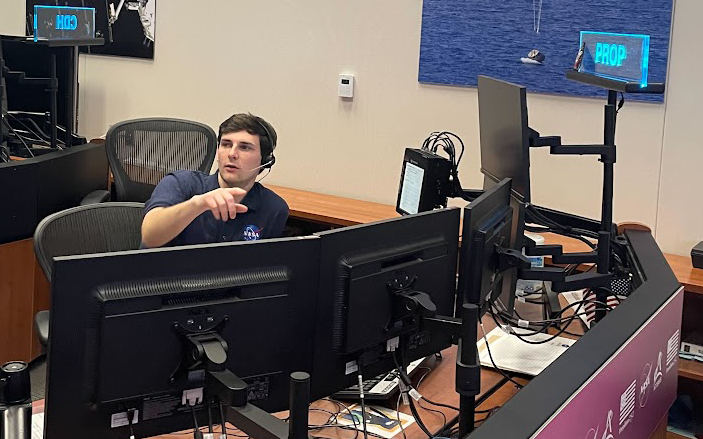
Michael Svara is an intern in the Exploration Propulsion Systems Group in the Flight Operations Division at NASA’s Johnson Space Center in Houston. Turn Skills Into Impact With NASA InternshipsNASA Internships enable U.S. college students to contribute to Artemis through their work on projects supporting lunar exploration, spacecraft systems, and the cutting-edge technology development that makes deep space missions possible.
As NASA interns, students gain hands-on experience that builds technical skills, connections, and career readiness. Interns collaborate with agency professionals and receive guidance from supportive mentors, all while tackling authentic challenges posed by advanced spaceflight. NASA internships go beyond learning experiences to provide a launch pad into the workforce.
Want to learn more? Explore the NASA Internships website, follow NASA Internships on Instagram, and check out our 5 Tips to Craft a Standout Internship Application.
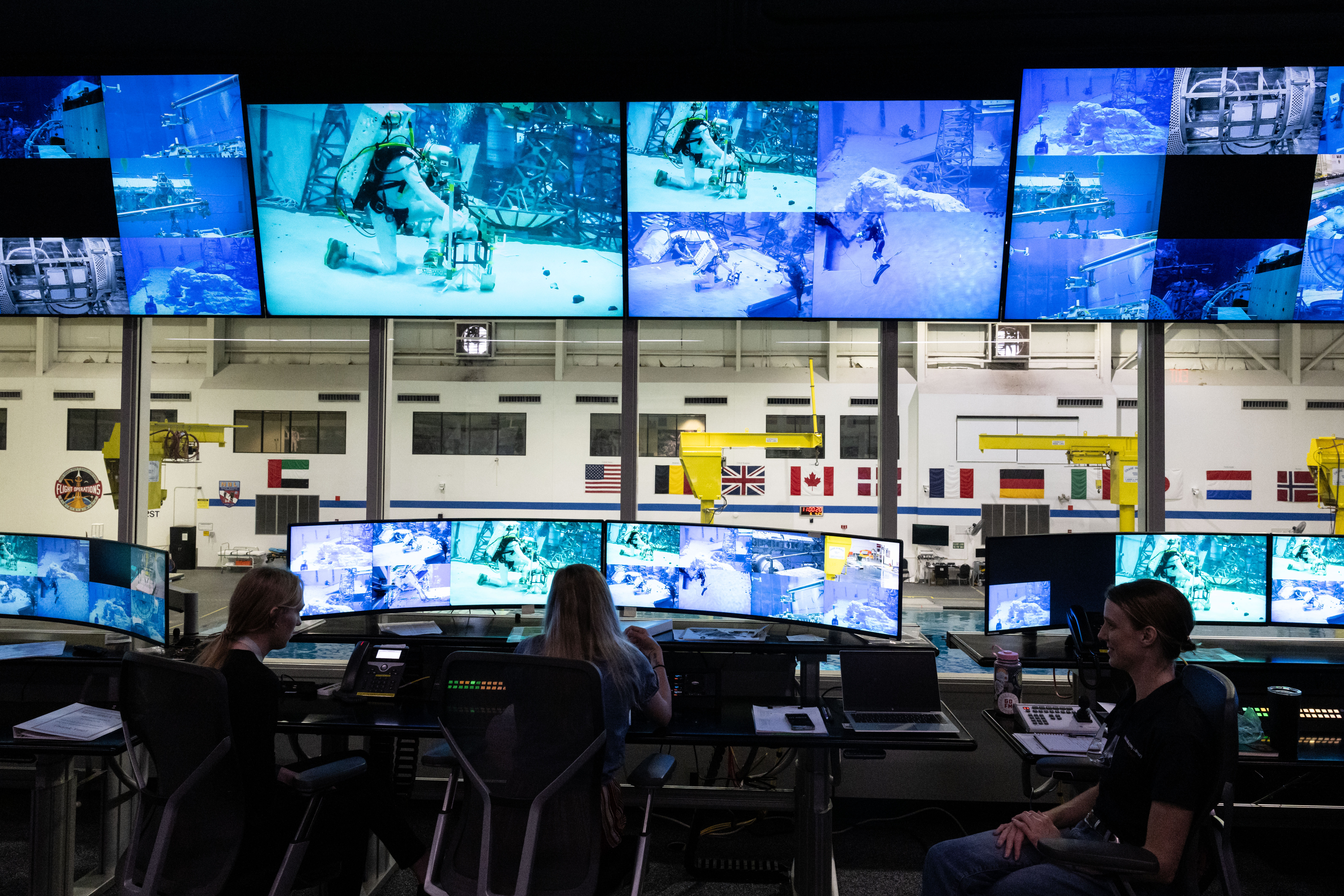
Inside the Neutral Buoyancy Laboratory at NASA’s Johnson Space Center in Houston, a professional diver tests a student-designed tool created for the Micro-g Neutral Buoyancy Experiment Design Teams (Micro-g NExT) challenge. Innovate Solutions Through NASA Student Design ChallengesNASA’s student design challenges offer hands-on STEM experience and an introduction to the skills needed for aerospace careers. These challenges build technical expertise, problem-solving skills, and confidence, preparing participants for roles in the nation’s STEM workforce while giving them a chance to make an impact on the agency’s most ambitious goals. Here are the NASA student challenges focusing on Artemis and related technologies:
- Human Exploration Rover Challenge: Teams of high school and college students from around the world build and then race pedal-powered rovers over a lunar-like obstacle course at the U.S. Space & Rocket Center in Huntsville, Alabama.
- Micro-g Neutral Buoyancy Experiment Design Teams (Micro-g NExT): U.S. undergraduate teams are tasked with designing, building, and testing space exploration tools in simulated microgravity at Johnson Space Center’s Neutral Buoyancy Laboratory.
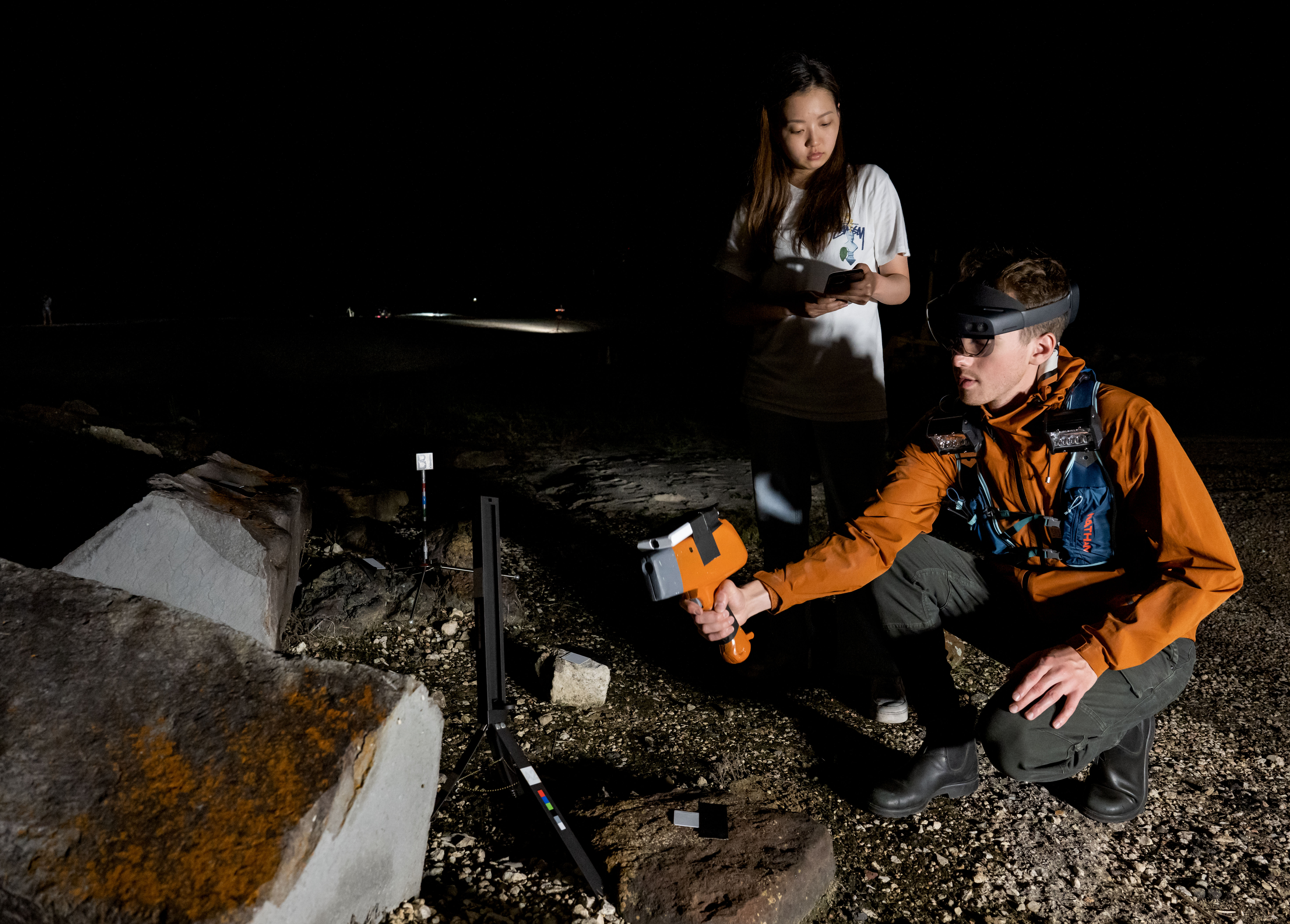
- NASA Spacesuit User Interface Technologies for Students (NASA SUITS): This challenge engages college students nationwide in the design of next-generation spacesuit user interfaces – technologies supporting future human exploration on the Moon or Mars.
- NASA’s Student Launch: U.S. student teams are challenged to design, build, and launch a high-powered rocket with a scientific payload, culminating in an annual final launch at Marshall Space Flight Center in Huntsville, Alabama.
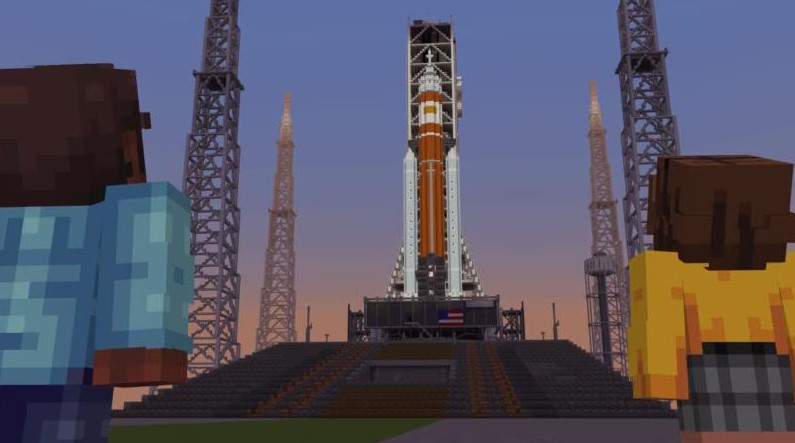
Student teams can dive into the Artemis program inside the Minecraft universe. Since 2023, players have been building rockets, launching missions to the Moon, and creating bases on the lunar surface through a partnership between Minecraft Education and NASA. This April, the collaboration’s Artemis adventures will expand to include the new Minecraft Education Build Challenge, Mission Control: Artemis. Students will step into NASA’s Mission Control, use block-based code to guide a spacewalk on the lunar surface, and dream up the ultimate control center for the next generation of space explorers.
Students put their designs to the test during the NASA Spacesuit User Interface Technologies for Students (NASA SUITS) challenge. Be Part of the Next Giant LeapNASA and the nation are embarking on a new era in human spaceflight, and students are invited to get involved, increase their knowledge, and learn how they can transform a passion for STEM into a rewarding role in the aerospace workforce.
Ready to be part of NASA’s next giant leap? Check out NASA’s Learning Resources website to learn more about current student opportunities and career resources from NASA’s Office of STEM Engagement.
Keep Exploring Discover More Topics From NASAJoin the Artemis Mission to the Moon
For Students Grades 9-12
For Colleges and Universities
Artemis II
NASA Selects Finalists in Student Aircraft Maintenance Competition
Editor’s note: This advisory was updated on March 24, 2026, to update the finalists list.
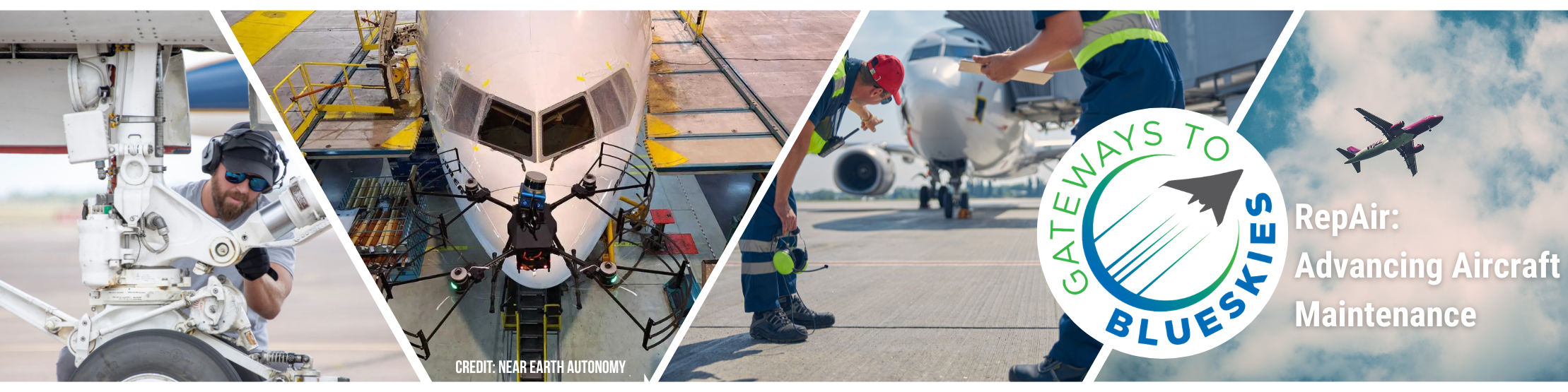
NASA has selected seven student teams as finalists in the 2026 Gateways to Blue Skies Competition, giving them the resources to help address a critical challenge for U.S. aviation: aircraft maintenance.
Challenges facing the commercial aviation industry include a shortage of qualified maintenance workers and increasing demands to keep complicated aircraft running for longer.
With Gateways to Blue Skies, NASA taps into student innovation to address some of the biggest topics in aviation, and the current competition, RepAir: Advancing Aircraft Maintenance, is looking for solutions that can have immediate impact.
“Through this competition, students will learn about aviation maintenance and be empowered to change its future,” said Steven Holz, associate project manager for NASA’s University Innovation Project and judging panel co-chair for Gateways to Blue Skies. “By grounding innovative ideas in real operational needs and presenting them to NASA and industry experts, these teams demonstrate the kind of critical thinking, collaboration, and forward-looking problem solving that will shape a safer, more efficient aviation industry in the near future.”
This competition challenged teams of postsecondary students to conceptualize innovative systems and practices that could advance current commercial aircraft maintenance and repair operations. It addresses dual goals for NASA: supporting innovative research and also stimulating the potential aviation workforce of tomorrow.
The goal for RepAir: Advancing Aircraft Maintenance is to generate concepts to improve efficiency, safety, and costs for the aviation maintenance industry by 2035. That timeline differs from many NASA research competitions focused on long-term future technologies; RepAir seeks to address the maintenance issues of today.
NASA made its selections based on a review of participants’ proposals and accompanying videos summarizing the RepAir concepts. The seven finalist teams will receive a $9,000 prize and will advance to Phase 2 of the competition.
Phase 2 includes a review of each team’s final paper, infographic, and presentation at the 2026 Gateways to Blue Skies Forum, held May 18 at NASA’s Langley Research Center in Hampton, Virginia in May and livestreamed globally.
Following the forum, members of the winning team who fulfill eligibility criteria will be offered the opportunity to intern with NASA Aeronautics.
The 2026 Gateways to Blue Skies Competition finalist projects represent an array of capabilities including robotic inspections, augmented reality smart glasses, and sensor and machine learning architectures:
- Embry-Riddle Aeronautical University Daytona Beach with Cecil College Maryland
Advancing Aircraft Maintenance, Smart Mechanic Glasses - Manhattan University
Aircraft Enhanced Resilience and Intelligence Systems (A.E.R.I.S) - Michigan State University
Surface Evaluation Network for Tethered Inspection and Nondestructive Evaluation (SENTINEL) - South Dakota State University
Surveying Platform and Inspection Device for Enclosed Regions (S.P.I.D.E.R.) - South Dakota State University
WINGMAN, augmented reality data-logging and information-display system for improved efficiency in line maintenance inspections and reporting
- South Dakota State University
Surface Preservation and Rust Killer (S.P.A.R.K.) Crawler
- University of California, Irvine
Aircraft Structural Health Intelligence for Evaluation and Lifecycle Detection (Air SHIELD)
The Gateways to Blue Skies Challenge is led through the Transformative Aeronautics Concepts Program in NASA’s Aeronautics Research Mission Directorate. The NASA Tournament Lab, part of the Prizes, Challenges, and Crowdsourcing Program in the Space Technology Mission Directorate, manages the challenge through the National Institute of Aerospace on behalf of NASA.
More on the Gateways to Blues Skies: RepAir: Advancing Aircraft Maintenance competition is available on the competition’s site.
Explore More 2 min read NASA Research Proposes Technology to Seek Earth-Like Exoplanets Article 14 hours ago 1 min read Transformational Tools and Technologies Resources Article 2 days ago 2 min read NASA’s X-59 Experimental Supersonic Aircraft Makes Second Flight Article 4 days ago Keep Exploring Discover More Topics From NASAAeronautics
NASA Prizes, Challenges, and Crowdsourcing
Space Technology Mission Directorate
Get Involved
Share Details Last Updated Mar 24, 2026 EditorJim BankeContactBailey G. Lightbailey.light@nasa.gov Related TermsNASA X-Ray Mission Gets Fresh Look at 2,000-Year-Old Supernova
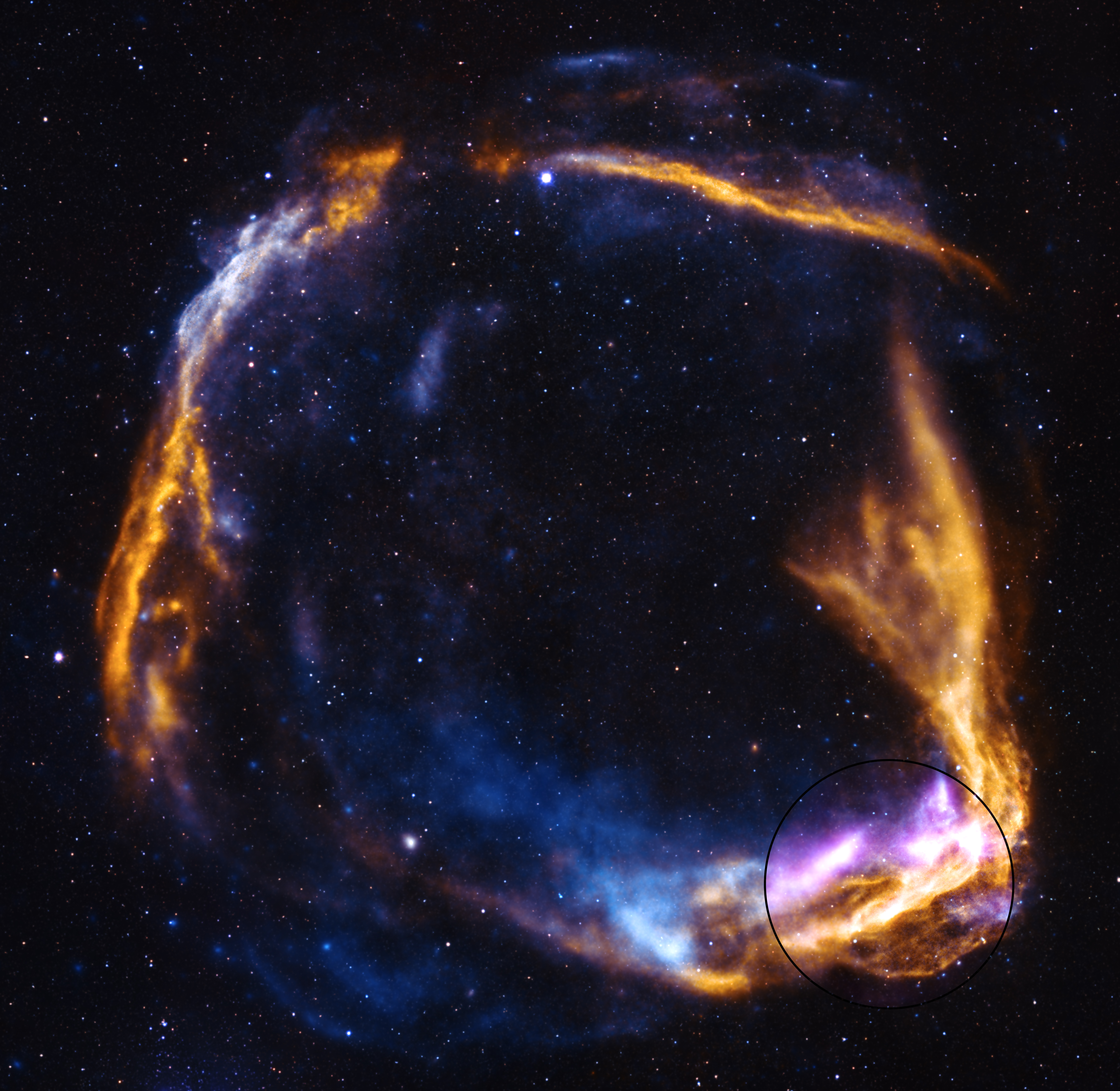
NASA’s IXPE (Imaging X-ray Polarimetry Explorer) mission has taken a new observation of a supernova, RCW 86, helping fill in a fuller picture of what other telescopes have observed.
When astronomers using NASA’s Chandra X-ray Observatory previously targeted RCW 86, they discovered that a large “cavity” region around the system led the supernova to expand more rapidly than expected. The low-density cavity region could have led to RCW 86’s unique shape as well. Now, IXPE has observed the outer rim of this supernova, where its expansion is suspected to have halted at the edge of the “cavity,” creating the reflected shock effect highlighted in purple.
The full image combines IXPE’s data with legacy observations from two other X-ray telescopes: NASA’s Chandra and the ESA (European Space Agency) XMM-Newton telescope. The yellow represents low-energy X-rays, while blue shows high-energy X-rays detected by Chandra and XMM-Newton. The starfield in the image comes from the National Science Foundation’s National Optical-Infrared Astronomy Research Laboratory (NOIRLab).
More about IXPEThe IXPE mission, which continues to provide unprecedented data enabling groundbreaking discoveries about celestial objects across the universe, is a joint NASA and Italian Space Agency mission with partners and science collaborators in 12 countries. It is led by NASA’s Marshall Space Flight Center in Huntsville, Alabama. BAE Systems, Inc., headquartered in Falls Church, Virginia, manages spacecraft operations together with the University of Colorado’s Laboratory for Atmospheric and Space Physics in Boulder. Learn more about IXPE’s ongoing mission here:
Share Details Last Updated Mar 24, 2026 EditorLee MohonContactJoel Wallacejoel.w.wallace@nasa.gov Related Terms Keep Exploring Discover More Topics From NASA Imaging X-ray Polarimetry Explorer (IXPE)The Imaging X-ray Polarimetry Explorer (IXPE) is a space observatory built to discover the secrets of some of the most…
Chandra X-ray ObservatoryLaunched on July 23, 1999, it is the largest and most sophisticated X-ray observatory to date. NASA’s Chandra X-ray Observatory…
XMM-Newton
James Webb Space TelescopeWebb is the premier observatory of the next decade, serving thousands of astronomers worldwide. It studies every phase in the…
La NASA presenta iniciativas para cumplir con la política espacial nacional de Estados Unidos
Read this news release in English here.
Como parte de su evento “Ignition” (Encendido) celebrado el martes, la NASA anunció una serie de iniciativas transformadoras a nivel de toda la agencia, diseñadas para cumplir con la Política Espacial Nacional del presidente Donald J. Trump y promover el liderazgo estadounidense en el espacio. Estas acciones reflejan la urgencia del momento, pero también la tremenda oportunidad que se ofrece para la ciencia y los descubrimientos capaces de transformar el mundo.
“La NASA tiene el compromiso de lograr, una vez más, lo casi imposible: regresar a la Luna antes de que finalice el mandato del presidente Trump, construir una base lunar, establecer una presencia permanente y llevar a cabo las demás acciones necesarias para garantizar el liderazgo estadounidense en el espacio. Por ello, resulta esencial que salgamos de un evento como Ignition con una total alineación en torno al imperativo nacional que constituye nuestra misión colectiva. El reloj avanza en esta competencia entre grandes potencias, y el éxito o el fracaso se medirán en meses, no en años”, dijo el administrador de la NASA, Jared Isaacman. “Si concentramos los extraordinarios recursos de la NASA en los objetivos de la Política Espacial Nacional, eliminamos los obstáculos innecesarios que frenan el progreso y liberamos el potencial de nuestra fuerza laboral y el poderío industrial de nuestra nación y de nuestros socios, entonces el regreso a la Luna y la construcción de una base parecerán insignificantes en comparación con lo que seremos capaces de lograr en los próximos años.”
El Administrador Asociado de la NASA, Amit Kshatriya, dijo: “Hoy estamos alineando a la NASA en torno a esta misión. En la Luna, estamos adoptando una arquitectura enfocada y por fases que desarrolla capacidades un alunizaje tras otro, de manera incremental y en consonancia con nuestros socios industriales e internacionales. En la órbita terrestre baja [LEO, por sus siglas en inglés], estamos identificando en qué áreas se encuentra el mercado y dónde no, reconociendo el inmenso valor de la Estación Espacial Internacional y desarrollando una transición que fomente un ecosistema comercial competitivo, en lugar de imponer un resultado único que el mercado no pueda sostener. En nuestras misiones científicas, estamos creando oportunidades en la superficie lunar para investigadores y estudiantes de todo el país y, con el Reactor Espacial 1 Freedom (SR-1 Freedom, por sus siglas en inglés), estamos finalmente situando la propulsión nuclear en una trayectoria que la lleva fuera del laboratorio y hacia el espacio profundo. Y todo esto es posible invirtiendo en nuestra gente, reincorporando habilidades críticas a la agencia, poniendo a nuestros equipos allí donde se construyen las máquinas y creando vías reales para la siguiente generación de líderes de la NASA. Nuestra fuerza laboral es la joya de la NASA y, por parte de sus líderes, necesita objetivos claros para sus misiones, las herramientas para ejecutarlas y que se les deje trabajar sin interferencias. De esto trata Ignition.”
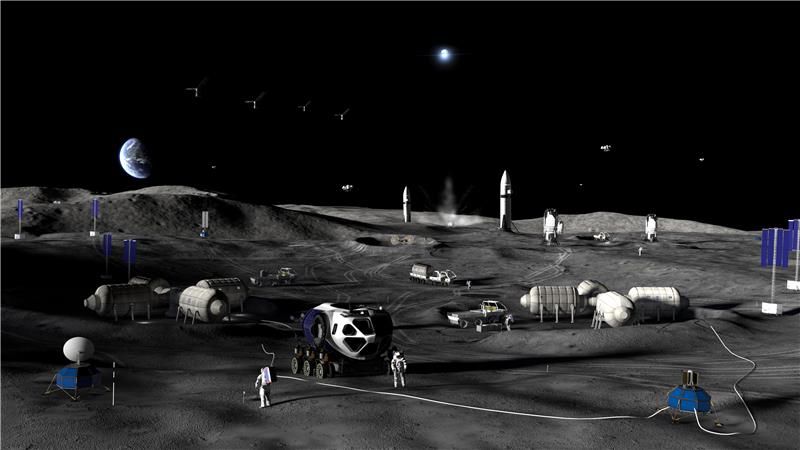
El regreso a la Luna
Estos anuncios se basan en las recientes actualizaciones del programa Artemis, las cuales incluyen la estandarización de la configuración del cohete Sistema de Lanzamiento Espacial, la incorporación de una misión adicional en 2027 y la realización de al menos un alunizaje en la superficie cada año a partir de entonces. En el marco de esta arquitectura previamente actualizada, la misión Artemis III —programada para 2027— se centrará en poner a prueba los sistemas integrados y las capacidades operativas en la órbita terrestre, como paso previo al alunizaje de Artemis IV.
Más allá de Artemis V, la NASA anunció el 24 de marzo que comenzará a incorporar más hardware adquirido comercialmente y reutilizable para llevar a cabo misiones tripuladas a la superficie lunar frecuentes y a un costo asequible, con el objetivo inicial de efectuar alunizajes cada seis meses, y el potencial de aumentar esta frecuencia a medida que maduren las capacidades.
Para lograr una presencia humana duradera en la Luna, la NASA también anunció un enfoque por fases para la construcción de una base lunar. Como parte de esta estrategia, la agencia tiene la intención de poner en pausa el proyecto Gateway en su forma actual y reorientar su enfoque hacia una infraestructura que permita mantener operaciones continuas en la superficie. A pesar de los desafíos que presentan algunos componentes del hardware existente, la agencia reutilizará el equipamiento utilizable y aprovechará los compromisos de sus socios internacionales para apoyar estos objetivos.
En los próximos días, la NASA publicará Solicitudes de Información y borradores de Solicitudes de Propuestas (RFI y RFP, respectivamente, por sus siglas en inglés) para garantizar el avance continuo en el cumplimiento de los objetivos nacionales.
Construcción de la base lunar
El plan de la NASA para establecer una presencia lunar sostenida se desarrollará en tres fases preconcebidas.
- Fase uno: Construir, ensayar, aprender
La NASA pasará de la ejecución de misiones con diferentes objetivos puntuales y poco frecuentes hacia un enfoque modular y repetible. Mediante los transportes del programa de Servicios Comerciales de Carga Útil Lunar (CLPS, por sus siglas en inglés) y el programa de vehículos para terreno lunar, la agencia aumentará el ritmo de la actividad lunar, enviando rovers, instrumentos y demostraciones tecnológicas que impulsen la movilidad, la generación de energía (incluyendo unidades de calefacción por radioisótopos y generadores termoeléctricos de radioisótopos), las comunicaciones, la navegación, las operaciones en la superficie y una amplia gama de investigaciones científicas.
- Fase dos: Establecimiento de la infraestructura inicial
Con base en las lecciones aprendidas de las misiones anteriores, la NASA avanza hacia la obtención de una infraestructura semi-habitable y una logística permanente. Esta fase respalda las operaciones recurrentes de los astronautas en la superficie e incorpora importantes contribuciones internacionales, entre las que se encuentra el vehículo explorador presurizado de la JAXA (Agencia de Exploración Aeroespacial de Japón) y, potencialmente, otras cargas útiles científicas, rovers y capacidades de infraestructura y transporte de los socios colaboradores.
- Fase tres: Habilitar una presencia humana de larga duración
A medida que entren en funcionamiento los sistemas de aterrizaje humano con capacidad de carga, la NASA enviará la infraestructura más pesada necesaria para establecer una presencia humana continua en la Luna, marcando de esta manera la transición de expediciones periódicas a una base lunar permanente. Esto incluirá los Hábitats Multiuso de la ASI (Agencia Espacial Italiana), el Vehículo Utilitario Lunar de la CSA (Agencia Espacial Canadiense) y oportunidades para hacer contribuciones adicionales en los ámbitos de habitabilidad, movilidad en la superficie y logística.
Garantizar la presencia estadounidense en la órbita terrestre baja
A la vez que desarrolla una arquitectura lunar sostenible, la NASA también reafirma su compromiso con la órbita terrestre baja. Durante más de dos décadas, la Estación Espacial Internacional ha servido como un laboratorio orbital de clase mundial, haciendo posibles más de 4.000 investigaciones científicas, brindando apoyo a más de 5.000 investigadores y recibiendo a visitantes de 26 países. El diseño, desarrollo y construcción de la estación espacial requirieron 37 vuelos de transbordadores espaciales, 160 caminatas espaciales, dos décadas de trabajo y más de 100.000 millones de dólares. Este laboratorio orbital no puede operar indefinidamente. La transición hacia estaciones comerciales debe ser reflexiva, deliberada y estructurada para apoyar el éxito a largo plazo de esta industria.
La NASA busca presentar y solicitar la opinión de la industria sobre una estrategia adicional para la órbita terrestre baja que mantiene todas las vías actuales, al tiempo que incorpora un enfoque por fases, anclado a la Estación Espacial Internacional, con el fin de evitar allí cualquier interrupción en la presencia humana estadounidense y consolidar un ecosistema comercial robusto. En el marco de este enfoque alternativo, la NASA adquiriría un Módulo Central de propiedad gubernamental que se acoplaría a la estación espacial, seguido de módulos comerciales que serían validados utilizando las capacidades de la Estación Espacial Internacional para, posteriormente, desacoplarse y operar en vuelo libre. Una vez consolidadas las capacidades técnicas y operativas, y que se materialice la demanda del mercado, las estaciones se desacoplarían y la NASA pasaría a ser uno de los muchos clientes que adquieren servicios comerciales. Para estimular la economía orbital, la NASA ampliaría las oportunidades para la industria, incluyendo misiones de astronautas privados, la venta de asientos de comandante, misiones conjuntas, concursos para el desarrollo de diferentes módulos y premios basados en competencias.
El miércoles 25 de marzo se dará inicio a un proceso de RFI dirigido a la industria, con el objetivo de orientar la definición de las estructuras de colaboración, financiación y mitigación de riesgos.
Avances en descubrimientos transformadores con misiones científicas actuales y en desarrollo
En una edad de oro de exploración y descubrimiento, la NASA aprovecha al máximo cada oportunidad para llevar la ciencia al espacio. El telescopio espacial James Webb continúa transformando nuestra comprensión del universo primitivo; la sonda solar Parker ha volado a través de la atmósfera del Sol; la NASA ha demostrado su capacidad para defender el planeta mediante la desviación de asteroides; y los datos de ciencias de la Tierra son utilizados ampliamente por las empresas de Estados Unidos, el sector agrícola estadounidense y en labores de socorro en caso de desastres. En la Estación Espacial Internacional, la NASA lleva a cabo experimentos pioneros en el ámbito de la ciencia cuántica.
Las oportunidades futuras impulsarán el liderazgo de Estados Unidos en la ciencia espacial. El telescopio espacial Nancy Grace, cuyo lanzamiento está previsto para tan pronto como este otoño boreal, ampliará nuestra comprensión de la energía oscura y ha establecido un nuevo estándar para la gestión de grandes misiones científicas. La misión Dragonfly lanzará en 2028 un octocóptero de propulsión nuclear que llegará a Titán —una de las lunas de Saturno— en 2034 para explorar su complejo entorno, rico en compuestos orgánicos. En 2028, la NASA lanzará y enviará a Marte el rover Rosalind Franklin de la ESA (Agencia Espacial Europea), el cual llevará el espectrómetro aportado por la NASA para el instrumento Analizador de moléculas orgánicas en Marte; esto podría dar lugar a la detección y el análisis de materia orgánica más avanzados que se hayan llevado a cabo en el planeta rojo. Una nueva misión de ciencias de la Tierra, cuyo lanzamiento está programado para el próximo año, medirá por primera vez la evolución de la dinámica interna de las tormentas convectivas con el fin de mejorar la predicción de eventos meteorológicos extremos con hasta seis horas de antelación.
La agencia ha dado detalles de cómo los avances en la ciencia lunar también se verán propiciados por la construcción de la Base Lunar y sustentarán la futura exploración de la Luna y Marte. Con un ritmo acelerado del programa de CLPS —el cual tiene como objetivo efectuar hasta 30 alunizajes robóticos a partir de 2027—, la NASA está agilizando el envío de ciencia y tecnología a la superficie lunar. Habrá numerosas oportunidades para el transporte de cargas útiles —incluyendo rovers, vehículos exploradores propulsados por cohetes o hoppers, y drones— y se recibirán con agrado las contribuciones de la industria, el ámbito académico y los socios internacionales. Entre las cargas útiles a corto plazo se encuentran el rover VIPER y la misión LuSEE Night. El 24 de marzo se publicará una RFI en la que se requerirán cargas útiles capaces de dar apoyo a los objetivos científicos y tecnológicos de la NASA para los vuelos adicionales previstos para 2027 y 2028. Esto permitirá a estudiantes e investigadores de todo el país trabajar en instrumentos científicos destinados a ser utilizados en la superficie de la Luna en los próximos años. Esta RFI también solicitará cargas útiles para su incorporación en futuras misiones a Marte, que incluyen el establecimiento de la Red de Telecomunicaciones de Marte y una misión de demostración de tecnología nuclear.
La agencia tiene planes de asociarse con organizaciones de investigación filantrópicas y con financiamiento privado que compartan objetivos en el campo de las ciencias del espacio.
Otras RFI que han sido publicadas el 24 de marzo reforzarán las asociaciones bajo el modelo de “La ciencia como un servicio” y las capacidades comerciales, lo que permitirá a la NASA optimizar las operaciones de su legado y concentrar sus inversiones en aquellas misiones transformadoras que solo la agencia puede liderar.
Por último, la NASA revelará un par de imágenes inéditas captadas por los telescopios espaciales James Webb y Hubble. Estas imágenes, tanto en longitudes de onda infrarrojas como visibles, muestran el planeta Saturno con un nivel de detalle sin precedentes.
Estados Unidos avanza en el uso de energía nuclear en el espacio
Además de estas misiones científicas, tras décadas de estudio y en respuesta a la Política Espacial Nacional, la NASA anunció un importante paso adelante para llevar la energía y la propulsión nucleares de los laboratorios al espacio.
La NASA lanzará hacia Marte el SR-1 Freedom, la primera nave espacial interplanetaria de propulsión nuclear, antes de finales de 2028, demostrando así sus avances en la propulsión eléctrica nuclear en el espacio profundo. La propulsión eléctrica nuclear ofrece una capacidad extraordinaria para el transporte eficiente de masa en el espacio profundo y hace posible misiones de alta potencia más allá de Júpiter, donde los paneles solares no son eficaces.
Cuando la astronave SR-1 Freedom llegue a Marte, desplegará la carga útil Skyfall —compuesta por helicópteros de la clase Ingenuity— para continuar explorando el planeta rojo. SR-1 Freedom dará inicio a un historial de vuelo para hardware nuclear, sentará precedentes regulatorios y para el lanzamiento, y activará la base industrial para futuros sistemas de energía por fisión nuclear destinados a misiones de propulsión, de superficie y de larga duración. La NASA y su socio, el Departamento de Energía de Estados Unidos, desbloquearán las capacidades necesarias para una exploración sostenida más allá de la Luna y para futuros viajes a Marte y al sistema solar exterior.
Ninguno de estos proyectos puede tener éxito sin la fuerza laboral de la NASA. Tal como se anunció anteriormente, la agencia está reconstruyendo sus competencias básicas, transformando miles de puestos de contratistas en cargos de la función pública y restableciendo las capacidades de ingeniería, técnicas y operativas que se esperan de la organización espacial líder en el mundo.
La NASA está ampliando las oportunidades para pasantes y profesionales al inicio de su carrera y, en colaboración con la Oficina de Gestión de Personal de Estados Unidos y NASA Force, está creando nuevas vías de acceso para que el talento experimentado de la industria preste servicio mediante nombramientos de duración determinada. Asimismo, la agencia busca crear oportunidades para que los empleados de la NASA adquieran una experiencia valiosa trabajando dentro de la industria espacial más avanzada tecnológicamente de la historia.
Los cambios anunciados el 24 de marzo serán implementados durante los próximos meses, y los equipos de personal de toda la agencia garantizarán una transición fluida mientras se impulsan programas y alianzas clave.
La NASA integrará a expertos en la materia a lo largo de toda la cadena de suministros —en cada proveedor principal, subcontratista y componente de ruta crítica— para cuestionar supuestos, resolver problemas, acelerar la producción y ayudar a garantizar que se logren los resultados adecuados.
Mediante estas reformas, la NASA está fortaleciendo su capacidad para cumplir con la Política Espacial Nacional del presidente y garantizar la continua superioridad estadounidense en el espacio.
Obtén más información (en inglés) sobre las noticias del plan Ignition en línea:
Camille Gallo / George Alderman / María José Viñas
Sede central de la NASA, Washington
202-358-1600
camille.m.gallo@nasa.gov / george.a.alderman@nasa.gov / maria-jose.vinasgarcia@nasa.gov
NASA Research Proposes Technology to Seek Earth-Like Exoplanets
As NASA seeks to understand the mysteries of the universe, the agency is advancing technologies to locate and explore Earth-like planets far beyond our solar system. A key element of this research involves observing reflected light from exoplanets, which can reveal indicators of Earth-like features such as water and oxygen. However, detecting this faint reflected light with current telescope technology remains a significant challenge due to the overwhelming brightness of nearby stars and other celestial objects.
NASA’s Hybrid Observatory for Earth-like Exoplanets (HOEE) concept presents a potential solution by combining an orbiting starshade with a large ground-based telescope to suppress starlight and enable direct imaging of exoplanets.
We have pioneered a transformative approach to the search for life beyond our solar system by deploying a space-borne starshade to cast a near perfect shadow over Earth’s largest telescopes, we suppress stellar glare before it ever enters the atmosphere.John Mather
HOEE principal investigator at NASA’s Goddard Space Flight Center in Greenbelt, Maryland
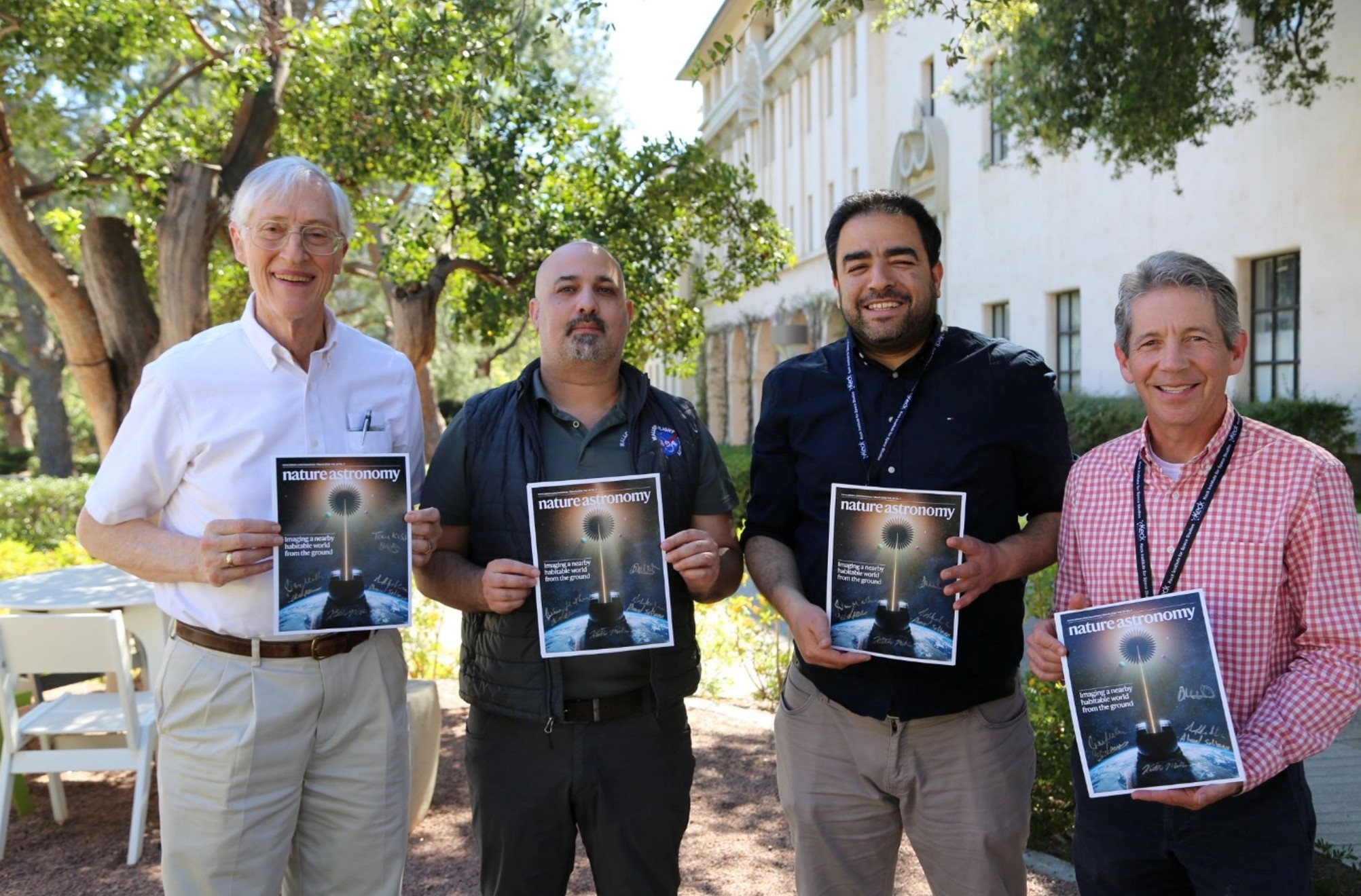
Recent research, published earlier this year and featured on the cover of Monday’s Nature Astronomy March issue, suggests the HOEE concept could produce much sharper images allowing us to see entire exoplanetary systems and to clearly separate planet images from each other as well as from interference of dust clouds, the host star, and from the starshade itself. Its extreme sensitivity could enable the detection of small planets, and even large dwarf planets. Most notably, it could enable high-fidelity, wide-band spectroscopy, a scientific technique that can be used to study the interaction between matter and light, improving the path to identifying the chemical signatures of life.
For decades, the starshade was a novel concept. Now, NASA’s Innovative Advanced Concepts (NIAC) program is turning that idea into a buildable reality. Through a series of targeted studies, NASA researchers are investigating whether it could be practical to build and develop an engineering roadmap.
Team leading NASA’s Hybrid Observatory for Earth-like Exoplanets concept pictured with the cover of Nature Astronomy featuring their research “The observation of Earth-like exoplanets with ground-based telescopes and a shared orbiting starshade.” From left NASA’s Goddard Space Flight Center researchers Dr. John Mather and Dr. Eliad Peretz, followed by NASA’s Jet Propulsion Laboratory researchers Dr. Ahmed Soliman and Dr. Stuart Shaklan.KISSNASA’s Hybrid Observatory for Earth-like Exoplanets (HOEE) is a three-time NIAC award recipient, having received Phase I awards in 2022 and 2025. The HOEE concept is supported by researchers at NASA Goddard, NASA’s Jet Propulsion Laboratory in Southern California, and NASA’s Ames Research Center in California’s Silicon Valley.
Latest Related Research Dynamically Stable Large Space Structures via Architected Metamaterials Inflatable Starshade for Earthlike Exoplanets Hybrid Observatory for Earth-like Exoplanets (HOEE) Ultralight Starshade Structural Design Keep Exploring Discover More Topics From NASASpace Technology Mission Directorate
NASA Innovative Advanced Concepts
NASA Prizes, Challenges, and Crowdsourcing
Solar System
Share Details Last Updated Mar 24, 2026 Related TermsNASA’s Water-Hunting Tool Will Help Scout Moon’s South Pole
NASA is joining international partners to hunt for ice on the Moon in support of future human exploration. The agency is providing a water-detecting instrument, the Neutron Spectrometer System (NSS), to the Lunar Polar Exploration (LUPEX) mission led by JAXA (Japan Aerospace Exploration Agency) and ISRO (Indian Space Research Organisation).
The instrument, which detects ice under the lunar surface, will be installed on LUPEX’s lunar rover planned to arrive at the Moon no earlier than 2028. NASA’s support of LUPEX is part of an ongoing effort to identify and characterize lunar water and other materials that easily evaporate near the Moon’s South Pole.
Water is a critical material for NASA’s plans to develop an enduring presence on the Moon. Instead of relying solely on resources carried from Earth, astronauts could use the Moon’s water for breathable air, rocket fuel, and more. The first step is to find deposits of meaningful quantities of water close to the surface to mark potential landing areas for future astronauts. The water on the Moon is mostly found as molecules within lunar regolith, the dusty and rocky material that covers the Moon’s surface, but there may be ice deposits below the surface of the lunar South Pole. Once we better understand the quantity and quality of the available resources, we can learn how to harness it for exploration.
“There is currently a gap in our understanding of how lunar ice is distributed at small scales, from 10s of centimeters up to 10s of kilometers,” said Rick Elphic, NSS lead at NASA’s Ames Research Center in California’s Silicon Valley, where the instrument was developed in collaboration with Lockheed Martin Advanced Technology Center in Palo Alto, California. “The only way to understand the ‘where’ and ‘how much’ of lunar ice is by exploring on the surface at these scales.”
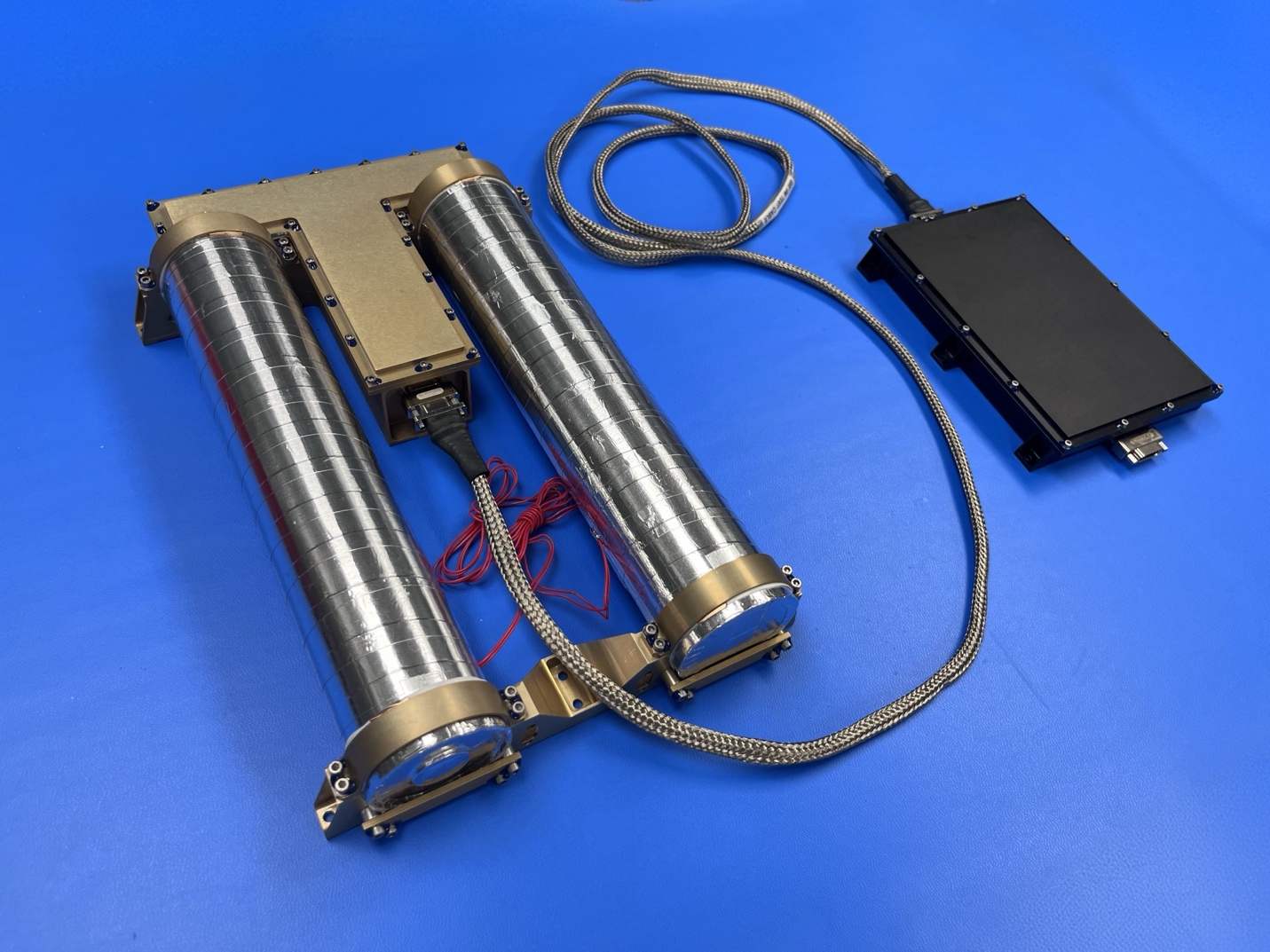
How neutrons signal water NASA’s Neutron Spectrometer System instrument will search for signs of water ice on the Moon’s surface aboard a lunar rover belonging to the Lunar Polar Exploration (LUPEX) mission led by JAXA (Japan Aerospace Exploration Agency) and ISRO (Indian Space Research Organisation). NASA/Warren DavisScientists can search for water on the Moon without drilling into the surface. Instead, they hunt for concentrations of hydrogen, the H in H₂O. Past missions in lunar orbit have found signs of water at the Moon’s poles, but ground missions are needed to build detailed maps of location and quantity.
Instruments like NSS can infer the presence of hydrogen by detecting interactions with particles called neutrons. Neutrons are constantly rattling around in the lunar soil, and they’re about the same size as hydrogen atoms. When these two particles interact, fewer medium-energy neutrons are ejected from the soil. The absence of medium-energy neutrons suggests more of the particles are interacting with hydrogen underground, a deficit that can be measured with the right tools.
The NSS instrument uses a “gas proportional counter” to detect neutrons bouncing out of the lunar soil. It features two tubes that contain a rare gas called helium-3 that is very sensitive to neutrons. When neutrons strike the helium-3 gas atoms, the gas produces electrical pulses that can be counted to infer the presence and quantity of hydrogen up to three feet underground.
Series of water-hunters
Ongoing investigation of the Moon’s water will inform how astronauts might access it in the future. To that end, NASA researchers at Ames have developed a series of NSS instruments intended to ride aboard different missions to investigate sites at the Moon’s South Pole.
The first Moon-bound NSS instrument in the series was carried aboard Astrobotic’s Peregrine lander, Astrobotic Peregrine Mission One, which launched in January 2024. That mission came to an end without touching down on the lunar surface, but the NSS aboard powered on and operated on multiple days over the course of the 10-day mission. These operations successfully captured data about the particle background of deep space, which strongly supported NSS operations on future missions.
NASA’s VIPER (Volatiles Investigating Polar Exploration Rover) mission, part of the agency’s Artemis campaign, will carry another NSS. As part of NASA’s ongoing Commercial Lunar Payload Services effort, a fourth NSS instrument will ride aboard the MoonRanger “micro rover” developed by Carnegie Mellon University in Pittsburgh.
“The three upcoming NSS rover expeditions will tell us what kinds of places on the Moon are most likely to host ice,” Elphic said. “Missions to the lunar surface can then be planned to similar sites where ice can be found.”
The Neutron Spectrometer System was jointly developed by NASA’s Ames Research Center and Lockheed Martin Advanced Technology Center in Palo Alto, California.
For more information on the science of water on the Moon, visit:
https://science.nasa.gov/moon/moon-water-and-ices
Karen Fox / Molly Wasser
Headquarters, Washington
240-285-5155 / 240-419-1732
karen.c.fox@nasa.gov / molly.l.wasser@nasa.gov
Arezu Sarvestani
Ames Research Center, Silicon Valley
650-613-2334
arezu.sarvestani@nasa.gov
NASA Unveils Initiatives to Achieve America’s National Space Policy
As part of its “Ignition” event on Tuesday, NASA announced a series of transformative agencywide initiatives designed to achieve President Donald J. Trump’s National Space Policy and advance American leadership in space. These actions reflect the urgency of the moment, but also the tremendous opportunity ahead for world-changing science and discovery.
“NASA is committed to achieving the near‑impossible once again, to return to the Moon before the end of President Trump’s term, build a Moon base, establish an enduring presence, and do the other things needed to ensure American leadership in space. This is why it is essential we leave an event like Ignition with complete alignment on the national imperative that is our collective mission. The clock is running in this great‑power competition, and success or failure will be measured in months, not years,” said NASA Administrator Jared Isaacman. “If we concentrate NASA’s extraordinary resources on the objectives of the National Space Policy, clear away needless obstacles that impede progress, and unleash the workforce and industrial might of our nation and partners, then returning to the Moon and building a base will seem pale in comparison to what we will be capable of accomplishing in the years ahead.”
NASA Associate Administrator Amit Kshatriya said, “Today we are aligning NASA around the mission. On the Moon, we are shifting to a focused, phased architecture that builds capability landing by landing, incrementally, and in alignment with our industrial and international partners. In low Earth orbit (LEO), we are recognizing where the market is and where it isn’t, recognizing the incredible value of the International Space Station, and building a transition that builds a competitive commercial ecosystem rather than forcing a single outcome the market cannot support. In our science missions, we are opening the lunar surface to researchers and students nationwide, and with Space Reactor‑1 Freedom, we are finally putting nuclear propulsion on a trajectory out of the laboratory and into deep space. And this is all possible by investing in our people, bringing critical skills back into the agency, putting our teams where the machines are being built, and creating real pathways for the next generation of NASA leaders. Our workforce is the jewel of NASA, and from their leaders, they need clear mission goals, the tools to execute, and to get out of their way. This is what Ignition is about.”
Going back to the Moon
The announcements build on recent updates to the Artemis program, including standardizing the SLS (Space Launch System) rocket configuration, adding an additional mission in 2027, and undertaking at least one surface landing every year thereafter. Under this previously updated architecture, Artemis III – scheduled for 2027 – will focus on testing integrated systems and operational capabilities in Earth orbit in advance of the Artemis IV lunar landing.
Looking beyond Artemis V, NASA announced March 24 it will begin to incorporate more commercially procured and reusable hardware to undertake frequent and affordable crewed missions to the lunar surface, initially targeting landings every six months, with the potential to increase cadence as capabilities mature.
To achieve an enduring human presence on the Moon, NASA also announced a phased approach to building a lunar base. As part of this strategy, the agency intends to pause Gateway in its current form and shift focus to infrastructure that enables sustained surface operations. Despite challenges with some existing hardware, the agency will repurpose applicable equipment and leverage international partner commitments to support these objectives.
In the coming days, NASA will release Requests for Information (RFIs) and draft Requests for Proposals (RFPs) to ensure continued progress in meeting national objectives.
Building the Moon Base
NASA’s plan for establishing a sustained lunar presence will roll out in three deliberate phases.
- Phase One: Build, Test, Learn
NASA shifts from bespoke, infrequent missions to a repeatable, modular approach. Through CLPS (Commercial Lunar Payload Services) deliveries and the LTV (Lunar Terrain Vehicle) program, the agency will increase the tempo of lunar activity, sending rovers, instruments, and technology demonstrations that advance mobility, power generation (including radioisotope heater units and radioisotope thermoelectric generators), communications, navigation, surface operations, and a wide range of scientific investigations.
- Phase Two: Establish Early Infrastructure
With lessons from early missions in hand, NASA moves toward semi‑habitable infrastructure and regular logistics. This phase supports recurring astronaut operations on the surface and incorporates major international contributions, including JAXA’s (Japan Aerospace Exploration Agency) pressurized rover, and potentially other partner scientific payloads, rovers, and infrastructure/transportation capabilities.
- Phase Three: Enable Long‑Duration Human Presence
As cargo‑capable human landing systems (HLS) come online, NASA will deliver heavier infrastructure needed for a continuous human foothold on the Moon, marking the transition from periodic expeditions to a permanent lunar base. This will include ASI’s (Italian Space Agency) Multi-purpose Habitats (MPH), CSA’s (Canadian Space Agency) Lunar Utility Vehicle, and opportunities for additional contributions in habitation, surface mobility and logistics.
Ensuring American presence in low Earth orbit
While building a sustainable lunar architecture, NASA is also reaffirming its commitment to low Earth orbit. For more than two decades, the International Space Station has served as a world‑class orbital laboratory, enabling more than 4,000 research investigations, supporting more than 5,000 researchers, and hosting visitors from 26 countries. The space station required 37 shuttle flights, 160 spacewalks, two decades, and more than $100 billion to design, develop, and build. The orbital laboratory cannot operate indefinitely. The transition to commercial stations must be thoughtful, deliberate, and structured to support long‑term industry success.
NASA is introducing and seeking industry feedback on an additional LEO strategy that preserves all current pathways while adding a phased, International Space Station‑anchored approach to avoid any gap in U.S. human presence and mature a robust commercial ecosystem. Under this alternative approach, NASA would procure a government‑owned Core Module that attaches to the space station, followed by commercial modules that are validated using International Space Station capabilities and later detach into free flight. After maturing technical and operational capabilities and market demand is realized, the stations would detach and NASA would be one of many customers purchasing commercial services. To stimulate the orbital economy, NASA would expand industry opportunities, including private astronaut missions, commander seat sales, joint missions, multiple module competitions, and prize‑based awards.
An industry RFI opens Wednesday, March 25, to inform partnership structures, financing, and risk mitigation.
Advancing world-changing discovery with current, developing science missions
In a Golden Age of exploration and discovery, NASA takes full advantage of every opportunity to get science into space. The James Webb Space Telescope continues to transform our understanding of the early universe, Parker Solar Probe has flown through the atmosphere of the Sun, NASA has shown it can defend the planet by deflecting asteroids, and Earth science data is used extensively by American companies, U.S. agriculture, and disaster relief. On the International Space Station, NASA is conducting groundbreaking experiments in quantum science.
Future opportunities will advance U.S. leadership in space science. The Nancy Grace Roman Space Telescope, launching as early as this fall, will advance our understanding of dark energy, and has created a new standard for the management of large science missions. Dragonfly will launch a nuclear-powered octocopter in 2028, arriving at Saturn’s moon Titan in 2034 to explore its complex, organic-rich environment. In 2028, NASA will launch and deliver ESA’s (European Space Agency) Rosalind Franklin Rover to Mars, with NASA’s contributed mass spectrometer for the Mars Organic Molecule Analyzer (MOMA) instrument, which may result in the most advanced detection and analysis of organic matter ever conducted on Mars. A new Earth science mission launching next year will measure for the first time the evolution of the dynamics within convective storms to improve the prediction of extreme weather events up to six hours before the storm occurs.
The agency detailed how advancements in lunar science also will be afforded by the build out of the Moon Base and underpin future Moon and Mars exploration. With an accelerated CLPS cadence, targeting up to 30 robotic landings starting in 2027, NASA is expediting delivery of science and technology to the lunar surface. There will be many opportunities for payload delivery including rovers, hoppers, and drones with contributions welcomed from industry, academia, and international partners. Near-term payloads include the VIPER rover and the LuSEE‑Night mission. An RFI will be released March 24 that calls for payloads capable of supporting NASA’s science and technology goals for additional 2027 and 2028 flights. It will enable students and researchers across the country to work on scientific instruments for use on the surface of the Moon in the years ahead. This RFI also will solicit payloads incorporated on future missions to Mars including the Mars Telecom Network (MTN) and a nuclear technology demonstration mission.
The agency intends to partner with philanthropic and privately funded research organizations with shared objectives in space science.
Other RFIs released March 24 will strengthen “Science as a Service” partnerships and commercial capabilities, allowing NASA to streamline legacy operations and focus investment on the transformational missions only the agency can lead.
Finally, NASA will unveil a previously unseen pair of images from the James Webb and Hubble Space Telescopes. These images show the planet Saturn in unprecedented detail in both infrared and visible wavelengths.
America underway on nuclear power in space
In addition to these scientific missions, after decades of study and in response to the National Space Policy, NASA announced a major step forward in bringing nuclear power and propulsion from the lab to space.
NASA will launch the Space Reactor‑1 Freedom, the first nuclear powered interplanetary spacecraft, to Mars before the end of 2028, demonstrating advanced nuclear electric propulsion in deep space. Nuclear electric propulsion provides an extraordinary capability for efficient mass transport in deep space and enables high power missions beyond Jupiter where solar arrays are not effective.
When SR-1 Freedom reaches Mars, it will deploy the Skyfall payload of Ingenuity‑class helicopters to continue exploring the Red Planet. SR-1 Freedom will establish flight heritage nuclear hardware, set regulatory and launch precedent, and activate the industrial base for future fission power systems across propulsion, surface, and long‑duration missions. NASA and its U.S. Department of Energy partner will unlock the capabilities required for sustained exploration beyond the Moon and eventual journeys to Mars and the outer solar system.
None of these endeavors can succeed without the NASA workforce. As previously announced, the agency is rebuilding its core competencies, converting thousands of contractor positions to civil service, and restoring the engineering, technical, and operational strengths expected of the world’s premier space organization.
NASA is expanding opportunities for interns and early‑career professionals and, in partnership with the U.S. Office of Personnel Management and NASA Force, is creating new pathways for experienced industry talent to serve through term‑based appointments. The agency also is seeking to open opportunities for NASA employees to gain valuable experience working within the most technologically advanced space industry in history.
The changes announced on March 24 will be implemented during the coming months, with teams agencywide ensuring a smooth transition while advancing key programs and partnerships.
NASA will embed subject‑matter experts across the supply chain – at every major vendor, subcontractor, and critical‑path component – to challenge assumptions, solve problems, accelerate production, and help ensure the right outcomes are achieved.
Through these reforms, NASA is strengthening its ability to deliver on the President’s National Space Policy and ensure continued American superiority in space.
Learn more about NASA’s Ignition news online:
-end-
Camille Gallo / George Alderman
Headquarters, Washington
202-358-1600
camille.m.gallo@nasa.gov / george.a.alderman@nasa.gov
Tropical Cyclone Narelle Crosses Australia
- Earth
- Earth Observatory
- Image of the Day
- EO Explorer
- Topics
- More Content
- About
NASA Data Hackathon Inspires Community Action
On Jan. 31, students, library staff, researchers, and community members gathered at the University of Florida’s (UF) Marston Science Library for the Environmental Monitoring through Education, Research, and Geospatial Engagement (EMERGE) NASA Data Hackathon. This initiative empowers libraries, educators, and individuals to engage in public health and environmental science using real-world data tools and citizen science. At the center of EMERGE is NASA’s Global Learning & Observations to Benefit the Environment (GLOBE) Observer app, which allows anyone with a smartphone to collect and explore data on mosquito habitats, land cover, clouds, and more.
From morning workshops to an end-of-day sprint, participants spent the day transforming real environmental data into maps, dashboards, infographics, and practical insights supporting public health and environmental decision-making. The event was hosted by the Geospatial Digital Informatics Lab (part of the Geography Department at UF), SciStarter (the world’s largest citizen science database), and Florida Community Innovation (a civic technology nonprofit), with support from NASA and UF Libraries.
The hackathon gave participants a chance to work directly with these volunteer-collected datasets and see how local observations connect to global research. Participants had access to a digital textbook created by the GeoDI Lab that explains how to download, process, visualize, and analyze GLOBE Observer data. At the hackathon, 13 teams came together to build projects analyzing GLOBE data or reenvisioning data collection for the app. You can explore the gallery of projects online here!
Celebrating Hackathon Winners
The following participants won honors in their categories.
APP IMPROVEMENT TRACK
Winner — Mosquito Tracker
Matheus Kunzler Maldaner
Hoang Anh Mai
Luana Kunzler Maldaner
Nicolas Murguia
Alfred Navarro
Honorable Mention — App Improvement Brief
Kelly Muma
Seth Paul
User Interface Recognition — GLOBE Observer, Simplified
Kaushal Thota
Sparsh Mogha
ADVANCED TRACK
Winner — Epidemiological Vector Mapping System
Aseel Ismail
Shreya Shanmugam
Devadarshini Dhandapani
Shivani Chandrasekar
Winner — GeoDude
Siddharth Nahar
Anushri N R
Avantika Holla
Matthew Losito
Honorable Mention — Mosquito Habitat Observations and Wildfire Hazard in Florida
Nancy Murphy
Philippa Burgess
Mapping Recognition — Mosquitos Worldwide Project
Ayesha Malligai M.
INTERMEDIATE TRACK
Winner — Swarm Sense
Isabella Bodea
Evan Mullins
Aashita Rai
Honorable Mention — Mosquito Risk Mapping
RamyaLakshmi KS
Delilah Penate
Thomas Barbato
Amit Rajpurkar
Data Analysis Recognition — Bias and Uncertainty in Reported Mosquito Habitat Data
Gabriel Dos Santos
Satyabrata Das
Matthew White
Dylan Aaron
BEGINNER TRACK
Winner — Beginner Track EMERGE Project
Breanna Blackwood
Demitri Tu
Masha Belyaeva
Elizabeth Nguyen
Tommy Lin
Honorable Mention — Mosquito Predicting with Globe Observer Data
Novaarcoid Rajpurkar
FIELD TRACK
Winner — Field Track Data Collection for Mosquito Habitat
Wei Liu
Yichan Li
How You Can Get Involved
If you’re interested in civic tech, public-interest data, and community-centered research, you’re invited to get involved with Florida Community Innovation (FCI), one of the Hackathon partners. The FCI works year-round with students and community partners to build accessible tools, maps, and public resources and welcomes new collaborators from a wide range of backgrounds. Get started with FCI by visiting floridainnovation.org, and email info@floridainnovation.org to join one of their Wednesday meetings at 6 p.m. EDT to be matched with a project (like building games for Miami-Dade’s Recyclepedia app, helping create an AI tool for social workers in Orlando, and more).
Interested in shaping future EMERGE events? Apply to join a planning committee to help design the next hackathon! Committee members will help think through formats, tracks, accessibility, and community partnerships, with the goal of keeping future events welcoming, practical, and responsive to local needs. Organizers will receive a small honorarium. For more information, send an email to Caroline Nickerson: caroline.nickerson@floridainnovation.org
To start doing NASA science from your own neighborhood or backyard, you can also download the GLOBE Observer app! This app makes it possible for anyone to collect and explore data on mosquito habitats, land cover, and more!
The EMERGE program is made possible with the support of NASA through the Citizen Science Seed Funding Program, with the goal of enabling more scientists to develop and use citizen science techniques in their work.
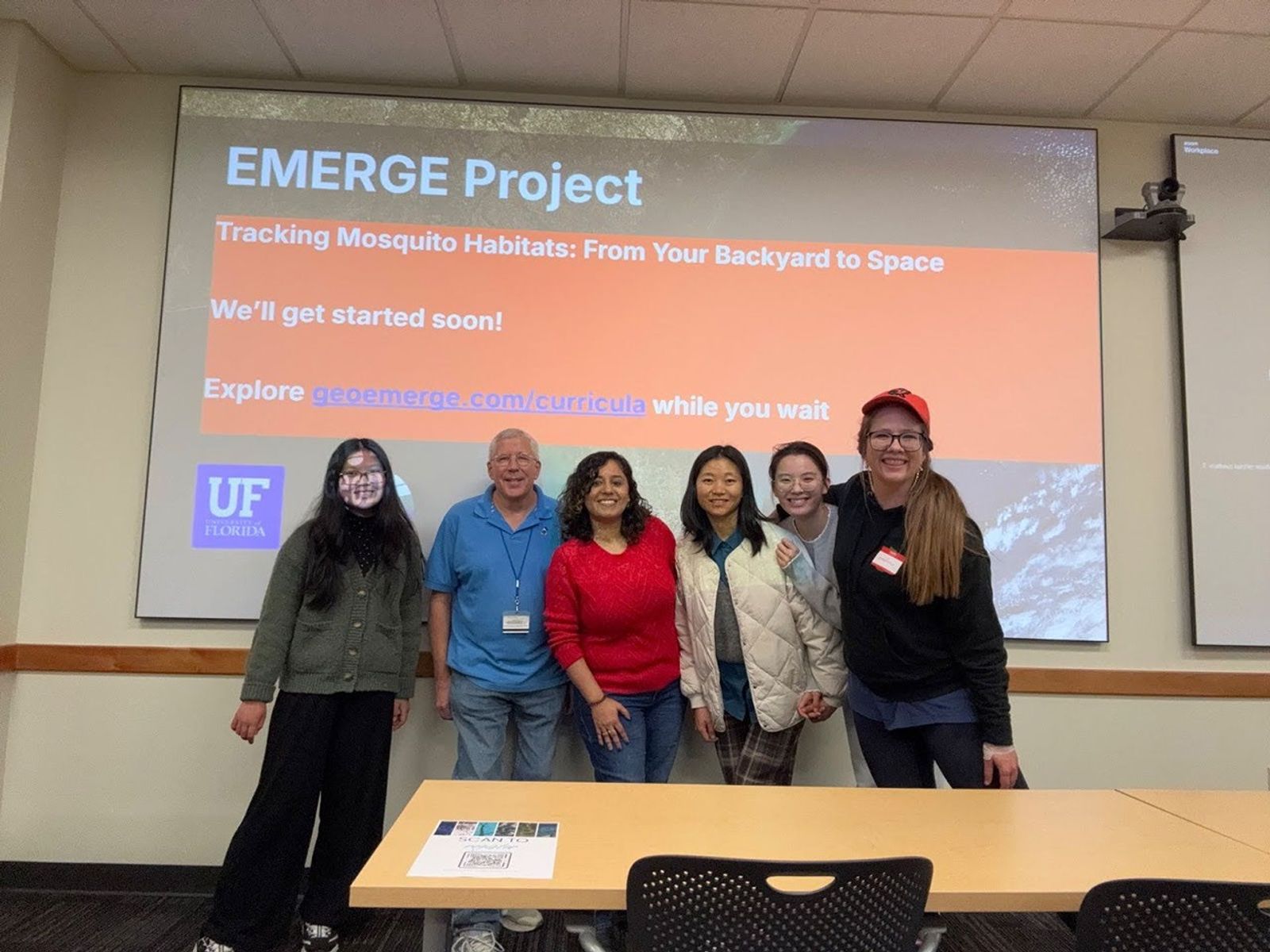
From left: Olivia Zhang, Joe Aufmuth, Natya Hans, Yichan Li, Wei Liu, and Caroline Nickerson. Caroline Nickersonhttps://geoemerge.com/nasa-at-uf
Learn More and Get Involved GLOBE ObserverChoose from several different projects to help scientists learn about planet Earth. For anyone with a smartphone. Kid friendly!
Facebook logo @nasascience_ @nasascience_ Instagram logo @nasascience_ Linkedin logo @nasascience_ Share Details Last Updated Mar 23, 2026 Editor NASA Science Editorial Team Related Terms Explore More 2 min read Hail Yeah! NASA Researchers Use Volunteer Observations for Hail Estimates
The bigger the hailstone, the more damage it can cause. But scientists find that predicting…
Article
6 days ago
2 min read Volunteers Find Oddly High Solar Flare Rates
Article
1 week ago
2 min read Extra Extra! Extra Data Stream Added to the Daily Minor Planet!
The Daily Minor Planet citizen science project is expanding! In addition to data received nightly…
Article
1 week ago
Science Through Shadows: How Astronomical Alignments Reveal the Universe
6 min read
Science Through Shadows: How Astronomical Alignments Reveal the UniverseWhen one celestial object passes in front of another, it can cast a shadow that travels across space – and sometimes across Earth. These moments of alignment, known as eclipses, occultations, and transits, allow scientists to study distant objects in remarkable ways. By observing how light changes when an object briefly blocks another, astronomers can measure sizes and shapes, detect atmospheres, and refine the orbits of asteroids and planets.
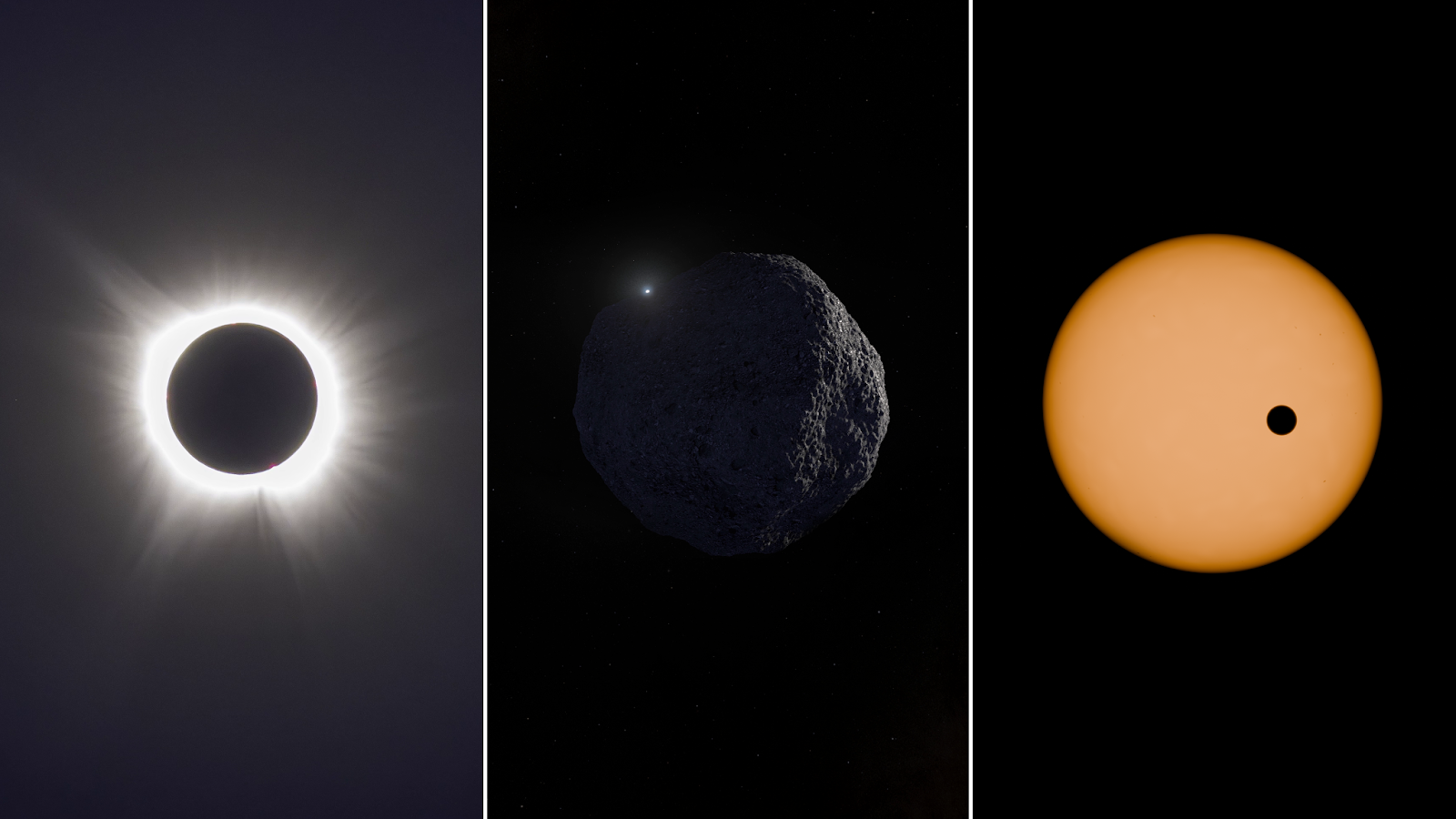
From left to right: Image of the total solar eclipse of 2024, an asteroid occulting a distant star, and an exoplanet transiting a star.The Science Through Shadows project, funded by NASA’s Science Activation program and led by Fiske Planetarium at the University of Colorado Boulder, explores how these shadow-based events help scientists conduct astronomical research. The project has produced a series of short films that explain the science behind eclipses, occultations, and solar observations while highlighting the people who help make these discoveries possible – including students, educators, and volunteer citizen scientists.
The videos are designed for use in classrooms, libraries, planetariums, and informal learning environments, and are available free of charge in both English and Spanish. Versions are available in 2D formats for streaming and classroom use, as well as fulldome formats for planetariums worldwide.
Explore the seven films currently available: Ring of Fire EclipseFocus: The annular solar eclipse of October 14, 2023
On October 14, 2023, observers across North America experienced an annular solar eclipse, sometimes called a “ring of fire.” During an annular eclipse, the Moon passes directly in front of the Sun but appears slightly smaller in the sky, leaving a bright ring of sunlight visible around its edges.
This video explains how annular eclipses differ from total solar eclipses, explores the science behind these events, and highlights safe viewing practices. It also helps viewers understand what makes eclipse observations both scientifically valuable and deeply memorable experiences.
Total Eclipse of the SunFocus: The total solar eclipse of April 8, 2024
A total solar eclipse is one of the most dramatic astronomical events visible from Earth. On April 8, 2024, millions of people across North America had the opportunity to witness the Moon completely block the Sun, revealing the Sun’s faint outer atmosphere, known as the corona.
This video explores what happens during a total solar eclipse, why traveling to the path of totality offers a dramatically different experience, and how scientists use eclipses to study the Sun’s atmosphere.
What Causes Eclipses?Focus: The science behind eclipses
Why don’t eclipses happen every month? What conditions must occur for the Sun, Earth, and Moon to align?
This episode explains the orbital mechanics that produce eclipses and clarifies the differences between solar and lunar eclipses. By addressing common misconceptions, it helps viewers understand the celestial alignments that create these spectacular events.
Chasing Polymele’s ShadowFocus: The Lucy occultation campaign
When an asteroid passes in front of a distant star, it briefly blocks the star’s light, casting a shadow across Earth. Astronomers call this event an occultation, and it can reveal valuable information about the asteroid’s size, shape, and surrounding environment.
This video follows the Lucy Occultation Project, where scientists and citizen scientists worked together to observe the Trojan asteroid Polymele ahead of NASA’s Lucy mission flyby. On February 3, 2023, more than 100 telescopes across two continents were deployed to capture the moment Polymele passed in front of a star. The resulting observations help scientists better understand the asteroid before the spacecraft’s encounter.
Humanity Touches the SunFocus: NASA’s Parker Solar Probe
NASA’s Parker Solar Probe is helping scientists explore the Sun closer than ever before. On December 24, 2024, the spacecraft made its closest approach to the Sun, traveling more than 430,000 miles per hour – faster than any human-made object.
This video explores how Parker Solar Probe studies the Sun’s outer atmosphere and helps scientists investigate long-standing questions about the solar corona and solar wind.
The Sun Touches HumanityFocus: NASA’s PUNCH mission
NASA’s PUNCH (Polarimeter to Unify the Corona and Heliosphere) mission provides a new way to observe how the Sun influences space throughout the inner solar system.
Consisting of four suitcase-sized satellites in low-Earth orbit, PUNCH creates global, three-dimensional observations of the region between the Sun and Earth. These measurements help scientists better understand how the solar wind forms and evolves, and how solar storms travel through space.
Eclipse Participatory ScienceFocus: Citizen science during recent solar eclipses
Solar eclipses create powerful opportunities for collaborative scientific research. This episode follows two large participatory science projects that took place during recent North American eclipses: the Nationwide Eclipse Ballooning Project, another NASA Science Activation-funded project that’s led by Montana State University, and Citizen CATE 2024, a NASA- and National Science Foundation-supported observing campaign.
Through balloon launches, telescope observations, and hands-on engineering challenges, students, educators, and volunteers collected atmospheric and solar data that scientists are now analyzing. The episode highlights how people with curiosity and passion can contribute meaningfully to real scientific discovery.
2D versions of these videos in both English and Spanish can be found on Fiske Planetarium’s YouTube channel, and downloadable versions are available through the project’s distribution page. Fulldome masters (1K, 2K, and 4K) are also available for free download via the Fiske Productions page, allowing planetariums around the world to share these stories of discovery with their audiences.
Through projects like Science Through Shadows, NASA’s Science Activation program helps connect everyone, everywhere with NASA Science content, experts, and opportunities to participate. Whether observing an eclipse, tracking an asteroid’s shadow, or studying data from a spacecraft, these moments of alignment offer powerful opportunities to explore how the universe works – and how people everywhere can participate in the process of discovery.
NASA Citizen ScienceEveryone, everywhere – regardless of country of origin or citizenship status – can collaborate with professional scientists, conduct cutting-edge science, and make real discoveries as a volunteer for NASA Citizen Science projects. These projects give participants the opportunity to collaborate with professional scientists, conduct cutting-edge science, and make real discoveries related to NASA’s five research divisions: Earth science, planetary science, astrophysics, biological and physical sciences, and heliophysics. Explore available projects and get started: https://science.nasa.gov/citizen-science/
Share Details Last Updated Mar 23, 2026 Related Terms Explore More 4 min read Citizen Scientists Invited to Collect Data for NASA During EclipseArticle
2 years ago
2 min read NASA SCoPE Supports Science Activation Projects and Events for 2024 Eclipse
Article
2 years ago
6 min read 10 Things to Know About Parker Solar Probe
On Aug. 12, 2018, NASA launched Parker Solar Probe to the Sun, where it will…
Article
8 years ago
Keep Exploring Discover More Topics From NASA James Webb Space Telescope
Webb is the premier observatory of the next decade, serving thousands of astronomers worldwide. It studies every phase in the…
Perseverance Rover
This rover and its aerial sidekick were assigned to study the geology of Mars and seek signs of ancient microbial…
Parker Solar Probe
On a mission to “touch the Sun,” NASA’s Parker Solar Probe became the first spacecraft to fly through the corona…
Juno
NASA’s Juno spacecraft entered orbit around Jupiter in 2016, the first explorer to peer below the planet’s dense clouds to…
See NASA’s GUARDIAN Catch a Tsunami
A new data visualization illustrates how an experimental NASA technology can provide extra lead time to communities in the path of a tsunami. Called GUARDIAN (GNSS Upper Atmospheric Real-time Disaster Information and Alert Network), the software detects slight distortions in satellite navigation signals to spot hazards on the move..
The animation breaks down a real-life case study: last summer’s massive Kamchatka earthquake and the tsunami that it sent racing across the Pacific and towards Hawaii at over 500 mph (805 kph).
The visualization shows the magnitude 8.8 earthquake (seen in purple) strike off the Russian coast on July 29, 2025, triggering the tsunami. The red, orange, yellow, and green ringlets represent real-time readings from ground stations tracking GPS and other navigational satellite signals. The disturbances were spotted by GUARDIAN’s artificial intelligence-powered detection algorithms as soon as eight minutes after the earthquake.
For the next several hours, signs of the tsunami were picked up by GUARDIAN across the Pacific Ocean in near real time. The system flagged an incoming wave off the coast of Kauai some 32 minutes before it made landfall and was detected by tide gauges (shown in blue).
The results highlight GUARDIAN’s potential to augment existing early warning systems, said Camille Martire, one of its developers at NASA’s Jet Propulsion Laboratory in Southern California.
Currently, determining whether an earthquake generated a tsunami remains a challenge. Forecasters rely on seismic data and computer simulations to make their best prediction, then wait for pressure sensors attached to the ocean floor to confirm a passing wave. Those sensors work well but are expensive and thinly dispersed. Gaps in coverage remain. And in those gaps, warning time disappears.
The GUARDIAN approach is complementary and cost effective because it monitors existing data from GPS and other constellations that make up the Global Navigation Satellite System. It’s also free to access, though for now best suited to analysts trained to interpret its findings.
How GUARDIAN worksAll day, every day, geopositioning constellations transmit radio signals to ground stations around the globe. On the ground, the data is refined to sub-decimeter (less than 10 centimeters) positioning accuracy by JPL’s Global Differential GPS System. Before the signals get there, however, they must travel through an electrically charged skin of plasma called the ionosphere.
Solar storms and other space weather can wreak electrical mayhem in the ionosphere, and so can events on Earth. Tsunamis and earthquakes, by displacing large amount of air at Earth’s surface, unleash pressure waves that can slightly perturb the radio signals coming down from satellites. While systems are in place to correct for this “noise,” GUARDIAN considers it a useful signal.
Currently, GUARDIAN scours data from more than 350 GNSS ground stations around the Pacific Ring of Fire, a hotbed for the ocean’s deadliest waves. And the system is not confined to tsunamis. Earthquakes, volcanic eruptions, missile tests, spacecraft reentries, meteoroid splashdowns — anything that produces a large rumble on Earth is potentially fair game. While the Kamchatka event didn’t cause widespread damage to people or property, it showed how the next time disaster strikes, NASA science could give communities a few more minutes to act.
GUARDIAN is being developed at JPL by the GDGPS project, which is partially supported by NASA’s Space Geodesy Project.
To learn more, visit: https://guardian.jpl.nasa.gov/
Media Contacts
Andrew Wang / Andrew Good
Jet Propulsion Laboratory, Pasadena, Calif.
626-379-6874 / 818-393-2433
andrew.wang@jpl.nasa.gov / andrew.c.good@jpl.nasa.gov
Written by Sally Younger
2026-017
Explore More 3 min read Tropical Cyclone Narelle Crosses AustraliaThe powerful storm lashed the northern edge of the continent with damaging winds and drenching…
Article 8 hours ago 1 min read SWOT Mission Unlocks a New View of Our WaterwaysExplore how rivers move, change, and sustain life across the planet with SWOT data.
Article 18 hours ago 5 min read A Fault Line in Full BloomPlains around the San Andreas Fault and across Carrizo Plain National Monument are awash with…
Article 1 day ago Keep Exploring Discover More Topics From NASAJet Propulsion Laboratory
Climate ChangeNASA is a global leader in studying Earth’s changing climate.
NASA Earth Science Disasters Program
EyesNASA’s Eyes is a suite of 3D visualization applications that allows everyone to explore and understand real NASA data and…
SWOT Mission Unlocks a New View of Our Waterways
1 min read
SWOT Mission Unlocks a New View of Our Waterways Earth (ESD)- Earth
- Explore
- Science at Work
- Multimedia
- Data
- For Researchers
- About Us
Explore how rivers move, change, and sustain life across the planet.
Using data from the SWOT (Surface Water and Ocean Topography) mission, jointly developed by the NASA/JPL and the Centre National d’Études Spatiales with contributions from the Canadian Space Agency and the United Kingdom Space Agency, scientists can now measure rivers continuously and across the entire globe for the first time in human history.
From the Mississippi River to the Amazon, these observations reveal how rivers flow, how they change over time, and how they support ecosystems, economies, and communities worldwide like never before.
Original Video and Assets
Share Details Last Updated Mar 23, 2026 Editor Earth Science Division Editorial Team Related Terms Explore More 5 min read A Fault Line in Full Bloom
Plains around the San Andreas Fault and across Carrizo Plain National Monument are awash with…
Article
14 hours ago
3 min read Restless Kīlauea Launches Lava and Ash
Episode 43 of the Hawaiian volcano’s current eruption was marked by high lava fountains and…
Article
4 days ago
3 min read NASA Laser Reflecting Instrument Makes GPS Satellite More Accurate
Article
4 days ago
Keep Exploring Discover More Topics From NASA Earth
Your home. Our Mission. And the one planet that NASA studies more than any other.
Earth Observatory
NASA’s Earth Observatory brings you the Earth, every day: images, stories, and discoveries about the environment, Earth systems, and climate.
Earth Science at Work
NASA Earth Science helps Americans respond to challenges and societal needs — such as wildland fires, hurricanes, and water supplies…
Earth Videos
Collection of Earth science videos explaining a variety of concepts and activities performed by NASA’s Earth Science Division.
NASA’s Hubble, Webb Telescopes Survey Pinwheel Galaxy
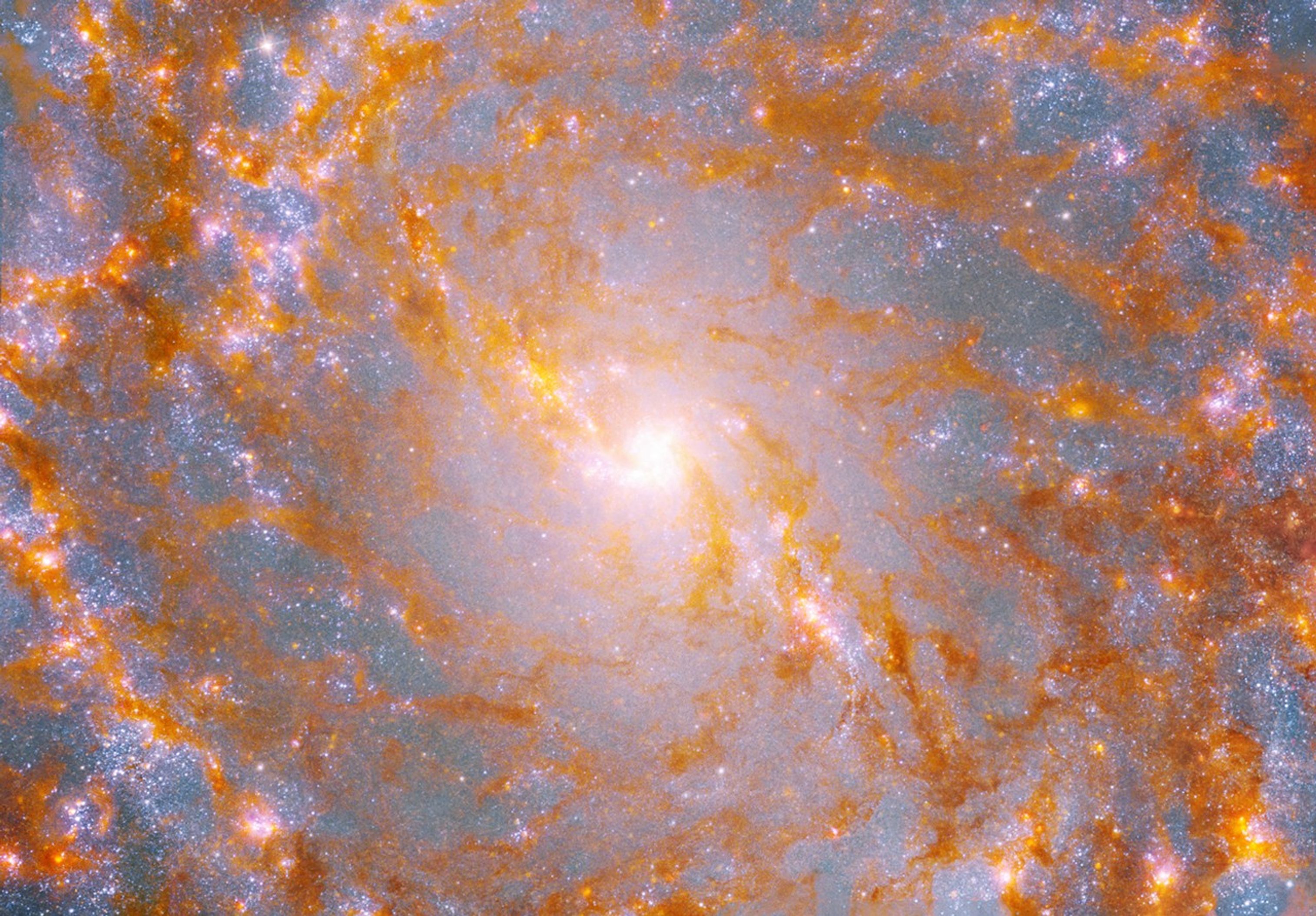
This March 16, 2026, image from NASA’s Hubble Space Telescope and the James Webb Space Telescope takes a closer look at the core of Messier 101, also known as the Pinwheel Galaxy. At 25 million light-years away, M101 is one of the closest “face-on” spiral galaxies to us. With that in mind, Hubble’s ultraviolet, visible, and near-infrared data were taken as part of studies to find out more about its stellar population and galactic structure.
See more images from Hubble’s Messier Marathon 2026.
Image credit: NASA, CSA, ESA, D. Calzetti (University of Massachusetts – Amherst), C. Clark (Space Telescope Science Institute – ESA – JWST), K. Kuntz (The John Hopkins University), and B. Shappee (University of Hawaii); Processing: Gladys Kober (NASA/Catholic University of America)
NASA to Provide Update on Implementation of National Space Policy
Editor’s note: This advisory was updated on March 23, 2026, to update the title of a participant.
NASA will host a public event at 9 a.m. EDT on Tuesday, March 24, at the Mary W. Jackson NASA Headquarters in Washington to outline how the agency is executing President Donald J. Trump’s National Space Policy and accelerating preparations for America’s return to the surface of the Moon by 2028.
The program will open with remarks from NASA Administrator Jared Isaacman, followed by a series of high-level panels providing updates on mission priorities, including sending the first astronauts to the lunar surface in more than 50 years, establishing the initial elements of a permanent lunar base, getting America underway in space on nuclear propulsion, and other objectives.
At 4:45 p.m., NASA will hold a live news conference from headquarters to provide an update on the agency’s progress toward implementing the National Space Policy and recapping major announcements discussed throughout the day.
NASA participants include:
- Administrator Jared Isaacman
- Associate Administrator Amit Kshatriya
- Dana Weigel, program manager, International Space Station Program
- Carlos Garcia-Galan, program executive, Moon Base
- Steve Sinacore, program executive, Fission Surface Power
- Dr. Nicola Fox, associate administrator, Science Mission Directorate
- Dr. Lori Glaze, acting associate administrator, Exploration Systems Development Mission Directorate
The full program and news conference will stream live on NASA+, Amazon Prime, and the agency’s YouTube channel. Learn how to stream NASA content through a variety of online platforms, including social media.
This event is invitation-only for in-person attendance. To participate virtually in the news conference, members of the media must RSVP no later than two hours before the start of the event to Cheryl Warner at: cheryl.m.warner@nasa.gov. NASA’s media accreditation policy is available online.
For more information about NASA’s missions, visit:
-end-
Bethany Stevens / Cheryl Warner
Headquarters, Washington
202-358-1600
bethany.c.stevens@nasa.gov / cheryl.m.warner@nasa.gov
NASA’s Hubble Revisits Crab Nebula to Track 25 Years of Expansion
- Hubble Home
- Overview
- Impact & Benefits
- Science
- Observatory
- Team
- Multimedia
- News
- More
Image: NASA, ESA, STScI, William Blair (JHU); Image Processing: Joseph DePasquale (STScI)
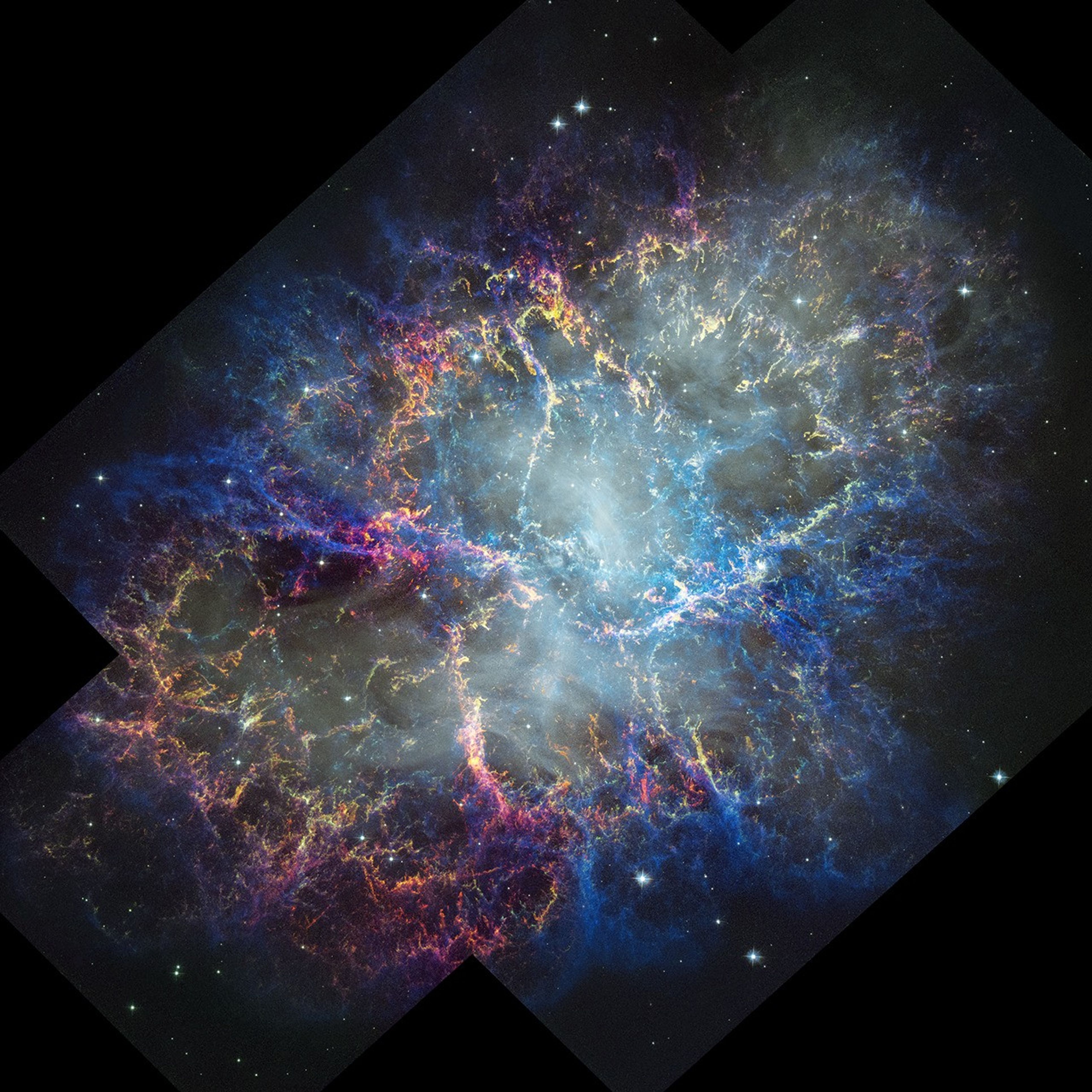
A quarter-century after its first observations of the full Crab Nebula, NASA’s Hubble Space Telescope has taken a fresh look at the supernova remnant. The result is an unparalleled, detailed look at the aftermath of a supernova and how it has evolved over Hubble’s long lifetime. A paper detailing the new Hubble observation is published in The Astrophysical Journal.
This new Hubble observation continues a legacy that stretches back nearly 1,000 years, when astronomers in 1054 recorded the supernova as an impressively bright new star that, for weeks, was visible even during the day. The Crab Nebula is the aftermath of SN 1054, located 6,500 light-years from Earth in the constellation Taurus.
“We tend to think of the sky as being unchanging, immutable,” said astronomer William Blair of Johns Hopkins University, who led the new observations. “However, with the longevity of the Hubble Space Telescope, even an object like the Crab Nebula is revealed to be in motion, still expanding from the explosion nearly a millennium ago.”
The supernova remnant was discovered in the mid-18th century, and in the 1950s Edwin Hubble was among several astronomers who noted the close correlation between Chinese astronomical records of a supernova and the position of the Crab Nebula. The discovery that the heart of the Crab contained a pulsar — a rapidly rotating neutron star — that was powering the nebula’s expansion finally aligned modern observations and ancient records.
In its new image, Hubble captured the nebula’s intricate filamentary structure, as well as the considerable outward movement of those filaments over 25 years, at a pace of 3.4 million miles per hour. Hubble is the only telescope with the combination of longevity and resolution capable of capturing these detailed changes.
For better comparison with the new image, Hubble’s 1999 image of the Crab was re-processed. The variation of colors in both of the Hubble images shows a combination of changes in local temperature and density of the gas as well as its chemical composition.
This 2024 image that NASA’s Hubble Space Telescope captured of the Crab Nebula, paired with its past observations and those of other telescopes, allows astronomers to study how the supernova remnant is expanding and evolving over time. Image: NASA, ESA, STScI, William Blair (JHU); Image Processing: Joseph DePasquale (STScI)“Even though I’ve worked with Hubble quite a bit, I was still struck by the amount of detailed structure we can see and the increased resolution with the Wide Field Camera 3, as compared to 25 years ago,” Blair said. Wide Field Camera 3 was installed in 2009, the last time Hubble instruments were updated by astronauts.
Blair noted that filaments around the periphery of the nebula appear to have moved more compared to those in the center, and that rather than stretching out over time, they appear to have simply moved outward. This is due to the nature of the Crab as a pulsar wind nebula powered by synchrotron radiation, which is created by the interaction between the pulsar’s magnetic field and the nebula’s material. In other well-known supernova remnants, the expansion is instead driven by shockwaves from the initial explosion, eroding surrounding shells of gas that the dying star previously cast off.
The new, higher-resolution Hubble observations are also providing additional insights into the 3D structure of the Crab Nebula, which can be difficult to determine from a 2D image, Blair said. Shadows of some of the filaments can be seen cast onto the haze of synchrotron radiation in the nebula’s interior. Counterintuitively, some of the brighter filaments in the latest Hubble images show no shadows, indicating they must be located on the far side of the nebula.
According to Blair, the real value of Hubble’s Crab Nebula observations is still to come. The Hubble data can be paired with recent data from other telescopes that are observing the Crab in different wavelengths of light. NASA’s James Webb Space Telescope released its infrared-light observations of the Crab Nebula in 2024. Comparison of the Hubble image with other contemporary multiwavelength observations will help scientists put together a more complete picture of the supernova’s continuing aftermath, centuries after astronomers first wondered at a new little star twinkling in the sky.
The Hubble Space Telescope has been operating for more than three decades and continues to make ground-breaking discoveries that shape our fundamental understanding of the universe. Hubble is a project of international cooperation between NASA and ESA (European Space Agency). NASA’s Goddard Space Flight Center in Greenbelt, Maryland, manages the telescope and mission operations. Lockheed Martin Space, based in Denver, also supports mission operations at NASA Goddard. The Space Telescope Science Institute in Baltimore, which is operated by the Association of Universities for Research in Astronomy, conducts Hubble science operations for NASA.
Facebook logo @NASAHubble @NASAHubble Instagram logo @NASAHubble
2024 1999
This 2024 image that NASA’s Hubble Space Telescope captured of the Crab Nebula, paired with its past observations and those of other telescopes, allows astronomers to study how the supernova remnant is expanding and evolving over time. Image: NASA, ESA, STScI, William Blair (JHU); Image Processing: Joseph DePasquale (STScI)
This newly processed image of the Crab Nebula comes from data originally captured by NASA’s Hubble Space Telescope in 1999 and 2000. Image: NASA, ESA, STScI, William Blair (JHU); Image Processing: Joseph DePasquale (STScI) 20241999
This 2024 image that NASA’s Hubble Space Telescope captured of the Crab Nebula, paired with its past observations and those of other telescopes, allows astronomers to study how the supernova remnant is expanding and evolving over time. Image: NASA, ESA, STScI, William Blair (JHU); Image Processing: Joseph DePasquale (STScI) This newly processed image of the Crab Nebula comes from data originally captured by NASA’s Hubble Space Telescope in 1999 and 2000. Image: NASA, ESA, STScI, William Blair (JHU); Image Processing: Joseph DePasquale (STScI)
2024
1999
2024 and 1999
Tracking 25 Years of Expansion2024 and 1999
CurtainToggle2-Up
Image Details
Sliding or toggling between these two Hubble images, captured 25 years apart, reveals changes in the position of the nebula’s filaments relative to more distant background stars. Energy from the rapidly spinning pulsar at the nebula’s core is driving the filaments outward. Some differences between the images likely relate to the change in instruments on Hubble. The 1999 image was taken with Hubble’s Wide Field and Planetary Camera 2 instrument, which NASA astronauts replaced with the Wide Field Camera 3 in 2009 during Hubble’s last servicing mission. Each instrument took several shots to create a mosaic image of the full nebula. Wide Field Camera 3 has a slightly greater range of detection, both in surface area and filters for imaging.
Downloads
Hubble image of the Crab Nebula (2024)
JPEG
(5 MB)
Hubble image of the Crab Nebula (1999)
JPEG
(5 MB)
Related Images & Videos Crab Nebula (2024)
This 2024 image that NASA’s Hubble Space Telescope captured of the Crab Nebula, paired with its past observations and those of other telescopes, allows astronomers to study how the supernova remnant is expanding and evolving over time.
Crab Nebula (1999)
This newly processed image of the Crab Nebula comes from data originally captured by NASA’s Hubble Space Telescope in 1999 and 2000.
Crab Nebula (2024 Compass Image)
NASA’s Hubble Space Telescope 2024 image of the Crab Nebula, with compass arrows, scale bar, and color key for reference.
Crab Nebula (1999 Compass Image)
NASA’s Hubble Space Telescope 1999 image of the Crab Nebula, with compass arrows, scale bar, and color key for reference.
Crab Nebula Expansion over 25 Years
The Crab Nebula is a dynamic supernova remnant that has been expanding and evolving for nearly one thousand years. Often nebulas and other objects in space appear frozen in a single telescope snapshot, providing stunning detail but no sense of change over time. However, thanks to…
Tour the Crab Nebula
This video highlights details in NASA’s Hubble Space Telescope images of the Crab Nebula. Hubble’s first observation of the full nebula began in 1999, and 25 years later it captured a new portrait. Hubble’s longevity and powerful instruments provide astronomers …
Claire Andreoli
NASA’s Goddard Space Flight Center
Greenbelt, Maryland
claire.andreoli@nasa.gov
Leah Ramsay, Christine Pulliam
Space Telescope Science Institute
Baltimore, Maryland
Keep Exploring Discover More Topics From Hubble Hubble Space Telescope
Since its 1990 launch, the Hubble Space Telescope has changed our fundamental understanding of the universe.
The Death Throes of Stars
When stars die, they throw off their outer layers, creating the clouds that birth new stars.
Science Behind the Discoveries
Reshaping Our Cosmic View: Hubble Science Highlights
A Fault Line in Full Bloom
- Earth
- Earth Observatory
- Image of the Day
- EO Explorer
- Topics
- More Content
- About
Transformational Tools and Technologies Resources
1 min read
Preparations for Next Moonwalk Simulations Underway (and Underwater) A scale model of a possible single-aisle twin-engine airliner is tested in a NASA wind tunnel.NASA Vision Studies, Analysis of Alternatives (AoA) Studies, and White Papers- NASA Computational Fluid Dynamics Vision 2030 Study: A Path to Revolutionary Computational Aerosciences
- Requirements for Aircraft Certification By Analysis
- Vision 2040: A Roadmap for Integrated, Multiscale Modeling & Simulation of Materials & Systems
- Autonomy Verification &Validation Roadmap and Vision 2045 (Joint AOSP)
- Combustion and Emissions Analysis of Alternatives (includes subsonic transport acoustics, combustion and emissions, and aircraft icing)
- Computational Materials for Qualification and Certification (CM4QC) Strategy Document: Maturation of Computational Materials Methods for Aviation-Focused Qualification and Certification of Metal Additive Manufacturing
- White Paper: Personnel Selection, Roles, and Training for sUAS
- White Paper: Considerations for Airspace Integration Enabling Early Multi-Aircraft (m:N) Operations
Advanced Air Vehicles Program
Airspace Operations and Safety Program
Integrated Aviation Systems Program
Transformative Aeronautics Concepts Program
The Integrated Adaptive Wing Technology Maturation wind-tunnel model installed in the Transonic Dynamics Tunnel at NASA Langley Research Center in Hampton, Virginia.NASA / Mark Knopp Aerosciences Evaluation and Test Capabilities Keep Exploring Discover More Topics From NASAMissions
Artemis
Aeronautics STEM
Explore NASA’s History
Share Details Last Updated Mar 22, 2026 EditorJim BankeContactDiana Fitzgeralddiana.r.fitzgerald@nasa.gov Related Terms