NASA - Breaking News

NASA Selects Next Class of Space Health Postdoctoral Fellows
The NASA-funded Translational Research Institute for Space Health (TRISH) has selected two early‑career scientists for its next class of postdoctoral fellows. The new fellows will begin their projects in May, focusing on space food systems and astronaut eye health.
The TRISH Postdoctoral Fellowship Program supports independent research that advances biomedical, behavioral, and technological approaches relevant to human space exploration. The selected projects should aim to reduce spaceflight-related health risks and improve human health on Earth.
The selected fellows are:
Dr. Baiyang Liu
Institution: Columbia University in New York City
Project: Developing a Diazotrophic and Nutritionally Optimized Spirulina Strain for Extended Space Missions
Mentor: Dr. Harris Wang
Dr. Dylan Pham
Institution: Texas A&M University in College Station
Project: Impact of Simulated Microgravity and Aging on Ocular Artery and Neural Retina Function
Mentor: Dr. Travis Hein
“Our postdoctoral fellows bring new ideas, technical expertise, and energy to some of the most complex challenges in human spaceflight,” said Dr. Dorit Donoviel, executive director of TRISH and associate professor at Baylor College of Medicine in Houston. “By investing in the next generation, we are building the capability required to achieve a sustained presence on the Moon and extend human exploration deeper into space.”
A virtual institute, TRISH is empowered by NASA’s Human Research Program to help solve challenges of human deep space exploration. It pursues and funds research to deliver scientific and technological solutions that advance space health and help humans thrive wherever they explore, in space or on Earth.
____
NASA’s Human Research Program
NASA’s Human Research Program pursues methods and technologies to support safe, productive human space travel. Through science conducted in laboratories, ground-based analogs, commercial missions, the International Space Station and Artemis missions, the program scrutinizes how spaceflight affects human bodies and behaviors. Such research drives the program’s quest to innovate ways that keep astronauts healthy and mission ready as human space exploration expands to the Moon, Mars, and beyond.
Explore More 3 min read NASA’s Simulated Mars Mission Marks 200 Days Inside Habitat Article 2 weeks ago 4 min read NASA’s SpaceX Crew-12 to Study Adaptation to Altered Gravity Article 3 months ago 5 min read Out of This World Discoveries: Space Station Research in 2025 Article 4 months ago Keep Exploring Discover More Topics From NASALiving in Space
Artemis
Human Research Program
Space Station Research and Technology
Beacon of Light
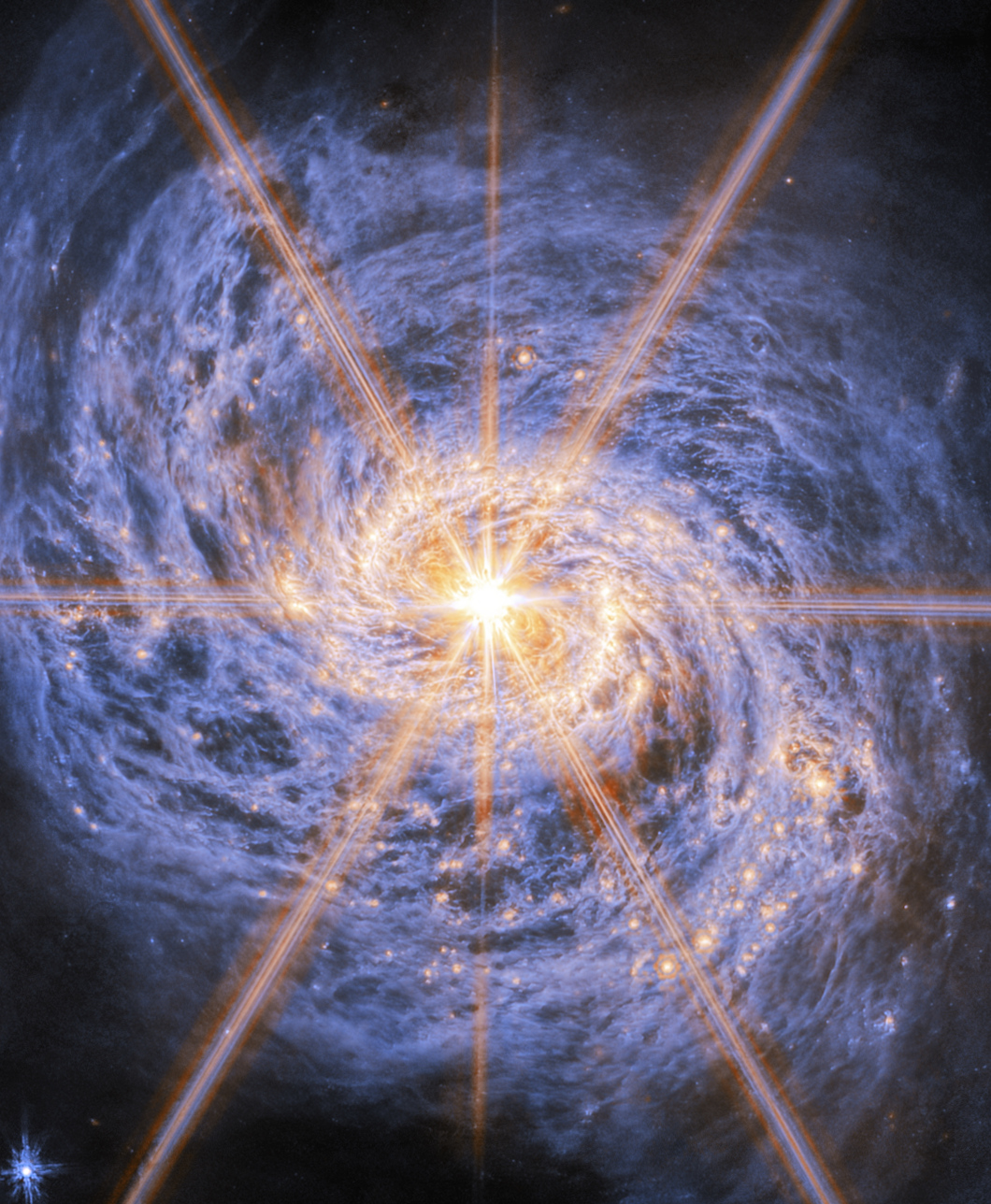
The heart of galaxy M77 shines brightly in this May 7, 2026, image from NASA’s James Webb Space Telescope. The intense glow is due to gas being pulled by the strong gravity of the central black hole into a tight and rapid orbit around it. The motion of the gas causes it to heat up, releasing tremendous amounts of radiation.
The bright lines radiating out of the center are diffraction spikes. The spikes are not a physical feature of the galaxy, but an optical effect caused by the telescope itself.
Image credit: ESA/Webb, NASA & CSA, A. Leroy
NASA Science, Cargo Launch on 34th SpaceX Resupply Mission to Station
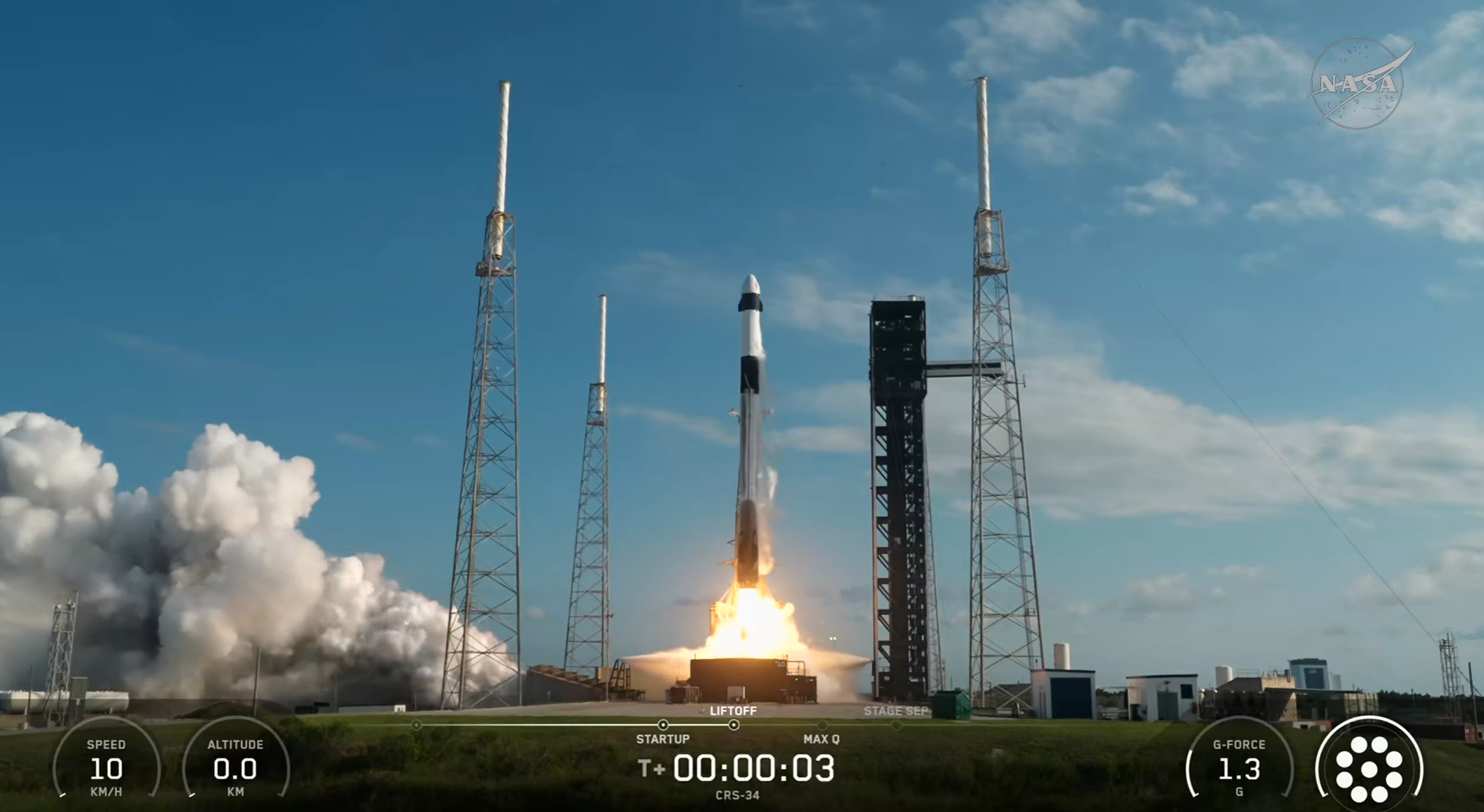
The 34th SpaceX commercial resupply mission under contract with NASA is headed to the International Space Station with new scientific experiments after lifting off at 6:05 p.m. EDT Friday on a Falcon 9 rocket from Space Launch Complex 40 at Cape Canaveral Space Force Station in Florida.
The SpaceX spacecraft, loaded with nearly 6,500 pounds of cargo for the space station’s Expedition 74 crew, is scheduled to autonomously dock at about 7 a.m. Sunday, May 17, to the forward port of the station’s Harmony module.
Watch NASA’s live rendezvous and docking coverage beginning at 5:30 a.m. on NASA+, Amazon Prime, and the agency’s YouTube channel. Learn how to watch NASA content through a variety of online platforms, including social media.
In addition to cargo for the crew aboard the space station, Dragon will deliver several new experiments, including a project to determine how well Earth-based simulators mimic microgravity conditions, a bone scaffold made from wood that could produce new treatments for fragile bone conditions like osteoporosis, and equipment to help researchers evaluate how red blood cells and the spleen change in space. The Dragon spacecraft also will carry a new instrument to study charged particles around Earth that can impact power grids and satellites, an investigation that could provide a fundamental understanding of how planets form, and an instrument designed to take highly accurate measurements of sunlight reflected by Earth and the Moon.
These experiments are just a sample of the hundreds of investigations conducted aboard the orbiting laboratory in the areas of biology and biotechnology, physical sciences, and Earth and space science. For more than 25 years, people have lived and worked continuously aboard the International Space Station, advancing scientific knowledge and making research breakthroughs that aren’t possible on Earth. The space station helps NASA understand and overcome the challenges of human spaceflight, expand commercial opportunities in low Earth orbit, and build on the foundation for long-duration missions to the Moon, as part of the Artemis program, and to Mars.
The Dragon spacecraft is scheduled to remain at the station until mid-June, when it will depart and return to Earth with time-sensitive research and cargo, ahead of splashing down off the coast of California.
Learn more about International Space Station research, operations, and its crews at:
-end-
Jimi Russell
Headquarters, Washington
202-358-1100
james.j.russell@nasa.gov
Danielle Sempsrott / Leejay Lockhart
Kennedy Space Center, Fla.
321-867-2468
danielle.c.sempsrott@nasa.gov / leejay.lockhart@nasa.gov
Sandra Jones / Joseph Zakrzewski
Johnson Space Center, Houston
281-483-5111
sandra.p.jones@nasa.gov / joseph.a.zakrzewski@nasa.gov
Curiosity Shakes Loose a Pesky Rock
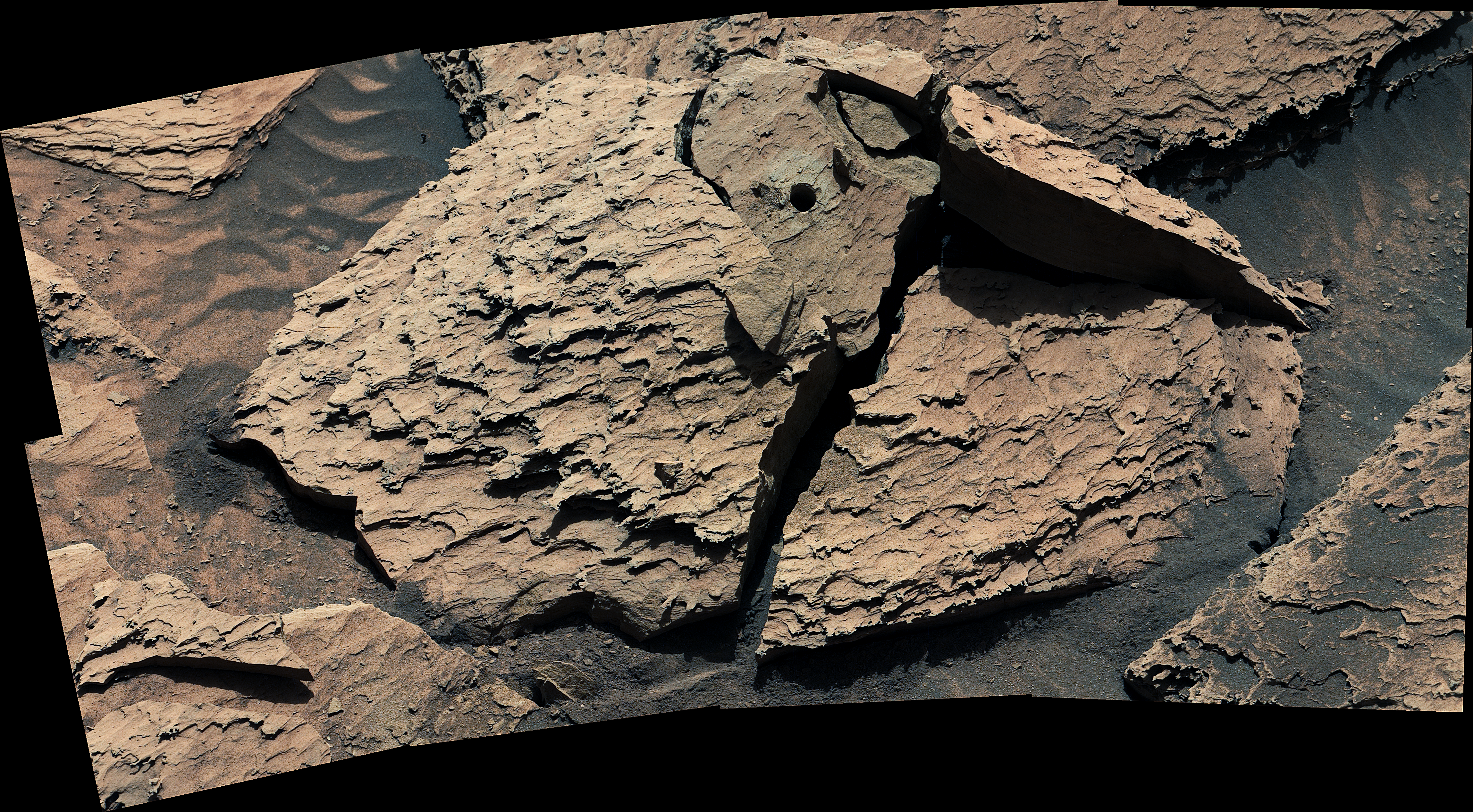
After NASA’s Curiosity Mars rover drilled a sample from this rock on April 25, 2026, it withdrew its robotic arm and pulled the entire rock off the surface with it. Engineers spent several days repositioning the arm and vibrating the drill to try and get the rock loose. When it finally detached on May 1, the rock broke into pieces.
This close-up image of the rock was produced by Curiosity’s Mast Camera, or Mastcam, on May 6. Nicknamed “Atacama,” the rock is estimated to be 1.5 feet in diameter at its base and 6 inches thick. It would weigh roughly 28.6 pounds on Earth (and about a third of that on Mars). The circular hole produced by Curiosity’s drill is visible in the rock.
See Atacama stuck on Curiosity’s drill.
Credit: NASA/JPL-Caltech/MSSS
Hubble Sights Galaxy in Transition
- Hubble Home
- Overview
- Impact & Benefits
- Science
- Observatory
- Team
- Multimedia
- News
- More
3 min read
Hubble Sights Galaxy in Transition This NASA Hubble Space Telescope images reveals the lenticular galaxy, NGC 1266. This enigmatic post-starburst galaxy has a bright center and a face that hints at spiral structure, yet it holds no discernable spiral arms. NASA, ESA, K. Alatalo (STScI); Image Processing: G. Kober (NASA/Catholic University of America)This NASA Hubble Space Telescope image reveals an enigmatic galaxy with a bright center and a face that hints at spiral structure, yet it holds no obvious spiral arms. Reddish-brown clumps and filaments of dust partially obscure the galaxy’s full face, while red, blue, and orange light from distant galaxies shines through its diffuse outer regions and dots the inky-black background.
NGC 1266 is a lenticular galaxy located some 100 million light-years away in the constellation Eridanus (the Celestial River). Astronomers classify lenticulars as transitional galaxies that represent an evolutionary bridge between spirals and ellipticals. Lenticulars are “lens-shaped” and have a bright central bulge and flattened disk like spirals, but they have no spiral arms and little to no star formation like ellipticals.
As interesting as this galaxy’s structure and lenticular classification are, those traits aren’t its most intriguing features. NGC 1266 is a rare post-starburst galaxy that is in transition between a galaxy that experienced a major burst of star formation and a quieter elliptical galaxy. Post-starburst galaxies have a young population of stars but few star-forming regions. Roughly one percent of the local galaxy population is a post-starburst galaxy.
Astronomers think that NGC 1266 had a minor merger with another galaxy some 500 million years ago. The merger spurred the formation of new stars and increased the mass of the galaxy’s central bulge while funneling gas into its supermassive black hole. The additional matter made the black hole much more active, creating an active galactic nucleus or AGN. The black hole’s increased activity would have generated powerful winds and jets of gas along its axis of rotation. Over time, the burst of new stars and the black hole’s powerful jets would deplete the galaxy’s reservoir of star-forming gas, while the turbulence generated in these processes suppressed new stars from forming in the gas that remained.
Observations by Hubble and other observatories reveal a strong outflow of gas from the galaxy and that the space between its stars is shocked or highly disturbed. Researchers found that any remaining stellar nurseries are in the core of the galaxy, and that very little to no star formation happens beyond that core. These observations suggest the supermassive black hole in the galaxy’s heart may be suppressing star birth by stripping or ejecting star-forming gas from the galaxy. The shockwaves from this process would create turbulence that disturbs the gas and dust between stars enough to stop any remaining matter from gravitationally condensing into infant stars.
Post-starburst galaxies like NGC 1266 are ideal subjects for astronomers to study the complex physical processes that suppress star formation. They help us better understand the evolution of galaxies and how supermassive black holes interact with their hosts.
Facebook logo @NASAHubble @NASAHubble Instagram logo @NASAHubbleMedia Contact:
Claire Andreoli
NASA’s Goddard Space Flight Center, Greenbelt, MD
claire.andreoli@nasa.gov
Since its 1990 launch, the Hubble Space Telescope has changed our fundamental understanding of the universe.
Hubble’s Galaxies
Hubble Science
Universe Uncovered
Picturing Earth in a New Light
- Earth
- Earth Observatory
- Image of the Day
- EO Explorer
- Topics
- More Content
- About
NASA Draws on Industry for Mars Telecommunications Network
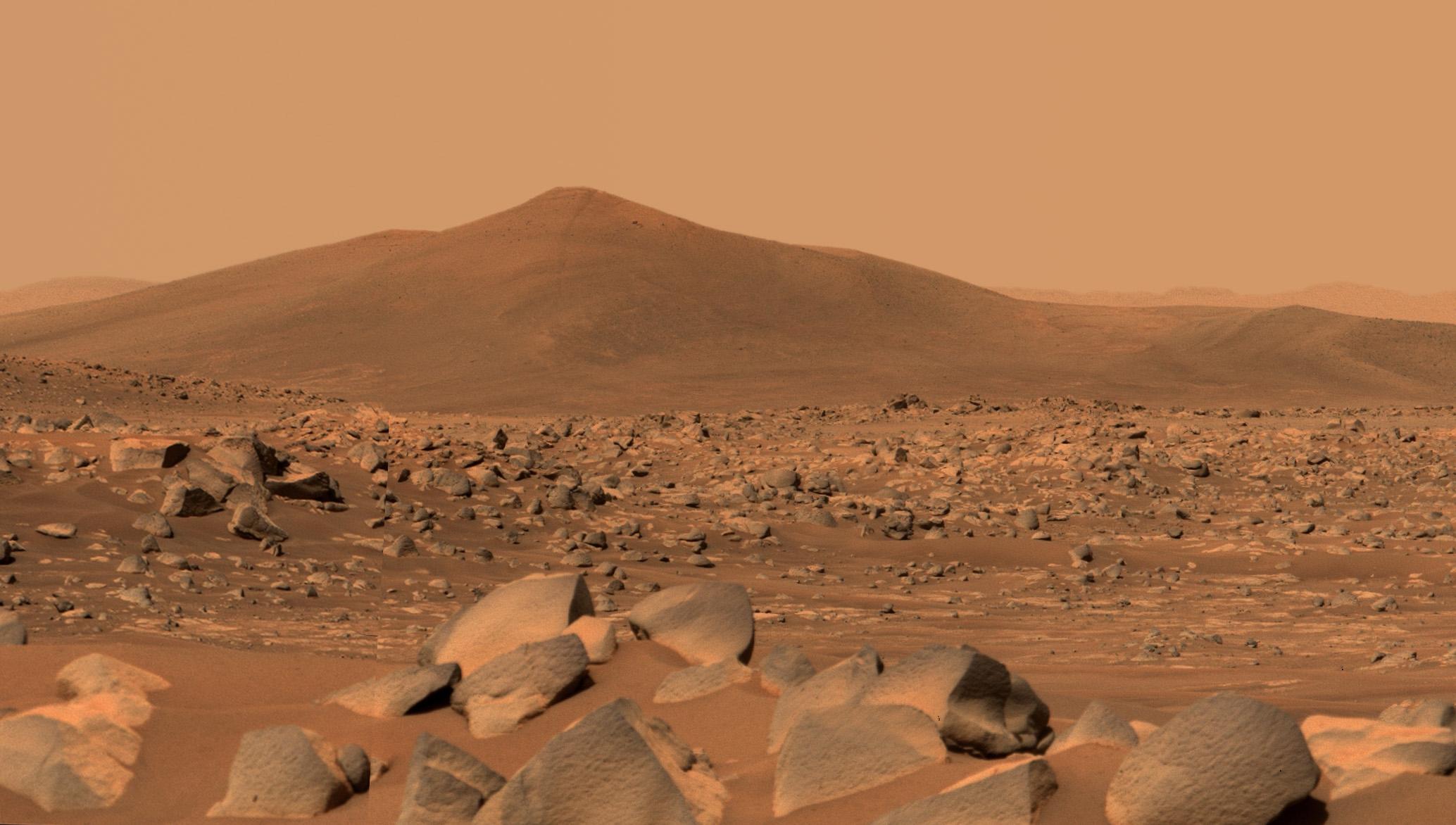
On Thursday, NASA issued a Request for Proposal (RFP), seeking industry collaboration for the Mars Telecommunications Network.
Reliable, high bandwidth communications is necessary to relay science data, high-definition imagery, and critical information during Mars missions. The network will use high-performance Mars telecommunications orbiters at the Red Planet to support future surface, orbital, and human exploration.
This RFP builds on a draft released April 2, as well as insights gathered during the accompanying industry day at NASA’s Goddard Space Flight Center in Greenbelt, Maryland, where commercial partners provided feedback on agency objectives for the Mars Telecommunications Network.
The request seeks responses that address both current and future operational missions. It also seeks a science payload accommodation that will be selected by NASA’s Science Mission Directorate. Industry is asked to respond within 30 calendar days of the posting, and the network should be ready to operate at Mars no later than 2030.
The Mars Telecommunications Network is part of NASA’s evolving space architecture, extending continuous network services beyond Earth to the Moon and Mars. The Mars Telecommunications Network is part of NASA’s SCaN (Space Communications and Navigation) Program’s Moon to Mars strategy, and is enabled by the direction and funding provided by Congress in the Working Families Tax Cut Act.
To learn more about NASA’s deep space exploration, visit:
Share Details Last Updated May 18, 2026 LocationNASA Headquarters Related TermsNASA, Industry Prepare Cryogenic Fuel Technology Demo
2 min read
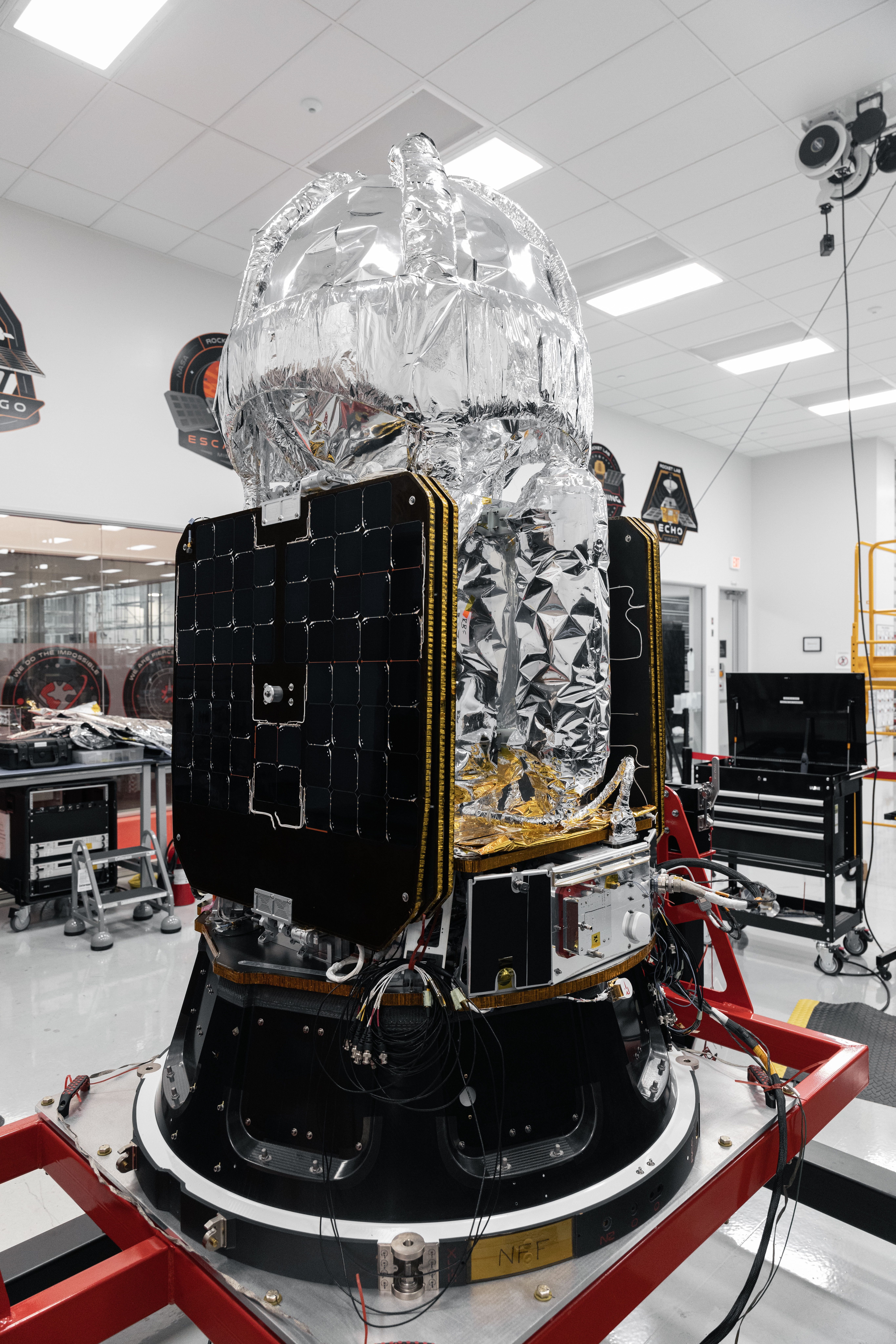
Preparations for Next Moonwalk Simulations Underway (and Underwater)NASA is collaborating with Eta Space of Rockledge, Florida, on an in‑orbit technology demonstration to advance a key capability for future deep space missions. The Liquid Oxygen Flight Demonstration, or LOXSAT, will test cryogenic fluid management technologies necessary for creating in-space propellant depots, essentially gas stations in space, that could support long-term exploration.
The LOXSAT payload is displayed inside Rocket Lab’s Spacecraft Production Complex in Long Beach, California. Rocket LabDuring a nine-month mission, LOXSAT will demonstrate 11 cryogenic fluid management technologies. Eta Space built LOXSAT as part of a NASA Tipping Point opportunity, and Rocket Lab is providing spacecraft and launch services to deliver it to low Earth orbit. The LOXSAT payload has been integrated with a Rocket Lab Photon satellite bus and will launch aboard the company’s Electron rocket from Launch Complex 1 on New Zealand’s Mahia Peninsula no earlier than July 17.
The technologies that LOXSAT will demonstrate were selected to address the core challenges of using cryogenic, or super-cold, propellants in microgravity, including reducing boiloff, transferring propellant, maintaining tank pressure, and gauging propellant levels. Data collected from these tests will support development of future in-space propellant depots that could refuel spacecraft as they journey to the Moon, Mars, or other deep space destinations.
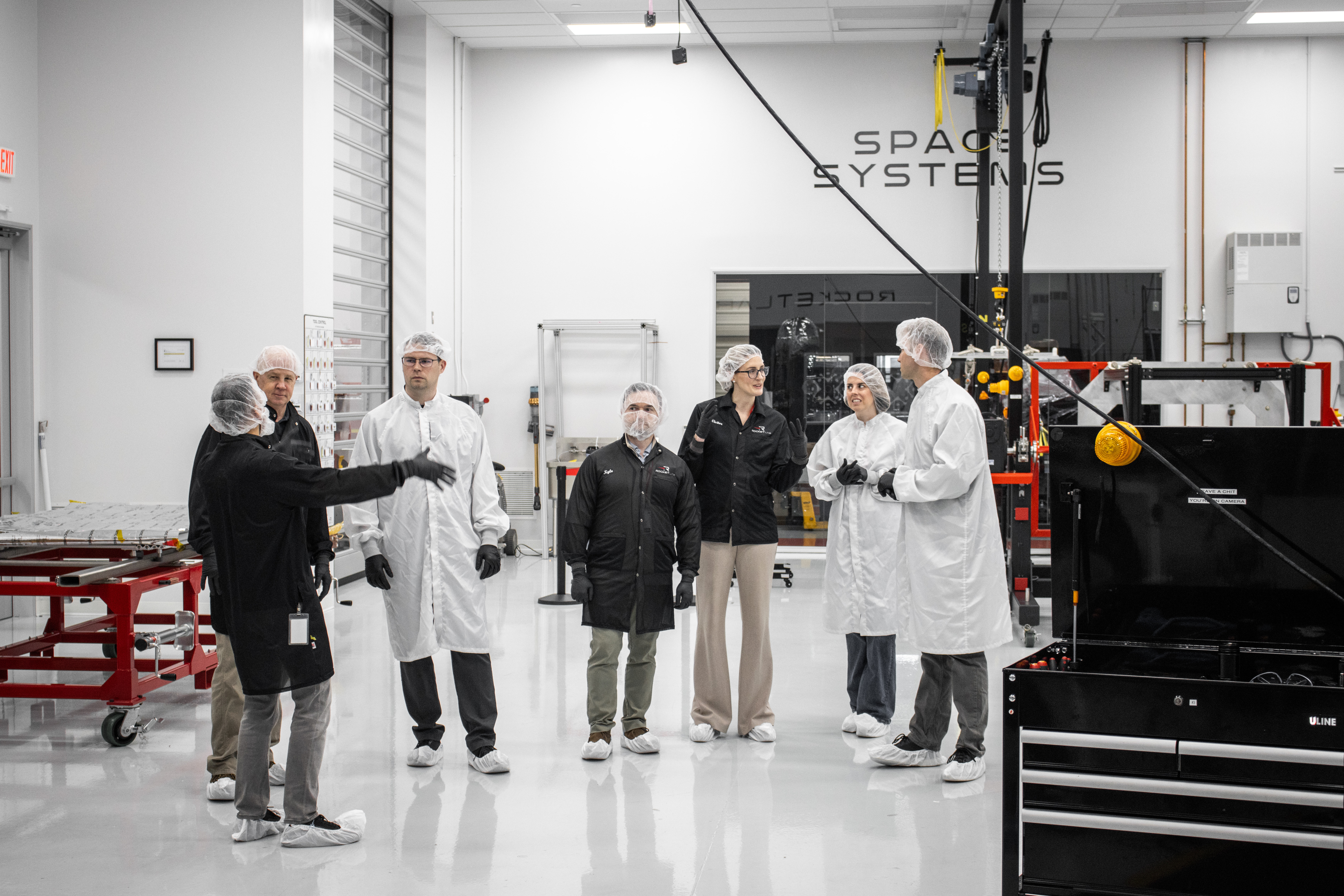
Members of NASA’s Cryogenic Fluid Management project tour Rocket Lab’s Spacecraft Production Complex in Long Beach, California, on Thursday, Feb. 12, 2026 . The portfolio project team had the opportunity to view the LOXSAT payload and the setup for vibration testing. CreditRocket LabNASA’s LOXSAT team is composed of members of the Cryogenic Fluid Management Portfolio Project from NASA’s Marshall Space Flight Center in Huntsville, Alabama, Glenn Research Center in Cleveland, and Kennedy Space Center in Florida. The cryogenic portfolio’s work is part of NASA’s Space Technology Mission Directorate and includes more than 20 individual technology development activities.
To learn more, visit:
Share Details Last Updated May 15, 2026 EditorLee MohonContactJoel Wallacejoel.w.wallace@nasa.govLocationMarshall Space Flight Center Related Terms Explore More 3 min read Ice to Fuel: NASA Tests Technology for Refueling Landers Article 2 months ago 4 min read Stay Cool: NASA Tests Innovative Technique for Super Cold Fuel Storage Article 10 months ago 3 min read NASA Propellant Tech Could Fuel Long-Duration Missions Article 1 year ago Keep Exploring Discover Related TopicsMissions
Humans in Space
Climate Change
Solar System
Fresh Food Delivery for Space Station
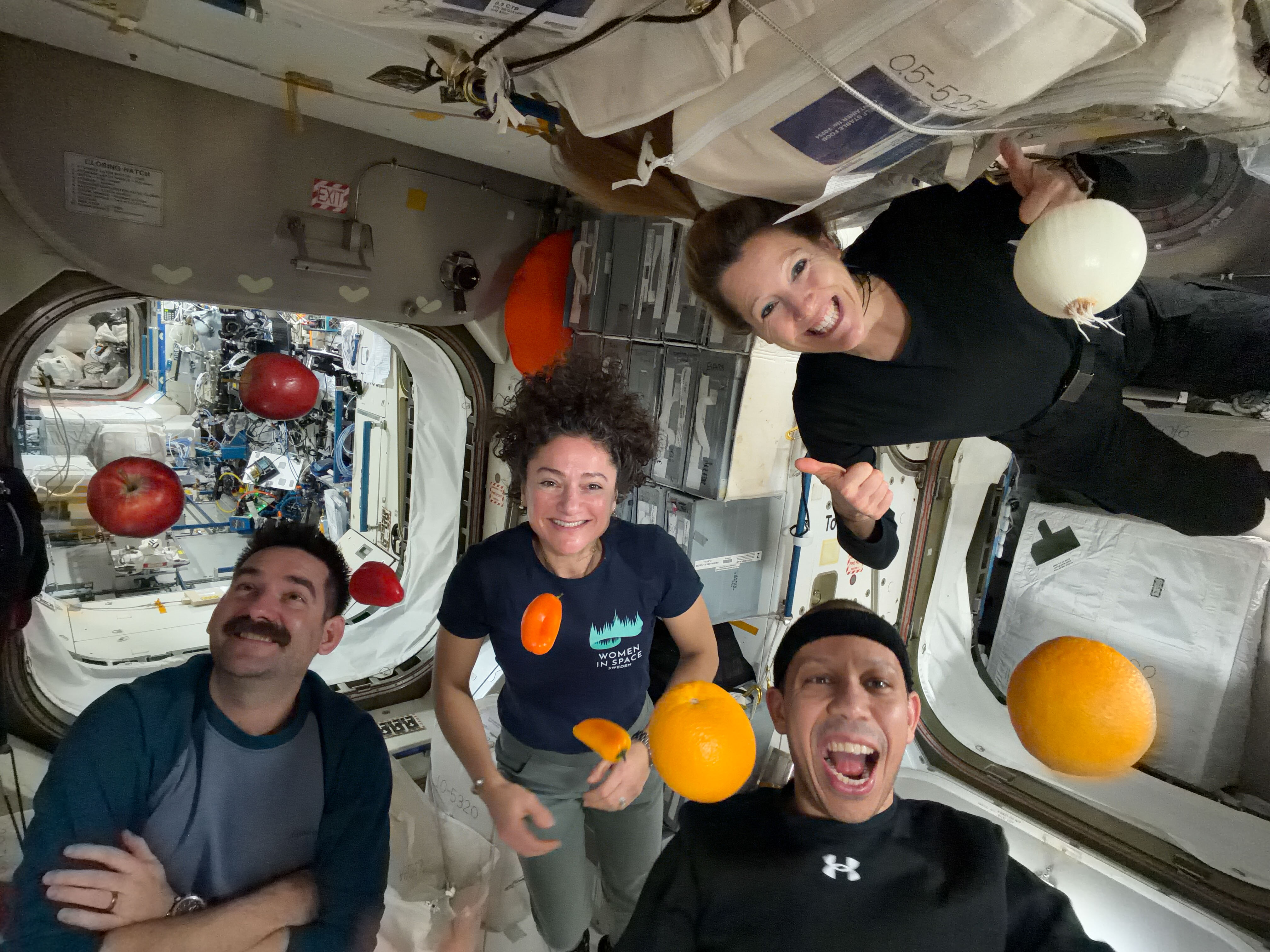
NASA astronauts Jack Hathaway (bottom left), Jessica Meir (middle left), and Chris Williams (bottom right), and ESA (European Space Agency) astronaut Sophie Adenot (top right) have some fun with food and microgravity in this April 19, 2026, photo.
Northrop Grumman’s Cygnus XL cargo spacecraft delivered a shipment of fresh food, including oranges, apples, onions, and peppers, to the International Space Station. Cygnus XL also brought over 2,300 pounds of new research hardware and science experiments that the space station crew will use to explore blood stem cells to treat cancers and blood disorders and study ways to protect astronaut gut health. Other gear delivered aboard Cygnus XL include an advanced exercise system from ESA, new eye-imaging hardware, oxygen and nitrogen tanks to recharge spacesuits, and more.
Image credit: NASA/Chris Williams
Ice Moves Out of Aniak
- Earth
- Earth Observatory
- Image of the Day
- EO Explorer
- Topics
- More Content
- About
NASA-Supported Space Tech Advances Earthly Construction
3 min read
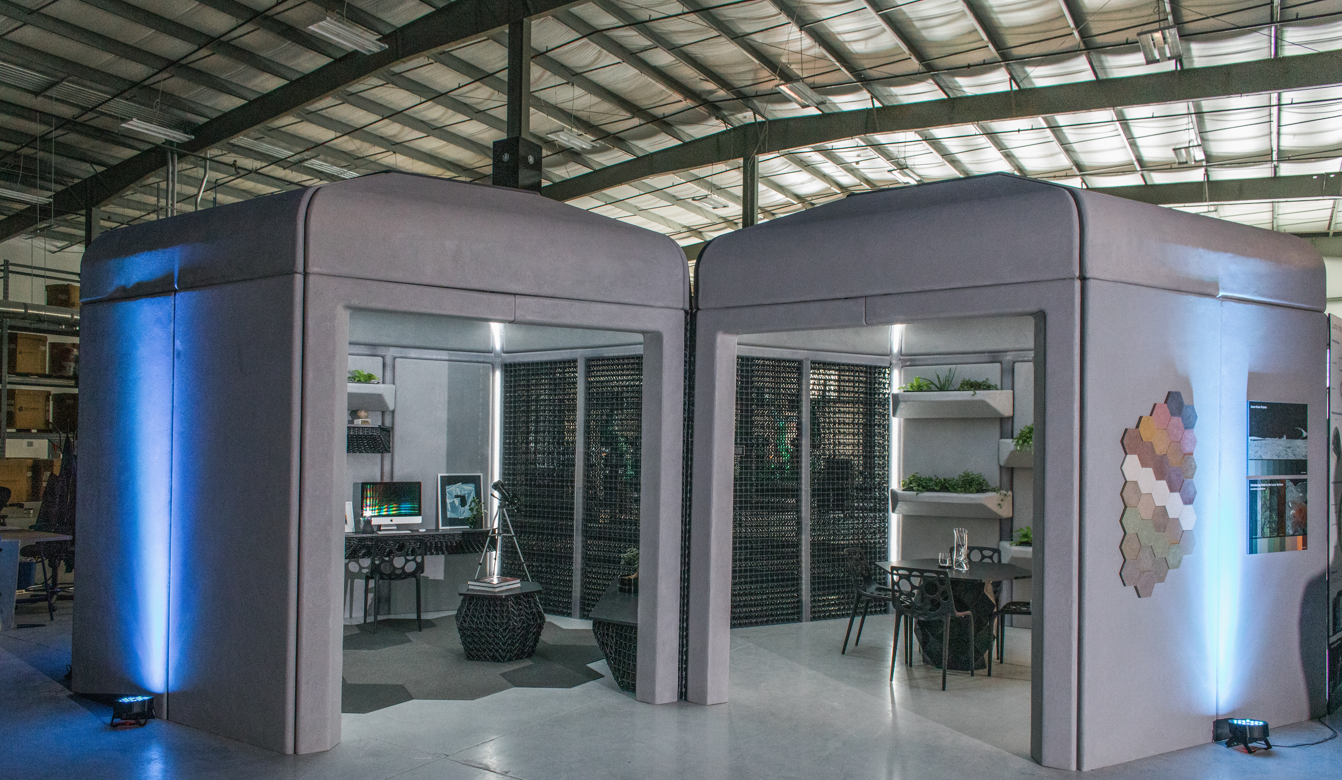
Preparations for Next Moonwalk Simulations Underway (and Underwater) Branch’s work outfitting a prototype of a lunar surface habitat they developed, pictured here, under a cooperative agreement with Marshall Space Flight Center, helped the company evolve its printing processes.Credit: Branch Technology Inc.An innovative 3D printing process that advanced NASA’s approach to outfitting a lunar habitat is making buildings on Earth beautiful, efficient, and strong.
Instead of building structures layer by layer, Branch Technology Inc. of Chattanooga, Tennessee, has developed a process the company calls Freeform 3D Printing, which creates shapes with lightweight lattice structures that can be filled or covered. The company uses the technique to manufacture visually interesting, modular building elements, such as wall panels and cladding.
“Our process eliminates a ton of material from something that otherwise might be printed solid all the way through,” said David Goodloe, who leads Branch Technology’s Advanced Concepts team, which manages the company’s NASA collaborations.
In 2017, the company won Phase II of NASA’s 3D-Printed Habitat Challenge, a public competition to build a habitat for deep space exploration.
Tracie Prater, a technical manager in the Habitat Systems Development Branch at NASA’s Marshall Spaceflight Center in Huntsville, Alabama, served as a subject matter expert for the challenge and worked with Branch Technology on a cooperative agreement.
“With the 3D-Printed Habitat Challenge, teams were focused on how to build a large habitat structure on a planetary surface,” said Prater. “But once that structure is pressurized and ready for crew occupancy, how do you populate it with systems and supplies? That’s what Branch was looking at through the cooperative agreement — what their on-demand fabrication process enables in terms of novel designs for interior items.”
NASA’s parameters for the habitat challenge led Branch to develop its nozzles to extrude unique lattice structures as well as more traditional layers. The company uses this dual capability frequently in its wall panels where traditionally printed sections offer solid substrates for attaching fasteners.
The polymers Branch extrudes were informed by its materials science research for the 3D-Printed Habitat Challenge, which asked that print material be made of something like the dust and rocks found on the Martian surface and mission recyclables. Branch came up with a basalt fiber-reinforced plastic and from that work went on to develop an optimal loading recipe for its terrestrial “inks.”
These innovations exemplify the purpose of NASA’s Technology Transfer program within the Space Technology Mission Directorate, which uses space-based solutions to improve life on Earth. For 50 years, NASA has documented the everyday benefits of space technology through the agency’s Spinoff publication.
Read More Share Details Last Updated May 13, 2026 Related Terms Explore More 4 min read Hello Universe: NASA’s Next-Gen Space Processor Undergoes Testing Article 6 days ago 3 min read NASA Heat Shield Technology Enables Space Industry Growth Article 4 months ago 3 min read NASA, Industry Weave Data Fabric with Artificial IntelligenceAir taxis and drones navigate different flight zones with NASA-inspired system
Article 6 months ago Keep Exploring Discover Related TopicsMissions
Humans in Space
3D-Printed Habitat Challenge
Technology Transfer & Spinoffs
Rise Goes to Washington
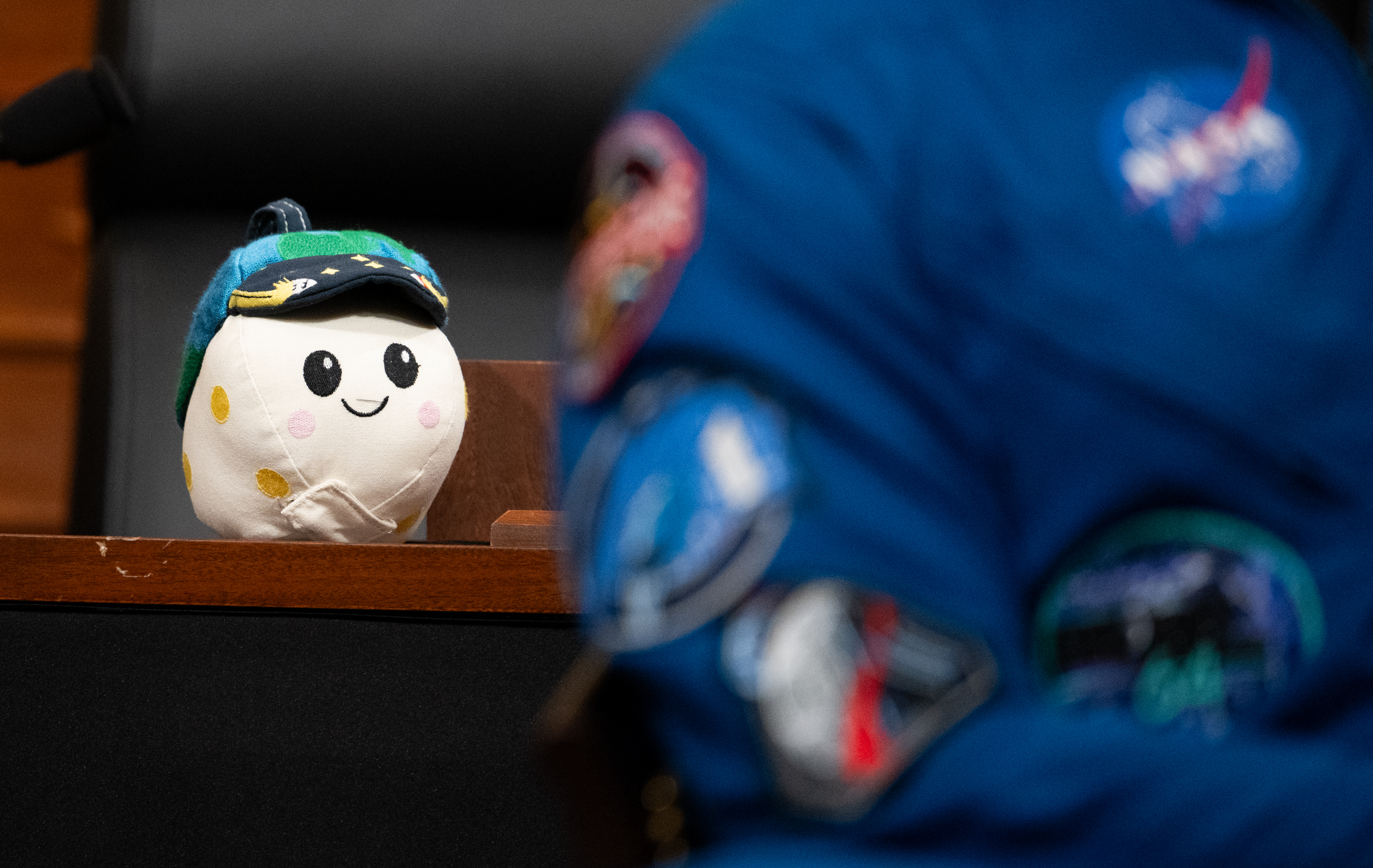
“Rise,” the Artemis II zero gravity indicator, is seen sitting on the dais as NASA astronauts Reid Wiseman, Victor Glover, and Christina Koch, and CSA (Canadian Space Agency) astronaut Jeremy Hansen speak with congressional staff, Tuesday, May 12, 2026, in Washington.
NASA’s Artemis II mission took Wiseman, Glover, Koch, and Hansen on a nearly 10-day journey around the Moon and back to Earth in April 2026.
See more photos from the crew’s visit to the U.S. Capitol.
Image credit: NASA/Joel Kowsky
NASA Outlines Preliminary Artemis III Mission Plans
NASA is moving quickly to define next year’s Artemis III mission in Earth orbit, a crewed flight that will test rendezvous and docking capabilities between the agency’s Orion spacecraft and commercial landers from Blue Origin and SpaceX. Since a February announcement adding an Artemis mission ahead of crewed landing missions to the Moon’s South Pole region, engineers have been evaluating mission profile options and operational considerations for Artemis III to ensure the test flight helps the agency and its partners reduce risk ahead of the next Americans landing on the Moon during Artemis IV.
“While this is a mission to Earth orbit, it is an important stepping stone to successfully landing on the Moon with Artemis IV. Artemis III is one of the most highly complex missions NASA has undertaken,” said Jeremy Parsons, Moon to Mars acting assistant deputy administrator, NASA’s Exploration Systems Development Mission Directorate in Washington. “For the first time, NASA will coordinate a launch campaign involving multiple spacecraft integrating new capabilities into Artemis operations. We’re integrating more partners and interrelated operations into this mission by design, which will help us learn how Orion, the crew, and ground teams all interact together with hardware and teams from both lander providers before we send astronauts to the Moon’s surface and build a Moon Base there.”
The mission is planned to carry out a series of objectives designed to demonstrate critical systems needed for a future lunar landing. During the Artemis III mission, the SLS (Space Launch System) rocket will launch the Orion spacecraft from NASA’s Kennedy Space Center in Florida with four crew members. Instead of using the interim cryogenic propulsion stage as the upper stage of the rocket, NASA will use a “spacer,” a representation of the mass and overall dimensions of an upper stage but without propulsive capabilities. The spacer will maintain the same overall dimensions and interface connection points as the upper stage between the Orion stage adapter and launch vehicle stage adapter.
Design and fabrication activities for the spacer are progressing rapidly at NASA’s Marshall Space Flight Center in Huntsville, Alabama. Material for the barrel section and the upper and lower rings is currently being machined at Marshall in preparation for upcoming welding operations.
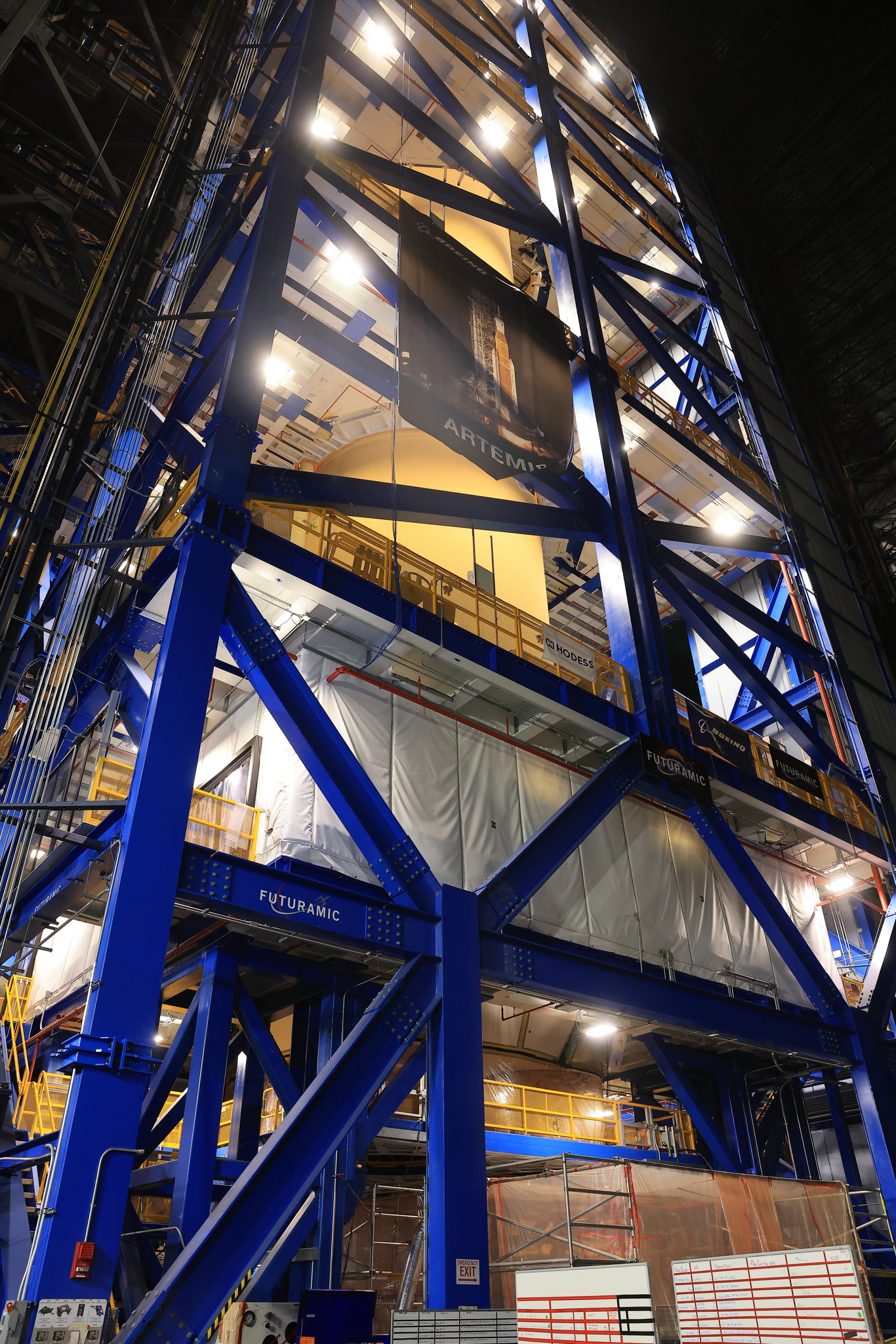
The Artemis III core stage sits in High Bay 2 in the Vehicle Assembly Building at NASA Kennedy with the core stage tank attached to its engine section on May 12, 2026.Credit: NASA/Kim ShiflettAfter the rocket delivers Orion to orbit, the spacecraft’s European-built service module will provide propulsion to circularize Orion’s orbit around the planet in low Earth orbit. This orbit increases overall mission success by allowing more launch opportunities for each element as compared to a lunar mission — SLS carrying Orion and its crew, SpaceX’s Starship human landing system pathfinder, and Blue Origin’s Blue Moon Mark 2 human landing system pathfinder.
Informed by Blue Origin and SpaceX capabilities, NASA also is defining the concept of operations for the mission. While some decisions are yet to be determined, astronauts could potentially enter at least one lander test article.
The crew will spend more time aboard Orion than during Artemis II, further advancing the evaluation of life support systems, and for the first time will demonstrate the docking system performance. The mission will inform lander rendezvous and habitation concepts and mission operations in preparation for future surface missions. The agency also plans to test an upgraded heat shield during Orion’s return to Earth to enable more flexible and robust reentry profiles for future missions.
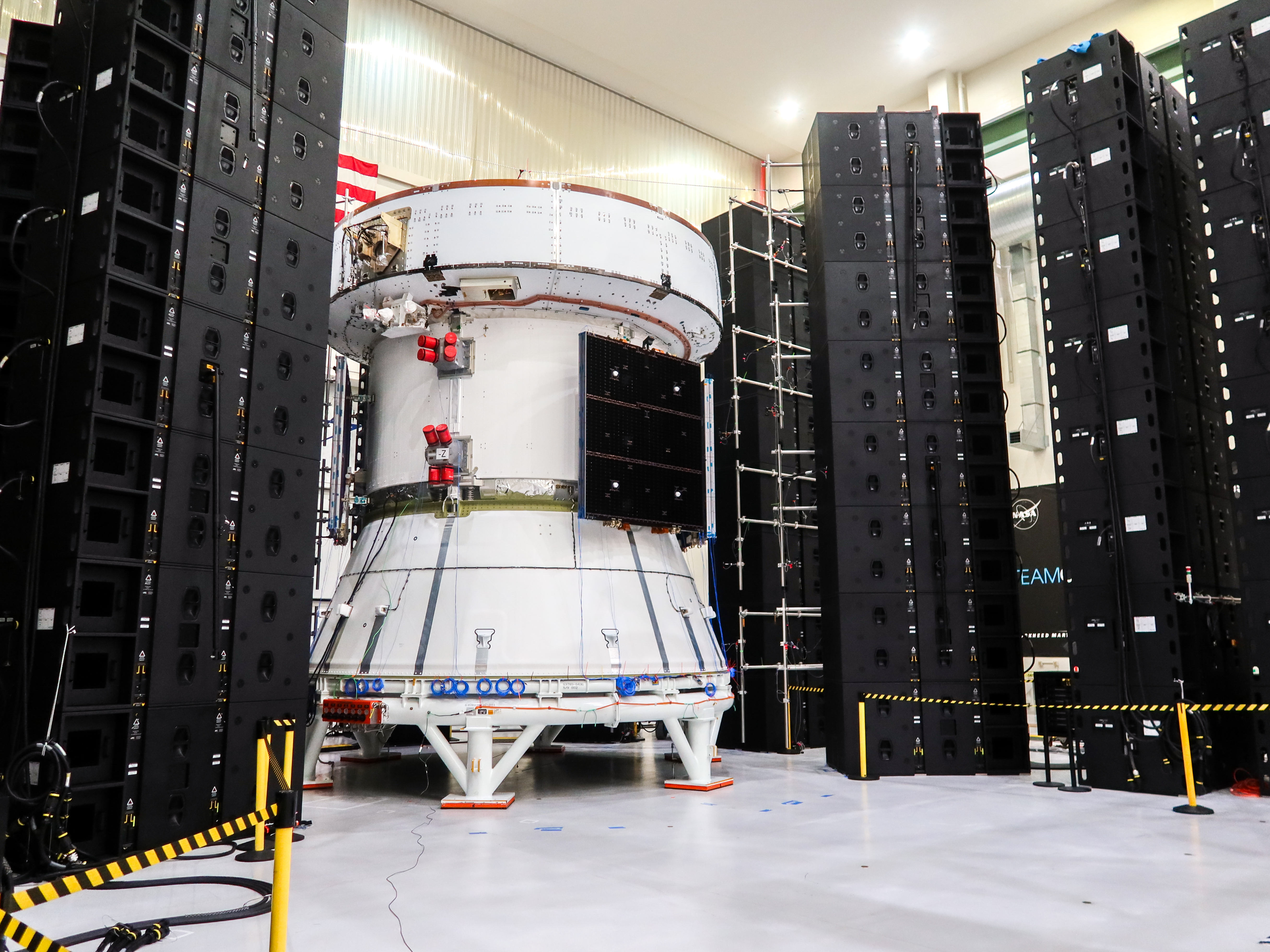
The Artemis III Orion service module is pictured ahead of acoustic testing in NASA’s Kennedy Space Center Operations and Checkout Facility on May 7, 2026.NASA/Jess RuffaOver the coming weeks, NASA will continue to refine specific plans for the flight, including a timeline for identifying astronauts to train for mission operations, options to evaluate Axiom’s AxEMU spacesuit lander interfaces ahead of lunar surface missions, mission duration, and potential science operations for the flight. NASA has asked for industry input on potential solutions to improve the communications with the ground during the mission since the Deep Space Network will not be used. The agency also is seeking both international and domestic interest in potentially flying CubeSats to deploy in Earth orbit, and may share other opportunities as the concept of operations for the mission is further defined.
As part of the Golden Age of innovation and exploration, NASA will send Artemis astronauts on increasingly difficult missions to explore more of the Moon for scientific discovery, economic benefits, establish an enduring human presence on the lunar surface, and to build on our foundation for the first crewed missions to Mars.
Learn more about NASA’s Artemis program:
Share Details Last Updated May 13, 2026 LocationKennedy Space Center Related TermsStudying Pneumonia in Space for Heart Health on Earth
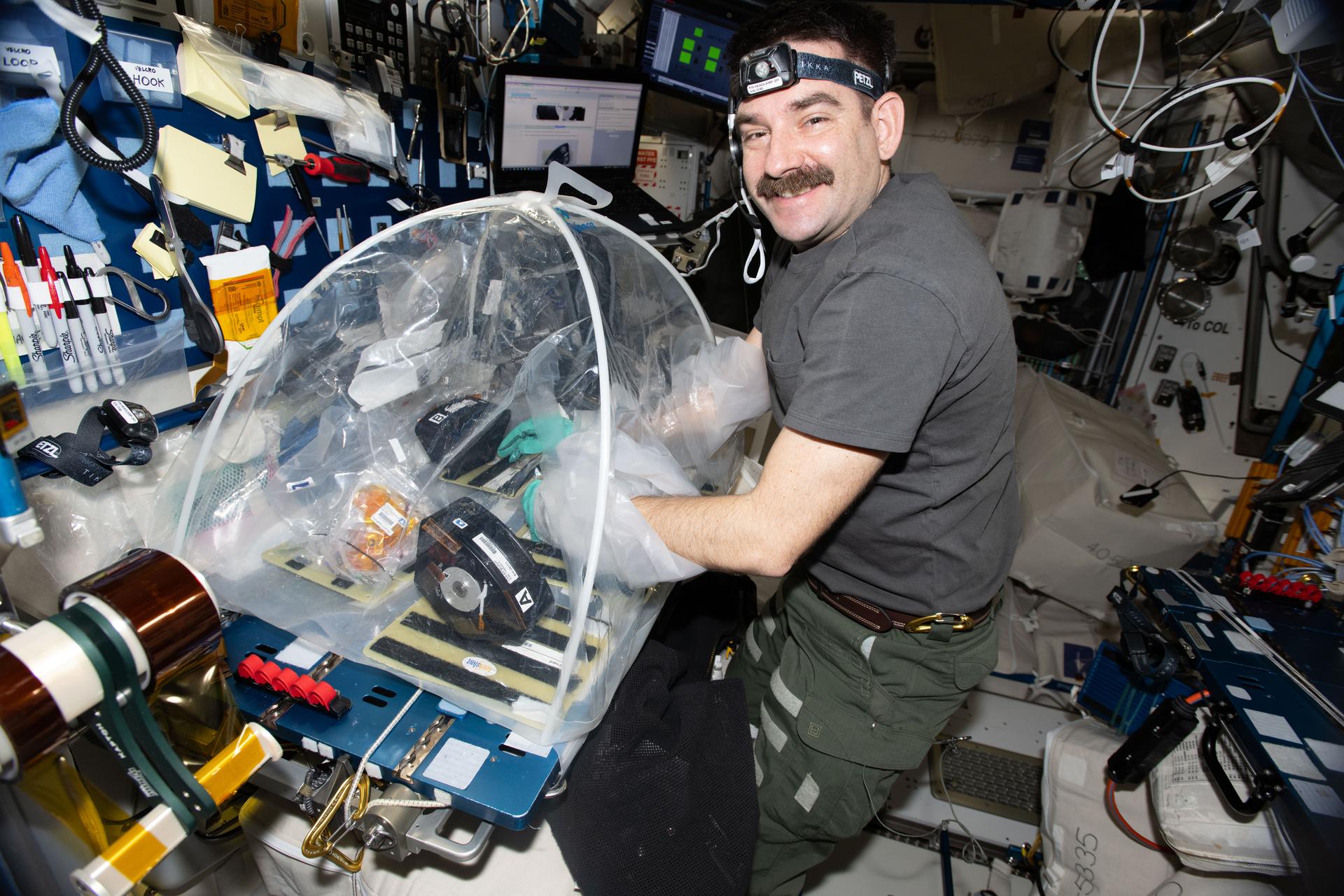
Expedition 74 astronauts aboard the International Space Station are uncovering how bacteria that causes pneumonia can lead to long-term damage in the heart. Researchers are leveraging the space environment to observe how stem cell derived heart tissues respond to bacterial infections, to discover new methods to manage cardiovascular health and infectious diseases.
In space, bacteria tend to be more severe and have enhanced drug resistance. Scientists are harnessing these traits to exaggerate their effect on heart cells and reveal important cellular responses that would be difficult to detect on Earth. Pinpointing the factors that make bacterial infections more severe in space could reveal targets for treatment. Dr. Palaniappan Sethu, professor of Medicine and Biomedical Engineering at the University of Alabama at Birmingham says, “By exacerbating the infection, we anticipate clear separation of the infection and control groups, making it easier to identify subtle factors that promote bacterial virulence”.
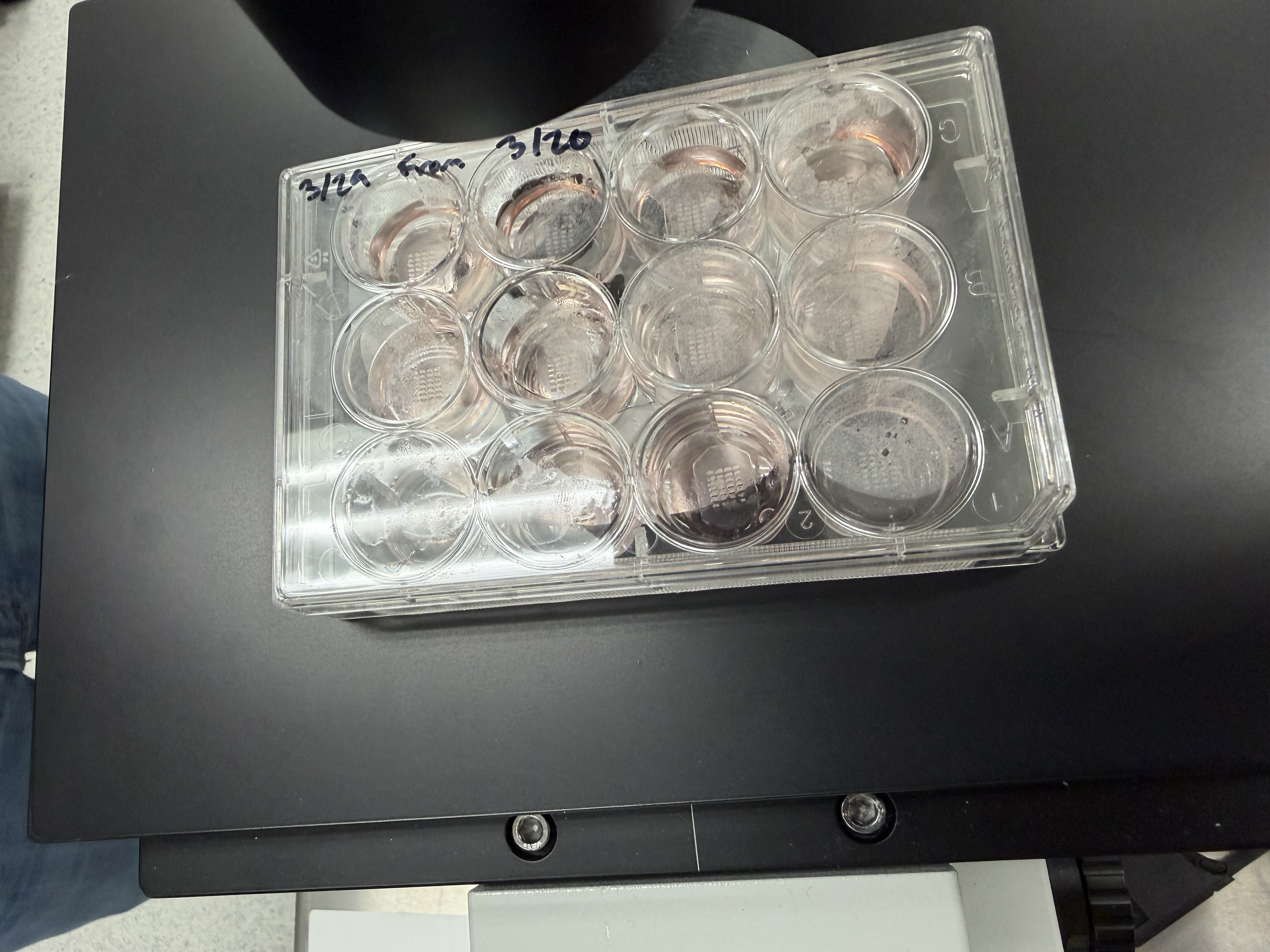
Preflight imagery of stem cell derived heart tissue models produced for the MVP Cell-09 investigation.University of Alabama at BirminghamThe Streptococcus pneumoniae bacteria is the leading cause of community-acquired pneumonia (CAP), an infection which causes millions of deaths each year. More than a quarter of adults hospitalized for CAP develop heart disease and patients that survive severe cases have an increased risk even after the pneumonia has been fully eradicated.
This research is also important as humans venture further into space. For over 25 years, researchers have utilized the space station to study how the human body and microbes respond to space, and deep space missions will require the strategies and knowledge we gain. “Addressing these questions is essential for ensuring human health during long duration space travel and for enabling sustainable habitation beyond Earth. Our experiments are expected to generate new insights into how space specific factors influence disease progression”, says Dr. Carlos J. Orihuela, professor of Microbiology at the University of Alabama at Birmingham.
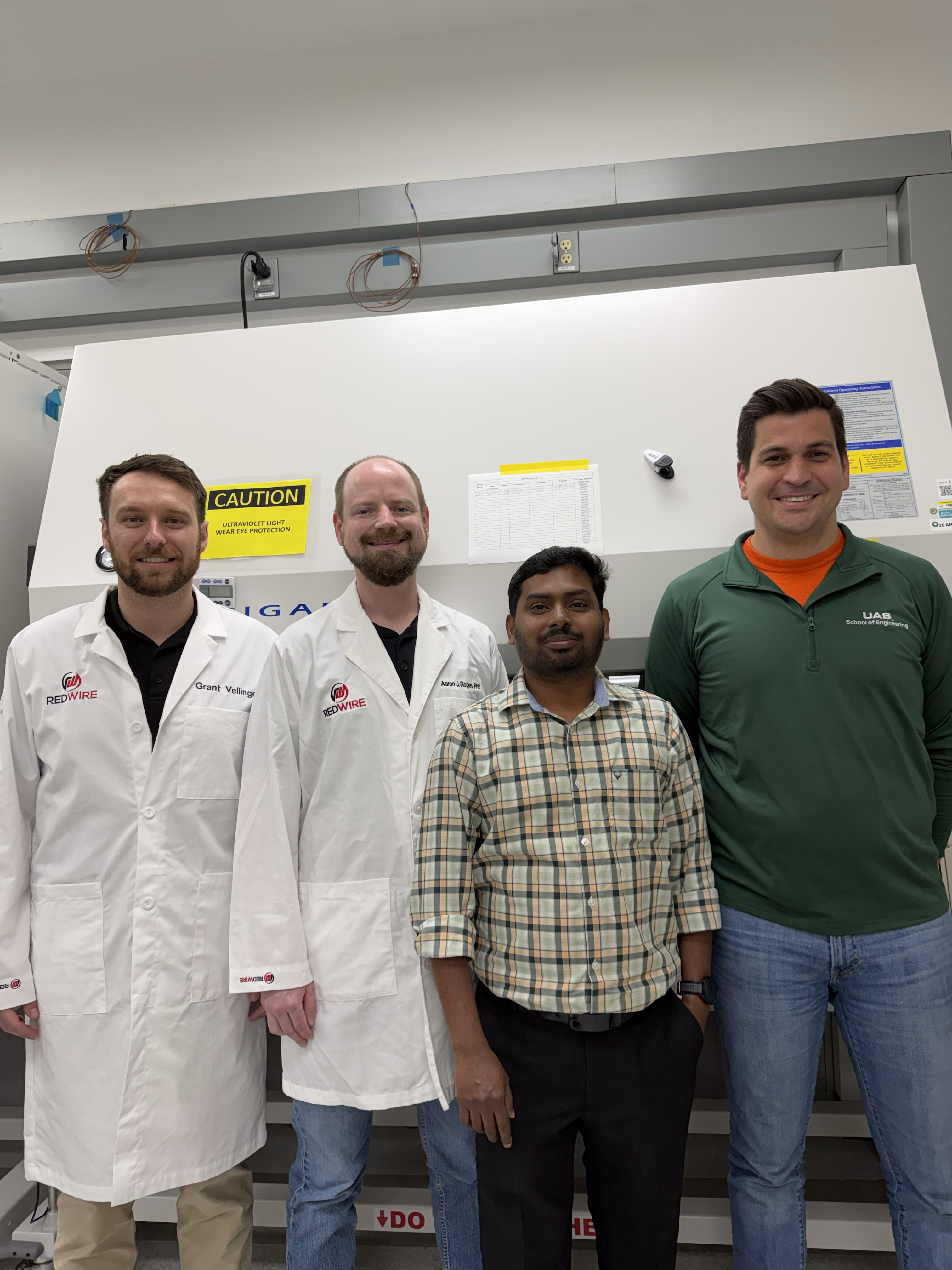
From left to right: Redwire Space researchers Grant Vellinger and Dr. Aaron Rogers, and University of Alabama at Birmingham researchers Dr. Vipin Chembilikand and Dr. Ian Berg prepare MVP Cell-09 ahead of launch to the space station.University of Alabama at BirminghamThe space station allows researchers from around the world to address complex human health problems on Earth and in space. Using the unique environmental factors aboard the space station allows for advanced study of disease formation, testing drugs and diagnostic tools, and more.
Keep Exploring Discover More Topics From NASALatest News from Space Station Research
International Space Station
Humans In Space
Space Station Research Results
NASA’s Planet-Hunting TESS Reveals Dazzling Night Sky
3 min read
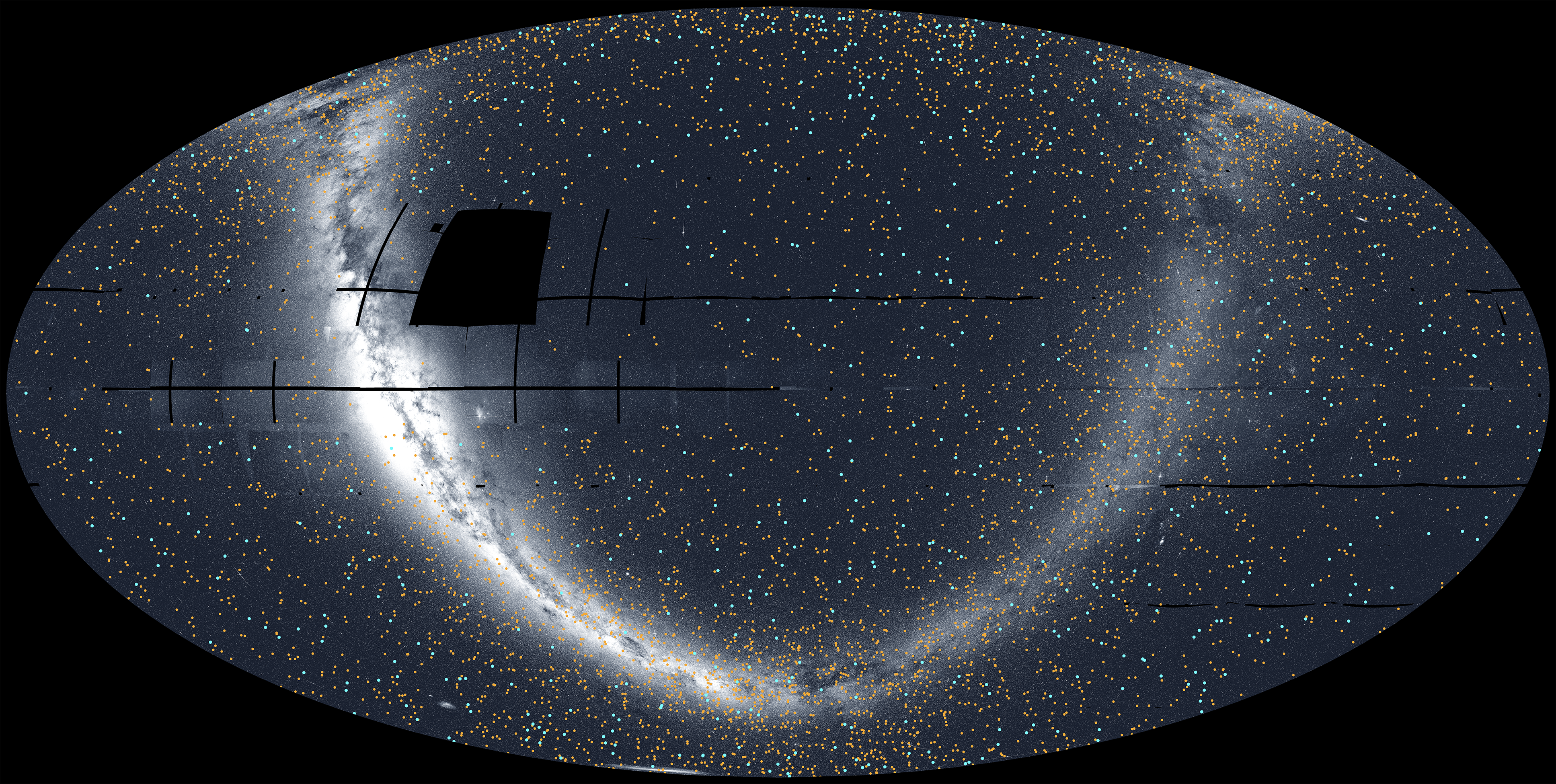
NASA’s Planet-Hunting TESS Reveals Dazzling Night SkyNASA’s TESS (Transiting Exoplanet Survey Satellite) has released its most complete view of the starry sky to date, filling in gaps from previous observations. Nearly 6,000 colored dots scattered across the image show the locations of either confirmed or candidate exoplanets — worlds beyond our solar system — identified by the mission as of September 2025 at the end of TESS’s second extended mission.
“Over the last eight years, TESS has become a fire hose of exoplanet science,” said Rebekah Hounsell, a TESS associate project scientist at the University of Maryland Baltimore County and NASA’s Goddard Space Flight Center in Greenbelt, Maryland. “It’s helped us find planets of all different sizes, from tiny Mercury-like ones to those larger than Jupiter. Some of them are even in the habitable zone, where liquid water might be possible on the surface, an important factor in our search for life beyond Earth.”
The TESS mission scans a wide swath of the sky, called a sector, for about a month at a time using its four cameras. These long stares allow the spacecraft to track the brightness changes of tens of thousands of stars, looking for variations in their light that might come from orbiting planets.
Researchers assembled an all-sky mosaic made of 96 sectors observed between April 2018, when TESS began its work, and September 2025.
This view of the whole sky was constructed from 96 TESS sectors. By the end of September 2025, when the last image of this mosaic was captured, TESS had discovered 679 exoplanets (blue dots) and 5,165 candidates (orange dots). The glowing arc running through the center is the plane of the Milky Way. The Large Magellanic Cloud can be seen along the bottom edge just left of center. Black areas within the oval indicate regions TESS has not yet imaged. NASA/MIT/TESS and Veselin Kostov (University of Maryland College Park)Download high-resolution images from NASA’s Scientific Visualization Studio.
The blue dots in the image mark the locations of nearly 700 confirmed planets, as of September 9. This menagerie includes worlds that may be covered by volcanoes, are being destroyed by their stars, or orbit two stars — experiencing double sunrises and sunsets each day. The orange dots represent more than 5,000 candidate planets that are awaiting verification.
To date, scientists have confirmed over 6,270 exoplanets using missions like TESS, NASA’s retired Kepler Space Telescope, and other facilities.
Also captured in the mosaic is the bright plane of our Milky Way galaxy, seen as a glowing arc through the center. The bright white ovals in the lower left are the Large and Small Magellanic Clouds. These satellite galaxies are located 160,000 and 200,000 light-years away, respectively.
“The more we dig into the large TESS dataset, especially using automated algorithms, the more surprises we find,” said Allison Youngblood, the TESS project scientist at NASA Goddard. “In addition to planets, TESS has helped us study rivers of young stars, observe dynamic galactic behavior, and monitor asteroids near Earth. As TESS fills in more of the night sky, there’s no knowing what it might see next.”
You could discover the next exoplanet! Join the Planet Hunters TESS citizen science project, and you’ll learn how to read light curves — plots of light data from distant stars — to find telltale signals from orbiting exoplanets.
By Jeanette Kazmierczak
NASA’s Goddard Space Flight Center, Greenbelt, Md.
Media Contact:
Claire Andreoli
301-286-1940
NASA’s Goddard Space Flight Center, Greenbelt, Md.
America’s Emerald Isle
- Earth
- Earth Observatory
- Image of the Day
- EO Explorer
- Topics
- More Content
- About