NASA - Breaking News

La NASA presentará el telescopio Roman completo y ofrecerá una conferencia de prensa
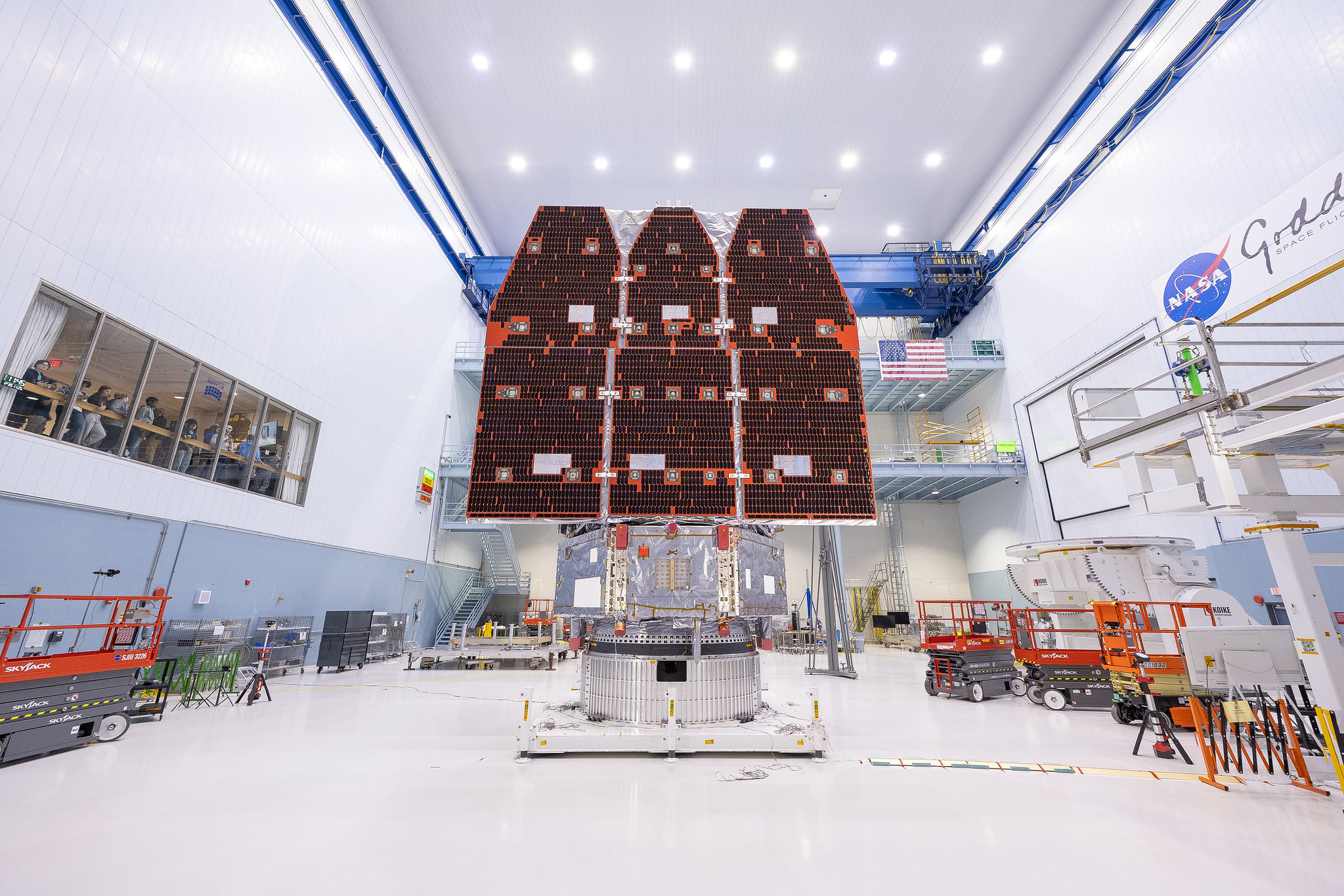
Se invita a los medios de comunicación el martes 21 de abril al Centro de Vuelo Espacial Goddard de la NASA en Greenbelt, Maryland, para conocer el telescopio espacial Nancy Grace Roman de la agencia, cuya construcción terminó recientemente y el cual se encuentra ultimando las pruebas previas a su lanzamiento. Esta será una de las últimas oportunidades para ver este telescopio insignia, totalmente integrado, antes de que sea trasladado al Centro Espacial Kennedy de la NASA en Florida para su lanzamiento. El despegue está previsto para no antes de este otoño boreal.
Con la sala limpia más grande del centro Goddard de la NASA como telón de fondo, el evento incluirá una conferencia de prensa a las 4:00 p.m. EDT (hora del este) que será transmitida en el canal de YouTube de la NASA (en inglés). Descubra cómo puede ver el contenido de la NASA a través de diferentes plataformas en línea, incluyendo las redes sociales.
Los participantes de la NASA en la sesión informativa serán:
• Jared Isaacman, administrador de la NASA
• Nicky Fox, administradora asociada, Dirección de Misiones Científicas, sede central de la NASA en Washington
• Jamie Dunn, gerente del proyecto del telescopio Roman, centro Goddard de la NASA
• Julie McEnery, científica principal del proyecto del telescopio Roman, centro Goddard de la NASA
Los medios de comunicación interesados en participar por teléfono deben confirmar su participación, a más tardar, dos horas antes del inicio del evento con Alise Fisher: alise.m.fisher@nasa.gov. Una copia de la política de acreditación de medios de la NASA se encuentra disponible en línea (en inglés).
Los medios de comunicación acreditados que participen en persona también tendrán la oportunidad de visitar otras instalaciones del centro y hacer entrevistas con expertos sobre temas tales como la carga útil candidata para la Estación de Monitoreo del Entorno Lunar de la NASA para el programa Artemis, la misión DAVINCI a Venus, el concepto de misión del Observatorio de Mundos Habitables y la misión Dragonfly a la luna Titán de Saturno.
Para ser considerados para su acreditación presencial, los medios de comunicación extranjeros deben registrarse antes del miércoles 1 de abril; los medios estadounidenses deben registrarse antes del viernes 10 de abril. Todas las confirmaciones de asistencia de los medios deben ser enviadas a Rob Garner: rob.garner@nasa.gov.
Nombrado en honor a la primera astrónoma jefa de la NASA, el telescopio espacial Nancy Grace Roman ofrecerá una visión profunda y panorámica del cosmos, generando imágenes nunca antes vistas que revolucionarán nuestra comprensión del universo. Este observatorio marcará el comienzo de una nueva era de sondeos cósmicos, revelando una gran cantidad de objetos celestes y arrojando luz sobre algunos de los misterios más profundos del universo, incluyendo aquellos fenómenos que no podemos ver. Roman también exhibirá tecnología de vanguardia, incluyendo la prueba de tecnología más avanzada jamás enviada al espacio para obtener imágenes directas de planetas que orbitan estrellas cercanas, lo cual representa un paso clave en la búsqueda de vida en otros mundos por parte de la NASA.
El telescopio Roman es gestionado en el centro Goddard de la NASA en Greenbelt, Maryland, con la participación del Laboratorio de Propulsión a Chorro (JPL) de la agencia en el sur de California; Caltech/IPAC en Pasadena, California; el Instituto de Ciencias del Telescopio Espacial en Baltimore y un equipo científico compuesto por investigadores de diversas instituciones académicas. Los principales socios industriales son BAE Systems Inc. en Boulder, Colorado; L3Harris Technologies en Rochester, Nueva York, y Teledyne Scientific & Imaging en Thousand Oaks, California. También aportan sus contribuciones a la misión de Roman la ESA (Agencia Espacial Europea), la JAXA (Agencia Japonesa de Exploración Aeroespacial), la agencia espacial francesa CNES (Centre National d’Études Spatiales) y el Instituto Max Planck de Astronomía en Alemania.
Para obtener más información acerca del telescopio Roman de la NASA, visite el sitio web:
https://www.ciencia.nasa.gov/roman
-fin-
Bethany Stevens / Alise Fisher / María José Viñas
Sede central, Washington
202-358-1600
bethany.c.stevens@nasa.gov / alise.m.fisher@nasa.gov /
maria-jose.vinasgarcia@nasa.gov
Claire Andreoli / Rob Garner
Centro de Vuelo Espacial Goddard, Greenbelt, Md.
301-286-1940 / 301-286-5687
claire.andreoli@nasa.gov / rob.garner@nasa.gov
NASA to Unveil Complete Roman Telescope, Host Media Briefing
Media are invited Tuesday, April 21, to NASA’s Goddard Space Flight Center in Greenbelt, Maryland, for a look at the agency’s Nancy Grace Roman Space Telescope, which recently completed construction and is wrapping up prelaunch testing. This will be one of the last opportunities to view the fully integrated flagship telescope before it ships to NASA’s Kennedy Space Center in Florida ahead of a launch planned as early as this fall.
With NASA Goddard’s largest clean room as a backdrop, the event will include a news conference at 4 p.m. EDT, which will stream on NASA’s YouTube channel. Learn how to stream NASA content through a variety of online platforms, including social media.
NASA participants in the briefing include:
- NASA Administrator Jared Isaacman
- Nicky Fox, associate administrator, Science Mission Directorate, NASA Headquarters, Washington
- Jamie Dunn, Roman telescope project manager, NASA Goddard
- Julie McEnery, Roman telescope senior project scientist, NASA Goddard
Media interested in participating by phone must RSVP no later than two hours prior to the start of the briefing to Alise Fisher, alise.m.fisher@nasa.gov. A copy of NASA’s media accreditation policy is online.
Credentialed media in attendance also will have the opportunity to visit other center facilities and conduct interviews with subject matter experts on topics such as NASA’s Lunar Environment Monitoring Station candidate payload for the Artemis program, the DAVINCI mission to Venus, the Habitable Worlds Observatory mission concept, and the Dragonfly mission to Saturn’s moon Titan.
To be considered for on-site credentials, foreign national media must register by Wednesday, April 1; U.S. media must register by Friday, April 10. Any media RSVPs must be sent to Rob Garner, rob.garner@nasa.gov.
Named after NASA’s first chief astronomer, the Nancy Grace Roman Space Telescope will have a deep, panoramic view of the cosmos, generating never-before-seen pictures that will revolutionize our understanding of the universe. The observatory will usher in a new era of cosmic surveys, unveiling troves of celestial objects and shedding light on some of the universe’s most profound mysteries, including phenomena we can’t see. Roman will also showcase cutting-edge technology, including a test of the most advanced technology ever flown in space to directly image planets around nearby stars, a key step in NASA’s search for life on other worlds.
The Roman telescope is managed at NASA Goddard with participation by the agency’s Jet Propulsion Laboratory in Southern California; Caltech/IPAC in Pasadena, California; the Space Telescope Science Institute in Baltimore; and a science team comprising scientists from various research institutions. The primary industrial partners are BAE Systems Inc. in Boulder, Colorado; L3Harris Technologies in Rochester, New York; and Teledyne Scientific & Imaging in Thousand Oaks, California. Contributions to Roman also are made by ESA (European Space Agency), JAXA (Japan Aerospace Exploration Agency), the French space agency CNES (Centre National d’Études Spatiales), and the Max Planck Institute for Astronomy in Germany.
For more information about NASA’s Roman telescope, visit:
-end-
Bethany Stevens / Alise Fisher
Headquarters, Washington
202-358-1600
bethany.c.stevens@nasa.gov / alise.m.fisher@nasa.gov
Claire Andreoli / Rob Garner
Goddard Space Flight Center, Greenbelt, Md.
301-286-1940 / 301-286-5687
claire.andreoli@nasa.gov / rob.garner@nasa.gov
NASA Releases Artemis II Moon Mission Launch Countdown
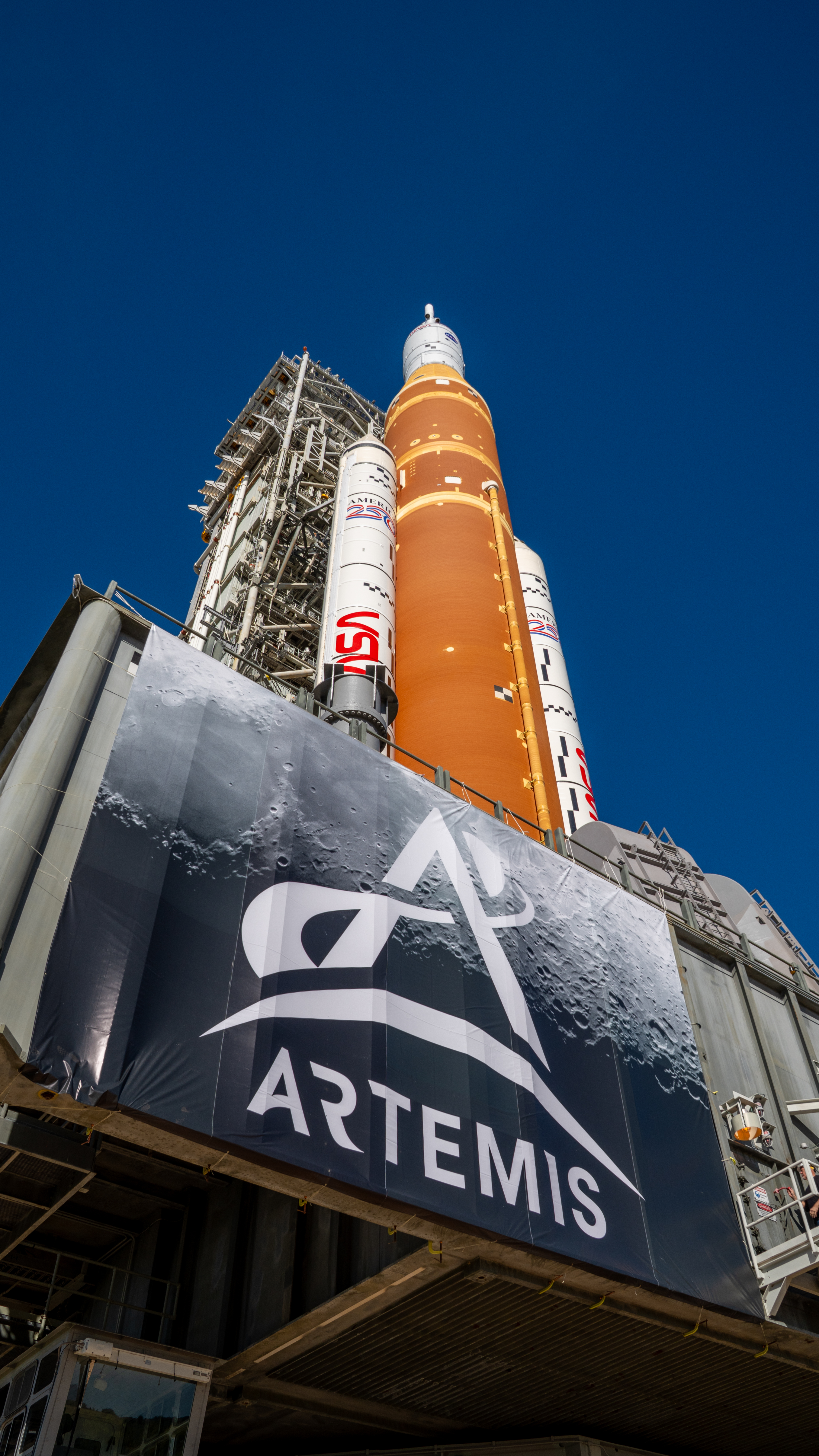
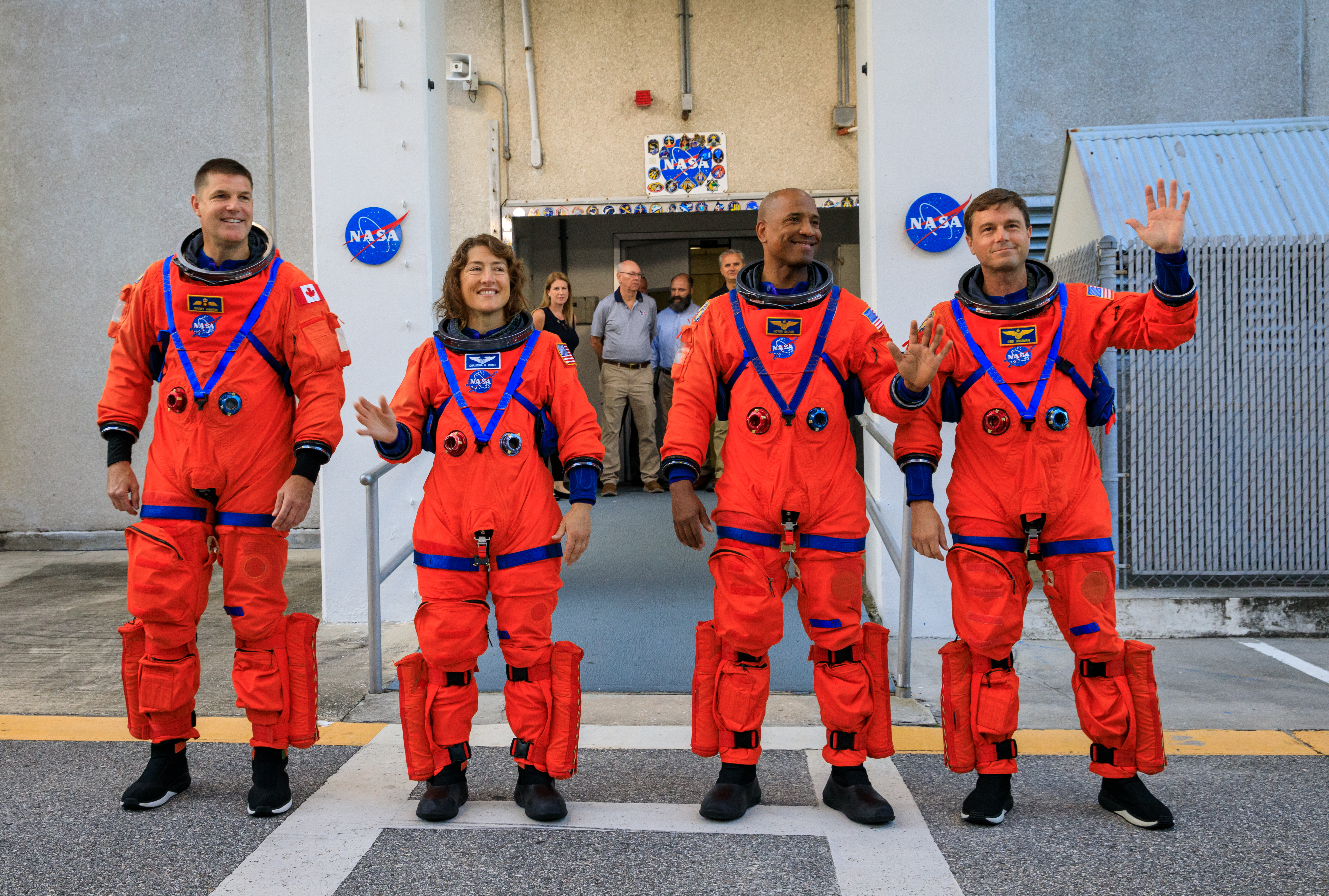
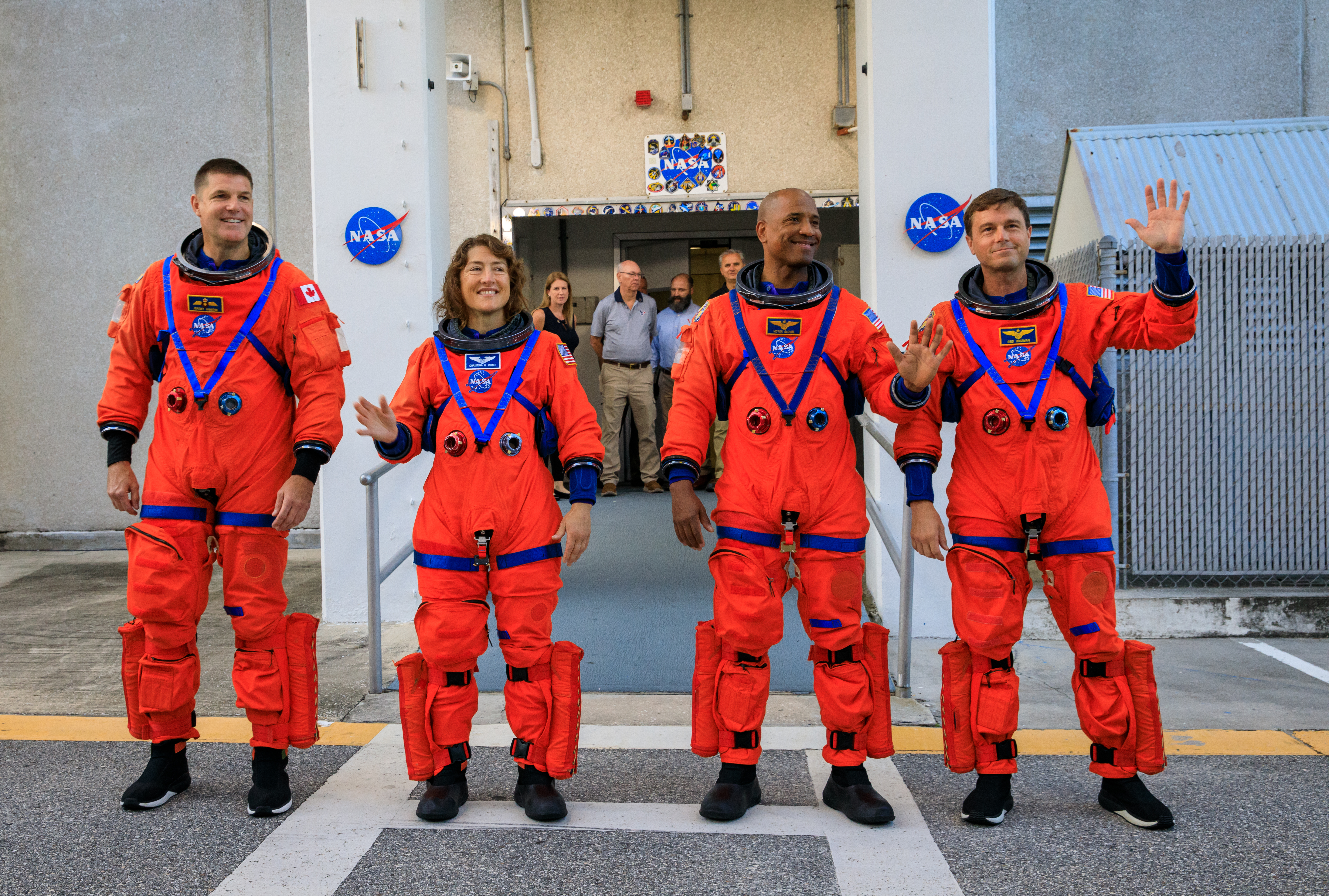
Before NASA sends its astronauts Reid Wiseman, Victor Glover, Christina Koch, and CSA (Canadian Space Agency) astronaut Jeremy Hansen on their Artemis II mission around the Moon, the launch team at NASA’s Kennedy Space Center in Florida and teams across the country will begin counting down about two days before liftoff.
A launch countdown contains “L Minus” and “T Minus” times. The “L minus” indicates how far away liftoff is in hours and minutes. The “T minus” time is a sequence of events built into the launch countdown. Pauses in the countdown, or “holds,” are built in to allow the launch team to target a precise launch window, and to provide a cushion of time for certain tasks and procedures without impacting the overall schedule. During planned holds in the countdown process, the countdown clock is intentionally stopped and the T- time also stops. The L- time, however, continues to advance.
Below are some of the key events that take place at each milestone after the countdown begins.
All times are approximate for when these milestones occur.
L-49 hours 50 minutes and counting
- L-49H50M – Launch team arrives to stations
- L-49H40M – Countdown clock begins
- L-49H40M – L-42H30M: Liquid oxygen (LOX)/Liquid hydrogen (LH2) system
preparations for vehicle loading - L-45H30M – L-44H: Orion spacecraft powered up
- L-42H20M – L-41H: Core stage powered up
- L-42H10M – L-40H30M: Interim cryogenic propulsion stage (ICPS) powered up
- L-39H45M – L-35H30M: Final preparations of the four RS-25 engines
L-35 hours and counting
- L-34H45M – L-34H10M: ICPS is powered down
- L-33H30M – L-29H30M: Charge Orion flight batteries to 100%
- L-31H30M – L-24H30M: Charge core stage flight batteries
- L-20H15M – L-18H45M: ICPS is powered up for launch
L-16 hours and counting
- L-15H30M – L-14H: All non-essential personnel leave Launch Complex 39B
- L-14H15M – L-12H05M: Air-to-gaseous nitrogen (GN2) changeover and rocket
cavity inerting - L-13H15M – L-11H45M: Ground launch sequencer (GLS) activation
L-13 hours and counting
- L-12H35M – L-9H50M: 2-hour 45-minute built in countdown hold begins
- L-10H50M – Launch team decides “go” or “no-go” to begin tanking
- L-10H50M – L-9H35M: Orion cold soak
- L-10H40M – L-10H35M: Core stage LOX transfer line chilldown
- L-10H40M – L-9H55M: Core stage LH2 chilldown
- L-10H25M – L-9H40M: Core stage LOX main propulsion system chilldown
L-10 hours and counting
- L-9H55M – L-9H25M: Core stage LH2 slow fill start
- L-9H50M – Resume T-Clock from T-8H10M
- L-9H40M – L-9H30M: Core stage LOX slow fill
- L-9H30M – L-6H40M: Core stage LOX fast fill
- L-9H25M – L-8H: Core stage LH2 fast fill
- L-9H05M – L-8H30M: ICPS LH2 chilldown
- L-8H30M – L-7H45M: ICPS LH2 fast fill start
- L-8H – L-7H55M: Core stage LH2 topping
- L-7H55M – terminal count: Core stage LH2 replenish
- L-7H45M – L-7H20M: ICPS LH2 vent and relief test
- L-7H20M – L-7H10M: ICPS LH2 tank topping start
- L-7H05M – terminal count: ICPS LH2 replenish
- L-6H40M – L-6H10M: Orion communications system activated (radio frequency to mission control)
- L-6H40M – L-6H05M: Core stage LOX topping
- L-6H40M – L-6H30M: ICPS LOX main propulsion system chilldown
- L-6H30M – L-5H45M: ICPS LOX fast fill
- L-6H10M – Stage pad rescue
- L-6H10M: – Closeout crew assemble
- L-6H05M – terminal count: Core stage LOX replenish
L-6 hours and counting
- L-6H – Flight crew weather brief
- L-5H45M – L-5H30M: ICPS LOX vent and relief test
- L-5H30M – L-5H10M: ICPS LOX topping
- L-5H10M – terminal count: ICPS LOX replenish
- L-5H10M – All stages replenish
- L-5H10M – Start 1-hour 10-minute built in hold
- L-5H10M – L-4H55M: Closeout crew to white room
- L-4H40M – L-4H10M: Flight crew deployment to pad
- L-4H: Flight crew board Orion
- L-3H40M – L-3H10M: Crew module hatch preps and closure
- L-3H10M – L-2H45M: Counterbalance mechanism hatch sealpress decay
checks - L-2H20M – L-1H40M: Crew module hatch service panel install/closeouts
- L-1H40M – L1H30M: Launch abort system (LAS) hatch closure for flight
- L-1H10M – Launch director brief – rocket & thermal protection system scan results with the imagery console
- L-50M – L-40M: Closeout crew departs Launch Complex 39B
- L-50M – Final NASA test director briefing is held
L-40 minutes and holding
- L-40M – Built in 30-minute countdown hold begins
L-25 minutes and holding
- L-25M – Transition team to Orion to Earth communication loop following final NTD briefing
- L-17M – Launch director polls team to ensure they are “go” for launch
- L-15M – Flight crew visors down
- L-14M – Flight crew short purge verification
T-10 minutes and counting
- T-10M – GLS initiates terminal count
- T-8M – Crew Access Arm retract
- T-6M – GLS go for core stage tank pressurization
- T-6M – Orion ascent pyros are armed
- T-6M – Orion set to internal power
- T-5M57S – Core stage LH2 terminate replenish
- T-5M20S – LAS capability is available
- T-5M20S – NTD lets commander knows LAS capability is available
- T-4M40S – GLS go for LH2 high flow bleed check
- T-4M30S – Flight termination system armed
- T-4M – GLS is go for core stage auxiliary power unit (APU) start
- T-4M – Core Stage APU starts
- T-4M – Core stage LOX terminate replenish
- T-3M30S – ICPS LOX terminate replenish
- T-3M10S – GLS go for purge sequence 4
- T-2M02S – ICPS switches to internal battery power
- T-2M – Booster switches to internal batter power
- T-1M30S – Core stage switches to internal power
- T-1M20S – ICPS enters terminal countdown mode
- T-50S – ICPS LH2 terminate replenish
- T-33S – GLS sends “go for automated launch sequencer” command
- T-30S – Core stage flight computer to automated launching sequencer
- T-12S – Hydrogen burn off igniters initiated
- T-10S – GLS sends the command for core stage engine start
- T-6.36S– RS-25 engines startup
T-0
- Booster ignition, umbilical separation, and liftoff
Inside the terminal countdown, teams have a few options to hold the count if needed.
- The launch team can hold at 6 minutes for the duration of the launch window, less the 6 minutes needed to launch, without having to recycle back to 10 minutes.
- If teams need to stop the clock between T-6 minutes and T-1 minute, 30 seconds, they can hold for up to 3 minutes and resume the clock to launch. If they require more than 3 minutes of hold time, the countdown would recycle back to T-10.
- If the clock stops after T-1 minute and 30 seconds, but before the automated launch sequencer takes over, then teams can recycle back to T-10 to try again, provided there is adequate launch window remaining.
- After handover to the automated launch sequencer, any issue that would stop the countdown would lead to concluding the launch attempt for that day.
Launching the Artemis II Moon rocket will lift off the agency’s first crewed mission under the Artemis program, testing the systems that will return astronauts to the Moon for an enduring presence, and paving the way to human exploration of Mars.
To learn more about the Artemis program, visit:
Station Nation: Aaron Rose, Cold Stowage Mission Manager
As a member of the Crew and Thermal Systems Division, Aaron Rose supports critical cargo resupply missions to the International Space Station. In this role, he works with payload developers to safely transport temperature-controlled science experiments to and from station with portable coolers, freezers, and refrigerators.
For the full flight cycle, Rose and his team members ensure all cold stowage hardware, operations, and personnel are coordinated to ensure science experiments are handled safely and securely – all the way from launch to landing. These experiments are vital to unlocking discoveries that are not possible on Earth, improving life on our home planet and helping pave the way for the return to the Moon and future journeys to Mars.
Read on to learn about Rose’s career with NASA and more!
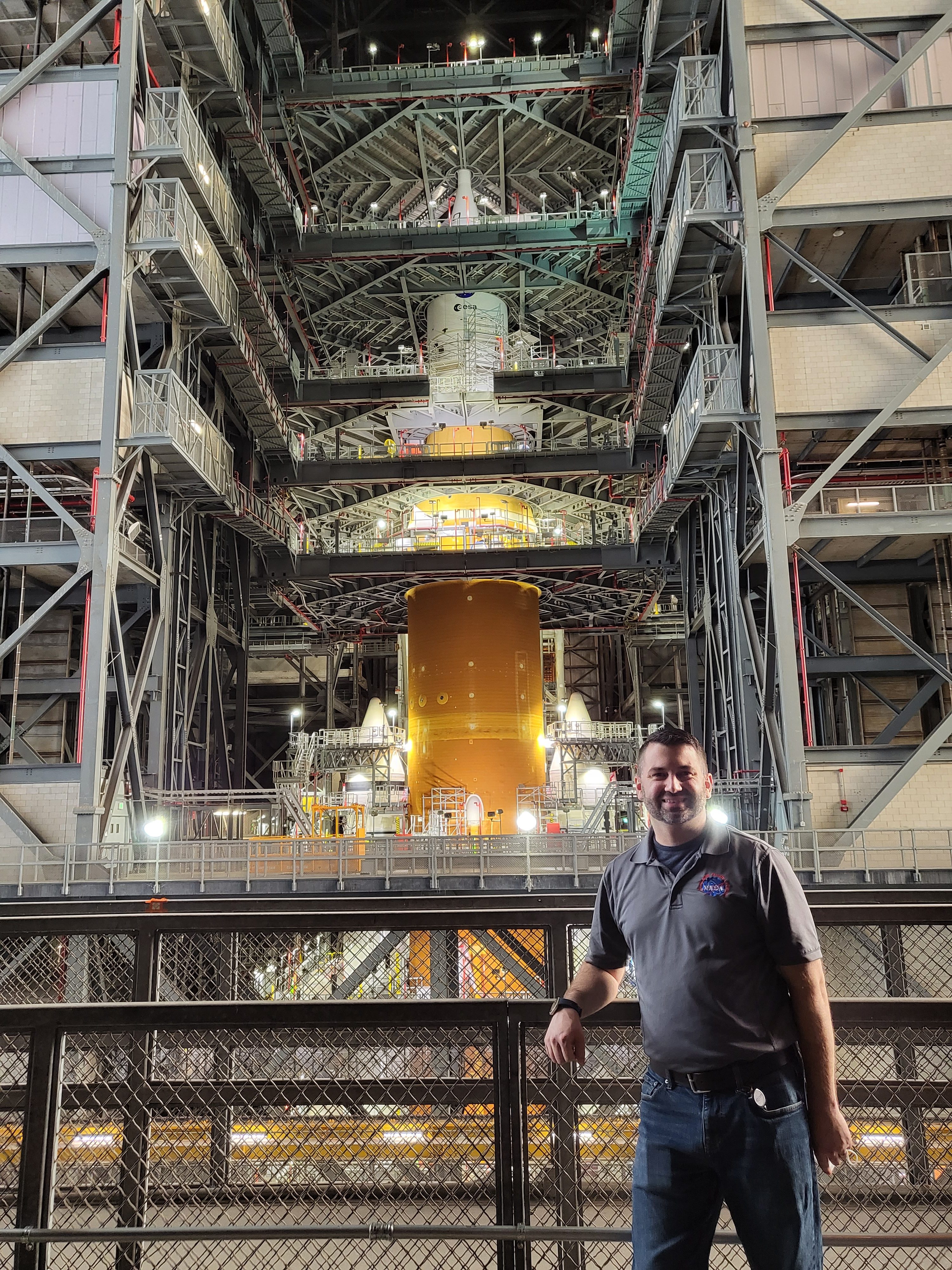
Aaron Rose in the Vehicle Assembly Building at NASA’s Kennedy Space Center in Florida during the build of the SLS (Space Launch System) rocket for Artemis I. Aaron RoseWhere are you from?
I’m from Canton, Ohio (Home of the Pro Football Hall of Fame)
How long have you been working for NASA?
I have been working at Johnson Space Center for 18 years.
What was your path to NASA?
I started as a co-op with Jacobs Engineering in 2008 while attending The Ohio State University. In 2007, retired NASA astronaut Nancy Currie gave a talk at my school and she shared that there were opportunities for students to work at Johnson as a co-op or intern. Upon hearing this, I reached out to her, and she helped me apply to a co-op program. I was accepted and went on to complete several co-op semesters. After graduating with an undergraduate degree in industrial and systems engineering, I joined Jacobs Engineering as a full-time team member and moved to Houston to be a test engineer on a new docking system.
How would you describe your job to family or friends that may not be familiar with NASA?
I work on a team that specializes in temperature-controlled transportation. We receive domestic and international science experiments and pack them into coolers, freezers, or refrigerators. We also make sure those items are correctly installed into the spacecraft and work as expected. After splashdown, we receive the science samples and return them to the researchers as soon as possible. I also have some sway in what ice cream we launch and provide for the crew!
Aaron Rose and his colleague Jessie Jackson pictured with a Falcon 9 rocket at SpaceX in Hawthorne, California.Aaron RoseWhat advice would you give to young individuals aspiring to work in the space industry or at NASA?
Don't be afraid to expand your network. It always helps to meet new people and make connections.Aaron rose
Cold Stowage Mission Manager
You never know who you might meet that could recommend you for an open position. It definitely worked for me!
Also, don’t give up on engineering if you struggle with higher level mathematics. There are a lot of engineering positions that don’t require frequent use of differential equations, linear algebra, etc. You can still work at NASA with other strengths.
Is there a space figure you’ve looked up to or someone that inspires you?
Retired NASA astronaut Stephen Robinson inspired me to follow my dreams and encouraged me to work at Johnson full time after I graduated from college. I had the pleasure of having lunch with Stephen, where he shared his journey to becoming an astronaut and it resonated with me. After talking to him, I was even more motivated to finish my degree and get back to Houston. There were so many fun and interesting experiences waiting for me that I couldn’t miss!
What is your favorite NASA memory or the most meaningful project you’ve worked on during your time with NASA?
It is a pleasure knowing that my job is directly playing a role in the purpose of the International Space Station.Aaron rose
Cold Stowage Mission Manager
The first SpaceX mission I supported was NASA’s SpaceX CRS-3 return. I had recently joined the Cold Stowage Team and was still learning the ropes when I was selected to travel to Long Beach, California, and help the team. It was such a thrill to work out of a cargo airplane while handling science experiments that had just returned from space.
Another favorite memory is watching the movie “Apollo 13” in the historic Mission Control Center. It was so surreal to sit at a workstation where the actual events of Apollo 13 occurred while watching the movie. It felt like I was transported back to April 1970, and I was in the movie. The space nerd in me was ecstatic!
What do you love sharing about station?
I like to talk about cargo resupply missions. People genuinely want to know what work is being done on the space station and how we utilize microgravity to develop new technology and fight diseases. I usually share about the different science experiments we fly and explain the steps it takes to safely transport delicate equipment and samples to and from station.
Aaron and Nicole Rose support a NASA outreach event in Houston. Aaron RoseNovember 2, 2025, marked 25 years of continuous human presence. What does this milestone mean to you?
It stands as a testament to what we can achieve when working together. Building and maintaining the space station takes thousands of people working together to unlock the mysteries of the universe.Aaron rose
Cold Stowage Mission Manager
I’m excited for the future of our industry and can’t wait to see how we continue to raise the bar to achieve NASA’s ambitious goals for deep space exploration. Ad astra!
If you could have dinner with any astronaut, past or present, who would it be?
I would have dinner with former NASA astronaut and fellow Ohioan Neil Armstrong. I met him once and I’d love to ask him some more questions.
Do you have a favorite space-related memory or moment that stands out to you?
Either watching the movie “IMAX: Hubble 3D” with a big group of fellow co-ops at the Houston Museum of Natural Science or seeing my first up-close space shuttle launch.
One summer as a co-op, I tested and certified the IMAX camera equipment that was used by the crew of STS-125 to film part of this movie. It was wonderful to see the final product of my efforts on the big screen.
In 2010, my friend and I drove through the night from Ohio to Florida to see the launch of STS-130 and it was well worth it. This was an especially meaningful launch because it was one of the final shuttle missions, the amazing cupola was on board, and I knew retired astronaut Stephen Robinson, who was a mission specialist for STS-130.
What are some of the key projects you have worked on during your time at NASA? What have been your favorite?
I’ve had the privilege of working on several key projects at NASA, including:
– “IMAX: Hubble 3D”
– The potable water dispenser
– Cold stowage
My favorite focus has been cold stowage. It has given me the chance to support multiple SpaceX, Axiom, and Northrup Grumman missions every year. Through my work in cold stowage, I’ve seen many rocket launches, frequently handled space-flown hardware, and directly contributed to the success of over 50 flights to station. I’ve also cultivated life-long friendships and developed a meaningful career supporting NASA’s core mission.
What are your hobbies/things you enjoy doing outside of work?
I enjoy weightlifting, playing video games, traveling around the world, engaging in car culture, attending comedy shows, and watching movies.
Aaron Rose and his Fiat 124 Spider Abarth soaking up some rays.Aaron RoseDay launch or night launch?
Night!
Favorite space movie?
“Star Wars: Episode V – The Empire Strikes Back”
NASA Worm or Meatball logo?
Worm!
NASA and its partners have supported humans continuously living and working in space since November 2000. After 25 years of continuous human presence, the space station remains a training and proving ground for the future of commercial space stations, deep space missions, enabling NASA’s Artemis campaign, lunar exploration, and future Mars missions.
Every day, we are conducting exciting research aboard our orbiting laboratory that will help us explore farther into space and bring benefits back to people on Earth. You can keep up with the latest news, videos, and pictures about space station science on the Station Research & Technology news page. It is a curated hub of space station research digital media from Johnson and other centers and space agencies.
Sign up for our weekly email newsletter to get the updates delivered directly to you.
Follow updates on social media at @Space_Station on X, and on the space station accounts on Facebook and Instagram.
Explore More 7 min read NASA Releases Artemis II Moon Mission Launch Countdown Article 4 hours ago 3 min read Arctic Winter Sea Ice Ties Record Low, NASA, NSIDC Scientists FindFor the second consecutive year, winter sea ice in the Arctic reached a level that…
Article 7 hours ago 4 min read NASA’s Hubble Detects First-Ever Spin Reversal of Tiny CometAstronomers using NASA’s Hubble Space Telescope have found evidence that the spinning of a small…
Article 10 hours agoArctic Winter Sea Ice Ties Record Low, NASA, NSIDC Scientists Find
To view this video please enable JavaScript, and consider upgrading to a web browser that
supports HTML5 video
For the second consecutive year, winter sea ice in the Arctic reached a level that matches the lowest peak observed since satellite monitoring began in 1979. On March 15, Arctic sea ice extent reached 5.52 million square miles (14.29 million square kilometers), very close to the 2025 peak of 5.53 million square miles (14.31 million square kilometers). Scientists with NASA and the National Snow and Ice Data Center (NSIDC) at the University of Colorado, Boulder, note that the two years are statistically tied.
Along with the overall extent, researchers are also observing changes in ice thickness. “Based on what we’re seeing with NASA’s ICESat-2 satellite, much of the ice in the Arctic is thinner this year, especially in the Barents Sea northeast of Greenland.,” said Nathan Kurtz, chief of the Cryospheric Sciences Laboratory at NASA’s Goddard Space Flight Center in Greenbelt, Maryland. “The Sea of Okhotsk that borders northern Japan and Russia also had relatively low ice this year — a region that naturally experiences significant year-to-year variability.”
Scientists with NASA and NSIDC found that this winter’s peak Arctic ice coverage continues the long-term trend observed over the past several decades. This year, peak ice cover was below the average levels between 1981 and 2010 by roughly half a million square miles (about 1.3 million square kilometers).
Sea ice extent is defined as the total area of the ocean with at least 15% ice concentration. The area of the Arctic Ocean covered in ice expands in the cold of winter. Although much of the sea ice melts in warmer months, some ice remains throughout the year. Recently, less new ice has been forming. As a result, less multi-year ice has accumulated.
“A low year or two don’t necessarily mean much by themselves,” said NSIDC ice scientist Walt Meier. But viewed within the long‑term downward trend since 1979, Meier added, they add to the overall picture of change in Arctic sea ice throughout the seasons.
In the Antarctic, summer sea ice reached an annual low of 996,000 square miles (2.58 million square kilometers) on Feb. 26. This year’s coverage represents an increase compared to the unusually low levels of the past four years. Although 100,000 square miles (260,000 square kilometers) lower than the 1981–2010 average, the Antarctic sea ice minimum was well above the record low set on Feb. 21, 2023, of 691,000 square miles (1.79 million square kilometers).
Scientists at NSIDC previously tracked sea ice extent primarily using satellites in the Defense Meteorological Satellite Program. In recent years, the NSIDC has relied on JAXA’s (Japan Aerospace Exploration Agency) Advanced Microwave Scanning Radiometer 2 for real-time sea ice data. Researchers also compare ice coverage to historical sources, such as the data collected between 1978 and 1985 with the Nimbus-7 satellite that was jointly operated by NASA and the National Oceanic and Atmospheric Administration.
By James Riordon
NASA’s Goddard Space Flight Center, Greenbelt, Md.
Media contact: Elizabeth Vlock
NASA Headquarters, Washington
The region’s ice extent on March 1 tied for the second-lowest minimum observed in the…
Article
12 months ago
4 min read Arctic Sea Ice Reaches Annual Low
With the end of summer approaching in the Northern Hemisphere, the extent of sea ice…
Article
6 months ago
4 min read 10 Things to Know About ICESat-2, NASA’s Latest Space Laser
Did somebody say space laser? NASA is set to launch ICESat-2, our most advanced laser…
Article
8 years ago
NASA’s IXPE Gets Fresh Look at Supernova
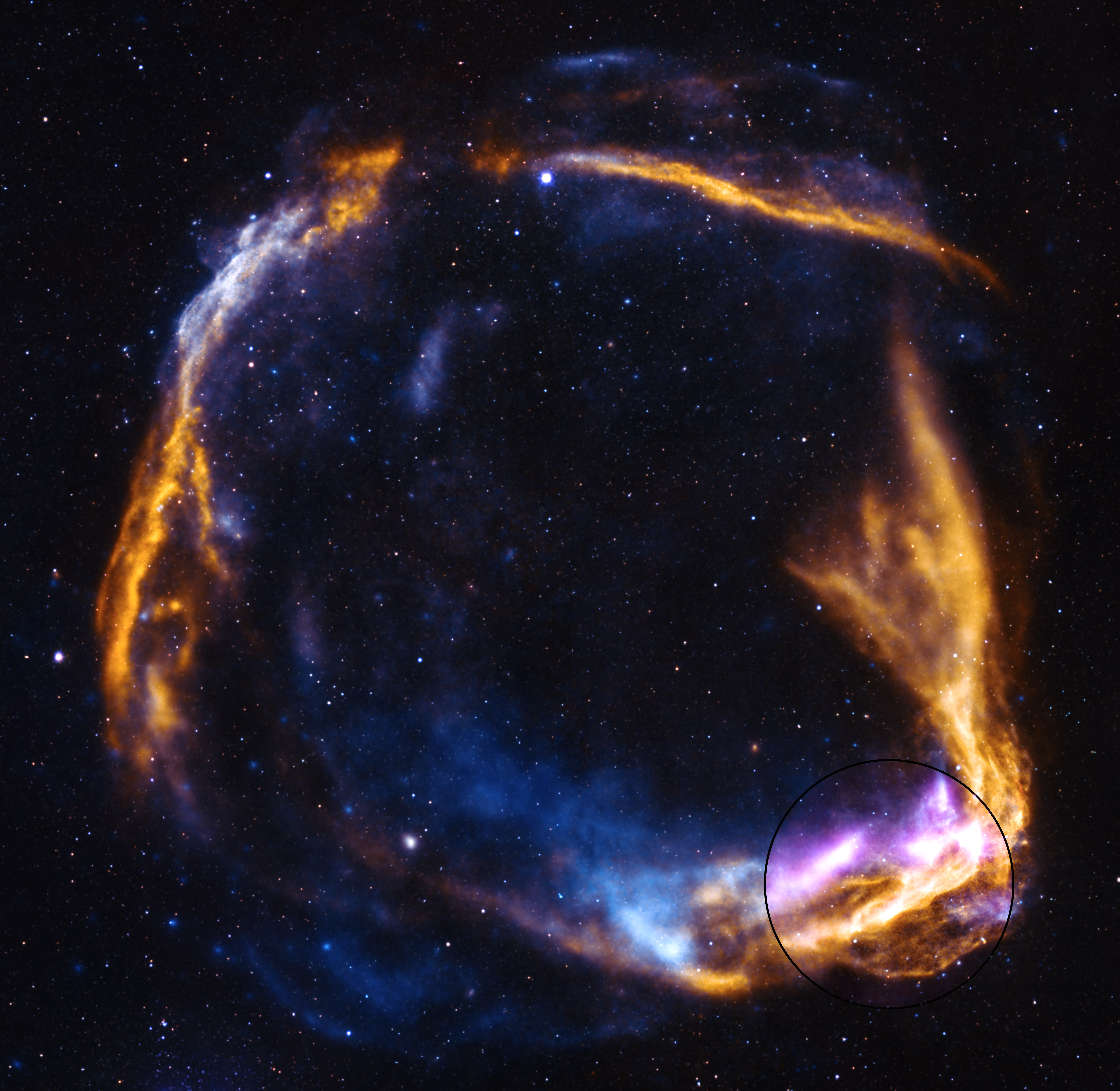
NASA’s IXPE (Imaging X-ray Polarimetry Explorer) mission has taken a new observation of a supernova, RCW 86, seen here in an image released on March 24, 2026. This observation helps fill in a fuller picture of what other telescopes have seen.
The full image combines IXPE’s data with legacy observations from two other X-ray telescopes: NASA’s Chandra and the ESA (European Space Agency) XMM-Newton telescope. The yellow represents low-energy X-rays, while blue shows high-energy X-rays detected by Chandra and XMM-Newton. The starfield in the image comes from the National Science Foundation’s National Optical-Infrared Astronomy Research Laboratory (NOIRLab).
Image credit: X-ray: Chandra: NASA/CXC/SAO, XMM: ESA/XMM-NEWTON, IXPE:NASA/MSFC; Optical: NSF/NOIRLab; Image Processing: NASA/CXC/SAO/J. Schmidt
Curiosity Blog, Sols 4838-4844: Wrapping Up the Boxwork Terrain
- Curiosity Home
- Science
- News and Features
- Multimedia
- Mars Missions
- Mars Home
4 min read
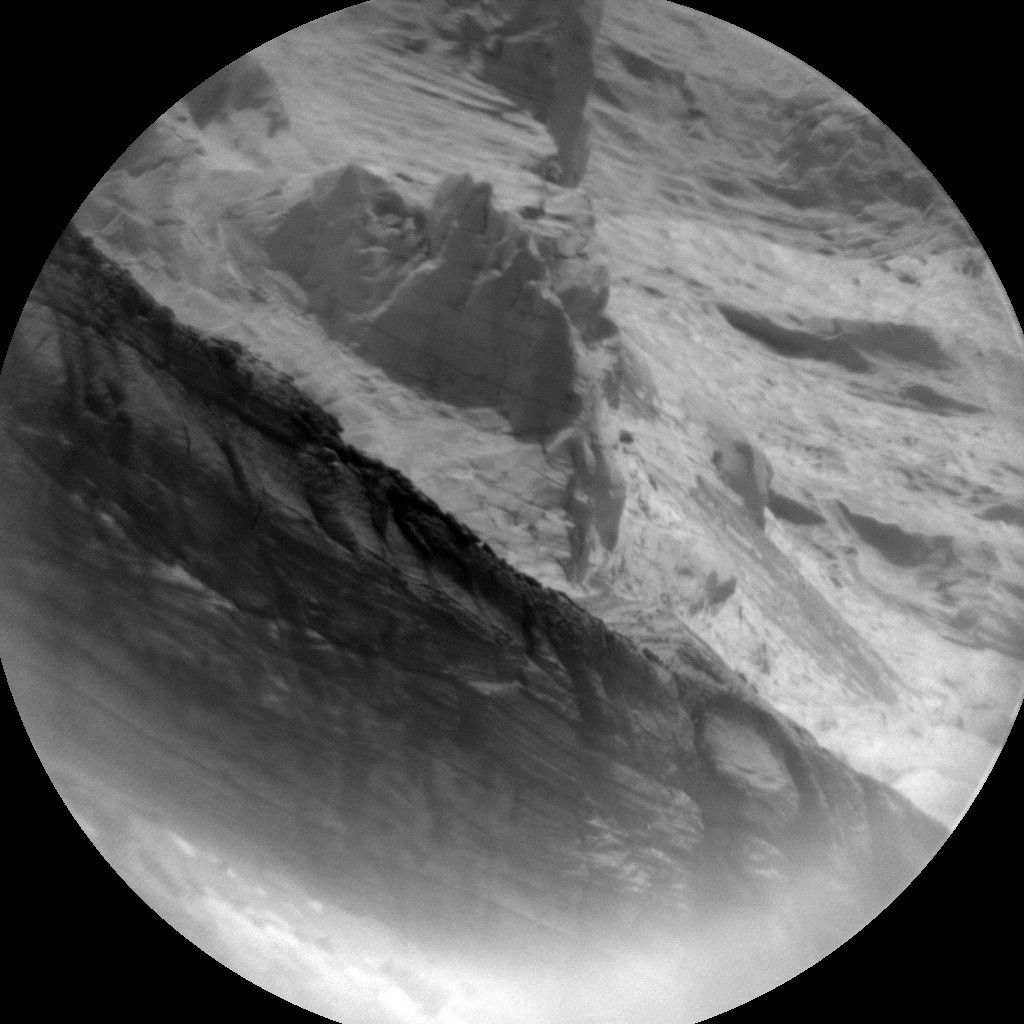
Curiosity Blog, Sols 4838-4844: Wrapping Up the Boxwork Terrain NASA’’s Mars rover Curiosity acquired this image, of one of the many magnificent ridges seen from the rover’s telescopic Remote Micro-Imager camera (RMI) on its Chemistry & Camera (ChemCam) instrument, on March 20, 2026. ChemCam is an instrument that first uses a laser to vaporize rocks and soil, creating a plasma of their component gases, then later analyzes their elemental composition using an on-board spectrograph. The laser and RMI, which captures detailed images of the area illuminated by the laser beam, sit on Curiosity’s mast (its “forehead”), while the spectrometer is located in the rover’s body. Curiosity captured this image on Sol 4841, or Martian day 4,841 of the Mars Science Laboratory mission, at 03:02:35 UTC. NASA/JPL-Caltech/LANL/CNES/CNRS/IRAP/IAS/LPGWritten by Deborah Padgett, MSL Operations Product Ground System Task Lead at NASA’s Jet Propulsion Laboratory
Earth planning date: Friday, March 20, 2026
Curiosity has just concluded a very intense week of science observations and engineering activities, as it wraps up its monthslong investigation of the Martian boxwork terrain. Three days of planning this week by the MSL science and engineering team has led to three rover drives, three sets of targets for detailed study by instruments on Curiosity’s arm, and a vast array of in-situ data characterizing the southern reaches of the boxwork terrain on the shoulder of Mount Sharp on Mars.
As the week began on Mars sol 4838, Curiosity used cameras on Mastcam and ChemCam to image ridge and butte targets “Salar de Maricunga,” “El Misti,” “Saipina” ridges and the “Paniri” butte. Mastcam also looked at bedrock fractures on target “Sajta.” The laser spectrometer on ChemCam examined the composition of the target “Tacitas.” After brushing away a great deal of dust off the bedrock target “Toro Wharku” with the DRT, then MAHLI and APXS studied it in detail. MAHLI also performed detailed imaging of the nearby ledge “Rincodillas.” In the afternoon, Mastcam Tau and Navcam line-of sight observations measured the amount of dust in the Martian atmosphere.
On sol 4839 Curiosity finished up investigation of Toro Wharku with ChemCam laser spectroscopy and Mastcam imaging. A long-distance ChemCam RMI 10×1 mosaic was obtained on the Paniri butte, and Navcam took cloud and dust-devil movies. The rover then drove 35 meters (about 115 feet) toward the southern contact of the boxwork terrain with the adjacent sulfate unit, and performed post-drive photography of a 360-degree panorama around the vehicle using Navcam.
On Sol 4840, those images allowed selection of a uniquely shaped rock formation dubbed “Llisa” for laser spectrometer study with ChemCam and Mastcam. Although no reachable bedrock was smooth enough for DRT brushing, MAHLI obtained microscopic images of “Chusumayo” and APXS target “Sierra Gorda,” in bedrock showing very intriguing sedimentary layers. Mastcam also imaged these layers at targets “Limbaba” and “Limbaba2.” The ChemCam telescope RMI camera looked back along Curiosity’s path at the now distant Mishe Mokwa butte, viewing its stratigraphy from a different angle. Atmospheric studies included a Mastcam sky survey, Mastcam tau, and Navcam dust-devil movie. The following sol, 4841, concluded the study of Chusumayo with ChemCam LIBS observations of nearby target “La Troya.”
On Sol 4841, Curiosity drove 39 meters (about 128 feet) farther south. In Friday’s plan for sols 4842 through 4844, the sol starts with ChemCam laser spectrometer composition and Mastcam imaging studies of outcrop “San Julien,” followed by telescopic RMI images of the “Santa Rita” dark ridge material. Mastcam will then obtain a series of mosaics documenting the southern contact between the boxwork structures and the sulfate unit, from nearby bedrock to the more distant hillsides of the Paniri butte. Mastcam imaging will also investigate the possibility of regolith movement in a trough. A supra horizon cloud movie, dust-devil movie, and line-of-sight dust observations with Navcam will integrate atmospheric investigations into the morning science block. Curiosity will then unstow the arm, performing a DRT brushing, MAHLI imaging, and APXS measurement on target “Challapata.” Another Navcam line-of-sight plus a Mastcam tau will complete atmospheric dust measurements for the sol.
The following sol, 4843, will see ChemCam laser spectroscopy and Mastcam imaging of dark ridge target “Santa Laura.” Mastcam will then obtain additional mosaics of the southern contact (“Yungas de Arepucho”), as well as a “Limbaba lookback” target. ChemCam’s RMI telescope will image the upper reaches of Paniri butte, complementing the Mastcam coverage. Morning and evening studies by Navcam and Mastcam will continue the time series of dust and dynamics in the Martian atmosphere, accompanied by an overnight APXS atmospheric observation.
On the morning of sol 4844, ChemCam will complete the study of Challapata with laser spectroscopy, and Mastcam will document the changes in the target after it is zapped. After a ChemCam passive sky observation and Navcam dust-devil survey, Curiosity will drive 11 more meters to the south (36 feet), most likely crossing the long-awaited boundary between the Martian boxwork structures and the sulfate unit beyond. During the drive, MAHLI will perform a full set of wheel imaging to track the wear on the rover’s wheels. In concert with the post-drive imaging, ChemCam and Navcam will perform an AEGIS investigation, allowing the on-board processing of Navcam data to choose a ChemCam LIBS target before our human team sees the images. The plan concludes on the morning of sol 4845 with ChemCam laser spectroscopy of this new AEGIS target, in addition to atmospheric studies with Navcam and Mastcam.
Next week, Curiosity leaves the Martian boxwork terrain behind in its quest for new discoveries.
-
Want to read more posts from the Curiosity team?
-
Want to learn more about Curiosity’s science instruments?
Article
1 week ago
3 min read Curiosity Blog, Sols 4825-4831: Exploring the Borderlands
Article
2 weeks ago
3 min read Curiosity Blog, Sols 4818-4824: Thinking Out of the Boxwork
Article
3 weeks ago
Keep Exploring Discover More Topics From NASA Mars
Mars is the fourth planet from the Sun, and the seventh largest. It’s the only planet we know of inhabited…
All Mars Resources
Explore this collection of Mars images, videos, resources, PDFs, and toolkits. Discover valuable content designed to inform, educate, and inspire,…
Rover Basics
Each robotic explorer sent to the Red Planet has its own unique capabilities driven by science. Many attributes of a…
Mars Exploration: Science Goals
The key to understanding the past, present or future potential for life on Mars can be found in NASA’s four…
La NASA anuncia la cobertura de la de la primera misión tripulada Artemis alrededor de la Luna
Diversos eventos previos al lanzamiento, del lanzamiento y de la misión Artemis II de la NASA alrededor de la Luna se transmitirán en línea. La agencia tiene como fecha objetivo no antes del miércoles 1 de abril para este vuelo de prueba, con una ventana de lanzamiento de dos horas que se abre a las 6:24 p.m. EDT (hora del este), y con oportunidades de lanzamiento adicionales hasta el lunes 6 de abril.
Artemis II es la primera misión tripulada de la NASA en el marco del programa Artemis y despegará desde el Centro Espacial Kennedy de la agencia en Florida. La misión llevará a los astronautas de la NASA Reid Wiseman, Victor Glover y Christina Koch, junto con el astronauta de la CSA (Agencia Espacial Canadiense) Jeremy Hansen, en un viaje de aproximadamente 10 días alrededor de la Luna. Entre los objetivos de la agencia está poner a prueba los sistemas de soporte vital de la nave espacial Orion por primera vez con personas a bordo y sentar las bases para futuras misiones tripuladas de Artemis. Las ruedas de prensa, los eventos y la cobertura de la misión durante las 24 horas del día, los siete días de la semana, se transmitirán en el canal de YouTube de la agencia, y cada evento tendrá su propia transmisión a medida que se acerque su hora de inicio. Descubra cómo ver el contenido de la NASA a través de diversas plataformas en línea, incluidas las redes sociales.
La fecha y/u hora de todos los eventos están sujetas a cambios. Una lista completa de las actividades de cobertura de Artemis II está disponible en línea en:
Los siguientes eventos destacados previos al lanzamiento y del día del lanzamiento se indican en hora del este de Estados Unidos:
Viernes, 27 de marzo
- 2:30 p.m.: Dirigentes de la agencia, entre ellos el administrador de la NASA, Jared Isaacman, junto con la presidenta de la CSA, Lisa Campbell, y otros líderes, darán la bienvenida a los astronautas a su llegada al Centro Kennedy de la NASA. Los miembros de la tripulación de Artemis II responderán a preguntas de los medios de comunicación presentes en el centro. La tripulación de Artemis II llegará al Centro Espacial Kennedy de la NASA y responderá a las preguntas de los medios de comunicación que estén en persona en el centro.
Domingo, 29 de marzo
- 9:30 a.m.: Los tripulantes de la misión Artemis II responderán virtualmente a preguntas de periodistas desde su centro de cuarentena.
- 2 p.m.: La NASA ofrecerá una rueda de prensa para informar sobre el estado actual del lanzamiento.
Lunes, 30 de marzo
- 5 p.m.: Tras una reunión de gestión de la misión, los responsables de la agencia, entre ellos el administrador de la NASA, Jared Isaacman, ofrecerán una rueda de prensa para informar sobre los últimos avances en los preparativos del lanzamiento.
Martes, 31 de marzo
- 1 p.m.: La NASA ofrecerá una conferencia de prensa previa al lanzamiento.
Miércoles, 1 de abril
- 7:45 a.m. Comienza la transmisión (en inglés) de las operaciones de llenado de combustible del cohete Sistema de Lanzamiento Espacial (SLS, por sus siglas en inglés), con imágenes del cohete y comentarios en directo.
- 12:40 p.m.: Comienza la cobertura de NASA+ (en inglés) del despegue. La transmisión continúa en YouTube tras el despliegue de los paneles solares de Orion en el espacio.
- 4:45 p.m.: Comienza la cobertura del lanzamiento en español en el canal de YouTube en español de la NASA y en NASA+, la cual continuará hasta aproximadamente 15 minutos después del despegue.
- Aproximadamente dos horas y media después del lanzamiento, la NASA ofrecerá una rueda de prensa tras el encendido de la etapa superior del cohete SLS para enviar a Orion y a su tripulación a la órbita terrestre alta.
Cobertura de la misión
La cobertura en tiempo real de la NASA continuará durante toda la misión a través de YouTube. La agencia también proporcionará otra transmisión en vivo con vistas desde la nave espacial Orion, siempre que el ancho de banda lo permita.
La agencia proporcionará informes diarios sobre el estado de la misión desde el Centro Espacial Johnson de la NASA en Houston a partir del jueves 2 de abril (excepto el 6 de abril, debido a las actividades del sobrevuelo lunar).
La tripulación participará en conversaciones en vivo durante toda la misión. La NASA comunicará las horas exactas de cada uno de estos eventos en el blog de Artemis y en la página de eventos de lanzamiento de la agencia, ambos en inglés.
Para participar virtualmente en las ruedas de prensa, los medios de comunicación deben confirmar su asistencia a más tardar dos horas antes del inicio de cada conferencia, escribiendo en inglés a la sala de prensa del centro Johnson de la NASA a: jsccommu@mail.nasa.gov.
Cobertura del lanzamiento y la misión en el sitio web de la NASA
Las actualizaciones durante la cuenta regresiva del lanzamiento y a lo largo de la misión se publicarán en el blog de Artemis, en inglés.
Todas las imágenes más recientes estarán disponibles en: Artemis II Multimedia
Para seguir la posición de Orion en el espacio, visite: nasa.gov/trackartemis
Asista al lanzamiento de forma virtual
Los miembros del público pueden registrarse para asistir al lanzamiento de forma virtual. El programa de invitados virtuales de la NASA para esta misión incluye recursos seleccionados sobre el lanzamiento, notificaciones sobre oportunidades relacionadas o cambios, y un sello para el pasaporte de invitado virtual de la NASA después del lanzamiento, todo en inglés.
Cobertura del lanzamiento solo en audio
Los medios de comunicación pueden escuchar la cobertura solo en audio de la carga de combustible y el lanzamiento marcando el +1 256-715-9946, código de acceso 682-040-632. Para quienes se encuentren en el condado de Brevard en la Costa Espacial, el audio del lanzamiento también estará disponible en la frecuencia de radio VHF 146.940 MHz —a través del Servicio de Información de Lanzamientos y Sistema de Televisión de Aficionados— y en la frecuencia de radio UHF de 444.925 MHz del Club de Radioaficionados del centro Kennedy de la NASA, en modo FM.
El plazo para la acreditación de medios de comunicación para la cobertura presencial del lanzamiento y los eventos de la misión ya ha vencido. La política de acreditación de medios de la agencia está disponible en línea. Si tiene alguna pregunta sobre la acreditación de medios en el centro Kennedy de la NASA, envíe un correo electrónico en inglés a: ksc-media-accreditat@mail.nasa.gov. Si tiene alguna pregunta sobre la acreditación de medios en el centro Johnson de la NASA, envíe un correo electrónico en inglés a: jsccommu@mail.nasa.gov.
Para obtener información sobre cómo acceder a las transmisiones, envíe un correo electrónico en inglés al equipo de programación de NASA+: nasa-dl-nasaplus-programming@mail.nasa.gov
Como parte de una edad de oro de innovación y exploración, la NASA enviará a los astronautas de Artemis en misiones cada vez más complejas para explorar más de la Luna con fines de descubrimiento científico, beneficios económicos, y para sentar las bases de las primeras misiones tripuladas a Marte.
Para obtener más información sobre el programa Artemis de la NASA, visite:
https://www.nasa.gov (inglés)
https://ciencia.nasa.gov/artemis (español)
-fin-
Cheryl Warner / Lauren Low / María José Viñas
Sede central, Washington
202-358-1600
cheryl.m.warner@nasa.gov / lauren.e.low@nasa.gov / maria-jose.vinasgarcia@nasa.gov
Tiffany Fairley
Centro Espacial Kennedy, Florida
321-747-8306
tiffany.l.fairley@nasa.gov
Chelsey Ballarte
Centro Espacial Johnson, Houston
281-483-5111
chelsey.n.ballarte@nasa.gov
NASA’s Hubble Detects First-Ever Spin Reversal of Tiny Comet
- Hubble Home
- Overview
- Impact & Benefits
- Science
- Observatory
- Team
- Multimedia
- News
- More
Illustration: NASA, ESA, CSA, Ralf Crawford (STScI)
Astronomers using NASA’s Hubble Space Telescope have found evidence that the spinning of a small comet slowed and then reversed its direction of rotation, offering a dramatic example of how volatile activity can affect the spin and physical evolution of small bodies in the solar system. This is the first time researchers have observed evidence of a comet reversing its spin.
The object, comet 41P/Tuttle-Giacobini-Kresák, or 41P for short, likely originated in the Kuiper Belt, and was flung into its current trajectory by Jupiter’s gravity, now visiting the inner solar system every 5.4 years.
After its 2017 close passage around the Sun, scientists found that comet 41P experienced a dramatic slowdown in its rotation. Data from NASA’s Neil Gehrels Swift Observatory in May 2017 showed the object was spinning three times more slowly than it had in March 2017 when it was observed by the Discovery Channel Telescope at Lowell Observatory in Arizona.
A new analysis of follow-up Hubble observations has shown the spin of this comet took an even more unusual turn.
Hubble images from December 2017 detected the comet spinning much faster again, with a period of approximately 14 hours, compared to the 46 to 60 hours measured by Swift. The simplest explanation, researchers say, is that the comet continued slowing until it almost stopped, and was then forced to spin in the near-opposite direction by outgassing jets on its surface.
The science paper detailing this finding published Thursday in The Astronomical Journal.
This artist’s concept depicts comet 41P, a tiny Jupiter-family comet, as it approached the Sun and frozen gases began to sublimate and shoot material off into space. Illustration: NASA, ESA, CSA, Ralf Crawford (STScI)Small, temperamental nucleus
Hubble also constrains the size of the comet’s nucleus, measuring it at around 0.6 miles across (about a kilometer), or about three times the height of the Eiffel Tower.
This is especially small for a comet, making it easy to torque, or twist.
As a comet approaches the Sun, heat causes frozen ices to sublimate, venting material into space.
“Jets of gas streaming off the surface can act like small thrusters,” said paper author David Jewitt of the University of California at Los Angeles. “If those jets are unevenly distributed, they can dramatically change how a comet, especially a small one, rotates.”
The comet was originally spinning in one direction, but gas jets pushing against that motion gradually slowed it down. Because the jets kept pushing, they ultimately caused the comet to start rotating in the opposite direction.
“It’s like pushing a merry-go-round,” said Jewitt. “If it’s turning in one direction, and then you push against that, you can slow it and reverse it.”
Evidence of rapid evolution
The study also shows that the comet’s overall activity has declined significantly since earlier returns. During its 2001 perihelion passage, 41P was unusually active for its size. By 2017, its gas production had decreased by roughly an order of magnitude.
This change suggests that the comet’s surface may be evolving quickly, possibly as near-surface volatile materials become depleted or covered by insulating dust layers.
Most changes in comet structure occur over centuries or longer. The rapid rotational shifts observed in comet 41P provide a rare opportunity to witness evolutionary processes unfolding on a human timescale.
Modeling based on the measured torques and mass loss rates suggest that continued rotational changes could eventually lead to structural instability for comet 41P. If a comet spins too rapidly, centrifugal forces can overcome its weak gravity and strength, potentially causing fragmentation or even disintegration.
“I expect this nucleus will very quickly self-destruct,” said Jewitt.
Yet, comet 41P has likely occupied its present orbit for roughly 1,500 years.
To view this video please enable JavaScript, and consider upgrading to a web browser that
supports HTML5 video
Archival find
Hubble has been collecting imaging and spectroscopic data from across the cosmos for over 35 years, and all of those observations are available in the Mikulski Archive for Space Telescopes, a central repository for data from more than a dozen astronomical missions, including Hubble.
Jewitt found these observations while browsing the archive, and realized they were yet-to-be analyzed.
By making NASA’s science data open to all, observations made years, or even decades ago, can be revisited to answer new scientific questions. In many cases, scientists continue to make discoveries not just with new observations, but by mining the archive built over decades of space exploration.
The Hubble Space Telescope has been operating for over three decades and continues to make ground-breaking discoveries that shape our fundamental understanding of the universe. Hubble is a project of international cooperation between NASA and ESA (European Space Agency). NASA’s Goddard Space Flight Center in Greenbelt, Maryland, manages the telescope and mission operations. Lockheed Martin Space, based in Denver, also supports mission operations at Goddard. The Space Telescope Science Institute in Baltimore, which is operated by the Association of Universities for Research in Astronomy, conducts Hubble science operations for NASA.
Facebook logo @NASAHubble @NASAHubble Instagram logo @NASAHubble Related Images & Videos Comet 41P (Artist’s Concept)This artist’s concept depicts comet 41P, a tiny Jupiter-family comet, as it approached the Sun and frozen gases began to sublimate and shoot material off into space.
Comet 41P Reversal Animation
This artist’s concept depicts comet 41P as it approached the Sun and frozen gases began to sublimate off the comet’s surface. This animation only depicts one jet, but this comet may have multiple streams of material ejecting into space.
Contact Media
Claire Andreoli
NASA’s Goddard Space Flight Center
Greenbelt, Maryland
claire.andreoli@nasa.gov
Hannah Braun, Ann Jenkins
Space Telescope Science Institute
Baltimore, Maryland
Related Terms Keep Exploring Discover More Topics From Hubble Hubble Space Telescope
Since its 1990 launch, the Hubble Space Telescope has changed our fundamental understanding of the universe.
Hubble Science Highlights
Hubble Images
Hubble News
La NASA anuncia la cobertura de la misión lunar Artemis II
Nota del editor: La NASA actualizará continuamente esta página de sesiones informativas y eventos de la misión Artemis II a lo largo de las actividades previas al lanzamiento, el lanzamiento y las operaciones de la misión.
La NASA ofrecerá cobertura en vivo de los eventos previos al lanzamiento, el lanzamiento y las actividades de la misión para el próximo vuelo de prueba tripulado de la agencia alrededor de la Luna: Artemis II. La agencia tiene como fecha objetivo llevar a cabo el lanzamiento de la misión no antes del miércoles 1 de abril, dentro de una ventana de dos horas que se abrirá a las 6:24 p.m. EDT (hora del este). Habrá oportunidades de lanzamiento adicionales hasta el lunes 6 de abril.
Artemis II es la primera misión tripulada de la NASA en el marco del programa Artemis y despegará desde el Centro Espacial Kennedy de la agencia en Florida. Esta misión llevará a los astronautas de la NASA Reid Wiseman, Victor Glover y Christina Koch, junto con el astronauta Jeremy Hansen de la CSA (Agencia Espacial Canadiense), en un viaje de aproximadamente 10 días alrededor de la Luna. Al despegar a bordo del cohete Sistema de Lanzamiento Espacial (SLS, por sus siglas en inglés) de la NASA, la agencia pondrá a prueba por primera vez los sistemas de soporte vital de la nave espacial Orion con seres humanos a bordo, ayudando a sentar las bases para futuras misiones tripuladas del programa Artemis.
Las sesiones informativas, los eventos y la cobertura continua de la misión las 24 horas del día (en inglés) serán transmitidas en el canal de YouTube de la agencia; además, cada evento contará con su propia transmisión independiente a medida que se acerque su hora de inicio.
Siga la cobertura que ofrecerá la agencia sobre el lanzamiento, el sobrevuelo lunar y el amerizaje a través de su canal NASA+ y Amazon Prime. Descubra cómo ver el contenido de la NASA mediante diferentes de plataformas en línea, incluyendo las redes sociales.
Para obtener información sobre cómo acceder a las transmisiones, envíe un correo electrónico (en inglés) a nasa-dl-nasaplus-programming@mail.nasa.gov.
Ha vencido el plazo para la acreditación de medios de comunicación para la cobertura presencial de los eventos de lanzamiento y de la misión. La política de acreditación de medios de la agencia está disponible en línea (en inglés). Para consultas sobre la acreditación de medios en el Centro Espacial Kennedy de la NASA, por favor envíe un correo electrónico (en inglés) a: ksc-media-accreditat@mail.nasa.gov. Para consultas sobre la acreditación de medios en el Centro Espacial Johnson de la agencia en Houston, por favor envíe un correo electrónico a: jsccommu@mail.nasa.gov.
Un número limitado de asientos dentro del auditorio Kennedy estará disponible durante las sesiones informativas previas al lanzamiento para los periodistas acreditados previamente, por orden de llegada. Para participar por teléfono, los medios de comunicación deben confirmar su asistencia a más tardar dos horas antes del inicio de cada sesión informativa, enviando un correo electrónico en inglés a: ksc-newsroom@mail.nasa.gov.
A partir del jueves 2 de abril, las sesiones informativas se llevarán a cabo desde el centro Johnson de la NASA. Para participar por teléfono en estas sesiones, los medios de comunicación deben confirmar su asistencia a más tardar dos horas antes del inicio de cada sesión informativa, contactando a la sala de prensa del Centro Johnson por siguiente el correo electrónico: jsccommu@mail.nasa.gov.
La fecha y hora de los eventos están sujetos a cambios. Todos los eventos están indicados en la hora del este de Estados Unidos.
Viernes, 27 de marzo
2:30 p.m.: La tripulación de Artemis II llegará al Centro Kennedy y responderá preguntas. También asistirán los directivos de la agencia, incluyendo el administrador de la NASA, Jared Isaacman, junto con la presidenta de la CSA, Lisa Campbell. Estarán disponibles para responder preguntas:
- Reid Wiseman, comandante, astronauta de la NASA
- Victor Glover, piloto, astronauta de la NASA
- Christina Koch, especialista de misión, astronauta de la NASA
- Jeremy Hansen, especialista de misión, astronauta de la CSA
Domingo, 29 de marzo
9:30 a.m.: La tripulación de Artemis II responderá virtualmente a preguntas de periodistas desde su centro de cuarentena.
2:00 p.m.: La NASA ofrecerá una rueda de prensa para informar sobre el estado de los preparativos para el lanzamiento, con los siguientes participantes:
- Lori Glaze, administradora asociada interina, Dirección de Misiones de Desarrollo de Sistemas de Exploración
- Shawn Quinn, gerente del programa de Sistemas Terrestres de Exploración
- Howard Hu, gerente del programa Orion
- Chris Cianciola, subgerente del programa SLS
Lunes, 30 de marzo
5:00 p.m.: Tras una reunión clave sobre la misión, la NASA ofrecerá una conferencia de prensa para proporcionar una actualización sobre el estado de los preparativos para el lanzamiento. Entre los participantes de la NASA se encuentran:
- El administrador asociado Amit Kshatriya
- John Honeycutt, presidente del Equipo de Gestión de la Misión
- Charlie Blackwell-Thompson, directora de lanzamiento
- Emily Nelson, directora principal de vuelo
Martes, 31 de marzo
1:00 p.m.: La NASA celebrará una conferencia de prensa previa al lanzamiento para informar sobre el estado de la cuenta regresiva, con los siguientes participantes:
- Representante del equipo de lanzamiento
- Mark Burger, oficial meteorológico del lanzamiento, 45.o Escuadrón Meteorológico, Estación de la Fuerza Espacial de Cabo Cañaveral
Miércoles, 1 de abril
7:45 a.m.: Comienza la cobertura de las operaciones de carga de combustible en el cohete SLS, incluyendo vistas del cohete y comentarios de un narrador.
12:40 p.m.: Comienza la cobertura del lanzamiento en NASA+. La cobertura continuará en YouTube una vez que se desplieguen los paneles solares de la nave Orion en el espacio.
4:45 p.m.: Comienza la cobertura del lanzamiento en español a través de la cuenta de YouTube en español de la NASA y en NASA+, y continuará hasta aproximadamente 15 minutos después del despegue.
Aproximadamente dos horas y media después del lanzamiento, la NASA celebrará una conferencia de prensa posterior al lanzamiento, una vez que la etapa superior del cohete SLS haya realizado una maniobra orbital para llevar a Orion y a su tripulación a una órbita terrestre alta. La hora de inicio está sujeta a cambios, dependiendo de la hora exacta del despegue. Esta conferencia de prensa posterior al lanzamiento contará con la participación de las siguientes personas:
- El administrador Jared Isaacman
- El administrador asociado Amit Kshatriya
- Lori Glaze, administradora asociada interina de la Dirección de Misiones de Desarrollo de Sistemas de Exploración
- John Honeycutt, presidente del equipo de gestión de la misión
- Norm Knight, director de la Dirección de Operaciones de Vuelo
Cobertura de la misión
La cobertura en tiempo real de la NASA continuará a lo largo de toda la misión a través de YouTube. La agencia también ofrecerá una transmisión en vivo independiente con vistas desde la nave espacial Orion, siempre que el ancho de banda lo permita.
La agencia proporcionará informes diarios sobre el estado de la misión desde el Centro Espacial Johnson de la NASA, a partir del jueves 2 de abril (a excepción del 6 de abril, debido a las actividades del sobrevuelo lunar). Los horarios están sujetos a cambios en función de la hora exacta del lanzamiento y de las operaciones de la misión.
La tripulación participará en conversaciones en vivo durante la misión, conocidas como “downlinks” (transmisiones de aire a tierra). La NASA comunicará los horarios exactos de cada uno de estos eventos de enlace de aire a tierra en el blog de Artemis y en la página de eventos de lanzamiento de la agencia, ambos en inglés.
Los horarios indicados a continuación están sujetos a cambios en función de la hora exacta del lanzamiento y de las operaciones de la misión.
Jueves, 2 de abril
8:30 p.m.: Sesión informativa para los medios sobre el estado de la misión, tras la maniobra orbital de la inyección translunar para llevar a la tripulación de Orion hacia la Luna.
10:24 p.m.: Evento de transmisión en directo
Viernes, 3 de abril
3:30 p.m.: Sesión informativa sobre el estado de la misión
8:44 p.m.: Evento de transmisión en directo
Sábado, 4 de abril
12:59 a.m.: Evento de transmisión en directo con la CSA
4:34 p.m.: Evento de transmisión en directo
5:15 p.m.: Sesión informativa sobre el estado de la misión
Domingo, 5 de abril
12:14 a.m.: Evento de transmisión en directo con la CSA
3:30 p.m.: Sesión informativa sobre el estado de la misión
Lunes, 6 de abril
12:45 p.m.: Comienza la cobertura del sobrevuelo lunar de NASA+.
1:45 p.m.: En caso de que el lanzamiento se lleve a cabo el 1 de abril, se espera que la tripulación supere el récord de la mayor distancia de la Tierra alcanzada por seres humanos, establecido anteriormente por el Apolo 13 con 400.171 kilómetros (248.655 millas) desde la Tierra.
Además, en caso de que el lanzamiento se lleve a cabo el 1 de abril, la transmisión de video durante el sobrevuelo lunar podría verse limitada mientras la nave espacial atraviesa un eclipse. También se espera que la tripulación experimente una pérdida de comunicaciones con la Tierra mientras la nave Orion vuela por detrás del lado lejano de la Luna.
10:39 p.m.: Evento de transmisión en directo.
Martes, 7 de abril
2:29 p.m.: La tripulación de Artemis II conversará con los astronautas a bordo de la Estación Espacial Internacional en una comunicación exclusivamente de audio.
4:00 p.m.: Sesión informativa sobre el estado de la misión
Miércoles, 8 de abril
3:30 p.m.: Sesión informativa sobre el estado de la misión
7:09 p.m.: Evento de transmisión en directo con la CSA
Jueves, 9 de abril
3:30 p.m.: Sesión informativa sobre el estado de la misión
5:59 p.m.: Conferencia de prensa de la tripulación
7:54 p.m.: Evento de transmisión en directo
Viernes, 10 de abril
6:30 p.m.: Comienza la cobertura de NASA+ para el regreso de la tripulación a la Tierra.
8:06 p.m.: Amerizaje en el océano Pacífico. Se espera que personal de la NASA y del Departamento de Guerra asista a la tripulación para salir de la nave Orion y los traslade por vía aérea a un buque de recuperación que estará a la espera.
10:35 p.m.: Conferencia de prensa posterior al amerizaje en el Centro Espacial Johnson de la NASA.
Los detalles sobre el regreso de los astronautas a Houston se darán a conocer en una fecha posterior.
Cobertura del lanzamiento y la misión en el sitio web de la NASA
La NASA proporcionará actualizaciones (en inglés) durante la cuenta regresiva del lanzamiento y a lo largo de la misión en el blog de Artemis.
Durante toda la misión, las imágenes más recientes estarán disponibles en: Artemis II Multimedia
Para seguir la trayectoria de Orion en el espacio, visite: Nasa.gov/trackartemis
Asista al lanzamiento de forma virtual
El público general puede registrarse para asistir al lanzamiento de forma virtual. El programa de invitados virtuales de la NASA para esta misión incluye recursos seleccionados sobre el lanzamiento, notificaciones sobre oportunidades relacionadas o cambios, y un sello para el pasaporte de invitado virtual de la NASA después del lanzamiento, todo en inglés.
Cobertura del lanzamiento solo en audio
Los medios de comunicación pueden escuchar la cobertura de la carga de combustible y el lanzamiento, transmitidos únicamente en audio, marcando el +1-256-715-9946 e ingresando el código de acceso 682-040-632. Para quienes que se encuentren en el condado de Brevard, en la Costa Espacial, el audio del lanzamiento también estará disponible en la frecuencia de radio VHF de 146.940 MHz —a través del Servicio de Información de Lanzamientos y Sistema de Televisión de Aficionados— y en la frecuencia de radio UHF de 444.925 MHz del Club de Radioaficionados del centro Kennedy de la NASA, en modo FM.
Como parte de una edad de oro de innovación y exploración, la NASA enviará a los astronautas de Artemis en misiones cada vez más complejas para explorar más de la Luna con fines de descubrimiento científico, beneficios económicos, y para sentar las bases de las primeras misiones tripuladas a Marte.
Para obtener más información sobre el programa Artemis de la NASA, visite:
https://www.nasa.gov (inglés)
https://ciencia.nasa.gov/artemis (español)
Share Details Last Updated Mar 25, 2026 EditorJessica TaveauLocationNASA Headquarters Related TermsNASA Ames Experts Available for Artemis II Flight Test Interviews
NASA’s Ames Research Center in Silicon Valley invites media to interview local subject matter experts on Friday, March 27 from 10 a.m. to 2 p.m. ahead of the agency sending astronauts around the Moon for the first time in more than 50 years with the Artemis II flight test. NASA teams are gearing up for the final stretch of prelaunch preparations ahead of launch as soon as Wednesday, April 1.
Artemis II will send four astronauts on an approximately 10-day mission around the Moon to test the systems that will return astronauts to the lunar surface and prepare for crewed missions to Mars.
NASA Ames has continued to build on its contributions to the Artemis program, helping to advance research, engineering, science, and technology for Artemis II.
Ways Ames is contributing to Artemis II:
- Engineers and researchers collaborated across the agency to validate technologies using Ames’ advanced testing facilities such as the Arc Jet Complex.
- The center has multiple scientists who will participate on the Artemis II science team, working to guide the mission’s lunar observations.
- Researchers helped the SLS (Space Launch System) team increase airflow around the rocket and reduce vibration, resulting in a smoother ascent into space.
- The center also supports mission assurance through system testing, software verification, and fault management, and will participate in post-flight analysis of Artemis II performance.
Media requesting a virtual interview with one of the subject matter experts below should email the Ames Office of Communications at arc-dl-newsroom@mail.nasa.gov by 5 p.m. on March 26.
A media resource reel is available upon request.
NASA Ames experts available for interview:
- Eugene Tu, NASA Ames center director
- Anthony Colaprete, NASA Ames acting director of science
- Parul Agrawal, engineering project manager, Orion at NASA Ames
Artemis II will be the first crewed mission under NASA’s Artemis program, which will send astronauts on increasingly difficult missions to explore more of the Moon for scientific discovery, economic benefits, and to lay the foundation to the Red Planet.
To learn more about NASA’s Artemis campaign, visit:
-end-
Tiffany Blake
Ames Research Center, Silicon Valley
650-604-4789
tiffany.n.blake@nasa.gov
To receive local NASA Ames news, email local-reporters-request@lists.arc.nasa.gov with “subscribe” in the subject line. To unsubscribe, email the same address with “unsubscribe” in the subject line.
NASA Sets Coverage for First Artemis Crewed Mission Around Moon
A variety of prelaunch, launch, and mission events for NASA’s Artemis II mission around the Moon will stream online. The agency is targeting no earlier than Wednesday, April 1, for the test flight during a two-hour window that opens at 6:24 p.m. EDT, with additional launch opportunities through Monday, April 6.
Artemis II is NASA’s first crewed mission under the Artemis program and will launch from the agency’s Kennedy Space Center in Florida. It will send NASA astronauts Reid Wiseman, Victor Glover, Christina Koch, and CSA (Canadian Space Agency) astronaut Jeremy Hansen on an approximately 10-day journey around the Moon. Among objectives, the agency will test the Orion spacecraft’s life support systems for the first time with people and lay the groundwork for future crewed Artemis missions.
Briefings, events, and 24/7 mission coverage will stream on the agency’s YouTube channel, and events will each have their own stream closer to their start time. Learn how to watch NASA content through a variety of online platforms, including social media.
The date and/or time of all events are subject to change. A full listing of coverage activities for Artemis II is available online:
The following highlighted prelaunch and launch events are all listed in Eastern time:
Friday, March 27
- 2:30 p.m.: Agency leadership, including NASA Administrator Jared Isaacman, along with CSA (Canadian Space Agency) President Lisa Campbell, and other leaders, will greet the astronauts as they arrive at NASA Kennedy. The Artemis II crew members will answer questions from media in attendance.
Sunday, March 29
- 9:30 a.m.: The Artemis II crew members will virtually answer reporters’ questions from their quarantine facility.
- 2 p.m.: NASA will hold a news conference to provide a status update for launch.
Monday, March 30
- 5 p.m.: Following a mission management meeting, NASA will host a news conference to provide an update on launch preparations.
Tuesday, March 31
- 1 p.m.: NASA will hold a prelaunch news conference.
Wednesday, April 1
- 7:45 a.m.: Coverage of tanking operations to load propellant into NASA’s (SLS) Space Launch System rocket begins, including views of the rocket and audio from a commentator.
- 12:50 p.m.: NASA+ coverage of launch begins. Coverage will continue on YouTube after Orion’s solar array wings deploy in space.
- Approximately two-and-a-half hours after launch, NASA will hold a postlaunch news conference after the SLS rocket’s upper stage performs a burn to send Orion and its crew to high Earth orbit.
Mission coverage
NASA’s real-time coverage will continue throughout the mission on YouTube. The agency also will provide a separate live stream of views from the Orion spacecraft as bandwidth allows.
The agency will provide daily mission status briefings from NASA’s Johnson Space Center in Houston beginning Thursday, April 2, except for April 6, due to lunar flyby activities.
The crew will participate in live conversations throughout the mission. NASA will provide the exact times of each of these downlink events in the Artemis blog and on the agency’s launch events page.
To participate virtually in briefings, media must RSVP no later than two hours before the start of each briefing to the NASA Johnson newsroom at: jsccommu@mail.nasa.gov.
NASA website launch, mission coverage
Updates during the launch countdown and throughout the mission will be posted on the Artemis blog.
All the latest imagery will be available at: Artemis II Multimedia
To track Orion in space, visit: nasa.gov/trackartemis
Attend launch virtually
Members of the public may register to attend the launch virtually. NASA’s virtual guest program for this mission includes curated launch resources, notifications about related opportunities or changes, and a stamp for the NASA virtual guest passport following launch.
Audio-only launch coverage
Media may listen to the audio-only coverage of the tanking and launch broadcast by dialing 256-715-9946, passcode 682 040 632. For those in Brevard County on the Space Coast, launch audio also will be available on Launch Information Service and Amateur Television System’s VHF radio frequency 146.940 MHz and KSC Amateur Radio Club’s UHF radio frequency 444.925 MHz, FM mode.
The deadline for media accreditation for in-person coverage of launch and mission events has passed. The agency’s media credentialing policy is available online. For questions about media accreditation at NASA Kennedy, please email: ksc-media-accreditat@mail.nasa.gov. For questions about media accreditation at NASA Johnson, please email: jsccommu@mail.nasa.gov.
For information on obtaining feeds, email the NASA+ programming team: nasa-dl-nasaplus-programming@mail.nasa.gov.
As part of Golden Age of innovation and exploration, NASA will send Artemis astronauts on increasingly difficult missions to explore more of the Moon for scientific discovery, economic benefits, and to build on our foundation for the first crewed missions to Mars.
Learn more about NASA’s Artemis program by visiting:
-end-
Cheryl Warner / Lauren Low
Headquarters, Washington
202-358-1600
cheryl.m.warner@nasa.gov / lauren.e.low@nasa.gov
Tiffany Fairley
Kennedy Space Center, Florida
321-747-8306
tiffany.l.fairley@nasa.gov
Chelsey Ballarte
Johnson Space Center, Houston
281-483-5111
chelsey.n.ballarte@nasa.gov
NASA Sets Coverage for Artemis II Moon Mission
Editor’s note: NASA will continuously update this Artemis II briefings and mission events page throughout prelaunch, launch, and mission activities.
NASA will provide live coverage of prelaunch, launch, and mission events for the agency’s upcoming Artemis II crewed test flight around the Moon. Launch is targeted for no earlier than 6:24 p.m. EDT Wednesday, April 1, with a two-hour launch window. Additional opportunities for launch run through Monday, April 6.
Artemis II is NASA’s first crewed mission under the Artemis program and will launch from the agency’s Kennedy Space Center in Florida. It will send NASA astronauts Reid Wiseman, Victor Glover, Christina Koch, and CSA (Canadian Space Agency) astronaut Jeremy Hansen on an approximately 10-day journey around the Moon. Launching on NASA’s SLS (Space Launch System) rocket, the agency will test the Orion spacecraft’s life support systems for the first time with humans aboard, helping lay the groundwork for future crewed Artemis missions.
Briefings, events, and 24/7 mission coverage will be on the agency’s YouTube channel, and events will each have their own stream closer to their start time.
Watch agency launch, lunar flyby, and splashdown coverage on NASA+ and Amazon Prime. Learn how to watch NASA content through a variety of online platforms, including social media.
For information on obtaining feeds, email the NASA+ programming at team at: nasa-dl-nasaplus-programming@mail.nasa.gov.
The deadline for media accreditation for in-person coverage of launch and mission events has passed. The agency’s media credentialing policy is available online. For questions about media accreditation at NASA Kennedy, please email: ksc-media-accreditat@mail.nasa.gov. For questions about media accreditation at the agency’s Johnson Space Center in Houston, please email: jsccommu@mail.nasa.gov.
A limited number of seats inside the Kennedy auditorium will be available during prelaunch briefings to previously credentialed journalists on a first-come, first-served basis. To participate by telephone, media must RSVP no later than two hours before the start of each briefing to: ksc-newsroom@mail.nasa.gov.
Beginning Thursday, April 2, briefings will occur from NASA Johnson. To participate by telephone in these briefings, media must RSVP no later than two hours before the start of each briefing to the Johnson newsroom at: jsccommu@mail.nasa.gov.
The time of events is subject to change. All events are listed in Eastern Time.
Friday, March 27
2:30 p.m.: The Artemis II crew will arrive at Kennedy and answer questions from credentialed media in attendance. Agency leadership, including NASA Administrator Jared Isaacman, also will attend, along with CSA (Canadian Space Agency) President Lisa Campbell.
Available for questions are:
- Reid Wiseman, commander, NASA astronaut
- Victor Glover, pilot, NASA astronaut,
- Christina Koch, mission specialist, NASA astronaut
- Jeremy Hansen, mission specialist, CSA astronaut
Sunday, March 29
9:30 a.m.: The Artemis II crew members will virtually answer reporters’ questions from their quarantine facility.
2 p.m.: NASA will hold a status update on preparations for launch with the following participants:
- Lori Glaze, acting associate administrator, Exploration Systems Development Mission Directorate
- Shawn Quinn, program manager, Exploration Ground Systems
- Howard Hu, manager, Orion Program
- Chris Cianciola, deputy manager, SLS Program
Monday, March 30
5 p.m.: Following a key mission meeting, NASA will host a news conference to provide a status update on preparations for launch. NASA participants include:
- Associate Administrator Amit Kshatriya
- John Honeycutt, chair, Mission Management Team
- Charlie Blackwell-Thompson, launch director
- Emily Nelson, chief flight director
Tuesday, March 31
1 p.m.: NASA will hold a prelaunch news conference on countdown status with the following participants:
- Launch team representative
- Mark Burger, launch weather officer, 45th Weather Squadron Cape Canaveral Space Force Station
Wednesday, April 1
7:45 a.m.: Coverage of tanking operations to load propellant into the SLS rocket begins, including views of the rocket and audio from a commentator.
12:50 p.m.: NASA+ coverage of launch begins. Coverage continues on YouTube after Orion’s solar array wings deploy in space.
Approximately two-and-a-half hours after launch, NASA will hold a post-launch news conference after the SLS rocket’s upper stage performs a burn to send Orion and its crew to high Earth orbit. The start time is subject to change, based on the exact liftoff time. This postlaunch news conference will include the following participants:
- Administrator Jared Isaacman
- Associate Administrator Amit Kshatriya
- Lori Glaze, acting associate administrator, Exploration Systems Development Mission Directorate
- John Honeycutt, chair, Mission Management Team
- Norm Knight, director, Flight Operations Directorate
Mission Coverage
NASA’s real-time coverage will continue throughout the mission on YouTube. The agency also will provide a separate live stream of views from the Orion spacecraft, as bandwidth allows.
The agency will provide daily mission status briefings from NASA Johnson beginning April 2, except for April 6, due to lunar flyby activities. Times are subject to change based on the exact time of launch and mission operations.
The crew will participate in live conversations throughout the mission, known as downlinks. NASA will provide the exact times of each of these downlink events in the Artemis blog and on this page.
Times below are subject to change based on the exact time of launch and mission operations.
Thursday, April 2
8:30 p.m.: Mission status media briefing after the translunar injection burn to send the crew in Orion toward the Moon.
10:24 p.m.: Live downlink event
Friday, April 3
3:30 p.m.: Mission status briefing
8:44 p.m.: Live downlink event
Saturday, April 4
12:59 a.m.: Live CSA downlink event
4:34 p.m.: Live downlink event
5:15 p.m.: Mission status briefing
Sunday, April 5
12:14 a.m.: Live CSA downlink event
3:30 p.m.: Mission status briefing
Monday, April 6
12:45 p.m.: NASA+ coverage of lunar flyby begins.
1:45 p.m.: For a launch on April 1, the crew is expected to surpass the record for human’s farthest distance from Earth previously set by Apollo 13, at 248,655 miles from Earth.
Additionally, for a launch that day, video during the lunar flyby may be limited while the spacecraft flies through an eclipse. The crew also is expected to temporarily experience a loss of communications with Earth as the Orion flies behind the Moon’s far side.
10:39 p.m.: Live downlink event
Tuesday, April 7
2:29 p.m.: The Artemis II crew will speak with the astronauts aboard the International Space Station in an audio-only conversation.
4 p.m.: Mission status briefing
Wednesday, April 8
3:30 p.m.: Mission status briefing
7:09 p.m.: Live CSA downlink event
Thursday, April 9
3:30 p.m.: Mission status briefing
5:59 p.m.: Crew news conference
7:54 p.m.: Live downlink event
Friday, April 10
6:30 p.m.: NASA+ coverage of the crew’s return to Earth begins
8:06 p.m.: Splashdown in the Pacific Ocean. NASA and U.S. Department of War personnel are expected to assist the crew out of Orion and fly them to a waiting recovery ship.
10:35 p.m.: Post-splashdown news conference at NASA Johnson
Details on the astronauts’ return to Houston will be shared later.
NASA website launch, mission coverage
NASA will provide updates during the launch countdown and throughout mission on the Artemis blog.
Throughout the mission, the latest imagery will be available at: Artemis II Multimedia
To track Orion in space, visit: nasa.gov/trackartemis
Attend launch virtually
Members of the public may register to attend this launch virtually. NASA’s virtual guest program for this mission includes curated launch resources, notifications about related opportunities or changes, and a stamp for the NASA virtual guest passport following launch.
Audio-only launch coverage
Media may listen to the audio-only coverage of the tanking and launch broadcast by dialing 256-715-9946, passcode 682 040 632. For those in Brevard County on the Space Coast, launch audio also will be available on Launch Information Service and Amateur Television System’s VHF radio frequency 146.940 MHz and KSC Amateur Radio Club’s UHF radio frequency 444.925 MHz, FM mode.
As part of Golden Age of innovation and exploration, NASA will send Artemis astronauts on increasingly difficult missions to explore more of the Moon for scientific discovery, economic benefits, and to build on our foundation for the first crewed missions to Mars.
To learn more about the Artemis program, visit:
-end-
Artemis Moon Tree Dedicated in Honor of Mary W. Jackson
4 min read
Artemis Moon Tree Dedicated in Honor of Mary W. Jackson Sign installed next to the planted Artemis Moon Tree. Credit: NASAOn March 18, 2026, students, staff, and members of NASA’s Langley Research Center gathered at Mary W. Jackson Elementary School in Hampton to celebrate the dedication of a remarkable addition to the campus – an Artemis Moon Tree. Although formally dedicated on this day, the loblolly pine had already taken root months earlier, having been planted on November 21st, 2025, by students and staff.
NASA eClips educators from the National Institute of Aerospace’s Center for Integrative STEM Education (NIA-CISE) applied for and received the Artemis Moon Tree through NASA’s Office of STEM Engagement. NASA eClips, part of NASA’s Science Activation Program, strives to deepen science literacy by engaging learners and educators in experiences and standards-aligned resources grounded in NASA science.
The tree’s journey is as extraordinary as its setting. The seed orbited the Moon in 2022 as part of the Artemis I before returning to Earth, where it was nurtured into a sapling by the U.S. Department of Agriculture Forest Service. In late spring 2025, it arrived in Hampton and was cared for by NASA eClips educators at NIA-CISE until it could be planted by third- through fifth-grade students at Mary W. Jackson Elementary School. The planting site was chosen to honor the legacy of Mary W. Jackson, NASA’s first Black female engineer.
In addition to recognizing current and former members of NASA Langley Research Center in attendance, the ceremony highlighted the collaboration that brought the project to life. A short video showcased the teamwork behind the tree’s planting, reflecting the coordination essential to NASA missions. Students worked in groups – Earth Excavators, Compost Crew, Mulch Movers, and Water Brigade – to carefully plant the tree. Fifth-grader Caiden captured the experience best: “My job was putting soil around the tree, and at first, it seemed like a small task, but I realized it was actually one of the most important parts. The soil is what helps the tree stand strong and grow over time. It made me think about how, in life, the little things we do – like helping others, staying consistent, and doing our part – can make a big difference. Just like this tree came from a seed that traveled around the moon, we all have the potential to go far and do amazing things, but we need a strong foundation to grow…I’m proud that I helped give this tree its start, and I’ll always remember that even small actions can lead to something big.” The ceremony concluded at the planting site with an official ribbon cutting, marking the beginning of the tree’s life as a centerpiece of the school community.
Mary W. Jackson Elementary School’s Artemis Moon Tree also serves as a “bookend” to an Apollo Moon Tree, a sycamore tree that was planted on April 30, 1976, at Albert W. Patrick Elementary School (formerly Booker Elementary School). Together, these trees represent generations of exploration, linking past and present NASA missions in a living timeline of discovery. Their presence in Hampton is especially meaningful, as the city was home to NASA’s earliest research efforts and to the astronauts of Project Mercury, as well as pioneering mathematicians and engineers including Katherine Johnson, Dorothy Vaughan, and Christine Darden – trailblazers who, like Mary W. Jackson, helped shape the nation’s journey into space.
The Artemis Moon Tree stands as a living symbol of exploration, curiosity, and scientific discovery – hallmarks of NASA. Entrusted to the care of the students and staff at Mary W. Jackson Elementary, who represent the next generation of thinkers, innovators, and explorers, it will continue to serve as a source of learning and inspiration for years to come.
Share Details Last Updated Mar 25, 2026 Editor NASA Science Editorial Team Location NASA Langley Research Center Related Terms Explore More 6 min read Science Through Shadows: How Astronomical Alignments Reveal the UniverseWhen one celestial object passes in front of another, it can cast a shadow that…
Article
2 days ago
5 min read Astronomy Activation Ambassadors: Embracing Multiple Perspectives
The Astronomy Activation Ambassadors (AAA) project, part of the NASA Science Activation program, aims to…
Article
1 month ago
4 min read March 2026 Total Lunar Eclipse: Your Questions Answered
A total lunar eclipse will redden the Moon in the early morning hours of March…
Article
2 months ago
Keep Exploring Discover More Topics From NASA James Webb Space Telescope
Webb is the premier observatory of the next decade, serving thousands of astronomers worldwide. It studies every phase in the…
Perseverance Rover
This rover and its aerial sidekick were assigned to study the geology of Mars and seek signs of ancient microbial…
Parker Solar Probe
On a mission to “touch the Sun,” NASA’s Parker Solar Probe became the first spacecraft to fly through the corona…
Juno
NASA’s Juno spacecraft entered orbit around Jupiter in 2016, the first explorer to peer below the planet’s dense clouds to…
NASA Names Jennifer Lyons Acting Launch Services Program Manager
NASA has selected Jennifer Lyons as acting program manager for the agency’s Launch Services Program (LSP) based at Kennedy Space Center in Florida. In this role, Lyons will lead NASA’s acquisition and management of domestic commercial launch services for science and robotic exploration missions beginning Wednesday, April 1.
Lyons will oversee mission planning, launch vehicle selection, spacecraft integration, launch processing, launch campaigns, and postlaunch activities. The program matches spacecraft with the most suitable commercial rockets and ensures mission requirements are met from early planning through launch and mission completion. It supports NASA missions that observe Earth, explore the solar system, and expand understanding of the universe.
“Jenny brings the kind of flight-readiness discipline and mission-assurance expertise that have defined the program’s 25‑year record of more than 100 successful flights across 15 commercial rocket types,” said Bradley Smith, director of NASA’s Launch Services Office at NASA Headquarters in Washington. “In addition to being the transportation cornerstone of NASA’s science and robotic exploration missions, commercial launch is also critically important to NASA’s Artemis architecture. Jenny’s experience in having worked across many NASA projects — from space shuttle to the International Space Station, to Commercial Crew, and partnering with commercial providers — will enable LSP to continue bringing its core launch vehicle capabilities to bear, ensuring successful outcomes.”
Lyons brings nearly four decades of technical, operational, and program leadership experience to the role. She served as the launch services deputy program manager since March 2024 and previously was deputy manager for the Gateway Program’s Deep Space Logistics project. She has worked with launch services for nearly 20 years and led the Fleet and Systems Management Division for more than a decade, overseeing NASA insight and approval activities related to launch vehicle readiness, certification, and mission assurance across a diverse fleet of commercial rockets.
“I am honored to take on this important role supporting NASA’s science and exploration missions,” said Lyons. “I am confident our team will remain focused on delivering safe, reliable launch services while strengthening a healthy commercial market that enables discoveries across the solar system and beyond.”
Lyons has received numerous individual achievement, group, and leadership awards. She holds degrees in aerospace and ocean engineering, space technology, and engineering management. Her career includes a wide range of experiences, including serving as the first woman to act as NASA convoy commander for a space shuttle landing to chairing the source evaluation board for NASA Launch Services II, under which NASA has awarded multiple contracts that support many of the agency’s high-priority missions.
Albert Sierra, program manager for NASA’s Launch Services Program who led LSP since March 2024 is retiring after 36 years of service with NASA. Pictured here is Sierra participating in rehearsal launch operations for the National Oceanic and Atmospheric Administration (NOAA) GOES-U (Geostationary Operational Environmental Satellite U) mission inside SpaceX’s Hangar X at NASA’s Kennedy in June 2024.SpaceXShe succeeds Albert Sierra, who led the program since March 2024 and is retiring after 36 years of service with NASA. Sierra guided the program through five primary missions and numerous venture‑class launches that provided a steady cadence of flights for the agency. These missions ranged from major weather and Earth‑observing satellites to deep‑space probes, astrophysics and solar‑monitoring observatories, and many CubeSats.
“Leading LSP has been one of the greatest privileges of my career, especially knowing the missions we’ve launched will fuel discovery for years to come,” said Sierra. “While it’s never easy to step away, I’m confident the program will continue its strong record of mission success under Jenny’s leadership.”
Webb Captures Saturn in Infrared
Saturn’s icy rings glow in this infrared view from NASA’s James Webb Space Telescope released on March 25, 2026. Combining this image with another that NASA’s Hubble Space Telescope captured – also released on the same day – provides scientists with a richer, more layered understanding of the gas giant’s atmosphere.
In Webb’s infrared image, the rings are extremely bright because they are made of highly reflective water ice. In addition, Saturn’s poles appear distinctly grey-green, indicating light emitting at wavelengths around 4.3 microns. This feature could come from a layer of high-altitude aerosols in Saturn’s atmosphere that scatters light differently at those latitudes. Another possible explanation is auroral activity, as charged molecules interacting with the planet’s magnetic field can produce glowing emissions near the poles.
Read more about this image and what it, along with Hubble’s, can tell us about Saturn.
Image credit: NASA, ESA, CSA, STScI; Image Processing: Joseph DePasquale (STScI)
NASA Webb, Hubble Share Most Comprehensive View of Saturn to Date
- Webb
- News
- Overview
- Science
- Observatory
- Multimedia
- Team
- More
Image: NASA, ESA, CSA, STScI, Amy Simon (NASA-GSFC), Michael Wong (UC Berkeley); Image Processing: Joseph DePasquale (STScI)
NASA’s James Webb Space Telescope and Hubble Space Telescope have teamed up to capture new views of Saturn, revealing the planet in strikingly different ways. Observing in complementary wavelengths of light, the two space observatories provide scientists with a richer, more layered understanding of the gas giant’s atmosphere.
Both sense sunlight reflected from Saturn’s banded clouds and hazes, but where Hubble reveals subtle color variations across the planet, Webb’s infrared view senses clouds and chemicals at many different depths in the atmosphere, from the deep clouds to the tenuous upper atmosphere.
Image: Saturn (Webb NIRCam and Hubble WFC3/UVIS) Complementary views of Saturn from NASA’s James Webb Space Telescope and Hubble Space Telescope show a dynamic planet with atmospheric features, orbiting moons, and bright rings. Image: NASA, ESA, CSA, STScI, Amy Simon (NASA-GSFC), Michael Wong (UC Berkeley); Image Processing: Joseph DePasquale (STScI)Together, scientists can effectively ‘slice’ through Saturn’s atmosphere at multiple altitudes, like peeling back the layers of an onion. Each telescope tells a different part of Saturn’s story, and the observations together help researchers understand how Saturn’s atmosphere works as a connected three-dimensional system. Both complement previous observations done by NASA’s Cassini orbiter during its time studying the Saturnian system from 1997 to 2017.
The Hubble image seen here was captured as part of a more than a decade long monitoring program called OPAL (Outer Planet Atmospheres Legacy) in August 2024, while the Webb image was captured a few months later using Director’s Discretionary Time.
The newly released images highlight features from Saturn’s busy atmosphere.
In the Webb image, a long-lived jet stream known as the “ribbon wave” meanders across the northern mid-latitudes, influenced by otherwise undetectable atmospheric waves. Just below that, a small spot represents a lingering remnant from the “Great Springtime Storm” of 2010 to 2012. Several other storms dotting the southern hemisphere of Saturn are visible in Webb’s image, as well.
Image: Saturn (Webb NIRCam Image) Captured Nov. 29, 2024 by NASA’s James Webb Space Telescope, this infrared view of Saturn shows its glowing icy rings and layered atmosphere. Several moons are visible, including Janus, Dione, and Enceladus. Image: NASA, ESA, CSA, STScI; Image Processing: Joseph DePasquale (STScI) Image: Saturn (WFC3/UVIS) Captured Aug. 22, 2024 by NASA’s Hubble Space Telescope, this visible-light view of Saturn reveals the planet’s softly banded atmosphere and iconic rings. Several moons are also visible, labeled Janus, Mimas, and Epimetheus. Image: NASA, ESA, STScI, Amy Simon (NASA-GSFC), Michael Wong (UC Berkeley); Image Processing: Joseph DePasquale (STScI)All these features are shaped by powerful winds and waves beneath the visible cloud deck, making Saturn a natural laboratory for studying fluid dynamics under extreme conditions.
Several of the pointed edges of Saturn’s iconic hexagon-shaped jet stream at its north pole, discovered by NASA’s Voyager spacecraft in 1981, are also faintly visible in both images. It remains one of the solar system’s most intriguing weather patterns. Its persistence over decades highlights the stability of certain large-scale atmospheric processes on giant planets. These are likely the last high-resolution looks we’ll see of the famous hexagon until the 2040’s, as the northern pole enters winter and will shift into darkness for 15 years.
In Webb’s infrared observations, Saturn’s poles appear distinctly grey-green, indicating light emitting at wavelengths around 4.3 microns. This distinct feature could come from a layer of high-altitude aerosols in Saturn’s atmosphere that scatters light differently at those latitudes. Another possible explanation is auroral activity, as charged molecules interacting with the planet’s magnetic field can produce glowing emissions near the poles.
Image: Saturn (Webb NIRCam Wide Image) A wider view of Saturn from NASA’s James Webb Space Telescope shows six of Saturn’s larger moons, including the largest, Titan, at far left. Image: NASA, ESA, CSA, STScI; Image Processing: Joseph DePasquale (STScI)NASA’s Hubble and Webb have already explored Saturn’s auroras, provided insights into Jupiter’s spectacular auroras also seen with Hubble, confirmed the auroras of Uranus glimpsed in 2011 by Hubble, and detected Neptune’s auroras for the first time with Webb.
In Webb’s infrared image, the rings are extremely bright because they are made of highly reflective water ice. In both images, we’re seeing the sunlit face of the rings, a little less so in the Hubble image, hence the shadows visible underneath on the planet.
There are also subtle ring features such as spokes and structure in the B ring (the thick central region of the rings) that appear differently between the two observatories. The F ring, the outermost ring, looks thin and crisp in the Webb image, while it only slightly glows in the Hubble image.
Saturn’s orbit around the Sun, combined with the position of Earth in its annual orbit, determines our changing viewing angle of Saturn’s face and ring.
These 2024 observations, taken 14 weeks apart, show the planet moving from northern summer toward the 2025 equinox. As Saturn transitions into southern spring, and later southern summer in the 2030’s, Hubble and Webb will have progressively better views of that hemisphere.
Hubble’s observations of Saturn for decades have built a record of its evolving atmosphere. Programs like OPAL, with its annual monitoring, are allowing scientists to track storms, banding patterns, and seasonal shifts over time. Webb now adds powerful infrared capabilities to this ongoing record, extending what researchers can measure about Saturn’s atmospheric structure and dynamic processes.
The James Webb Space Telescope is the world’s premier space science observatory. Webb is solving mysteries in our solar system, looking beyond to distant worlds around other stars, and probing the mysterious structures and origins of our universe and our place in it. Webb is an international program led by NASA with its partners, ESA (European Space Agency) and CSA (Canadian Space Agency).
To learn more about Webb, visit:
The Hubble Space Telescope has been operating for over three decades and continues to make ground-breaking discoveries that shape our fundamental understanding of the universe. Hubble is a project of international cooperation between NASA and ESA (European Space Agency). NASA’s Goddard Space Flight Center in Greenbelt, Maryland, manages the telescope and mission operations. Lockheed Martin Space, based in Denver, also supports mission operations at Goddard. The Space Telescope Science Institute in Baltimore, which is operated by the Association of Universities for Research in Astronomy, conducts Hubble science operations for NASA.
To learn more about Hubble, visit:
Downloads & Related InformationThe following sections contain links to download this article’s images and videos in all available resolutions followed by related information links, media contacts, and if available, research paper and Spanish translation links.
Related Images & Videos Saturn (Webb NIRCam and Hubble WFC3/UVIS)Complementary views of Saturn from NASA’s James Webb Space Telescope and Hubble Space Telescope show a dynamic planet with atmospheric features, orbiting moons, and bright rings.
Saturn (Webb NIRCam Image)
Captured Nov. 29, 2024 by NASA’s James Webb Space Telescope, this infrared view of Saturn shows its glowing icy rings and layered atmosphere. Several moons are visible, including Janus, Dione, and Enceladus.
Saturn (WFC3/UVIS)
Captured Aug. 22, 2024 by NASA’s Hubble Space Telescope, this visible-light view of Saturn reveals the planet’s softly banded atmosphere and iconic rings. Several moons are also visible, labeled Janus, Mimas, and Epimetheus.
Saturn (Webb NIRCam Wide Image)
A wider view of Saturn from NASA’s James Webb Space Telescope shows six of Saturn’s larger moons, including the largest, Titan, at far left.
Saturn (Webb NIRCam and Hubble WFC3/UVIS Compass Image)
These images of Saturn, captured by NASA’s James Webb and Hubble Spaces Telescopes, shows compass arrows, scale bar, and color key for reference.
Related Links
Read more: NASA’s Saturn webpage
Read more: Exploring Our Solar System with Webb
Watch: Exploring Our Solar System with Dr. Amy Simon
Read more: Webb’s Titan Forecast: Partly Cloudy With Occasional Methane Showers
Watch: ViewSpace: Image Tour: Saturn
Contact Media
Laura Betz
NASA’s Goddard Space Flight Center
Greenbelt, Maryland
laura.e.betz@nasa.gov
Hannah Braun
Space Telescope Science Institute
Baltimore, Maryland
Christine Pulliam
Space Telescope Science Institute
Baltimore, Maryland
Related Terms Keep Exploring Related Topics James Webb Space Telescope
Webb is the premier observatory of the next decade, serving thousands of astronomers worldwide. It studies every phase in the…
Hubble Space Telescope
Since its 1990 launch, the Hubble Space Telescope has changed our fundamental understanding of the universe.
Saturn
Our Solar System
NASA-JAXA’s XRISM Telescope Clocks Hot Wind of Galaxy M82
5 min read
NASA-JAXA’s XRISM Telescope Clocks Hot Wind of Galaxy M82 The cool wind of galaxy M82 drives gas and dust up to 40,000 light-years from its core, as shown here using data from NASA’s Chandra X-ray Observatory and Hubble and Spitzer space telescopes. The inset shows a Chandra view of the galaxy’s central region, where a cauldron of stellar activity kick-starts the larger-scale outflow. NASA’s Goddard Space Flight Center; X-ray: NASA/CXC/JHU/D.Strickland; Optical: NASA/ESA/STScI/AURA/The Hubble Heritage Team; Infrared: NASA/JPL-Caltech/Univ. of AZ/C. Engelbracht; XRISM Collaboration et al. 2026For the first time, astronomers have directly measured the speed of superheated gas billowing from a cauldron of stellar activity at the heart of M82, a nearby galaxy undergoing an extraordinary burst of star formation.
The material is moving more than 2 million miles (over 3 million kilometers) per hour and appears to be the primary force driving a cooler, well-studied, galaxy-scale wind.
Researchers made the calculations using data from the Resolve instrument aboard the XRISM (X-ray Imaging and Spectroscopy Mission) spacecraft.
“The classic model of starburst galaxies like M82 suggests that shock waves from star formation and supernovae near the center heat gas, kick-starting a powerful wind,” said Erin Boettcher, an astrophysicist at the University of Maryland, College Park and NASA’s Goddard Space Flight Center in Greenbelt, Maryland. “Prior to XRISM, though, we didn’t have the ability to measure the velocities needed to test that hypothesis. Now we see the gas moving even faster than some models predict, more than enough to drive the wind all the way to the edge of the galaxy.”
A paper about the result, led by Boettcher, published Wednesday, March 25, in Nature. The XRISM mission is led by JAXA (Japan Aerospace Exploration Agency) in collaboration with NASA, along with contributions from ESA (European Space Agency). NASA and JAXA also codeveloped the Resolve instrument.
This image of M82, captured by the Near-Infrared Camera aboard NASA’s James Webb Space Telescope, shows the center of the galaxy in such detail that astronomers can distinguish small bright sources that are either individual stars or star clusters. NASA, ESA, CSA, STScI, Alberto Bolatto (UMD)Download high-resolution images from NASA’s Scientific Visualization Studio
Sometimes called the Cigar galaxy, M82 is located 12 million light-years away in the northern constellation Ursa Major. Astronomers classify it as a starburst galaxy because it’s forming stars at a much higher rate than typical for its size — about 10 times faster than the Milky Way.
M82 is well known for its extended, cool wind, which stretches out to 40,000 light-years and propels huge quantities of gas and dust. Scientists have studied it with many missions, including NASA’s Chandra, Webb, Hubble, and retired Spitzer space telescopes, trying to connect the dots between the stellar activity and the large-scale outflow.
Researchers particularly want to understand the role of cosmic rays. These high-speed charged particles are found throughout the cosmos and are accelerated by some of the same events scientists think produce winds like in M82. There’s a possibility they are a main source of outward pressure on the gas.
The XRISM Resolve instrument’s high resolution and sensitivity allowed Boettcher and her colleagues to accurately measure the speed of the hot wind by looking at an X-ray signal from superheated iron in the galactic center.
The amount of X-ray light from iron and other elements told them the temperature — right within predictions at 45 million degrees Fahrenheit (25 million degrees Celsius). The heat exerts pressure on the gas and pushes it outward. This rushing from high pressure to low pressure forms the wind — the same reason winds blow through Earth’s atmosphere.
The Resolve instrument aboard the XRISM (X-ray Imaging and Spectroscopy Mission) spacecraft captured data revealing the velocity of the hot wind at the center of starburst galaxy M82. The energy range of iron emission lines show that the gas moves around 2 million miles (about 3 million kilometers) per hour. Inset: XRISM Xtend instrument’s image of M82. NASA’s Goddard Space Flight Center, JAXA/NASA, XRISM Collaboration et al. 2026The broadness of iron spectral lines conveyed the hot wind’s speed. This works through Doppler shifting, the same phenomenon that causes the pitch of a sound, like a siren, to rise or fall due to the source’s motion toward or away from you. In the case of M82, the hot material near the center flies quickly in both directions, stretching out the iron’s spectral line. The amount of stretching reveals the iron’s velocity. The researchers found that the wind is a little faster than expected. Combined with the high temperature, it’s powerful enough to produce the cool wind without cosmic rays, although they may still be contributing.
The researchers calculate that the center of M82 expels enough gas every year to form seven stars with the mass of our Sun. This presents another puzzle.
“If the wind blows steadily at the speed we’ve measured, then we think it can power the larger, cooler wind by driving out four solar masses of gas a year. But XRISM tells us much more gas is moving outward,” said co-author Edmund Hodges-Kluck, an astronomer and XRISM team member at NASA Goddard. “Where do the three extra solar masses go? Do they escape out of the galaxy as hot gas some other way? We don’t know.”
To view this video please enable JavaScript, and consider upgrading to a web browser that
supports HTML5 video
The XRISM satellite’s observations of M82 will help improve models of starburst galaxies, which may help scientists answer these types of questions in the future. NASA’s contributions to international projects like XRISM are part of the agency’s efforts to innovate with ambitious science missions that will help us better understand how our cosmos works.
“Some of our early models of starburst galaxies were developed in the 1980s, and we’re finally able to test them in ways that weren’t possible before XRISM,” said co-author Skylar Grayson, a graduate student at Arizona State University in Tempe. “It provides opportunities to figure out why the model might not be capturing everything that’s going on in the real universe.”
By Jeanette Kazmierczak
NASA’s Goddard Space Flight Center, Greenbelt, Md.
Media Contact:
Claire Andreoli
301-286-1940
NASA’s Goddard Space Flight Center, Greenbelt, Md.
Kona Storms Flood Oʻahu
- Earth
- Earth Observatory
- Image of the Day
- EO Explorer
- Topics
- More Content
- About
NASA PC-12 Aircraft Makes Move to Support Flight Research Across Agency
2 min read
Preparations for Next Moonwalk Simulations Underway (and Underwater) Kurt Blankenship, a NASA pilot from NASA’s Glenn Research Center in Cleveland, walks out of a NASA Pilatus PC-12 aircraft, tail number 606. This aircraft arrived at NASA’s Armstrong Flight Research Center in Edwards, California, on Feb. 11, 2026. The PC-12 is now housed at NASA Armstrong to continue supporting research at NASA’s Glenn, among other agency efforts. NASA/Christopher LC Clark A Pilatus PC-12 aircraft, tail number 606, is being towed and pushed by a crew at NASA’s Armstrong Flight Research Center in Edwards, California, on Feb. 11, 2026. This aircraft is now housed at NASA Armstrong to continue supporting research at NASA’s Glenn Research Center, among other agency efforts.NASA/Christopher LC ClarkA NASA Pilatus PC-12 aircraft will now be based at NASA’s Armstrong Flight Research Center in Edwards, California, in order to support flight research efforts across the agency.
The PC-12 was acquired in 2022 by NASA’s Glenn Research Center in Cleveland for use in advanced technology development. The PC-12 will continue to support research at NASA Glenn while also helping expand flight research capability by supporting other agency efforts.
“NASA Armstrong is proficient in supporting a deployed aircraft concept, where our aircraft goes to another part of the country or world to complete a specific mission,” said Darren Cole, capabilities manager for the Flight Demonstrations and Capabilities project at NASA Armstrong. “That’s exactly what we are going to do with the PC-12, to continue a wide range of flight research.”
Troy Asher, director for flight operations at NASA’s Armstrong Flight Research Center in Edwards, California, shakes hands with Jeremy Johnson, a pilot with NASA’s Glenn Research Center in Cleveland. The two stand in front of a NASA Pilatus PC-12 aircraft, tail number 606, which arrived at the center Feb. 11, 2026. This aircraft is now housed at NASA Armstrong to continue supporting research at NASA Glenn, among other agency efforts.NASA/Christopher LC ClarkOver four years of service at Glenn, the PC-12 has proven a valuable research asset, with contributions such as supporting a communications relay experiment with the International Space Station. Using a portable laser terminal, the PC-12 sent a 4K video stream relayed through a ground network and a satellite to the space station, which was able to send information back. The system helped effectively penetrate cloud coverage.
The aircraft also was used to study surveillance systems that could help handle the air traffic demands of future air taxis flying in cities.
From its new home at NASA Armstrong, the plane will support a variety of agency, industry, and academic research, including continued technology development research led by Glenn and conducted in conjunction with Glenn’s Aerospace Communications Facility.
A NASA T-34 aircraft, tail number 602, arrived at NASA’s Armstrong Flight Research Center in Edwards, California, on Feb. 14, 2026. This aircraft was flown from NASA’s Glenn Research Center in Cleveland, to NASA Armstrong, to be evaluated for use as a flight research and pilot training platform for the center.NASA/Carla ThomasA NASA T-34 aircraft from Glenn also arrived at Armstrong in February to be evaluated for use. The T-34 can allow NASA pilots to either conduct flight research or train to fly the PC-12 when that larger aircraft is undergoing maintenance or modifications.
“The T-34’s design allows for future pod-mounted flight research efforts,” Cole said. “This could include ideas in development by researchers within NASA or through external partnerships — to get something quickly into the air for flight testing at a low cost.”
The T-34 from Glenn joins another already housed at NASA Armstrong, part of a fleet that has recently grown with new assets, including two F-15s. These help Armstrong remain the agency’s home base for breakthrough flight research and test projects.
The aircraft are supported through NASA’s Aeronautics Research Mission Directorate.
Share Details Last Updated Mar 24, 2026 EditorDede DiniusContactTeresa Whitingteresa.whiting@nasa.gov Related Terms Explore More 4 min read NASA Selects Finalists in Student Aircraft Maintenance Competition Article 8 hours ago 2 min read NASA’s X-59 Experimental Supersonic Aircraft Makes Second Flight Article 4 days ago 2 min read NASA Simulations Improve Artemis II Launch Environment Article 5 days ago Keep Exploring Discover More Topics From NASAArmstrong Flight Research Center
Glenn Research Center
NASA Aircraft
Aircraft Flown at Armstrong