NASA - Breaking News

CSDA Quality Assessment Report Evaluates Satellogic NewSat Data
A new quality assessment report from NASA’s Commercial Satellite Data Acquisition (CSDA) program approves the use of data from Satellogic’s NewSat constellation, which includes the Mark IV and Mark V sensor generations, for scientific use.
Issued March 9, 2026, the Commercial Satellite Data Acquisition Program Satellogic NewSat Radiometric & Geometric Quality Assessment Report documents the evaluation process of the NASA subject matter experts (SMEs) enlisted to analyze the quality of the constellation’s radiometric and geometric data products.
The SMEs analyzed 60 top-of-atmosphere reflectance images collected between 2021 and 2025, focusing on radiometric and geometric performance across multiple sites. Results showed generally strong radiometric accuracy, with the majority of spectral bands performing within 10% of Aqua MODIS reference values and signal-to-noise ratios meeting “Good” rating criteria for more than half of the bands. Geometric performance exceeded their specified sensor spatial response specifications, with some variability noted between sensor generations. (The Mark IV received an “Excellent” grade for sensor spatial response while the Mark V received a “Basic” grade.)
Since the release of the report, Satellogic has changed aspects of their data processing, in part to address findings and recommendations in the report. CSDA is engaged in a quality assessment of their revised products and will report on the results in the near future.
About the CSDA ProgramNASA’s Earth Science Division (ESD) established the CSDA program to identify, evaluate, and acquire commercial remote sensing data that enhances NASA’s Earth science research and applications. CSDA provides structured on-ramping opportunities for emerging commercial satellite data vendors, enabling NASA to continuously integrate innovative data sources as the private sector evolves. By leveraging these partnerships, NASA’s ESD aims to accelerate scientific discovery and expand applications of Earth observation data for the NASA Earth science research and applications community and societal benefit.
Since its initial pilot, the CSDA Program has conducted three on-ramp activities, resulting in the addition of several vendors into sustainment. Since then, the program has streamlined its evaluation process by introducing high-quality, SME-led data assessments, accelerating reviews and strengthening NASA’s engagement with the rapidly growing commercial data ecosystem. The CSDA’s evaluation criteria include:
- Accessibility of data
- Completeness and accuracy of metadata
- User support services provided by the commercial entity
- Usefulness of submitted data for science and applications
This approach ensures NASA gains timely access to high-quality, mission-relevant commercial data, and provides valuable feedback to private-sector providers, fostering innovation, improved data products, and alignment of industry capabilities with NASA’s evolving scientific needs.
ResourcesTo read the CSDA’s Satellogic NewSat Radiometric & Geometric Quality Assessment Report, visit the CSDA website.
View the recent CSDA Vendor Focus Webinar on Satellogic on the CSDA program’s YouTube channel.
For more information about the CSDA program’s process for identifying commercial satellite vendors for on-ramp and evaluation, visit the CSDA website.
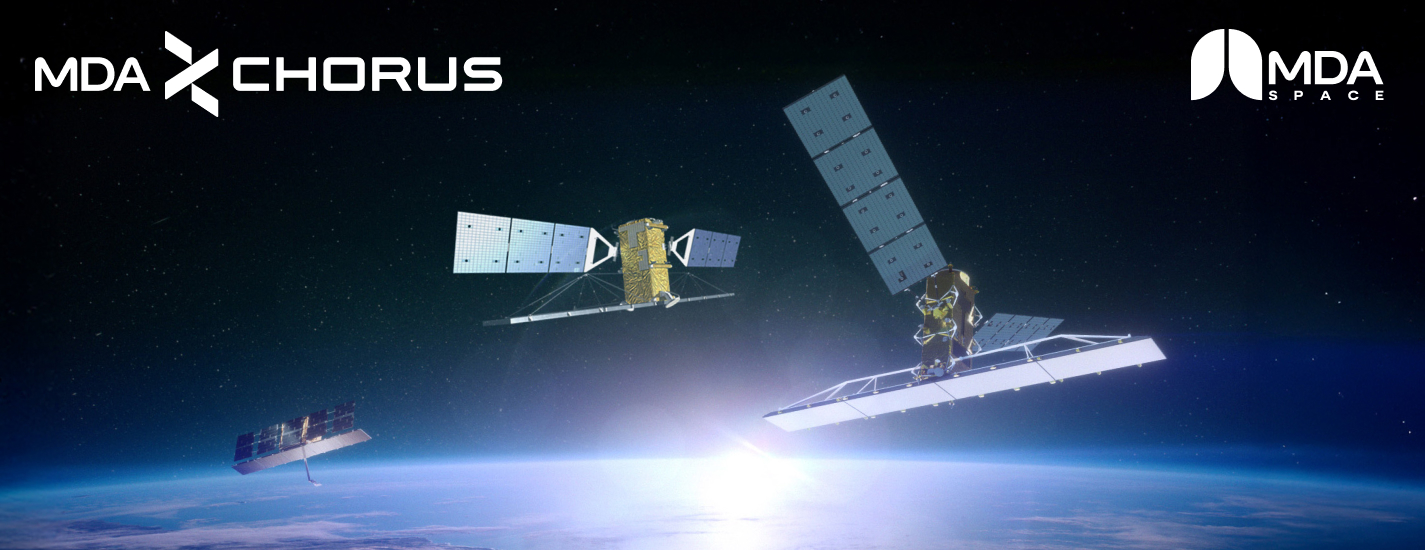
Webinar 4/29: NASA CSDA Program Vendor Focus- MDA Space
NASA’s Earth Science Division (ESD) established the Commercial Satellite Data Acquisition (CSDA) program to explore the potential of commercial satellite data in advancing the agency’s Earth science research and application objectives. The program aims to identify, assess, and acquire data from commercial providers, which may offer a cost-effective means of supplementing Earth observations collected by NASA, other U.S. Government agencies, and international collaborators.
During this NASA CSDA program vendor webinar, speakers will introduce MDA Space and the company’s satellite constellation; show participants how to discover, access, and work with these satellite C-band synthetic aperture radar (SAR) products; and speak to how these data products complement NASA Earth science data holdings for research and applications. Additional topics will focus on the services available to data users and getting assistance with the NASA CSDA program vendor MDA Space datasets, services, and tools.
For information and to RegisterNASA Artemis II Human Research Data Methodology Challenge
NASA’s Human Research Program (HRP) uses research to develop methods to protect the health and performance of astronauts in space. In support of NASA’s goals for long-term missions on the surface of the Moon and human exploration of Mars, HRP is using ground research facilities, the International Space Station, and analog environments to monitor human health in deep space.
NASA’s Artemis II mission was the first crewed mission to the vicinity of the Moon since Apollo 17 in December 1972. The mission carried four astronauts aboard the Orion spacecraft on a trajectory into deep space – farther than any humans have gone before – marking a pivotal milestone in the history of human exploration. For the first time in more than half a century, human beings experienced the full physiological and psychological conditions of space travel beyond low Earth orbit, including an environment with space radiation, the isolation and confinement of a new spacecraft, and the operational demands of a test mission profile.
For HRP, Artemis II represents an irreplaceable research opportunity. The data collected from the four-person crew will expand an existing body of knowledge built primarily from missions in low Earth orbit, extending it into the deep space environment. It will provide direct measurements of how the human body responds to conditions that ground-based simulation cannot fully replicate.
The unique dataset will also present a profound analytical challenge. Though the sample size is only four subjects, the data will span multiple physiological systems, data modalities, and time points. That combination is what the NASA Artemis II Human Research Data Methodology Challenge seeks to address.
Award: $25,000 in total prizes
Challenge Open Date: March 30, 2026
Submission Close Date: June 5, 2026
For more information, visit: https://hrpdatachallenge.org/
NASA, OPM Announce New NASA Force Website, Open Job Applications
NASA and the U.S. Office of Personnel Management (OPM) launched the NASA Force website on Friday, opening applications for roles aimed at recruiting the nation’s top engineers and technologists to support America’s air and space program.
NASA Force, a new hiring initiative developed in partnership with OPM, will recruit and place high-impact technical talent into mission-critical roles supporting NASA’s exploration, research, and advanced technology priorities, ensuring the agency has the cutting-edge expertise needed to maintain U.S. leadership in air and space.
“NASA Force is bringing highly skilled early- to mid-career engineers, technologists and innovators to help us achieve our world-changing missions,” said NASA Administrator Jared Isaacman. “Our successful Artemis II mission has inspired the world and generated tremendous interest to join our workforce to be part of the Golden Age of innovation and exploration.”
NASA Force is part of a broader US Tech Force initiative established by OPM to recruit elite technical professionals into federal service at multiple agencies to modernize systems, accelerate innovation, and strengthen mission delivery.
“NASA has always shown the world what American talent can achieve when it’s pointed at a bold mission,” said OPM Director Scott Kupor. “NASA Force is about making sure the agency has access to the next generation of innovation and strong partnerships with private sector talent to drive its very ambitious agenda.”
The first job application under NASA Force is for aerospace engineer positions for a two-year term position, with the potential for additional term extensions. Additional openings are expected in the coming weeks and months.
If interested in jobs in addition to NASA Force, visit:
NASA is taking deliberate steps to retain and bolster its internal talent pipeline, strengthen technical core competencies and in-house capabilities, and foster an enduring culture of technical resilience. NASA Force is one part of the agency’s workforce efforts aimed at achieving the President’s national space policy and maintaining unrivaled U.S. leadership in air and space exploration.
To learn more about NASA Force and apply for jobs, visit:
-end-
Camille Gallo / Jennifer Dooren
Headquarters, Washington
202-358-1600
camille.m.gallo@nasa.gov / jennifer.m.dooren@nasa.gov
Quality Assessment Report Evaluates Tomorrow.io Precipitation Radar Data
- CSDA
- Commercial Data
- CSDA Vendors
- Program Activities
- Pilot Research Projects
- FAQs
- News
A new quality assessment report from NASA’s Commercial Satellite Data Acquisition (CSDA) program approves the use of precipitation radar data from Tomorrow.io for NASA scientific use.
Issued March 9, 2026, the Commercial Satellite Data Acquisition Program Tomorrow.io Radar Quality Assessment Report documents the evaluation process of the NASA subject matter experts (SMEs) enlisted to analyze the data quality of the Ka-band Precipitation Radars aboard the company’s R1 and R2 spacecraft.
The SMEs assessed the company’s Level 2 Precipitation products and geolocation accuracy and their results were generally in agreement with the analysis provided by Tomorrow.io in its algorithm theoretical basis document. The geolocation assessment showed “excellent correlation” of 0.98 with a digital elevation model (DEM) reference. In addition, comparisons to ground radar were in good agreement for both radars, with correlations to ground radar of 0.73 and 0.93. (R2 showed slightly higher accuracy than R1, with biases of –22% (R1) and –6% (R2)). Based on these results, the SMEs concluded that Tomorrow.io precipitation radar data be considered for NASA scientific use, contingent upon alignment with science objectives and application needs.
To Tomorrow.io, the CSDA program’s independent evaluation process provides the confidence the scientific community needs to rely on commercial Earth observation data.
“When NASA’s own subject matter experts validate that a commercially built space-based radar system can contribute meaningfully alongside programs like NASA’s Global Precipitation Measurement missions, that opens a new chapter for Earth observation,” said Rei Goffer, Chief Strategy Officer and Founder of Tomorrow.io. “We built these instruments to demonstrate that the commercial sector can deliver science-quality data from space, and we’re proud that NASA’s assessment supports that vision.”
About the CSDA ProgramNASA’s Earth Science Division (ESD) established the CSDA program to identify, evaluate, and acquire commercial remote sensing data that enhances NASA’s Earth science research and applications. CSDA provides structured on-ramping opportunities for emerging commercial satellite data vendors, enabling NASA to continuously integrate innovative data sources as the private sector evolves. By leveraging these partnerships, NASA’s ESD aims to accelerate scientific discovery and expand applications of Earth observation data for the NASA Earth science research and applications community and societal benefit.
Since its initial pilot, the CSDA Program has conducted three on-ramp activities, resulting in the addition of several vendors into sustainment. Since then, the program has streamlined its evaluation process by introducing high-quality, SME-led data assessments, accelerating reviews and strengthening NASA’s engagement with the rapidly growing commercial data ecosystem. The CSDA’s evaluation criteria include:
- Accessibility of data
- Completeness and accuracy of metadata
- User support services provided by the commercial entity
- Usefulness of submitted data for science and applications
This approach ensures NASA gains timely access to high-quality, mission-relevant commercial data, and provides valuable feedback to private-sector providers, fostering innovation, improved data products, and alignment of industry capabilities with NASA’s evolving scientific needs.
ResourcesTo read the Commercial Satellite Data Acquisition Program Tomorrow.io Radar Quality Assessment Report, visit the CSDA website.
For more information about the CSDA program’s process for identifying commercial satellite vendors for on-ramp and evaluation, visit the CSDA website.
Learn more about Tomorrow.io commercial data available through the CSDA program’s recent Vendor Focus webinar.
Volunteers Discover Rare Space Weather Events Using Their Ears
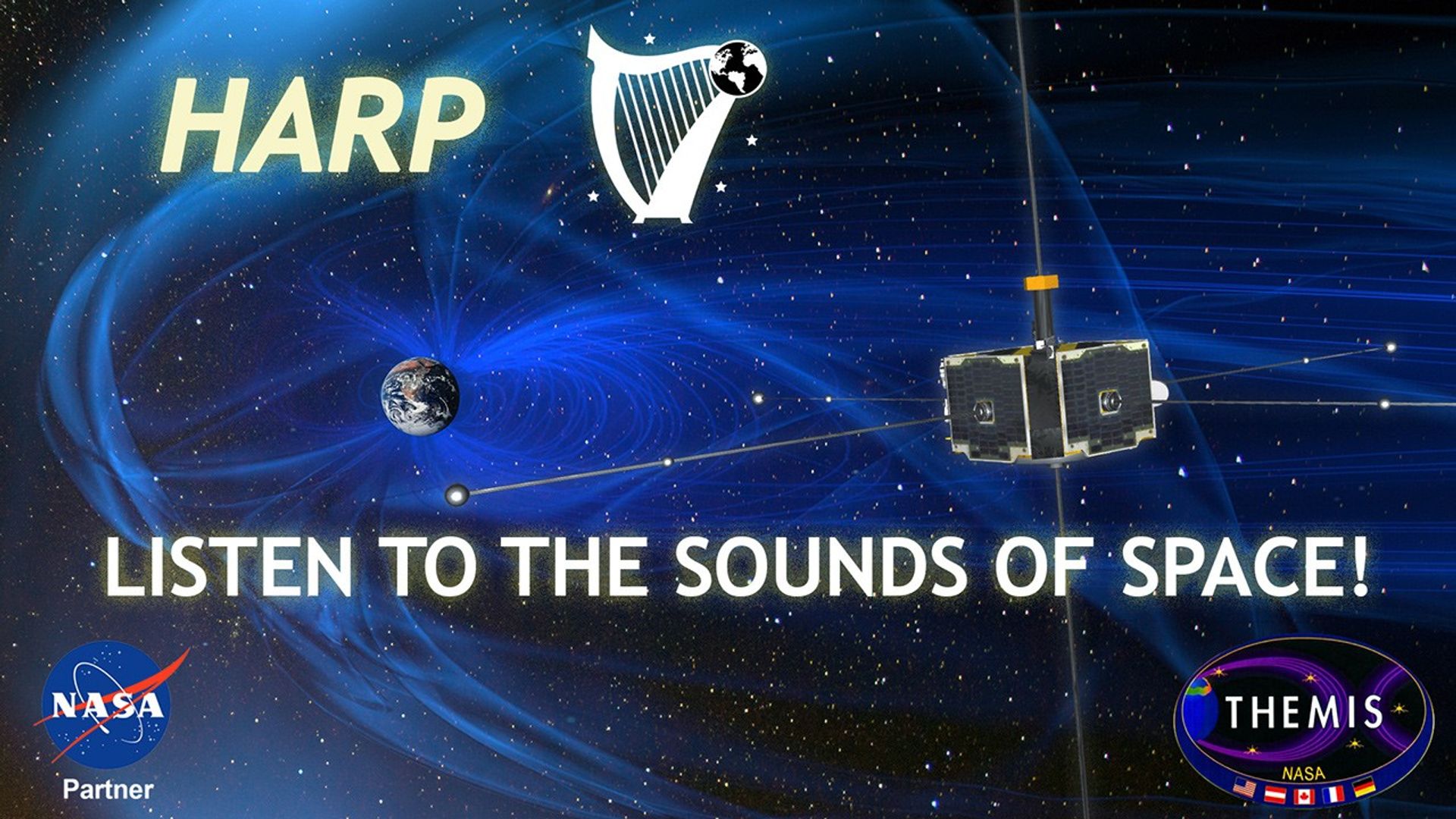
Our planet rests inside a magnetic cocoon filled with plasma – but it’s not always peaceful and quiet. Activity from the Sun can send waves through this space, and some of those disturbances can even reach Earth, affecting our power grid.
Scientists are working to understand exactly how these waves behave, and the team behind NASA’s Heliophysics Audified: Resonances in Plasmas (HARP) citizen science project approaches this in a unique way: they compare the Earth’s magnetic field to a giant harp in space. The HARP team translated magnetic field measurements into sound. This translation allowed HARP project volunteers to use their ears to study a particular type of plasma wave that plays a role in space weather. What they heard surprised everyone.
The science team expected lower pitches farther from Earth and higher pitches closer to it. But when they played back data from NASA’s THEMIS (Time History of Events and Macroscale Interactions during Substorms) mission, volunteers noticed something unexpected. Some plasma waves revealed the opposite pattern – lower pitches close to Earth and higher pitches farther away.
The HARP volunteers were thrilled to help discover this anomaly, which will help scientists better understand geomagnetic storms. One volunteer said of the HARP project, “I only signed up for this group because my friend was participating, but now I think I’m going to change my major to physics – this was just too cool.” These findings now appear in a new article in Frontiers in Astronomy and Space Sciences.
Thank you to all the HARP volunteers who helped develop the project’s audio analysis protocol, beta tested the graphical user interface, and identified and labeled the myriad plasma waves that the team will be studying for years to come.
The HARP project was sponsored by NASA and continues to be sponsored by the National Science Foundation. The project is no longer actively seeking volunteers.
HARP volunteers uncovered unexpected patterns in plasma wave activity near Earth using data from the NASA THEMIS mission. Image credit: Emmanuel Masongsong and the HARP team Credit: Emmanuel Masongsong and the HARP team Facebook logo @nasascience_ @nasascience_ Instagram logo @nasascience_ Linkedin logo @nasascience_ Share Details Last Updated Apr 17, 2026 Related Terms Explore More 4 min read NASA Data Hackathon Inspires Community ActionArticle
4 weeks ago
2 min read Hail Yeah! NASA Researchers Use Volunteer Observations for Hail Estimates
The bigger the hailstone, the more damage it can cause. But scientists find that predicting…
Article
1 month ago
7 min read To Protect Artemis II Astronauts, NASA Experts Keep Eyes on Sun
Article
1 month ago
NASA’s SPHEREx Observatory Maps Interstellar Ice in Milky Way
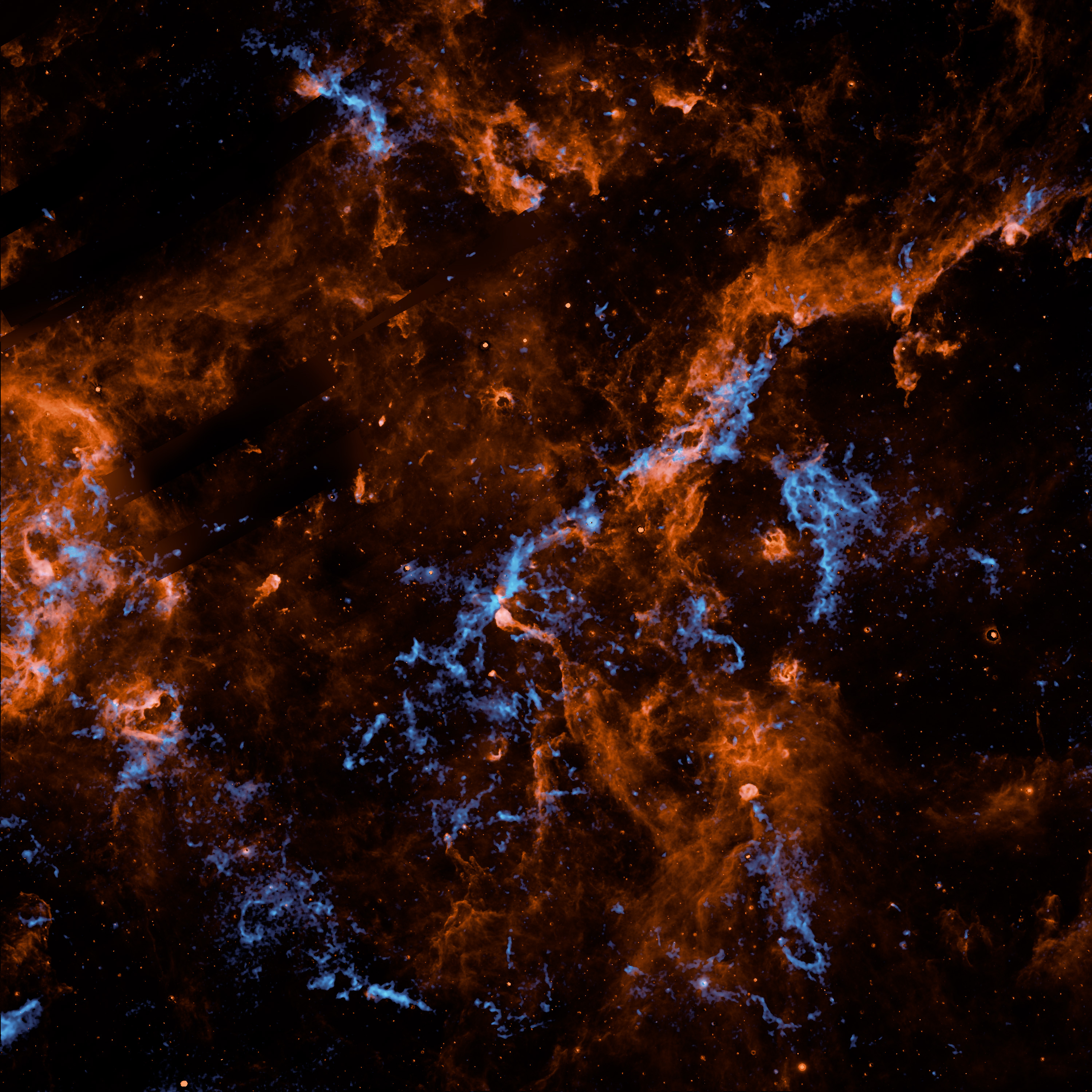
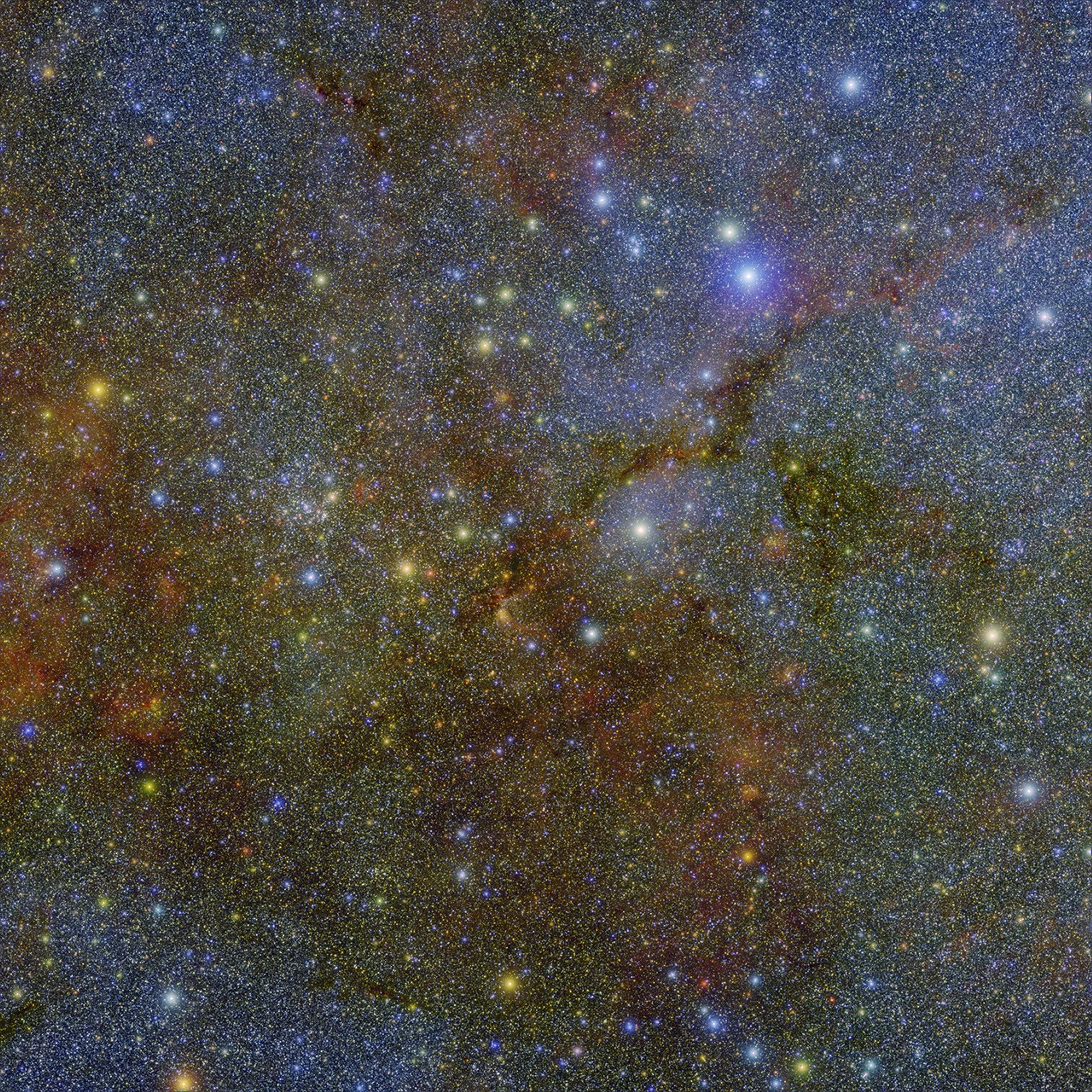
An observation made by NASA’s SPHEREx (Spectro-Photometer for the History of the Universe, Epoch of Reionization, and Ices Explorer) shows the chemical signatures of water ice (shown in bright blue) and polycyclic aromatic hydrocarbons (orange) in Cygnus X, one of the most active and turbulent regions of star birth in our Milky Way galaxy. The image was released on April 15, 2026, along with a study detailing the observation.
One of SPHEREx’s main goals is to map the chemical signatures of various types of interstellar ice. This ice includes molecules like water, carbon dioxide, and carbon monoxide, which are vital to the chemistry that allows life to develop. Researchers believe these ice reservoirs, attached to the surfaces of tiny dust grains, are where most of the universe’s water is formed and stored. The water in Earth’s oceans — and the ices in comets and on other planets and moons in our galaxy — originates from these regions.
SPHEREx launched March 11, 2025, and has the unique ability to see the sky in 102 colors, each representing a different wavelength of infrared light that offers distinctive information about galaxies, stars, planet-forming regions, and other cosmic features.
Read more about what SPHEREx found.
Image credit: NASA/JPL-Caltech/IPAC/Hora et al.
Spring Rains Saturate Michigan
- Earth
- Earth Observatory
- Image of the Day
- EO Explorer
- Topics
- More Content
- About
NASA Invites Media to Latvia Artemis Accords Signing Ceremony
The Republic of Latvia will sign the Artemis Accords during a ceremony at 9 a.m. EDT Monday, April 20, at NASA Headquarters in Washington.
NASA Administrator Jared Isaacman will host Dace Melbārde, Latvia’s minister for education and science; Jānis Beķeris, chargé d’affaires at the Embassy of the Republic of Latvia to the United States; and Jacob Helberg, under secretary of state for economic affairs at the U.S. Department of State.
This event is in person only. Media interested in attending must RSVP no later than 3 p.m. on Friday, April 17, to: hq-media@mail.nasa.gov. NASA’s media accreditation policy is online.
The signing ceremony will take place in the James E. Webb Memorial Auditorium at NASA Headquarters in the Mary W. Jackson building, 300 E Street SW.
In 2020, during the first Trump Administration, the United States, led by NASA and the State Department, joined with seven other founding nations to establish the Artemis Accords, responding to the growing interest in lunar activities by both governments and private companies.
The accords introduced the first set of practical principles aimed at enhancing the safety, transparency, and coordination of civil space exploration on the Moon, Mars, and beyond. Latvia will be the 62nd country to sign the Artemis Accords.
Learn more about the Artemis Accords at:
https://www.nasa.gov/artemis-accords
-end-
Camille Gallo / Elizabeth Shaw
Headquarters, Washington
202-358-1600
camille.m.gallo@nasa.gov / elizabeth.a.shaw@nasa.gov
At the Edge of Light
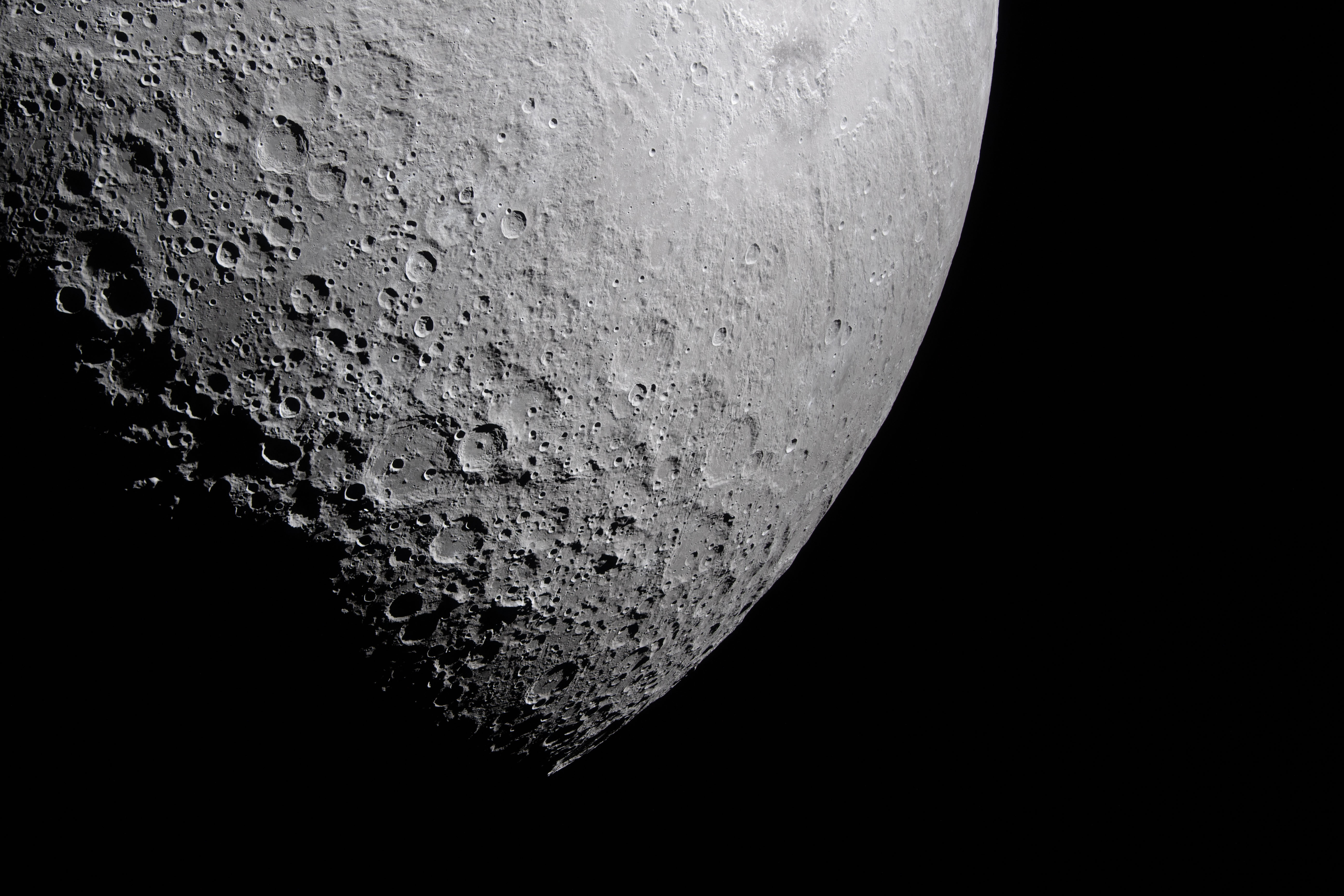
In this photo taken on April 6, 2026, a portion of the Moon’s far side is seen along the terminator—the boundary between lunar day and night—where low-angle sunlight casts long shadows across the surface.
A section of Orientale Basin is visible along the upper right portion of the lunar disk, its structure subtly revealed under grazing illumination. This lighting enhances contrast across the cratered terrain, highlighting variations in surface features and providing insight into the Moon’s geologic history.
See more imagery from the Artemis II mission.
Credit: NASA
Eyeing the Richat Structure
- Earth
- Earth Observatory
- Image of the Day
- EO Explorer
- Topics
- More Content
- About
I Am Artemis: Rebekah Tolatovicz
Listen to this audio excerpt from Rebekah Tolatovicz, a mechanical technician lead supporting the Orion spacecraft’s main contractor Lockheed Martin:
0:00 / 0:00
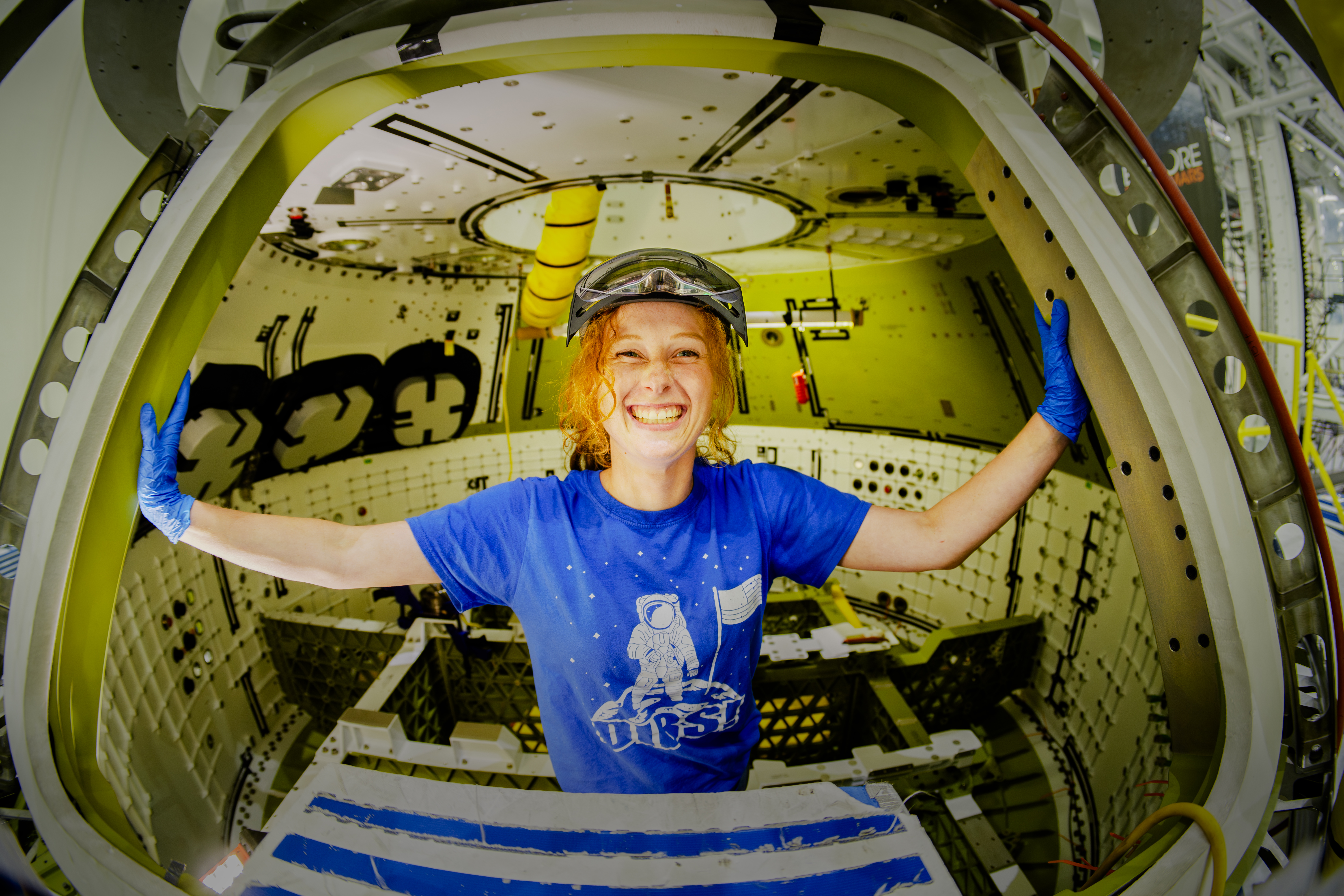
Your browser does not support the audio element.At NASA’s Kennedy Space Center in Florida, there is a fleet of Orion spacecraft in work, and Rebekah Tolatovicz’s hands have helped build each one. Tolatovicz works to build, integrate, and test the spacecraft used during the Artemis II test flight, as well as those designed to carry humanity to the Moon on future Artemis missions.
Tolatovicz is a mechanical technician lead for the Arctic Slope Regional Corporation, or ASRC Federal, supporting the Orion spacecraft’s main contractor Lockheed Martin. A typical day for Tolatovicz takes place inside NASA Kennedy’s Operations and Checkout Building, with Orion assembly and testing. Her work ranges from helping coordinate and lead technicians, to jumping into hands-on installations on components like hatches and engines, to collaborating with the engineering team.
“What I really like about the area that I’m in is we do so much,” said Tolatovicz. “From starting with the bare structure and installing giant parts and titanium pieces, to final integration where you’re installing the tiniest little components. I think that’s the coolest part. We don’t do just one technical thing — it’s all the technical things.”
Rebekah Tolatovicz, a mechanical technician lead for the Arctic Slope Regional Corporation, or ASRC Federal, supporting the Orion spacecraft’s main contractor Lockheed Martin, works inside the Artemis III Orion crew module in the Operations and Checkout Building at NASA’s Kennedy Space Center in Florida.Credits: NASA/Rad SinyakTolatovicz currently works on the Orion crew modules that could sustain the astronauts on future Artemis missions, and she played a large role in work on the Artemis II spacecraft that carried four astronauts on a mission around the Moon, splashing down April 10. This included testing, integration, and final installation and closeout before the spacecraft was prepared for fueling and stacking on the SLS (Space Launch System) rocket.
As Artemis II was the first crewed mission under NASA’s Artemis program, Tolatovicz recognized the impact of her work.
It's really vital to stress the importance of what we do and know nothing is minuscule. Everything matters. It's really important to pass that down on to the new hires and make sure that everybody has that perspective.”Rebekah Tolatovicz
Orion Mechanical Technician Lead for ASRC Federal
Tolatovicz, who began as an intern with Lockheed Martin through Eastern Florida State College’s aerospace technician program, knows what it’s like to be a newcomer. She had been mentored by technicians who worked through the space shuttle era, which largely shaped her experience and outlook.
“At first I didn’t think I was going to make it,” said Tolatovicz. “But if you come in with a good attitude and want to learn — there’s so much you can learn from these guys, they have decades of knowledge to share. Once I got down on the floor and was working with them hands-on, I knew I could figure it out.”
Tolatovicz has been working on the Orion program for nine years. Since then, the Maine native has witnessed her work come to fruition on Orion’s uncrewed Artemis I test flight as well as the Artemis II mission around the Moon.
“It’s really amazing for me to be a part of NASA’s history and the next step,” said Tolatovicz. “I just really love my job, the team, and working through challenges. You don’t think about it when you’re putting things on, but then you get to tell somebody else that you installed the thrusters for the spacecraft, and you realize — man, that’s pretty cool.”
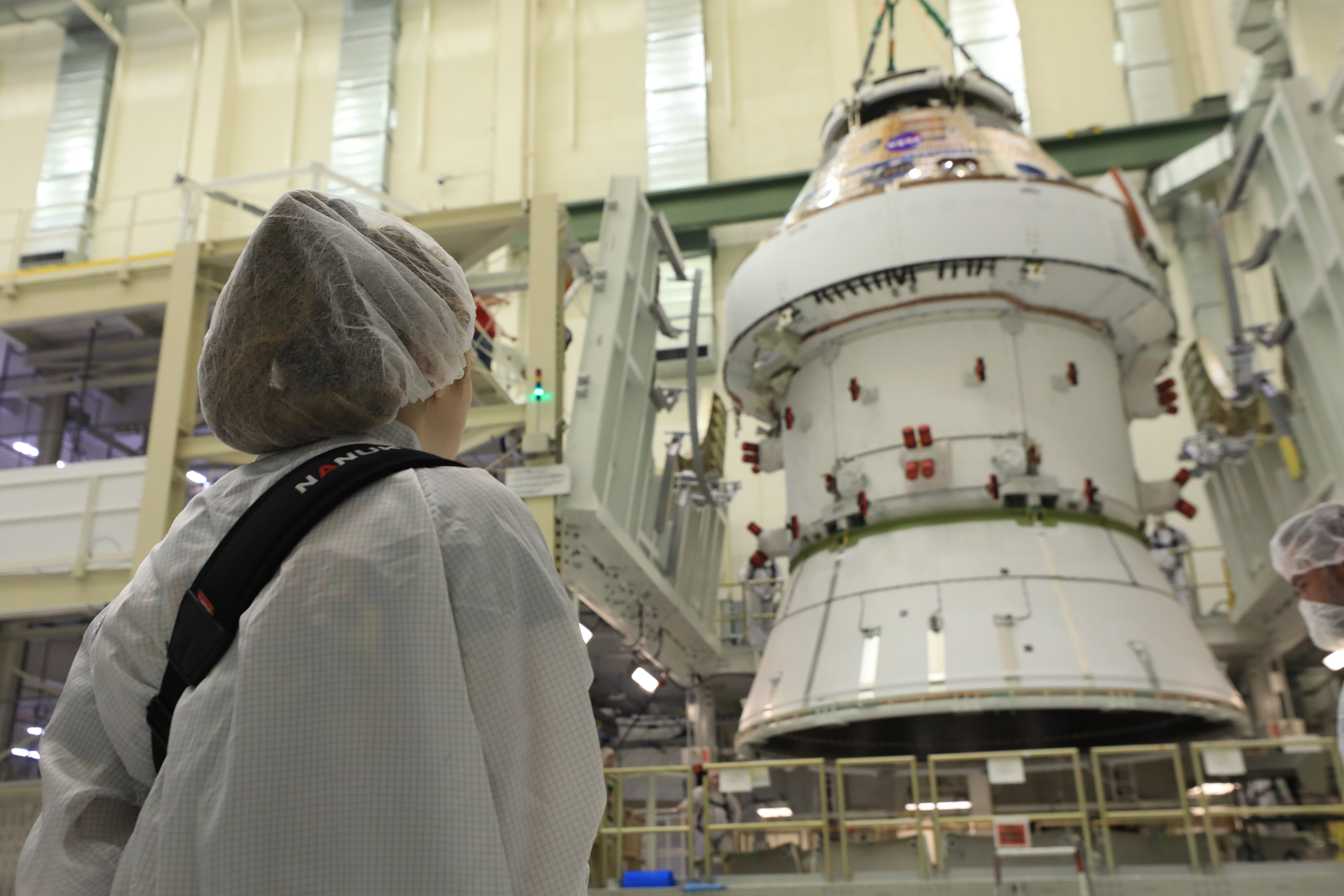
Rebekah Tolatovicz, a technician with Lockheed Martin, operates a 30-ton crane to move NASA’s Artemis II Orion spacecraft out of the Final Assembly and System Testing cell inside the Neil A. Operations and Checkout Building at NASA’s Kennedy Space Center in Florida on Saturday, Feb. 22, 2025. The move prepared for the installation of four solar array wings and spacecraft adapter jettison fairings for the agency’s first crewed flight test under the Artemis campaign. Credits: NASA/Cory S Huston About the AuthorErika Peters Share Details Last Updated Apr 15, 2026 Related Terms Explore More 3 min read I Am Artemis: Dan Florez Article 1 week ago 1 min read Watching the Artemis II Mission Unfold at JPL’s Space Flight Operations FacilityDescription Staff at NASA’s Jet Propulsion Laboratory in Southern California watch the agency’s Artemis II…
Article 1 week ago 2 min read The Deep Space Network Acquires Artemis II SignalDescription A graphical representation of the Deep Space Network’s radio frequency antennas indicate signal acquisition…
Article 1 week ago Keep Exploring Discover More Topics From NASAMissions
Humans in Space
Climate Change
Solar System
NASA Selects Voyager for Seventh Private Mission to Space Station
NASA and Voyager Technologies have signed an order for the seventh private astronaut mission to the International Space Station, targeted to launch no earlier than 2028 from Florida.
This is the company’s first selection for a private astronaut mission to the orbiting laboratory, underscoring NASA’s ongoing investment in fostering a commercial space economy and expanding opportunities for private industry in low Earth orbit.
“Private astronaut missions are accelerating the growth of new ideas, industries, and technologies that strengthen America’s presence in low Earth orbit and pave the way for what comes next,” said NASA Administrator Jared Isaacman. “With three providers now selected for private missions, NASA is doing everything we can to send more astronauts to space and ignite the orbital economy. Each new partner brings fresh capabilities that move us closer to a future with multiple commercially operated space stations and a vibrant, sustainable marketplace in low Earth orbit.”
The mission, named VOYG-1, is expected to spend as many as 14 days aboard the space station. A specific launch date will depend on overall spacecraft traffic at the orbital outpost and other planning considerations.
Voyager will submit four proposed crew members to NASA and its international partners for review. Once approved and confirmed, they will train with NASA, international partners, and the launch provider for their flight.
“This award reflects decades of partnership with NASA and validates our belief that the infrastructure being built in low Earth orbit today is the launchpad for humanity’s future in deep space,” said Dylan Taylor, chairman and CEO, Voyager. “From the International Space Station’s first commercial airlock to the seventh private astronaut mission, Voyager is committed to making American human spaceflight stronger, more capable, and more sustainable at every step of the journey.”
The company will purchase mission services from NASA, including crew consumables, cargo delivery, storage, and other in-orbit resources for daily use. NASA will purchase the capability to return scientific samples that must remain cold during transit back to Earth.
NASA made the selection from proposals received in response to its March 2025 NASA Research Announcement.
Missions aboard the International Space Station, including private astronaut missions, help advance scientific knowledge and demonstrate new technologies in the unique microgravity environment. These commercial efforts in low Earth orbit help develop capabilities and technologies that could support NASA’s long-term goals for missions beyond low Earth orbit, including deep space exploration to the Moon and eventually to Mars through the agency’s Artemis program.
Learn more about NASA’s commercial space strategy at:
https://www.nasa.gov/commercial-space
-end-
Jimi Russell
Headquarters, Washington
202-358-1600
james.j.russell@nasa.gov
Anna Schneider / Joseph Zakrzewski
Johnson Space Center, Houston
281-483-5111
anna.c.schneider@nasa.gov / joseph.a.zakrzewski@nasa.gov
NASA Launches Six CubeSats to International Space Station
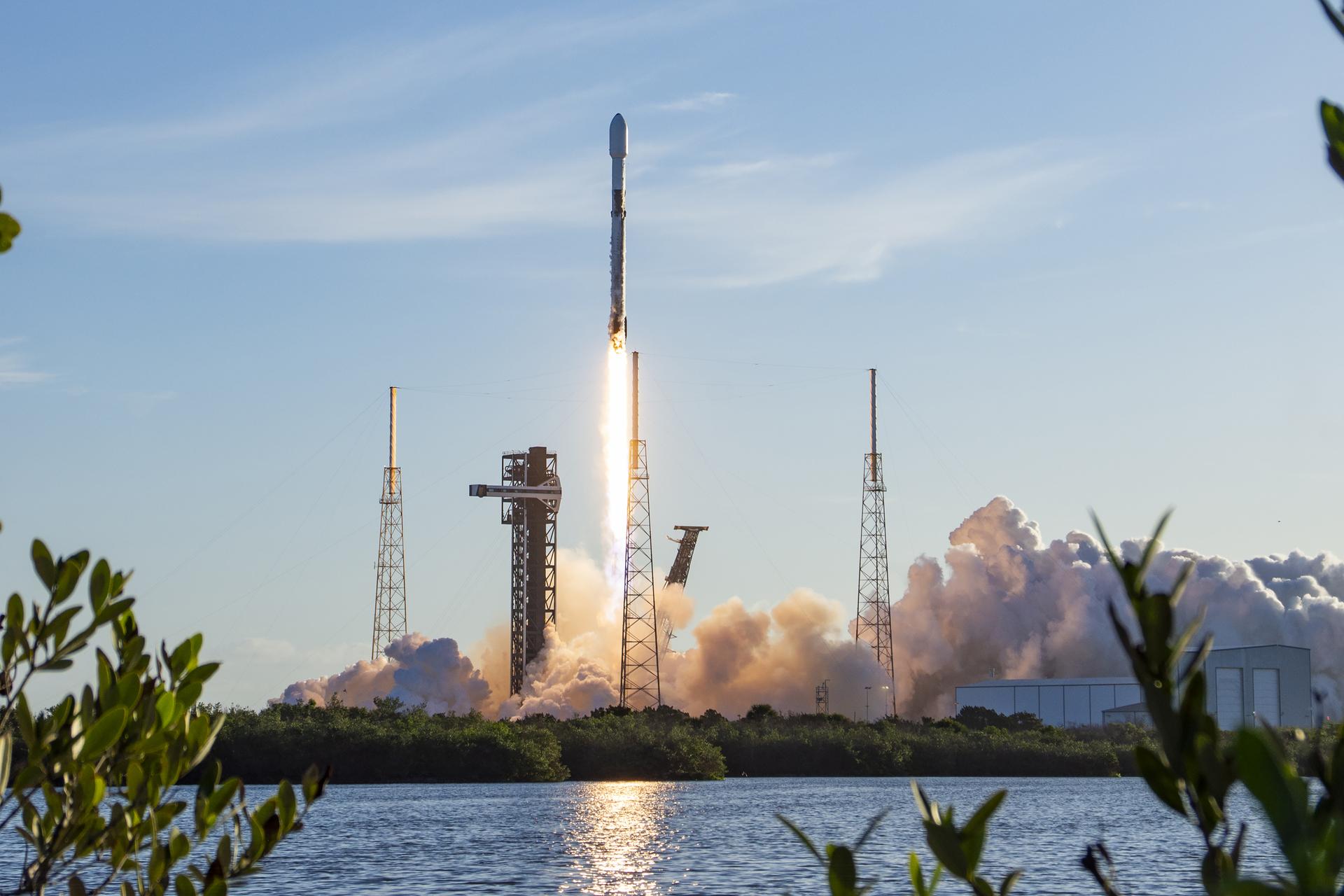
Experiments and supplies bound for the International Space Station launched on April 11 as part of the agency’s Northrop Grumman Commercial Resupply Services 24 mission.
As part of the approximately 11,000 pounds cargo that lifted off inside the company’s Cygnus XL spacecraft, NASA’s CubeSat Launch Initiative (CSLI) launched six CubeSats built by U.S. educational institutions and non-profit organizations. These CubeSats are Coconut, Harvard Undergraduate CubeSat (HUCSat), Low Earth Orbit Platform for Aerospace Research and Development Satellite 1 (LEOPARDSat-1), and three Pleiades Rapid Orbital Verification Experiment System (PROVES) CubeSats: PROVES – Alcyone, PROVES – Atlas, and PROVES – Electra.
Each CubeSat is a small satellite that will deploy into orbit from the space station to conduct its experiments. NASA’s Launch Services Program, based at the agency’s Kennedy Space Center in Florida, manages CSLI and manifested these CubeSats on the mission as part of the Educational Launch of Nanosatellites (ELaNa) 58 launch grouping.
Photo credit: SpaceX
2026 NSTA Hyperwall Schedule
2 min read
2026 NSTA Hyperwall ScheduleNASA Science at NSTA Hyperwall Schedule, April 16-18, 2026
Join NASA in the Exhibit Hall (Booth #1265) for Hyperwall Storytelling by NASA experts. Full Hyperwall Agenda below.
THURSDAY, APRIL 16
11:00 AM Teaching Space Weather in the Artemis Mission Era Christina Milotte 11:15 AM 5E StoryMaps using NASA Resources Tina HarteBallinger 11:30 AM Growing Beyond Earth: A Partnership Between
Fairchild Tropical Botanic Garden & NASA Amy Padolf 11:45 AM Learn Science by Doing Science:
Real NASA Research That Your Class Can Do Today Sarah Kirn 12:00 PM Unlock NASA’s Eyes and Inspire the Scientists of Tomorrow Jason Craig 12:15 PM Access NASA Earth Data for your Class Angela Rizzi 12:30 PM Solar System Treks George Chang 12:45 PM Earth in Motion: How the NISAR Satellite
Mission will Transform Our View of the Planet Erika Podest 1:30 PM Differentiated NASA Earth Data Analysis and Interpretation Angela Rizzi 1:45 PM Roman Space Telescope and Webb Space Telescope Begoña Vila 2:00 PM Earth in Motion: How the NISAR Satellite
Mission will Transform Our View of the Planet Erika Podest 2:15 PM Solar System Treks George Chang 2:30 PM Unlock NASA’s Eyes and Inspire the Scientists of Tomorrow Jason Craig 2:45 PM Teaching Space Weather in the Artemis Mission Era Christina Milotte 3:00 PM Earth in Motion: How the NISAR Satellite Mission will Transform Our View of the Planet Erika Podest 3:45 PM Learn Science by Doing Science:
Real NASA Research That Your Class Can Do Today Sarah Kirn
FRIDAY, APRIL 17
11:00 AM NASA Solar System Ambassador Program Sarah Marcotte 11:15 AM Growing Beyond Earth: A Partnership BetweenFairchild Tropical Botanic Garden & NASA Amy Padolf 11:30 AM Access NASA Earth Data for your Class Angela Rizzi 11:45 AM Roman Space Telescope and Webb Space Telescope Begoña Vila 12:00 PM Learn Science by Doing Science:
Real NASA Research That Your Class Can Do Today Sarah Kirn 12:15 PM Teaching Space Weather in the Artemis Mission Era Christina Milotte 12:30 PM 5E StoryMaps using NASA Resources Tina Harte Ballinger 1:30 PM Growing Beyond Earth: A Partnership Between
Fairchild Tropical Botanic Garden & NASA Amy Padolf 1:45 PM Learn Science by Doing Science:
Real NASA Research That Your Class Can Do Today Sarah Kirn 2:00 PM Roman Space Telescope and Webb Space Telescope Begoña Vila 2:15 PM NASA Solar System Ambassador Program Sarah Marcotte
NASA’s SPHEREx Mission Maps Water Ice Throughout Cygnus X
NASA/JPL-Caltech/IPAC/Hora et al. Photojournal Navigation Downloads NASA’s SPHEREx Mission Maps Water Ice Throughout Cygnus X
JPEG (1.99 MB)
PIA26748 Figure A
JPEG (6.64 MB)
Description
An observation made by NASA’s SPHEREx (Spectro-Photometer for the History of the Universe, Epoch of Reionization, and Ices Explorer) shows the chemical signatures of water ice (shown in bright blue) and polycyclic aromatic hydrocarbons (orange) in Cygnus X, one of the most active and turbulent regions of star birth in our Milky Way galaxy.
One of several maps of molecular clouds made by SPHEREx, this observation is detailed in a study published April 15, 2026, in The Astrophysical Journal. The study supports the hypothesis that interstellar ice forms on the surface of tiny dust particles no larger than particles found in the smoke from a candle. The findings show the densest regions of ice coincide with the densest regions of dust, and the dust shields the ice from the intense ultraviolet radiation emitted by newborn stars.
Figure AFigure A shows the same region, but in three different wavelengths assigned the colors green, blue, and red. This SPHEREx observation highlights the dark, dusty lanes that protect the water molecules from the intense radiation generated by newborn stars.
Although space telescopes such as NASA’s James Webb Space Telescope and the agency’s retired Spitzer have detected water, carbon dioxide, carbon monoxide, and other icy molecules throughout our galaxy, the SPHEREx observatory is the first infrared mission specifically designed to find such molecules over the entire sky, via the mission’s large-scale spectral survey.
Managed by NASA’s Jet Propulsion Laboratory in Southern California, the SPHEREx observatory launchedMarch 11, 2025, and has the unique ability to see the sky in 102 colors, each representing a different wavelength of infrared light that offers distinctive information about galaxies, stars, planet-forming regions, and other cosmic features. By late 2025, SPHEREx had completed the first of four all-sky infrared maps of the universe, charting the positions of hundreds of millions of galaxies in 3D to help answer major questions about the cosmos, including those about the origins of water and life.
The mission is managed by JPL for the agency’s Astrophysics Division within the Science Mission Directorate in Washington. The telescope and the spacecraft bus were built by BAE Systems in Boulder, Colorado. The science analysis of the SPHEREx data is being conducted by a team of scientists at 13 institutions across the U.S. and in South Korea and Taiwan, led by Principal Investigator Jamie Bock, who is based at Caltech with a joint JPL appointment, and by JPL Project Scientist Olivier Doré. Data is processed and archived at IPAC at Caltech in Pasadena, which manages JPL for NASA. The SPHEREx dataset is freely available to scientists and the public.
For more information about the SPHEREx mission visit: https://science.nasa.gov/mission/spherex/
Keep Exploring Discover More Topics From Photojournal
Photojournal
Search Photojournal
Photojournal’s Latest Content
Feedback
‘Interstellar Glaciers’: NASA’s SPHEREx Maps Vast Galactic Ice Regions
6 min read
Preparations for Next Moonwalk Simulations Underway (and Underwater) Water ice highlighted Interstellar dust highlighted These observations made by NASA’s SPHEREx mission reveal vast frozen complexes in the Cygnus X star-forming region of the Milky Way galaxy. Water ice, shown as bright blue structures at left, exactly overlays the dark lanes of interstellar dust, shown in different wavelengths at right.NASA/JPL-Caltech/IPAC/Hora et al These observations made by NASA’s SPHEREx mission reveal vast frozen complexes in the Cygnus X star-forming region of the Milky Way galaxy. Water ice, shown as bright blue structures at left, exactly overlays the dark lanes of interstellar dust, shown in different wavelengths at right. Water ice highlightedInterstellar dust highlighted These observations made by NASA’s SPHEREx mission reveal vast frozen complexes in the Cygnus X star-forming region of the Milky Way galaxy. Water ice, shown as bright blue structures at left, exactly overlays the dark lanes of interstellar dust, shown in different wavelengths at right.NASA/JPL-Caltech/IPAC/Hora et al These observations made by NASA’s SPHEREx mission reveal vast frozen complexes in the Cygnus X star-forming region of the Milky Way galaxy. Water ice, shown as bright blue structures at left, exactly overlays the dark lanes of interstellar dust, shown in different wavelengths at right. Water ice highlighted Interstellar dust highlighted CurtainToggle2-Up Image Details These observations made by NASA’s SPHEREx mission reveal vast frozen complexes in the Cygnus X star-forming region of the Milky Way galaxy. Water ice, shown as bright blue structures at left, exactly overlays the dark lanes of interstellar dust, shown in different wavelengths at right.NASA’s SPHEREx (Spectro-Photometer for the History of the Universe, Epoch of Reionization, and Ices Explorer) mission has mapped interstellar ice at an unprecedented scale. Covering regions in our Milky Way galaxy more than 600 light-years across, the ice was found inside giant molecular clouds — vast regions of gas and dust where dense clumps of matter collapse under gravity, giving birth to stars. A study describing these findings published Wednesday in The Astrophysical Journal.
One of SPHEREx’s main goals is to map the chemical signatures of various types of interstellar ice. This ice includes molecules like water, carbon dioxide, and carbon monoxide, which are vital to the chemistry that allows life to develop. Researchers believe these ice reservoirs, attached to the surfaces of tiny dust grains, are where most of the universe’s water is formed and stored. The water in Earth’s oceans — and the ices in comets and on other planets and moons in our galaxy — originates from these regions.
“These vast frozen complexes are like ‘interstellar glaciers’ that could deliver a massive water supply to new solar systems that will be born in the region,” said study coauthor Phil Korngut, the instrument scientist for SPHEREx at Caltech in Pasadena, California. “It’s a profound idea that we are looking at a map of material that could rain on nascent planets and potentially support future life.”
Thanks to its spectral capabilities, SPHEREx can measure the amounts of various ices and molecules, such as polycyclic aromatic hydrocarbons, in and around molecular clouds, helping scientists better understand their composition and environment.
Although space telescopes such as NASA’s James Webb Space Telescope and the agency’s retired Spitzer have detected water, carbon dioxide, carbon monoxide, and other icy molecules throughout our galaxy, the SPHEREx observatory is the first infrared mission specifically designed to find such molecules over the entire sky via the mission’s large-scale spectral survey.
“We expected to detect these ices in front of individual bright stars: The light from a star acts like a spotlight, revealing any ice in the space between us and that star. But this is something different,” said lead author Joseph Hora, an astronomer at the Center for Astrophysics (CfA) at Harvard & Smithsonian in Cambridge, Massachusetts. “When looking along the galactic plane — where most of the stars, gas, and dust of our galaxy are concentrated — there’s a lot of diffuse background light shining through entire dust clouds, and SPHEREx can see the spatial distribution of the ices they contain in incredible detail.”
Managed by NASA’s Jet Propulsion Laboratory in Southern California, the SPHEREx observatory launched March 11, 2025, and has the unique ability to see the sky in 102 colors, each representing a different wavelength of infrared light that offers distinctive information about galaxies, stars, planet-forming regions, and other cosmic features. By late 2025, SPHEREx had completed the first of four all-sky infrared maps of the universe, charting the positions of hundreds of millions of galaxies in 3D to help answer major questions about the cosmos, including those about the origins of water and life.
Icy originsUsing the SPHEREx maps of various icy molecules, the study’s authors were able to look deep into many molecular clouds in the Cygnus X and North American Nebula regions of the Milky Way. In the densest areas, where the amount of dust is greatest, dark filamentary lanes block the visible light from the stars behind. With its infrared eye, the space telescope also revealed where the different ices — which absorb specific wavelengths of infrared light that would pass through the clouds if they consisted only of dust — are at their densest.
This finding supports the hypothesis that interstellar ice forms on the surface of tiny dust particles, which are no larger than particles found in candle smoke, and that the dense regions of dust shield the ices from the intense ultraviolet radiation emitted by newborn stars. However, not all ices are treated the same way in the interstellar medium.
“We can investigate the environmental factors that contribute to different ice formation rates across large areas of interstellar space,” said study coauthor Gary Melnick, also an astronomer at the CfA. “The SPHEREx mission’s ‘big picture’ view provides valuable new information you can’t get when zooming in on a small region.”
Within this broad perspective, adds Melnick, SPHEREx can do something ground-based observatories cannot: detect varying amounts of water and carbon dioxide, two ices that respond differently to environmental factors. For example, the presence of intense ultraviolet light from nearby massive young stars or the heating of these dust grains by that light affects the abundances of different ices in distinct ways.
This is just the beginning for the mission. Observations from SPHEREx will provide scientists with a powerful tool to explore the various components of our galaxy, the physics of the interstellar medium that lead to star and planet formation, and the chemical processes that deliver molecules essential for life to newly formed planets.
More about SPHERExThe mission is managed by JPL for the agency’s Astrophysics Division within the Science Mission Directorate in Washington. The telescope and the spacecraft bus were built by BAE Systems in Boulder, Colorado. The science analysis of the SPHEREx data is being conducted by a team of scientists at 13 institutions across the U.S. and in South Korea and Taiwan, led by Principal Investigator Jamie Bock, who is based at Caltech with a joint JPL appointment, and by JPL Project Scientist Olivier Doré. Data is processed and archived at IPAC at Caltech in Pasadena, which manages JPL for NASA. The SPHEREx dataset is freely available to scientists and the public.
For more information about the SPHEREx mission visit:
https://science.nasa.gov/mission/spherex/
Media Contacts
Ian J. O’Neill
Jet Propulsion Laboratory, Pasadena, Calif.
818-354-2649
ian.j.oneill@jpl.nasa.gov
Alise Fisher
NASA Headquarters, Washington
202-617-4977
alise.m.fisher@nasa.gov
Amy C. Oliver, FRAS
Public Affairs Officer
Smithsonian Astrophysical Observatory
amy.oliver@cfa.harvard.edu
2026-022
Share Details Last Updated Apr 15, 2026 Related Terms Explore More 3 min read NASA’s SPHEREx Mission Maps Water Ice Throughout Cygnus XDescription An observation made by NASA’s SPHEREx (Spectro-Photometer for the History of the Universe, Epoch of…
Article 1 day ago 5 min read NASA Finds Young Stars Dim in X-rays Surprisingly QuicklyScientists have found that young stellar cousins of our Sun are calming down and dimming…
Article 2 days ago 5 min read NASA’s Webb Redefines Dividing Line Between Planets, StarsPlanets, like those in our solar system, form in a bottom-up process where small bits…
Article 2 days ago Keep Exploring Discover Related TopicsSPHEREx
StarsAstronomers estimate that the universe could contain up to one septillion stars – that’s a one followed by 24 zeros.…
Infrared AstronomyBeyond Visible Light The rainbow of light that the human eye can see is a small portion of the total…
Cosmic Clouds in CygnusThese cosmic clouds of gas and dust driftthrough rich star fields along theplane of our Milky Way Galaxy toward the…
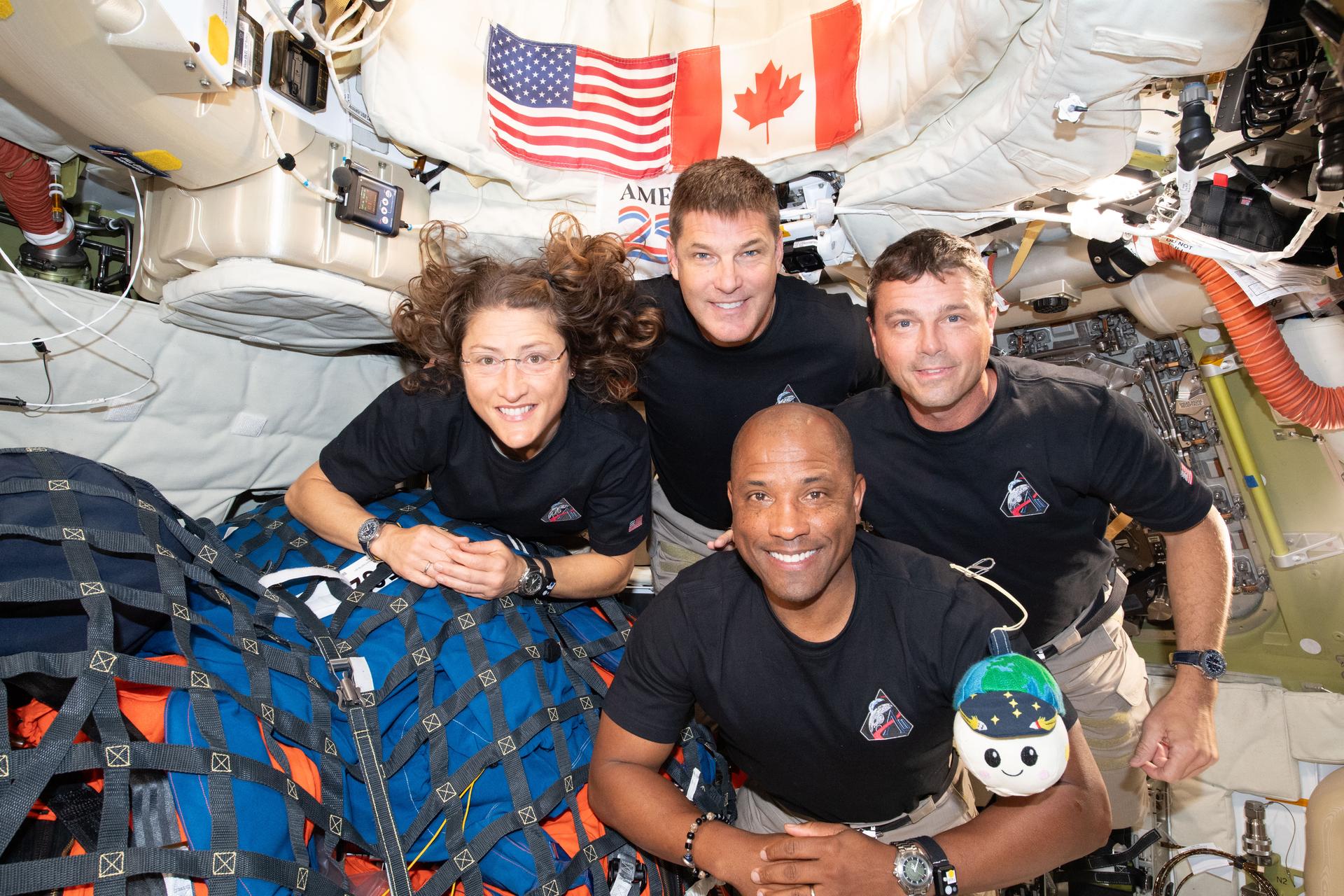
Artemis II Crew Returns to Houston
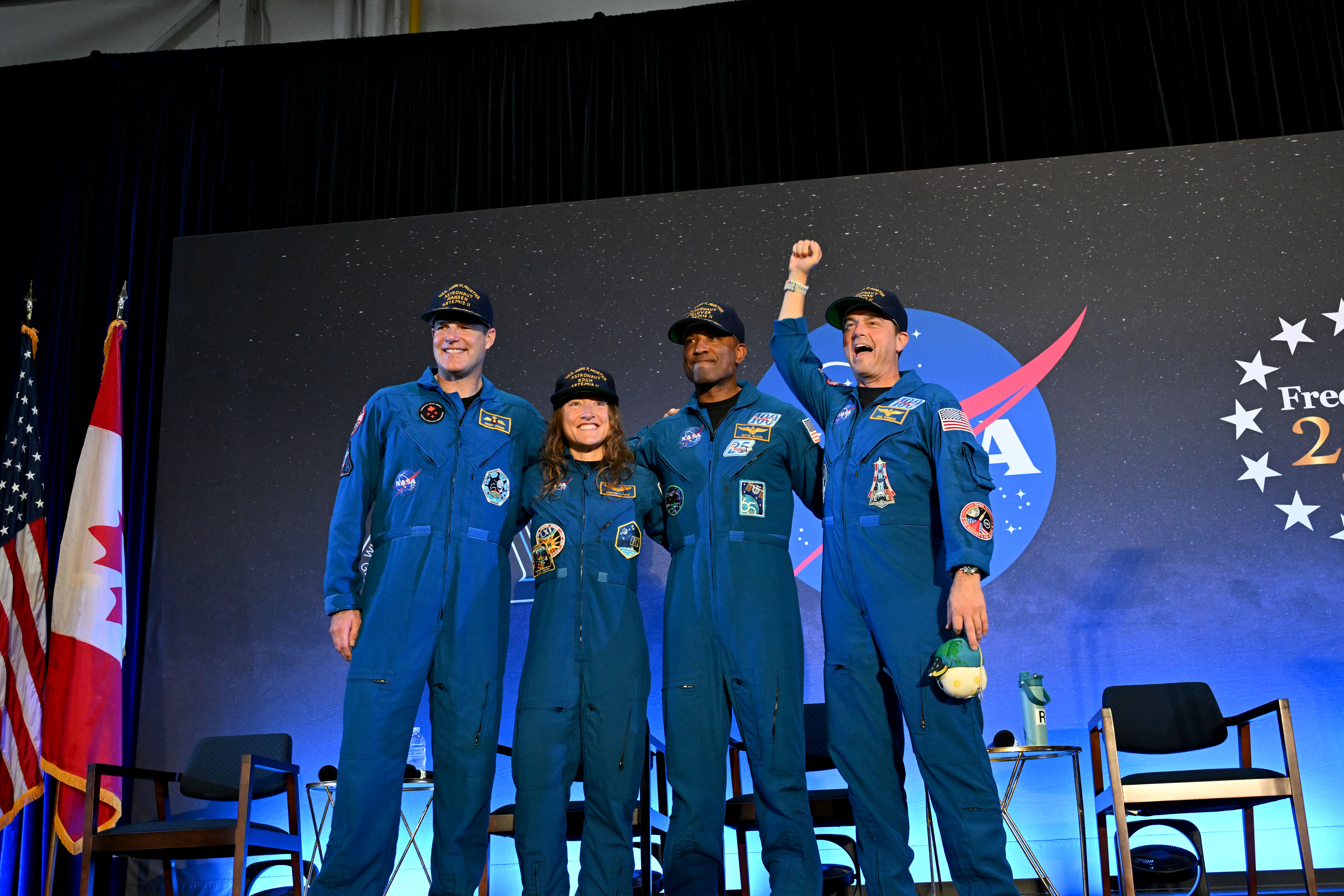
NASA’s Artemis II crew – NASA astronauts Reid Wiseman, Victor Glover, and Christina Koch, and CSA (Canadian Space Agency) astronaut Jeremy Hansen – smile at friends, family, and colleagues. They shared brief remarks with the crowd after landing at Ellington Airport near NASA’s Johnson Space Center in Houston on Saturday, April 11, 2026, after a nearly 10-day journey around the Moon and back to Earth.
View the latest imagery from the Artemis II mission on our Artemis II Multimedia Resource Page.
Image credit: NASA/Helen Arase Vargas
Honoring Alex Goetz, a Landsat Legend
- Landsat Home
- Missions
- News
- Data
- Benefits
- Outreach
- Multimedia
- About
- Search
In the more than five decades of the Landsat program, there have been many visionaries who have changed the course of remote sensing history. One such figure is Alexander Goetz, a physicist and planetary scientist who pioneered imaging spectrometry from space.
Goetz was part of the Landsat Program from the very beginning, working as a principal investigator for Landsats 1 and 2. Years later, he returned to the program as a member of the first formal Landsat Science Team on Landsat 7. This diverse group of researchers, technologists, and calibration and applications specialists helped advance Landsat science goals, refined algorithms, and supported on-the-ground calibration. Crucially, the team advised on the creation of the long-term acquisition plan (LTAP), which ensured consistent global, seasonal coverage of Landsat data. Goetz, for his part, led a study titled “Land and Land-Use Change in the Climate Sensitive High Plains: An Automated Approach with Landsat”.
Goetz, who passed away in 2025 at age 86, was an innovator in the field of spectrometry. According to a 2009 special issue of Remote Sensing of Environment, Goetz was “one of the few remote sensing scientists in the early days of the Landsat program to recognize the Multispectral Scanner (MSS) and later the Thematic Mapper (TM) for what they really were: quantitative spectral measuring instruments, not just ‘cameras in space’ that made pretty pictures.”
True to that vision, in 1974—just two years after the launch of Landsat 1—Goetz developed a portable field spectrometer to acquire ground truth surface reflectance data to calibrate data from the MSS. Building on the success of the field spectrometer experiment, he worked with a team to develop the Shuttle Multispectral Infrared Radiometer (SMIRR), which flew on the Space Shuttle in 1981. SMIRR, which collected data across ten bands, enabled scientists to map mineral composition from space for the first time. Data from SMIRR contributed to the case for adding band 7 to the TM on Landsat 4. By measuring data in the shortwave-infrared (SWIR) part of the electromagnetic spectrum, band 7 allowed geological researchers to better map rock types. Goetz was awarded the prestigious William T. Pecora Award and the NASA Medal for Exceptional Scientific Achievement for his pioneering work on imaging spectrometry.
Today, 27 years after the launch of Landsat 7, we honor the legacy of Alexander Goetz, one of the key figures in Landsat history.
Explore More
Honoring Alex Goetz, a Landsat Legend
2 min read
Dr. Alex Goetz, who passed away in 2025, was a member of the Landsat 7 Science Team and a key…
Apr 15, 2026 ArticleMegaberg Ends Its Long Odyssey at Sea
5 min read
Antarctic Iceberg A-23A’s journey ends in fragmentation in the South Atlantic Ocean, after a 40-year lifespan documented by satellites.
Apr 13, 2026 ArticleSnow in the Shadow of the Andes
2 min read
An early autumn storm left higher elevations in southern Argentina with a fresh and fleeting coat of white.
Apr 9, 2026 Article1
2
3
…
303
Next
Metrics
Click here to view the FY26 Services Catalog
The catalogs provide service description, chargeback rate, unit of measure, and service level indicators for each NSSC service.
Service Level Agreement (SLA)Click here to view the Service Level Agreement
The SLA provides information about roles, responsibilities, rates, and service level indicators for all NASA Centers. The SLA is negotiated on an annual basis in line with the fiscal year. A single SLA is shared by all NASA Centers and signed by the Associate Administrator, Chief Financial Officer, Chief Information Officer, and the Office of Inspector General. The SLA provides for the delivery of specific services from the NSSC to NASA Centers and Headquarters Operations in the areas of:
- Financial Management
- Procurement
- Human Resources
- Information Technology
- Agency Business Services
*** On-Line Course Management and Training Purchases have been realigned to the OLC &Training Purchases section of the bill in accordance with the realignment of training funds. Center Special Projects have been consolidated into one Special Projects bill with the funding Center identified for each project.***
FY 2026 – Utilization Reports
October 2025
November 2025
December 2025
January 2026
February 2026
FY 2025 – Utilization Reports
September 2025
August 2025
July 2025
June 2025
May 2025
April 2025
March 2025
February 2025
January 2025
December 2024
November 2024
October 2024
FY 2024 – Utilization Reports
September 2024
August 2024
July 2024
June 2024
May 2024
April 2024
March 2024
February 2024
January 2024
December 2023
November 2023
October 2023