NASA News

NASA Announces MAX POWER: America’s Newest Aerospace Expo, Airshow
In honor of America’s historic 250th anniversary, NASA announced on Friday MAX POWER, a public exposition of American air and space innovation, Nov. 7 and Nov. 8, on and near the agency’s Kennedy Space Center in Florida.
The multi-day, family-friendly event will showcase the next-generation aircraft, spacecraft, autonomous vehicles, and technologies that will help define the future of transportation in air and space, bringing together the public, innovators, investors, pilots, astronauts, engineers, and companies helping open this new frontier.
“This November, we are opening Kennedy Space Center’s historic Shuttle Landing Facility to the public for America’s newest and most exciting aerospace technology expo and airshow, and we are calling it MAX POWER,” said NASA Administrator Jared Isaacman. “For 250 years, America has advanced by building what did not exist, flying higher, moving faster, and reaching toward the near-impossible. There is no better place to celebrate that spirit than at NASA Kennedy, America’s gateway to the stars and the place where so many of our nation’s greatest achievements began.”
By bringing together the legacy of NASA with the companies and technologies shaping what comes next, MAX POWER aims to ignite the spirit of exploration and inspire the next generation of explorers, builders, and dreamers. In addition to the agency, Air Dot Show, Delaware North, Space Florida, Purpose Entertainment, and UP.Summit are external collaborators.
Some activities will take place at NASA Kennedy, including the Apollo Saturn V facility, and the Launch and Landing Facility currently leased by Space Florida. Others will take place at the Kennedy Space Center Visitor Complex adjacent to the center leading up to, and during, the festival.
Events include:
- An air show featuring NASA aircraft, the U.S. Air Force Thunderbirds, and aerial demonstrations by multiple branches of the Department of War
- Guest speaker series featuring NASA experts and Apollo and Artemis astronauts
- Special exhibits and displays showcasing technology demonstrations, historic and current NASA hardware aircraft, commercial aviation displays, next-generation air mobility, and more
- Behind-the-gates bus tours of NASA’s Kennedy Space Center, including the Gantry, Apollo Saturn V Center, and Vehicle Assembly Building
MAX POWER will give the public a front-row seat to the future of American aerospace, including advanced aircraft, autonomous systems, commercial space, NASA’s work to return Americans to the lunar surface, plans for a Moon Base, and the technologies strengthening America’s aerospace industrial base. Teams will highlight work in aviation, exploration, and innovation for the benefit of humanity.
“For a decade, UP.Summit has convened the companies, investors, entrepreneurs, and policymakers building the future of how the world moves,” said Cyrus Sigari, UP.Summit founder and mission commander. “This November we bring that community to Kennedy Space Center as part of MAX POWER. The public will stand next to the aircraft, spacecraft, and autonomous systems that will define the next 250 years and meet the people building them. MAX POWER is about lighting that spark in thousands of Americans and showing the world what this country builds when it aims high.”
“It is an honor to collaborate with NASA and bring an aviation spectacle to the skies over Kennedy Space Center as part of MAX POWER,” said Bryan Lilley, CEO of Air Dot Show. “There could not be a more iconic place to celebrate the past, showcase the present, and preview the future of American aviation and space exploration as our nation marks its 250th anniversary.”
“Kennedy Space Center Visitor Complex is where America’s history of aerospace innovation comes to life, from the aircraft that helped launch the space program to the spacecraft that carried us to the Moon and the technologies shaping what comes next,” said Therrin Protze, chief operating officer of Kennedy Space Center Visitor Complex. “MAX POWER brings that entire story together in one place, giving the public an up-close look at the past, present and future of American aerospace.”
“Florida has been part of some of the most historic moments in American space exploration, and we’re proud to welcome the nation to this storied site for MAX POWER this fall,” said Col. Rob Long (Ret.), president and CEO, Space Florida. “Together with NASA, we have spent generations building the infrastructure, talent, and spirit of innovation that make moments like this possible, and this event offers a front-row seat to that ongoing story.”
This event is open to U.S. and international media. To attend, media must RSVP by 5 p.m. on Tuesday, Oct. 6, to the Kennedy newsroom at: https://media.ksc.nasa.gov. NASA’s media accreditation policy is available online.
There are multiple “parks” and experiences planned, each of which require separate tickets to attend. To learn more and purchase tickets, visit:
-end-
Bethany Stevens / Cheryl Warner
Headquarters, Washington
202-358-1600
bethany.c.stevens@nasa.gov / cheryl.m.warner@nasa.gov
Amanda Griffin
Kennedy Space Center, Fla.
321-593-6244
amanda.griffin@nasa.gov
Volunteer Develops Machine-Learning Tool to Identify Rare Clouds
Certain kinds of clouds are misbehaving – appearing more often and lower in the sky than they used to. To help identify the factors influencing these changes (e.g. shifts in Earth’s long-term weather patterns), scientists have asked people around the world with cameras to submit fresh images of these clouds as a part of the NASA-supported Space Cloud Watch project. Now, one volunteer has developed a new tool to help other Space Cloud Watch volunteers work more efficiently.
The misbehaving clouds are “noctilucent” or “night-shining” clouds (NLCs). These clouds scatter light from the Sun long after sunset and long before sunrise, giving them a silvery glow. But despite this glow, it can be hard to differentiate NLCs from lower-altitude look-alikes. That confusion has meant extra work for project leaders.
Volunteer Namai Chandra shared, “I noticed that NLC images were being manually verified by the project leaders. It felt like a task well-suited for a human-in-the-loop machine learning pipeline, one that could handle the repetitive screening automatically, while keeping human judgment central for the images that matter most.” In other words, Namai found a way to help observers verify when they are indeed seeing NLCs and when they’re not.
Namai reached out to the Space Cloud Watch scientists Drs. Chihoko Cullens and Brentha Thurairajah, who were delighted with his idea. Namai soon developed a machine learning pipeline, training it on a variety of cloud images, including both the NLCs and the lower altitude look-alikes that are often submitted to Space Cloud Watch. The pipeline combines image pre-screening, cloud classification, and confidence-based review routing. After several rounds of development, testing, and refinement, he released his NLC identification tool to the project. This tool is now being used by cloud contributors who are unsure whether they have observed NLCs, as well as project scientists that want to flag images for review.
Grab a camera and join the Space Cloud Watch project today! If you’ve hesitated to contribute to Space Cloud Watch because you were not certain if what you were seeing was a noctilucent cloud, you now have a way to check before you share – thanks to Namai.
Namai Chandra, Space Cloud Watch volunteer and creator of the Noctilucent Cloud Detector tool. Photo by Surabhi Chandra. Learn More and Get Involved Space Cloud WatchPhotograph clouds just after sunset or before dawn to investigate our changing atmosphere.
Facebook logo @nasascience_ @nasascience_ Instagram logo @nasascience_ Linkedin logo @nasascience_
NASA’s COFFIES Uses AI to Predict Storm-Causing Active Regions on Sun
5 min read
NASA’s COFFIES Uses AI to Predict Storm-Causing Active Regions on SunAs humanity looks to the Moon and stars for future exploration, predicting space weather — conditions in space primarily driven by the Sun — is more important than ever.
Now, a team of astrophysicists and data scientists with NASA’s COFFIES (Consequence Of Fields and Flows in the Interior and Exterior of the Sun) has developed a novel machine-learning model capable of predicting the emergence of active regions on the Sun up to 12 hours before they appear.
The Sun is constantly churning. Intense concentrations of localized magnetic fields can suddenly break through the solar surface, forming sunspots. Space weather forecasters then collectively number and track sunspots since they are visible manifestations of active regions, which serve as the main engines behind severe space weather events such as solar flares and coronal mass ejections. These eruptions send waves of high-energy radiation and charged particles across space, creating storms that can threaten astronauts, disable satellites, and disrupt radio communications on Earth.
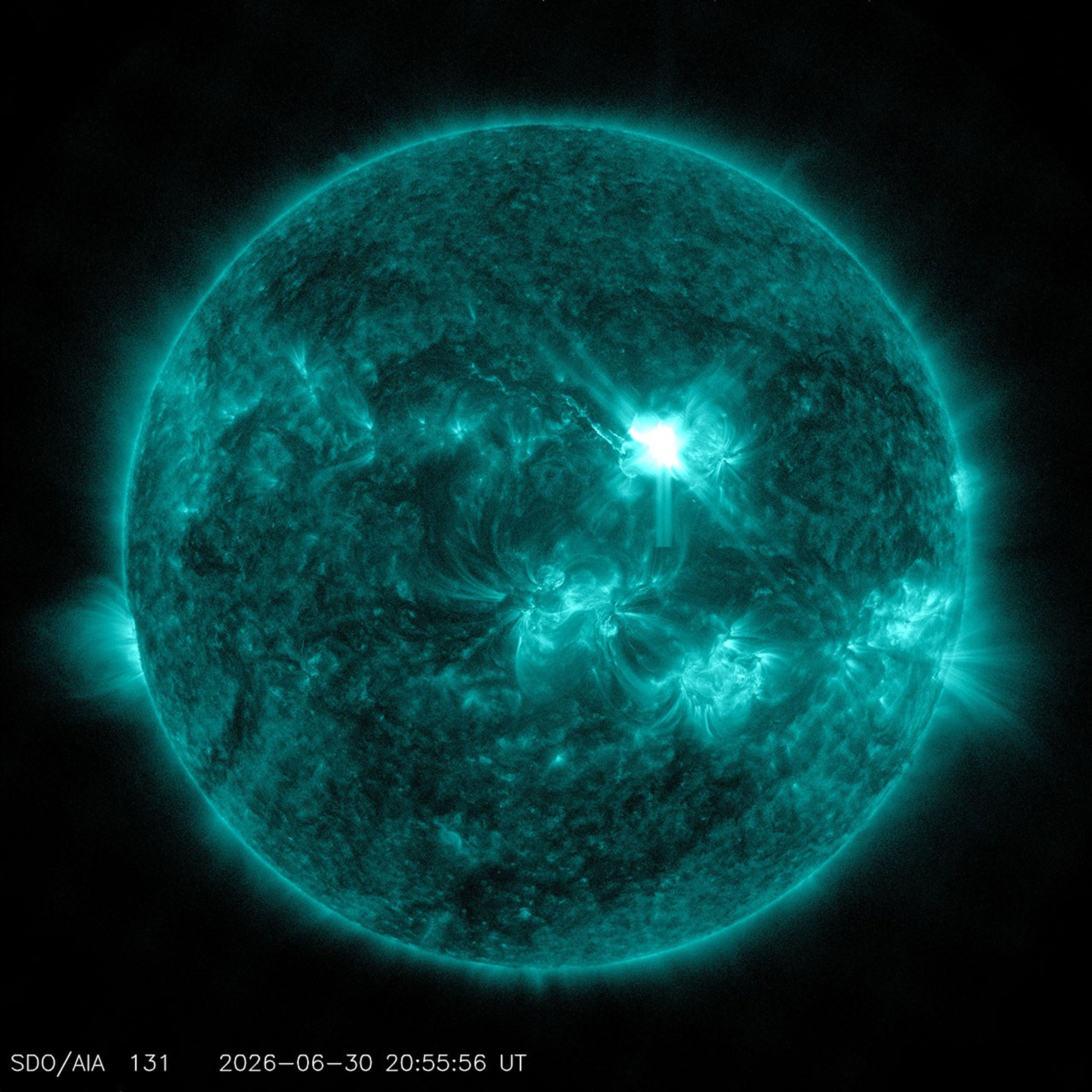
NASA’s Solar Dynamics Observatory captured this image of a solar flare — seen as the bright flash in the upper right — on June 30, 2026. The image shows a subset of extreme ultraviolet light that highlights the extremely hot material in flares and which is colorized in teal. NASA’s Goddard Space Flight Center/SDOBy bridging expertise across different scientific institutions, COFFIES, a NASA DRIVE (Diversify, Realize, Integrate, Venture, Educate) Science Center, brought together a team of researchers from New Jersey Institute of Technology (NJIT), Princeton University, and NASA’s Ames Research Center in California’s Silicon Valley. The team turned to advanced artificial intelligence architectures — which dictate how data is processed and used to produce reliable predictions or actions — to capture subtle, time-based pattern changes on the solar surface before an active region took shape. By analyzing data captured by the agency’s Solar Dynamics Observatory and using NASA Ames’ supercomputing resources, this new approach, published in the Journal of Geophysical Research: Machine Learning and Computation, looks at fluctuations in acoustic waves caused by sunspot regions when the regions form beneath the solar surface and begin the journey upward to emerge on the surface.
“We cannot directly see the magnetic structure while it is still rising through the solar interior. Instead, we must look for indirect effects — very small changes in the magnetic field and in the pattern of acoustic waves continually traveling through the Sun,” said Alexander Kosovichev, a COFFIES co-investigator at NJIT. “The developed technique identifies precursors associated with an emerging active region in slight changes of the Sun’s acoustic power — more like a slight change in rhythm within a very noisy orchestra.”
To view this video please enable JavaScript, and consider upgrading to a web browser that
supports HTML5 video
To develop current operational forecasts, the National Oceanic and Atmospheric Administration’s Space Weather Prediction Center and the United States Air Force monitor active regions that are already visible on the Sun to analyze the regions’ characteristics and estimate the probability of solar flares.
The COFFIES team aims to revolutionize this process. The AI model the team developed a specialized early detection system to handle very long sequences of data — called sliding-window transformer architecture — to use observations to find tiny reductions in the Sun’s acoustic activity and magnetic field, signals that scientists struggled to capture until now. These reductions form patterns that the AI model uses to predict active regions several hours before they become visible on the solar surface. Instead of looking at all activity on the solar surface at once, like earlier deep learning approaches have done, this new model moves a fixed-size “viewing window” across a long timeline of the Sun’s activity to focus on recent data while remembering overall patterns. This method allows forecasters the ability to predict approximate locations of emerging sunspots, rather than relying on counting already visible sunspots.
This promising AI architecture shows how deep machine learning can contribute to heliophysics — the field studying the nature of the Sun and how it influences the very nature of space and the planets that exist there. While the model is not ready for operational real-time forecasting, the team plans to validate the approach across many more known solar events to fine-tune the model.
NASA’s real-time space weather monitoring
As NASA focuses on sending humans to explore the Moon with the Artemis missions and sending the first crewed missions to Mars, monitoring and forecasting space weather is important for ensuring the safety of our astronauts and the equipment they rely on. This predictive leap from the COFFIES team could prove vital for safeguarding technology and deep-space explorers from the volatile environment of our solar system.
To view this video please enable JavaScript, and consider upgrading to a web browser that
supports HTML5 video
Teams across NASA and NOAA collaborate to transition research capabilities into actual 360-degree space weather monitoring operational tools — including NASA’s Space Radiation Analysis Group, Moon to Mars Space Weather Analysis Office (M2M SWAO), and Community Coordinated Modeling Center as well as NOAA’s Space Weather Prediction Center. Sunspot region emergence prediction capabilities, especially of the Sun’s far side, could provide new information that supplements current models used by these teams.
“The COFFIES AI model is exciting to our team because it could provide us with new capabilities towards predicting potential flaring locations ahead of time,” said Michelangelo Romano, M2M SWAO deputy director. “With this heads up, we can provide additional support to NASA missions.”
NASA’s COFFIES is one of three DRIVE Science Centers created to encourage collaborative science by establishing centers that are made of multidisciplinary teams from several institutions across the U.S. These pioneering facilities employ modelers, theoreticians, computer scientists, and observers to study important mysteries of our star and its influence, a branch of science known as heliophysics.
The COFFIES team focuses on the interconnected processes behind the Sun’s activity. Understanding the Sun’s interior and magnetic variability is key to advancing our understanding of the Sun’s 11-year activity cycle and fine-tuning space weather forecasting tools.
About the Author Desiree Apodaca NASA’s Heliophysics Missions Communications LeadShare
Details Last Updated Aug 14, 2026 Related Terms Explore More 5 min read NASA Completes Astronaut-Deployed Science Instrument for Lunar SurfaceArticle
3 days ago
4 min read Lion Nebula Roars to Life With NASA’s Webb
Article
4 days ago
4 min read NASA’s PUNCH Sharpens Solar Storm Forecasting in First Test
Article
1 week ago
Keep Exploring Discover More Topics From NASA
The Sun
Humans in Space
-Space Weather
Solar System
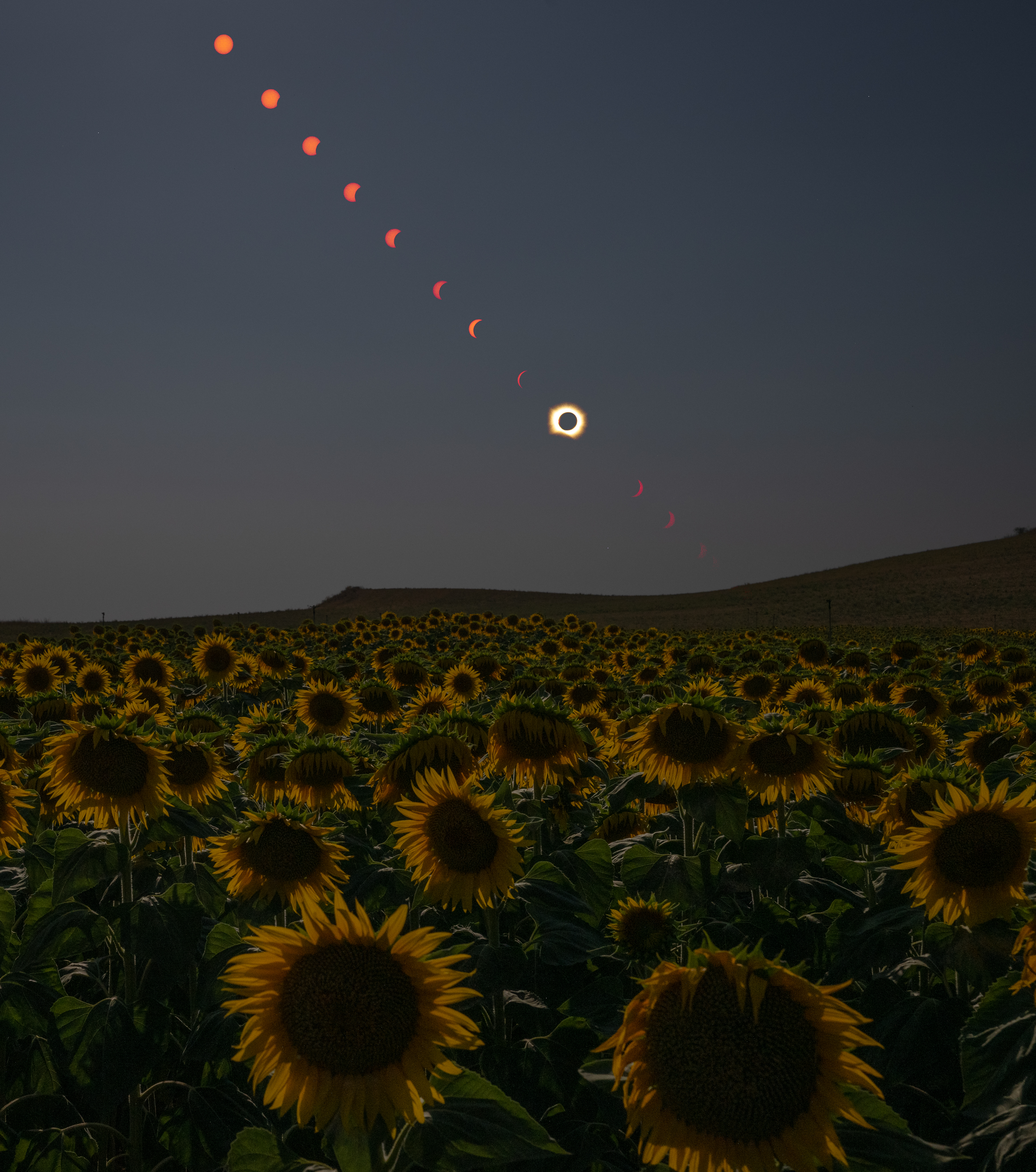
Total Solar Eclipse in Sunflower Field
This composite image shows the progression of a total solar eclipse over San Millán de los Caballeros, Spain on, Wednesday, Aug. 12, 2026.
A total solar eclipse swept across parts of Greenland, Iceland, northern Russia, the Atlantic Ocean, Spain, and a small corner of Portugal. A partial eclipse was visible in parts of the U.S., most of Canada, much of Europe, and northwest Africa.
Image credit: NASA/Bill Ingalls
APOD: 2026 August 14 – Total Solar Eclipse from Greenland
APOD
Astronomy Picture of the Day
Discover the cosmos! Each day a different image or photograph of our fascinating universe is featured, along with a brief explanation written by a professional astronomer.
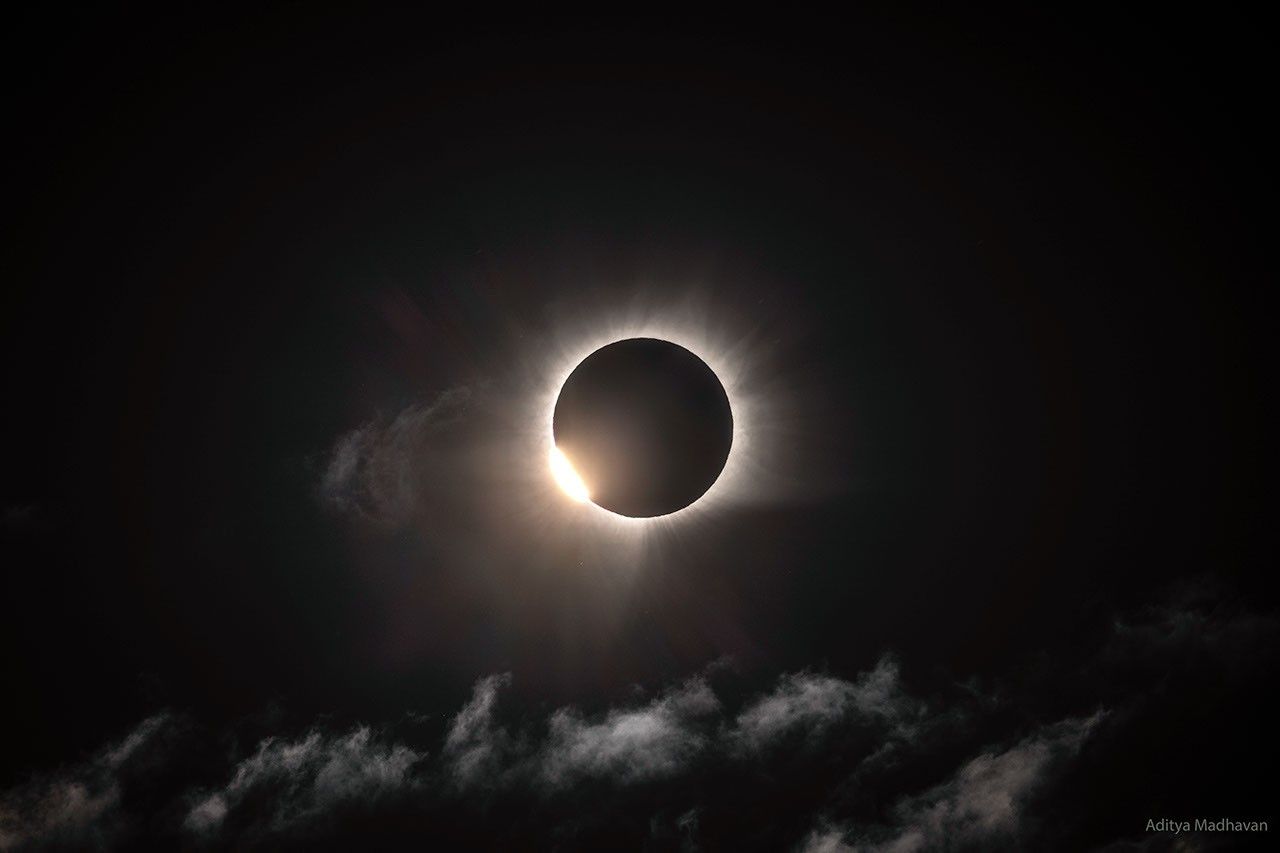
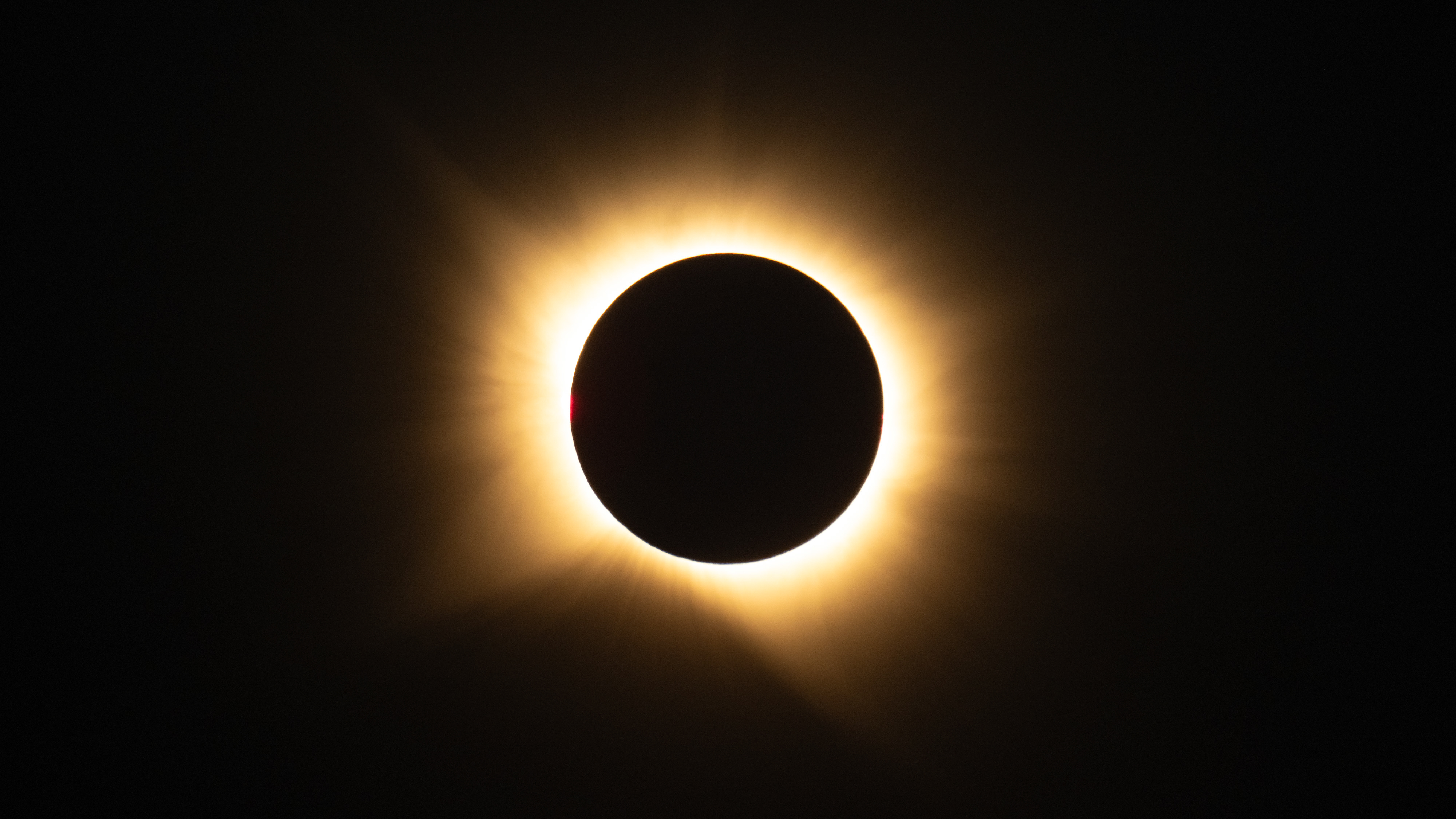
Total Solar Eclipse from GreenlandExplanation: On August 12, the Moon’s shadow reached out to touch our fair planet. Beginning in the Arctic Ocean, it swept along a narrow track that led the dark lunar umbra across parts of Greenland, Iceland, the Atlantic, Portugal, and northern Spain. And for a moment, denizens of Earth who found themselves with clear skies under the shadow of the Moon could witness a total solar eclipse. After dodging the weather by sea and making a landing along Rype Fjord on the Greenland east coast (at 71.07055N, 27.71252W), this hard-won snapshot was captured at 17:33:26 UTC. That’s near the initial reach of clearing skies along the path of totality, so the image is likely one of the first unobstructed views of the totally eclipsed Sun. Through a break in the clouds, the stunning photo also records one of this eclipse’s transient diamond rings and the magnificent solar corona emerging near the moment totality began.
More spectacular eclipse images: Solar Eclipse of 2026 August 12
Tomorrow’s picture: perhaps a Perseid
NASA Science Activation & Michigan Tech. U.
Random APOD Generator
Yesterday’s Image APOD: 2026 August 13 – Total Solar Eclipse Over Spain
Tomorrow’s Image
A Sunflower’s View of Totality
- Earth
- Earth Observatory
- Image of the Day
- EO Explorer
- Topics
- More Content
- About
NASA’s 737 Reveals New Paint
1 min read
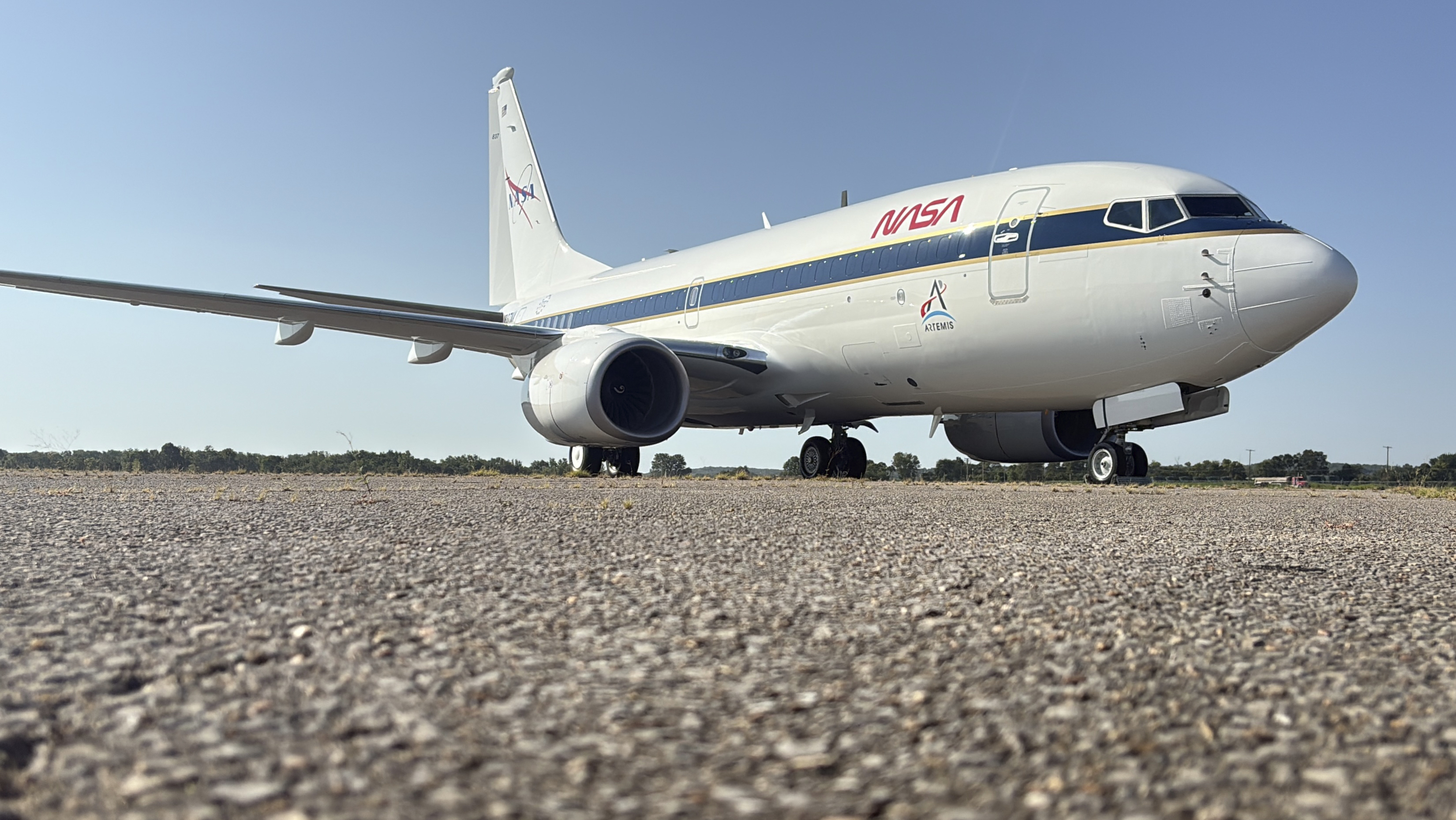
Preparations for Next Moonwalk Simulations Underway (and Underwater) A newly painted NASA 737 aircraft sits on a ramp in Oklahoma on Thursday, Aug. 13, 2026. NASA/Carla EscamillaNASA’s 737 aircraft was painted this week in Oklahoma as it progresses with modifications for use as a reduced gravity test aircraft for the agency. NASA’s Armstrong Flight Research Center in Edwards, California, took ownership of the aircraft from the United States Air Force in June.
The aircraft will perform lunar-gravity parabolic flights to validate astronaut lunar suits and associated crew systems required to support Artemis mission objectives. These flights will happen at NASA’s Johnson Space Center in Houston for reduced-gravity operations, with NASA Armstrong oversight.
In addition, the aircraft will serve as a key asset for systems‑integration research for flight testing autonomy, sensors, and other digital systems.
Share Details Last Updated Aug 13, 2026 EditorDede DiniusContactTeresa Whitingteresa.whiting@nasa.gov Related Terms Explore More 5 min read Pursuing a Dream of Working for NASA Article 4 days ago 5 min read NASA Completes Astronaut-Deployed Science Instrument for Lunar SurfaceNASA has declared “wrenches down” on the first completed payload designed for Artemis astronauts to…
Article 5 days ago 4 min read Building the Moon Base: NASA Stories at the Ion Article 5 days ago Keep Exploring Discover More Topics From NASAArmstrong Flight Research Center
Aircraft Flown at Armstrong
Aeronautics
Artemis
For West Virginia Engineer, Home Is Where the Heart Is… and NASA, Too
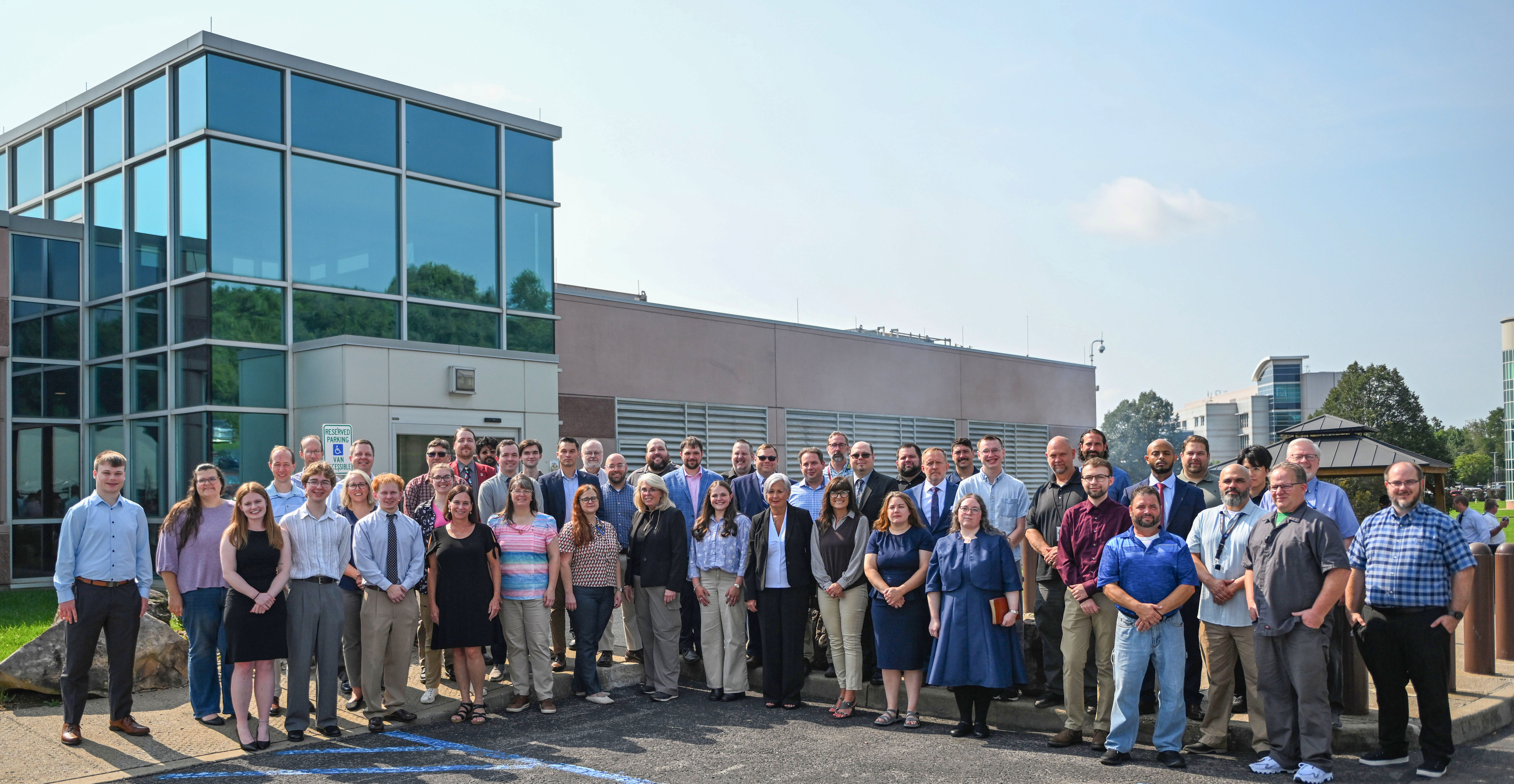
Growing up in Grafton, West Virginia, engrossed in Star Wars and all things science fiction, Fletcher Newell had an early interest in space exploration. That interest only grew when, in 2013, his fourth-grade class took a field trip to a nearby NASA facility he had not yet heard of – NASA’s Katherine Johnson Independent Verification & Validation Facility, located in Fairmont, West Virginia. Thirteen years later, Newell and 48 of his colleagues at the facility were sworn in as NASA civil servants during a ceremony on Aug. 10.
“I had always admired NASA from afar,” said Newell, who started working at IV&V as a systems engineer contractor in early 2025. “To my surprise, the agency was doing impactful work in my backyard.”
During high school, he began cultivating programming skills that would lay the foundation for his future. A self-professed computer aficionado, Newell taught himself how to code. In algebra class, he discovered that his graphing calculator was programmable, leading him to create basic scripts. He quickly moved to popular software applications, learning how they were built in order to develop his own programs. Artificial intelligence was still on the brink of becoming mainstream, but he was already asking himself, “What are the more interesting things we can teach computers to do?” As a junior in 2019, the precocious programmer merged his talents with his passion for space after being accepted into IV&V’s high school internship program.
Newell created a database for engineering methods, processing hundreds of documents to facilitate the work of his colleagues from a procedural aspect.
“Working as a high school intern really elevated my fascination for NASA,” he said.
Following graduation in 2020, Newell headed west to Stanford University in Palo Alto, California, majoring in, naturally, computer science, with a focus on AI and machine learning when both were scaling rapidly across industries and in everyday usage.
Instead of pursuing internships in the neighboring Silicon Valley – widely considered the global center for technological innovation – he returned to West Virginia for three consecutive summers, cutting his teeth at the Fairmont facility.
He began researching AI safety as engineers learned how to give spacecraft more onboard autonomy and have them learn on their own. Later, he was on a team responsible for assessing the safety of Terrain Relative Navigation, a vision-based guidance technology that could enable spacecraft to land on planetary surfaces without GPS. During his final internship, generative AI – which creates content based on user prompts – was becoming widespread, and he worked on teams exploring how to responsibly integrate it into mission assurance.
Newell also performed research about autonomous space docking at Stanford’s Center for AI Safety, resulting in two publications. Following his undergraduate education, he remained at Stanford to earn a master’s in computer science.
When it came time to enter the workforce, one organization was atop his list. A contractor opportunity opened up at IV&V, and he leapt at the chance.
“I enjoyed the work at IV&V back in high school and college,” he said. “There’s nothing better than pursuing what aligns with your interests.”
As a systems engineer, he has worked primarily on mission safety and security, identifying and resolving system defects and vulnerabilities for such spacecraft as Space Reactor-1 (SR-1) Freedom, Orion, Gateway, and the Human Landing System, all while helping guide NASA’s responsible adoption and development of AI systems.
His colleagues took notice of their junior member’s contributions, resulting in Newell being named IV&V Engineer of the Year in 2025 less than a year into the job after identifying more than 70 issues in Gateway – and later SR-1 Freedom – with clear mission impact and, as noted in his award citation, developing a reputation for clearly articulating their implications.
“During his internships and now as a full-time engineer, Fletcher has consistently demonstrated exceptional talent, curiosity, and a passion for our mission,” said Wes Deadrick, IV&V director. “He could have gone almost anywhere after Stanford. The fact that he chose to come home to build his career supporting NASA through the IV&V Program makes me incredibly proud.”
The Aug. 10 ceremony for Newell and his colleagues was part of NASA’s workforce directive to bring core, mission-critical positions into the civil service, from early-career professionals to seasoned technical experts.
“It’s an investment in NASA’s future, giving us the opportunity to bring exceptionally talented people into the civil service while strengthening long-term technical capabilities that support our nation’s most challenging missions,” said Deadrick. “At IV&V, initiatives like this help ensure we continue providing independent expertise and mission assurance that our customers depend on.”
For Newell, as he takes this next step in his professional progression as a civil servant computer engineer, he looks forward to expanding on his responsibilities, especially to help NASA return to the Moon. He is currently helping identify safety and security issues, including ones that could impact crew safety and lead to the loss of spacecraft control, related to the agency’s lunar endeavors.
“At IV&V, teams are ensuring every major lunar vehicle and system will be ready to safely embark on their missions, not just for flying around the Moon, but also for putting American boots on the surface and eventually establishing and working on a Moon Base,” he said.
More than a decade after taking that field trip and now working on some of NASA’s high-priority missions, Newell readily admits he didn’t always envision staying in West Virginia.
“It was a little strange coming back, but I was continually getting to do amazing things at an amazing organization in a place I already know,” Newell said. “And that’s really cool.”
Perseids Meteor Shower
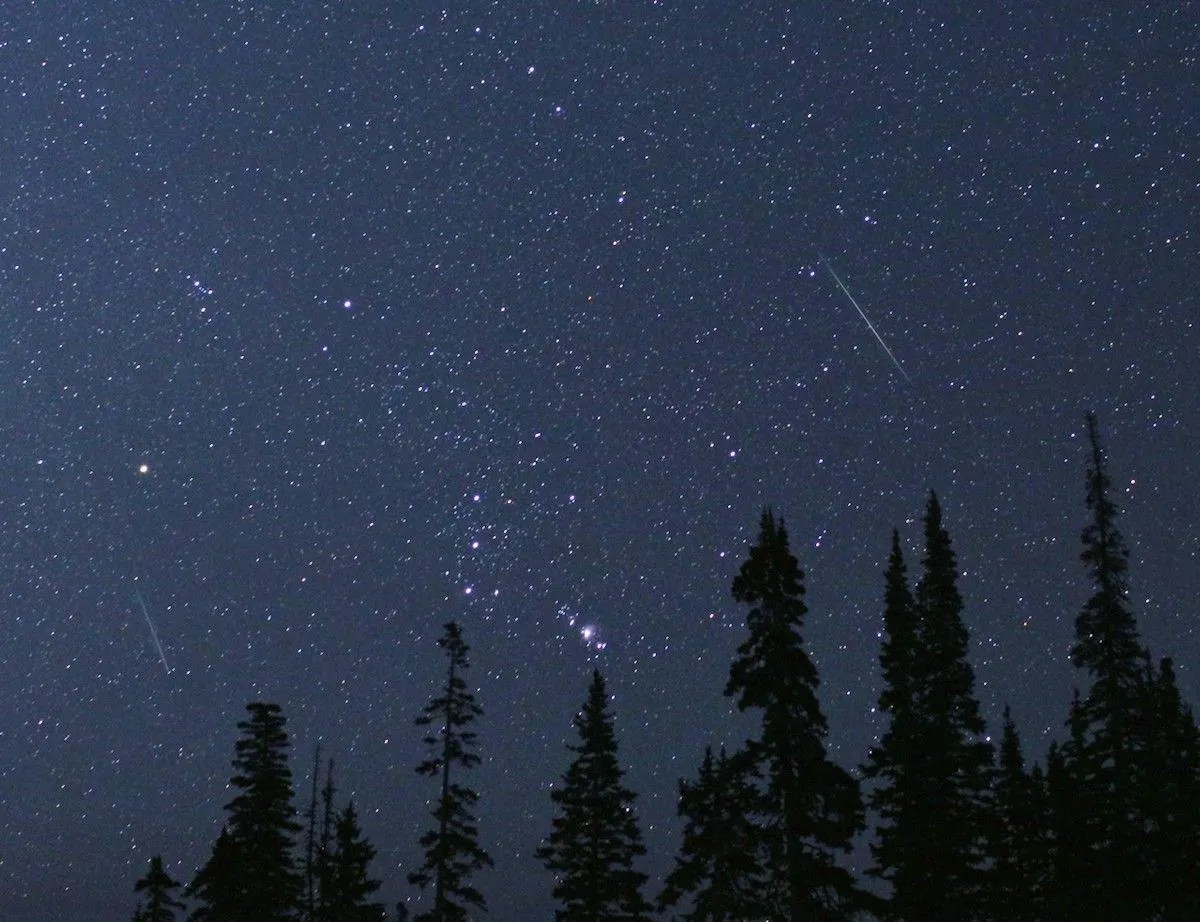
The constellation Orion is framed by two Perseid meteors in this photo from Aug. 12, 2018, in Cedar Breaks National Monument, Utah.
The Perseids – one of the year’s brightest and most popular meteor showers – has been ramping up since early July and will sparkle in the skies through the end of August. The shower reached its peak on the night of Aug. 12 into the early morning of Aug. 13.
Rewatch the Aug. 13 meteor shower.
Image credit: NASA/Bill Dunford
APOD: 2026 August 13 – Total Solar Eclipse Over Spain
APOD
Astronomy Picture of the Day
Discover the cosmos! Each day a different image or photograph of our fascinating universe is featured, along with a brief explanation written by a professional astronomer.
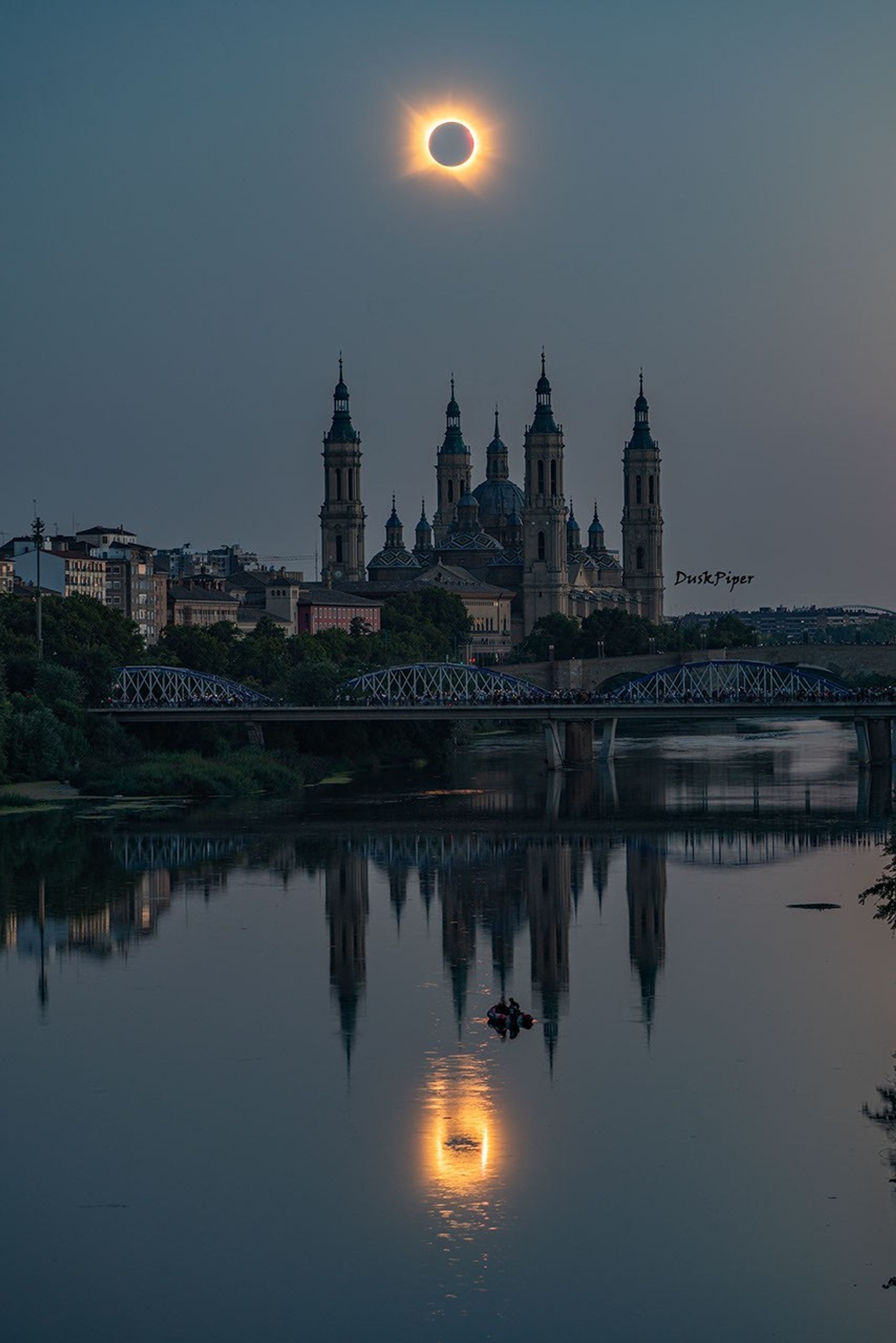
Total Solar Eclipse Over SpainExplanation: On August 12th, 2026, the Moon totally eclipsed the Sun and cast its shadow across Siberia, Greenland, Iceland, Spain, and Portugal. Today’s image features two total solar eclipses viewed from Zaragoza, Spain, one over the Cathedral-Basilica of Our Lady of the Pillar and the other reflecting in the Ebro River. For a few moments, Spain saw its first major total solar eclipse since 1905. Those witnessing totality may experience a chill in the air, the quieting of birds, the confused chirps of insects, and the shared awe of many. It’s the corona’s time to shine as the Sun’s bright disk is blocked by the Moon. Among other reasons to study eclipses, they help scientists understand why the corona is millions of degrees hotter than the Sun’s surface. Enthusiastic citizens can contribute to these studies by recording how wildlife responds, imaging the corona, and monitoring air temperature and clouds.
More spectacular eclipse images: Solar Eclipse of 2026 August 12
Tomorrow’s picture: a mystery
NASA Science Activation & Michigan Tech. U.
Random APOD Generator
Yesterday’s Image APOD: 2026 August 12 – Perseids over a Little Planet
Tomorrow’s Image
Cascade Volcanoes Shrouded in Smoke
- Earth
- Earth Observatory
- Image of the Day
- EO Explorer
- Topics
- More Content
- About
NASA Data Helps Commercial Space Plan Living Off Our Moon
3 min read
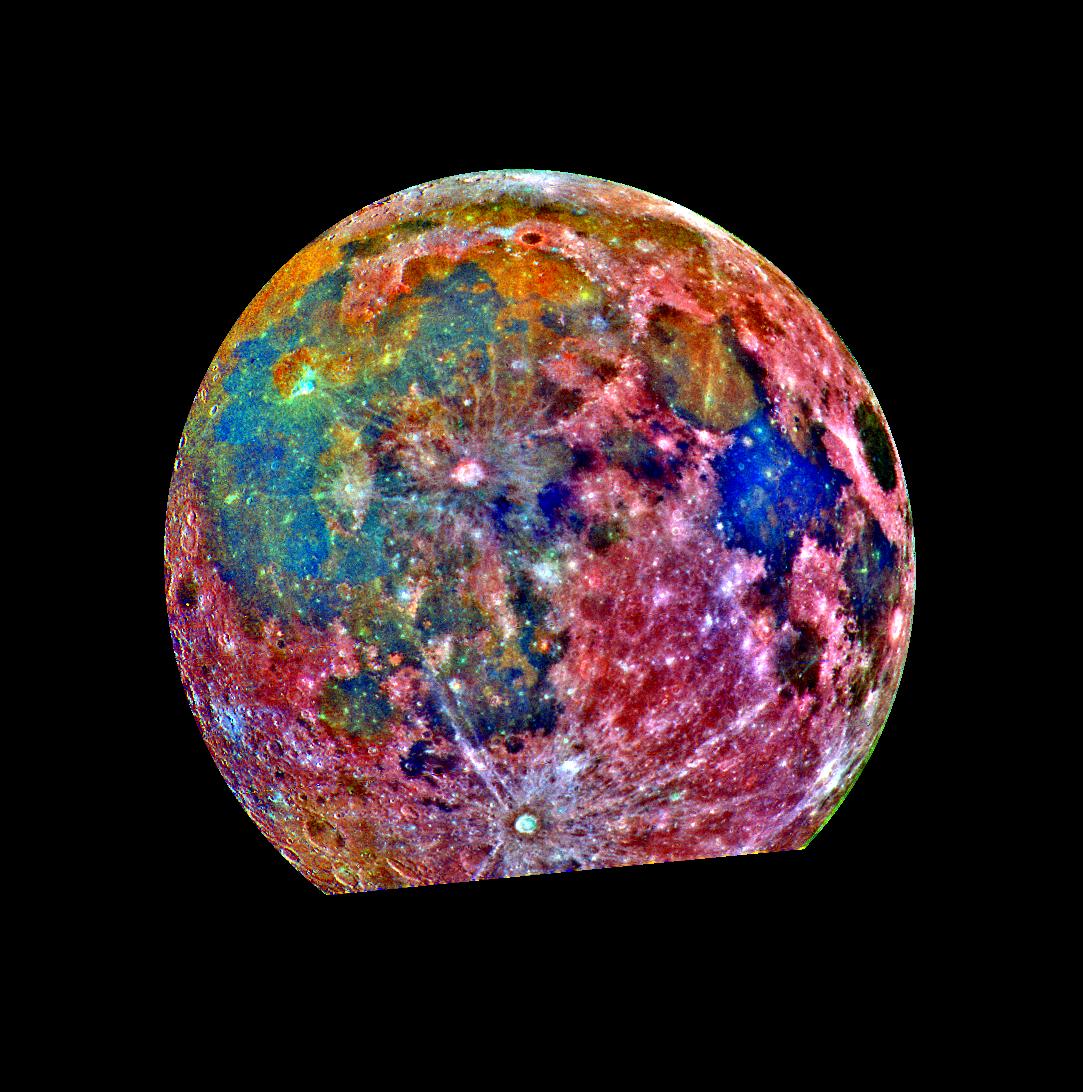
Preparations for Next Moonwalk Simulations Underway (and Underwater) NASA has been taking pictures of the Moon for decades, collecting a wealth of data. This false-color picture is a composite of 15 images of the Moon taken through three color filters on NASA’s Galileo solid-state imaging system.Credit: NASAThe barren lunar landscape has some important resources, such as water and minerals like iron and titanium, but extracting and processing them will require special equipment. Where those resources can be found will dictate where to land and how to mine them. To help with that, Lunar Station Corp. is using a wealth of NASA data in multiple computer models.
“With 60 years of lunar data available to us, we help our clients understand the environmental factors for any given location on the Moon,” said Blair DeWitt, CEO of Lunar Station. Combining disparate data from different sensors used by NASA and other space agencies is a critical first step. One NASA resource the Cambridge, Massachusetts-based company used to build terrain maps is the Ames Stereo Pipeline. The open-source code automatically processes images captured from satellites, robotic rovers, historical images, and more to create a 3D model revealing features such as rock placement and elevation.
But the availability of in-situ lunar water resources at any location is largely unknown, according to Gerry Sanders, in-situ resource utilization system capability lead at NASA’s Johnson Space Center in Houston. To begin to fill that gap, the Lunar Crater Observation and Sensing Satellite was designed to crash its uppers stage into the Moon’s South Pole in 2009. The examination of the resulting plume revealed the presence of water ice.
Lunar Station is building on that work and more to help commercial space companies with mission planning, which includes scientific research for mining operations. The MoonHacker program uses proprietary geospatial analytics platform and advanced algorithms to fuse all the lunar data in NASA’s Planetary Data System to help identify indicators for shallow pits of lunar water.
“We can find sites for landing pads, for cultivating the best paths for roving, and inform our clients about communications. If you can’t see Earth at a given location like in the polar regions or the far side of the Moon, you have to come up with a relay strategy,” said DeWitt. “We can do this in part thanks to NASA data.”
In MoonHacker’s Radiation Simulator, an electronic version of a company’s rover or satellite, called a digital twin, can be subjected to the radiation en route or at the mission site to determine the protection required.
These innovations exemplify the purpose of NASA’s Technology Transfer program within the Research and Technology Mission Directorate, which uses space-based solutions to improve life on Earth. For 50 years, NASA has documented the everyday benefits of space technology through the agency’s Spinoff publication.
Read More Share Details Last Updated Aug 12, 2026 Related Terms Explore More 2 min read NASA Equips Astronauts, Industry with Robotic Intelligence Article 2 months ago 3 min read NASA-Supported Space Tech Advances Earthly Construction Article 3 months ago 4 min read Hello Universe: NASA’s Next-Gen Space Processor Undergoes Testing Article 3 months ago Keep Exploring Discover Related TopicsTechnology Transfer & Spinoffs
Artemis
Planetary Data Science OverviewWhat is the Planetary Data Ecosystem? Planetary Science Division Information and Data Policy (PDF) NASA defined the Planetary Data Ecosystem…
LCROSSWhat was LCROSS? NASA’s Lunar Crater Observation and Sensing Satellite (LCROSS) was launched with the Lunar Reconnaissance Orbiter to determine…
2026 Total Solar Eclipse in Spain
A total solar eclipse is seen from San Millán de los Caballeros, Spain, Wednesday, Aug. 12, 2026. A total solar eclipse – the Moon passing between the Sun and Earth, completely blocking the face of the Sun – swept across parts of Greenland, Iceland, northern Russia, the Atlantic Ocean, Spain, and a small corner of Portugal. A partial eclipse was visible in parts of the U.S., most of Canada, much of Europe, and northwest Africa.
Relive the eclipse on NASA’s YouTube channel.
Image credit: NASA/Bill Ingalls
NASA Upgrades Vertical Motion Simulator for Modern Mission Needs
2 min read
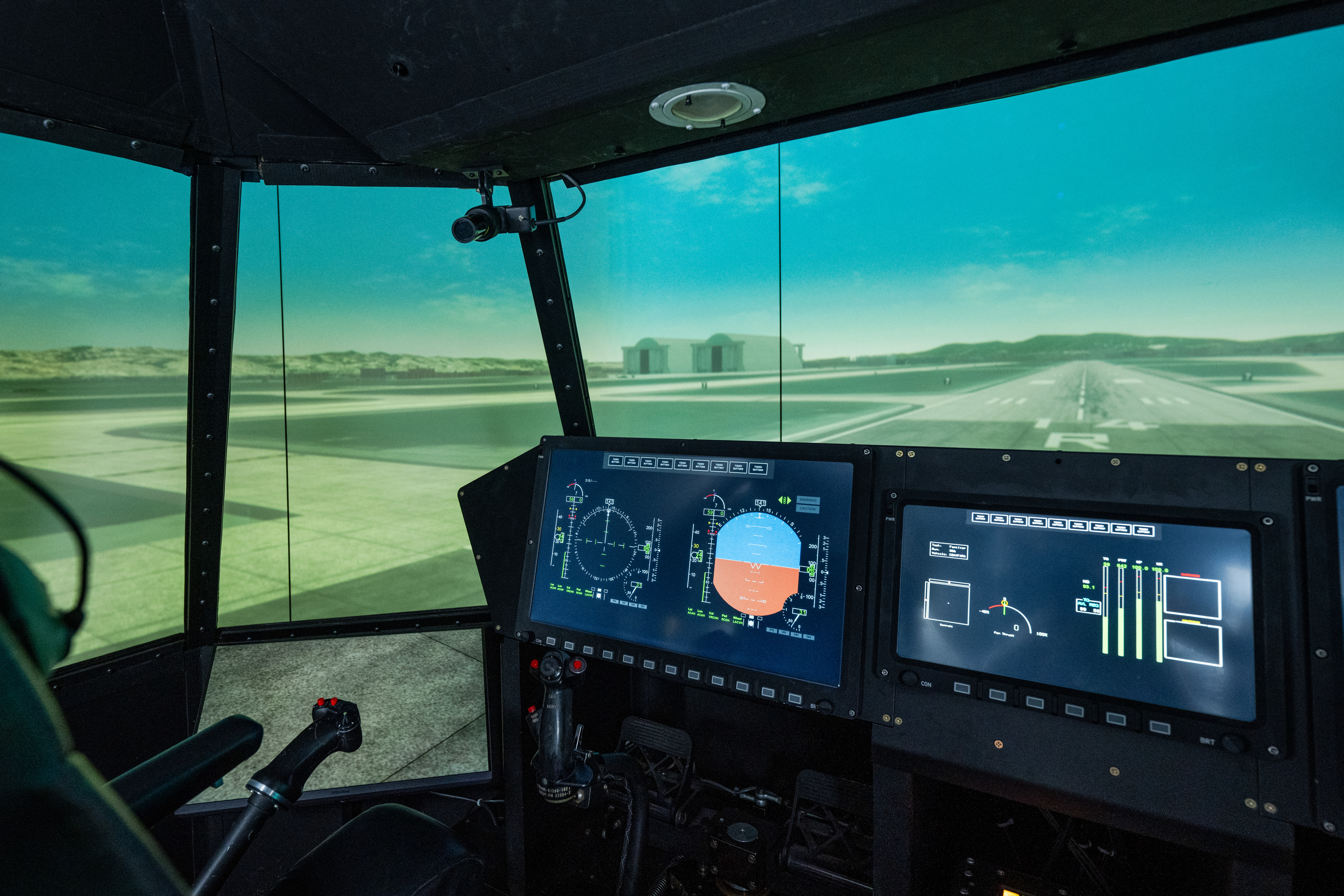
Preparations for Next Moonwalk Simulations Underway (and Underwater) The Vertical Motion Simulator at NASA’s Ames Research Center in California’s Silicon Valley is capable of vertical and horizontal motion to simulate a range of flight experiences, such as lunar landers, helicopters, and commercial aircraft.NASA/Jesse CarpenterImagine stepping into a machine that can make you feel like you’re flying a spacecraft, piloting a next generation air taxi, or landing on the Moon, all without leaving the ground. NASA’s Vertical Motion Simulator, the largest of its kind in the world, does exactly that. And now, with new upgrades, it’s more powerful and realistic than before.
The Vertical Motion Simulator, located at NASA’s Ames Research Center in California’s Silicon Valley, has shaped the future of aviation and spaceflight since 1979. It allows pilots and researchers to experience realistic aircraft motion due to its ability to travel 60 feet vertically and 40 feet horizontally, simulating vehicles ranging from helicopters to spacecraft with high accuracy.
New improvements are making the simulator even more powerful. One of the biggest changes is the switch from analog systems to modern digital technology. This upgrade includes a dome surrounding the simulator’s cockpit with advanced 4K projectors that create visuals with nearly 20/20 clarity, giving pilots clearer, sharper images and a larger field of view of the world outside the cockpit.
The upgraded cab of the Vertical Motion Simulator at NASA’s Ames Research Center in California’s Silicon Valley provides researchers with near-20/20 visual clarity, providing clearer, sharper images.NASA/Brandon Torres-Navarrete“The new dome configuration and improved systems can support far more aggressive mission tasks while giving pilots and crews a more realistic environment to work in,” said Diana Acosta, aerospace simulation research and development branch chief at NASA Ames. “It strengthens how teams coordinate, react, and manage challenging scenarios, exactly the kind of preparation we need for the missions coming next.”
The system also can automatically line up and color‑match images to integrate them into a simulated background, a process that used to take hours, or even days, to do by hand.
In the past, changing simulation configurations from lunar lander to air taxi required swapping out the cab, a large, heavy structure that was time‑consuming and complex to move. Instead of replacing an entire cab, teams can use lighter, removable inserts that include only the controls, seats, and panels needed to stand in for a specific vehicle. The inserts drastically reduce physical labor and cut the time needed to configure a simulation in half.
The upgrades to the Vertical Motion Simulator will enable tests of next-generation aircraft and spacecraft before they ever leave the ground, bringing us closer to safer skies, more efficient air travel, and successful human landings on the Moon and Mars.
Share Details Last Updated Aug 12, 2026 Related Terms Explore More 4 min read Building the Moon Base: NASA Stories at the Ion Article 2 days ago 3 min read NASA’s Lunar Development and Test Facility Prepares Artemis Hardware for Moon Article 6 days ago 2 min read Ames Science Stars of the Month – August 2026 Article 1 week ago Keep Exploring Discover More Topics From NASAAmes Research Center
Aeronautics at Ames
Vertical Motion Simulator
Aeronautics Research Mission Directorate
NASA Astronaut Mike Fincke Leaves NASA, Career Includes 4 Spaceflights
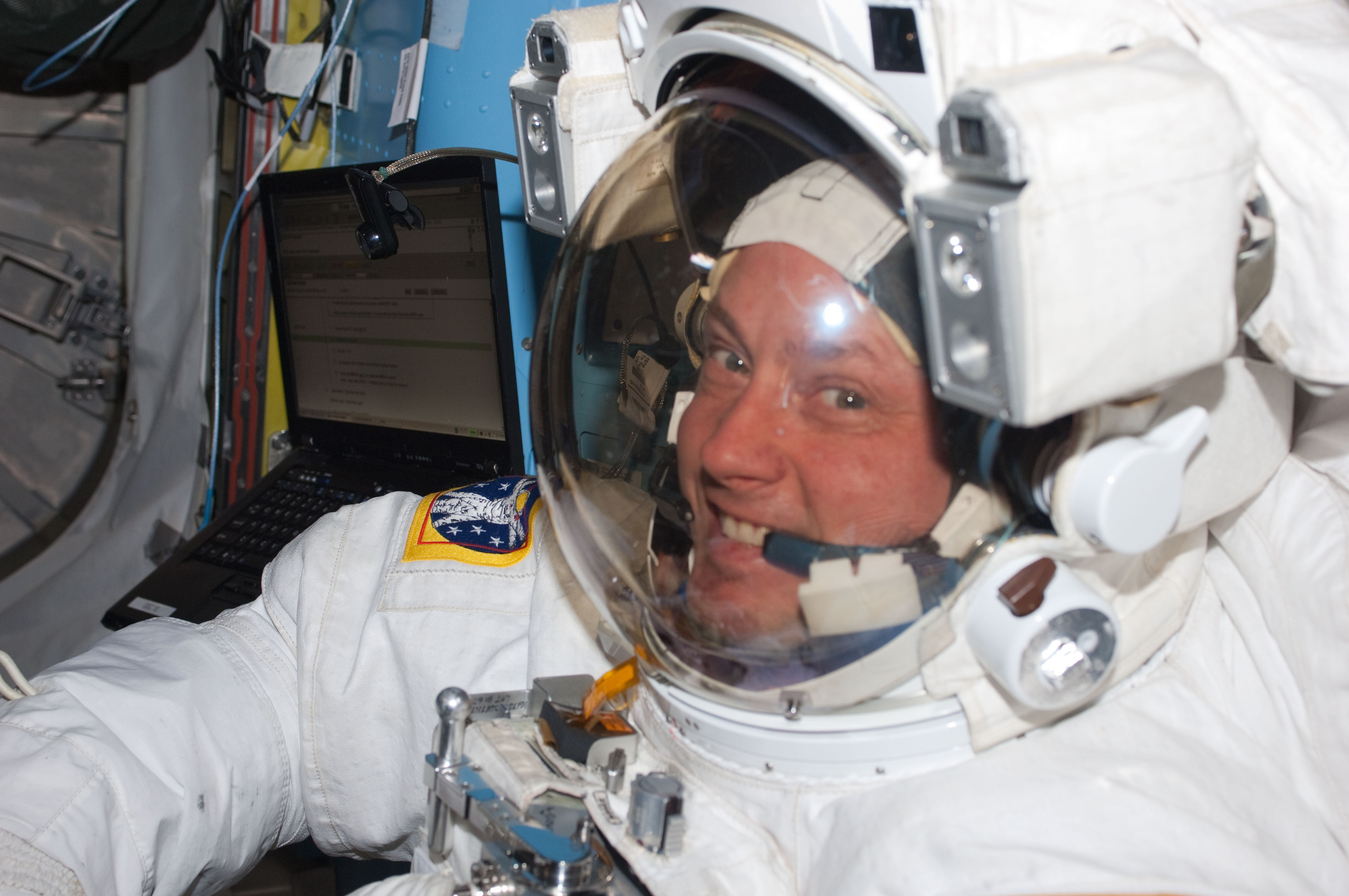
NASA astronaut Mike Fincke is departing the agency on Wednesday after 30 years of service. Throughout his career, he flew four missions, spent 549 days in space, and completed nine spacewalks in support of the International Space Station.
“Few people have had the opportunity to shape as many chapters of NASA’s history as Mike Fincke,” said NASA Administrator Jared Isaacman. “Over a remarkable career, Mike served our nation as a pilot, engineer, astronaut, and mentor. From long-duration missions aboard the International Space Station to helping prepare the Artemis generation, his contributions have helped position NASA for what comes next. The success we’re building on today is possible because of people like Mike, who dedicated their careers to moving our space program forward and preparing the next generation to carry the mission even further. I’d like to congratulate Mike on an incredible career and thank him for his decades of service to NASA, our nation, and the countless people who had the opportunity to learn from and fly alongside him.”
He ranks fourth among NASA astronauts in accumulated time in space, and his spacewalks total 48 hours and 37 minutes. Most recently, Fincke piloted NASA’s SpaceX Crew‑11 mission, which launched in August 2025 and returned in January. During the mission, he served as a flight engineer for International Space Station Expedition 73 and commander of Expedition 74.
Fincke joined NASA’s 16th astronaut class in 1996 and first flew to space in 2004 aboard Soyuz TMA‑4 in support of the space station’s Expedition 9. Serving as a science officer and flight engineer, he helped maintain station systems and performed four spacewalks. He returned to space in 2008 on Soyuz TMA‑13 as commander of Expedition 18, preparing the space station for its transition to six‑person crews at the time and completing two more spacewalks.
In 2011, Fincke flew on STS‑134, the final flight of space shuttle Endeavour. As mission specialist and robotic arm operator, he completed three spacewalks and helped deliver and install the Alpha Magnetic Spectrometer.
“Mike’s remarkable career reflects three decades of dedication to NASA’s mission and the advancement of human spaceflight,” said Vanessa Wyche, director of NASA’s Johnson Space Center in Houston. “From his time aboard the International Space Station to his commitment to mentoring the next generation, Mike has made an immense impact across our agency. His legacy of service, mentorship, and dedication to exploration will continue to inspire the generations to come.”
Throughout his career, Fincke bridged spacecraft development, flight testing, and mission operations. Early in the International Space Station Program, he helped test and integrate several of the station’s initial modules before launch. His flight experience spanned multiple generations of human spacecraft, including two missions aboard Soyuz, one aboard the space shuttle, and later piloting the SpaceX Dragon.
Fincke was a foundational contributor to NASA’s Commercial Crew Program. As chief of the Astronaut Office’s Commercial Crew Branch, he worked to ensure astronaut needs, crew safety, and human spaceflight experience informed development of the nation’s next generation of crewed spacecraft. He spent five years supporting Boeing’s Crew Flight Test program training as a crew member and backup pilot, contributing to flight software, systems integration, integrated testing, and spacecraft interfaces.
Fincke also supported station operations from the ground as a crew test support team member in Russia, a capsule communicator, or capcom, and crew procedures team lead. He helped translate complex engineering and operational requirements into clear instructions for crews working in orbit. His continuity across development, integration, mission support, and long‑duration flight gave him an end‑to‑end perspective on space station assembly and operation.
“Mike approached every assignment with experience, humility, and an unwavering focus on the mission,” said Scott Tingle, chief of the Astronaut Office at NASA Johnson. “Whether flying aboard the station, supporting crews from the ground, or helping shape the spacecraft that future crews will rely on, he consistently strengthened our team. His legacy is woven into the way we fly today.”
A native of Emsworth, Pennsylvania, Fincke holds bachelor’s degrees in aeronautics and astronautics and in Earth, atmospheric, and planetary sciences from the Massachusetts Institute of Technology, where he also studied in the Soviet Union through an exchange program with the Moscow Aviation Institute. He earned master’s degrees in aeronautics and astronautics from Stanford University and in planetary geology from the University of Houston, Clear Lake.
Fincke is a retired U.S. Air Force colonel and distinguished graduate of the U.S. Air Force Test Pilot School. He served as a space systems engineer and flight test engineer at Edwards and Eglin Air Force Bases and later as the U.S. flight test liaison to the Japanese‑U.S. XF‑2 fighter program at Gifu Air Base in Japan. He accumulated more than 2,000 flight hours in more than 30 aircraft types.
“After exactly 30 years, I am departing NASA, but I remain deeply committed to the work of exploration.” Fincke said. “NASA gave me the extraordinary privilege of serving alongside remarkable people, flying and helping develop spacecraft, and contributing to the International Space Station from its earliest days through command in orbit. I am profoundly grateful to my crewmates, the teams on the ground, our international partners, and the families who make this work possible. I am excited to carry those lessons forward and help prepare the next generation of engineers, explorers, and leaders. Together, we will return humanity to the Moon, travel to Mars, journey outward to the planets and moons beyond Earth, and someday reach for the stars – all while caring for Earth, the most beautiful planet in our solar system.”
To learn more about NASA’s astronauts and space exploration, visit:
https://www.nasa.gov/astronauts
-end-
Jimi Russell
Headquarters, Washington
202-358-1100
james.j.russell@nasa.gov
Anna Schneider
Johnson Space Center, Houston
281-483-5111
anna.c.schneider@nasa.gov
Pursuing a Dream of Working for NASA
As a young girl raised in Worcester, Massachusetts, Lindsey Waitt dreamed of working for NASA. Her dream is now a reality as she embarks on her role as a NASA test project engineer with the Artemis launch team – an integral part of the agency’s missions that will enable humans to return to the surface of the Moon after launching from NASA’s Kennedy Space Center in Florida.
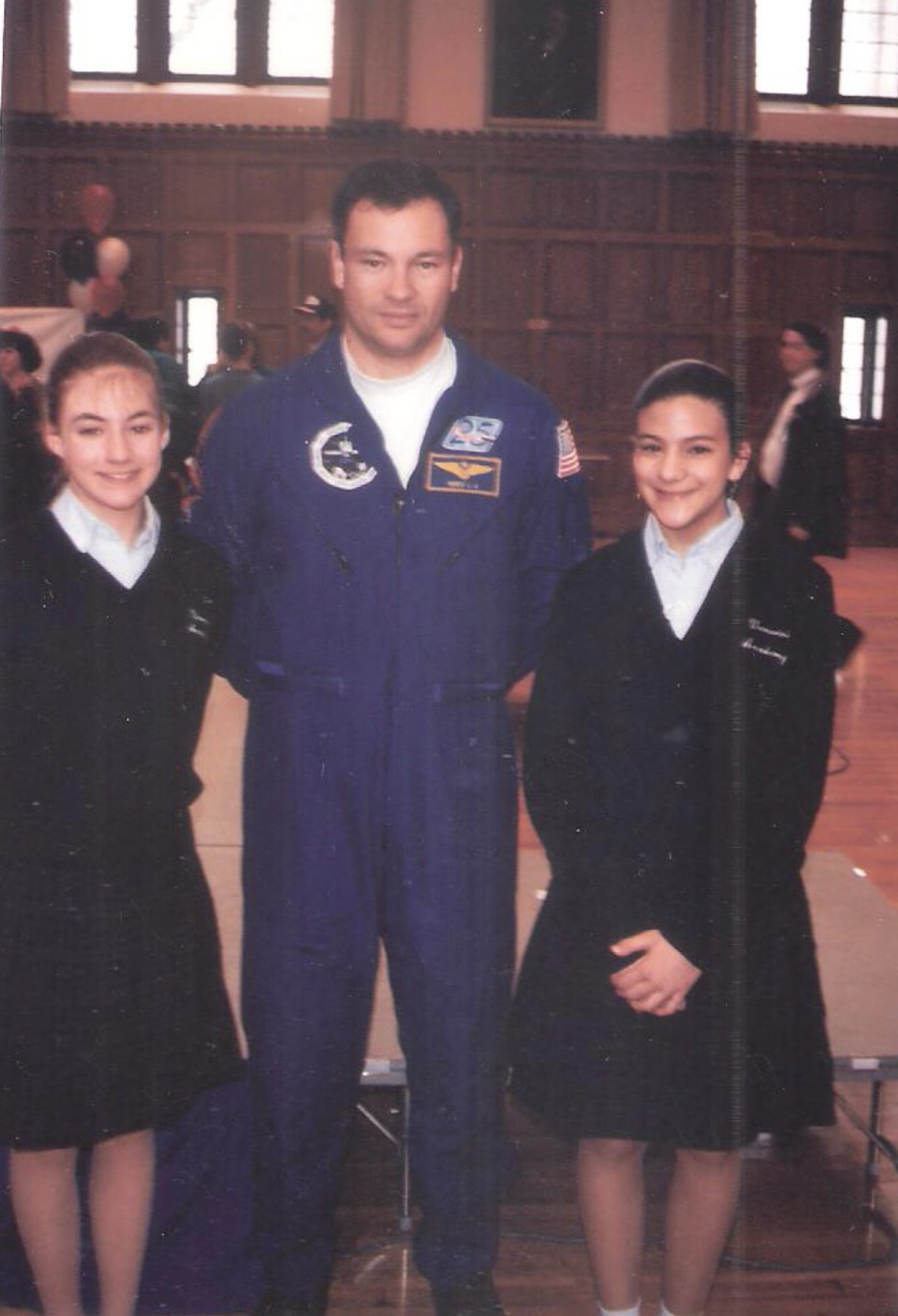
When she was in middle school in the late 1990’s, Waitt recalls meeting NASA Space Shuttle astronauts Michael Lopez-Alegria and Albert Sacco, Jr., a former professor at the college, during a visit to Worcester Polytechnic Institute (WPI) in Worcester, Massachusetts. She was inspired while listening to them recount their spaceflight experiences including an experiment on conducting research for growing cells on the Moon. She even posed for a picture and got their autographs. Little did young Waitt know, these would not be the only astronauts she would meet.
Lindsey Waitt (far right), poses for a photograph with NASA astronaut Michael Lopez-Alegria and her cousin at Worcester Polytechnic Institute in Massachusetts.Photo credit: NASA/Lindsey WaittHer passion for learning about all things space and engineering led Waitt back to WPI where she studied engineering, absorbing different disciplines. She received her Bachelor of Science degree in Mechanical Engineering with a concentration in aerospace engineering and she left the school fueled by her passion to be a part of America’s space agency.
After graduation, she worked as a systems engineer on radar flight test missions for a defense contractor, and while excelling in her role, she realized it wasn’t the aerospace engineering field that she desired.
“It was an exciting program, and it was meaningful to be a part of a project focused on protecting the country from enemy attacks. But it wasn’t space,” Waitt said.
As the wife of a now retired sergeant first class officer in the United States Army, Waitt and her family traveled around the world during her husband’s enlistment, and she continued to follow NASA missions from around the globe. While Waitt was dedicated to raising her three young boys, she simultaneously pursued her master’s degree in Space Operations from the University of Colorado in Colorado Springs. Twelve years later, she made the courageous decision to fully return to her first career passion – working for NASA – despite nay-sayers suggesting too much time had passed for her to return to the industry.
The sky is not the limit, it's wide open now. The universe is the limit.Lindsey waitt
Test project engineer
Waitt vividly remembers watching NASA astronauts Doug Hurley and Bob Behnken soar skyward during NASA’s first commercial crew mission to the International Space Station in 2020. Watching alongside her family, she even set up a rocket-shaped tent, and she and her children pretended to blast off from their yard as they cheered excitedly as the astronauts lifted off from what would be her future place of work.
After moving to Florida in 2022 to work at a small satellite company in Cape Canaveral, as a systems engineer and program manager, she continued to search for opportunities to work for the agency. Waitt vividly remembers watching Artemis I with her family. They had just moved to the Sunshine State, and she woke up in the early hours of the morning to watch the historic launch, having no idea she would be working on the next Artemis mission – the first time NASA sent humans around the Moon in over 50 years!
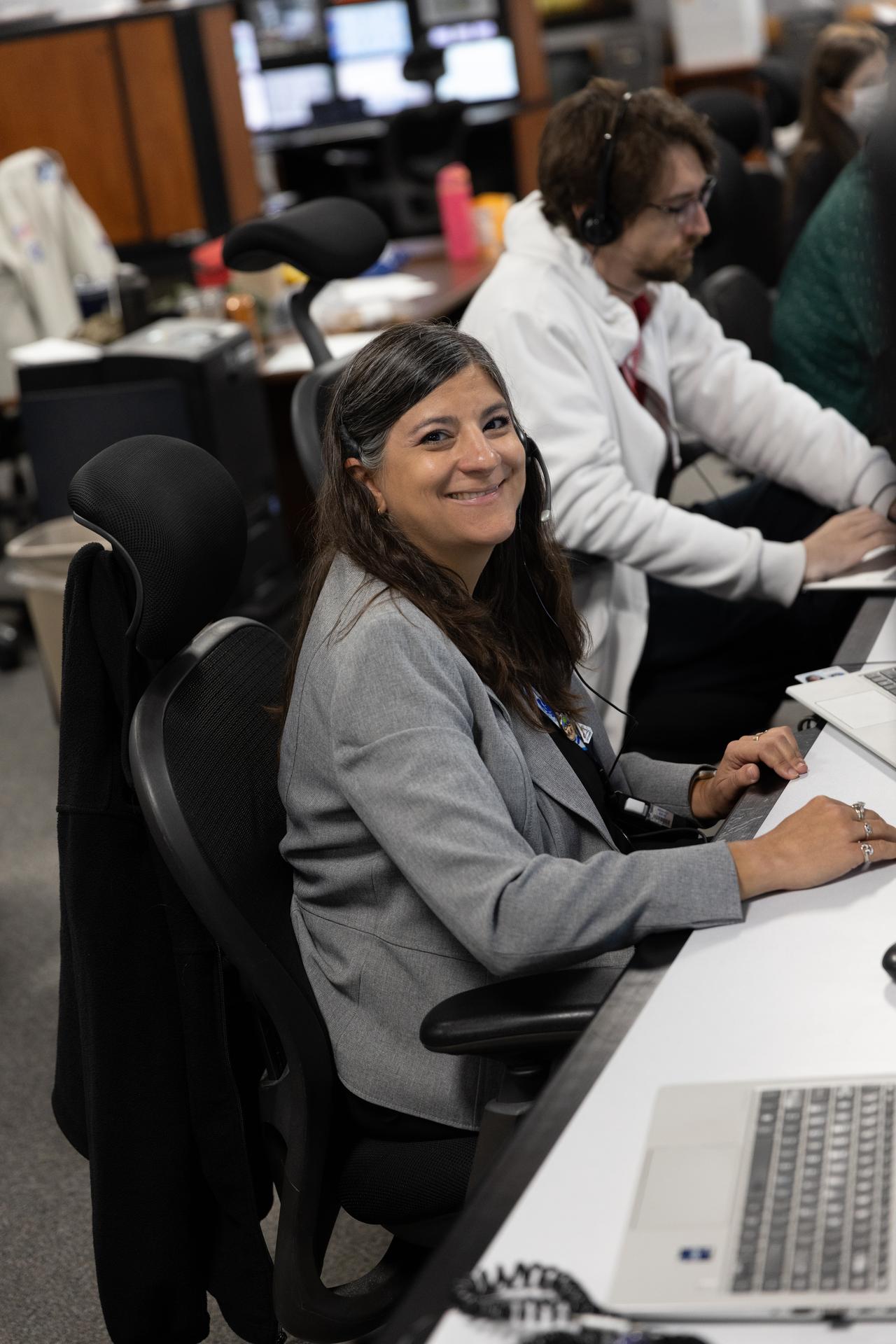
In 2024, Waitt began her career at Kennedy working for a contractor as a test project engineer during the Artemis II launch. As “problem-solvers,” test project engineers are the main hub of experts for technical tests and launch activities and they work to coordinate resolutions across the different subsystems that may arise during the dynamic operations associated with a rocket launch. Leading up to the Artemis II launch in April, Waitt quickly became certified to sit on the launch console during the dynamic pre and post-launch operations for the massive SLS (Space Launch System) rocket and Orion spacecraft and she eagerly watched from outside Kennedy’s Launch Control Center as the four crew members lifted off the launch pad towards the Moon.
When NASA announced its insourcing initiative earlier this year, Waitt seized the opportunity to fully realize her dream. She applied for a position and is now a NASA civil servant supporting the Artemis launch team as a test project engineer for NASA– a core position for the agency’s launch team. With Artemis III in front of her, Lindsey will see the buildup of launch operations from start to finish.
As the only female of the 14 test project engineers who work on the Artemis launch team, Waitt said she was fully embraced by the colleagues she stands beside.
“Everybody’s very open and welcoming,” Waitt said. “I’ve worked on teams before, but it’s never been like this. Everyone is so passionate about the mission, and everybody is working together to get things done quickly, but safely – that’s always first priority. We Are Going.”
This opportunity didn’t happen by chance. Waitt is embracing life’s journey and focused on making her dream come true, one launch at a time. “The sky is not the limit – it’s wide open now,” Waitt said. “The universe is the limit.”
APOD: 2026 August 12 – Perseids over a Little Planet
APOD
Astronomy Picture of the Day
Discover the cosmos! Each day a different image or photograph of our fascinating universe is featured, along with a brief explanation written by a professional astronomer.
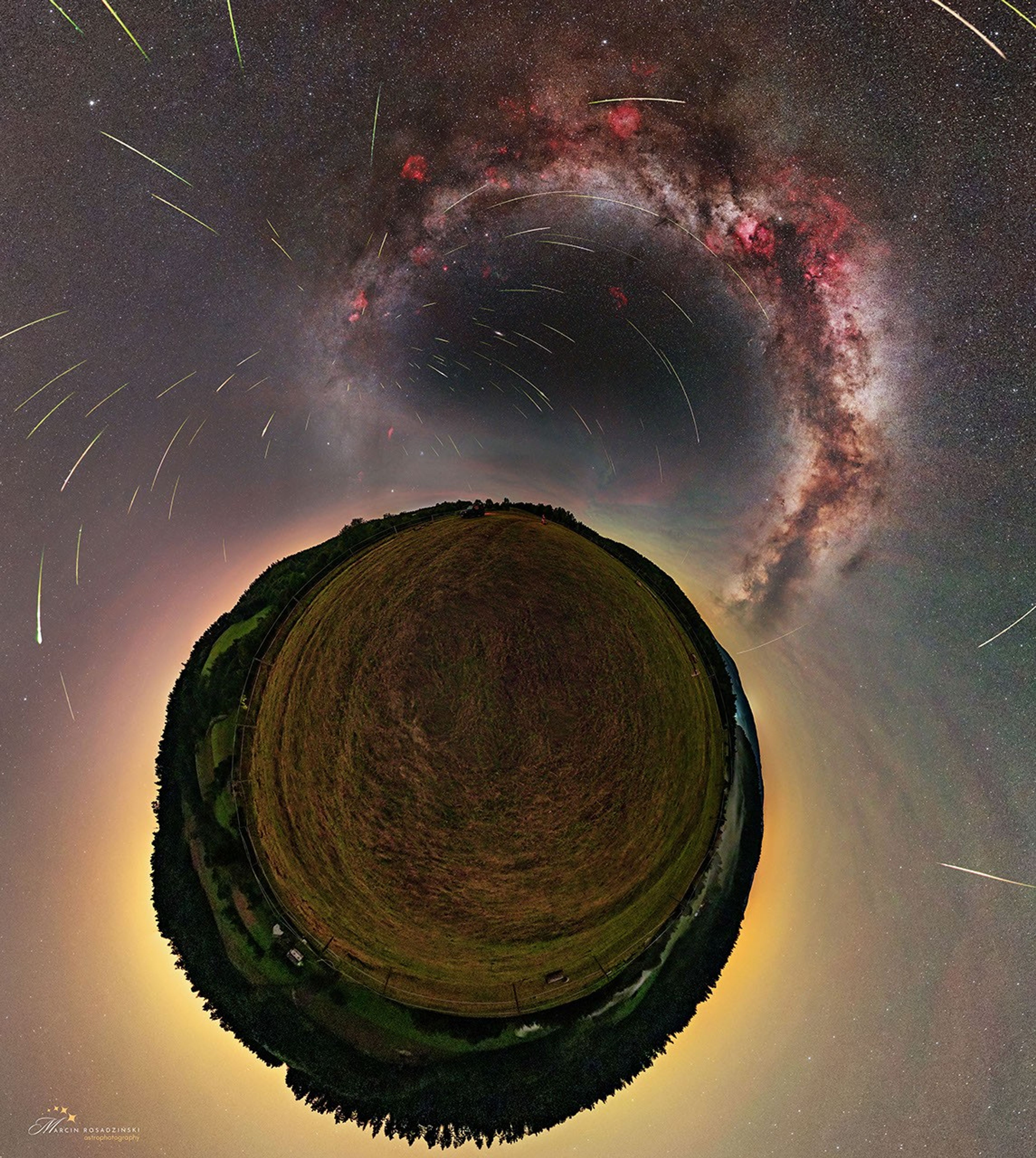
Perseids over a Little PlanetExplanation: It looks like a view from the Little Prince‘s planet. The featured image is a throwback to the 2024 Perseid meteor shower, surrounded in this projection by the Bieszczady Mountains in Poland. Visible in the sky is the arch of the Milky Way, along with several nebulas in red and over a hundred meteors pointing to the radiant. The Perseids are easily visible and quite popular in the Northern Hemisphere summer. (Watching meteor showers in the winter is less convenient for a good reason). This year they are expected to offer an even more dazzling spectacle than usual, because the peak coincides with a new moon. The 2026 Perseid meteor shower will peak tonight with as many as 50-100 meteors per hour, when the Earth’s path crosses through debris left behind by Comet Swift-Tuttle. Typically, the best times for seeing the meteors are between midnight and pre-dawn. You won’t need binoculars to see the meteors, but a lawn chair and a dark sky location help.
NASA Stream: August 12 Total Solar Eclipse.
Tomorrow’s picture: pixels in space
NASA Science Activation & Michigan Tech. U.
Random APOD Generator
Yesterday’s Image APOD: 2026 August 11 – Six Moons of Saturn
Tomorrow’s Image
Quality Assessment Report Evaluates Polar Geospatial Center EarthDEM Elevation Products
A new quality assessment report from NASA’s Commercial Satellite Data Acquisition (CSDA) program evaluates data from the Polar Geospatial Center’s (PGC) EarthDEM product. The results of the evaluation help inform NASA program management and the user community about the quality of commercial Digital Elevation Models (DEMs) for use in NASA science.
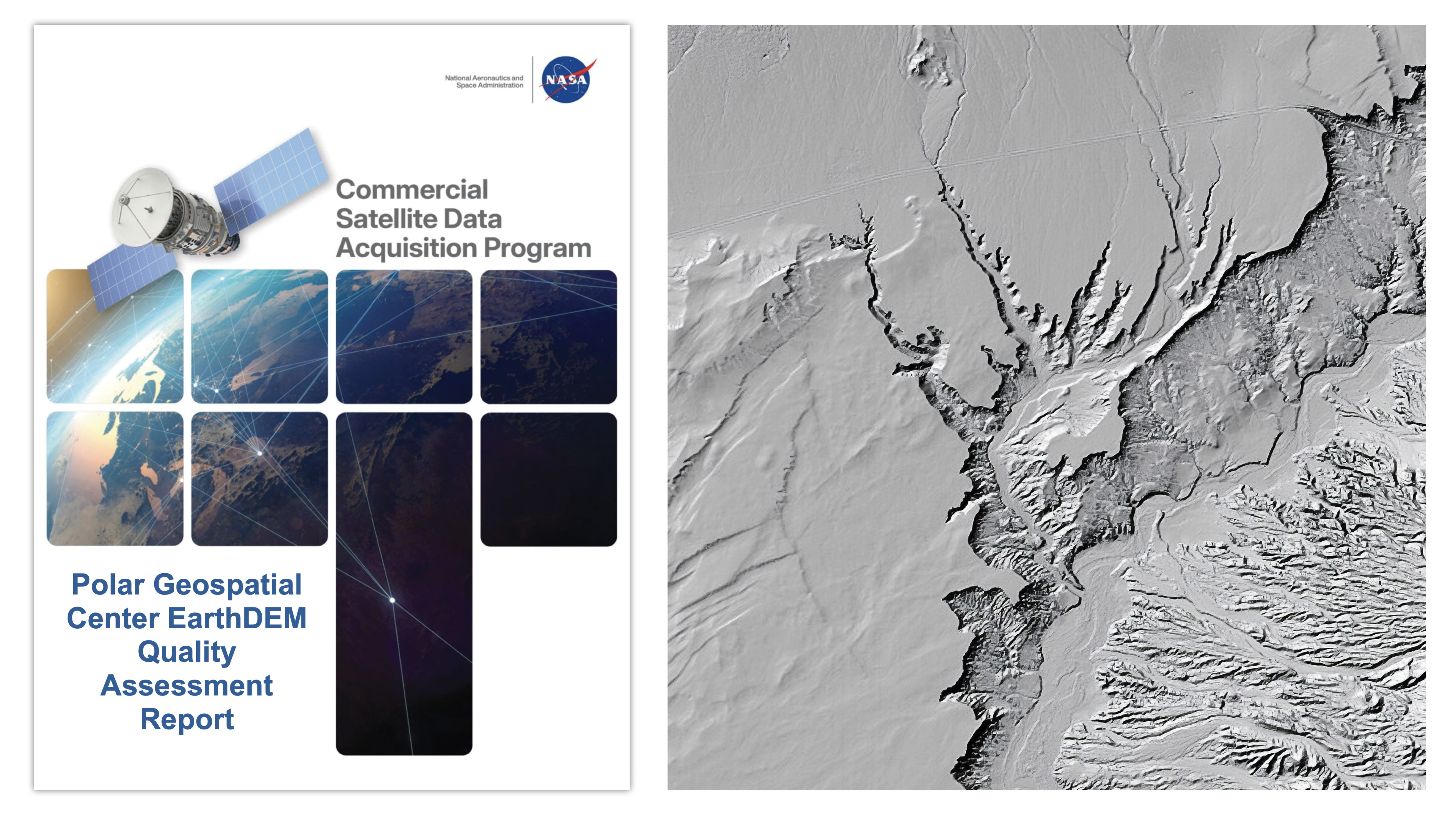
At left, the cover of the Commercial Satellite Data Acquisition programs’s recently released Polar Geospatial Center EarthDEM Quality Assessment Report. At right, a shaded relief rendering of EarthDEM data showing the Virgin River in Nevada. DEM derived from Vantor imagery. Credit: NASA CSDA program/EarthDEM ProjectIssued August 8, 2026, the CSDA Polar Geospatial Center EarthDEM Quality Assessment Report was conducted by NASA Digital Elevation Model (DEM) subject matter experts (SMEs) enlisted to evaluate the horizontal and vertical accuracy of two PGC EarthDEM1 (i.e., Digital Elevation Model) products: the center’s “Mosaic Tile” and “Strip” Digital Surface Models (DSMs).
To assess the vertical and horizontal accuracy of the EarthDEM Strip DSM and Mosaic Tile products over a variety of surface characteristics, the SMEs compared them to airborne lidar data samples from across the United States and Senegal. They found the horizontal accuracy of the EarthDEM products (Strip DSM: 0.5-meter (m) Root Mean Square Error Horizontal (RMSEH); Mosaic Tile: 0.3 m RMSEH) agreed with the specifications provided by the PGC and graded them “Excellent.” The vertical accuracy results of the EarthDEM Strip DSM (5.6 m Root Mean Square Error Vertical (RMSEV)) and the Mosaic Tile (4.9 m RMSEV) products varied by land cover type, with all land cover types exceeding the specification provided by the PGC (0.5 m RMSEV). Strip DSM vertical accuracy was found to vary from 4.6-6.8 m RMSEV depending on the cloud cover metadata field generated by the PGC. Given this variation, the vertical accuracy compliance for the EarthDEM products was graded as “Basic.”
Overall, the assessment report supports the use of EarthDEM data for NASA Earth science research and applications, as long as the data characteristics (e.g., vertical accuracy, poor cloud masking, missing surface features, data voids, etc.) are compatible with the specific science objectives and use cases.
The report also provides a Data Provider Documentation Review for the EarthDEM product that evaluated information from the PGC website, as well as a series of peer-reviewed publications by researchers at The Ohio State University’s Byrd Polar and Climate Research Center. (Only documents listed in this report were considered in the evaluation.) The report’s authors found that, overall, the EarthDEM product is “well documented,” with most information present within the product User Guide, a series of peer reviewed papers, or the PGC GitHub repository.
About the CSDA ProgramThe CSDA program was established to identify, evaluate, and acquire data from commercial sources that support the NASA Earth science research and application goals. NASA’s Earth Science Division recognizes the potential impact commercial satellite constellations may have in encouraging/enabling efficient approaches to advancing Earth System Science and applications development for societal benefit. Commercially acquired data may also provide a cost-effective means to augment and/or complement the suite of Earth observations acquired by NASA, other U.S. government agencies, and international partners.
To read the reports in full, see the links under “Evaluation” heading on the Polar Geospatial Center vendor page on the CSDA website.
Notes:1. According the authors of the report, “it should be noted that the PGC EarthDEM product is not technically a commercial product…. EarthDEM is a digital elevation dataset derived from imagery collected from the Vantor (formerly Maxar) fleet of optical satellites.”
Stops Along the Path of Totality
- Earth
- Earth Observatory
- Image of the Day
- EO Explorer
- Topics
- More Content
- About
What Is the Nancy Grace Roman Space Telescope? (Grades 5-8)
6 min read
Preparations for Next Moonwalk Simulations Underway (and Underwater)This article is for students grades 5-8.
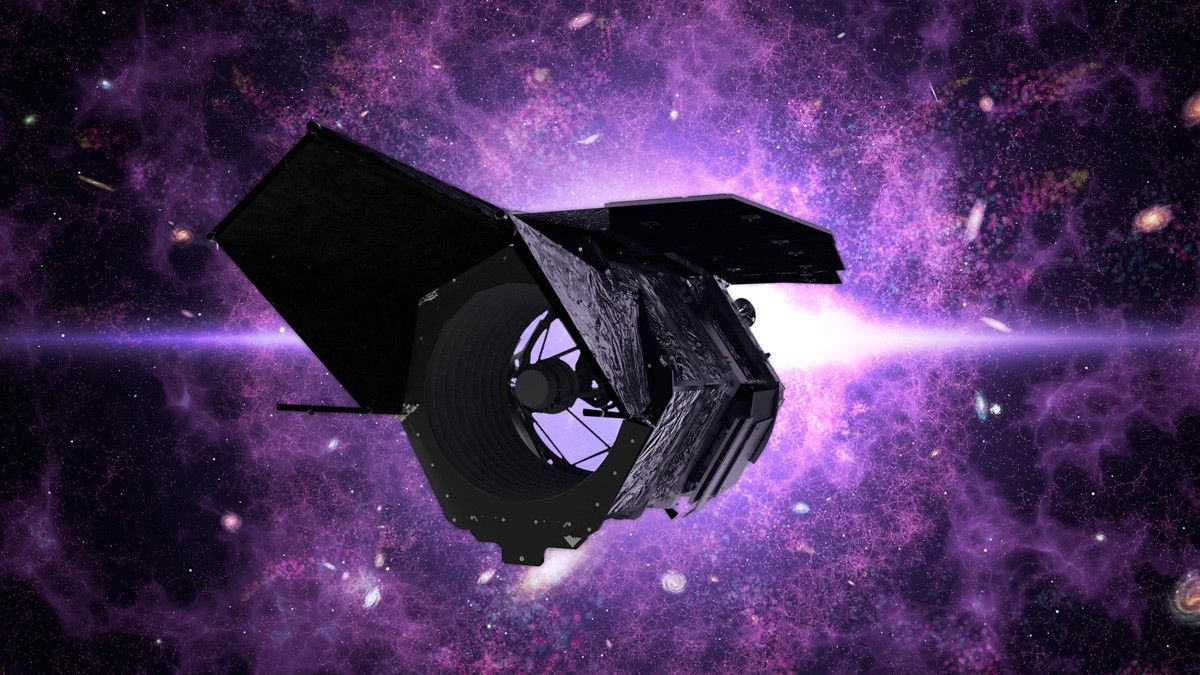
The Nancy Grace Roman Space Telescope is NASA’s newest astrophysics observatory. The telescope will scan large sections of space. Roman will help astronomers answer questions about dark energy, dark matter, exoplanets, and more.
The Nancy Grace Roman Space Telescope is NASA’s newest space telescope that will study dark energy, exoplanets, and astrophysics.NASA’s Goddard Space Flight Center______________________________________________________________________
Words to Know
Astrophysics: a branch of space science that applies physics and mathematics to study the universe.
Lagrange point: a position in space where the gravitational forces of a two-body system, such as the Sun and Earth, are balanced. This point creates an “orbital parking spot” where minimal fuel is needed to maintain a spacecraft’s position.
Infrared light: light that is completely invisible to the human eye but can be felt as heat. It’s the area on the electromagnetic spectrum where wavelengths are longer than visible red light, but shorter than microwaves.
Dark energy: the mysterious force that is causing the universe to expand at an accelerated rate.
Exoplanet: a planet outside of our solar system.
Dark matter: the mysterious gravitational “glue” that holds cosmic structures together.
______________________________________________________________________
When and Where Will the Nancy Grace Roman Space Telescope Launch?The Nancy Grace Roman Space Telescope is scheduled to launch Aug. 30, 2026. It will launch aboard a SpaceX Falcon Heavy rocket. Liftoff will take place from Launch Complex 39A at NASA’s Kennedy Space Center in Florida.
Where Will the Nancy Grace Roman Space Telescope Go in Space?The Nancy Grace Roman Space Telescope will orbit about 930,000 miles (1.5 million kilometers) away from Earth. It will orbit around a special place in space called the second Sun-Earth Lagrange point, or L2. This gravitational sweet spot is perfect for unobstructed views of the universe.
What Instruments Does the Nancy Grace Roman Space Telescope Have?The Nancy Grace Roman Space Telescope will peer through dust and across vast stretches of space using infrared light. Roman’s primary mirror is 7.9 feet (2.4 meters) across. The large surface of the telescope mirror gathers lots of light. More light equals finer details.
The primary mirror will send light to Roman’s two science instruments: the Wide Field Instrument and the Coronagraph Instrument.
The Wide Field Instrument is a 300-megapixel infrared camera. It allows scientists to look very far back in time because the light captured by the camera has been traveling for billions of years before reaching the instrument. Seeing the universe in its early stages will help unravel how it has expanded throughout its history. This will give scientists hints about how the universe may continue to evolve.
The Coronagraph Instrument uses technology that blocks the glare from a star. This lets astronomers see planets in orbit around it. This instrument is the most powerful coronagraph ever flown in space. It will allow astronomers to see planets that are almost a billion times fainter than their host star.
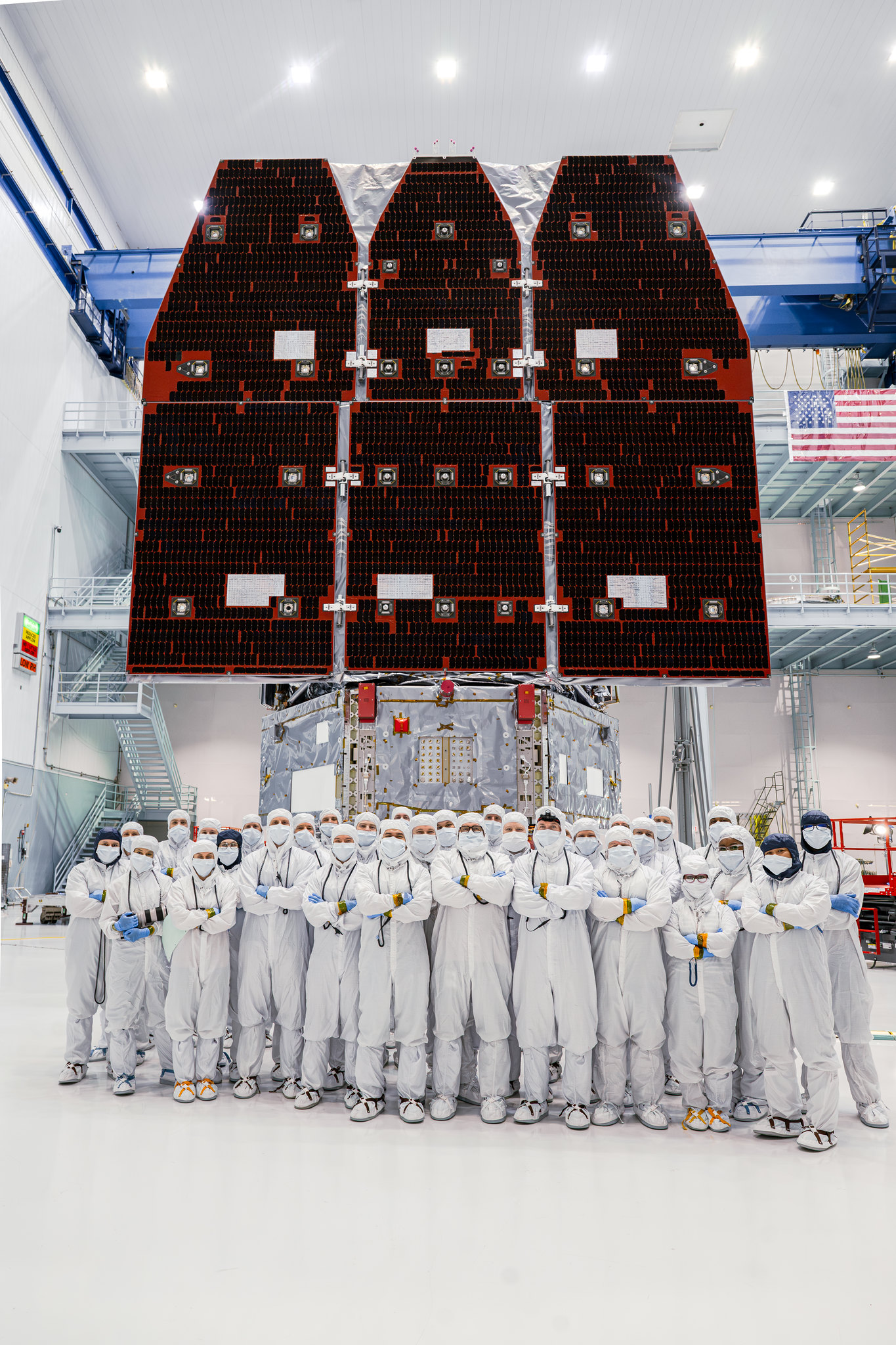
On Nov. 25, 2025, technicians joined the inner and outer segments together and the observatory was complete.NASA / Sydney Rohde What Will Scientists Study With the Nancy Grace Roman Space Telescope?Scientists using the Nancy Grace Roman Space Telescope will focus on three main topic areas: dark energy, exoplanets, and dark matter.
Dark energy is a mysterious part of the universe. Scientists aren’t sure what it is, but it makes up about 68% of the universe’s total contents. It is believed to be responsible for the accelerating rate at which our universe is expanding. But recent observations seem to show that the pressure from dark energy is shifting over time. Scientists hope to use the Roman Space Telescope to help solve the mystery of dark energy’s true nature.
Exoplanets are planets outside of our solar system. Scientists have discovered more than 6,000 exoplanets. But they believe that billions could exist. Most of the exoplanets detected so far are wildly different than the planets in our solar system. Scientists expect Roman to find more unusual exoplanets. It will also allow astronomers to find planets in the habitable zone of their stars. This will be key to finding planets similar to Earth.
Dark matter is the invisible glue that holds the universe together. Scientists aren’t sure what dark matter is made of. Roman will allow scientists to peer back in time to trace how galaxies and galaxy clusters formed. If dark matter consists of heavy, sluggish particles, it would clump together readily and Roman should see galaxy formation early in cosmic history. If dark matter is made up of lighter, faster-moving particles, it should take longer to settle into clumps and for large-scale structures to develop. If astronomers can narrow down the candidates for dark matter particles, we’ll be one step closer to finally detecting them directly in experiments on Earth.
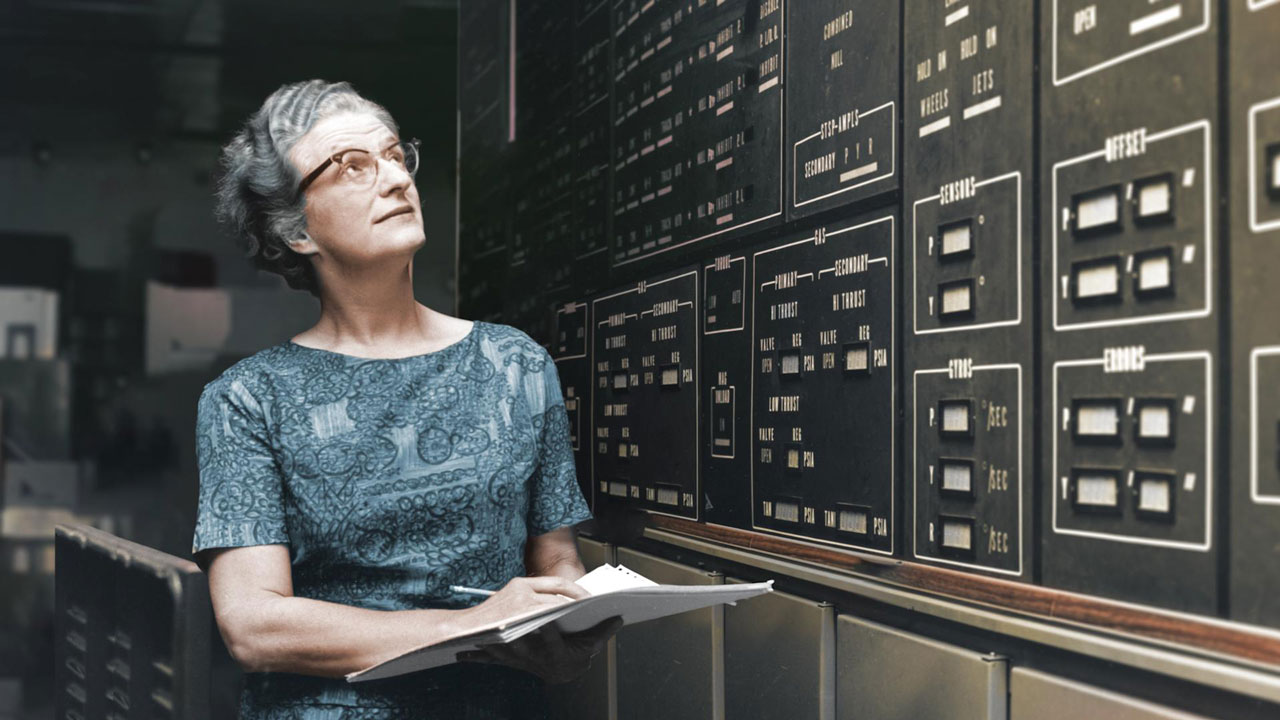
Who Was Nancy Grace Roman?Nancy Grace Roman was NASA’s first chief astronomer and the first female executive at the agency. Roman championed the making of the first space-based telescope — the Hubble Space Telescope. She was involved in every crucial decision about the telescope from its funding to where it was built to the details of its instruments. Her vital role in making the project a reality led her to be known as “the mother of the Hubble Space Telescope.”
Roman was born May 16, 1925, in Nashville, Tennessee. She died Dec. 25, 2018.
Nancy Grace Roman was NASA’s first chief astronomer. She is knows as “the mother of the Hubble Space Telescope.”NASA Career CornerMore than a thousand technicians and engineers assembled Roman from millions of individual components. Here are a few examples of the careers that shaped NASA’s newest space telescope:
Instrument technician: These experts install, calibrate, and maintain sensors and control systems. They troubleshoot issues that might come up with delicate systems and equipment. This career path often starts with an apprenticeship or hands-on training alongside experienced technicians. An associate’s degree is often required.
Mechanical engineer: This branch of engineering focuses on complex machines and engines. Mechanical engineers design, build, test, and improve mechanical systems. They play an essential role in making a complex observatory like the Roman Space Telescope a reality. A career in engineering demands a strong understanding of math and complex problem-solving and usually requires an advanced college degree.
Astrophysicist: These scientists study the physics of the universe. They are interested in learning how the universe began, how it is evolving, and how it works. Becoming an astrophysicist requires advanced college degrees.
NASA also needs people who work in photography, management, social media, videography, and much more. Learn about some of the people who have made the Roman mission possible here!
More About the Nancy Grace Roman Space TelescopeMission Website: Nancy Grace Roman Space Telescope
Video Game: Roman Space Observer
Roman Space Telescope Education and Outreach Materials
Explore More For Students Grades 5-8