NASA News

NASA’s Perseverance, Curiosity Panoramas Capture Two Sides of Mars
NASA’s Curiosity and Perseverance rovers have captured two 360-degree landscapes that highlight how the missions are revealing details of the Red Planet’s formation, watery past, and potential for life. Located 2,345 miles (3,775 kilometers) apart from each other on Mars — about the distance from Los Angeles to Washington, D.C. — both rovers are exploring areas that are billions of years old. But as the nearly 15-year-old Curiosity reaches ever-younger terrain in the foothills of Mount Sharp, the 5-year-old Perseverance is venturing into some of the oldest landscapes in the entire solar system. By time-traveling in opposite directions, the rovers are filling in missing details about the planet’s history.
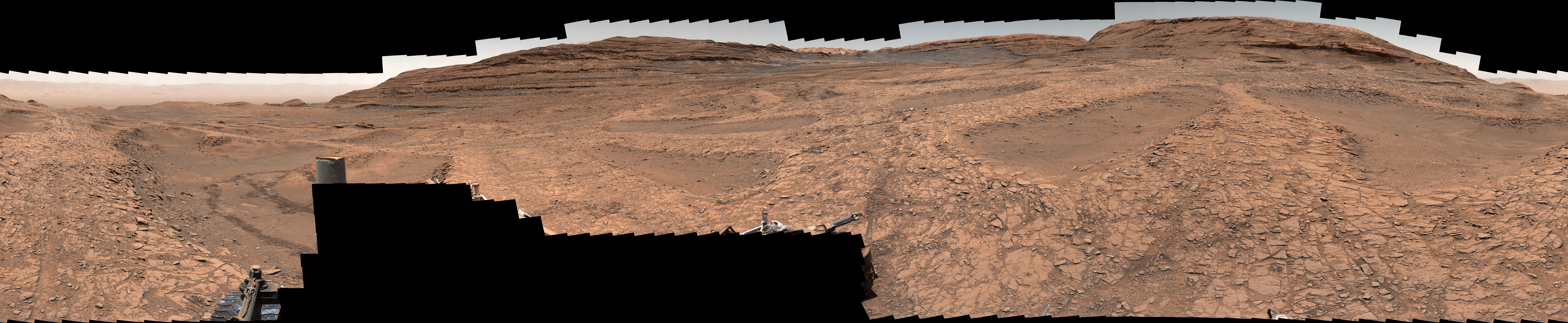
Stitched together from 1,031 images taken between Nov. 9 and Dec. 7, 2025, Curiosity’s 360-degree panorama offers a detailed look into a region filled with a vast network of boxwork formations: Resembling giant spiderwebs in orbiter images, the low ridges were created by groundwater that once flowed through large fractures in the bedrock. The minerals left behind hardened the rock along the fractures, resulting in erosion-resistant ridges.
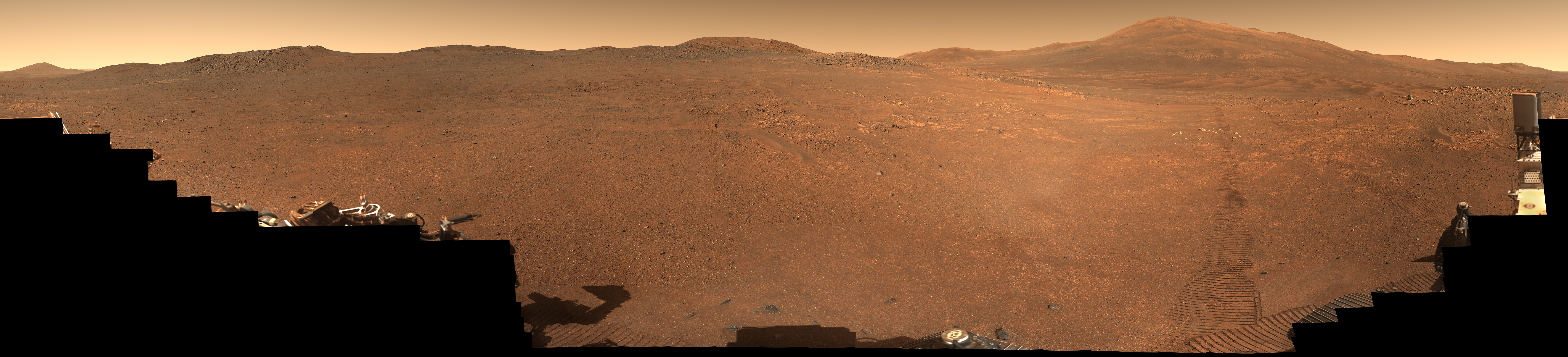
Perseverance’s panorama focuses on a place nicknamed “Lac de Charmes,” which sits outside the rim of Jezero Crater. Taken between Dec. 18, 2025, and Jan. 25, 2026, 980 images were stitched together for a 360-degree view capturing the Jezero rim and ancient rocks around the crater.
Driven by CuriosityToday, both of these landscapes are frigid deserts, but evidence of a more dynamic past hides within. When Curiosity landed on the floor of Gale Crater in 2012, it set out to determine whether Mars once had the conditions to support life. Within a year, a sample drilled from an ancient lakebed confirmed those conditions had been present, including the right chemistry and potential nutrients for microbes.
NASA’s Curiosity Mars rover captured this 360-degree view of a region filled with low ridges called boxwork formations between Nov. 9 and Dec. 7, 2025. At 1.5 billion pixels, this is one of the largest panoramas Curiosity has ever taken.Since 2014, Curiosity has been ascending Mount Sharp. Towering 3 miles (5 kilometers) above the crater floor, the mountain first began forming when layers of sediment were deposited in a series of lakes. Long after those lakes dried up, ponds and streams returned several times, leaving a record in the mountain’s layers that formed in drier eras. Because the lowest layers are oldest and higher layers are youngest, Curiosity is essentially progressing back through geological time as it slowly climbs the mountain.
Last year, Curiosity’s team documented how they found that the mineral siderite might be storing carbon dioxide that once was part of a thicker, early atmosphere. Scientists had long suspected that carbonate minerals such as siderite formed when carbon dioxide dissolved into ancient lakes, but such deposits had only rarely been found.
The mission also announced the detection of three of the largest organic molecules ever found on Mars in a sample it had drilled in 2013. The discovery of these long-chain hydrocarbons — possibly the remnants of fatty acids — are a milestone in the search for more complex, prebiotic chemistry on the Red Planet.
And this year, they announced that a rock Curiosity drilled and analyzed in 2020 includes the most diverse collection of organic molecules ever found on the Red Planet. Of the 21 carbon-containing molecules identified in the sample, seven of them were detected for the first time on Mars.
Persevering for sciencePerseverance landed in Mars’ Jezero Crater in 2021 to study the origin of ancient rocks within the crater and to hunt for evidence that microbial life once existed. Billions of years ago, molten rock cooled to form the floor of Jezero Crater. A river then fed a lake in the crater, leaving behind sediments where traces of microbes could have been preserved. In 2024, the mission discovered a rock nicknamed “Cheyava Falls” that was dotted with “leopard spots,” a pattern formed by chemical reactions that microbes are known to create in rocks here on Earth.
NASA’s Perseverance Mars rover captured this 360-degree panorama of a region nicknamed “Crocodile Bridge” on the rim of Jezero Crater. This region holds some of the oldest rocks anywhere in the solar system.NASA/JPL-Caltech/ASU/MSSSWhile Curiosity pulverizes its rock samples for analysis, Perseverance collects samples as intact rock cores, each about the size of a piece of blackboard chalk, and stores them in metal tubes. Aside from a backup set of 10 tubes Perseverance deposited in a sample depot, the rover keeps all its samples (23 so far) on board in its interior. Scientists hope to get these samples into labs on Earth where they can investigate them more fully with instruments far bigger and more complicated than those that can be sent to Mars.
Meanwhile, Perseverance continues to investigate other aspects of the Red Planet. For instance, this past fall, mission scientists shared the first recordings of electrical sparks in passing dust devils — a phenomenon that had only been theorized before Perseverance’s microphones caught them. A separate study detailed how one of Perseverance’s sensitive cameras was able to capture the first visible light auroras from the surface of another planet.
Both missions are looking forward to the next discoveries as they continue to unravel the secrets of Mars. Curiosity has left the boxwork region behind as it continues to explore a mountain layer enriched in salty minerals called sulfates; Perseverance will keep heading toward locations that hold exceptionally old terrain, including one called “Singing Canyon.”
Managed for NASA by Caltech, NASA’s Jet Propulsion Laboratory in Southern California built and manages operations of both Curiosity and Perseverance on behalf of the agency’s Science Mission Directorate as part of NASA’s Mars Exploration Program portfolio.
To learn more about NASA’s exploration of Mars, visit:
News Media Contact
Andrew Good
Jet Propulsion Laboratory, Pasadena, Calif.
818-393-2433
andrew.c.good@jpl.nasa.gov
Karen Fox / Alana Johnson
NASA Headquarters, Washington
202-358-1600 / 202-358-1501
karen.c.fox@nasa.gov / alana.r.johnson@nasa.gov
2026-025
Explore More 5 min read NASA’s Curiosity Finds Organic Molecules Never Seen Before on Mars Article 7 days ago 6 min read ‘Interstellar Glaciers’: NASA’s SPHEREx Maps Vast Galactic Ice Regions Article 2 weeks ago 4 min read NASA-ISRO Satellite Captures Pacific Northwest Through Clouds Article 1 month ago Keep Exploring Discover More Topics From NASA Perseverance RoverThis rover and its aerial sidekick were assigned to study the geology of Mars and seek signs of ancient microbial…
Curiosity Rover (MSL)
Mars Exploration: Science GoalsThe key to understanding the past, present or future potential for life on Mars can be found in NASA’s four…
Mars ResourcesExplore this page for a curated collection of Mars resources.
You Can Help Humans Thrive in Space
The second Artemis mission took four astronauts around the moon and back – the first crewed deep-space flight since 1972. Not everyone gets a chance to put on a space suit, but you can still be an important part of NASA’s human space exploration story by doing NASA science!
Volunteers with NASA’s citizen science projects have tested chili pepper plant varieties to grow in space, monitored active regions on the Sun, and analyzed data from experiments on how life adapts to the low-gravity, high-radiation environment of space. Participation does not require citizenship in any particular country – you only need a love of science and a desire to help. Join one of the projects below and help NASA make space travel safer and healthier.
Only a few minutes to spare? Space Umbrella is a great project for you. The brief online project tutorial will teach you how to read data collected by NASA’s Magnetosphere Multiscale (MMS) mission, which has been flying back and forth across Earth’s magnetosphere since 2015. By sorting data into in-magnetosphere and out-of-magnetosphere readings, you will help scientists learn more about how solar storms interact with our magnetosphere. Solar storms can pose a serious threat to astronauts, so this work can help missions minimize risks from radiation in space.
Are you a classroom teacher for students in grades 6-12? Through Growing Beyond Earth, middle and high school students and their teachers collaborate with Fairchild Botanical Garden scientists to grow candidate plants that are being evaluated as astronaut food. Today, on the International Space Station, astronauts tend to some of the same experimental leafy greens and hot pepper plants to unlock the secrets of how best to space farm terrestrial species. On really long missions, it won’t just be a question of easing the monotony of packaged/prepared foods – astronauts will have to grow their own food to supplement their diets. Sign up here to learn more.
Do you have some experience with data analysis? The Open Science Data Repository Analysis Working Groups need you to help analyze data from experiments about life in space. Join this international community of scientists, students, and everyone in between to help us understand how terrestrial life – from plants to mice and microbes to astronauts – responds to the space environment.
Into ham radio? Join the team called Ham Radio Science Citizen Investigation (HamSCI) and use your ham radio skills to deploy your own personal space weather station! These stations are designed to be relatively low cost and easy to build and deploy by science professionals, educational institutions, and citizen scientists (you!). Your observations will be aggregated into a central database to help answer questions about how the ionosphere responds to the Sun and the neutral atmosphere.
There are many more ways you can do NASA science. Check out all the current projects supported by NASA that need your help answering questions about our universe, solar system, and Earth. Learn More and Get Involved Pick Your Project!These NASA science projects below are open to everyone (no citizenship required).
Facebook logo @nasascience_ @nasascience_ Instagram logo @nasascience_ Linkedin logo @nasascience_ Share Details Last Updated Apr 27, 2026 Related Terms Explore More 3 min read Volunteers Help NASA Astronauts Record Lunar Flashes
As NASA’s Artemis II astronauts zipped around the Moon in early April, they observed flashes…
Article
1 hour ago
2 min read Volunteers Discover Rare Space Weather Events Using Their Ears
Scientists are working to understand exactly how these waves behave, and the team behind NASA’s…
Article
1 week ago
4 min read NASA Data Hackathon Inspires Community Action
Article
1 month ago
Volunteers Help NASA Astronauts Record Lunar Flashes
As NASA’s Artemis II astronauts zipped around the Moon in early April, they observed flashes of light caused by meteoroids hitting the lunar surface. At the same time, volunteers for the NASA-funded Impact Flash project scanned the Moon with their own telescopes and sent their videos to scientists to share what they saw from Earth.
“We were incredibly grateful for the videos people submitted,” said Impact Flash project lead Ben Fernando, a planetary scientist at Los Alamos National Laboratory. The locations and brightness of flashes observed by different instruments at different locations together can help constrain the nature and origin of the impactors, as well as the craters they form.
The Artemis II astronauts have splashed back down to Earth, so their observations of the Moon from space have come to a halt for now, but the Impact Flash team is just getting started. They need your continued help scanning the Moon to watch for flashes. If you have access to a telescope four inches in diameter or greater with video capabilities, your observations can make a difference. The more observations you submit, the better the team will be able to constrain the present-day impact rate on the Moon and how it changes over time. Instructions for making and uploading your observations can be found on the Impact Flash website.
In the future, the project team also plans to use your impact flash observations to study tremors on the Moon, similar to earthquakes. They’re called ‘moonquakes’ and they help us figure out what lies beneath the Moon’s surface.
“We are planning to send seismometers to the Moon to measure how the ground shakes,” said Fernando. “Your measurements of impact flashes will help us work out the sources of moonquakes we detect. This will help us work out what the Moon’s interior looks like.”
To collect data during the Artemis II mission, the Impact Flash investigators teamed up with several other groups of amateur astronomers, including the NASA-funded Kilo-nova Catchers, Exoplanet Watch, UNITE (Unistellar Network Investigating TESS Exoplanets), and Night Sky Network teams, as well as the Lunar Impact Flashes project, based at the National Research Council of Italy (IMATI-CNR). Thank you to all those who submitted data.
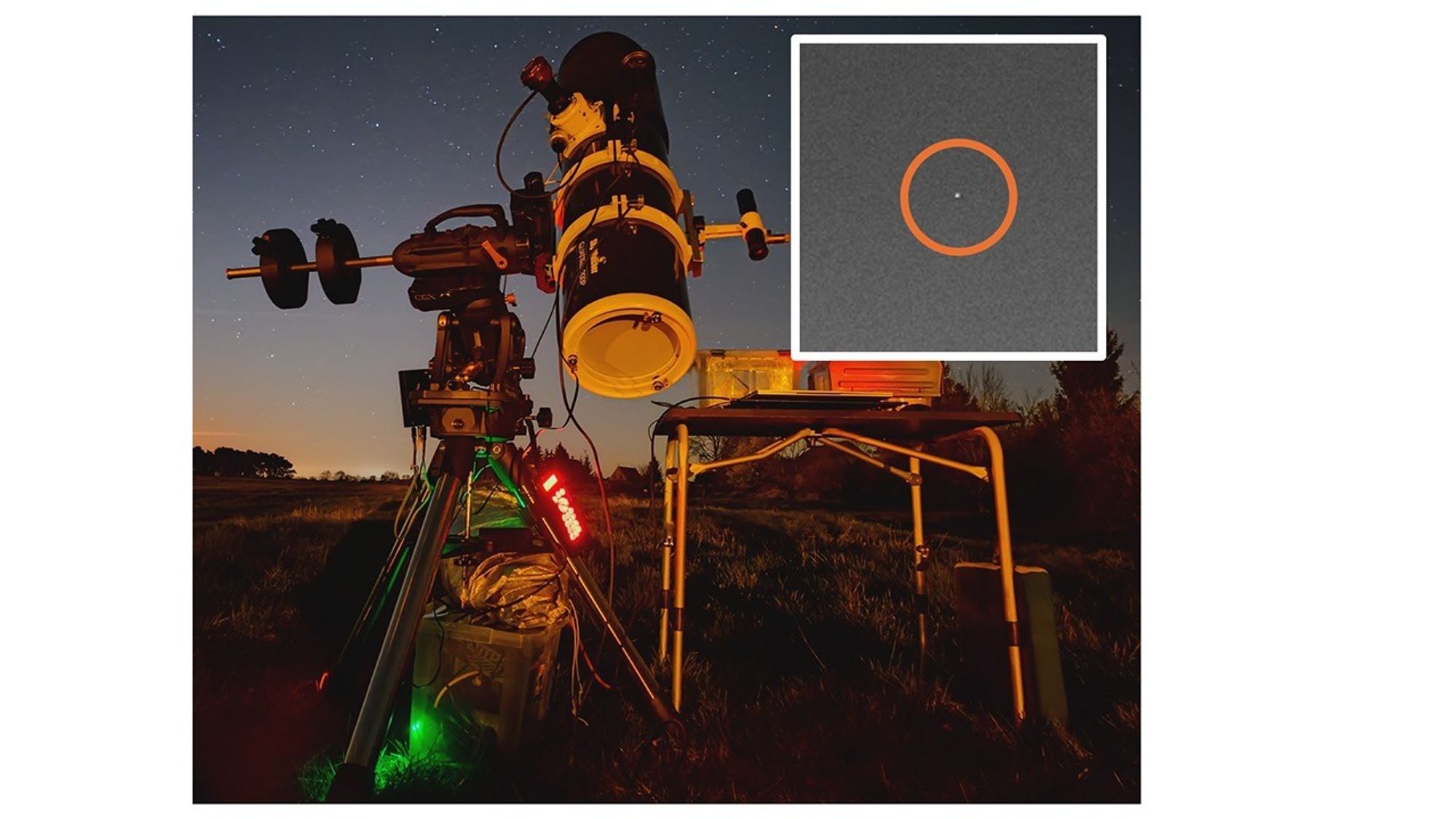
Impact Flash volunteer Joerg Tomczak sent in this image of the Moon he took during NASA’s Artemis II mission, as well as a photo of his telescope. The bright dot in the orange circle shows an impact flash candidate Credit: Joerg Tomczak Grab your telescope and get started with Impact Flash: https://www.geodes.umd.edu/impactflashThe Impact Flash team acknowledges the work done by Institute for Applied Mathematics and Information Technologies-Consiglio Nazionale delle Ricerche (IMATI-CNR)/Italy (E. M. Alessi, M. T. Artesi) to set up the web page and A. Cook (Aberystwyth Univ., UK) and D. Koschny (Technical University of Munich, DE) for data curation. The IMATI-CNR team receives funding from the Italian Space Agency, corresponding to ESA’s (European Space Agency) Lunar Meteoroid Impacts Observer mission.
Learn More and Get Involved Impact Flash!You and your telescope can join a global network of amateur astronomers documenting meteors hitting the moon.
Facebook logo @nasascience_ @nasascience_ Instagram logo @nasascience_ Linkedin logo @nasascience_ Share Details Last Updated Apr 27, 2026 Related Terms Explore More 3 min read CSDA Quality Assessment Report Evaluates Satellogic NewSat Data
The report adds to the growing documentation on commercial data’s contributions to Earth science research…
Article
1 week ago
2 min read Volunteers Discover Rare Space Weather Events Using Their Ears
Scientists are working to understand exactly how these waves behave, and the team behind NASA’s…
Article
1 week ago
5 min read NASA Finds Young Stars Dim in X-rays Surprisingly Quickly
Article
2 weeks ago
I Am Artemis: Peter Rossoni
Listen to this audio excerpt from Peter Rossoni, Orion Artemis II Optical Communications System flight manager:
0:00 / 0:00
Your browser does not support the audio element.As a child, Peter Rossoni watched the Apollo missions launch with his family. In April 2026, he became a part of NASA’s Artemis II mission, helping enable communications as astronauts journeyed around the Moon.
Rossoni’s path to NASA began as he followed his parents’ footsteps into science. That foundation eventually led him to laser communications and NASA’s Artemis II test flight.
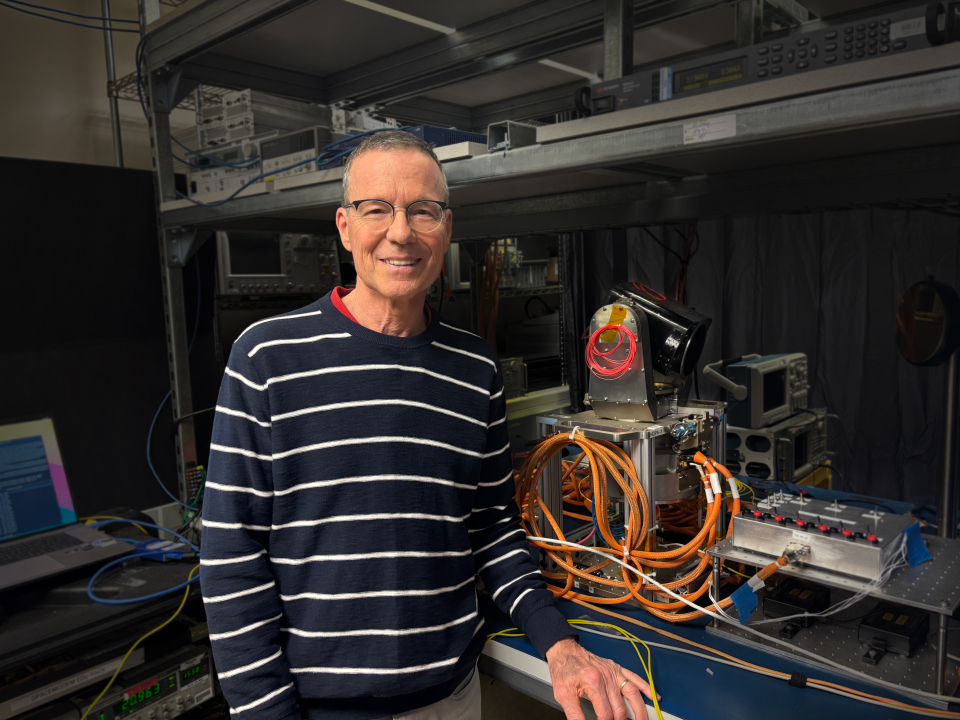
Peter Rossoni in an optical lab at the Massachusetts Institute of Technology Lincoln Laboratory in Lexington, Massachusetts. MIT-LLToday, Rossoni is the flight manager for the Orion Artemis II Optical Communication System at NASA’s Goddard Space Flight Center in Greenbelt, Maryland. Throughout Artemis II, he oversaw the first use of laser communications on a crewed deep space mission.
The optical terminal flew aboard the Orion spacecraft alongside NASA astronauts Reid Wiseman, Victor Glover, and Christina Koch, and CSA (Canadian Space Agency) astronaut Jeremy Hansen. Through the system, laser communications links transmitted video, photos, engineering, and science data, flight procedures, and crew communications to Earth from the lunar vicinity. In total, the terminal transferred over 450 gigabytes of data to Earth. That’s roughly equivalent to 100 high-definition movies.
The Orion capsule in flight with the O2O payload pointed out. NASADuring the approximately 10-day mission, Rossoni joined the mission control team to ensure smooth data flow from the laser communications terminal on Orion to the Mission Control Center at the agency’s Johnson Space Center in Houston.
“Communications is an important pillar of exploration. We’re venturing into deep space for longer periods of time, and we need that vital link back to the home base. Laser communications were proven to work in previous experiments, so the demonstration phase is over. Artemis II showed us what it can do operationally.”
Laser communications were proven to work in previous experiments, so the demonstration phase is over. Artemis II showed us what it can do operationally.Peter Rossoni
Flight Manager for the Orion Artemis II Optical Communications System
Laser communications systems use invisible infrared light to pack more data into a single transmission. With downlink speeds of up to 260 megabits per second, the optical communications system was capable of transmitting a full-length 4K movie from the Moon to Earth in about a minute.
“Beyond supporting a crewed mission around the Moon, I’m excited to work with an amazing team of talented engineers and visionaries who understand that high-performance communications and networking is a key element of exploration infrastructure.”
Merging existing infrastructure with the next-generation system was no easy feat. While the system’s laser communications path operated in parallel to traditional radio communications, both tied into the same networks at the Mission Control Center and aboard Orion. The team developed solutions that would allow the systems to work together at the higher rates that laser communications can provide.
To prepare for liftoff, Rossoni and the optical flight and ground teams supported extensive testing activities, including practice runs simulating team and facility operations, the operational readiness reviews confirming the system’s terminal and ground segment, and assuring the teams work smoothly together for the mission. The result was a communications system with up to 100 times greater capacity, enhancing the connection between astronauts and their support teams, while freeing the radio communications systems for sensitive and critical data streams.
“A well-respected scientist at Goddard once said, ‘communications is the secret sauce behind all NASA missions. For Artemis II in particular, with the astronauts’ mission and safety at stake, it was critical to have robust communications to both enhance successful exploration and address any eventualities in the demanding environment of deep space. I had a deep sense of fulfillment when the Orion Artemis II optical communications system started working, and it kept growing as the mission progressed, with more and more objectives achieved.”
I had a deep sense of fulfillment when the Orion Artemis II optical communications system started working, and it kept growing as the mission progressed, with more and more objectives achieved.Peter Rossoni
Flight Manager for the Orion Artemis II Optical Communications System
About the AuthorKendall MurphyTechnical WriterKendall Murphy is a technical writer for the Space Communications and Navigation program office. She specializes in internal and external engagement, educating readers about space communications and navigation technology.
Share Details Last Updated Apr 24, 2026 EditorLauren LowLocationGoddard Space Flight Center Related Terms Explore More 3 min read I Am Artemis: Erik Richards Article 1 month ago 5 min read Networks Keeping NASA’s Artemis II Mission Connected Article 3 months ago 1 min read I am Artemis: Steven Horowitz Article 5 years ago Keep Exploring Discover More Topics From NASAMissions
Humans in Space
Climate Change
Solar System
The Day of the Trifid Nebula
This shimmering region of star-formation, a close-up of the Trifid Nebula about 5,000 light-years from Earth, was captured in intricate detail by NASA’s Hubble Space Telescope in an image released on April 20, 2026. The colors in Hubble’s visible light image, which marks the 36th anniversary of the mission’s launch on April 24, are reminiscent of an underwater scene filled with fine-grained sediments fluttering through the ocean’s depths.
Several massive stars, which are outside this field of view, have shaped this region for at least 300,000 years. Their powerful winds continue to blow an enormous bubble, a small portion of which is shown here, that pushes and compresses the cloud’s gas and dust, triggering new waves of star formation.
Learn more about the Trifid Nebula.
Image credit: NASA, ESA, STScI; Image Processing: Joseph DePasquale (STScI)
NASA Astronauts to Answer Questions from Missouri Students
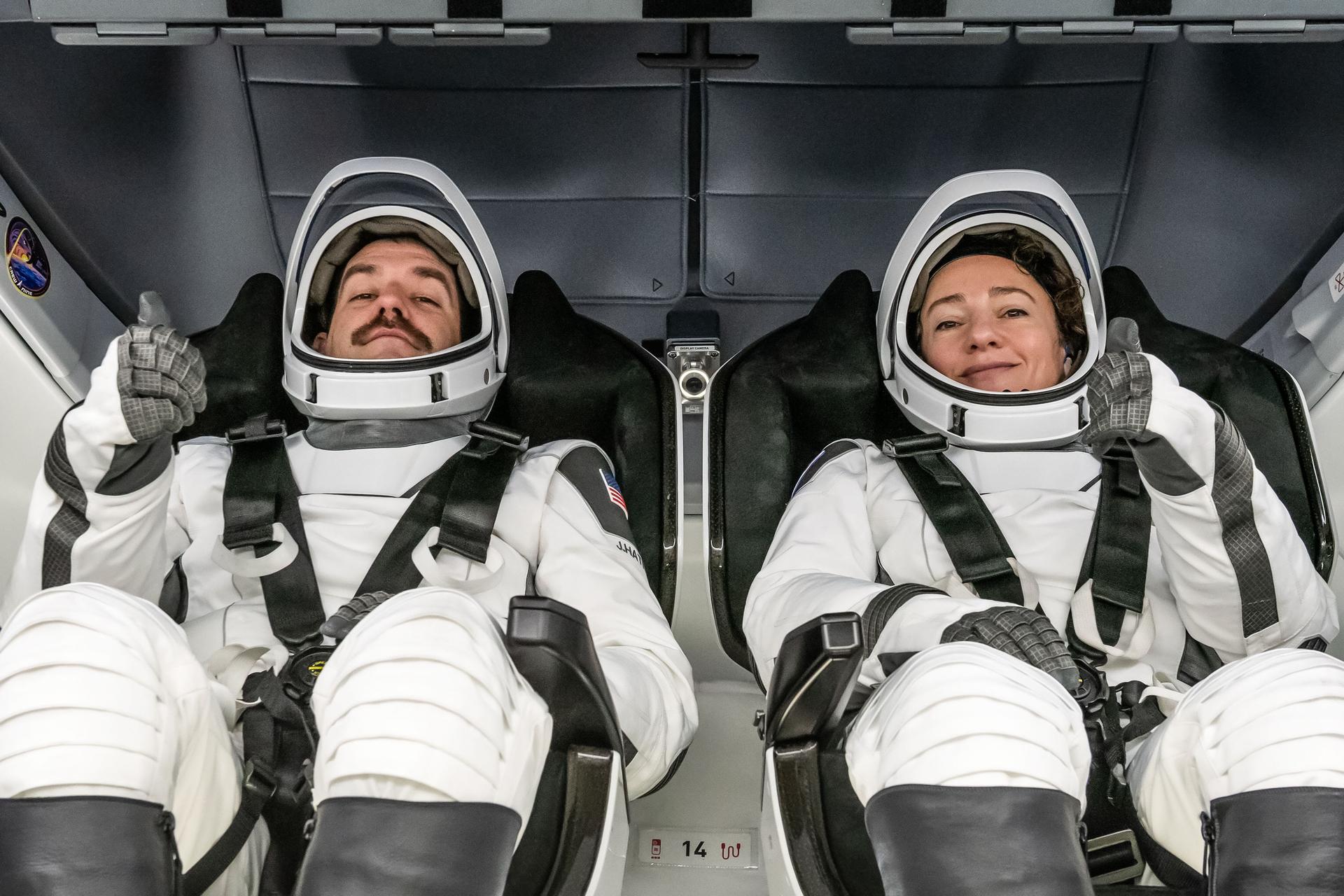
Students in Missouri will hear from NASA astronauts Jessica Meir and Jack Hathaway as they answer prerecorded science, technology, engineering, and mathematics (STEM) questions while aboard the International Space Station.
The Earth-to-space call will begin at 10:50 a.m. EDT Thursday, April 30, and will stream live on the agency’s Learn With NASA YouTube channel.
This event is hosted by the University of Missouri Pre-Employment Transition Services in Columbia, Missouri, for students in grades K-12 and members of the community. This opportunity aims to deepen understanding of space exploration and inspire students to pursue a future career in STEM.
Media interested in covering the event must RSVP by 5 p.m., Wednesday, April 29, to Kimberly Pudlowski at: 636-697-5845 or kimberly.gee@missouri.edu.
For more than 25 years, astronauts have continuously lived and worked aboard the space station, testing technologies, performing science, and developing skills needed to explore farther from Earth. Astronauts communicate with NASA’s Mission Control Center in Houston 24 hours a day through SCaN’s (Space Communications and Navigation) Near Space Network.
Research and technology investigations taking place aboard the space station benefit people on Earth and support other agency work, including missions at the Moon. As part of NASA’s Artemis program, the agency will send astronauts to the Moon to prepare for future human exploration of Mars, inspiring the world through discovery in a new Golden Age of innovation and exploration.
See more information on NASA in-flight education calls at:
https://www.nasa.gov/stemonstation
-end-
Gerelle Dodson
Headquarters, Washington
202-358-1600
gerelle.q.dodson@nasa.gov
Sandra Jones
Johnson Space Center, Houston
281-483-5111
sandra.p.jones@nasa.gov
NASA Celebrates Decade of University Innovation in Aeronautics
8 min read
Preparations for Next Moonwalk Simulations Underway (and Underwater)For 10 years, a NASA initiative has helped the agency produce breakthrough aeronautical innovations while fostering the aviation workforce of tomorrow – and the University Leadership Initiative (ULI) is still flying high, making awards with the potential to change 21st century air travel.
Through ULI, NASA has supported more than 1,100 students at 100 schools, allowing them to pursue advancements in top priority areas for U.S. aviation, including high-speed flight, advanced air mobility, future airspace management and safety, and electrified propulsion.
Many of those students have used their ULI experience as a springboard to careers in aviation. And many of their ideas — such as designing more efficient wings or building supersonic aircraft that can change shape in flight — are either being investigated further by industry or the technologies adopted outright.
As it celebrates a decade of success, NASA’s ULI team is looking forward to leveraging student innovations with new awards in 2026 and beyond.
“Through ULI we’re building the workforce of the future and fostering the skill sets we so desperately need to compete globally,” said John Cavolowsky, director of NASA’s Transformative Aeronautics Concepts Program at NASA Headquarters in Washington.
Through ULI we're building the workforce of the future and fostering the skill set we so desperately need to compete globally.john cavolowsky
Director, Transformative Aeronautics Concepts Program
What makes ULI unique from other NASA research projects, and especially appealing to universities, is that it provides the opportunity for university students and faculty to propose what research to conduct.
Usually, NASA determines the research it needs and then does the work itself or through partnerships and contracts. But with ULI, the agency shares its goals and universities consider how they can best help realize them.
“There are no better ways in my mind to help develop that talent within the students than to engage them in identifying big problems and then give them the resources they need to use their creativity to solve them,” Cavolowsky said.
ULI historyNASA’s relationship with academia and reliance on its research proficiency is written into NASA’s DNA going back to the days of the National Advisory Committee for Aeronautics, from which NASA was formed in 1958.
“For more than a century we have leaned on the brilliance and the capabilities of universities to help us think,” Cavolowsky said. “With ULI we can ensure they continue to bring their fresh ideas and young energy to the work we do at NASA Aeronautics.”
ULI evolved from an earlier project called Leading Edge Aeronautics Research for NASA (LEARN). NASA selected five LEARN teams in 2015 to pursue truly outside of the box ideas that showed promise but needed additional study.
One of those teams, for example, sought to take a cue from migrating flocks of birds by asking if airliners could save fuel by cruising in a giant ‘V’ formation. The numbers were intriguing and simple flight tests proved the concept, although the idea never made it to practice.
Slightly retooled but keeping the innovative spirit of LEARN, ULI was officially announced in 2016 and a year later NASA selected five teams of university professors and students to contribute solutions to the biggest aeronautical challenges of the 21st century.
A decade later, NASA has made a total of $220 million in awards to 33 teams over eight rounds of solicitations
Smooth flyingOne of the earliest selected ULI teams was led by James Coder, who at the time was an aerospace engineering professor at the University of Tennessee in Knoxville. His team worked on technology that would smooth the airflow around a wing to make it more efficient.
Technically known as slotted natural laminar flow (SNLF) wings, Coder has called the idea a potential game changer for commercial airliners. The more efficient wing would mean less drag on an airplane, which in turn could help airlines save money on fuel.
Coder credits ULI for not only helping to prove the technology’s effectiveness – with the aid of wind tunnel testing at NASA’s Ames Research Center in California – but for providing students with an experience they couldn’t get elsewhere.
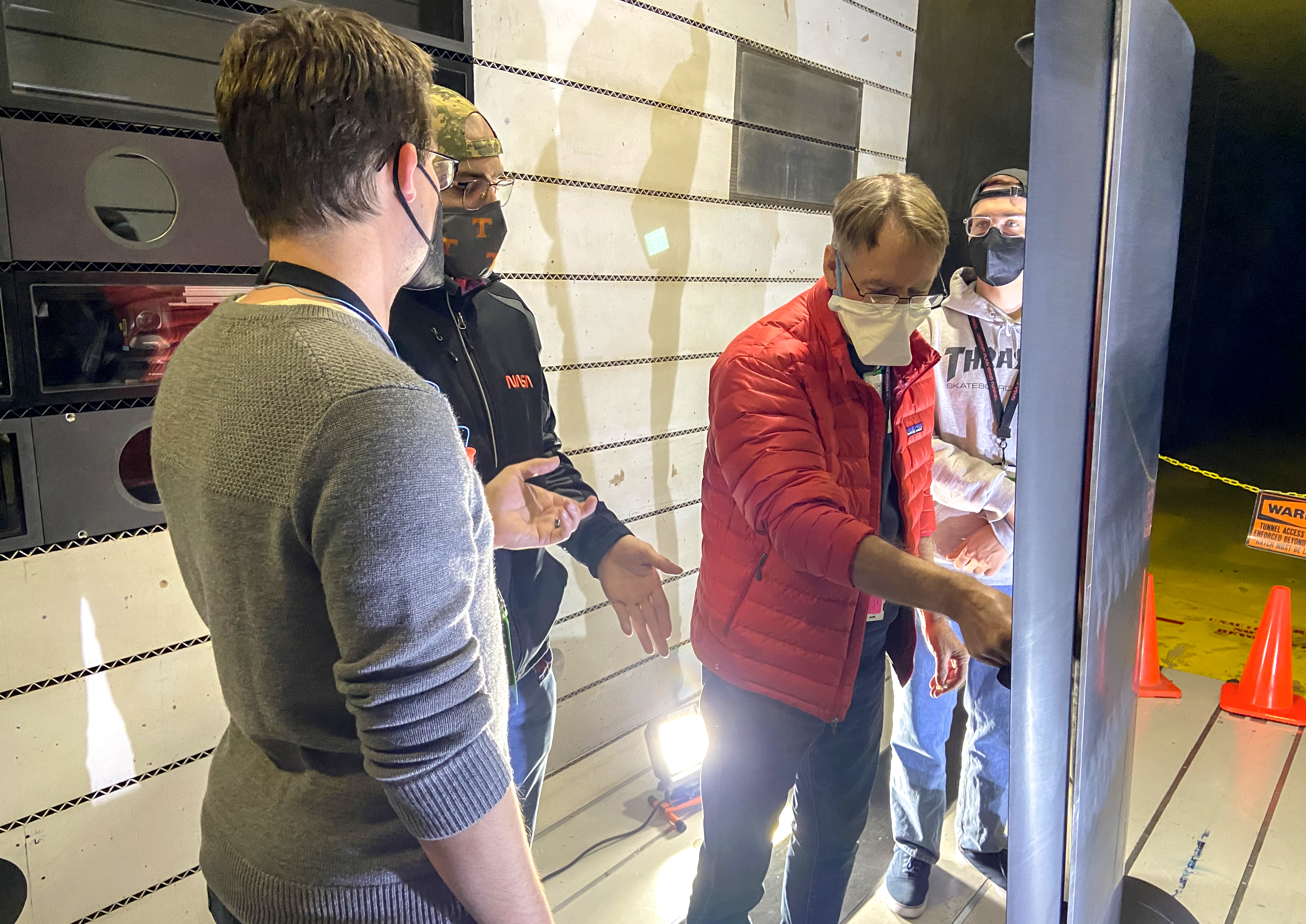
Three University of Tennessee/Knoxville students and co-investigator Dan Somers (in red jacket) prepare a slotted laminar flow wing section for testing in a wind tunnel at NASA’s Ames Research Center in California.University of Tennessee/Knoxville“After 10 years industry remains interested in the SNLF technology and I am optimistic for good reason about its future,” Coder said. “And project alumni have gone on to do many wonderful things and leverage what they did and learned through the ULI.”
With ULI experience prominent on their resumes, several of the students on Coder’s team wound up with jobs in industry – such as Boeing and Lockheed Martin – and government labs. One is currently a NASA Pathways intern working on his PhD.
Now at Pennsylvania State University, Coder remains a strong advocate for ULI.
“It goes above and beyond simple workforce development,” he said. “We recognized early on the value-add of ULI is the students themselves. While we could have just trained students en masse, we wanted to put them in the front seat of technical leadership on the project. I think this was a very successful strategy that benefited the project and the students as they embarked on their careers.”
Mighty morphingForrest Carpenter is another example of a student whose ULI support led to work after graduation – in this case at NASA.
“Working on the ULI project was an incredible experience, one I will always be thankful for and will remember fondly,” Carpenter said. “I think the project challenged me to be something more than ‘just an engineer;’ really helping my professional development and giving me a clearer focus on my passion.”
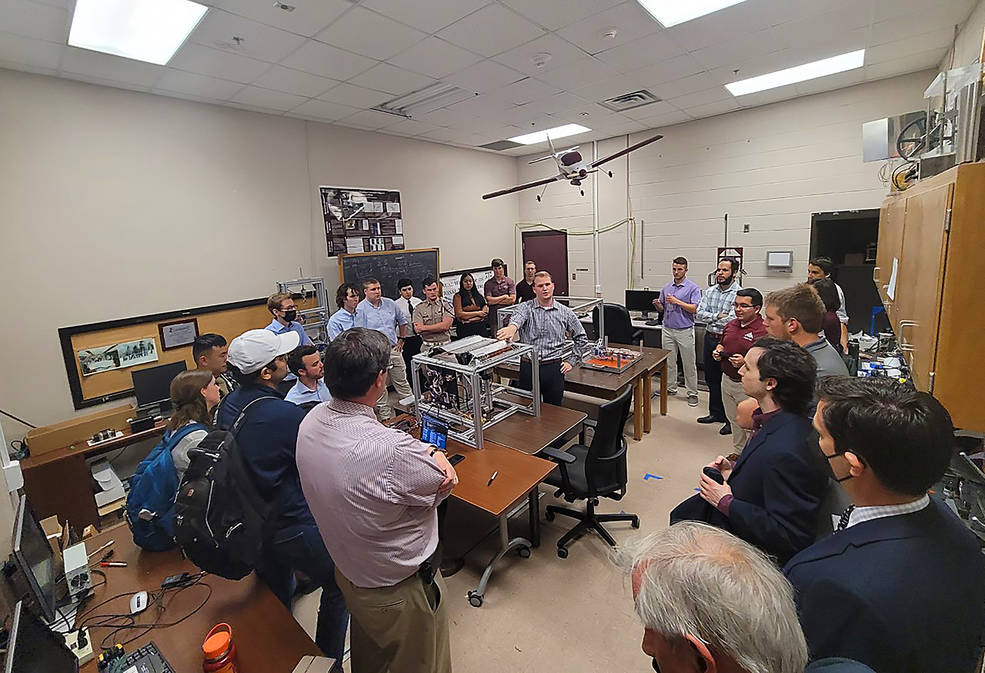
As a student at Texas A&M, he was part of a team selected by NASA in 2017 to research a novel idea in which a supersonic aircraft could alter its shape to fly more efficiently based on the atmospheric conditions in real time. Dimitris Lagoudas, now the university’s interim department head for aerospace engineering, led the team.
Members of a University Leadership Initiative round one team led by Texas A&M University participate in a status update meeting with NASA prior to their final review in 2022.Texas A&M University / Jonathan Weaver-RosenA laser shooting out ahead of the aircraft would take measurements of the oncoming air and then the aircraft’s computer would command patches of shape memory alloys and other mechanisms to morph the aircraft’s outer shape.
One possible application of the technology could be in contributing to the reduction of the loudness of a sonic boom, expanding on the science behind NASA’s X-59 quiet supersonic technology demonstrator that seeks to reduce the sonic boom to a sonic thump.
“My main research role on the team was performing Computational Fluid Dynamics simulations of the various geometries we were looking at, including a pre-production version of X-59,” Carpenter said.
His work on the idea continues. A follow-on NASA project, GoSWIFT, will flight test the core technologies Carpenter and his ULI team worked on at Texas A&M. Only this time, Carpenter is the co-lead for the tests, which are targeted to take place at NASA’s Armstrong Flight Research Center in California in the near future.
Carpenter’s enthusiasm for his work and gratitude for how ULI led to his career with NASA resonates with many other ULI alumni.
“The number of students impacted, and how they were impacted, by a long-term project like ULI is huge,” Carpenter said. “NASA’s involvement in this kind of activity can only strengthen the research done in this country and to help inspire and develop the next generation of our workforce.”
ULI is supported by the Transformative Aeronautics Concepts Program within NASA’s Aeronautics Research Mission Directorate, which publishes ULI solicitations and other opportunities to collaborate with the agency’s aeronautical innovators.
About the AuthorJim BankeManaging Editor/Senior WriterJim Banke is a veteran aviation and aerospace communicator with more than 40 years of experience as a writer, producer, consultant, and project manager based at Cape Canaveral, Florida. He is part of NASA Aeronautics' Strategic Communications Team and is Managing Editor for the Aeronautics topic on nasa.gov. In 2007 he was recognized with a Distinguished Public Service Medal, NASA's highest honor for a non-government employee.
Facebook logo @NASA@NASAaero@NASAes @NASA@NASAaero@NASA_es Instagram logo @NASA@NASAaero@NASA_es Linkedin logo @NASA Explore More 4 min read NASA Releases Powerful LAVA Software to US Aerospace Industry Article 5 days ago 4 min read NASA, Organ Sharing Network UNOS to Study Faster Organ Transport Article 6 days ago 1 min read 2025-2026 Dream with Us Design Challenge Winners Article 2 weeks ago Keep Exploring Discover More Topics From NASAMissions
Artemis
Aeronautics STEM
Explore NASA’s History
Share Details Last Updated Apr 24, 2026 EditorJim BankeContactLynne Sahaylynne.sahay@nasa.gov Related TermsAn Agricultural Mosaic in Taiwan
- Earth
- Earth Observatory
- Image of the Day
- EO Explorer
- Topics
- More Content
- About
Johnson Leaders Honored by National Space Club & Foundation
The National Space Club & Foundation announced its annual award recipients March 13, 2026, in Washington, D.C.
Two dedicated leaders from NASA’s Johnson Space Center were recognized for their contributions to human spaceflight.
Orion Program Manager Howard Hu receives the Norman L. Baker Astronautics Engineer Award. National Space Club & FoundationOrion Program Manager Howard Hu received the Norman L. Baker Astronautics Engineer Award for sustained technical contributions to multiple human spaceflight efforts.
Hu leads the design, development, production, and operations of Orion, NASA’s spacecraft for Artemis missions to the Moon. He has held several leadership roles within the Orion program, including deputy program manager, a manager of the Avionics, Power, and Software Office, and deputy manager of the Vehicle Integration Office. Hu has supported Orion since its inception, beginning as the Vehicle System Performance and Analysis lead.
On April 1, 2026, Artemis II launched on a 10-day voyage around the Moon, marking the first crewed flight of the Orion spacecraft. NASA astronauts Reid Wiseman, Victor Glover, and Christina Koch, and CSA (Canadian Space Agency) astronaut Jeremy Hansen splashed down safely inside Orion April 10 in the Pacific Ocean off the coast of San Diego. At their farthest point, the crew and spacecraft traveled 252,756 miles from Earth, setting a new record for the greatest distance traveled by humans in space.
The mission successfully proved the capability of Orion’s critical systems such as life support with humans aboard. Data from Artemis II will help refine mission operations and further evaluate Orion’s performance in deep space, supporting future Artemis missions.
NASA and its partners are now shifting their focus to Artemis III, which will test integrated operations between Orion and the human landing system in lunar orbit and advance plans to return astronauts to the Moon.
Before joining Orion, Hu served in multiple technical and leadership roles at Johnson, including chief engineer for exploration in the Aeroscience and Flight Mechanics Division, project manager and co-developer of shuttle abort flight management software for the Space Shuttle Cockpit Avionics Upgrades Program, and deputy guidance, navigation, and control system manager for the International Space Station program.
International Space Station Program Manager Dana Weigel receives the Eagle Manned Mission Award. National Space Club & FoundationInternational Space Station Program Manager Dana Weigel received the Eagle Manned Mission Award. She leads development, integration, and operations for the International Space Station. The space station celebrated a historic milestone on Nov. 2, 2025, marking 25 years of continuous human habitation. The orbiting laboratory remains a critical testbed for future commercial destinations in low Earth orbit and for deep space exploration, supporting Artemis missions and future human missions to Mars.
Weigel has held several leadership roles within the program, including deputy chief of the Flight Director Office, where she led the Extravehicular Activity Recovery Team following a major in-flight spacewalk anomaly. She also served as a NASA flight director for STS-123 and led the agency’s geosynchronous Earth orbit satellite servicing habitat study.
NASA’s Johnson Space Center Director Vanessa Wyche attends the 69th Annual Robert H. Goddard Memorial Dinner with her husband George Wyche Jr. National Space Club & FoundationSelected by panels of experts across industry, government, and academia, the awards reflect achievements that advance aerospace and national interests. Honorees were recognized at the 69th Annual Robert H. Goddard Memorial Dinner at the Washington Hilton.
“Dana Weigel and Howard Hu’s contributions to human space exploration, through their leadership and roles within the agency, are paramount,” said Johnson Director Vanessa Wyche. “It was a privilege to be there in person to celebrate and champion them as they were recognized for the lasting impact of their work. Congratulations to Dana, Howard, and all the award recipients on this well-deserved recognition.”
Hu and Weigel’s service exemplifies the leadership and technical excellence that continue to advance U.S. human space exploration.
Explore More 3 min read I Am Artemis: Peter Rossoni Article 1 day ago 3 min read NASA Welcomes Jordan as 63rd Artemis Accords Signatory Article 2 days ago 4 min read Liquid Lifeline: NASA Tech Could Create IV Fluid In Space Article 2 days agoNASA Shares SpaceX Crew-13 Assignments for Space Station Mission
As part of NASA’s SpaceX Crew-13 mission, four crew members from three space agencies will launch no earlier than mid-September to the International Space Station for a long-duration science expedition.
NASA astronauts Jessica Watkins and Luke Delaney will serve as spacecraft commander and pilot, respectively. They will be joined by CSA (Canadian Space Agency) astronaut Joshua Kutryk and Roscosmos cosmonaut Sergey Teteryatnikov, who will serve as mission specialists. After arriving at the orbiting laboratory, Crew-13 will become members of the space station’s Expedition 75.
This flight is the 13th crew rotation with SpaceX to the space station as part of NASA’s Commercial Crew Program. NASA is advancing the launch date of Crew-13 from November to help increase the frequency of U.S. crew rotation missions to the space station. The crew will conduct scientific investigations and technology demonstrations to help prepare humans for future exploration missions to the Moon and Mars, and benefit people on Earth.
This will be the second flight to the space station for Watkins, who was selected as a NASA astronaut in 2017. Watkins grew up in Lafayette, Colorado, and earned an undergraduate degree in geological and environmental sciences from Stanford University, as well as a doctorate in geology from the University of California, Los Angeles. As a geologist, she studied the Martian surface and was a member of the Curiosity rover science team at NASA’s Jet Propulsion Laboratory in Southern California. Watkins first launched to the space station as a crew member aboard NASA’s SpaceX Crew-4 mission, spending a total of 170 days in space across Expeditions 67/68 in 2022. She will be the first NASA astronaut to launch aboard a SpaceX Dragon spacecraft twice.
Selected as a NASA astronaut in 2021, Delaney earned a bachelor’s degree in mechanical engineering at the University of North Florida and a master’s degree in aerospace engineering at the Naval Postgraduate School. The Florida native is a distinguished naval aviator who participated in exercises throughout the Asia Pacific region and conducted missions in support of Operation Enduring Freedom. As a test pilot, Delaney evaluated developmental aircraft systems and served as a test pilot instructor. He also worked as a research pilot at NASA’s Langley Research Center in Hampton, Virginia, where he supported airborne science missions. This is the first spaceflight for Delaney.
The Crew-13 mission also is the first spaceflight for Kutryk. Prior to his selection as a CSA astronaut in 2017, he served as a CF-18 fighter pilot, flying missions in support of Canada’s NATO, U.N., and North American Aerospace Defense Command commitments. A native of Fort Saskatchewan, Alberta, Kutryk also worked as an experimental and operational test pilot at the Aerospace Engineering Test Establishment in Cold Lake, Alberta. Kutryk received a bachelor’s degree in mechanical engineering from the Royal Military College of Canada in Kingston, Ontario, and he is a distinguished graduate of the United States Air Force Test Pilot school in Edwards, California. He has master’s degrees in space studies, flight test engineering, and defense studies.
Crew-13 will be Teteryatnikov’s first trip to the orbiting laboratory. He graduated from the Naval Academy, St. Petersburg, Russia, in 2011 as an engineer specializing in ship power plant operations. Before his selection as a test cosmonaut, Teteryatnikov served in various naval engineering roles, including undersea vessels and specialized engine room operations. He was selected for the Gagarin Research and Test Cosmonaut Training Center Cosmonaut Corps in 2021 and has served as a test cosmonaut since 2023.
For more than 25 years, people have lived and worked continuously aboard the International Space Station, advancing scientific knowledge and making research breakthroughs that aren’t possible on Earth. The space station helps NASA understand and overcome the challenges of human spaceflight, expand commercial opportunities in low Earth orbit, and build on the foundation for long-duration missions to the Moon, as part of the Artemis program, and to Mars.
Learn more about International Space Station research and operations at:
-end-
Joshua Finch / Jimi Russell
Headquarters, Washington
202-358-1100
joshua.a.finch@nasa.gov / james.j.russell@nasa.gov
Anna Schneider / Mary Pfister
Johnson Space Center, Houston
281-483-5111
anna.c.schneider@nasa.gov / mary.m.pfister@nasa.gov
NASA Kennedy Prepares Facility for Roman Space Telescope Arrival
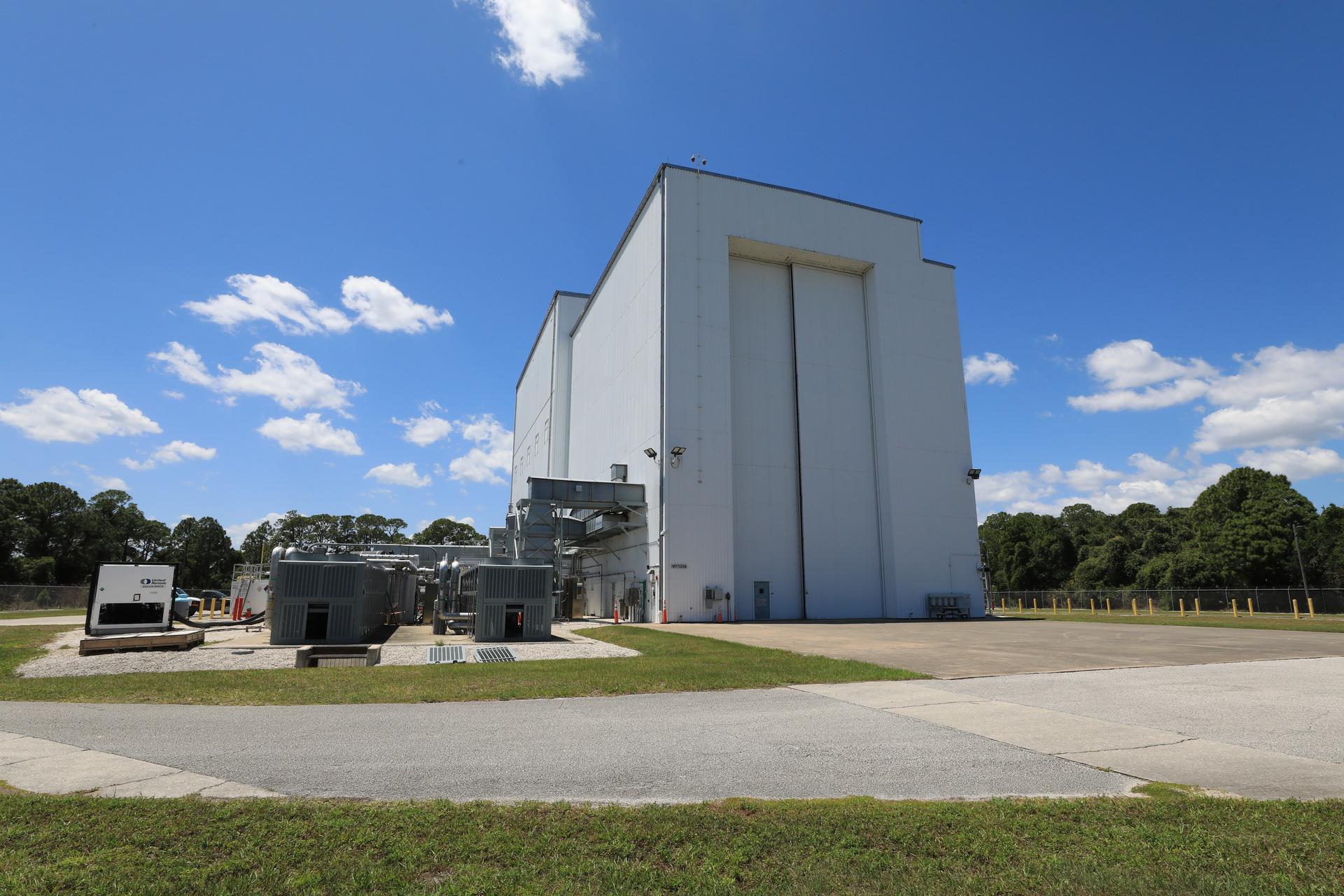
Preparations are underway for launch of NASA’s Nancy Grace Roman Space Telescope as soon as early September on a SpaceX Falcon Heavy rocket from Launch Complex 39A at NASA’s Kennedy Space Center in Florida. The Roman space telescope will provide deep, panoramic views of the cosmos, generating never-before-seen pictures that will revolutionize our understanding of the universe. Before Roman arrives at the launch pad, however, the telescope will complete final inspections, checkouts, and fueling at NASA Kennedy’s Payload Hazardous Servicing Facility (PHSF).
The 40-year-old facility is a dedicated dual-use complex for clean room and hazardous material operations, where numerous spacecraft have undergone final prelaunch processing including receiving, integration, testing, and encapsulation ahead of liftoff. NASA’s Launch Services Program, based at NASA Kennedy, manages the launch service for the Roman mission.
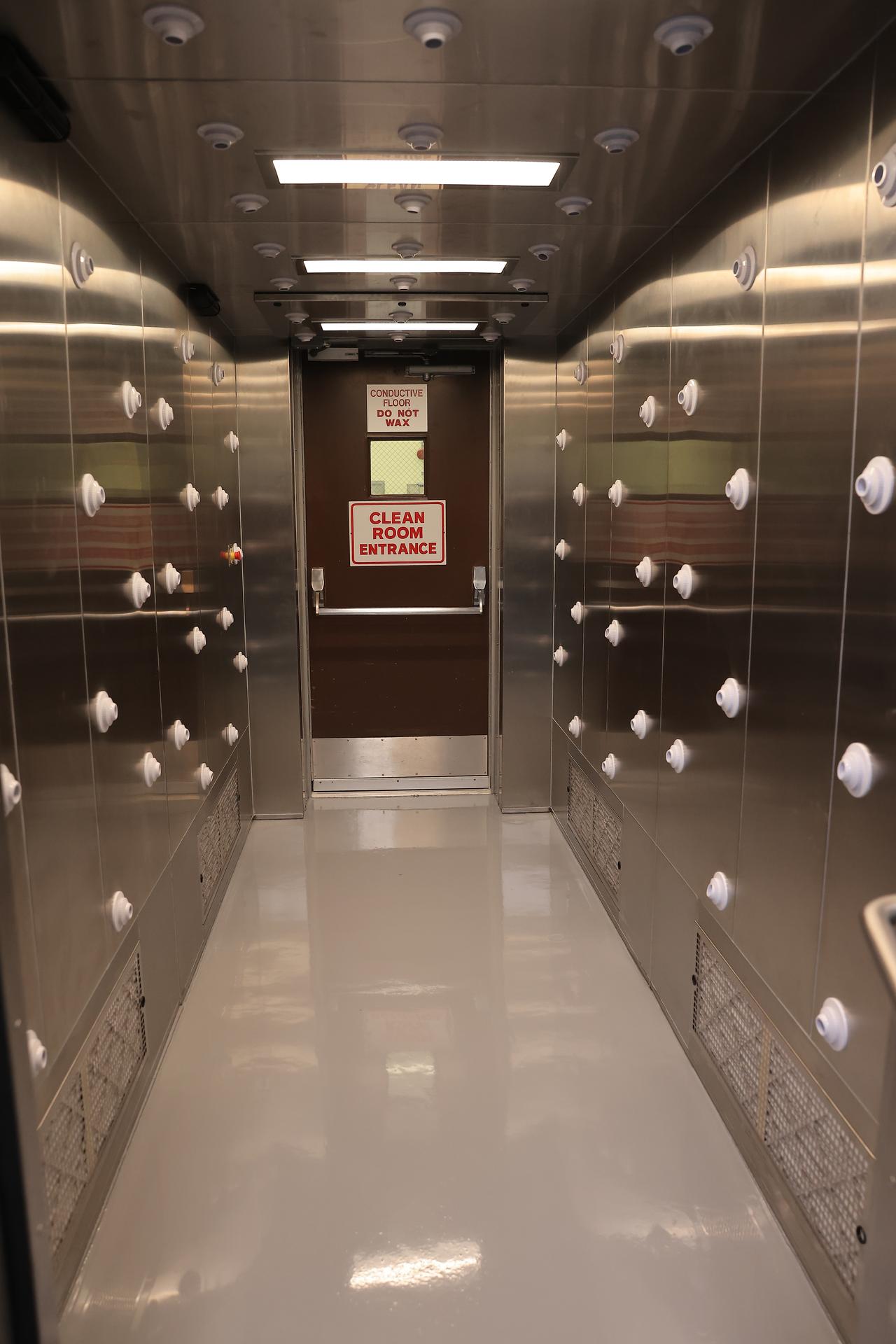
To prepare for Roman’s arrival, the program oversaw several upgrades to the PHSF. This included replacing its air-shower system, a small entry chamber that blasts high-velocity HEPA-filtered air onto people and equipment before they enter a clean room.
“Roman is a very sensitive spacecraft. NASA is always pushing the boundaries of how precise our instruments can be, and the result of that is they need to be very well cared for while they’re being processed at the PHSF,” said Ryan Boehmer, launch site integration manager with the Launch Services Program at NASA Kennedy. “One of the biggest sources of contamination for a spacecraft is people.”
The PHSF is a clean work area, so the facility must be free of any contamination that could negatively impact the Roman spacecraft. Technicians must dress in a protective suit before using the air shower, which sprays air to reduce any particles carried on clothing or equipment and keeps the spacecraft’s environment in the facility as clean and contamination-free as possible.
Dust, debris, or even a piece of hair can interfere with a spacecraft and its instruments as it gathers crucial science data in orbit. The facility is certified to the International Organization for Standardization (ISO) ISO class 8 clean room standards but can exceed that with augmentation. The team is planning to use a HEPA filtration wall to achieve ISO class 7 standards required for Roman.
This image shows the recently upgraded air showers which blast high-velocity HEPA-filtered air onto people before they enter a clean room at NASA’s Payload Hazardous Servicing Facility at the agency’s Kennedy Space Center in Florida on Friday, Feb. 27, 2026. NASA/Kim ShiflettAnother PHSF upgrade is its HVAC system, which is far more advanced than a typical residential system. The goal of this upgrade is to replace the facility’s chiller coils to ensure the airlock and clean room remain climate-controlled with backups available if one fails. Additional updates include the compressed-air system’s pressure tank, air dryer, and regulator panel to supply clean, reliable compressed air to slide hardware around the floor – like an air hockey table but on a much larger scale. Massive volumes of filtered air circulate through the facility to prevent outside contaminants from entering the building.
“Another consideration we have is keeping both the spacecraft and people working on it at comfortable temperatures during processing, especially given Florida’s hot and humid environment,” said Genevieve Futch, Launch Services Program mission manager for Roman at NASA Kennedy. “Throughout processing, teams are powering on spacecraft for testing, which can generate heat. All the technicians in the clean room wear significant amounts of protective garments that trap heat, so we rely on the PHSF’s HVAC to reliably maintain the facility’s environment. We don’t want to overheat either the hardware or our team.”
Inside, the temperature is kept around 70° F with a maximum relative humidity of 60% and minimum humidity requirement of 30%. Too much humidity can lead to corrosion, while too little can create static electricity. The team constantly monitors the conditions to ensure the spacecraft’s safety.
Workers also repainted the facility’s 15-ton bridge crane, which is used to lift spacecraft hardware, but not for aesthetic reasons. The new paint helps prevent any paint chips from becoming foreign object debris, commonly referred to as FOD. All the teams working on Roman aim to mitigate even microscopic particles from contaminating the spacecraft. Paint chips are larger and heavier than some of the smallest contaminants, but they could still become airborne debris that can settle on hardware, causing mechanical interference and degrading performance. Removing all potential sources of contamination is part of the launch site planning and reflects the attention to detail required to launch a spacecraft.
Roman will undergo several prelaunch operations, including thermal protection closeout, cleaning, solar array work, and loading hydrazine propellant. The PHSF is one of the very few facilities where spacecraft undergo both hazardous fueling operations and delicate contamination control procedures.
Continuing legacyThe PHSF began operations in 1986 during the Space Shuttle Program, where it supported processing for several major shuttle payloads, including missions supporting NASA’s Hubble Space Telescope. Since 1998, the Launch Services Program has managed 16 launches processed at the PHSF, beginning with the program’s first mission, NASA’s Deep Space 1. Other missions include Mars 2020 Perseverance Rover, NASA’s Europa Clipper spacecraft, and soon to be Roman.
September 1998In the Payload Hazardous Servicing Facility, workers maneuver Deep Space 1 into place to attach the solar panels.NASA April 2009Crew members conduct equipment and procedure familiarization on parts of the payload in the Payload Hazardous Servicing Facility in preparation for their mission to service NASA’s Hubble Space Telescope. NASA/Kim Shiflett January 2020Mars 2020 lift activities in Payload Hazardous Servicing Facility.NASA/Kim Shiflett August 2024Technicians tested deploying a set of massive solar arrays measuring about 46.5 feet (14.2 meters) long and about 13.5 feet (4.1 meters) high for NASA’s Europa Clipper spacecraft inside the agency’s Payload Hazardous Servicing Facility. NASA/Kim Shiflett“We have the responsibility for ensuring the highest practical probability of launch success for these incredibly sophisticated and delicate spacecrafts,” said Boehmer. “We’re a common thread combining the capabilities of commercial rockets with NASA’s scientific spacecraft, and we have experience supporting the processing of everything from space telescopes to Mars rovers to deep space probes in this building.”
Roman will work in collaboration with NASA’s James Webb Space Telescope and Hubble. It is a survey mission with a field of view 100 times larger than Webb and up to 200 times larger than Hubble. Roman’s wide view will help answer essential questions about dark energy, exoplanets, and astrophysics, while Webb can follow up on rare objects Roman discovers, looking at them in greater detail.
“I think it’s human nature to wonder about what is out there in space,” said Boehmer. “I believe when we start getting images from Roman and see more of the universe than ever before, people will connect to that feeling of wonder.”
NASA Welcomes Jordan as 63rd Artemis Accords Signatory
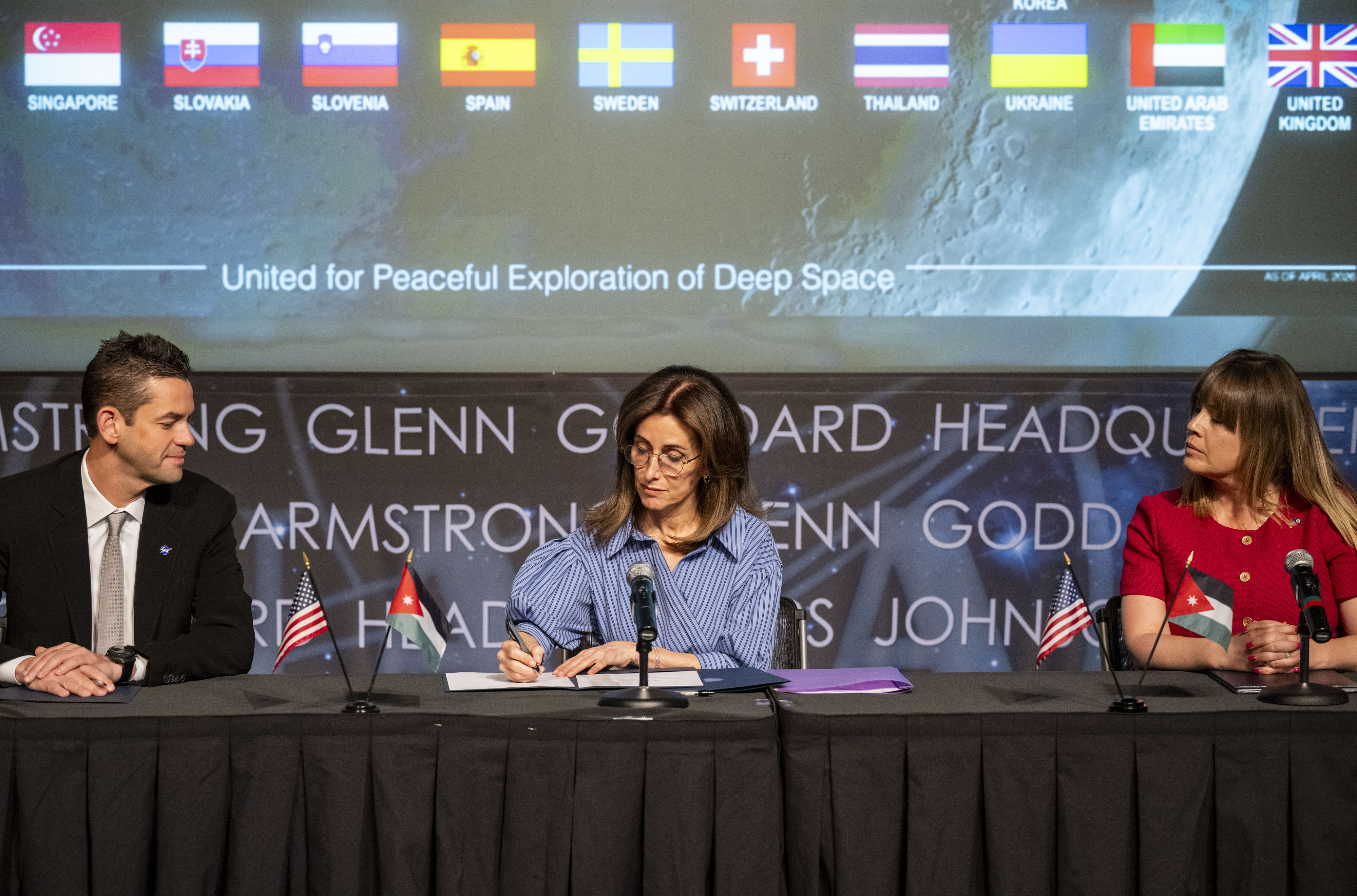
The Hashemite Kingdom of Jordan signed the Artemis Accords Thursday during a ceremony hosted by NASA at the agency’s headquarters in Washington, becoming the latest nation to commit to responsible space exploration to benefit humanity.
“It is my privilege to welcome Jordan as the newest signatory to the Artemis Accords,” said NASA Administrator Jared Isaacman. “By signing the accords today, Jordan brings valuable perspective and capabilities that will help expand the Golden Age of exploration for all mankind. They join at a pivotal moment, as we take the accords principles and put them into practice with humanity’s return to the Moon. Through Artemis, we’re going back to the lunar surface, with contributions from our international partners, to build a Moon Base and to stay.”
Ambassador Dina Kawar of Jordan signed the accords on behalf of the country. U.S. Department of State Acting Principal Deputy Assistant Secretary for Oceans and International Environmental and Scientific Affairs Ruth Perry also participated in the ceremony.
“Jordan has more engineers per capita than almost any country in the world,” said Kawar. “Through the National Council for Future Technologies, His Royal Highness Crown Prince Al Hussein is ensuring that talent has a direction, transforming Jordan into a regional and global technology hub across AI, digital infrastructure, advanced manufacturing, and now space. Today’s signing is proof that this ambition has no ceiling. We invite our American partners to build what comes next with us.”
In 2018, Jordan launched the JY1 satellite, a CubeSat developed by university students. The CubeSat transmitted images and audio from orbit after its launch on a SpaceX Falcon 9 rocket from Vandenberg Space Force Base in California. Jordan’s growing interest in space includes a privately operated analog research facility in Wadi Rum, where the Jordan Space Research Initiative conducted its PETRA1 and PETRA2 missions in 2024 and 2025 to advance human spaceflight and planetary research for real-world benefits on Earth.
In 2020, during the first Trump Administration, the United States, led by NASA and the State Department, joined with seven other founding nations to establish the Artemis Accords, responding to the growing interest in lunar activities by both governments and private companies. The accords introduced the first set of practical principles aimed at enhancing the safety and coordination between like-minded nations as they explore the Moon, Mars, and beyond.
Signing the Artemis Accords means committing to explore peaceably and transparently, to render aid to those in need, to enable access to scientific data that all of humanity can learn from, to ensure activities do not interfere with those of others, and to preserve historically significant sites and artifacts by developing best practices for space exploration for the benefit of all.
More countries are expected to sign the Artemis Accords in the months and years ahead, as NASA continues its work to establish a safe, peaceful, and prosperous future in space.
Learn more about the Artemis Accords at:
https://www.nasa.gov/artemis-accords
Share Details Last Updated Apr 23, 2026 EditorJennifer M. DoorenLocationNASA Headquarters Related TermsLiquid Lifeline: NASA Tech Could Create IV Fluid In Space
4 min read
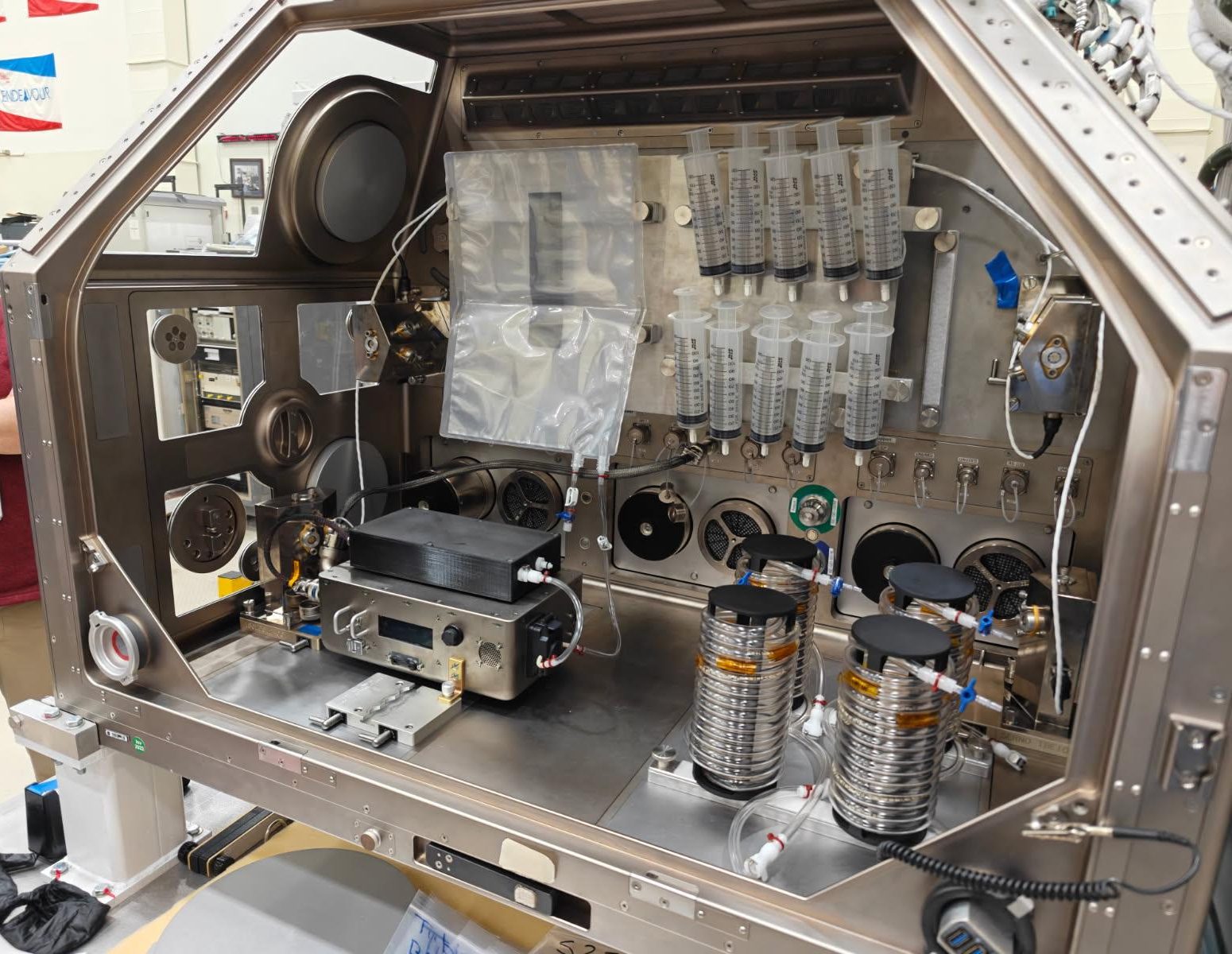
Preparations for Next Moonwalk Simulations Underway (and Underwater) IVGEN Mini hardware is installed in a replica of the International Space Station’s Life Sciences Glovebox at NASA’s Marshall Space Flight Center in Huntsville, Alabama, in November 2025. The system operates by filtering drinking water on the International Space Station to produce medical-grade IV fluid for use when treating inflight medical conditions.Credit: NASAOn every crewed mission, NASA packs pouches of a potentially life-saving liquid in its cargo, known as IV (or intravenous) fluid. A simple mix of sodium chloride and purified water, it can treat up to 30% of medical conditions in flight, resolving things like dehydration, burns, and more.
Crewed missions beyond low Earth orbit into deep space could last up to three years and may require IV fluid for crew health. However, current IV fluid shelf life is limited to 16 months. To avoid the complications of stocking a perishable supply of prepacked IV fluid, experts at NASA’s Glenn Research Center in Cleveland have created a technology that can transform water into IV fluid on demand. They now are preparing to test the latest, lightweight version of the system aboard the International Space Station.
The system, known as IntraVenous Fluid GENeration Miniaturized (IVGEN Mini), flew to the station on April 11 aboard NASA’s Northrop Grumman Commercial Resupply Services 24 mission along with other supplies, experiments, and hardware. IVGEN Mini will produce IV fluid during demonstrations this spring and fall to verify that the design works as intended in space.
The system operates by adding space station drinking water to a large supply bag. The bag is connected to IVGEN Mini, which filters the water to remove any particulates and mineral ions. The processed water flows into an output bag that contains premeasured sodium chloride, and the measured combination of both creates sterile, medical-grade IV fluid.
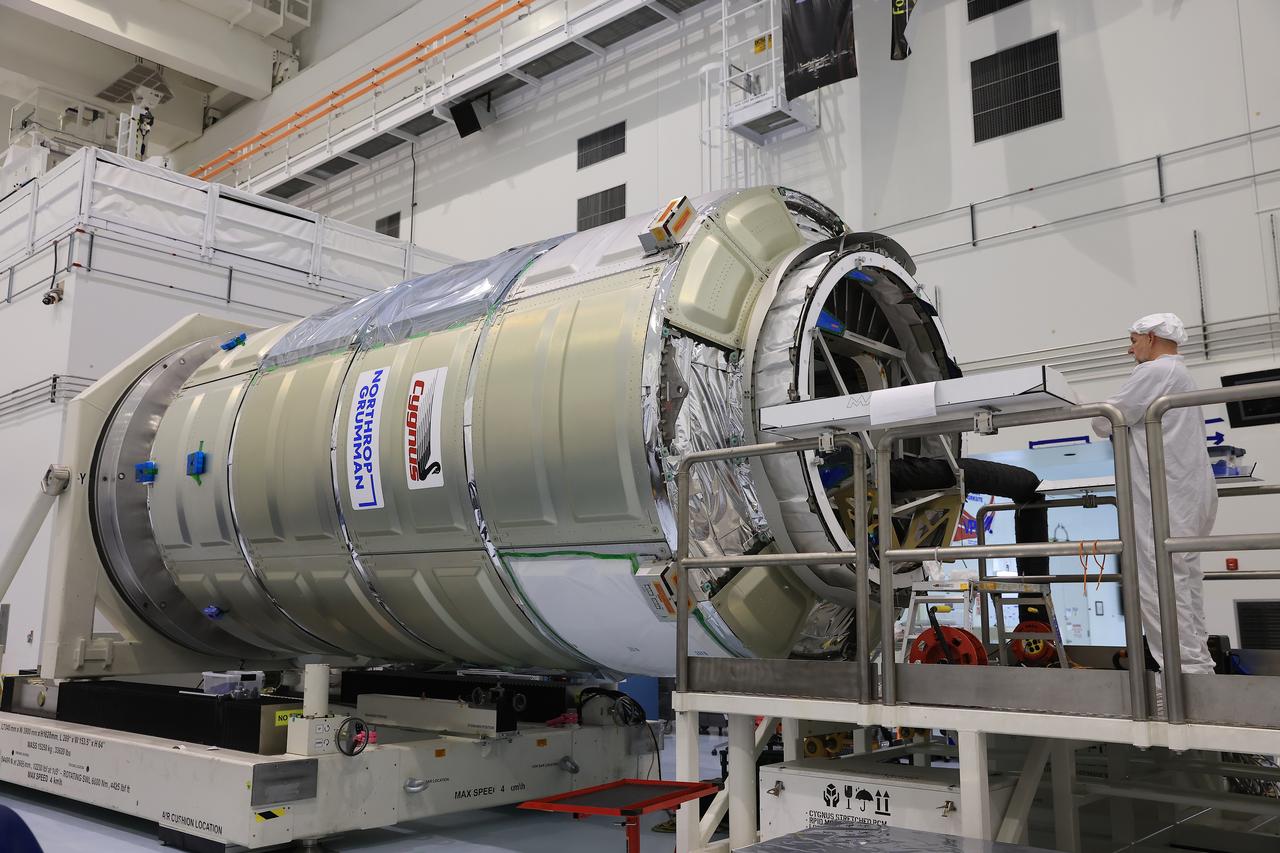
Technicians conduct prelaunch operations on the Northrop Grumman Cygnus XL spacecraft’s pressurized cargo module on Monday, Feb. 23, 2026, inside the Space Systems Processing Facility at NASA’s Kennedy Space Center in Florida. The Cygnus capsule carried supplies, food, and scientific experiments – including IVGEN Mini – for crew members at the International Space Station as part of the company’s 24th cargo resupply mission for NASA on April 11, 2026.Credit: NASA/Kim Shiflett“Following launch, we have tentative operations planned for May,” said Courtney Schkurko, engineering project manager at NASA Glenn. “The crew aboard the International Space Station will operate IVGEN Mini over the course of two days, and 10 liters of fluid will be generated. Those liters will then be prepared to return to Earth and analyzed to make sure the fluid that was generated in flight meets requirements and is safe to use.”
The IVGEN Mini system is the second iteration of this technology, originally called IVGEN, which was demonstrated aboard the space station in 2010. The original was much larger because it included additional sensing equipment to prove that the system worked as intended. Following the successful demonstration, the team created a miniaturized version.
“With IVGEN Mini, we’ve reduced the system’s size and weight,” Schkurko said. “The previous system used gaseous nitrogen to pump fluid through the system. Now, we have pumps that are miniaturized, which allow us to optimize our designs and refine the filtering process.”
In addition to solving the limited shelf life concerns of prepackaged IV fluid, IVGEN Mini also lightens cargo loads. During a deep space mission where crews may spend years in space, cargo must be as lightweight as possible. With IVGEN Mini, NASA won’t need to pack an abundance of IV fluid — it can be produced as needed if supplies run low.
“On a mission to Mars, if you needed to fly 100 liters of IV fluid, those 100 one-liter bags will take up a large amount of space, while IVGEN Mini takes up much less,” Schkurko said. “It’s that trade between packing IV fluid bags that are likely to expire during the mission or taking a small device and making it as you go. The latter means it will always be within expiration period, it will be available to the crew, and it’s one less risk we have to worry about.”
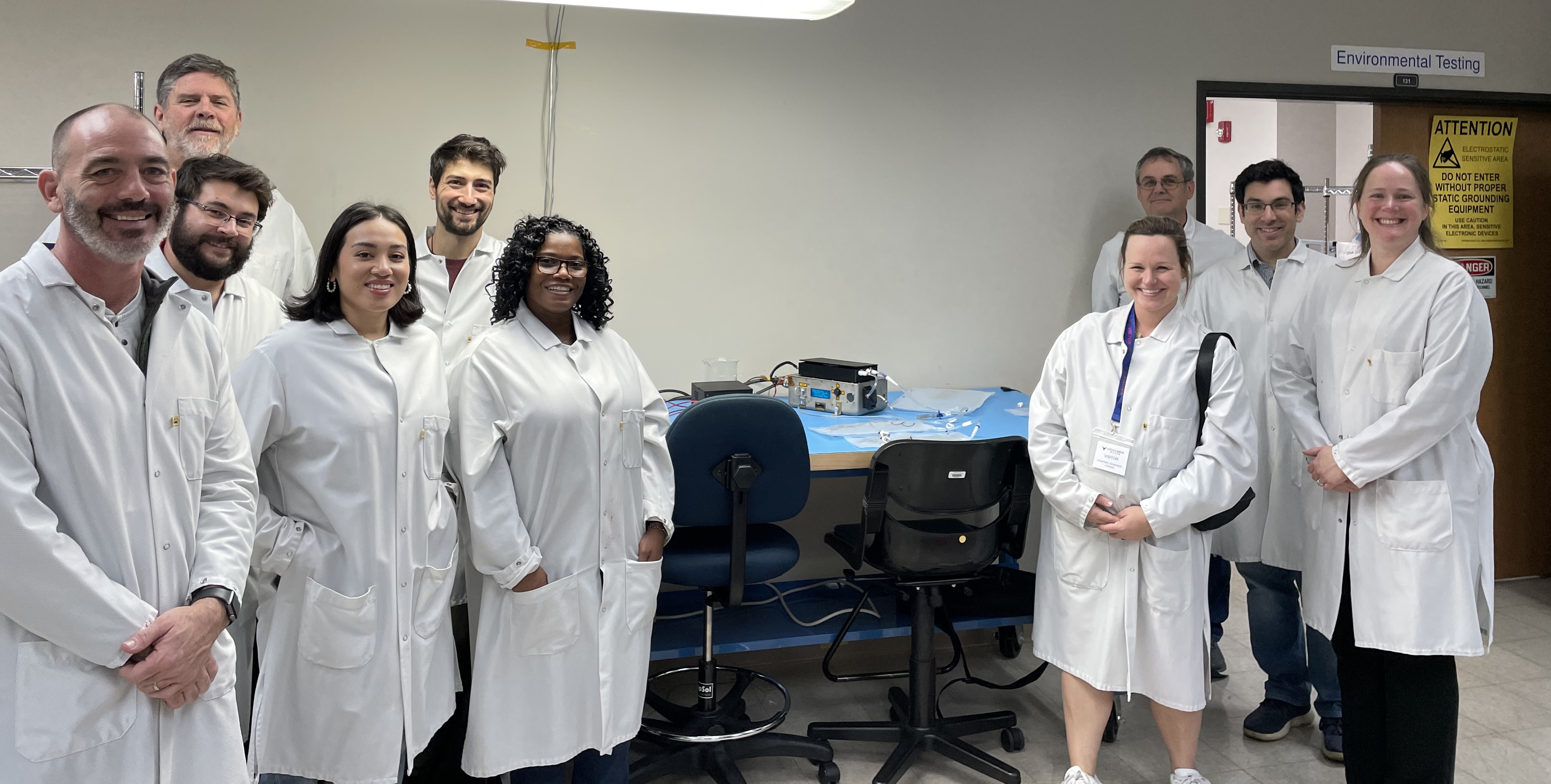
The IVGEN Mini development team poses for a photo in November 2024. The team consists of members from NASA’s Glenn Research Center in Cleveland; Sierra Lobo, Inc.; and NASA’s Johnson Space Center in Houston.Credit: NASARequirements for IVGEN Mini were based on what medical events could occur during a deep space mission, how much fluid it would take to treat those events, and how quickly the fluid can flow through the system. The current system can produce 1.2 liters of IV fluid per hour, which meets these needs. The team also is adhering to United States Pharmacopeia standards, which ensure the system and the fluid it produces meet required pH values and salinity tolerances, and do not contain bacteria, organic carbon, or particulates. Although IVGEN Mini testing will take place aboard the space station, none of the fluid produced will be administered to the crew.
The IVGEN Mini team is currently planning for shelf-life testing of IV fluid produced by the system as a next phase of this technology. The system is managed by NASA’s Mars Campaign Office as one of the many technologies developed to enable human exploration on the Moon and Mars.
For more information on future innovations for crewed missions to Mars, visit:
https://www.nasa.gov/exploration-systems-development-mission-directorate
Share Details Last Updated Apr 23, 2026 EditorHeather RoeContactShauntina LillyLocationGlenn Research Center Related Terms Explore More 3 min read I Am Artemis: Peter Rossoni Article 1 day ago 8 min read NASA Celebrates Decade of University Innovation in Aeronautics Article 1 day ago 4 min read Johnson Leaders Honored by National Space Club & Foundation Article 2 days ago Keep Exploring Discover Related TopicsMissions
Humans in Space
Climate Change
Solar System
NASA’s Chandra Finds Young Stars Dim Quickly
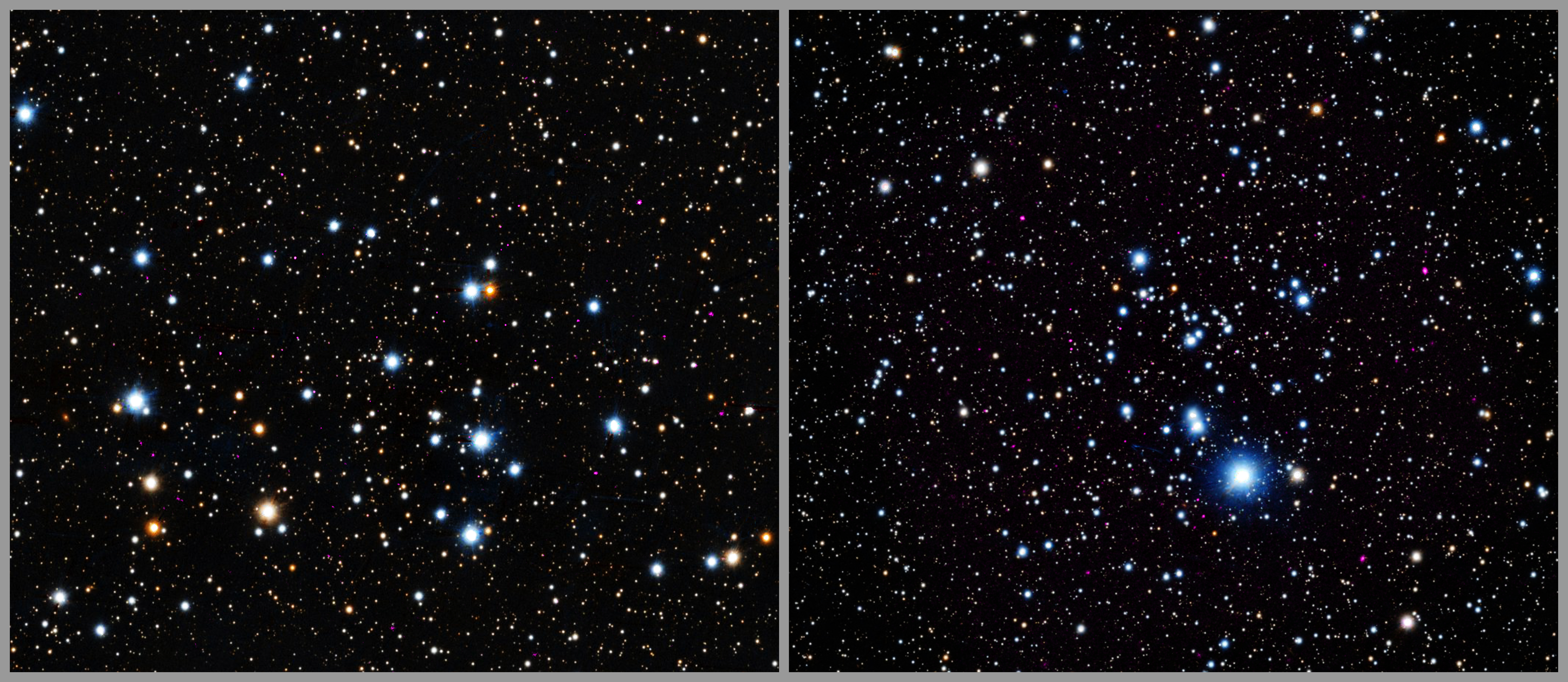
These images, released on April 14, 2026, show two open star clusters, Trumpler 3 (left) and NGC 2353 (right). They represent a recent study from NASA’s Chandra X-ray Observatory that shows how young Sun-like stars are dimmer in X-rays than previously thought.
This latest study looked at eight clusters of stars between the ages of 45 million and 750 million years old. The researchers found that Sun-like stars in these clusters unleashed only about a quarter to a third of the X-rays they expected. This quieting of young stars is a benefit for the prospects for life on orbiting planets around these stars — not a threat.
Learn more about what this finding means.
Image credit: X-ray: NASA/CXC/Penn State Univ/K. Getman; Optical/IR: PanSTARRS; Image Processing: NASA/CXC/SAO/N. Wolk
Smoke Shrouds Northern Thailand
- Earth
- Earth Observatory
- Image of the Day
- EO Explorer
- Topics
- More Content
- About
NASA SBIR/STTR Phase I and II BAA, 2026 Appendix A and B are now live! Offers due May 21, 2026, 5:00PM EDT
https://www.nasa.gov/sbir_sttr/nasa-sbir-sttr-program-program-year-2026-information-hub
NASA’s 777 Aircraft Returns Home with Science Flights on the Horizon
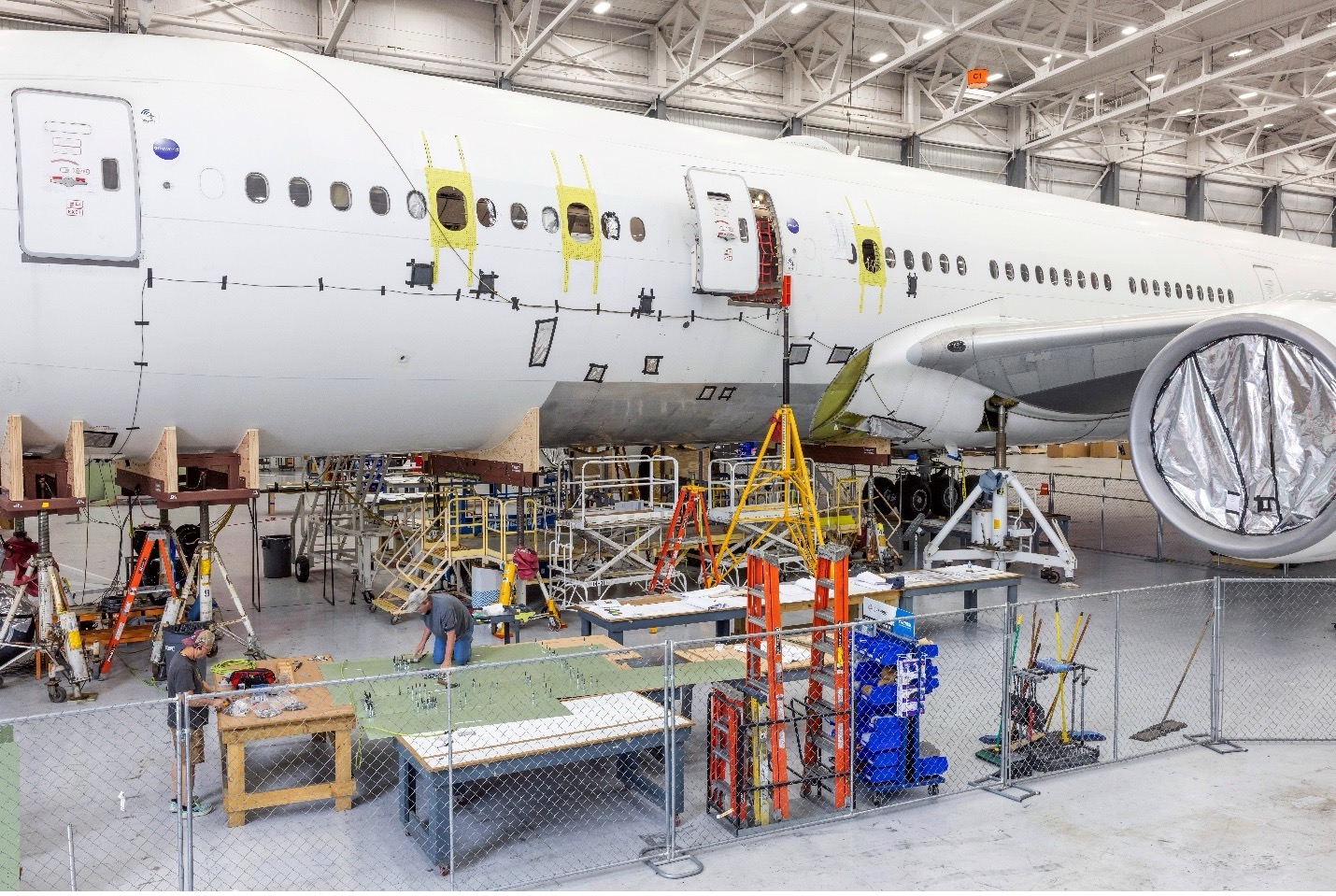
NASA’s Boeing 777 has returned to the agency’s fleet after undergoing heavy structural modifications as it transforms from a giant passenger plane into the agency’s next-generation airborne science laboratory. After a check flight and a three-hour transit from Waco, the aircraft returned to NASA’s Langley Research Center in Hampton, Virginia, on April 22.
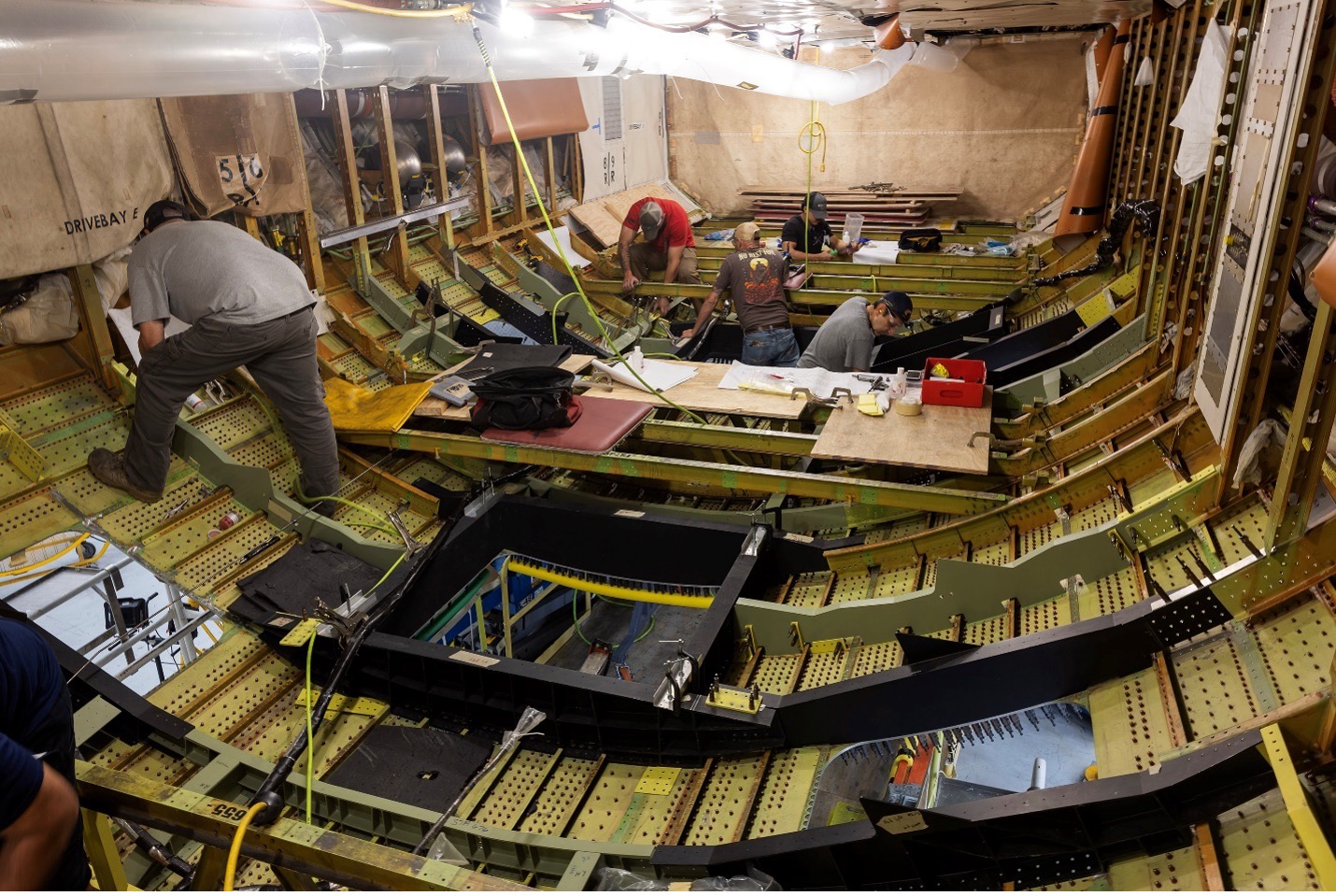
Since January 2025, the aircraft has been in Texas receiving hardware and structural upgrades to prepare for science operations. The modifications include installing dedicated research stations and extensive wiring. This allows payload systems to communicate with sensors such as lidar and infrared imaging spectrometers during flights. Cabin windows were enlarged and open portals installed at the bottom of the fuselage to mount remote-sensing instruments.
Widened windows along the NASA 777 will serve as viewports for a variety of scientific instrument sensors. Modifications on the belly of the aircraft at the L3Harris facility in Waco require extensive support to ensure aircraft alignment during reassembly. Credit: L3Harris“Airborne missions at NASA use cutting-edge instruments to explore and understand our home planet,” said Derek Rutovic, program manager for the Airborne Science Program at NASA Headquarters in Washington. “The 777 will be the largest airborne research laboratory in our fleet, collecting data to improve life on our home planet and extend our knowledge of the Earth system as a whole.”
Acquired in 2022 to succeed NASA’s retired DC-8 aircraft, the 777 will expand the agency’s airborne research capacity. It can accommodate 50 to 100 operators and carry 75,000 pounds of equipment for flights lasting up to 18 hours.
“NASA’s DC-8 was an incredible workhorse for Earth science for nearly 40 years,” said Kirsten Boogaard, the NASA 777 program manager at NASA Langley and former deputy program manager of NASA’s DC-8. “Being part of that team, I got to see the impact up close. I’m excited for what the 777 will bring. It gives us the ability to bring together more partners, more educational opportunities, and more instruments. That will make a real difference in the data we collect moving forward.”
L3Harris installs viewports in the 777 aircraft cargo bay that will house advanced scientific instruments.Credit: L3HarrisThe aircraft’s inaugural science mission, slated to deploy in January 2027, will investigate high-impact winter weather events, such as severe cold air outbreaks, wind, snow and ice storms, and hazardous seas. Known as the North American Upstream Feature-Resolving and Tropopause Uncertainty Reconnaissance Experiment (NURTURE), the mission will collect detailed atmospheric observations across a vast region spanning North America, Europe, Greenland, and the Arctic and North Atlantic Oceans.
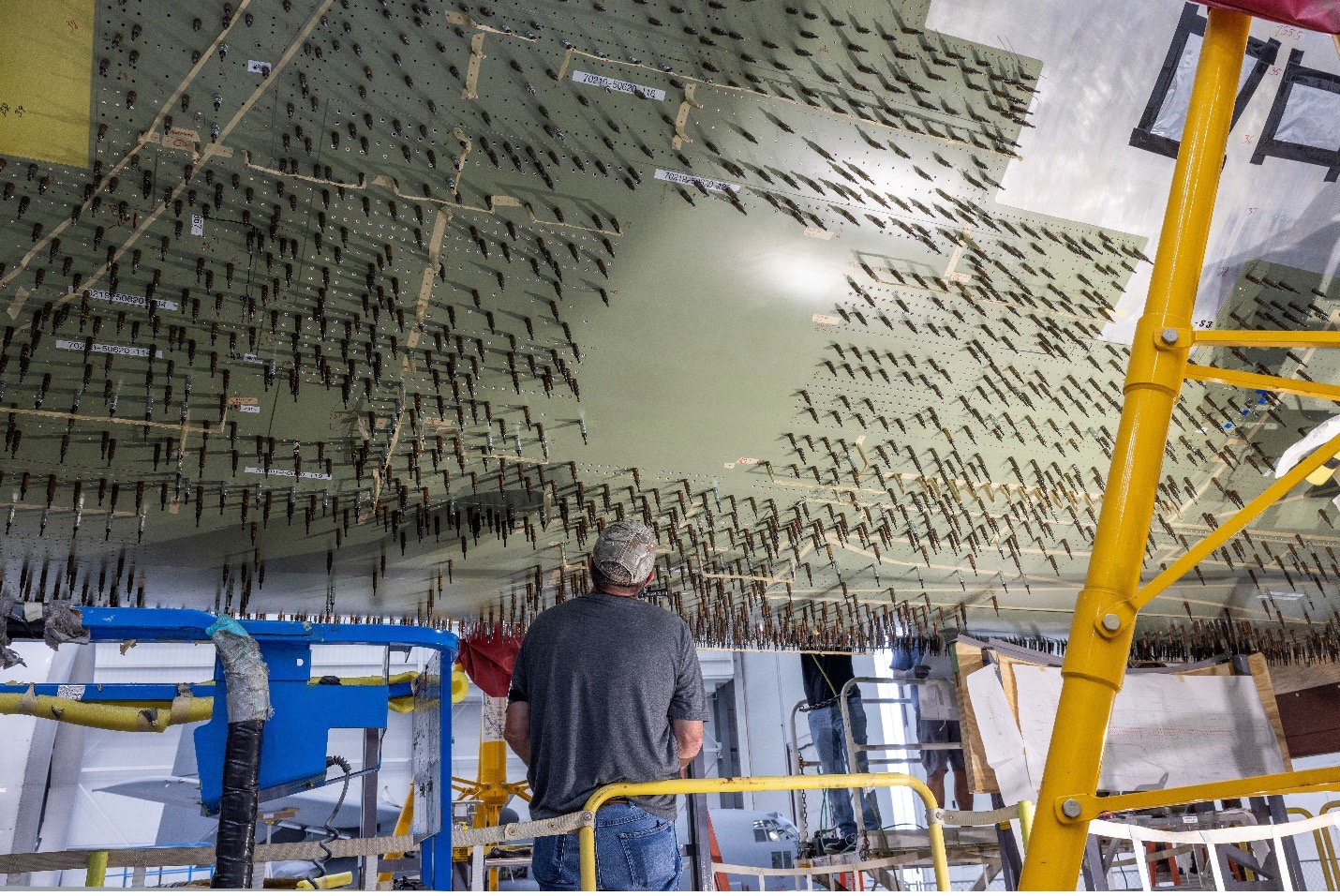
Temporary fasteners are utilized to map out hole patterns through four layers of reinforcement. Nearly 35,000 precision holes are drilled into the belly of the aircraft. Credit: L3Harris“We’ve been completing the engineering design and analysis to install the NURTURE payload into the aircraft in parallel with the portal modification,” Rutovic said. “We’re excited to get the airplane back home to NASA and on the road to its first mission.”
The NASA 777’s major structural modification was performed by L3Harris Technologies in partnership with Yulista Holding, LLC. Research station and wiring upgrades in the cabin are being performed by NASA and HII. NASA’s Airborne Science Program is responsible for providing aircraft systems that further science and advance the use of satellite data and is part of the Science Mission Directorate’s Earth Science Division.
To learn more about NASA’s airborne science missions, visit:
https://airbornescience.nasa.gov
Explore More 3 min read Smoke Shrouds Northern ThailandSeasonal fires have darkened skies over Southeast Asia.
Article 12 hours ago 1 min read NASA SBIR/STTR Phase I and II BAA, 2026 Appendix A and B are now live! Offers due May 21, 2026, 5:00PM EDT Article 18 hours ago 6 min read Advancing Earth Observation at NASA Since Release of Earthrise PhotoFrom cameras pressed against spacecraft windows to the most powerful radar ever flown, imaging technology…
Article 1 day agoNASA Targets Early September for Roman Space Telescope Launch
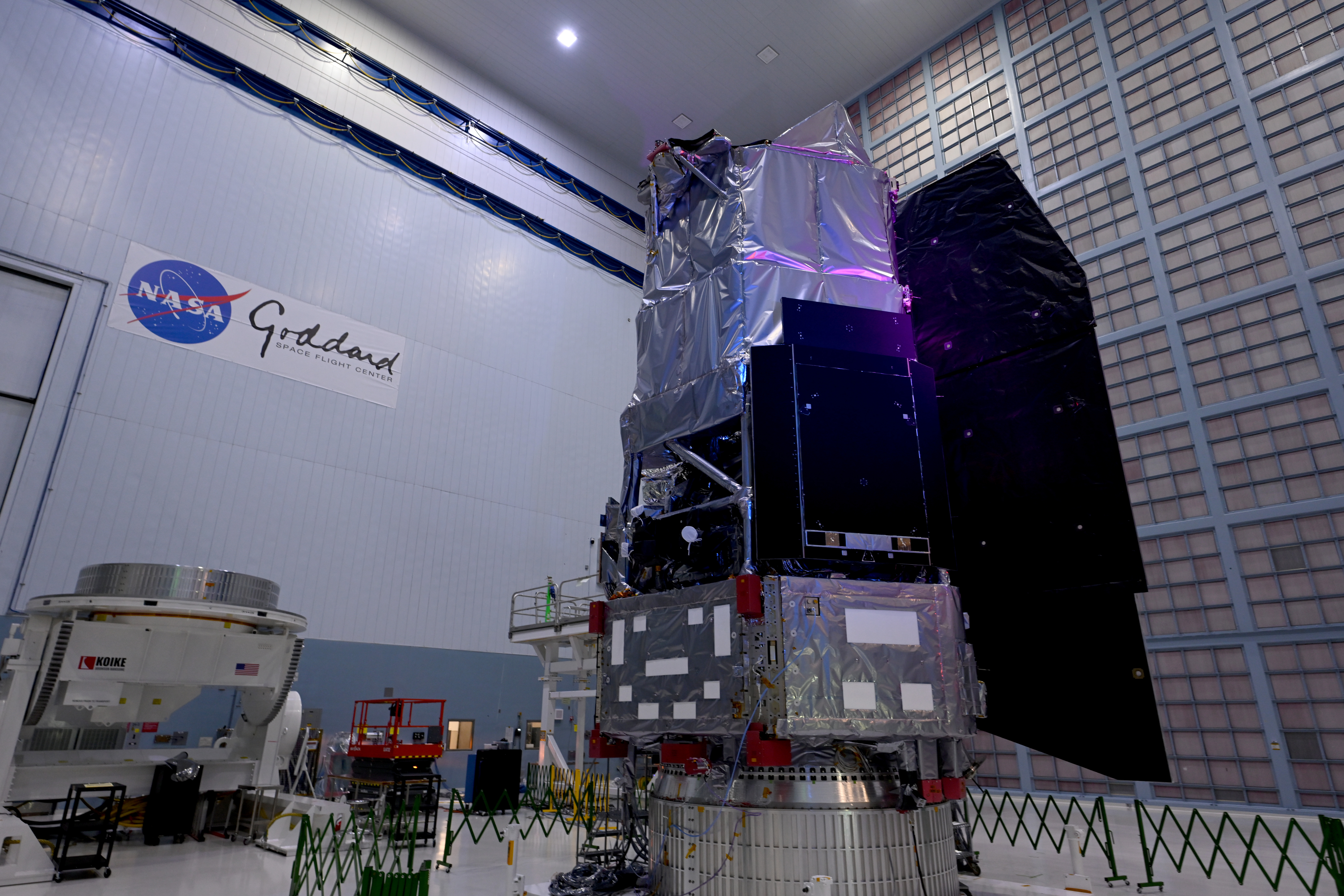
NASA’s Nancy Grace Roman Space Telescope team now is targeting as soon as early September 2026 for launch, ahead of the agency’s commitment to flight no later than May 2027.
“Roman’s accelerated development is a true success story of what we can achieve when public investment, institutional expertise, and private enterprise come together to take on the near-impossible missions that change the world,” said NASA Administrator Jared Isaacman, who announced the update at a news conference on April 21 at the agency’s Goddard Space Flight Center in Greenbelt, Maryland.
Roman will pair a large field of view with crisp infrared vision to survey deep, vast swaths of sky. While the mission was designed with dark energy, dark matter, and exoplanets in mind, Roman’s unprecedented observational capability will offer practically limitless opportunities for astronomers to explore all kinds of cosmic topics.
By the end of its five-year primary mission, Roman is expected to amass a 20,000-terabyte data archive. Scientists can draw on it to identify and study 100,000 exoplanets, hundreds of millions of galaxies, billions of stars, and rare objects and phenomena — including some that astronomers have never witnessed before.
Roman will launch on a SpaceX Falcon Heavy rocket from Launch Complex 39A at NASA’s Kennedy Space Center in Florida. NASA and SpaceX will share more information about a specific launch date, and the agency will continue to share updates concerning prelaunch preparations as new information becomes available.
The Nancy Grace Roman Space Telescope is managed at NASA’s Goddard Space Flight Center, with participation by NASA’s Jet Propulsion Laboratory and Caltech/IPAC in Southern California, the Space Telescope Science Institute (STScI) in Baltimore, and scientists from various research institutions.
To learn more about the Roman mission, visit:
Media contact:
Claire Andreoli
NASA’s Goddard Space Flight Center, Greenbelt, Md.
301-286-1940
NASA Astronaut Anil Menon to Discuss Upcoming Launch, Mission
Editor’s Note: This advisory was updated on April 23, 2026, to extend the deadline for phone RSVPs, as well as to correctly state that Anil Menon is a colonel in the United States Space Force.
NASA will host a news conference at 1:45 p.m. EDT Wednesday, April 29, from the agency’s Johnson Space Center in Houston to preview astronaut Anil Menon’s upcoming mission to the International Space Station.
Watch the news conference live on NASA’s YouTube channel. Learn how to watch NASA content through a variety of online platforms, including social media.
Following the news conference, individual interviews with Menon will begin at 3 p.m.
United States-based media interested in attending the news conference in person must contact the NASA Johnson newsroom at jsccommu@mail.nasa.gov by 5 p.m. Monday, April 27. U.S. and international media interested in participating by phone must contact NASA Johnson by 9:45 a.m. Wednesday, April 29. A copy of NASA’s media accreditation policy is available online.
Requests for interviews with Menon should be submitted by 5 p.m., April 27. In-person interviews are limited to U.S. media. International media may request to conduct interviews virtually.
The Soyuz MS-29 mission, targeted to launch Tuesday, July 14, will carry Menon and his crewmates, Roscosmos cosmonauts Pyotr Dubrov and Anna Kikina, to the International Space Station for an eight-month stay as part of Expeditions 74/75. It will be Menon’s first spaceflight.
Selected as a NASA astronaut in 2021, Menon graduated with the 23rd astronaut class in 2024. After completing initial astronaut candidate training, he began preparing for his first space station flight assignment.
Menon was born and raised in Minneapolis and is an emergency medicine physician, mechanical engineer, and colonel in the United States Space Force. He holds a bachelor’s degree in neurobiology from Harvard University in Cambridge, Massachusetts. He also earned a master’s degree in mechanical engineering and a medical degree from Stanford University in Palo Alto, California. Menon completed his emergency medicine and aerospace medicine residency at Stanford and the University of Texas Medical Branch in Galveston, respectively.
Menon still actively practices emergency medicine at Memorial Hermann’s Texas Medical Center and teaches residents at the University of Texas’ residency program. For NASA, Menon also has served as an expedition flight surgeon for the agency’s crew members aboard the space station. Previously, Menon worked at SpaceX and served as the company’s first flight surgeon, helping to launch the first crewed Dragon spacecraft on NASA’s SpaceX Demo-2 mission in 2020 and building its medical organization to support humans on future missions.
For more than 25 years, people have lived and worked continuously aboard the International Space Station, advancing scientific knowledge and making research breakthroughs that are not possible on Earth. The station is a testbed for NASA to understand and overcome the challenges of long-duration spaceflight, expand commercial opportunities in low Earth orbit, and prepare for deep space missions to the Moon as part of the Artemis program in preparation for future human missions to Mars.
Learn more about the International Space Station at:
-end-
Joshua Finch / Jimi Russell
Headquarters, Washington
202-358-1100
joshua.a.finch@nasa.gov / james.j.russell@nasa.gov
Anna Schneider / Shaneequa Vereen
Johnson Space Center, Houston
281-483-5111
anna.c.schneider@nasa.gov / shaneequa.y.vereen@nasa.gov
Night and (Earth) Day
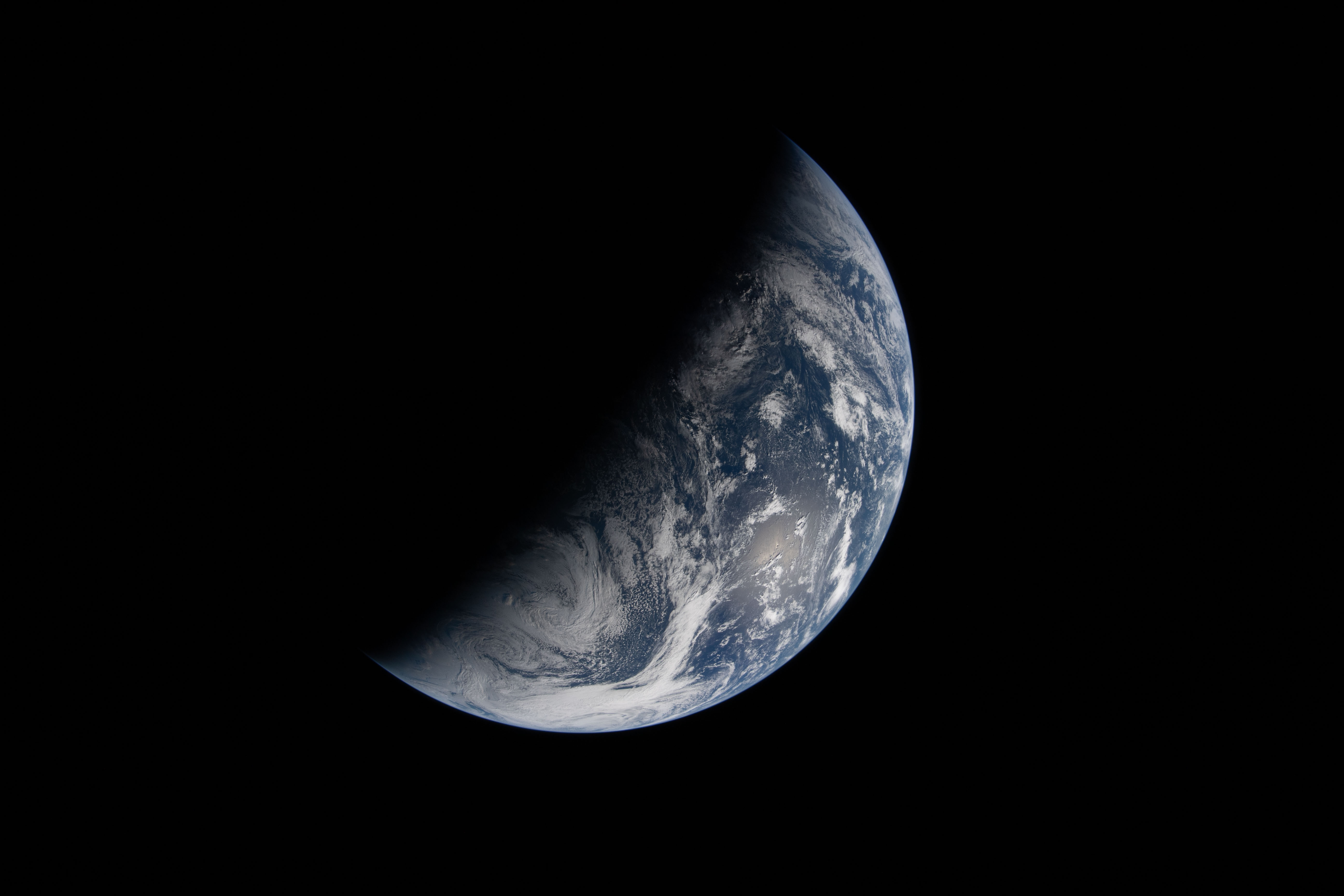
This image, released in celebration of Earth Day, shows the terminator – the line between night and day – on Earth. The Artemis II astronauts captured this view on April 2, 2026, during their journey to the Moon.
NASA science improves life on Earth every day. The agency provides insights on our home planet that can only be gathered from space to help put actionable satellite information in the hands of decision-makers. In addition, NASA’s observations of Earth and the technologies the agency develops provide the foundation needed to explore and sustain human life on the Moon, Mars, and beyond.
Download this year’s Earth Day poster.
Image credit: NASA