NASA News

Networks Keeping NASA’s Artemis II Mission Connected
NASA’s Artemis II mission will transport four astronauts around the Moon, bringing the agency one step closer to sending the first astronauts to Mars. Throughout Artemis II, astronaut voice, images, video, and vital mission data must traverse thousands of miles, carried on signals from NASA’s communications systems.
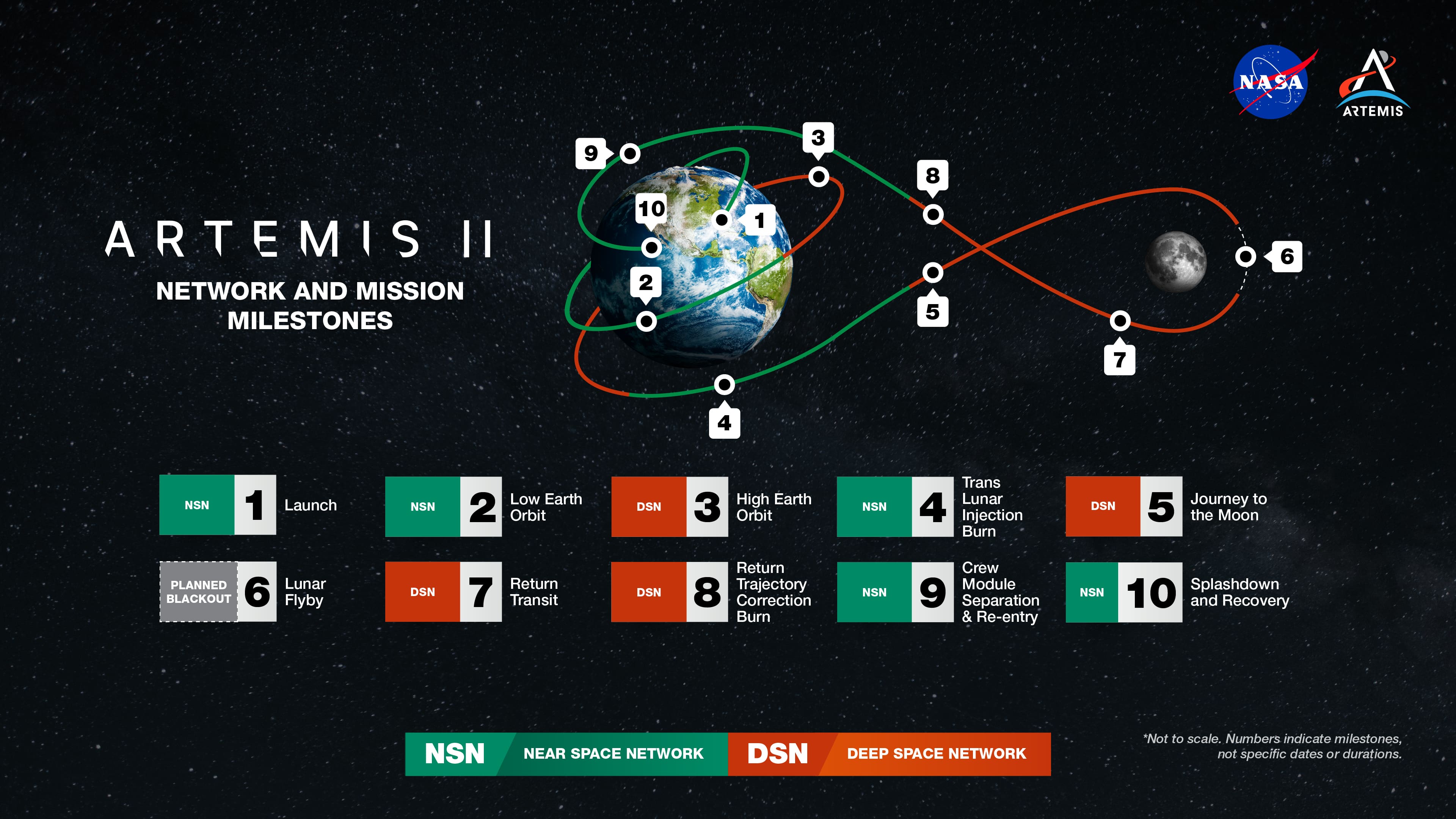
Through Artemis, NASA is establishing an enduring presence in space and exploring more of the Moon than ever before. To achieve this, Artemis missions rely on both the Near Space Network and the Deep Space Network. These networks, with oversight by NASA’s SCaN (Space Communications and Navigation) Program office, use global infrastructure and relay satellites to ensure seamless communications and tracking as Orion launches, orbits Earth, travels to the Moon, and returns home.
“Robust space communications aren’t optional; they’re the essential link that unites the crew and the exploration team on Earth to ensure safety and mission success, as I learned firsthand living and working aboard the International Space Station,” said Ken Bowersox, associate administrator for NASA’s Space Operations Mission Directorate at the agency’s headquarters in Washington. “From real-time conversations with mission controllers, to the data that drives critical decisions and research, and even calls home — space communications keep astronauts connected to mission managers, technical experts, loved ones, and everyone on Earth who wants to share in the excitement of our exploration missions. As we push farther into deep space, reliable communications links will enable more challenging missions and maximize the benefit for all of us on Earth.”
"From real-time conversations with mission controllers, to the data that drives critical decisions, research, and even calls home, space communications keep astronauts connected."Ken Bowersox
Associate Administrator for NASA's Space Operations Mission Directorate
Specialists will operate its networks in tandem to enable data exchange between spacecraft and mission controllers on Earth. NASA’s Mission Control Center at the agency’s Johnson Space Center in Houston will track the Space Launch System rocket, Interim Cryogenic Propulsion Stage, and Orion spacecraft through coordinated handoffs between the networks’ multiple assets on Earth and in space for the duration of the mission.
Using ground stations around the globe and a fleet of relay satellites, the Near Space Network will provide communications and navigation services during multiple stages of the Artemis II mission operations. The network, managed by NASA’s Goddard Space Flight Center in Greenbelt, Maryland, has a long legacy of supporting human spaceflight missions near Earth.
After Orion’s translunar injection burn, which will set the spacecraft on its planned orbit around the Moon, primary communications support will transition to the Deep Space Network, managed by NASA’s Jet Propulsion Laboratory in Southern California. The network’s international array of giant radio antennas, located in California, Spain, and Australia, provides a near-continuous connection to Orion and its crew.
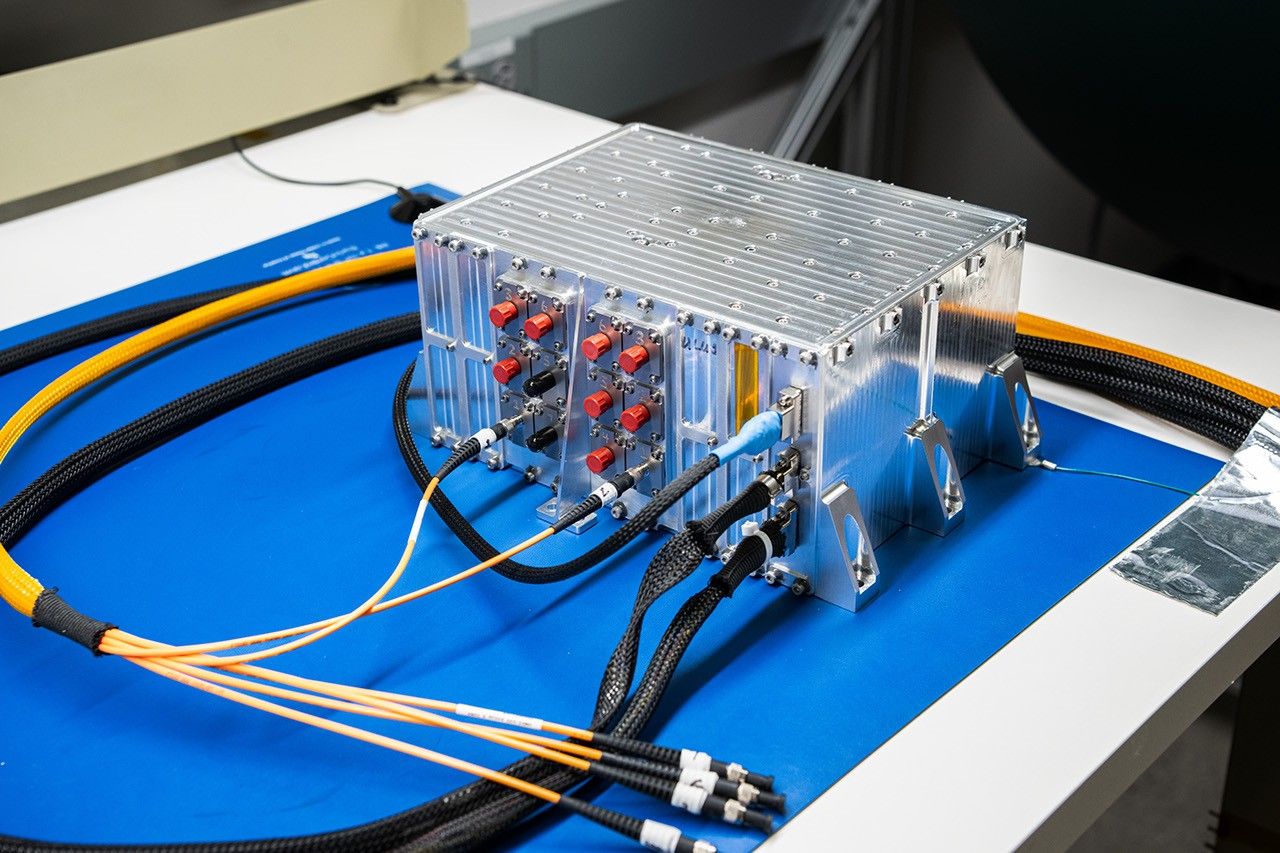
The Artemis II mission will use SCaN’s networks to send vital data down to mission controllers on Earth. This includes astronaut communications, mission health and safety information, images, video, and more.NASA / Dave Ryan“Reliable communications are the lifeline of human spaceflight,” said Kevin Coggins, deputy associate administrator for the SCaN Program at NASA Headquarters. “Our networks help make missions like Artemis II possible and set the stage for even more ambitious space exploration in the years ahead. These achievements are driven not only by NASA’s infrastructure but also by strong collaboration with our commercial partners, who play a critical role in advancing the capabilities and resilience of space communications.”
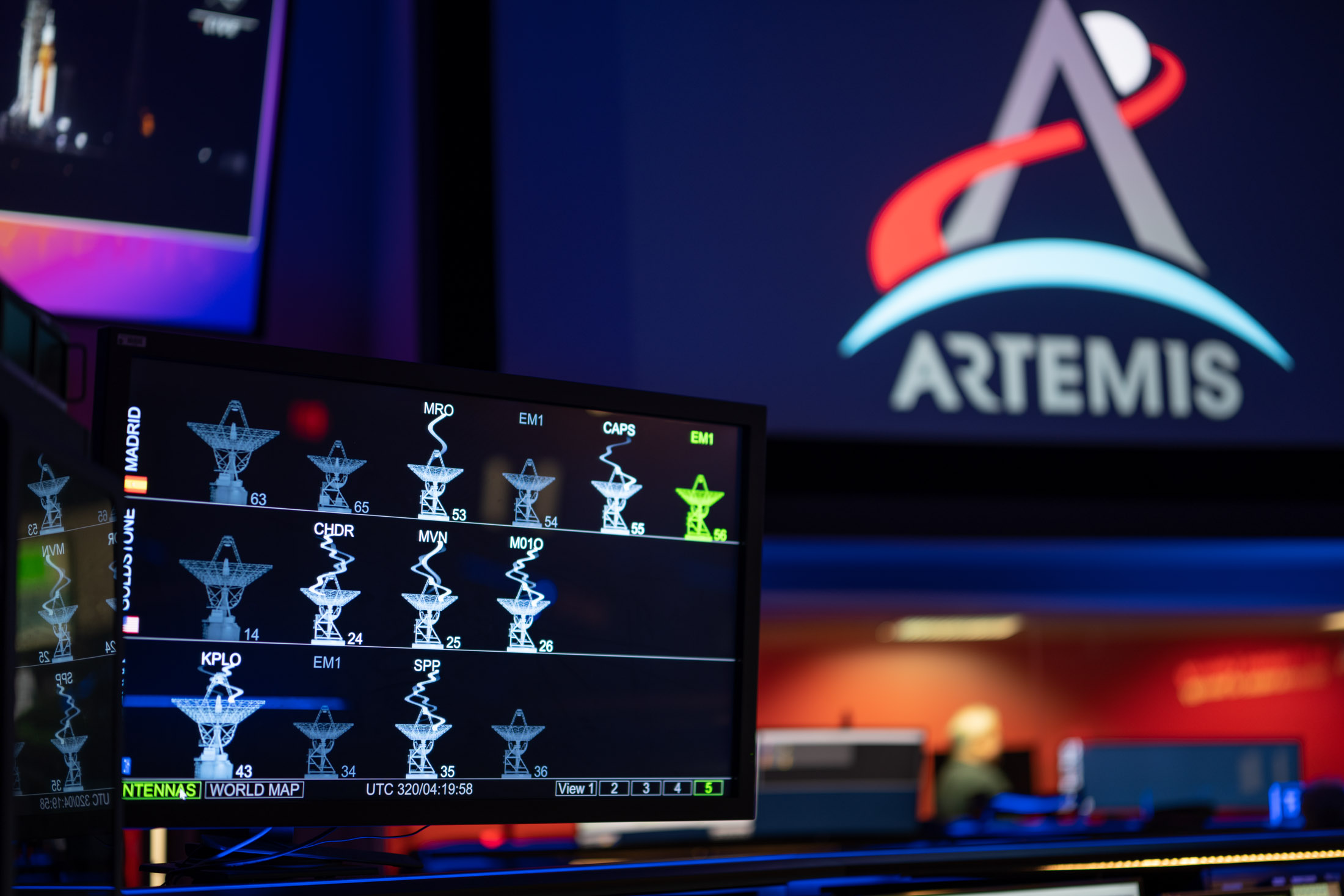
The DSN Now tool displays real-time data in the Charles Elachi Mission Control Center at NASA’s Jet Propulsion Laboratory during the Artemis I launch on November 16, 2022.NASA/JPL-Caltech/Ryan LannomIn addition to traditional radio network support, the spacecraft will host the Orion Artemis II Optical Communications System, a laser communications terminal that will transmit real science and crew data over laser links. Demonstrations like the recent Deep Space Optical Communications payload have proven laser communications systems can send more than 100 times more data than comparable radio networks, even millions of miles away from Earth. While laser communications will not be on Artemis III, the Orion Artemis II Optical Communications System could pave the way for future laser communications systems at the Moon and Mars.
To view this video please enable JavaScript, and consider upgrading to a web browser that supports HTML5 video
An artist's visualization concept of the O2O laser communications terminal sending data over infrared light links. NASA / Dave RyanThe Orion Artemis II Optical Communications System payload is only one piece of NASA’s larger mission to improve lunar and deep space communications. Orion will experience a planned communications blackout lasting approximately 41 minutes. The blackout will occur as the spacecraft passes behind the Moon, blocking radio frequency signals to and from Earth. Similar blackouts occurred during the Apollo-era missions and are expected when using an Earth-based network infrastructure. When Orion reemerges from behind the Moon, the Deep Space Network will quickly reacquire Orion’s signal and restore communications with mission control. These planned blackouts remain an aspect of all missions operating on or around the Moon’s far side.
Each Artemis mission will build upon existing capabilities, including data processing and handling. For the Artemis II flight test, data from Orion will be compressed after it reaches Earth to manage the large amount of information. Data compression will reduce image and video quality and give priority to crew communications and mission data.
To view this video please enable JavaScript, and consider upgrading to a web browser that supports HTML5 video
An artist's concept of the lunar relay supporting future missions on the Moon. NASA / Dave RyanLooking ahead, NASA’s Lunar Communications Relay and Navigation Systems project is collaborating with industry to eliminate blackouts and support precise navigation by placing relay satellites around the Moon. This network of orbiting satellites will deliver persistent, high-bandwidth communications and navigation services for astronauts, landers, and orbiters on and around the lunar surface. In 2024, NASA selected Intuitive Machines to develop the first set of lunar relays for demonstration during the Artemis III lunar surface mission.
From liftoff to splashdown, NASA’s evolving networks will serve as the crew’s link home, ensuring that humanity’s return to the Moon stays connected every step of the way.
About the AuthorKatherine SchauerKatherine Schauer is a writer for the Space Communications and Navigation (SCaN) Program office and covers emerging technologies, commercialization efforts, exploration activities, and more.
Share Details Last Updated Jan 29, 2026 EditorGoddard Digital TeamContactJimi Russelljames.j.russell@nasa.govLocationGoddard Space Flight Center Related Terms Keep Exploring Discover More Topics From NASAArtemis
Communicating with Missions
Near Space Network
Deep Space Network
NASA Telescopes Spot Surprisingly Mature Cluster in Early Universe
A new discovery captures the cosmic moment when a galaxy cluster – among the largest structures in the universe – started to assemble only about a billion years after the big bang, one or two billion years earlier than previously thought. This result, made using NASA’s Chandra X-ray Observatory and James Webb Space Telescope, will lead astronomers to rethink when and how the largest structures in the universe formed. The findings are described in a paper published [Wednesday] in the journal Nature.
The object, known as JADES-ID1 for its location in the “JWST Advanced Deep Extragalactic Survey” (JADES) has a mass about 20 trillion times that of the Sun. Astronomers classify JADES-ID1 as a “protocluster” because it is currently undergoing an early, violent phase of formation and will one day turn into a galaxy cluster. However, JADES-ID1 is found at a much larger distance – corresponding to a much earlier time in the universe – than astronomers expected for such systems, providing a new mystery of how it could form so quickly.
“This may be the most distant confirmed protocluster ever seen,” said Akos Bogdan of the Center for Astrophysics | Harvard & Smithsonian (CfA) who led the study. “JADES-ID1 is giving us new evidence that the universe was in a huge hurry to grow up.”
Galaxy clusters contain hundreds or even thousands of individual galaxies immersed in enormous pools of superheated gas, along with large amounts of unseen dark matter. Astronomers use galaxy clusters to measure the expansion of the universe and the roles of dark energy and dark matter, among other important cosmic studies.
“It’s very important to actually see when and how galaxy clusters grow,” said co-author Gerrit Schellenberger, also of CfA. “It’s like watching an assembly line make a car, rather than just trying to figure out how a car works by looking at the finished product.”
The Chandra and Webb data reveal that JADES-ID1 contains the two properties that confirm the presence of a protocluster: a large number of galaxies held together by gravity (Webb sees at least 66 potential members) that are also sitting in a huge cloud of hot gas (detected by Chandra). As a galaxy cluster forms, gas falls inward and is heated by shock waves, reaching temperatures of millions of degrees and glowing in X-rays.
What makes JADES-ID1 exceptional is the remarkably early time when it appears in cosmic history. Most models of the universe predict that there likely would not be enough time and a large enough density of galaxies for a protocluster of this size to form only a billion years after the big bang. The previous record holder for a protocluster with X-ray emission is seen much later, about three billion years after the big bang.
“We thought we’d find a protocluster like this two or three billion years after the big bang – not just one billion,” said co-author Qiong Li from the University of Manchester in the UK. “Before, astronomers found surprisingly large galaxies and black holes not long after the big bang, and now we’re finding that clusters of galaxies can also grow rapidly.”
After billions of years JADES-ID1 should evolve from a protocluster into a massive galaxy cluster like those we see much closer to Earth.
To find JADES-ID1, astronomers combined deep observations from both Chandra and Webb. By design, the JADES field overlaps with the Chandra Deep Field South, the site of the deepest X-ray observation ever conducted. This field is thus one of the few in the entire sky where a discovery such as this could be made. In an earlier study, a team of researchers led by Li and Conselice found five other proto-cluster candidates in the JADES field, but only in JADES-ID1 are the galaxies embedded in hot gas. Only JADES-ID1 possesses enough mass for an X-ray signal from hot gas to be expected.
“Discoveries like this are made when two powerful telescopes like Chandra and Webb stare at the same patch of sky at the limit of their observing capabilities,” said co-author Christopher Conselice, also from the University of Manchester. “A challenge for us now is to understand how this protocluster was able to form so quickly.”
NASA’s Marshall Space Flight Center in Huntsville, Alabama, manages the Chandra program. The Smithsonian Astrophysical Observatory’s Chandra X-ray Center controls science operations from Cambridge, Massachusetts, and flight operations from Burlington, Massachusetts.
To learn more about Chandra, visit:
https://science.nasa.gov/chandra
Read more from NASA’s Chandra X-ray Observatory
Learn more about the Chandra X-ray Observatory and its mission here:
Visual DescriptionThis composite image features what may be the most distant protocluster ever found; a region of space where a large number of young galaxies are being held together by gravity and hot gas. The image is presented twice, once with, and once without, annotations.
The image includes scores of glowing dots and specks of light, in white and golden hues, set against the blackness of space. This layer of the composite visual is from a deep infrared imaging project undertaken by the James Webb Space Telescope. The specks range from relatively large oval galaxies with discernible spiral arms, and glowing balls with gleaming diffraction spikes, to minuscule pinpoints of distant light. Several of those pinpoints have been circled in the annotated image, as they are part of the distant protocluster.
Layered onto the center of this image is a neon blue cloud. This cloud represents hot X-ray gas discovered by Chandra in the deepest X-ray observation ever conducted. In the annotated image, a thin white square surrounds the blue cloud. This represents Chandra’s field of observation. The X-rays from the distant protocluster located within this box are included in the composite image.
The protocluster, dubbed JADES-1, has a mass of about 20 trillion suns. It is located some 12.7 billion light-years from Earth, or just a billion years after the big bang. The discovery of a protocluster of this size, at this epoch in the early universe, will lead scientists to re-examine their ideas for how galaxy clusters first appeared in the universe.
News Media ContactMegan Watzke
Chandra X-ray Center
Cambridge, Mass.
617-496-7998
mwatzke@cfa.harvard.edu
Joel Wallace
Marshall Space Flight Center, Huntsville, Alabama
256-544-0034
joel.w.wallace@nasa.gov
Space Telescope
Hubble Space TelescopeSince its 1990 launch, the Hubble Space Telescope has changed our fundamental understanding of the universe.
James Webb Space TelescopeWebb is the premier observatory of the next decade, serving thousands of astronomers worldwide. It studies every phase in the…
Spitzer Space TelescopeSpitzer uses an ultra-sensitive infrared telescope to study asteroids, comets, planets and distant galaxies.
Chandra, Webb Catch Twinkling Lights
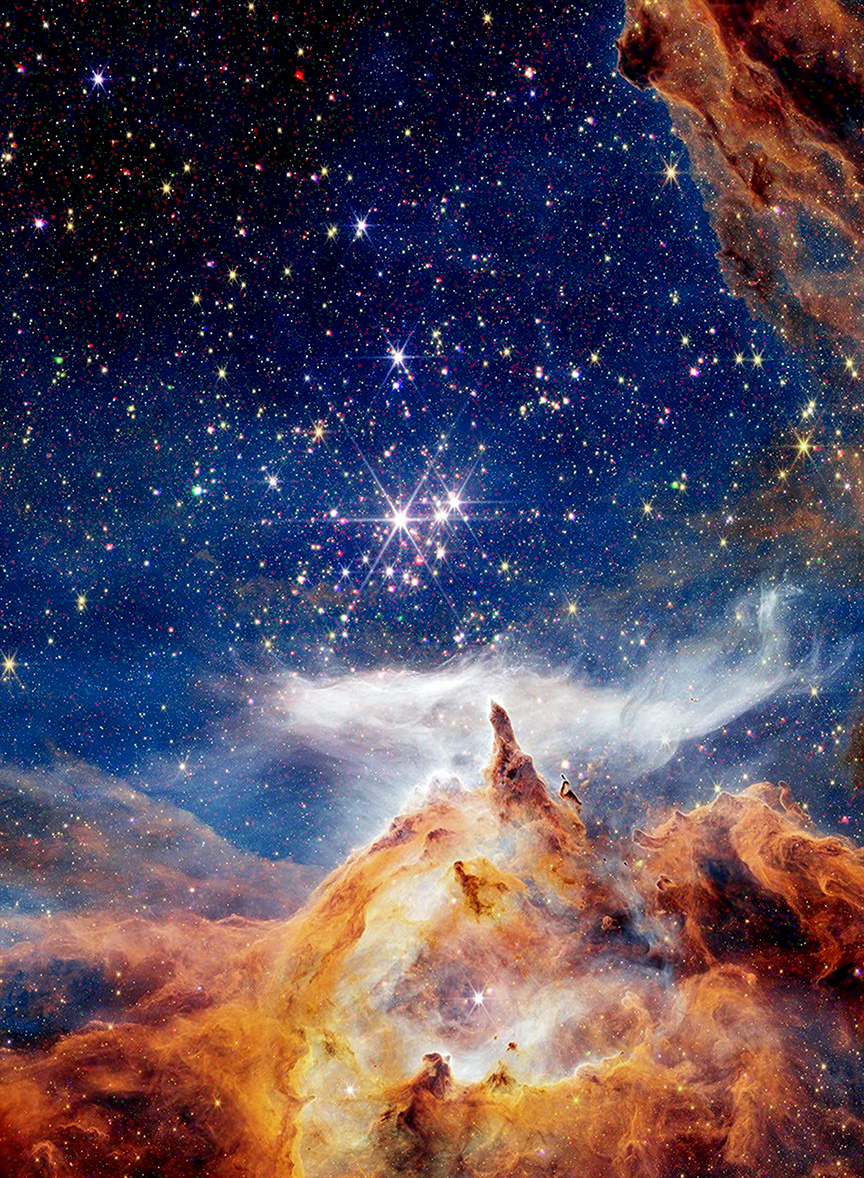
Data from Chandra adds red, green, and blue twinkling lights in this Dec. 22, 2025, image of Pismis 24 from NASA’s James Webb Space Telescope. Pismis 24 is a young cluster of stars in the core of the nearby Lobster Nebula, approximately 5,500 light-years from Earth in the constellation Scorpius. Home to a vibrant stellar nursery and one of the closest sites of massive star birth, Pismis 24 provides rare insight into large and massive stars. This region is one of the best places to explore the properties of hot young stars and how they evolve.
Image credit: Credit: X-ray: NASA/CXC/Penn State/G. Garmire; Infrared: NASA, ESA, CSA, and STScI; Image Processing: NASA/CXC/SAO/L. Frattare and NSA/ESA/CSA/STScI/A. Pagan
NASA Webb Pushes Boundaries of Observable Universe Closer to Big Bang
- Webb
- News
- Overview
- Science
- Observatory
- Multimedia
- Team
- More
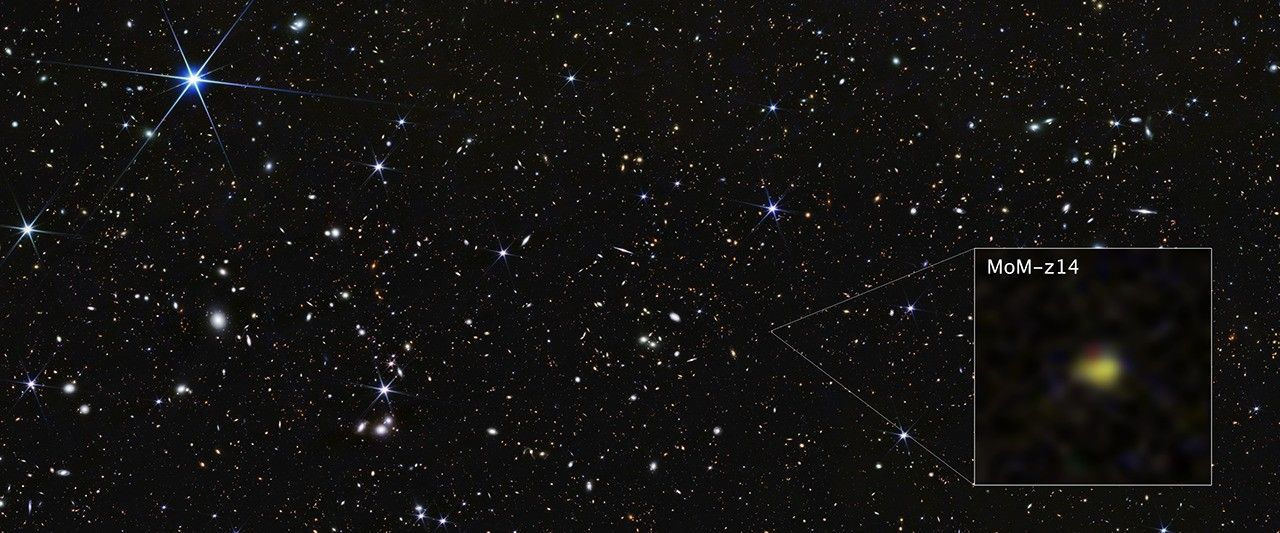
NASA’s James Webb Space Telescope has topped itself once again, delivering on its promise to push the boundaries of the observable universe closer to cosmic dawn with the confirmation of a bright galaxy that existed 280 million years after the big bang. By now Webb has established that it will eventually surpass virtually every benchmark it sets in these early years, but the newly confirmed galaxy, MoM-z14, holds intriguing clues to the universe’s historical timeline and just how different a place the early universe was than astronomers expected.
“With Webb, we are able to see farther than humans ever have before, and it looks nothing like what we predicted, which is both challenging and exciting,” said Rohan Naidu of the Massachusetts Institute of Technology’s (MIT) Kavli Institute for Astrophysics and Space Research, lead author of a paper on galaxy MoM-z14 published in the Open Journal of Astrophysics.
Due to the expansion of the universe that is driven by dark energy, discussion of physical distances and “years ago” becomes tricky when looking this far. Using Webb’s NIRSpec (Near-Infrared Spectrograph) instrument, astronomers confirmed that MoM-z14 has a cosmological redshift of 14.44, meaning that its light has been travelling through (expanding) space, being stretched and “shifted” to longer, redder wavelengths, for about 13.5 of the universe’s estimated 13.8 billion years of existence.
“We can estimate the distance of galaxies from images, but it’s really important to follow up and confirm with more detailed spectroscopy so that we know exactly what we are seeing, and when,” said Pascal Oesch of the University of Geneva, co-principal investigator of the survey.
Image: COSMOS Field MoM-z14 Galaxy (NIRCam Image) NASA’s James Webb Space Telescope shows galaxy MoM-z14 as it appeared in the distant past, only 280 million years after the universe began in the big bang. Image: NASA, ESA, CSA, STScI, Rohan Naidu (MIT); Image Processing: Joseph DePasquale (STScI) Intriguing FeaturesMoM-z14 is one of a growing group of surprisingly bright galaxies in the early universe – 100 times more than theoretical studies predicted before the launch of Webb, according to the research team.
“There is a growing chasm between theory and observation related to the early universe, which presents compelling questions to be explored going forward,” said Jacob Shen, a postdoctoral researcher at MIT and a member of the research team.
One place researchers and theorists can look for answers is the oldest population of stars in the Milky Way galaxy. A small percentage of these stars have shown high amounts of nitrogen, which is also showing up in some of Webb’s observations of early galaxies, including MoM-z14.
“We can take a page from archeology and look at these ancient stars in our own galaxy like fossils from the early universe, except in astronomy we are lucky enough to have Webb seeing so far that we also have direct information about galaxies during that time. It turns out we are seeing some of the same features, like this unusual nitrogen enrichment,” said Naidu.
With galaxy MoM-z14 existing only 280 million years after the big bang, there was not enough time for generations of stars to produce such high amounts of nitrogen in the way that astronomers would expect. One theory the researchers note is that the dense environment of the early universe resulted in supermassive stars capable of producing more nitrogen than any stars observed in the local universe.
The galaxy MoM-z14 also shows signs of clearing out the thick, primordial hydrogen fog of the early universe in the space around itself. One of the reasons Webb was originally built was to define the timeline for this “clearing” period of cosmic history, which astronomers call reionization. This is when early stars produced light of high enough energy to break through the dense hydrogen gas of the early universe and begin travelling through space, eventually making its way to Webb, and us. Galaxy MoM-z14 provides another clue for mapping out the timeline of reionization, work that was not possible until Webb lifted the veil on this era of the universe.
Legacy of Discovery ContinuesEven before Webb’s launch, there were hints that something very unanticipated happened in the early universe, when NASA’s Hubble Space Telescope discovered the bright galaxy GN-z11 400 million years after the big bang. Webb confirmed the galaxy’s distance — at the time the most distant ever. From there Webb has continued to push back farther and farther in space and time, finding more surprisingly bright galaxies like GN-z11.
As Webb continues to uncover more of these unexpectedly luminous galaxies, it’s clear that the first few were not a fluke. Astronomers are eagerly anticipating that NASA’s upcoming Nancy Grace Roman Space Telescope, with its combination of high-resolution infrared imaging and extremely wide field of view, will boost the sample of these bright, compact, chemically enriched early galaxies into the thousands.
“To figure out what is going on in the early universe, we really need more information —more detailed observations with Webb, and more galaxies to see where the common features are, which Roman will be able to provide,” said Yijia Li, a graduate student at the Pennsylvania State University and a member of the research team. “It’s an incredibly exciting time, with Webb revealing the early universe like never before and showing us how much there still is to discover.”
The James Webb Space Telescope is the world’s premier space science observatory. Webb is solving mysteries in our solar system, looking beyond to distant worlds around other stars, and probing the mysterious structures and origins of our universe and our place in it. Webb is an international program led by NASA with its partners, ESA (European Space Agency) and CSA (Canadian Space Agency).
To learn more about Webb, visit:
Downloads & Related InformationThe following sections contain links to download this article’s images and videos in all available resolutions followed by related information links, media contacts, and if available, research paper and Spanish translation links.
Related Images & Videos COSMOS Field MoM-z14 Galaxy (NIRCam Image)NASA’s James Webb Space Telescope shows galaxy MoM-z14 as it appeared in the distant past, only 280 million years after the universe began in the big bang.
COSMOS Field MoM-z14 Galaxy (NIRCam Compass Image)NASA’s James Webb Space Telescope shows galaxy MoM-z14 as it appeared in the distant past, only 280 million years after the universe began in the big bang.
Related LinksRead more: Webb Science: Galaxies Through Time
Explore more: ViewSpace Seeing Farther: Hubble Ultra Deep Field
Video: JADES: GOODS South Fly-Through Visualization
Video: Ultra Deep Field: Looking Out into Space, Looking Back into Time
Explore more: ViewSpace Gathering Light: Hubble Ultra Deep Field
Share Details Last Updated Jan 28, 2026 LocationNASA Goddard Space Flight Center Contact MediaLaura Betz
NASA’s Goddard Space Flight Center
Greenbelt, Maryland
laura.e.betz@nasa.gov
Leah Ramsay
Space Telescope Science Institute
Baltimore, Maryland
Christine Pulliam
Space Telescope Science Institute
Baltimore, Maryland
Webb is the premier observatory of the next decade, serving thousands of astronomers worldwide. It studies every phase in the…
Galaxies
Galaxies Stories
Universe
Snow Buries the U.S. Interior and East
- Earth
- Earth Observatory
- Image of the Day
- EO Explorer
- Topics
- More Content
- About
NASA Testing Advances Space Nuclear Propulsion Capabilities
Nuclear propulsion and power technologies could unlock new frontiers in missions to the Moon, Mars, and beyond. NASA has reached an important milestone advancing nuclear propulsion that could benefit future deep space missions by completing a cold-flow test campaign of the first flight reactor engineering development unit since the 1960s.
Crews at NASA’s Marshall Space Flight Center in Huntsville, Alabama, install a flight reactor engineering development unit into Test Stand 400 in preparation for cold-flow testing. The test campaign began in July and ran through September and marked the first testing on a light reactor engineering development unit since the 1960s.NASA/Adam Butt Crews at NASA’s Marshall Space Flight Center in Huntsville, Alabama, install a flight reactor engineering development unit into Test Stand 400 in preparation for cold-flow testing. The test campaign began in July and ran through September and marked the first testing on a flight reactor engineering development unit since the 1960s. NASA/Adam Butt Crews at NASA’s Marshall Space Flight Center in Huntsville, Alabama, install a flight reactor engineering development unit into Test Stand 400 in preparation for cold-flow testing. The test campaign began in July and ran through September and marked the first testing on a flight reactor engineering development unit since the 1960s. NASA/Adam Butt A flight reactor engineering development unit is fully installed at Test Stand 400 in preparation for cold-flow testing. The test campaign began in July and ran through September, marking the first testing on a flight reactor engineering development unit since the 1960s. NASA/Adam Butt“Nuclear propulsion has multiple benefits including speed and endurance that could enable complex deep space missions,” said Greg Stover acting associate administrator of NASA’s Space Technology Mission Directorate at NASA Headquarters in Washington. “By shortening travel times and expanding mission capabilities, this technology will lay the foundation to explore farther into our solar system than ever before. Information from the cold-flow test series is instrumental in understanding the operational characteristics and fluid flow performance of nuclear reactors.”
Teams at the agency’s Marshall Space Flight Center in Huntsville, Alabama, conducted more than 100 tests on the engineering development unit over several months in 2025. The 44-inch by 72-inch unit, built by BWX Technologies of Lynchburg, Virginia, is a full-scale, non-nuclear, flight-like development test article the size of a 100-gallon drum that simulates propellant flow throughout the reactor across a range of operational conditions.
The cold-flow tests at NASA Marshall are the culmination of a multi-year activity for the agency and its industry partners. Key test objectives included simulating operational fluid-dynamic responses, gathering critical information for design of the flight instrumentation and control system, providing crucial validation of analytical tools, and serving as a pathfinder for manufacturing, assembly, and integration of near-term flight-capable nuclear propulsion systems.
Other benefits to space travel include increasing the science payload capacity and higher power for instrumentation and communication.
Test engineers were able to demonstrate that the reactor design is not susceptible to destructive flow-induced oscillations, vibrations or pressure waves that occur when a moving fluid interacts with a structure in a way that makes the system shake.
“We’re doing more than proving a new technology,” said Jason Turpin, manager of the Space Nuclear Propulsion Office at NASA Marshall. “This test series generated some of the most detailed flow responses for a flight-like space reactor design in more than 50 years and is a key steppingstone toward developing a flight-capable system. Each milestone brings us closer to expanding what’s possible for the future of human spaceflight, exploration, and science.”
The Space Nuclear Propulsion Office is part of NASA’s Technology Demonstration Missions Program within the agency’s Space Technology Mission Directorate.
Learn more about NASA’s technology advancements:
https://www.nasa.gov/space-technology-mission-directorate/
News Media ContactJoel Wallace
Marshall Space Flight Center, Huntsville, Alabama
256-544-0034
joel.w.wallace@nasa.gov
Discovery Alert: An Ice-Cold Earth?
- Universe Home
- Basics
- Galaxies
- Black Holes
- Stars
- Exoplanets
- Exploration
- More
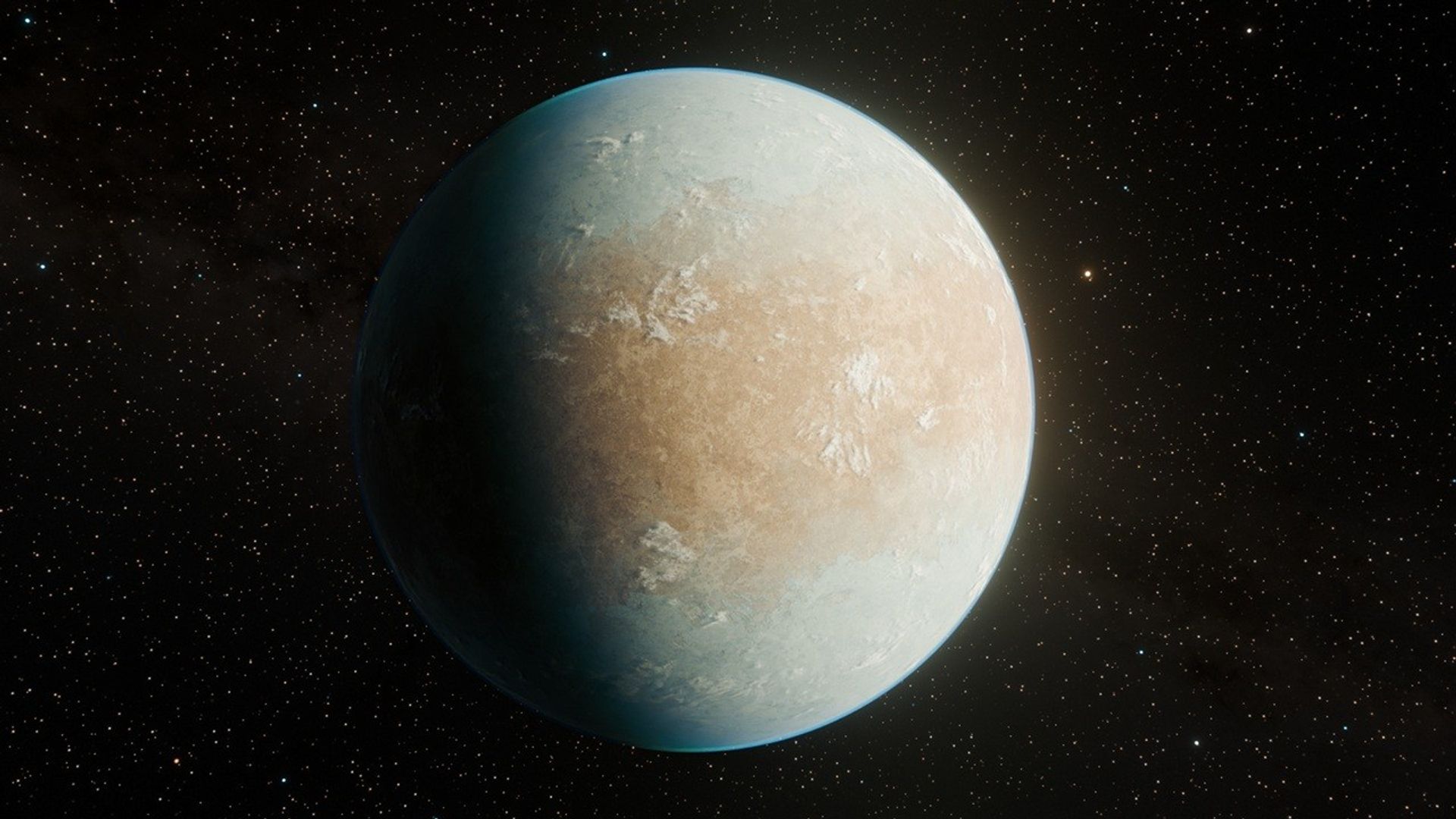
A candidate planet that might be remarkably similar to Earth, HD 137010 b, has one potentially big difference: It could be colder than perpetually frozen Mars.
Key FactsScientists continue to mine data gathered by NASA’s Kepler Space Telescope, retired in 2018, and continue to turn up surprises. A new paper reveals the latest: a possible rocky planet slightly larger than Earth, orbiting a Sun-like star about 146 light-years away.
The orbital period of the planet — listed as a “candidate” pending further confirmation — is likely to be similar to Earth’s, around one year. Planet HD 137010 b also might fall just within the outer edge of its star’s “habitable zone,” the orbital distance that could allow liquid water to form on the planet’s surface under a suitable atmosphere.
Planets orbiting other stars are known as “exoplanets.” And this could turn out to be the first exoplanet with Earth-like properties that, from our vantage point, crosses the face of a Sun-like star that is near enough and bright enough for meaningful follow-up observations.
DetailsNow the bad news. The amount of heat and light such a planet would receive from its star is less than a third of what Earth receives from the Sun. Although of a stellar type similar to our Sun, the star, HD 137010, is cooler and dimmer. That could mean a planetary surface temperature no higher than minus 90 degrees Fahrenheit (minus 68 degrees Celsius). By comparison, the average surface temperature on Mars runs about minus 85 degrees Fahrenheit (minus 65 degrees Celsius).
Planet HD 137010 b also will need follow-up observations to be promoted from “candidate” to “confirmed.” Exoplanet scientists use a variety of techniques to identify planets, and this discovery comes from a single “transit” — only one instance of the planet crossing its star’s face in a kind of miniature eclipse — detected during Kepler’s second mission, known as K2. Even with just one transit, the study’s authors were able to estimate the candidate planet’s orbital period. They tracked the time it took for the planet’s shadow to move across the star’s face — in this case 10 hours, while Earth takes about 13 — then compared it to orbital models of the system itself. Still, though the precision of that single detection is much higher than most transits captured by space-based telescopes, astronomers need to see these transits repeat regularly in order to confirm that they are caused by a real planet.
And capturing more transits is going to be tricky. The planet’s orbital distance, so similar to Earth’s, means such transits happen far less often than for planets in tighter orbits around their stars (it’s a big reason why exoplanets with Earth-like orbits are so hard to detect in the first place). With luck, confirmation could come from further observation by the successor to Kepler/K2, NASA’s TESS (the Transiting Exoplanet Survey Satellite), the still-functioning workhorse for planetary detection, or from the European Space Agency’s CHEOPS (CHaracterising ExOPlanets Satellite). Otherwise, gathering further data on planet HD 137010 b might have to wait for the next generation of space telescopes.
To view this video please enable JavaScript, and consider upgrading to a web browser that supports HTML5 video
An artist’s concept animation of exoplanet candidate HD 137010 b, which gives a view as if flying above this possible rocky planet slightly larger than Earth, thought to orbit a Sun-like star about 146 light-years away. This view also creates an effect similar to a transit, as the planet’s star disappears and then reappears from behind HD 137010 b.NASA/JPL-Caltech/Keith Miller (Caltech/IPAC) Fun FactsDespite the possibility of a frigid climate, HD 137010 b also could turn out to be a temperate or even a watery world, say the authors of the paper on this exoplanet. It would just need an atmosphere richer in carbon dioxide than our own. The science team, based on modeling of the planet’s possible atmospheres, gives it a 40% chance of falling within the “conservative” habitable zone around the star, and a 51% chance of falling within the broader “optimistic” habitable zone. On the other hand, the authors of the study say the planet has about a 50-50 chance of falling beyond the habitable zone entirely.
The DiscoverersAn international science team published a paper on the discovery, “A Cool Earth-sized Planet Candidate Transiting a Tenth Magnitude K-dwarf From K2,” in The Astrophysical Journal Letters on Jan. 27, 2026. The team was led by astrophysics Ph.D. student Alexander Venner of the University of Southern Queensland, Toowoomba, Australia, now a postdoctoral researcher at the Max Planck Institute for Astronomy, Heidelberg, Germany.
Explore More 3 min read NASA, Partners Advance LISA Prototype Hardware Article 8 hours ago 4 min read AI Unlocks Hundreds of Cosmic Anomalies in Hubble Archive Article 8 hours ago 4 min read TESS Status Updates Article 4 days ago Share Details Last Updated Jan 27, 2026 Related TermsNASA Science Flights Venture to Improve Severe Winter Weather Warnings
4 min read
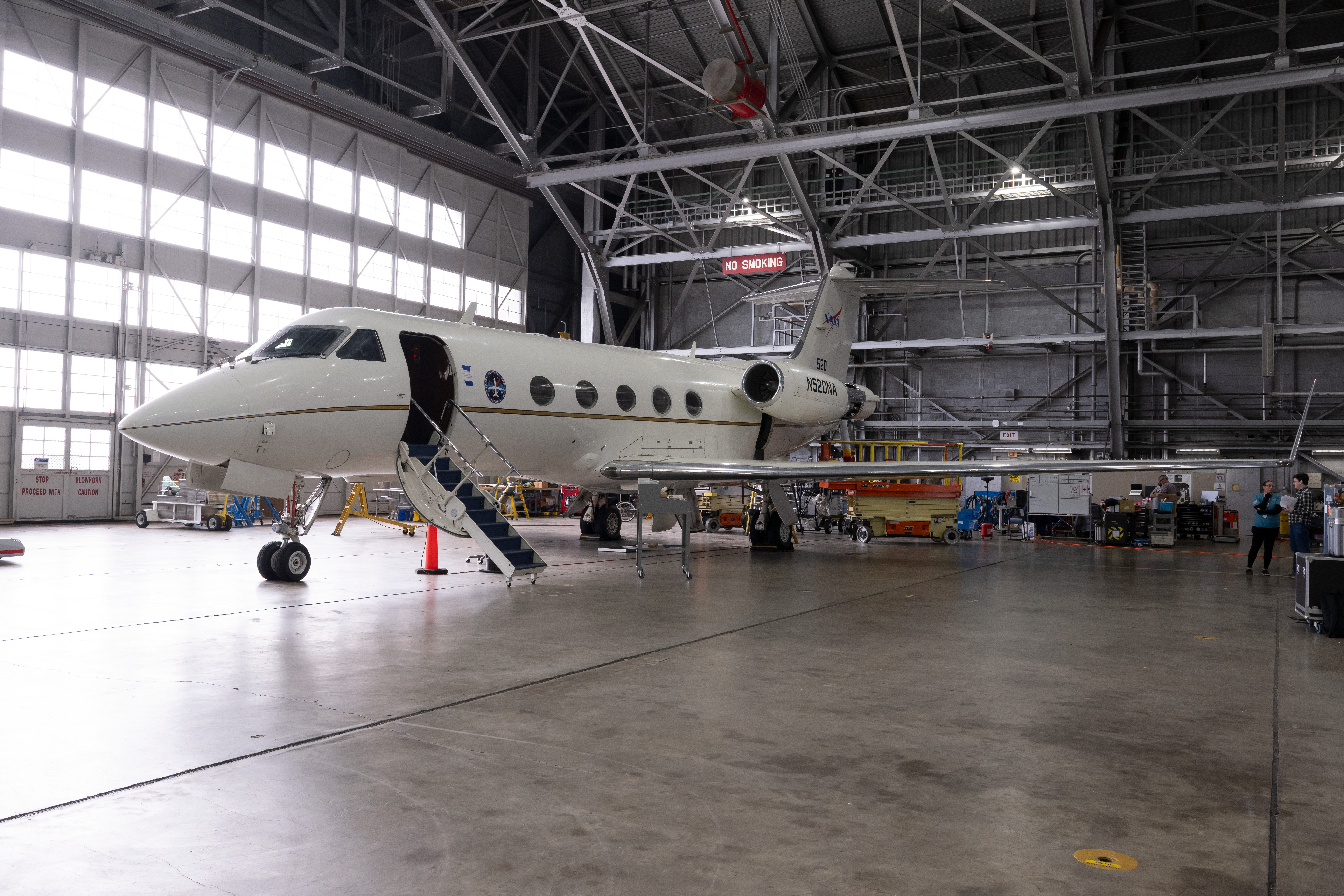
Preparations for Next Moonwalk Simulations Underway (and Underwater)A team of NASA scientists deployed on an international mission designed to better understand severe winter storms. The North American Upstream Feature-Resolving and Tropopause Uncertainty Reconnaissance Experiment, or NURTURE, is an airborne campaign that uses a suite of remote sensing instruments to collect atmospheric data on winter weather with a goal of improving the models that feed storm forecasts. This combination of instruments will also serve as a proxy to demonstrate the potential to collect similar observations from space.
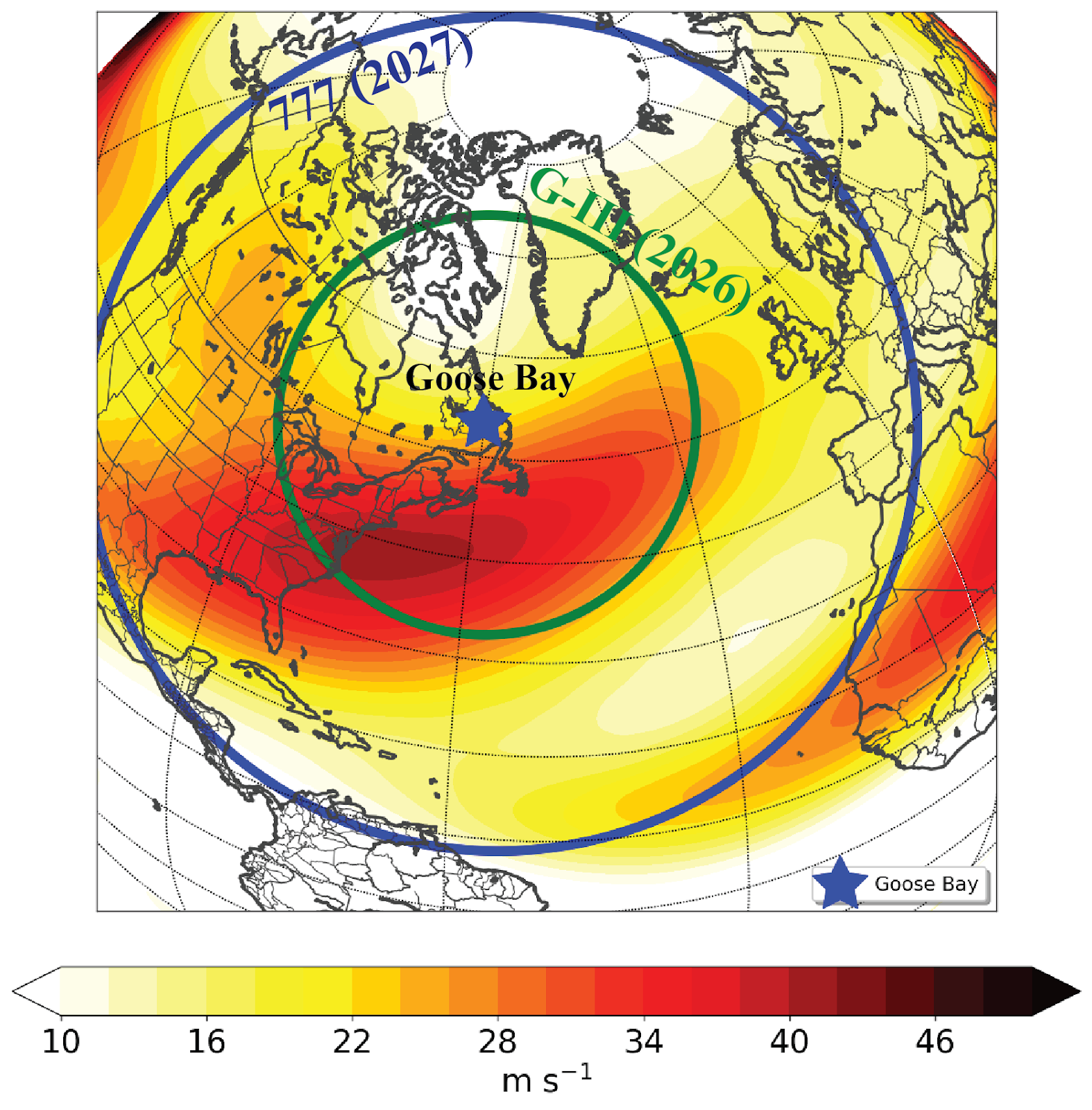
NASA’s G-III aircraft in the hangar at NASA’s Langley Research Center as science and flight crews install remote sensing instruments inside and onto the body of the plane.NASA/Ryan HillOn Jan. 24, the research team departed from NASA’s Langley Research Center in Hampton, Virginia, aboard the center’s Gulfstream III aircraft (G-III) en route to Goose Bay, Canada. For nearly a month, the plane will be making flights stretching from the Northern Atlantic Ocean over Canada through the Northeast United States, measuring moisture, clouds, and ozone as winter storms develop.
The second phase of the campaign, scheduled to fly out of Langley next year, will serve as the inaugural mission of NASA’s new airborne science laboratory, a Boeing 777 These flights will cover a larger range of 3,100 miles (5,000 kilometers) and use a larger suite of instruments. Researchers will collect detailed observations of the atmosphere over Europe, Greenland, the North Atlantic Ocean, Canada, the majority of of the U.S., and much of the Arctic Ocean.
“Part of NASA’s role is to leverage our expertise and resources for the benefit of humankind – with innovation always being at our core,” said Will McCarty, weather program manager and program scientist at NASA’s Headquarters in Washington. “The NURTURE campaign is doing exactly that by outfitting our aircraft with one-of-a-kind instruments designed to put our science data into action to understand dangerous weather events before, and as they form.”
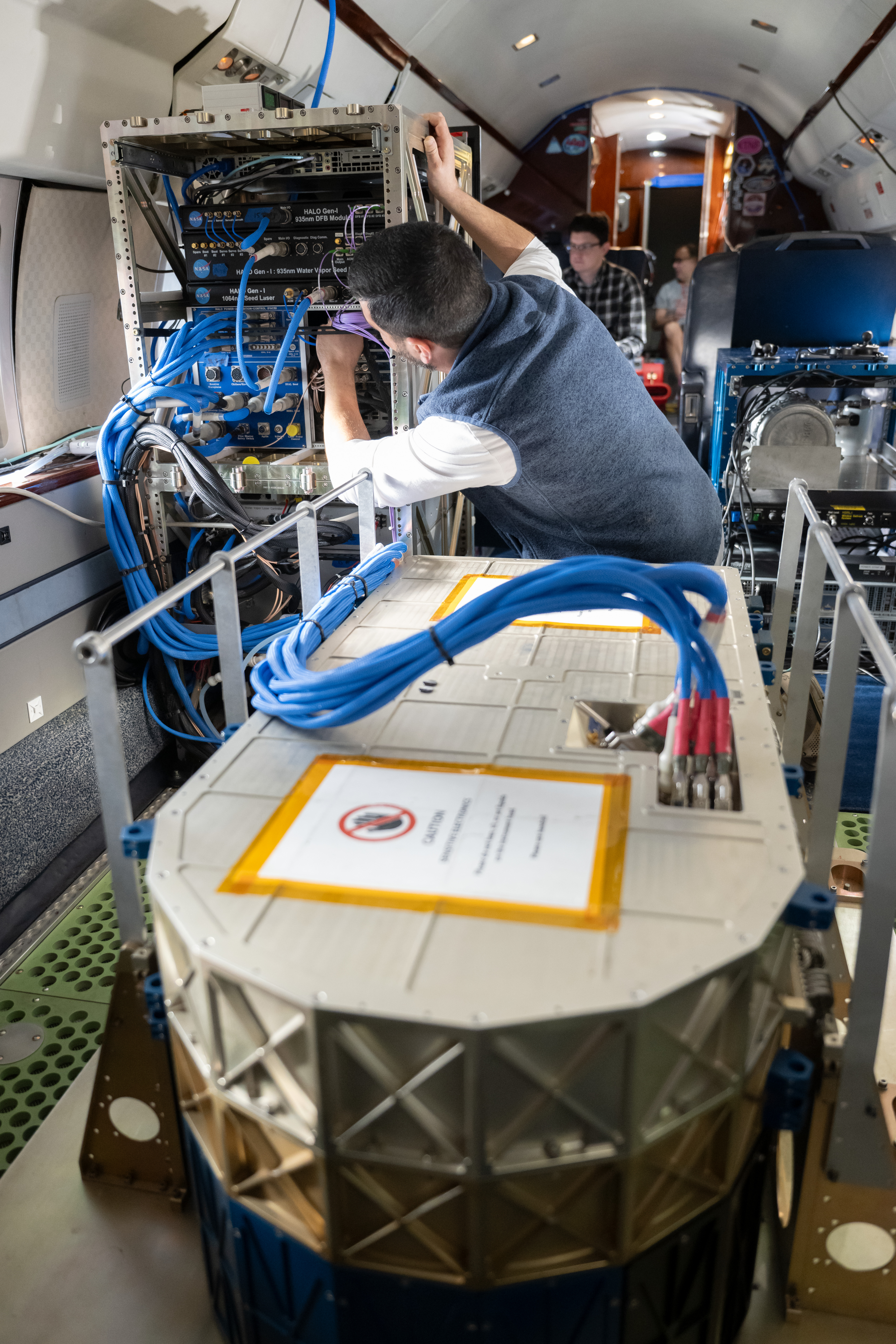
Research scientist and co-investigator for the NURTURE mission, Amin Nehrir, installing and testing the High Altitude and Lidar Observatory (HALO) instrument aboard the G-III aircraft before deploying.NASA/Ryan HillAs the NASA G-III flies over Canada, a parallel companion mission led by a team of international partners called the North Atlantic Waveguide, Dry Intrusion, and Downstream Impact Campaign (NAWDIC) will be operating out of Shannon, Ireland. Meanwhile, a third airborne mission led by the National Oceanic and Atmospheric Administration (NOAA) will be studying how moisture is transported from the tropics to the Western U.S. By combining the data collected during these campaigns, scientists will be able to track weather systems as they interact and intersect globally to understand the large-scale flows and small-scale features that drive high-impact winter weather events.
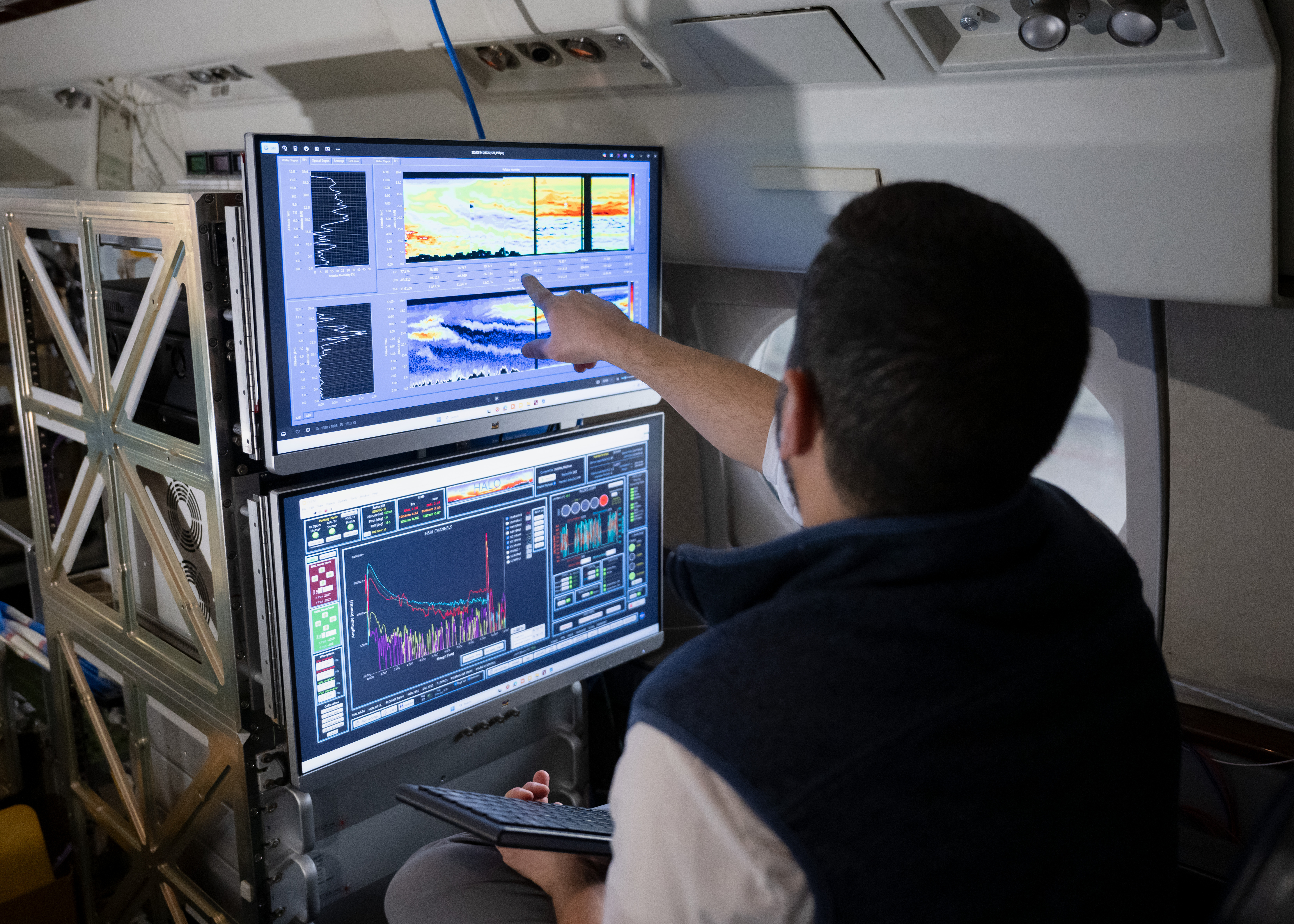
Software and instrument checks taking place pre-deployment on board the G-III aircraft. HALO and other instruments, like the CloudCube radar, combine to form a specialized suite of atmospheric sensors.NASA/Ryan Hill“These storms are not forecasted very accurately,” said Amin Nehrir, a research scientist at NASA Langley and co-investigator for the NURTURE mission. “Space observations of high latitudes in the Arctic lack the sensitivity needed to gather accurate data in such a dry, atmospheric environment. In lower latitudes, we benefit from observations from radiosondes, surface networks, and satellite observations. We are using cutting-edge technology beyond those that we have in space to get a better snapshot of atmospheric dynamics.”
A map showing the two flight paths of the NURTURE mission phases – the G-III aircraft marked in green in 2026 and the NASA 777 aircraft in blue planned for 2027.Examples of severe winter weather events include cold air outbreaks, windstorms, hazardous seas, snow and ice storms, sea ice breakup, and extreme precipitation. Data from the NURTURE mission will be used to inform first responders, decision makers, and the public sooner while also demonstrating the potential for NASA’s remote weather sensor capabilities to be developed for use on future space-based missions.
“Effects from severe weather have significant costs that threaten lives and national security by destabilizing supply chains and damaging infrastructure,” said Steven Cavallo, principal investigator for NURTURE and lead scientist at the University of Oklahoma, School of Meteorology.
The NURTURE mission is funded by NASA’s Earth Science Division and managed by researchers at NASA Langley and NASA Ames in collaboration with the University of Oklahoma.
To learn more about NURTURE, visit:
Share Details Last Updated Jan 27, 2026 Related Terms Explore More 3 min read NASA Launches Its Most Powerful, Efficient Supercomputer Article 19 hours ago 4 min read AI Unlocks Hundreds of Cosmic Anomalies in Hubble ArchiveA team of astronomers has employed a cutting-edge, artificial intelligence-assisted technique to uncover rare astronomical…
Article 21 hours ago 5 min read NASA’s Chandra Releases Deep Cut From Catalog of Cosmic Recordings Article 5 days ago Keep Exploring Discover Related TopicsMissions
Humans in Space
Climate Change
Solar System
Webb Data Reveals Dark Matter
PNG (42.87 MB)
This image from NASA’s James Webb Space Telescope, containing nearly 800,000 galaxies, is overlaid with a map of dark matter, represented in blue. Brighter blue areas indicate a higher density of dark matter. Researchers used Webb data to find the dark matter — which is invisible — via its gravitational influence on regular matter.
The area of sky shown here is 0.54 square degrees (about 2½ times the size of the full Moon) and located in the constellation Sextans. Webb’s Near-Infrared Camera (NIRCam) peered at this region for a total of about 255 hours.
Dark matter doesn’t emit, reflect, absorb, or even block light, and is therefore not visible to the human eye or traditional telescopes. But it does interact with the universe through gravity, and large clumps or clusters of dark matter have enough mass to curve space itself. Light traveling to Earth from distant galaxies becomes slightly distorted as it passes through the curved fabric of spacetime. In some cases, the warping is significant enough that it is apparent to the naked eye, almost as if the galaxy were being viewed through a warped windowpane, an effect called strong gravitational lensing. In the case of the dark matter map shown here, scientists inferred dark matter’s distribution by relying instead on an effect called weak gravitational lensing, which leads to much more subtle distortions of the light from thousands of galaxies.
The dark matter in this area of sky was also mapped in 2007 using data from NASA’s Hubble Space Telescope. The Webb map contains about 10 times more galaxies than do maps of the area made by ground-based observatories and twice as many as Hubble’s map. It reveals new clumps of dark matter and captures a higher-resolution view compared to the Hubble map.
Both the Hubble and Webb dark matter maps are part of a project called the Cosmic Evolution Survey (COSMOS). The full COSMOS “field” is 2 square degrees (about 10 times the size of the full Moon) and has been imaged by at least 15 telescopes in space and on the ground. Observing the same region with many different telescopes allows scientists to combine complementary views to understand how galaxies grow and how dark matter influences their evolution. Only Webb and Hubble data have been used to map dark matter in the region.
To refine measurements of the distance to many galaxies for the map, the team used Webb’s Mid-Infrared Instrument (MIRI), designed and managed through launch by the agency’s Jet Propulsion Laboratory, along with other space- and ground-based telescopes. The wavelengths that MIRI detects also make it adept at detecting galaxies obscured by cosmic dust clouds.
The James Webb Space Telescope is solving mysteries in our solar system, looking beyond to distant worlds around other stars, and probing the mysterious structures and origins of our universe and our place in it. Webb is an international program led by NASA with its partners, ESA (European Space Agency) and CSA (Canadian Space Agency).
Webb’s MIRI was developed through a 50-50 partnership between NASA and ESA. A division of Caltech in Pasadena, California, JPL led the U.S. contribution to MIRI. JPL also led development of MIRI’s cryocooler, done in collaboration with Northrop Grumman in Redondo Beach, California, and NASA’s Goddard Space Flight Center in Greenbelt, Maryland.
To learn more about Webb, visit: https://science.nasa.gov/webb
Keep Exploring Discover More Topics From PhotojournalPhotojournal
Search Photojournal
Photojournal’s Latest Content
Feedback
NASA’s Juno Measures Thickness of Europa’s Ice Shell
5 min read
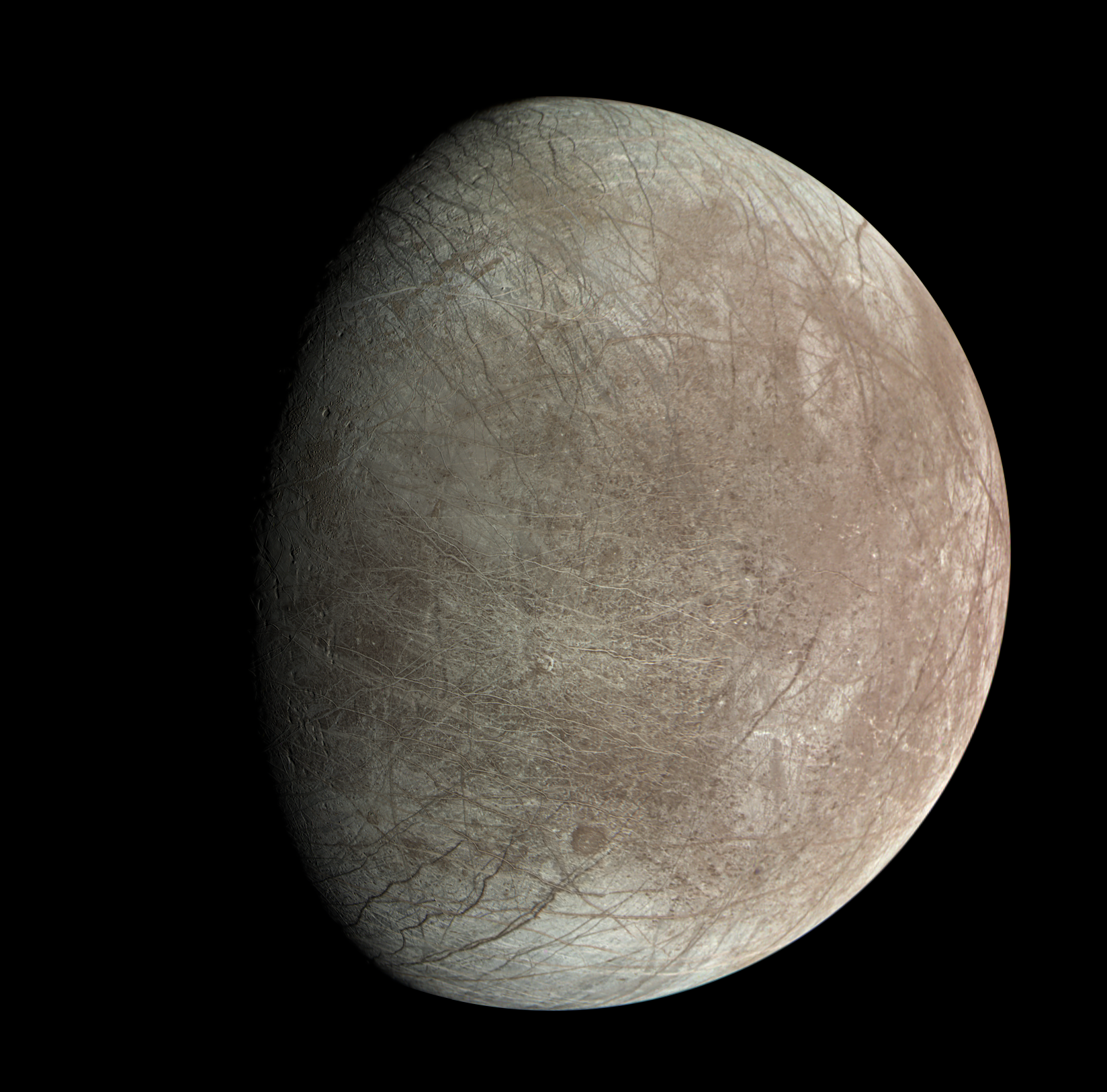
Preparations for Next Moonwalk Simulations Underway (and Underwater) Jupiter’s moon Europa was captured by the JunoCam instrument aboard NASA’s Juno spacecraft during the mission’s close flyby on Sept. 29, 2022. The images show the fractures, ridges, and bands that crisscross the moon’s surface.Image data: NASA/JPL-Caltech/SwRI/MSSS Image processing: Björn Jónsson (CC BY 3.0)Results from the solar-powered spacecraft provide a new measurement of the thickness of the ice shell encasing the Jovian moon’s ocean.
Data from NASA’s Juno mission has provided new insights into the thickness and subsurface structure of the icy shell encasing Jupiter’s moon Europa. Using the spacecraft’s Microwave Radiometer (MWR), mission scientists determined that the shell averages about 18 miles (29 kilometers) thick in the region observed during Juno’s 2022 flyby of Europa. The Juno measurement is the first to discriminate between thin and thick shell models that have suggested the ice shell is anywhere from less than half a mile to tens of miles thick.
Slightly smaller than Earth’s moon, Europa is one of the solar system’s highest-priority science targets for investigating habitability. Evidence suggests that the ingredients for life may exist in the saltwater ocean that lies beneath its ice shell. Uncovering a variety of characteristics of the ice shell, including its thickness, provides crucial pieces of the puzzle for understanding the moon’s internal workings and the potential for the existence of a habitable environment.
The new estimate on the ice thickness in the near-surface icy crust was published on Dec. 17 in the journal Nature Astronomy.
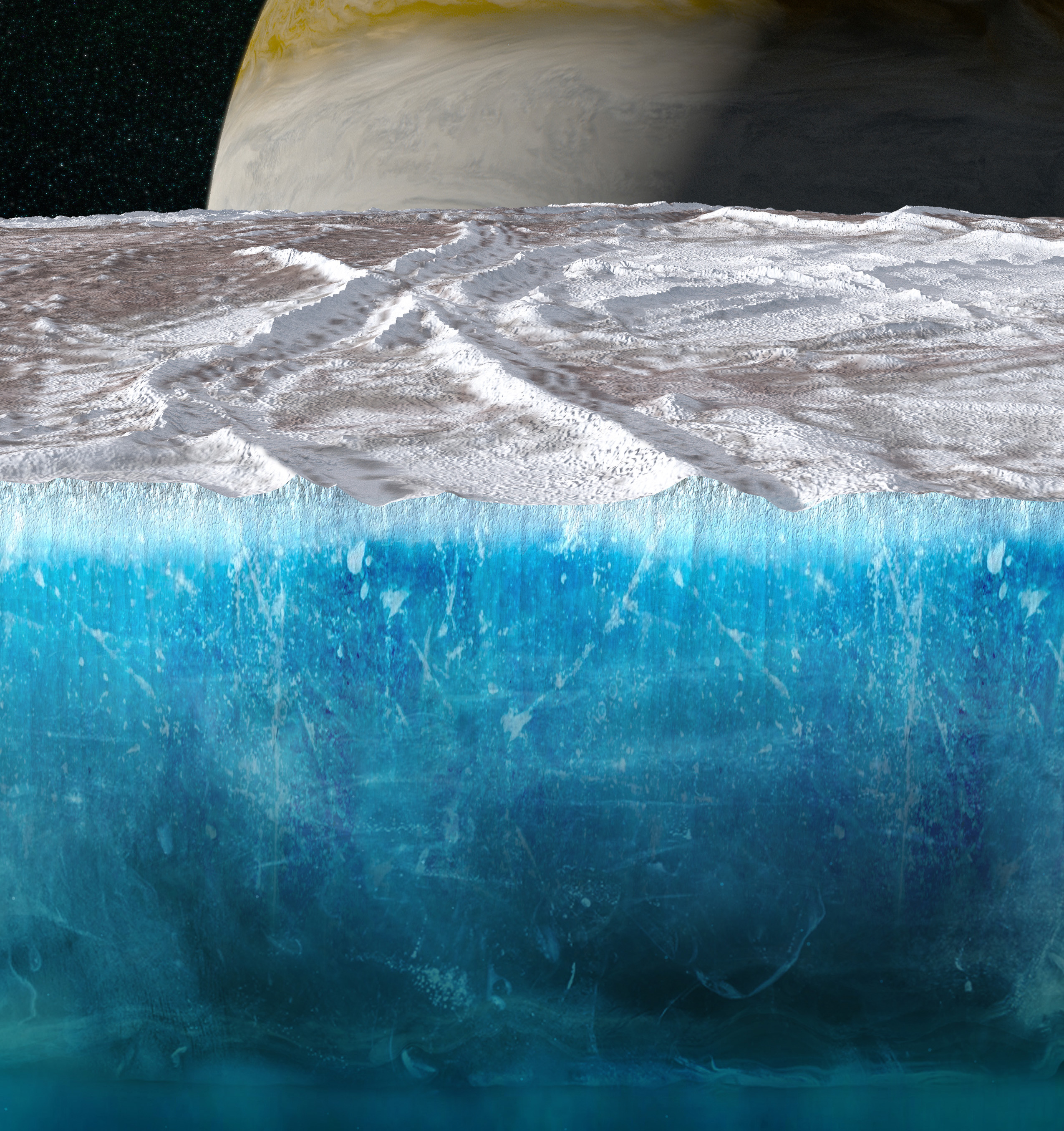
This artist’s concept depicts a cutaway view showing Europa’s ice shell. Data used to generate a new result on the ice thickness and structure was collected by the microwave radiometer instrument on NASA’s Juno during a close flyby of the Jovian moon on Sept. 29, 2022.NASA/JPL-Caltech/SwRI/Koji Kuramura/ Gerald Eichstädt (CC BY) Catching wavesAlthough the MWR instrument was designed to investigate Jupiter’s atmosphere below the cloud tops, the novel instrument has proven valuable for studying the gas giant’s icy and volcanic moons as well.
On Sept. 29, 2022, Juno came within about 220 miles (360 kilometers) of Europa’s frozen surface. During the flyby, MWR collected data on about half the moon’s surface, peering beneath the ice to measure its temperatures at various depths.
“The 18-mile estimate relates to the cold, rigid, conductive outer-layer of a pure water ice shell,” said Steve Levin, Juno project scientist and co-investigator from NASA’s Jet Propulsion Laboratory in Southern California, which manages the mission. “If an inner, slightly warmer convective layer also exists, which is possible, the total ice shell thickness would be even greater. If the ice shell contains a modest amount of dissolved salt, as suggested by some models, then our estimate of the shell thickness would be reduced by about 3 miles.”
The thick shell, as suggested by the MWR data, implies a longer route that oxygen and nutrients would have to travel to connect Europa’s surface with its subsurface ocean. Understanding this process may be relevant to future studies of Europa’s habitability.
Cracks, poresThe MWR data also provides new insights into the makeup of the ice just below Europa’s surface. The instrument revealed the presence of “scatterers” — irregularities in the near-surface ice such as cracks, pores, and voids that scatter the instrument’s microwaves reflecting off the ice (similar to how visible light is scattered in ice cubes). These scatterers are estimated to be no bigger than a few inches in diameter and appear to extend to depths of hundreds of feet below Europa’s surface.
The small size and shallow depth of these features, as modeled in this study, suggest they are unlikely to be a significant pathway for oxygen and nutrients to travel from Europa’s surface to its salty ocean.
“How thick the ice shell is and the existence of cracks or pores within the ice shell are part of the complex puzzle for understanding Europa’s potential habitability,” said Scott Bolton, principal investigator of Juno from the Southwest Research Institute in San Antonio. “They provide critical context for NASA’s Europa Clipper and the ESA (European Space Agency) Juice (JUpiter ICy moons Explorer) spacecraft — both of which are on their way to the Jovian system.” Europa Clipper will arrive there in 2030, while Juice will arrive the year after.
Juno will carry out its 81st flyby of Jupiter on Feb. 25.
More about JunoA division of Caltech in Pasadena, California, JPL manages the Juno mission for the principal investigator, Scott Bolton, of the Southwest Research Institute in San Antonio. Juno is part of NASA’s New Frontiers Program, managed at NASA’s Marshall Space Flight Center in Huntsville, Alabama, for the agency’s Science Mission Directorate in Washington.
To learn more about Juno, go to:
https://science.nasa.gov/mission/juno
News Media Contacts
DC Agle
Jet Propulsion Laboratory
818-393-9011
agle@jpl.nasa.gov
Karen Fox / Molly Wasser
NASA Headquarters, Washington
240-285-5155 / 240-419-1732
karen.c.fox@nasa.gov / molly.l.wasser@nasa.gov
Deb Schmid
Southwest Research Institute, San Antonio
210-522-2254
dschmid@swri.org
2026-004
Share Details Last Updated Jan 27, 2026 Related Terms Explore More 6 min read NASA’s Pandora Satellite, CubeSats to Explore Exoplanets, BeyondEditor’s Note, Jan. 13, 2026: Mission controllers received full acquisition of signal from the Pandora…
Article 3 weeks ago 6 min read NASA’s SPHEREx Observatory Completes First Cosmic Map Like No Other Article 1 month ago 6 min read NASA’s Perseverance Mars Rover Ready to Roll for Miles in Years Ahead Article 1 month ago Keep Exploring Discover Related TopicsJupiter: Exploration
JunoNASA’s Juno spacecraft has explored Jupiter, its moons, and rings since 2016, gathering breakthrough science and breathtaking imagery.
Jupiter Moons
EuropaEyes on the Solar System: Europa
NASA Launches Its Most Powerful, Efficient Supercomputer
3 min read
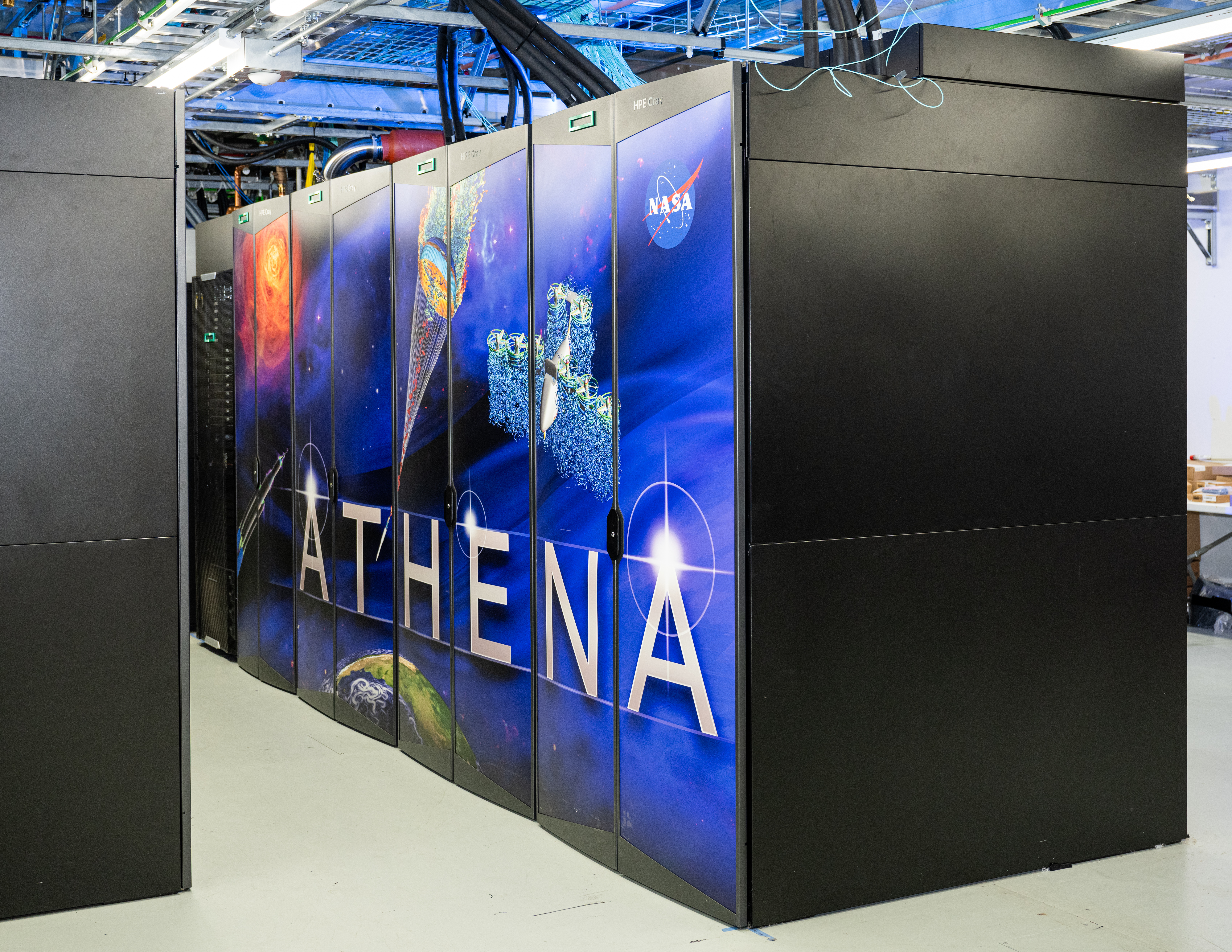
Preparations for Next Moonwalk Simulations Underway (and Underwater) Athena, NASA’s newest supercomputer, is housed at the agency’s Modular Supercomputing Facility at NASA’s Ames Research Center in California’s Silicon Valley.NASA/Brandon Torres-NavarreteNASA is announcing the availability of its newest supercomputer, Athena, an advanced system designed to support a new generation of missions and research projects. The newest member of the agency’s High-End Computing Capability project expands the resources available to help scientists and engineers tackle some of the most complex challenges in space, aeronautics, and science.
Housed in the agency’s Modular Supercomputing Facility at NASA’s Ames Research Center in California’s Silicon Valley, Athena delivers more computing power than any other NASA system, surpassing the capabilities of its predecessors, Aitken and Pleiades, in power and efficiency. The new system, which was rolled out in January to existing users after a beta testing period, delivers over 20 petaflops of peak performance – a measurement of the number of calculations it can make per second – while reducing the agency’s supercomputing utility costs.
“Exploration has always driven NASA to the edge of what’s computationally possible,” said Kevin Murphy, chief science data officer and lead for the agency’s High-End Computing Capability portfolio at NASA Headquarters in Washington. “Now with Athena, NASA will expand its efforts to provide tailored computing resources that meet the evolving needs of its missions.”
Supercomputers like Athena are critical to missions and research across the agency, providing the computational power necessary to simulate rocket launches, design next-generation aircraft, and train large-scale artificial intelligence foundation models capable of analyzing massive datasets to uncover new scientific insights. The supercomputer is available to NASA researchers and external scientist and researchers supporting NASA programs who can apply for time to use the system.
The name Athena was selected through a contest held in March 2025 among the agency’s High-End Computing Capability workforce, which chose the name of the Greek goddess of wisdom and warfare because she is the half-sister of Artemis.
Managed by NASA’s Office of the Chief Science Data Officer, the High-End Computing Capability portfolio supports a flexible, hybrid computing approach that combines supercomputers with access to other tools, such as commercial cloud platforms. This strategy enables NASA teams to choose the most effective computing environment for their research, whether running complex simulations, developing and deploying AI models, or performing large-scale data analysis.
The project’s capabilities will continue to expand as the agency invests in advanced supercomputing to meet the growing complexity of its missions. As exploration pushes further into the universe, the ability to compute quickly, efficiently, and intelligently will be more important than ever. With Athena, NASA is laying the digital foundation for the next era of discovery.
To learn more about high-end computing at NASA, visit:
Share Details Last Updated Jan 27, 2026 Related Terms Explore More 4 min read NASA Science Flights Venture to Improve Severe Winter Weather Warnings Article 14 hours ago 5 min read NASA’s Chandra Releases Deep Cut From Catalog of Cosmic Recordings Article 5 days ago 4 min read NASA AI Model That Found 370 Exoplanets Now Digs Into TESS DataTrained on data from NASA’s exoplanet-hunting missions, the open-source ExoMiner++ deep learning model uses an…
Article 6 days ago Keep Exploring Discover More Topics From NASA Office of the Chief Science Data OfficerNASA’s groundbreaking science and exploration missions increasingly rely on the efficient use of large-scale data, advanced computing, and high-performance analytics.…
Core Area of Expertise: Supercomputing
Ames Research Center
Computing
NASA’s James Webb Space Telescope Finds Crystal-Spewing Protostar
The NIRCam (Near-Infrared Camera) on NASA’s James Webb Space Telescope captured the actively forming protostar EC 53 (circled at left) in the Serpens Nebula in this image released on Jan. 21, 2026.
Astronomers have long sought evidence to explain why comets at the outskirts of our own solar system contain crystalline silicates, since crystals require intense heat to form and these “dirty snowballs” spend most of their time in the ultracold Kuiper Belt and Oort Cloud. Now, looking outside our solar system, Webb has returned the first conclusive evidence that links how those conditions are possible.
The telescope clearly showed for the first time that the hot, inner part of the disk of gas and dust surrounding a very young, actively forming star is where crystalline silicates are forged. Webb also revealed a strong outflow that is capable of carrying the crystals to the outer edges of this disk. Compared to our own fully formed, mostly dust-cleared solar system, the crystals would be forming approximately between the Sun and Earth.
Read more about this discovery.
Image credit: NASA, ESA, CSA, STScI, Klaus Pontoppidan (NASA-JPL), Joel Green (STScI); Image Processing: Alyssa Pagan (STScI)
NASA, Partners Advance LISA Prototype Hardware
3 min read
NASA, Partners Advance LISA Prototype HardwareEngineers and scientists at NASA’s Goddard Space Flight Center in Greenbelt, Maryland, completed tests this month on a second early version of a key element of the upcoming LISA (Laser Interferometer Space Antenna) mission.
The LISA mission, a collaboration between ESA (the European Space Agency) and NASA, will use infrared lasers to detect gravitational waves, or ripples in the fabric of space-time. The tests involved the frequency reference system, delivered by BAE Systems, that will help control the lasers connecting LISA’s three spacecraft. The lasers must be finely tuned to make precise measurements — to within a trillionth of a meter, called a picometer.
A prototype laser optical module for LISA (Laser Interferometer Space Antenna) rests on a table after testing at NASA’s Goddard Space Flight Center in Greenbelt, Maryland, in May 2025. Xiaozhen Xu, an engineer with Miller Engineering and Research Corp., works in the background. The smaller box to the right is the laser electronics module. Each of the three LISA spacecraft will have a laser system with a frequency reference component and six laser heads.NASA/Sophia Roberts Download high-resolution images from NASA’s Scientific Visualization StudioThe team tested the first version of the system in May 2025.
“The extensive round of checkouts on the frequency reference system last year were very successful,” said Ira Thorpe, the project scientist for LISA at NASA Goddard. “This second unit is identical, so our assessments this time around were less intense and preface a future cross-check of the two, which is the gold-standard for checking the stability of the system overall.”
In addition to the laser system, NASA is contributing the telescopes, devices to manage the buildup of onboard electrical charge, and the framework scientists will need to process the data the mission will generate.
A prototype charge management device for LISA sits on a lab bench at NASA Goddard in May 2025. Each of the three LISA spacecraft will have a charge management device to reduce the buildup of electric charge on the gold-platinum proof masses that fly freely inside the spacecraft. The University of Florida in Gainesville and Fibertek Inc. in McNair, Va., are developing the devices.NASA/Dennis HenryNASA’s contributions are part of the agency’s efforts to innovate on ambitious science missions that will help us better understand how the universe works. LISA will also offer a major advancement in multimessenger astronomy, which is how scientists explore cosmic signals other than light.
The three LISA spacecraft will fly in a vast triangular formation that follows Earth as it orbits the Sun. Each arm of the triangle will stretch 1.6 million miles (2.5 million kilometers).
Each spacecraft will contain two free-floating cubes inside called proof masses. Arriving gravitational waves from throughout the universe will minutely change the lengths of the triangle’s arms. The lasers connecting the cubes will measure changes in their separation to within a distance smaller than a helium atom.
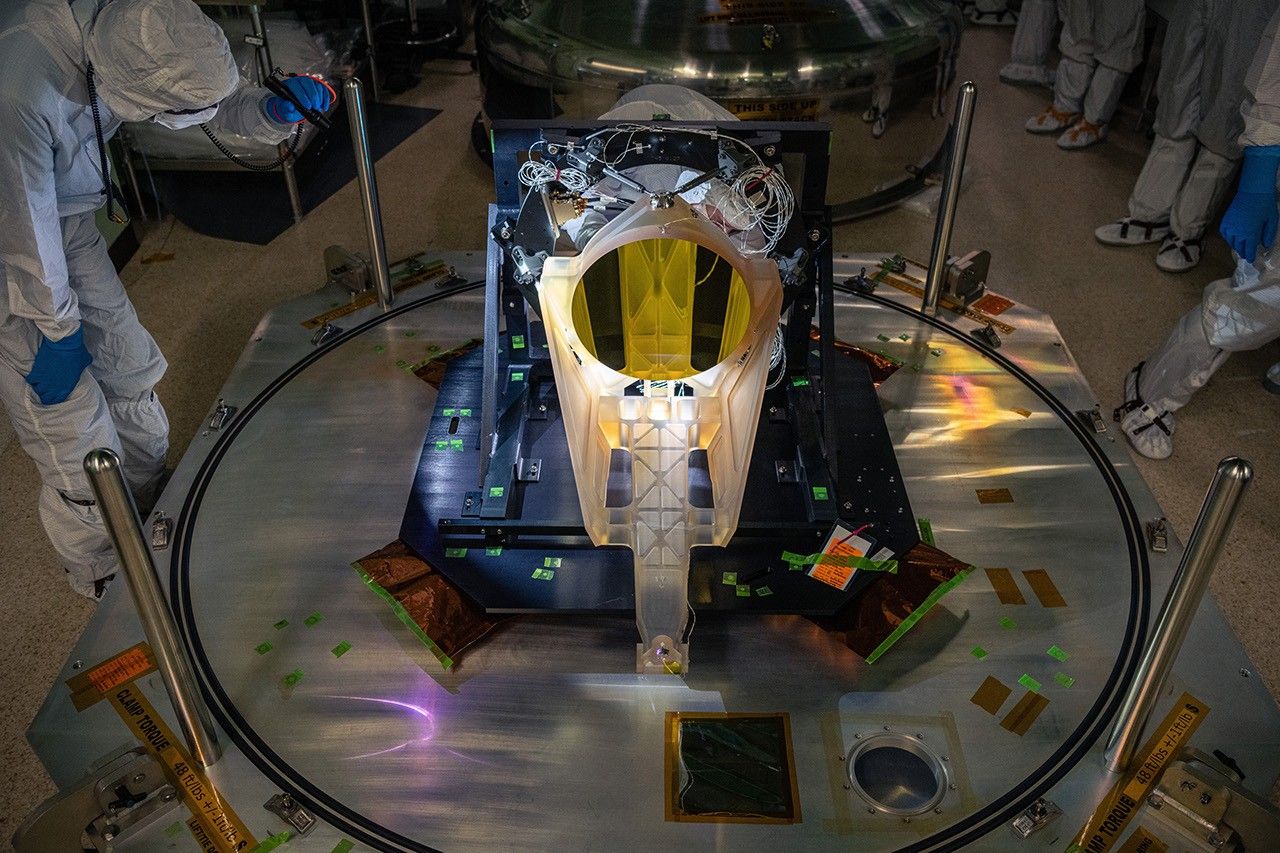
In May 2024, technicians inspected the prototype LISA telescope in a darkened clean room at NASA Goddard. Illuminated by a flashlight, the telescope’s structure glows. The prototype is made from a translucent, amber-colored, glass-ceramic material called Zerodur, which is often used in high-precision applications because it resists changes in shape over a wide temperature range. The mirror, near center and coated in gold, reflects a magnified image of part of the telescope.NASA/Dennis HenryThe enormous scale of the triangle will enable LISA to detect gravitational waves that cannot be found with ground-based facilities, such as those generated when massive black holes in the centers of galaxies merge. Scientists can use the data to learn about a source’s distance and physical properties.
The LISA mission is slated to launch in the mid-2030s.
By Jeanette Kazmierczak
NASA’s Goddard Space Flight Center, Greenbelt, Md.
Media Contact:
Claire Andreoli
301-286-1940
NASA’s Goddard Space Flight Center, Greenbelt, Md.
Floods Inundate Southern Mozambique
- Earth
- Earth Observatory
- Image of the Day
- EO Explorer
- Topics
- More Content
- About
NASA, GE Aerospace Hybrid Engine System Marks Successful Test
4 min read
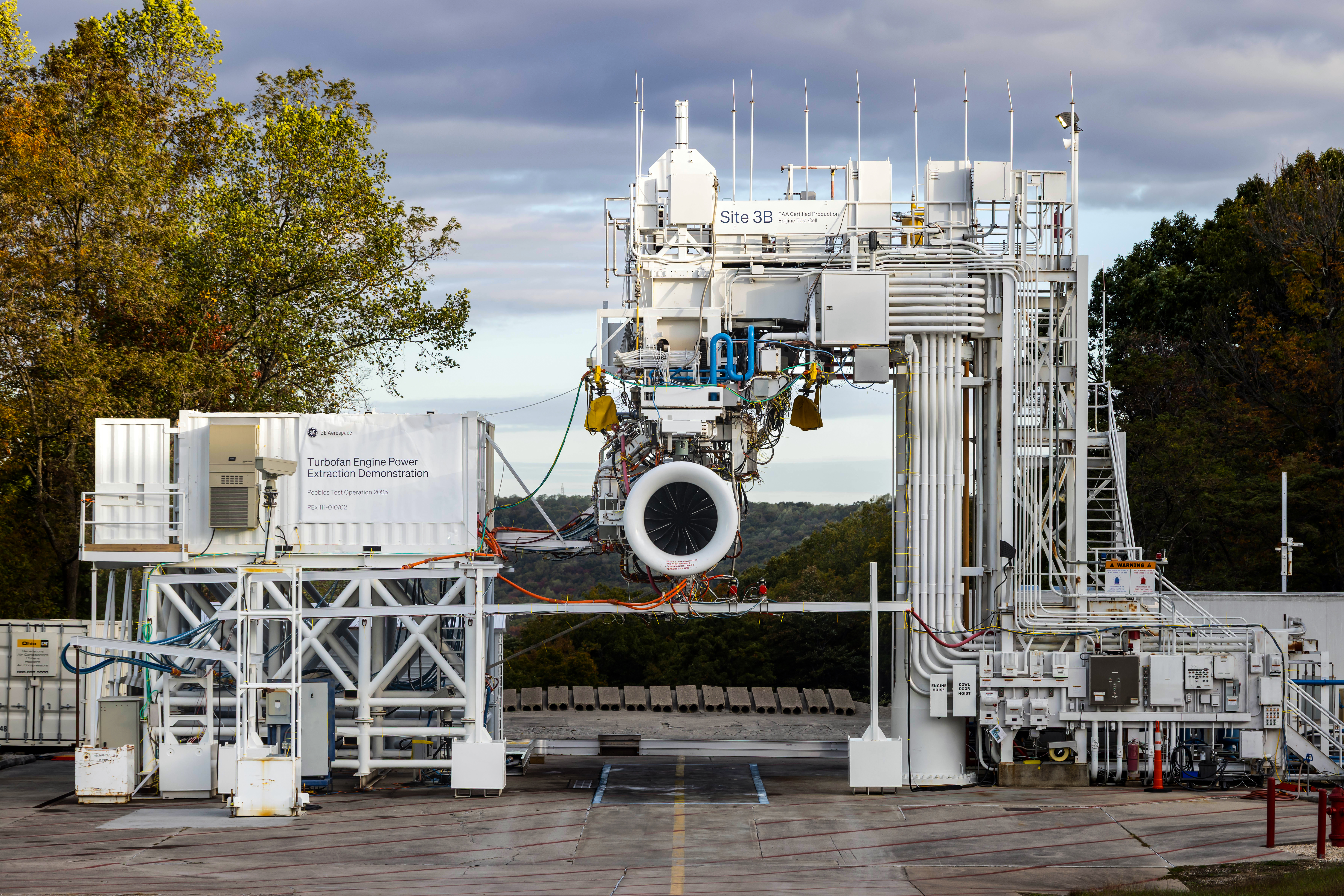
Preparations for Next Moonwalk Simulations Underway (and Underwater) Research from NASA and GE Aerospace led to the successful testing of a jet engine at the company’s Peebles Test Operation site in Ohio in December. The hybrid engine is a modified version of a GE Aerospace Passport.GE AerospaceTo an untrained eye, the aircraft engine sitting outside of a Cincinnati facility in December might have looked like standard hardware. But NASA and GE Aerospace researchers watching the unit fire up for a demonstration knew what they were looking at: a hybrid engine performing at a level that could potentially power an airliner.
It’s something new in the aviation world, and the result of years of research and development.
NASA, GE Aerospace, and others working toward hybrid engine development had already tested components in the past — power system controls, electric motors, and more. What the demonstration at GE Aerospace’s Peebles Test Operation site in Ohio represented was the first test of an integrated system.
“Turbines already exist. Compressors already exist. But there is no hybrid-electric engine flying today. And that’s what we were able to see,” said Anthony Nerone, who served as manager of the agency’s Hybrid Thermally Efficient Core (HyTEC) project at NASA’s Glenn Research Center in Cleveland during the test engine’s development.
The test involved a modified GE Aerospace’s Passport engine with the ability to extract energy from some of its operations and insert that supplementary power into other parts.
The hybrid engine is result of research from GE Aerospace and NASA under a cost-sharing HyTEC contract. It runs on jet fuel with assistance from electric motors, a concept that seems simple in a world where hybrid cars are common. Yet the execution was complex, requiring researchers to invent, adapt, and integrate parts into a system that could deliver the requisite power needed for a single-aisle aircraft safely and reliably.
As a result, the demonstration — known as a power extraction test — was one of the most complex GE Aerospace has staged to date.
“They had to integrate equipment they’ve never needed for previous tests like this,” said Laura Evans, acting HyTEC project manager at Glenn.
Despite the complexity, the team witnessed a successful demonstration. Not a balancing test or a preliminary exercise, but an engine on a mount doing many of the things it would need to do if installed in an aircraft.
The test comes at a time when U.S. aviation is increasingly looking for power systems that can do more while also saving money on fuel. It’s a trend NASA was well ahead of. Hybrid aircraft engine technology began to emerge from Glenn roughly 20 years ago, when it seemed nearly impossible to realize, Nerone said.
“Now,” he said. “When you go to a conference, hybrid technology is everywhere.”
And NASA and GE now have real data for how the technology can be applied to flight.
From that early start, NASA transitioned into HyTEC and its contract with GE Aerospace.
HyTEC’s goal is to mature technology that will enable a hybrid engine that burns up to 10% less fuel compared to today’s best-in-class engines. NASA’s overall goal is to leverage its resources to bring the technology to market faster, meeting industry needs.
The work is far from over. Both NASA and GE Aerospace are analyzing data from the demonstration and from previous work and are making progress toward a compact engine test this decade.
Still, the demonstration was a chance to see the integration of technology that’s closer than ever to practical application.
“We’re getting close to the payoff on work that’d been in progress for a long time,” Nerone said.
Read More About NASA/GE Aerospace Work on HyTec Facebook logo @NASA@NASAaero@NASA_es @NASA@NASAaero@NASA_es Instagram logo @NASA@NASAaero@NASA_es Linkedin logo @NASA Explore More 4 min read NASA Tests Technology Offering Potential Fuel Savings for Commercial Aviation Article 6 days ago 5 min read NASA Chase Aircraft Ensures X-59’s Safety in Flight Article 7 days ago 3 min read NASA Develops Blockchain Technology to Enhance Air Travel Safety and SecurityThrough a drone flight test at NASA’s Ames Research Center, researchers tested a blockchain-based system…
Article 2 weeks ago Keep Exploring Discover More Topics From NASAMissions
Artemis
Aeronautics STEM
Explore NASA’s History
Share Details Last Updated Jan 26, 2026 EditorJim BankeContactRobert Margettarobert.j.margetta@nasa.govLocationGlenn Research Center Related Terms
NASA Welcomes Oman as Newest Artemis Accords Signatory
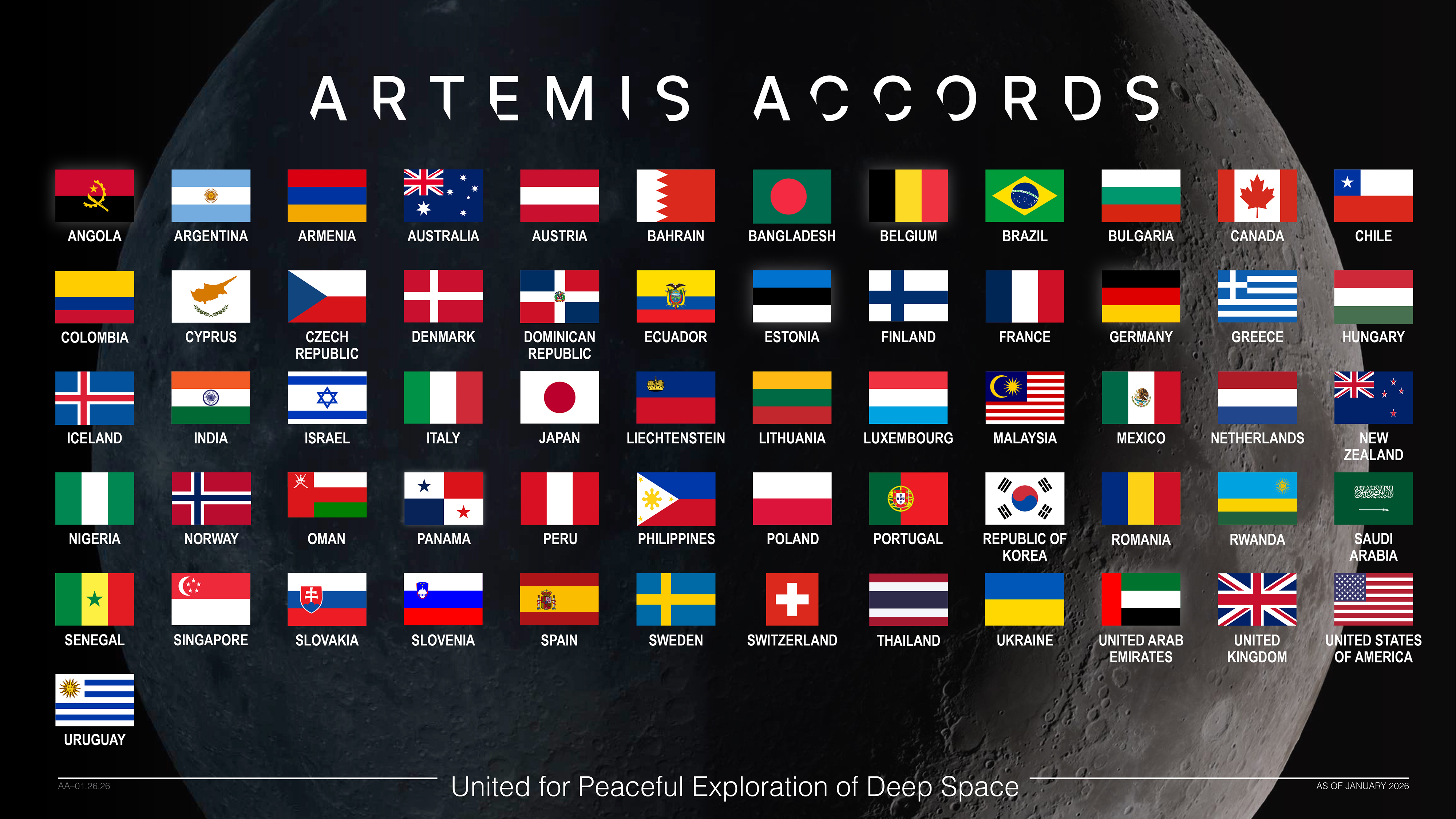
The Sultanate of Oman signed the Artemis Accords during a ceremony in Muscat attended by NASA on Monday, becoming the 61st nation to commit to responsible space exploration for the benefit of all humanity.
“Oman’s accession to the Artemis Accords sets an important example about the value of responsible behavior and shared pursuit of discovery,” said NASA Administrator Jared Isaacman in recorded remarks during the ceremony. “Oman joins the U.S. and our other partners on ensuring the peaceful exploration of space for generations to come. We are returning humans to the Moon and laying the groundwork for future missions. A community of like-minded nations will be the foundation of our success.”
U.S. Ambassador to the Sultanate of Oman Ana Escrogima and NASA’s Deputy Associate Administrator Casey Swails participated in the event held on the opening day of the Middle East Space Conference, an international forum on space and innovation in the region. Said al-Maawali, Oman’s minister of transportation, communication, and information technology signed on behalf of the country.
In 2020, during the first Trump Administration, the United States, led by NASA and the U.S. Department of State, joined with seven other founding nations to establish the Artemis Accords, responding to the growing interest in lunar activities by both governments and private companies.
The accords introduced the first set of practical principles aimed at enhancing the safety, transparency, and coordination of civil space exploration on the Moon, Mars, and beyond.
Signing the Artemis Accords means to explore peaceably and transparently, to render aid to those in need, to enable access to scientific data that all of humanity can learn from, to ensure activities do not interfere with those of others, to preserve historically significant sites and artifacts, and to develop best practices for how to conduct space exploration activities for the benefit of all.
More countries are expected to sign the Artemis Accords in the months and years ahead, as NASA continues its work to establish a safe, peaceful, and prosperous future in space.
Learn more about the Artemis Accords at:
https://www.nasa.gov/artemis-accords
-end-
Bethany Stevens / Elizabeth Shaw
Headquarters, Washington
202-358-1600
bethany.c.stevens@nasa.gov / elizabeth.a.shaw@nasa.gov
NASA Technology Brings Golden Age of Exploration to Earth
As NASA fosters technologies needed to live and work farther away from home than ever before, the agency’s Technology Transfer program has the sole mission of getting those innovations into the hands of companies, entrepreneurs, and, ultimately, everyday people. The agency’s Spinoff publication has captured this endeavor for half a century, sharing stories of space technologies improving our lives on Earth.
“NASA’s work has always delivered returns well beyond the mission itself,” said NASA Administrator Jared Isaacman. “As we develop the technologies needed for a sustained presence on the Moon and prepare for human exploration of Mars, those innovations will continue to unlock new capabilities across medicine, aviation, agriculture, and other critical sectors, delivering lasting benefits to Earth well beyond the mission.”
Many technologies created to support deep space and lunar missions, including Artemis, are in use on Earth. Spinoff’s 50th edition tells the stories of two companies that developed equipment to 3D print habitats on planetary surfaces. On Earth, one of those companies is custom-building wall panels, cladding, and facades, while the other is additively manufacturing entire neighborhoods of affordable housing.
NASA envisions a future where robots handle routine maintenance and mundane tasks to support astronauts during lunar missions. Two companies featured in Spinoff 2026 received the agency’s support to meet that need, and each has already found applications for their technology on Earth. One company is commercializing software to power robots that are cleaning bathrooms and building homes, and the other has created a humanoid robot capable of warehouse and assembly line tasks.
“Incredible feats on distant worlds require incredible innovation,” said Dan Lockney, Technology Transfer program executive at NASA Headquarters in Washington. “We can’t wait to see what breakthroughs and advancements come from not just exploration on the lunar surface but missions to put a rotorcraft on Saturn’s moon Titan or study interstellar objects in deep space.”
Any NASA work can result in spinoff technology, including lifesaving inventions. Technology developed by engineers trying to make life easier for astronauts on the International Space Station has evolved into an implantable heart monitor that’s helping keep heart failure patients out of the hospital. Companies also are improving personal locator beacons for search and rescue networks based on NASA’s satellite communication technology.
Standout spinoffs
Procedures NASA created to ensure food safety for Apollo astronauts traveling to the Moon formed the foundation for safety procedures and regulations governing food production globally. The memory foam found in mattresses today originated from NASA’s development of pressure-absorbing materials for aircraft seats in the 1970s. Miniaturized, energy-efficient camera technology, initially engineered by NASA to create compact, high-quality imaging systems for spacecraft, is now the basis for modern digital imagery, from smartphone cameras to cinema. Scratch-resistant lenses use diamond-hard coatings originally developed for aerospace applications, and wireless headsets are rooted in technology NASA pioneered to enable hands-free communication for astronauts.
Readers of Spinoff 2026 are invited to contribute to the next “small step” in NASA’s history of “giant leaps” and bring space-inspired technology to Earth. In this edition’s Spinoffs of Tomorrow section, there are 20 technologies ready for commercialization, with information on how to license them or any of the other 1,300 inventions available in NASA’s Patent Portfolio.
Spinoff is part of NASA’s Space Technology Mission Directorate and its Technology Transfer program. Technology Transfer is charged with finding broad, innovative applications for NASA-developed technology through partnerships and licensing agreements, ensuring agency investments benefit the nation and the world.
To read NASA’s 50th edition of Spinoff, visit:
-end-
Jasmine Hopkins
Headquarters, Washington
321-432-4624
jasmine.s.hopkins@nasa.gov
How NASA Is Homing in From Space on Ocean Debris
Space-based technology could help track plastic and other flotsam by its ‘fingerprints.’
In late 2025, scientists reported that, for the first time, they were able to detect concentrations of plastic pollution on land using NASA’s Earth Surface Mineral Dust Source Investigation (EMIT) sensor aboard the International Space Station. The technology has inspired marine researchers to see whether it could also help track debris in our waters.
Before future generations of sensors like EMIT can be called upon to detect ocean litter, scientists need to know what to look for. Working with collaborators, NASA intern Ashley Ohall has built a newly published reference library containing nearly 25,000 molecular “fingerprints” from all manner of flotsam and jetsam, including rope, tires, metal, bubble wrap, buoys, and bottle caps. Given the overwhelming presence of plastic in marine debris, the library includes some 19 types of polymer.
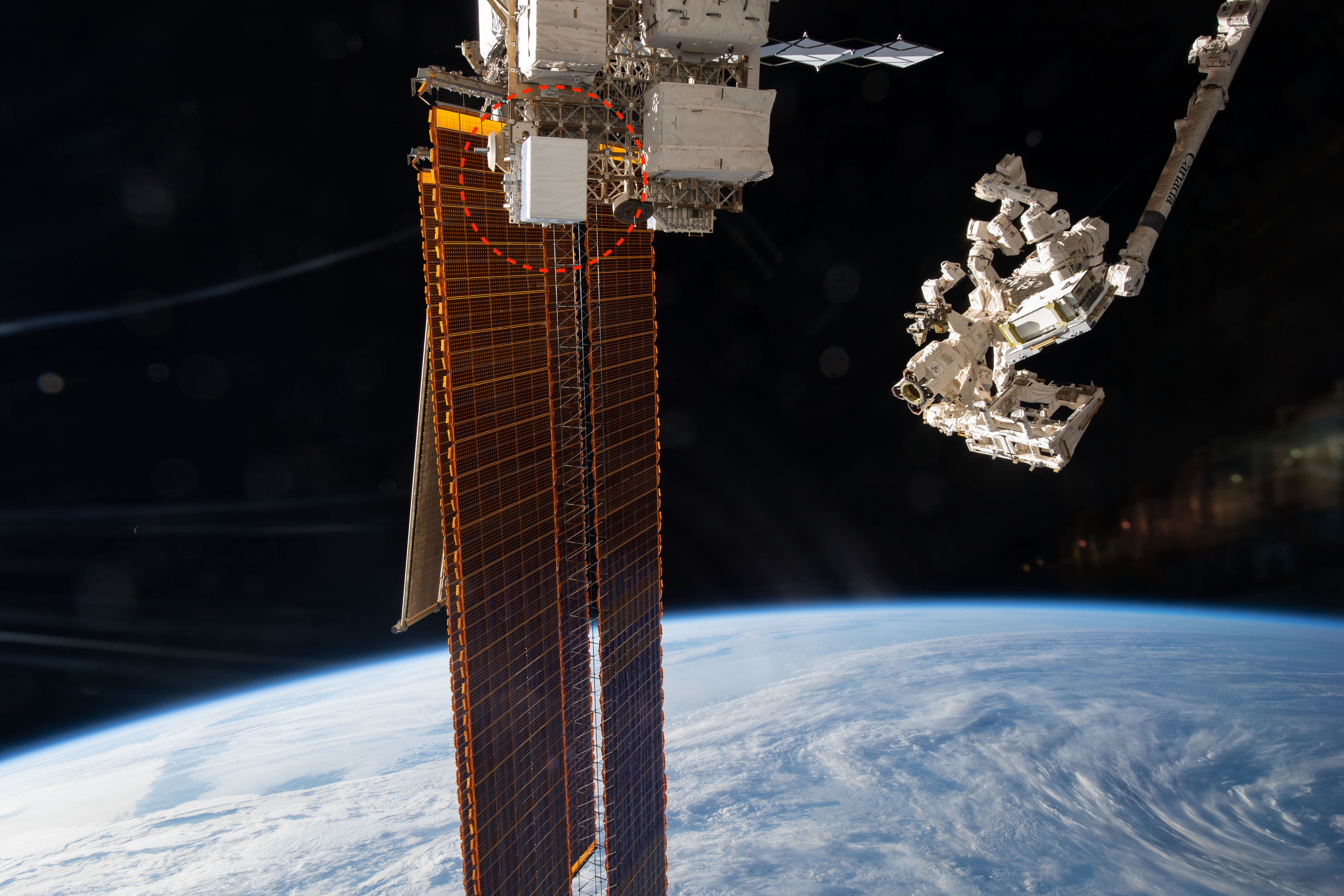
NASA’s EMIT, shown in the red circle, was launched to the International Space Station in 2022 to map minerals. Its data is now advancing fields from agriculture to water science.NASAMost of the estimated 8 million tons or more of plastic that enter the ocean every year comes from land, so mapping pollution hot spots near coastlines could be a first step toward reducing what ends up on beaches and washed out to sea. That’s exactly what NASA’s sensor showed it could do, though detecting plastic wasn’t its first mission. Launched in 2022, EMIT maps minerals across desert regions to help determine how the dust can heat or cool the atmosphere.
But the instrument has proved itself incredibly nimble. From its perch on the space station, it can identify hundreds of compounds on Earth via the unique spectral patterns they make in reflected sunlight. The technology behind EMIT, called imaging spectroscopy, was pioneered at NASA’s Jet Propulsion Laboratory in Southern California and is used on missions throughout the solar system. One of EMIT’s cousins discovered lunar water in 2009, and another is set to return to the Moon to help future astronauts identify scientifically valuable areas to sample.
Marine scientist Ashley Ohall checked out aircraft at NASA’s Langley Research Center in Hampton, Virginia, during her recent internship with the agency in which she led the creation of a spectral library containing nearly 25,000 molecular “fingerprints” from all manner of debris.Kelsey BissonThe same technology has now shown that it can find plastic compounds in landfills and large-scale structures like greenhouses, said JPL’s David Thompson, who coauthored the 2025 study. However, detecting plastic once it enters the ocean is more challenging: Seawater absorbs infrared light, masking many of plastic’s prominent spectral features.
Litter libraryThat’s where the work of Ohall and her collaborators comes in. Their open-source library compiles the work of many researchers over the years who’ve analyzed marine debris using handheld instruments in laboratories. Standardizing the various datasets into one searchable repository is crucial because different kinds of debris have slightly different spectra based on material, color, and condition. Weathered water bottles, for example, “look” different than washed-up hurricane detritus. Once the patterns are known, detection algorithms can be developed.
Carried by ocean currents, debris can travel thousands of miles from the source, so a better understanding of where it is and where it’s headed could be a boon for public health and coastal tourism, said Ohall, a Florida native who recently graduated from the University of Georgia.
“My biggest hope is that people see remote sensing as an important and useful tool for marine debris monitoring,” Ohall said. “Just because it hasn’t been done yet doesn’t mean it can’t be done.”
Planet-scale challengeConventional methods for quantifying plastic in the ocean — including dragging nets through garbage patches — can’t sample the millions of tons that flow in. With NASA’s support, scientists are learning more about the ability of existing sensors as well as what’s still needed to spot marine debris. Teams are also training AI tools to sift through satellite imagery.
It remains a planet-scale endeavor, said Kelsey Bisson, a program manager at NASA Headquarters in Washington. The groundwork being done by Ohall and other scientists brings us a step closer to leveraging a powerful technology flying in air and space today.
“Humans have a visceral connection to the ocean and its health,” Bisson said. “Detecting marine debris is the kind of incredible challenge that NASA can help solve.”
To learn more about EMIT, visit:
https://earth.jpl.nasa.gov/emit/
Media ContactsAndrew Wang / Andrew Good
Jet Propulsion Laboratory, Pasadena, Calif.
626-379-6874 / 818-393-2433
andrew.wang@jpl.nasa.gov / andrew.c.good@jpl.nasa.gov
Written by Sally Younger
2026-003
Explore More 2 min read Floods Inundate Southern MozambiqueWeeks of intense rain overwhelmed rivers and reservoirs, displacing hundreds of thousands of people.
Article 4 hours ago 3 min read Winter Grips the Michigan MittenA blanket of snow spanned Michigan and much of the Great Lakes region following a…
Article 4 days ago 2 min read Snow Buries KamchatkaDecember and January brought a series of intense winter storms to the peninsula in far…
Article 5 days ago Keep Exploring Discover More Topics From NASA EMITEMIT (Earth Surface Mineral Dust Source Investigation) measures the mineral composition of Earth’s dust source regions, to help scientists understand…
Oceans | Earth Observatory Topic
Life at NASA
What We Do
Hubble Observes Ghostly Cloud Alive with Star Formation
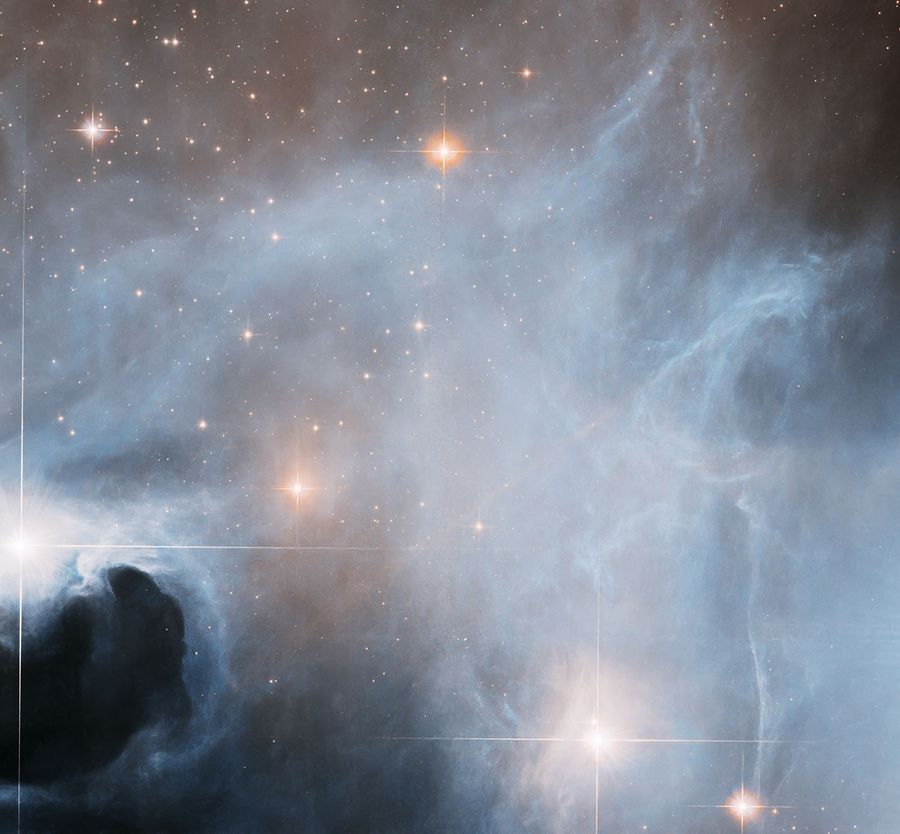
While this eerie NASA Hubble Space Telescope image may look ghostly, it’s actually full of new life. Lupus 3 is a star-forming cloud about 500 light-years away in the constellation Scorpius.
White wisps of gas swirl throughout the region, and in the lower-left corner resides a dark dust cloud. Bright T Tauri stars shine at the left, bottom right, and upper center, while other young stellar objects dot the image.
T Tauri stars are actively forming stars in a specific stage of formation. In this stage, the enveloping gas and dust dissipates from radiation and stellar winds, or outflows of particles from the emerging star. T Tauri stars are typically less than 10 million years old and vary in brightness both randomly and periodically due to the environment and nature of a forming star. The random variations may be due to instabilities in the accretion disk of dust and gas around the star, material from that disk falling onto the star and being consumed, and flares on the star’s surface. The more regular, periodic changes may be caused by giant sunspots rotating in and out of view.
T Tauri stars are in the process of contracting under the force of gravity as they become main sequence stars which fuse hydrogen to helium in their cores. Studying these stars can help astronomers better understand the star formation process.
NASA Reveals New Details About Dark Matter’s Influence on Universe
With the Webb telescope’s unprecedented sensitivity, scientists are learning more about dark matter’s influence on stars, galaxies, and even planets like Earth.
Scientists using data from NASA’s James Webb Space Telescope have made one of the most detailed, high-resolution maps of dark matter ever produced. It shows how the invisible, ghostly material overlaps and intertwines with “regular” matter, the stuff that makes up stars, galaxies, and everything we can see.
Published Monday, Jan. 26, in Nature Astronomy, the map builds on previous research to provide additional confirmation and new details about how dark matter has shaped the universe on the largest scales — galaxy clusters millions of light-years across — that ultimately give rise to galaxies, stars, and planets like Earth.
“This is the largest dark matter map we’ve made with Webb, and it’s twice as sharp as any dark matter map made by other observatories,” said Diana Scognamiglio, lead author of the paper and an astrophysicist at NASA’s Jet Propulsion Laboratory in Southern California. “Previously, we were looking at a blurry picture of dark matter. Now we’re seeing the invisible scaffolding of the universe in stunning detail, thanks to Webb’s incredible resolution.”
Created using data from NASA’s Webb telescope in 2026 (right) and from the Hubble Space Telescope in 2007 (left), these images show the presence of dark matter in the same region of sky. Webb’s higher resolution is providing new insights into how this invisible component influences the distribution of ordinary matter in the universe.NASA/STScI/A. Pagan Dense regions of dark matter are connected by lower-density filaments, forming a weblike structure known as the cosmic web. This pattern appears more clearly in the Webb data than in the earlier Hubble image. Ordinary matter, including galaxies, tends to trace this same underlying structure shaped by dark matter.NASA/STScI/A. Pagan Some dark matter structures appear smaller in the Webb data because they are coming into sharper focus. Webb’s higher resolution also makes it possible to better confine the size and location of the dark matter clusters in the lower left of the image.NASA/STScI/A. PaganDark matter doesn’t emit, reflect, absorb, or even block light, and it passes through regular matter like a ghost. But it does interact with the universe through gravity, something the map shows with a new level of clarity. Evidence for this interaction lies in the degree of overlap between dark matter and regular matter. According to the paper’s authors, Webb’s observations confirm that this close alignment can’t be a coincidence but, rather, is due to dark matter’s gravity pulling regular matter toward it throughout cosmic history.
“Wherever we see a big cluster of thousands of galaxies, we also see an equally massive amount of dark matter in the same place. And when we see a thin string of regular matter connecting two of those clusters, we see a string of dark matter as well,” said Richard Massey, an astrophysicist at Durham University in the United Kingdom and a coauthor of the new study. “It’s not just that they have the same shapes. This map shows us that dark matter and regular matter have always been in the same place. They grew up together.”
Closer lookFound in the constellation Sextans, the area covered by the new map is a section of sky about 2.5 times larger than the full Moon. A global community of scientists have observed this region with at least 15 ground- and space-based telescopes for the Cosmic Evolution Survey (COSMOS). Their goal: to precisely measure the location of regular matter here and then compare it to the location of dark matter. The first dark matter map of the area was made in 2007 using data from NASA’s Hubble Space Telescope, a project led by Massey and JPL astrophysicist Jason Rhodes, a coauthor of the paper.
Webb peered at this region for a total of about 255 hours and identified nearly 800,000 galaxies, some of which were detected for the first time. Scognamiglio and her colleagues then looked for dark matter by observing how its mass curves space itself, which in turn bends the light traveling to Earth from distant galaxies. When observed by researchers, it’s as if the light of those galaxies has passed through a warped windowpane.
The Webb map contains about 10 times more galaxies than maps of the area made by ground-based observatories and twice as many as Hubble’s. It reveals new clumps of dark matter and captures a higher-resolution view of the areas previously seen by Hubble.
To refine measurements of the distance to many galaxies for the map, the team used Webb’s Mid-Infrared Instrument (MIRI), designed and managed through launch by JPL, along with other space- and ground-based telescopes. The wavelengths that MIRI detects also make it adept at detecting galaxies obscured by cosmic dust clouds.
Why it mattersWhen the universe began, regular matter and dark matter were probably sparsely distributed. Scientists think dark matter began to clump together first and that those dark matter clumps then pulled together regular matter, creating regions with enough material for stars and galaxies to begin to form.
In this way, dark matter determined the large-scale distribution of galaxies in the universe. And by prompting galaxy and star formation to begin earlier than they would have otherwise, dark matter’s influence also played a role in creating the conditions for planets to eventually form. That’s because the first generations of stars were responsible for turning hydrogen and helium — which made up the vast majority of atoms in the early universe — into the rich array of elements that now compose planets like Earth. In other words, dark matter provided more time for complex planets to form.
“This map provides stronger evidence that without dark matter, we might not have the elements in our galaxy that allowed life to appear,” said Rhodes. “Dark matter is not something we encounter in our everyday life on Earth, or even in our solar system, but it has definitely influenced us.”
Scognamiglio and some of her coauthors will also map dark matter with NASA’s upcoming Nancy Grace Roman Space Telescope over an area 4,400 times bigger than the COSMOS region. Roman’s primary science goals include learning more about dark matter’s fundamental properties and how they may or may not have changed over cosmic history. But Roman’s maps won’t beat Webb’s spatial resolution. More detailed looks at dark matter will be possible only with a next-generation telescope like the Habitable Worlds Observatory, NASA’s next astrophysics flagship concept.
More about WebbThe James Webb Space Telescope is solving mysteries in our solar system, looking beyond to distant worlds around other stars, and probing the mysterious structures and origins of our universe and our place in it. Webb is an international program led by NASA with its partners, ESA (European Space Agency) and CSA (Canadian Space Agency).
To learn more about Webb, visit:
Media ContactsCalla Cofield / Ian O’Neill
Jet Propulsion Laboratory, Pasadena, Calif.
626-808-2469 / 818-354-2649
calla.e.cofield@jpl.nasa.gov / ian.j.oneill@jpl.nasa.gov
2026-002
Explore More 4 min read TESS Status UpdatesJan. 23, 2026 NASA’s TESS Returns to Science Observations NASA’s TESS (Transiting Exoplanet Survey Satellite)…
Article 4 days ago 3 min read NASA’s Universe of Learning Unveils Fresh Facilitator Guides Inspired by Community FeedbackThe goal of NASA’s Universe of Learning (UoL) is to connect the public to the…
Article 6 days ago 5 min read NASA Webb Finds Young Sun-Like Star Forging, Spewing Common CrystalsAstronomers have long sought evidence to explain why comets at the outskirts of our own…
Article 6 days ago Keep Exploring Discover More Topics From NASA James Webb Space TelescopeWebb is the premier observatory of the next decade, serving thousands of astronomers worldwide. It studies every phase in the…
Dark MatterScientists first suspected dark matter’s existence over 80 years ago when Swiss-American astronomer Fritz Zwicky observed that galaxies in the…
StarsAstronomers estimate that the universe could contain up to one septillion stars – that’s a one followed by 24 zeros.…
GalaxiesGalaxies consist of stars, planets, and vast clouds of gas and dust, all bound together by gravity. The largest contain…