Feed aggregator
NASA, Industry Weave Data Fabric with Artificial Intelligence
3 min read
Preparations for Next Moonwalk Simulations Underway (and Underwater) NASA’s research into the field of Advanced Air Mobility looks to enable autonomous aircraft with complex capabilities such as carrying cargo or providing medical aid, as seen in this artist’s concept. The Data and Reasoning Fabric project out of Ames Research Center tested delivery of programs and information to these kinds of vehicles.Credit: NASAOne of the biggest goals for companies in the field of artificial intelligence is developing “agentic” or autonomous systems. These metaphorical agents can perform tasks without a guiding human hand. This parallels the goals of the emerging urban air mobility industry, which hopes to bring autonomous flying vehicles to cities around the world. One company got a head start on doing both with some help from NASA.
Autonomy Association International Inc. (AAI) is a public benefit corporation based in Mountain View, California, near NASA’s Ames Research Center in Silicon Valley. In 2022, AAI signed a Space Act Agreement with Ames to support the agency’s Data and Reasoning Fabric project, which aimed to support the transportation of people and cargo to areas previously unserved or underserved by aviation, and to provide reliable, accurate, and current data for aeronautic decision-making.
“Inspiration to lean into data fabric to solve certain complexities came from our NASA partnership,” said AAI cofounder and the project’s industry principal investigator Greg Deeds. “Working on this project was a great experience. Working with NASA engineers and leaders gave us experience that we’ll carry forward in all of our products.”
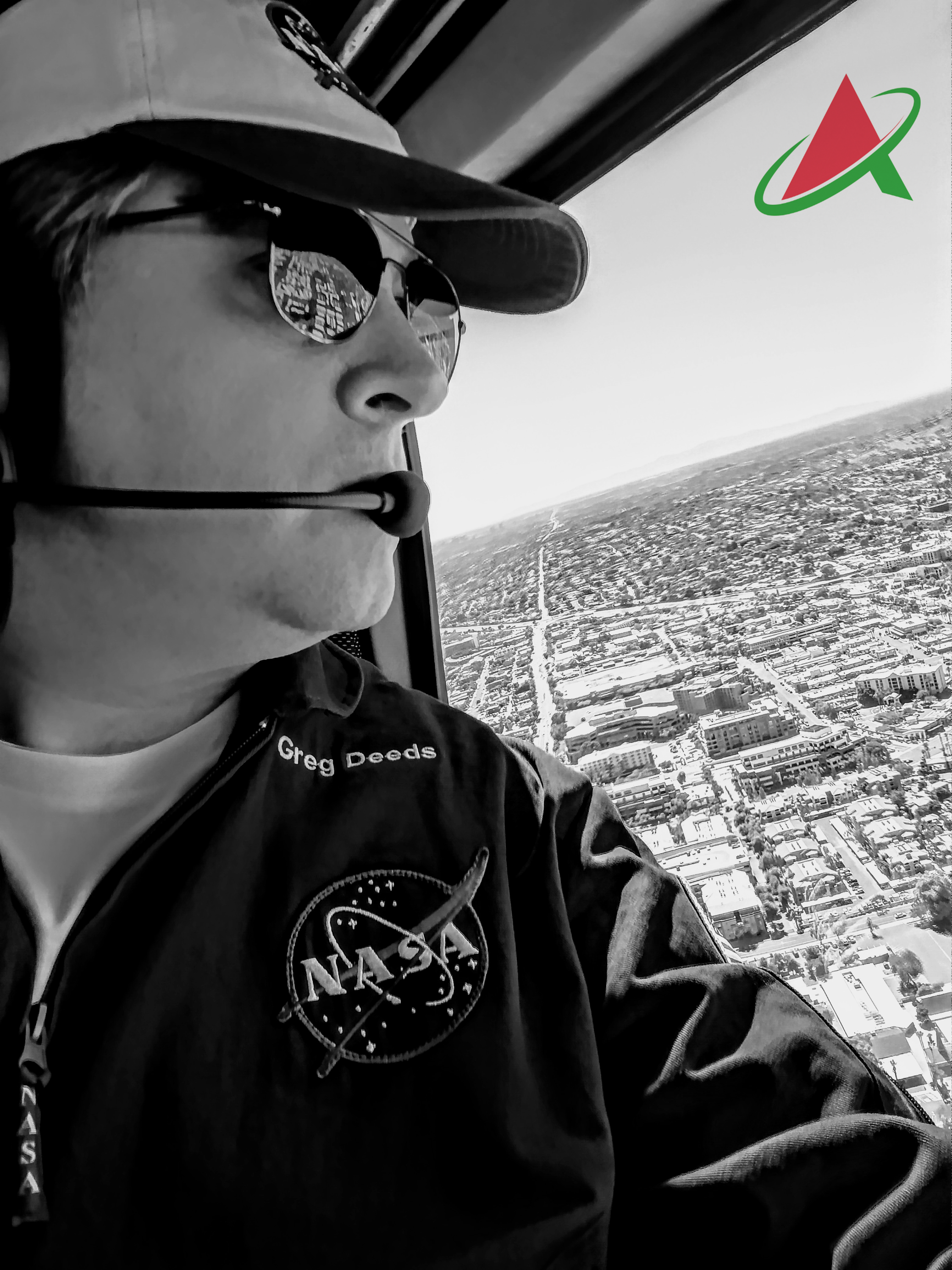
Greg Deeds looks out the window of a helicopter flying over Arizona during a test of Autonomy Association International’s data fabric technology in collaboration with NASA. Through multiple evaluations above Phoenix, the testing proved the capabilities of the company’s Digital Infrastructure Platform. Credit: Autonomy Association International Inc.Similar to how clothing fabric is made of intertwined threads, a data fabric comprises intertwined data sources. While a data fabric built by a tech company may include data from a few different cloud service providers, NASA’s Data and Reasoning Fabric can also use information provided by local governments and other service providers. By viewing airspace as a large data fabric, an autonomous vehicle can take in data and requests from the cities and towns it flies over and prioritize responses between them.
Working with Ken Freeman, principal investigator of the project at Ames, AAI and NASA performed four testing adaptations of the data fabric technology in the air over Arizona. Using hardware and software developed by AAI, the flights tested advanced air mobility passenger flights and the use of a drone for rapid delivery of medical supplies from urban to rural areas and back, while sending new tasks to the aircraft in flight. A helicopter stood in for the drone and air taxi, flying over towns, universities, tribal lands, and the airspace around Phoenix Sky Harbor airport and obtaining data and programs given to it from different places.
“We’re focusing on the digital infrastructure building blocks of smart cities and regions of the future,” said Jennifer Deeds, chief operating officer and cofounder of AAI.
In the years since the original NASA project, the company has cultivated relationships and customers abroad, including companies in agriculture, real estate development, and industrial food production using its system to aggregate and manage data. Released in 2024, the company’s Digital Infrastructure Platform uses the same technology originally designed for the NASA flight test. A new, “agentic” version followed not long after, able to retrieve necessary AI programs with minimal interaction.
As AI unlocks innovation across American industries, NASA is equipping its commercial partners with the keys, using proven technology to generate breakthrough solutions.
Learn more: https://spinoff.nasa.gov/
Read More Share Details Last Updated Nov 18, 2025 Related Terms Explore More 6 min read NASA Data Powers New Tool to Protect Water Supply After FiresWhen wildfires scorch a landscape, the flames are just the beginning. NASA is helping U.S.…
Article 2 months ago 5 min read From Supercomputers to Wind Tunnels: NASA’s Road to Artemis II Article 2 months ago 3 min read NASA, Partners Push Forward with Remotely Piloted Airspace Integration Article 2 months ago Keep Exploring Discover Related TopicsAmes Research Center
Advanced Air Mobility MissionNASA’s Advanced Air Mobility (AAM) research will transform our communities by bringing the movement of people and goods off the ground, on…
Data and Reasoning Fabric
Aeronautics
NASA, Industry Weave Data Fabric with Artificial Intelligence
3 min read
Preparations for Next Moonwalk Simulations Underway (and Underwater) NASA’s research into the field of Advanced Air Mobility looks to enable autonomous aircraft with complex capabilities such as carrying cargo or providing medical aid, as seen in this artist’s concept. The Data and Reasoning Fabric project out of Ames Research Center tested delivery of programs and information to these kinds of vehicles.Credit: NASAOne of the biggest goals for companies in the field of artificial intelligence is developing “agentic” or autonomous systems. These metaphorical agents can perform tasks without a guiding human hand. This parallels the goals of the emerging urban air mobility industry, which hopes to bring autonomous flying vehicles to cities around the world. One company got a head start on doing both with some help from NASA.
Autonomy Association International Inc. (AAI) is a public benefit corporation based in Mountain View, California, near NASA’s Ames Research Center in Silicon Valley. In 2022, AAI signed a Space Act Agreement with Ames to support the agency’s Data and Reasoning Fabric project, which aimed to support the transportation of people and cargo to areas previously unserved or underserved by aviation, and to provide reliable, accurate, and current data for aeronautic decision-making.
“Inspiration to lean into data fabric to solve certain complexities came from our NASA partnership,” said AAI cofounder and the project’s industry principal investigator Greg Deeds. “Working on this project was a great experience. Working with NASA engineers and leaders gave us experience that we’ll carry forward in all of our products.”
Greg Deeds looks out the window of a helicopter flying over Arizona during a test of Autonomy Association International’s data fabric technology in collaboration with NASA. Through multiple evaluations above Phoenix, the testing proved the capabilities of the company’s Digital Infrastructure Platform. Credit: Autonomy Association International Inc.Similar to how clothing fabric is made of intertwined threads, a data fabric comprises intertwined data sources. While a data fabric built by a tech company may include data from a few different cloud service providers, NASA’s Data and Reasoning Fabric can also use information provided by local governments and other service providers. By viewing airspace as a large data fabric, an autonomous vehicle can take in data and requests from the cities and towns it flies over and prioritize responses between them.
Working with Ken Freeman, principal investigator of the project at Ames, AAI and NASA performed four testing adaptations of the data fabric technology in the air over Arizona. Using hardware and software developed by AAI, the flights tested advanced air mobility passenger flights and the use of a drone for rapid delivery of medical supplies from urban to rural areas and back, while sending new tasks to the aircraft in flight. A helicopter stood in for the drone and air taxi, flying over towns, universities, tribal lands, and the airspace around Phoenix Sky Harbor airport and obtaining data and programs given to it from different places.
“We’re focusing on the digital infrastructure building blocks of smart cities and regions of the future,” said Jennifer Deeds, chief operating officer and cofounder of AAI.
In the years since the original NASA project, the company has cultivated relationships and customers abroad, including companies in agriculture, real estate development, and industrial food production using its system to aggregate and manage data. Released in 2024, the company’s Digital Infrastructure Platform uses the same technology originally designed for the NASA flight test. A new, “agentic” version followed not long after, able to retrieve necessary AI programs with minimal interaction.
As AI unlocks innovation across American industries, NASA is equipping its commercial partners with the keys, using proven technology to generate breakthrough solutions.
Learn more: https://spinoff.nasa.gov/
Read More Share Details Last Updated Nov 18, 2025 Related Terms Explore More 6 min read NASA Data Powers New Tool to Protect Water Supply After FiresWhen wildfires scorch a landscape, the flames are just the beginning. NASA is helping U.S.…
Article 2 months ago 5 min read From Supercomputers to Wind Tunnels: NASA’s Road to Artemis II Article 2 months ago 3 min read NASA, Partners Push Forward with Remotely Piloted Airspace Integration Article 2 months ago Keep Exploring Discover Related TopicsAmes Research Center
Advanced Air Mobility MissionNASA’s Advanced Air Mobility (AAM) research will transform our communities by bringing the movement of people and goods off the ground, on…
Data and Reasoning Fabric
Aeronautics
Transplant Rejection Is a Major Hurdle for Pig Organs. Scientists Are Solving the Problem
In a successful transplant in a man with brain death, scientists prevented the immune system from attacking a genetically modified pig kidney for 61 days, the longest such an experiment has lasted
The Leonid Meteor Shower Is Peaking—Here’s How to Watch This Fireball-Filled Event
A thin crescent moon and dark skies could give watchers a clear view of this astronomical event
Parasitic ant tricks workers into killing their queen, then usurps her
Parasitic ant tricks workers into killing their queen, then usurps her
The vital, overlooked role of body fat in shaping your health and mind
The vital, overlooked role of body fat in shaping your health and mind
ESA investigates high-stakes Amazon tipping point
For decades, the Amazon rainforest has quietly absorbed vast quantities of human-generated carbon dioxide, helping to slow the pace of climate change. Recent evidence, however, suggests that this vital natural buffer may be weakening – though uncertainties remain.
To help close this critical knowledge gap, European and Brazilian researchers have gathered deep in the Amazon to carry out an ambitious European Space Agency-funded field campaign.
How Forbes Sent E-mails to the Future—And What Happened 20 Years Later
Twenty years ago Forbes.com sent hundreds of thousands of messages to the future. Here’s what happened next
How to Send a Message to Future Civilizations
When written knowledge is more ephemeral than ever, how can we pass on what’s important?
Does Information Ever Really Disappear? Physics Has an Answer
Black holes and quantum mechanics present a paradox about the preservation of information
Nuclear-Waste Arks Are a Bold Experiment in Protecting Future Generations
Designing nuclear-waste repositories is part engineering, part anthropology—and part mythmaking
Can a Buried Time Capsule Beat Earth’s Geology and Deep Time?
A ridiculous but instructive thought experiment involving deep time, plate tectonics, erosion and the slow death of the sun
The Sun Left Home in a Hurry
By exploring the edge of the solar system, astronomers have estimated how long our star stuck around its siblings after birth.
The post The Sun Left Home in a Hurry appeared first on Sky & Telescope.
Asteroid 2024 YR4 Was Earth's First Real-Life Defense Test
At this point in history, astronomers and engineers who grew up watching Deep Impact and Armageddon, two movies about the destructive power of asteroid impacts, are likely in relatively high ranking positions at space agencies. Don’t Look Up also provided a more modern, though more pessimistic (or, unfortunately, realistic?), look at what might potentially happen if a “killer” asteroid is found on approach to Earth. So far, life hasn’t imitated art when it comes to potentially one of the most catastrophic events in human history, but most space enthusiasts agree that it's worth preparing for when it will. A new paper, available in pre-print on arXiv, from Maxime Devogèle of ESA’s Near Earth Object (NEO) Coordination Centre and his colleagues analyzes a dry run that happened around a year ago with the discovery of asteroid 2024 YR4.
How Influential People Map Their Social World
The same brain areas that help us map physical space help us chart social connections, and the best relationship cartographers have most clout
How Technology and Friendship Preserved a 20-Year E-mail Time Capsule
Scientific American’s editor in chief David M. Ewalt reflects on a 20-year experiment in e-mailing the future
Sentinel-6B launch highlights
Copernicus Sentinel-6B was launched on 17 November 2025, ready to continue a decades-long mission to track the height of the planet’s seas – a key measure of climate change. The satellite was carried into orbit on a Falcon 9 rocket from the Vandenberg Space Force Base in California, US.
Sentinel-6B follows in the footsteps of its predecessor, Sentinel-6 Michael Freilich, which was launched in 2020. The mission is the reference radar altimetry mission that continues the vital record of sea-surface height measurements until at least 2030.
Copernicus Sentinel-6 has become the gold standard reference mission to monitor and record sea-level rise. The mission’s main instrument is the Poseidon-4 dual-frequency (C-band and Ku-band) radar altimeter. Developed by ESA, the altimeter measures sea-surface height. It also captures the height of ‘significant’ waves as well as wind speed to support operational oceanography.
NASA, SpaceX Launch US-European Satellite to Monitor Earth’s Oceans
About the size of a full-size pickup truck, a newly launched satellite by NASA and its partners will provide ocean and atmospheric information to improve hurricane forecasts, help protect infrastructure, and benefit commercial activities, such as shipping.
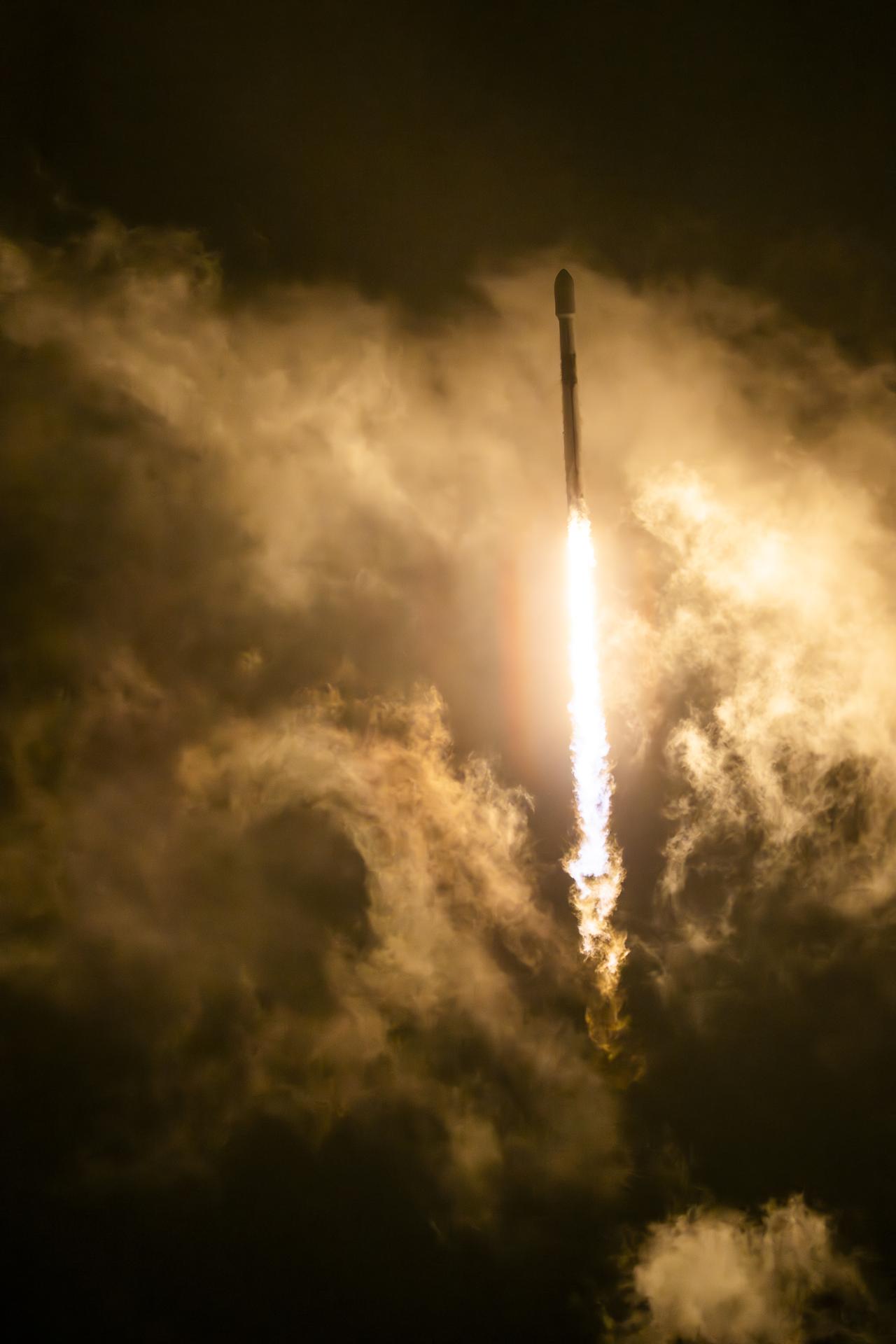
The Sentinel-6B satellite lifted off aboard a SpaceX Falcon 9 rocket from Launch Complex 4 East at Vandenberg Space Force Base in central California at 9:21 p.m. PST on Nov. 16. Contact between the satellite and a ground station in northern Canada occurred about 1 hour and 30 minutes later at 10:54 p.m. All systems are functioning normally.
“Understanding tidal patterns down to the inch is critical in protecting how we use our oceans every day on Earth,” said Nicky Fox, associate administrator, Science Mission Directorate at NASA Headquarters in Washington. “Sentinel-6B will build upon the legacy of Sentinel-6 Michael Freilich by making sea level measurements that improve forecasts used by communities, businesses, and operations across the country. It also will support a safer reentry for our astronauts returning home, including crew from Artemis Moon missions.”
Sea levels vary from place to place, and the satellite will provide accurate measurements at both local and global scales — all from hundreds of miles above in low Earth orbit. Those observations form the basis for U.S. flood predictions, which are crucial for safeguarding coastal infrastructure, real estate, energy storage sites, and other coastal assets. Sentinel-6B will take over for Sentinel-6 Michael Freilich, which launched in 2020 and later became the official reference satellite for global sea level measurements, providing sea surface height measurements against which those from other satellites are compared for accuracy.
The satellite comes from a collaboration between multiple partners, including NASA, ESA (European Space Agency), EUMETSAT (European Organisation for the Exploitation of Meteorological Satellites), and the National Oceanic and Atmospheric Administration (NOAA). It also is part of the European Union’s family of Copernicus missions.
“Collaboration between partners is key to a mission such as Sentinel-6, and my thanks go to everyone involved in developing, launching, and operating this exceptional satellite, which follows in the footsteps of the first Sentinel-6, Michael Freilich,” said Simonetta Cheli, director, ESA’s Earth Observation Programmes. “This achievement demonstrates what can be accomplished when international agencies and industries work together toward a shared goal. Sentinel-6B will ensure we continue to collect the high-precision data needed to understand our changing climate, safeguard our oceans and support decisions that protect coastal communities around the world.”
The two satellites make up the Copernicus Sentinel-6/Jason-CS (Continuity of Service) mission, the latest in a series of ocean-observing radar altimetry missions that have monitored Earth’s changing seas since the early 1990s.
As with its predecessor, Sentinel-6B satellite also will provide key information about wind speeds, wave heights, atmospheric temperature, and humidity. Moreover, because water expands as its temperature increases, researchers can tell which parts of the ocean are warmer than others based on where the sea surface height is greater.
Combined with data from other instruments, that knowledge can help in forecasting marine weather, including the development of hurricanes, which intensify with warmer water. Also, because large currents are taller than surrounding waters due to their higher temperatures, sea surface measurements can shed light on interactions between the Gulf Stream, for example, and nearby waves. Where they meet, seas can become rougher, presenting a hazard to even the largest ships.
“Sentinel-6B is a testament to the value of NASA’s partnership missions to put actionable satellite information and science into the hands of decision-makers on the ground,” said Karen St. Germain, director, NASA Earth Science Division at the agency’s headquarters. “Sentinel-6B will collect ocean surface observations that will inform decisions critical to coastal communities, commercial shipping and fishing, national defense, and emergency preparedness and response. This is what NASA does — puts advanced technology and science into action for the benefit of the nation.”
When Sentinel-6B reaches its operating elevation, the satellite will fly about 30 seconds behind Sentinel-6 Michael Freilich, which carries identical science instruments. Once the mission finishes cross-calibrating the data collected by the two, Sentinel-6 Michael Freilich will move into a different orbit, and Sentinel-6B will take over the role of official reference satellite, orbiting Earth about 13 times a day at 830 miles (1,336 kilometers) above the surface.
“Sentinel-6B demonstrates the versatile Earth science applications made possible by expertly engineered, space-based technology. The satellite’s powerful suite of instruments will measure about 90% of Earth’s oceans down to fractions of an inch — continuing to add to a vital dataset that America and a growing global community depend on,” said Dave Gallagher, director, NASA’s Jet Propulsion Laboratory (JPL) in Southern California.
More about Sentinel-6B
Copernicus Sentinel-6/Jason-CS is a collaboration between ESA, the European Union, EUMETSAT, NASA, and NOAA. French space agency CNES (Centre National d’Études Spatiales) contributed technical support. Copernicus, which includes the Sentinel missions, is the European Union’s Earth observation program led by the European Commission.
A division of Caltech in Pasadena, JPL contributed three science instruments for each Sentinel-6 satellite: the Advanced Microwave Radiometer, the Global Navigation Satellite System – Radio Occultation, and the laser retroreflector array. NASA also is contributing launch services, ground systems supporting operation of the NASA science instruments, the science data processors for two of these instruments, and support for the U.S. members of the international Ocean Surface Topography Science Team, and Sentinel-6 science teams.
To learn more about Sentinel-6B, visit:
https://science.nasa.gov/mission/sentinel-6B/
-end-
Elizabeth Vlock
Headquarters, Washington
202-358-1600
elizabeth.a.vlock@nasa.gov
Andrew Wang / Andrew Good
Jet Propulsion Laboratory, Pasadena, Calif.
626-379-6874 / 626-840-4291
andrew.wang@jpl.nasa.gov / andrew.c.good@jpl.nasa.gov