
Feed aggregator
That "Pink Planet" Astronomers Found Turns Out to be a Salty Customer!
Found in 2013, Pink Planet was too faint to study with ground-based telescopes. In new study, scientists used JWST and advanced processing methods to obtain its spectrum for the first time. Observations provided some of the first direct evidence for salt clouds in a cold object atmosphere. Pink Planet could be a giant planet or brown dwarf, so astronomers refer to it as a ‘planetary-mass companion’.
NASA at the Ion: Orion Lessons from Artemis II Shape NASA’s Moon to Mars Path
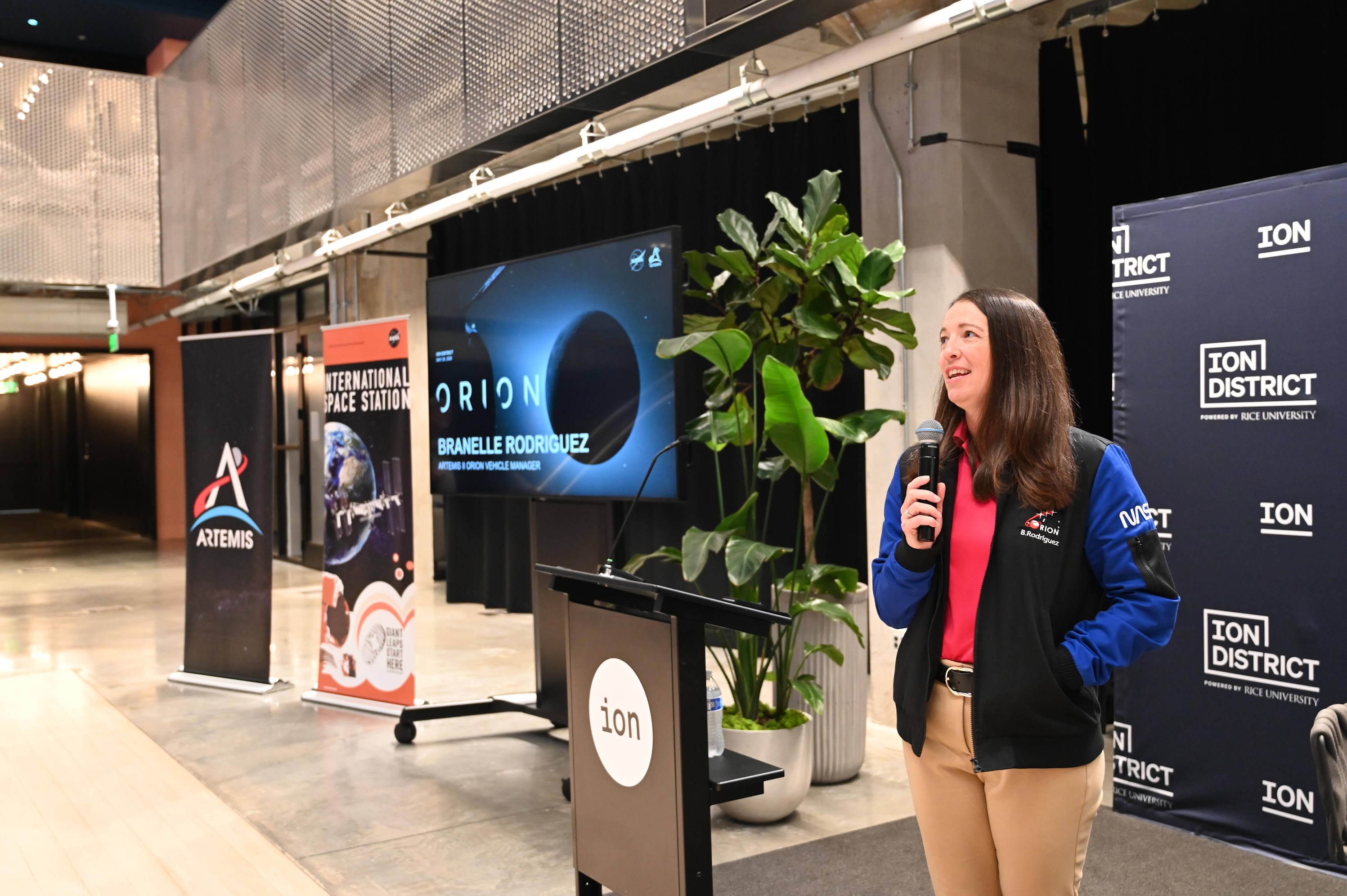
Seven weeks after the Orion spacecraft returned four astronauts from humanity’s first crewed journey around the Moon since Apollo, Artemis II Orion Vehicle Manager Branelle Rodriguez reflected on the mission’s achievements and how it is shaping NASA’s return to the lunar surface and future missions to Mars.
Introduced by NASA’s Johnson Space Center Acting Director of Business Development and Technology Integration Monte Goforth, Rodriguez spoke at the Ion in Houston on May 28 as part of the NASA Stories at the Ion speaker series. Located in Houston’s Ion District, the innovation hub serves as a gathering place for entrepreneurs, researchers, and industry leaders working to advance technology and shape the future of industries ranging from aerospace to energy.
She shared an inside look at the mission she helped guide — as the Orion vehicle manager for Artemis II, Rodriguez has overseen the life of the spacecraft from end-to-end, through its development, production, execution of the mission, and currently, the post-mission work underway now that Orion is back at NASA’s Kennedy Space Center in Florida.
“This mission was very near and dear to my heart,” Rodriguez said. “It has not sunk in what this mission and what this accomplishment all means to us and humanity.”
From left: NASA’s Johnson Space Center Acting Director of Business Development and Technology Integration Monte Goforth, Artemis II Orion Vehicle Manager Branelle Rodriguez, and Director of the Rice Space Institute David Alexander.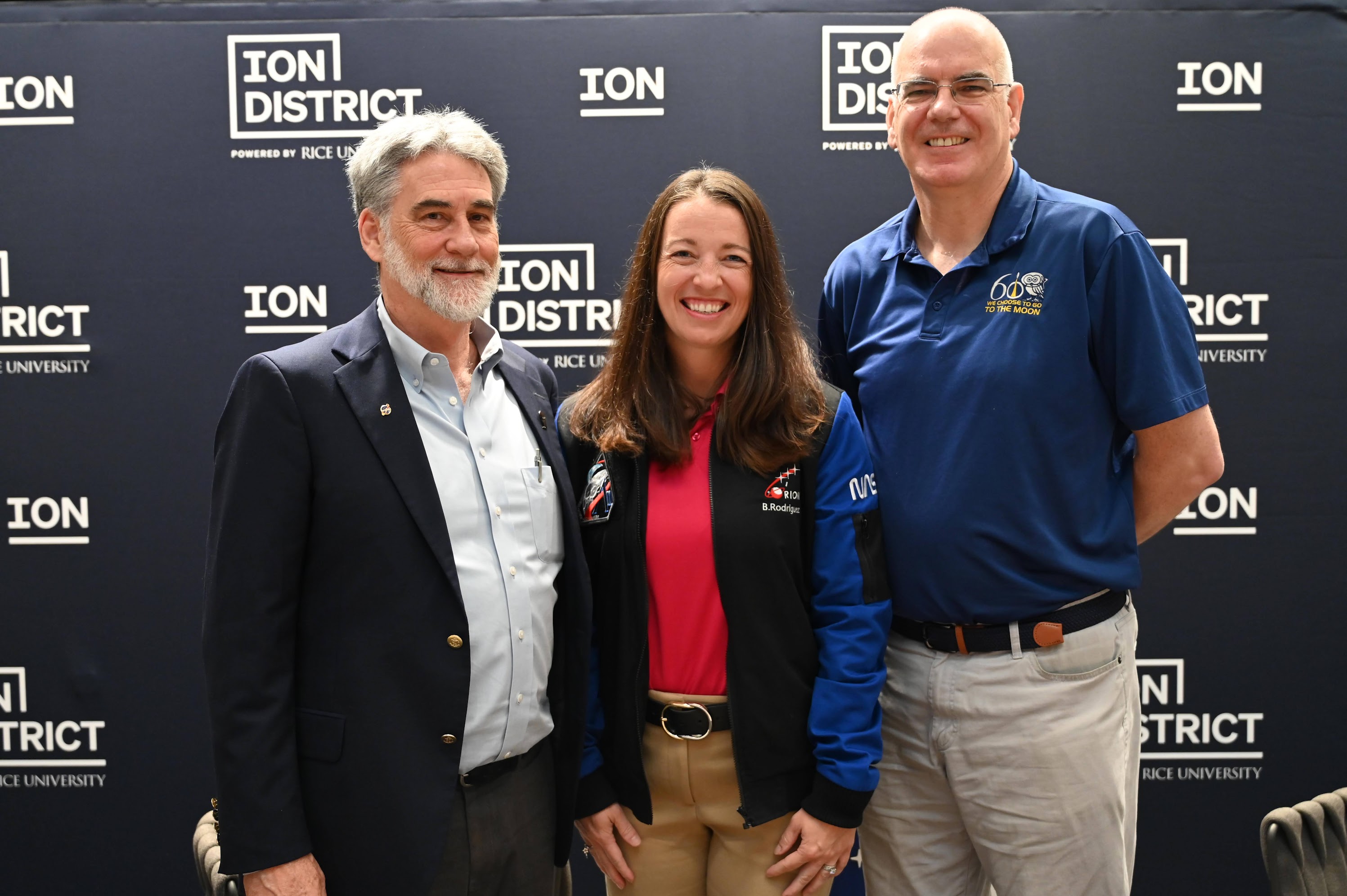
Launched April 1, Artemis II carried NASA astronauts Reid Wiseman, Victor Glover, and Christina Koch, along with CSA (Canadian Space Agency) astronaut Jeremy Hansen, on a 10-day voyage around the Moon inside the Orion spacecraft.
Using mission imagery and video, Rodriguez walked attendees through key milestones, including launch aboard NASA’s SLS (Space Launch System) rocket, operations in high-Earth orbit, a lunar flyby, and Orion’s return to Earth. She also shared views from Orion captured by the crew, including Earthrise, detailed images of the lunar surface, and a solar eclipse observed from deep space.
Artemis II successfully demonstrated Orion’s performance during its first crewed deep space mission. The mission tested Orion’s life support systems, crew interfaces, navigation, and reentry systems, providing data that will help teams prepare for upcoming Artemis missions. The crew also completed a manual piloting demonstration, evaluating Orion handling and proximity operations that will inform future rendezvous and docking activities.
“I think it really hit me at T-minus 10 seconds,” Rodriguez said. “That’s when we go into ‘terminal count,’ meaning there’s just no turning back.”
Rodriguez emphasized that Orion’s success on Artemis II was the result of global teamwork across NASA centers, industry partners, and international agencies. She highlighted the European Service Module, provided by ESA (European Space Agency), which supplies Orion with power, propulsion, oxygen, water, and other resources needed during flight. In the Orion Mission Evaluation Room at Johnson, more than 300 people supported the mission, monitoring spacecraft systems and standing ready to respond in real time. Among the mission’s more personal touches was Rise, Orion’s zero-gravity indicator. The plushie, created by a student through an Artemis II design competition, carried a memory card containing over 5.6 million names of space fans who signed up through NASA’s “Send Your Name with Artemis” effort.
“It is what the crew wanted – to bring all of us with them on this mission,” Rodriguez said.
The crew also designed the mission patch with a hidden detail: viewed from a distance, the artwork reads “all” – a deliberate tribute to everyone who made the mission a success.
“It is a village that makes this possible, absolutely,” she said. Looking ahead, Rodriguez discussed preparations underway for upcoming Artemis missions. Artemis III will test critical rendezvous and docking capabilities between Orion and commercial human landing systems in low Earth orbit and advance plans to return astronauts to the lunar surface. On June 9, NASA announced the Artemis III crew at Johnson Space Center in Houston, while hardware for future missions is already in production at Kennedy Space Center in Florida.
For Rodriguez, Artemis II demonstrated what is possible when thousands of people work toward a common goal, supporting NASA’s vision of a sustained presence at the Moon and, ultimately, human missions to Mars.
“It’s going to take time to build this all up,” Rodriguez said. “But we are off and running.”
Explore More 4 min read I Am Artemis: Jason PetersonJason Peterson’s responsibilities for NASA’s Artemis II mission went beyond his usual role as the…
Article 2 days ago 3 min read I Am Artemis: Elkin Norena Article 2 weeks ago 4 min read How NASA Science and Artemis Are Shaping the 2026 FIFA World Cup Article 2 weeks agoNASA at the Ion: Orion Lessons from Artemis II Shape NASA’s Moon to Mars Path
Seven weeks after the Orion spacecraft returned four astronauts from humanity’s first crewed journey around the Moon since Apollo, Artemis II Orion Vehicle Manager Branelle Rodriguez reflected on the mission’s achievements and how it is shaping NASA’s return to the lunar surface and future missions to Mars.
Introduced by NASA’s Johnson Space Center Acting Director of Business Development and Technology Integration Monte Goforth, Rodriguez spoke at the Ion in Houston on May 28 as part of the NASA Stories at the Ion speaker series. Located in Houston’s Ion District, the innovation hub serves as a gathering place for entrepreneurs, researchers, and industry leaders working to advance technology and shape the future of industries ranging from aerospace to energy.
She shared an inside look at the mission she helped guide — as the Orion vehicle manager for Artemis II, Rodriguez has overseen the life of the spacecraft from end-to-end, through its development, production, execution of the mission, and currently, the post-mission work underway now that Orion is back at NASA’s Kennedy Space Center in Florida.
“This mission was very near and dear to my heart,” Rodriguez said. “It has not sunk in what this mission and what this accomplishment all means to us and humanity.”
From left: NASA’s Johnson Space Center Acting Director of Business Development and Technology Integration Monte Goforth, Artemis II Orion Vehicle Manager Branelle Rodriguez, and Director of the Rice Space Institute David Alexander.Launched April 1, Artemis II carried NASA astronauts Reid Wiseman, Victor Glover, and Christina Koch, along with CSA (Canadian Space Agency) astronaut Jeremy Hansen, on a 10-day voyage around the Moon inside the Orion spacecraft.
Using mission imagery and video, Rodriguez walked attendees through key milestones, including launch aboard NASA’s SLS (Space Launch System) rocket, operations in high-Earth orbit, a lunar flyby, and Orion’s return to Earth. She also shared views from Orion captured by the crew, including Earthrise, detailed images of the lunar surface, and a solar eclipse observed from deep space.
Artemis II successfully demonstrated Orion’s performance during its first crewed deep space mission. The mission tested Orion’s life support systems, crew interfaces, navigation, and reentry systems, providing data that will help teams prepare for upcoming Artemis missions. The crew also completed a manual piloting demonstration, evaluating Orion handling and proximity operations that will inform future rendezvous and docking activities.
“I think it really hit me at T-minus 10 seconds,” Rodriguez said. “That’s when we go into ‘terminal count,’ meaning there’s just no turning back.”
Rodriguez emphasized that Orion’s success on Artemis II was the result of global teamwork across NASA centers, industry partners, and international agencies. She highlighted the European Service Module, provided by ESA (European Space Agency), which supplies Orion with power, propulsion, oxygen, water, and other resources needed during flight. In the Orion Mission Evaluation Room at Johnson, more than 300 people supported the mission, monitoring spacecraft systems and standing ready to respond in real time. Among the mission’s more personal touches was Rise, Orion’s zero-gravity indicator. The plushie, created by a student through an Artemis II design competition, carried a memory card containing over 5.6 million names of space fans who signed up through NASA’s “Send Your Name with Artemis” effort.
“It is what the crew wanted – to bring all of us with them on this mission,” Rodriguez said.
The crew also designed the mission patch with a hidden detail: viewed from a distance, the artwork reads “all” – a deliberate tribute to everyone who made the mission a success.
“It is a village that makes this possible, absolutely,” she said. Looking ahead, Rodriguez discussed preparations underway for upcoming Artemis missions. Artemis III will test critical rendezvous and docking capabilities between Orion and commercial human landing systems in low Earth orbit and advance plans to return astronauts to the lunar surface. On June 9, NASA announced the Artemis III crew at Johnson Space Center in Houston, while hardware for future missions is already in production at Kennedy Space Center in Florida.
For Rodriguez, Artemis II demonstrated what is possible when thousands of people work toward a common goal, supporting NASA’s vision of a sustained presence at the Moon and, ultimately, human missions to Mars.
“It’s going to take time to build this all up,” Rodriguez said. “But we are off and running.”
Explore More 5 min read Expedition 73 Crew Reflects on Science, Teamwork, and Life in Orbit Article 5 hours ago 3 min read NASA Welcomes Botswana as 68th Artemis Accords Signatory Article 5 hours ago 4 min read I Am Artemis: Jason PetersonJason Peterson’s responsibilities for NASA’s Artemis II mission went beyond his usual role as the…
Article 2 days agoInto the Void: Investigating the Heart of a Giant Elliptical Galaxy
The core of the brightest galaxy in the cluster Abell 402 contains a curious void. New observations suggest that an ultra-massive black hole could have excavated this feature.
The post Into the Void: Investigating the Heart of a Giant Elliptical Galaxy appeared first on Sky & Telescope.
La NASA compartirá los últimos avances del programa Base Lunar
Lea esta nota de prensa en inglés aquí.
El administrador de la NASA, Jared Isaacman, ofrecerá una conversación virtual el martes 30 de junio a las 2:30 p.m. EDT (hora del este) para compartir las novedades más recientes sobre los planes de la agencia para construir una base en la superficie de la Luna.
El administrador Isaacman y Carlos García-Galán, director del programa Base Lunar, hablarán sobre la próxima ronda de adjudicaciones para nuevas misiones de módulos de alunizaje y ofrecerán un avance de las próximas oportunidades a medida que la agencia avanza en la construcción de una presencia sostenida en la Luna.
La rueda de prensa se transmitirá por el canal de YouTube de la NASA (en inglés). Una repetición instantánea estará disponible en línea. Infórmese sobre cómo ver el contenido de la NASA en distintas plataformas, incluidas las redes sociales (información en inglés).
Para hacer preguntas de forma virtual durante el evento, los periodistas deberán confirmar su asistencia a más tardar a las 12:30 p.m. EDT (hora del este) del 30 de junio escribiendo a: hq-media@mail.nasa.gov. La política de acreditación de medios de la NASA está disponible en línea (en inglés).
La NASA avanza en el desarrollo de la Base Lunar, una iniciativa de exploración e infraestructura lunar a largo plazo diseñada para permitir una presencia humana sostenida y ampliar la actividad científica y comercial en la superficie de la Luna.
Como parte de una edad de oro de innovación y exploración, la NASA enviará astronautas en misiones cada vez más difíciles para explorar más de la Luna con fines de descubrimiento científico y beneficios económicos, y para continuar sentando las bases para las primeras misiones tripuladas a Marte.
Para obtener más información (en inglés) sobre los planes de la NASA para la Base Lunar, visite:
-fin-
Bethany Stevens / Rachel Kraft / María José Viñas
Sede central, Washington
+1 202-358-1600
bethany.c.stevens@nasa.gov / rachel.h.kraft@nasa.gov / maria-jose.vinasgarcia@nasa.gov
La NASA compartirá los últimos avances del programa Base Lunar
Lea esta nota de prensa en inglés aquí.
El administrador de la NASA, Jared Isaacman, ofrecerá una conversación virtual el martes 30 de junio a las 2:30 p.m. EDT (hora del este) para compartir las novedades más recientes sobre los planes de la agencia para construir una base en la superficie de la Luna.
El administrador Isaacman y Carlos García-Galán, director del programa Base Lunar, hablarán sobre la próxima ronda de adjudicaciones para nuevas misiones de módulos de alunizaje y ofrecerán un avance de las próximas oportunidades a medida que la agencia avanza en la construcción de una presencia sostenida en la Luna.
La rueda de prensa se transmitirá por el canal de YouTube de la NASA (en inglés). Una repetición instantánea estará disponible en línea. Infórmese sobre cómo ver el contenido de la NASA en distintas plataformas, incluidas las redes sociales (información en inglés).
Para hacer preguntas de forma virtual durante el evento, los periodistas deberán confirmar su asistencia a más tardar a las 12:30 p.m. EDT (hora del este) del 30 de junio escribiendo a: hq-media@mail.nasa.gov. La política de acreditación de medios de la NASA está disponible en línea (en inglés).
La NASA avanza en el desarrollo de la Base Lunar, una iniciativa de exploración e infraestructura lunar a largo plazo diseñada para permitir una presencia humana sostenida y ampliar la actividad científica y comercial en la superficie de la Luna.
Como parte de una edad de oro de innovación y exploración, la NASA enviará astronautas en misiones cada vez más difíciles para explorar más de la Luna con fines de descubrimiento científico y beneficios económicos, y para continuar sentando las bases para las primeras misiones tripuladas a Marte.
Para obtener más información (en inglés) sobre los planes de la NASA para la Base Lunar, visite:
-fin-
Bethany Stevens / Rachel Kraft / María José Viñas
Sede central, Washington
+1 202-358-1600
bethany.c.stevens@nasa.gov / rachel.h.kraft@nasa.gov / maria-jose.vinasgarcia@nasa.gov
NASA to Share Latest Moon Base Mission Progress
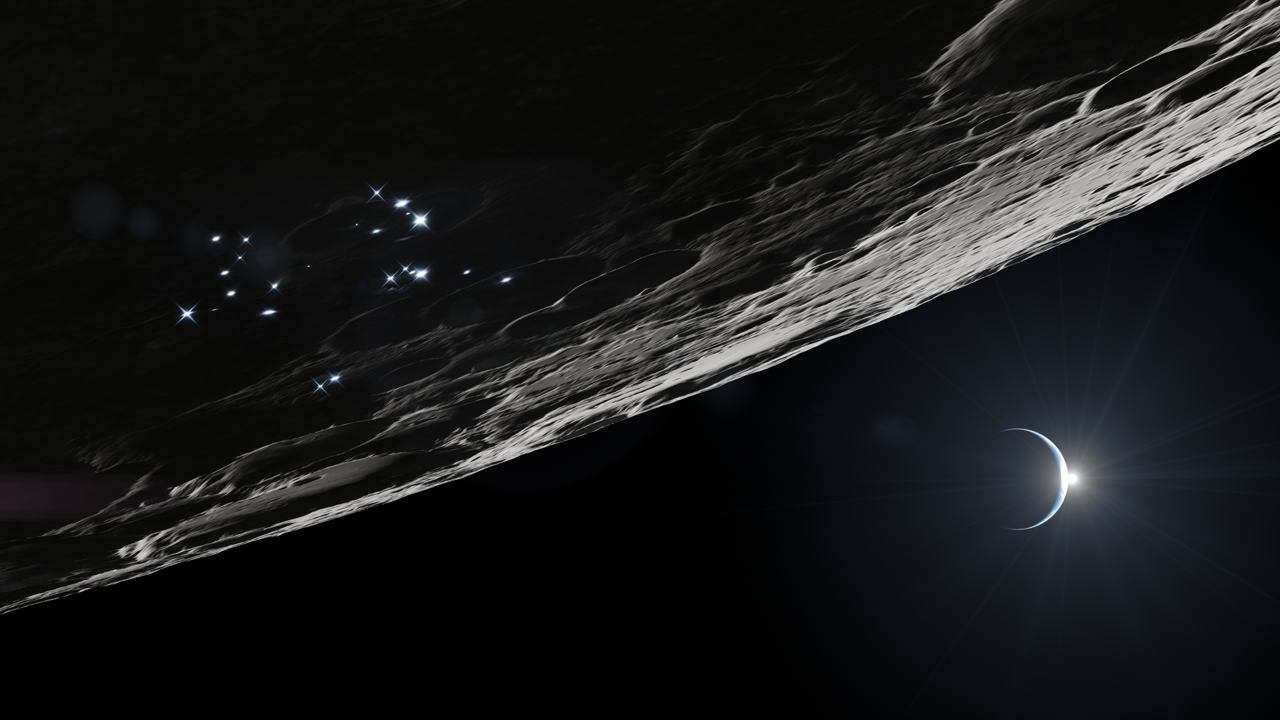
NASA Administrator Jared Isaacman will host a virtual conversation at 2:30 p.m. EDT, Tuesday, June 30, to share updates to NASA’s plans to build a Moon Base on the lunar surface.
Administrator Isaacman and Carlos García-Galán, Moon Base program manager, will discuss the next set of awards for new lunar lander missions and preview upcoming opportunities as the agency works toward building a sustained presence on the Moon.
The discussion will stream on NASA’s YouTube channel. An instant replay will be available online. Learn how to watch NASA content on a variety of platforms, including social media.
To ask a question virtually during the event, media must RSVP no later than 12:30 p.m., June 30 to: hq-media@mail.nasa.gov. NASA’s media accreditation policy is available online.
NASA is advancing development of the Moon Base, a long-term lunar exploration and infrastructure initiative designed to enable sustained human presence and expanded scientific and commercial activity on the lunar surface.
As part of the Golden Age of innovation and exploration, NASA will send astronauts on increasingly difficult missions to explore more of the Moon for scientific discovery, economic benefits, and to build on our foundation for the first crewed missions to Mars.
For more information about NASA’s Moon Base plans, visit:
-end-
Bethany Stevens / Rachel Kraft
Headquarters, Washington
202-358-1600
bethany.c.stevens@nasa.gov / rachel.h.kraft@nasa.gov
NASA to Share Latest Moon Base Mission Progress
NASA Administrator Jared Isaacman will host a virtual conversation at 2:30 p.m. EDT, Tuesday, June 30, to share updates to NASA’s plans to build a Moon Base on the lunar surface.
Administrator Isaacman and Carlos García-Galán, Moon Base program manager, will discuss the next set of awards for new lunar lander missions and preview upcoming opportunities as the agency works toward building a sustained presence on the Moon.
The discussion will stream on NASA’s YouTube channel. An instant replay will be available online. Learn how to watch NASA content on a variety of platforms, including social media.
To ask a question virtually during the event, media must RSVP no later than 12:30 p.m., June 30 to: hq-media@mail.nasa.gov. NASA’s media accreditation policy is available online.
NASA is advancing development of the Moon Base, a long-term lunar exploration and infrastructure initiative designed to enable sustained human presence and expanded scientific and commercial activity on the lunar surface.
As part of the Golden Age of innovation and exploration, NASA will send astronauts on increasingly difficult missions to explore more of the Moon for scientific discovery, economic benefits, and to build on our foundation for the first crewed missions to Mars.
For more information about NASA’s Moon Base plans, visit:
-end-
Bethany Stevens / Rachel Kraft
Headquarters, Washington
202-358-1600
bethany.c.stevens@nasa.gov / rachel.h.kraft@nasa.gov
Roman Telescope Comes to Kennedy
Roman Telescope Comes to Kennedy
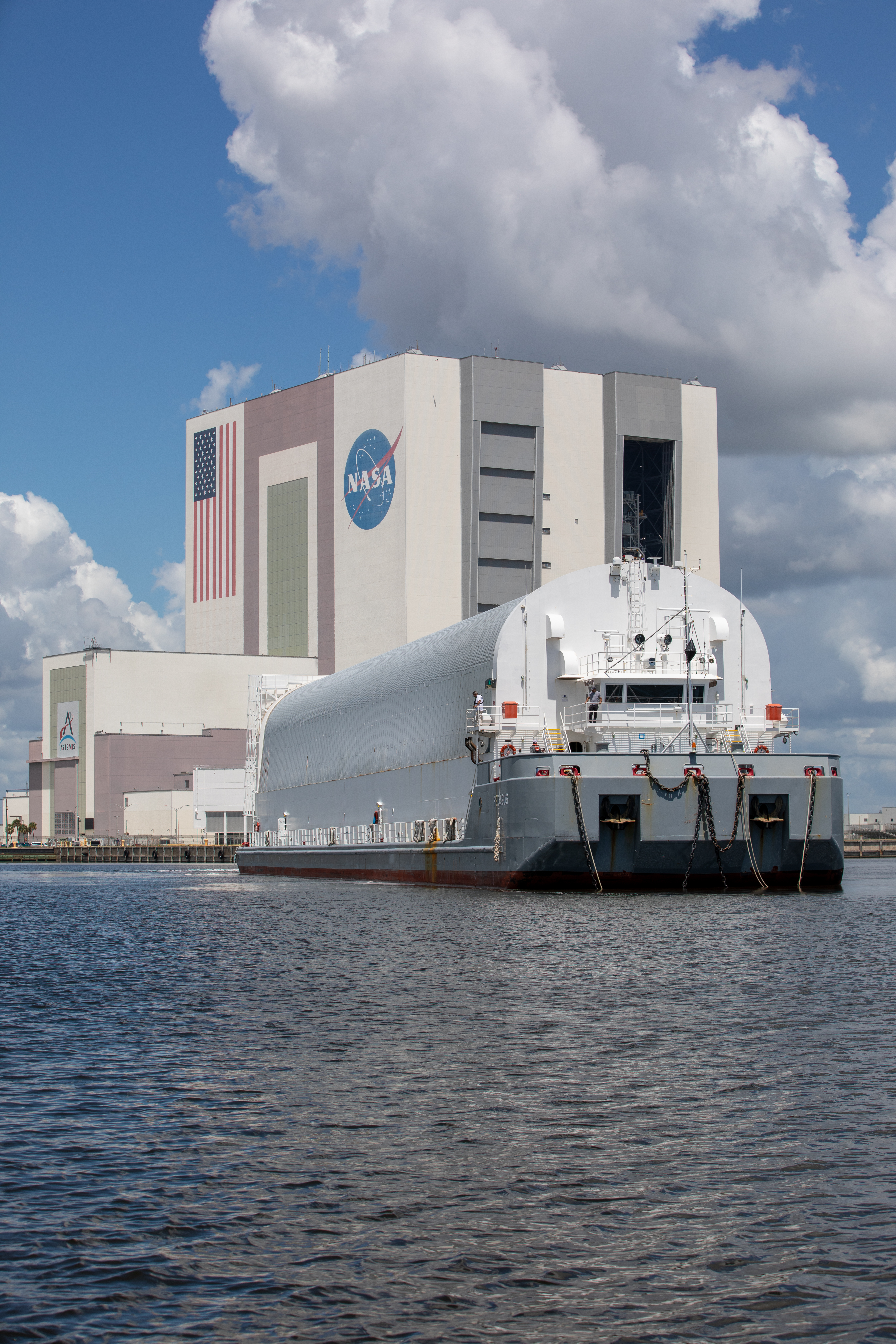
In this June 21, 2026, photo, NASA’s Nancy Grace Roman Space Telescope arrives at the agency’s Kennedy Space Center in Florida aboard NASA’s Pegasus barge. After offloading and transportation to the spaceport’s Payload Hazardous Servicing Facility, Roman will undergo processing ahead of launch, targeted no earlier than Sunday, Aug. 30, 2026.
Named for NASA’s first chief astronomer and “mother of the Hubble Space Telescope,” Roman will offer a field of view over 100 times larger than Hubble’s to study up to a billion galaxies, directly image exoplanets and planet‑forming disks, and address fundamental questions about dark energy, exoplanets, and infrared astrophysics.
Image credit: NASA/Amber Jean Notvest
Roman Telescope Comes to Kennedy
In this June 21, 2026, photo, NASA’s Nancy Grace Roman Space Telescope arrives at the agency’s Kennedy Space Center in Florida aboard NASA’s Pegasus barge. After offloading and transportation to the spaceport’s Payload Hazardous Servicing Facility, Roman will undergo processing ahead of launch, targeted no earlier than Sunday, Aug. 30, 2026.
Named for NASA’s first chief astronomer and “mother of the Hubble Space Telescope,” Roman will offer a field of view over 100 times larger than Hubble’s to study up to a billion galaxies, directly image exoplanets and planet‑forming disks, and address fundamental questions about dark energy, exoplanets, and infrared astrophysics.
Image credit: NASA/Amber Jean Notvest
Possible signs of ancient life on Mars are rich in complex carbon
Possible signs of ancient life on Mars are rich in complex carbon
The JWST Spies Six Galaxies Becoming One
The JWST looked back in time and saw 6 galaxies merging into one. At the heart of the assembly, a supermassive black hole is lurking. It all happened when the Universe was only about 1.5 billion years old, and the red-shifted light is just reaching us now.
NASA’s HiRISE Captures Perseverance Marking a Milestone on Mars
NASA/JPL-Caltech/University of Arizona Photojournal Navigation Downloads NASA’s HiRISE Captures Perseverance Marking a Milestone on Mars
JPEG (492.31 KB)
PIA26726 Figure A
PNG (12.89 MB)
Description
NASA’s Perseverance rover appears as a green speck on the Martian surface on June 13, 2026, a day before the robotic explorer marked a distance milestone, having traveled a full marathon (26.2 miles, or 42.195 kilometers) on the Red Planet. Perseverance reached that distance after five years and four months of driving — on the 1,890th Martian day, or sol, of its mission; the previous record holder, NASA’s Opportunity rover, took 11 years and two months to reach the same milestone.
This image was taken by NASA’s Mars Reconnaissance Orbiter (MRO) using its High-Resolution Imaging Science Experiment (HiRISE) camera. The rover’s tracks can be seen tracing the surface. The rover is in an area west of Jezero Crater that the science team is calling “Arbot.”
Figure A
Figure A is the same image with a yellow circle indicating Perseverance.
Managed for NASA by Caltech, NASA’s Jet Propulsion Laboratory in Southern California manages operations of the Perseverance rover and MRO on behalf of the agency’s Science Mission Directorate as part of NASA’s Mars Exploration Program portfolio. Lockheed Martin Space in Denver built MRO and supports its operations. The University of Arizona, in Tucson, operates HiRISE, which was built by BAE Systems in Boulder, Colorado.
To learn more about these missions, visit:
https://science.nasa.gov/mars/
Keep Exploring Discover More Topics From Photojournal
Photojournal
Search Photojournal
Photojournal’s Latest Content
Feedback
NASA’s HiRISE Captures Perseverance Marking a Milestone on Mars
NASA/JPL-Caltech/University of Arizona Photojournal Navigation Downloads NASA’s HiRISE Captures Perseverance Marking a Milestone on Mars
JPEG (492.31 KB)
PIA26726 Figure A
PNG (12.89 MB)
Description
NASA’s Perseverance rover appears as a green speck on the Martian surface on June 13, 2026, a day before the robotic explorer marked a distance milestone, having traveled a full marathon (26.2 miles, or 42.195 kilometers) on the Red Planet. Perseverance reached that distance after five years and four months of driving — on the 1,890th Martian day, or sol, of its mission; the previous record holder, NASA’s Opportunity rover, took 11 years and two months to reach the same milestone.
This image was taken by NASA’s Mars Reconnaissance Orbiter (MRO) using its High-Resolution Imaging Science Experiment (HiRISE) camera. The rover’s tracks can be seen tracing the surface. The rover is in an area west of Jezero Crater that the science team is calling “Arbot.”
Figure AFigure A is the same image with a yellow circle indicating Perseverance.
Managed for NASA by Caltech, NASA’s Jet Propulsion Laboratory in Southern California manages operations of the Perseverance rover and MRO on behalf of the agency’s Science Mission Directorate as part of NASA’s Mars Exploration Program portfolio. Lockheed Martin Space in Denver built MRO and supports its operations. The University of Arizona, in Tucson, operates HiRISE, which was built by BAE Systems in Boulder, Colorado.
To learn more about these missions, visit:
https://science.nasa.gov/mars/
Keep Exploring Discover More Topics From Photojournal
Photojournal
Search Photojournal
Photojournal’s Latest Content
Feedback
Euclid View of Milky Way Heart Previews Core Survey by NASA’s Roman
A new look at the heart of our Milky Way galaxy by Euclid, an ESA (European Space Agency) mission with NASA contributions, overlaps with a region scientists will observe with NASA’s Nancy Grace Roman Space Telescope, launching later this summer. This sneak peek gives astronomers a major jumpstart on a core Roman survey, helping scientists learn more than they could from either telescope alone.
“This is the only time Euclid has paused its normal sky survey, which is mainly geared toward cosmology,” said Jason Rhodes, a senior research scientist at NASA’s Jet Propulsion Laboratory in Southern California. Rhodes serves as both the U.S. Euclid science lead and the NASA JPL Roman project scientist. “This takes a lot of work and planning, so it really has to be something with a high impact for science. Adding Euclid’s snapshot to Roman’s future survey will help us map our galaxy better and identify hard-to-find cosmic treasures like isolated black holes and rogue planets more easily.”
Euclid took one day out from its six-year prime mission to preview the area of sky that will be targeted by Roman’s Galactic Bulge Time-Domain Survey, which will provide one of the deepest views ever into the center of our galaxy. Though Euclid’s one-time observation is shallower and lacks some of the color detail Roman will see, it has similar resolution and covers a larger region — about 5 square degrees, or the sky area covered by about 25 full moons — since Roman’s survey area hadn’t yet been determined when the observation took place in March 2025.
This artist’s concept outlines the areas of the galactic core covered by Euclid (orange) and the future survey area of the Roman telescope (green). The Euclid observations more than cover Roman’s planned survey area because the Roman coverage wasn’t yet set in stone when Euclid imaged the area. The only exception is the portion right in the galactic center since Euclid’s visible light observations can’t pierce the thick dust in this region like Roman’s infrared vision will. NASA’s Goddard Space Flight Center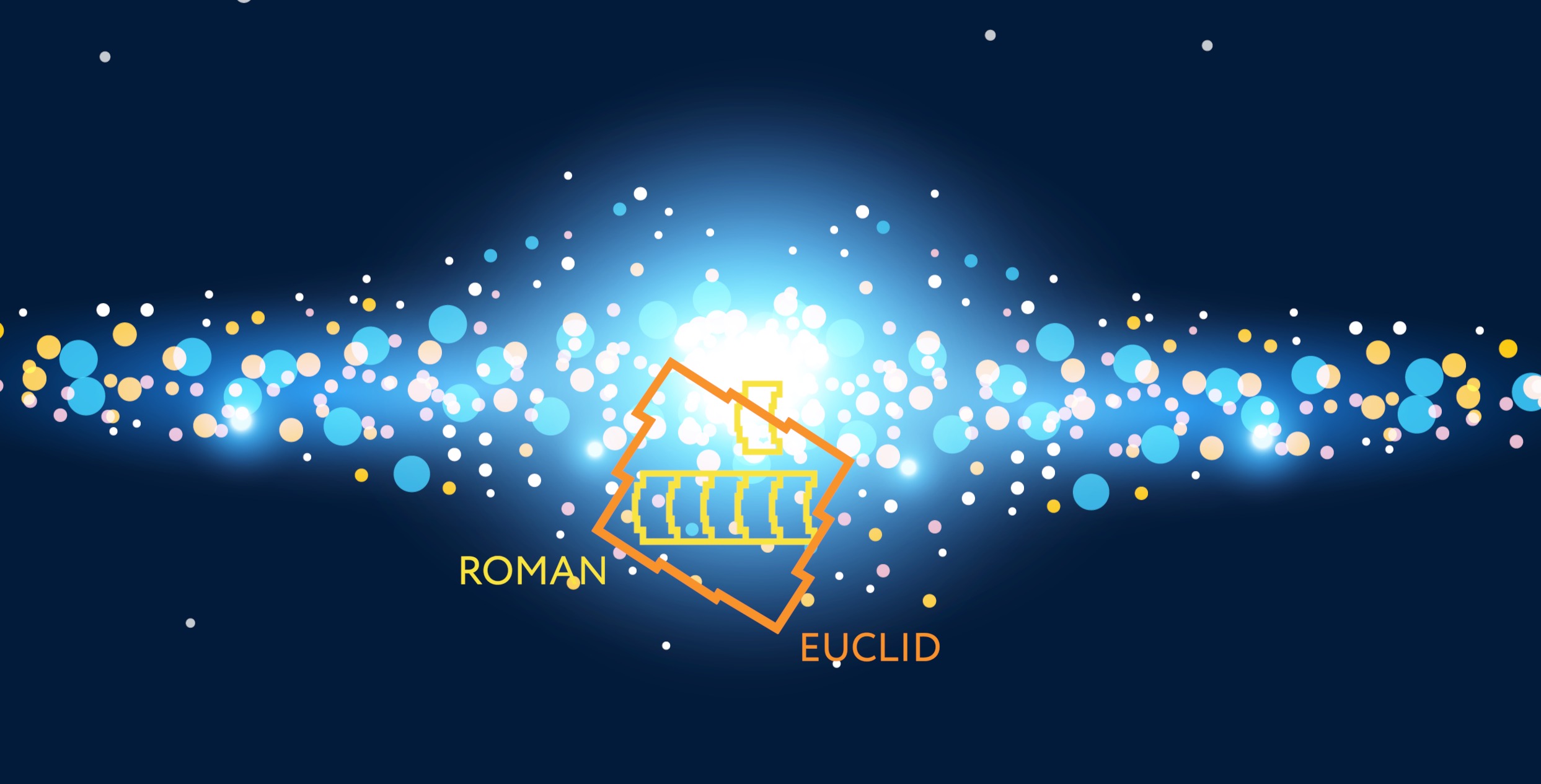
Over the course of its five-year primary mission, Roman will repeatedly image a smaller region (1.7 square degrees, or roughly the sky area covered by 8.5 full moons) to watch how hundreds of millions of stars and other objects change over short time periods. Monitoring these changes will reveal hordes of new planets, along with many other cosmic objects and phenomena. Stitching Euclid’s observation onto the front end of Roman’s collection will essentially extend the survey by two years (since Roman’s galactic bulge observations are set to begin in spring 2027), making even more science possible.
Mining hidden gems
Roman will watch for tiny surges in starlight that herald a microlensing event. This light-bending phenomenon occurs when a massive object like a star, planet, or black hole — any object with sufficient gravity — closely aligns with a background star from our vantage point. Light from the distant star curves as it travels through the warped space-time caused by the nearer object’s mass.
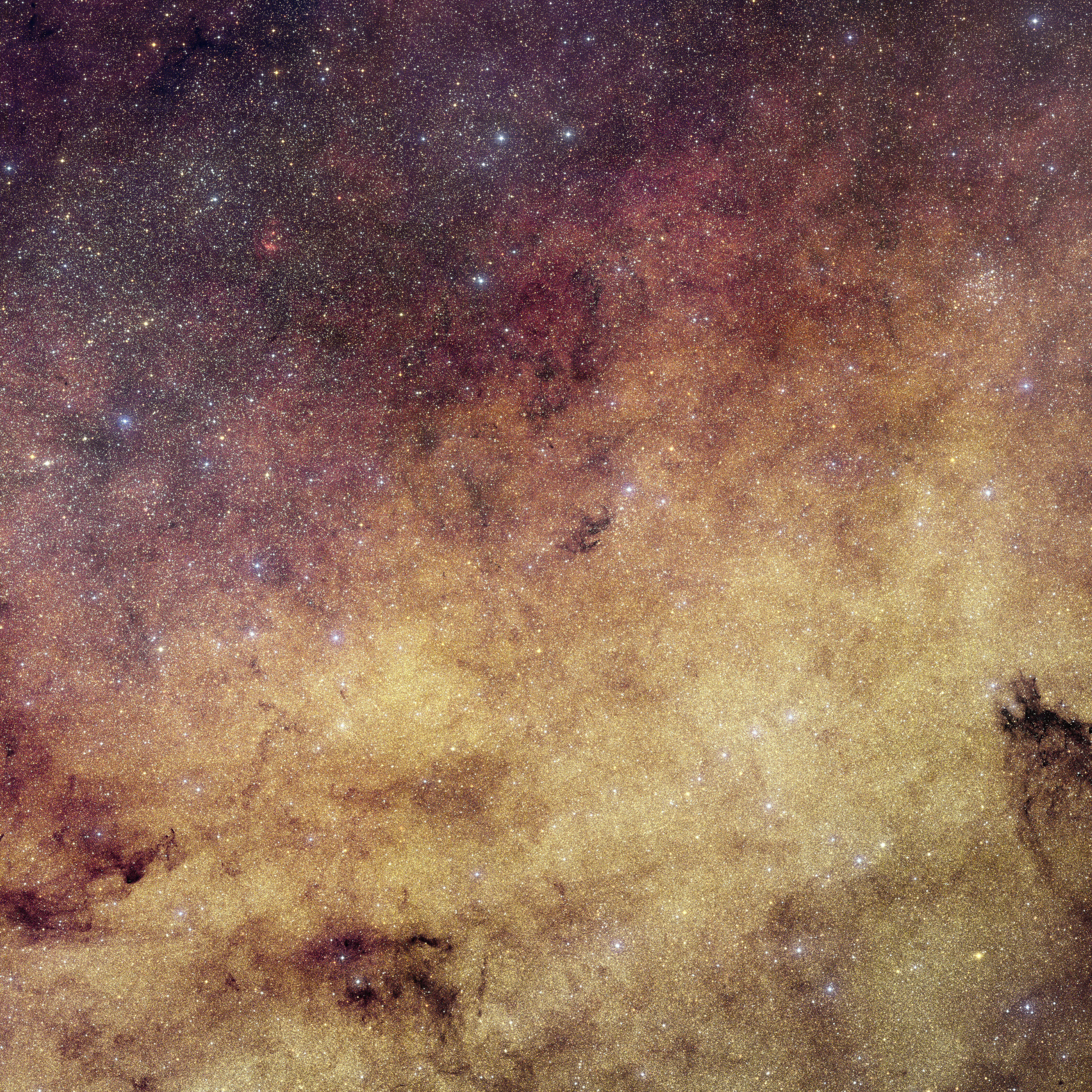
This image from Euclid (with color added using ground-based images) zooms in on the center of our Milky Way galaxy. The region gets its golden tone from myriad old, cool stars that have yellowish hues. Stars in this region are heavily crowded, so observing in this direction increases the likelihood of catching microlensing events. ESA/Euclid/Euclid Consortium/NASA, CFHT, image processing by J.-C. Cuillandre and E. Bertin (CEA Paris-Saclay)
If the alignment is especially close, the nearer object acts like a cosmic lens, focusing and magnifying light from the background star.
“Most often, the lensing object is another star,” said Matthew Penny, an assistant professor at Louisiana State University, and co-lead of Euclid’s exoplanet science working group who has spent more than a decade simulating both Euclid and Roman data. “But Roman will also be able to detect planets orbiting them, and all kinds of weird objects that are nearly impossible to find any other way.”
Among those strange objects are black holes left behind after the most massive stars die. Astronomers think there should be about 100 million of these stellar-mass black holes in the Milky Way, but so far they’ve almost exclusively detected the invisible objects when they interact with a companion star. Yet most are thought to wander the galaxy alone. Roman will find them even when there’s nothing nearby to reveal their presence.
While microlensing events created by planets are typically hours or days long, black holes pack in so much mass that they can bend light over a larger region of space, creating much longer signals. That means astronomers may need to observe them for years to see the objects move out of alignment.
“The extra two years provided by Euclid give astronomers more time to watch the lens and source star drift apart, making it easier to identify the lens and measure its mass,” said Himanshu Verma, a postdoctoral researcher at Louisiana State University who has been analyzing Euclid images to help scientists predict and better understand the microlensing events Roman is expected to observe.
This image from the Advanced Camera for Surveys instrument on NASA’s Hubble Space Telescope is part of a 1.1-square-degree survey of the center of the Milky Way. Hubble’s full survey, which is made up of more than 350 individual images taken across about 14 months, is smaller but higher resolution than ESA’s Euclid observations and both overlap with the area Roman will cover. By capturing preview images years before Roman begins its microlensing search, Hubble and Euclid provide early reference points that will help astronomers measure the motions of stars and better characterize the planets and other objects Roman discovers.Adapted from Terry et al. 2026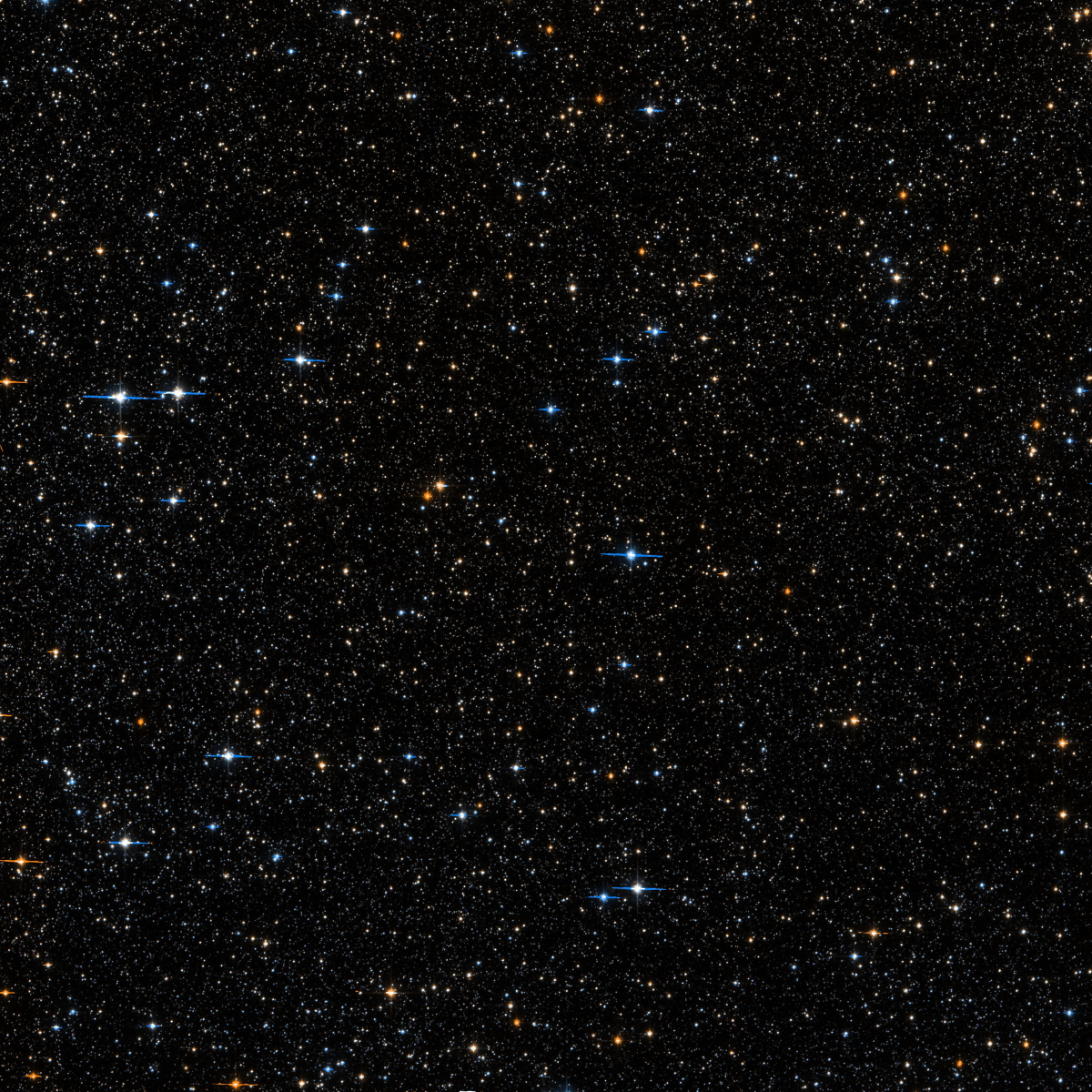
While most planet-hunting methods are best at finding scorching worlds tightly hugging their host star, microlensing is better at detecting worlds in orbits larger than Earth’s. That includes planets that whirl around their stars farther away than Neptune orbits the Sun and ones that have been kicked out of their original star systems altogether, now destined to roam the galaxy all alone.
“When Roman finds them, astronomers will be able to cross-reference Euclid’s earlier observations to look for stars near the lensing object, so we can confirm whether a planet is truly rogue or just orbiting very far from its host star,” said David Bennett, a senior research scientist and microlensing expert at the University of Maryland, College Park and NASA’s Goddard Space Flight Center.
Milky Way mapping
Scientists will also pair Euclid data with Roman’s Galactic Plane Survey. This observation program will reveal our home galaxy in unprecedented detail over an area about 400 times larger than the galactic bulge survey. In one month of observations spread across two years, the Roman survey will unveil tens of billions of stars and explore previously uncharted structures.
It’s tricky to study our own galaxy because it’s like trying to map the human body from inside a cell; there’s a lot of stuff in the way. Combining Euclid’s observations with Roman’s will let astronomers watch stars slowly move across the sky. Since stars in different parts of the Milky Way tend to follow different paths, this will help astronomers figure out which part of the galaxy those stars are in.
“One of the most exciting aspects of the Euclid observations is that they give us the chance to test and improve Milky Way models,” Penny said.
Euclid’s one-day detour offers a scientific payout that will last for years and shows how much more can emerge when telescopes team up.
“We’ve shown that these two telescopes can work together to do science that surpasses what either was originally designed for,” Rhodes said. “In doing so, we’ve established a model for future coordinated observations that can unlock far more discoveries than either mission could make alone.”
To learn more about the Roman mission, visit:
Media contact:
Claire Andreoli
NASA’s Goddard Space Flight Center, Greenbelt, Md.
301-286-1940
Ashley is the lead science writer for NASA's Nancy Grace Roman Space Telescope.
Share Details Last Updated Jun 24, 2026 EditorAshley BalzerContactAshley Balzerashley.m.balzer@nasa.govLocationGoddard Space Flight Center Related Terms Explore More 7 min read Journey to Center of Milky Way With Upcoming NASA Roman Core Survey Article 5 months ago 6 min read Why NASA’s Roman Mission Will Study Milky Way’s Flickering Lights Article 3 years ago 6 min read NASA’s Roman Mission Preps to Unveil New Populations of Faraway Worlds Article 4 weeks ago Keep Exploring Discover More Topics From NASAMissions
Humans in Space
Climate Change
Solar System
Euclid View of Milky Way Heart Previews Core Survey by NASA’s Roman
A new look at the heart of our Milky Way galaxy by Euclid, an ESA (European Space Agency) mission with NASA contributions, overlaps with a region scientists will observe with NASA’s Nancy Grace Roman Space Telescope, launching later this summer. This sneak peek gives astronomers a major jumpstart on a core Roman survey, helping scientists learn more than they could from either telescope alone.
“This is the only time Euclid has paused its normal sky survey, which is mainly geared toward cosmology,” said Jason Rhodes, a senior research scientist at NASA’s Jet Propulsion Laboratory in Southern California. Rhodes serves as both the U.S. Euclid science lead and the NASA JPL Roman project scientist. “This takes a lot of work and planning, so it really has to be something with a high impact for science. Adding Euclid’s snapshot to Roman’s future survey will help us map our galaxy better and identify hard-to-find cosmic treasures like isolated black holes and rogue planets more easily.”
Euclid took one day out from its six-year prime mission to preview the area of sky that will be targeted by Roman’s Galactic Bulge Time-Domain Survey, which will provide one of the deepest views ever into the center of our galaxy. Though Euclid’s one-time observation is shallower and lacks some of the color detail Roman will see, it has similar resolution and covers a larger region — about 5 square degrees, or the sky area covered by about 25 full moons — since Roman’s survey area hadn’t yet been determined when the observation took place in March 2025.
This artist’s concept outlines the areas of the galactic core covered by Euclid (orange) and the future survey area of the Roman telescope (green). The Euclid observations more than cover Roman’s planned survey area because the Roman coverage wasn’t yet set in stone when Euclid imaged the area. The only exception is the portion right in the galactic center since Euclid’s visible light observations can’t pierce the thick dust in this region like Roman’s infrared vision will. NASA’s Goddard Space Flight CenterOver the course of its five-year primary mission, Roman will repeatedly image a smaller region (1.7 square degrees, or roughly the sky area covered by 8.5 full moons) to watch how hundreds of millions of stars and other objects change over short time periods. Monitoring these changes will reveal hordes of new planets, along with many other cosmic objects and phenomena. Stitching Euclid’s observation onto the front end of Roman’s collection will essentially extend the survey by two years (since Roman’s galactic bulge observations are set to begin in spring 2027), making even more science possible.
Mining hidden gems
Roman will watch for tiny surges in starlight that herald a microlensing event. This light-bending phenomenon occurs when a massive object like a star, planet, or black hole — any object with sufficient gravity — closely aligns with a background star from our vantage point. Light from the distant star curves as it travels through the warped space-time caused by the nearer object’s mass.
This image from Euclid (with color added using ground-based images) zooms in on the center of our Milky Way galaxy. The region gets its golden tone from myriad old, cool stars that have yellowish hues. Stars in this region are heavily crowded, so observing in this direction increases the likelihood of catching microlensing events. ESA/Euclid/Euclid Consortium/NASA, CFHT, image processing by J.-C. Cuillandre and E. Bertin (CEA Paris-Saclay)If the alignment is especially close, the nearer object acts like a cosmic lens, focusing and magnifying light from the background star.
“Most often, the lensing object is another star,” said Matthew Penny, an assistant professor at Louisiana State University, and co-lead of Euclid’s exoplanet science working group who has spent more than a decade simulating both Euclid and Roman data. “But Roman will also be able to detect planets orbiting them, and all kinds of weird objects that are nearly impossible to find any other way.”
Among those strange objects are black holes left behind after the most massive stars die. Astronomers think there should be about 100 million of these stellar-mass black holes in the Milky Way, but so far they’ve almost exclusively detected the invisible objects when they interact with a companion star. Yet most are thought to wander the galaxy alone. Roman will find them even when there’s nothing nearby to reveal their presence.
While microlensing events created by planets are typically hours or days long, black holes pack in so much mass that they can bend light over a larger region of space, creating much longer signals. That means astronomers may need to observe them for years to see the objects move out of alignment.
“The extra two years provided by Euclid give astronomers more time to watch the lens and source star drift apart, making it easier to identify the lens and measure its mass,” said Himanshu Verma, a postdoctoral researcher at Louisiana State University who has been analyzing Euclid images to help scientists predict and better understand the microlensing events Roman is expected to observe.
This image from the Advanced Camera for Surveys instrument on NASA’s Hubble Space Telescope is part of a 1.1-square-degree survey of the center of the Milky Way. Hubble’s full survey, which is made up of more than 350 individual images taken across about 14 months, is smaller but higher resolution than ESA’s Euclid observations and both overlap with the area Roman will cover. By capturing preview images years before Roman begins its microlensing search, Hubble and Euclid provide early reference points that will help astronomers measure the motions of stars and better characterize the planets and other objects Roman discovers.Adapted from Terry et al. 2026While most planet-hunting methods are best at finding scorching worlds tightly hugging their host star, microlensing is better at detecting worlds in orbits larger than Earth’s. That includes planets that whirl around their stars farther away than Neptune orbits the Sun and ones that have been kicked out of their original star systems altogether, now destined to roam the galaxy all alone.
“When Roman finds them, astronomers will be able to cross-reference Euclid’s earlier observations to look for stars near the lensing object, so we can confirm whether a planet is truly rogue or just orbiting very far from its host star,” said David Bennett, a senior research scientist and microlensing expert at the University of Maryland, College Park and NASA’s Goddard Space Flight Center.
Milky Way mapping
Scientists will also pair Euclid data with Roman’s Galactic Plane Survey. This observation program will reveal our home galaxy in unprecedented detail over an area about 400 times larger than the galactic bulge survey. In one month of observations spread across two years, the Roman survey will unveil tens of billions of stars and explore previously uncharted structures.
It’s tricky to study our own galaxy because it’s like trying to map the human body from inside a cell; there’s a lot of stuff in the way. Combining Euclid’s observations with Roman’s will let astronomers watch stars slowly move across the sky. Since stars in different parts of the Milky Way tend to follow different paths, this will help astronomers figure out which part of the galaxy those stars are in.
“One of the most exciting aspects of the Euclid observations is that they give us the chance to test and improve Milky Way models,” Penny said.
Euclid’s one-day detour offers a scientific payout that will last for years and shows how much more can emerge when telescopes team up.
“We’ve shown that these two telescopes can work together to do science that surpasses what either was originally designed for,” Rhodes said. “In doing so, we’ve established a model for future coordinated observations that can unlock far more discoveries than either mission could make alone.”
To learn more about the Roman mission, visit:
Media contact:
Claire Andreoli
NASA’s Goddard Space Flight Center, Greenbelt, Md.
301-286-1940
Ashley is the lead science writer for NASA's Nancy Grace Roman Space Telescope.
Share Details Last Updated Jun 24, 2026 EditorAshley BalzerContactAshley Balzerashley.m.balzer@nasa.govLocationGoddard Space Flight Center Related Terms Explore More 7 min read Journey to Center of Milky Way With Upcoming NASA Roman Core Survey Article 5 months ago 6 min read Why NASA’s Roman Mission Will Study Milky Way’s Flickering Lights Article 3 years ago 6 min read NASA’s Roman Mission Preps to Unveil New Populations of Faraway Worlds Article 4 weeks ago Keep Exploring Discover More Topics From NASAMissions
Humans in Space
Climate Change
Solar System